Kindergarten Science Worksheet on Moon Phases Identification

📅 Jan 5, 2025 👤 Nylen Smith

Explore the fascinating changes of the moon with this kindergarten science worksheet focused on moon phases identification. Young learners will engage in activities that help them observe and recognize the different shapes of the moon throughout its cycle. Check the available worksheets to spark curiosity and understanding of lunar phases.

Moon Phases Cut and Paste Activity Worksheet
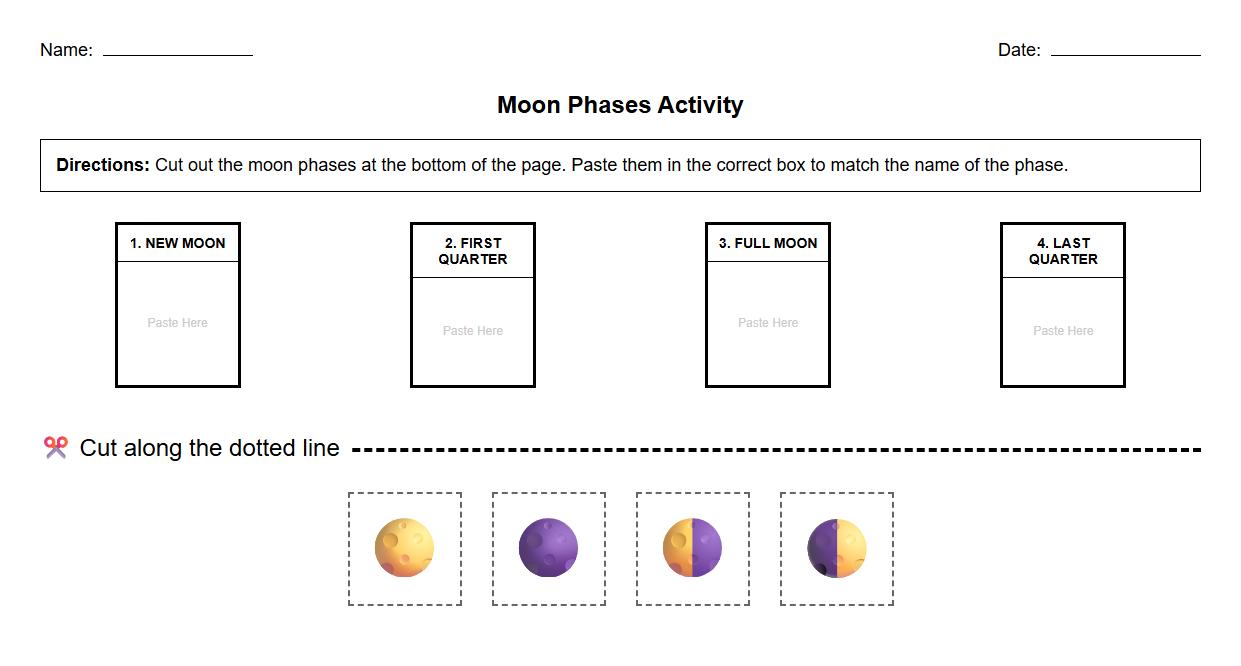
Moon Phases Cut and Paste Activity Worksheet

Download PDF     Pin it

Phases of the Moon Sequencing Worksheet
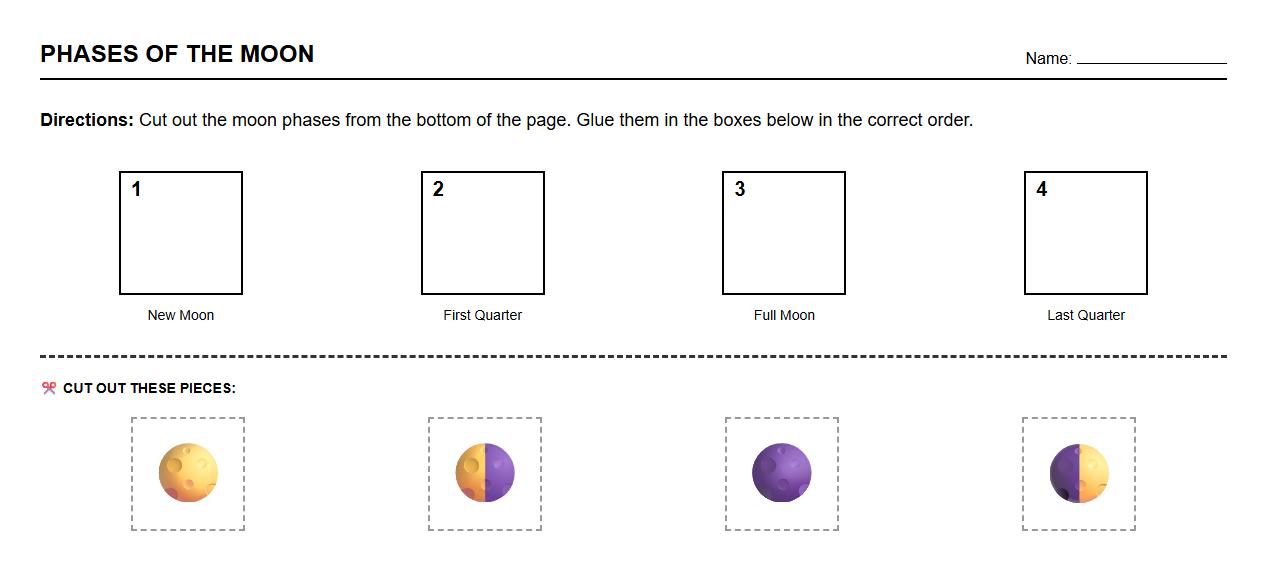
Phases of the Moon Sequencing Worksheet

Download PDF     Pin it

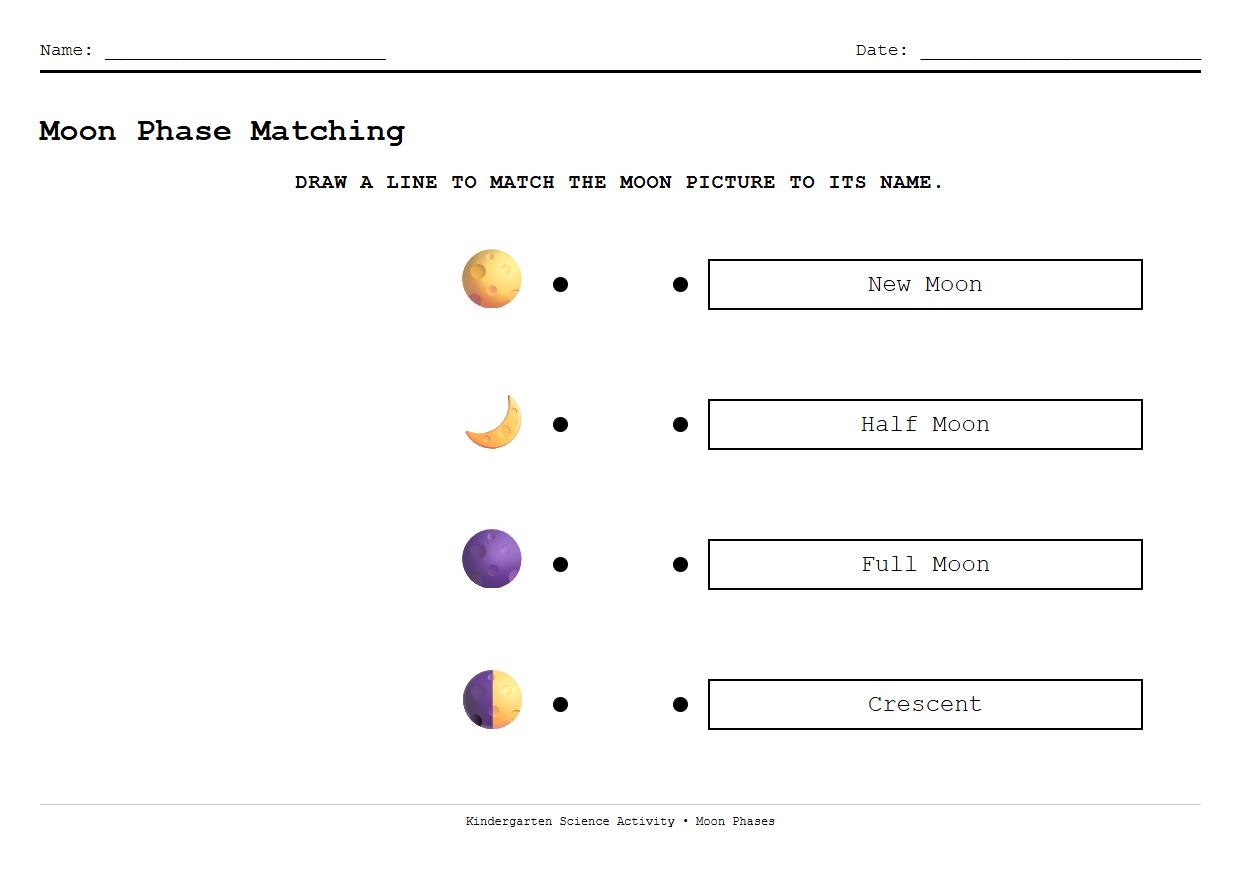
Moon Phase Matching Game Worksheet

Moon Phase Matching Game Worksheet
Download PDF     Pin it

Label the Moon Phases Diagram Worksheet
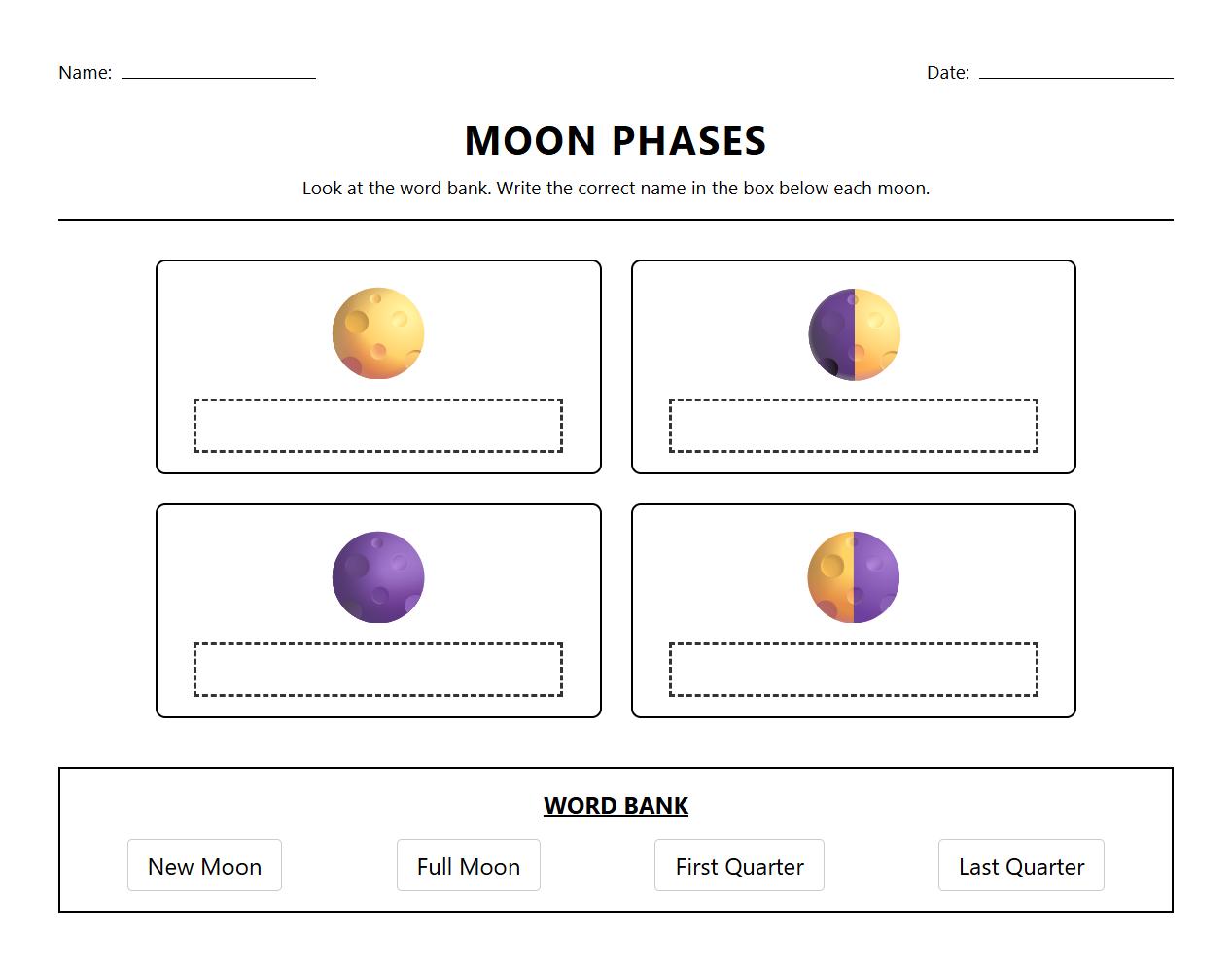
Label the Moon Phases Diagram Worksheet

Download PDF     Pin it

Moon Phases Phonics Spelling Worksheet
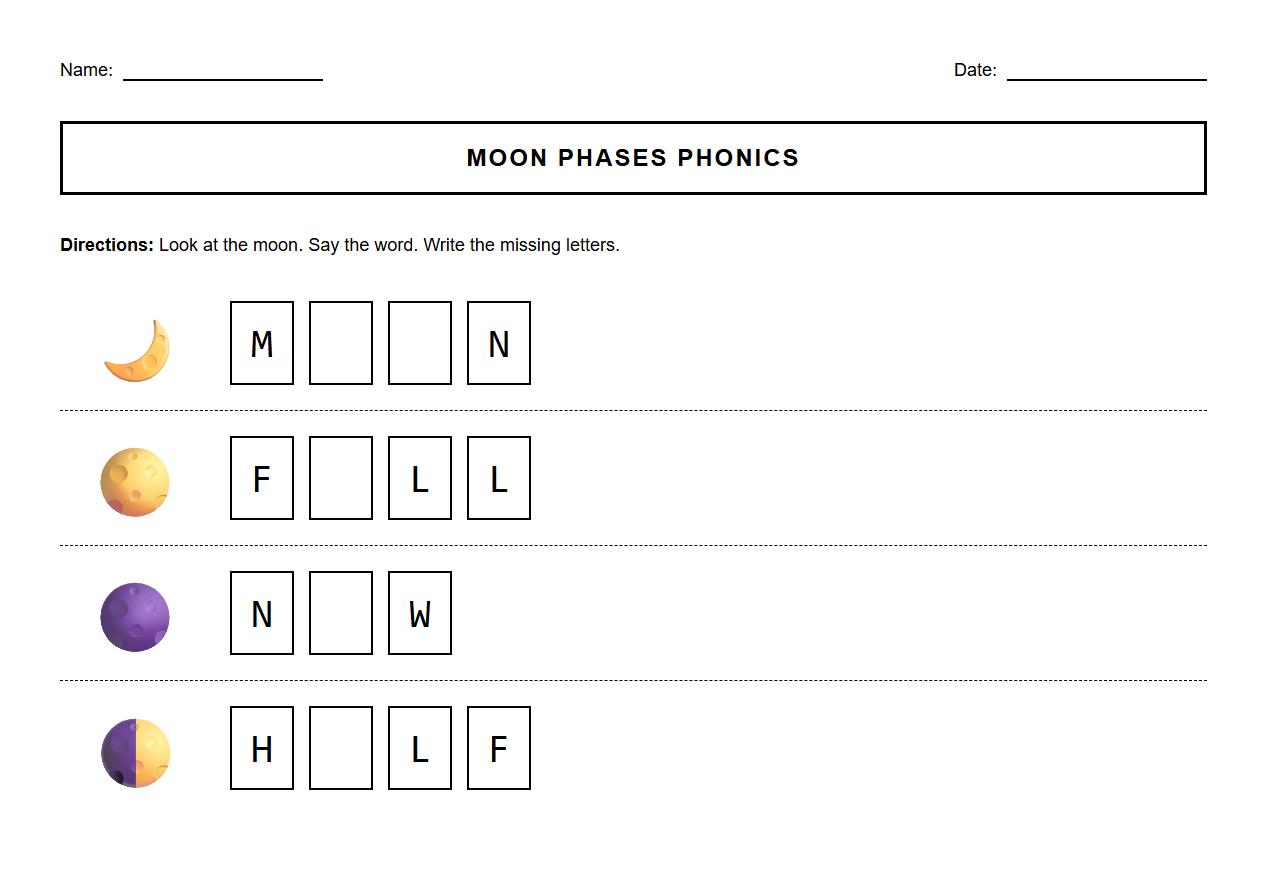
Moon Phases Phonics Spelling Worksheet

Download PDF     Pin it

Lunar Cycle Fill in the Blanks Worksheet
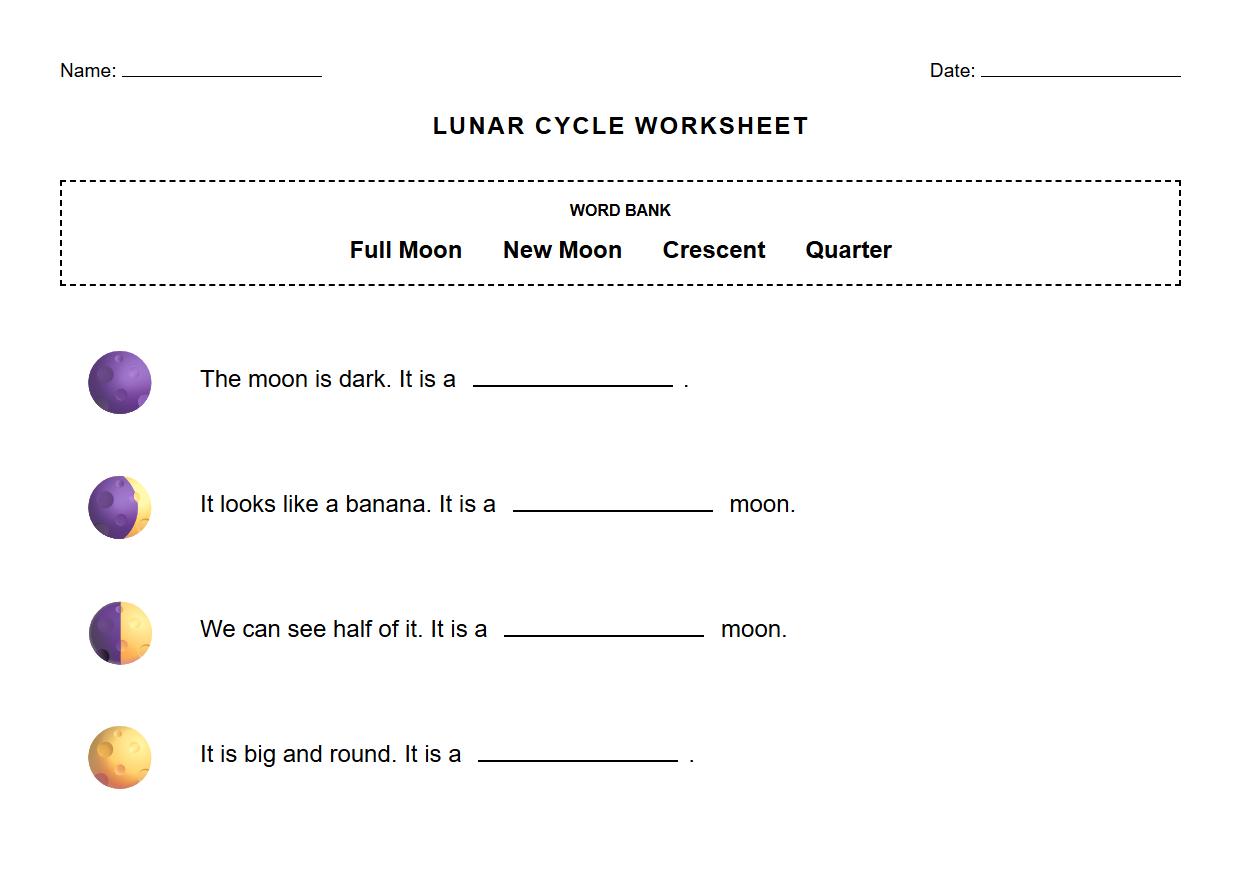
Lunar Cycle Fill in the Blanks Worksheet

Download PDF     Pin it

Circle the Correct Moon Phase Worksheet
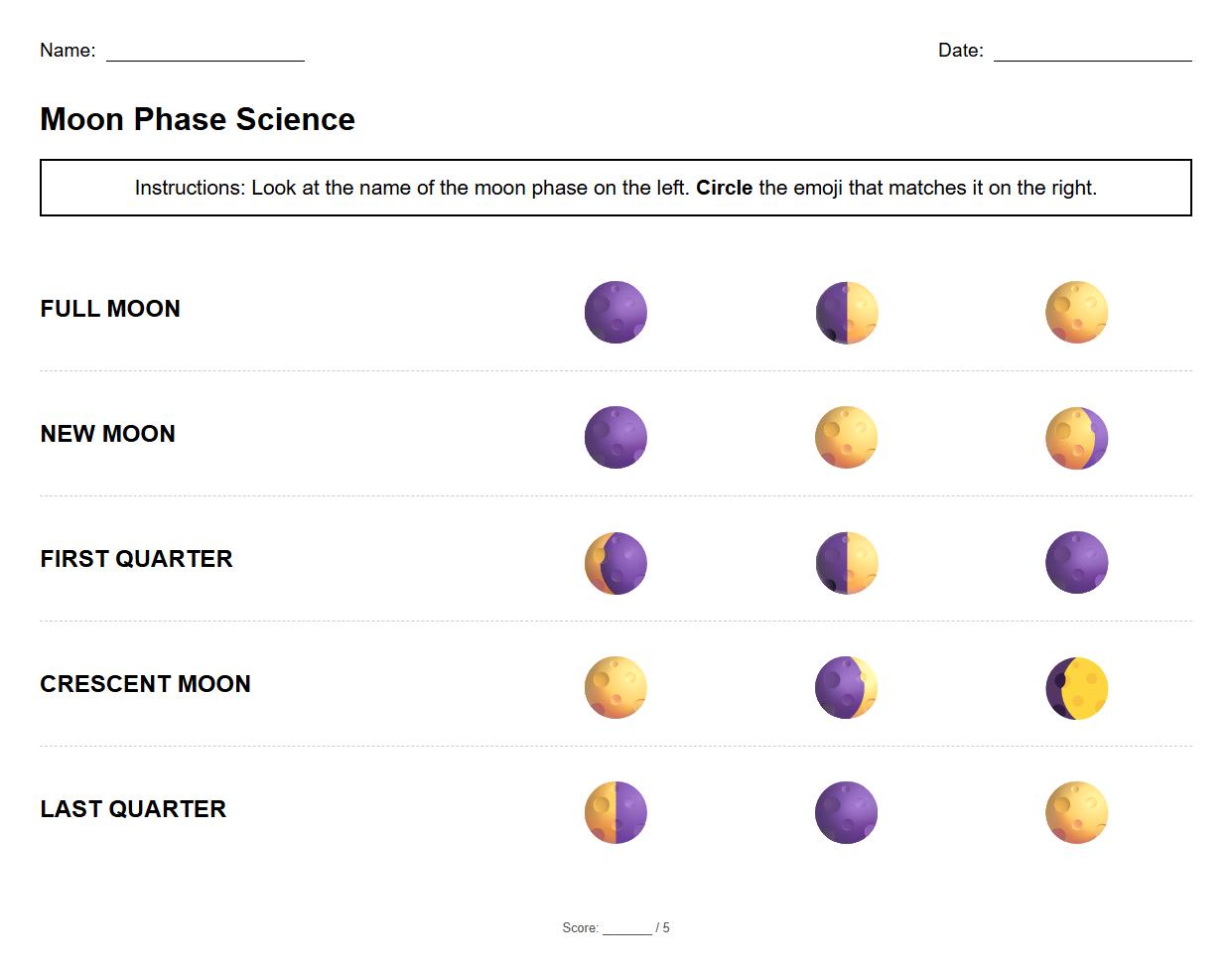
Circle the Correct Moon Phase Worksheet

Download PDF     Pin it

Moon Phase Tracing and Coloring Worksheet
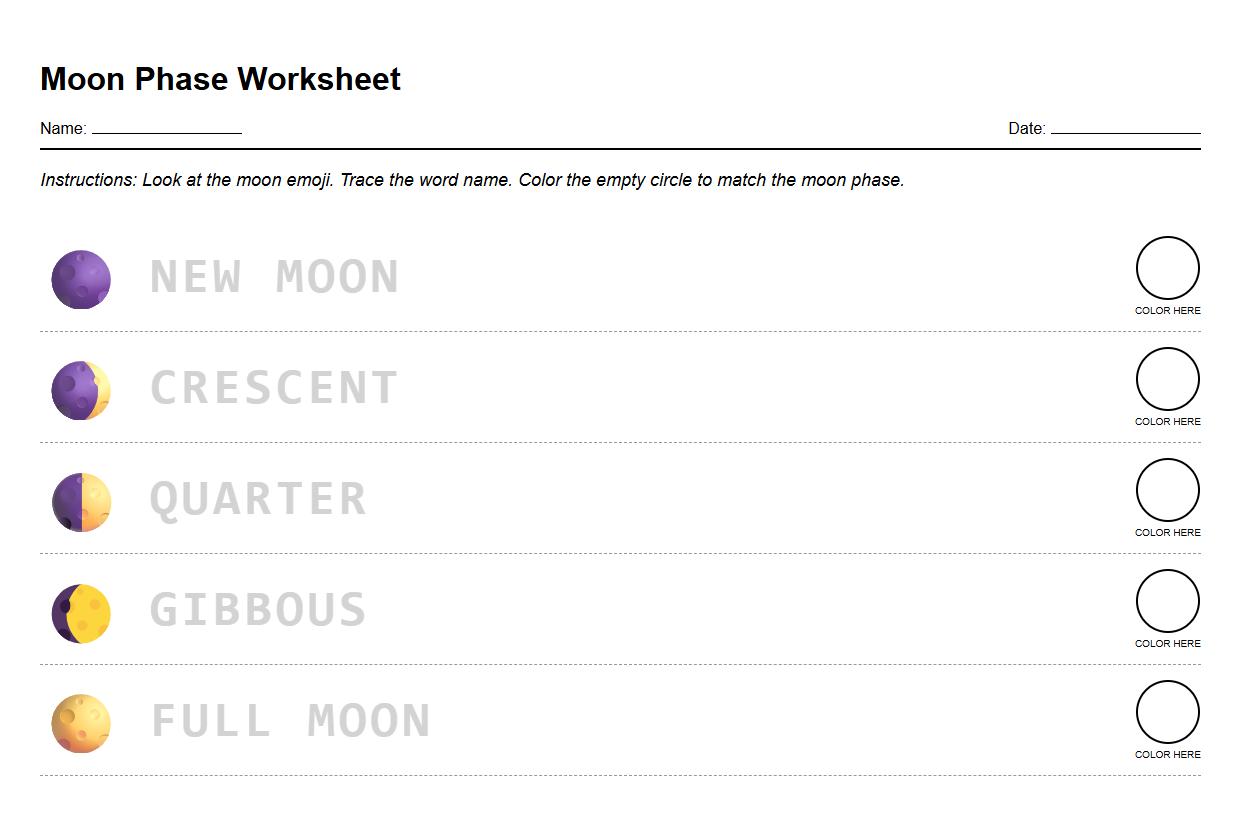
Moon Phase Tracing and Coloring Worksheet

Download PDF     Pin it

Draw Each Moon Phase Guided Worksheet
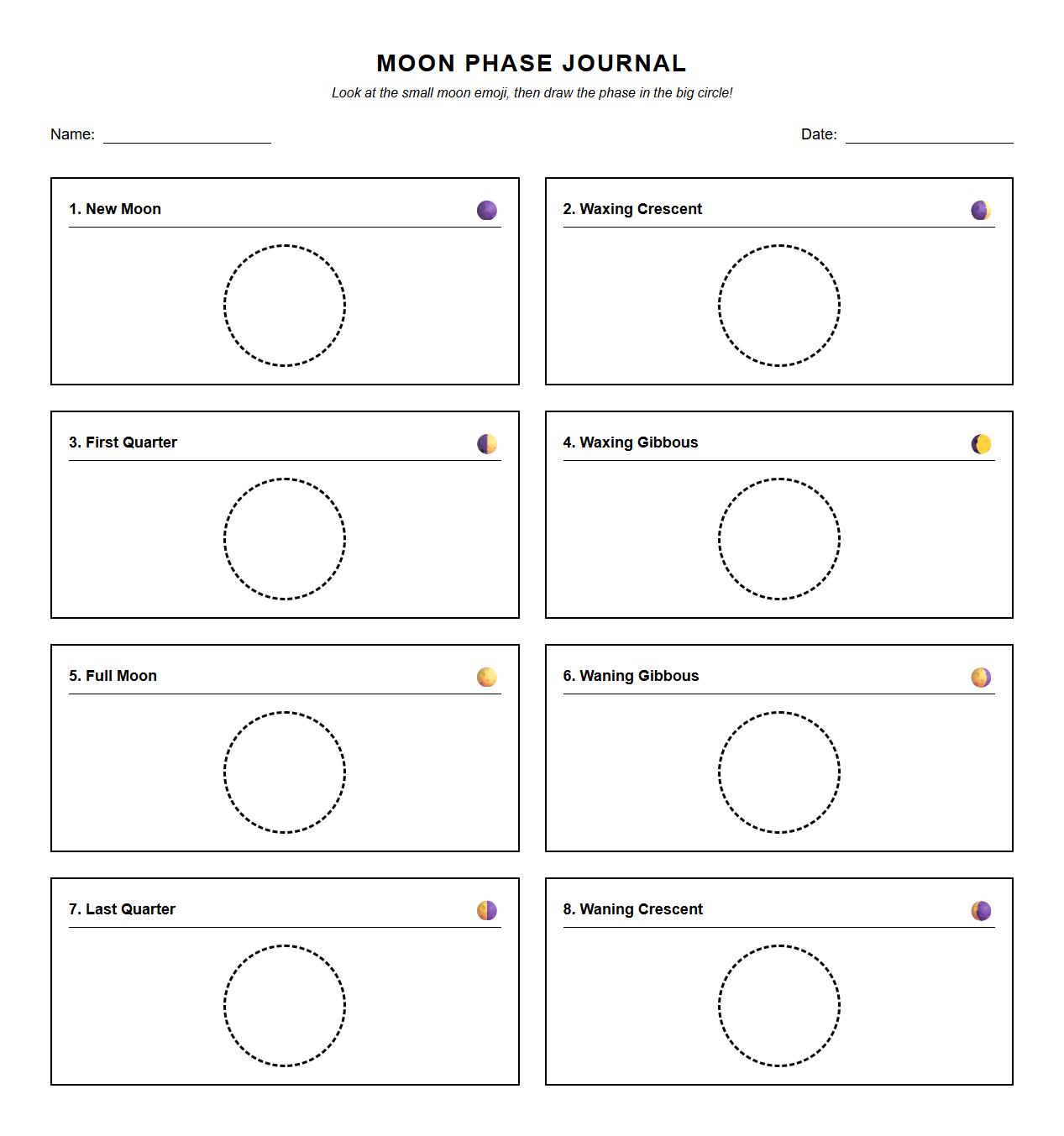
Draw Each Moon Phase Guided Worksheet

Download PDF     Pin it

Identify and Name Moon Phases Visual Worksheet
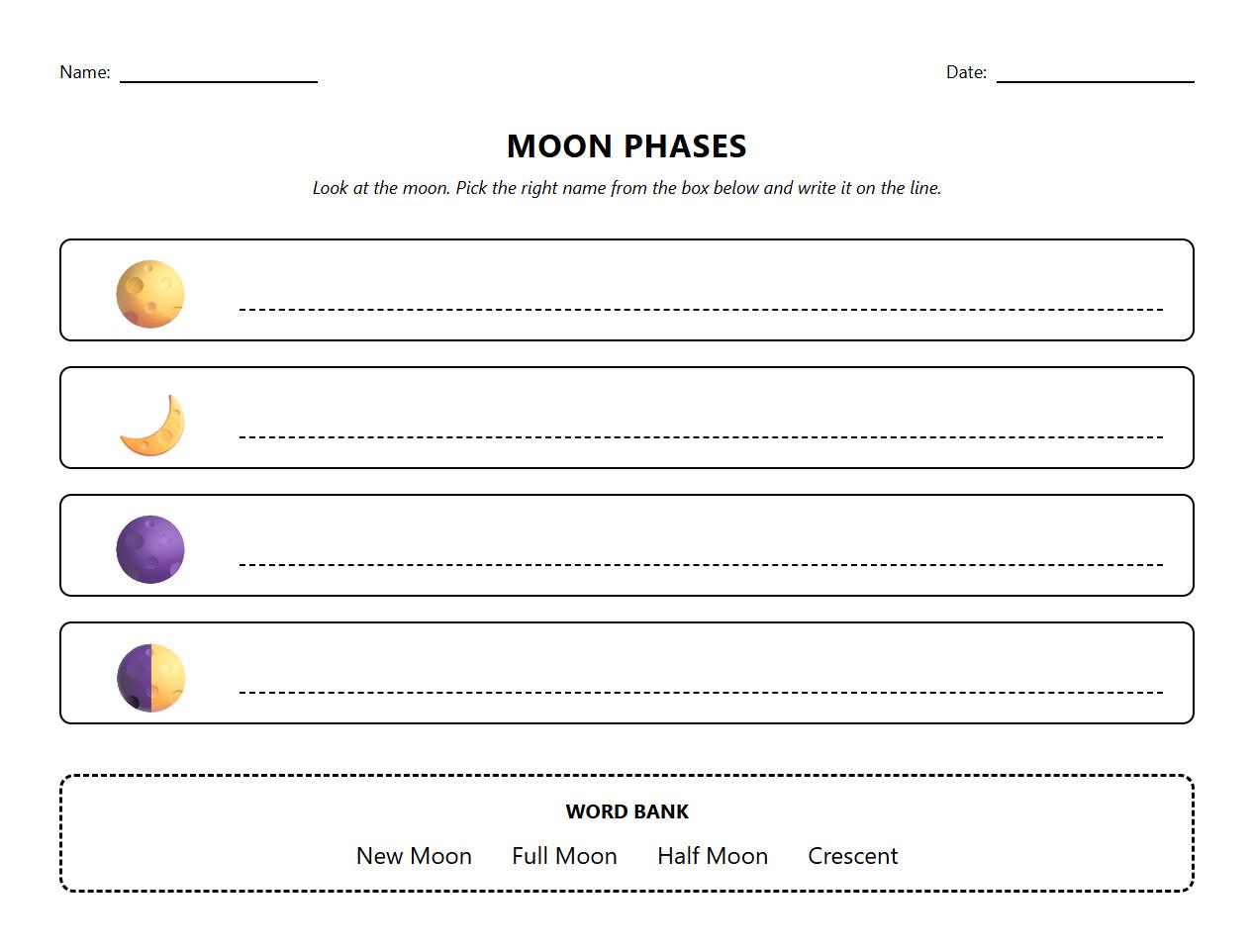
Identify and Name Moon Phases Visual Worksheet

Download PDF     Pin it

Identifying the Full Moon

Look closely at each image and find the one showing a complete, round full moon. The full moon shines brightly and is fully illuminated. This phase is easy to spot because of its perfect circular shape. Ask children to point to this picture to reinforce their understanding.

Finding the New Moon

The new moon is the phase when the moon is not visible from Earth. It appears as a dark circle or is completely absent in pictures. Encourage children to scan each image to identify the darkest moon phase. This helps them learn about the moon's cycle.

Recognizing the Crescent Moon

The moon phase that looks like a banana is called the crescent moon. It shows a thin curved sliver of light on the moon. Pointing to this shape helps children associate moon phases with everyday objects for better memory.

Pointing Out the Half Moon

The half moon, also known as the first or last quarter moon, appears as a half-lit circle. It shows exactly half of the moon's surface illuminated. Have children identify this phase by pointing to the corresponding picture, reinforcing visual recognition.

Moon Phase After Crescent

The moon phase that comes after the crescent is the first quarter moon, or sometimes the gibbous moon depending on the crescent's direction. It shows more illumination than the crescent but is not yet fully lit. This helps children understand the sequence of moon phases.

Locating the Gibbous Moon

The gibbous moon looks more than half but less than fully illuminated. It appears larger than the half moon and is brighter. Encourage kids to find this phase among the pictures to improve their phase identification skills.

Counting Moon Phases

Ask children: How many moon phases can you see here? Counting all visible phases lets them observe the full lunar cycle. This activity strengthens their observational skills and reinforces learning about moon phases.

Most Common Moon Shape at Night

The moon shape seen most often at night is usually the crescent moon or sometimes the full moon, depending on the lunar cycle. This discussion helps children connect real-world observations with worksheet images. Talk about the changes in moon appearance over days.

Matching Moon Phases with Names

This activity invites children to match moon phases to their correct names. It aids in memorizing phase names like full moon, new moon, crescent, quarter, and gibbous. Matching games are effective tools for teaching astronomical terms.

Brightest Moon in the Pictures

The moon that looks the brightest is the full moon because it reflects the most sunlight. Identifying this phase helps children understand why the full moon glows intensely. Encourage them to point to this picture to reinforce key concepts in moon phases.


More in Science Category


About the author. Nylen Smith is a dedicated educator and cofounder of KWorksheet.com, a popular platform specializing in high-quality kindergarten worksheets and printable activities.

Disclaimer. The information provided in this document is for general informational purposes and/or document sample only and is not guaranteed to be factually right or complete. Please report to us via contact-us page if you find and error in this page, thanks.

Comments

No comment yet