Visual Discrimination Worksheet for Moon Phases and Phonics

📅 Jan 9, 2025 👤 Nylen Smith

Enhance your child's learning with this Visual Discrimination Worksheet focused on Moon Phases and Phonics, designed to sharpen observation skills and reinforce letter-sound recognition. It encourages attention to detail by distinguishing subtle differences in moon shapes while practicing essential phonetic patterns. Explore the full range of worksheets available to support your child's educational journey.

Visual Discrimination Worksheet matching moon phases with corresponding names
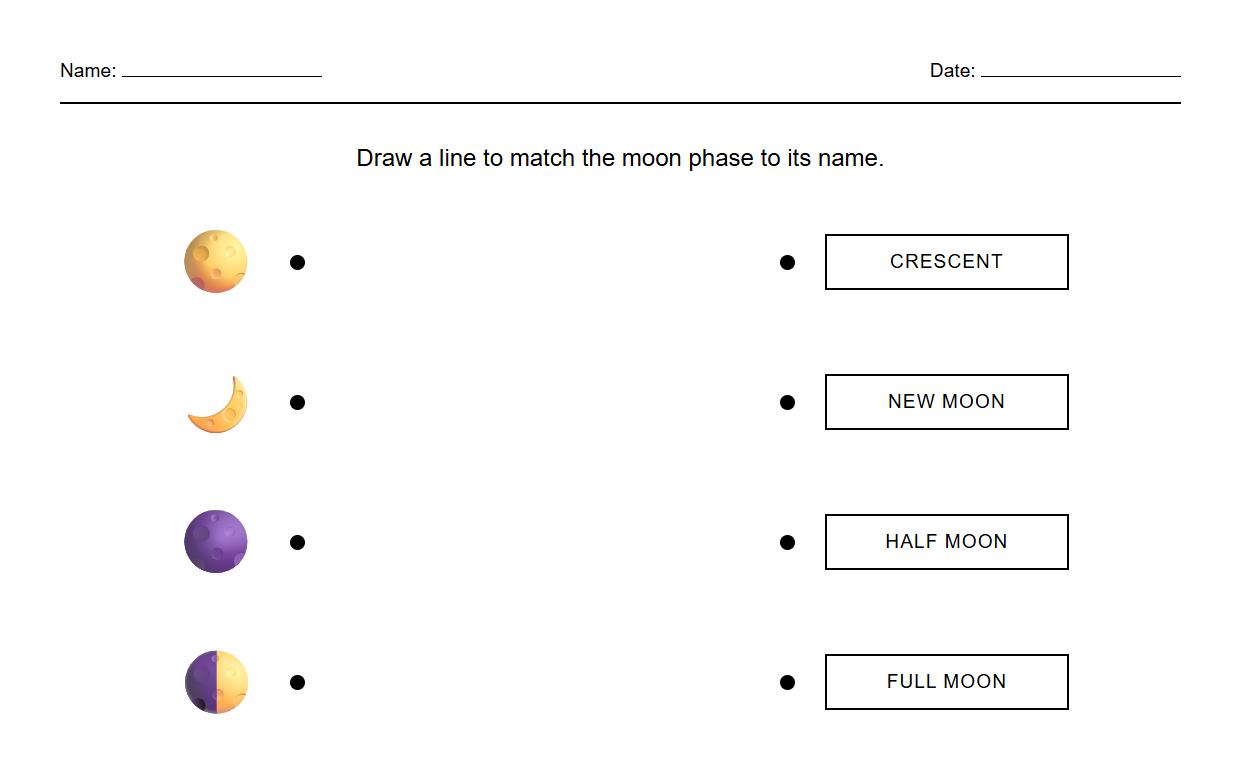
Visual Discrimination Worksheet matching moon phases with corresponding names

Download PDF     Pin it

Phonics worksheet identifying beginning sounds in moon phase vocabulary
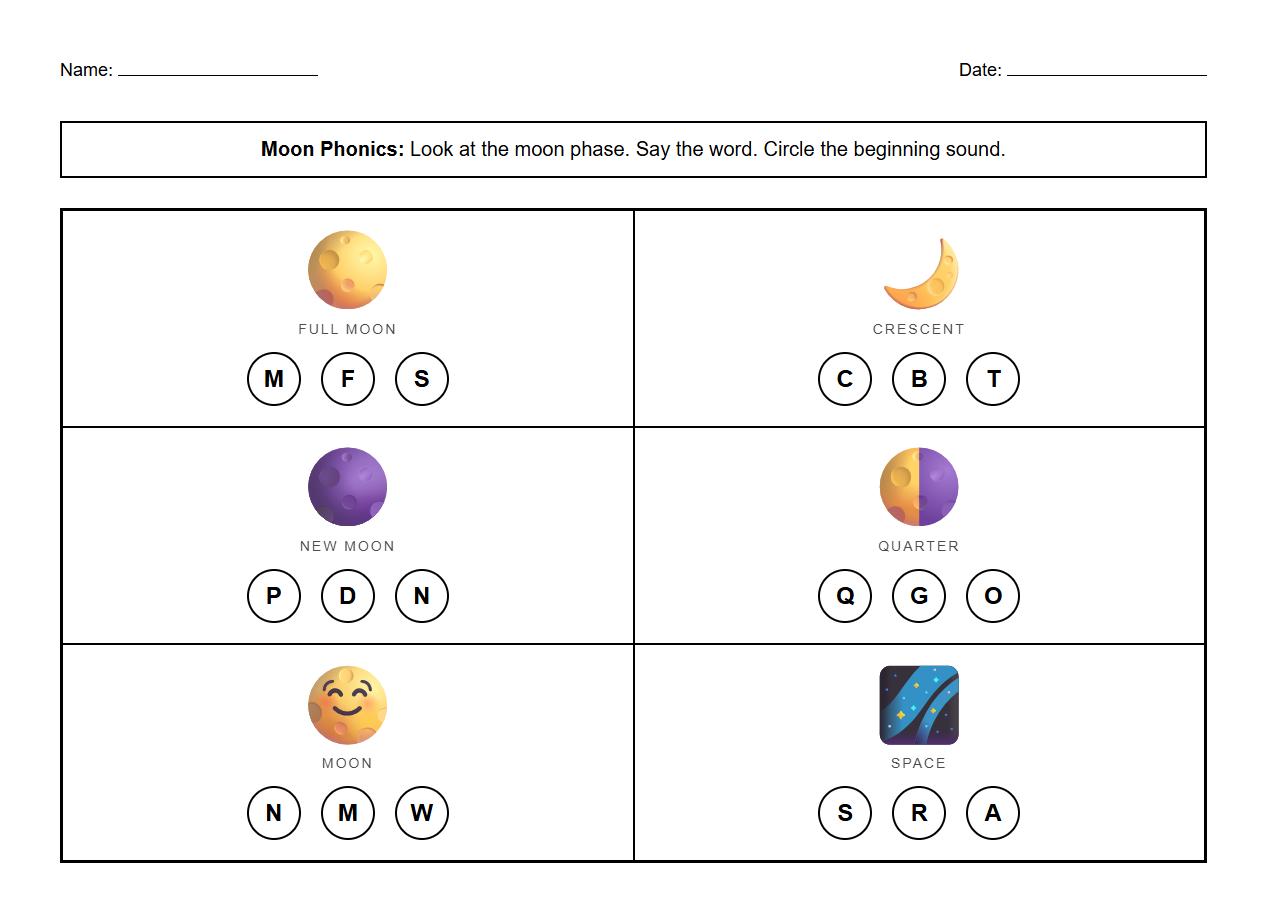
Phonics worksheet identifying beginning sounds in moon phase vocabulary

Download PDF     Pin it

Sorting activity: Arrange moon phase images in sequential order
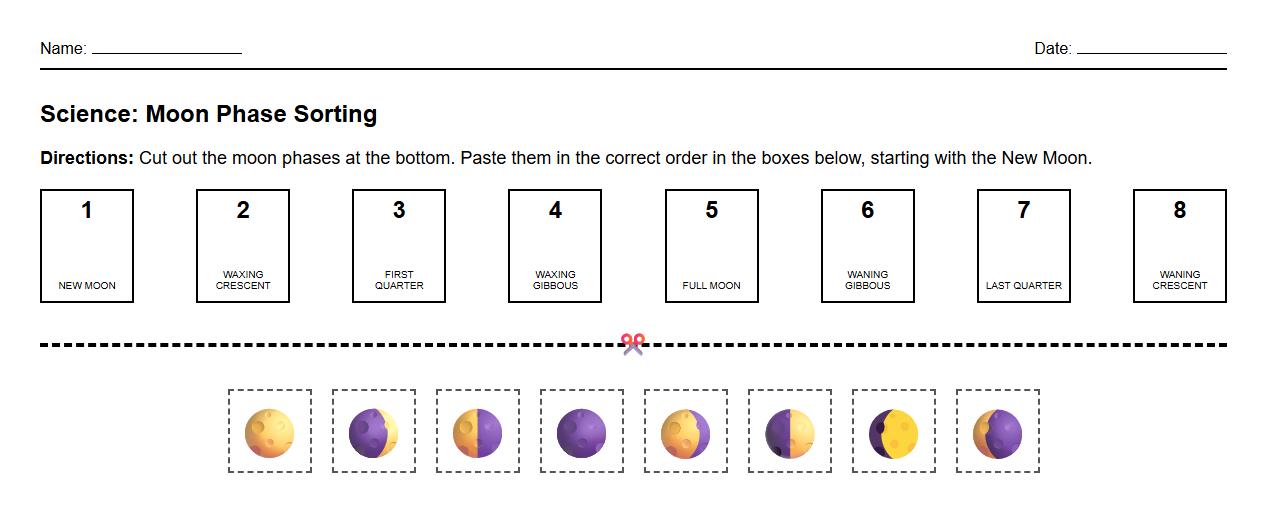
Sorting activity: Arrange moon phase images in sequential order

Download PDF     Pin it

Circle the odd moon phase in each row
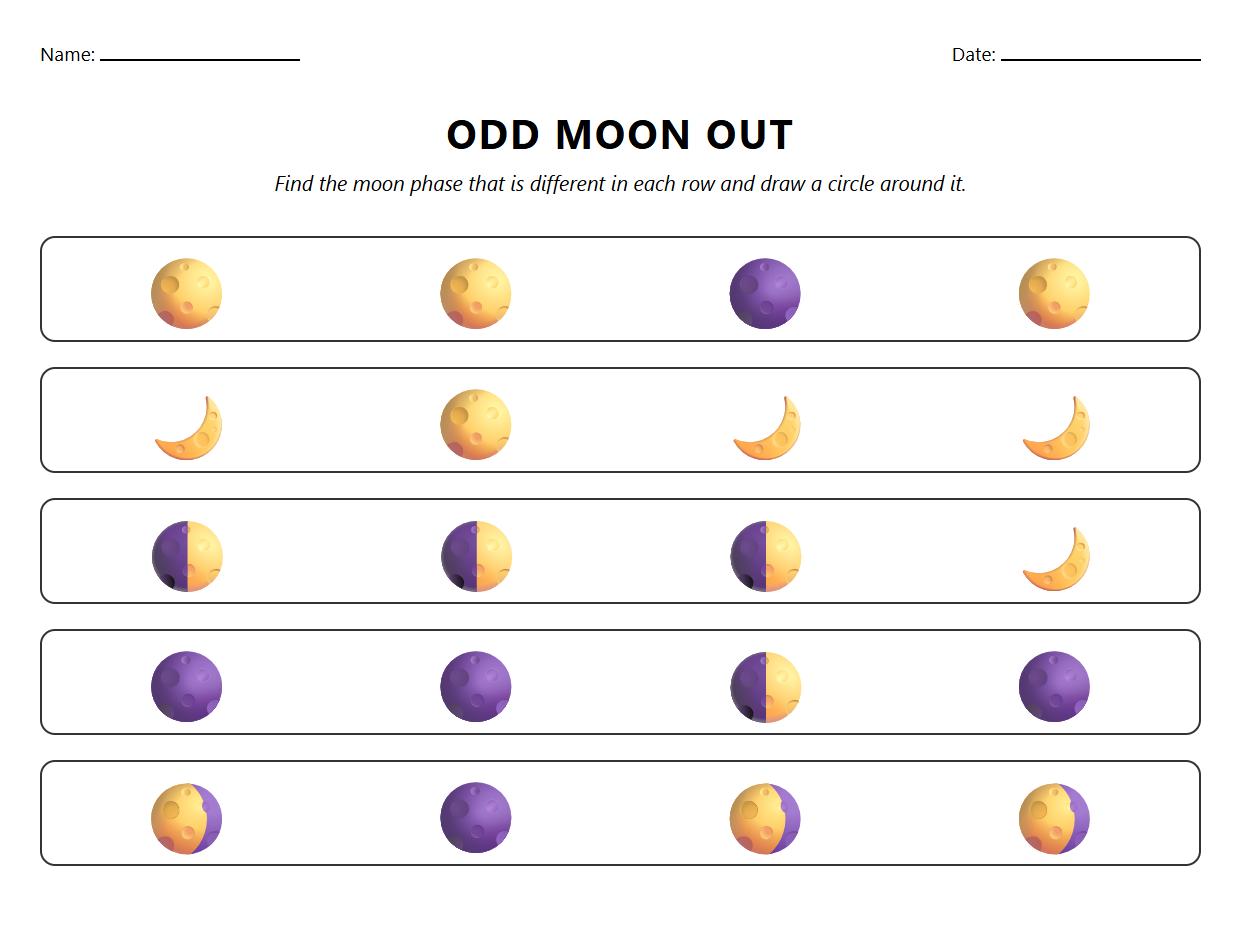
Circle the odd moon phase in each row

Download PDF     Pin it

Phonics worksheet matching moon phase pictures with correct initial letter
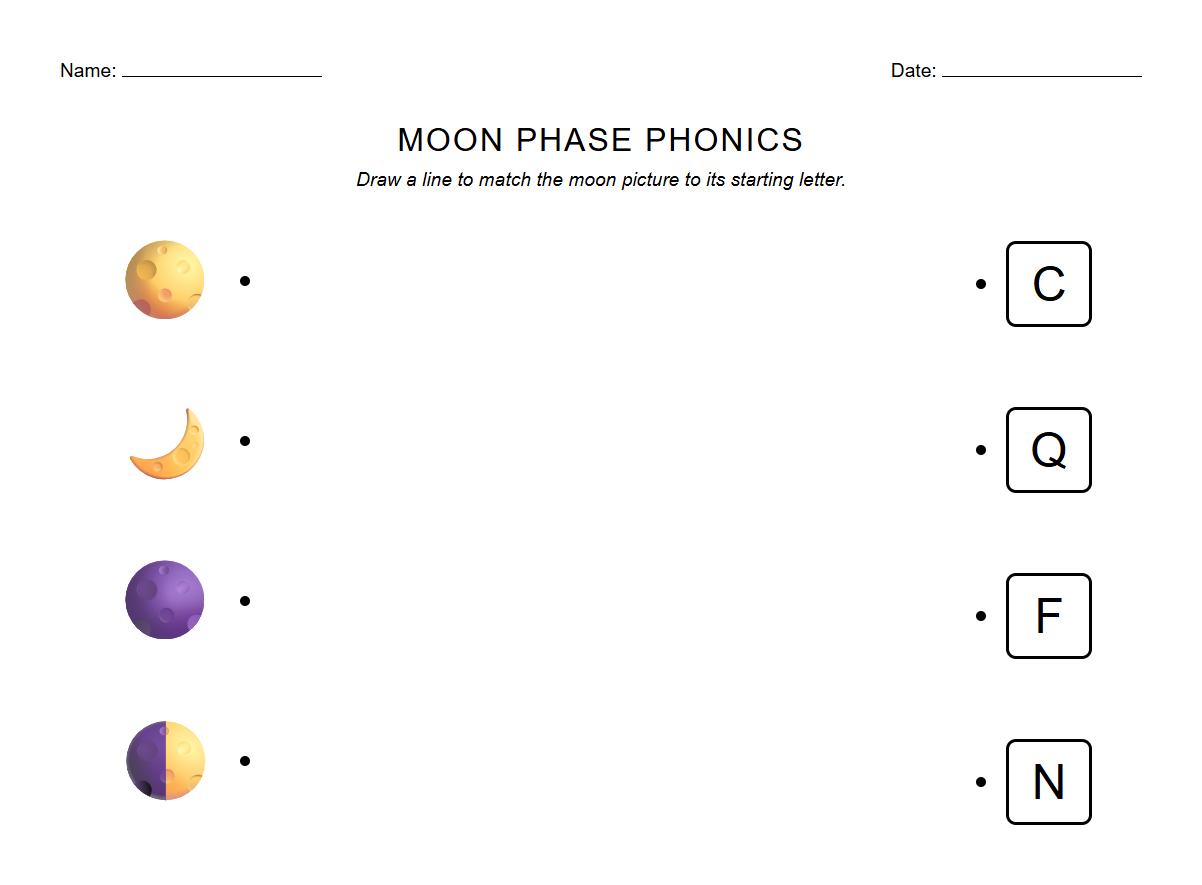
Phonics worksheet matching moon phase pictures with correct initial letter

Download PDF     Pin it

Visual discrimination worksheet: Spot the difference in moon phase illustrations
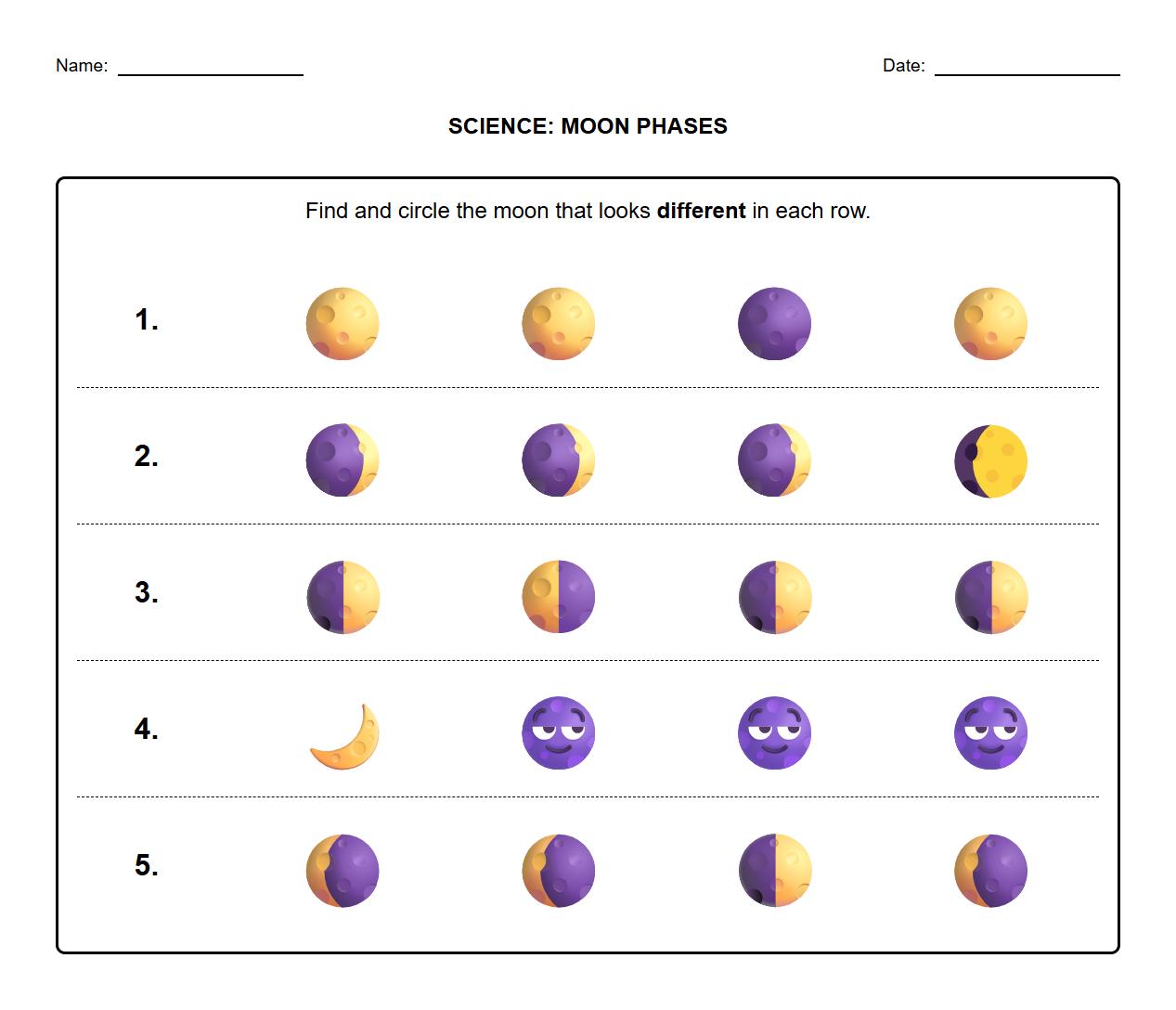
Visual discrimination worksheet: Spot the difference in moon phase illustrations

Download PDF     Pin it

Fill in the missing letter for moon phase words using phonics cues
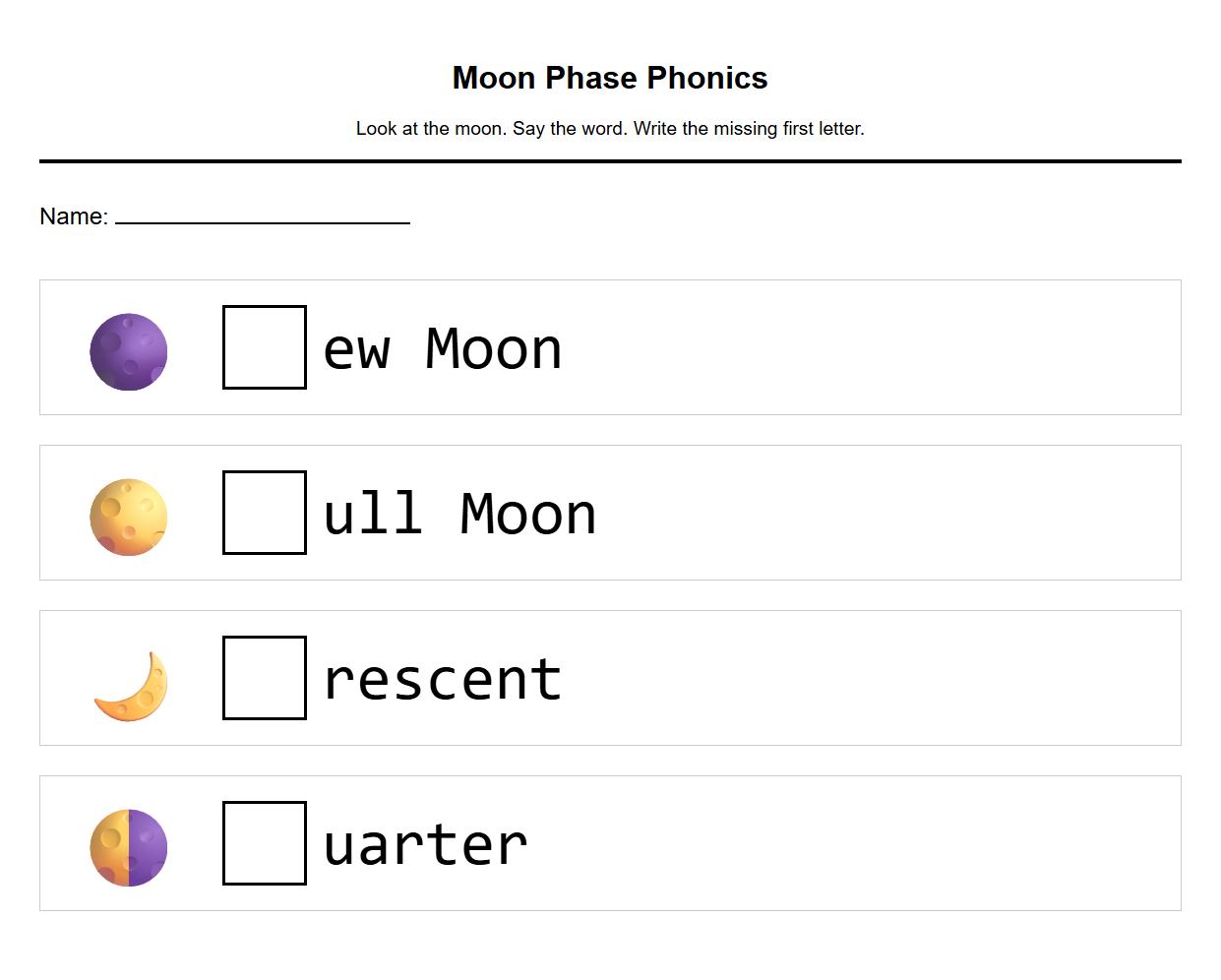
Fill in the missing letter for moon phase words using phonics cues

Download PDF     Pin it

Shadow matching worksheet for moon phases
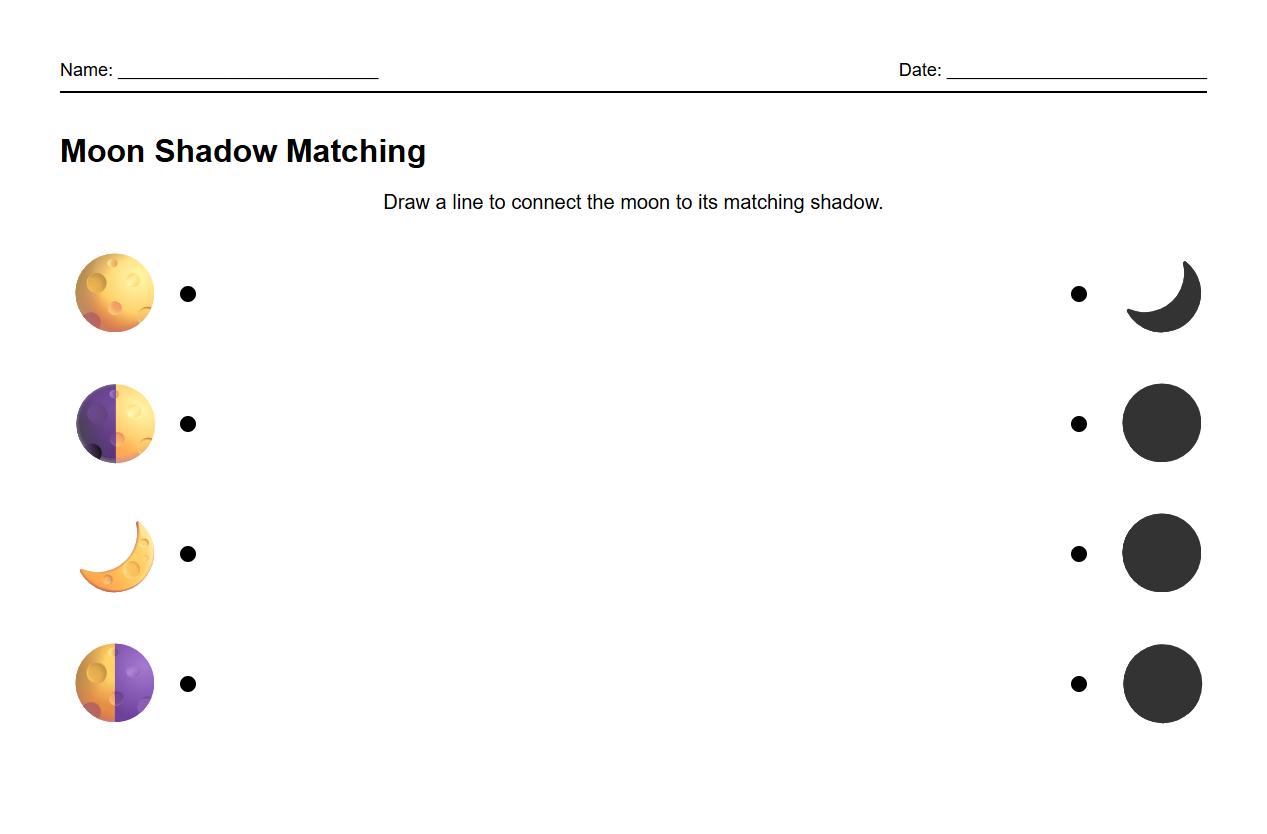
Shadow matching worksheet for moon phases

Download PDF     Pin it

Phonics cut and paste moon phase name to correct image
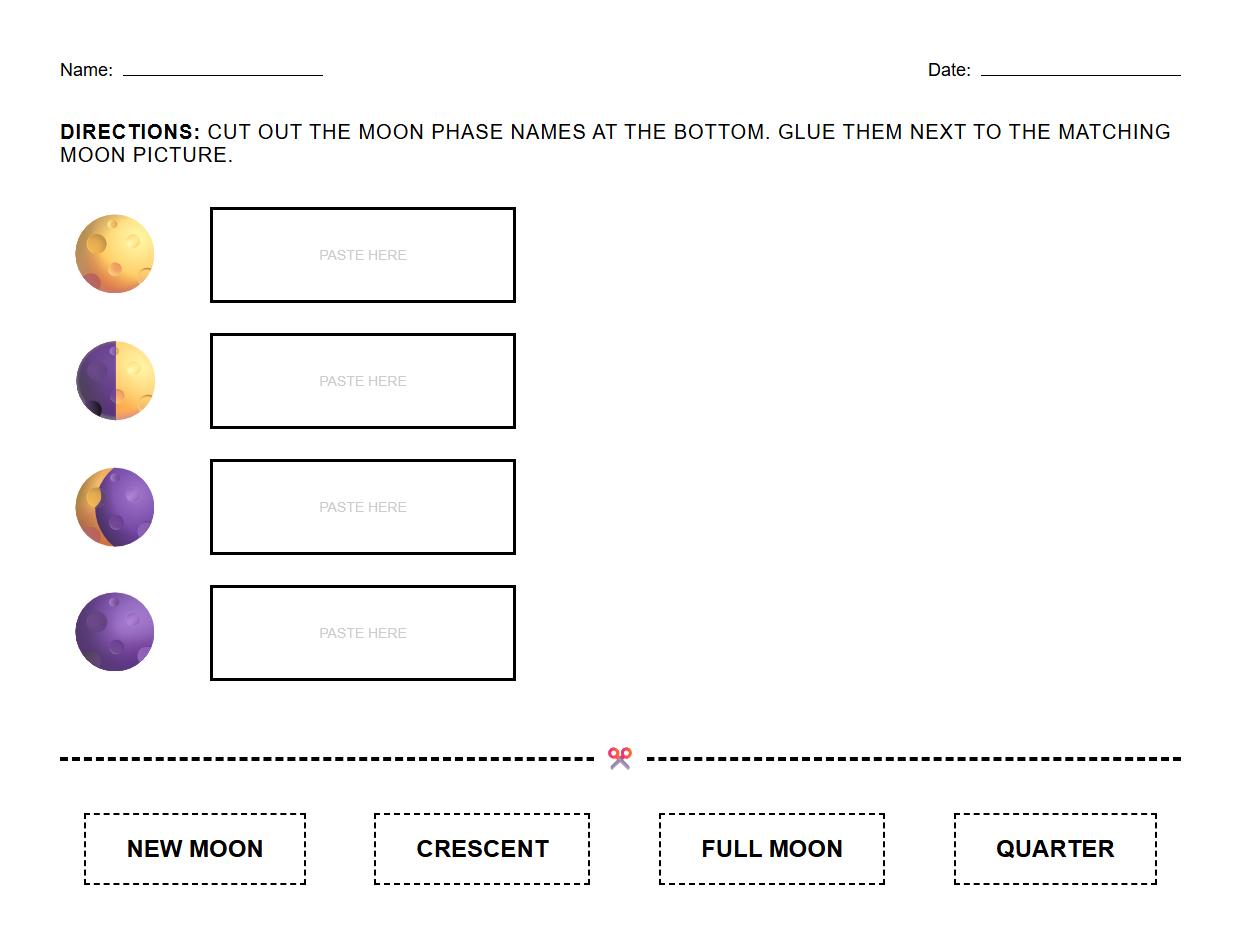
Phonics cut and paste moon phase name to correct image

Download PDF     Pin it

Visual discrimination worksheet coloring only the crescent moons from a mixed group
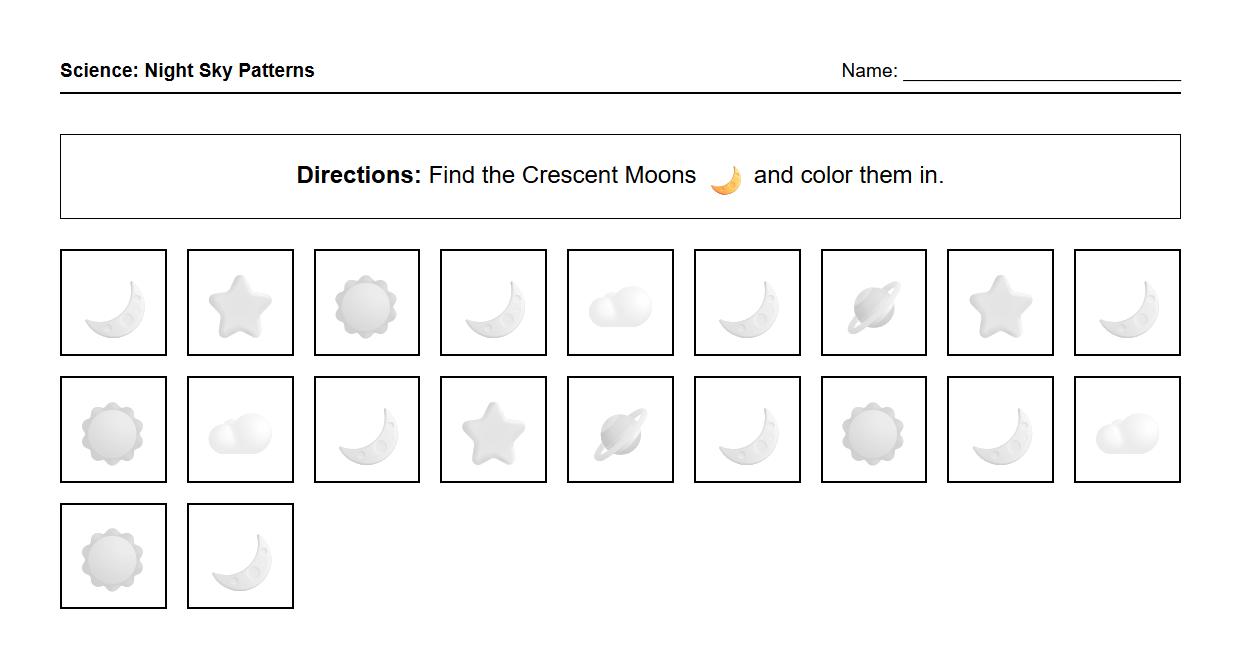
Visual discrimination worksheet coloring only the crescent moons from a mixed group

Download PDF     Pin it

Identifying the Crescent Moon

Look at the images of the moon phases carefully. The crescent moon appears as a thin, curved sliver of light on the moon's surface. It is smaller than a half moon and looks like a slim arc. Help children spot this shape among the pictures to build their observation skills.

Matching Moon Phases to Their Names

Encourage children to match each moon phase image with the correct phase name on the worksheet. This activity enhances word recognition and understanding of lunar cycles. Use clear labels and pictures to support learning. Discuss each phase briefly to reinforce the connection.

Comparing Moon Phases

Ask the children to find the two moon phases that look the most different from each other. Typically, the new moon and the full moon show the greatest contrast--one is dark, the other fully lit. This comparison helps deepen their grasp of moon phases. Visual discrimination is a key skill developed here.

Counting Syllables in "Moon"

Engage children by asking how many syllables are in the word "moon". The answer is one syllable. This simple phonological exercise aids early literacy. Use clapping or tapping to reinforce syllable recognition.

Circiling Pictures Starting with M

Guide children to look at all the pictures and circle those that start with the letter M, such as moon, man, or mouse. This activity strengthens letter-sound correspondence. Encourage saying the items out loud to emphasize initial sounds. It supports phonemic awareness in young learners.

Moon Phase with Most Light

Ask which moon phase shows the most light. The full moon is fully illuminated, making it easy to identify. This question builds observational and vocabulary skills about lunar phases. Discuss why the full moon looks so bright to deepen understanding.

Finding Words That Rhyme with "Moon"

Challenge children to find words on the worksheet that rhyme with "moon". Examples include "spoon" or "June." Rhyming enhances phonological awareness and reading skills. Use this as a fun language game to develop listening and vocabulary.

First Moon Phase in the Sequence

Direct children to point to the moon phase that comes first in the lunar cycle. The new moon starts the sequence, marked by its darkened appearance. Understanding this sequence builds knowledge of natural cycles. Use visuals to help cement this concept.

Moon Phase Name Starting Like "Man"

Help children identify which moon phase name starts with the same sound as the word "man". The phase is the moon itself or possibly "waning" phases that start with a "w" sound. Emphasize the initial consonant sound to build phonemic awareness. Sorting words by sounds strengthens reading readiness.

Choosing Words Ending Like "Moon"

Have children select the word that ends with the same sound as "moon". Focus on the "-oon" ending, such as "balloon" or "cartoon." This task bolsters rhyme recognition and pronunciation skills. Use playful reading activities to engage young learners further.


More in Science Category


About the author. Nylen Smith is a dedicated educator and cofounder of KWorksheet.com, a popular platform specializing in high-quality kindergarten worksheets and printable activities.

Disclaimer. The information provided in this document is for general informational purposes and/or document sample only and is not guaranteed to be factually right or complete. Please report to us via contact-us page if you find and error in this page, thanks.

Comments

No comment yet