Explore foundational phonics skills through engaging activities centered on earth and space themes to enhance early literacy development. This activity sheet combines imaginative content with essential phonemic awareness exercises, supporting young learners in recognizing sounds and building vocabulary. Discover the available worksheets to spark curiosity and strengthen reading readiness.
Understanding the Letter S Sound
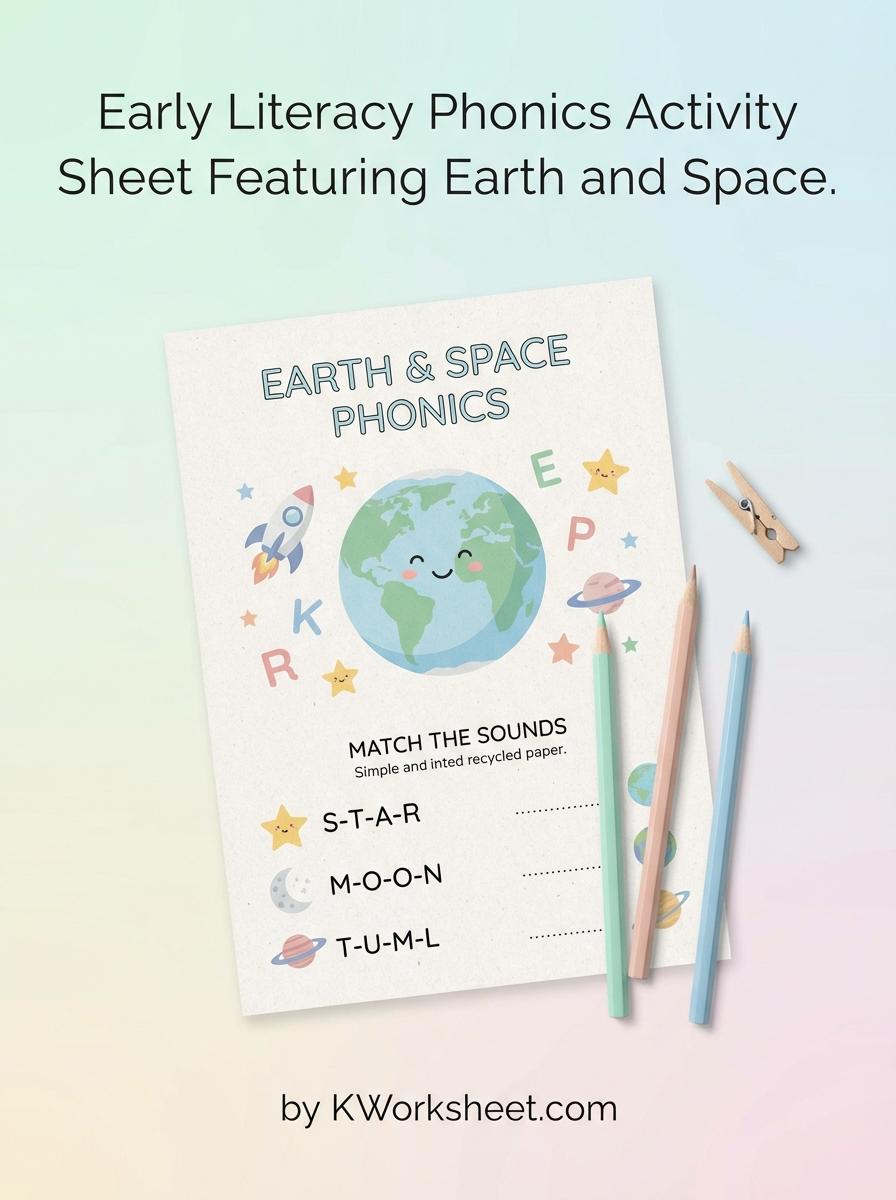
Focus on the sound of the letter S as in the word "star." Help children recognize this by emphasizing the initial hissing sound. Encourage repetition to reinforce auditory learning. This builds foundational phonemic awareness for early reading skills, similar to activities found in the Interactive Phonics-Based Human Body Vocabulary Worksheet.
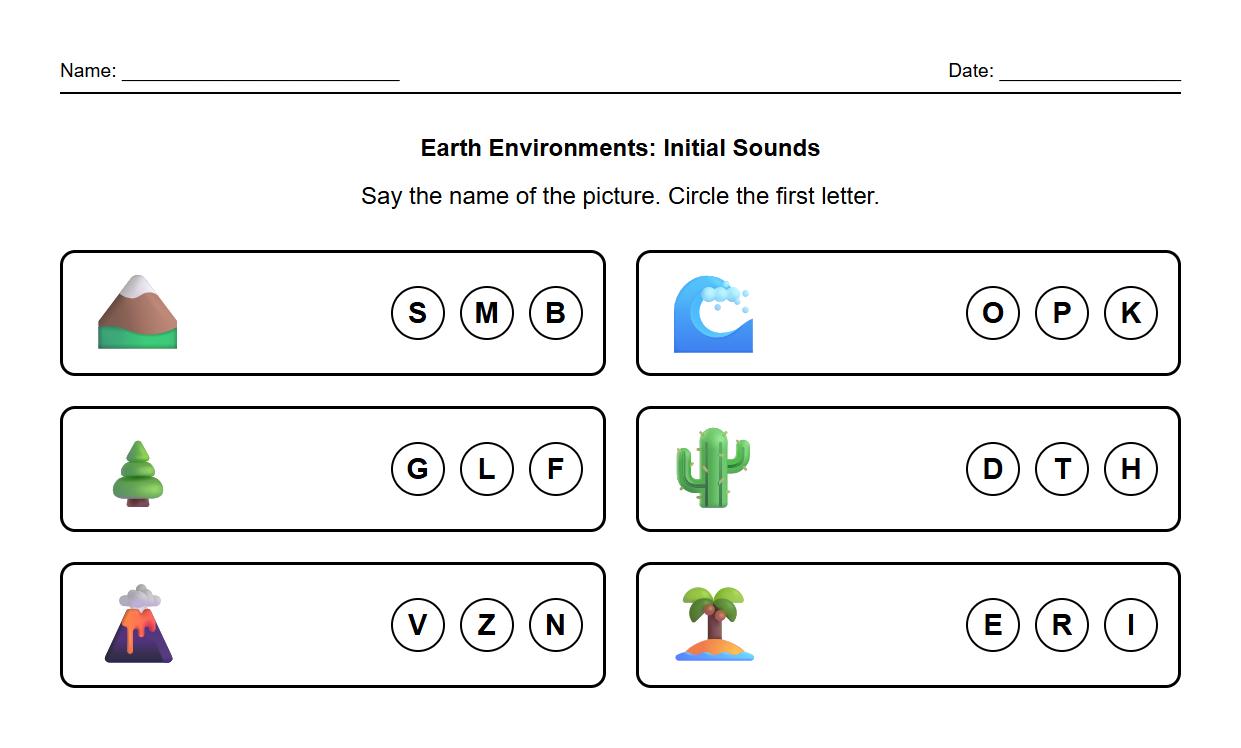
Identifying Words Starting with Letter E
Ask children to circle pictures that start with the letter E. This activity sharpens letter recognition and initial sound association, much like exercises featured in the Scientific Inquiry Magnet Worksheet. Use clear, familiar images to make the task engaging. It supports early vocabulary and alphabet understanding.
Recognizing Rhyming Words
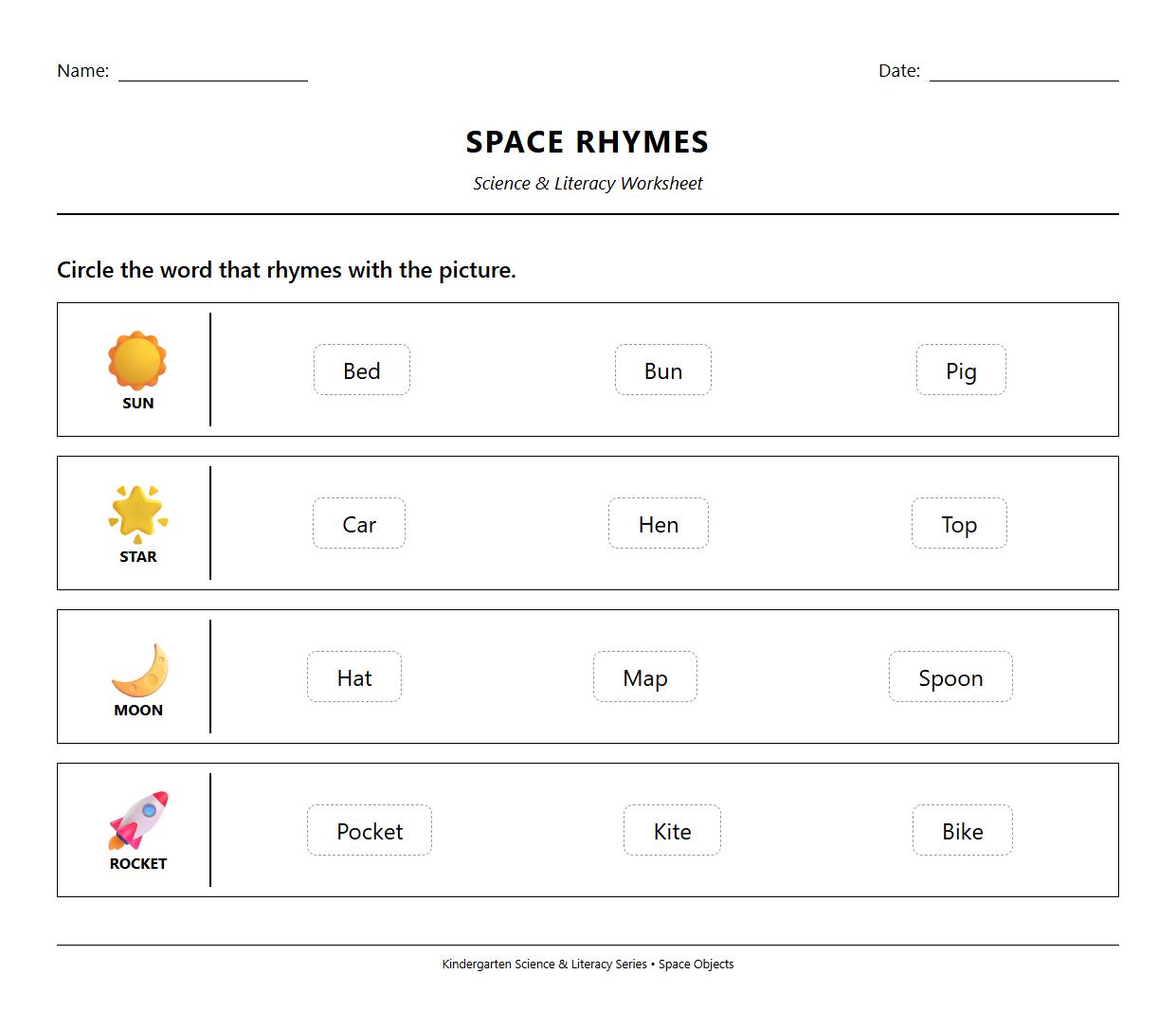
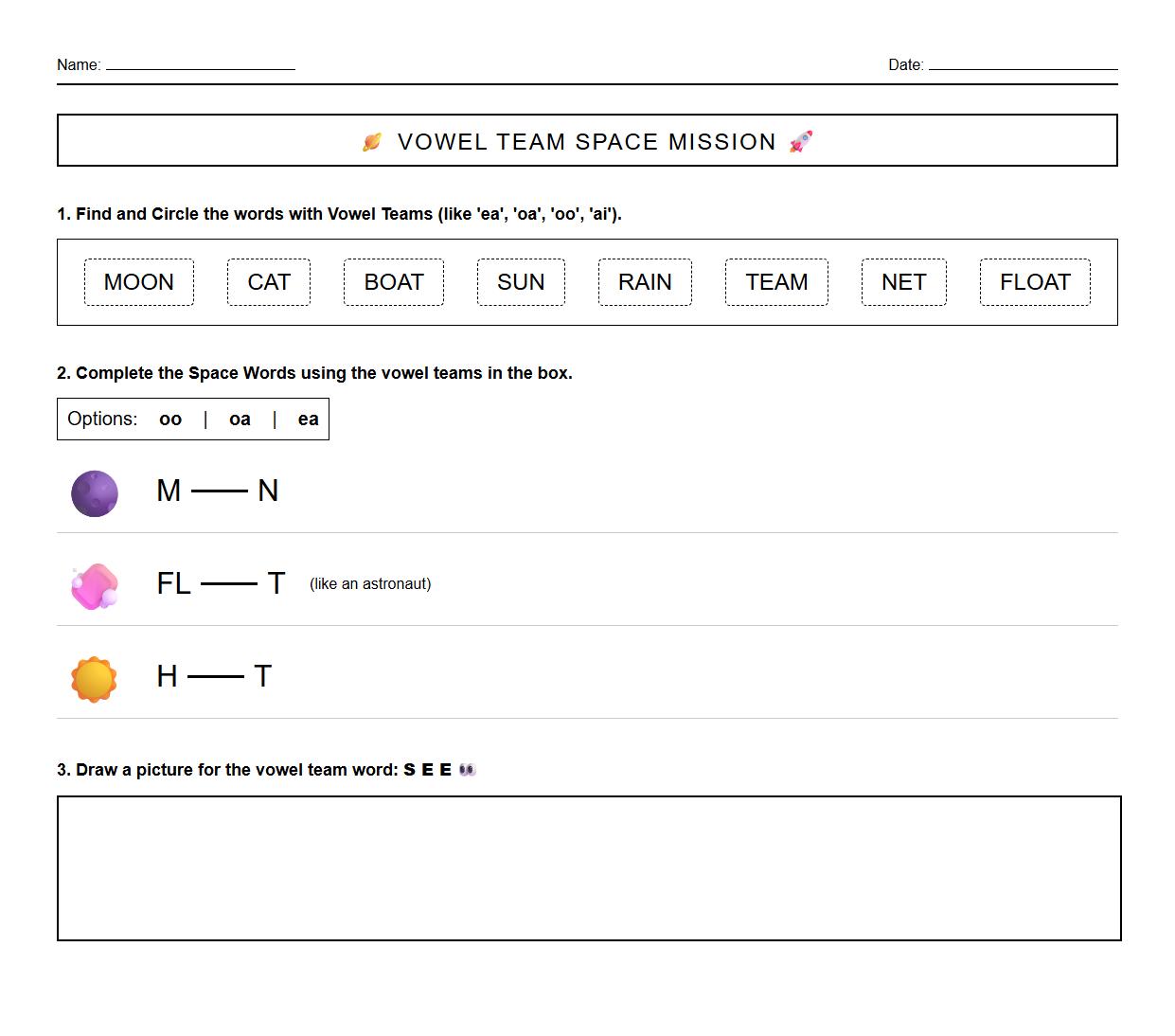
Help children choose which word rhymes with "moon"-spoon or dog. Rhyming enhances phonological awareness crucial for reading. Encourage identifying similar ending sounds, using techniques similar to those in the Reading Comprehension Worksheet: Seasonal Changes. This fun comparison strengthens sound pattern recognition.
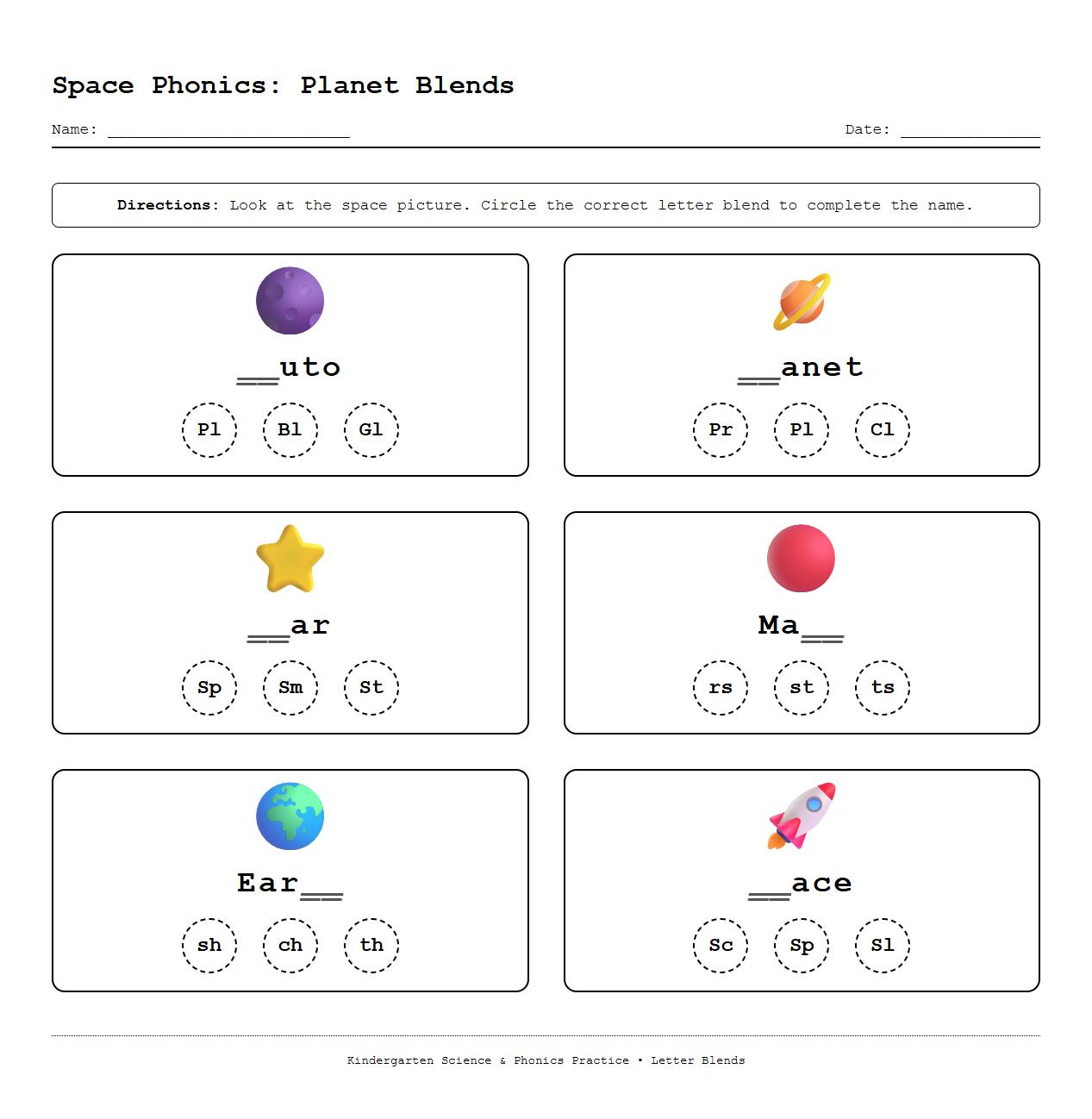
Identifying Space Objects
Guide children to point to pictures of objects seen in space. This sparks curiosity and connects learning with real-world knowledge. Use accessible images like stars, planets, or rockets, as inspired by the Weather Charting Worksheet: Visual Data for Kids. It expands vocabulary related to space exploration.
Letter Sound Recognition in 'Earth'
Ask, "Which letter does the word earth start with?" This reinforces initial letter-sound correspondence using strategies such as those found in the Kindergarten Science Worksheet: Exploring Animal Needs. Support children in making the connection between spoken words and letters. This skill is vital for early literacy development.
Finding and Coloring 'sh' Sound Objects
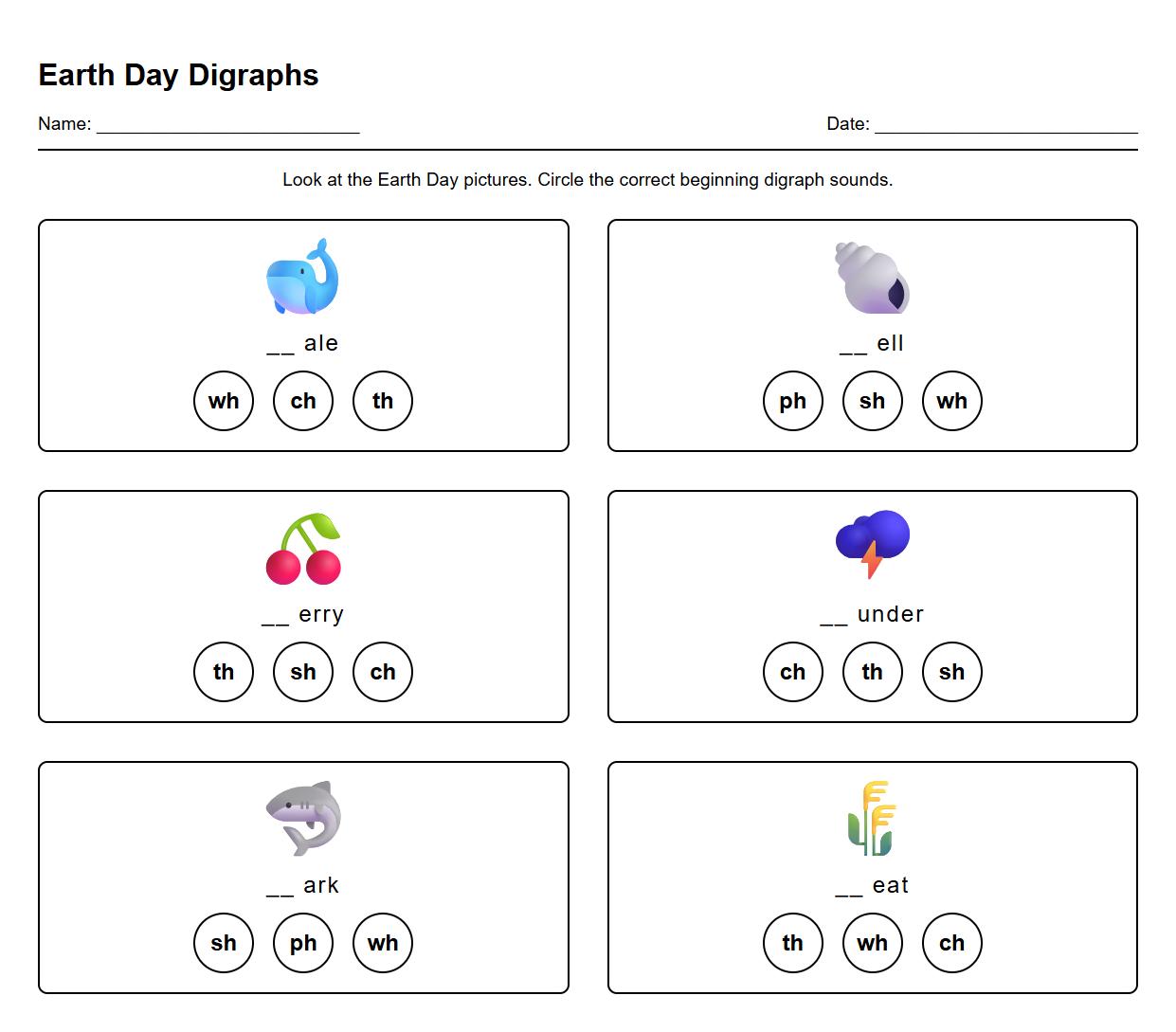
Encourage children to find and color objects with the "sh" sound in a picture, an interactive task similar to the Cut and Paste Worksheet: Weather Symbols Recognition. This promotes sound discrimination and fine motor skills. Choosing objects with this digraph helps in mastering complex sounds, making phonics learning playful and hands-on.
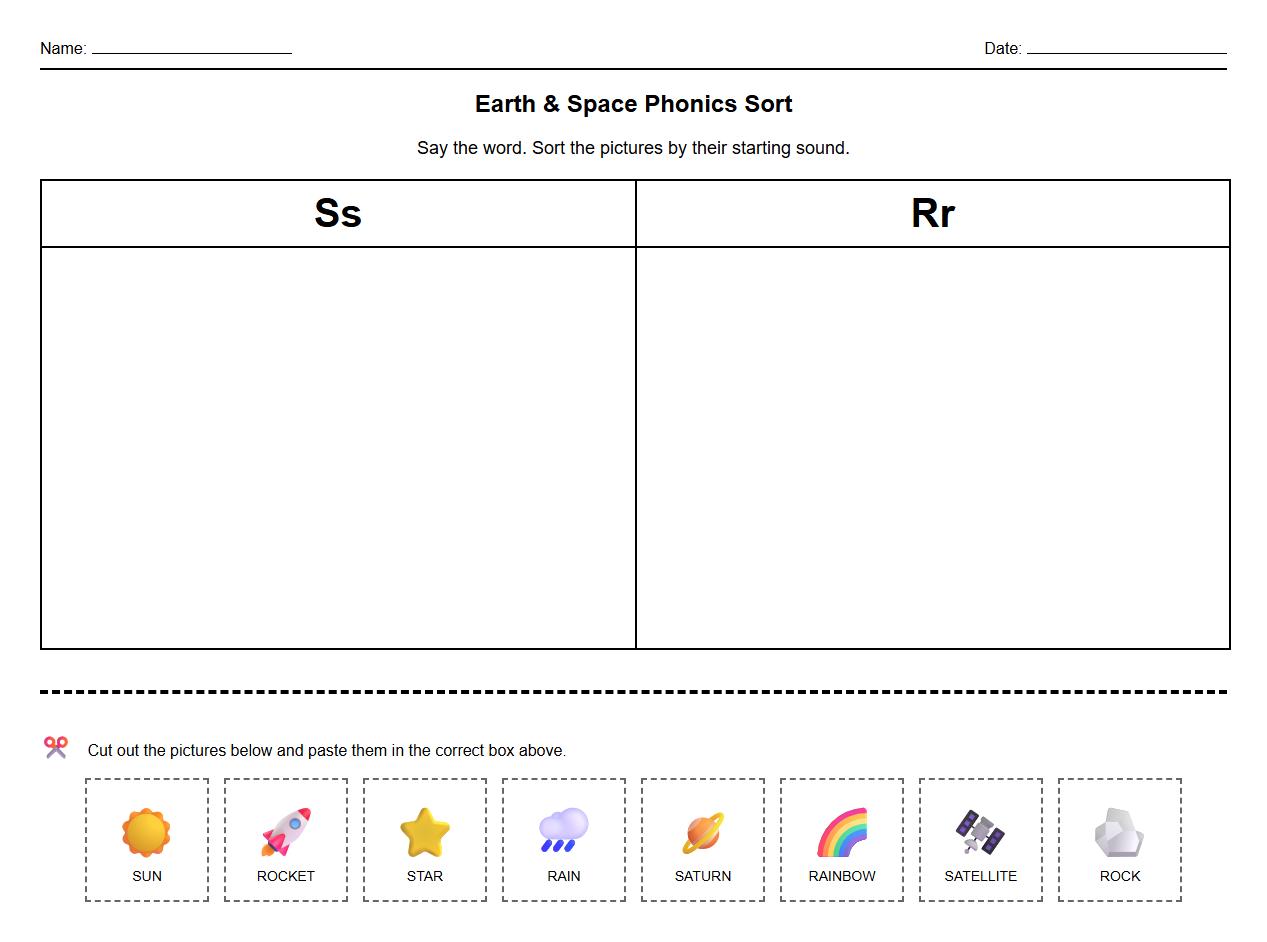
Identifying the First Sound in the Word Sun
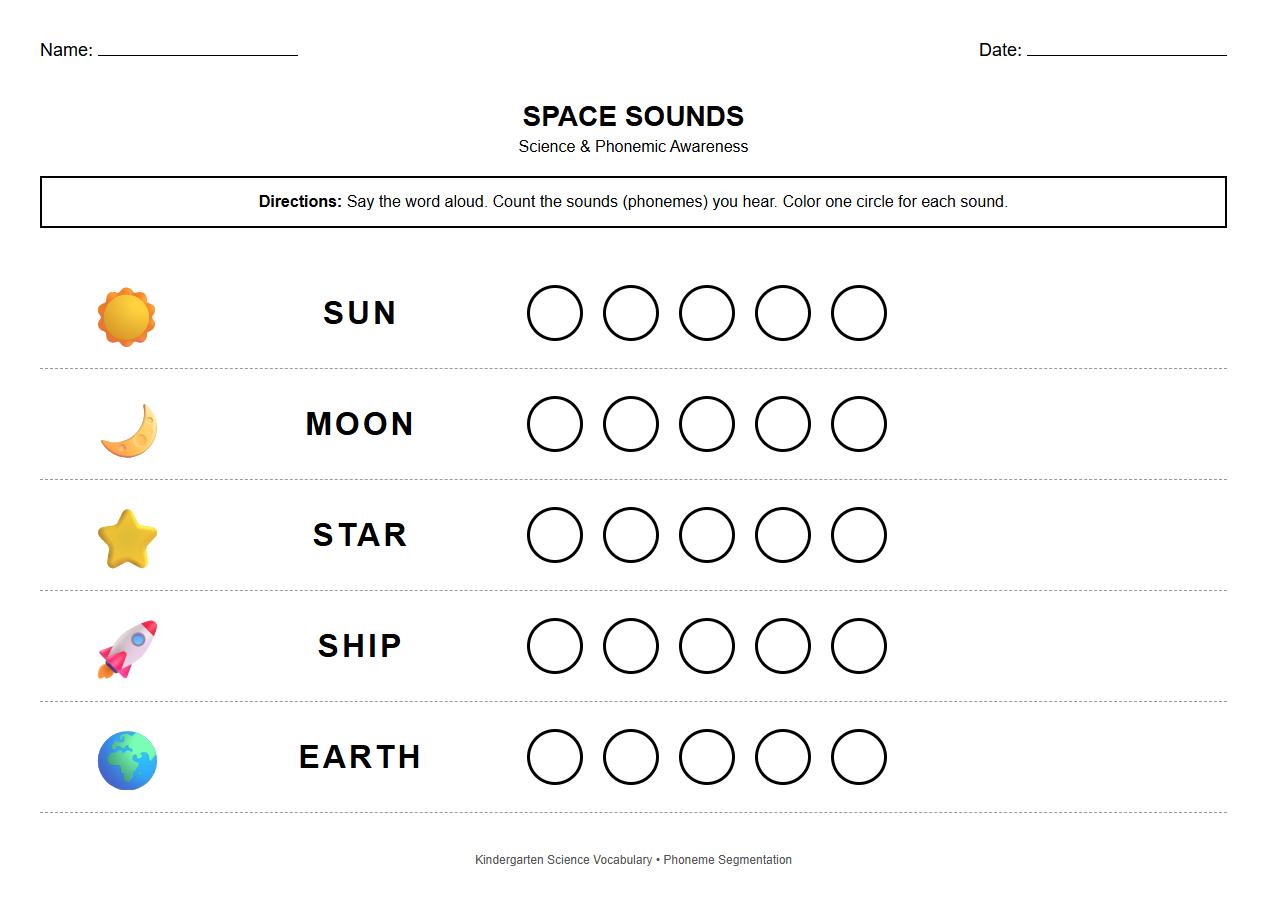
Ask, "What is the first sound you hear in the word sun?" This focuses attention on the initial phoneme. Early sound segmentation supports decoding skills, aligning with practices from the Engaging Human Body Parts Identification Worksheet. Reinforce this through repeated examples and activities.
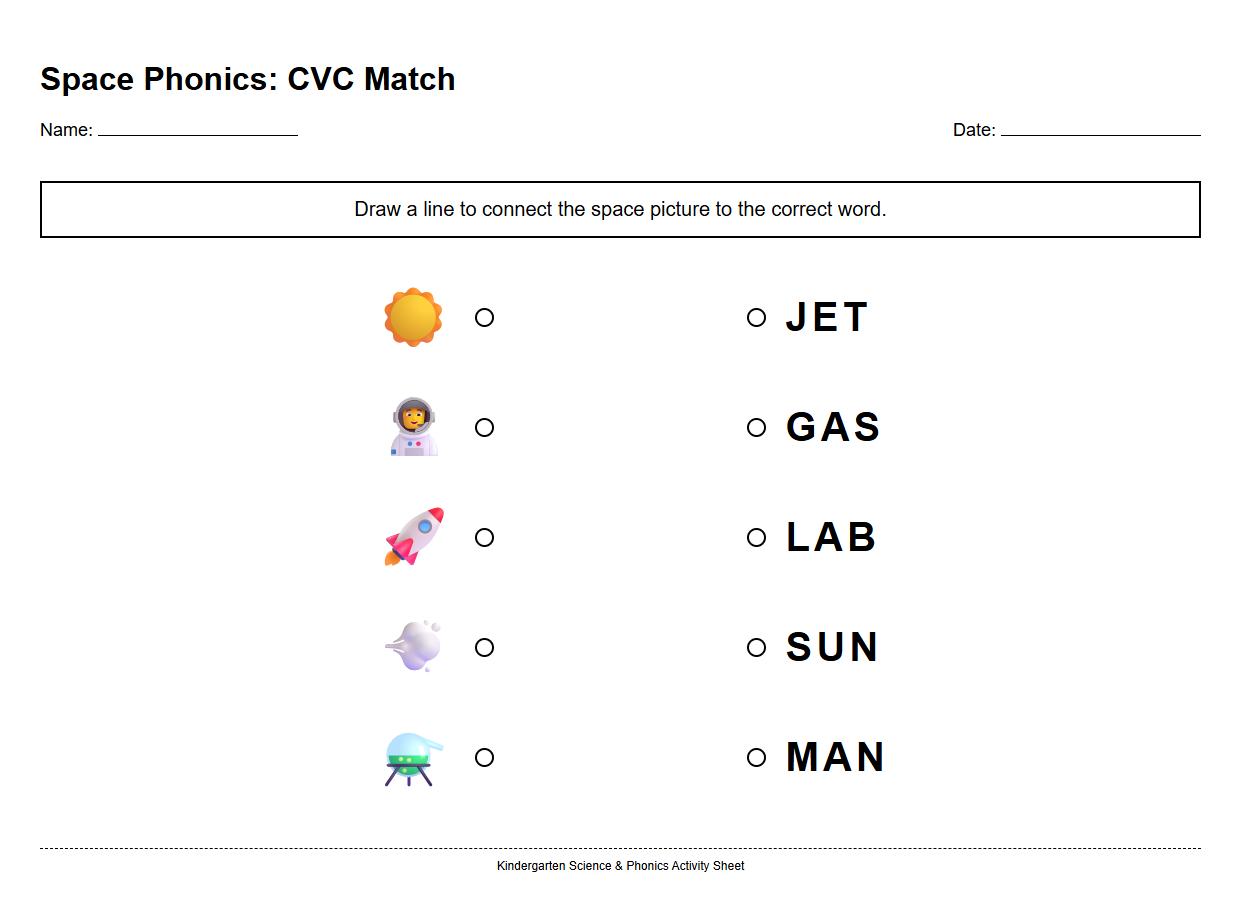
Matching Pictures to Beginning Letter Sounds
Have children match pictures to their beginning letter sounds, a technique that strengthens letter-sound relationships necessary for reading and is reflected in the Worksheet: Sorting Animals-Mammals, Birds, and Fish. Use diverse and familiar images for better engagement. It aids memory retention and phonetic understanding.
Counting Syllables in Words
Teach children to count syllables in words like rocket. Clap or tap to break the word into syllables, echoing active participation methods used in the Directional Force Worksheet for Young Scientists. This awareness aids fluency and pronunciation. Syllable counting is an essential aspect of phonological processing.
Naming Space Objects Starting with A
Invite children to name things in space that start with the letter A, such as "asteroid" or "astronaut." This links letter learning with thematic vocabulary, similar to integrated activities from the Basic Hygiene Routine Chart Worksheet. It enhances both alphabet knowledge and content-based learning, enriching language skills.


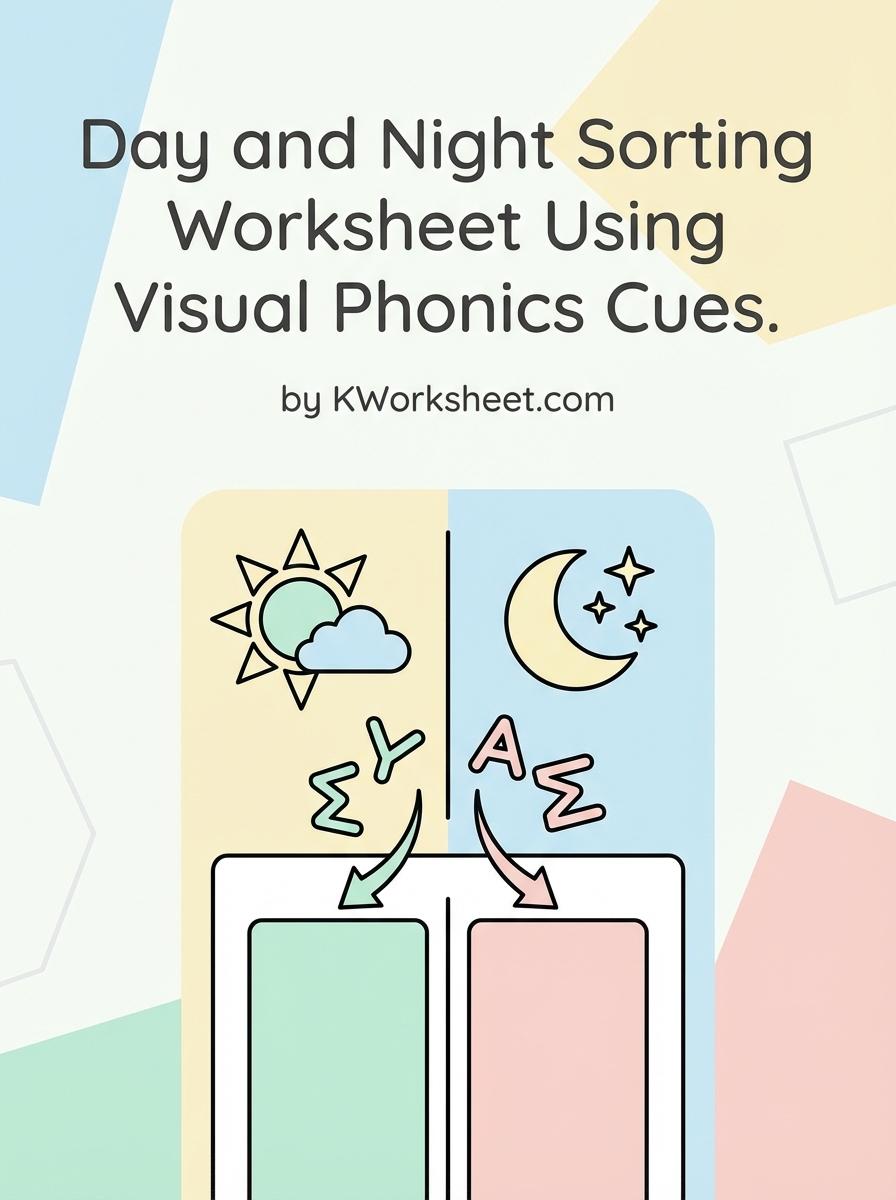
Day and Night Sorting Worksheet Using Visual Phonics Cues