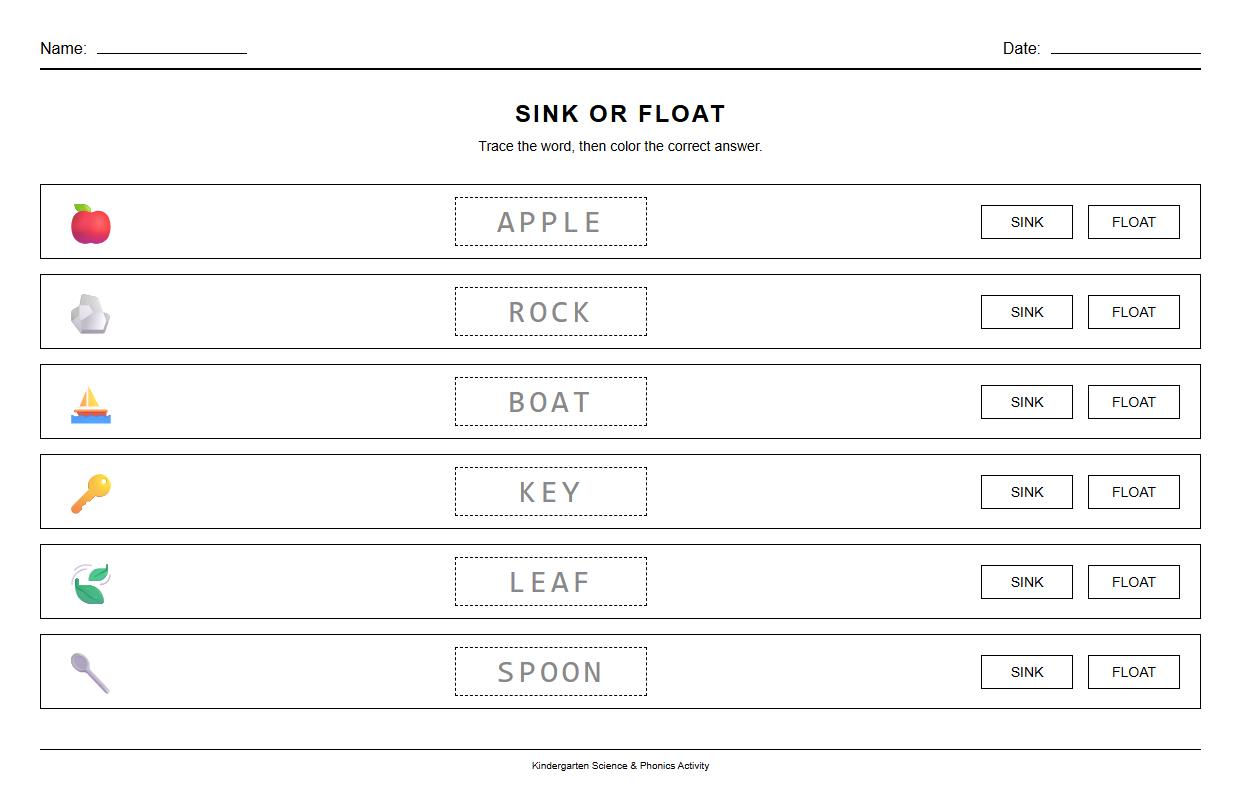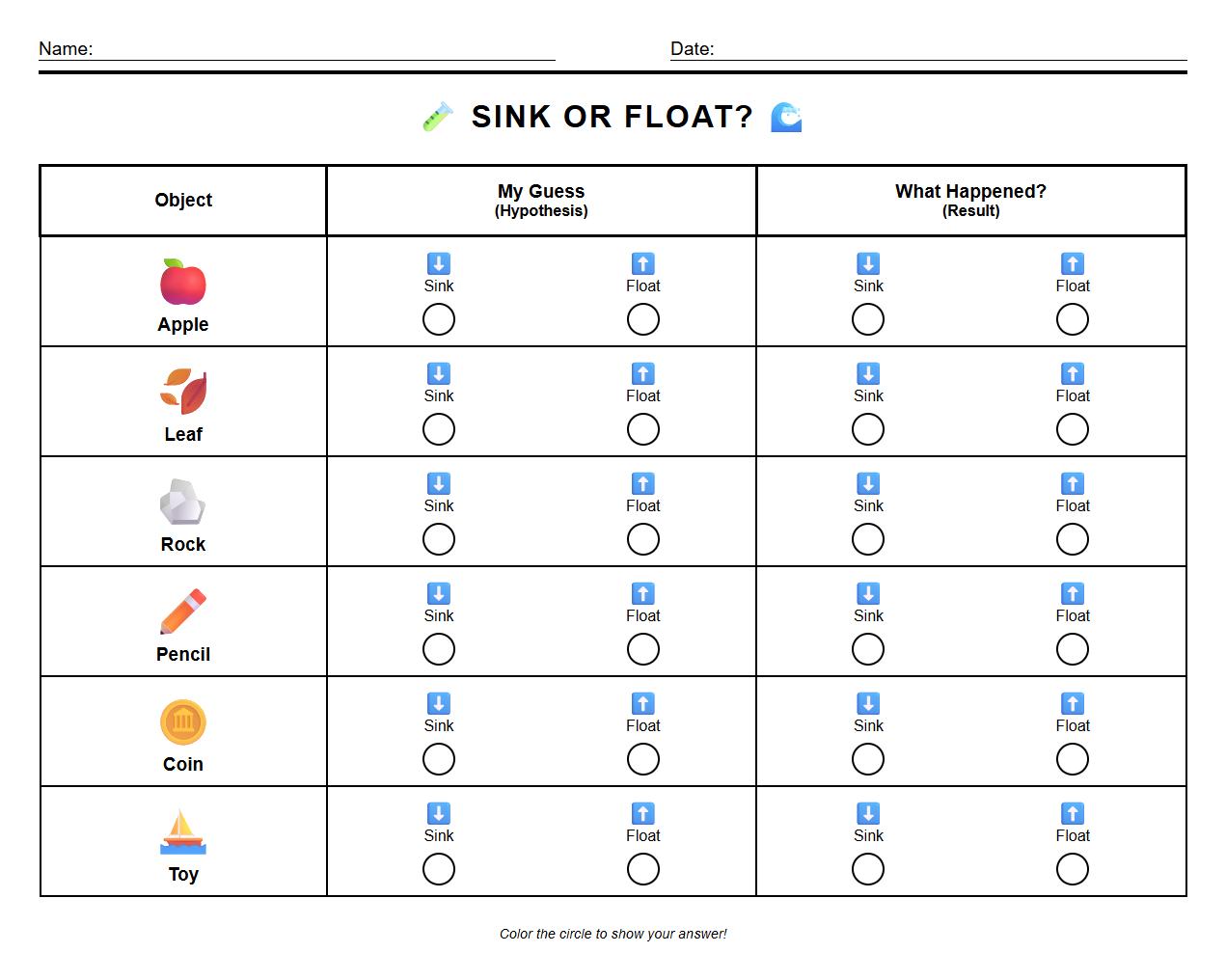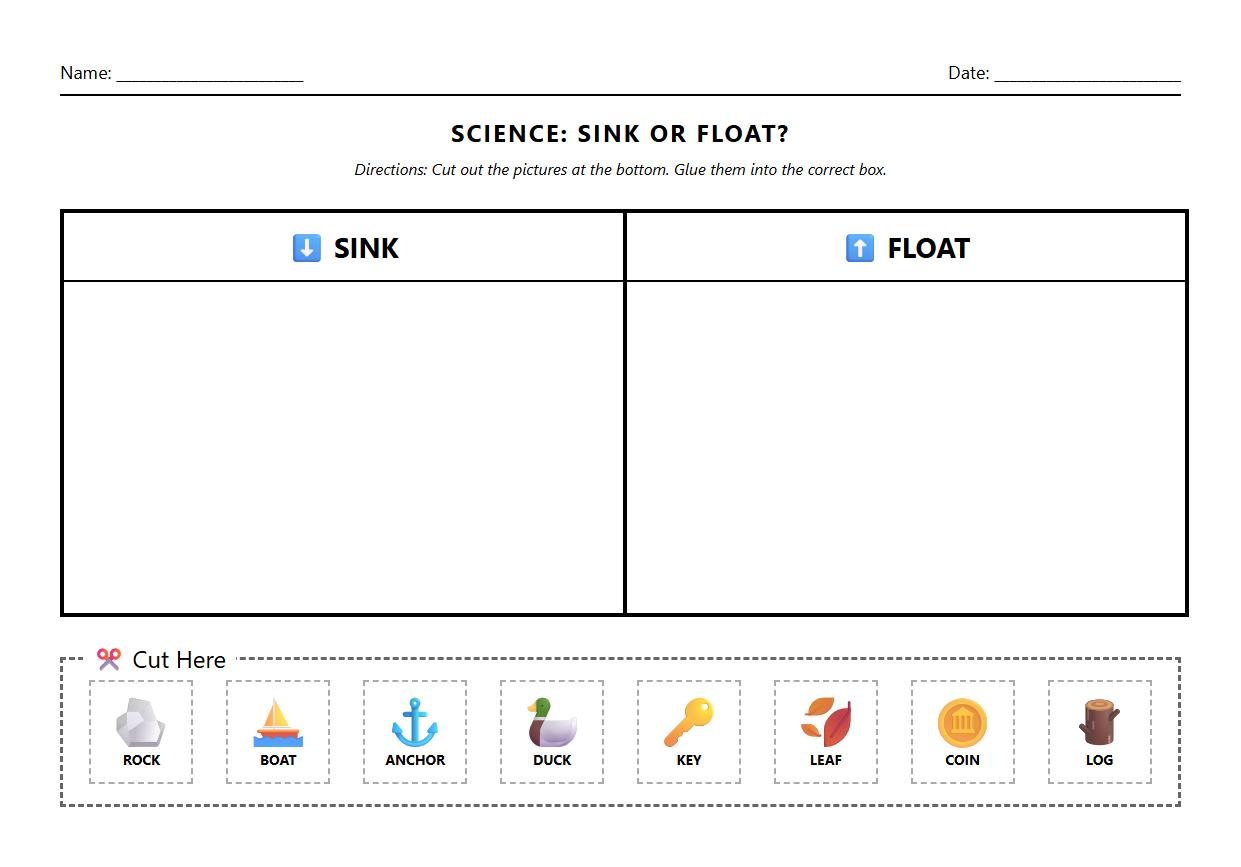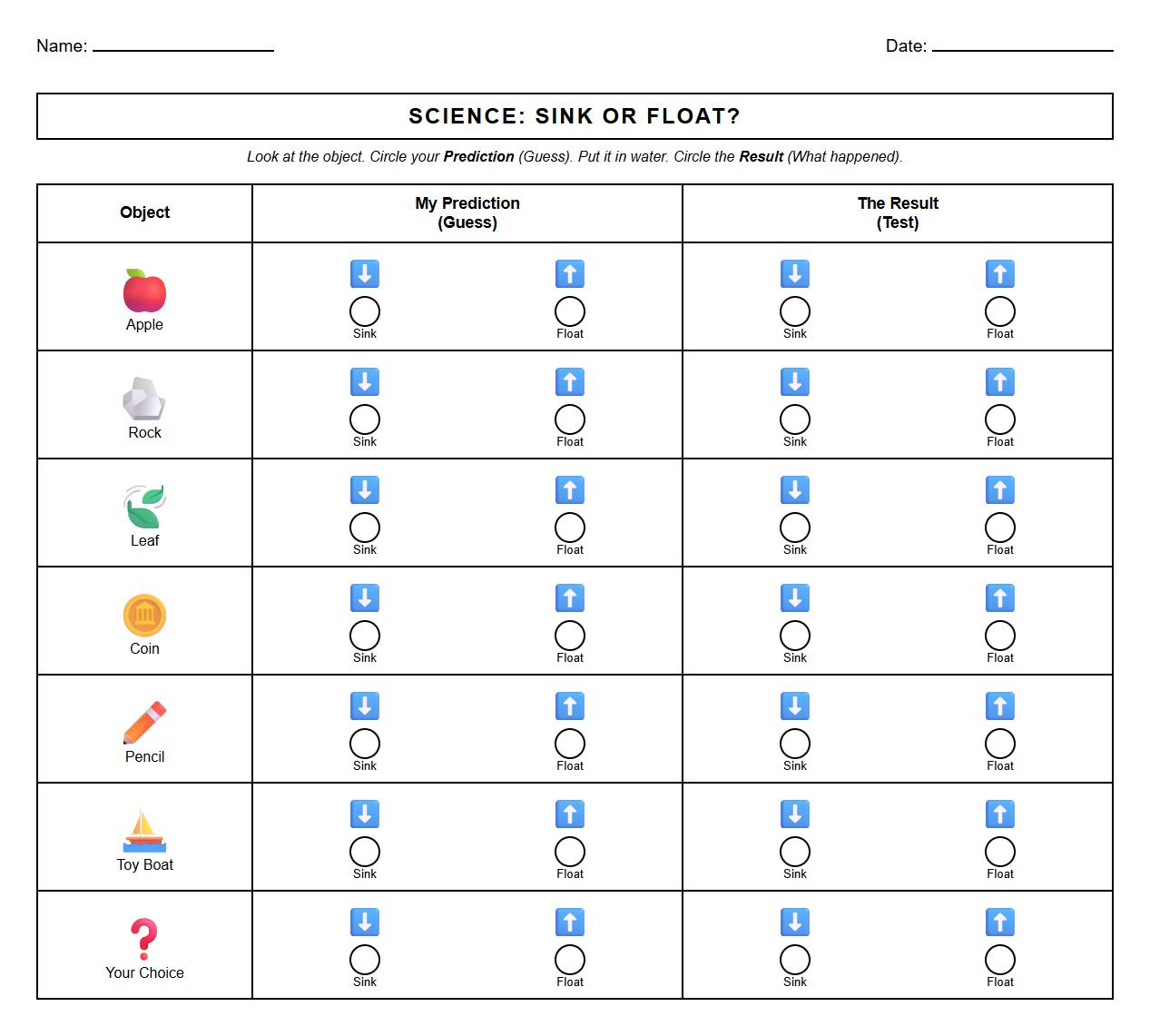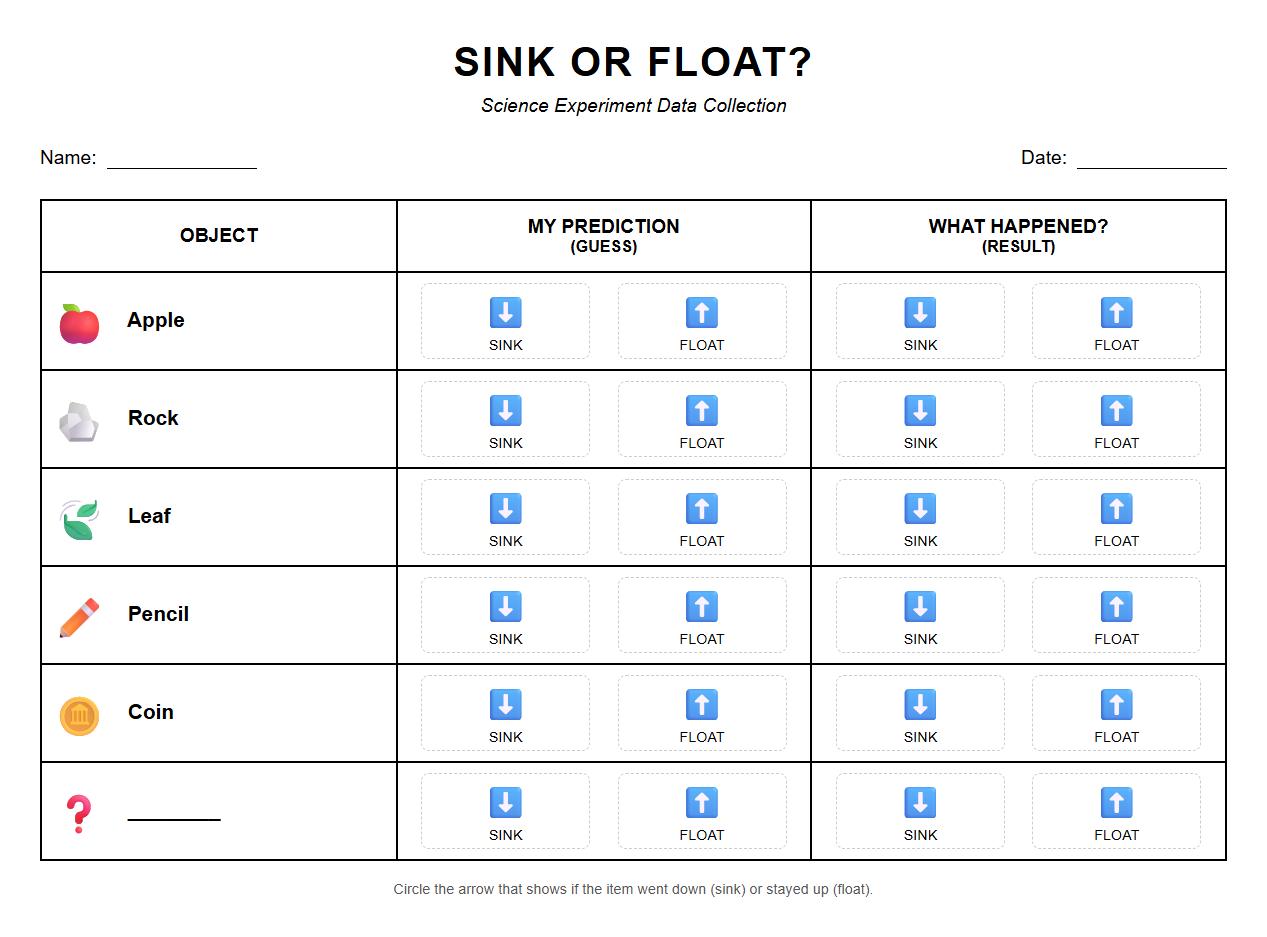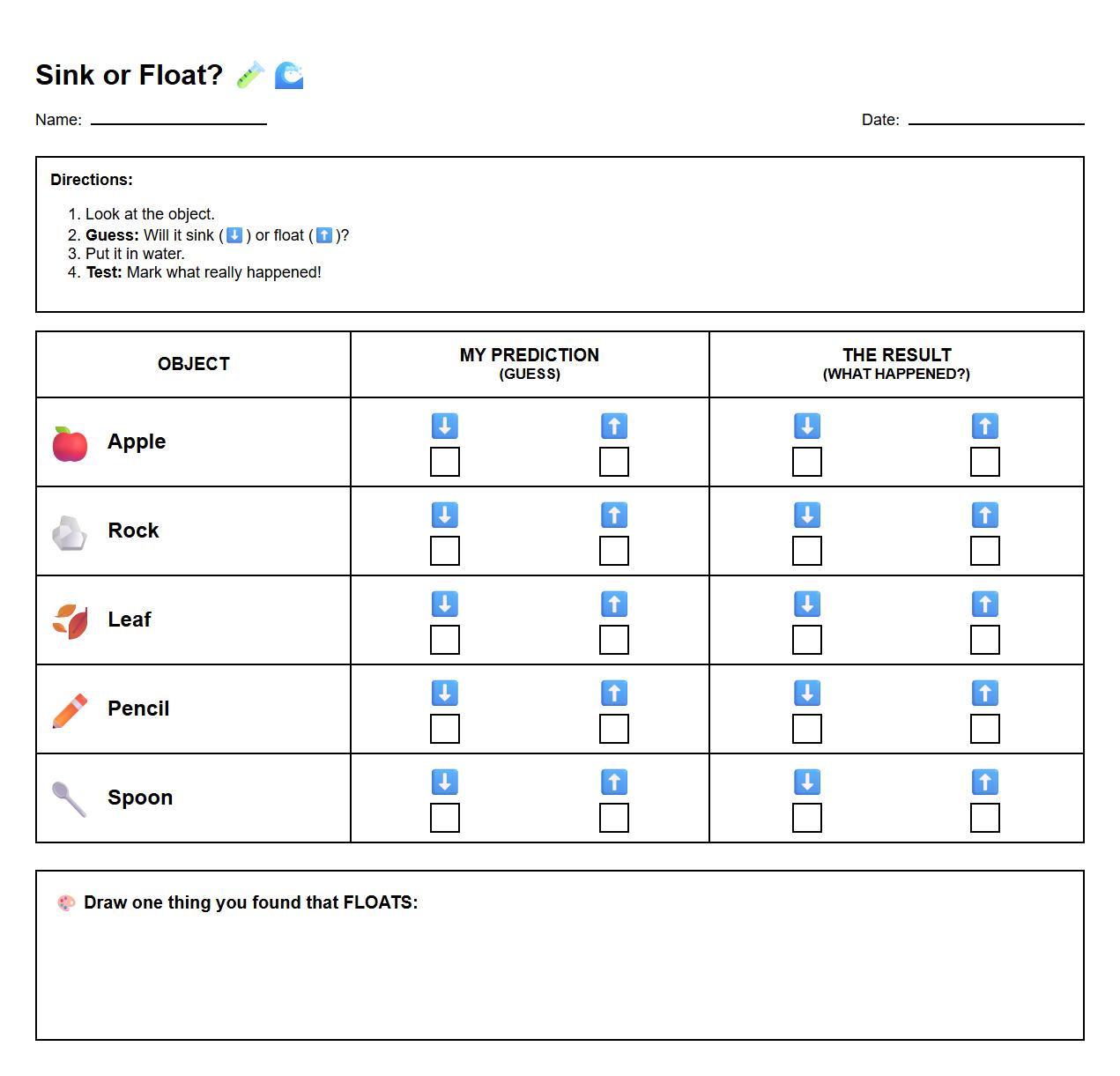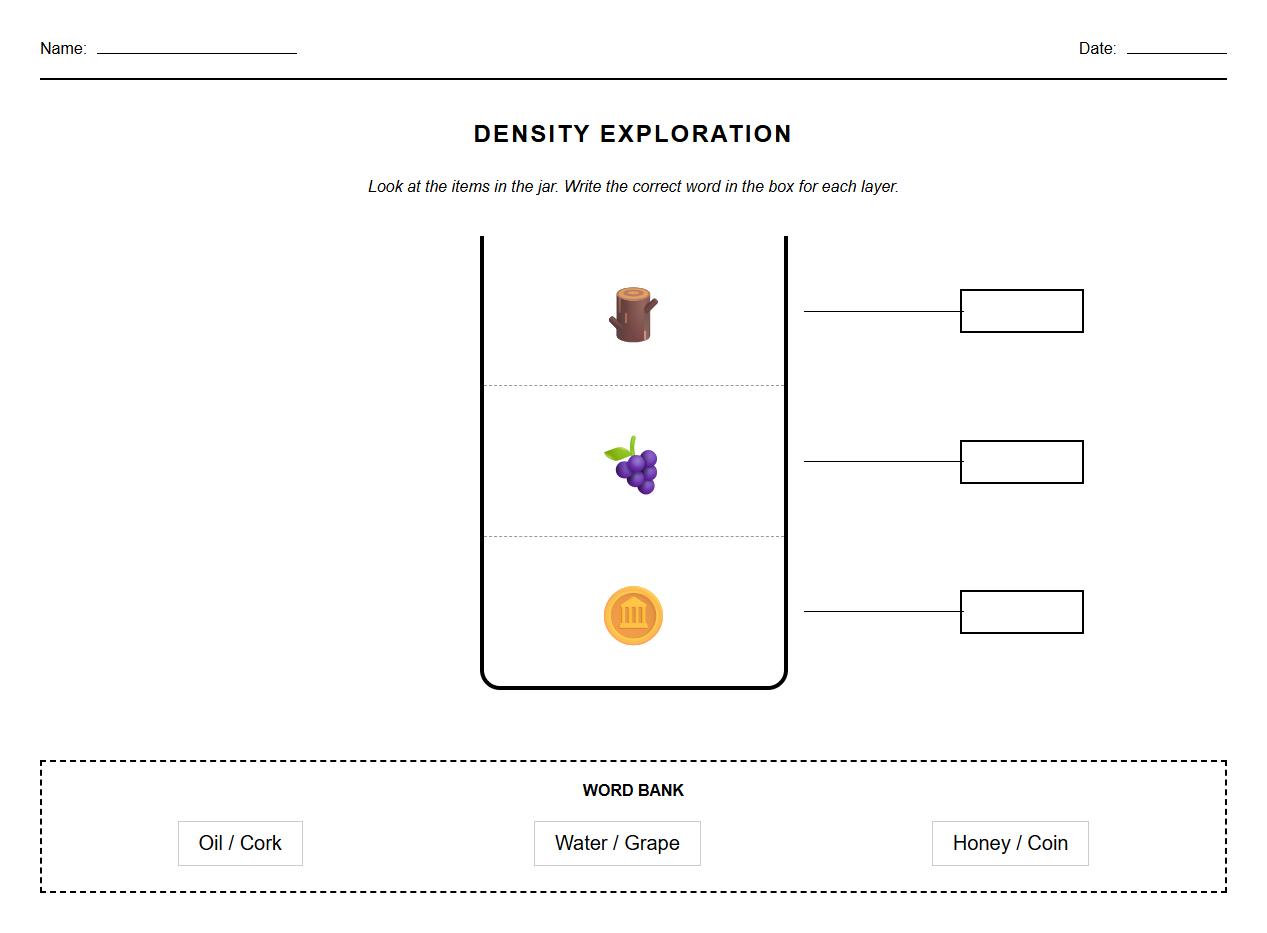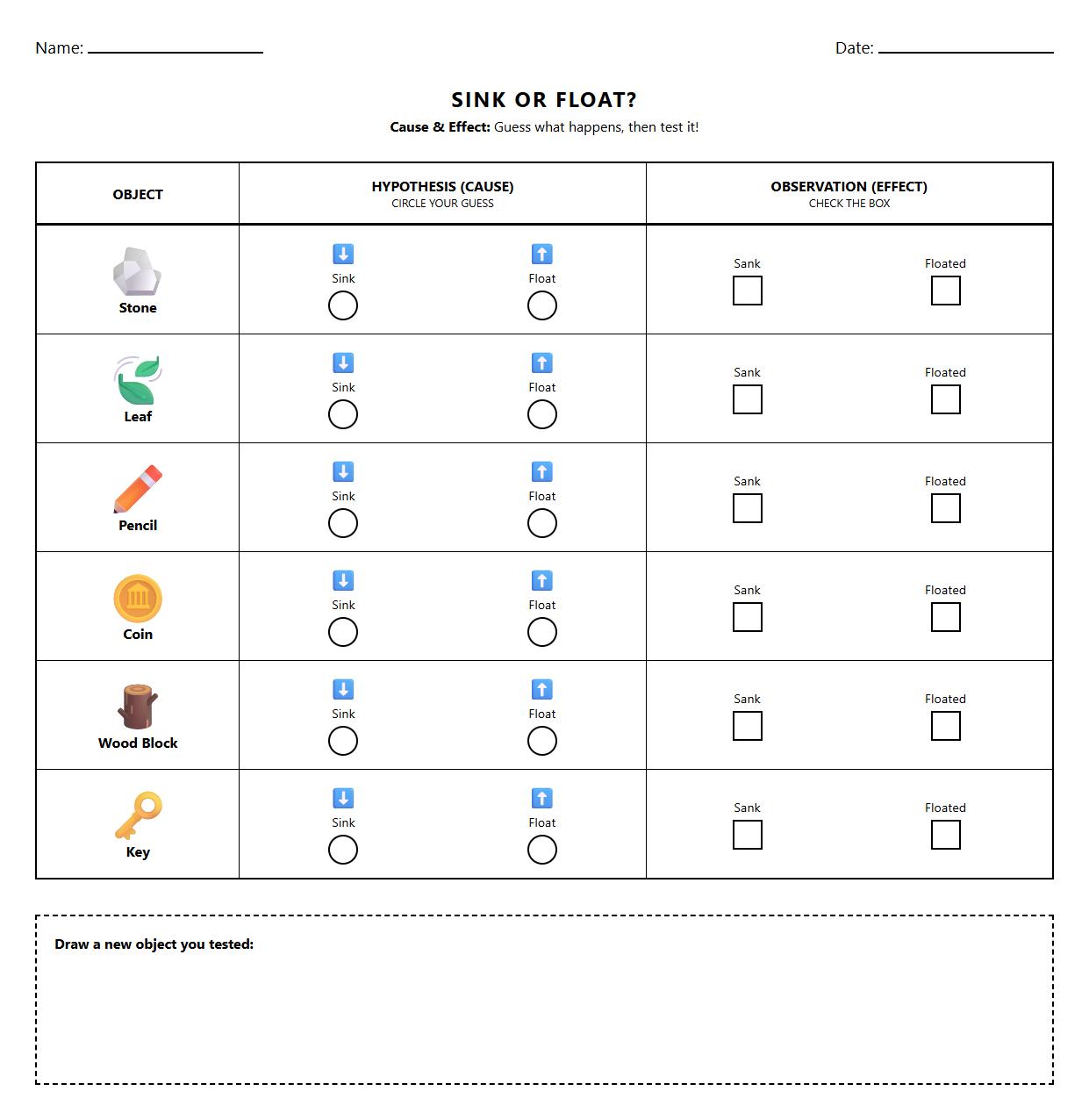
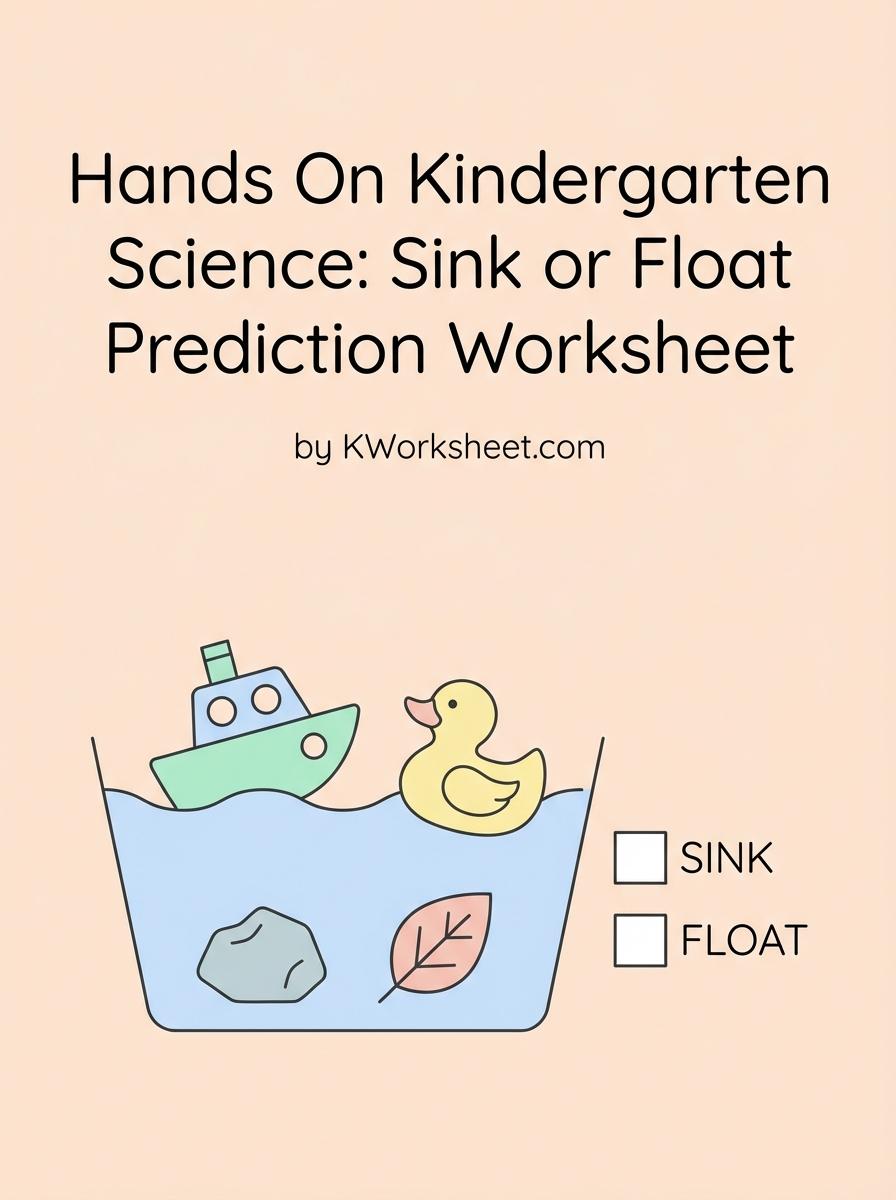
Engage young learners with the Hands On Kindergarten Science: Sink or Float Prediction Worksheet, designed to spark curiosity about buoyancy and object properties. This activity encourages children to make predictions, observe outcomes, and develop critical thinking skills through hands-on experimentation. Explore the full range of worksheets available to support interactive science learning.
Objects Tested for Sinking or Floating
We tested various everyday objects like a plastic spoon, a small rock, a cork, and a paper clip to see if they sank or floated. These items were chosen because they were easy for children to handle and observe. Each object provided a clear example of the concepts of buoyancy and density. This hands-on approach helped engage young learners effectively.
Surprising Results
The object that surprised many was the paper clip, which floated when placed carefully on the water surface despite being made of metal. This unexpected result challenged the children's assumptions and sparked curiosity. It highlighted the importance of surface tension in floating. Such surprises make the experiment more memorable.
Accuracy of Predictions
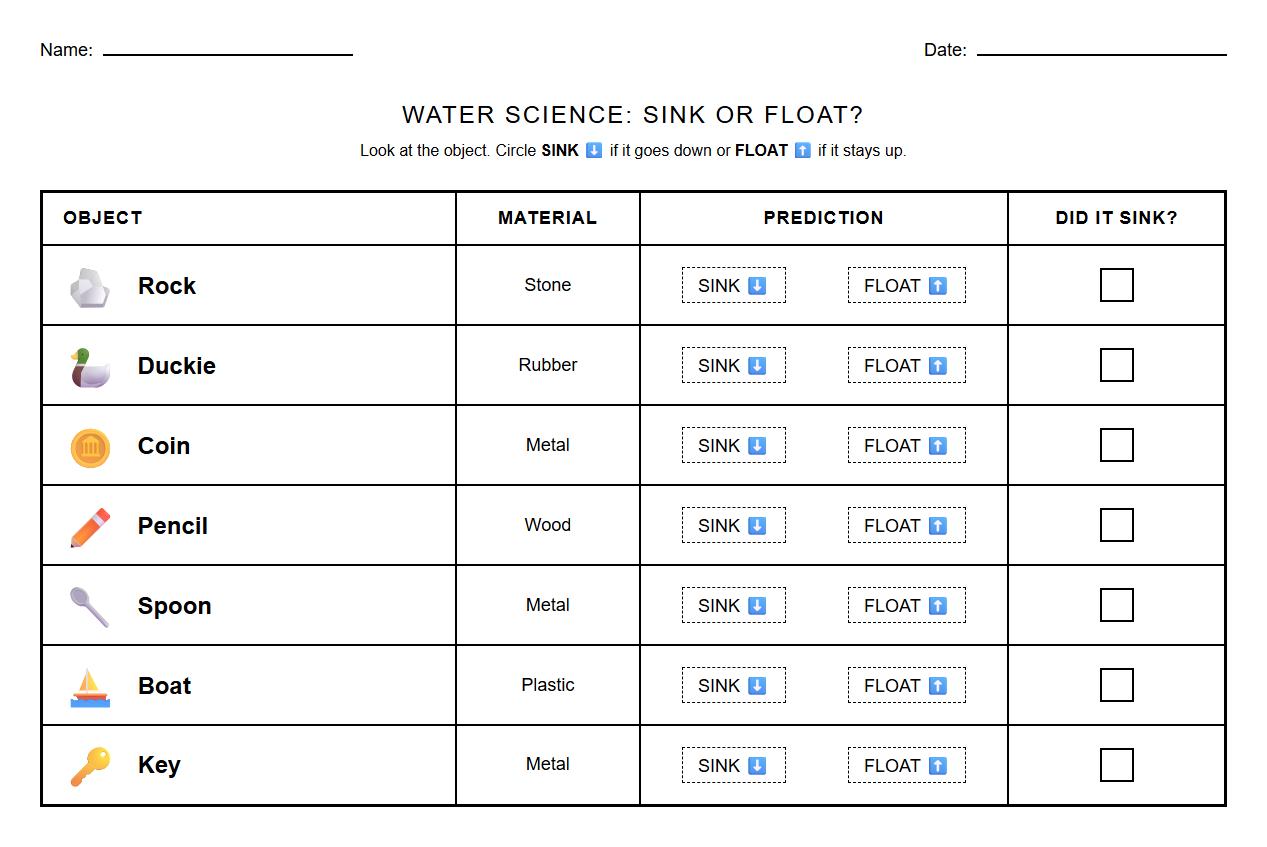
Before testing, children made predictions about whether each object would sink or float. Many guessed correctly, but some were surprised by the actual outcomes. This process encouraged critical thinking and taught children about the scientific method. Making predictions is a vital part of experiential learning.
Common Materials of Floating Objects
The objects that floated generally had low density materials like cork or plastic. They were often light and had shapes that helped distribute weight evenly. This helped the children understand how material properties affect floating. Discussing this connection reinforced basic physics concepts at an early age.
Making Predictions
Children made predictions based on their observations of the objects' weight and material type. They used simple reasoning such as, "Heavy objects will sink," although this was later tested. This step nurtured their hypothesis-forming skills. Encouraging explanation of their thoughts helped develop verbal and cognitive skills.
Testing Each Object's Ability to Float
The testing involved gently placing each object in a container of water and observing whether it sank or floated. Children took turns to ensure everyone participated actively. This hands-on method made the concept tangible and easy to grasp. Visual and tactile learning supported memory retention.
Heaviest Object That Floated
The cork was the heaviest object that floated in this experiment, demonstrating that weight alone does not determine buoyancy. Its shape and material composition played a key role. Children learned that density and displacement are important factors. This insight broadened their scientific understanding beyond simple weight.
Why Objects Sink or Float
Objects sink or float based on their density relative to water and their volume. If an object is denser than water, it sinks; if less dense, it floats. This fundamental principle was introduced through the activities. Understanding this helps children connect science to real world phenomena.
Recording Results on the Worksheet
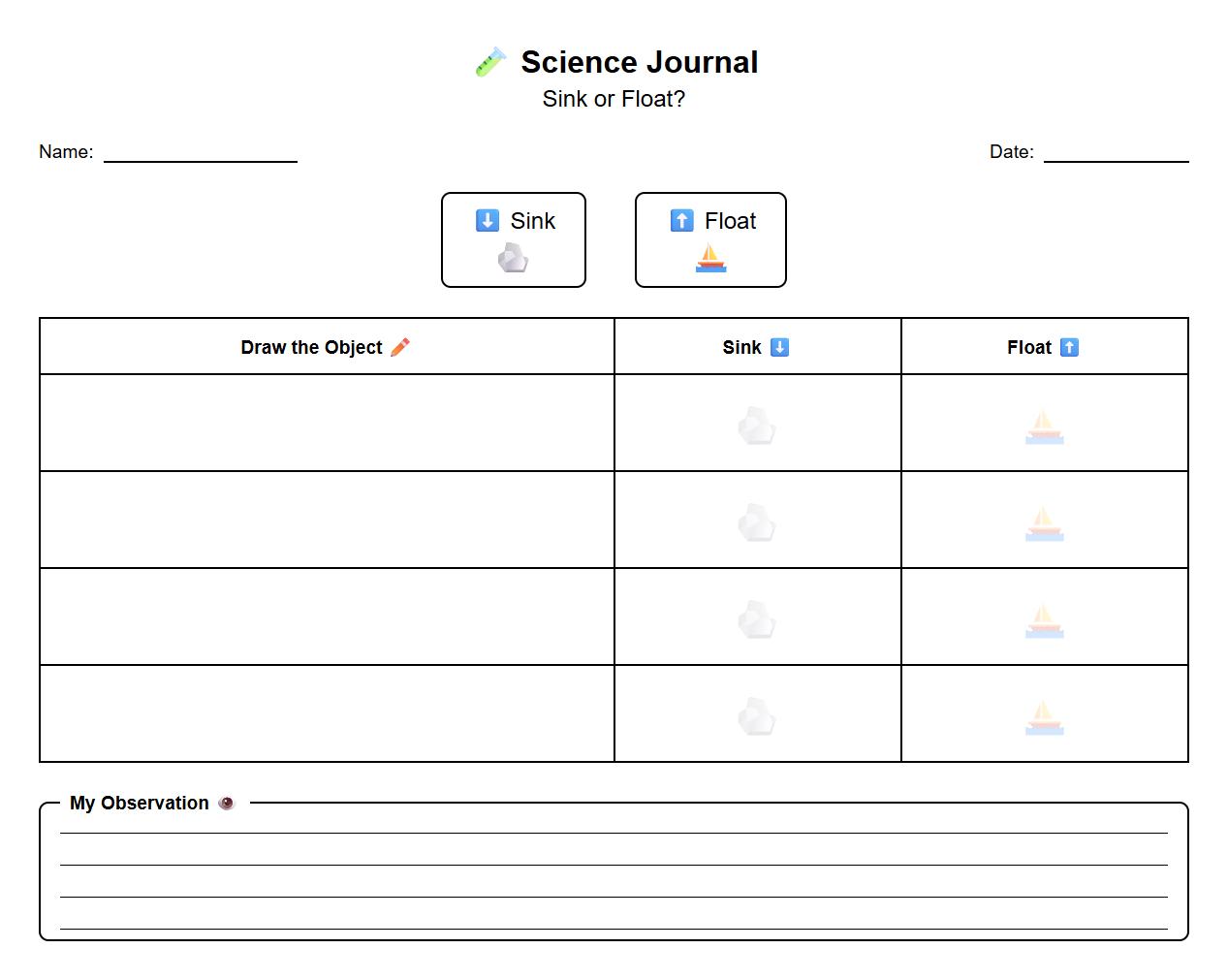
Children marked each object as "sink" or "float" on the worksheet, sometimes drawing the objects or writing simple notes. This reinforced their observational and fine motor skills. The worksheet acted as a summary and a tool for reflection. It also helped teachers assess learning progress.
Future Experiments
For next time, children expressed interest in testing floating fruits and vegetables or different types of paper. Expanding the types of materials increases engagement and learning depth. Planning future tests keeps curiosity alive and supports ongoing scientific exploration. Encouraging suggestions from children fosters ownership of learning.


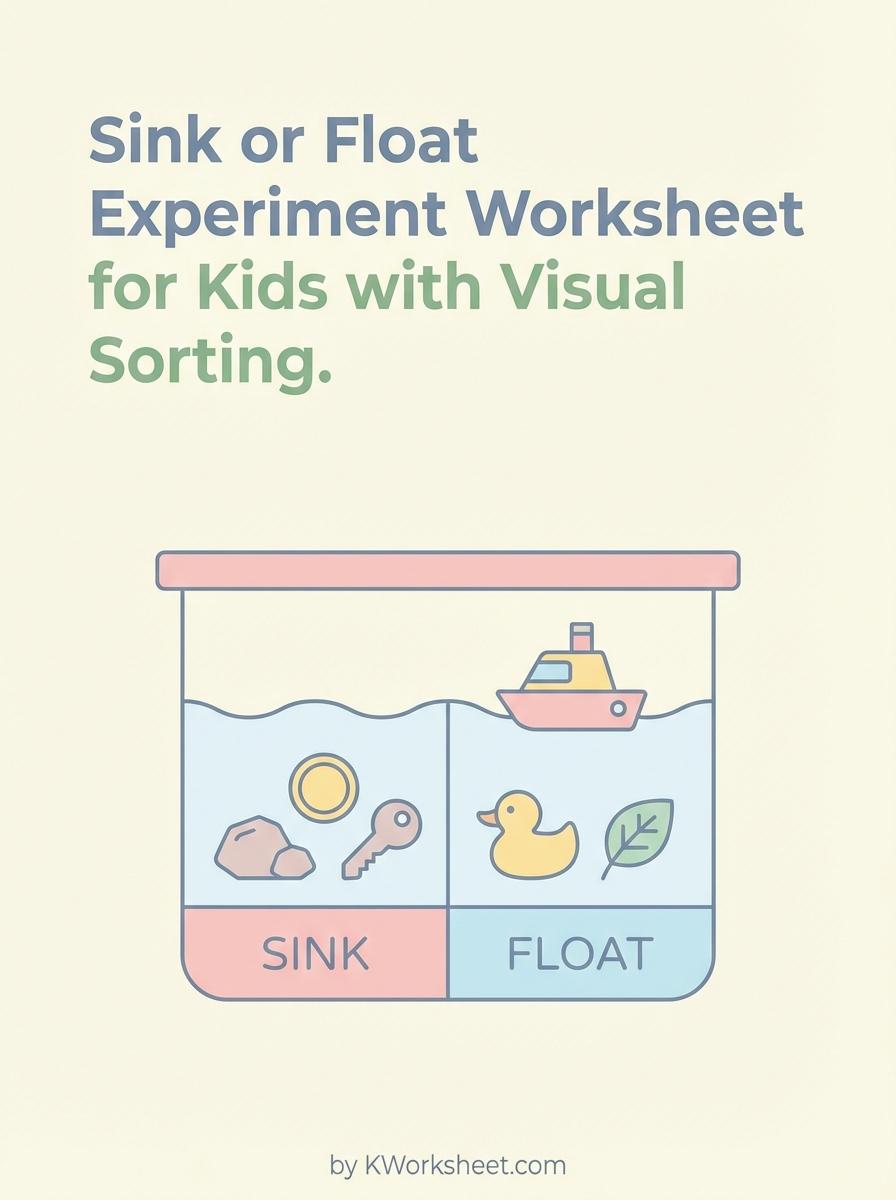
Sink or Float Experiment Worksheet for Kids with Visual Sorting