Early Learning History Worksheets: Then vs Now for Young Students

📅 Jan 3, 2025 👤 Nylen Smith

Young learners explore the differences between past and present through engaging Early Learning History Worksheets focused on Then vs Now. These worksheets help develop critical thinking by comparing historical and modern aspects of daily life, encouraging observation and discussion. Explore the available worksheets to introduce young students to history in an interactive and age-appropriate way.

Picture Sorting Timeline Worksheet for Past vs Present
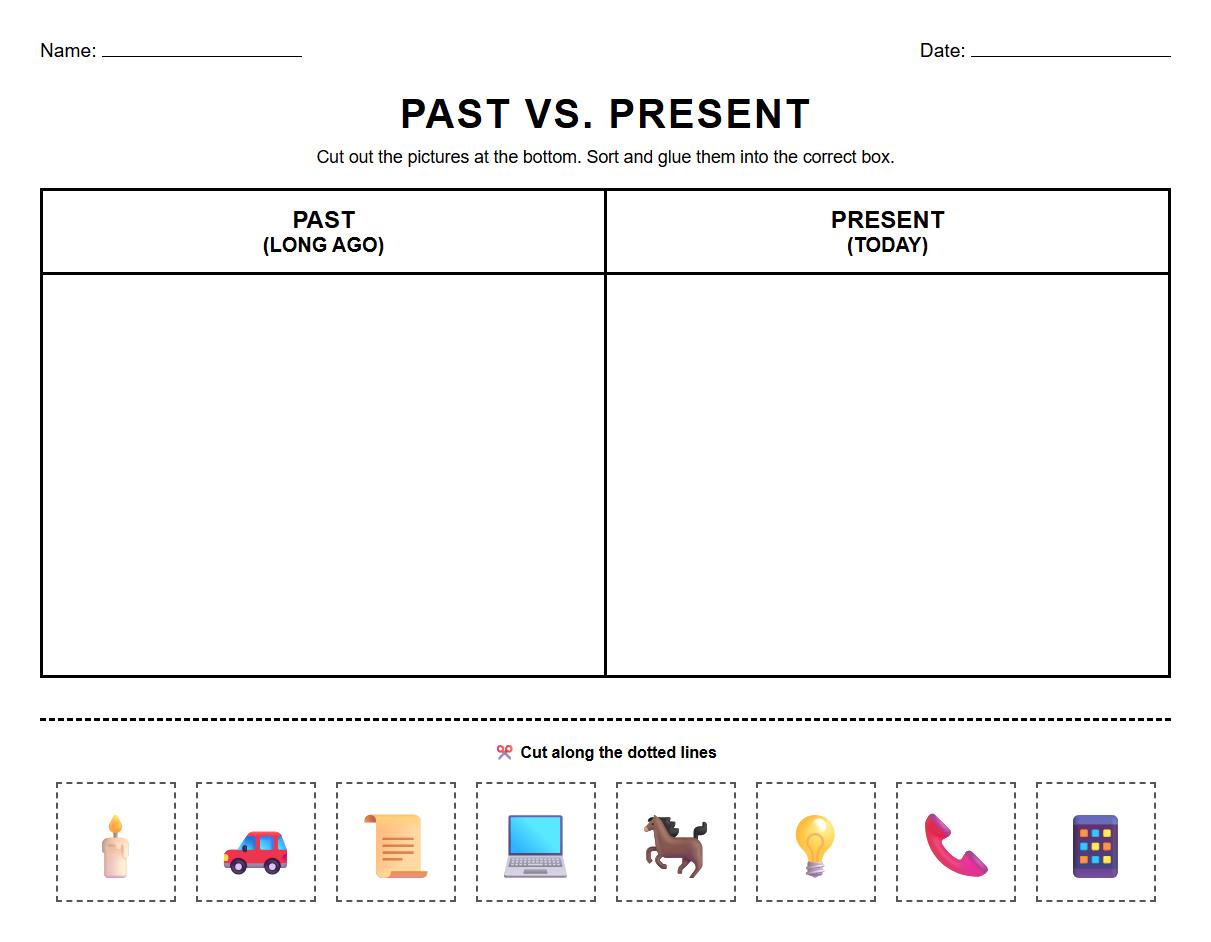
Picture Sorting Timeline Worksheet for Past vs Present

Download PDF     Pin it

Matching Historical Objects to Modern Equivalents Worksheet
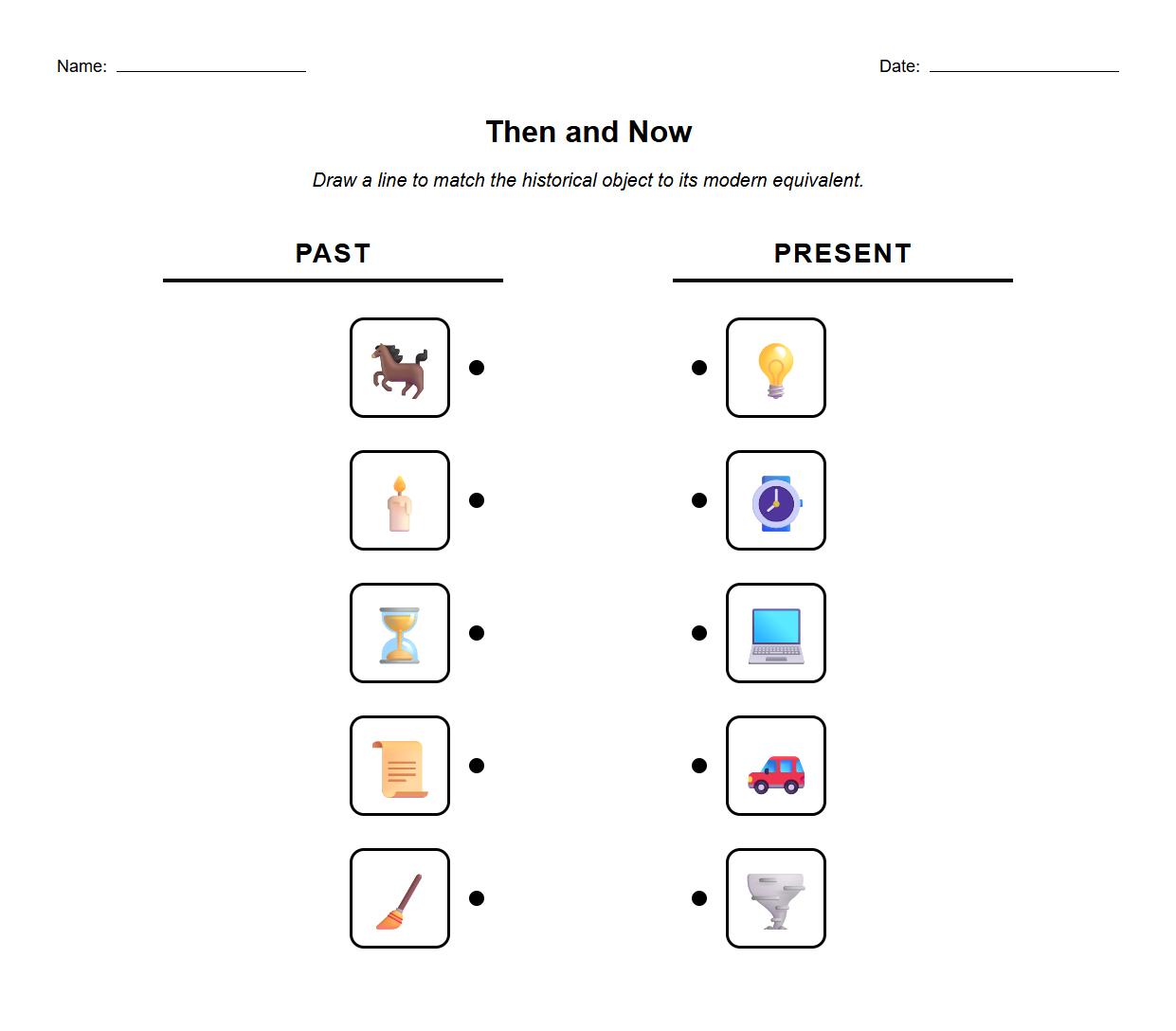
Matching Historical Objects to Modern Equivalents Worksheet

Download PDF     Pin it

Early Learning Cut and Paste Then and Now Activities
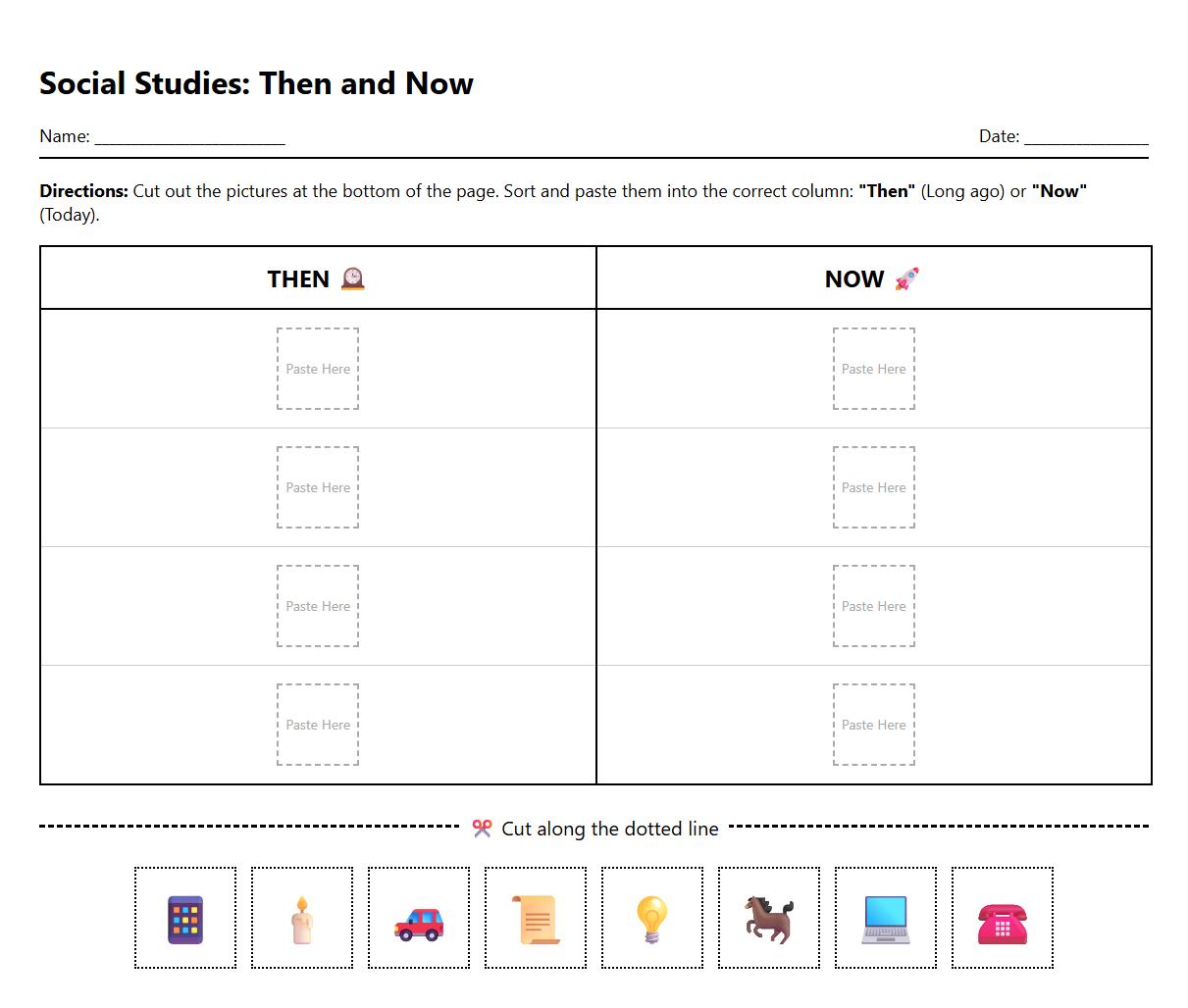
Early Learning Cut and Paste Then and Now Activities

Download PDF     Pin it

Vocabulary Development with Past and Present Terminology
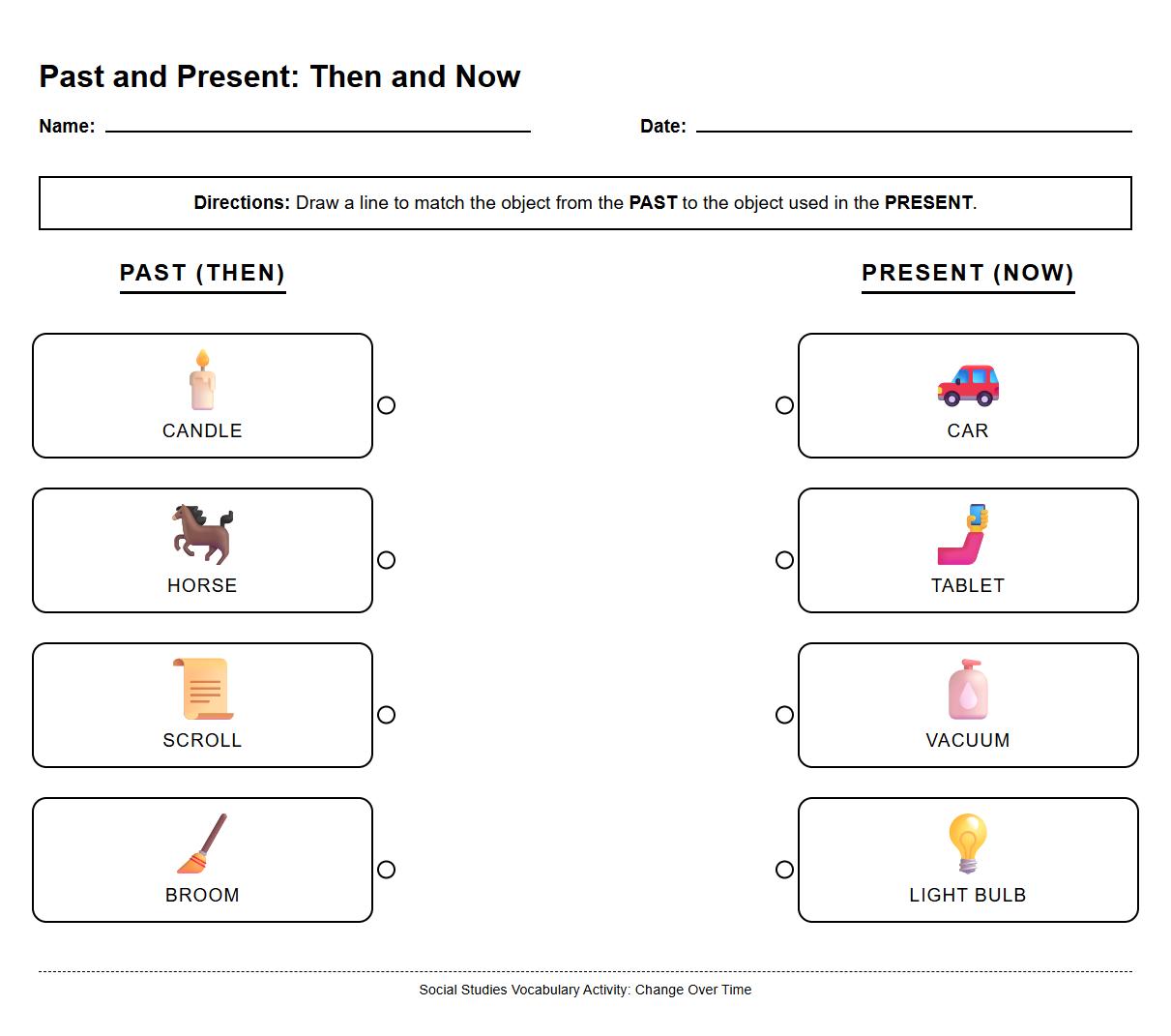
Vocabulary Development with Past and Present Terminology

Download PDF     Pin it

Visual Comprehension Sequencing of Daily Life: Phonics Focus
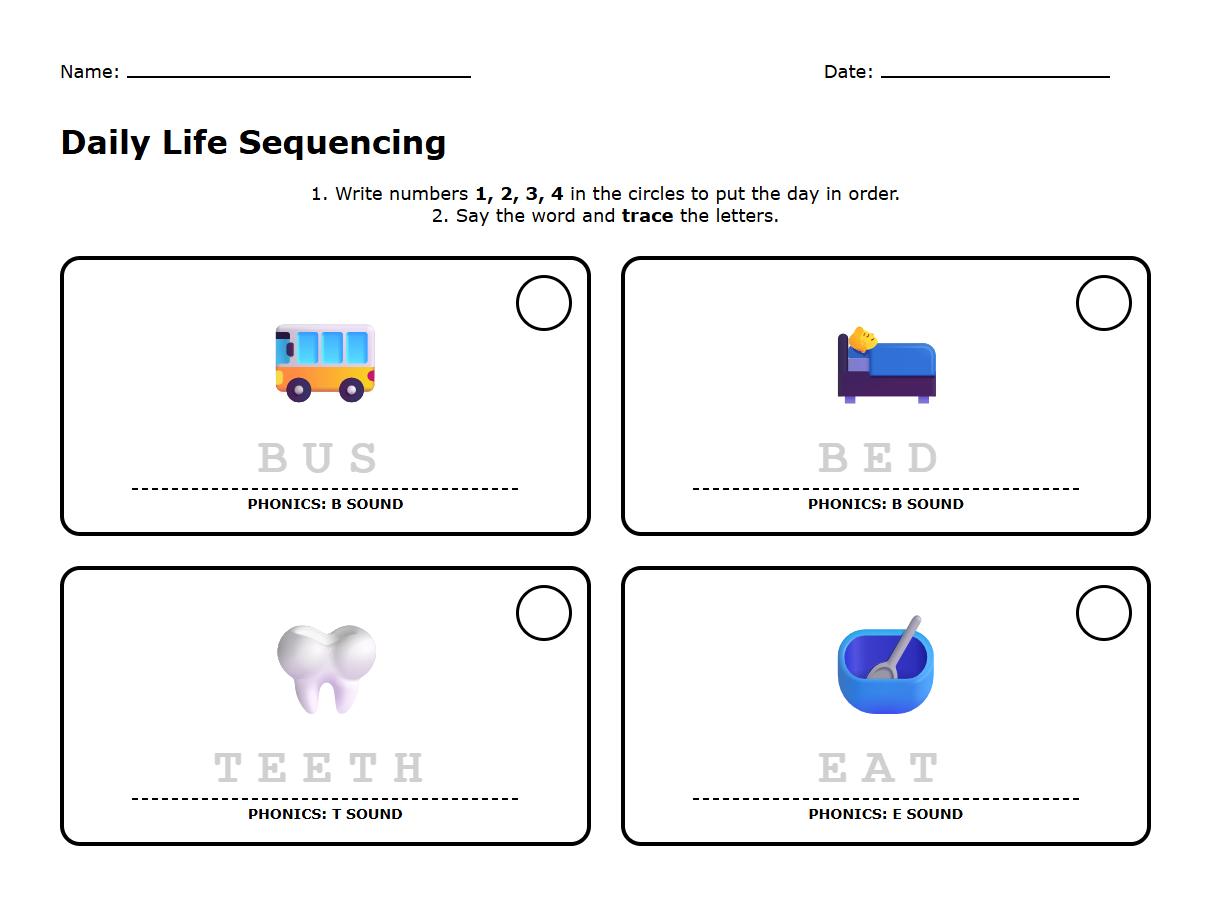
Visual Comprehension Sequencing of Daily Life: Phonics Focus

Download PDF     Pin it

Trace and Write Activities with Old and New Transportation
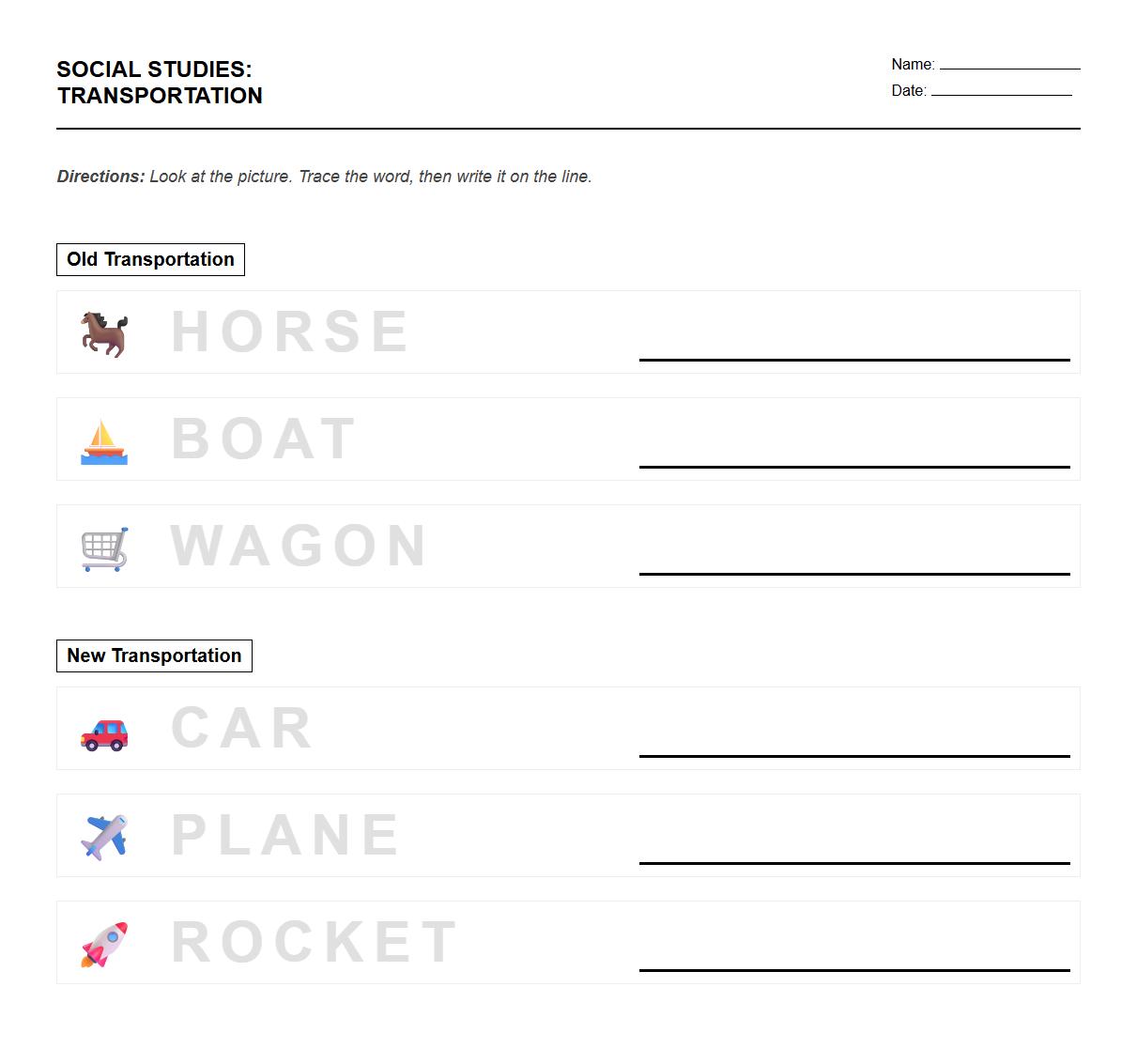
Trace and Write Activities with Old and New Transportation

Download PDF     Pin it

Community Helpers Comparison Sheet: Then vs Now
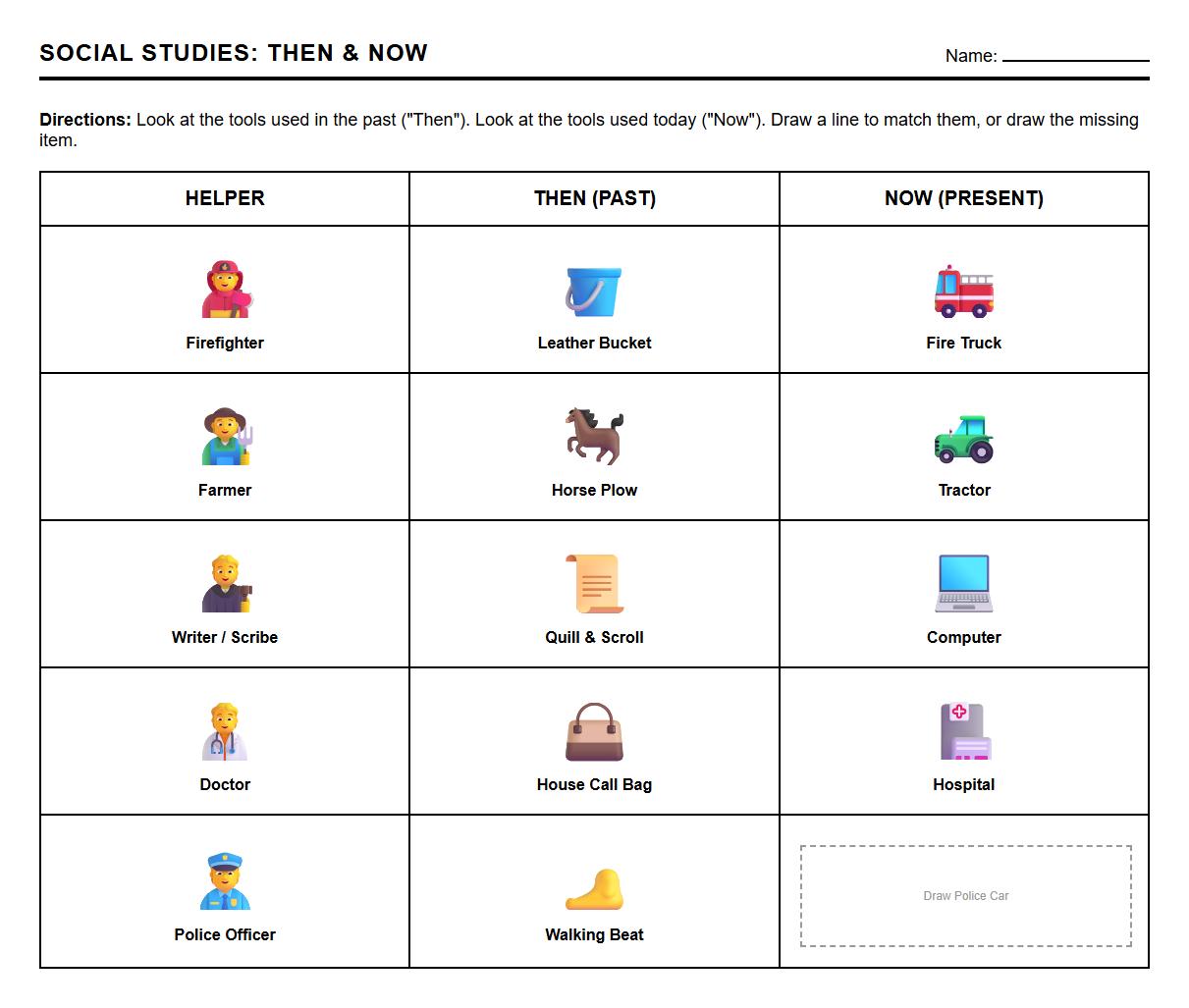
Community Helpers Comparison Sheet: Then vs Now

Download PDF     Pin it

Compare and Contrast Family Life Chart for Beginners
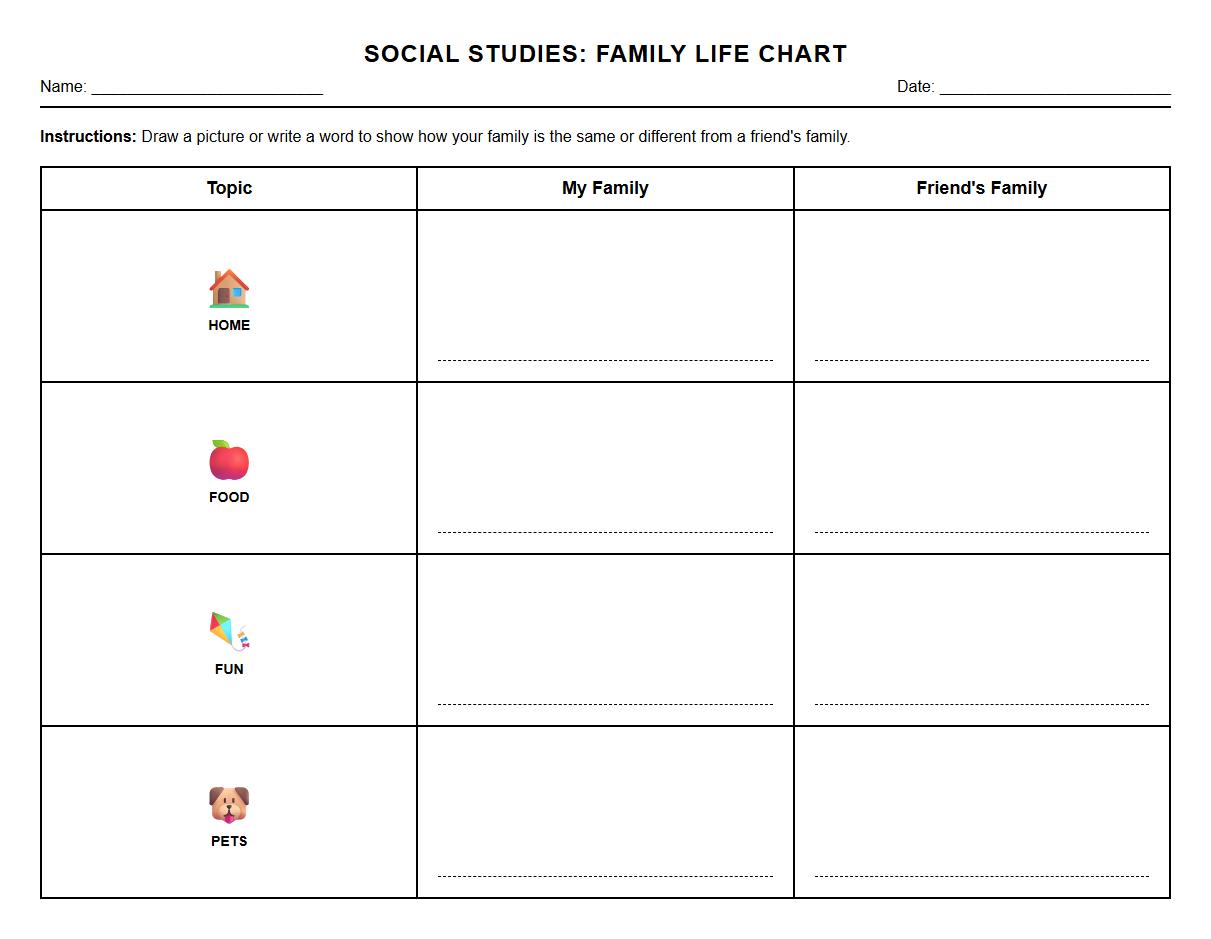
Compare and Contrast Family Life Chart for Beginners

Download PDF     Pin it

Simple Reading Comprehension Tasks About Old and New Schools
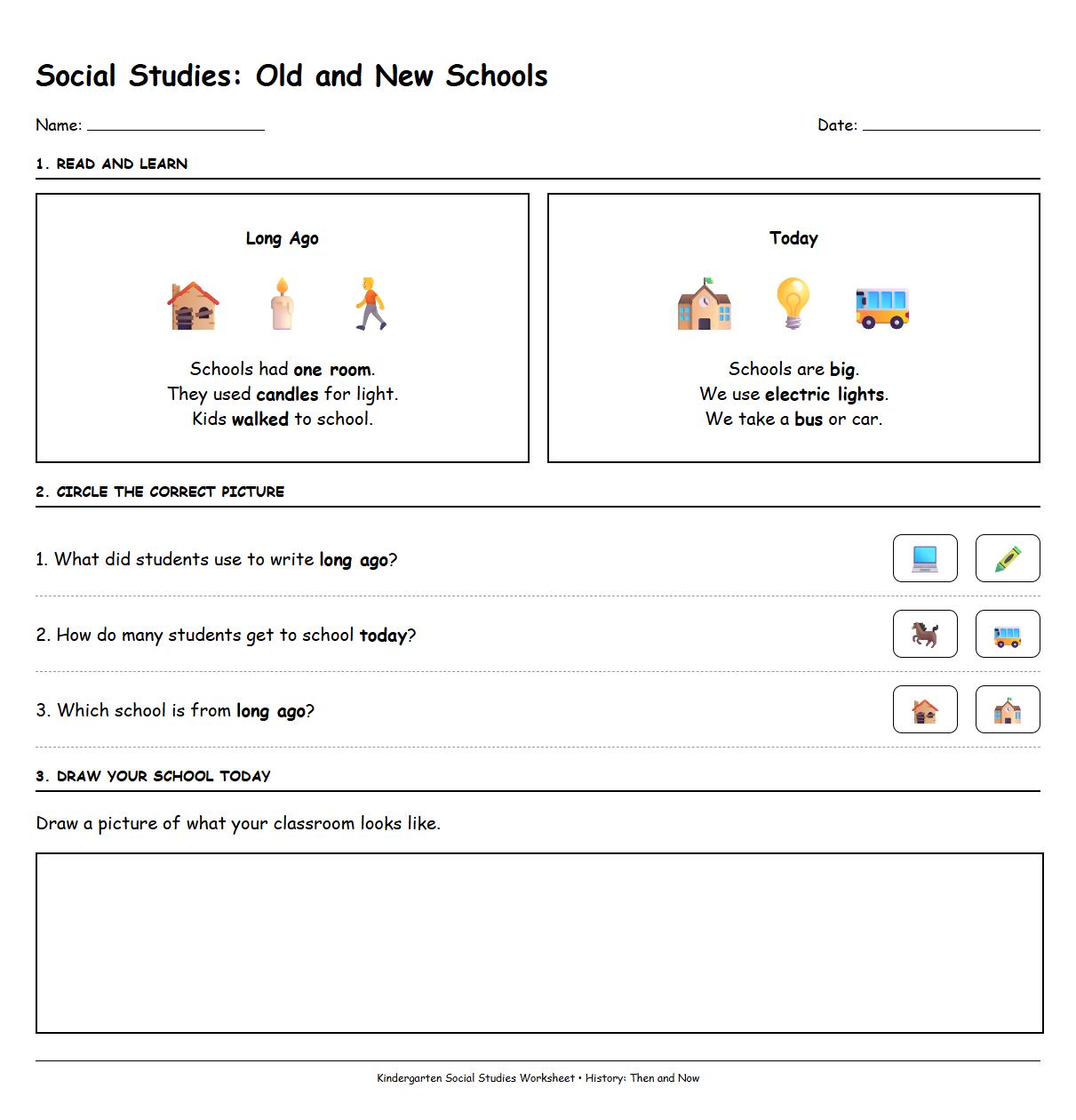
Simple Reading Comprehension Tasks About Old and New Schools

Download PDF     Pin it

Interactive Map Skills Practice for Historical Changes
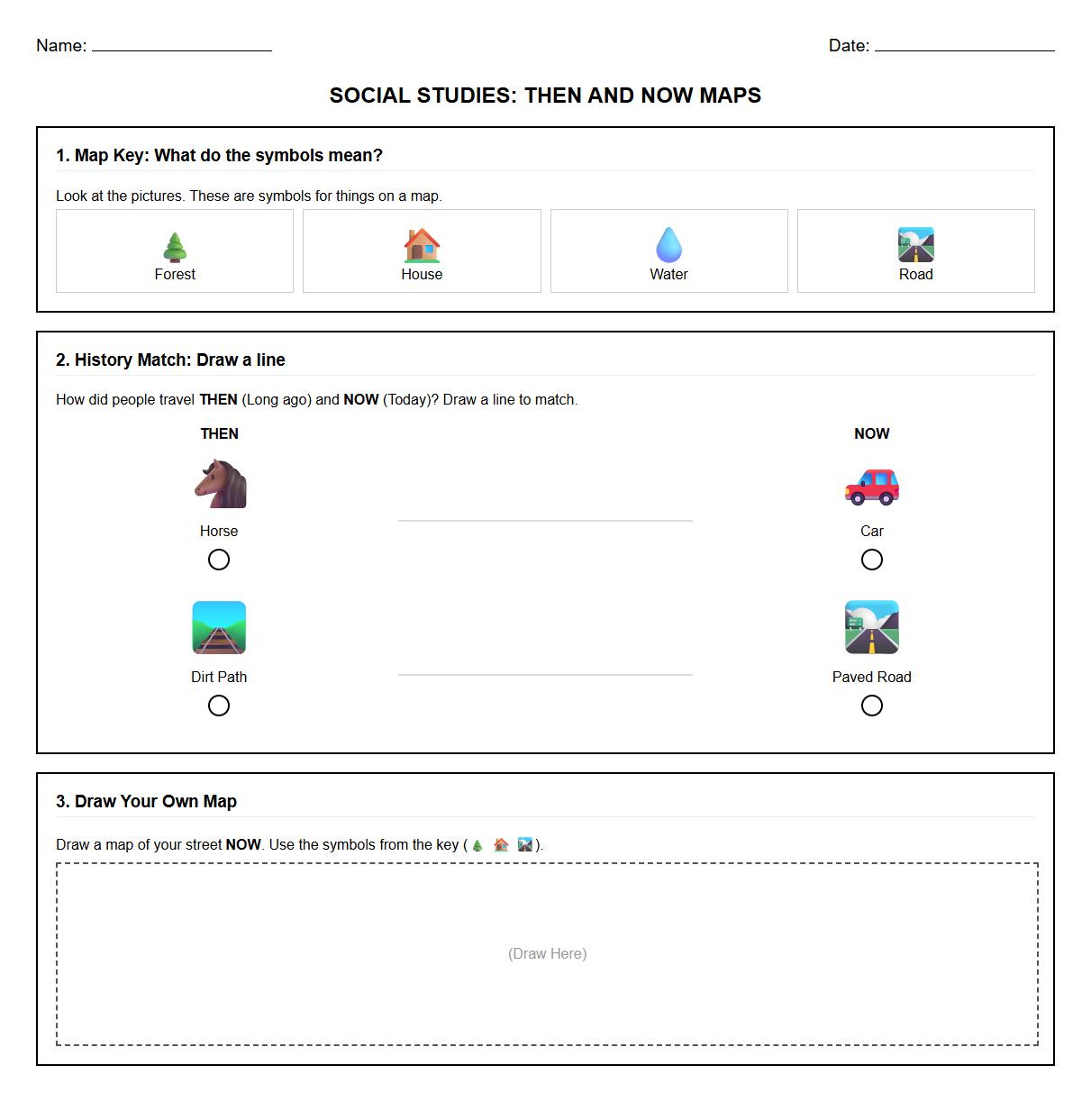
Interactive Map Skills Practice for Historical Changes

Download PDF     Pin it

How Did Children Travel to School in the Past Compared to Today?

In the past, children often walked or rode bicycles to school, and some used horse-drawn carriages. Today, many children travel by school buses, cars, or even ride scooters. The change in transportation reflects improvements in safety and convenience. Understanding these differences helps children appreciate modern travel.

What Kinds of Toys Did Kids Play With Long Ago and What Toys Do They Play With Now?

Long ago, children played with simple, homemade toys like wooden dolls, marbles, and spinning tops. Nowadays, kids enjoy electronic toys, video games, and sophisticated building sets. The evolution of toys shows advances in technology and creativity. Toys always reflect the culture and era they belong to.

How Did Classrooms Look Before Versus Modern Classrooms?

Traditional classrooms featured rows of wooden desks, chalkboards, and limited decorations. Modern classrooms are bright, flexible spaces with interactive whiteboards and comfortable seating for group work. The change supports different learning styles and encourages collaboration. Classroom design plays a key role in student engagement.

What Did Children Use to Write With in the Past Versus Now?

In the past, children wrote with quills, fountain pens, or pencils on paper. Today, students often use digital devices such as tablets, laptops, or styluses along with traditional pens. This shift enhances learning and allows for easy editing and sharing. Writing tools evolve as technology advances.

How Did People Communicate Before Phones and Computers?

Before modern devices, people communicated through letters, telegrams, and face-to-face conversations. Today, communication happens instantly via phones, emails, and video calls. These changes have made it easier for people to stay connected worldwide. Understanding past communication teaches appreciation for current technology.

What Did Students Eat for Lunch Then and What Do They Eat Now?

Students once ate simple home-packed lunches, often including bread, fruit, and milk. Now, school cafeterias serve balanced meals with diverse options including vegetarian and allergy-friendly foods. This reflects greater awareness of nutrition and health. Lunch programs have evolved to support student well-being.

How Did Children Dress for School Long Ago and How Do They Dress Now?

Long ago, children wore formal attire like dresses, button-up shirts, and sometimes uniforms. Today, school dress codes are more relaxed, allowing casual clothing and sportswear in many schools. This change promotes comfort and self-expression. Clothing styles at school have adapted with societal shifts.

What Games Did Students Play at Recess in the Past Compared to Today?

In the past, children played traditional games like tag, hopscotch, and jump rope during recess. Today, recess includes these games plus activities involving technology, such as interactive playground equipment and sometimes screen time. Active play remains essential for development. Games adapt to changing interests and environments.

How Did Teachers Teach Lessons Then and How Do They Teach Now?

Teachers previously relied on lecture-based lessons, textbooks, and rote memorization. Today, teaching involves interactive activities, digital resources, and student-centered learning. Modern methods encourage critical thinking and collaboration. Teaching styles continue to evolve to support all learners.

What Tools Were Used for Learning in the Past Versus the Tools Used Today?

Learning tools in the past included chalkboards, paper textbooks, and abacuses. Today, students utilize tablets, educational software, and online resources alongside traditional materials. These tools provide dynamic and personalized learning experiences. The integration of technology enhances education significantly.


More in Social Studies Category


About the author. Nylen Smith is a dedicated educator and cofounder of KWorksheet.com, a popular platform specializing in high-quality kindergarten worksheets and printable activities.

Disclaimer. The information provided in this document is for general informational purposes and/or document sample only and is not guaranteed to be factually right or complete. Please report to us via contact-us page if you find and error in this page, thanks.

Comments

No comment yet