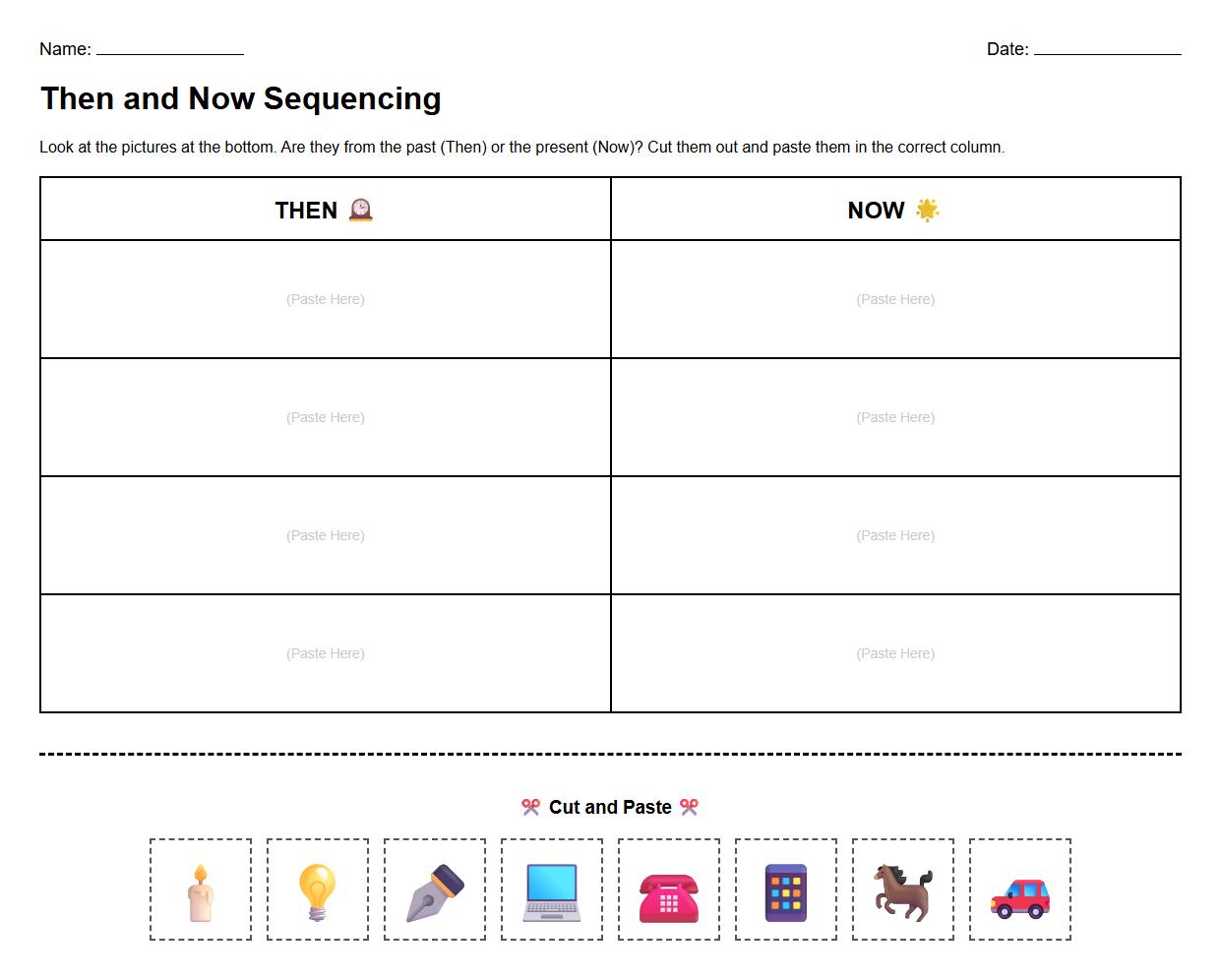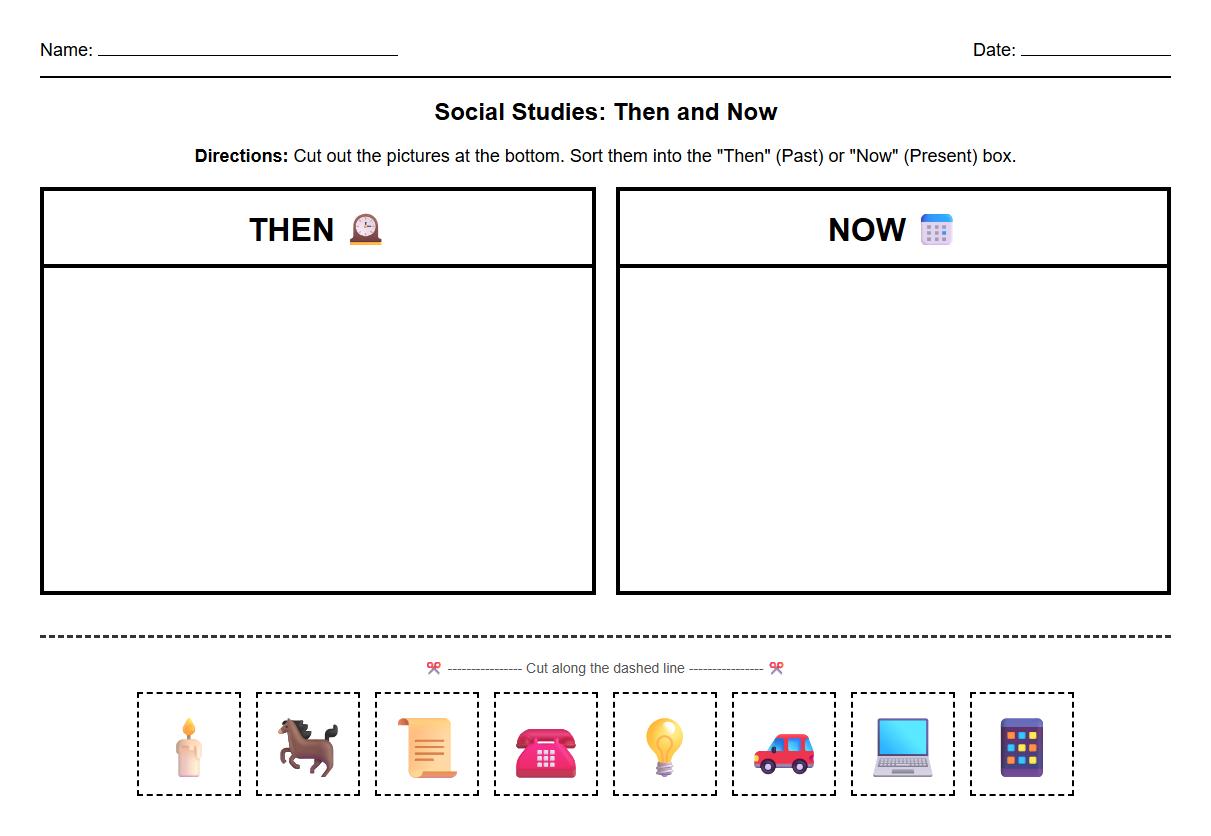
Interactive kindergarten worksheets on then and now concepts engage young learners in comparing past and present experiences, enhancing their understanding of time and change. These activities promote critical thinking and observational skills by encouraging children to identify differences and similarities across time periods. Explore the available worksheets to introduce your child to fun, educational exercises on then and now concepts.
Identifying Differences Between Past and Present Objects
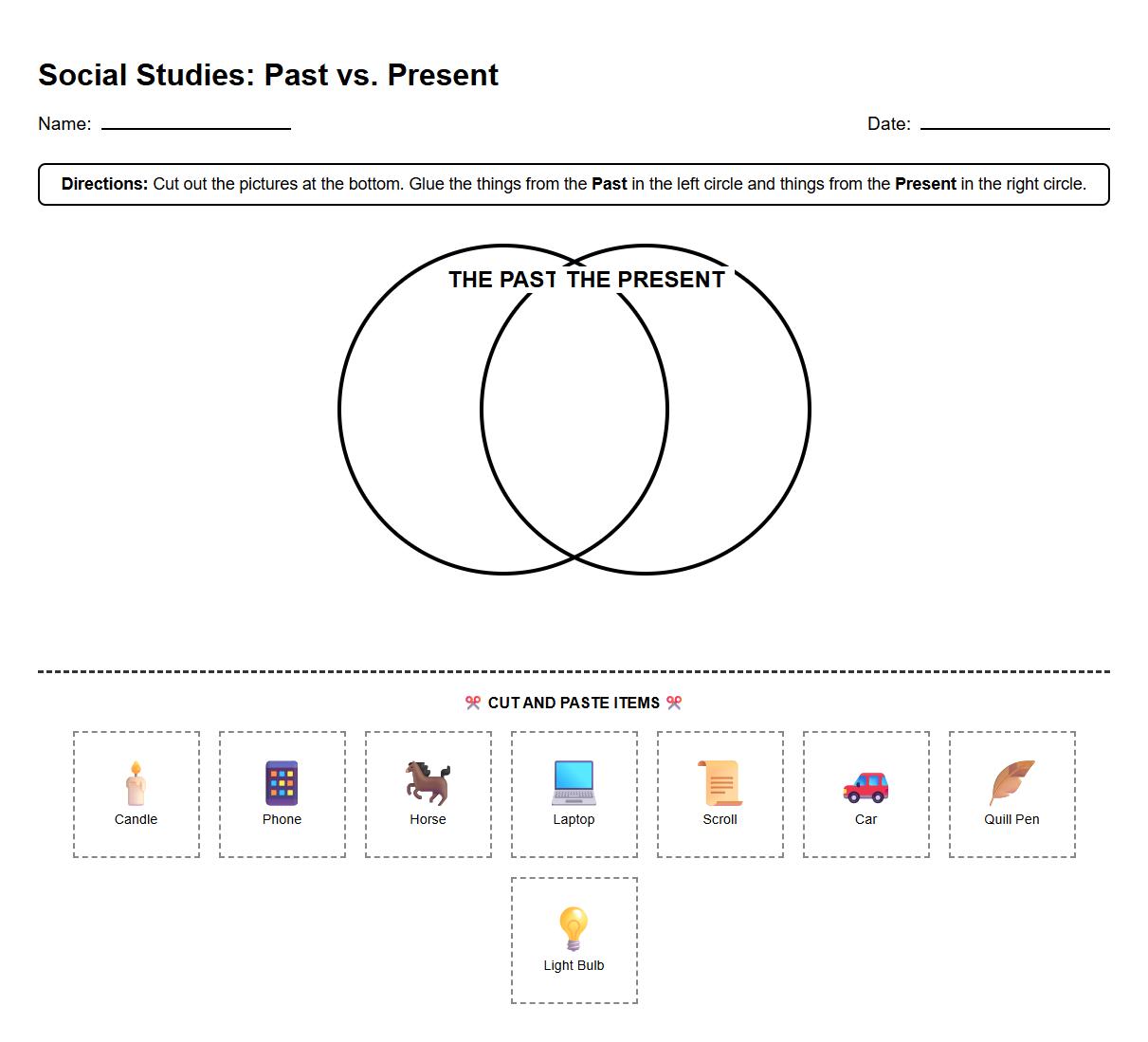
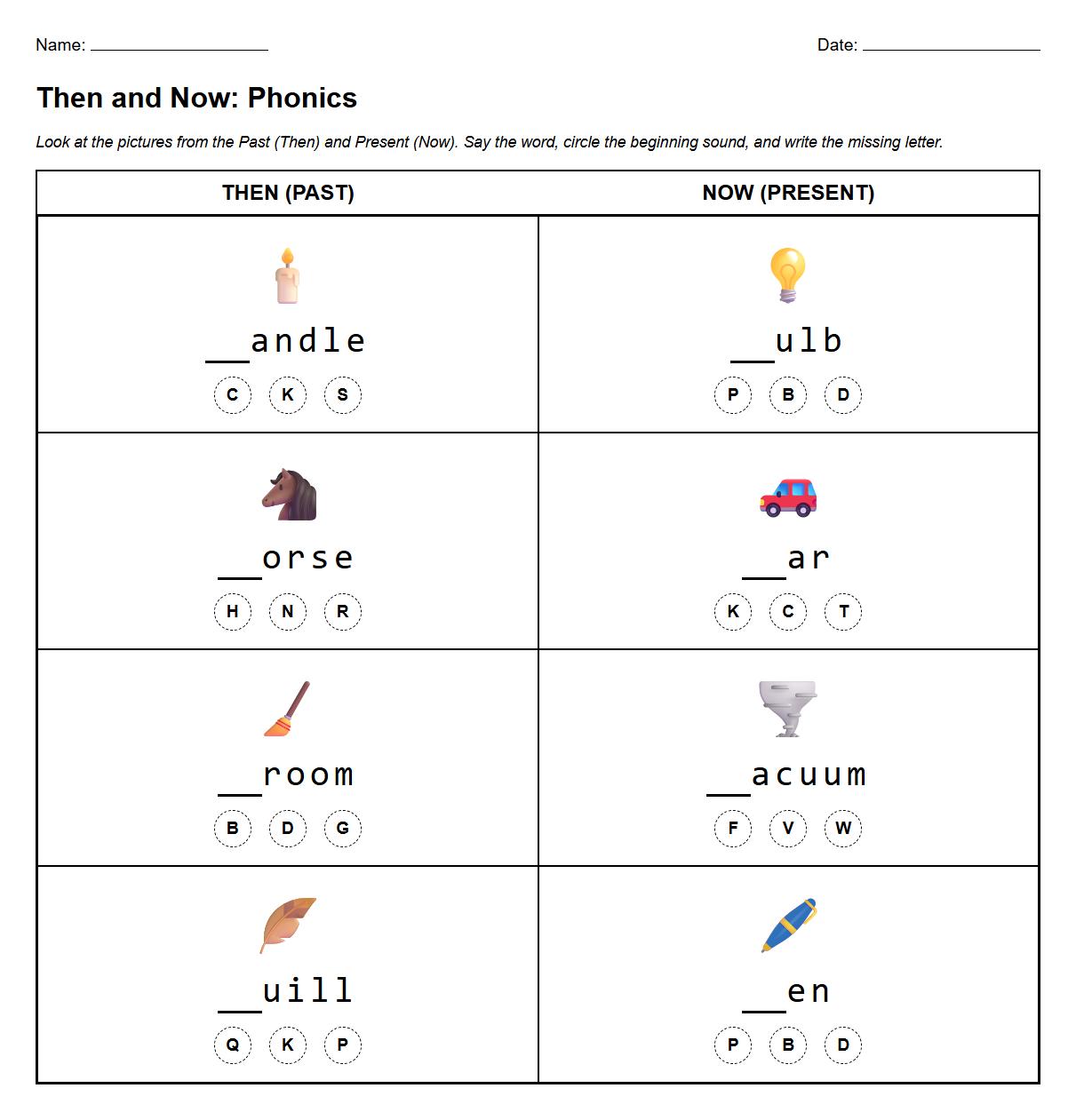
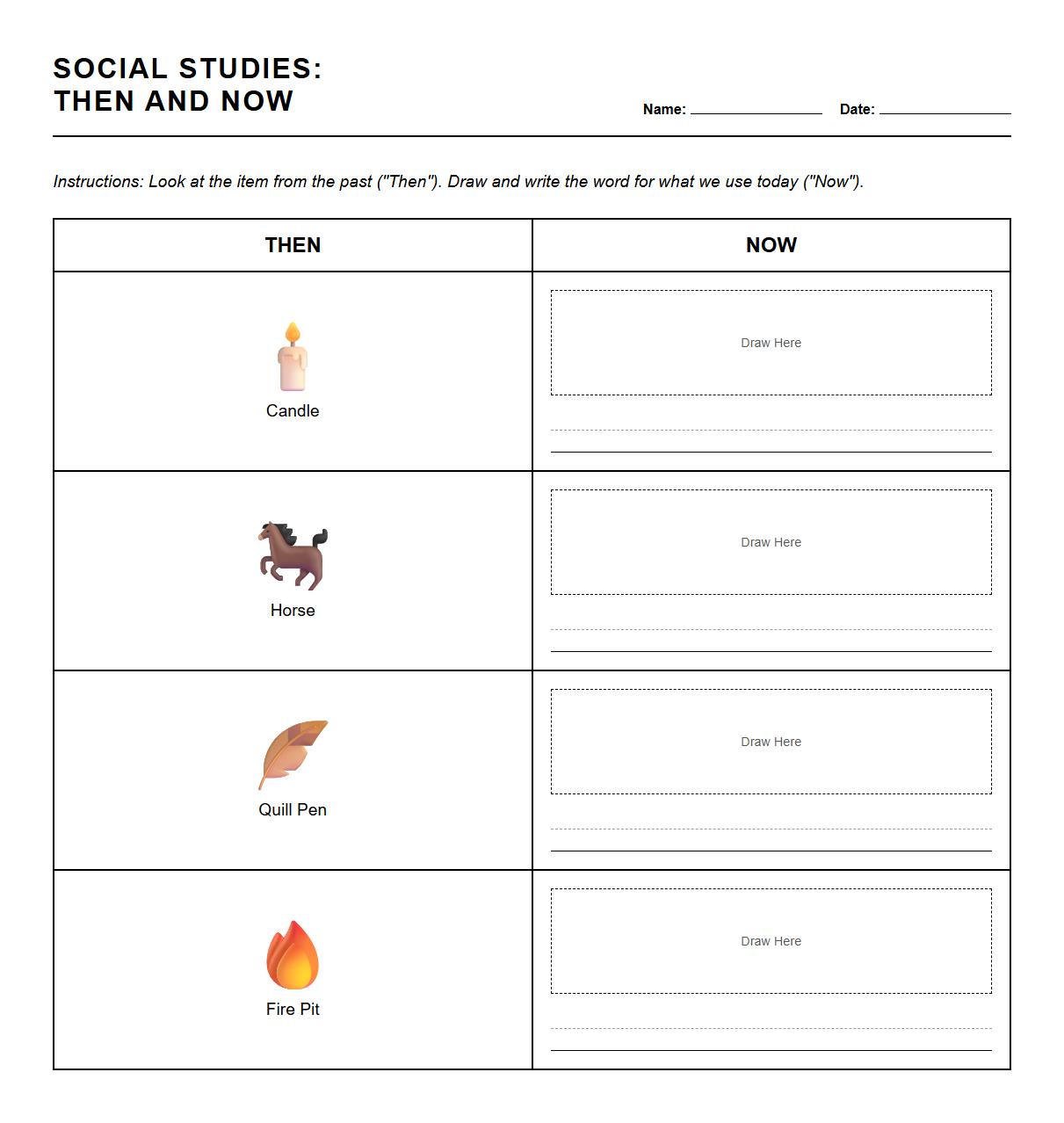
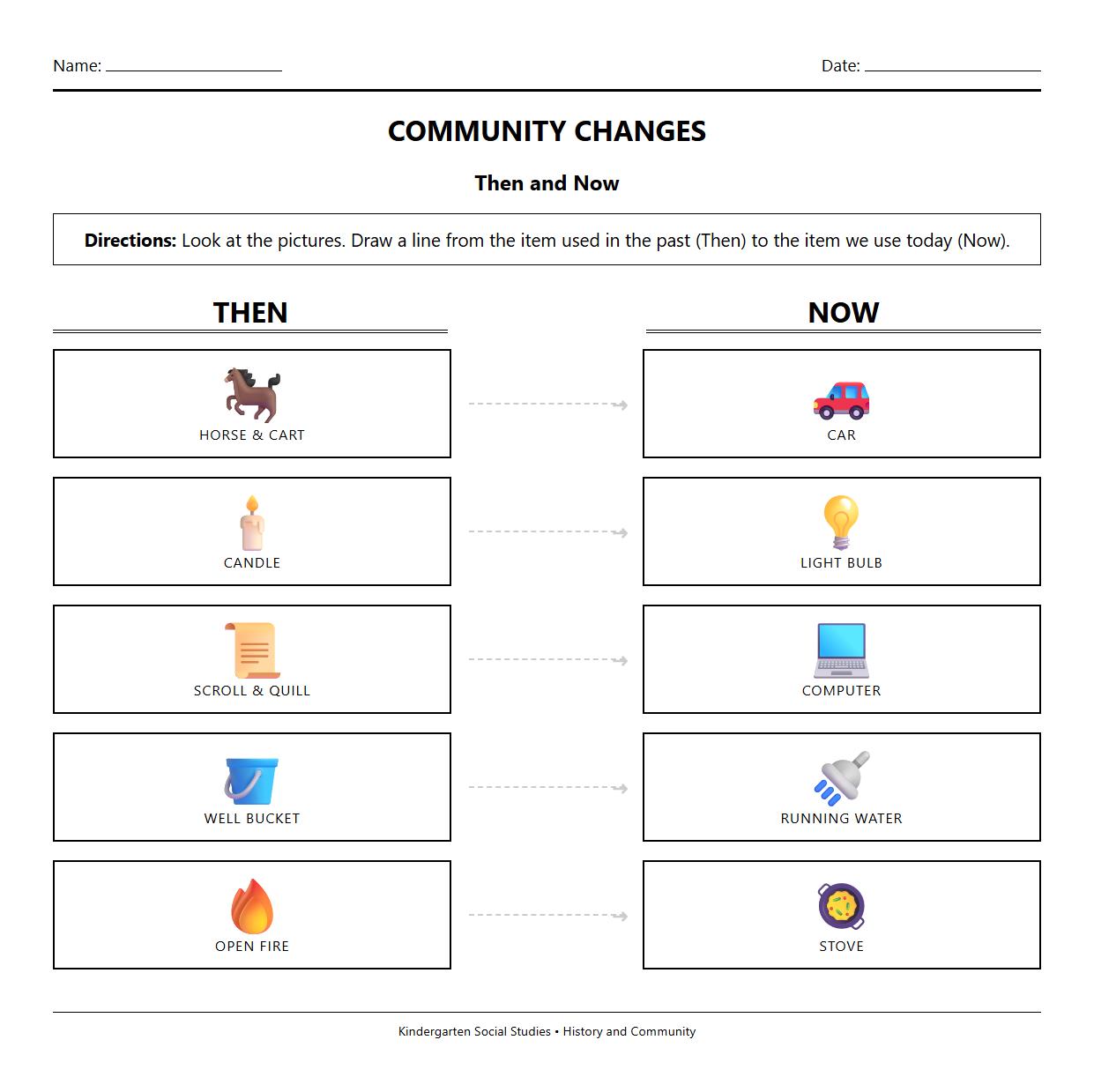
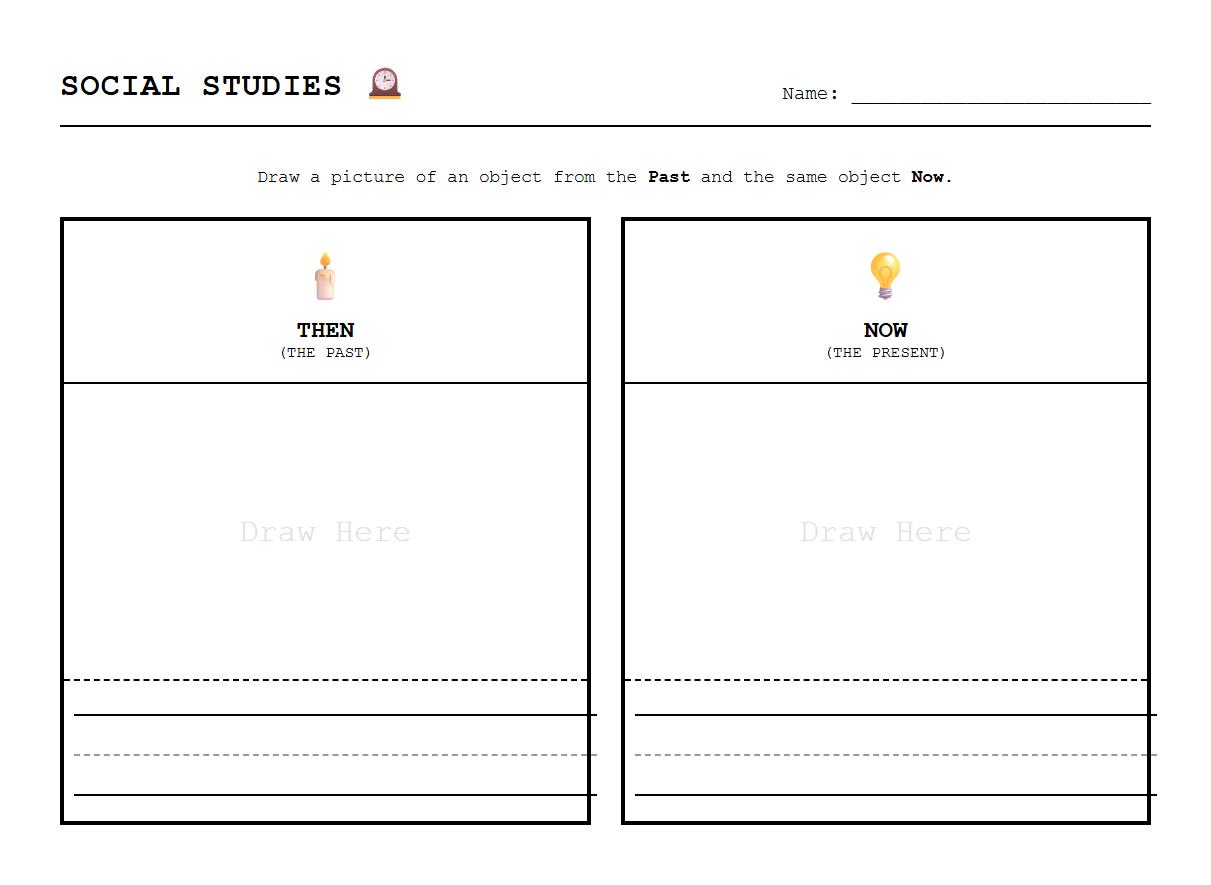
The worksheet guide highlights clear differences between objects from the past and those used today, helping children recognize changes in design, materials, and technology. Objects from the past often appear simpler and more manual, whereas present-day items tend to be more advanced and automated. This comparison encourages critical thinking and observation skills in both teachers and parents guiding the children. Understanding these distinctions lays the foundation for grasping historical progress. For more, see the worksheet collection on history: then vs now.
Benefits of Interactive Activities on Transportation
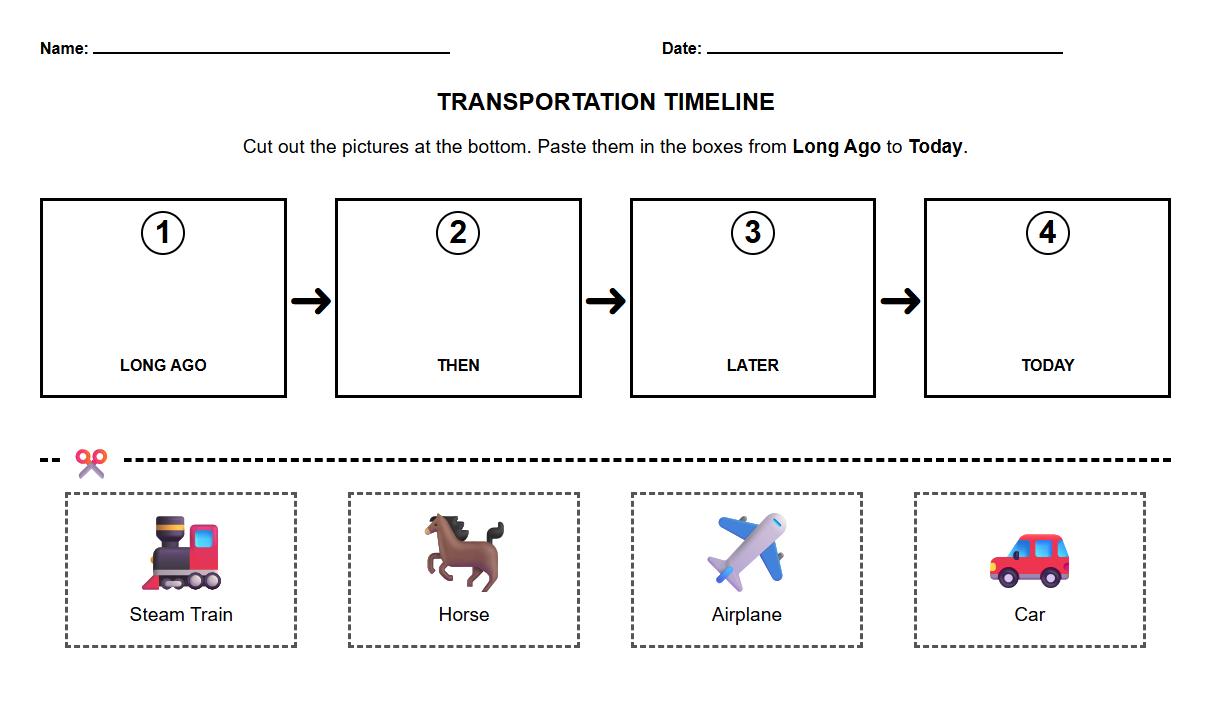
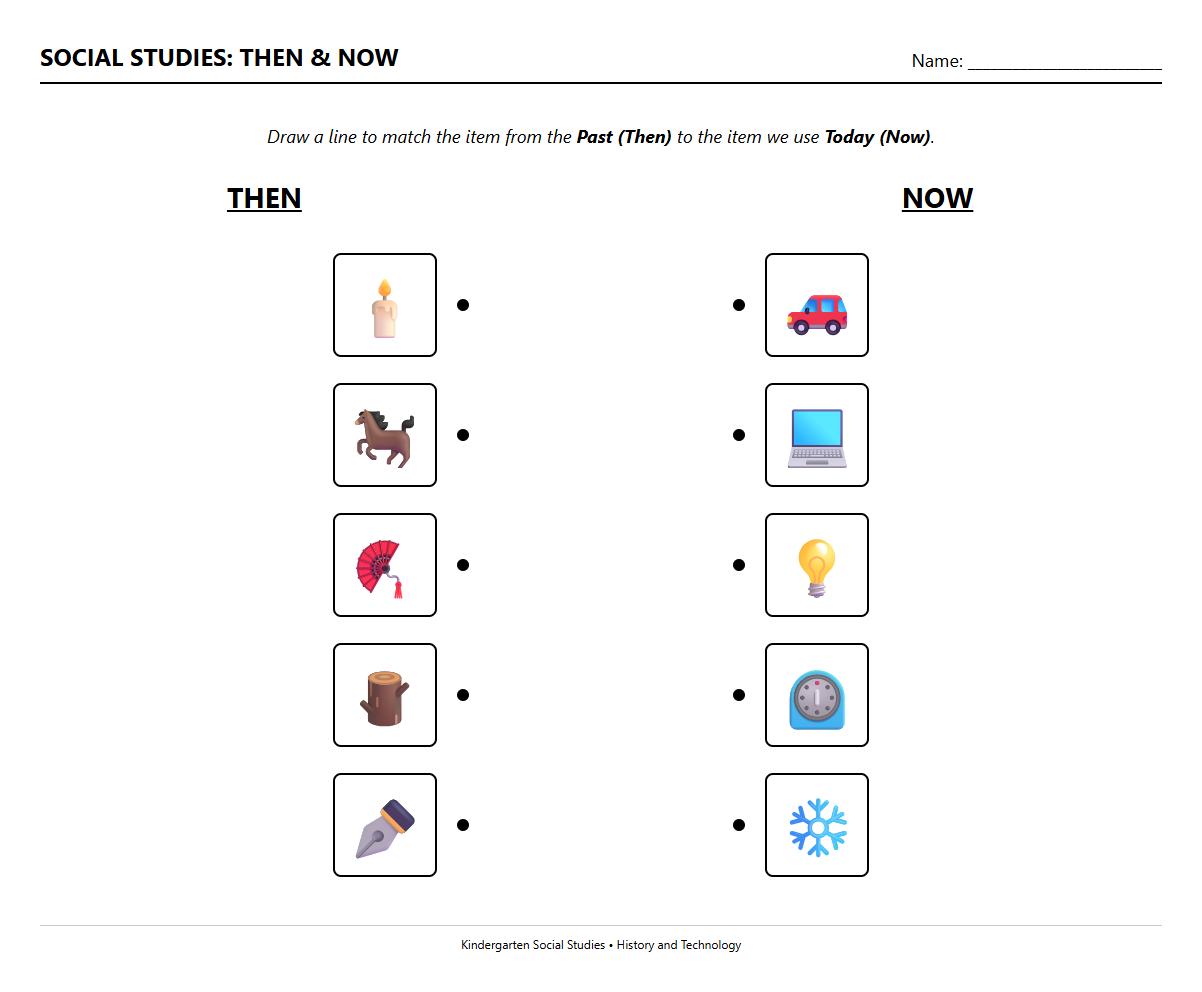
Interactive activities in the worksheet engage children by allowing hands-on learning about old and new transportation methods. These activities make abstract concepts concrete, helping learners visualize differences such as horse-drawn carriages versus modern cars. By participating, children develop a deeper connection to historical changes and improve memory retention. This dynamic learning fosters curiosity about how transportation evolved over time. Discover related tasks in the visual discrimination and sorting activity.
Sorting Items Into "Then" and "Now"
The worksheet includes clear instructions to classify items into the categories of "then" and "now." This sorting activity promotes understanding of time periods and encourages children to analyze characteristics unique to each era. By distinguishing past and present objects, learners build foundational skills in categorization and sequencing. It also helps parents and teachers facilitate meaningful discussions about history with young children. Try the flag and symbol sorting worksheet for similar sorting practice.
Matching Old Toys with Modern Versions
Children are invited to match pictures of old toys with their modern counterparts, strengthening visual recognition and analogical thinking. This activity underscores technological and design advancements while maintaining the fun and familiarity of playthings. It provides an engaging way to connect historical fun with contemporary experiences. Parents and teachers can use this feature to encourage comparisons and storytelling. Practice with this cut and paste community helpers worksheet.
Observing Changes in Clothing Styles
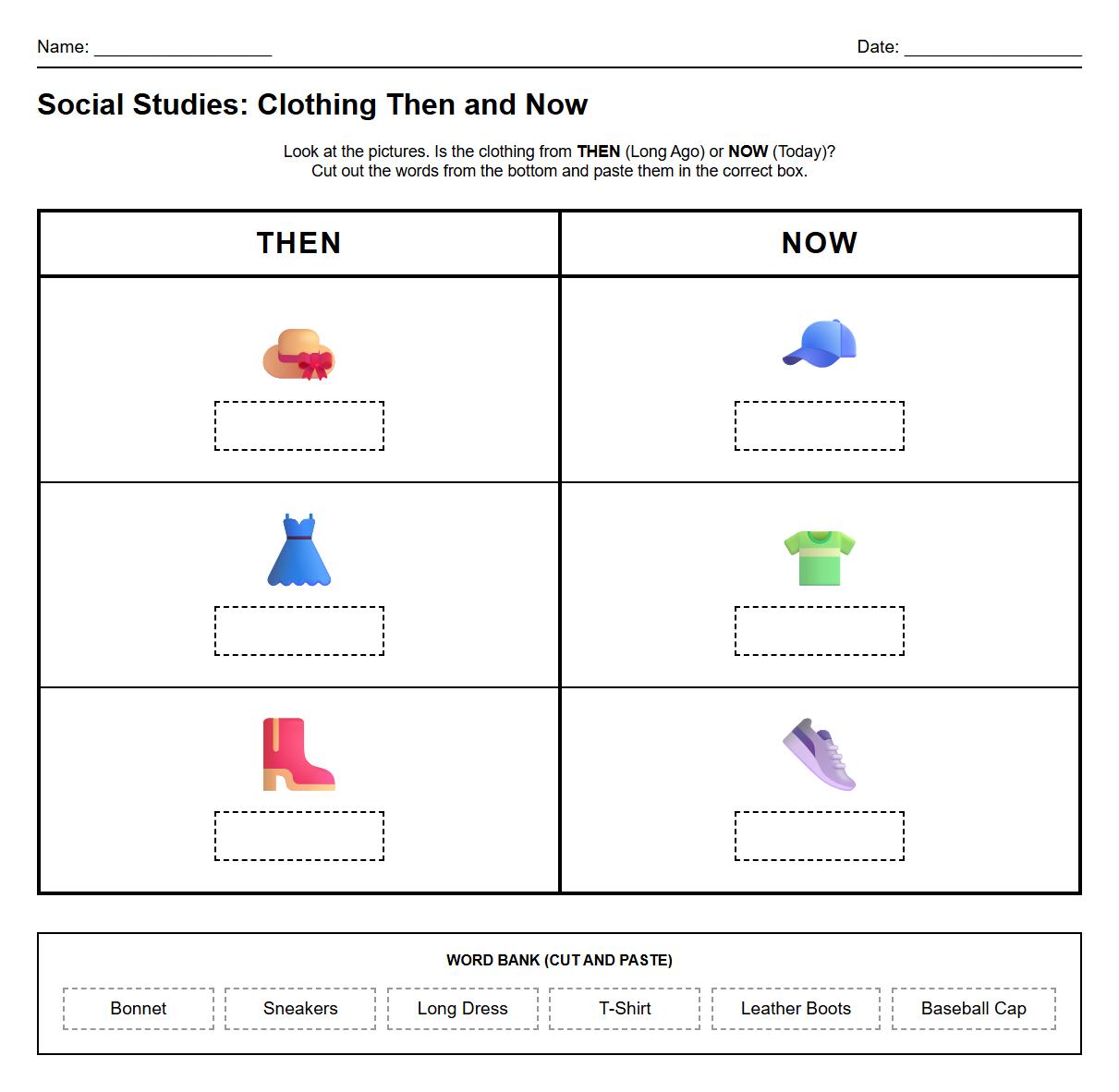
The guide points out the contrast in how people dressed in the past compared to today's fashions. Illustrations reveal differences in fabric, formality, and cultural norms, helping children grasp societal evolution. Noticing these changes fosters awareness of historical context and respect for traditions. This concept enhances comprehension of how everyday life reflects broader societal shifts. See the worksheet on tracing national symbols for related cultural observations.
Using Worksheets to Understand Change Over Time
Worksheets serve as an effective tool to visualize and understand the concept of change over time. Through activities like sequencing and comparison, children actively engage with history rather than passively receiving information. This approach aids cognitive development by linking past and present experiences. Teachers and parents can use these resources to make history relatable and accessible to young learners. Try the vocabulary and picture matching worksheet for more engaging content.
Comparing Schools Then and Now
The worksheet features pictures of a school from long ago contrasted with one from today, emphasizing differences in architecture, technology, and classroom environments. This visual comparison helps children appreciate educational advancements and societal progress. Teachers and parents can prompt discussions about how learning experiences have evolved. Understanding these differences supports a broader grasp of historical context. For classroom context, view the identifying rooms worksheet.
Sorting Objects: How the Worksheet Guides the Task
The worksheet instructs children to sort objects into "then" and "now" categories based on visual and contextual clues. This method reinforces critical thinking and helps solidify temporal concepts. The sorting task also encourages dialogue between adults and children, fostering collaborative learning. It is a foundational exercise that aids in understanding timelines. Check out the needs vs wants worksheet for sorting practice.
Favorite Activities in the Interactive Worksheet
Many children enjoy interactive tasks such as matching games and transport comparisons, which make learning about past and present engaging. These favorite activities motivate participation and sustain attention through play-based learning. They also provide opportunities for parents and teachers to observe comprehension and offer support. The interactive format enhances enjoyment and educational impact. Try the circle correct helper worksheet for more interactive activities.
Reflecting on Life Differences: Past and Present
Comparing current life experiences with how children lived in the past evokes feelings of wonder and empathy, fostering a deeper connection to history. The worksheet encourages reflection on lifestyle changes, promoting emotional intelligence and perspective-taking. This understanding helps young learners appreciate progress and diversity in human experiences. Engaging with these reflections supports social and historical awareness. Explore similar themes in the phonemic awareness worksheet on citizenship terms.


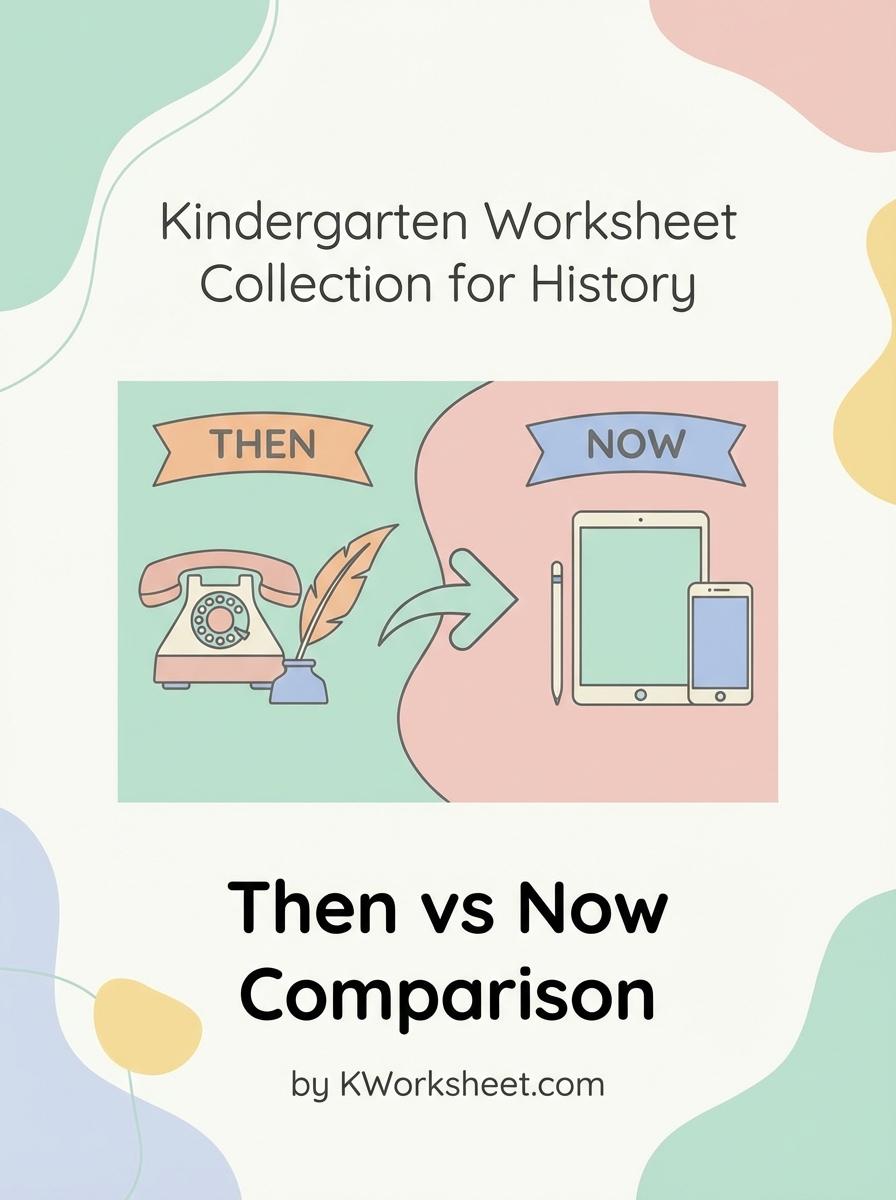
Kindergarten Worksheet Collection for History: Then vs Now Comparison