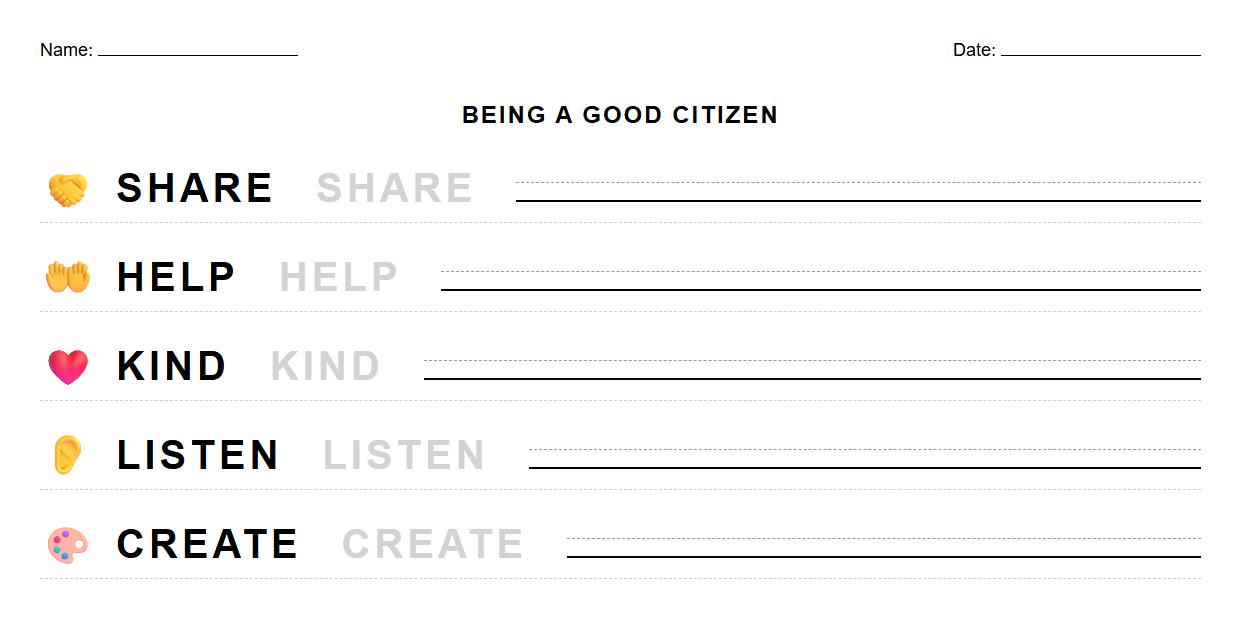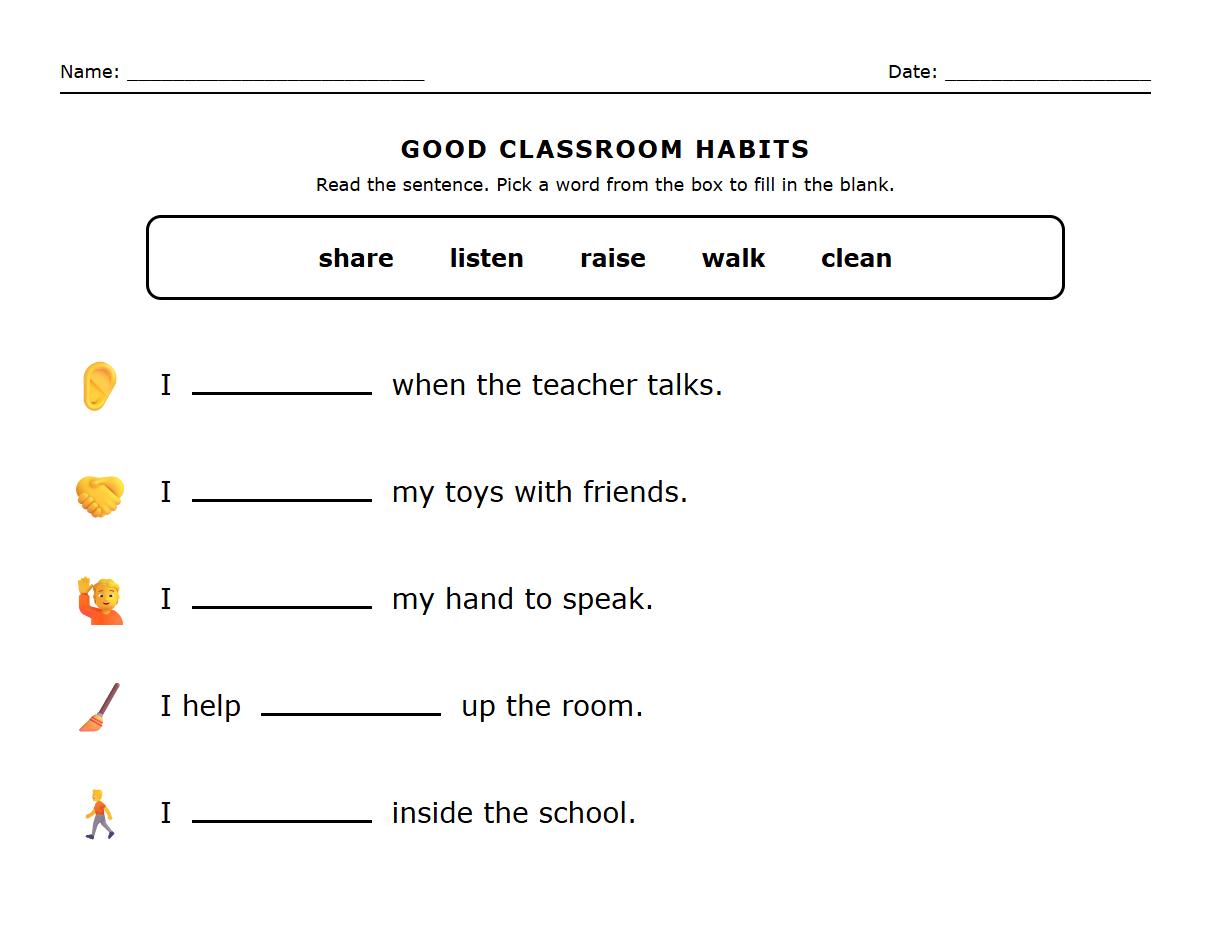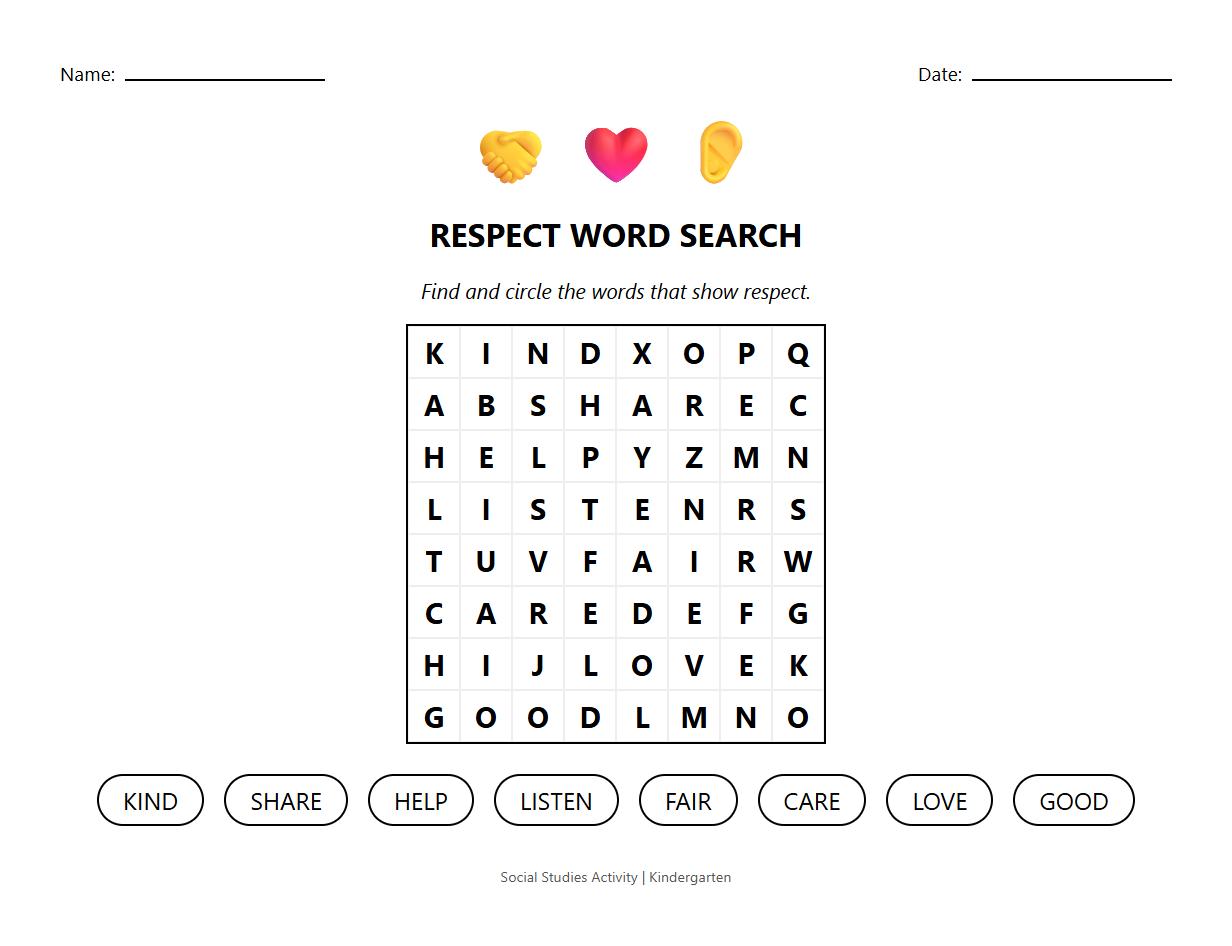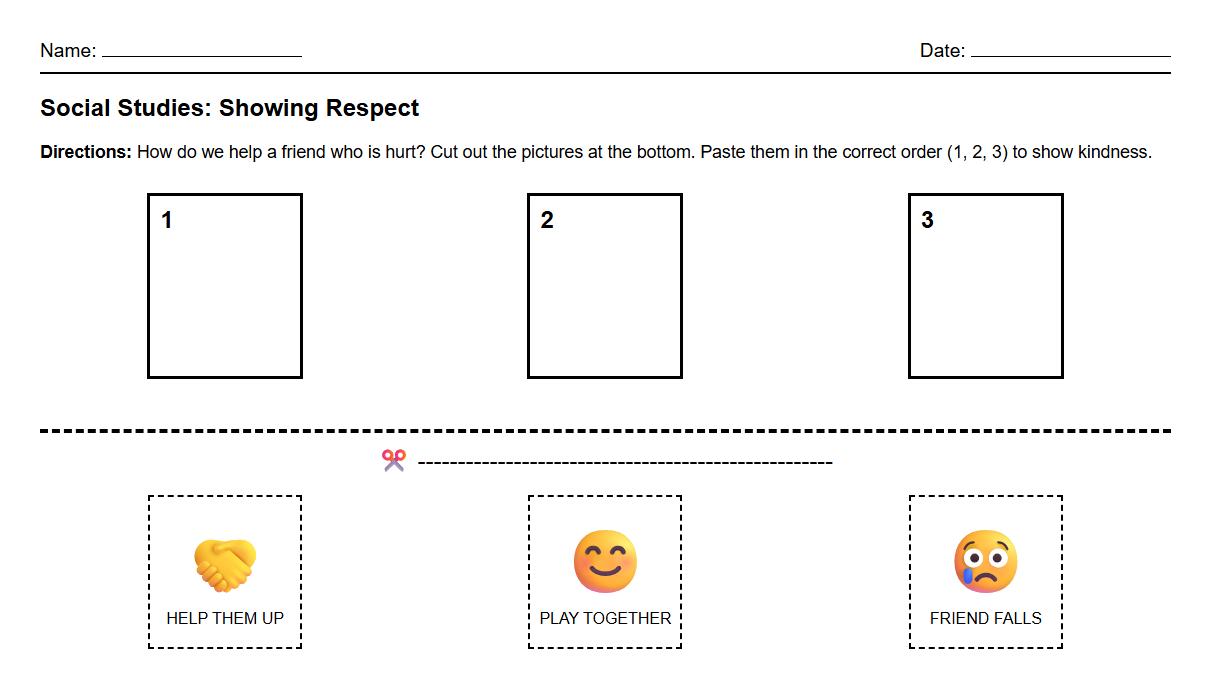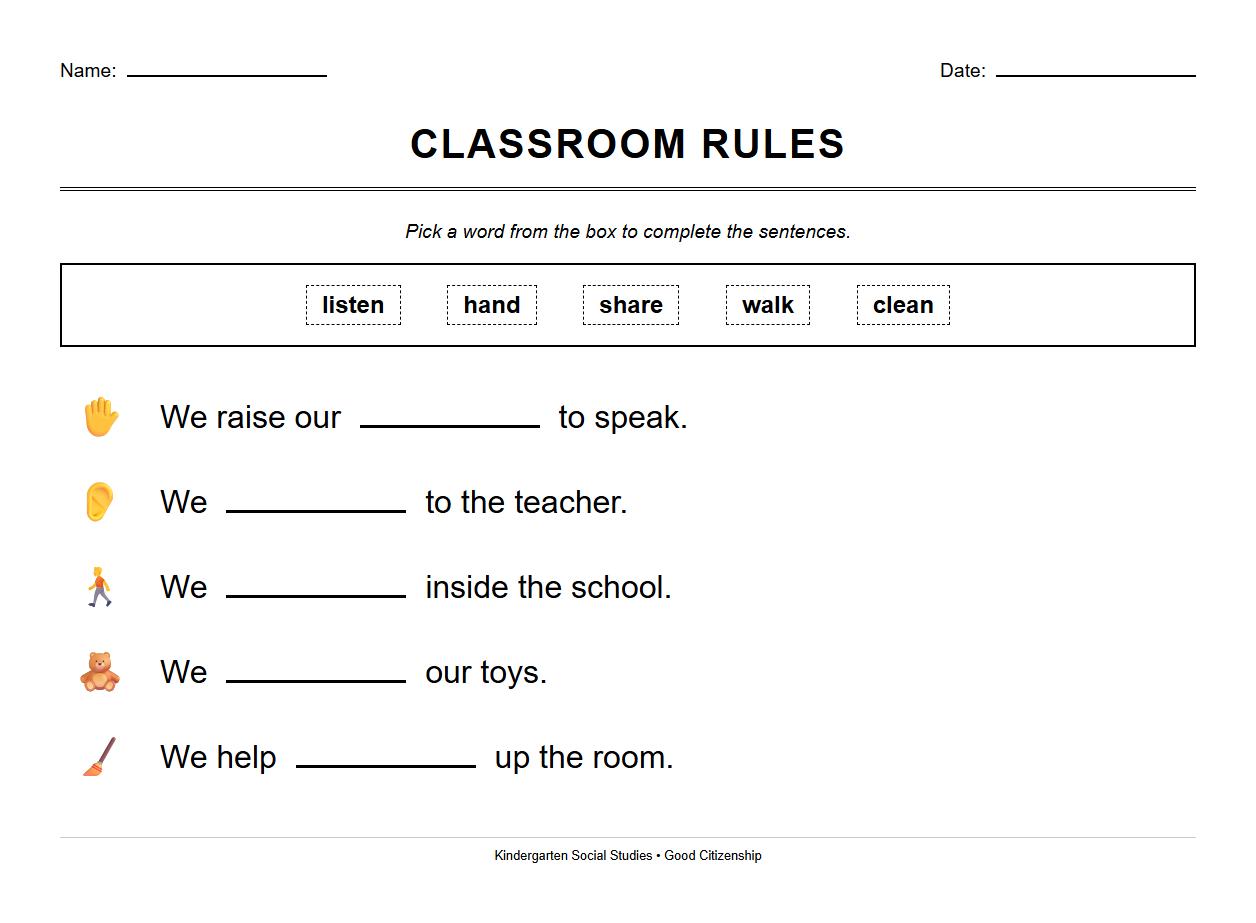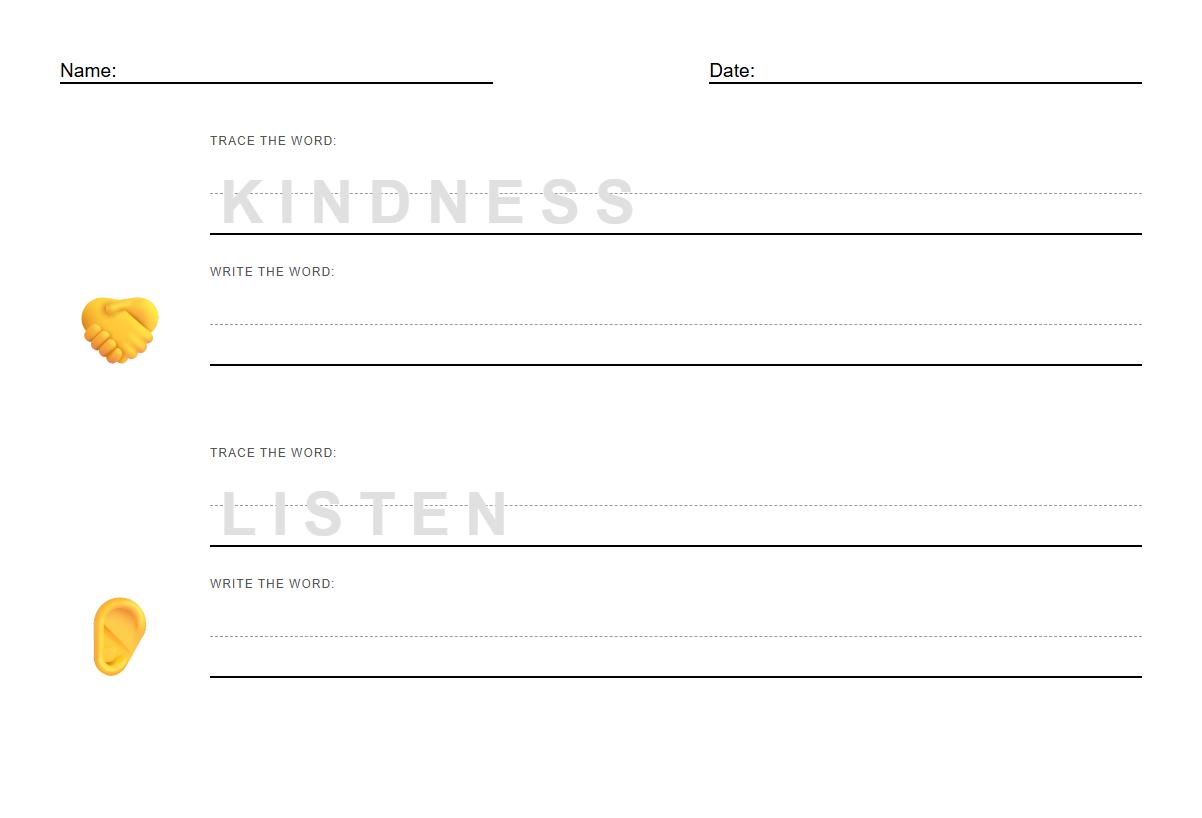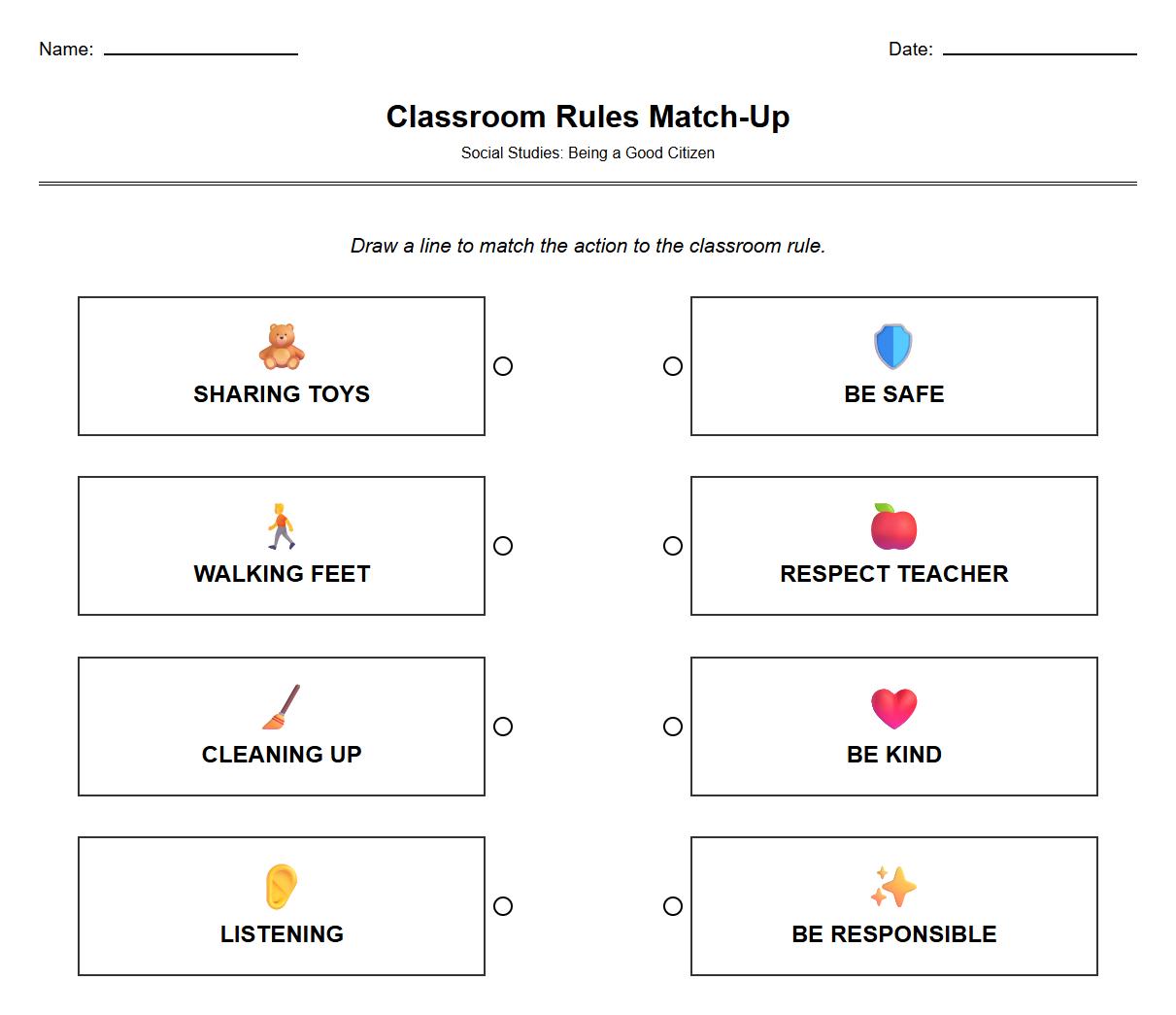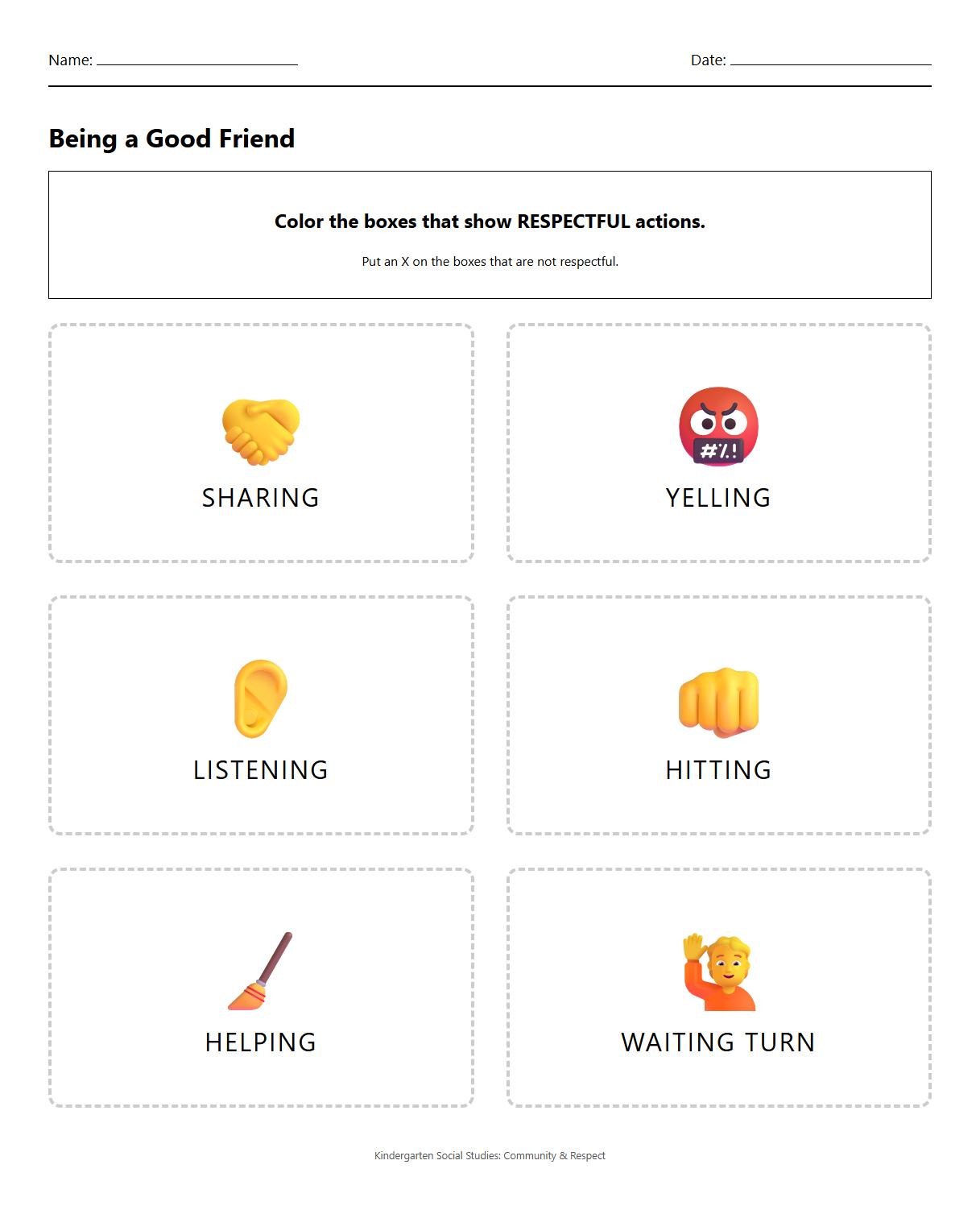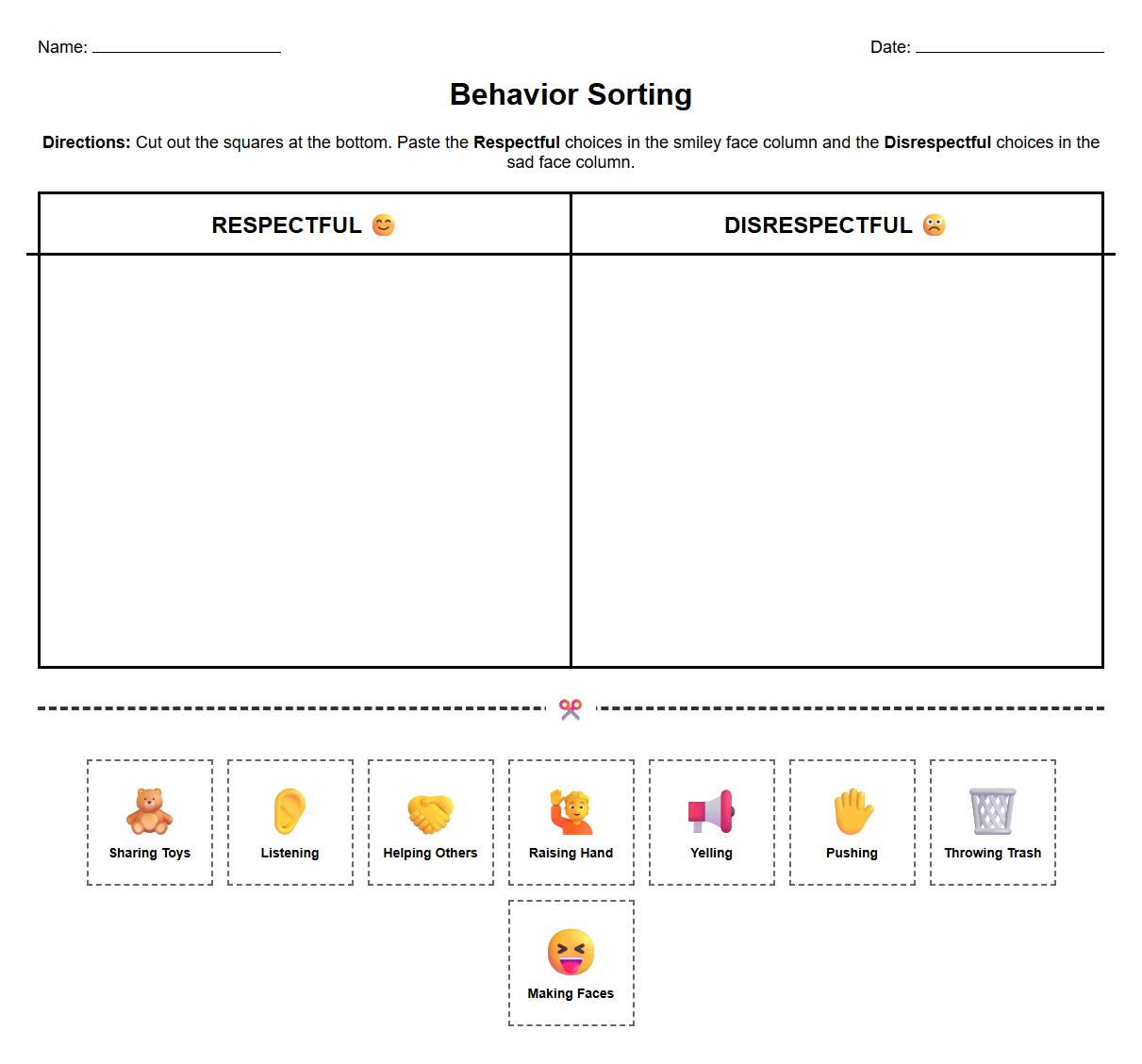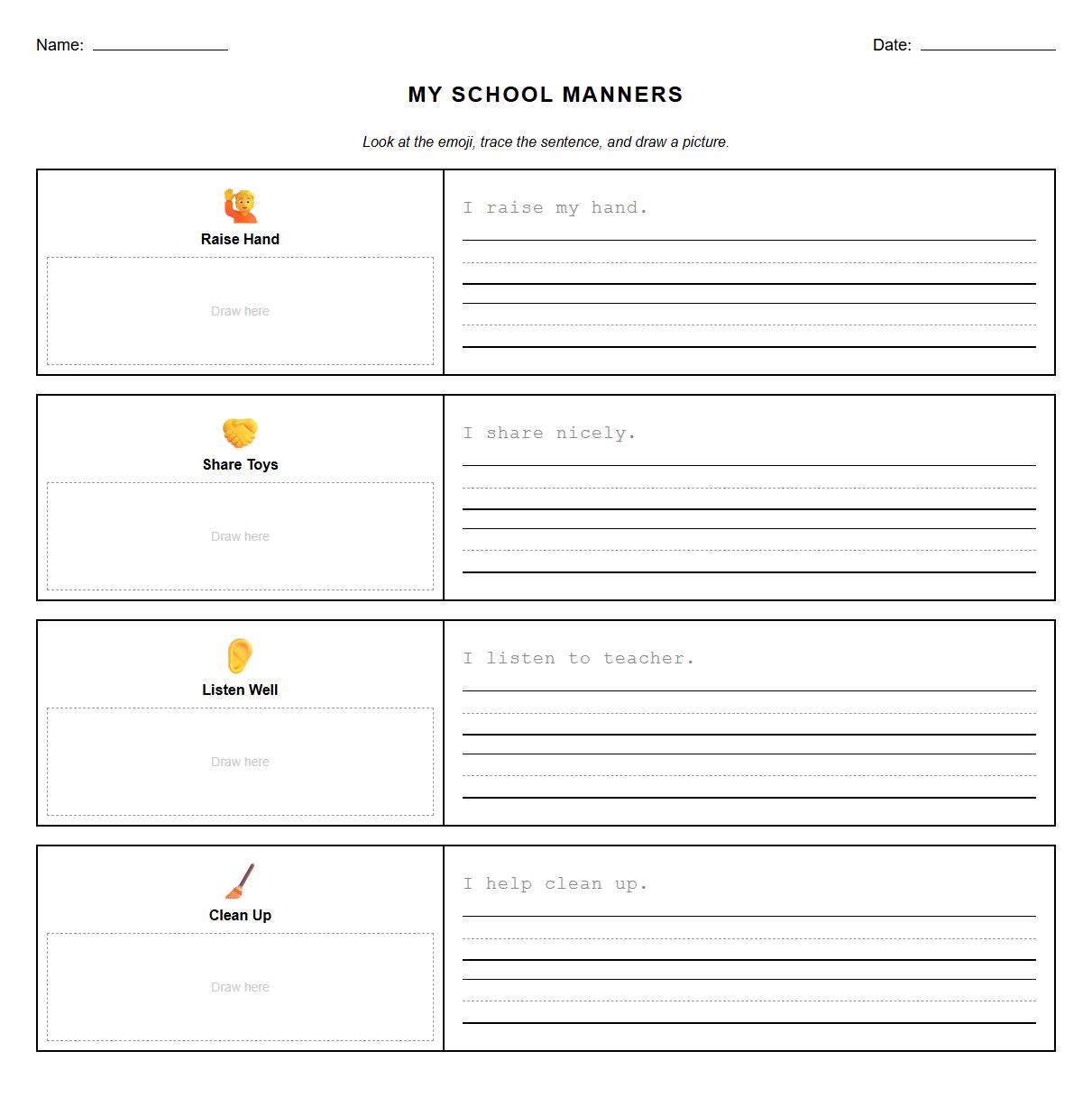
Kindergarten students learn important values through writing practice focused on respect and classroom behavior, helping to build a positive learning environment. These worksheets encourage young learners to express their understanding of kindness, sharing, and listening through simple sentences and drawings. Explore the available worksheets to support your child's early writing skills and social development.
Why Is It Important to Show Respect to Your Classmates and Teachers?
Showing respect to classmates and teachers helps create a positive and safe learning environment. When children feel respected, they are more likely to collaborate and participate actively. Respect also teaches kindness and empathy, essential skills for life. It builds trust and encourages everyone to feel valued.
What Are Some Ways You Can Be a Good Listener in the Classroom?
Being a good listener means giving your full attention to the speaker without interrupting. Children can practice looking at the speaker and staying quiet while they talk. Nodding and asking questions show that they are engaged and understanding. These skills help improve communication and learning.
How Can You Help Keep the Classroom Neat and Organized?
Keeping the classroom neat and organized helps everyone find materials quickly and reduces distractions. Encourage children to put toys, books, and supplies back in their proper places after use. This habit teaches responsibility and respect for shared spaces. A clean room also promotes safety and focus.
What Should You Do if You See Someone Being Unkind?
If a child notices someone being unkind, they should tell a trusted adult immediately. Encouraging children to use kind words and include everyone shows they care. Teaching empathy helps prevent bullying and promotes a supportive community. Standing up for others builds courage and respect.
How Can You Show Respect During Circle Time?
During circle time, children show respect by sitting quietly, listening, and not interrupting. Taking turns to speak and making eye contact demonstrate good manners. Following these rules helps everyone feel heard and valued. It also keeps the group organized and focused.
Why Is It Important to Use Kind Words With Your Friends?
Using kind words helps friends feel happy, safe, and appreciated. Kindness builds strong friendships and prevents conflicts. It encourages sharing and teamwork in the classroom. Teaching children to express themselves kindly supports emotional development.
What Can You Do if You Feel Upset With a Classmate?
If a child feels upset, they should practice calm words to express their feelings. Talking to a teacher or taking deep breaths can help manage emotions. Learning to solve problems peacefully encourages friendship and understanding. It also teaches important social skills for the future.
How Can You Share Classroom Materials With Others?
Sharing materials means taking turns and being patient with classmates. Children learn to wait for their turn and handle items gently. Sharing teaches generosity and cooperation. It helps everyone participate and enjoy classroom activities.
What Does Respectful Behavior Look Like on the Playground?
Respectful behavior on the playground includes taking turns, playing safely, and listening to adults. Children should use kind words and include others in games. Following playground rules keeps everyone safe and happy. It teaches fairness and teamwork beyond the classroom.
How Do You Follow the Classroom Rules Every Day?
Following classroom rules means listening carefully and doing what the teacher asks. Consistent respect and cooperation create a calm learning space. Children learn responsibility and self-control by following rules. This helps everyone enjoy their time at school.


Vocabulary and Picture Matching Worksheet for Citizenship Rules