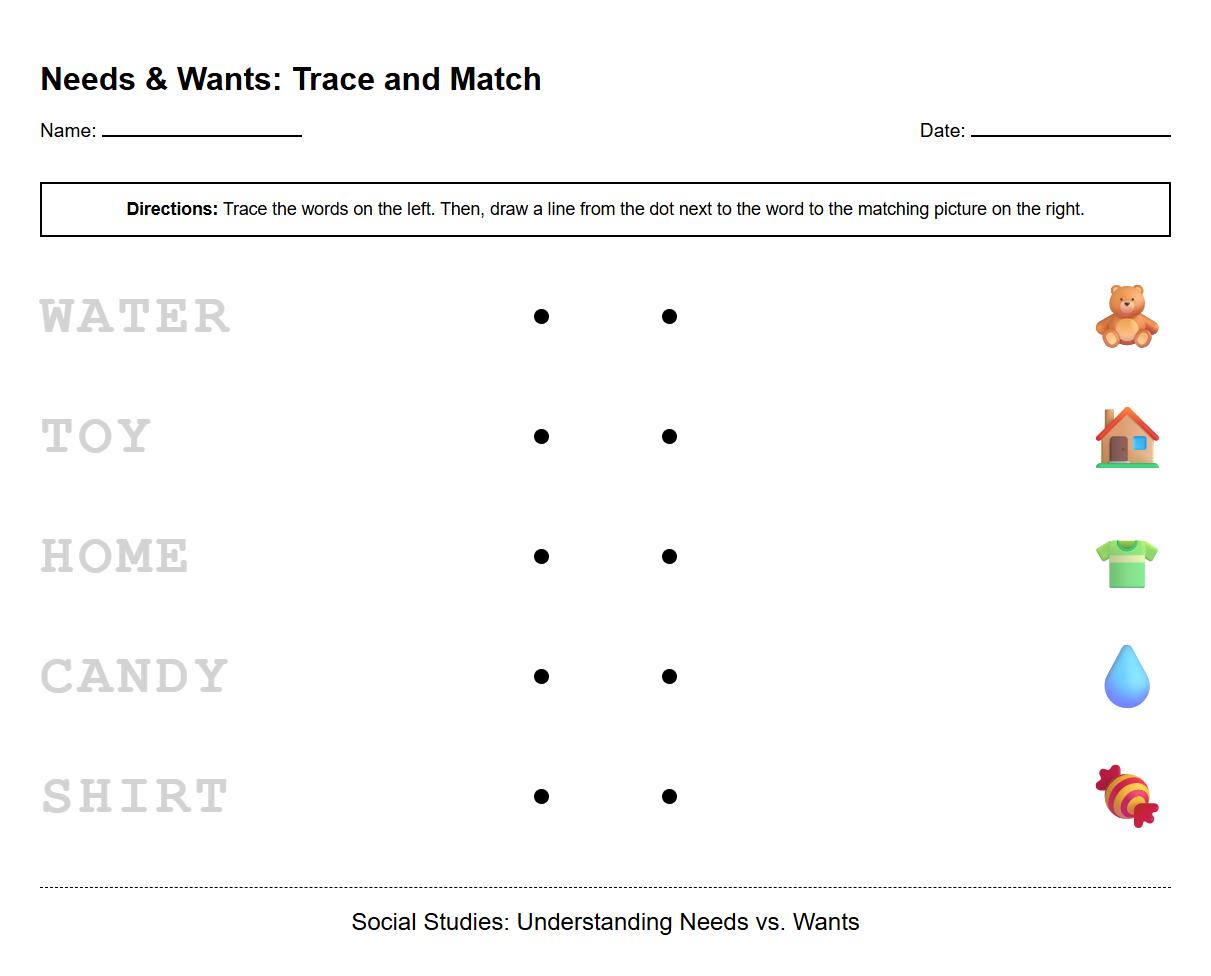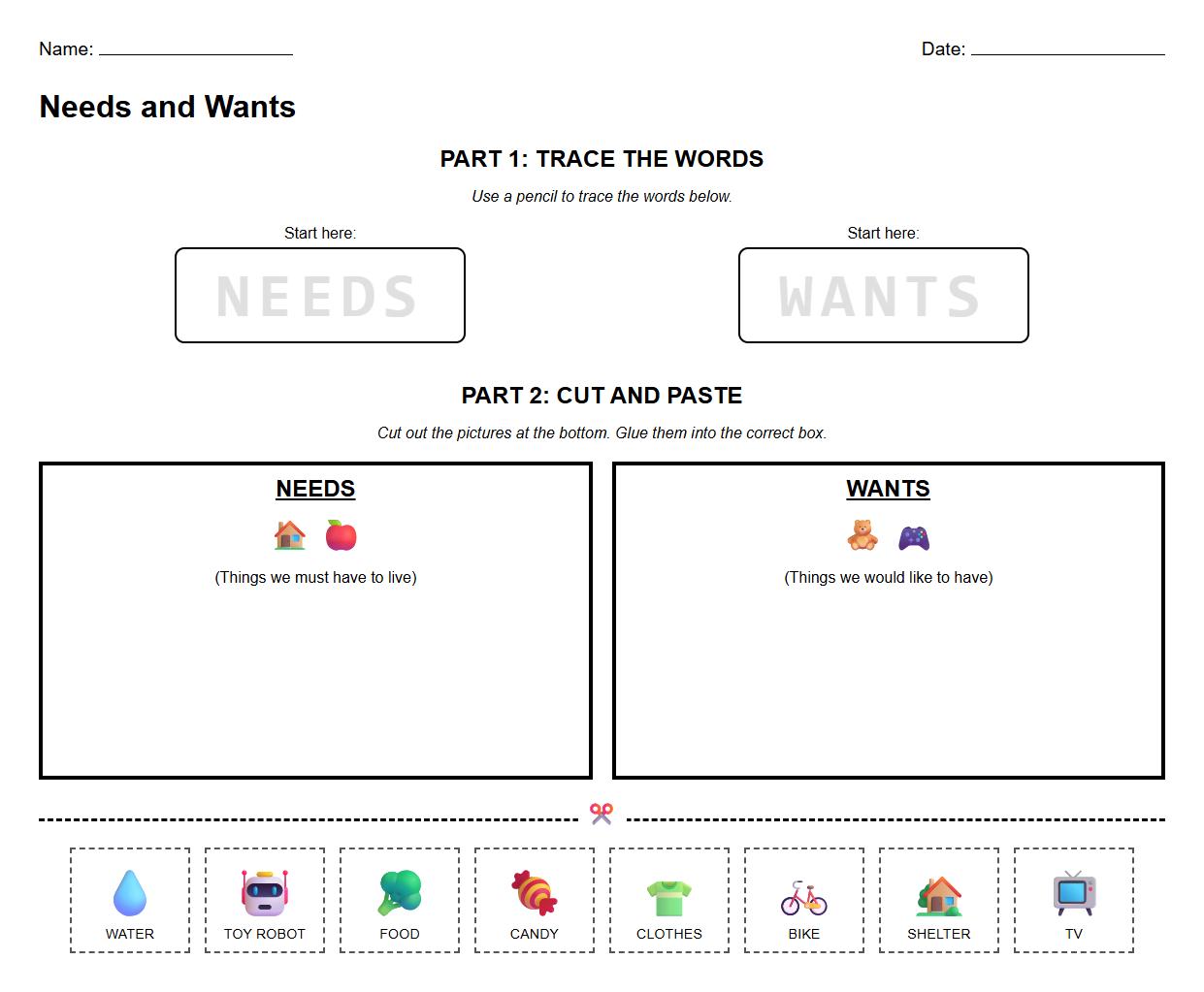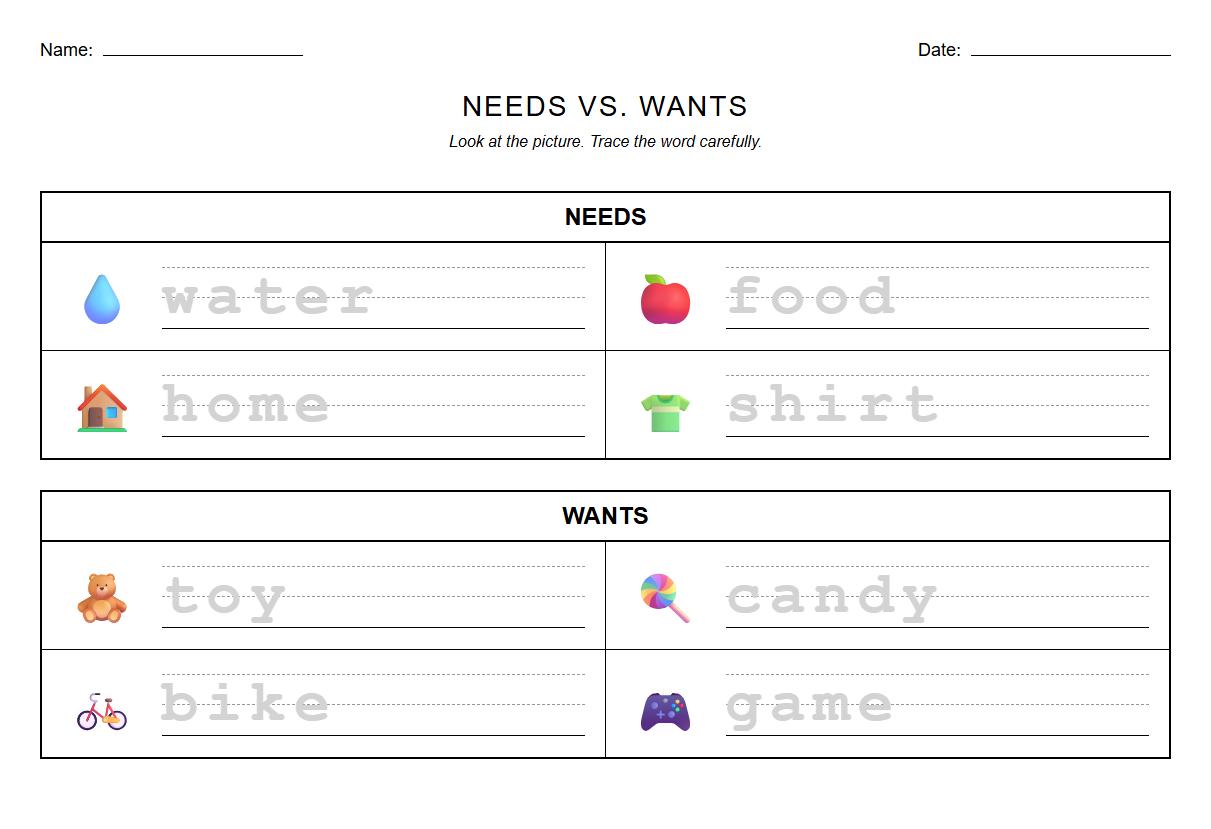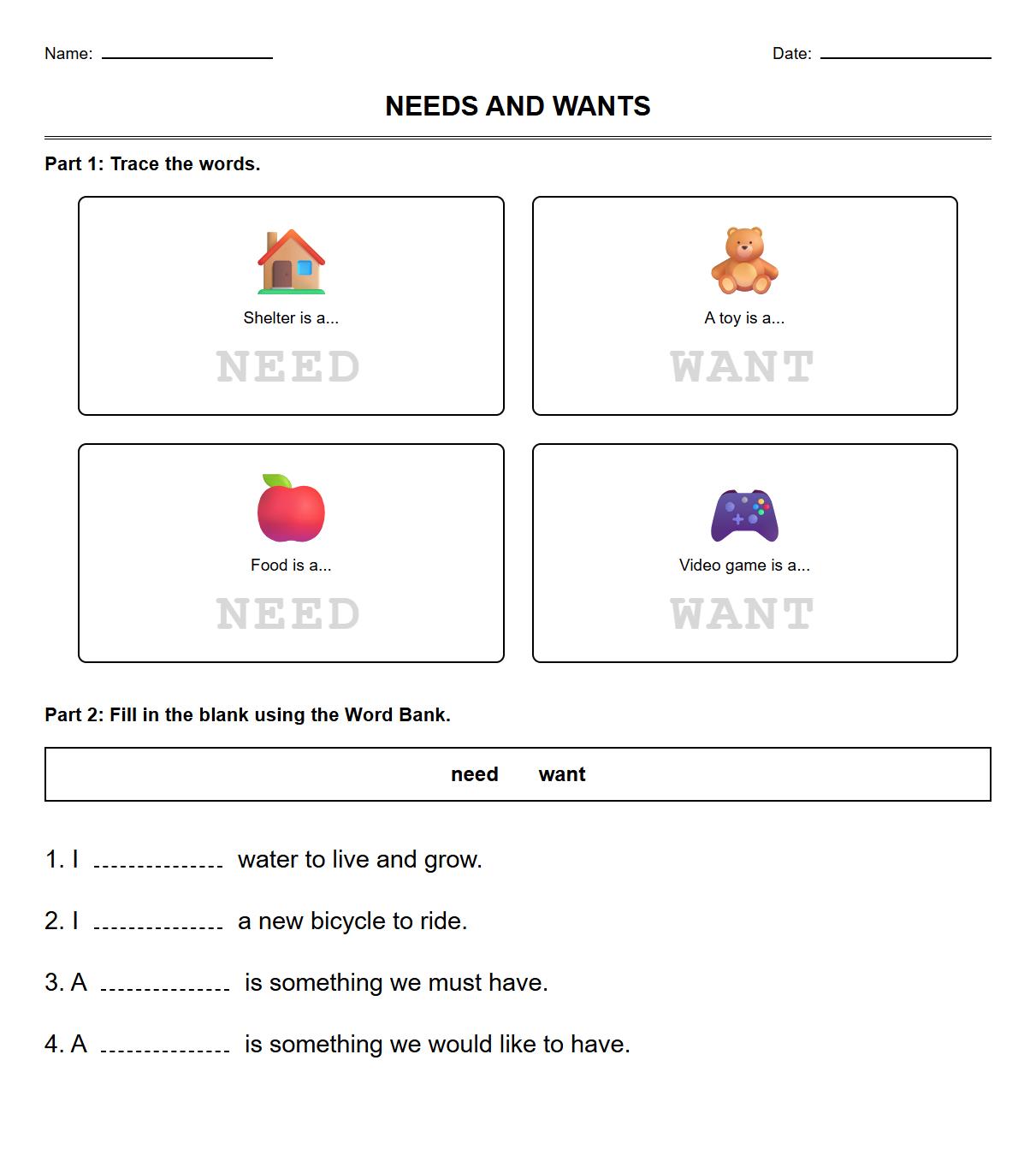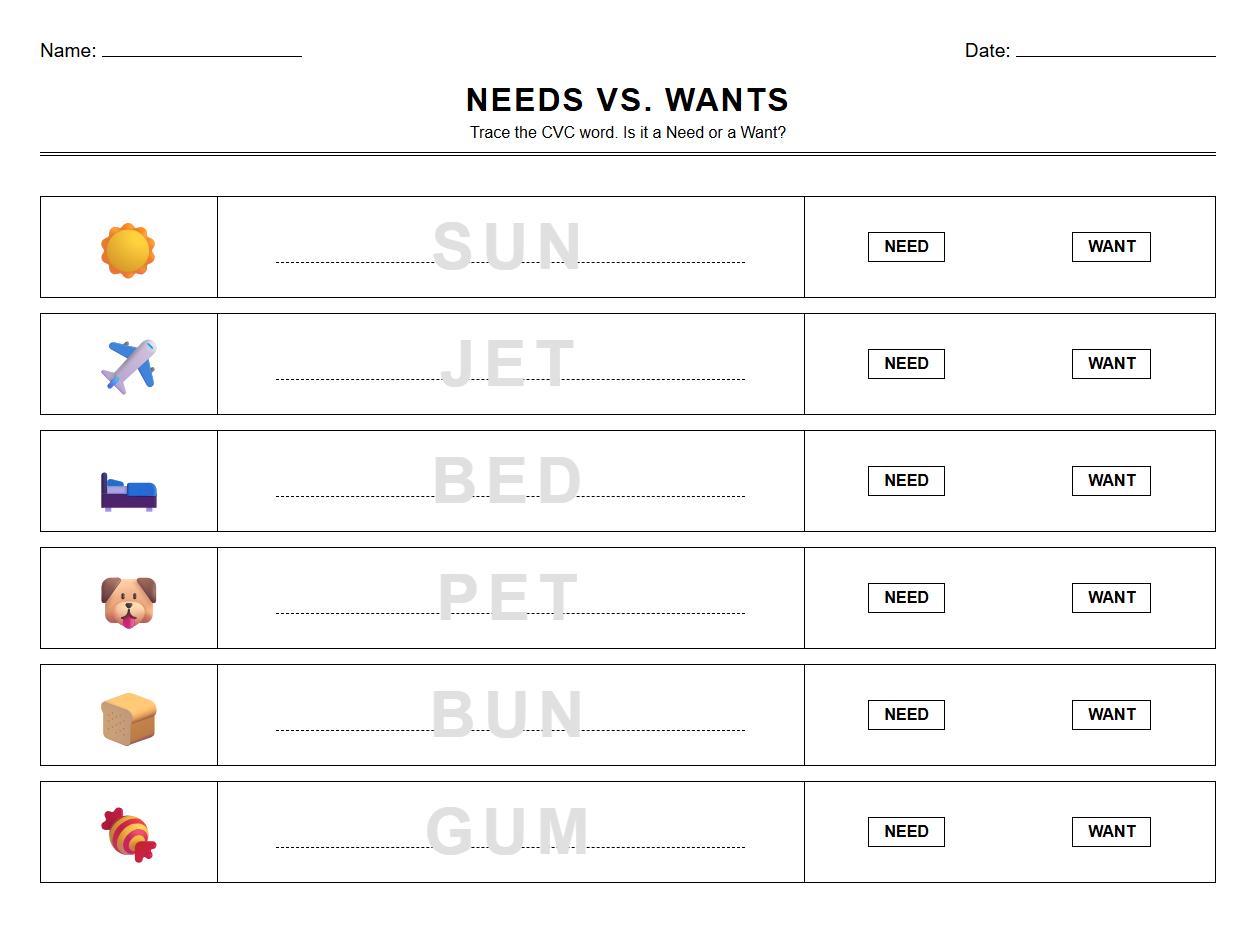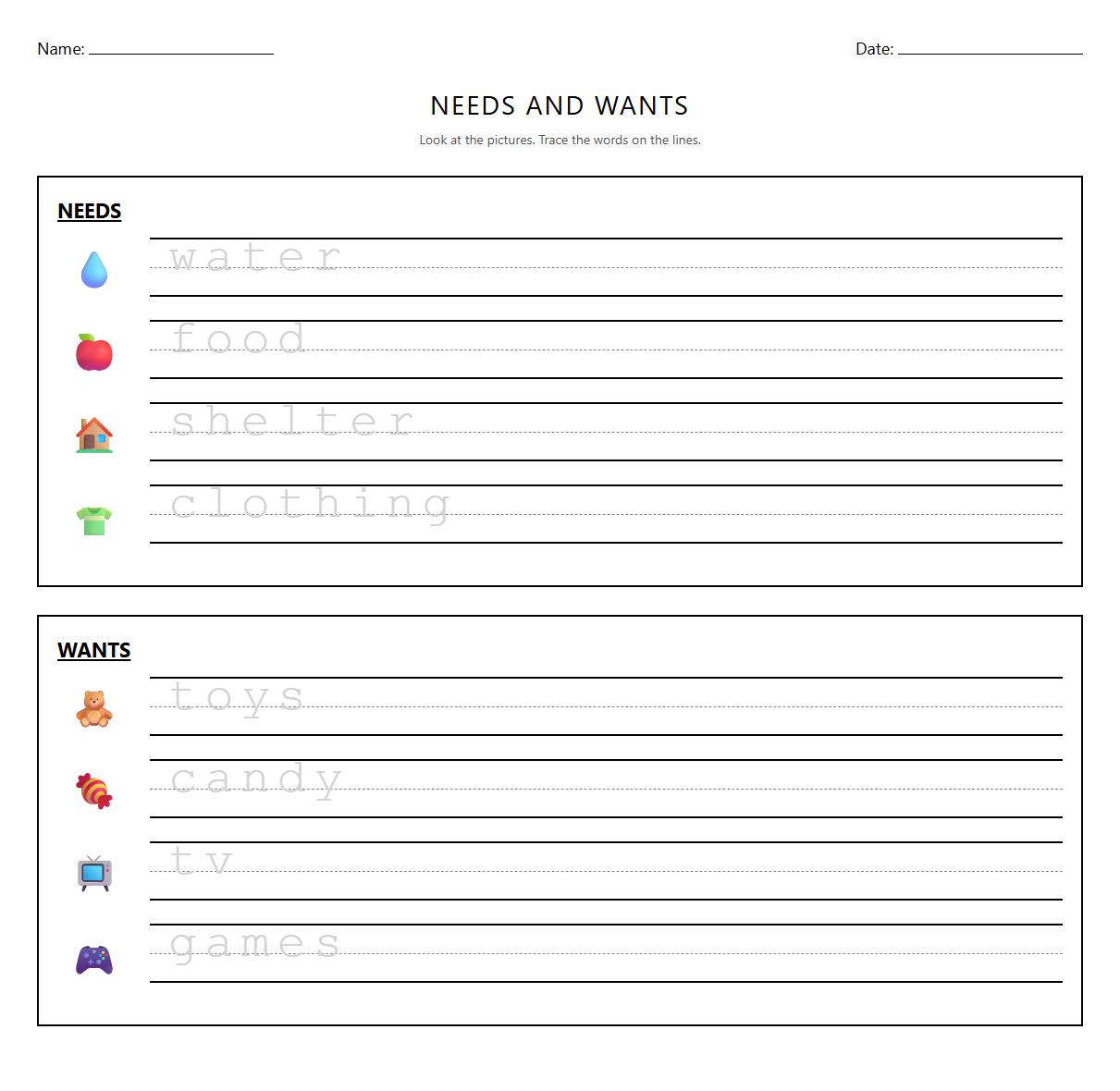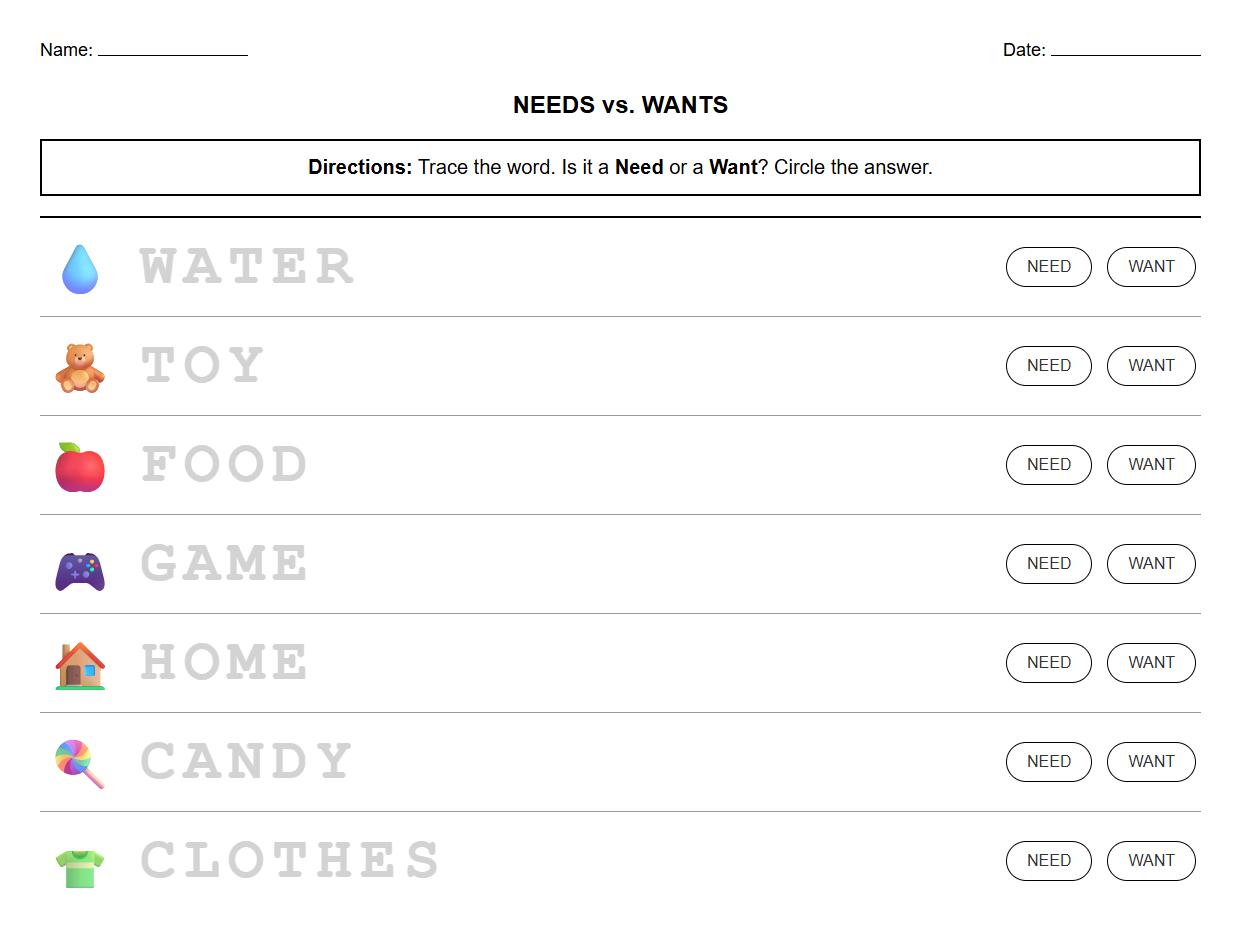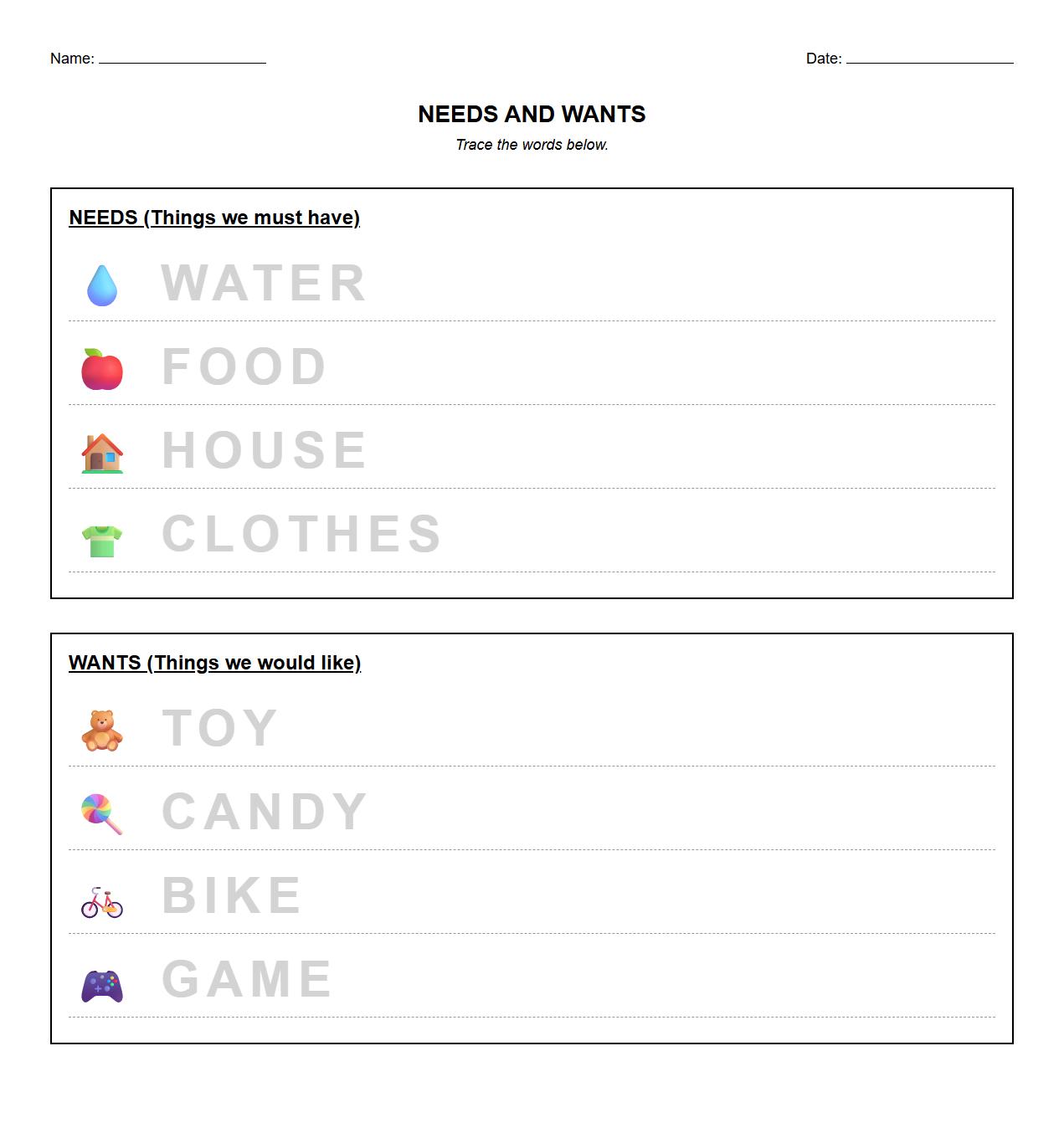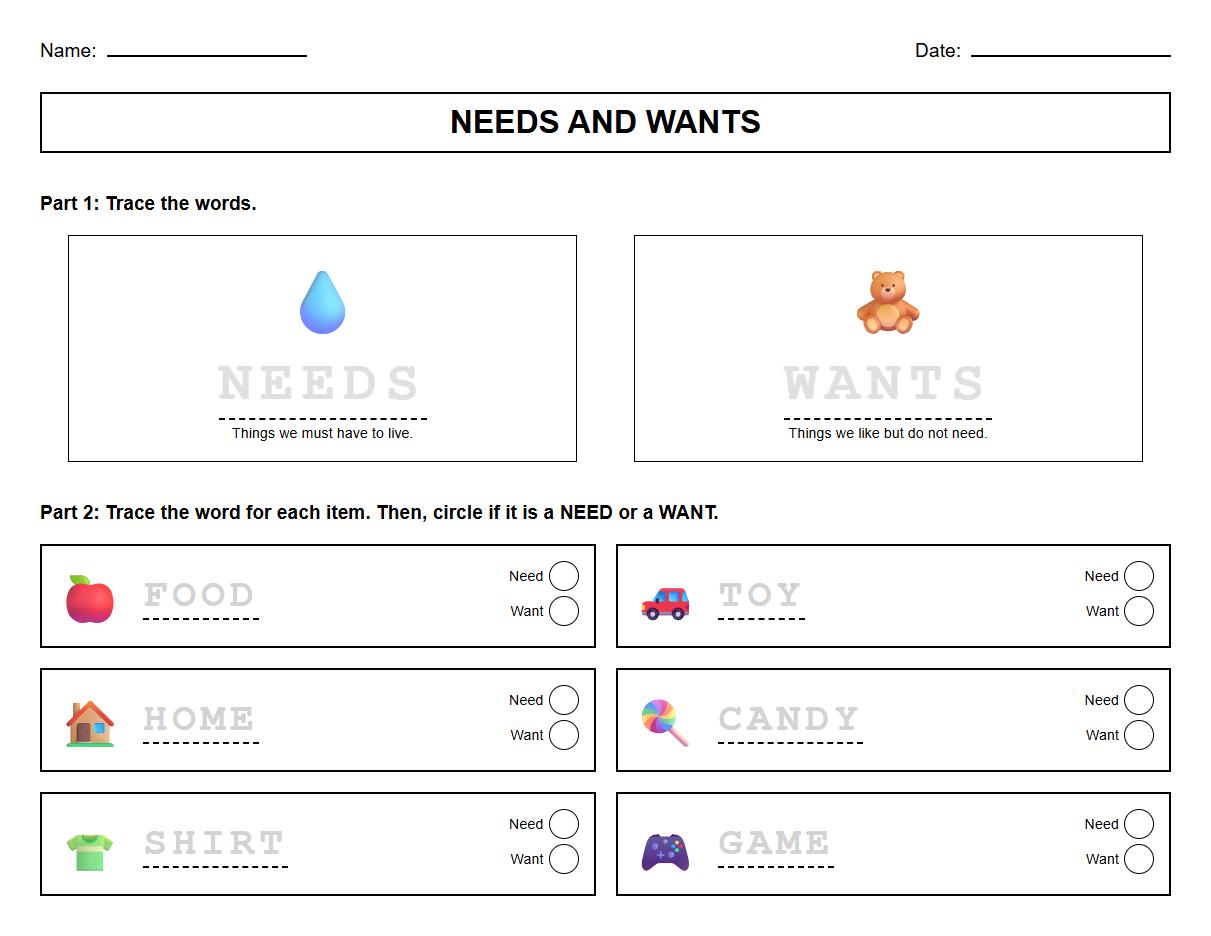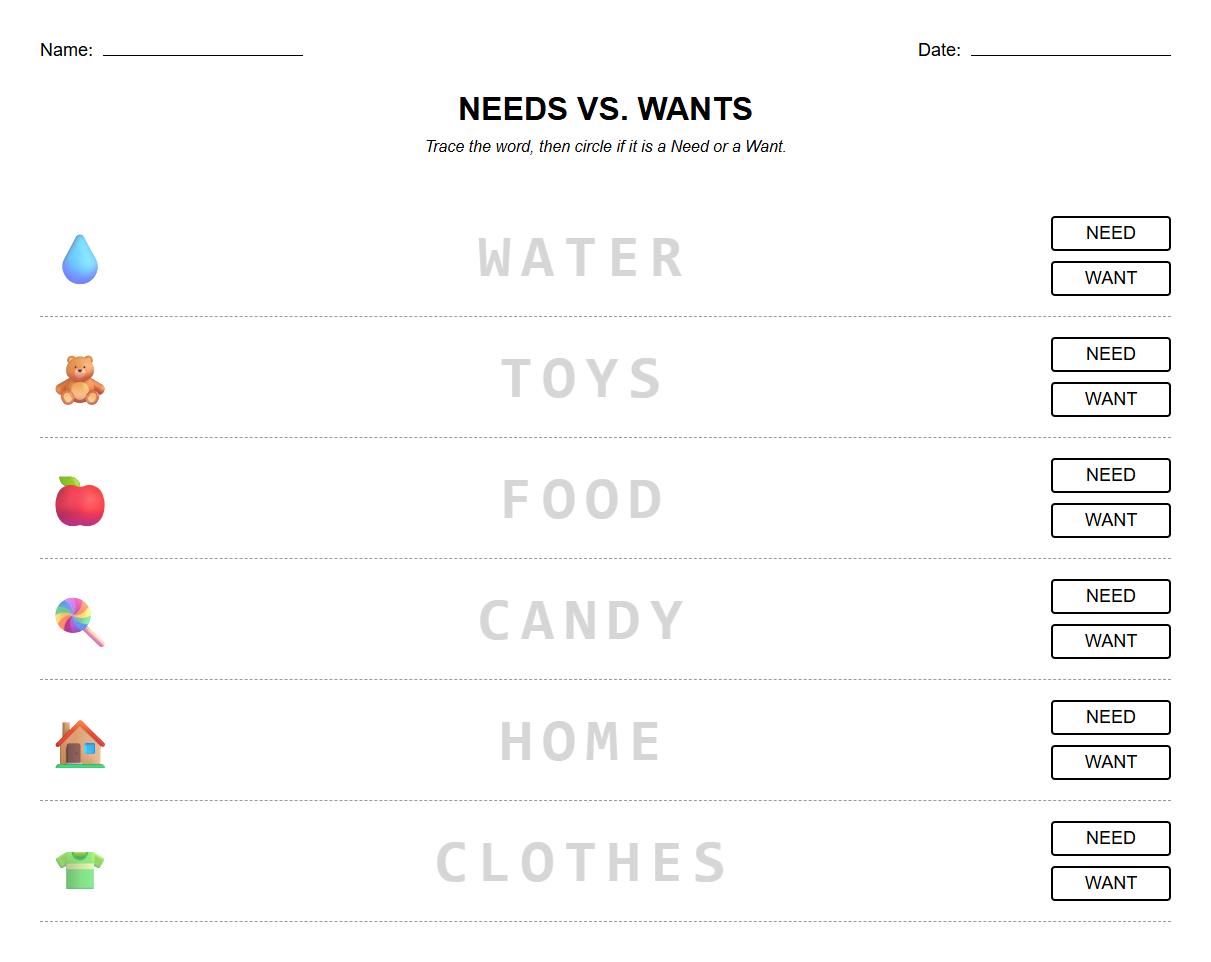
Understanding the difference between needs and wants is essential for young learners to develop good decision-making skills. This worksheet helps kindergarteners identify and trace words related to basic needs and common wants, enhancing both their vocabulary and fine motor skills. Explore the available worksheets to support your child's early learning journey in distinguishing needs from wants.
What is the Difference Between a Need and a Want?
A need is something you must have to live, like food, water, and shelter. A want is something that makes life more fun or enjoyable but is not essential, like toys or candy. Understanding the difference helps children prioritize what is most important for their well-being. This foundational knowledge supports healthy decision-making skills.
Can You Trace the Word "Need" on the Worksheet?
Tracing the word "need" helps children recognize and remember this important word. It strengthens their writing skills and promotes vocabulary learning. Encourage your child to carefully follow the lines with a pencil or crayon. Repeated practice will build confidence and fine motor skills.
Can You Trace the Word "Want" on the Worksheet?
Tracing the word "want" is a fun way for children to learn the spelling and look of this key word. It complements their understanding of words related to needs and helps in language development. Use bright colors to make tracing more engaging. This activity also reinforces letter formation and handwriting skills.
Name Two Things That You Need Every Day
Common everyday needs include water and healthy food. These are essential to keep our bodies strong and healthy. Sleep and shelter are also important daily needs. Discussing these helps children understand what keeps them safe and healthy.
Name Two Things That You Want but Do Not Need
Examples of wants are toys and sweets. These things make life enjoyable but are not necessary for survival. Understanding wants helps children learn to make responsible choices. It encourages gratitude for what they have while recognizing desires.
Why is Water a Need and Not a Want?
Water is a need because it keeps our bodies alive and hydrated. Without it, we cannot survive for long. Water helps our organs function properly and maintains good health. Teaching this helps children appreciate the importance of drinking water every day.
Circle the Items That Are Needs on the Worksheet
Ask children to identify and circle needs like food, water, and shelter from a list or pictures. This interactive activity reinforces their understanding of essential items. It also helps develop focus and attention to detail. This practice supports learning through visual and tactile engagement.
Circle the Items That Are Wants on the Worksheet
Children should circle wants such as toys, candy, and games on the worksheet. This task helps clarify the difference between what they want and what they need. It encourages critical thinking and decision-making skills. The fun of circling keeps them engaged and motivated to learn.
Can You Match Pictures to the Words "Need" and "Want"?
Matching pictures to the words "need" and "want" supports vocabulary and comprehension. This activity helps children visually connect concepts to real-life items. It enhances memory and recognition skills. Matching tasks also build cognitive abilities through categorization.
Why Do We Learn About Needs and Wants in School?
Learning about needs and wants helps children understand how to make smart choices. It develops financial literacy and responsibility at an early age. This knowledge encourages gratitude and careful consumption. Teaching this in school supports lifelong skills for personal and social well-being.


Needs vs Wants Worksheet with Reading Comprehension for Kindergarten