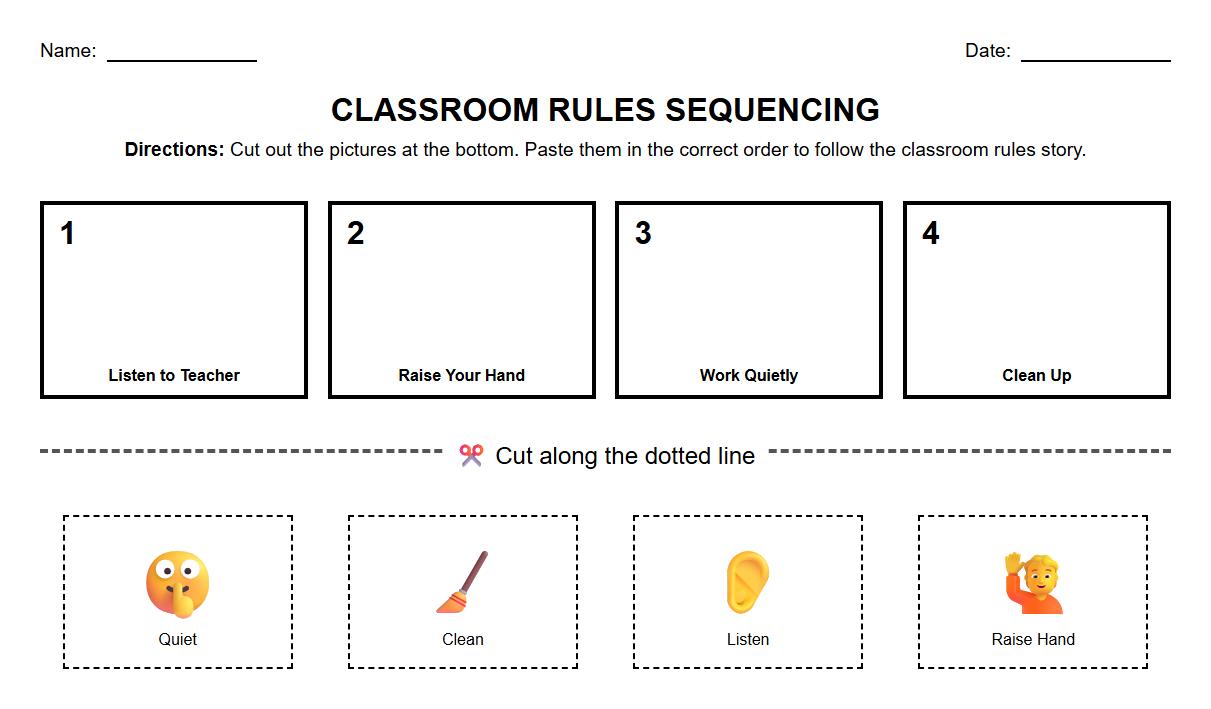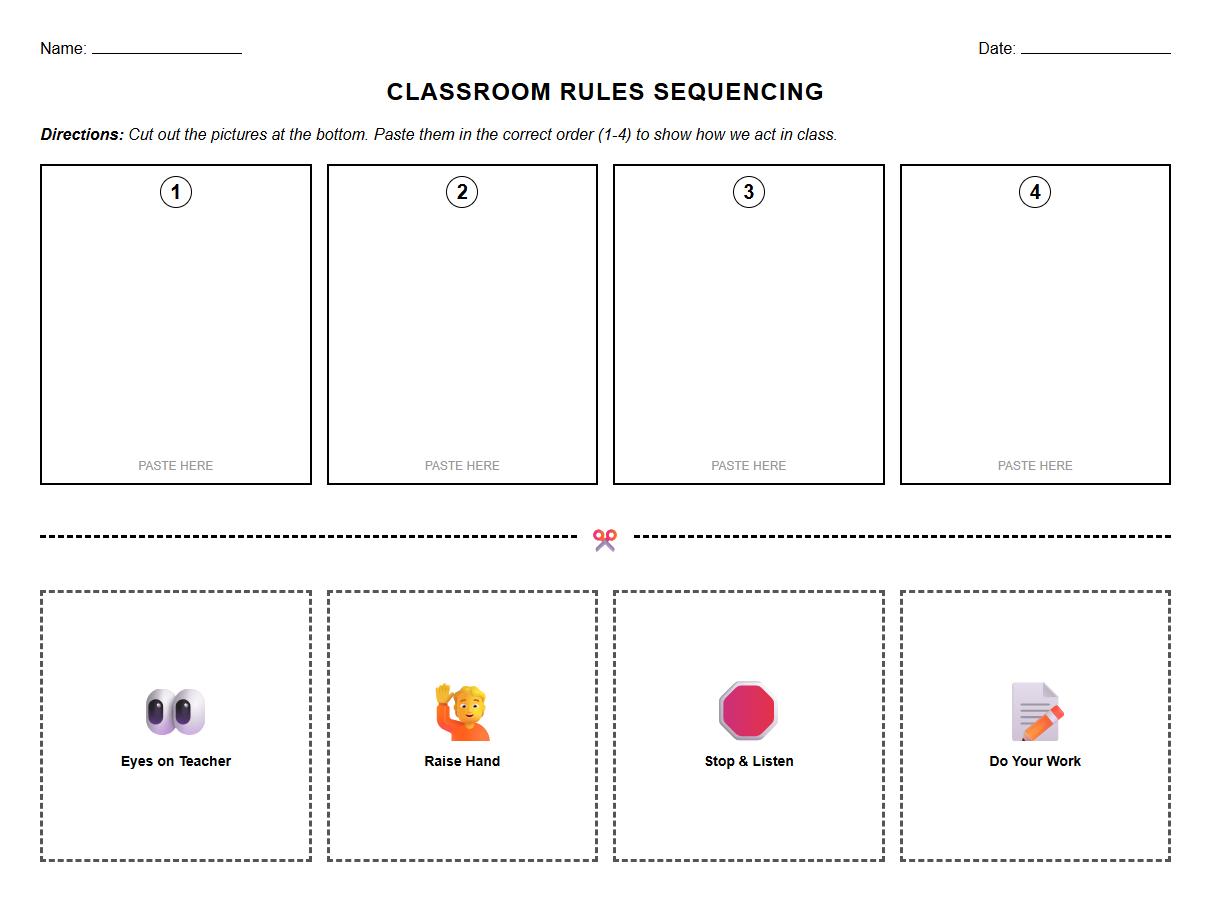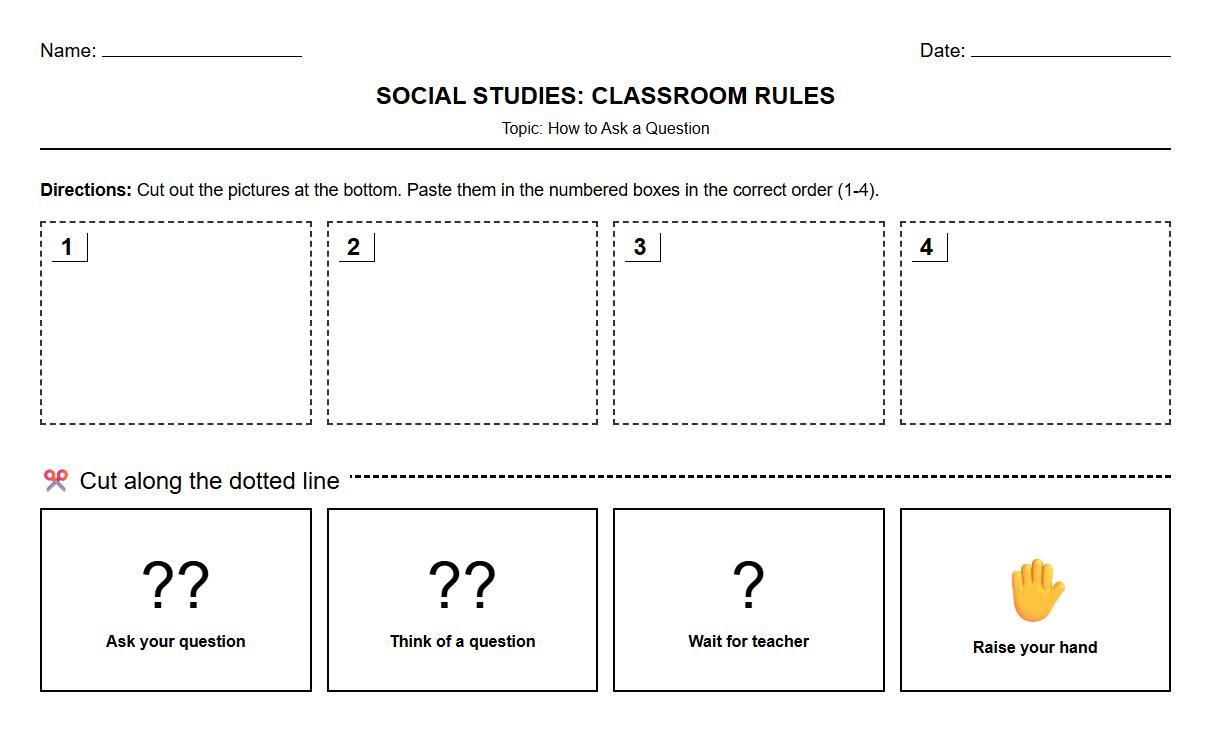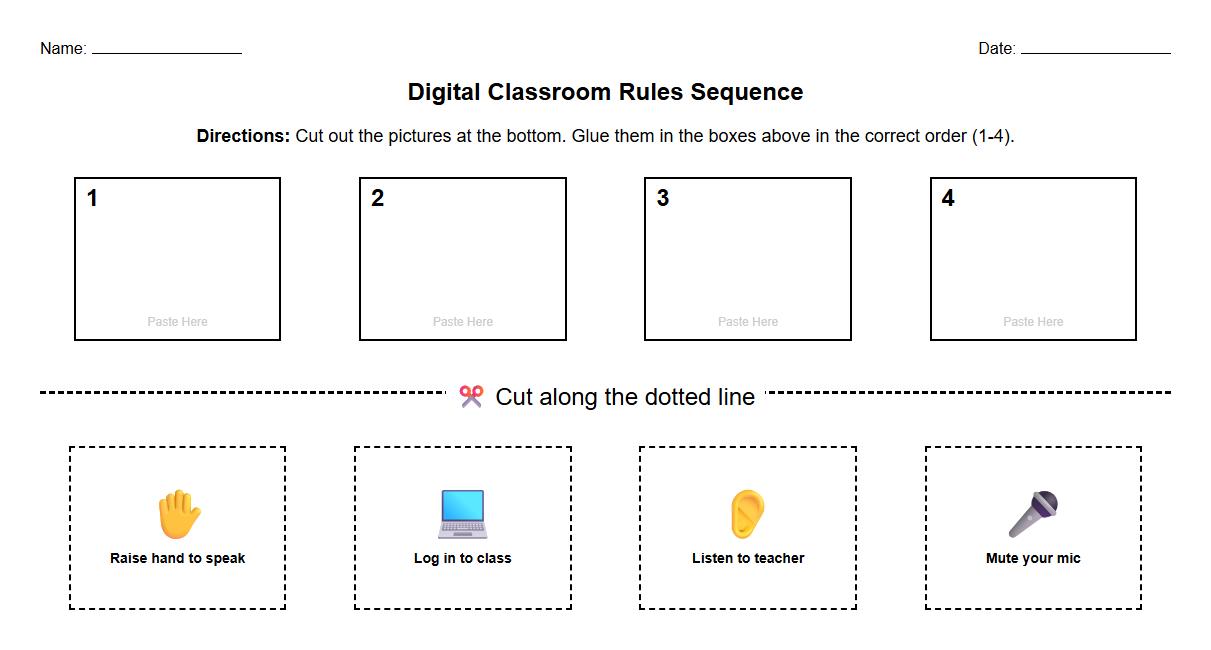
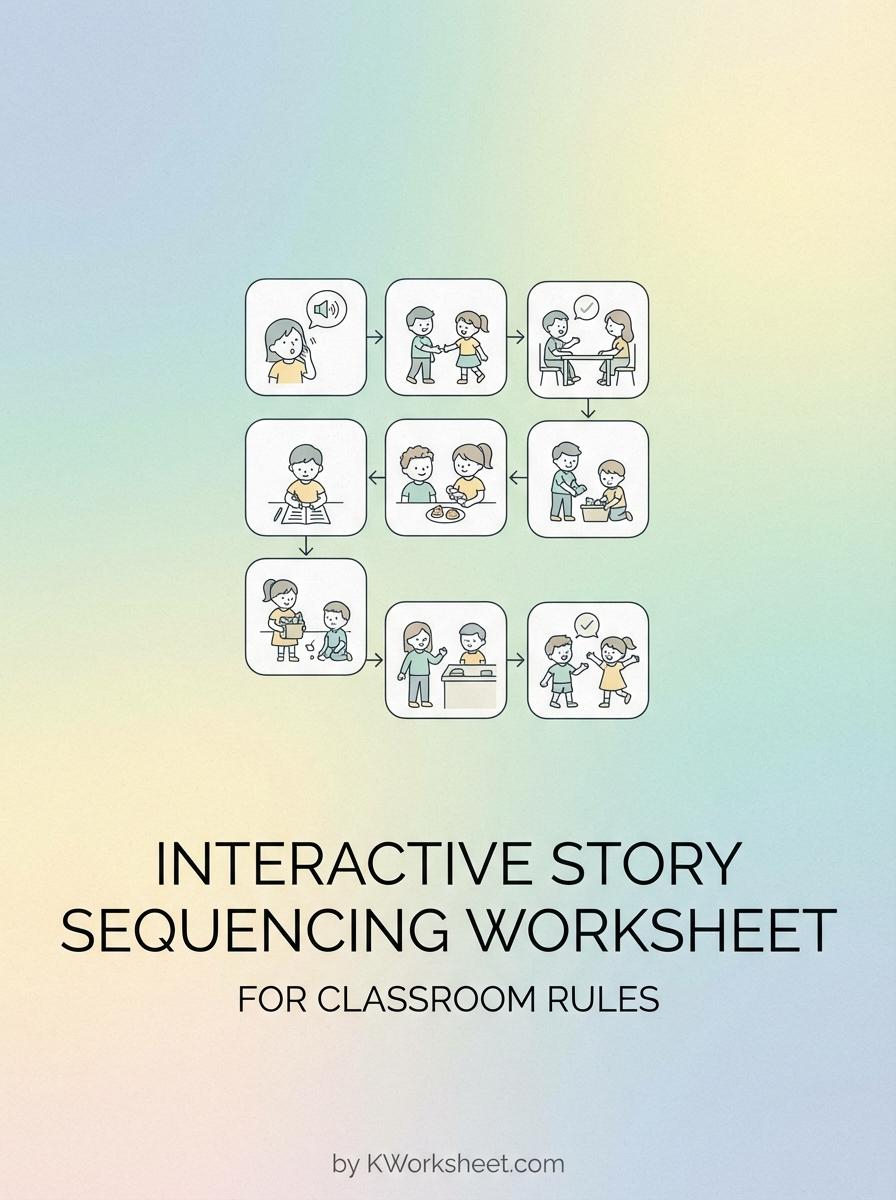
Interactive Story Sequencing Worksheets help students understand and remember classroom rules by arranging events in a logical order, enhancing comprehension and retention. This method promotes active engagement, critical thinking, and reinforces positive behavior patterns through storytelling. Explore the available worksheets to support effective classroom management and student learning.
What to Do When You Enter the Classroom
First step upon entering the classroom is to greet your teacher and friends politely. Find your designated spot quickly to avoid distractions. This sets a positive tone for the day and helps children feel welcome and ready. Explore oral language development for better greetings and communication.
Where to Place Your Backpack
Always place your backpack in the designated cubby or hook area upon arrival. This keeps the classroom organized and ensures aisles are clear and safe. Teaching this habit helps children take responsibility for their belongings, just like teaching about community helpers fosters positive roles.
How to Show You Are Ready to Listen
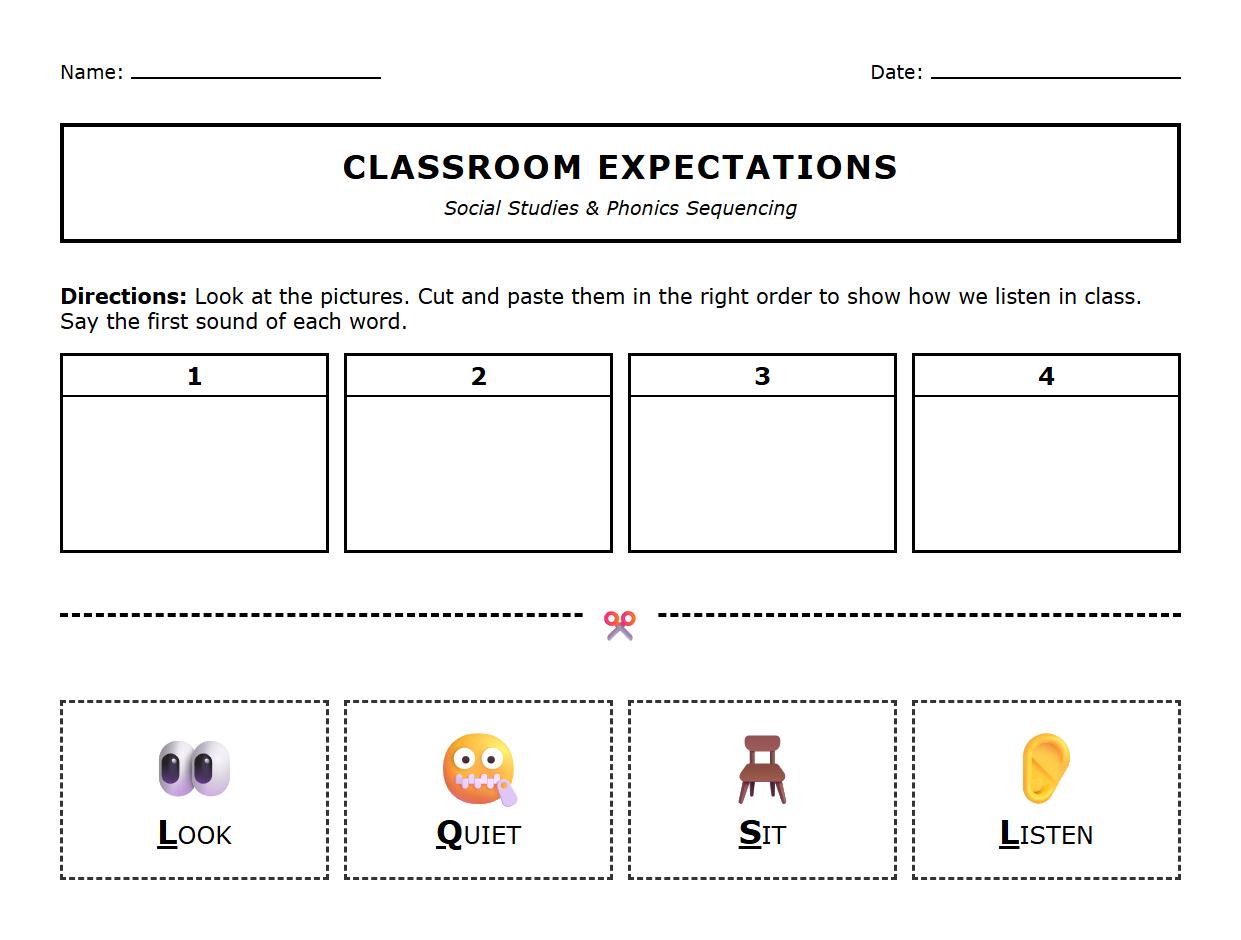
Showing you are ready to listen involves sitting quietly and looking at the teacher. Encourage kids to keep their hands still and eyes focused during instructions. These practices improve attention and classroom engagement, much like lessons in maps and geography basics help with focused learning.
How to Ask to Speak
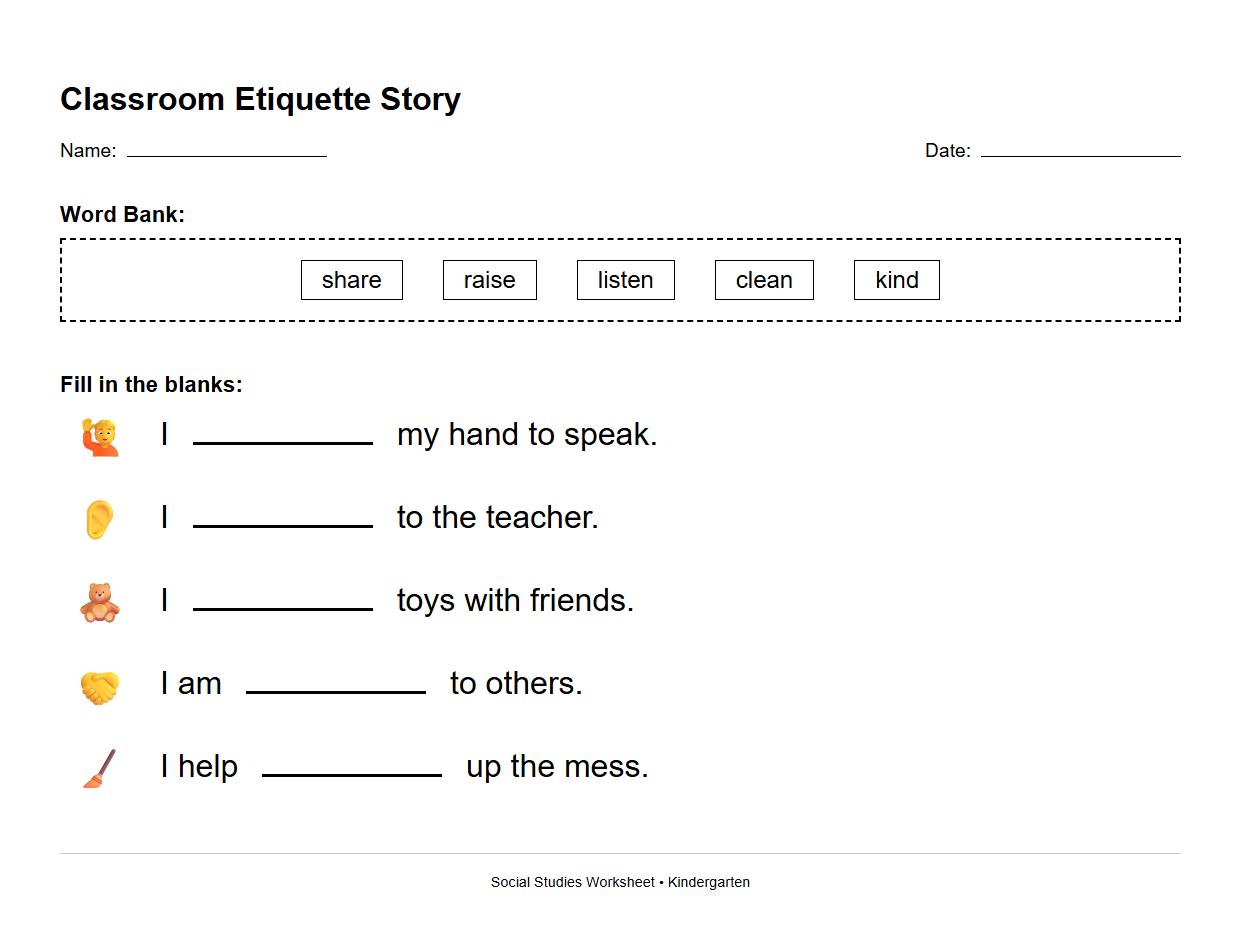
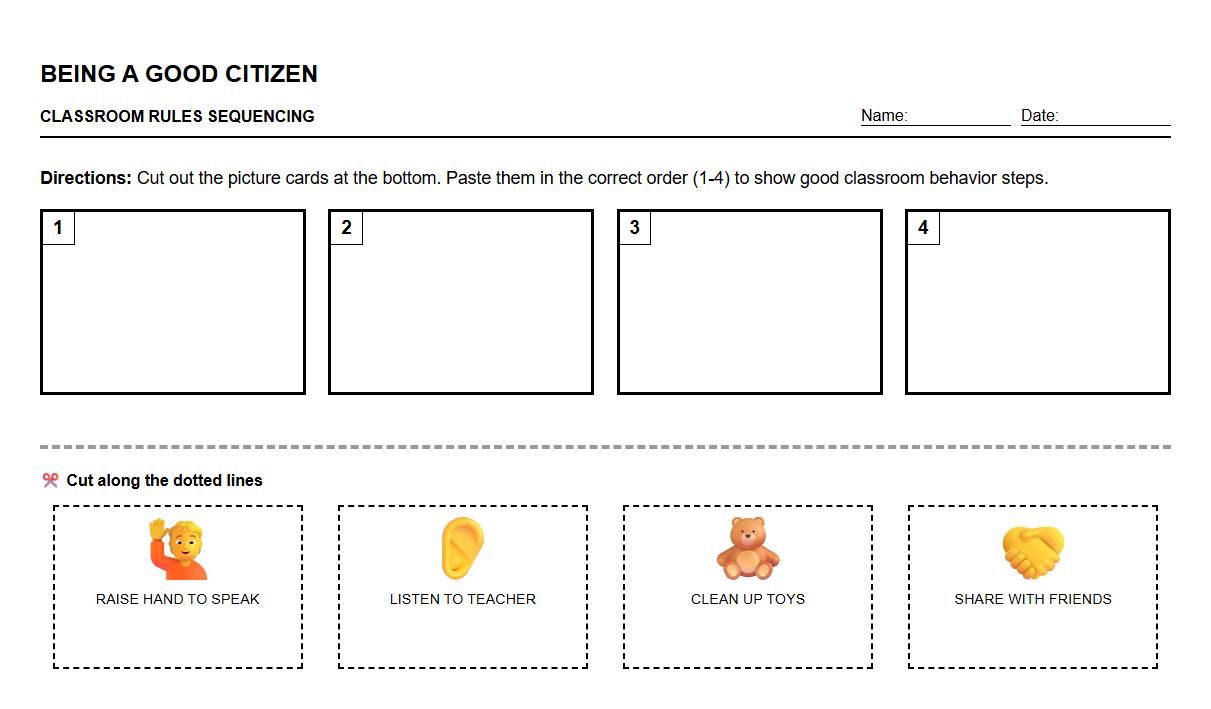
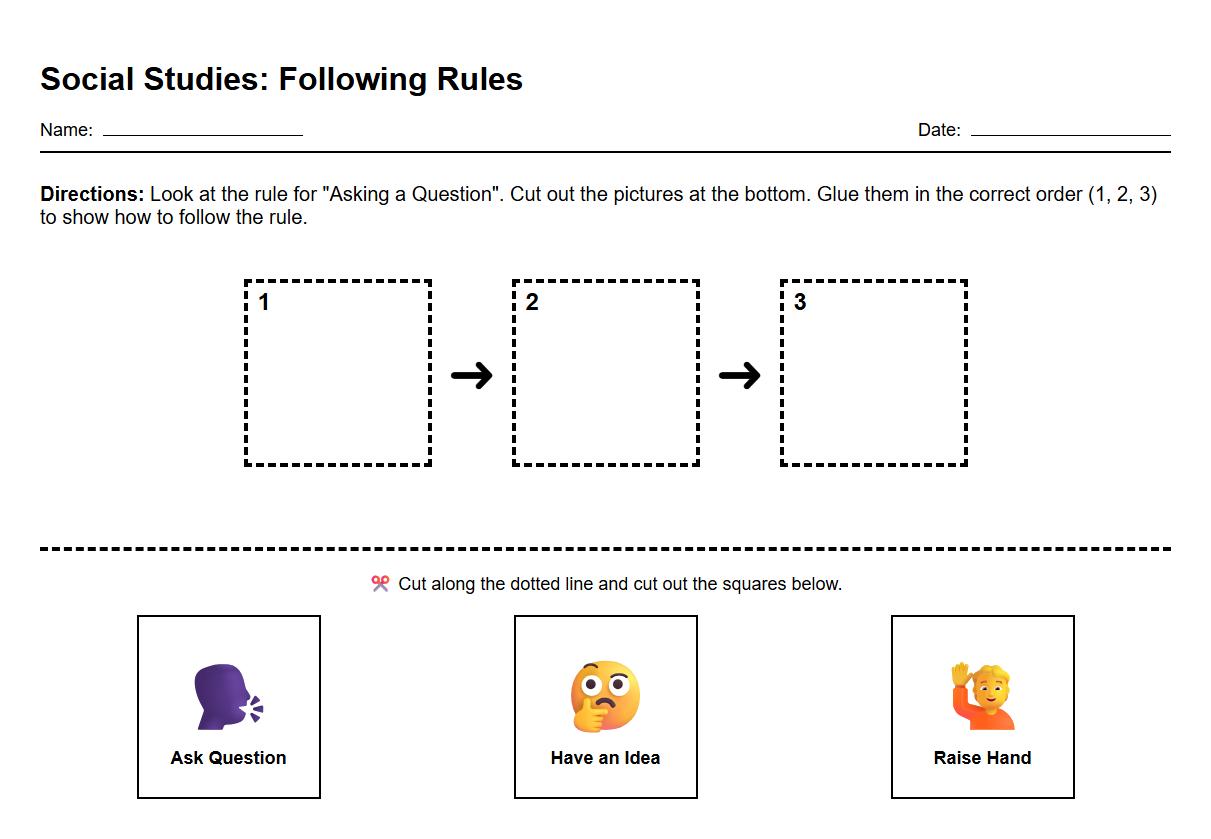
If you want to speak or ask a question, raise your hand patiently and wait for the teacher to call on you. This teaches respect and orderly communication in group settings. It also helps everyone have a chance to participate, similar to taking turns in family vocabulary activities.
Next Step After Finishing Classwork
After finishing your classwork, check your work quietly and raise your hand if you have questions. If all is complete, begin a quiet activity or read silently. This encourages self-checking and responsible behavior, connecting to the idea of occupation roles and workplace habits.
How to Line Up to Leave
When it's time to leave, children should line up quietly in a single file near the door. Teach them to keep their hands to themselves and wait their turn. Lining up calmly helps maintain order and safety, similar to understanding then and now differences in social order.
Where to Go if You Need Help
If you need help or are unsure, teach children to approach the teacher or a classroom helper calmly. Encouraging this behavior supports problem-solving and fosters a supportive environment. It also helps children feel secure, as discussed in needs vs. wants activities.
What to Do if You Make a Mess
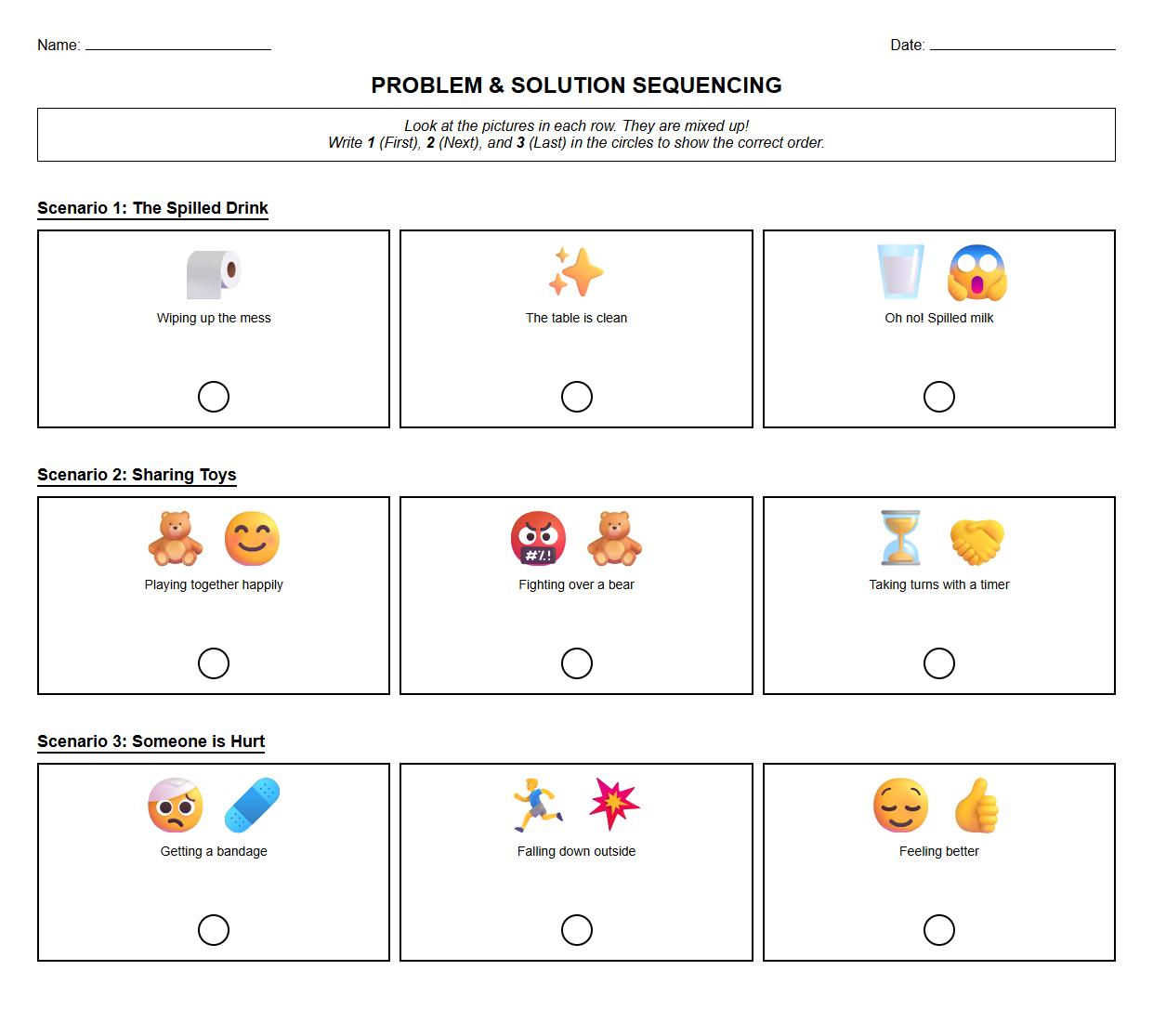
If you make a mess, clean it up right away or ask for assistance. This promotes responsibility and respect for the classroom space. Teach children that everyone helps keep the learning area neat and safe. These skills relate to celebrating holidays and working together for special events.
When to Use Inside Voices
Remind children it's time to use inside voices during lessons and quiet activities. Speaking softly maintains a calm atmosphere and allows others to concentrate. Inside voices are key to respectful communication indoors, much like cooperation shown in flag and symbol sorting activities.
Last Thing Before Leaving at the End of the Day
Before leaving, children should tidy their area and gather their belongings calmly. Saying goodbye to the teacher and friends fosters positive relationships. This routine helps end the day smoothly and responsibly, reinforcing habits found in country emblems learning worksheets.


Listening Comprehension Exercise on Citizenship and Cooperation