Dialogues Practice Worksheet for Communication and Role Play Skills

📅 Mar 18, 2025 👤 Nylen Smith

Mastering dialogues enhances communication and role play skills by encouraging effective verbal interactions and active listening. Practicing varied scenarios builds confidence and adaptability in real-life conversations. Explore the available worksheets to develop your dialogue proficiency and strengthen your communication abilities.

Dialogue Gap Fill Worksheet for Phonics and Vocabulary Building
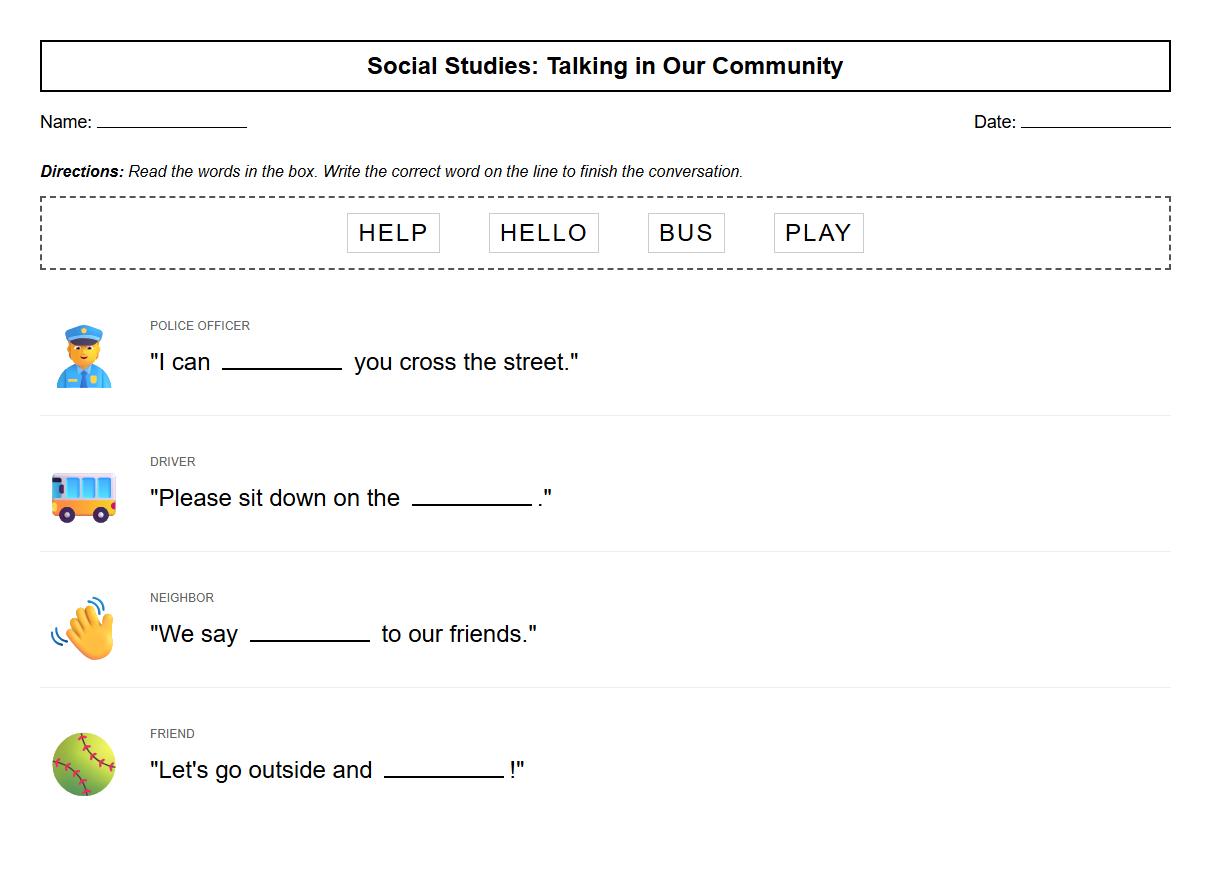
Dialogue Gap Fill Worksheet for Phonics and Vocabulary Building

Download PDF     Pin it

Sentence Reordering Worksheet for Syntax and Dialogue Sequencing
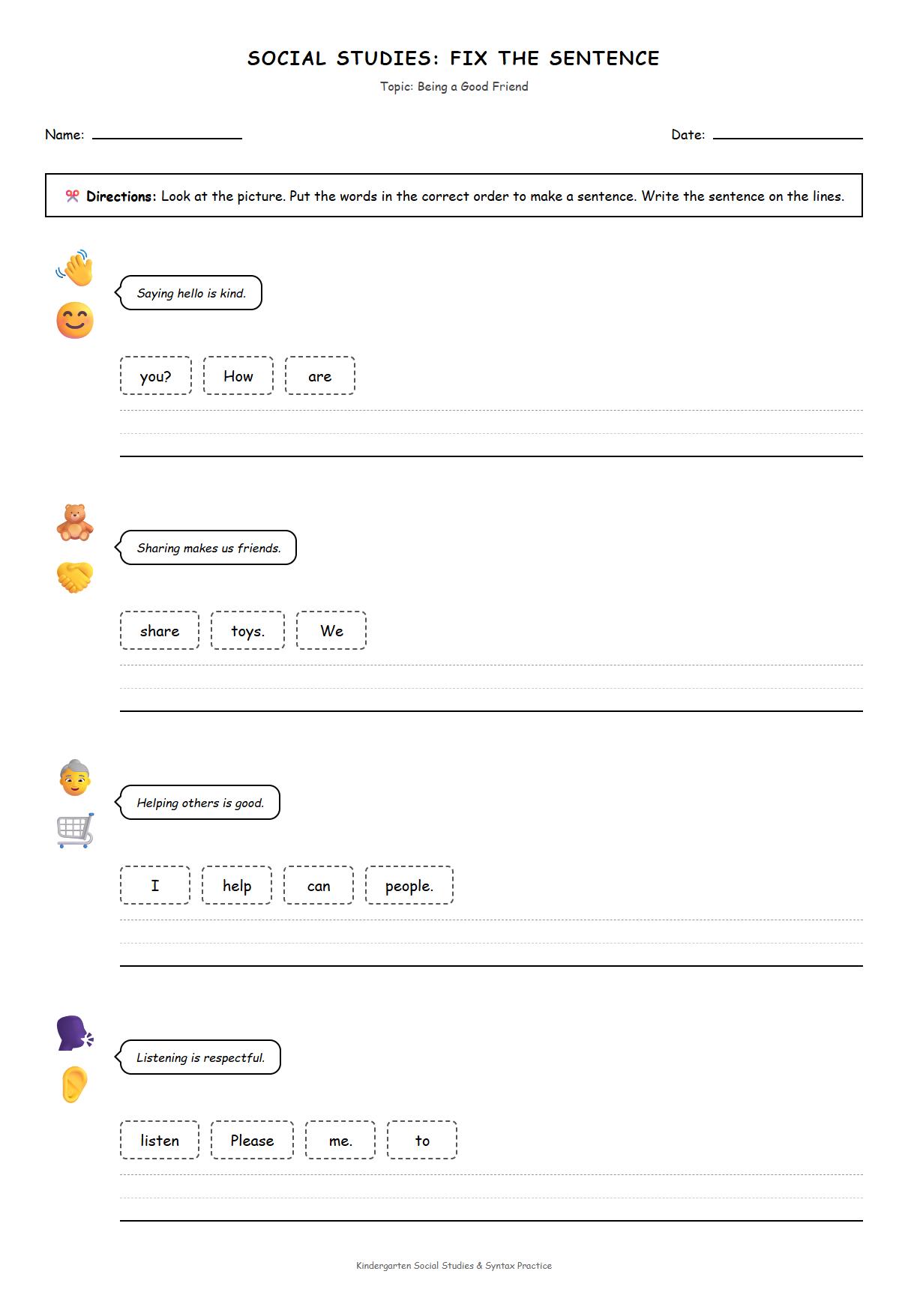
Sentence Reordering Worksheet for Syntax and Dialogue Sequencing

Download PDF     Pin it

Matching Dialogue Cards for Pragmatics and Context Understanding
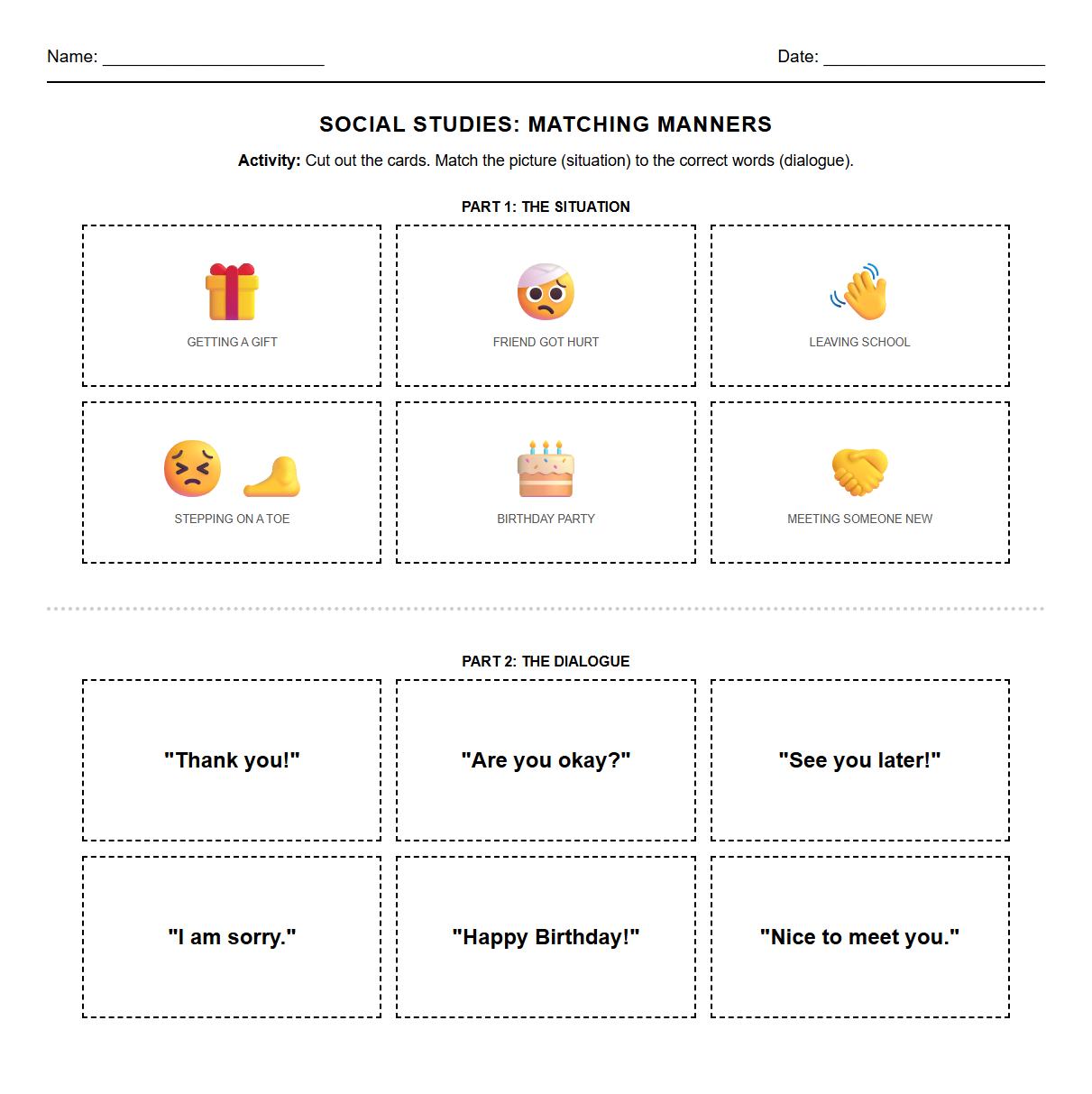
Matching Dialogue Cards for Pragmatics and Context Understanding

Download PDF     Pin it

Role Play Scenario Cards for Speaking Fluency and Expression
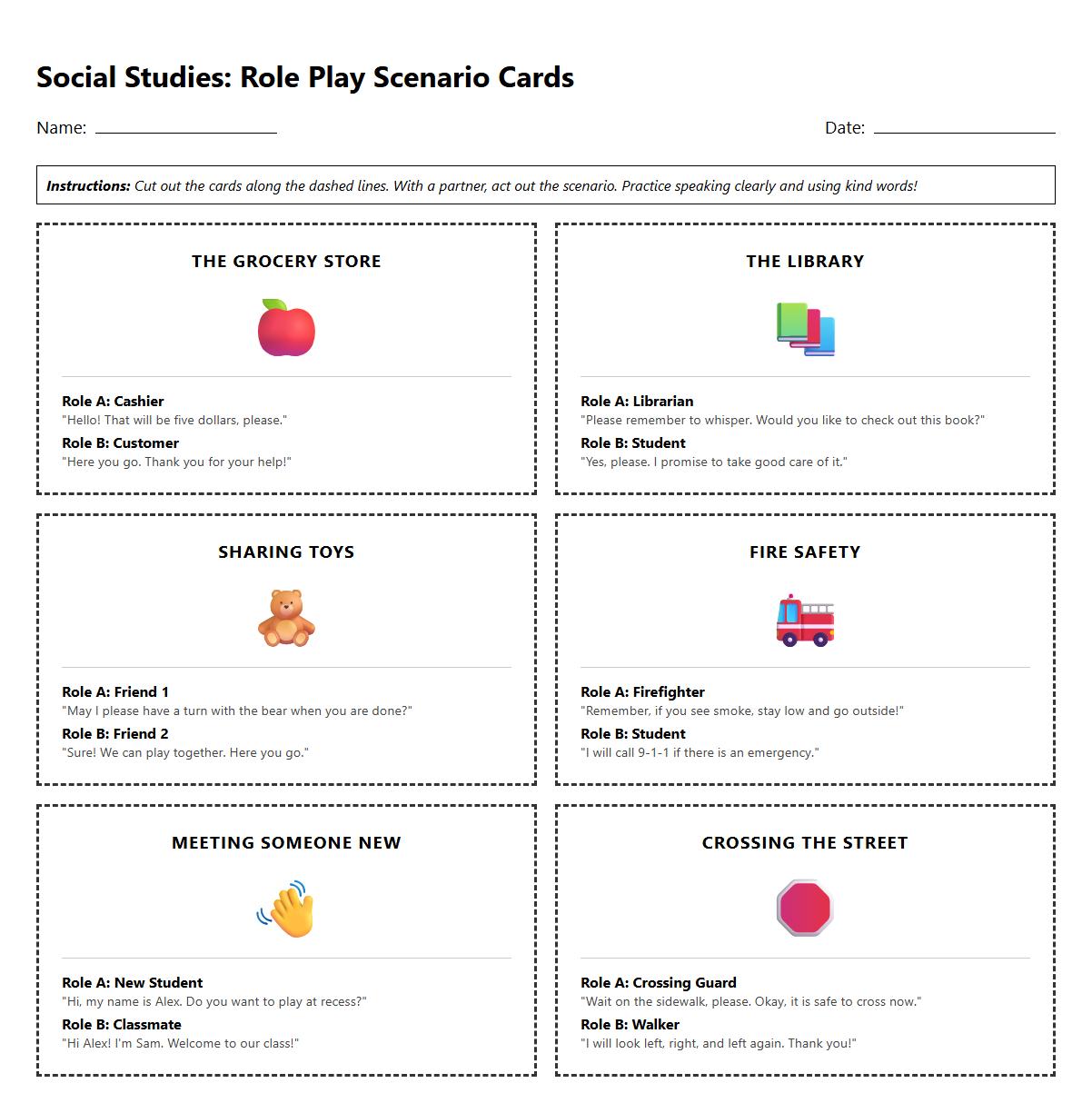
Role Play Scenario Cards for Speaking Fluency and Expression

Download PDF     Pin it

Dialogue Completion Worksheet for Conversational Turn-Taking
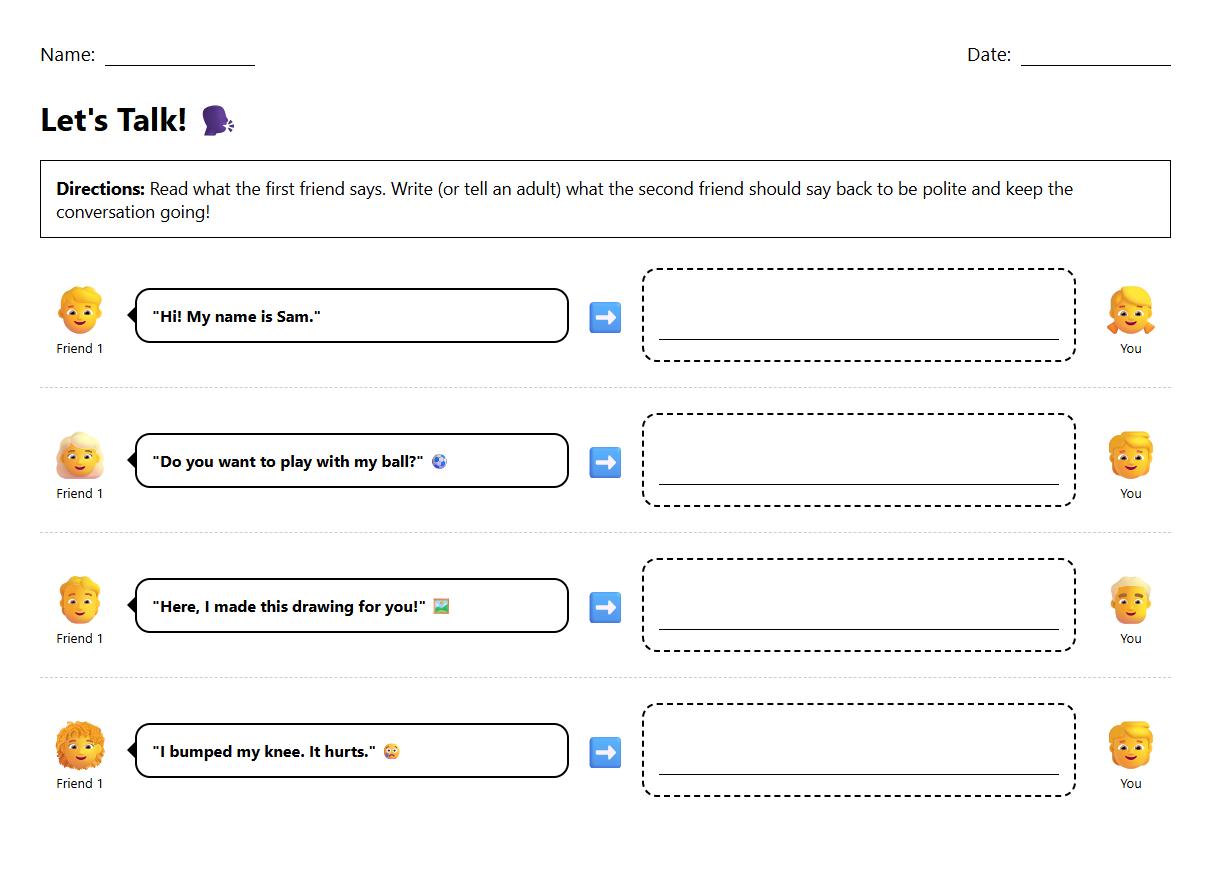
Dialogue Completion Worksheet for Conversational Turn-Taking

Download PDF     Pin it

Intonation and Stress Marking Worksheet for Prosody Awareness
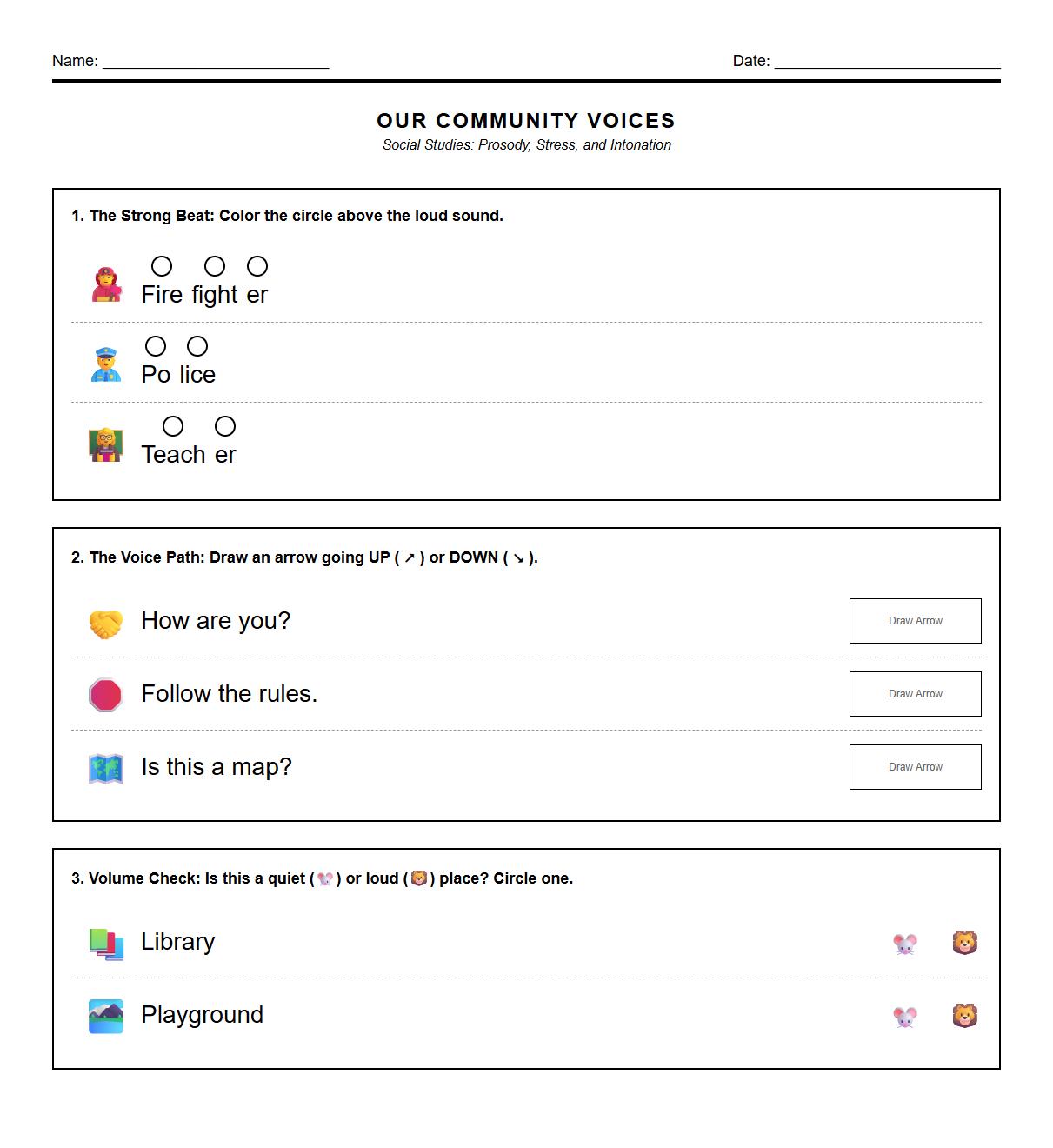
Intonation and Stress Marking Worksheet for Prosody Awareness

Download PDF     Pin it

Dialogues with Picture Prompts for Visual Context Integration
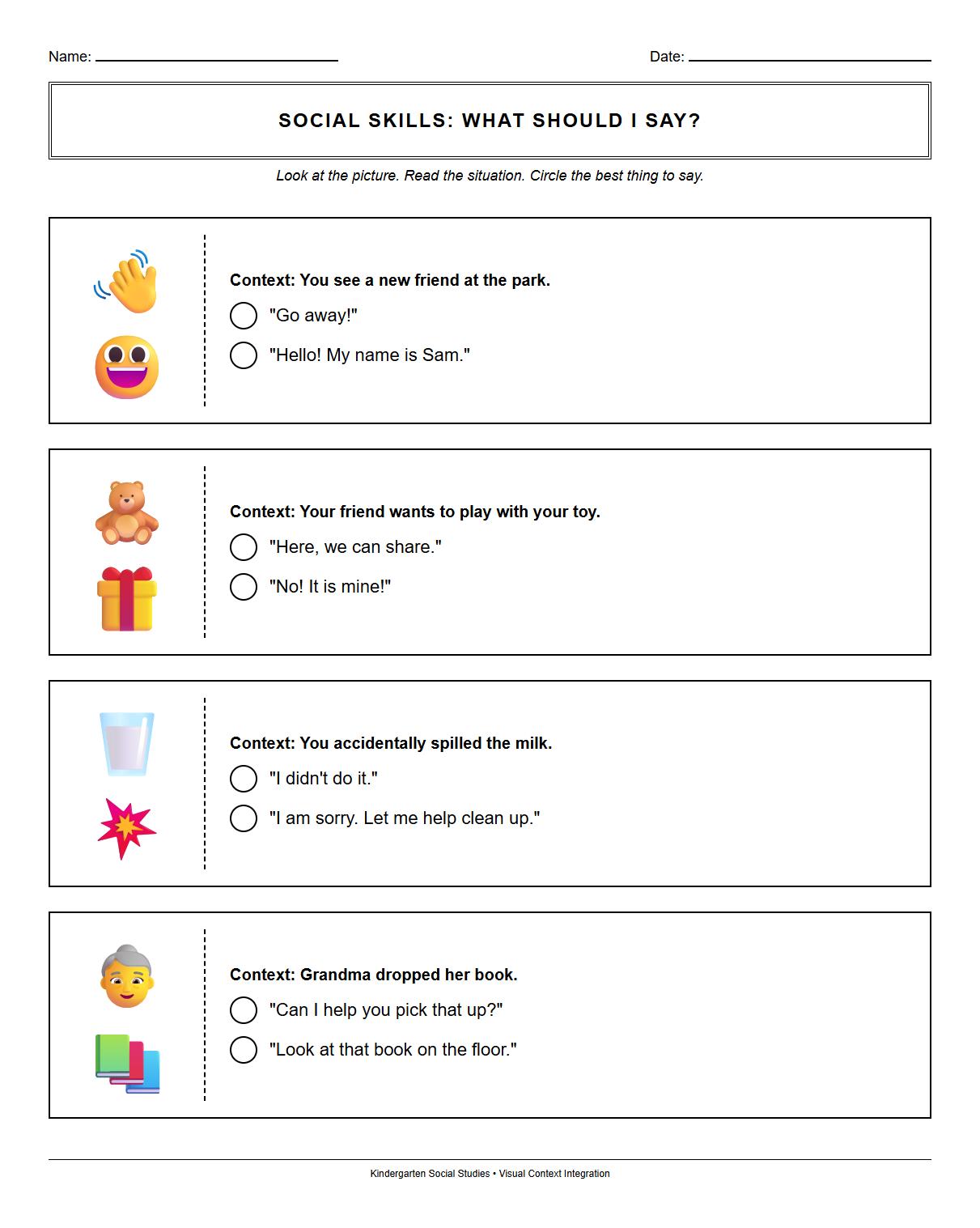
Dialogues with Picture Prompts for Visual Context Integration

Download PDF     Pin it

Polite Requests and Responses Worksheet for Pragmatic Competence
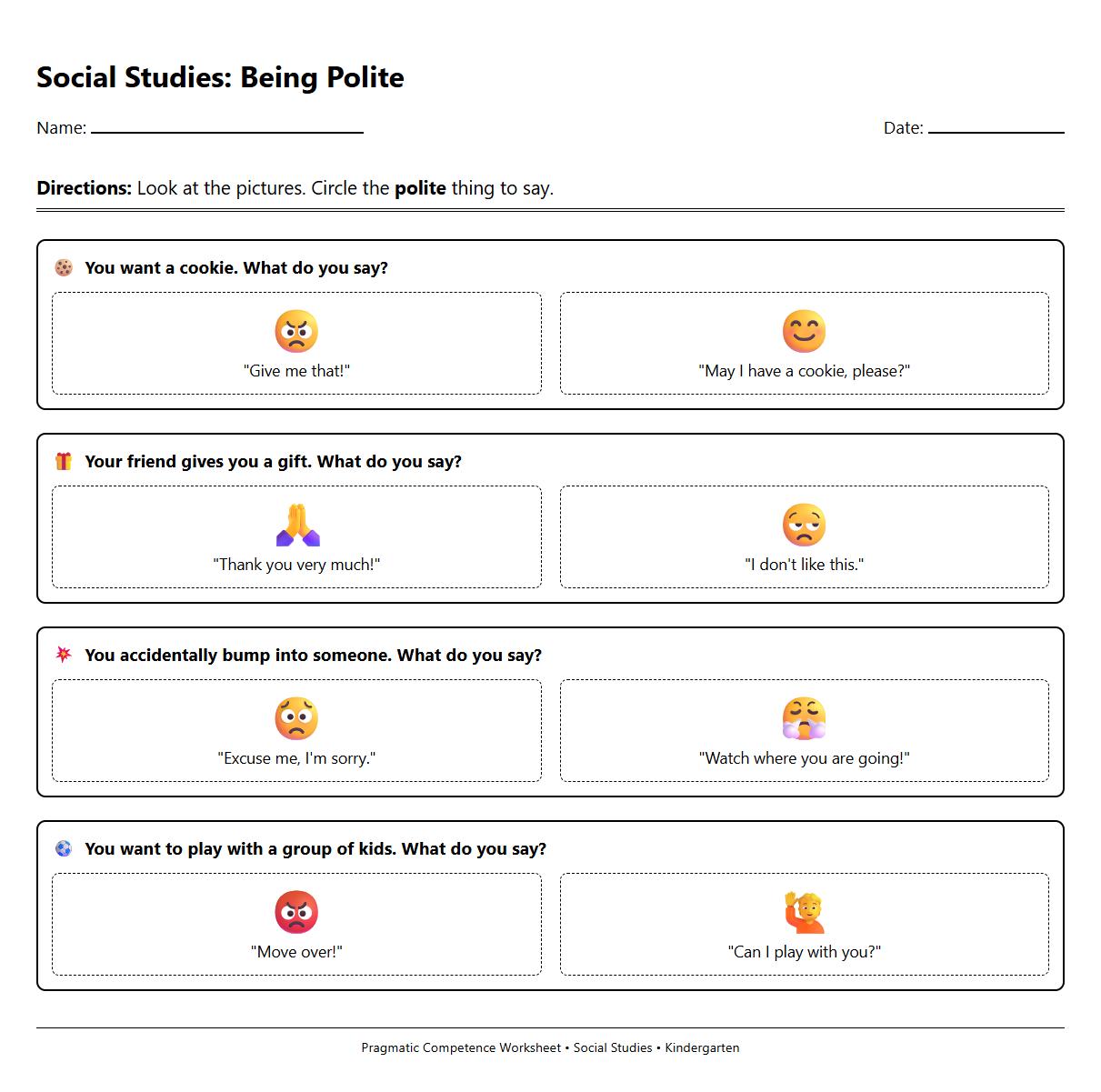
Polite Requests and Responses Worksheet for Pragmatic Competence

Download PDF     Pin it

Error Correction in Dialogue Worksheet for Grammar Awareness
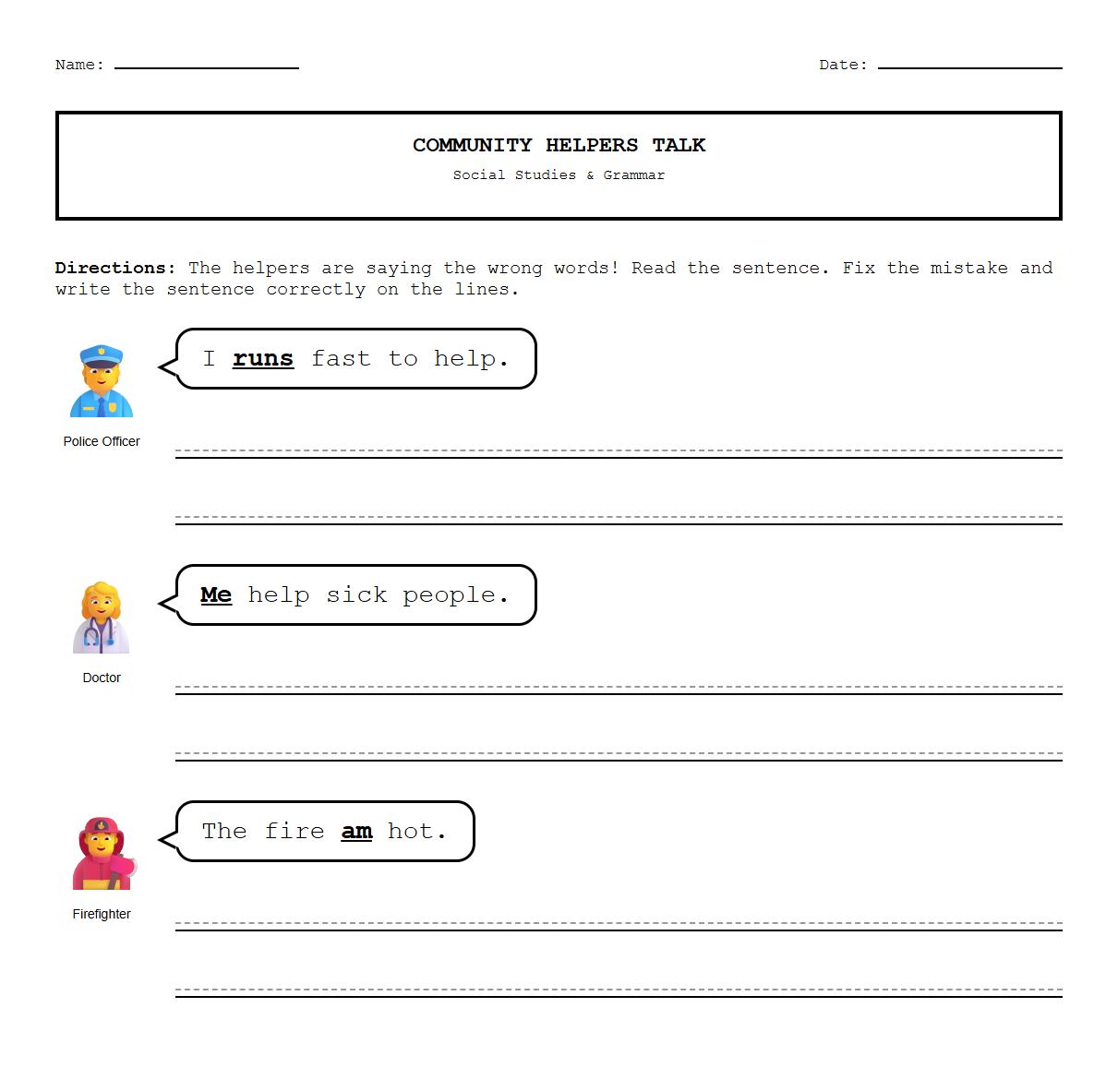
Error Correction in Dialogue Worksheet for Grammar Awareness

Download PDF     Pin it

Role Assignment Script Worksheet for Character-Based Communication
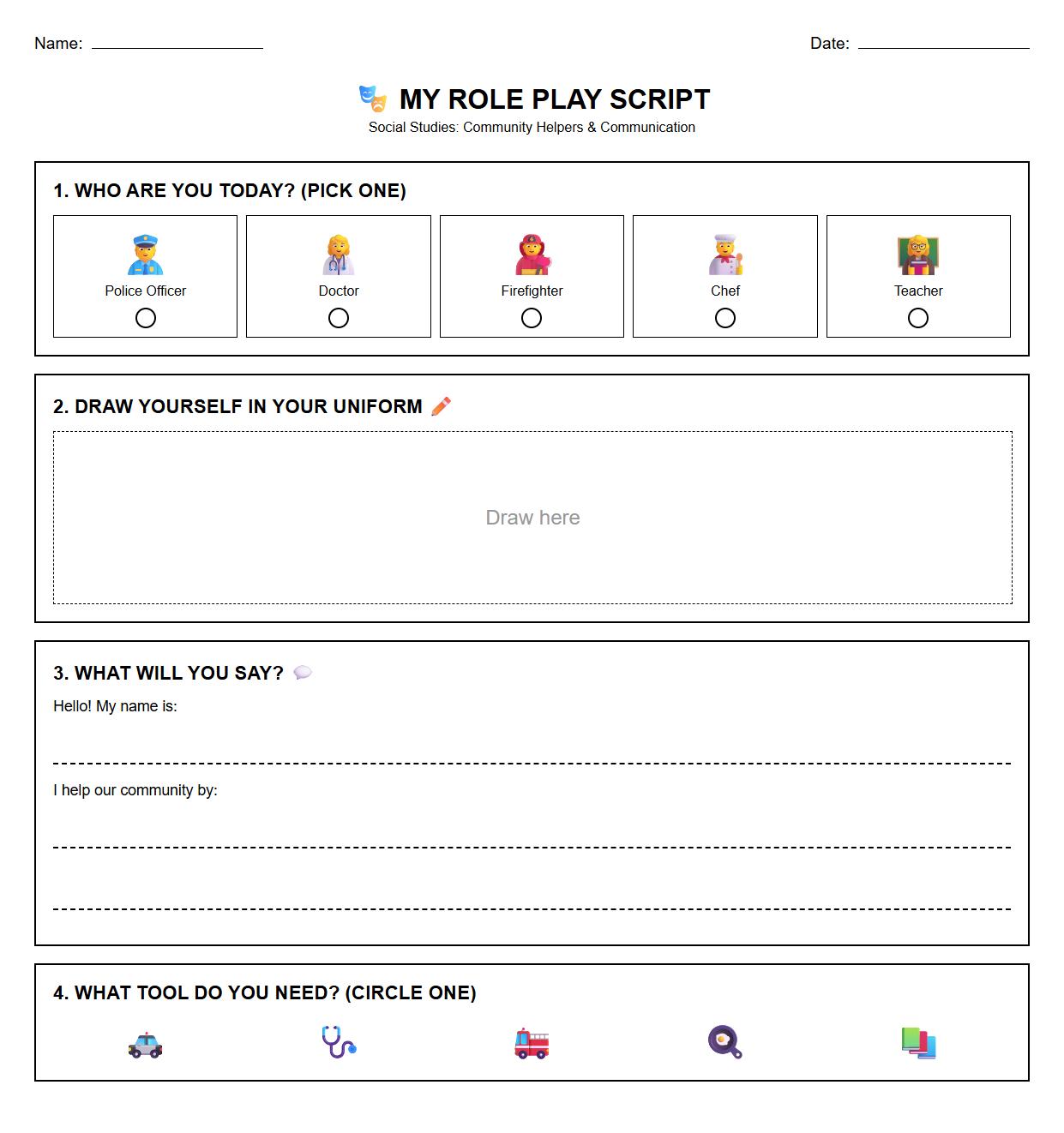
Role Assignment Script Worksheet for Character-Based Communication

Download PDF     Pin it

Asking About Favorite Colors

Encourage children to ask their friends, "What is your favorite color?" This simple question helps build social interaction skills and friendship bonds. Teach them to share their own favorite color in response to make the conversation engaging. Role-playing this exchange can boost confidence in communication. Learn more about classroom rules and activities that support social development.

Greeting Your Teacher

Help children practice polite greetings by saying, "Good morning, Teacher!" or "Hello, Teacher!" when arriving at school. This shows respect and builds positive relationships with educators. Reinforce that smiling and eye contact accompany verbal greetings. Consistent practice creates a welcoming school environment. Explore respect and responsibility activities for kids.

Borrowing a Crayon

Teach children to ask politely, "May I borrow a crayon, please?" when they want to use a classmate's supplies. Emphasizing the word "please" encourages good manners and respect for others' belongings. Practicing these phrases helps develop kindness and cooperation in the classroom. Positive interactions promote sharing and friendship. Check out engaging classroom social activities for practice.

Thanking for Help

Show children how to say, "Thank you for helping me tie my shoes!" to express gratitude. Using thank-you phrases reinforces good manners and appreciation for others' assistance. Encourage children to look at the person and smile when saying thanks. Gratitude strengthens social bonds and fosters kindness. Build more on this with phonics and gratitude activities.

Inviting a Friend to Play

Guide children to use inviting words like, "Would you like to play with me?" or "Come play with me!" to include others. Invitations help develop social skills and encourage teamwork. Role-playing invitations teaches children how to be friendly and inclusive. This practice promotes a welcoming classroom atmosphere. Try celebration themes and social games for more ideas.

Asking for Bathroom Permission

Teach children to politely ask the teacher, "May I go to the bathroom, please?" when they need to leave the class. Using polite language shows respect and follows classroom basics. Practicing this request helps children develop independence and proper communication. Clear communication ensures classroom order and respect.

Apologizing After Bumping Into Someone

Encourage children to say, "I'm sorry!" immediately if they accidentally bump into someone. Apologizing teaches empathy and responsibility for actions. Reinforce the importance of making eye contact and using a kind tone. This simple act nurtures a caring and respectful environment. Learn how to support these behaviors through collaborative classroom activities.

Introducing Yourself to a New Classmate

Guide children to say, "Hi, my name is [Name]. What's your name?" when meeting new classmates. Self-introduction fosters confidence and friendship building. Role-playing introductions helps children overcome shyness and practice conversation skills. Friendly introductions create a positive classroom community. See labeling and social discovery worksheets for inspiration.

Asking for Help with Lunchbox

Teach children to politely say, "Can you help me open my lunchbox, please?" if they need assistance. Asking for help encourages cooperation and self-advocacy. Reinforce the use of "please" and "thank you" to maintain politeness. This supports children in developing social and problem-solving skills. Try supporting activities like exploring roles and responsibilities.

Politely Asking to Share Toys

Encourage children to say, "May I play with your toy, please?" when wanting to share. Polite requests promote respect for others' belongings and encourage sharing. Practicing these phrases helps children develop kindness and patience. Sharing toys supports social interaction and friendship growth. Activities like sorting and collaborative games can help reinforce these values.


More in Social Studies Category


About the author. Nylen Smith is a dedicated educator and cofounder of KWorksheet.com, a popular platform specializing in high-quality kindergarten worksheets and printable activities.

Disclaimer. The information provided in this document is for general informational purposes and/or document sample only and is not guaranteed to be factually right or complete. Please report to us via contact-us page if you find and error in this page, thanks.

Comments

No comment yet