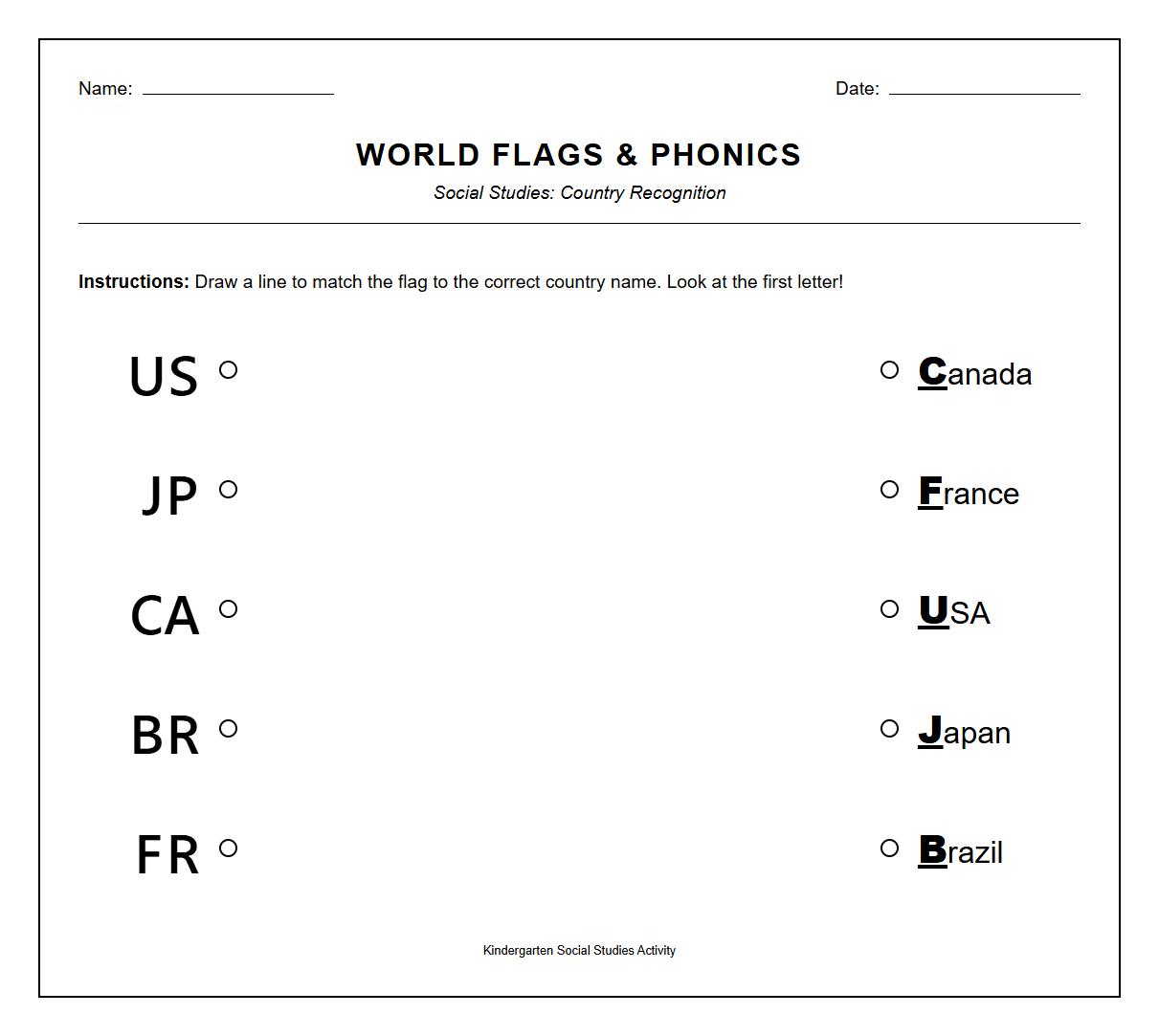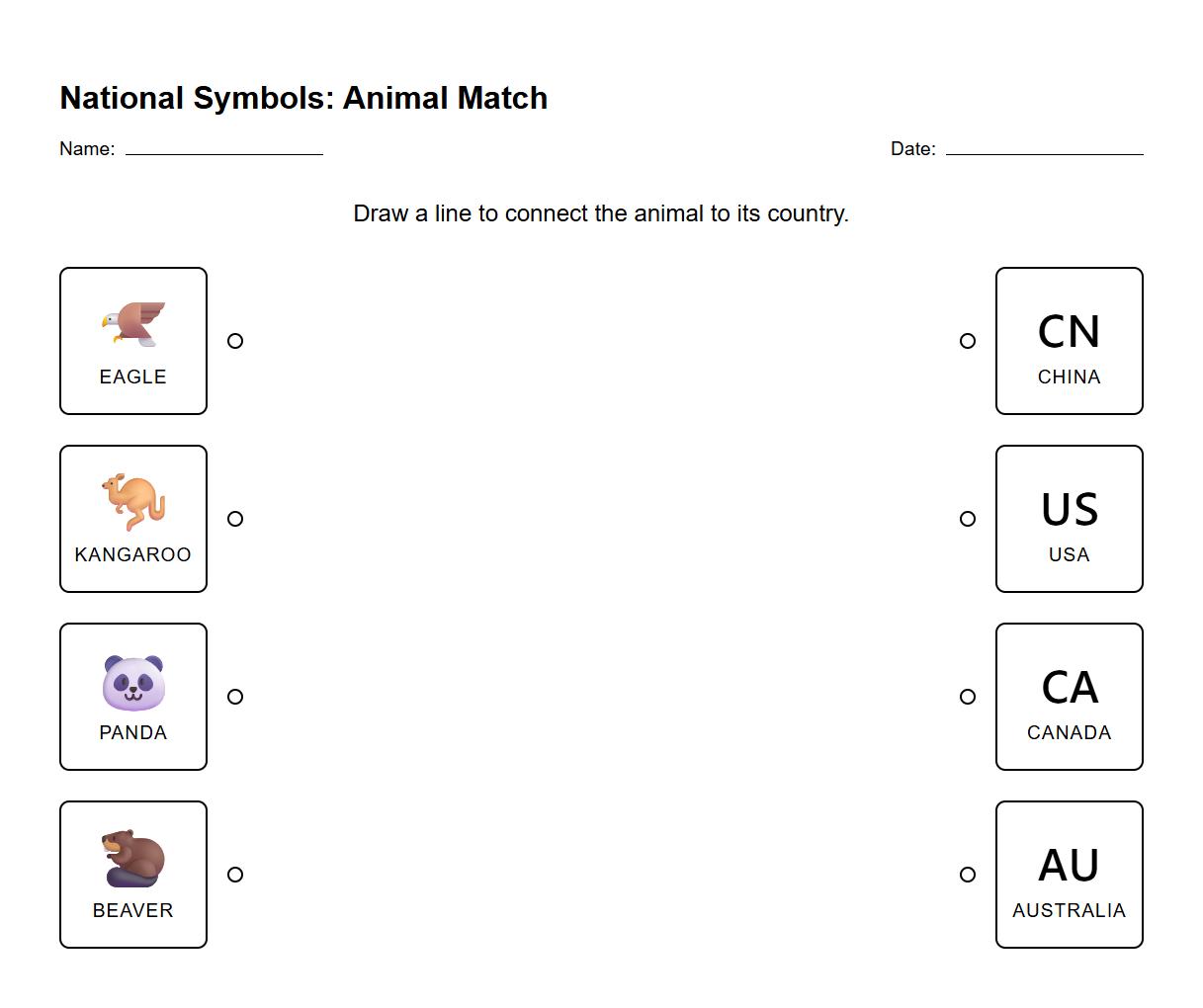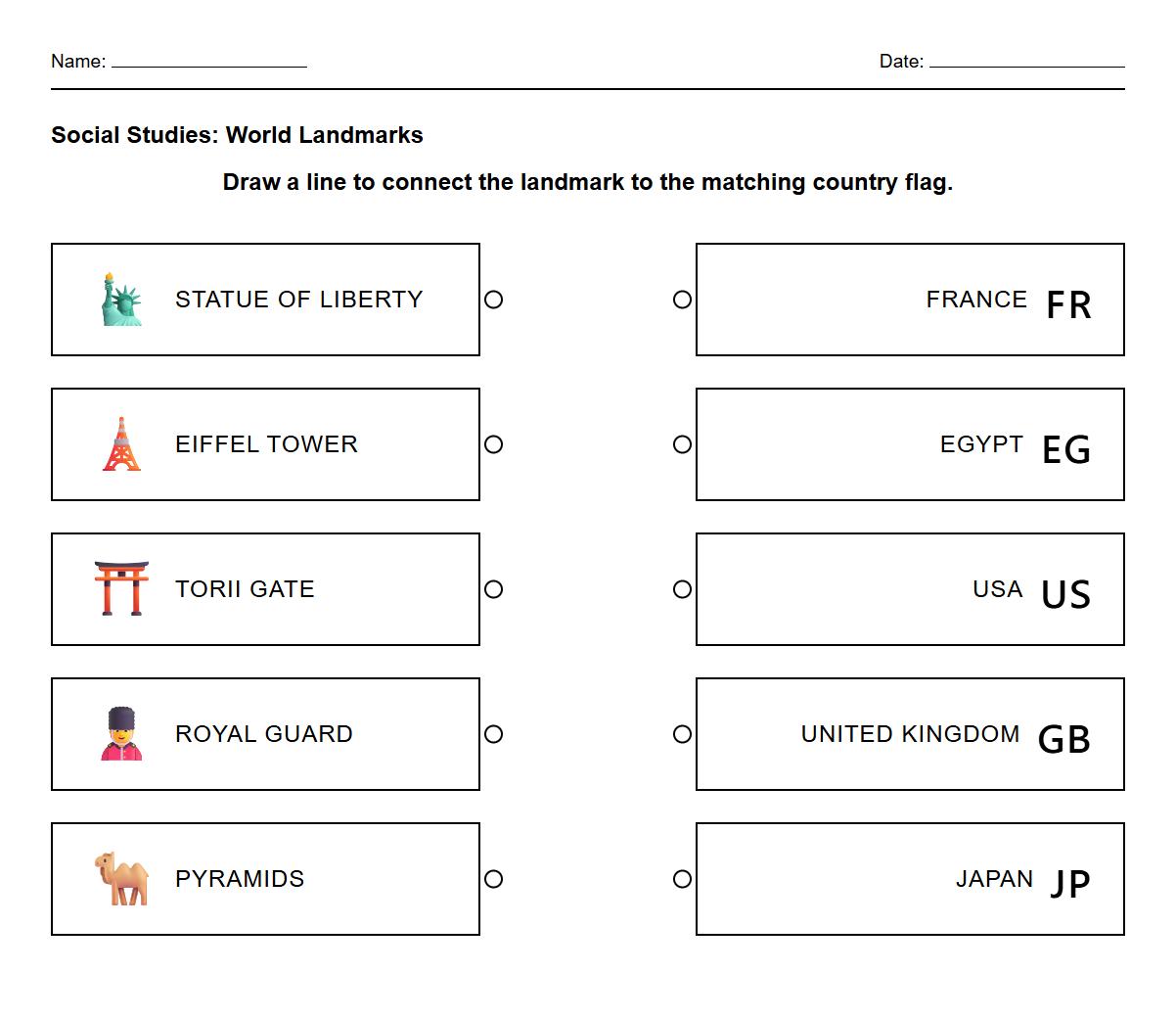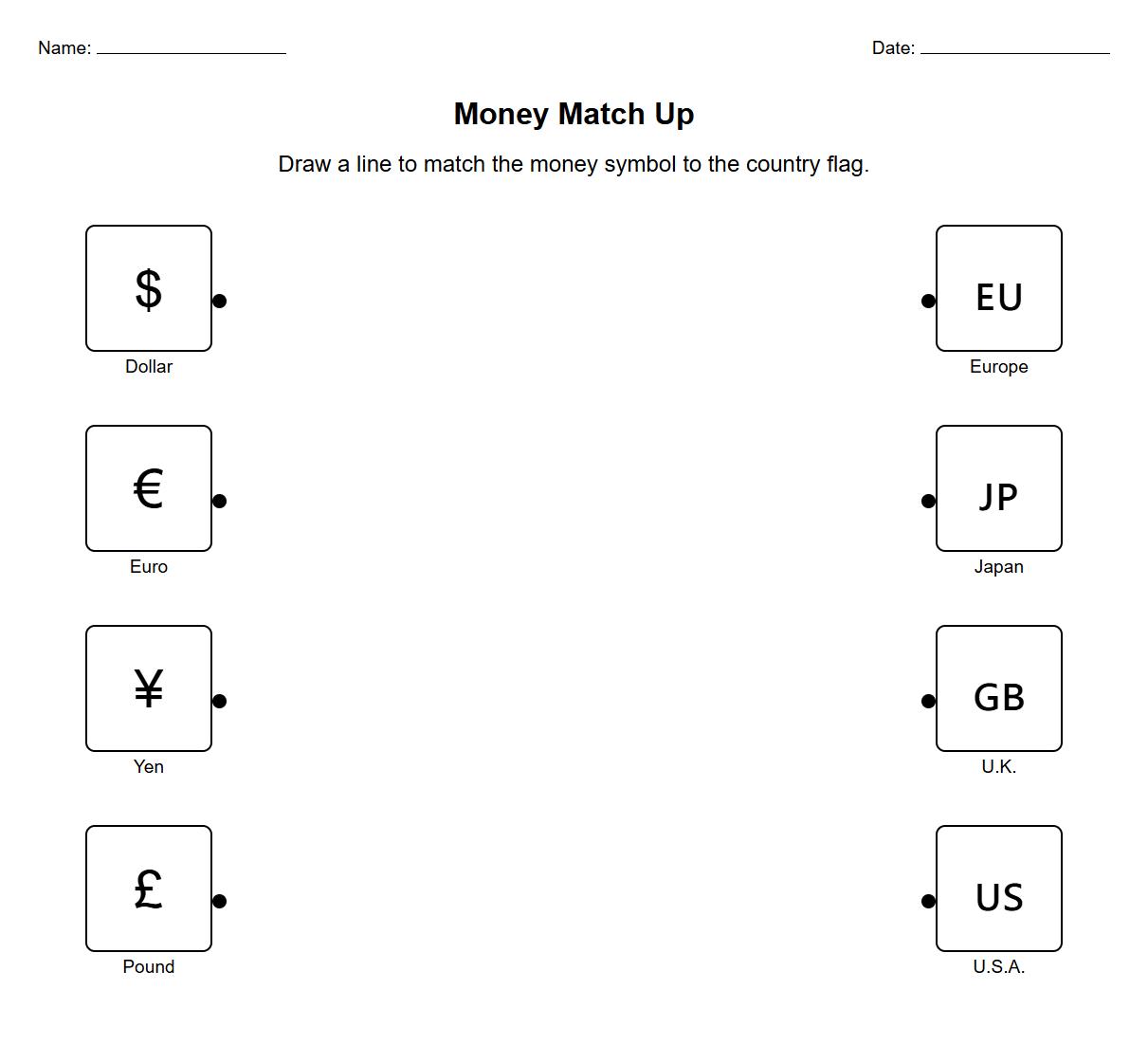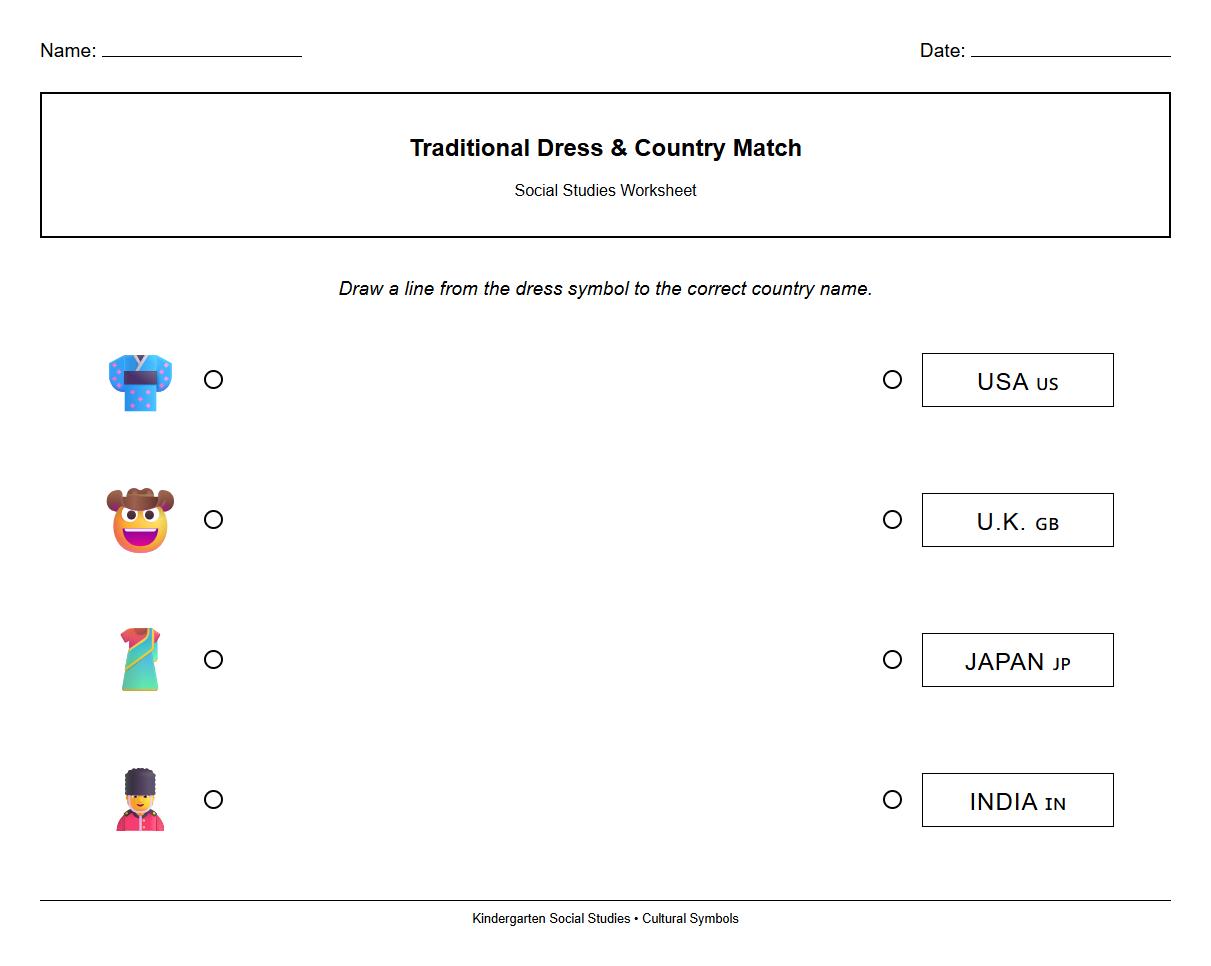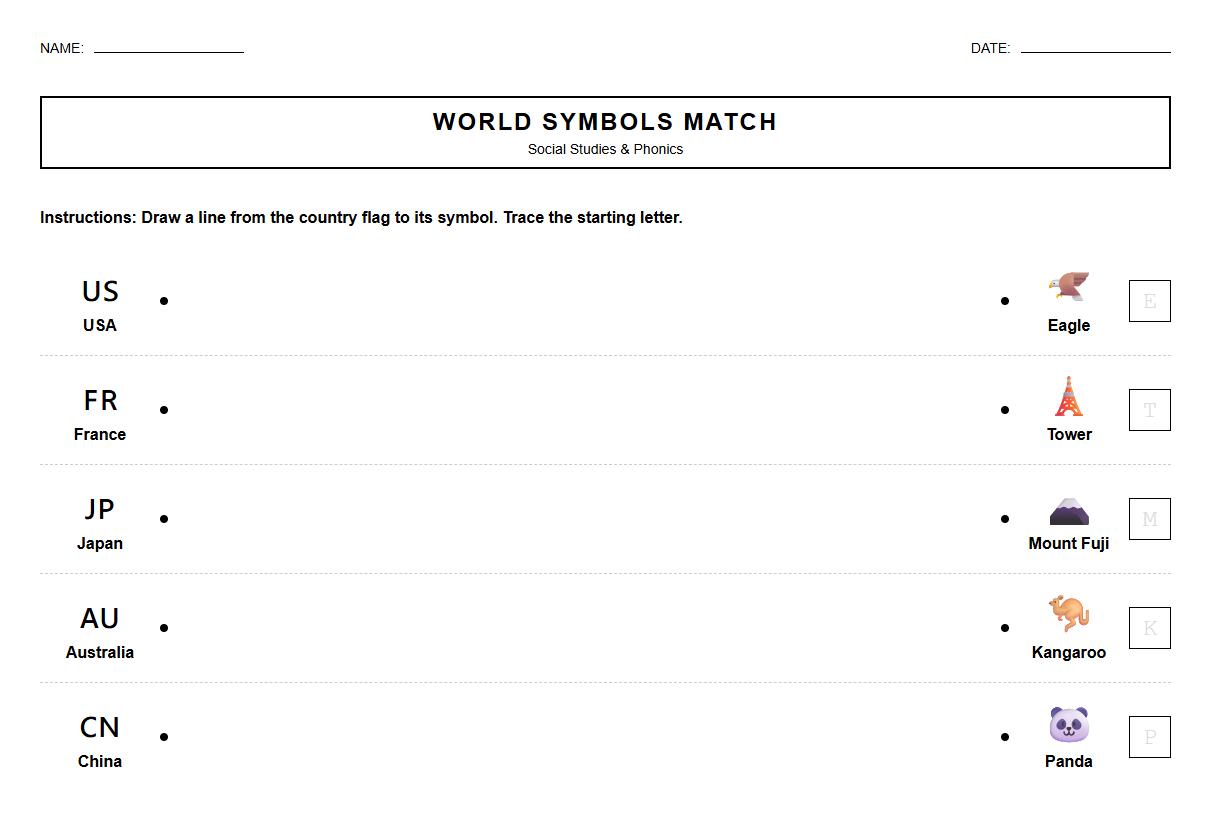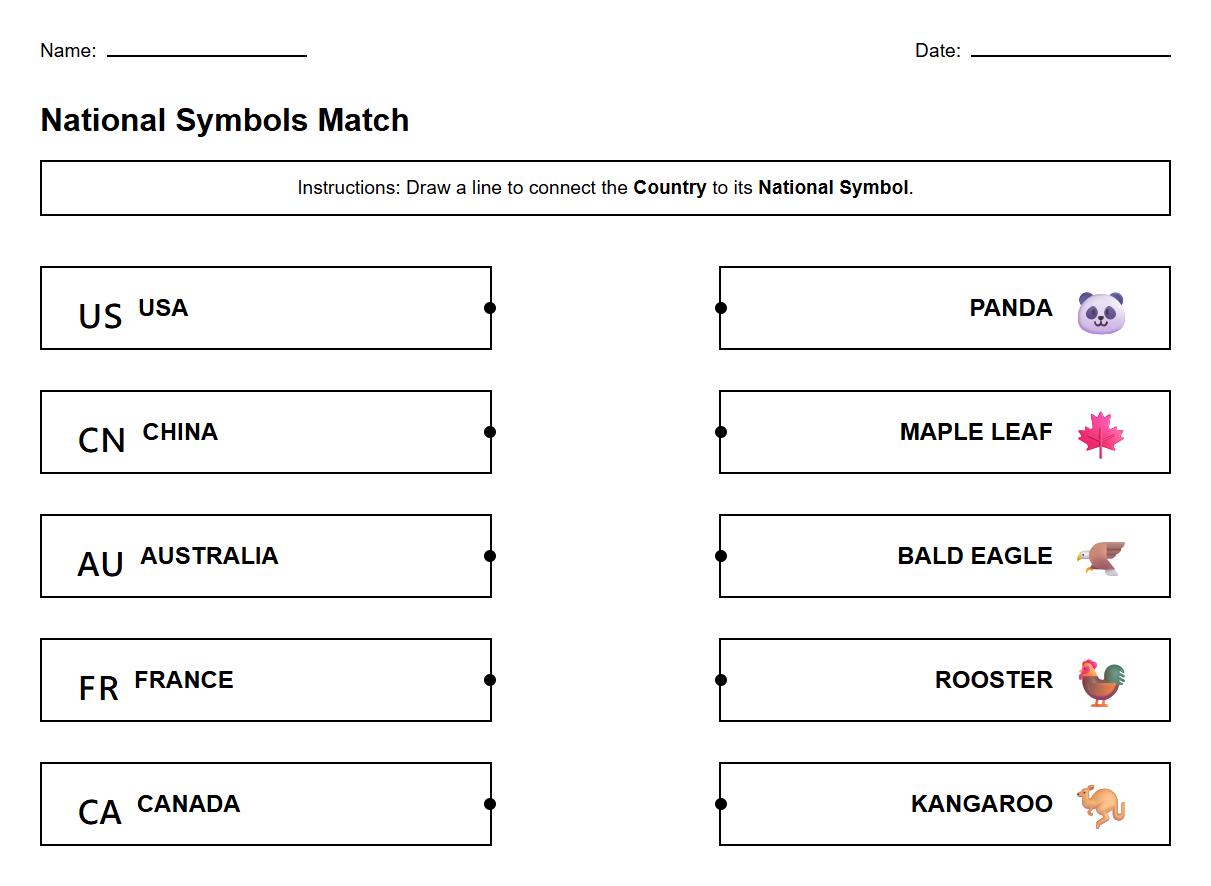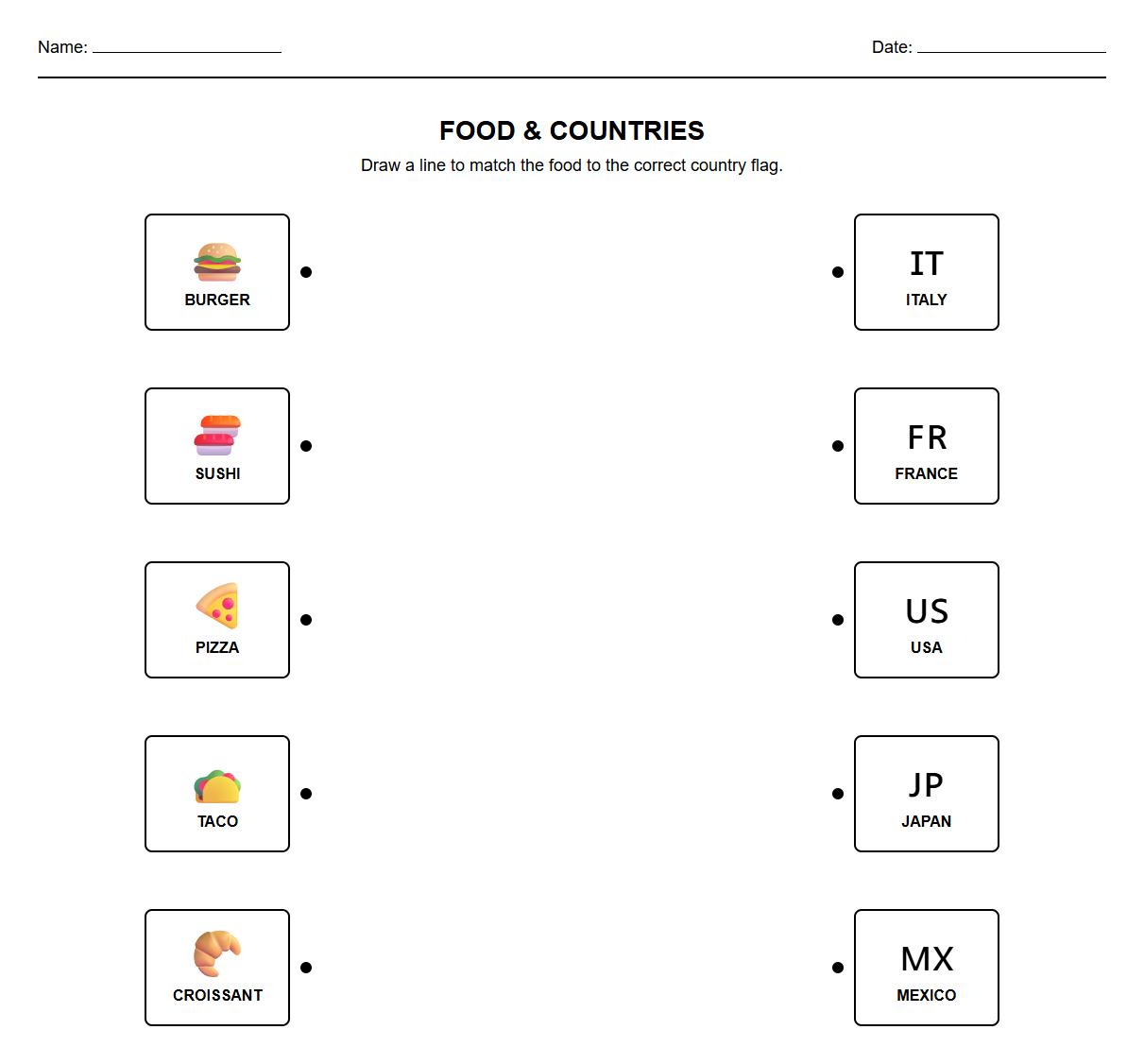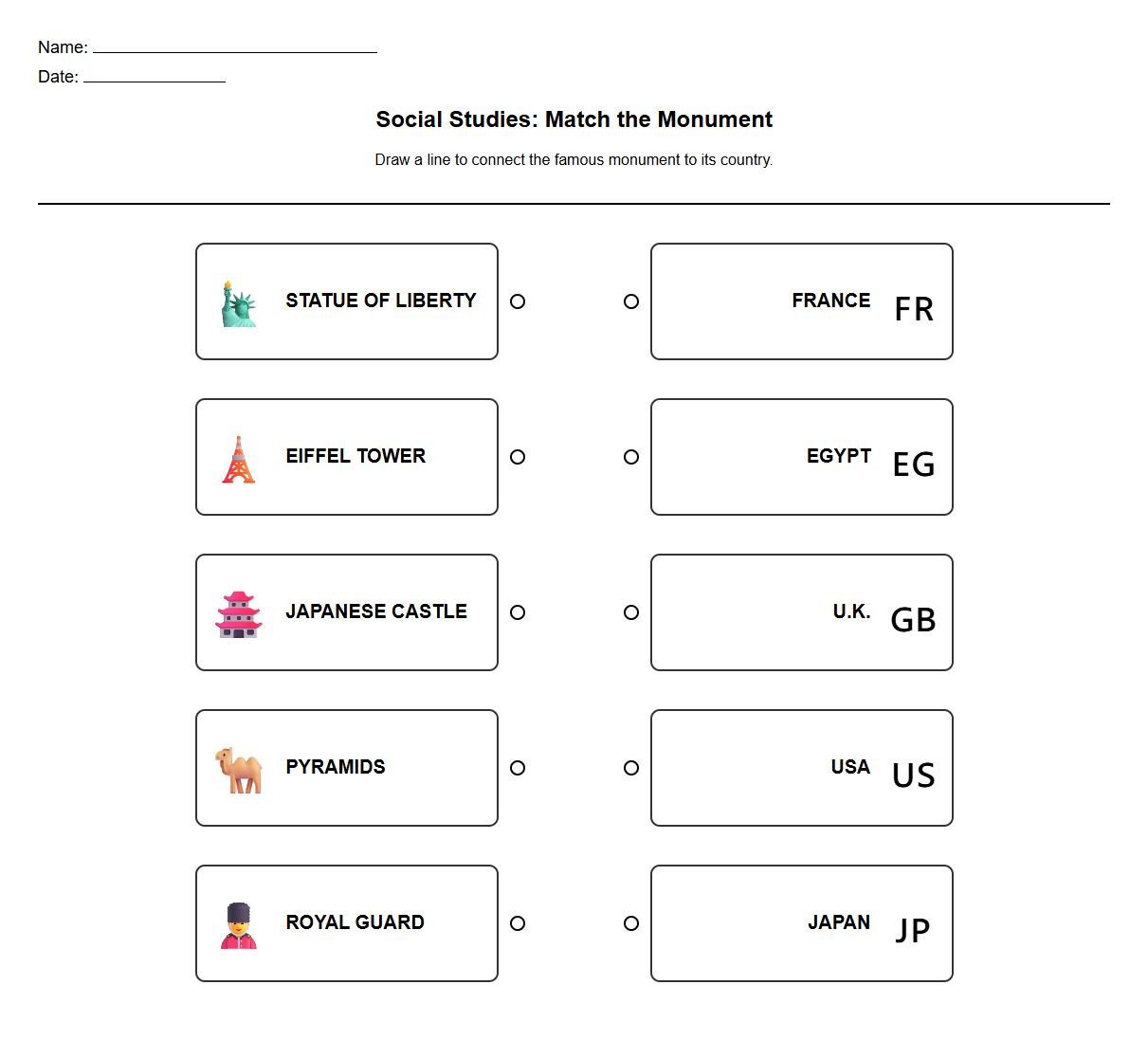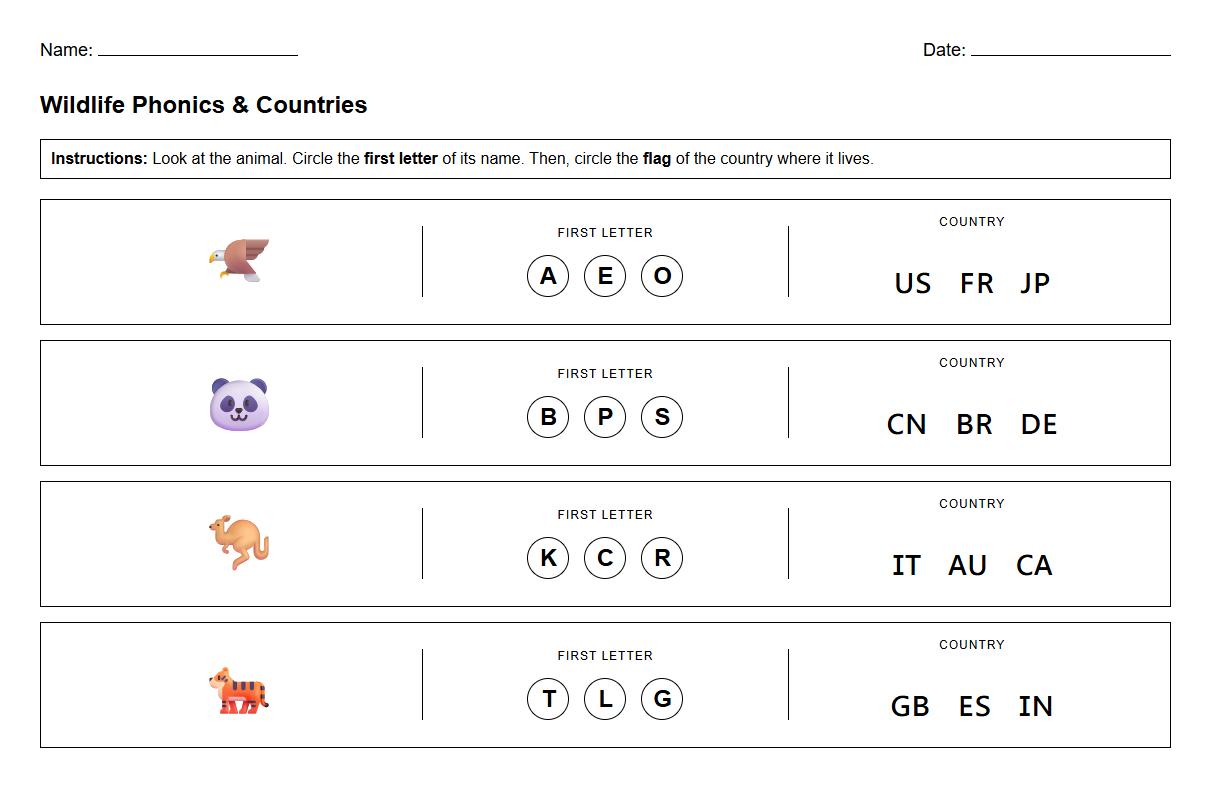
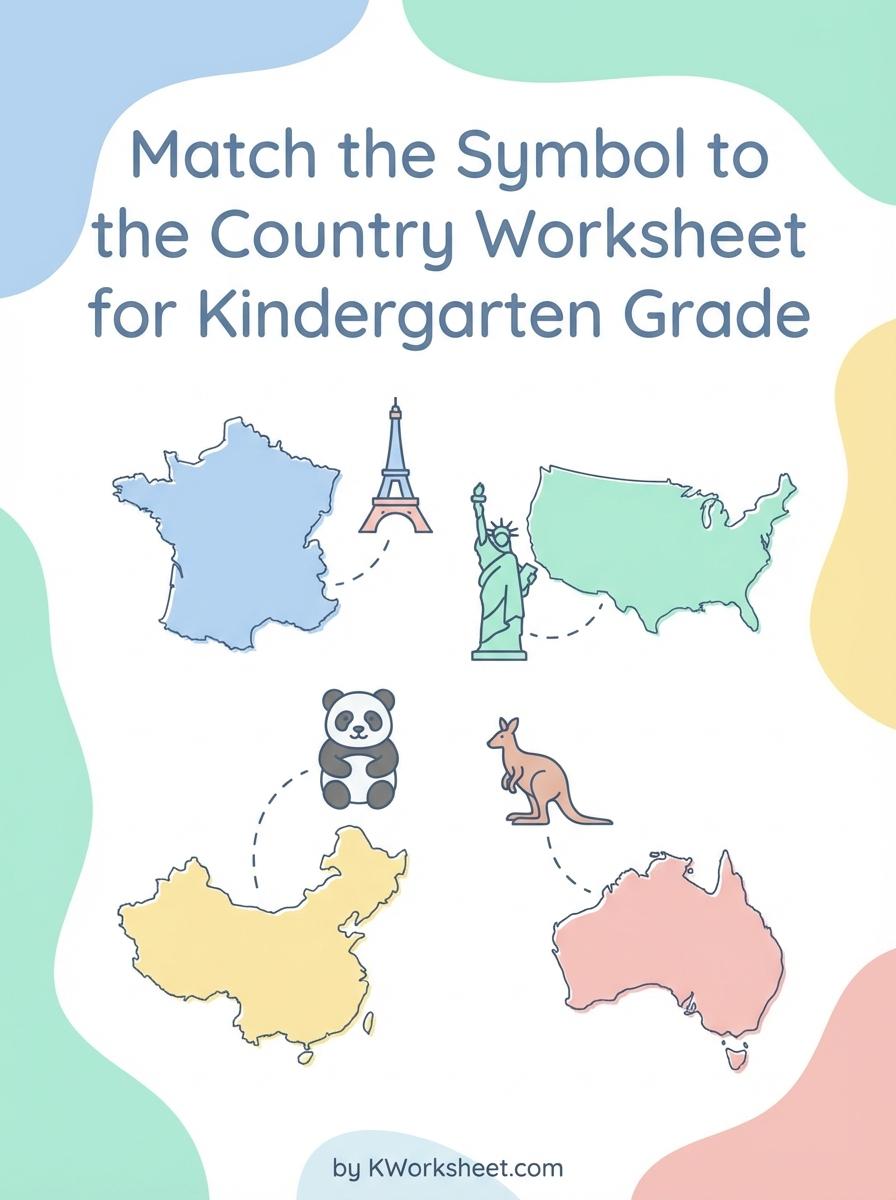
This Match the Symbol to the Country worksheet helps kindergarten students recognize and connect common symbols with their corresponding countries, enhancing early geography skills. It encourages visual learning and memory development by associating flags, landmarks, or cultural icons with the correct nation. Explore the collection of worksheets available to support your child's understanding of world geography.
United States Symbol
The flag of the United States is its most recognizable symbol. It features red and white stripes with a blue field of white stars in the corner. This flag represents freedom and unity. Teachers and parents can help children identify it by its bold colors and distinct pattern. You can explore more about symbols and social studies for young children in this worksheet resource.
Canada Symbol
The maple leaf is the primary symbol of Canada. It appears prominently on the Canadian flag as a red, pointed leaf in the center. This symbol represents nature and the country's forests. Children can quickly spot the maple leaf and associate it with Canada in worksheets about drawing and labeling.
Japan Flag
Japan's flag is known as the Nisshoki or Hinomaru, featuring a simple red circle on a white background. The red circle symbolizes the sun. Its clean design helps young learners easily recognize Japan's flag. Parents and teachers can emphasize its bright and simple look for easy remembrance. Support acknowledgement through home vocabulary practices.
Australia Animal
The Kangaroo is a well-known symbol representing Australia. It is unique to the country and frequently used in educational materials. The kangaroo often symbolizes movement and progress in Australian culture. Introducing this animal helps children associate it with Australia on community helpers and vocabulary worksheets.
France Monument
The Eiffel Tower is a famous monument representing France. It is located in Paris and is an iconic symbol of French culture. Teaching children about the Eiffel Tower helps them link France with this remarkable structure. Its distinctive shape makes it easily recognizable for young learners. Pair this with family member activities for cultural connection.
Netherlands Flower
The tulip is the flower most associated with the Netherlands. This bright and colorful flower represents the country's rich history in horticulture. Including tulips in educational activities helps children associate this flower with Dutch culture. Its vibrant colors make it especially appealing to kids. Check out this occupations matching worksheet for more fun with pictures and words.
Canada Leaf
Once again, the maple leaf is the leaf symbol for Canada. This leaf symbolizes the nation's natural environment and heritage. It is featured on the national flag and various official emblems. Children can easily learn to recognize this leaf in educational materials about Canada. Reinforce learning with then versus now worksheets.
Germany Eagle
The Black Eagle is an emblematic symbol of Germany. This powerful bird represents strength and sovereignty. It often appears in German coats of arms and official documents. Understanding the eagle symbol helps children connect it with Germany in social studies lessons. For geography concepts, consider this basic compass rose worksheet.
China Dragon
The dragon is a traditional symbol of China, representing power and good fortune. It appears in cultural festivals and artworks throughout Chinese history. Teaching children about the Chinese dragon encourages appreciation of Chinese traditions. Its mythical form makes it a fascinating symbol for kids. Additional vocabulary activities are available in this vocabulary and matching worksheet.
Argentina Sun
The Sun of May is a symbol used in Argentina's flag and emblem. It represents independence and freedom. The sun's golden rays make it a strong, bright symbol of hope. Using this sun image in worksheets helps children identify Argentina easily. Citizenship and classroom rules can be taught with this phonics-based worksheet.