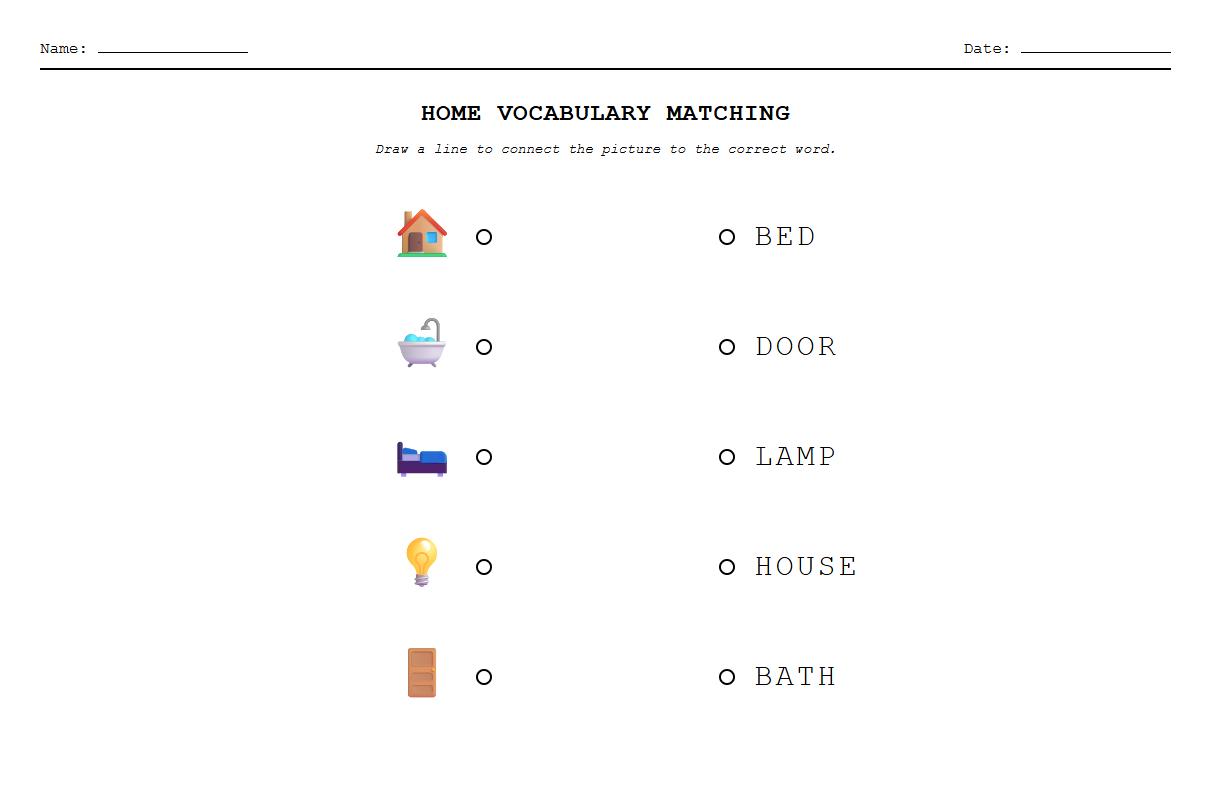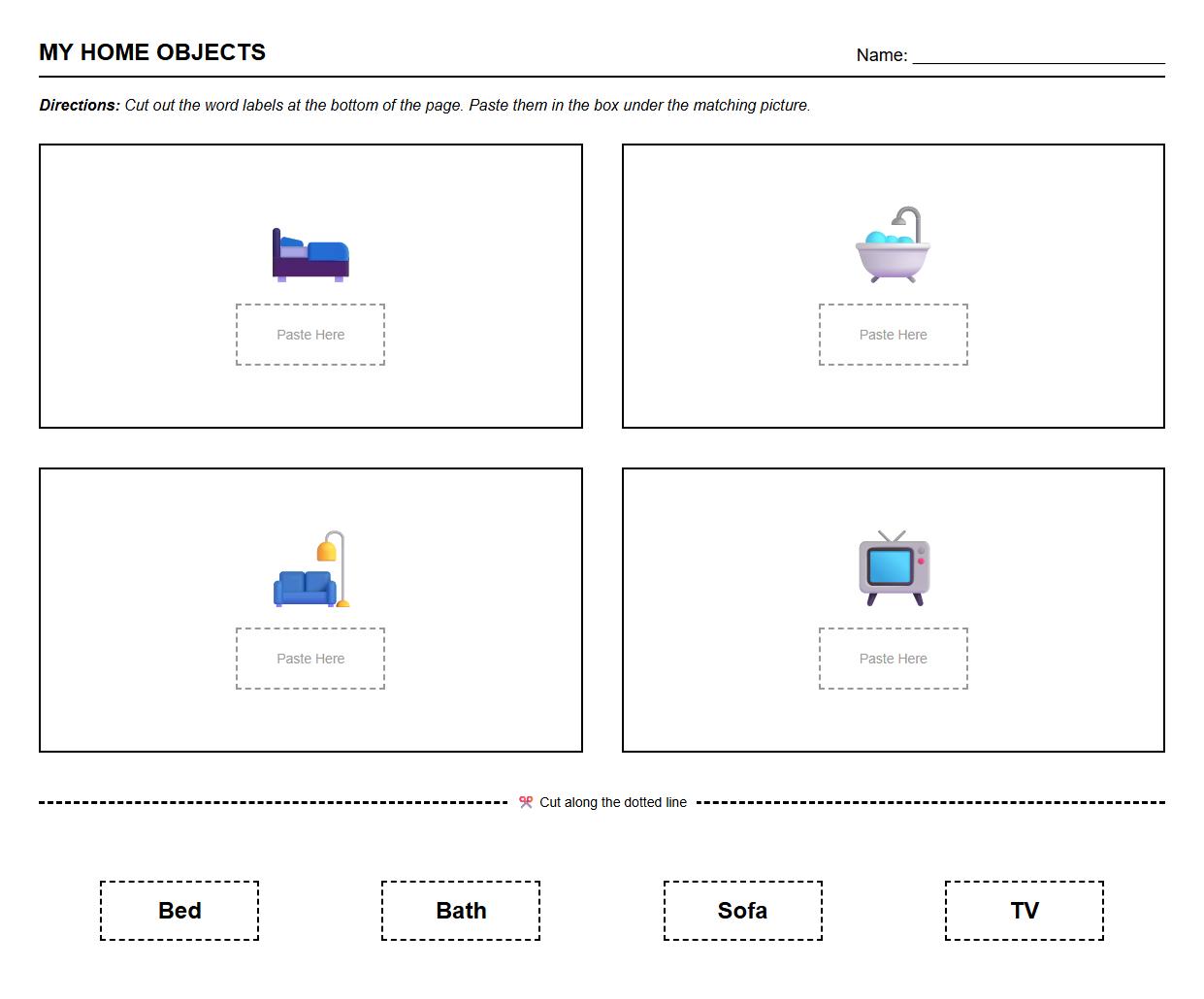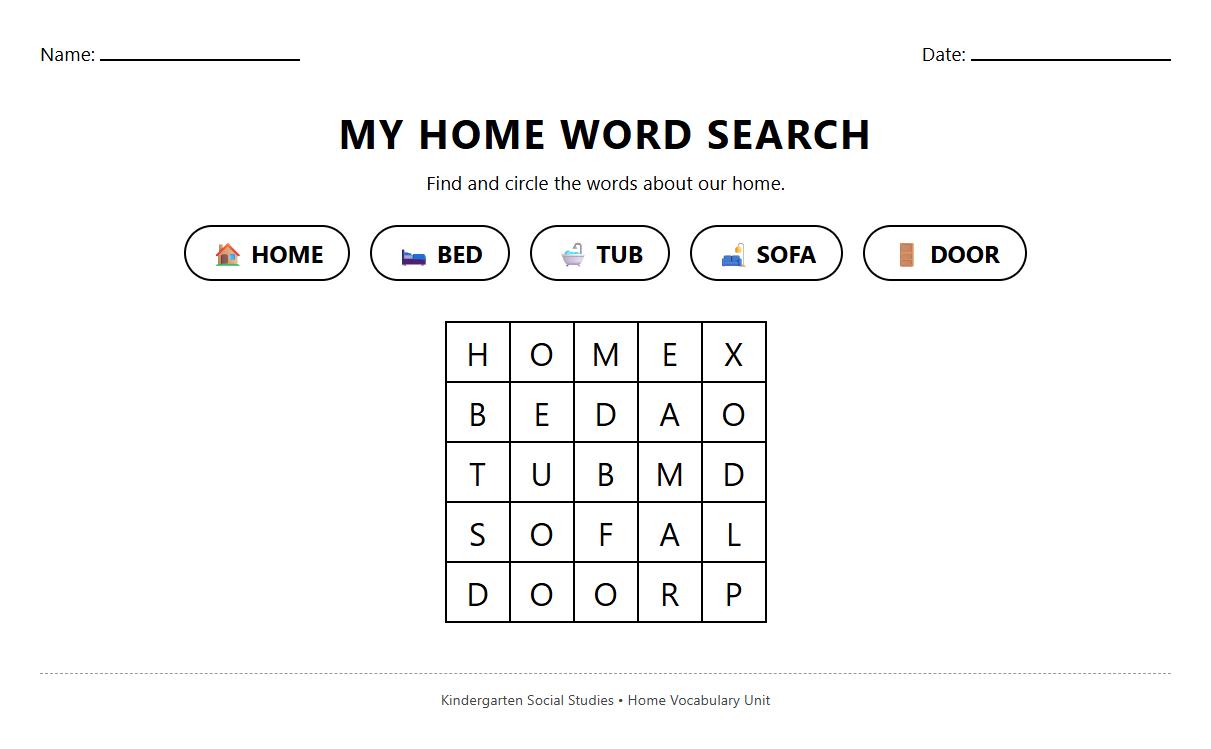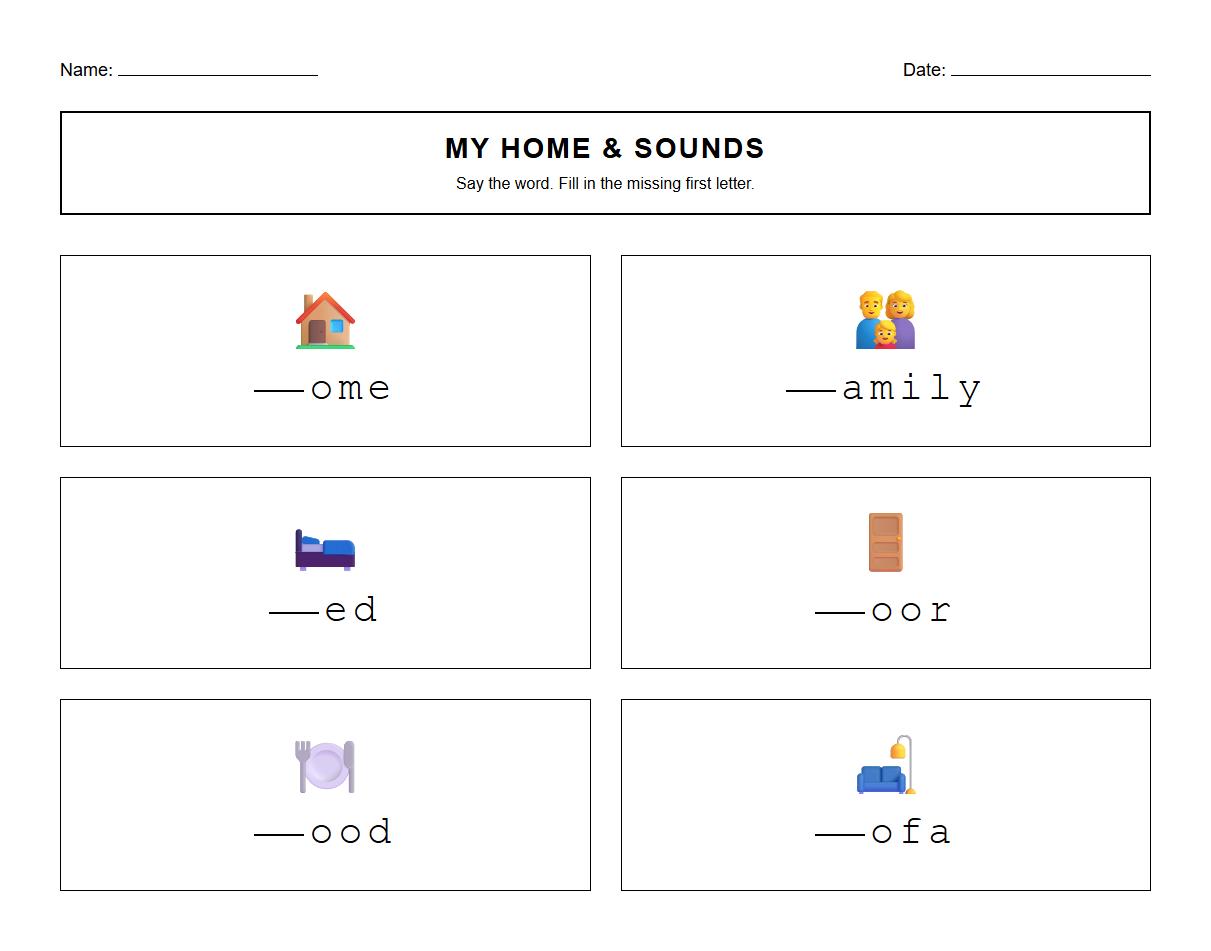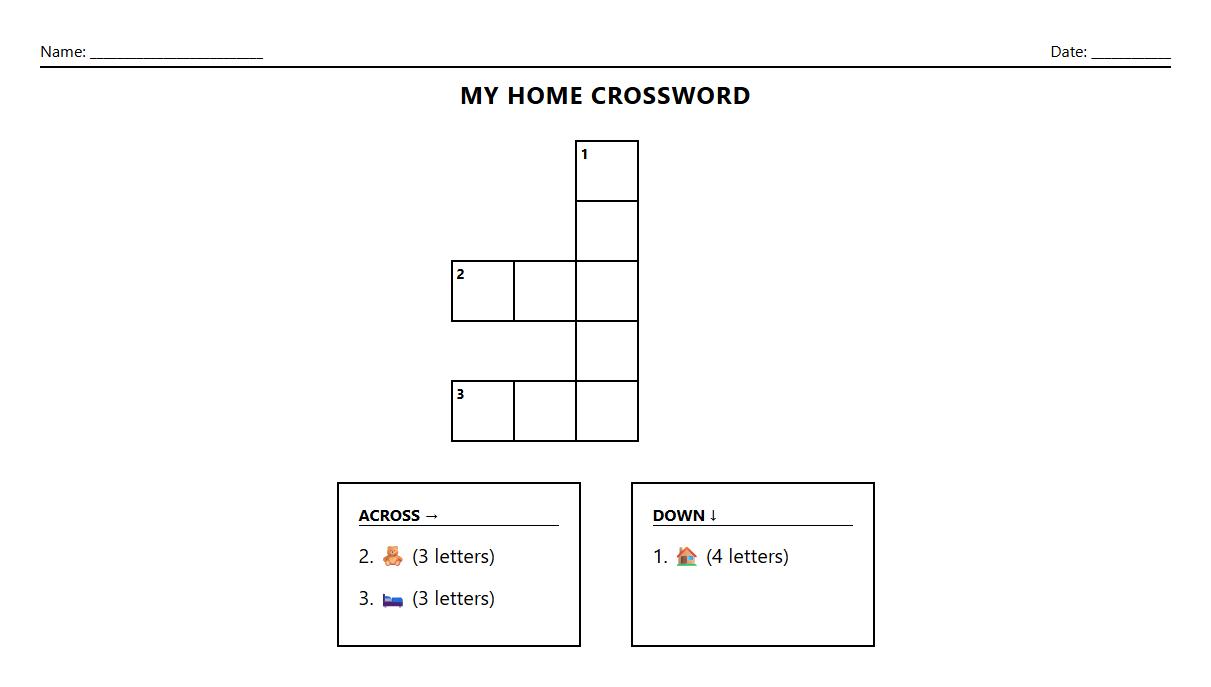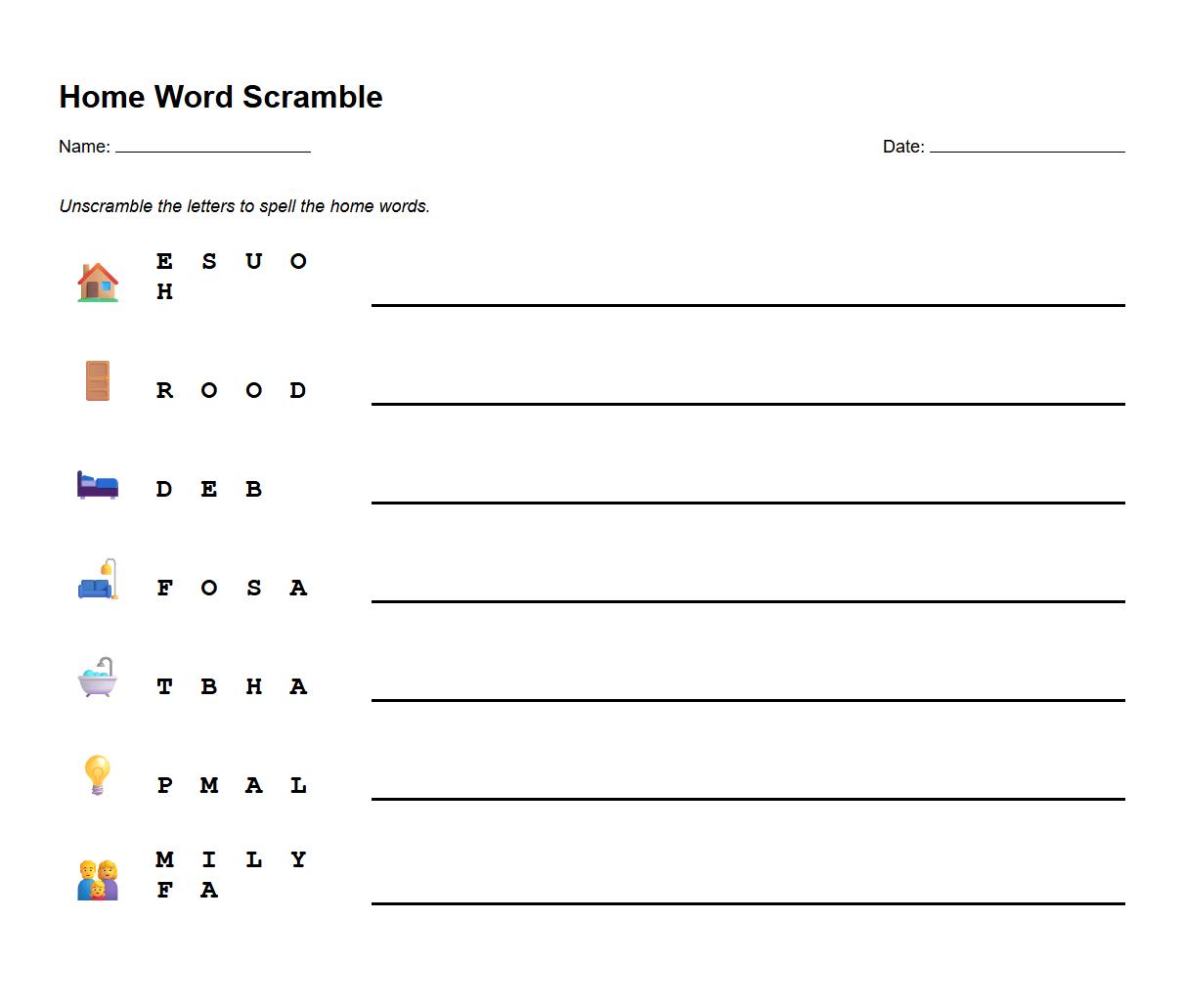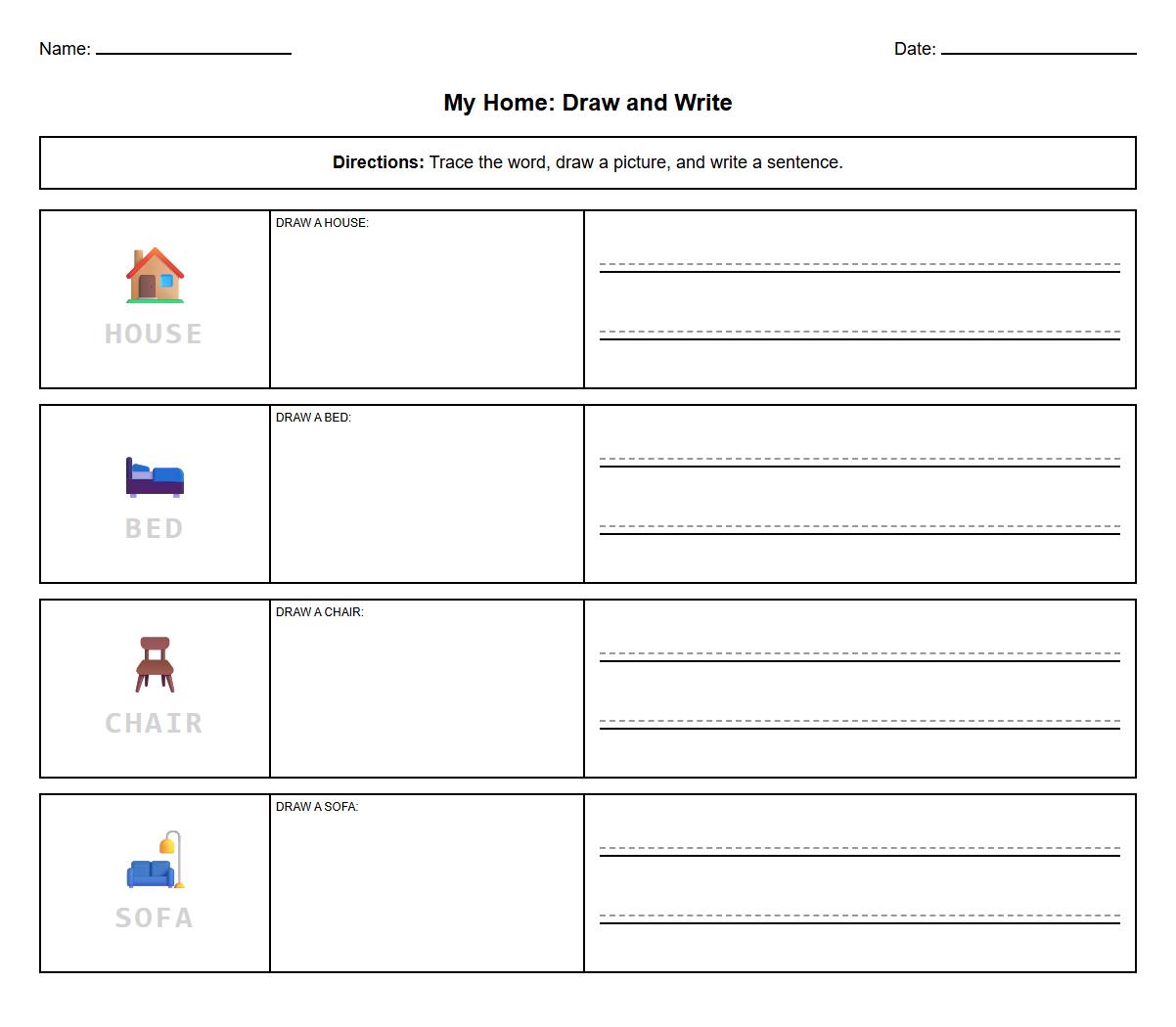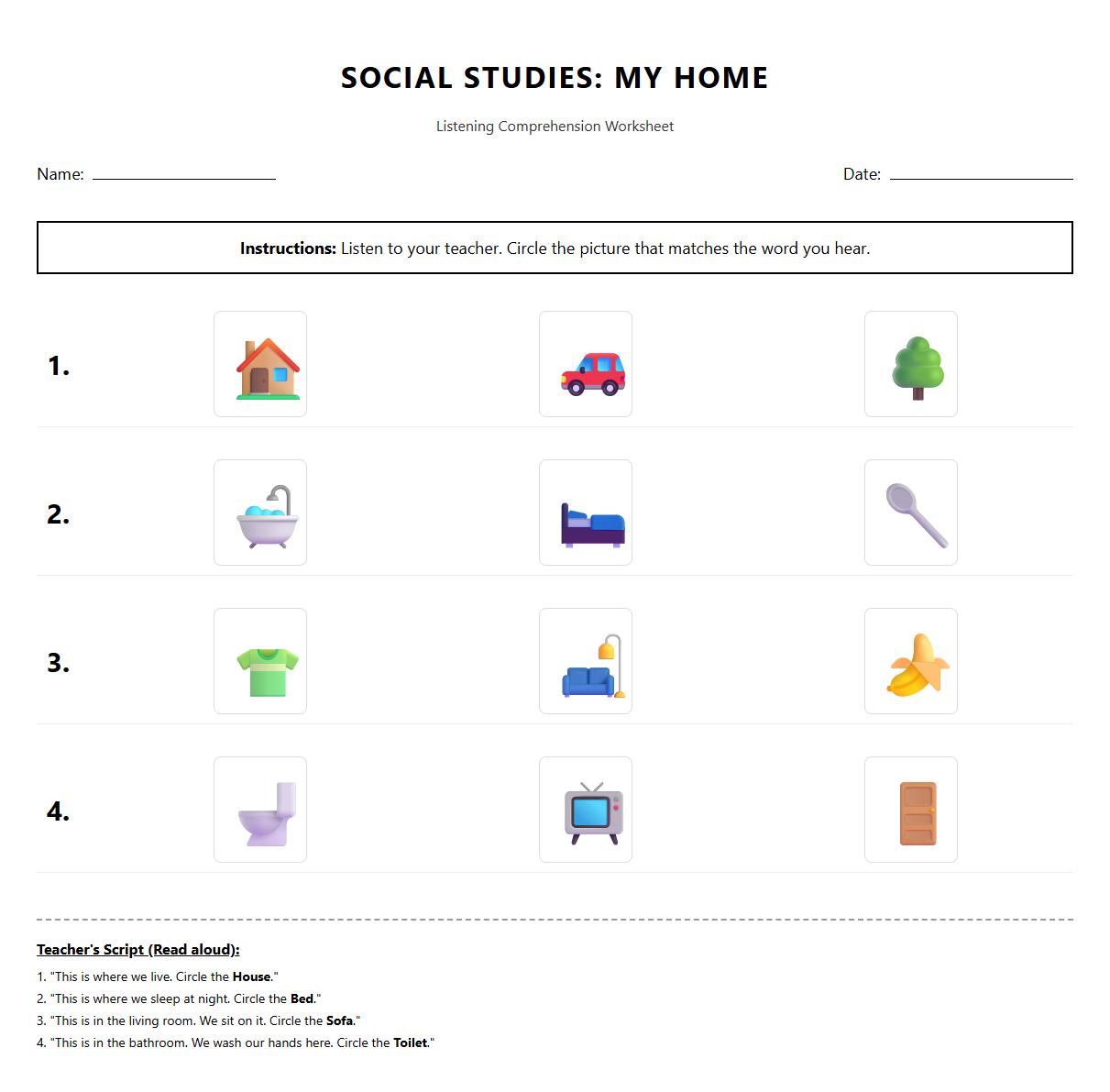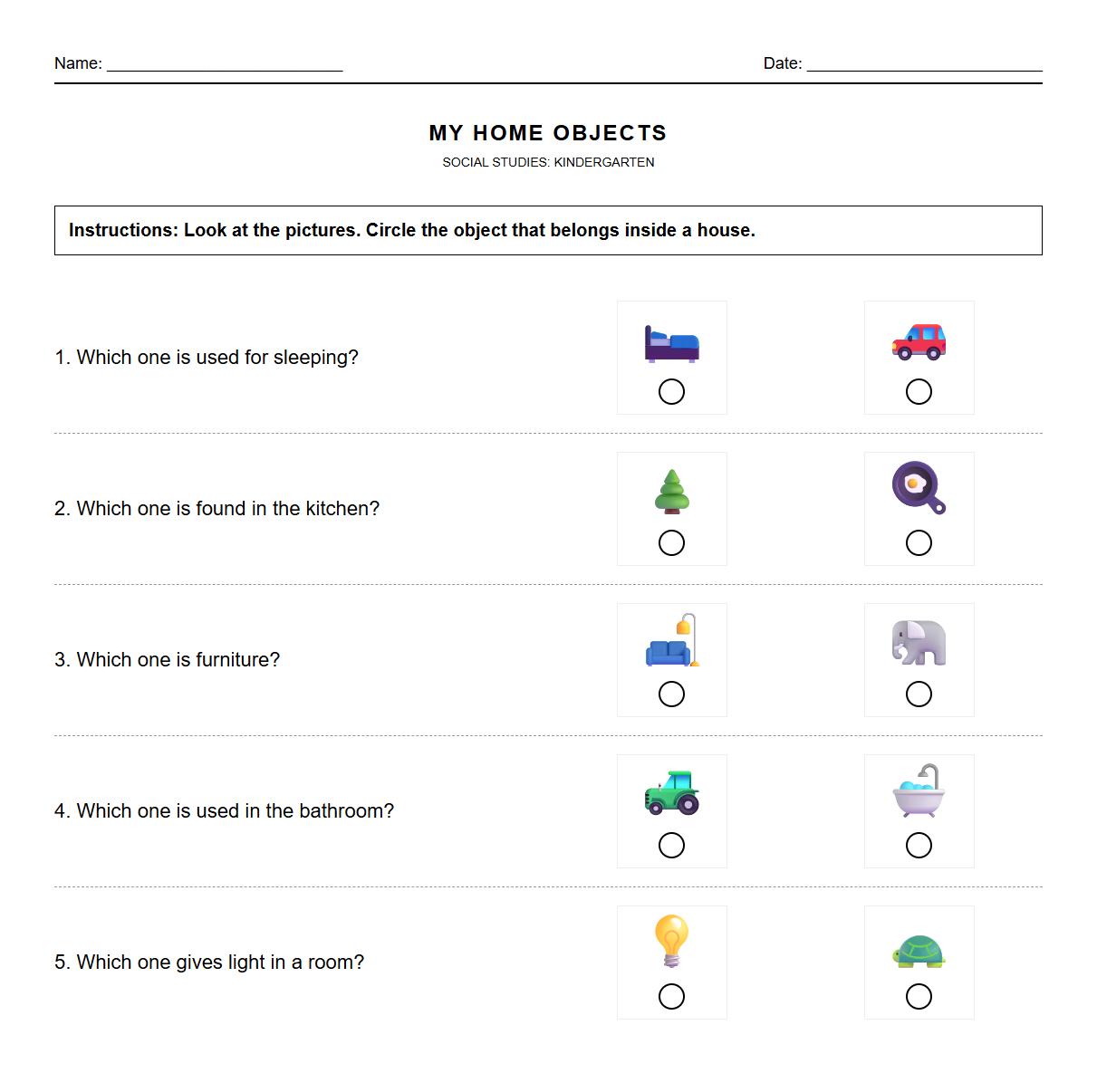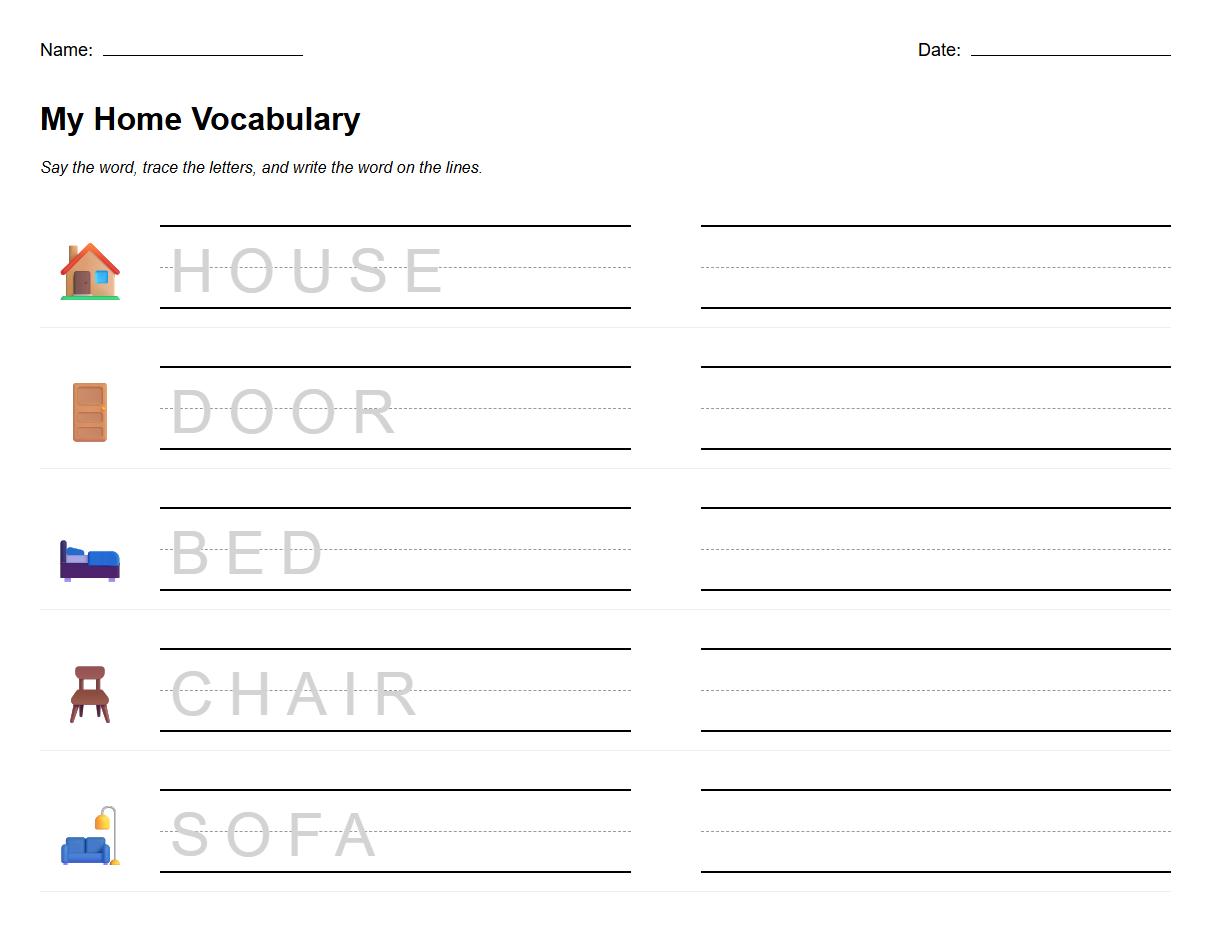
This Home Vocabulary Practice Worksheet enhances young learners' understanding of common household items through interactive activities designed to build recognition and usage skills. It encourages children to associate words with everyday objects, reinforcing language development in a familiar context. Explore our collection of engaging worksheets to support your child's vocabulary growth at home.
Kitchen: The Cooking Room
The kitchen is the room in your house where you cook food. It is an essential place for preparing meals and often contains many important appliances. Teachers and parents can explain the kitchen's role in daily life to children. Worksheets can include identifying kitchen items to help with vocabulary.
Bedroom: The Sleeping Place
In the bedroom, you sleep on a bed. The bed provides comfort and rest, making it a key part of the room. Discussing the bedroom helps children understand personal spaces in the home. Worksheets can focus on naming bedroom furniture and their uses.
Living Room: Sitting Area
You use a chair or a sofa to sit on in the living room. This room is often where families gather and relax together. Explaining the living room encourages kids to recognize common household spaces. Activities can include matching furniture to rooms.
Clothes Storage
Clothes are kept in a wardrobe or closet in your house. This helps keep your clothes organized and neat. Teaching children about storage areas promotes responsibility for their belongings. Worksheets may include identifying where each item belongs in the house.
Bathroom: Tooth Cleaning
In the bathroom, you use a toothbrush to clean your teeth. This is part of daily hygiene routines important for health. Parents and teachers can emphasize the value of brushing teeth regularly. Worksheets can guide children to name bathroom items.
Bathing Room
The bathroom is where you take a bath or shower. It is designed for personal cleanliness and comfort. Explaining bathroom activities helps kids learn about self-care habits. Worksheets can include identifying bathroom fixtures and their purposes.
House Entrance
You open the door to go inside your house. Doors provide security and entry to all rooms. Teaching about doors helps children understand access and safety at home. Activities might involve labeling parts of the house including doors.
Dining Area
You eat meals with your family at the dining table. This space is important for sharing food and conversation. Learning the dining room's role supports family bonding concepts. Worksheets can focus on meal-related vocabulary and routines.
Entertainment Device
You use a television to watch cartoons at home. It offers fun and educational content for children. Parents and teachers can guide children on balanced screen time. Worksheets can encourage naming electronic devices found at home.
Kitchen Appliance for Food Storage
The refrigerator helps you keep your food cold in the kitchen. It preserves freshness and prevents spoilage. Teaching about the fridge introduces basic food safety concepts. Worksheets may include matching foods with storage places.


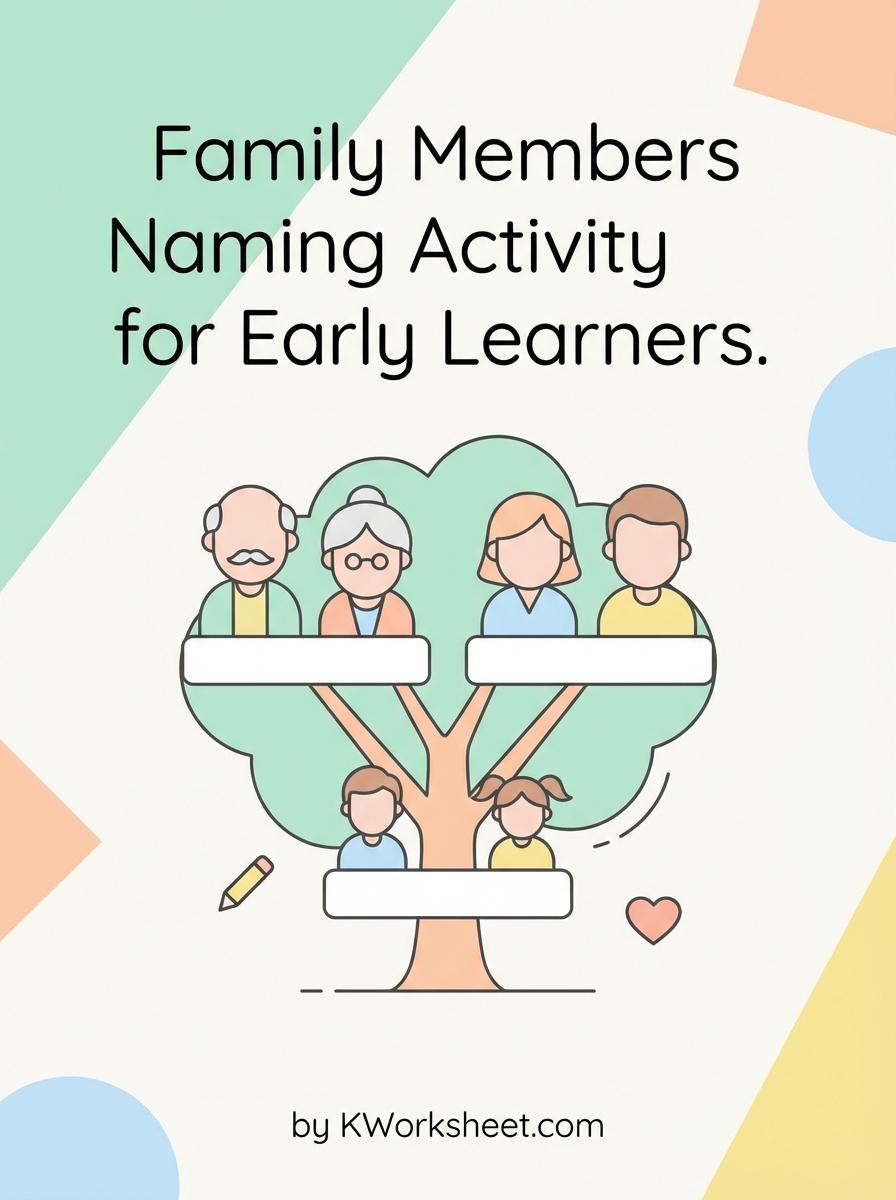
Family Members Naming Activity for Early Learners