Oral Language Development Worksheet for Kindergarten Citizenship

📅 Jun 16, 2025 👤 Nylen Smith

Oral language development is essential for kindergarten students to build strong communication skills and understand key citizenship concepts such as respect, sharing, and community responsibilities. Engaging activities promote vocabulary growth and encourage children to express their thoughts clearly and confidently. Explore our selection of worksheets designed to enhance oral language while teaching important citizenship values.

Oral Language Development worksheet focusing on Citizenship Vocabulary and Phonics practice
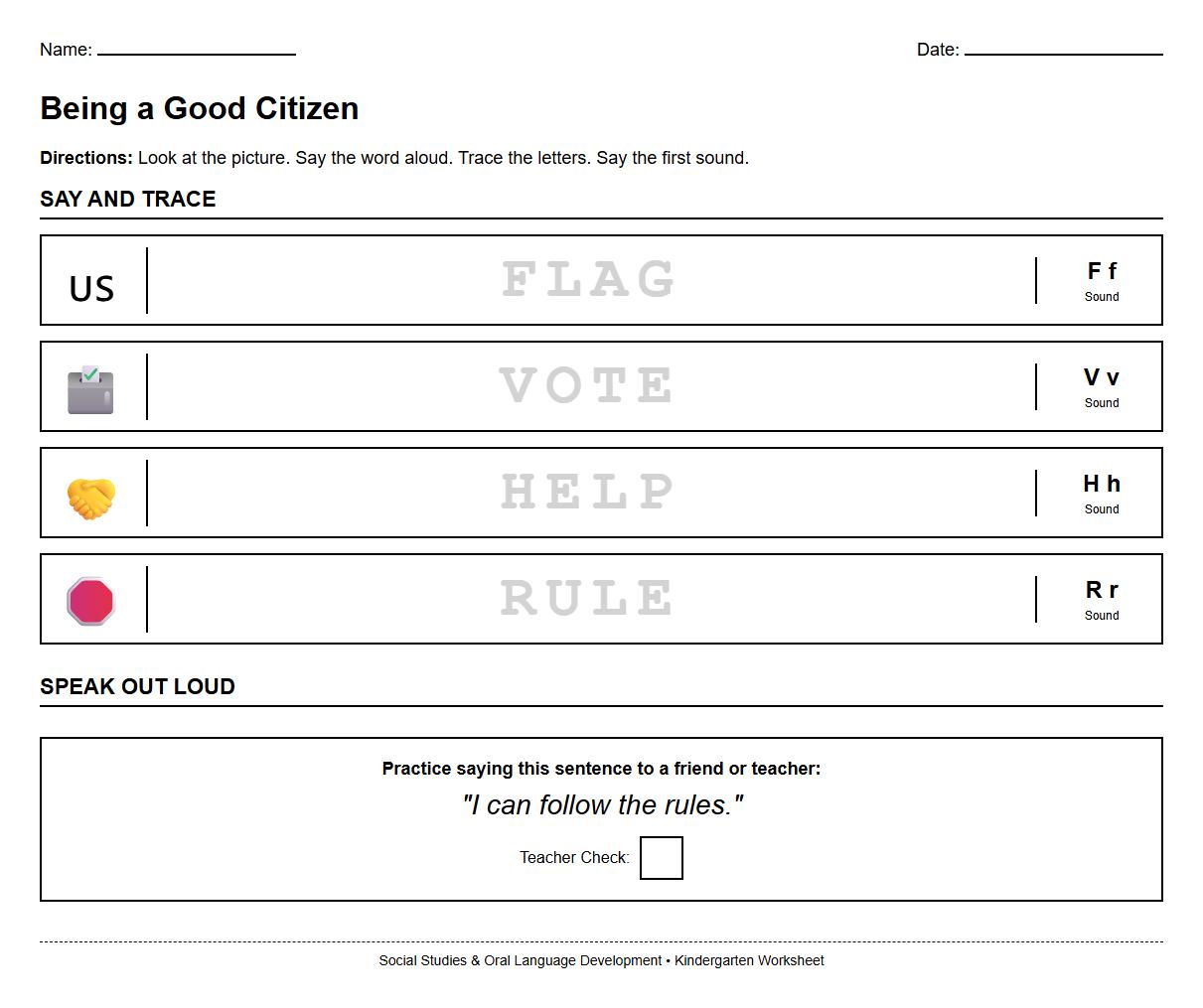
Oral Language Development worksheet focusing on Citizenship Vocabulary and Phonics practice

Download PDF     Pin it

Sentence Formation activity integrating Civics topics and Oral Communication
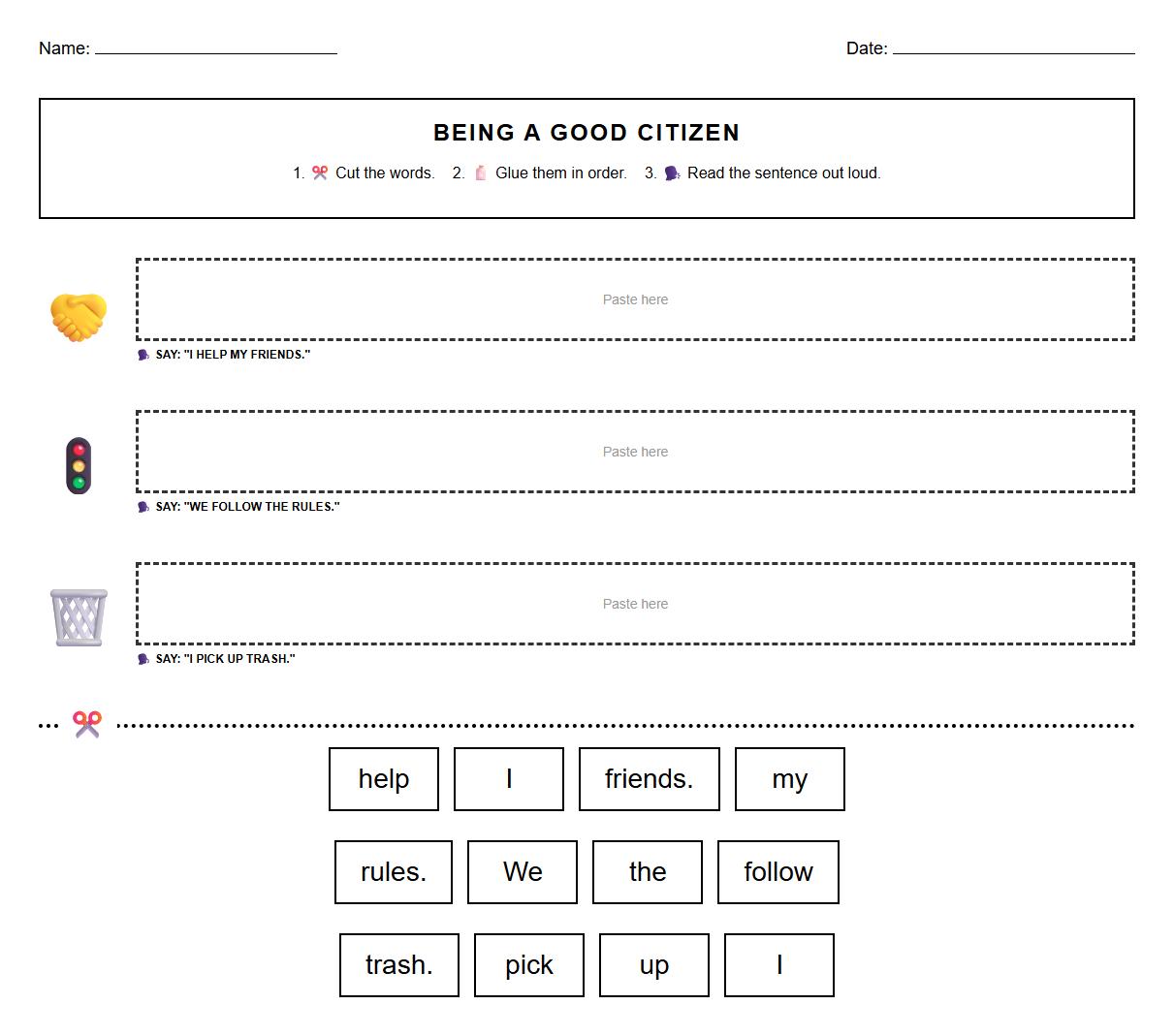
Sentence Formation activity integrating Civics topics and Oral Communication

Download PDF     Pin it

Listening Comprehension exercise about Community Helpers and Citizenship principles
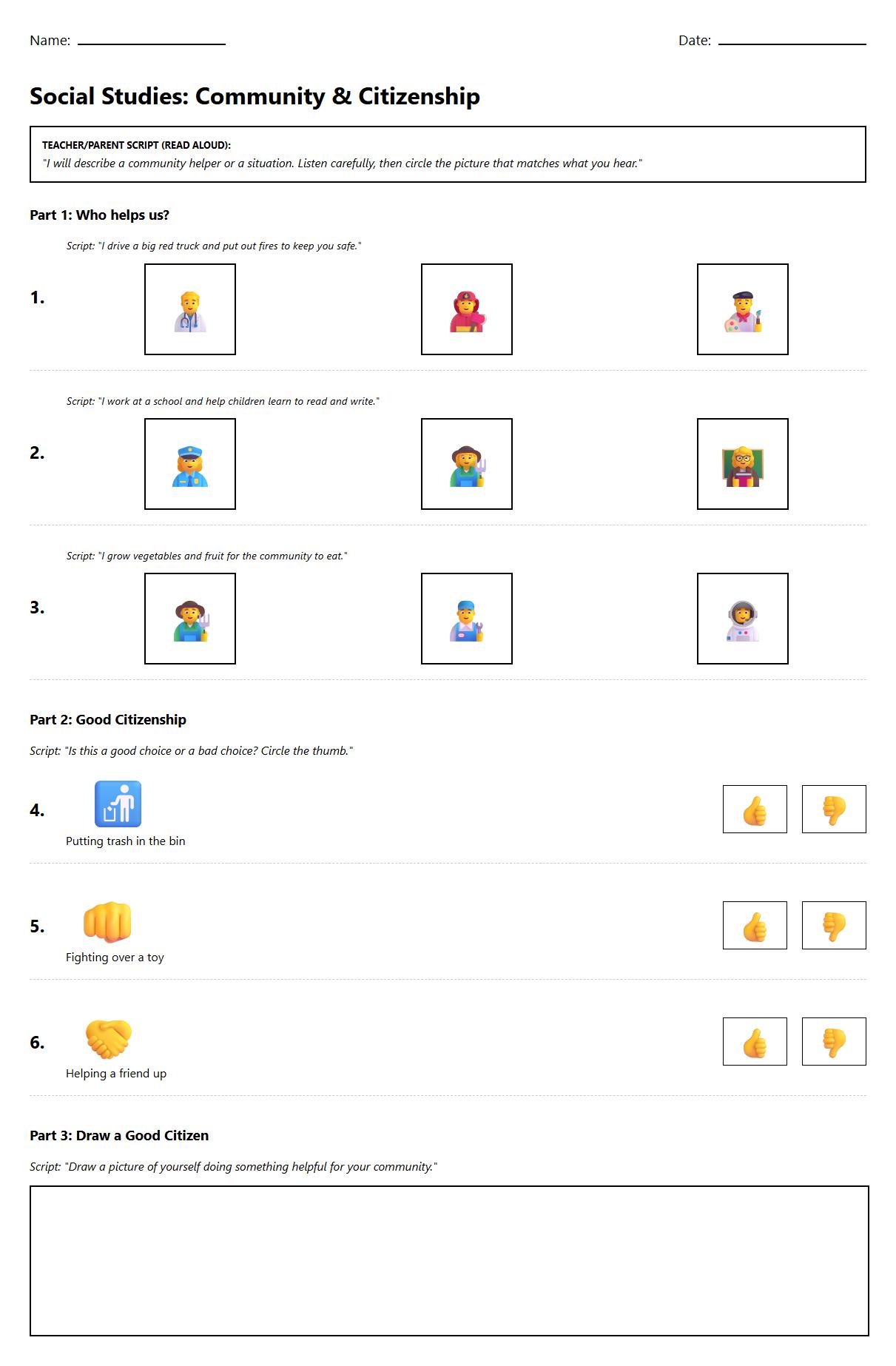
Listening Comprehension exercise about Community Helpers and Citizenship principles

Download PDF     Pin it

Picture Sequencing worksheet for discussing Rules and Responsibilities
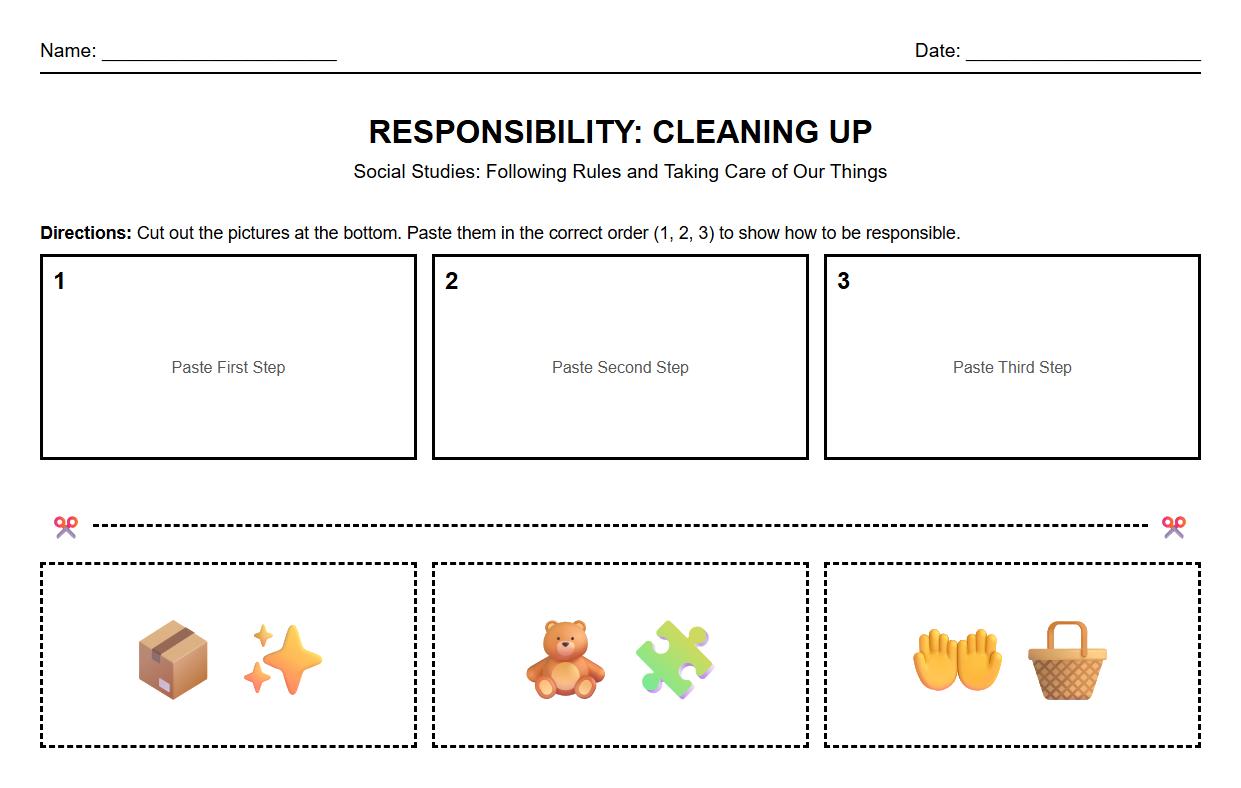
Picture Sequencing worksheet for discussing Rules and Responsibilities

Download PDF     Pin it

Story Retelling activity using scenarios about Good Citizenship
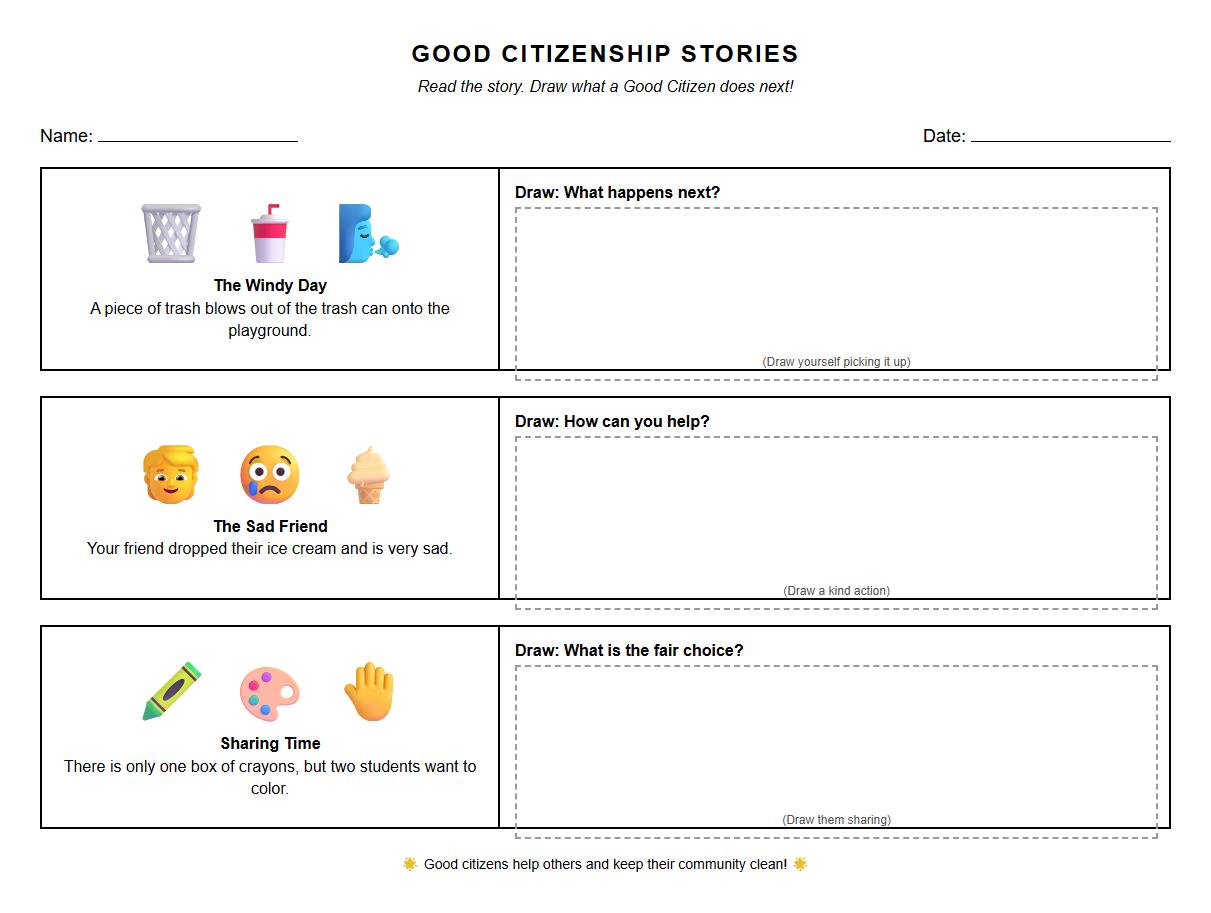
Story Retelling activity using scenarios about Good Citizenship

Download PDF     Pin it

Question and Answer worksheet focusing on Class Rules and Oral Expression
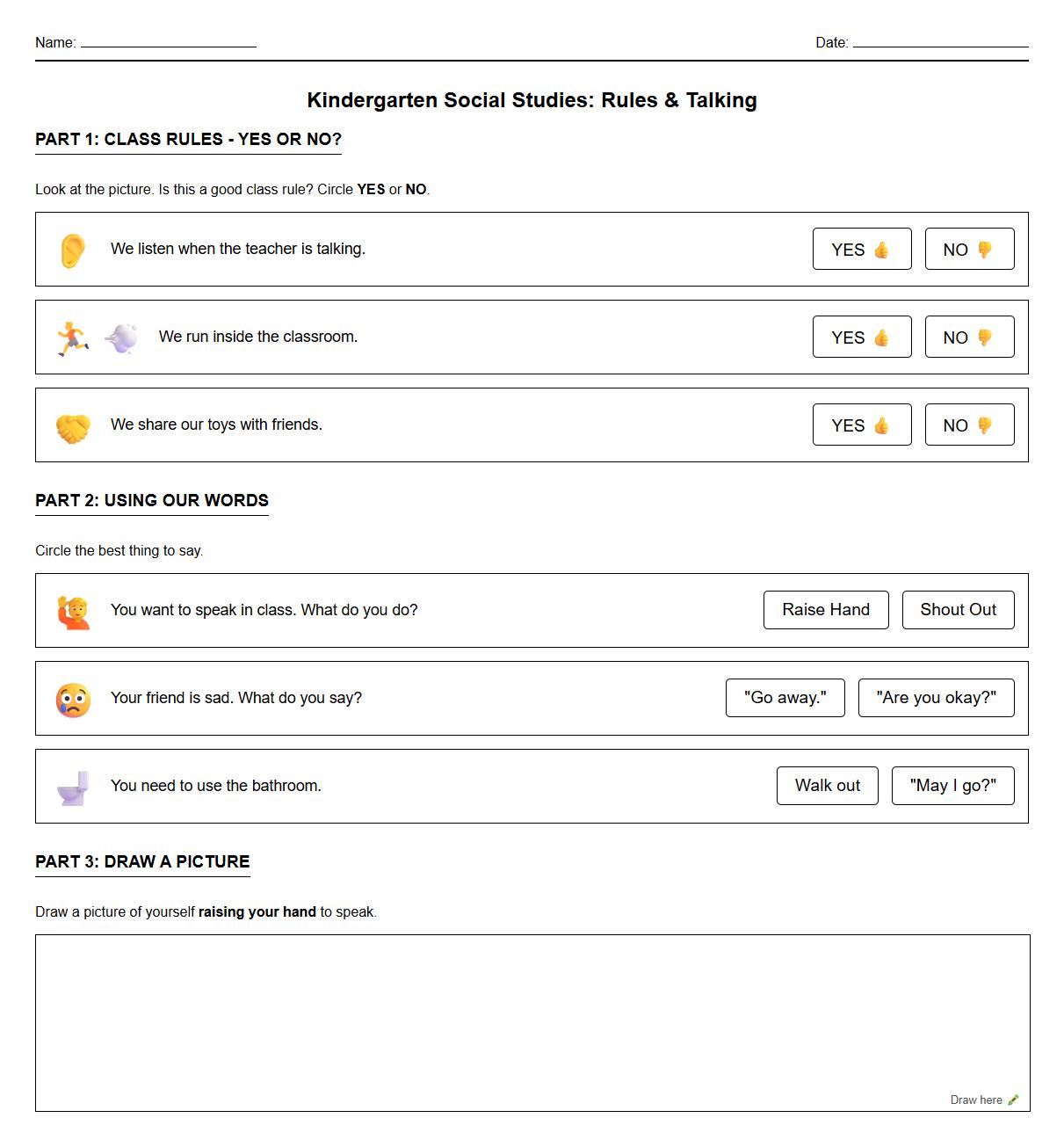
Question and Answer worksheet focusing on Class Rules and Oral Expression

Download PDF     Pin it

Role Playing script for practicing Citizenship dialogue and Pronunciation skills
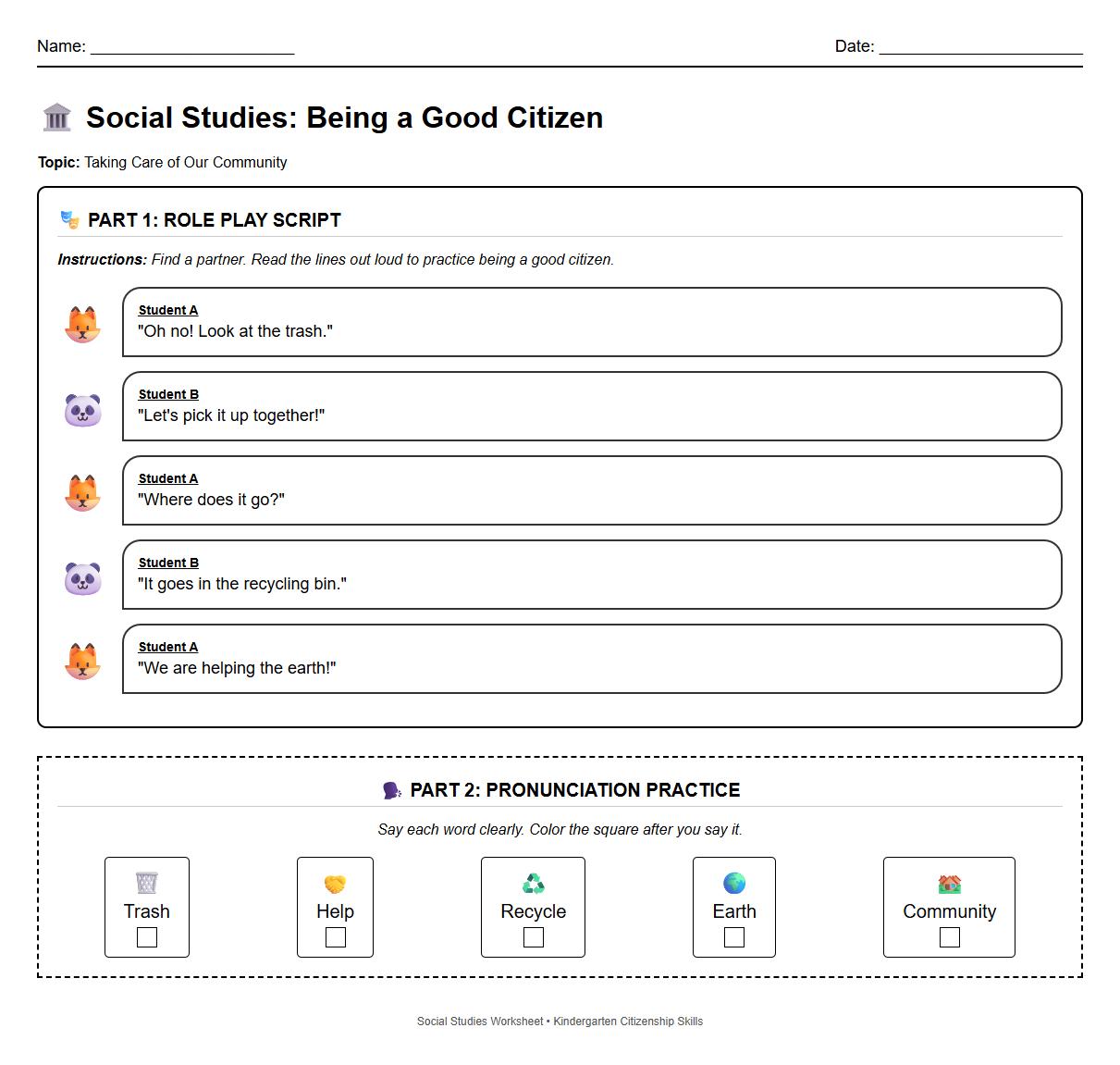
Role Playing script for practicing Citizenship dialogue and Pronunciation skills

Download PDF     Pin it

Sorting activity distinguishing Rights and Responsibilities with Word Recognition
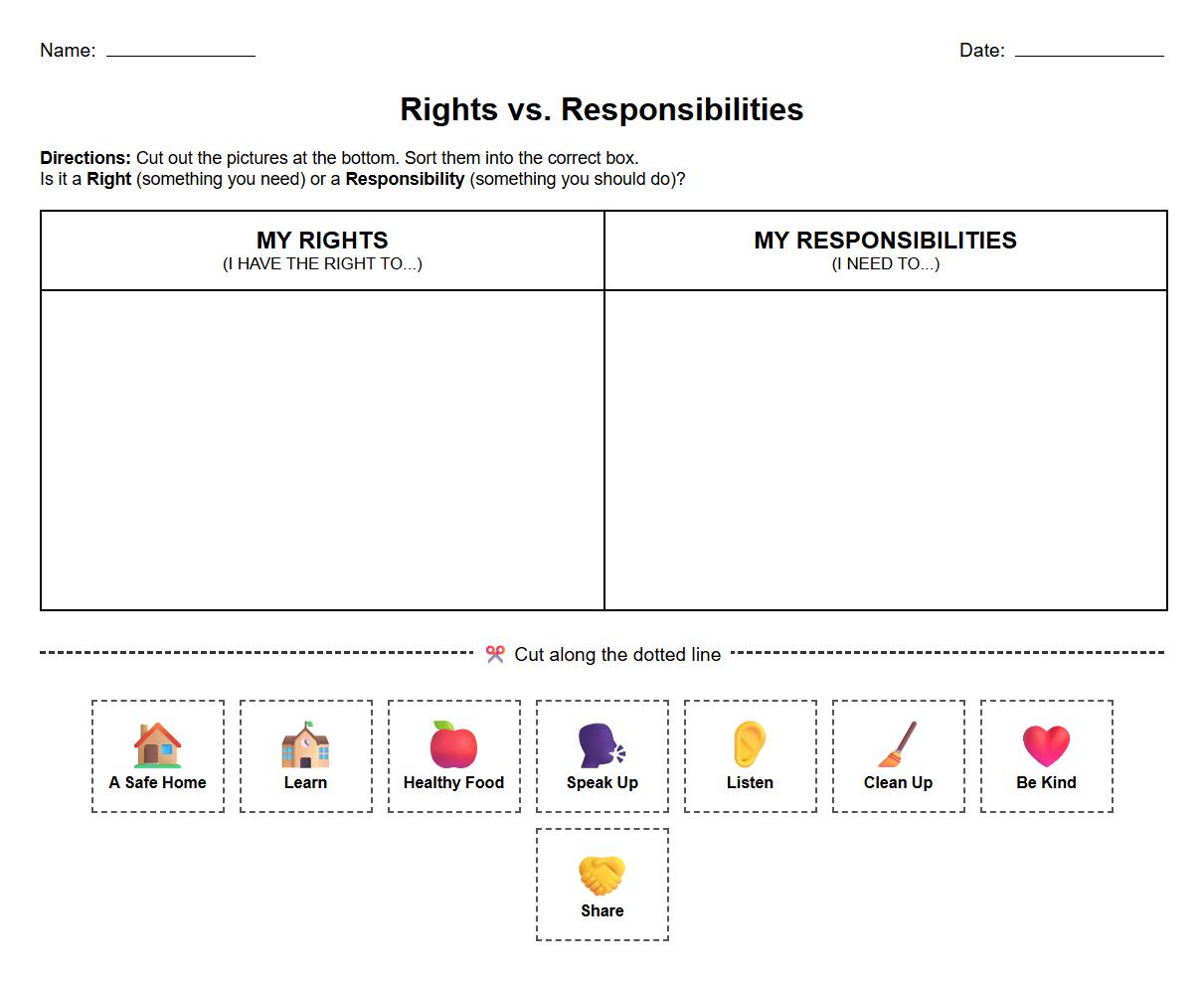
Sorting activity distinguishing Rights and Responsibilities with Word Recognition

Download PDF     Pin it

Oral Presentation task on Citizenship Values using Sight Words
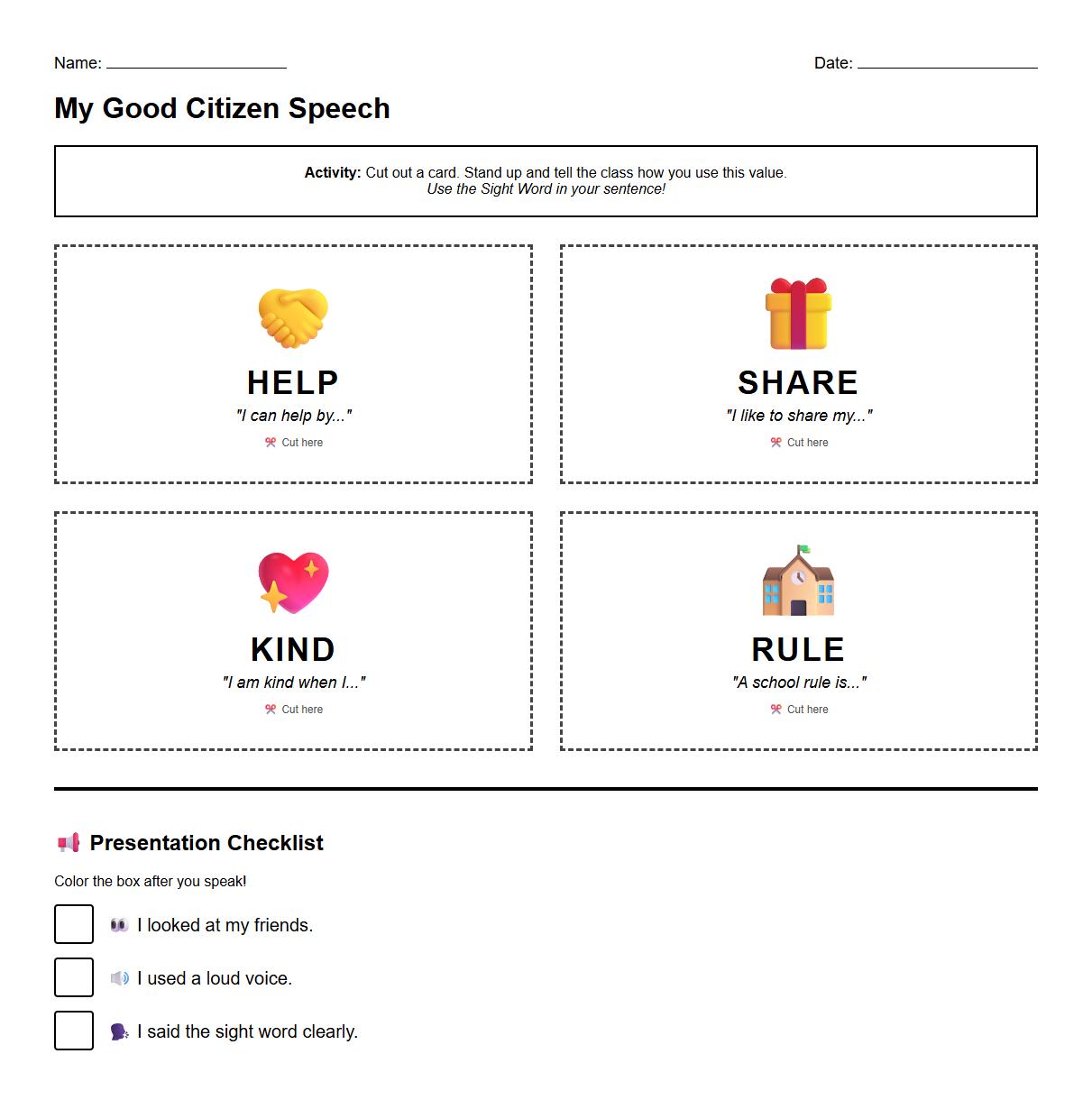
Oral Presentation task on Citizenship Values using Sight Words

Download PDF     Pin it

Describing Scenarios worksheet developing Citizenship Concepts and Listening Skills
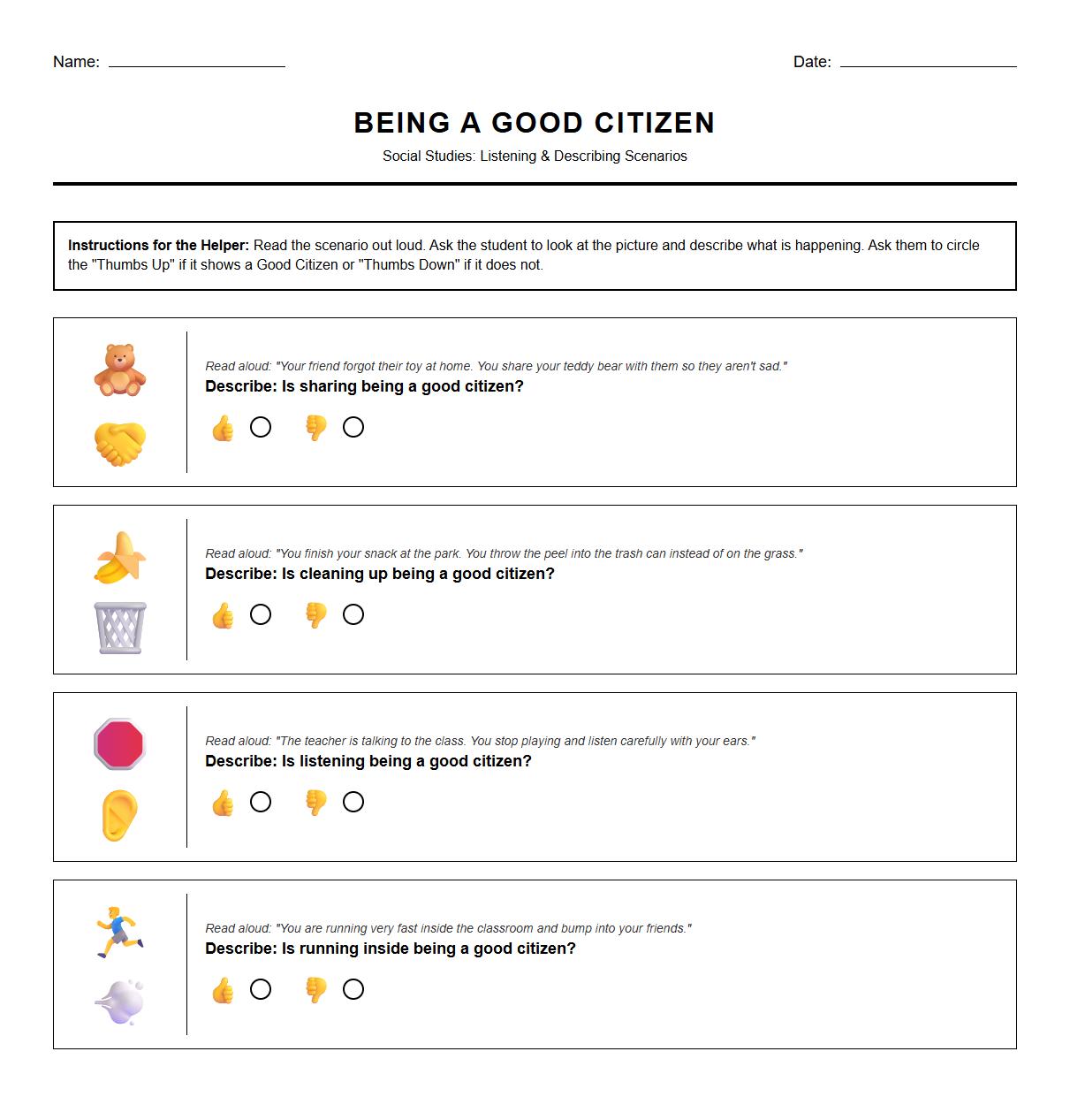
Describing Scenarios worksheet developing Citizenship Concepts and Listening Skills

Download PDF     Pin it

Ways to Show Kindness to Our Classmates

Teaching kindness helps create a warm and friendly classroom environment. Simple acts like sharing toys, offering a smile, or helping a friend with their work demonstrate kindness. Encouraging children to use polite words and include everyone in activities also fosters kindness. These actions strengthen friendships and build a caring community.

Using Words to Solve Problems with Friends

Using calm and respectful words is key to resolving conflicts. Encourage children to express how they feel and listen to the other person's perspective. Phrases like "I feel..." or "Can we find a solution together?" promote understanding. This teaches problem-solving skills and cooperation among classmates.

Sharing Times When We Help Someone at School

Sharing stories about helping others encourages empathy and kindness. Teachers and parents can ask children to describe when they offered assistance or comforted a friend. This reflection reinforces positive behavior and motivates children to continue helping. Celebrating these moments builds a supportive classroom atmosphere.

Showing You Are Listening When Someone is Speaking

To show active listening, children should make eye contact, nod, and remain quiet while someone is speaking. Saying phrases like "I understand" or asking questions show engagement. Teaching these skills helps develop respectful communication. It also makes the speaker feel valued and heard.

The Importance of Taking Turns When Talking

Taking turns while speaking teaches patience and respect for others. It ensures everyone has a chance to share their thoughts without interruption. This practice promotes an inclusive environment and improves communication skills. It also helps children learn self-control and cooperation.

Welcoming a New Student with Kind Words

Welcoming new students with friendly and kind words helps them feel safe and accepted. Encouraging phrases like "Welcome to our class" or "Would you like to play with us?" create a positive first impression. This practice fosters inclusion and strengthens classroom friendships. It builds confidence in new students.

Respectful Words to Use with Teachers

Using respectful language such as "please," "thank you," and "excuse me" shows appreciation for the teacher. These words demonstrate respect and help maintain a positive learning environment. Teaching children to address teachers politely encourages good manners. It also fosters mutual respect between students and teachers.

How to Ask for Help Politely in Class

Children should learn to ask for help politely by saying, "Could you please help me?" or "I need some assistance, please." Using kind words shows respect for the teacher's time and willingness to assist. This encourages a cooperative and respectful classroom atmosphere. It also empowers students to seek support when needed.

Apologizing If You Make a Mistake

Saying "I'm sorry" and acknowledging mistakes teaches responsibility and empathy. Apologizing helps repair relationships and shows a willingness to make things right. Encouraging children to apologize sincerely promotes emotional intelligence. This practice helps maintain harmony and trust in the classroom.

The Importance of Saying Please and Thank You

Saying "please" and "thank you" are fundamental manners that show respect and gratitude. These words help children express appreciation and kindness toward others. Teaching this habit encourages positive social interactions and builds a respectful community. It also nurtures an environment of kindness and cooperation.


More in Social Studies Category


About the author. Nylen Smith is a dedicated educator and cofounder of KWorksheet.com, a popular platform specializing in high-quality kindergarten worksheets and printable activities.

Disclaimer. The information provided in this document is for general informational purposes and/or document sample only and is not guaranteed to be factually right or complete. Please report to us via contact-us page if you find and error in this page, thanks.

Comments

No comment yet