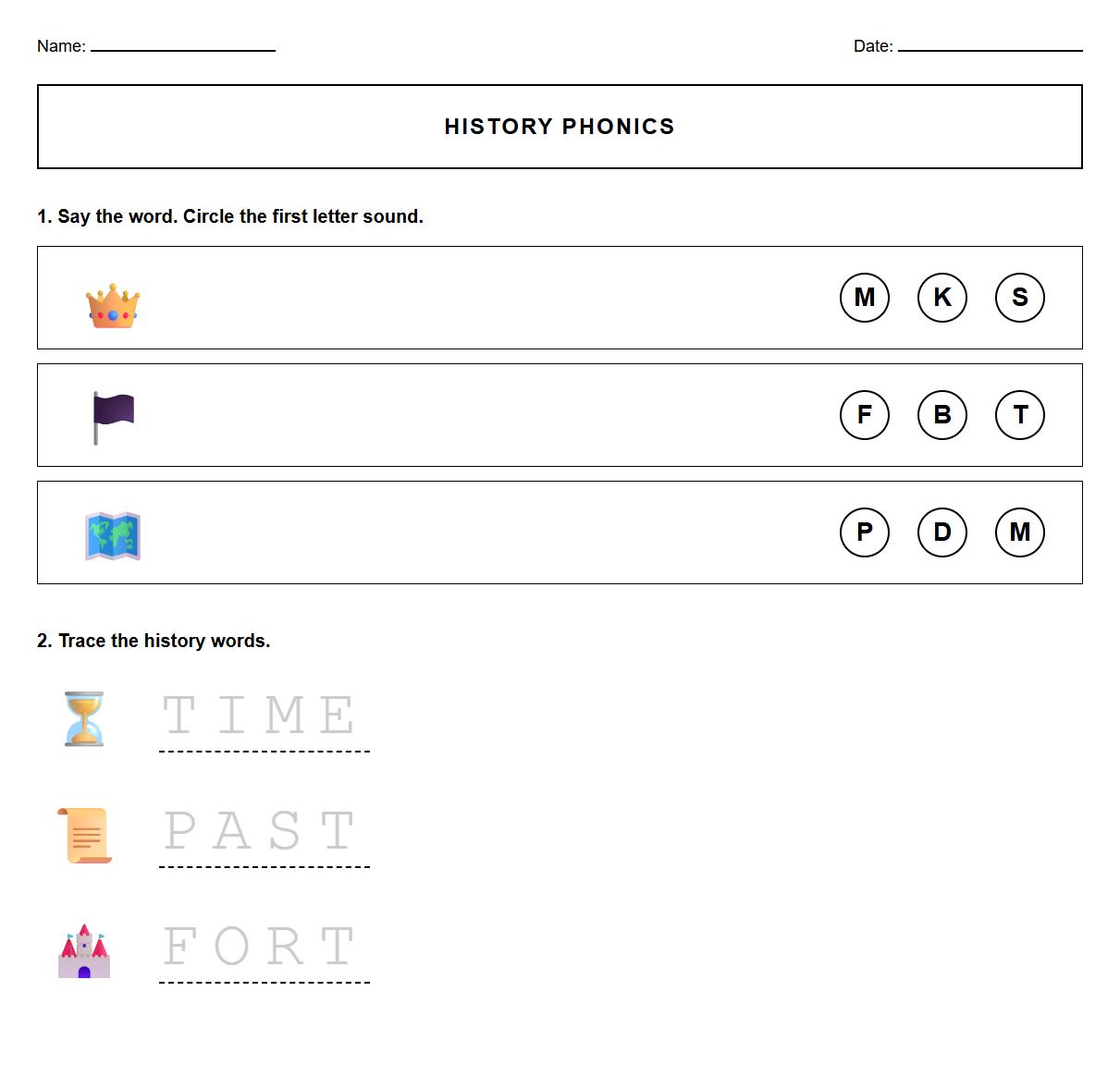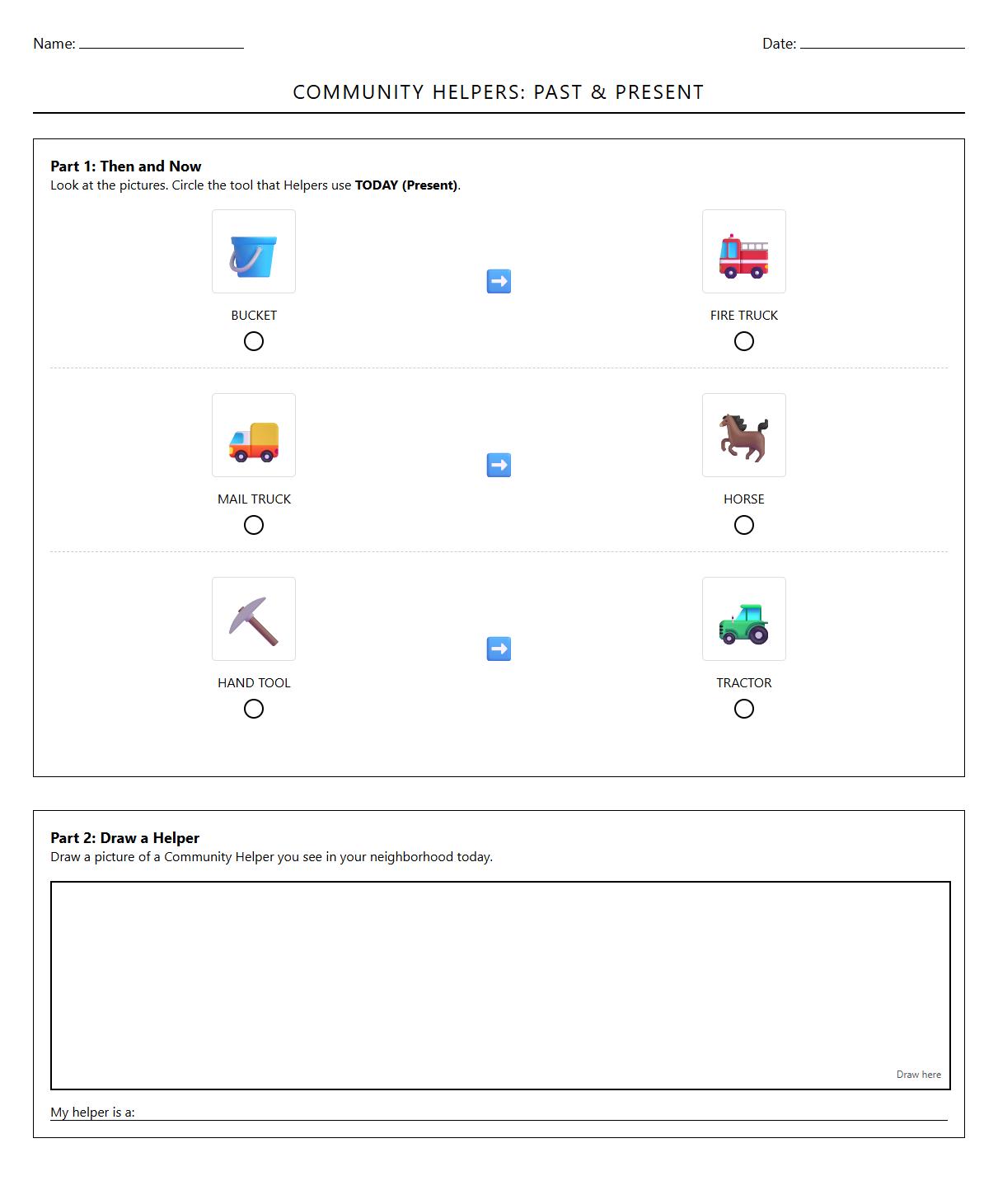
Kindergarten history worksheets introduce young learners to the concepts of past and present through engaging activities that develop critical thinking and time comprehension skills. These worksheets use simple comparisons and colorful illustrations to make historical exploration accessible and fun. Explore the variety of worksheets available to help your child discover history in an interactive way.
Understanding Past and Present Events
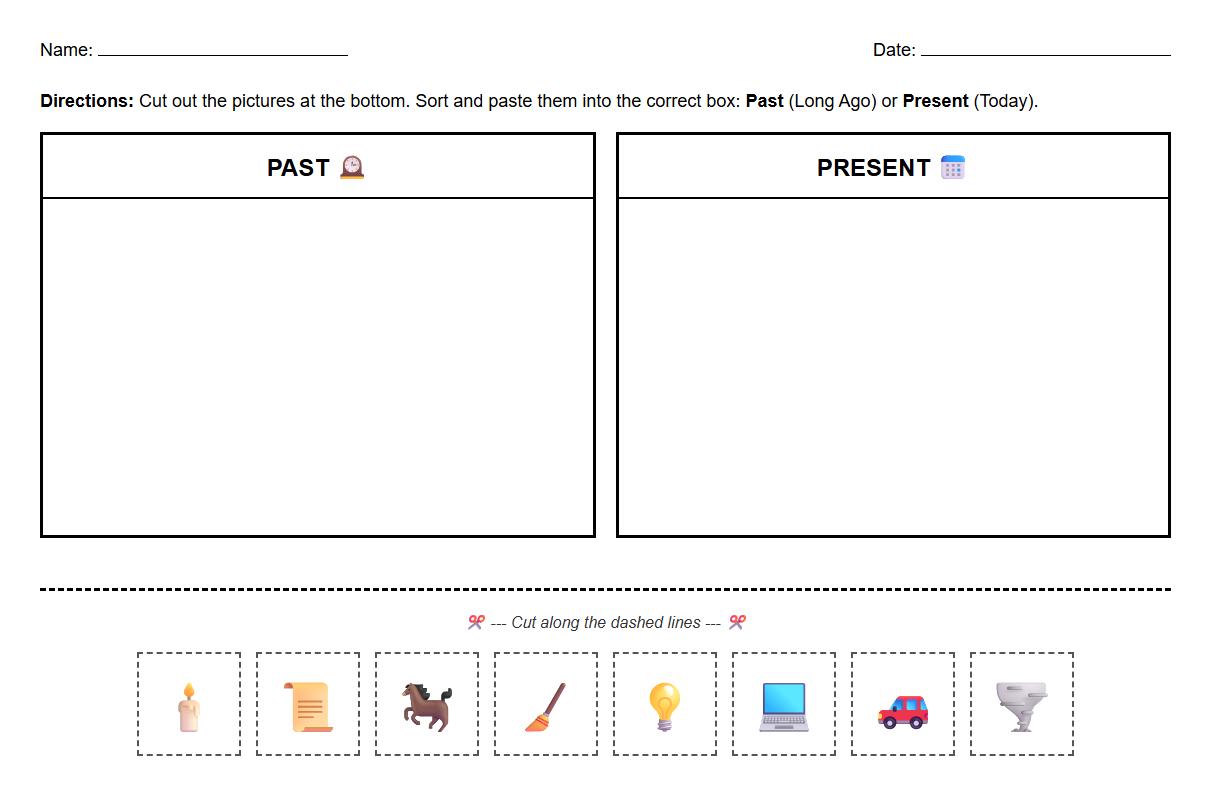
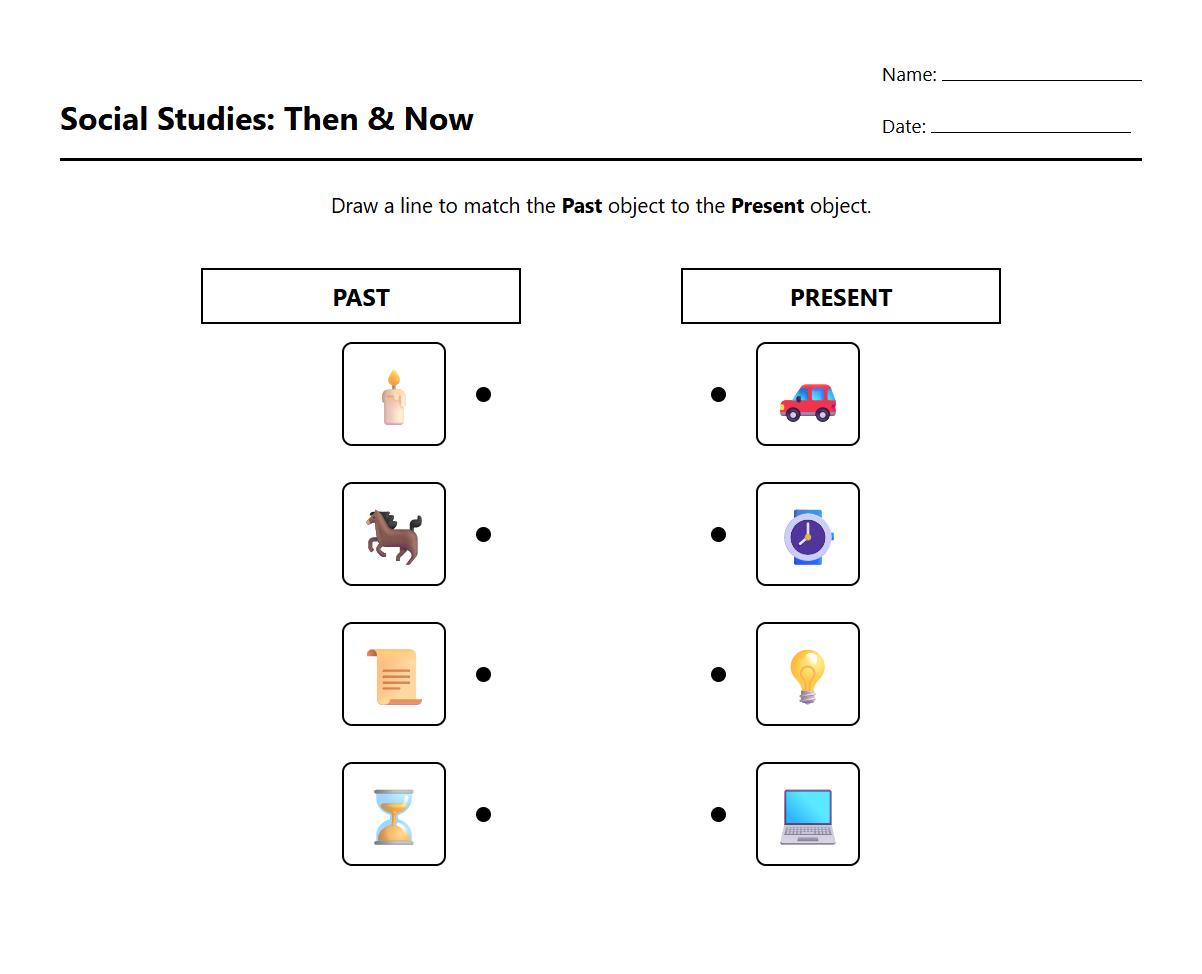
The difference between past and present events is that past events happened before today, while present events are happening now. Teaching children this helps them understand the flow of time and how things have changed. Using stories and examples makes it easier for young learners to grasp these concepts. Encouraging questions about what happened "long ago" versus "today" fosters curiosity. For more ideas, explore this worksheet on then versus now.
Objects Used Long Ago versus Today
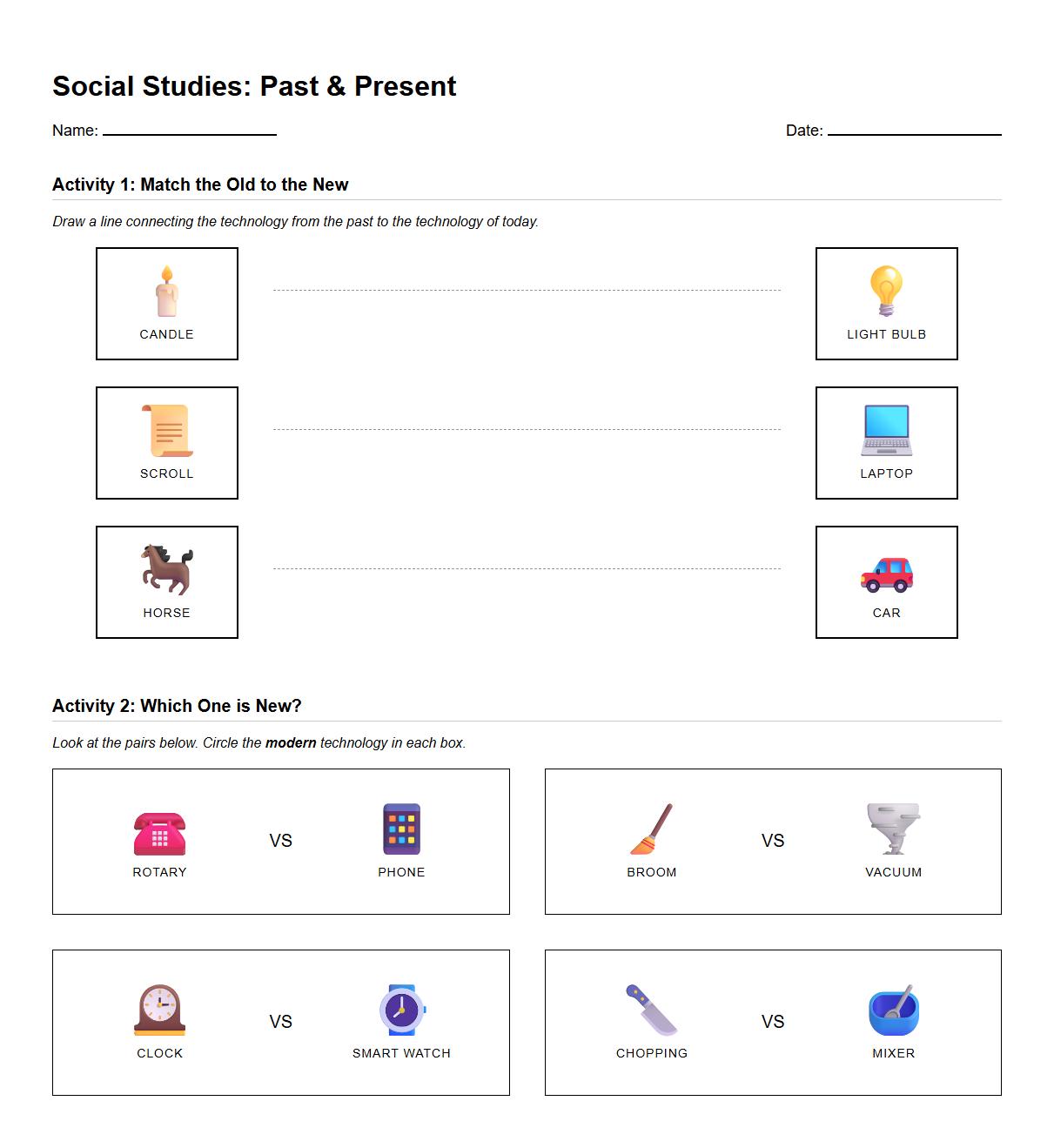
Some items people used long ago are still around, but we often use them differently today. For example, telephones back then were large and only made calls, while today's phones are smart devices used for many tasks. Exploring old and new tools shows children how technology and daily life have evolved. Parents and teachers can compare old photos or show real objects to illustrate these changes. Check out this history then vs now worksheet collection for resources.
Getting to School: Past vs. Present
In the past, children often walked or took horse-drawn carriages to school, while today many travel by bus, car, or bike. This comparison helps kids understand how transportation options have expanded. Discussing these differences encourages appreciation of modern conveniences. It also sparks conversations about safety and environment. Try this engaging geography and mapping vocabulary worksheet when discussing modes of transportation.
Clothing Then and Now
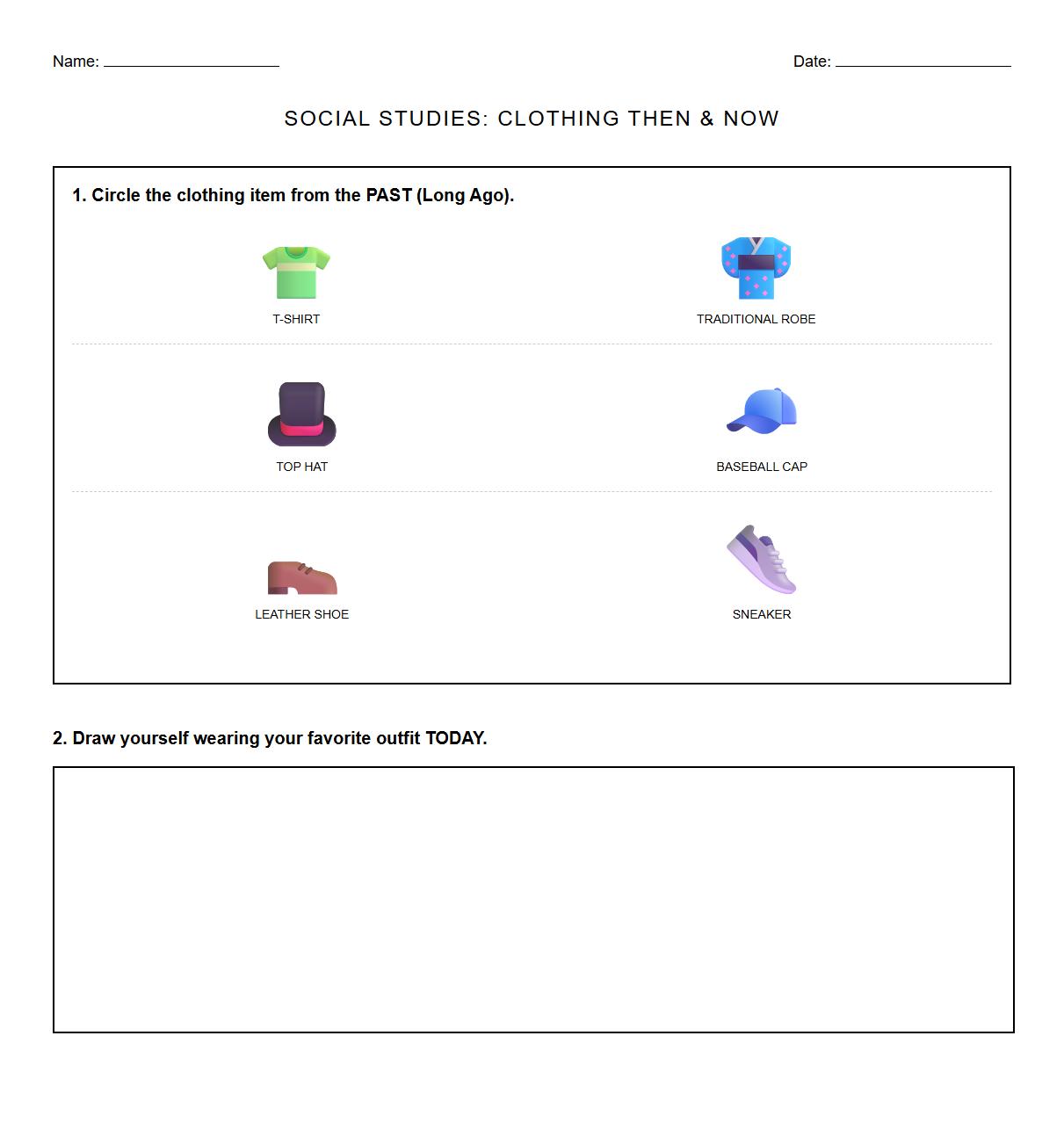
People wore different clothes long ago, often made from natural materials like wool or cotton, and styles were simpler or more formal. Today, clothes are made from diverse fabrics and come in many colorful styles. Talking about historical clothing helps children recognize cultural and practical changes over time. Visual aids such as pictures or costumes can enrich their learning. Learn more with a family members vocabulary activity that connects people and their clothing choices.
Homes in the Past Compared to Present
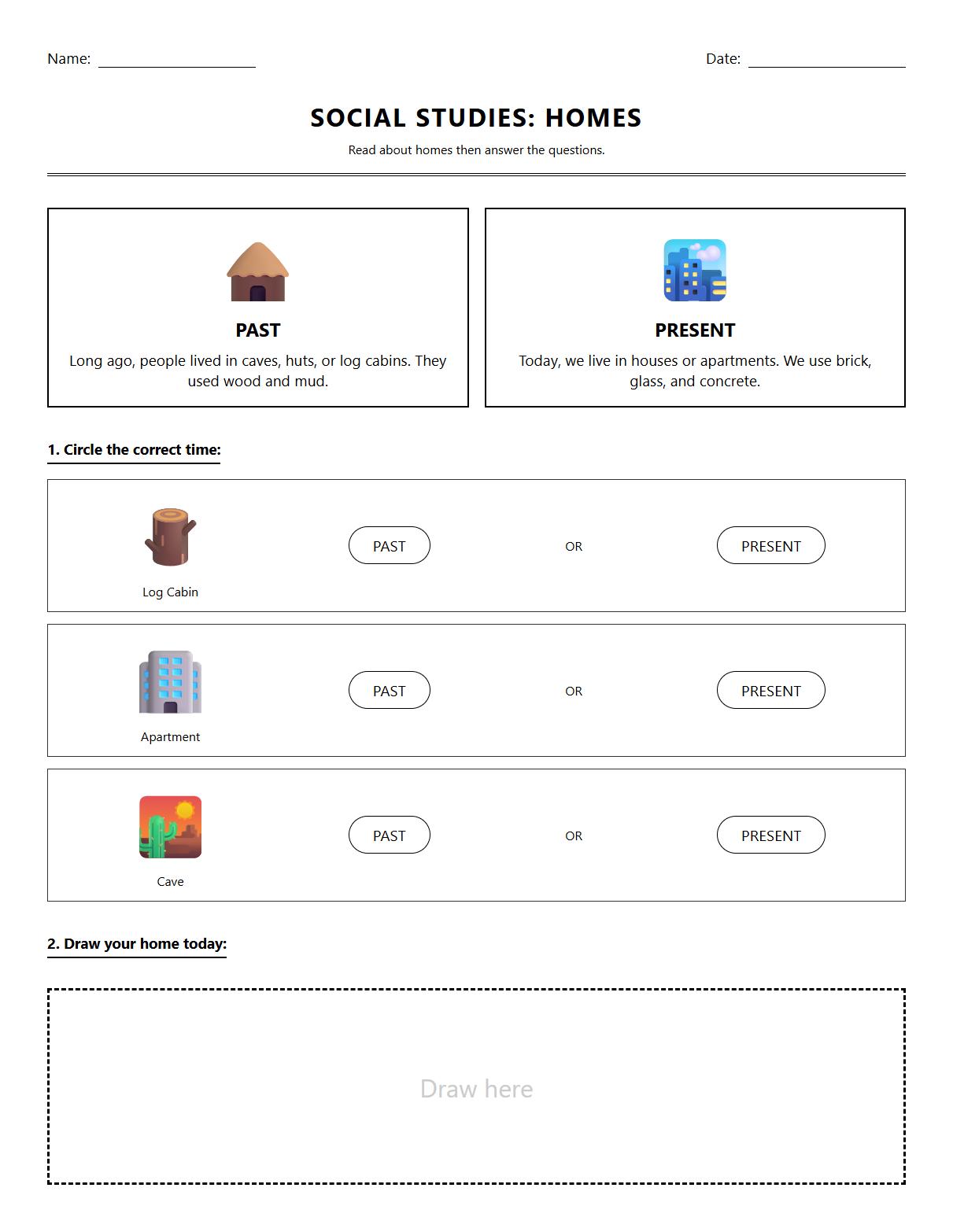
Homes long ago were usually smaller, made from natural materials like wood or stone, and lacked modern amenities like electricity or indoor plumbing. Today, houses have advanced features for comfort and convenience. This contrast helps children appreciate technological progress and living conditions. Discussing home differences can be tied to local history or family stories. Find inspiration with activities focused on sentence building about where we live.
Toys from the Past
Children in the past played with simple toys such as wooden dolls, handmade balls, or stones, unlike many electronic toys today. This demonstrates how playtime has evolved with technology. Teaching this comparison fosters creativity and understanding of changes in childhood experiences. Children can also enjoy making traditional toys themselves. Reinforce these ideas with a pattern recognition worksheet using different types of toys.
Important People from Long Ago
Learning about historical figures helps children connect with the past and recognize contributions to society. Examples include inventors, leaders, and heroes who shaped history. Introducing these people encourages respect and curiosity about history. Stories should be age-appropriate and engaging, focusing on their achievements and values. Practice with a matching occupations worksheet that highlights important roles in society.
Changes in Transportation
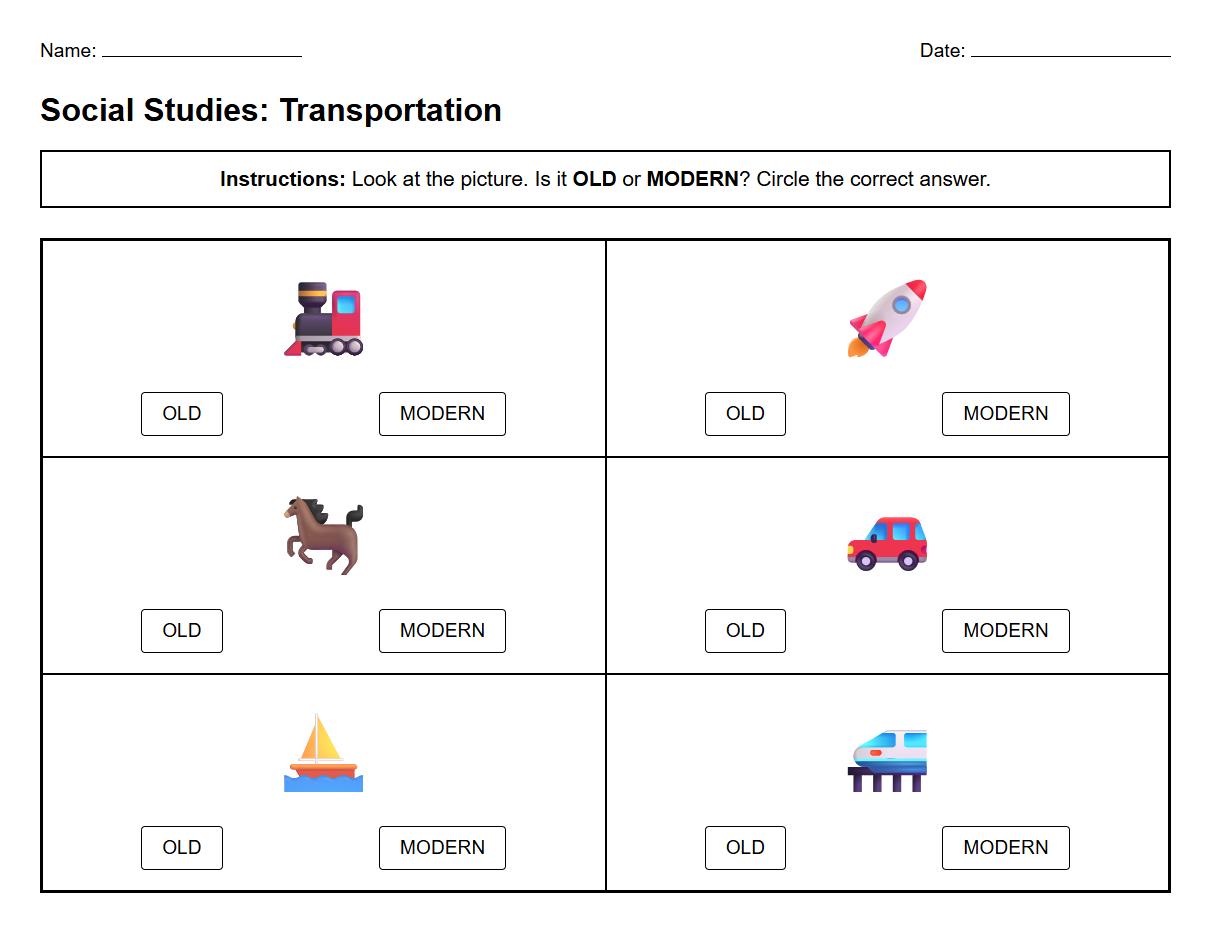
Transportation has evolved from walking, horseback riding, and horse-drawn carriages to cars, buses, airplanes, and trains. This development has made travel faster and more accessible. Discussing transportation changes helps children understand progress and its impact on daily life. Visual comparisons with pictures or models enhance comprehension. Play a phonics recognition game featuring different jobs and transportation.
Classrooms Then and Now
Classrooms in the past were often one-room schoolhouses with simple wooden desks and chalkboards. Today's classrooms include advanced technology like computers and interactive whiteboards. This contrast highlights educational progress and new learning tools. Describing past classrooms invites reflection on how education has improved. Discover classroom symbols and sounds using a country symbols phonics worksheet.
Drawing Past and Present
Encourage children to draw pictures of something from the past and something from today. This activity helps consolidate their understanding of how things have changed over time. It also promotes creativity and personal connection to history. Displaying their artwork fosters pride and engagement in learning. Have fun exploring country emblems and practicing phonics as a creative project.


Kindergarten History Worksheets for Comparing Then vs Now