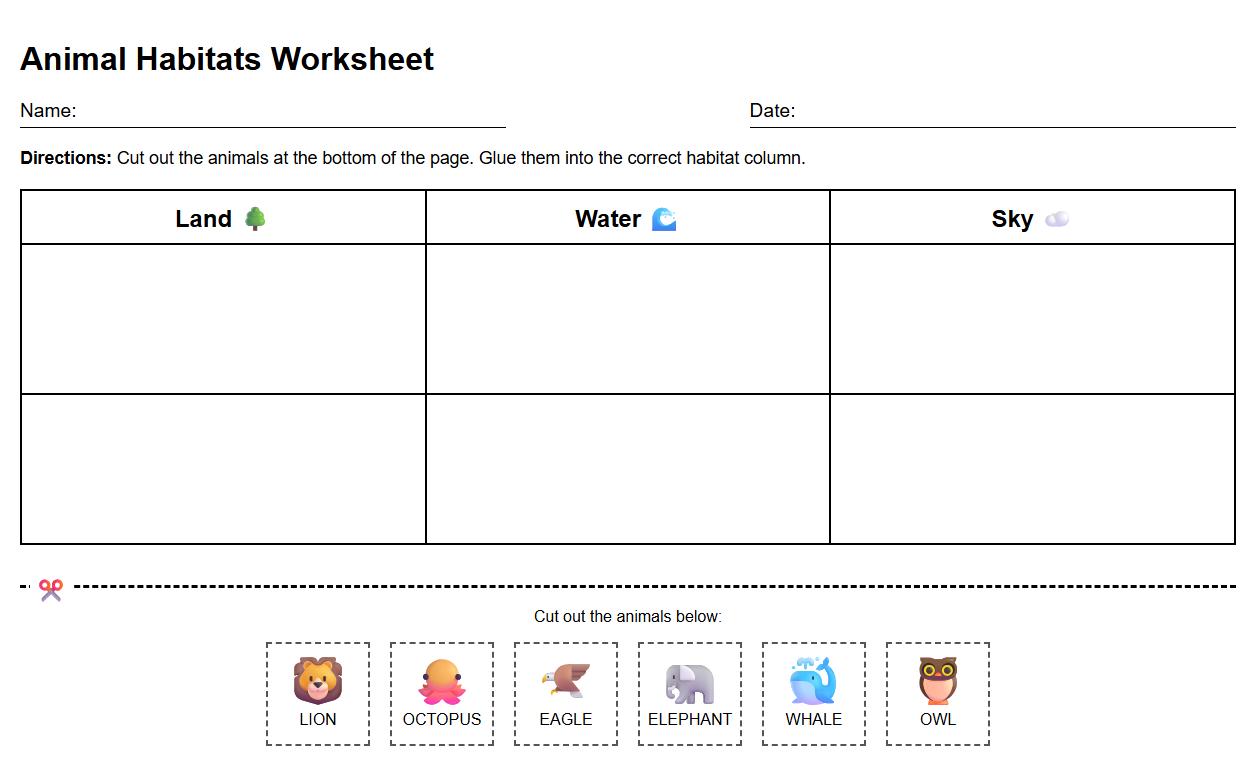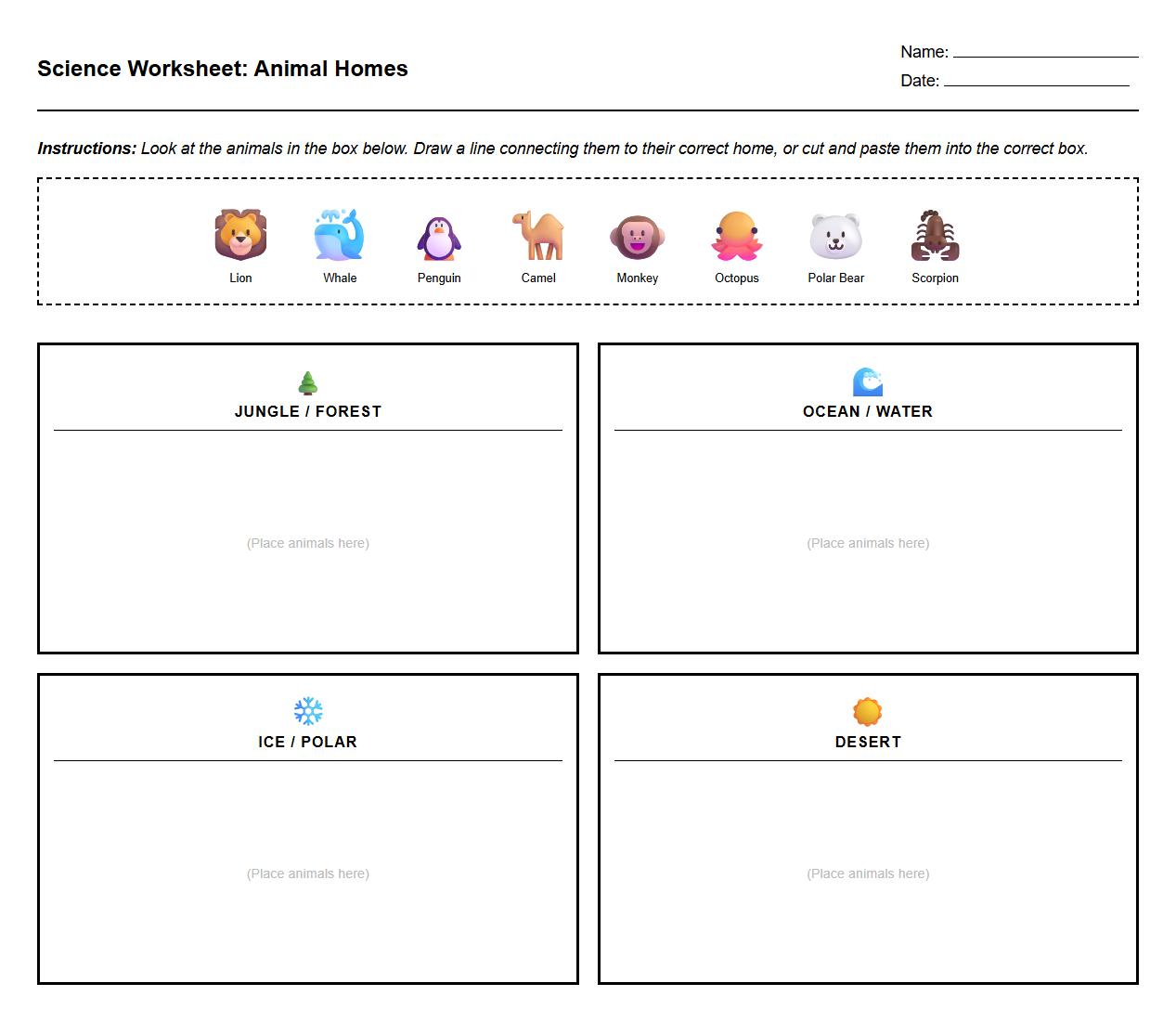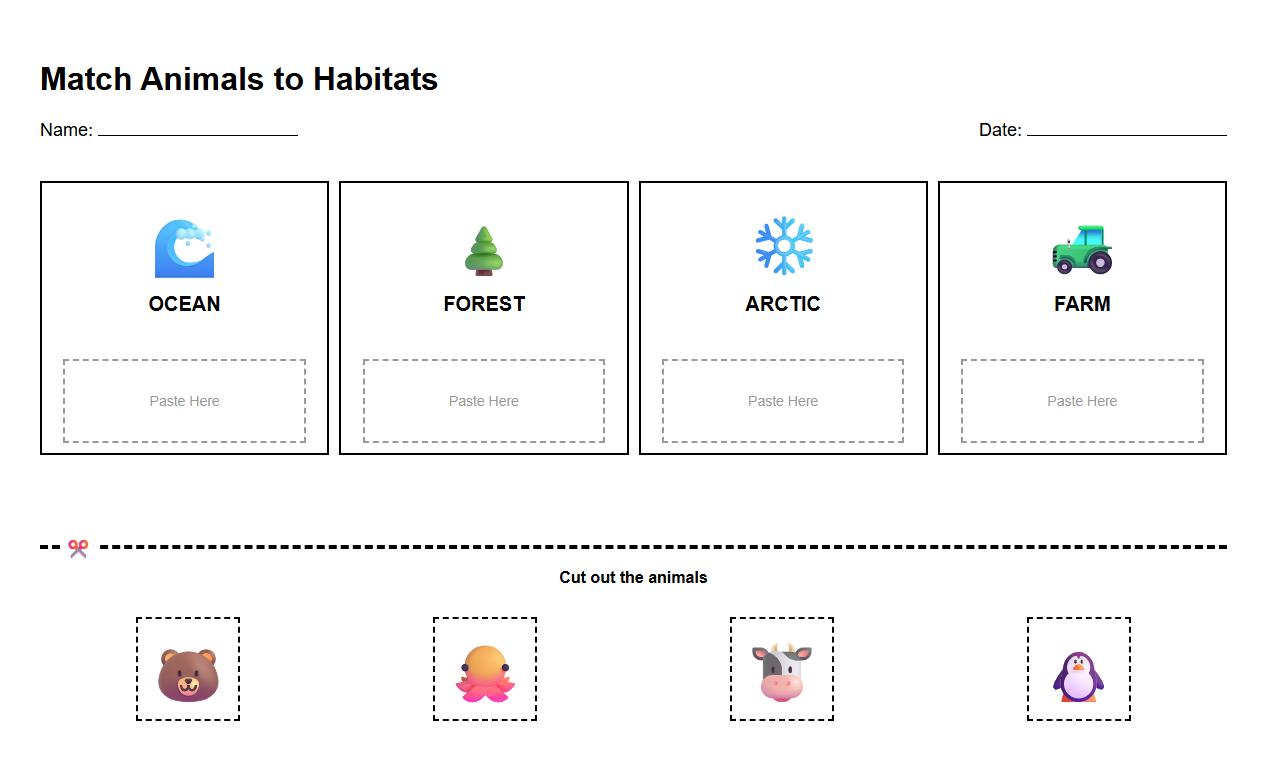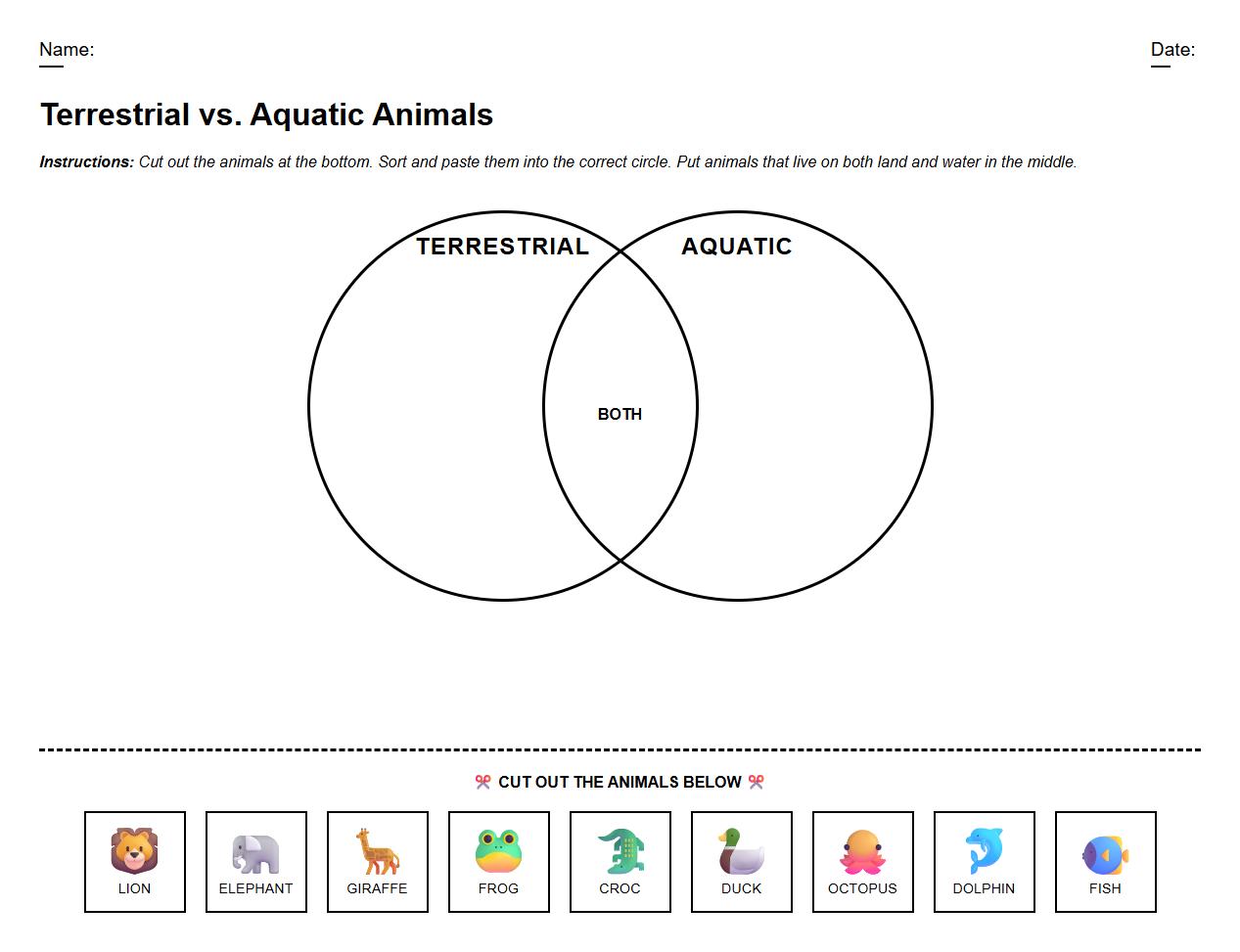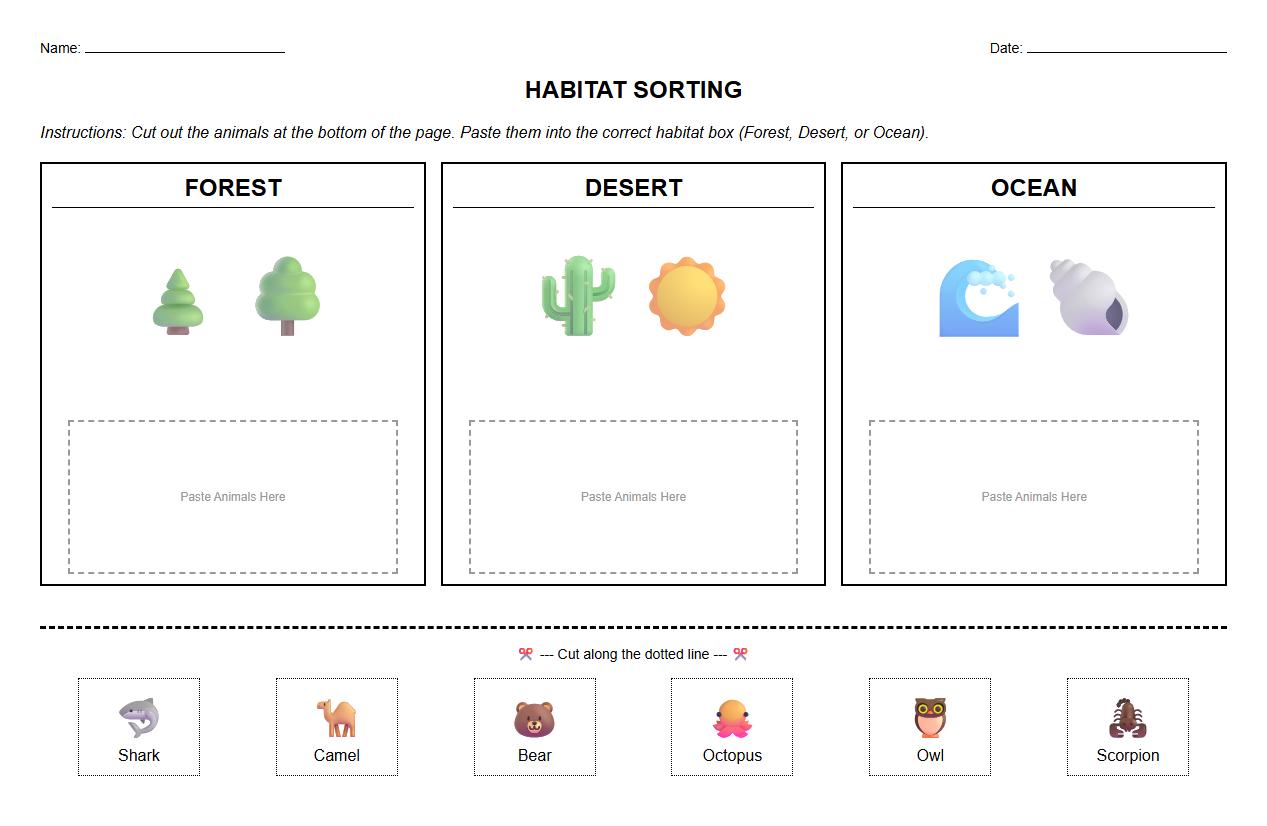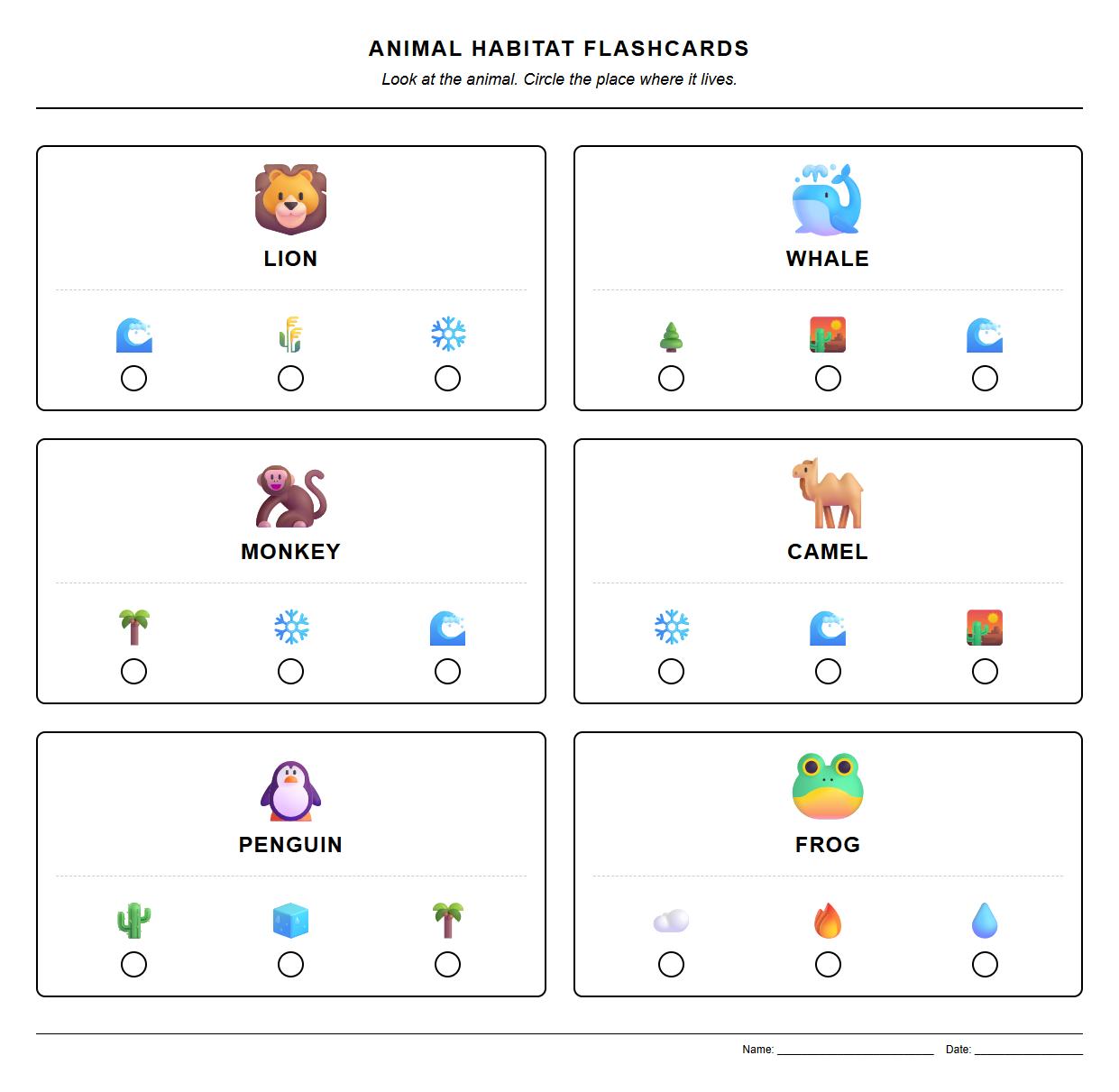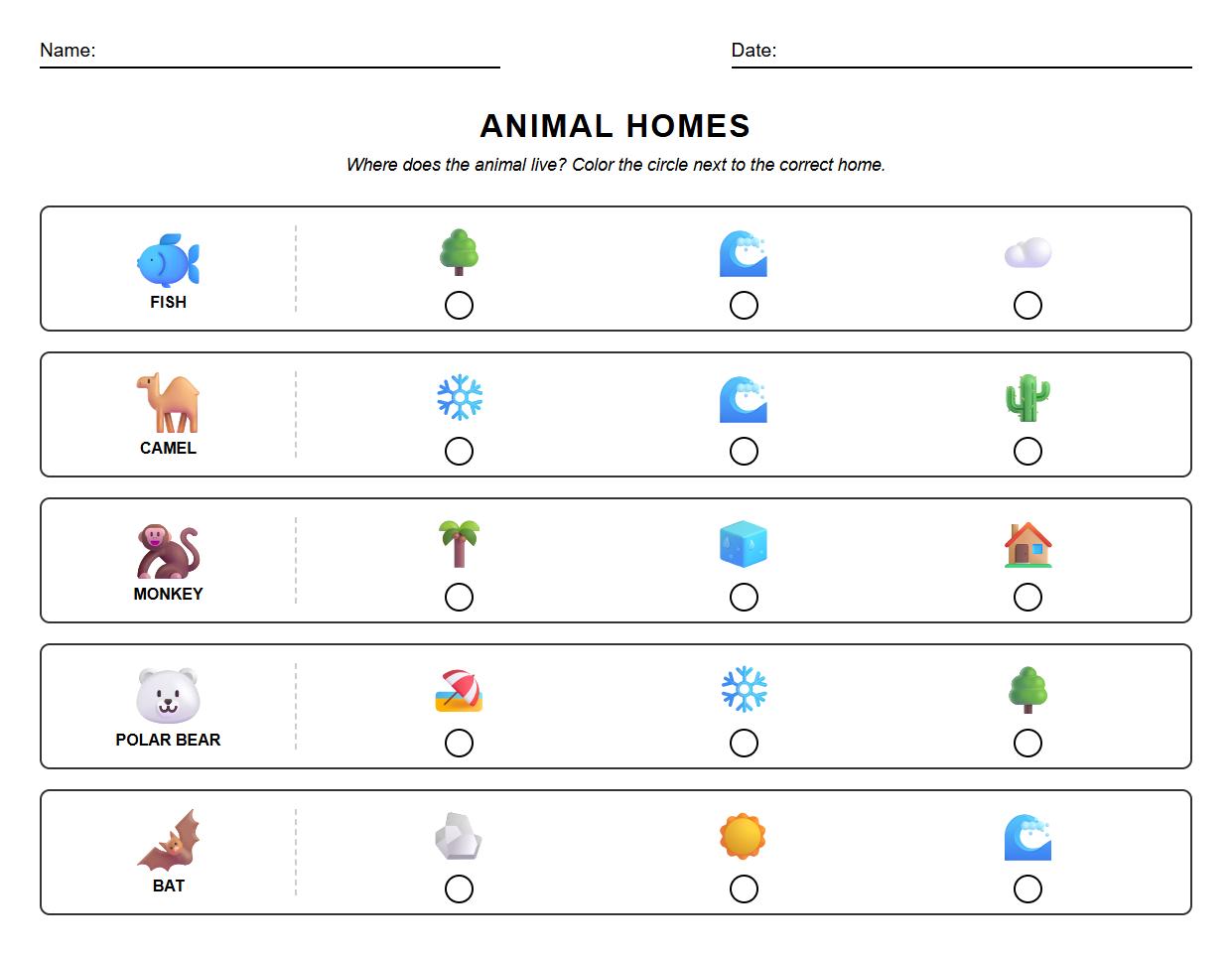
Grouping animals by their habitats enhances understanding of ecosystems and biodiversity by categorizing creatures based on where they live. This approach helps identify patterns in animal adaptations and environmental needs, fostering a deeper appreciation for nature's complexity. Explore the available worksheets to develop your skills in classifying animals according to their natural habitats.
Animals That Live in the Forest Habitat
Forest habitats are home to many diverse animals including deer, owls, and squirrels. Encourage children to explore which animals thrive among the trees and plants. Understanding these animals helps kids appreciate the complexity of the forest ecosystem. Teachers and parents can use this knowledge to guide interactive learning activities.
Circle the Animals That Belong in the Ocean
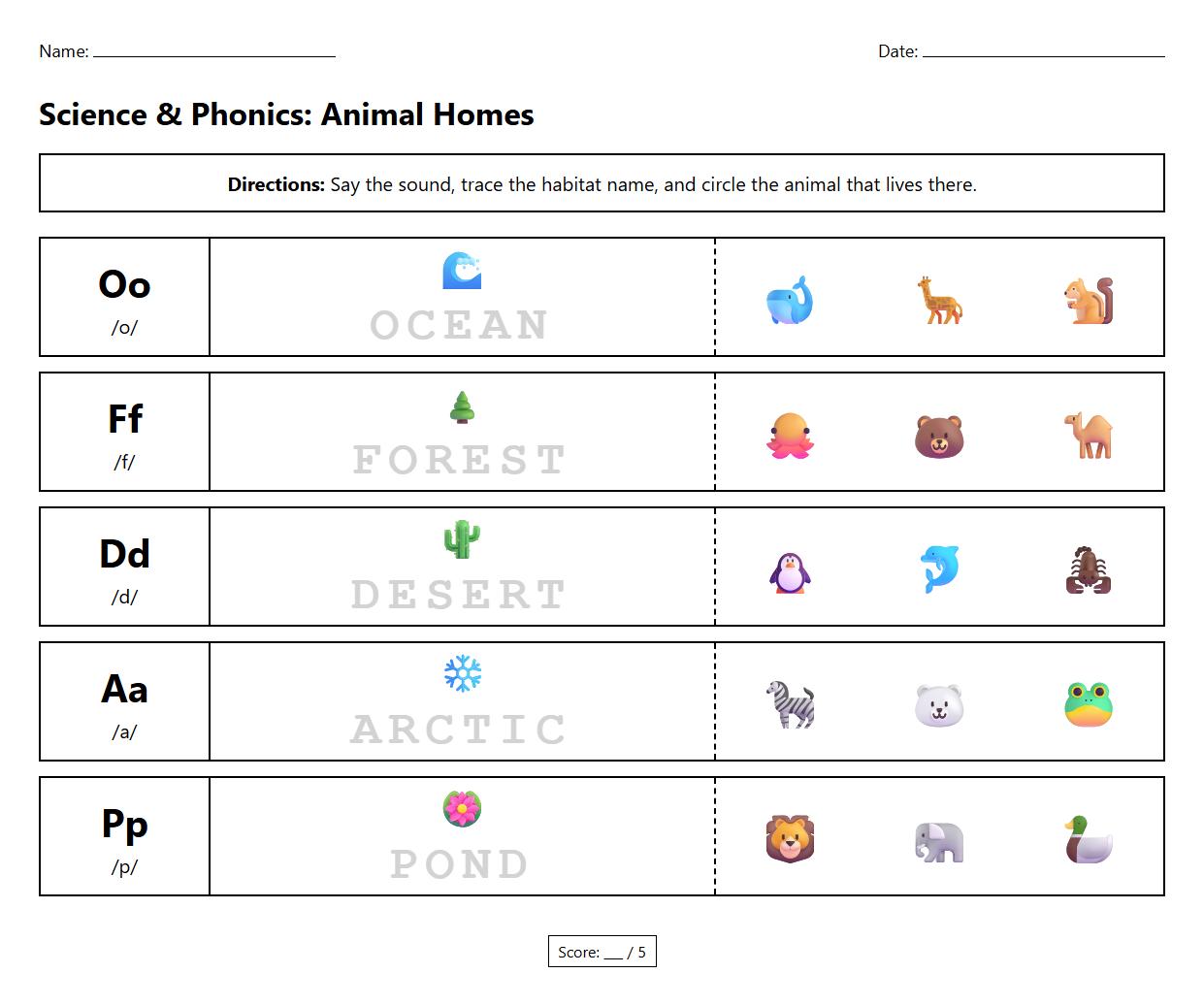
This activity helps children identify ocean animals such as fish, dolphins, and whales. Circling the correct animals supports visual recognition and habitat classification skills. Use colorful pictures to engage kindergarten students effectively. It's a fun way to promote awareness of marine life.
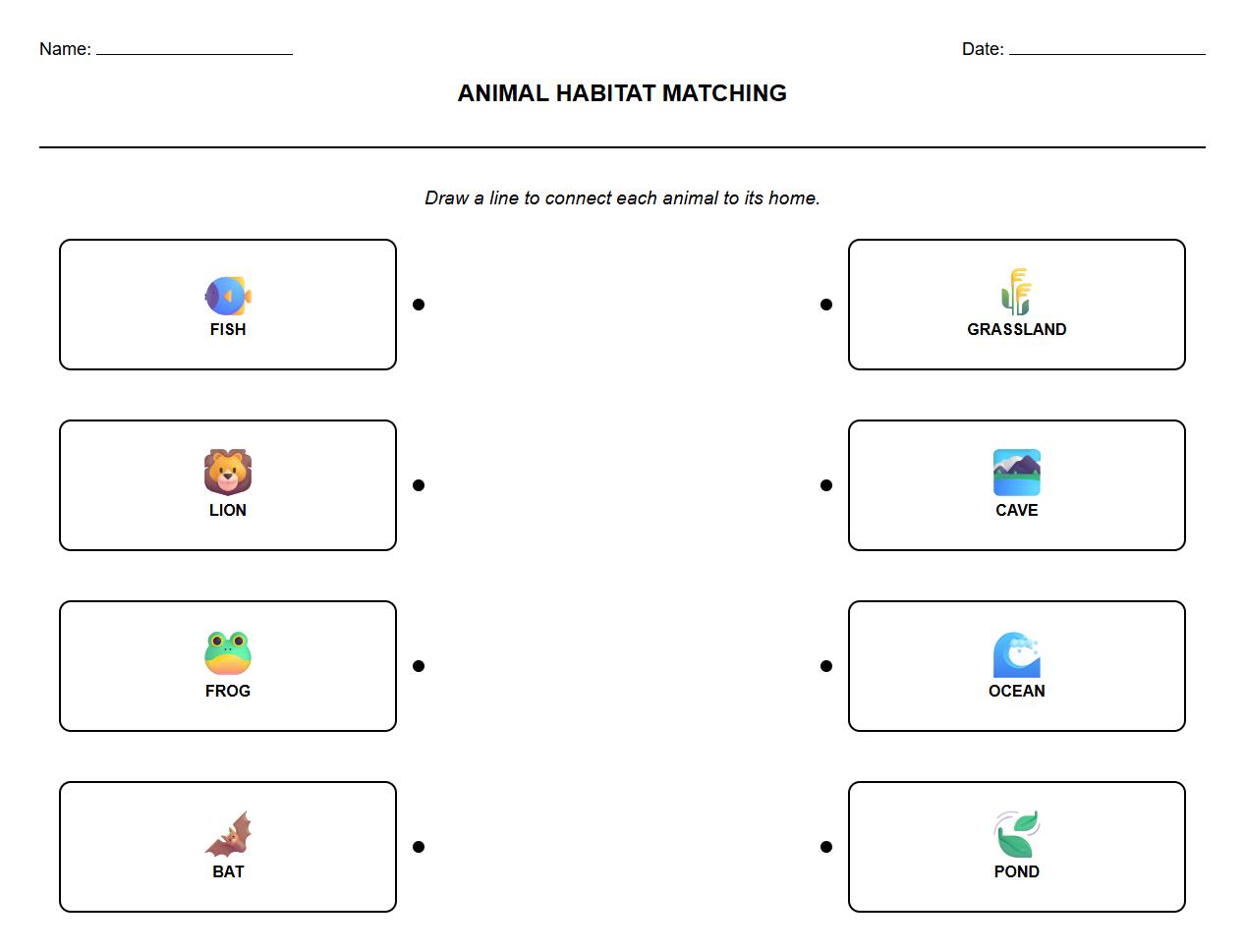
Draw a Line to Match Each Animal to Its Home
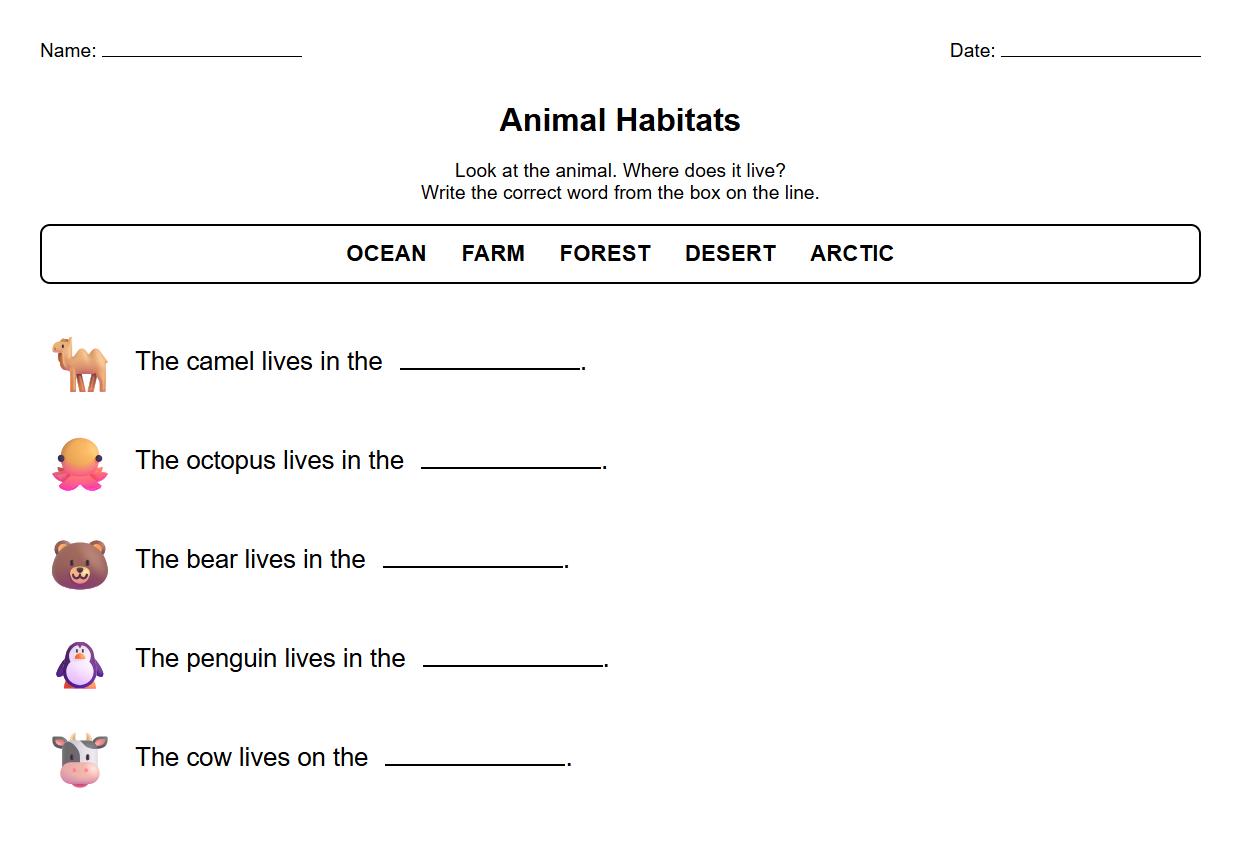
Matching animals like frogs, camels, or penguins to their correct habitats boosts cognitive connections. This task enhances fine motor skills and habitat knowledge simultaneously. Kids learn to associate animals with environments like deserts, ponds, and polar regions. Encourage creativity to make learning memorable.
Animals Found in the Desert Habitat
The desert is a challenging environment where animals like camels and lizards survive with special adaptations. Teaching about desert animals helps children understand resilience and survival skills. Highlighting these unique creatures offers insight into different climate zones. Parents and teachers can use visual aids for better comprehension.
Color the Animals That Live in the Jungle Green
Coloring activities improve attention to detail while reinforcing the concept of jungle habitats. Animals such as monkeys, parrots, and tigers are typical jungle residents. This exercise encourages children to identify and categorize based on habitat characteristics. It's an engaging method to learn about biodiversity.
Name One Animal That Lives in the Polar Habitat
Polar habitats are known for harsh conditions and animals like the polar bear or penguin. Asking children to name one such animal stimulates memory and critical thinking. It also introduces the idea of adaptation to extreme cold. Use this prompt to discuss ice, snow, and freezing environments.
Animals That Belong in the Pond Group
Animals such as frogs, turtles, and ducks are common in pond ecosystems. Learning about pond animals helps children recognize freshwater habitats. This knowledge supports understanding of aquatic life cycles and food chains. Visual examples will enhance the learning experience for young minds.
Place a Sticker on Animals That Live on the Farm
Farm animals like cows, chickens, and pigs are familiar to children and provide a great context for learning. Using stickers to identify these animals makes the activity interactive and enjoyable. It's a practical way to teach about domestication and farming lifestyles. Parents and teachers can encourage discussion about roles of each animal on the farm.
Who Can Hop from Tree to Tree in the Forest?
Animals such as monkeys and squirrels are known for their ability to hop and climb between trees. This question helps kids focus on animal behaviors and mobility in forest habitats. Understanding these traits fosters appreciation of animal adaptations. It also sparks curiosity about wildlife movement.
Which Animal Would You See Swimming in the River?
Rivers provide homes for various swimming animals like fish, otters, and turtles. Identifying these animals helps children connect water habitats to specific wildlife. The activity promotes knowledge of freshwater ecosystems and aquatic animals. Visual aids or videos can enhance comprehension during this lesson.


Kindergarten Worksheet: What Do Animals Need to Survive