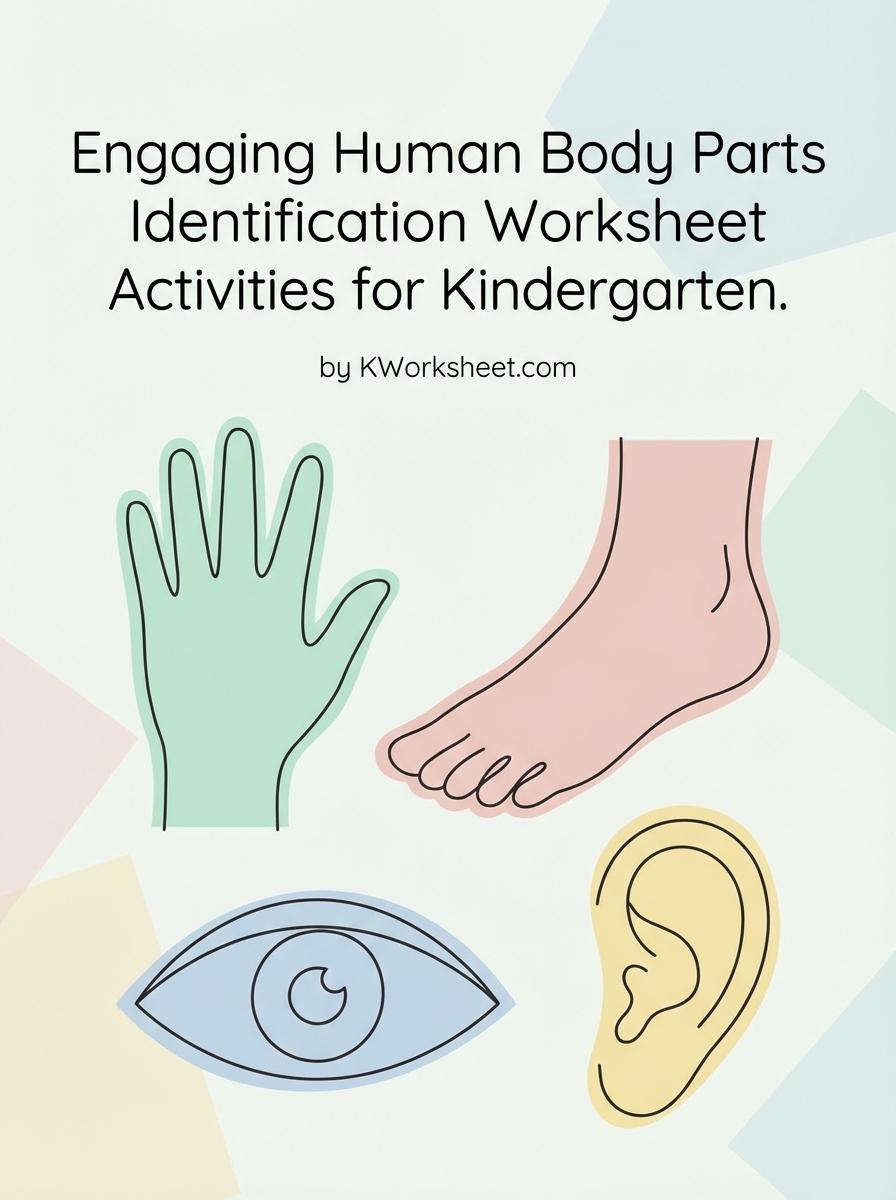
Engaging Human Body Parts Identification Worksheet Activities for Kindergarten

📅 Feb 8, 2025 👤 Nylen Smith

Kindergarten students develop essential vocabulary and cognitive skills through interactive identification activities focused on human body parts. These engaging worksheets use colorful images and simple labels to help young learners recognize and name each body part accurately. Explore our collection of worksheets designed to make learning about the human body both fun and educational.

Picture Matching Worksheet focusing on human body parts
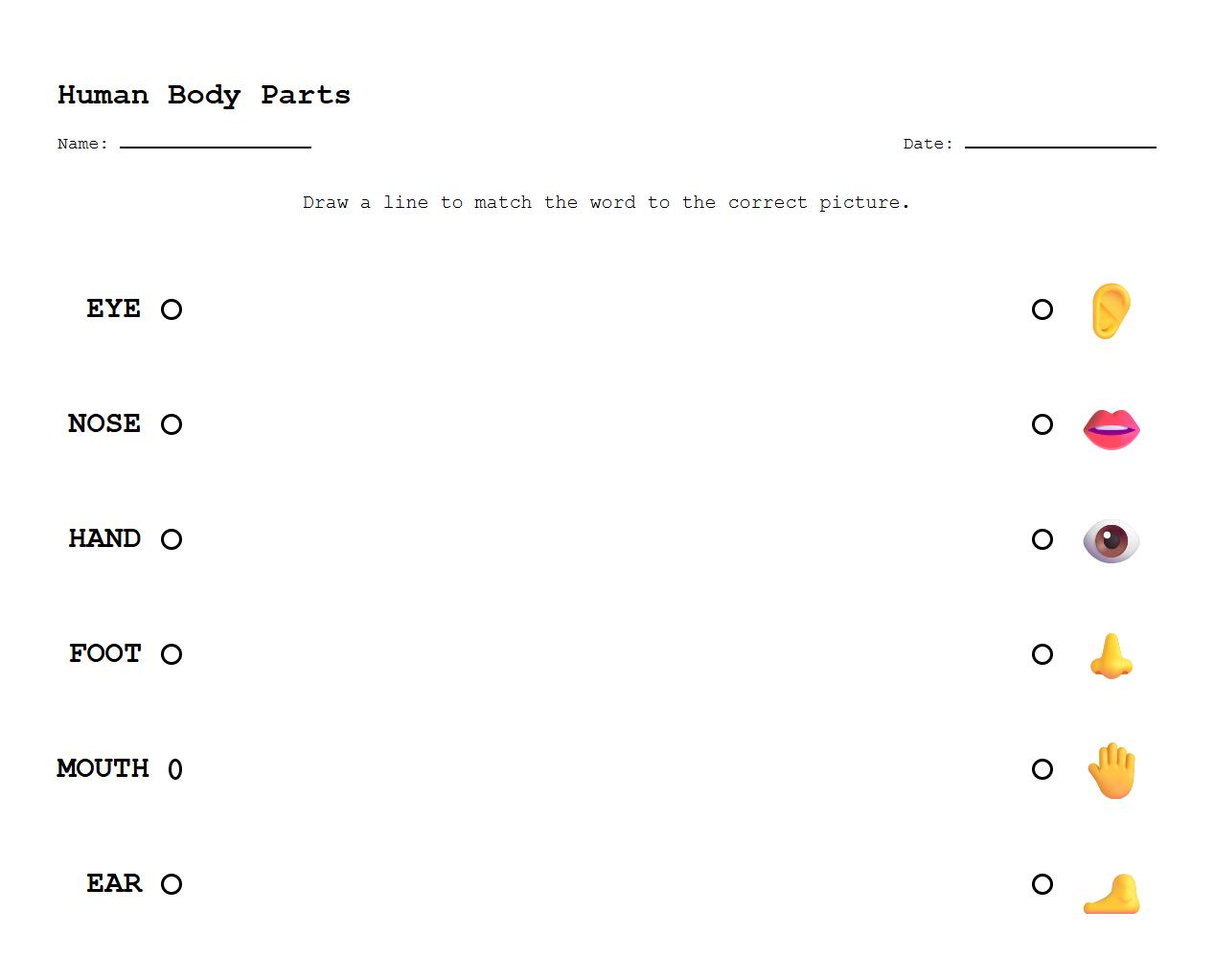
Picture Matching Worksheet focusing on human body parts

Download PDF     Pin it

Label the Body Parts Diagram using cut and paste activity
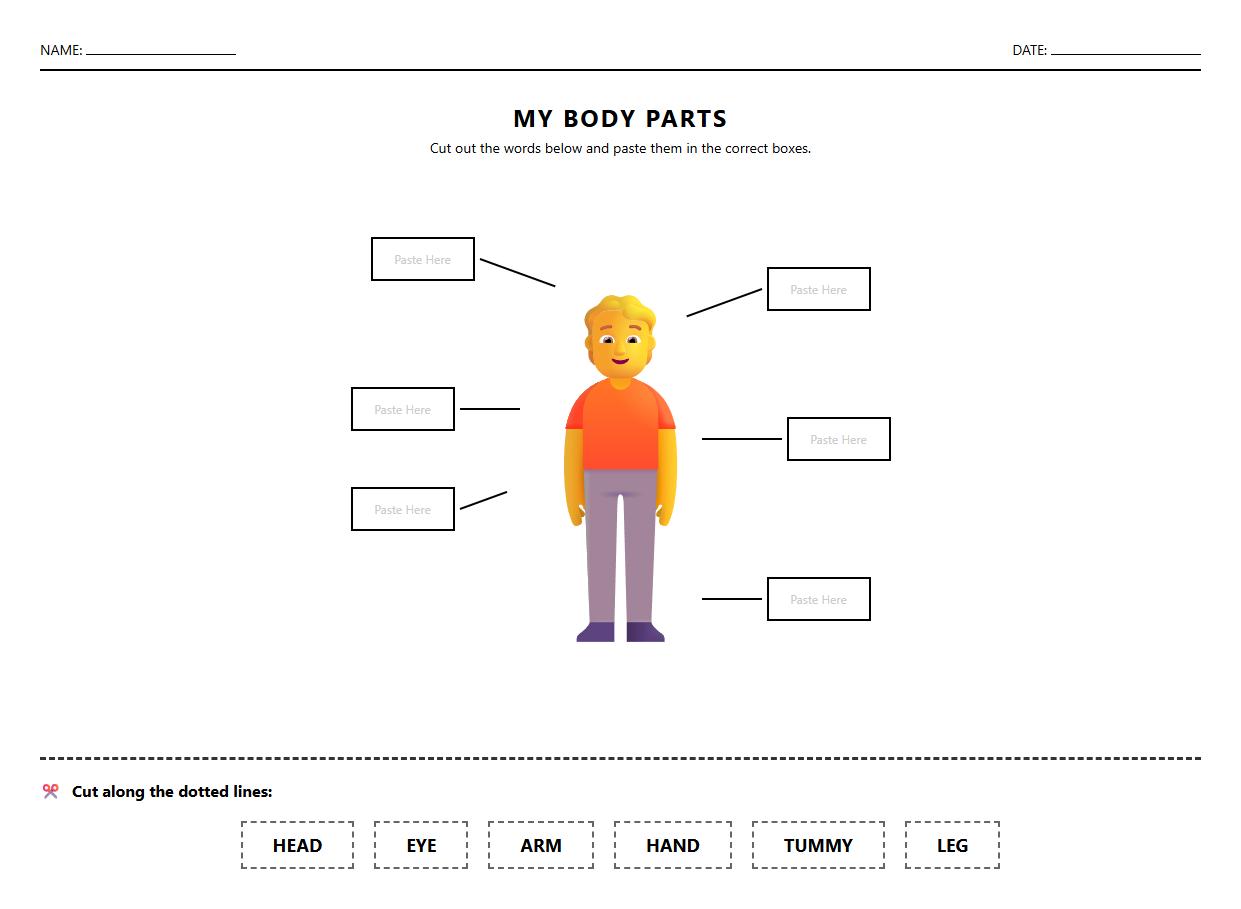
Label the Body Parts Diagram using cut and paste activity

Download PDF     Pin it

Phonics Practice Sheet featuring names of body parts
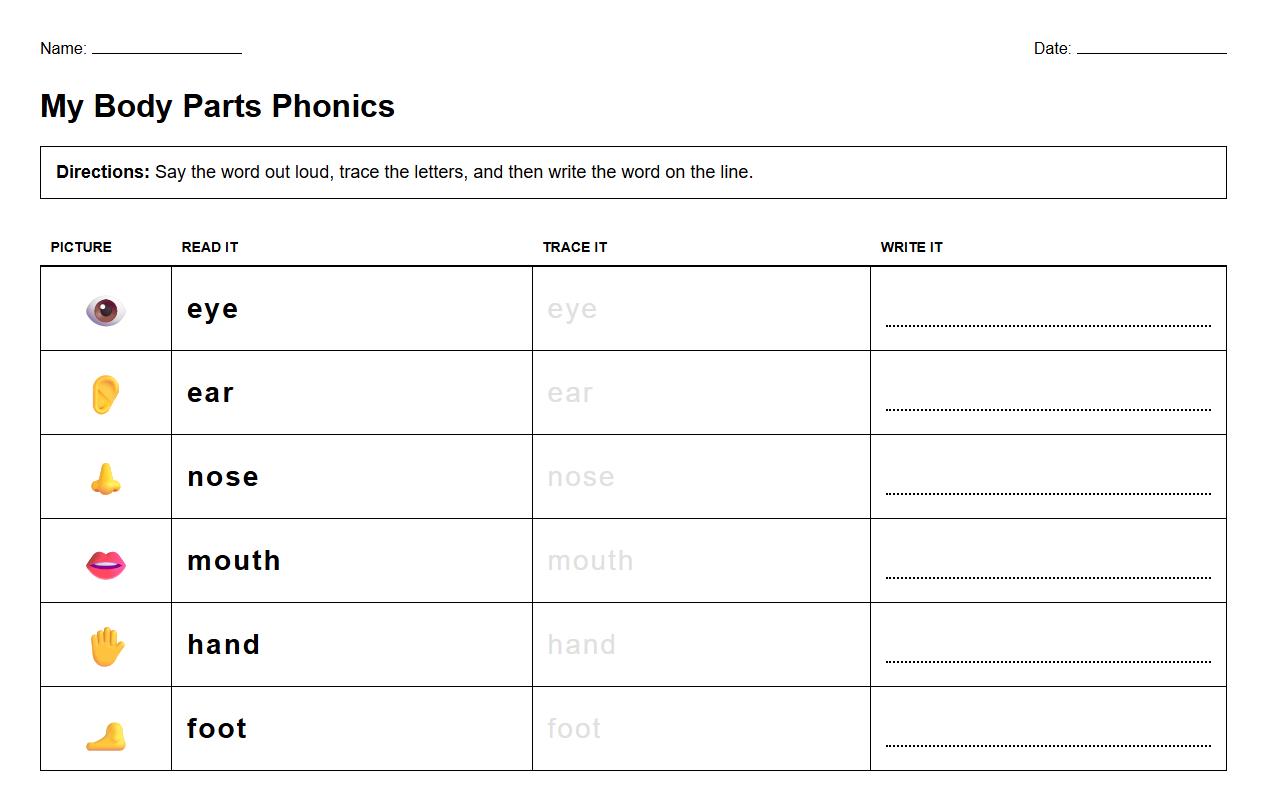
Phonics Practice Sheet featuring names of body parts

Download PDF     Pin it

Color and Identify Major Body Parts on outline drawings
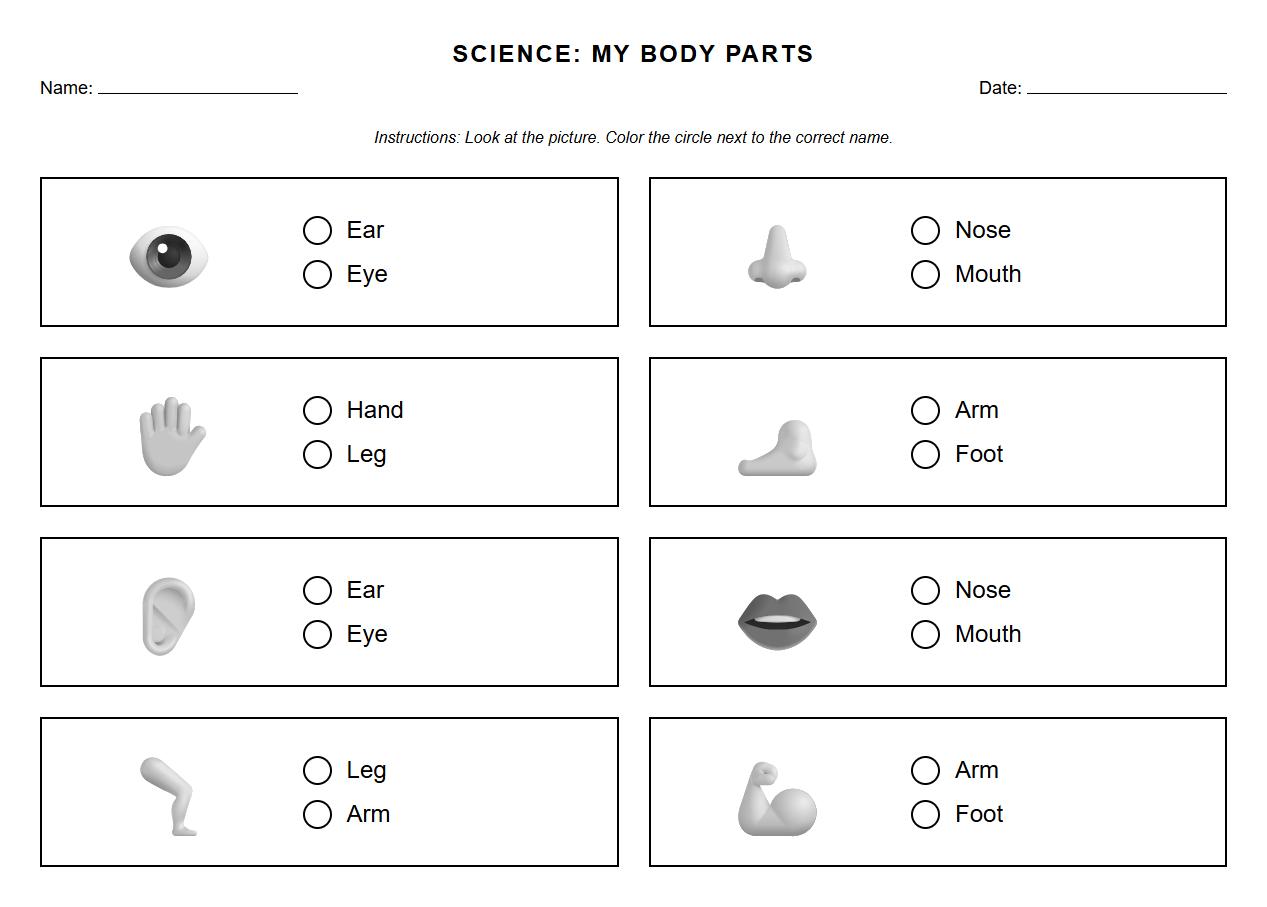
Color and Identify Major Body Parts on outline drawings

Download PDF     Pin it

Trace and Write Human Body Parts Vocabulary words
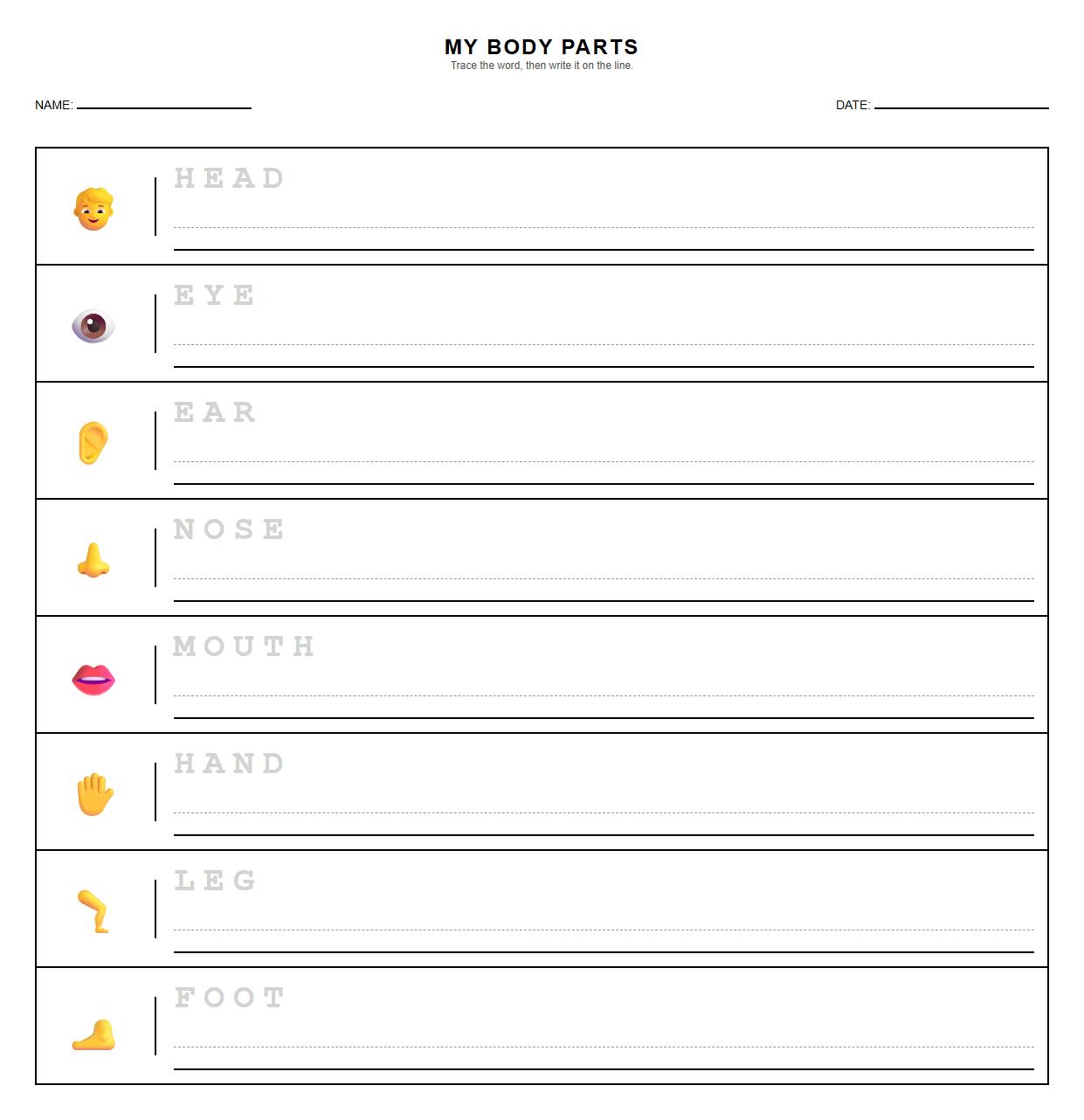
Trace and Write Human Body Parts Vocabulary words

Download PDF     Pin it

Multiple Choice Worksheet for body parts recognition
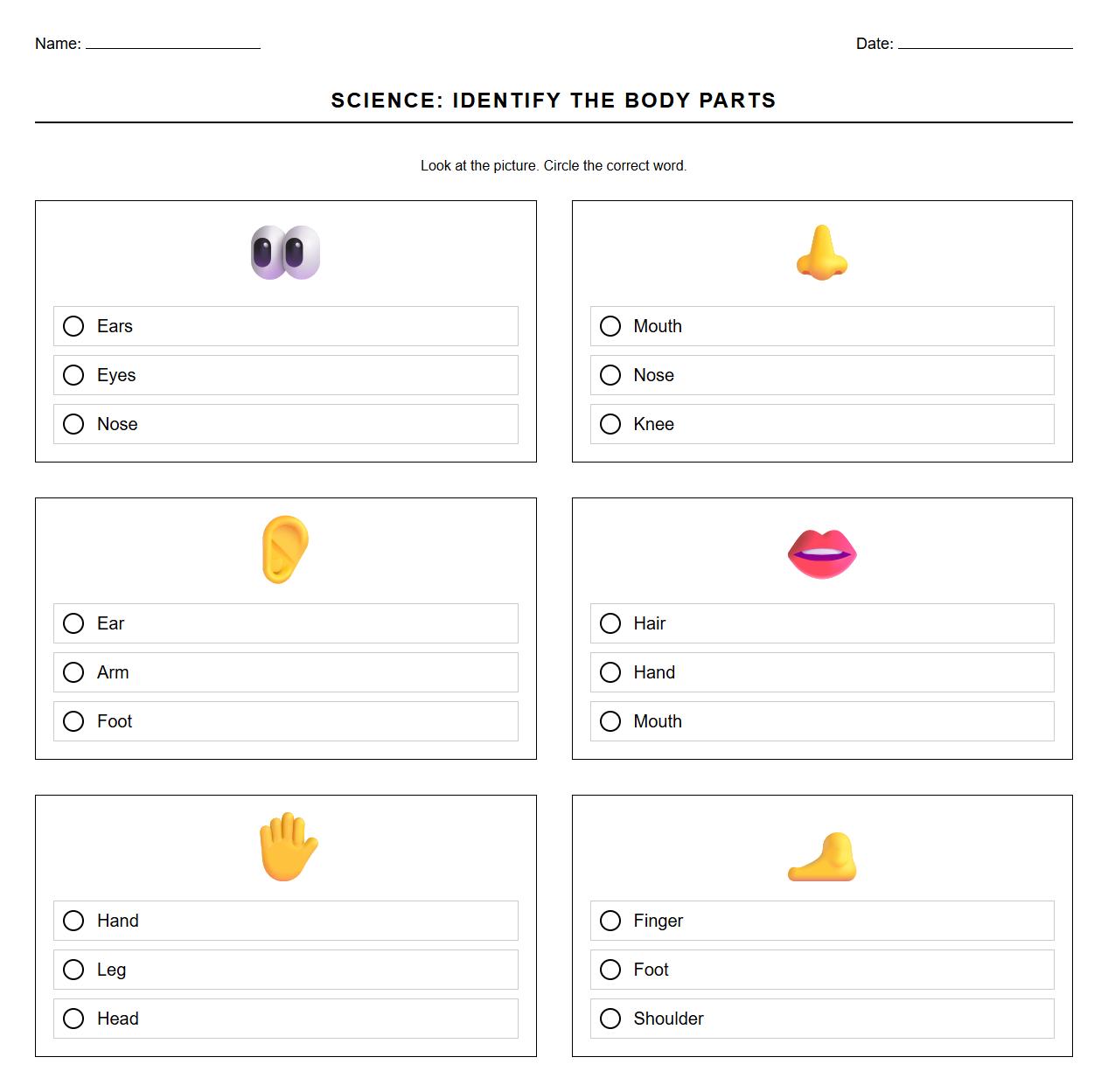
Multiple Choice Worksheet for body parts recognition

Download PDF     Pin it

Fill in the Blanks Activity for body parts terminology
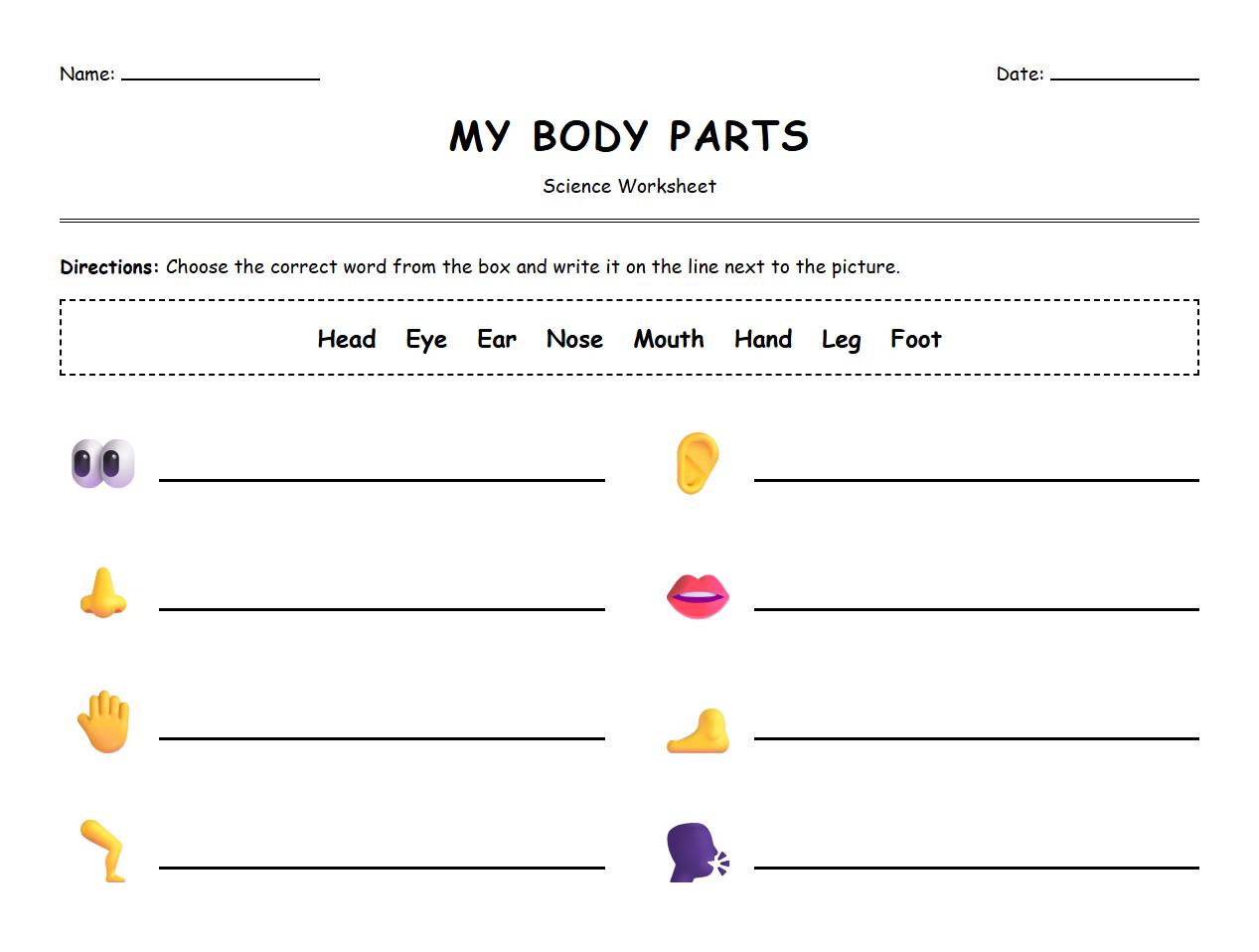
Fill in the Blanks Activity for body parts terminology

Download PDF     Pin it

Connect the Dots Human Body Parts illustration worksheet
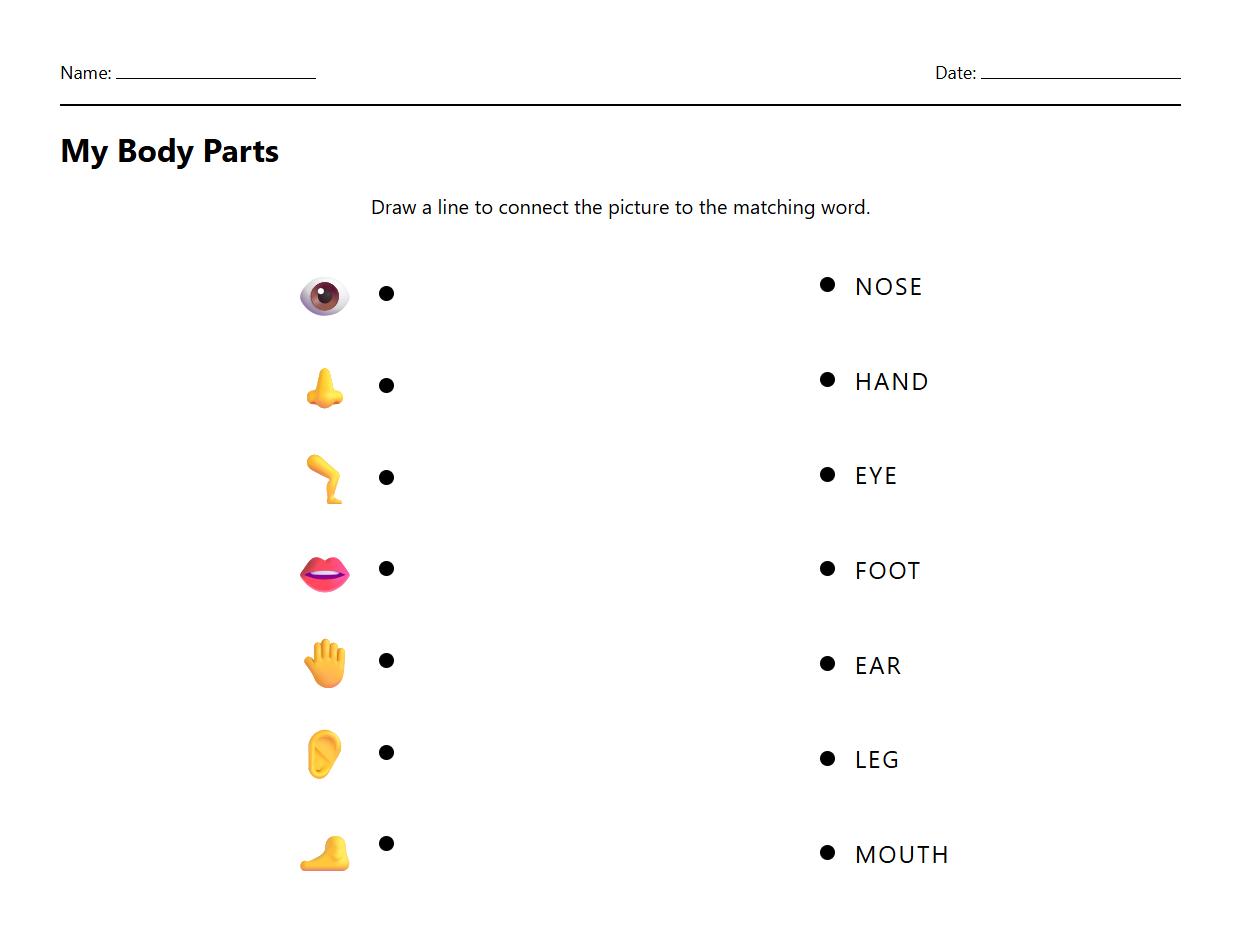
Connect the Dots Human Body Parts illustration worksheet

Download PDF     Pin it

Sorting Game Worksheet distinguishing facial vs body parts
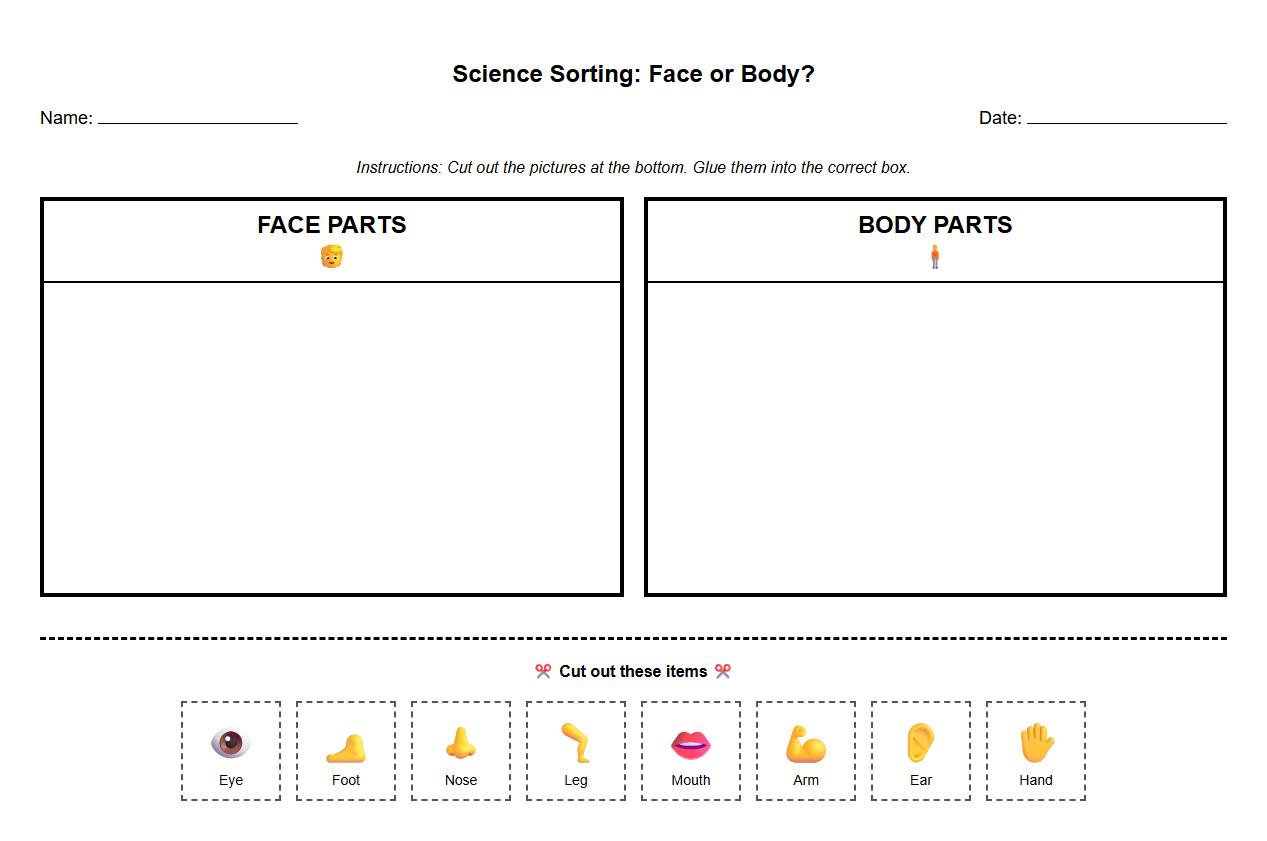
Sorting Game Worksheet distinguishing facial vs body parts

Download PDF     Pin it

Draw Lines to Match Body Parts with Functions graphic organizer
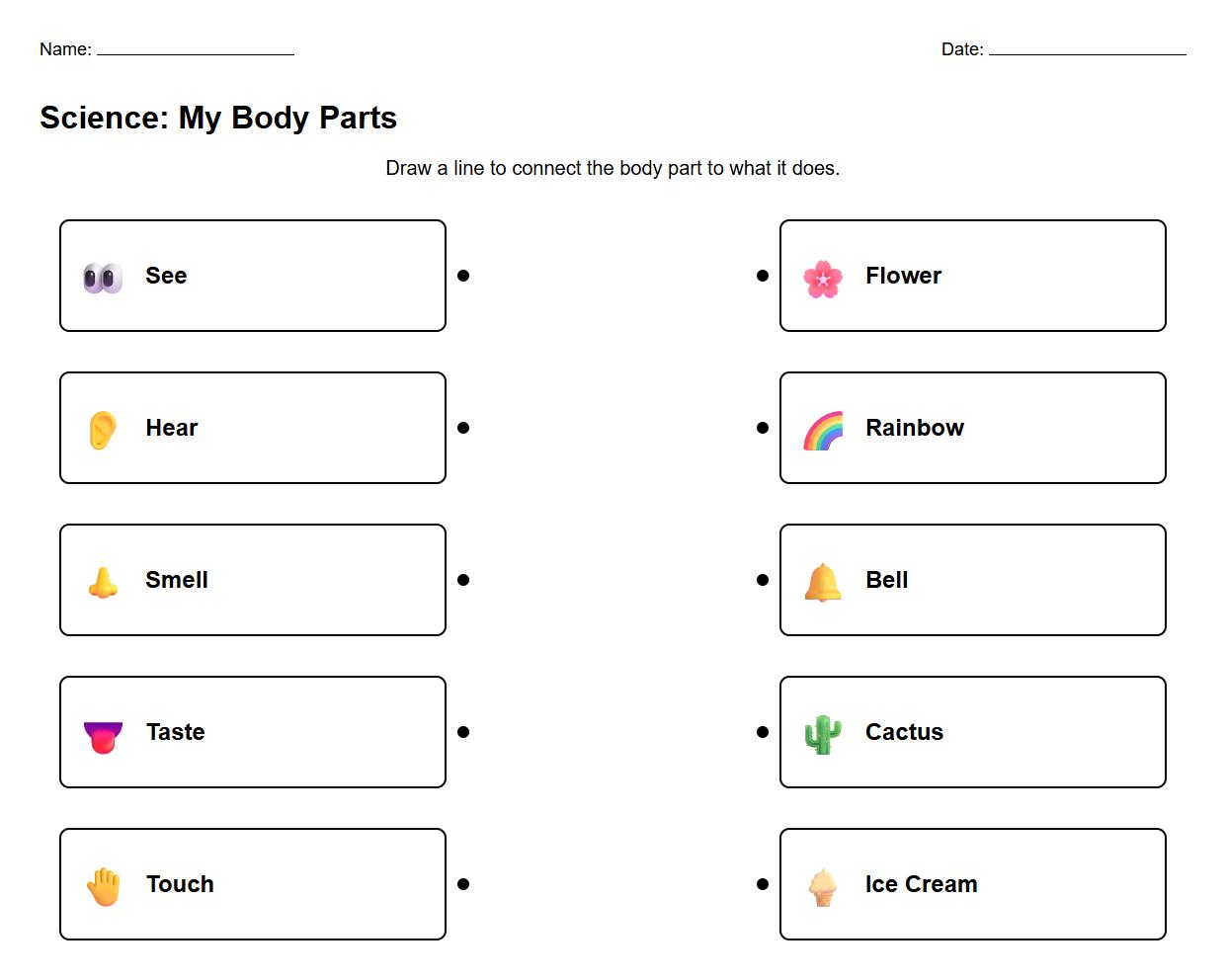
Draw Lines to Match Body Parts with Functions graphic organizer

Download PDF     Pin it

Matching Body Parts with Names

This worksheet helps children develop recognition skills by asking them to match pictures of body parts with their correct names. It supports vocabulary building and enhances memory through visual associations. Teachers and parents can guide kids in pointing to their own body parts while matching. This activity introduces foundational anatomy concepts with engaging visuals, much like the animal needs and care vocabulary worksheet that supports early learning.

Coloring Human Body Parts

Encouraging creativity and fine motor skills, this coloring activity invites children to color different body parts using crayons or markers. It helps children identify parts like the head, hands, and legs through vibrant, hands-on learning. Parents and teachers can discuss each body part's function as kids color, similar to the approach in the kindergarten phonics coloring worksheet with Earth and Moon patterns. This approach makes learning enjoyable and interactive.

Tracing Outlines of Hands or Feet

Tracing activities promote hand-eye coordination and spatial awareness by having children trace the outlines of their hands or feet. This worksheet improves pencil control and introduces basic shapes of body parts. Guardians can encourage kids to count fingers or toes while tracing. It also fosters a personal connection with their own bodies, just as observation skills worksheets on the five senses encourage interaction with oneself.

Cut and Paste Body Parts

This interactive cut-and-paste worksheet allows students to assemble a human figure by placing body parts onto a blank outline. It helps improve fine motor abilities and spatial reasoning. Teachers and parents can discuss the placement and function of each part during the activity. This hands-on practice solidifies body part identification, much like a sink or float investigation activity builds scientific skills through hands-on engagement.

Riddles to Guess Body Parts

Using fun riddles or clues, this worksheet engages children in critical thinking and language skills by guessing the body parts described. It encourages listening comprehension and problem-solving in a playful way. Educators can read riddles aloud to promote group participation, similar to activities in the kindergarten sequencing worksheet on phonics and moon cycle. This activity makes learning body parts intriguing and dynamic.

Labeling Body Parts Worksheet

This worksheet focuses on recognition and spelling by having children label parts like the head, arms, and legs on illustrations. It supports early literacy while reinforcing anatomy knowledge. Parents and teachers can assist with pronunciation and writing practice. Labeling fosters confident identification of basic body parts, similar to the seasons sorting worksheet that develops categorization skills.

Connecting Body Parts with Functions

Children match pictures of body parts with their specific functions to deepen understanding of how their bodies work. This cognitive activity teaches cause and effect relationships. Teachers can expand learning by demonstrating actions linked to each part, as seen with the magnet attraction and repulsion worksheet that introduces scientific phenomena and functional thinking. It strengthens awareness of body part roles in daily life.

Drawing Missing Body Parts

This creative exercise invites children to draw missing parts on a character, enhancing observation and artistic skills. It encourages attention to detail and reinforces knowledge of body part locations. Parents can engage kids by discussing how each part helps the character. Drawing promotes imaginative connection with anatomy, just as hands-on life cycle worksheets do for understanding plants.

Body Parts Song or Rhyme

Featuring a catchy song or rhyme, this worksheet supports memorization and rhythmic learning of body parts. Singing together helps auditory learners and adds fun to the lesson. Teachers and parents can encourage movement to match lyrics for kinesthetic engagement, as interactive activities found in the healthy living and hygiene worksheet also promote enjoyable, active learning. Musical activities improve retention of body part names.

Matching Body Parts and Senses Game

This matching game combines body parts with their associated senses, like eyes with sight or ears with hearing. It enhances cognitive links between anatomy and sensory function. Educators can use this interactive activity to prompt discussion about how senses help in daily life. The game format motivates children to learn actively, inspired by weather patterns tracing worksheets that develop observation and matching skills.


More in Science Category


About the author. Nylen Smith is a dedicated educator and cofounder of KWorksheet.com, a popular platform specializing in high-quality kindergarten worksheets and printable activities.

Disclaimer. The information provided in this document is for general informational purposes and/or document sample only and is not guaranteed to be factually right or complete. Please report to us via contact-us page if you find and error in this page, thanks.

Comments

No comment yet