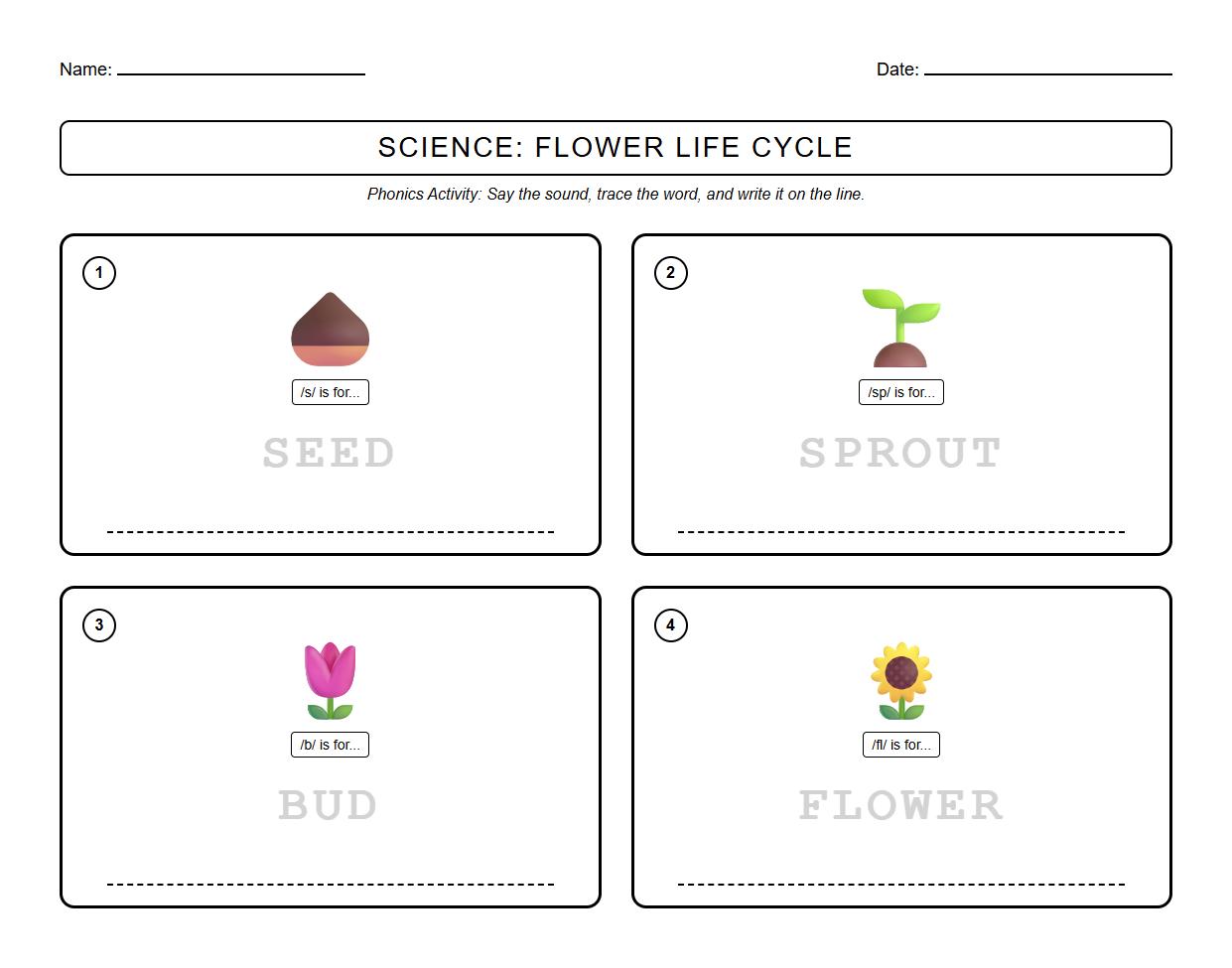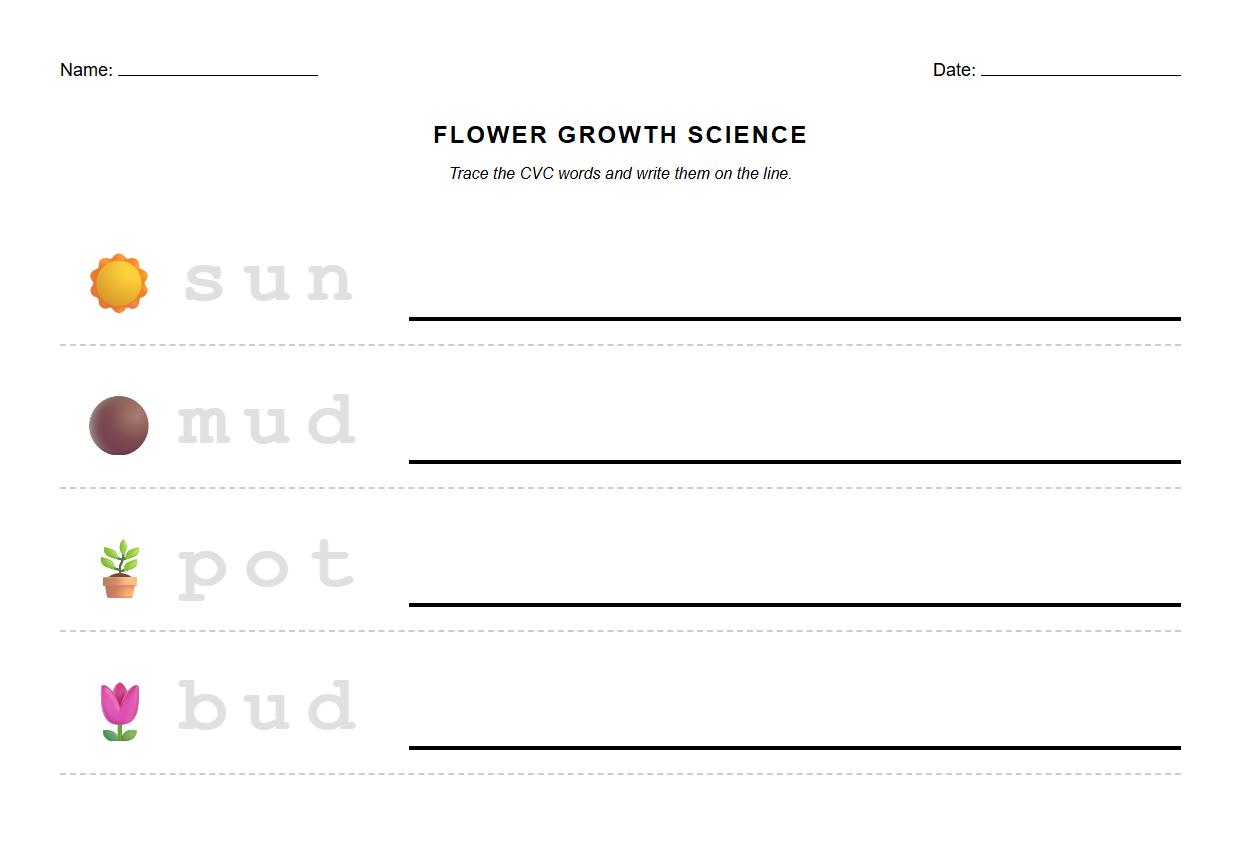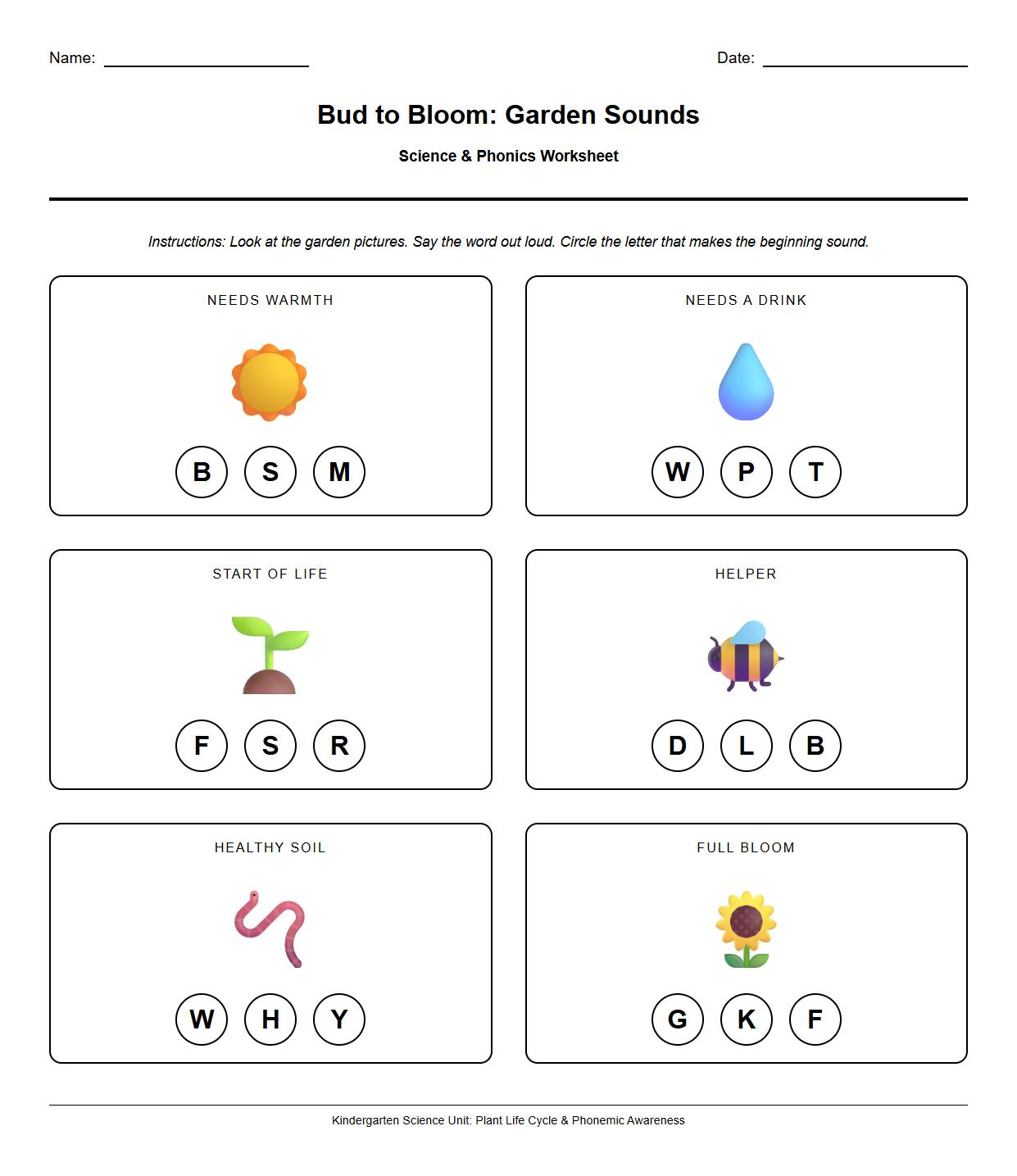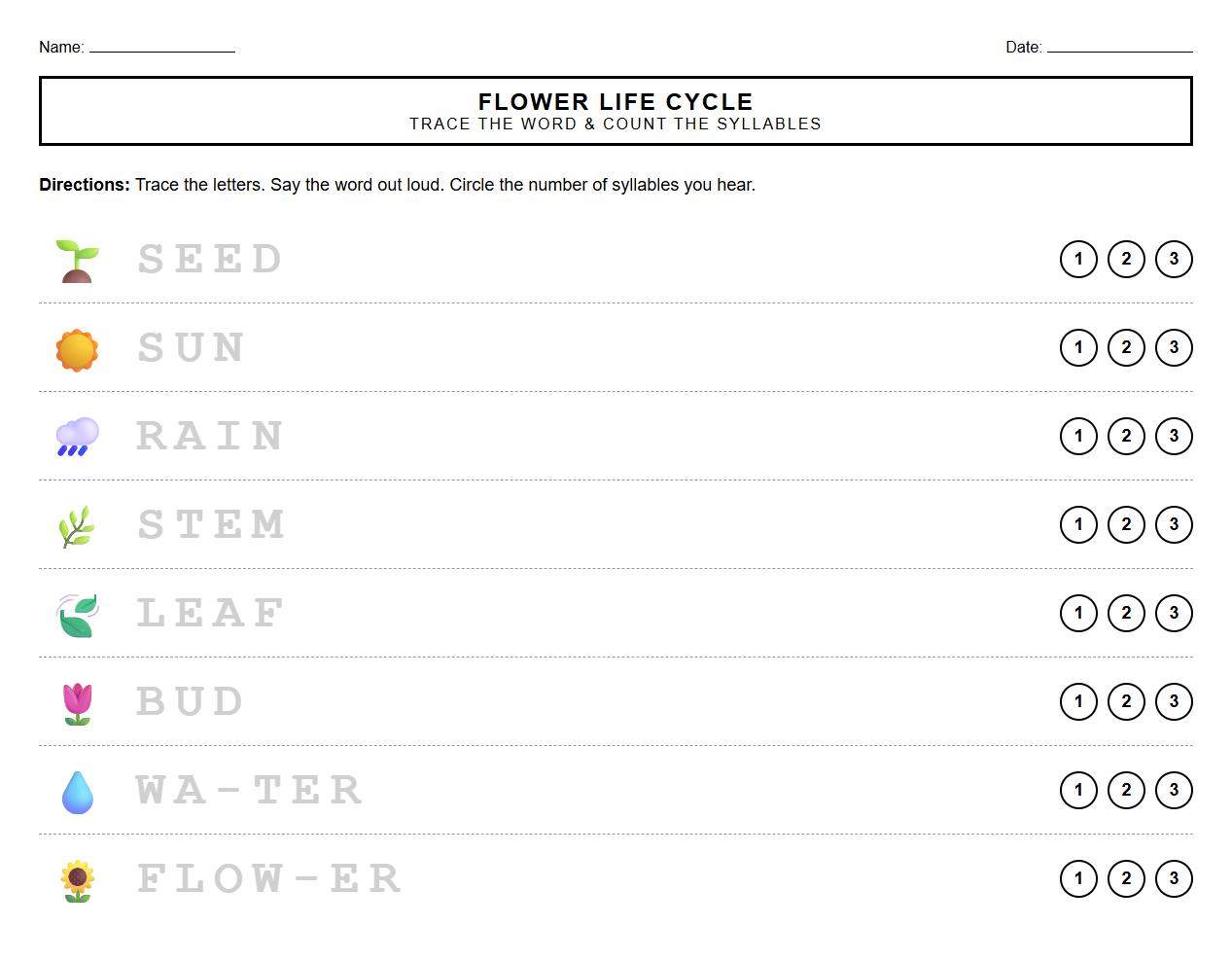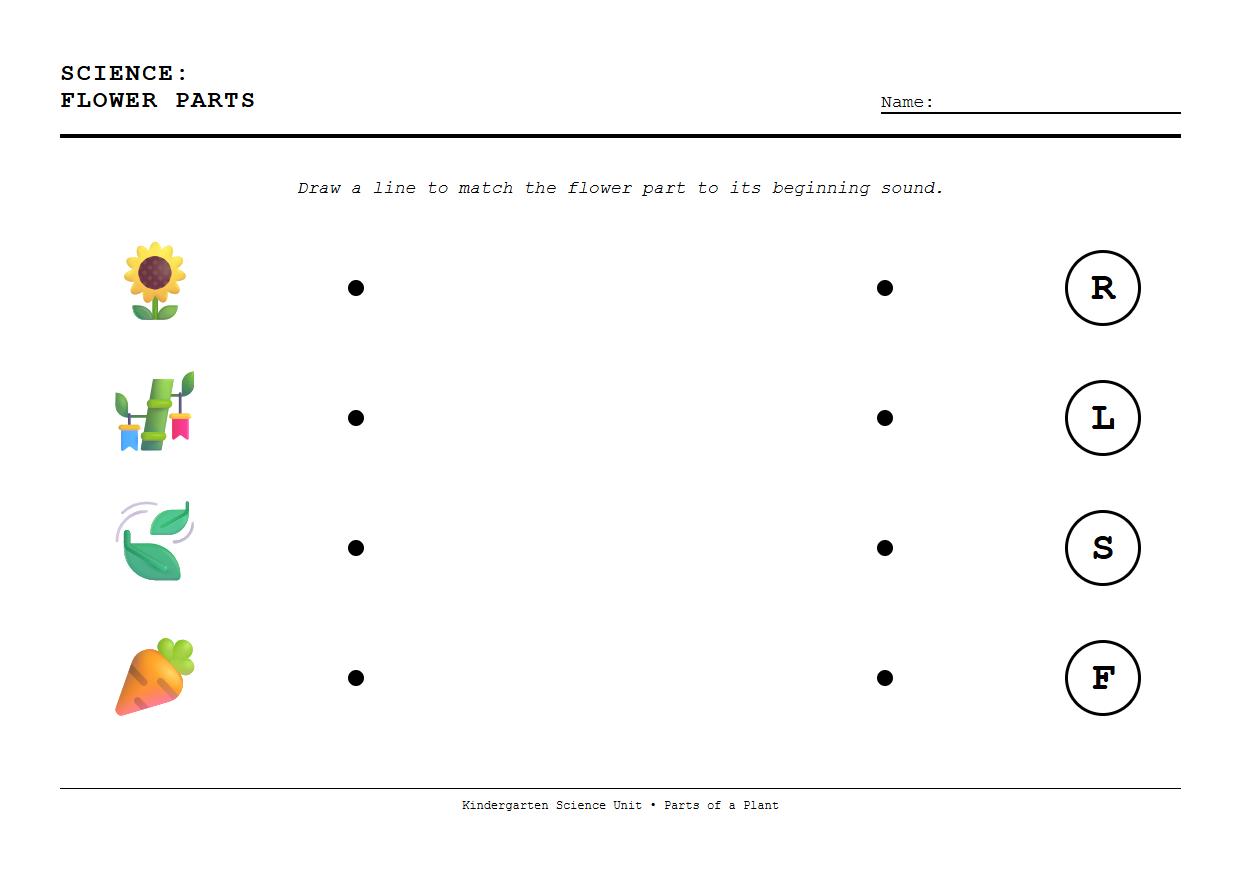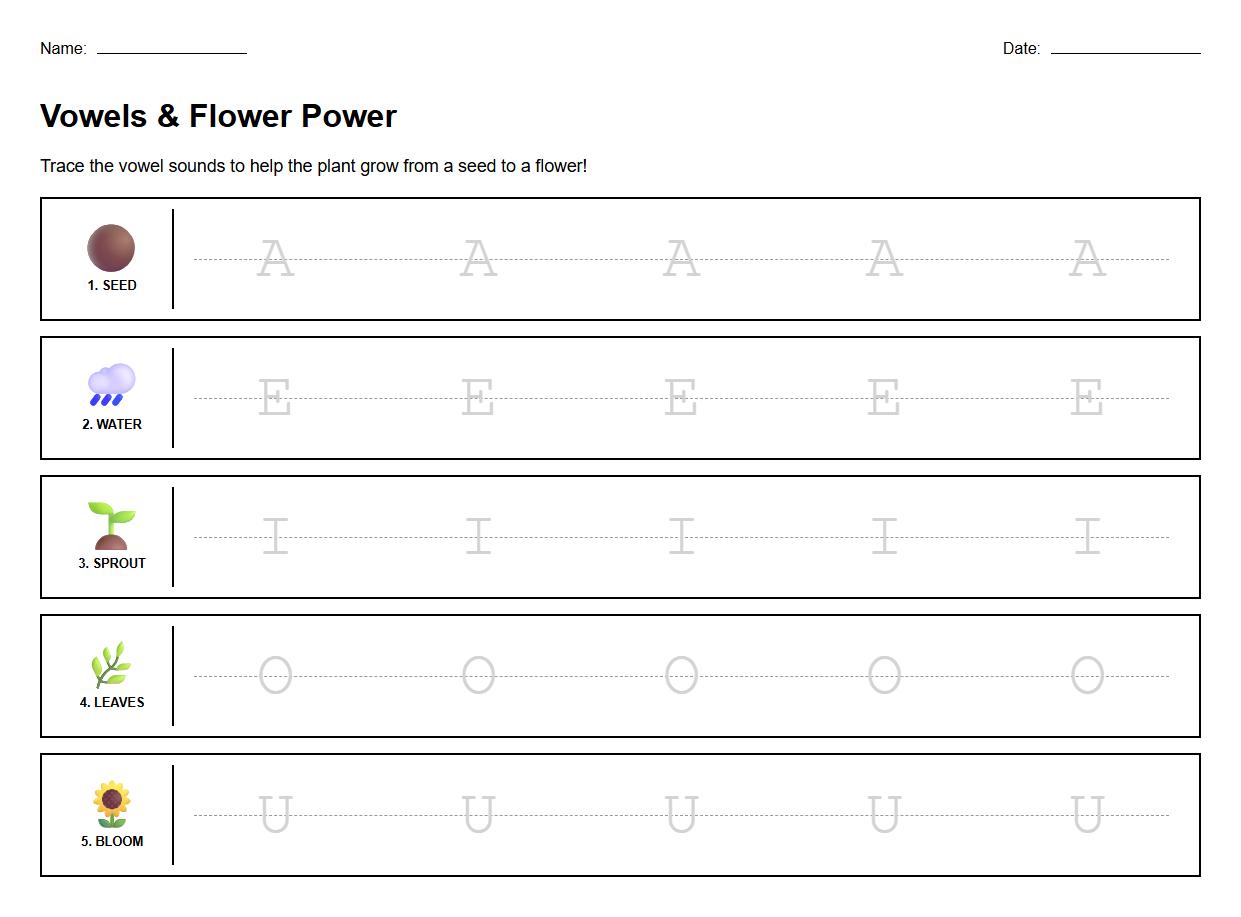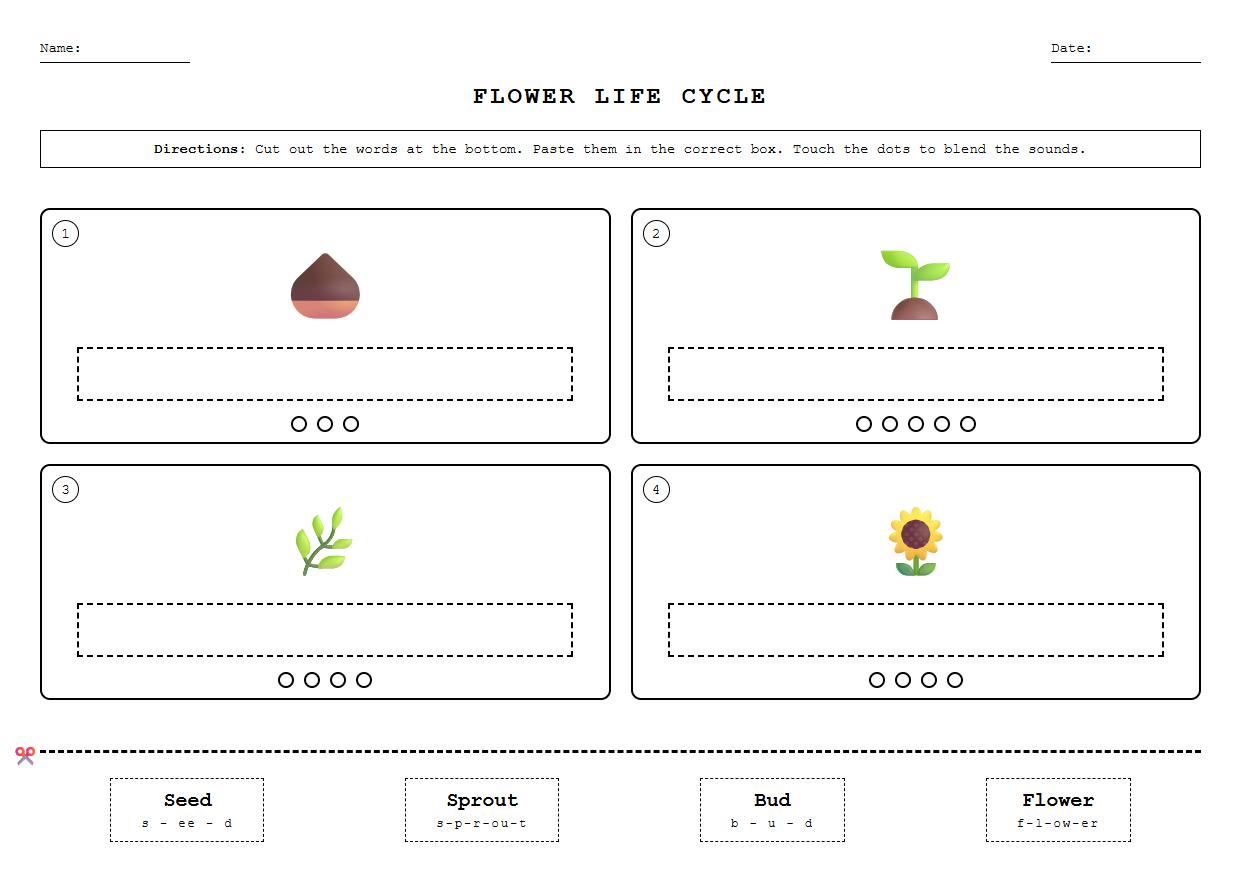
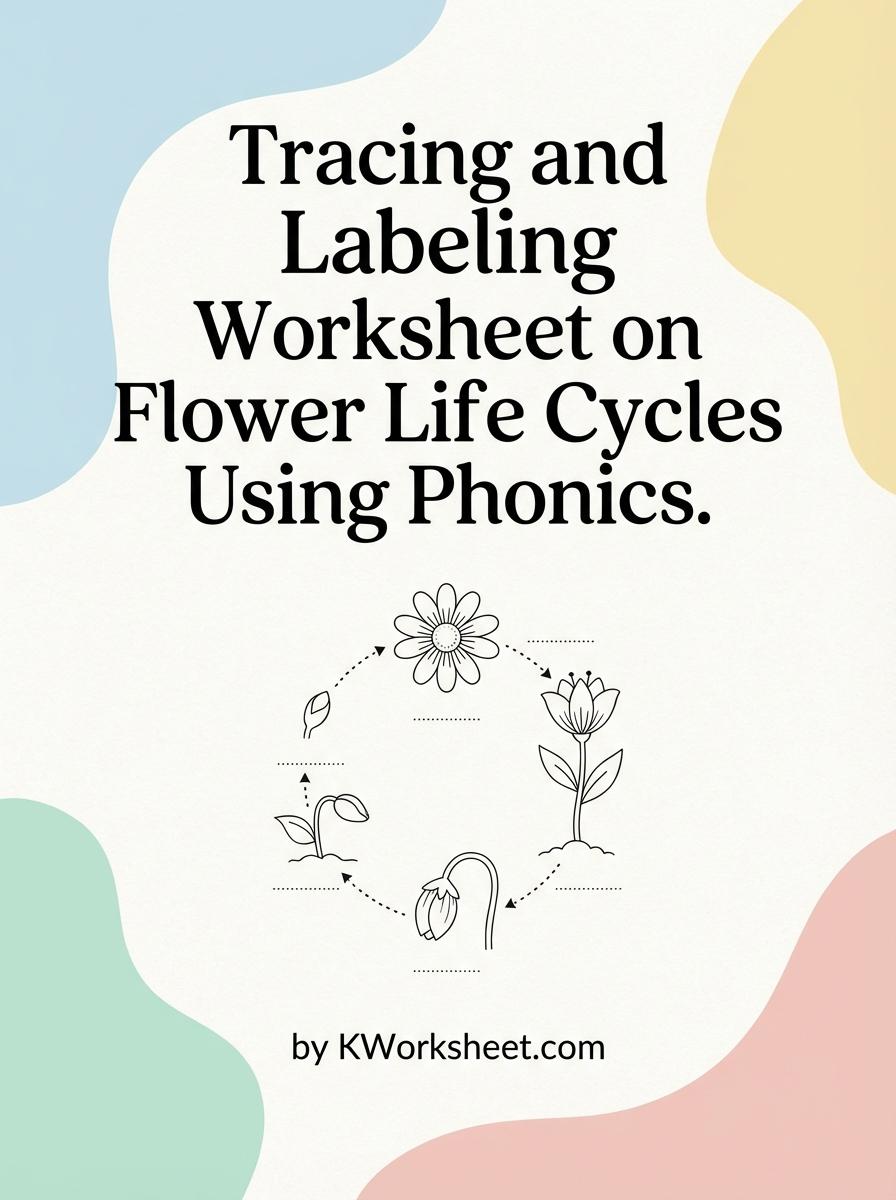
Tracing and labeling worksheets on flower life cycles help young learners develop fine motor skills while reinforcing phonics through nature-related vocabulary. These activities support recognition of plant parts and sequence of growth stages, enhancing both literacy and science understanding. Explore the available worksheets to inspire hands-on learning and phonetic practice in your classroom.
Main Parts of a Flower
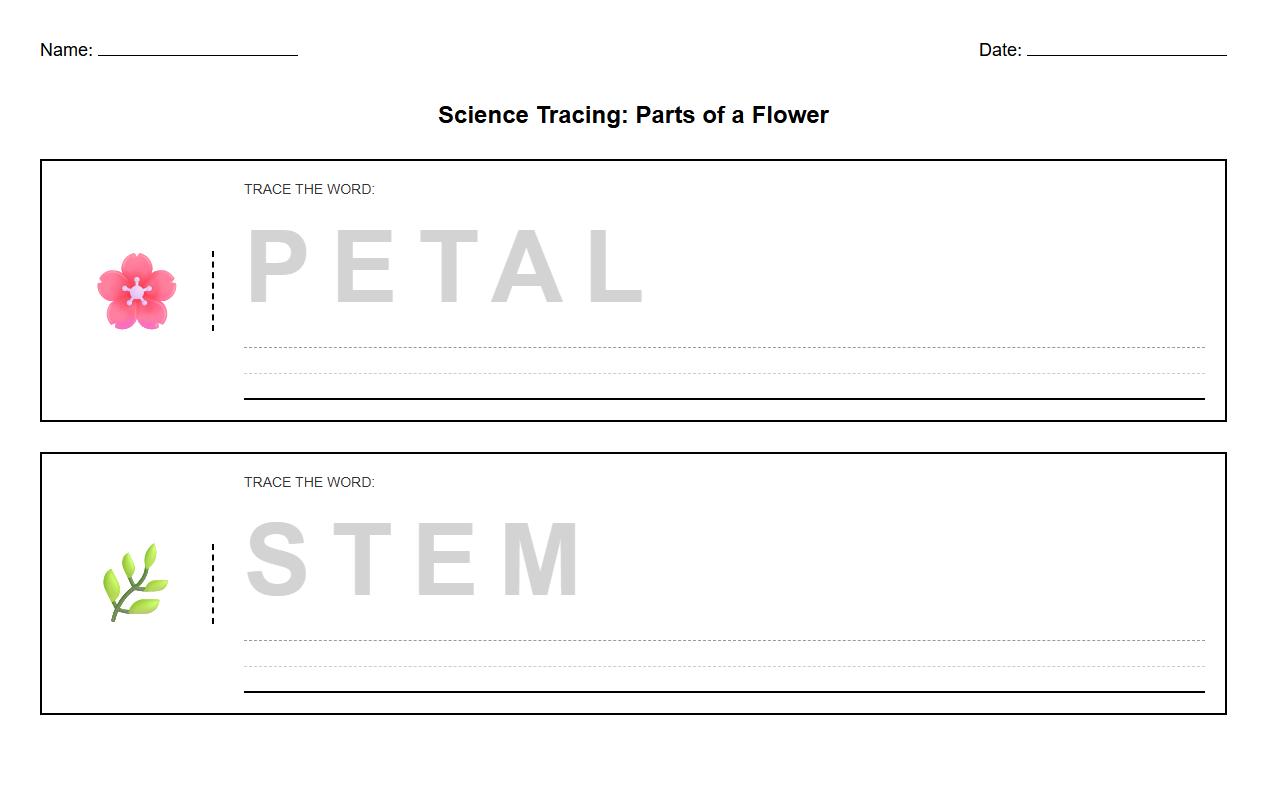
On the worksheet, you traced the main parts of a flower, including the petal, stem, leaf, root, and seed. These essential parts help children understand the structure of a flower. Each part plays a unique role in the flower's growth and survival. This activity encourages recognition and naming of flower parts.
Sounding Out the Word Petal
Using phonics, children can sound out the word "petal" by breaking it into smaller sounds: /p/ /e/ /t/ /a/ /l/. This helps with early reading skills and pronunciation. Encouraging kids to say each sound strengthens their understanding of word formation. It also builds confidence in sounding out new words.
First Part of the Flower Labeled
Most children label the stem first because it is the main support of the flower. This part connects the roots to the petals and leaves. Labeling the stem helps kids grasp the idea of the flower's structure. It's a simple and easy word for beginners to spell and pronounce.
Spelling Stem Using Sounds
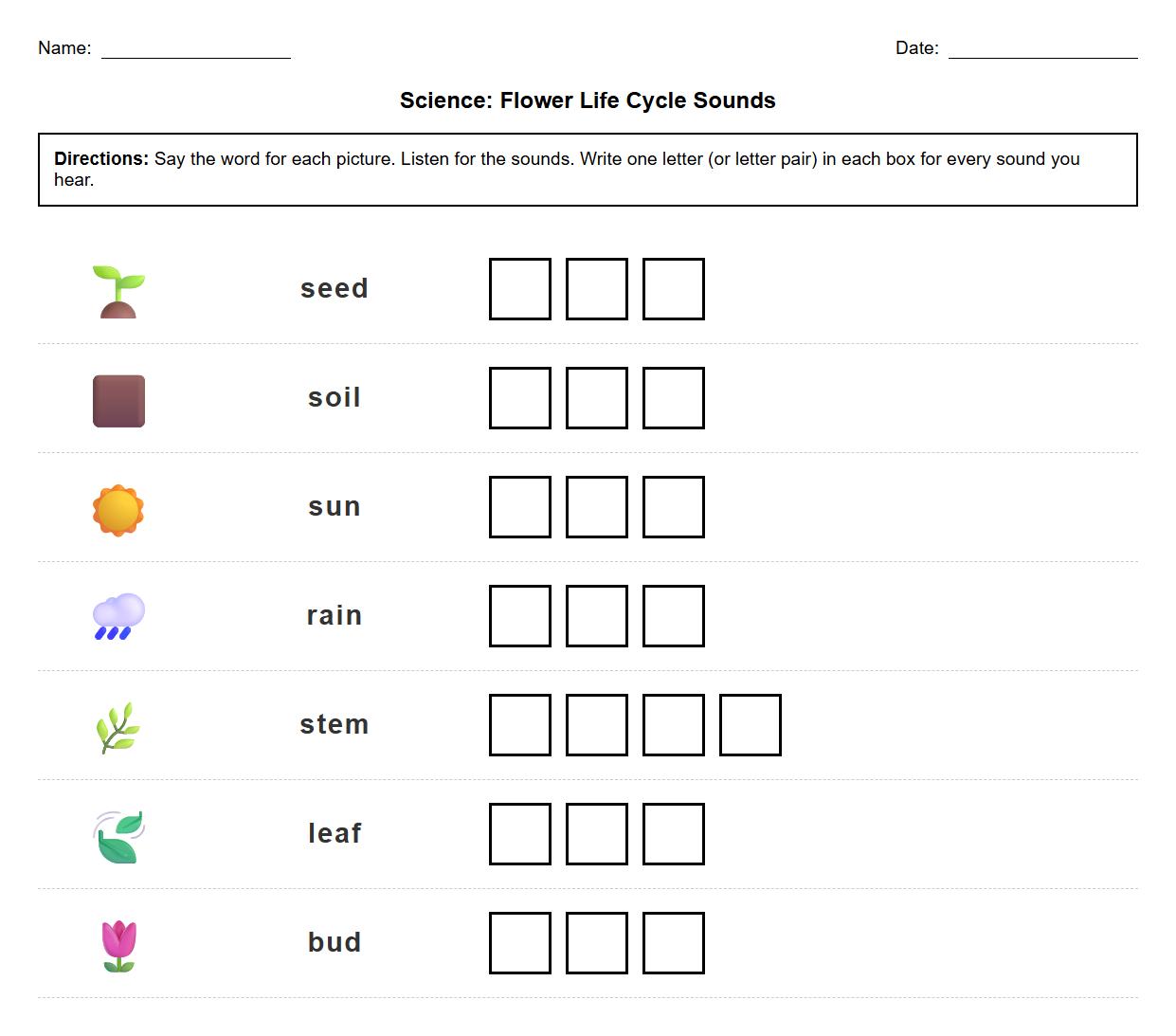
To spell "stem," children listen for each sound: /s/ /t/ /e/ /m/. Using phonics, they match sounds to letters, reinforcing letter-sound relationships. This sound-by-sound spelling builds literacy skills. It shows how sounding out words leads to accurate spelling.
Beginning Sound of Seed
The word "seed" begins with the /s/ sound, an important phoneme for children to identify. Recognizing this initial sound helps with phonemic awareness. Teachers and parents can help kids practice by repeating and isolating the /s/ sound. This activity supports early reading development.
Circling and Pronouncing Leaf
When children circle the word "leaf," they focus on each sound: /l/ /ee/ /f/. This exercise improves their ability to decode words. Saying the sounds aloud reinforces understanding of the word's phonetic structure. It is a fun and interactive way to practice phonics.
Life Cycle Stage After Seed
The stage that comes after the seed is the root growing phase. This is when the seed starts to sprout and the roots develop underground. Understanding this sequence helps children learn about flower growth stages. It connects science with vocabulary skills.
Phonics and Labeling Root
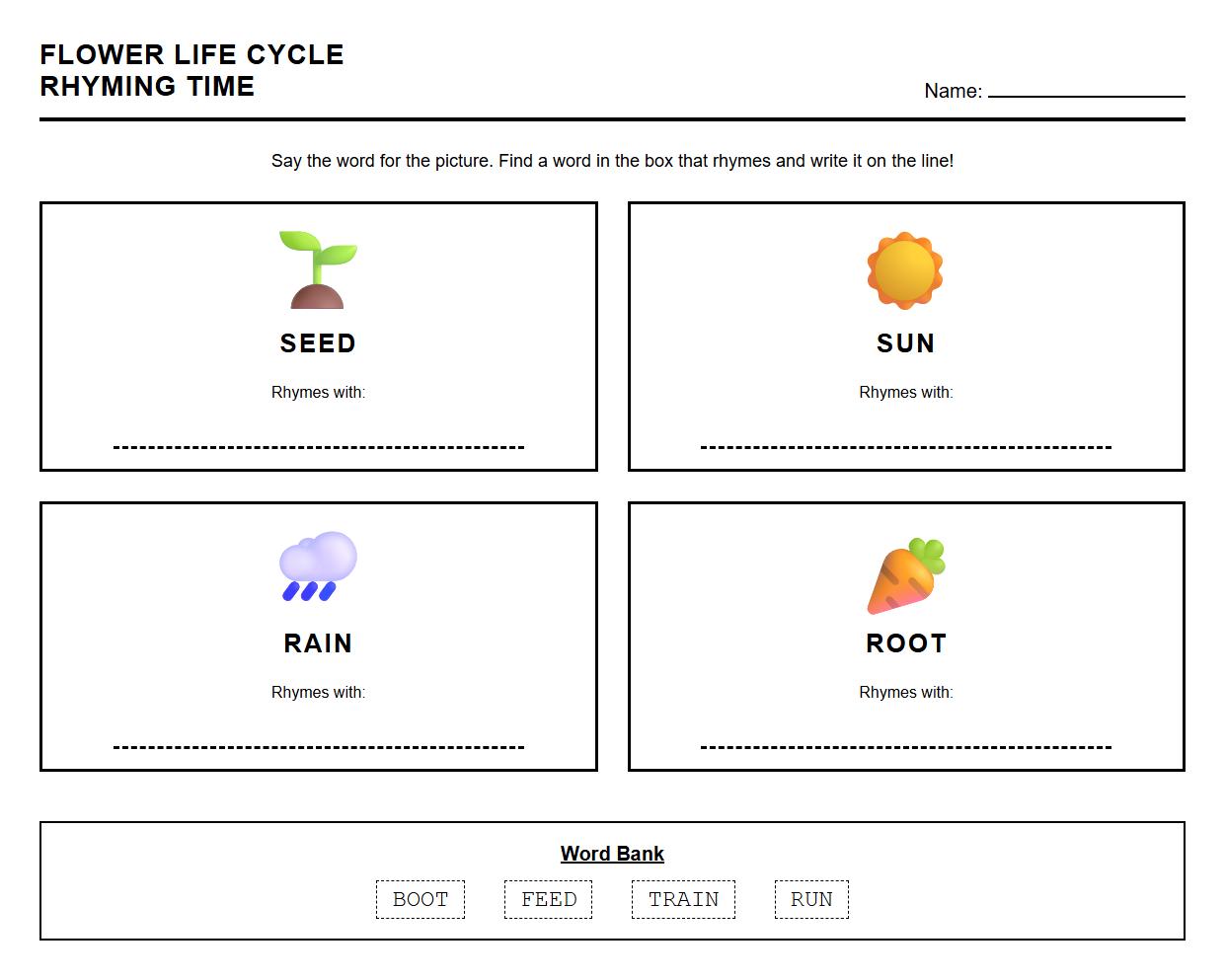
Using phonics, children can label "root" by sounding out /r/ /oo/ /t/. This method helps them recognize vowel sounds and blends. Phonics instruction supports spelling and reading fluency. Labeling the root deepens their knowledge of flower anatomy.
Ending Sound in Bud
The ending sound in the word "bud" is /d/, a voiced consonant. Identifying ending sounds is an important phonics skill. It helps children with word recognition and spelling accuracy. Practicing this sound strengthens their decoding abilities.
Tracing and Labeling the Flower
Children trace and label the flower using the correct phonics sounds for each part on the worksheet. This hands-on activity reinforces sound-letter connections and vocabulary. It also supports fine motor skills and letter formation. Combining tracing with phonics promotes comprehensive learning.


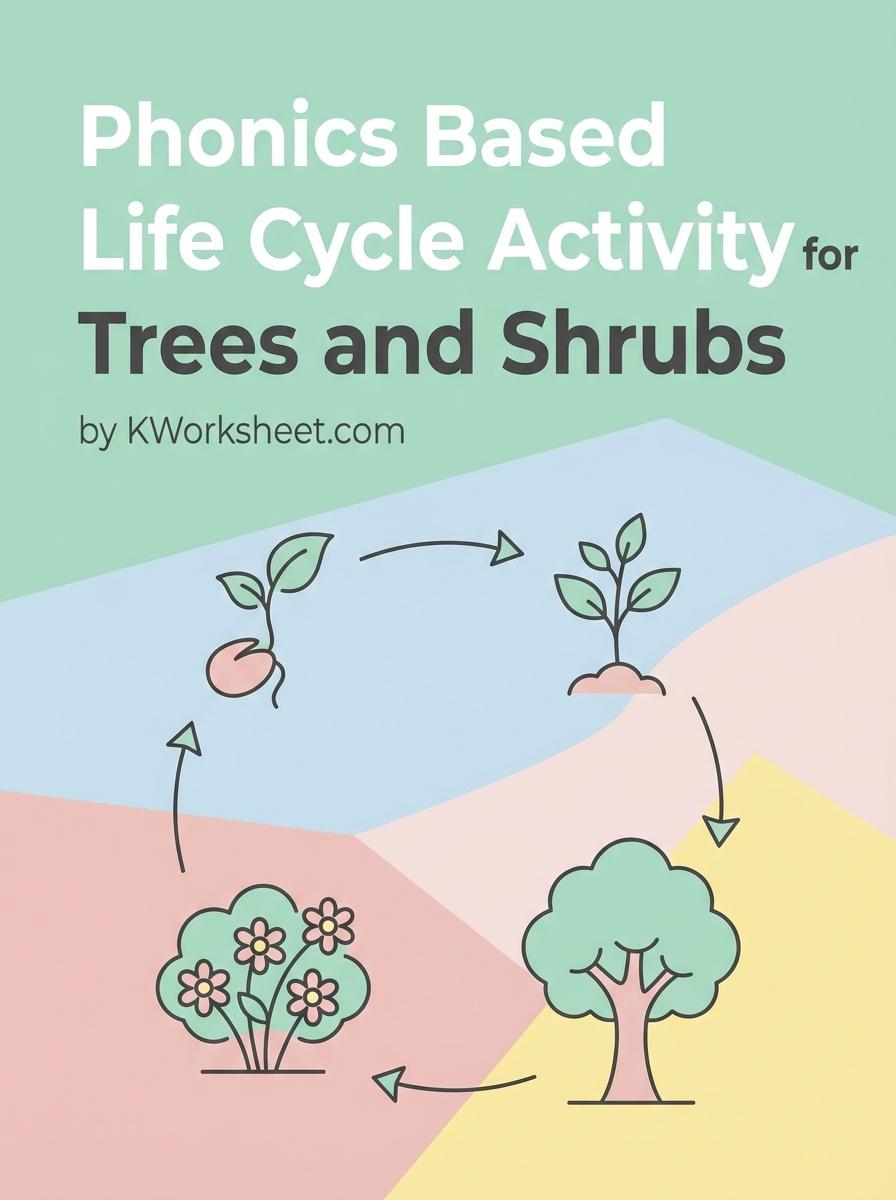
Phonics Based Life Cycle Activity for Trees and Shrubs