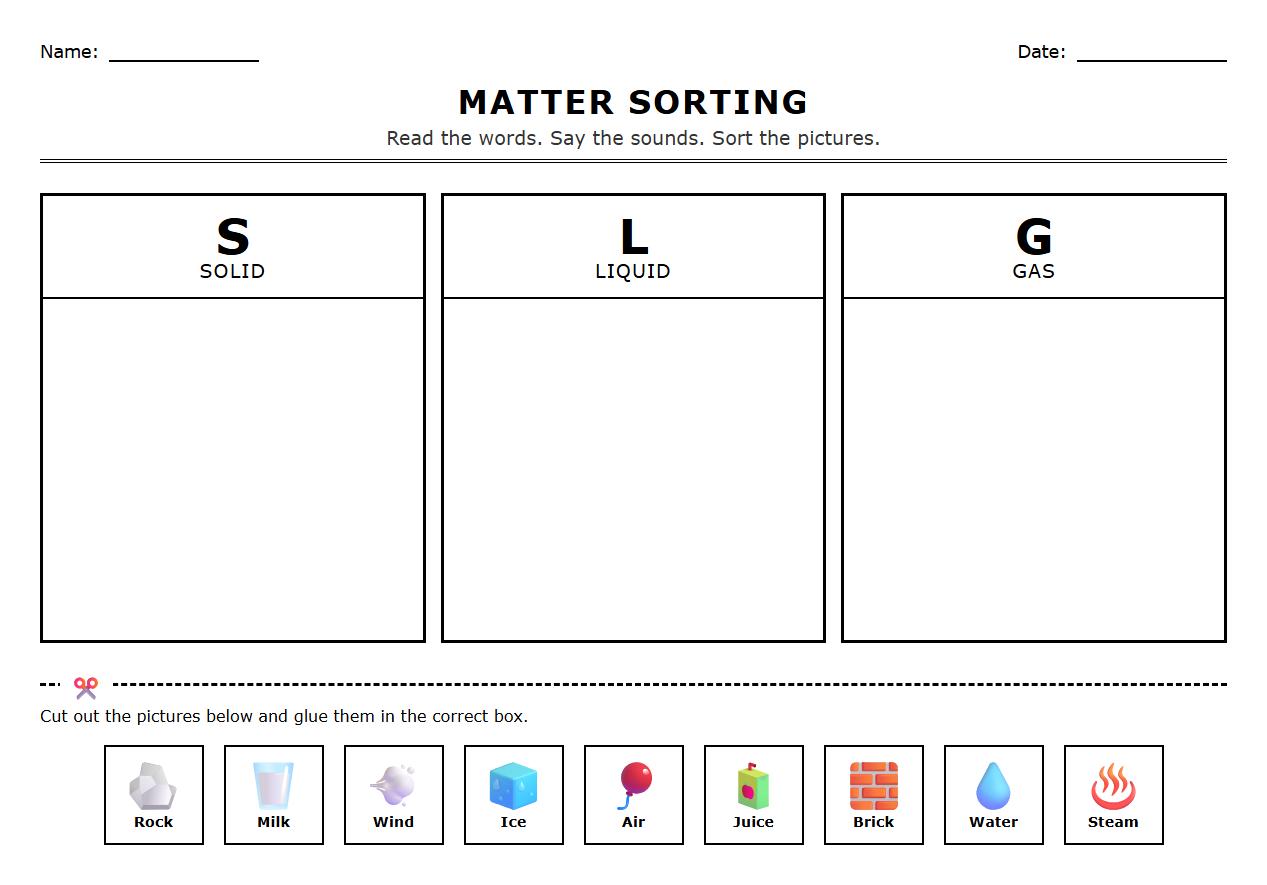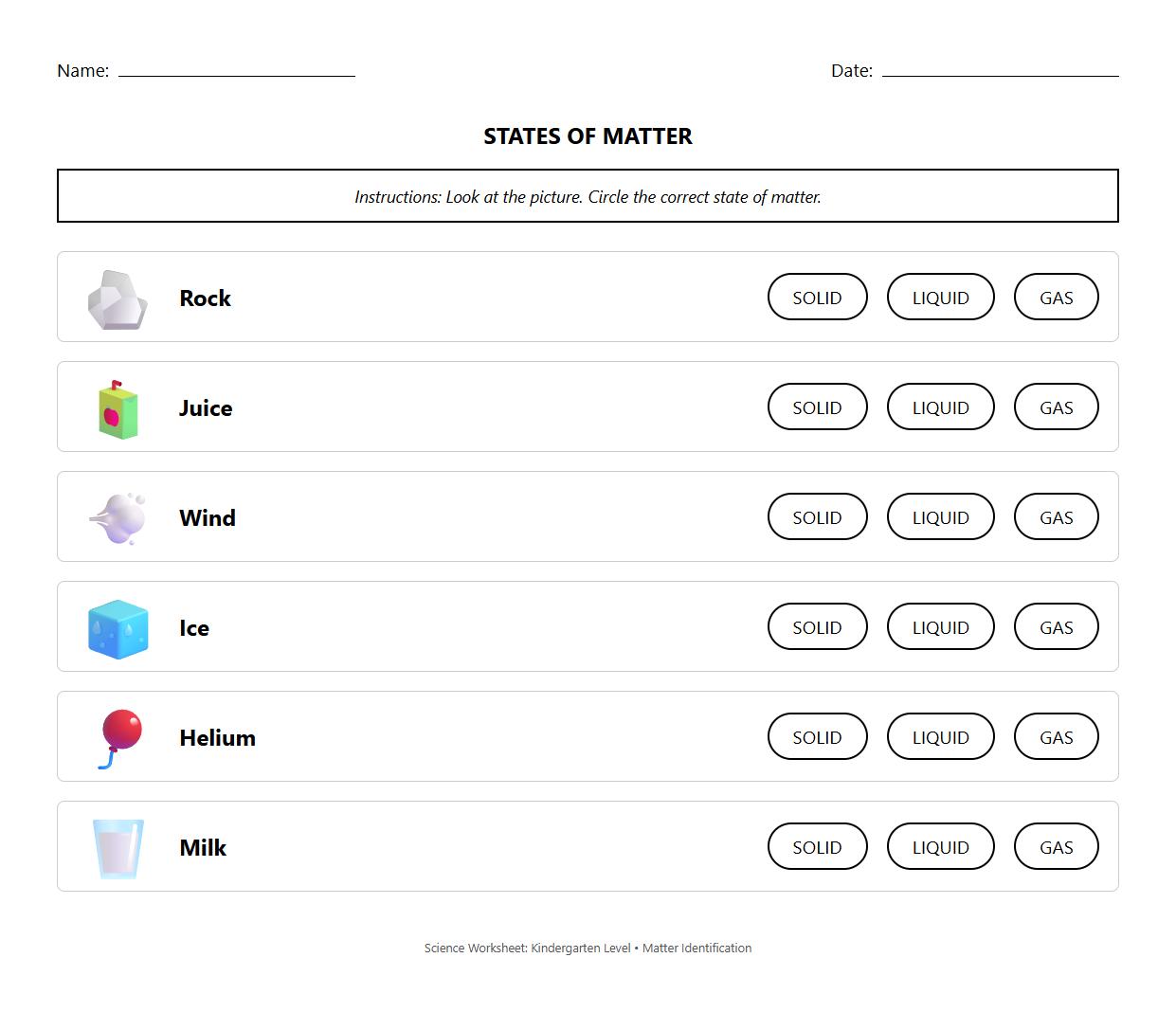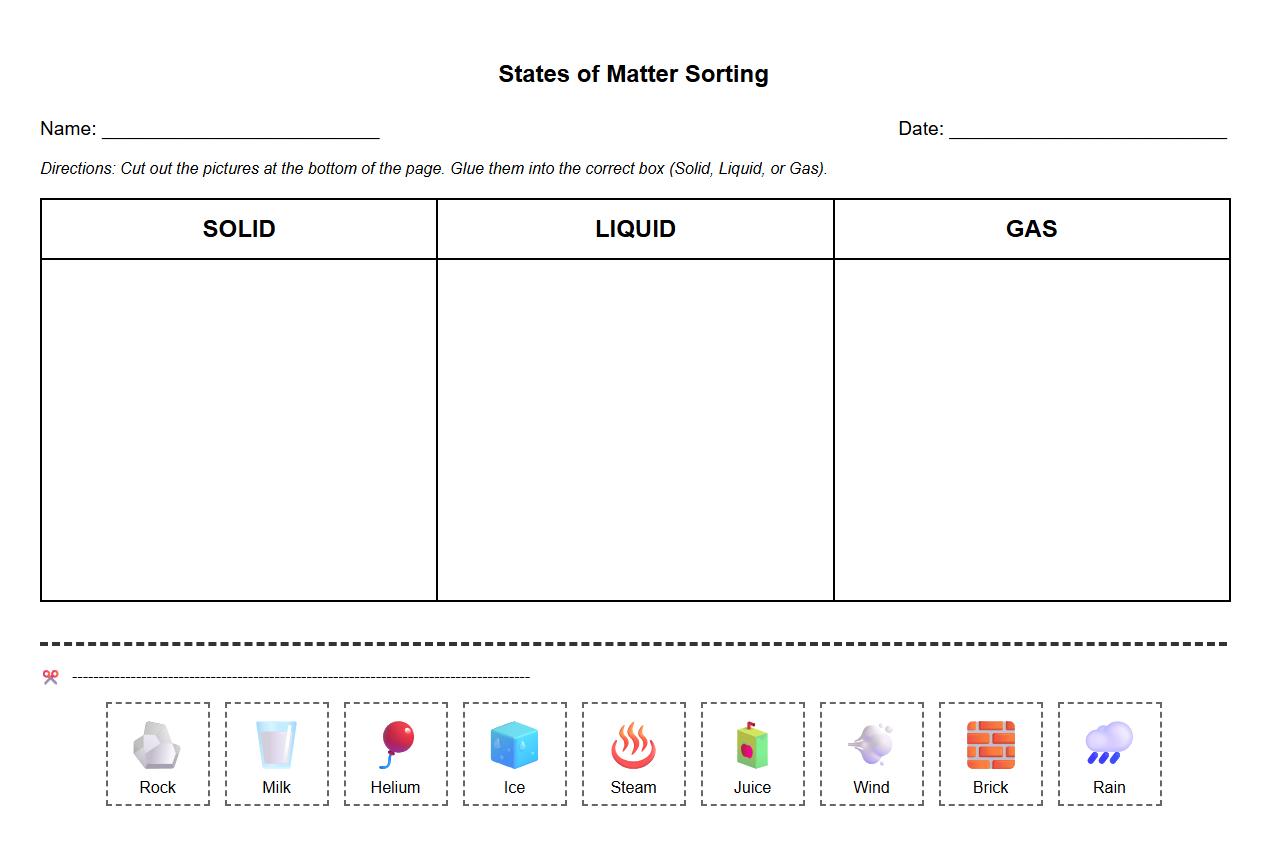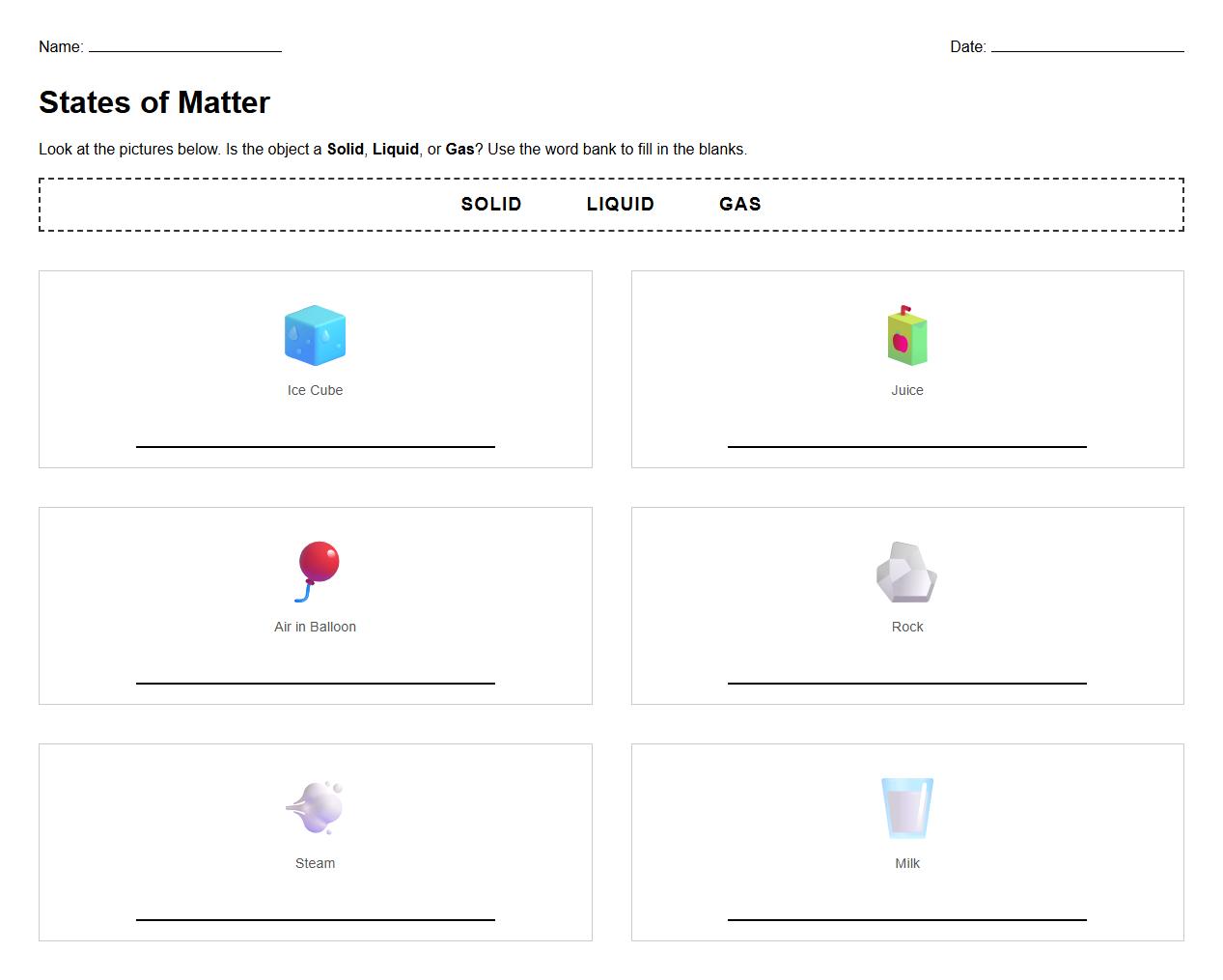
Understanding the differences between solids, liquids, and gases helps early learners grasp basic science concepts by exploring the states of matter through hands-on activities. Visual and interactive worksheets reinforce recognition of each state's characteristics such as shape, volume, and particle arrangement. Explore our collection of Identifying Solid Liquid Gas worksheets designed to make learning these concepts fun and engaging.
Identifying Solids in the Picture
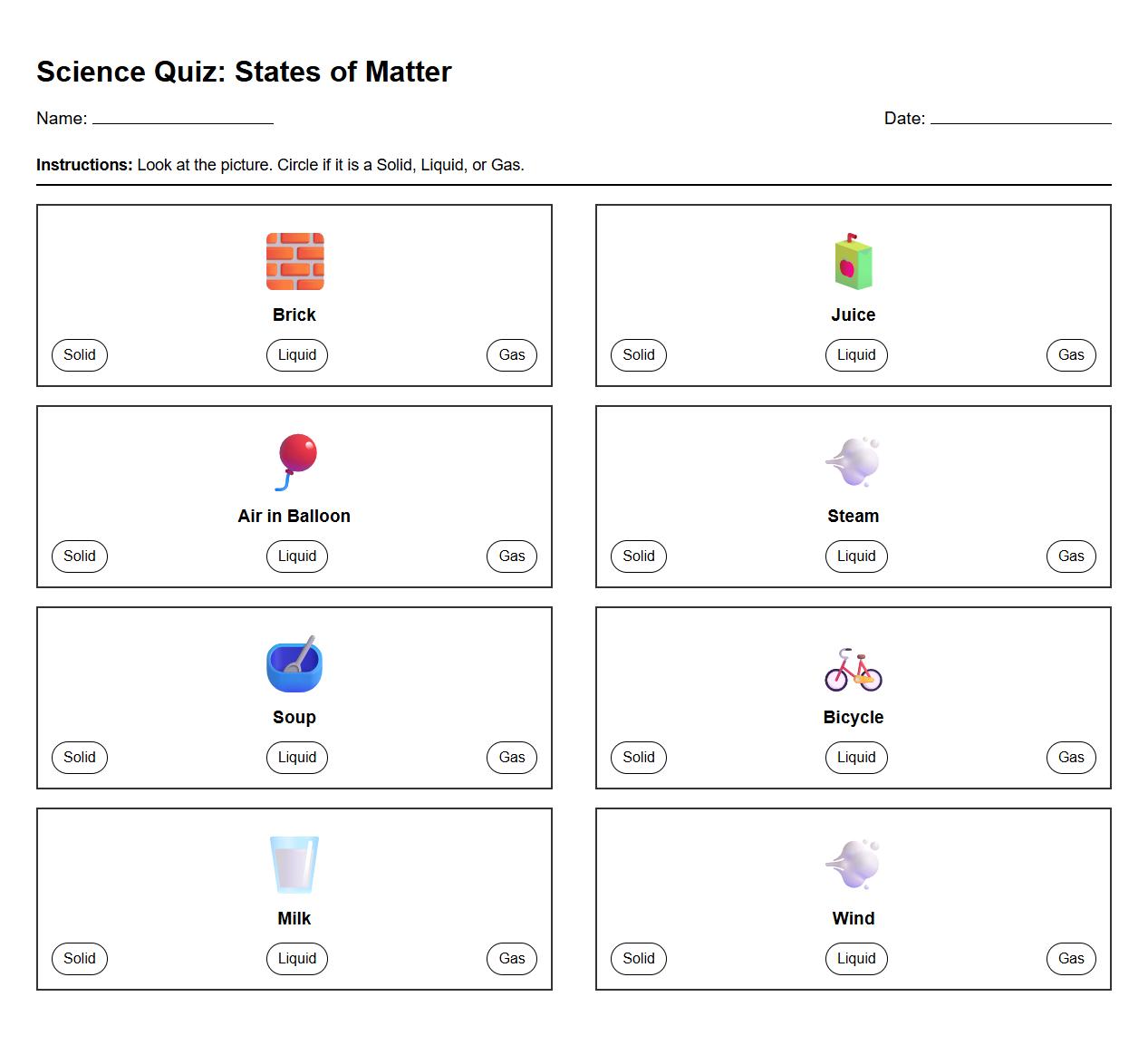
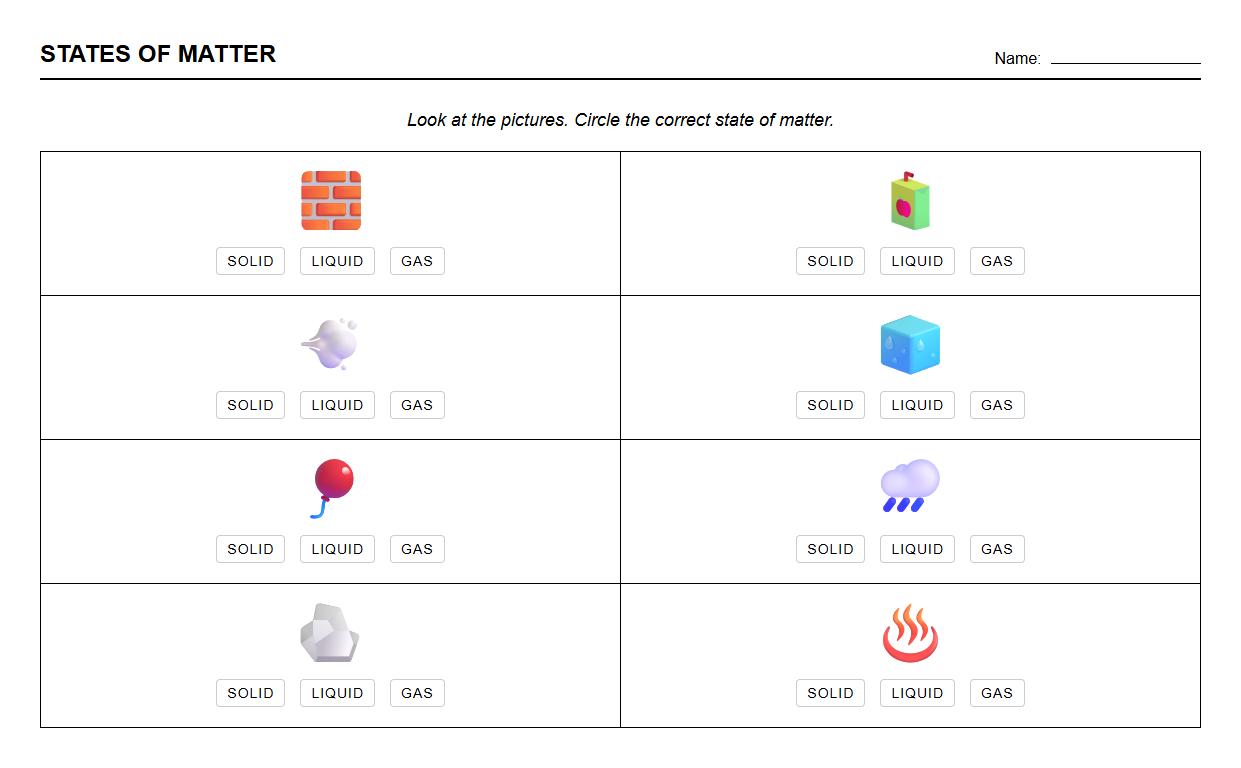
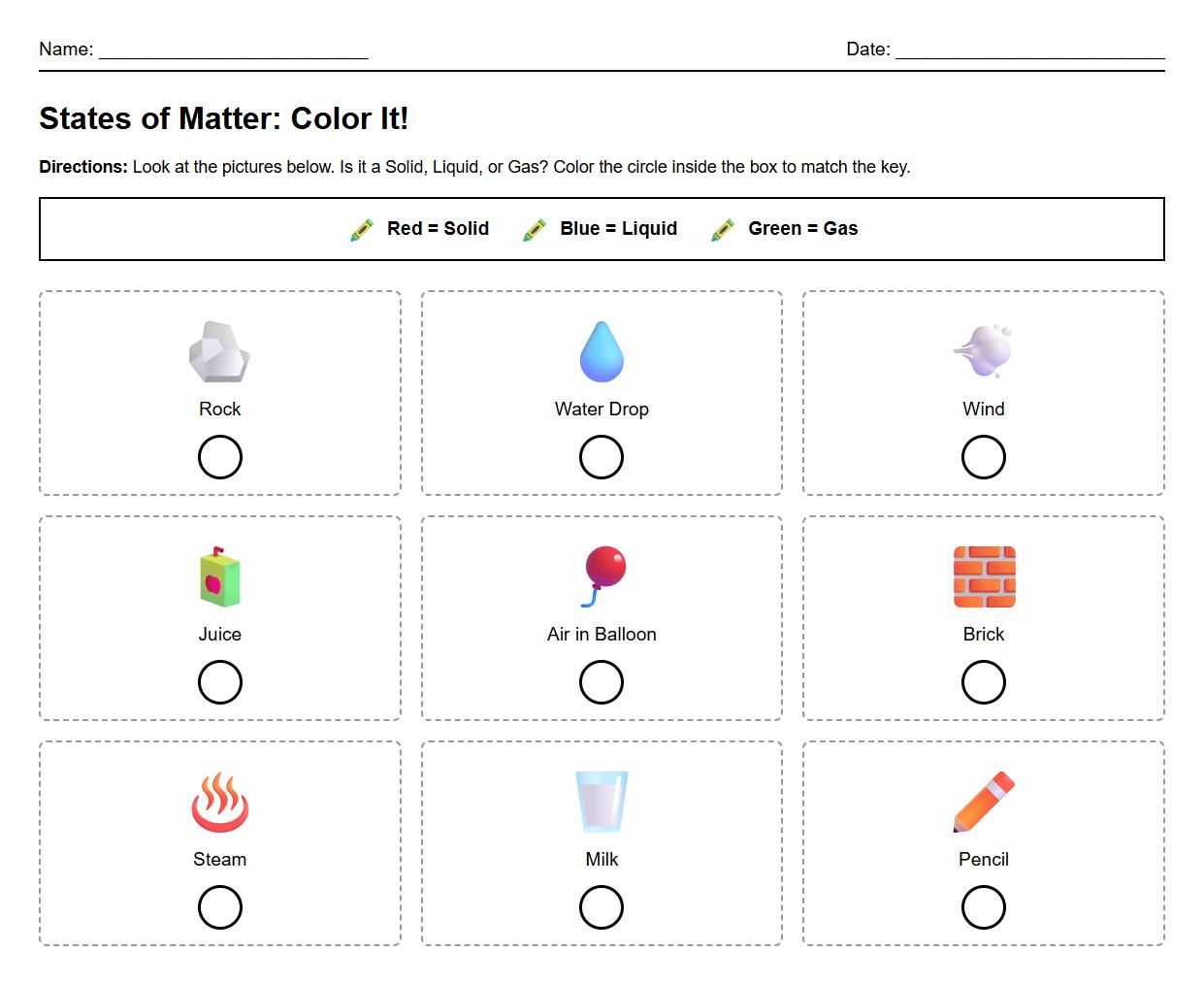
Objects that do not change shape and have a definite form are called solids. In the worksheet, look for items like toys, books, or blocks. These are examples of solids because they stay the same shape no matter where they are placed. Encourage children to touch and explore these items to understand their qualities.
Circling Liquids
Liquids are substances that flow and take the shape of their container. Ask children to circle items like water in a cup or juice in a bottle on the worksheet. This activity helps them recognize the difference between solids and liquids by observing how liquids move. Liquids can be poured but do not have a fixed shape.
Locating Gases
Gases are invisible and fill all the space available to them. On the worksheet, point out areas where gases might be represented, such as bubbles in water or air inside a balloon. Explain that gases are all around us, even though we cannot see them clearly. This helps kids grasp the concept of different states of matter.
Items That Stay the Same Shape
Solids maintain their shape no matter where they are placed. Identify one item on the worksheet that won't change shape, like a block or a toy car. Explain that these items are different from liquids or gases because their shape stays the same. This reinforces the concept of solid objects.
Objects That Can Be Poured
Liquids can be poured from one container to another. Find and talk about objects such as water or milk that can be poured into a cup on the worksheet. Pouring helps children understand that liquids do not have a fixed shape. Encourage them to imagine pouring water to strengthen their understanding.
How Water Looks in a Glass
Water inside a glass takes the shape of the glass and is usually clear. Point to the water in the glass on the worksheet and explain that it is a liquid. Show that the water's surface is flat and fills the glass but changes shape if the glass is tilted. This visual aid helps children recognize properties of liquids.
Things You Can Feel But Not See
Gases are present everywhere and can be felt but are invisible. For example, air blowing on the worksheet or wind outside can be discussed. Help children feel the air or breeze to demonstrate that some things around us cannot be seen but can be sensed. This helps develop awareness of different states of matter.
Items That Melt When Warm
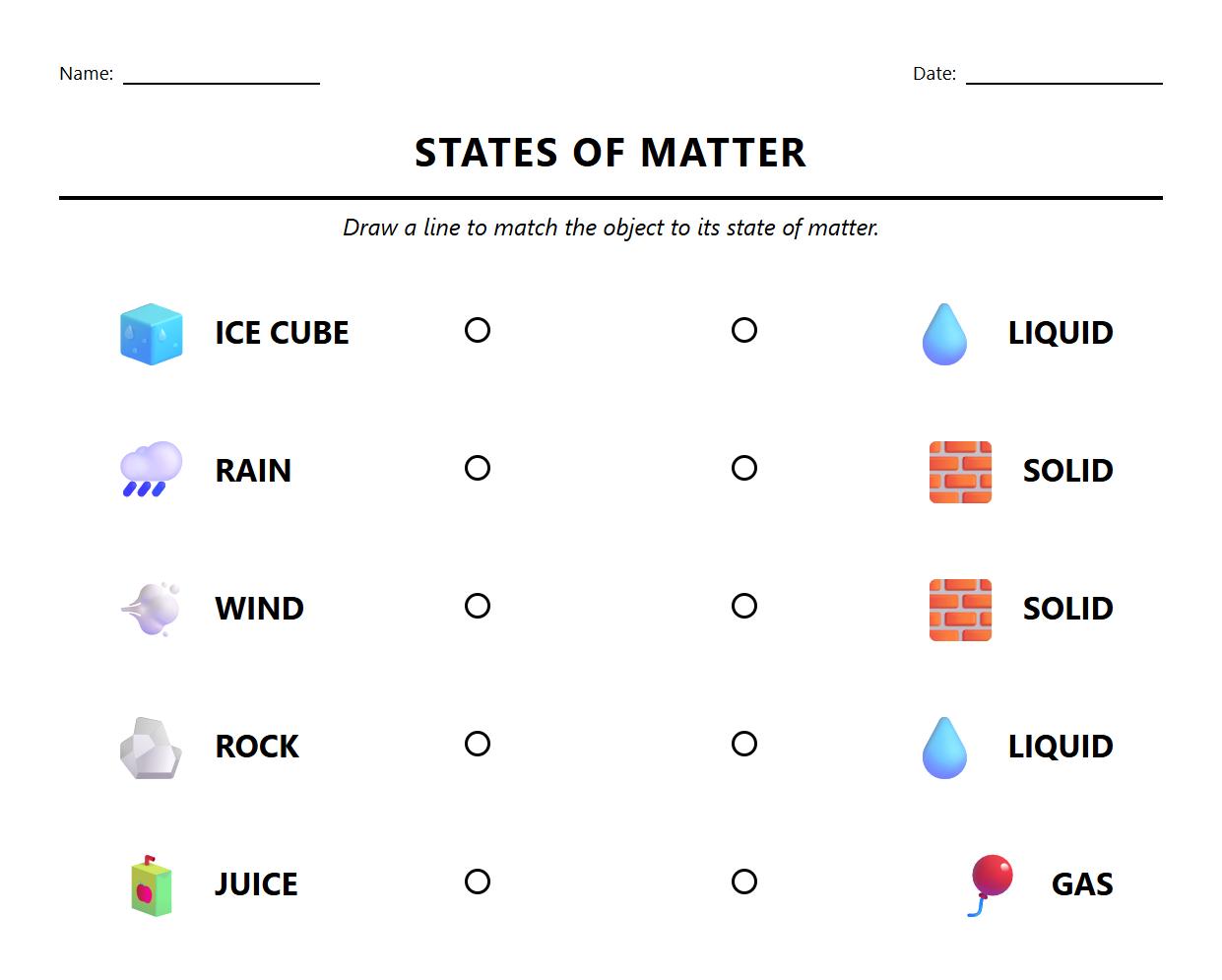
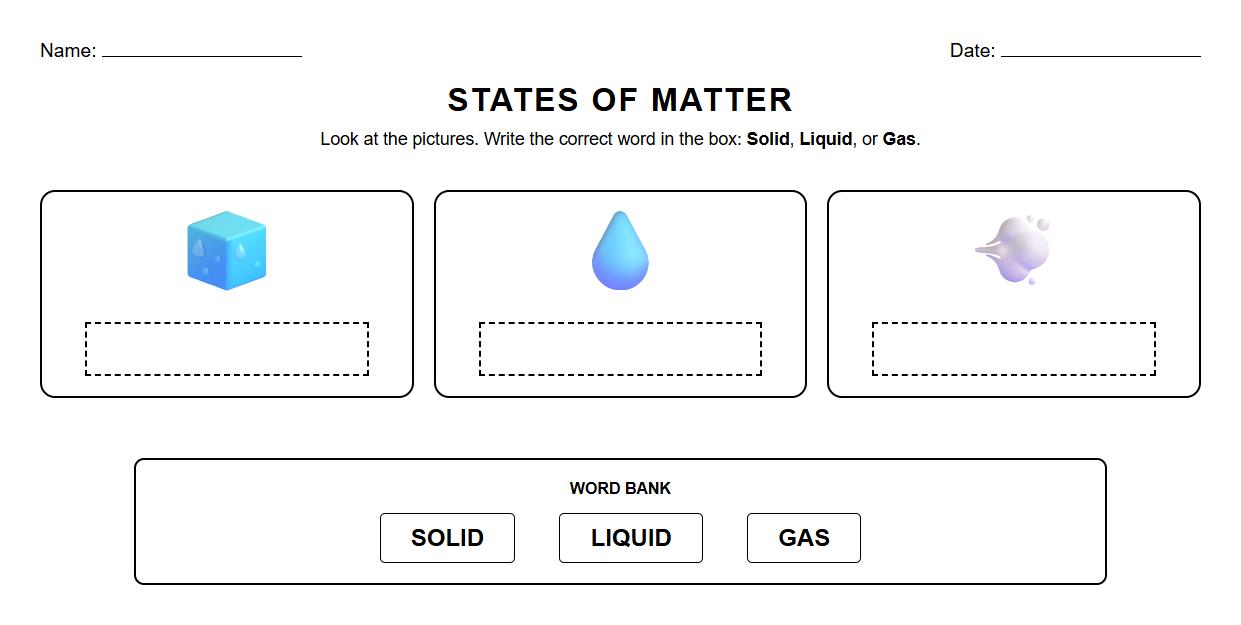
Certain solids change into liquids when they get warm, such as ice. Show children the picture of ice on the worksheet and explain how it melts into water when heated. This introduces the concept of melting and changes in states of matter. It's a simple way to explain temperature effects.
Pointing to Something You Can Drink
Have children identify items they can drink on the worksheet, like water or juice. Explain that these items are liquids and are safe and healthy to drink. Asking them to point helps reinforce recognition of everyday liquids. This connects learning to their own experiences.
Finding Something That Fills the Whole Container
Liquids and gases fill the shape of their container completely. Ask children to find the liquid inside the glass or gas inside the balloon on the worksheet. Explain that unlike solids, these materials don't keep their own shape but instead fill all the available space. This helps build an understanding of different material states.


Sorting Objects by States of Matter Worksheet Activity