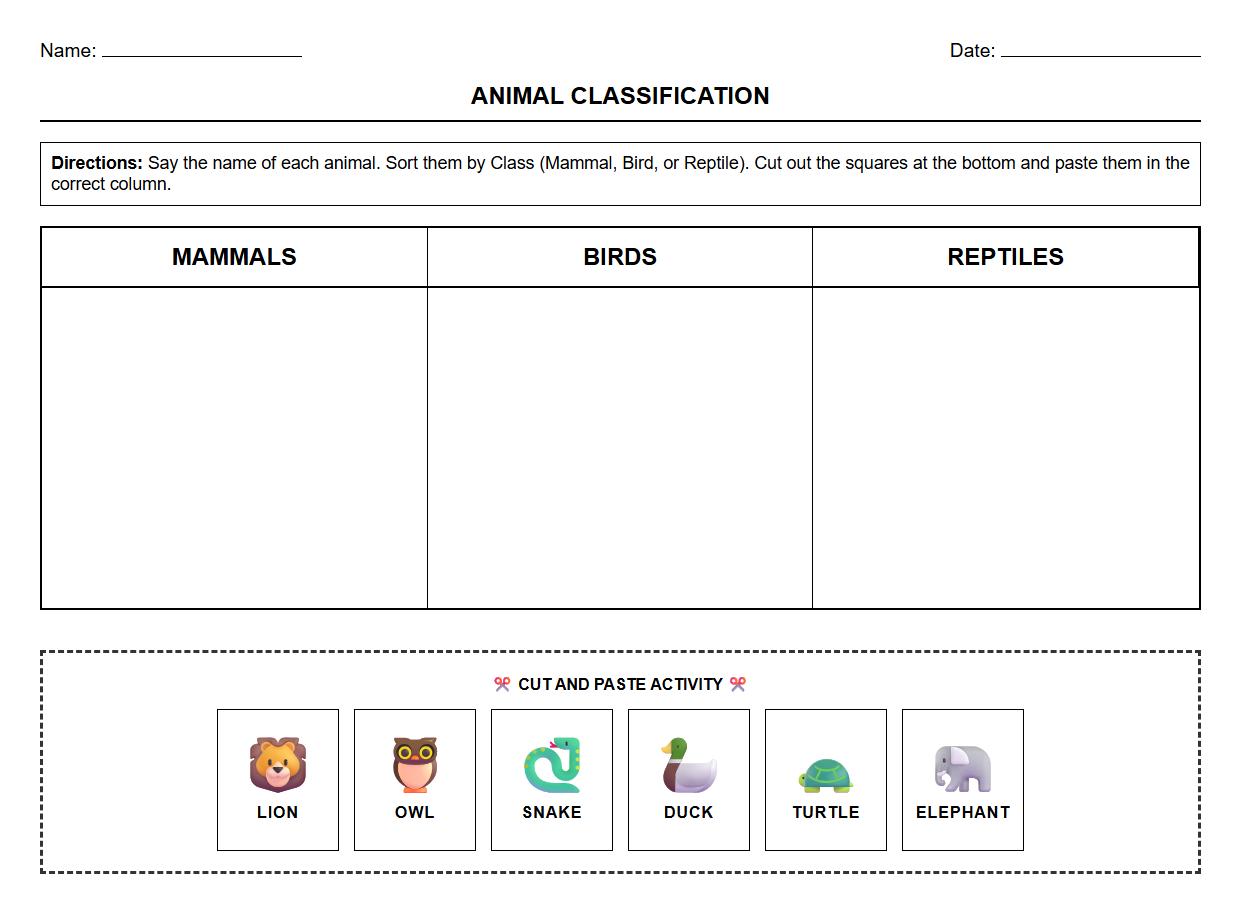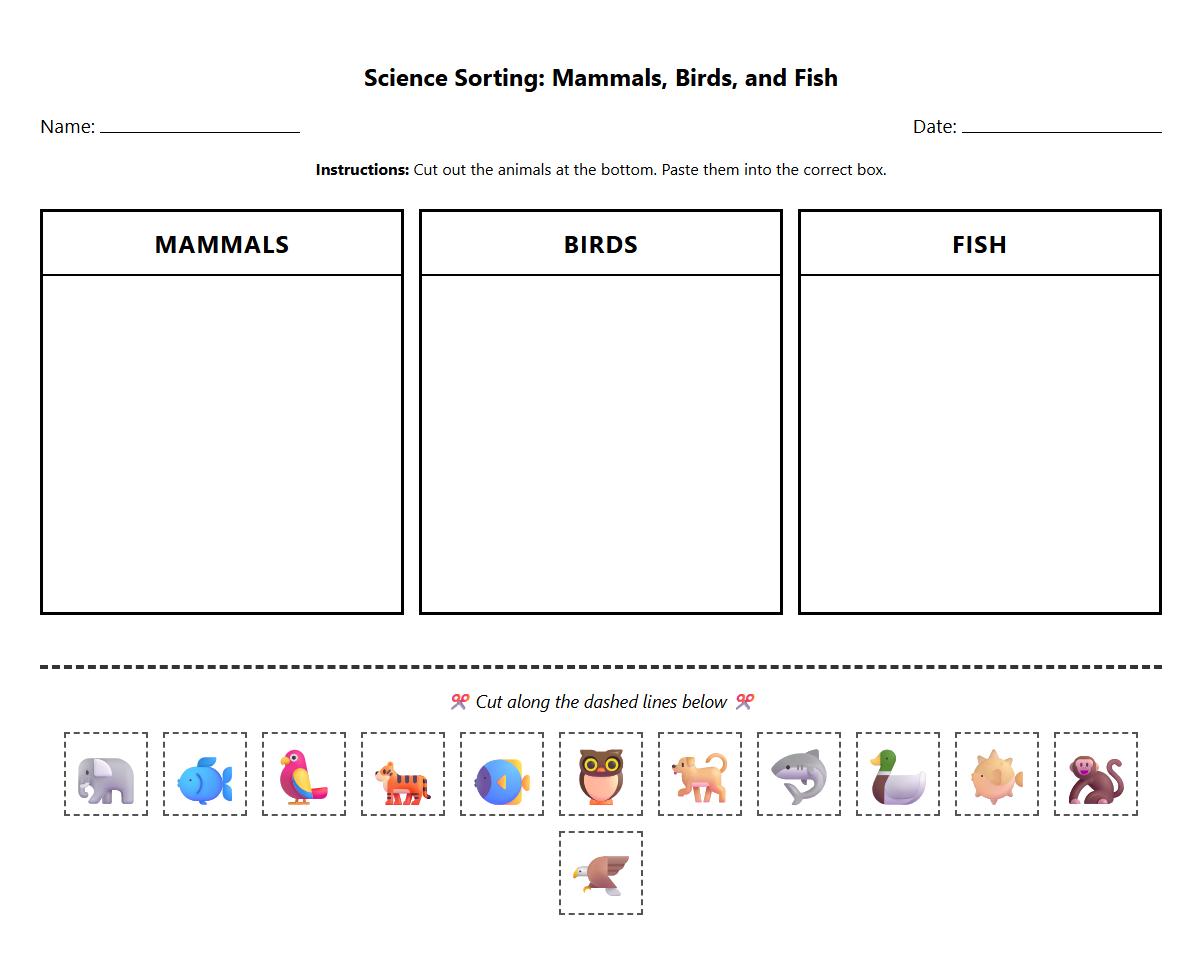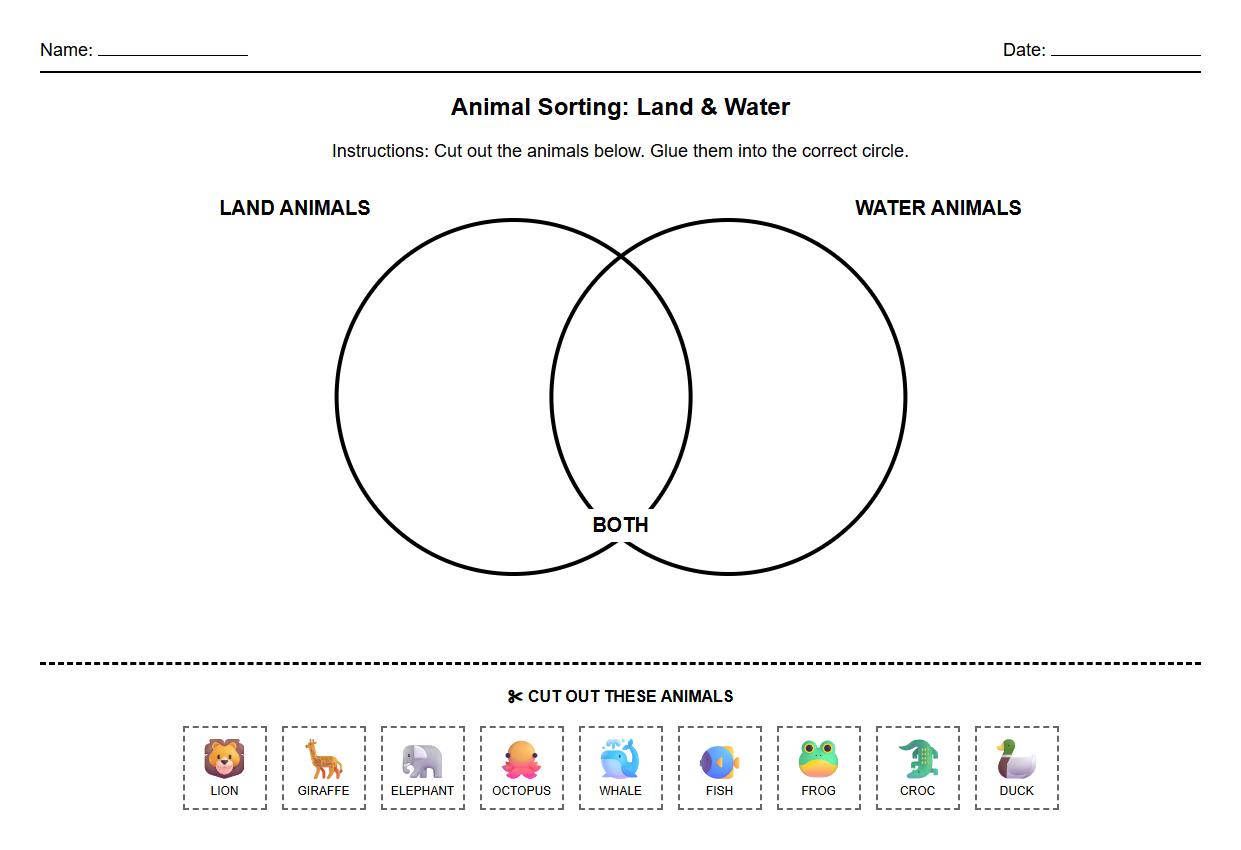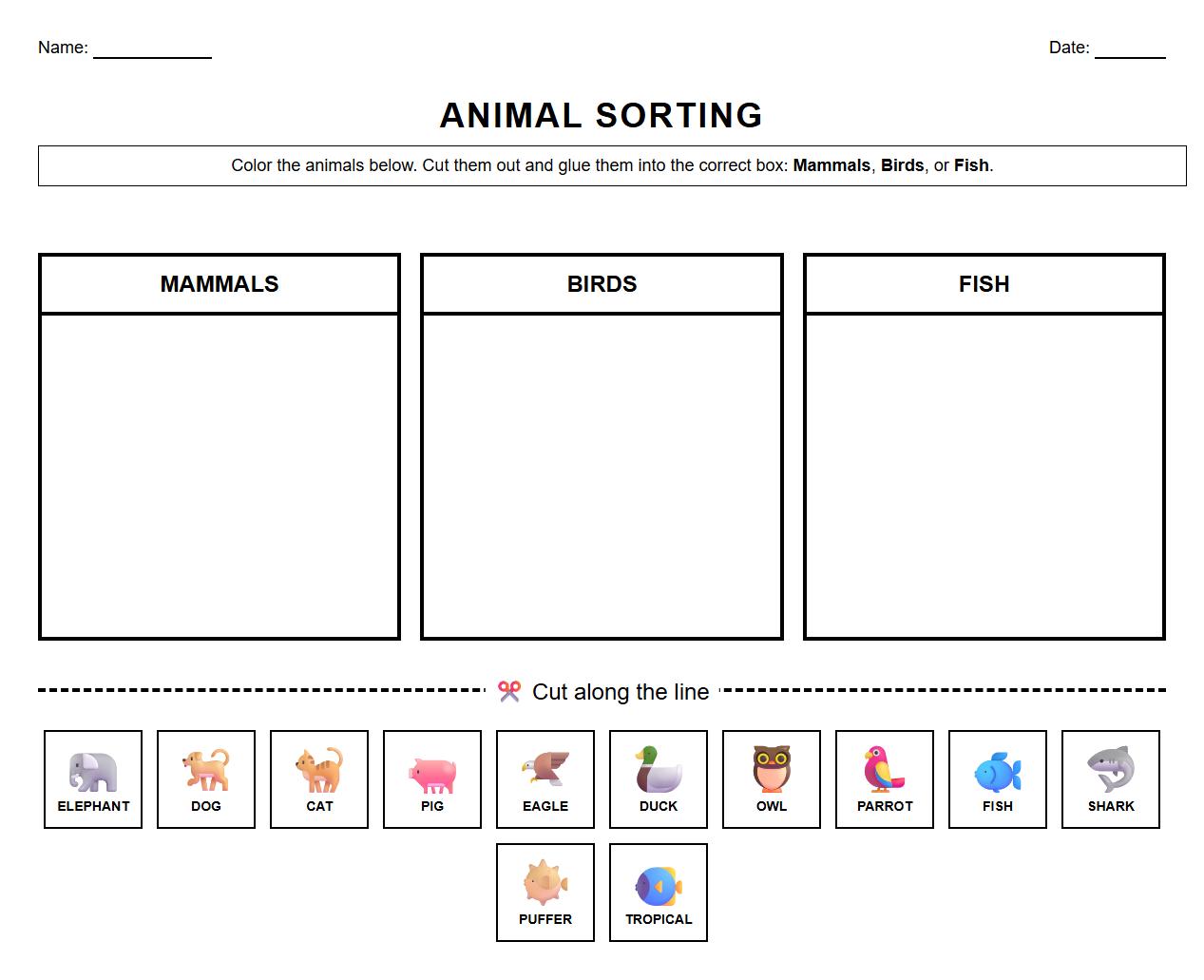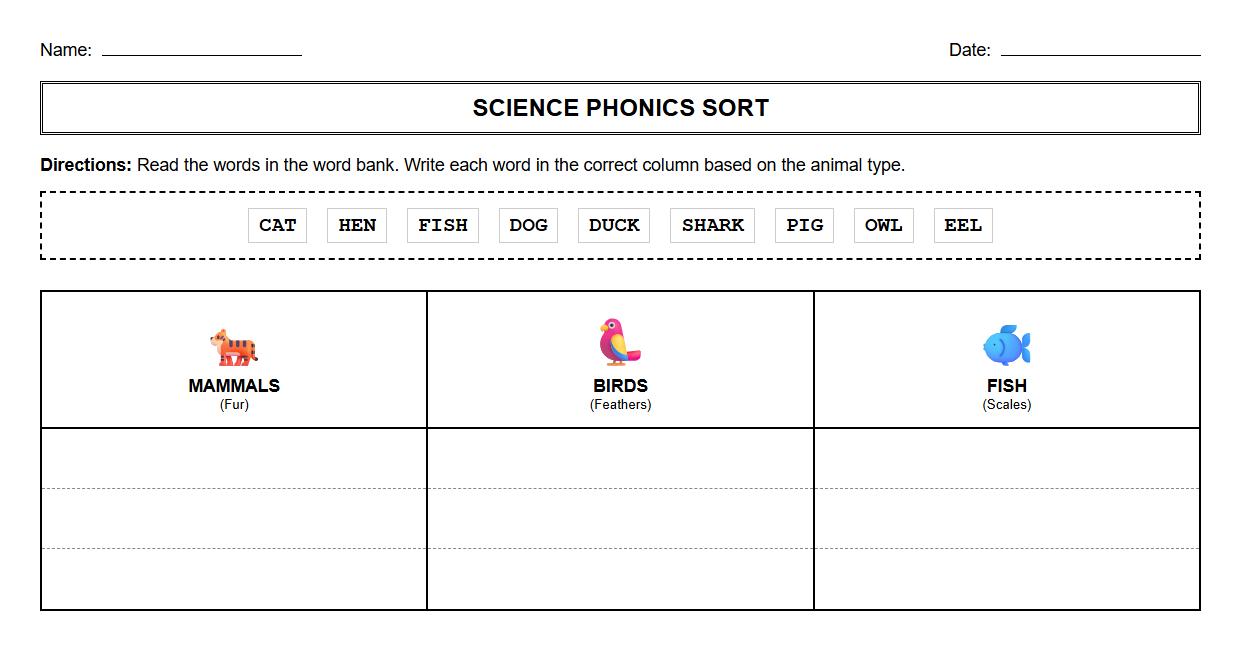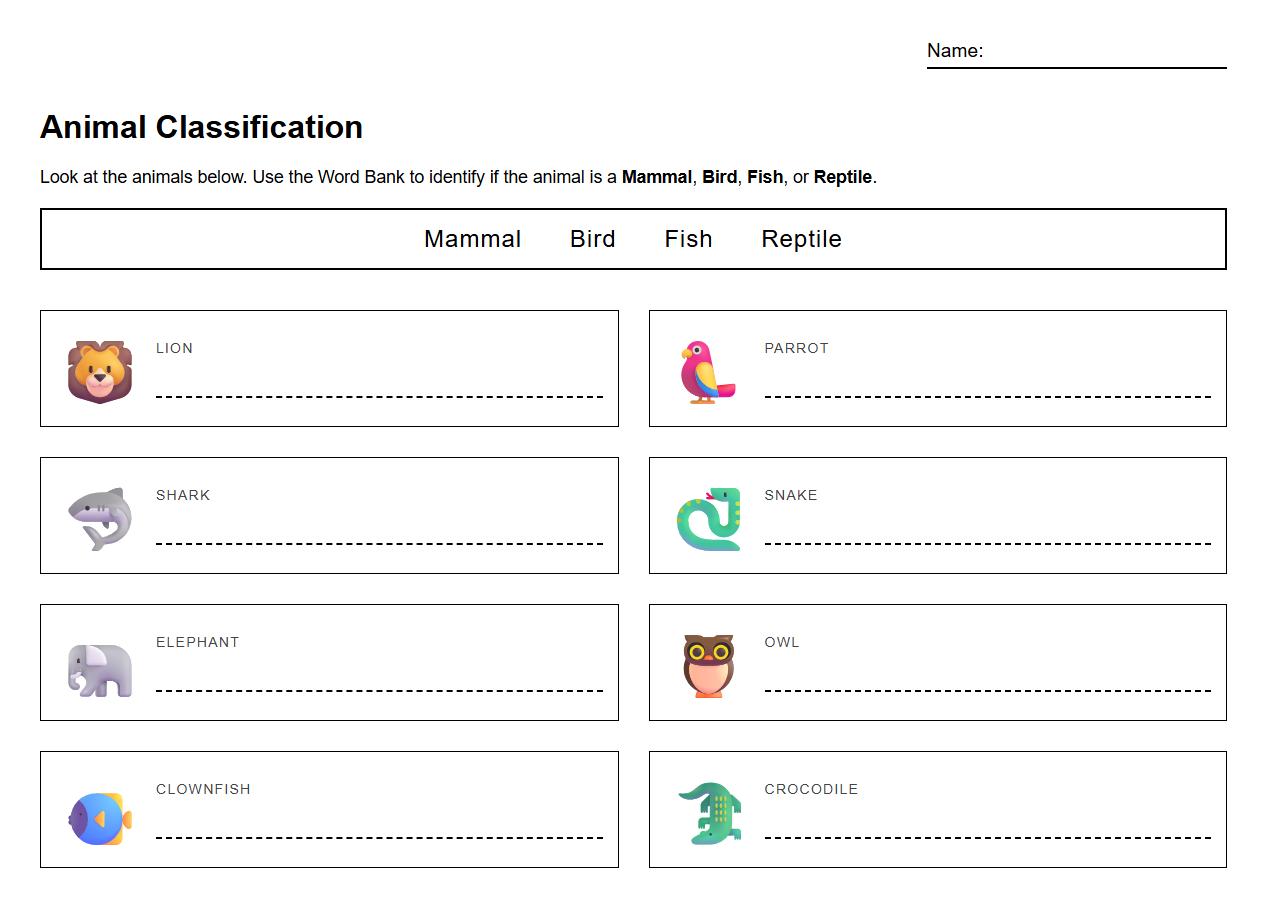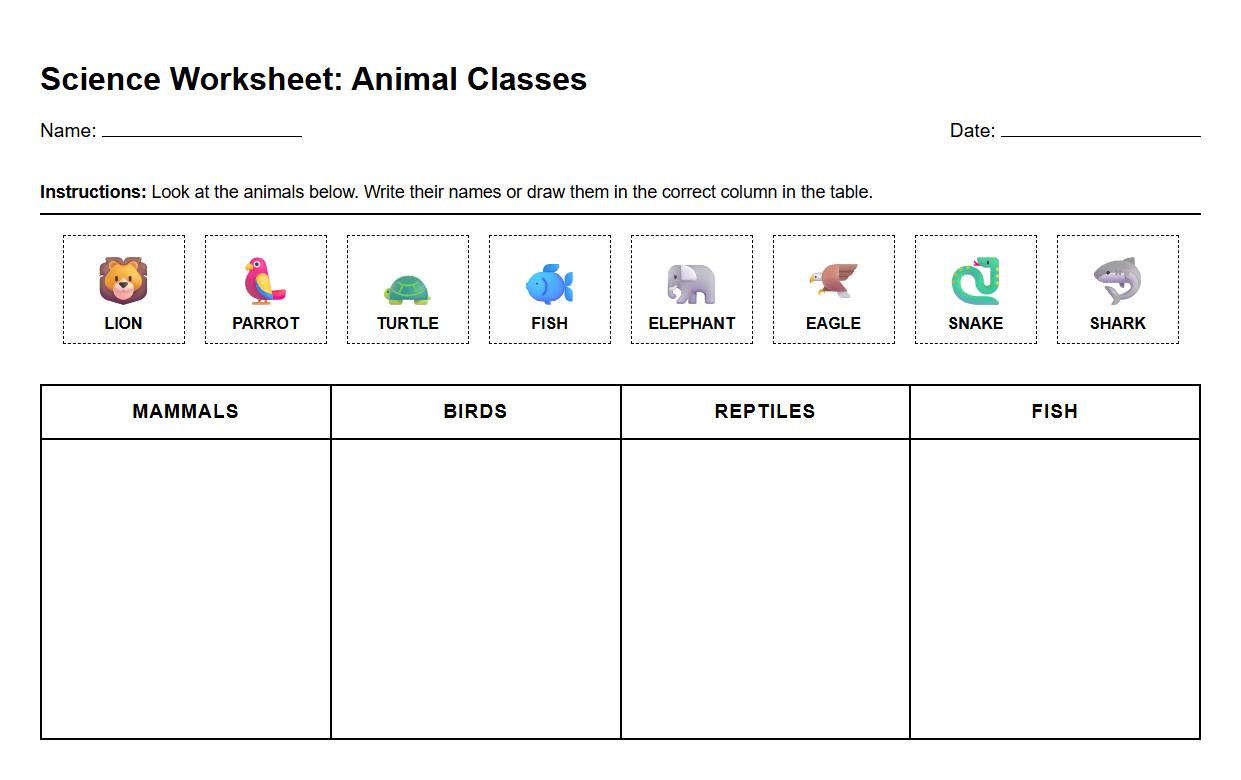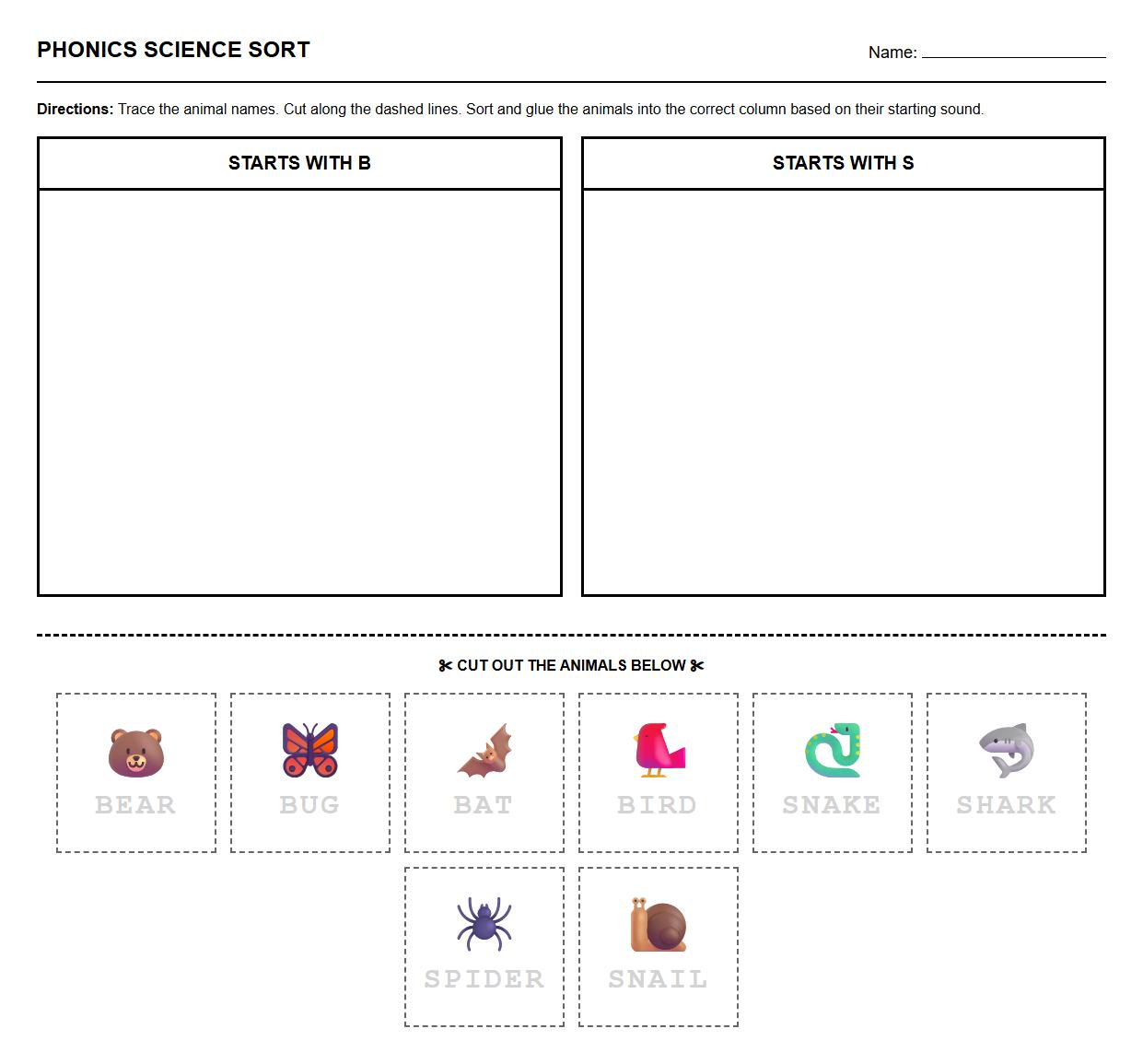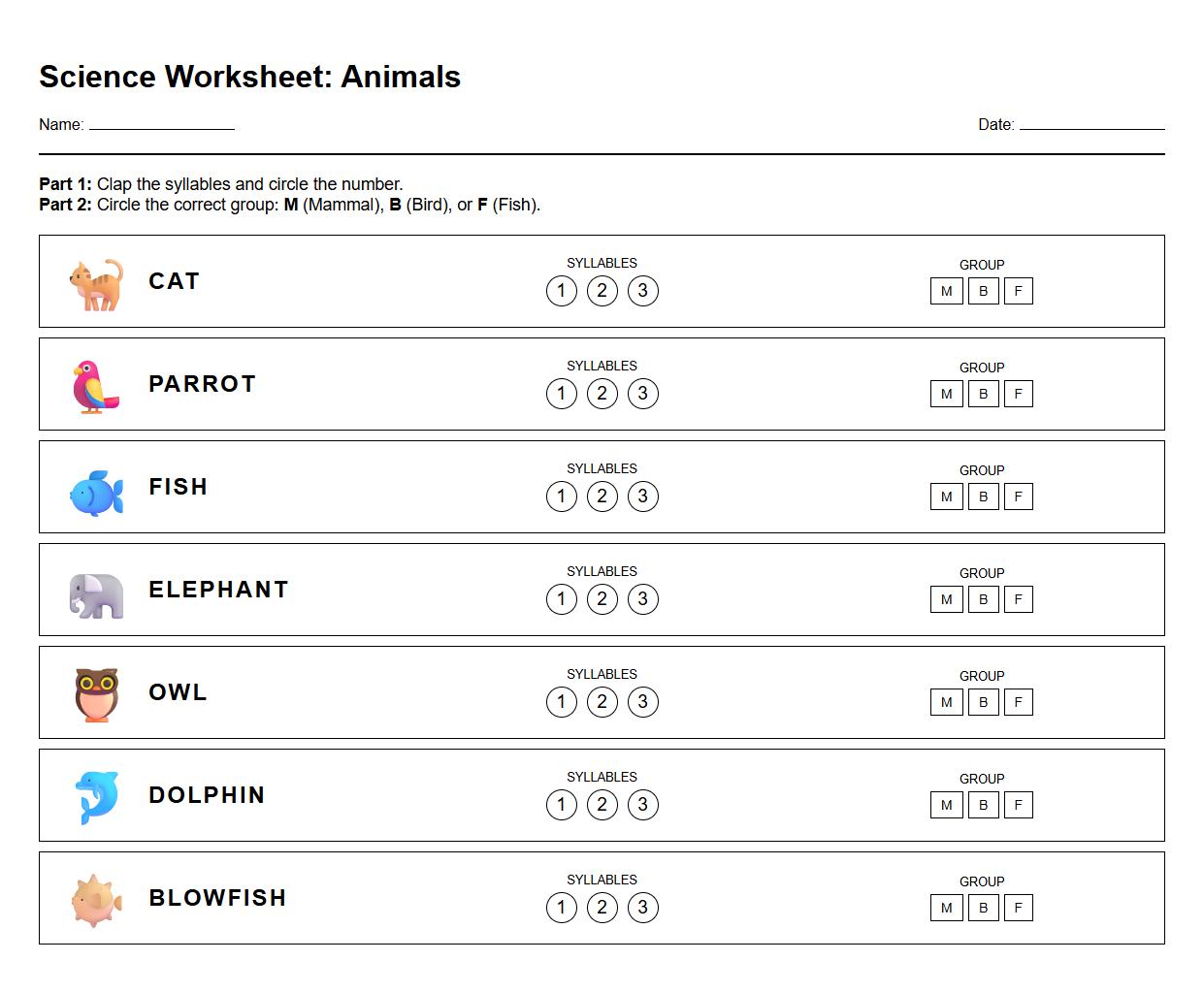
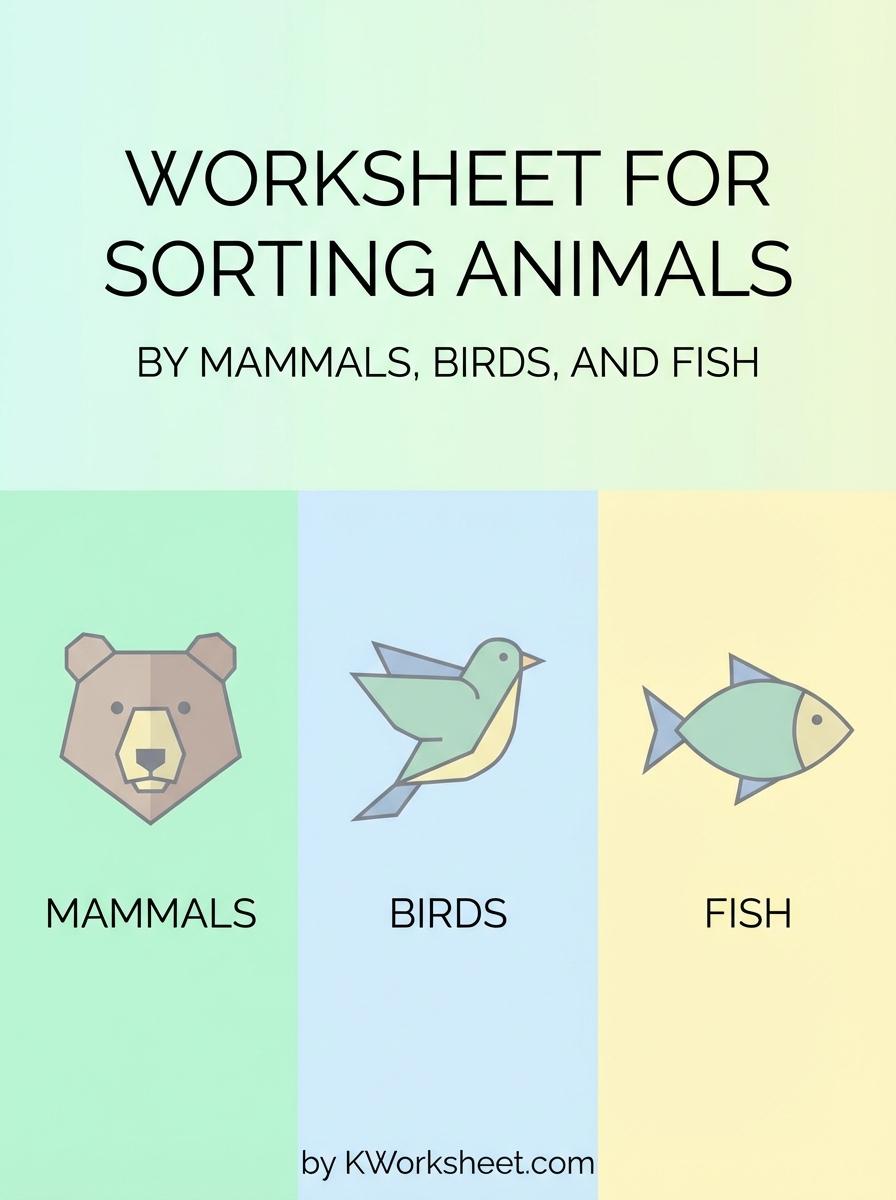
Sorting animals into categories such as mammals, birds, and fish enhances understanding of their unique characteristics and natural habitats. This worksheet offers engaging exercises that help identify key features like body coverings, reproduction methods, and respiratory systems. Explore the available worksheets to practice classifying animals while building foundational science skills.
Animals with Fur or Hair and Live Birth
Mammals are animals that have fur or hair and give birth to live young. Examples include lions, rabbits, and bears. Mammals nurse their babies with milk to help them grow strong. Teaching children about these helps them recognize animal characteristics.
Animals that Lay Eggs and Have Feathers
Birds are animals that lay eggs and are covered with feathers. Common birds include robins, owls, and sparrows. Birds use their feathers to fly and stay warm. Highlighting birds helps kids understand different animal groups.
Animals Living in Water with Scales
Fish live in water and are covered with scales. They breathe through gills and use fins to swim. Examples are goldfish, trout, and sharks. This knowledge helps children identify water animals in nature.
Identifying Mammals in Pictures
Ask children to circle all the mammals they see in the picture. This activity reinforces learning about animals with fur or hair that give birth to live young. It also sharpens observation skills. Parents and teachers can guide them during this fun exercise.
Animals that Can Fly and Have Beaks
Children should point to animals that can fly and have beaks in the image. These are typically birds, such as eagles, pigeons, and parrots. This helps kids connect physical features with animal behavior. It also builds vocabulary related to nature.
Animals Breathing with Gills and Having Fins
Fish breathe using gills and have fins for swimming. Identifying these features assists children in understanding aquatic life. Encourage kids to explain why these traits are important for living underwater. This deepens their comprehension of animal habitats.
Matching Animals to Their Group
Draw lines to match animals to their group: mammal, bird, or fish. This interactive task helps children categorize animals based on key characteristics. It promotes critical thinking and sorting skills. Visual connections make learning easier for kindergarten students.
The Dolphin's Animal Group
The dolphin belongs to the mammal group, not fish. Although dolphins live in water, they breathe air and have live births. Explaining this fact clears common misconceptions among children. It encourages curiosity about animal classifications.
Animals that Build Nests and Lay Eggs
Look for the animal that builds a nest and lays eggs, usually a bird. Birds like robins and eagles create nests to protect their eggs and young. Observing this behavior helps children understand animal reproduction. Nest-building is a fascinating animal habit to explore.
Animals that Swim Underwater for a Long Time
Identify animals that can swim underwater for a long time, such as fish and some mammals like dolphins or seals. These animals have adaptations like gills or strong lungs to stay submerged. Recognizing these helps kids appreciate how animals survive in different environments. Such discussions promote respect for wildlife diversity.


Phonics Activity Worksheet for Identifying Weather Vocabulary