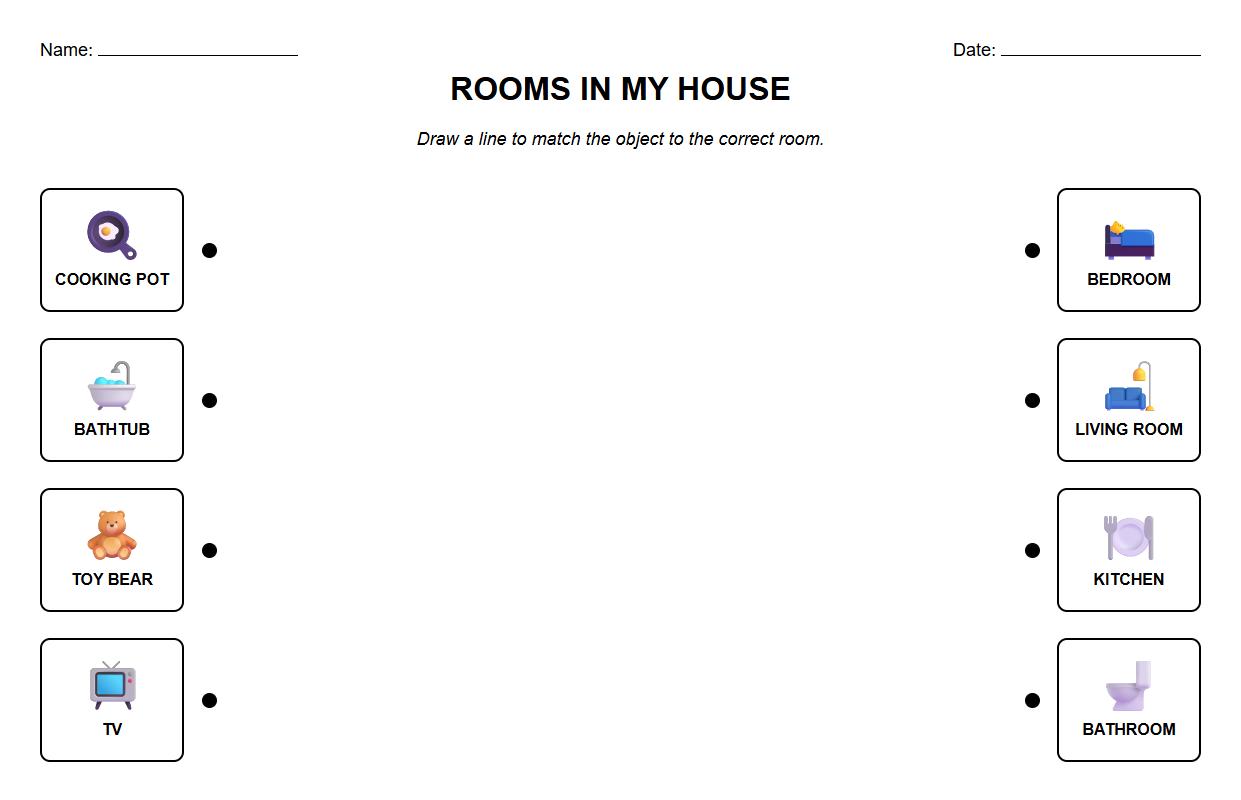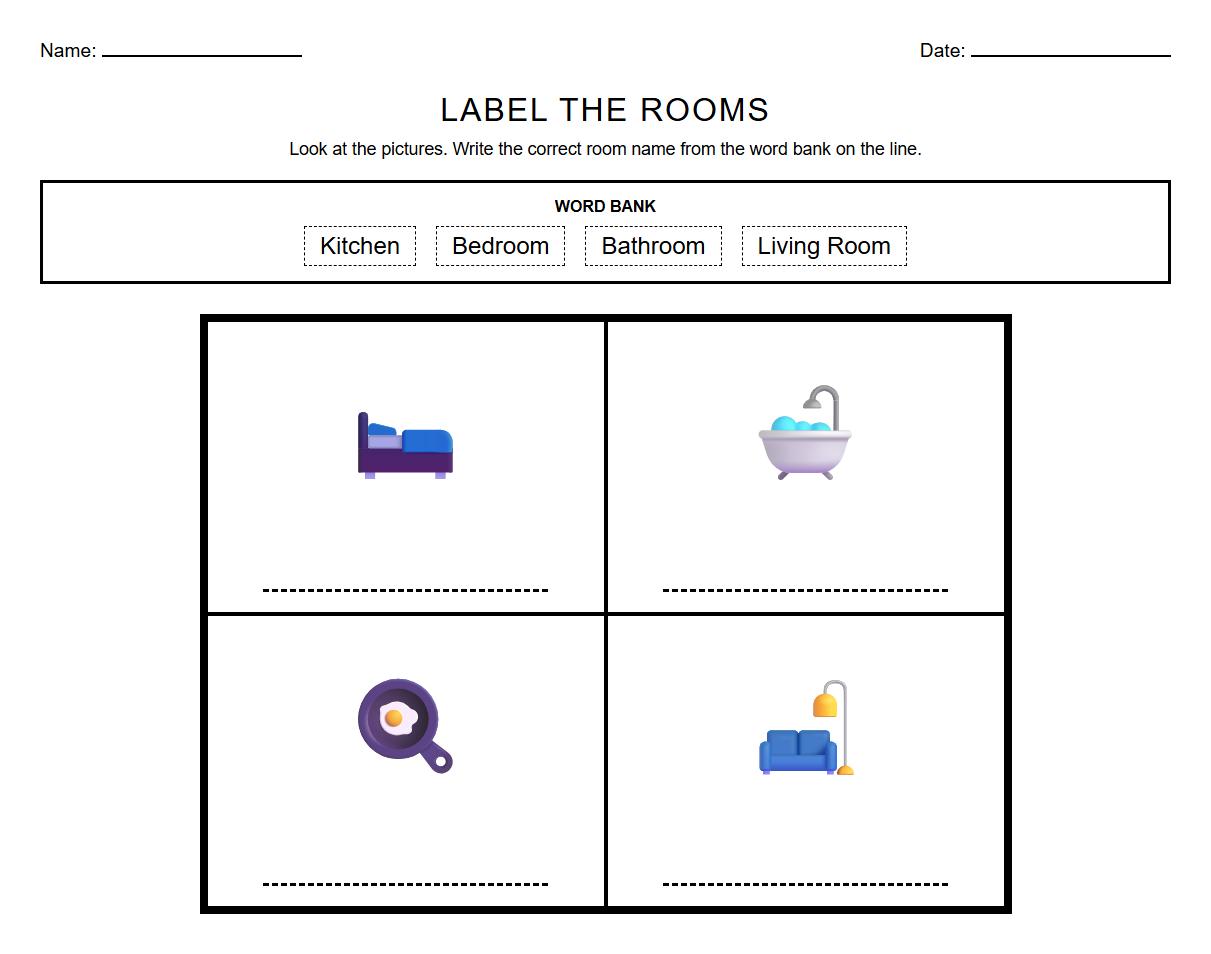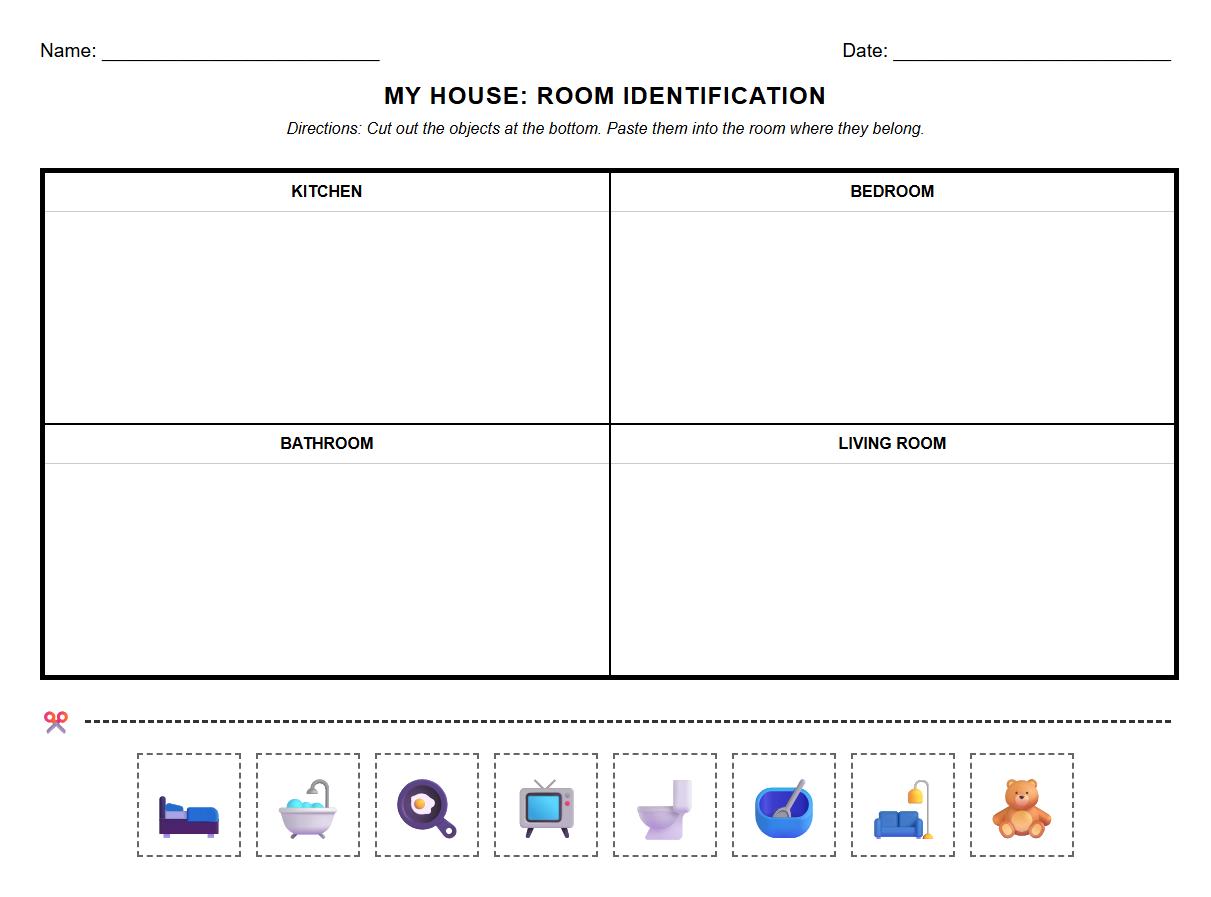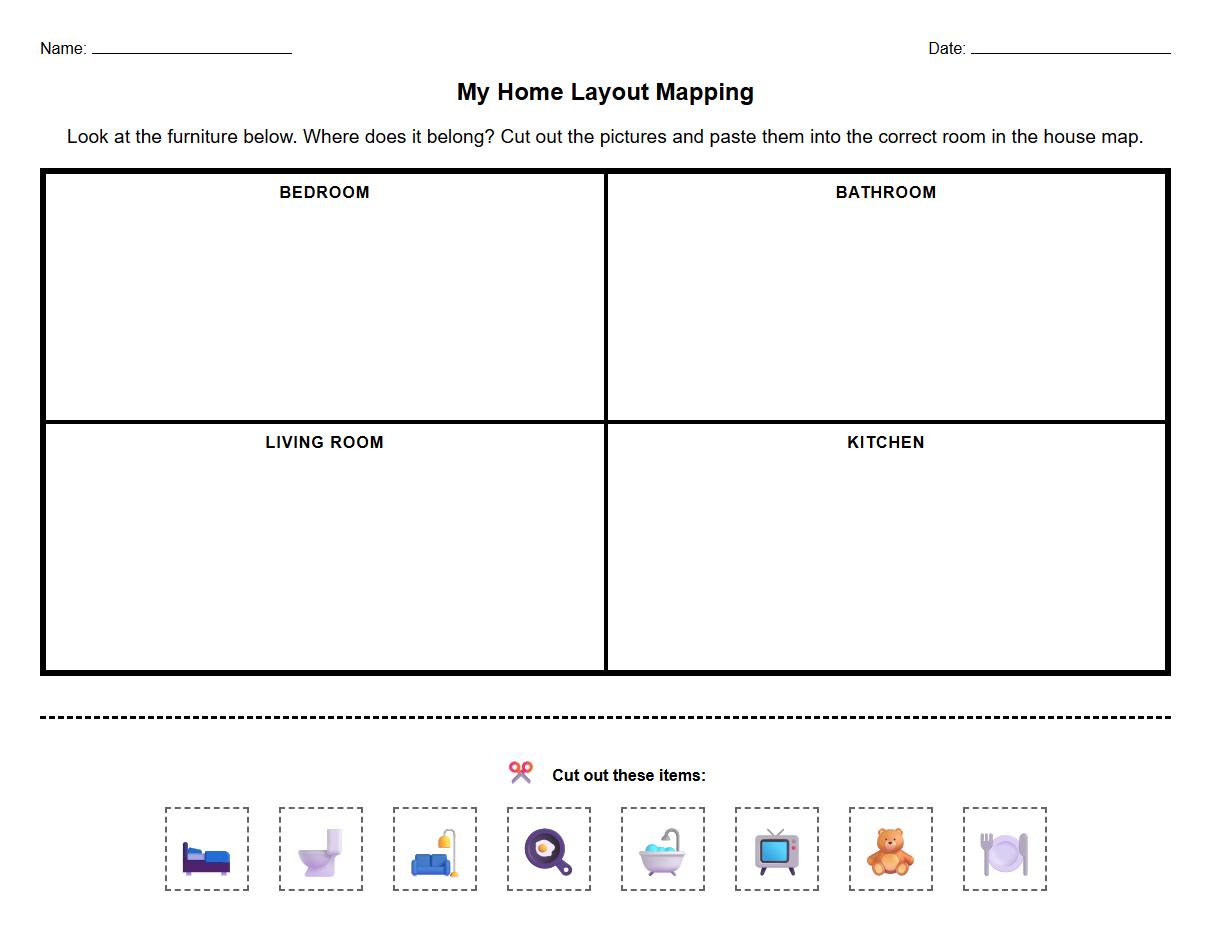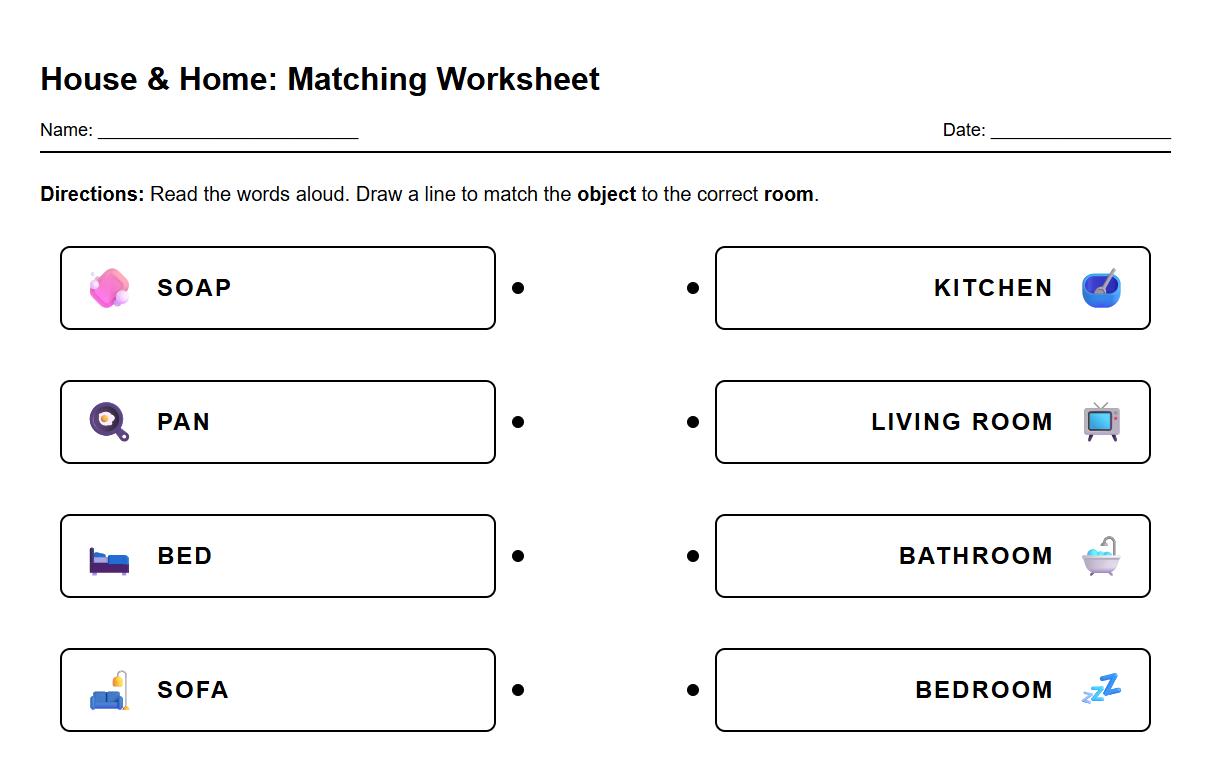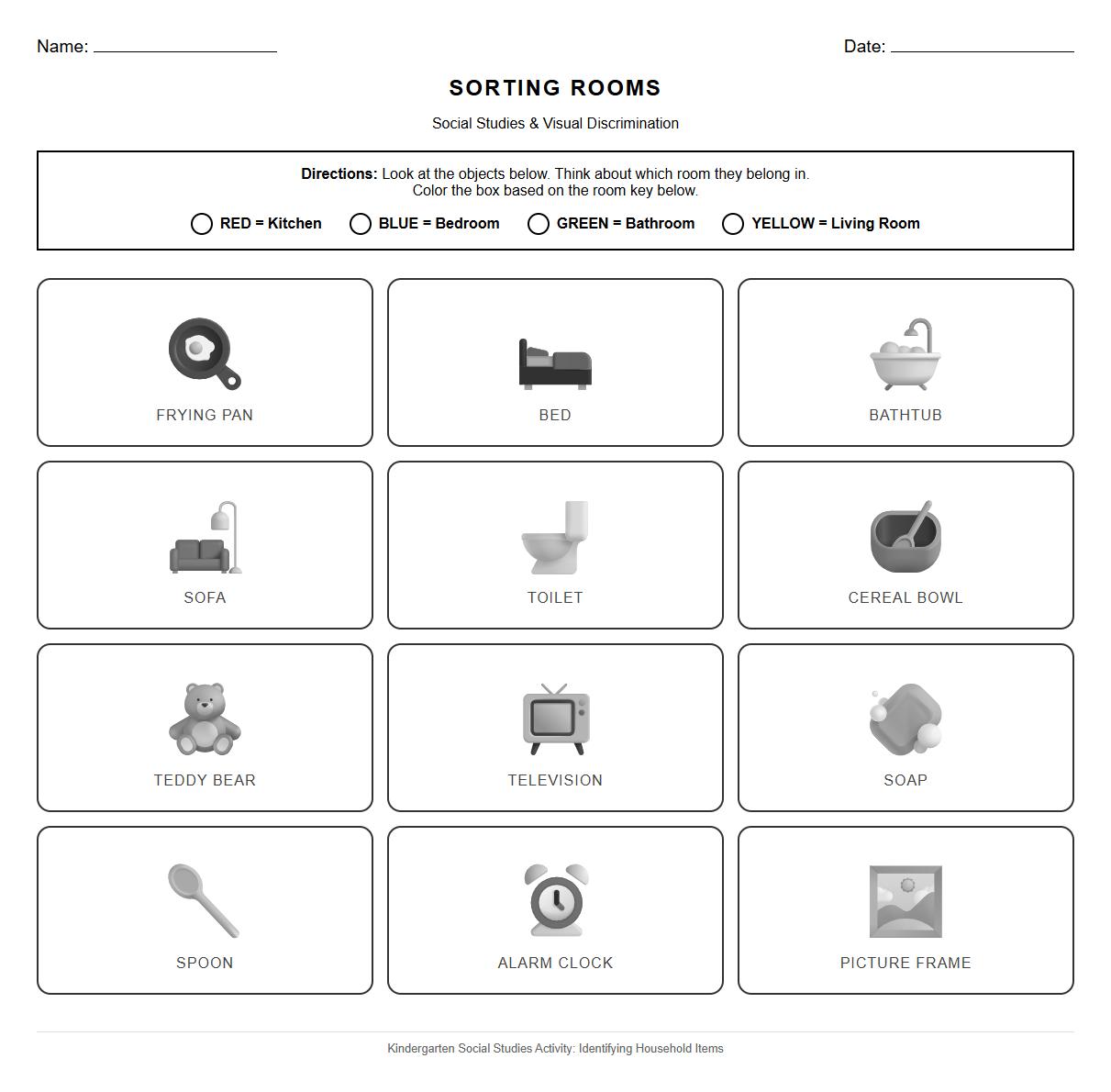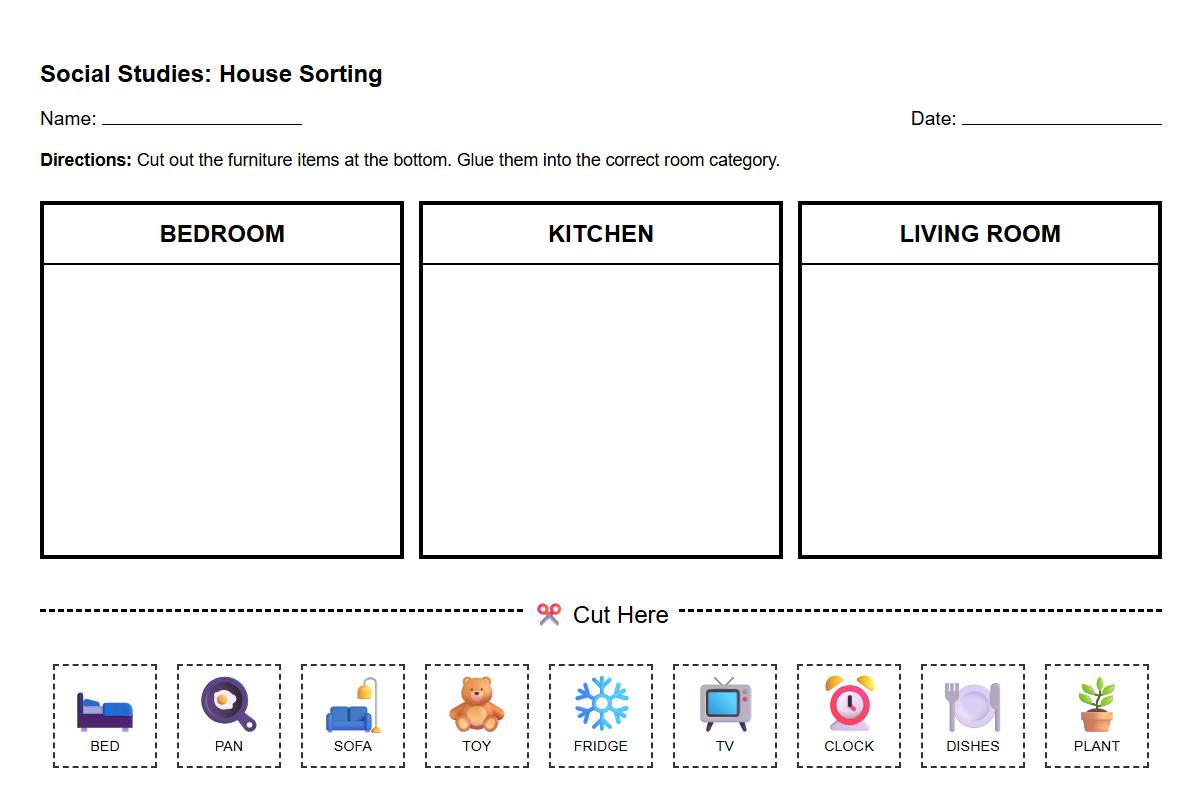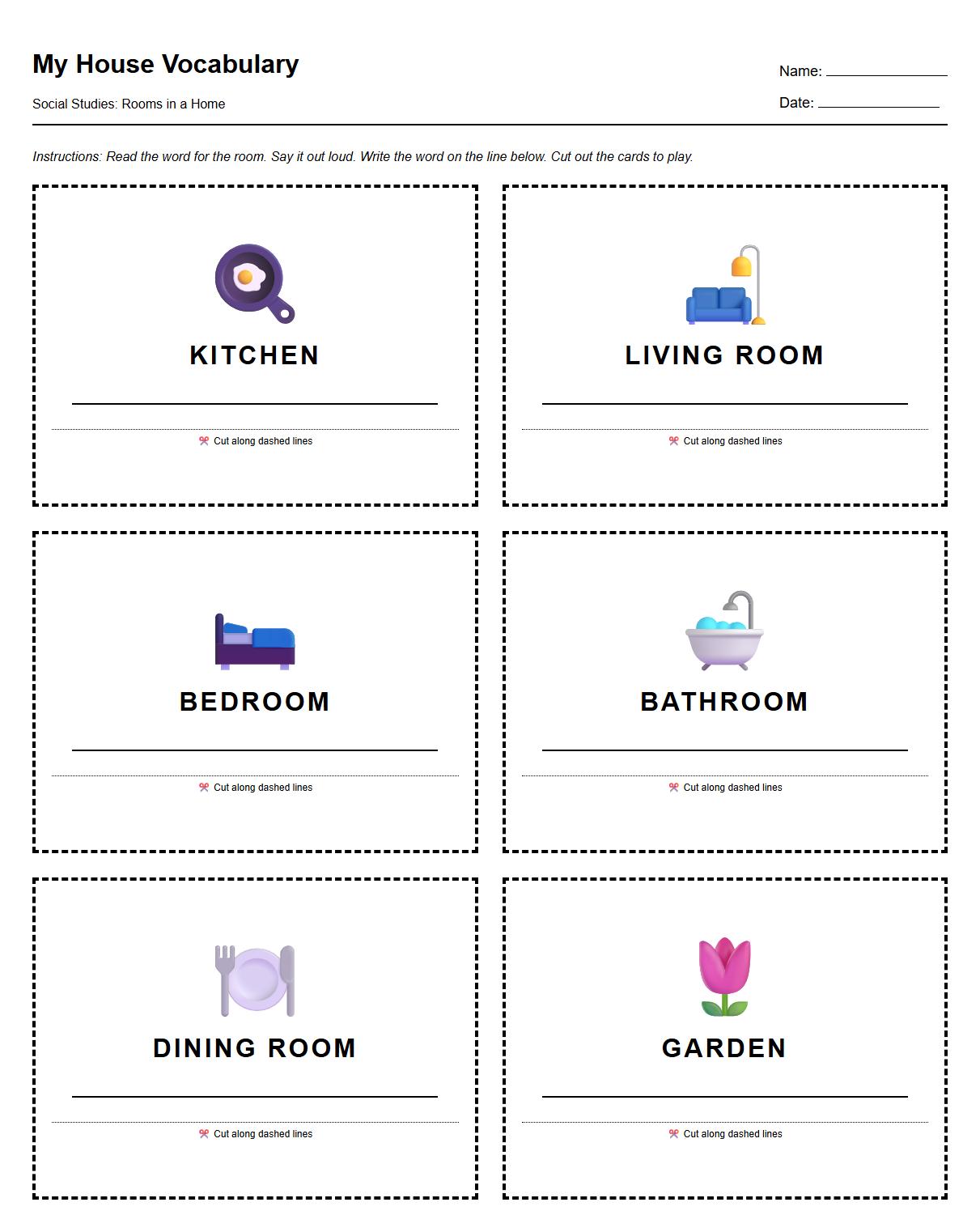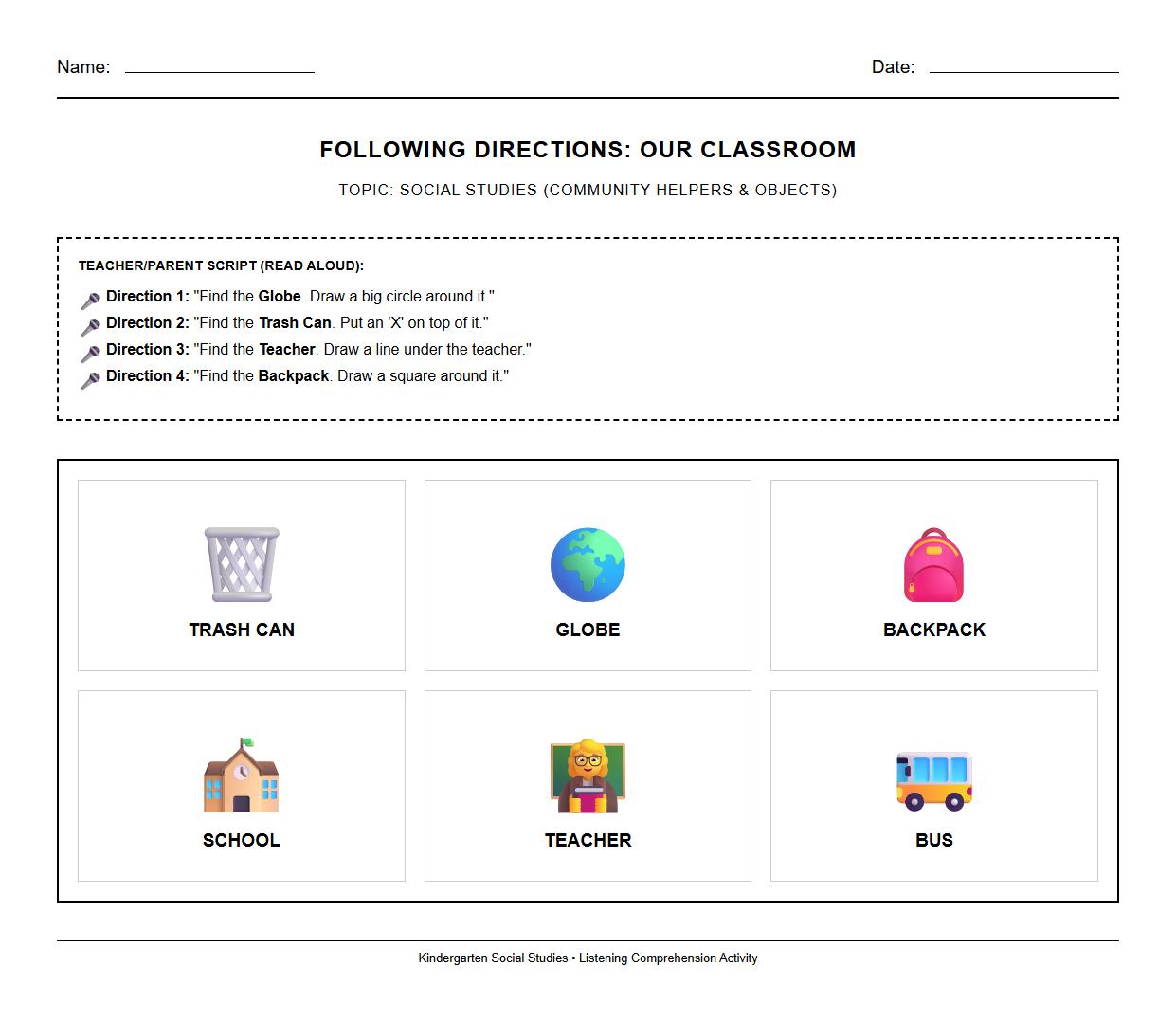
Young learners can enhance their vocabulary and spatial awareness by identifying common rooms in a house through engaging activities. This worksheet helps kindergarteners recognize and label rooms such as the kitchen, bedroom, and bathroom, fostering early reading and critical thinking skills. Explore the available worksheets to support your child's learning journey at home.
Understanding Home Rooms for Kindergarten
This worksheet helps children identify different rooms in their home and learn their main purposes. By answering simple questions, kids will associate everyday activities with specific places, such as where they sleep, eat, and brush their teeth. This activity encourages observation and vocabulary development for young learners in a fun way. Teachers and parents can use it to reinforce home safety and routine familiarity.
Sleep and Personal Hygiene Locations
Children learn to recognize the room where they sleep, usually the bedroom, and where they brush their teeth, typically the bathroom. Discussing these spaces helps establish daily routines and personal care habits. Parents and teachers can guide children to mention the bathroom and bedroom while completing the worksheet. Encouraging descriptive answers strengthens language skills and memory.
Meal and Family Gathering Spots
This section focuses on identifying the kitchen or dining room as the place for eating meals and finding the fridge. Additionally, children discover where the family watches TV, usually in the living room. These questions help kids understand typical household arrangements and promote discussions about family time and nutrition. The worksheet supports building awareness of shared spaces and family routines.
Bathroom and Playroom Identification
Children explore questions about where they take a shower and where toys are kept, likely the bathroom and playroom or bedroom. This activity encourages children to talk about their daily cleaning habits and storage of personal items. Recognizing the stove in the kitchen also teaches safety around cooking areas. Such discussion promotes home safety awareness in a child-friendly way.
Bedtime and Living Room Furniture
Children identify where they read bedtime stories, often in the bedroom, and where the sofa is located in the house, usually the living room. These questions help children associate objects and activities with specific rooms. The activity encourages storytelling and imagination, fostering a love for reading and family bonding. Parents and teachers can use it as a prompt to create bedtime rituals and encourage reading habits.


Simple Sentence Building with Family Words Phonics Sheet