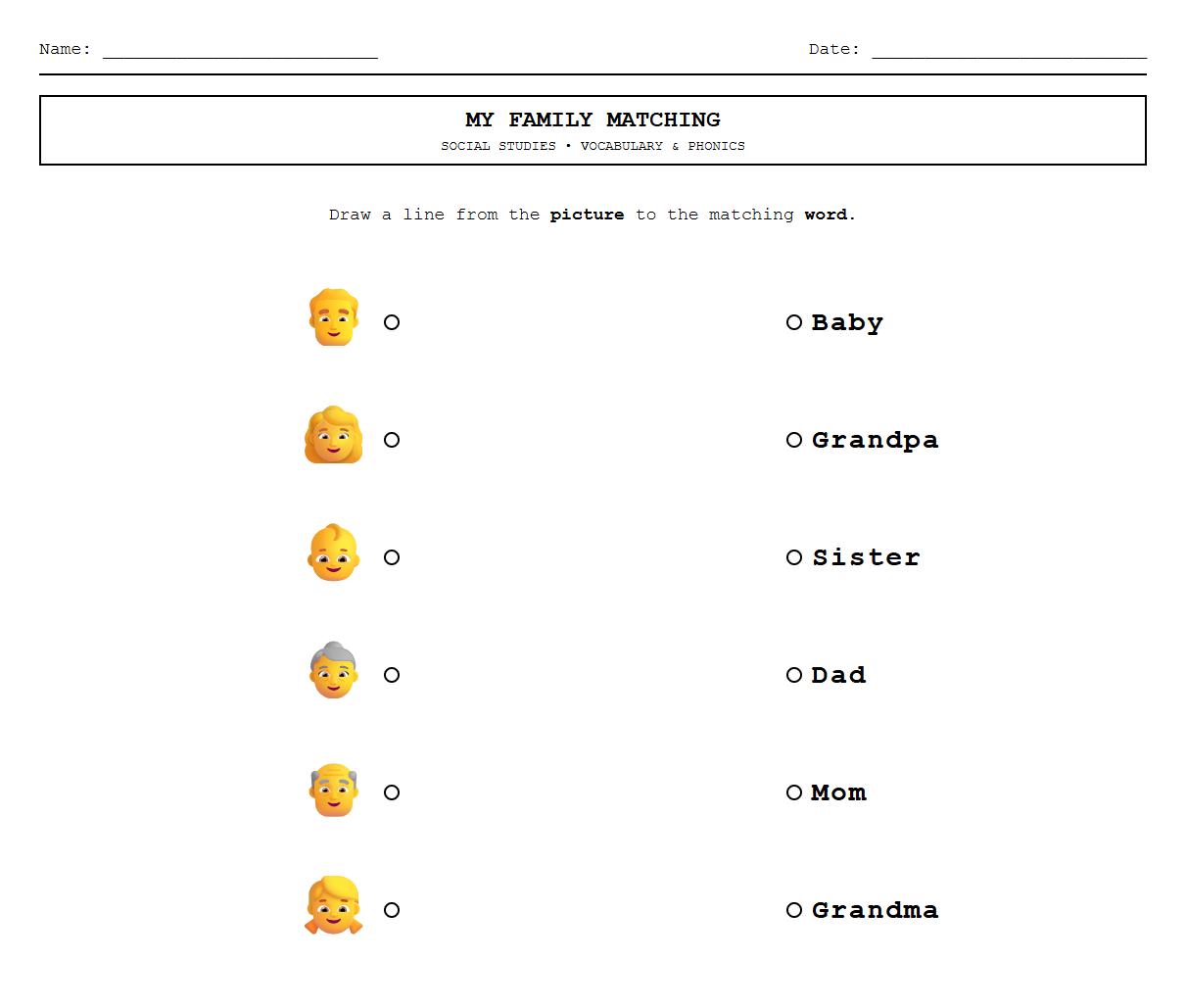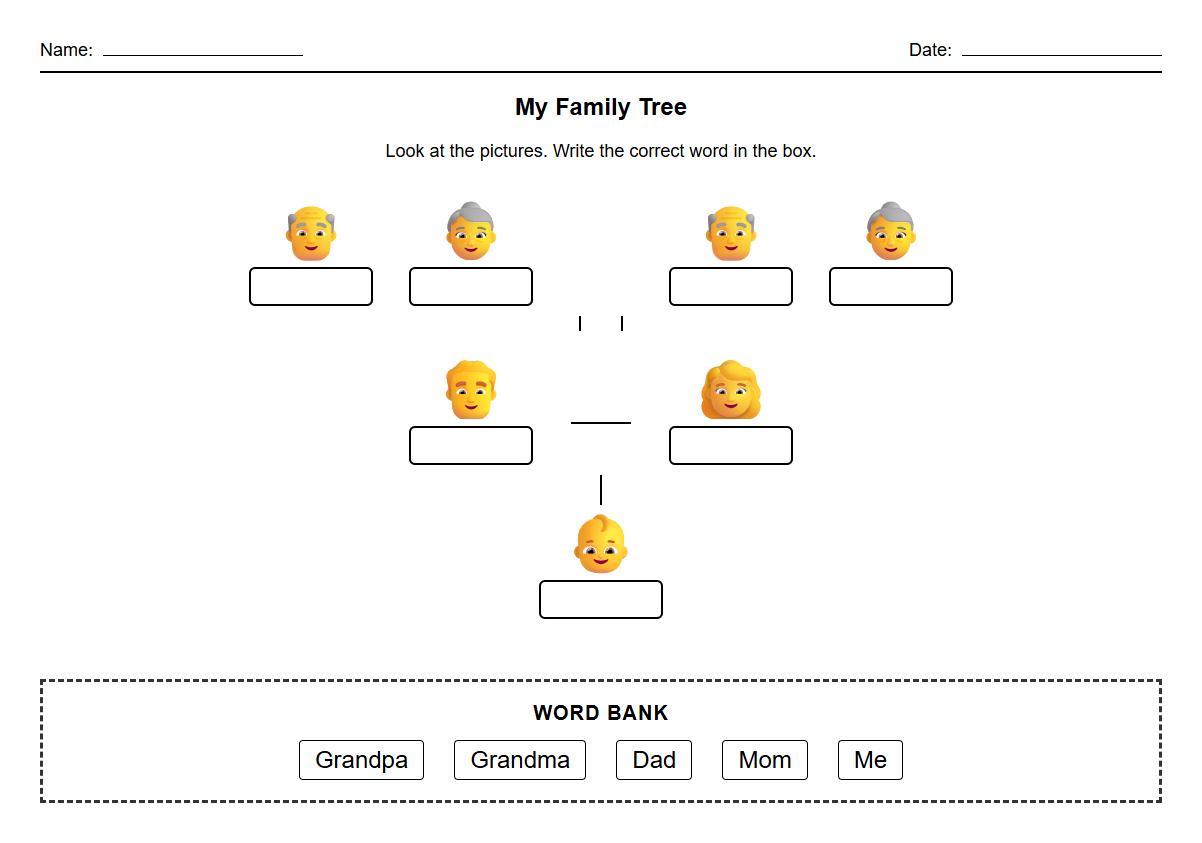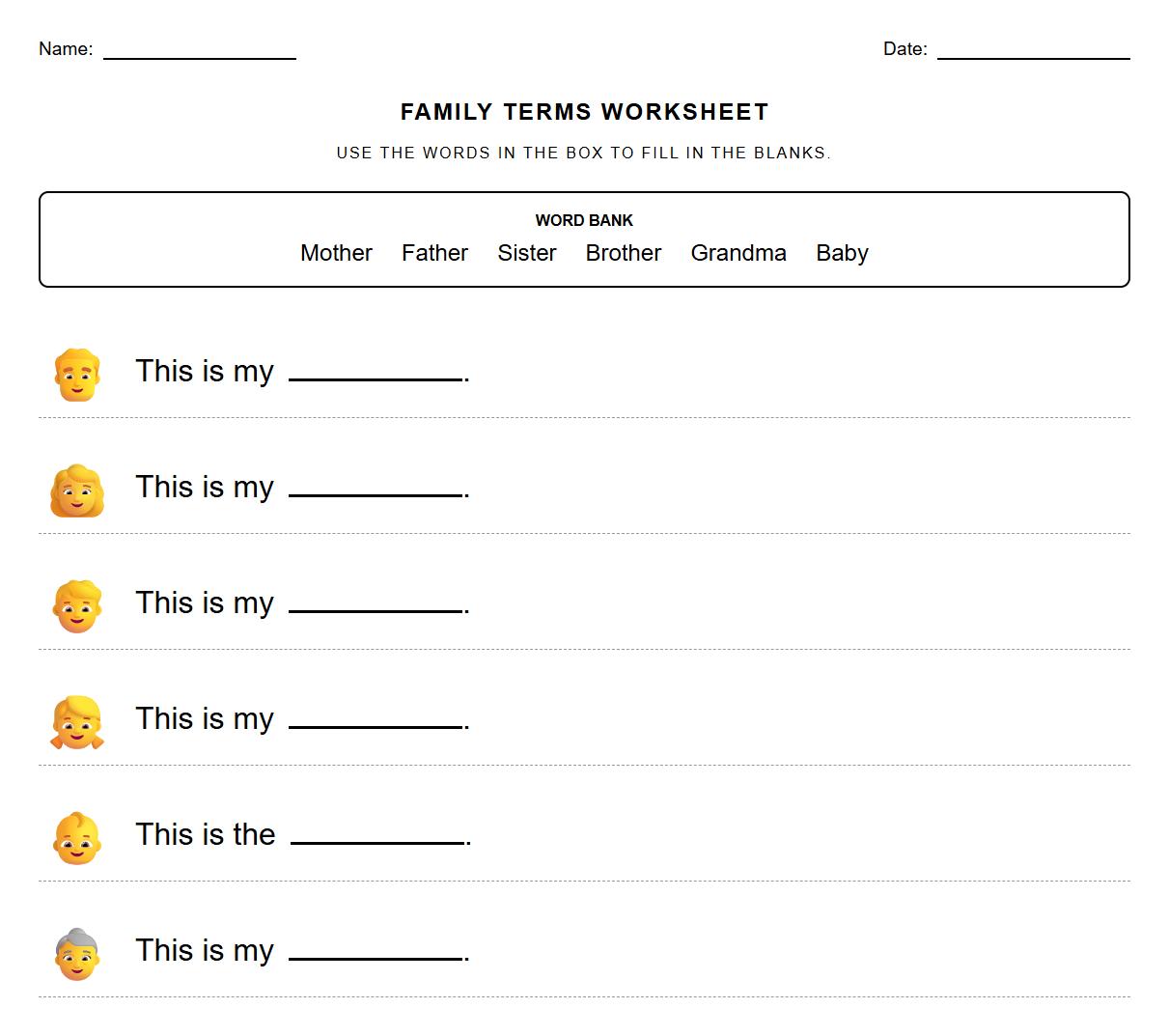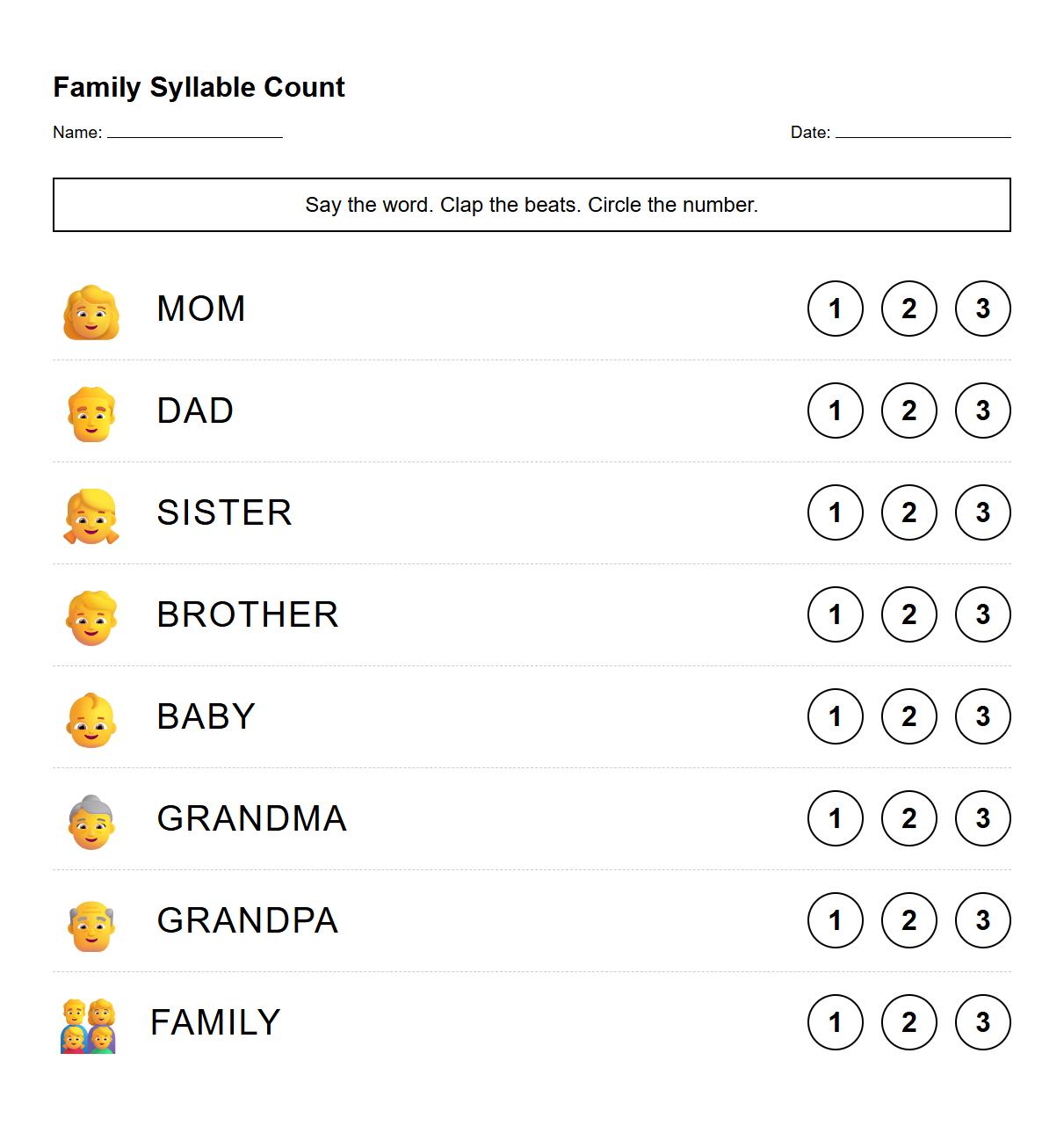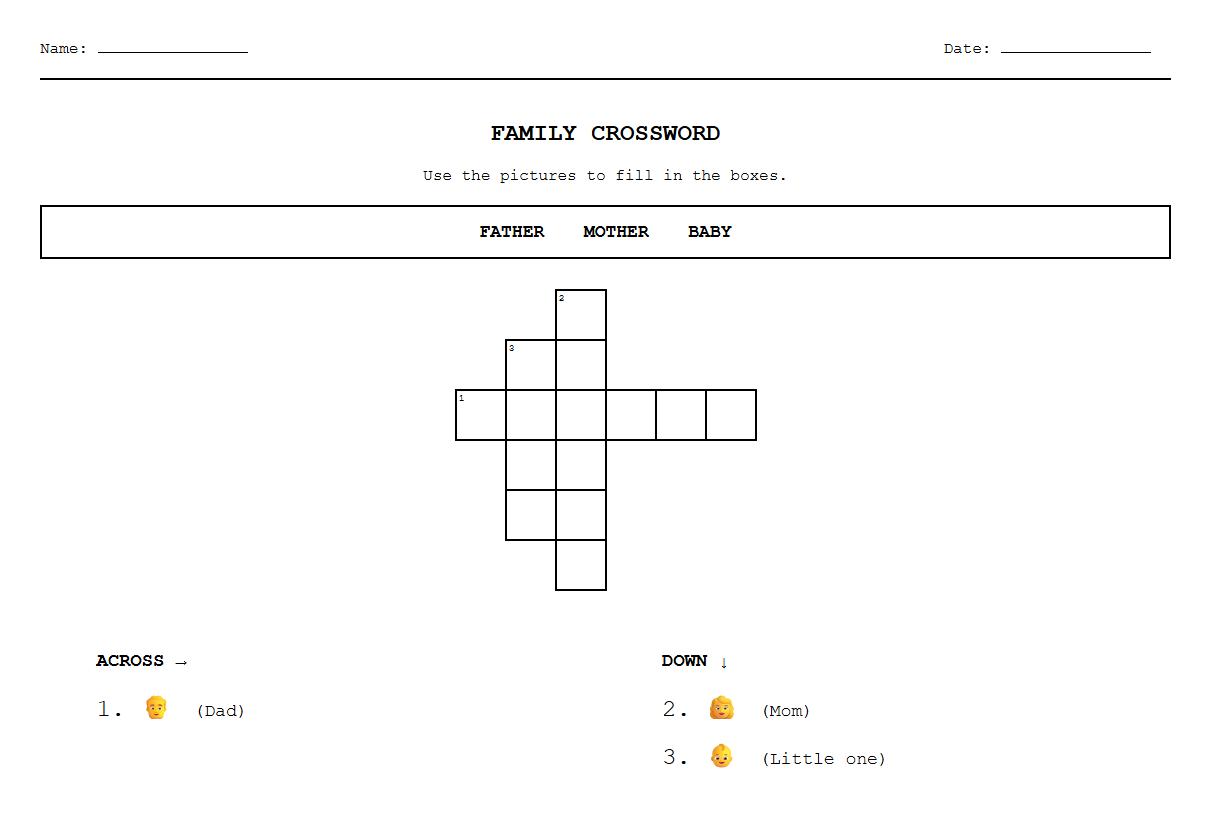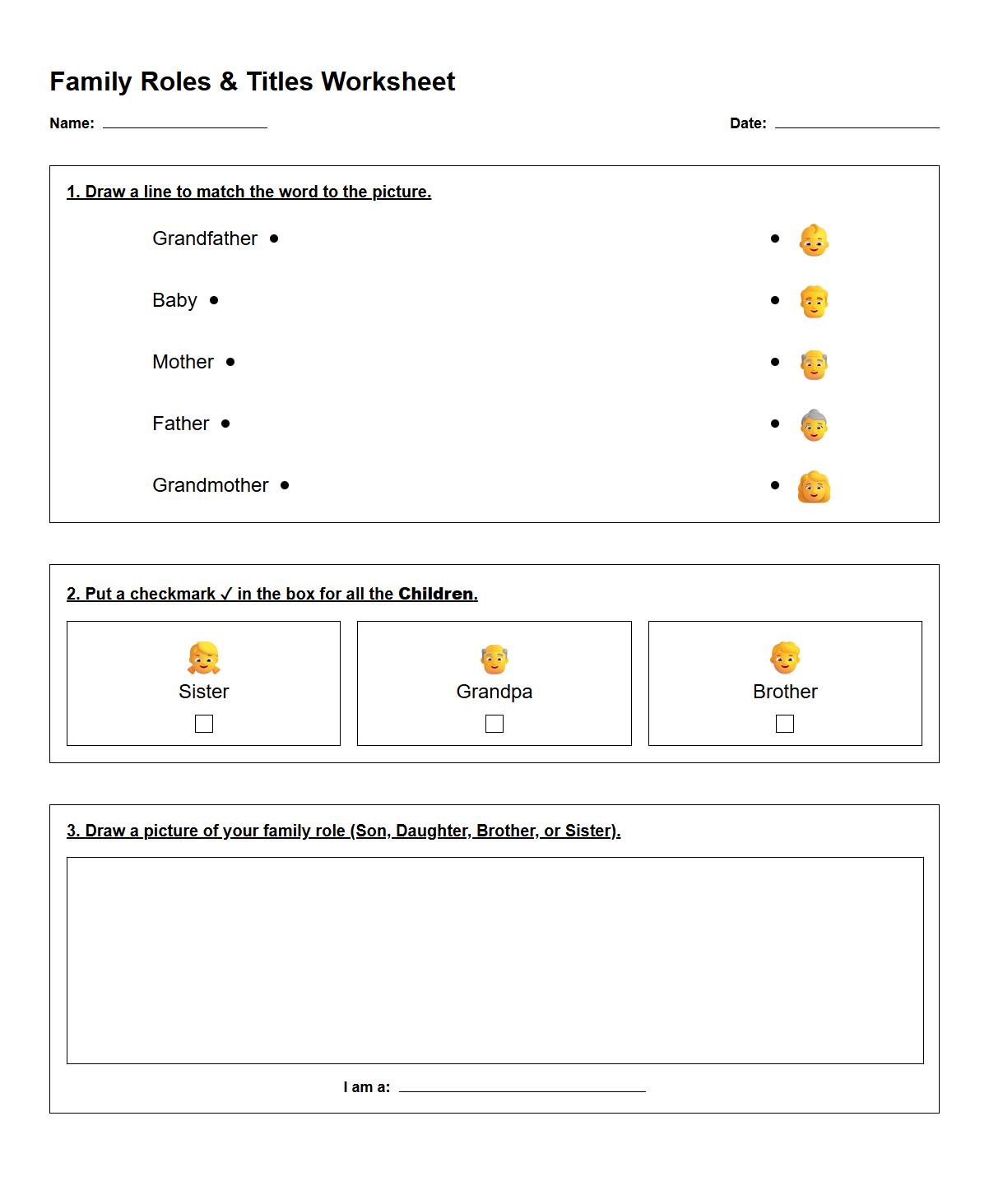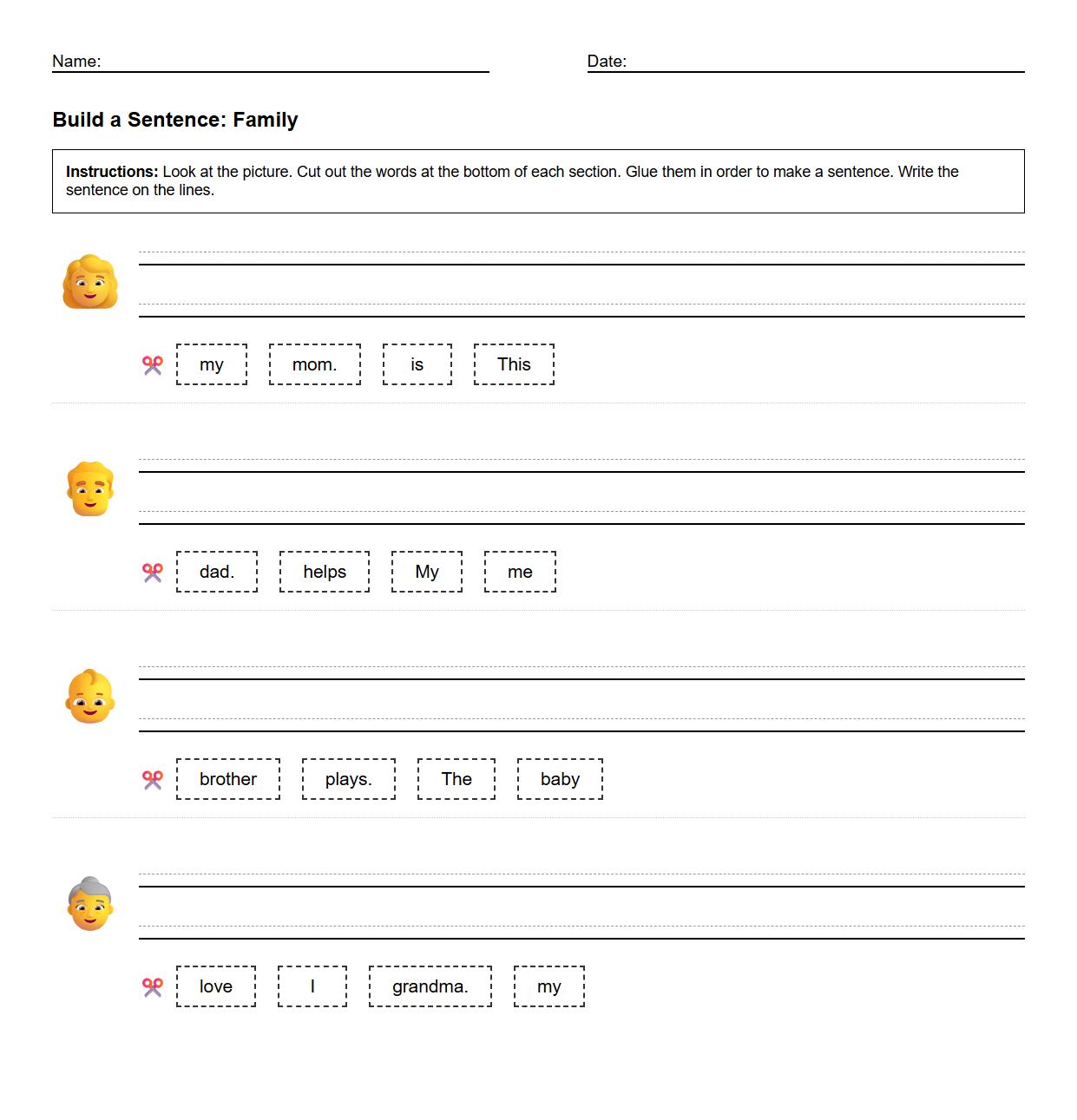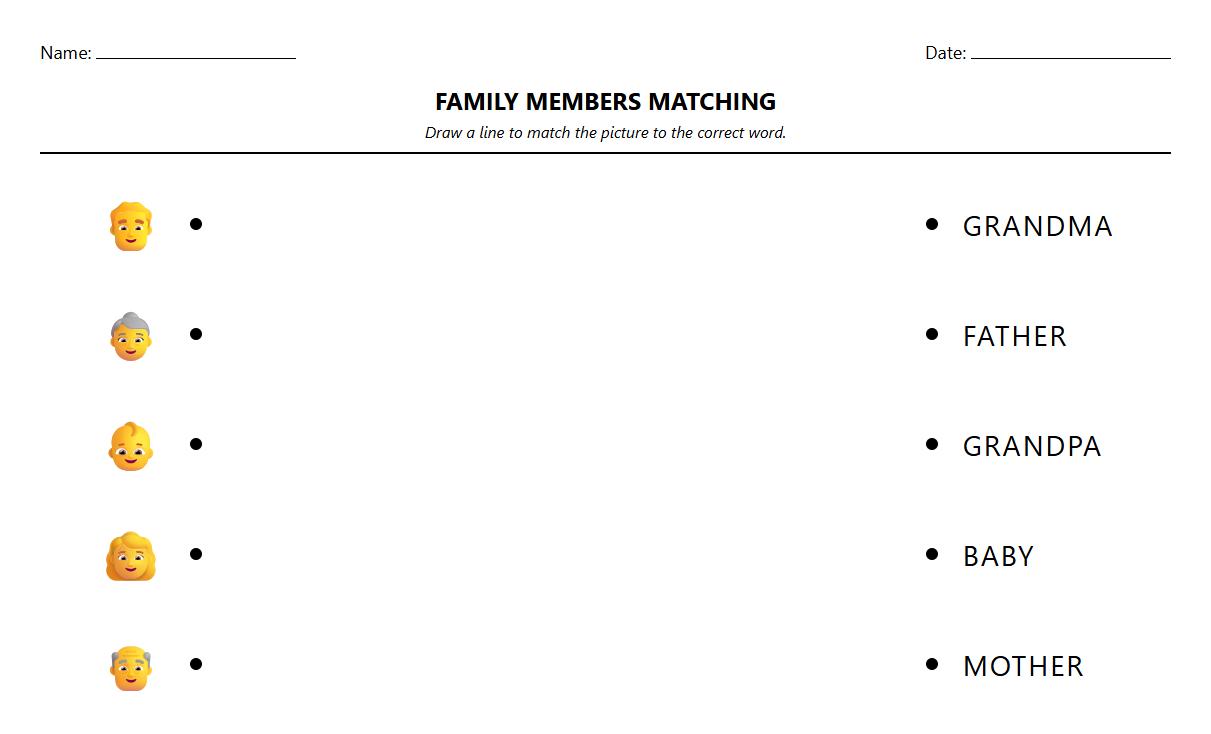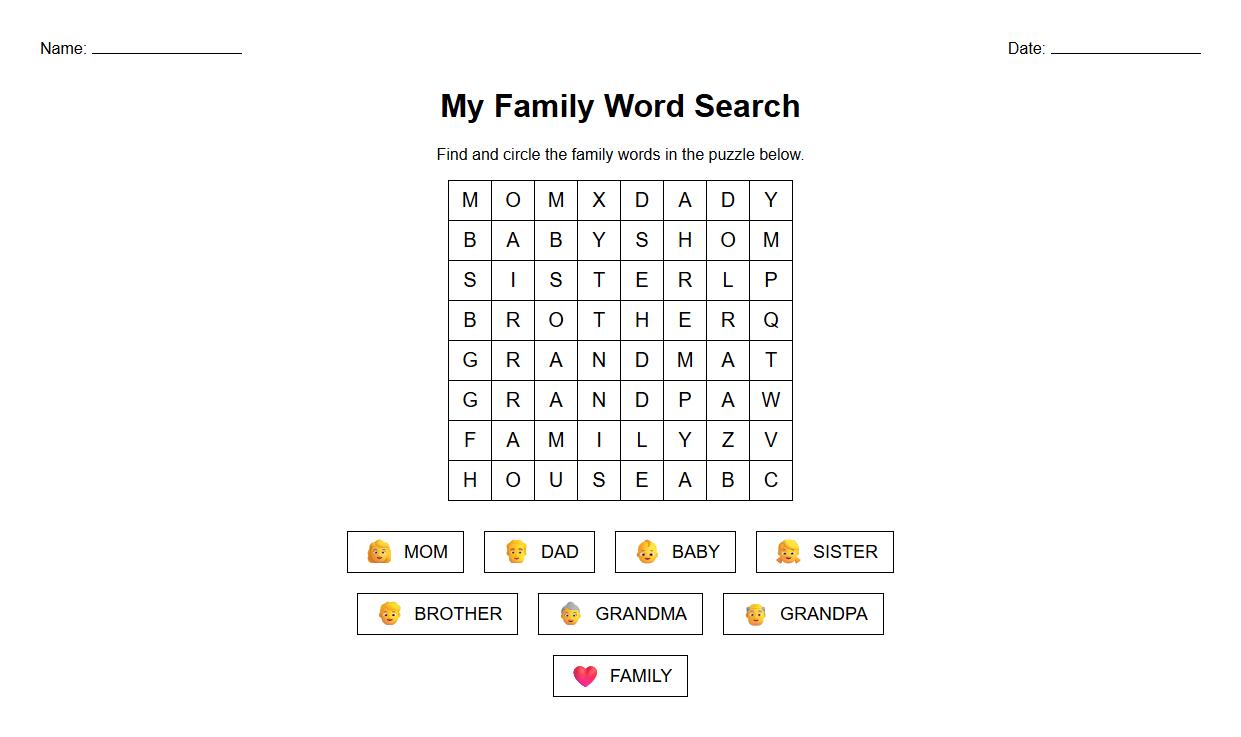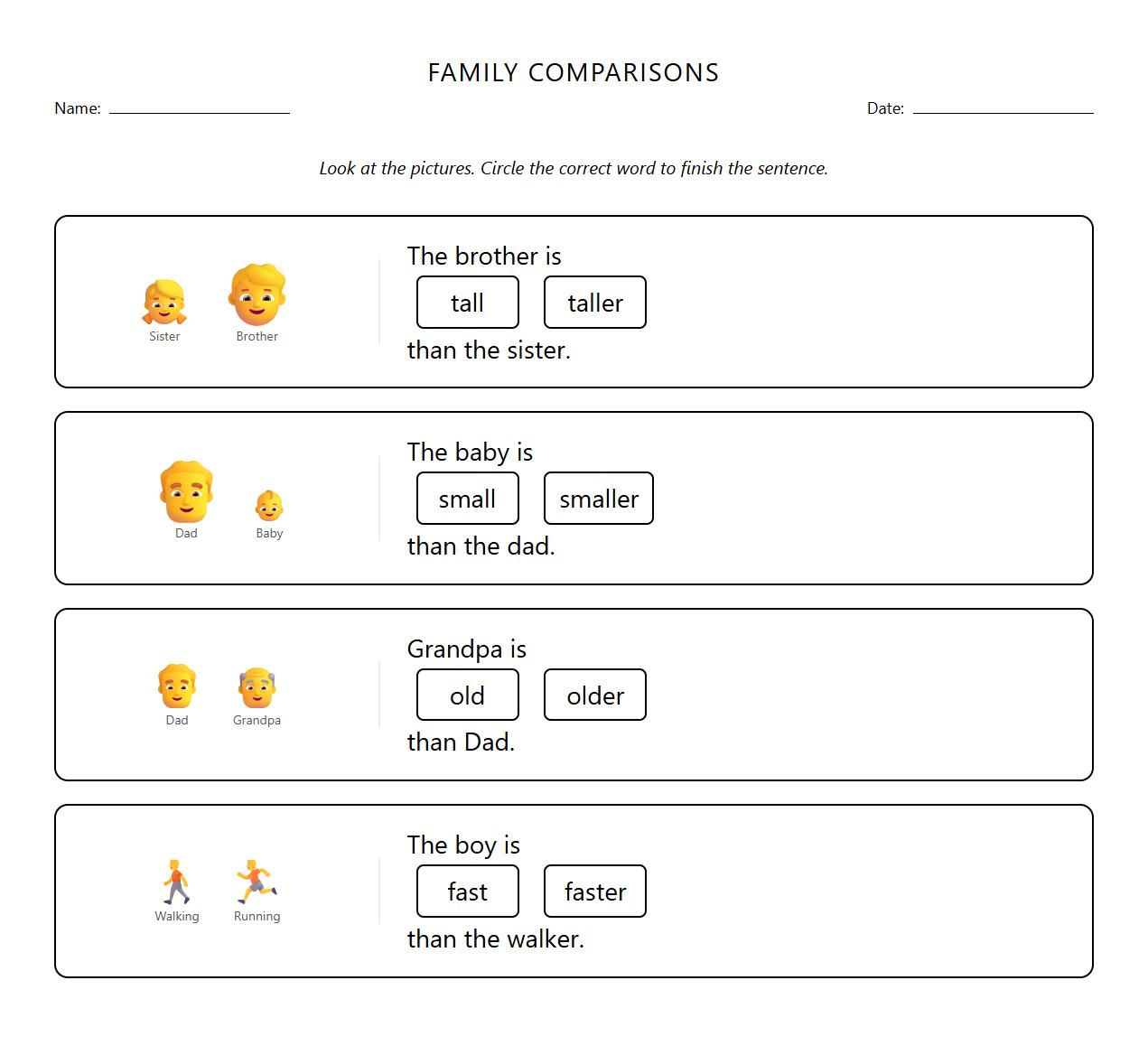
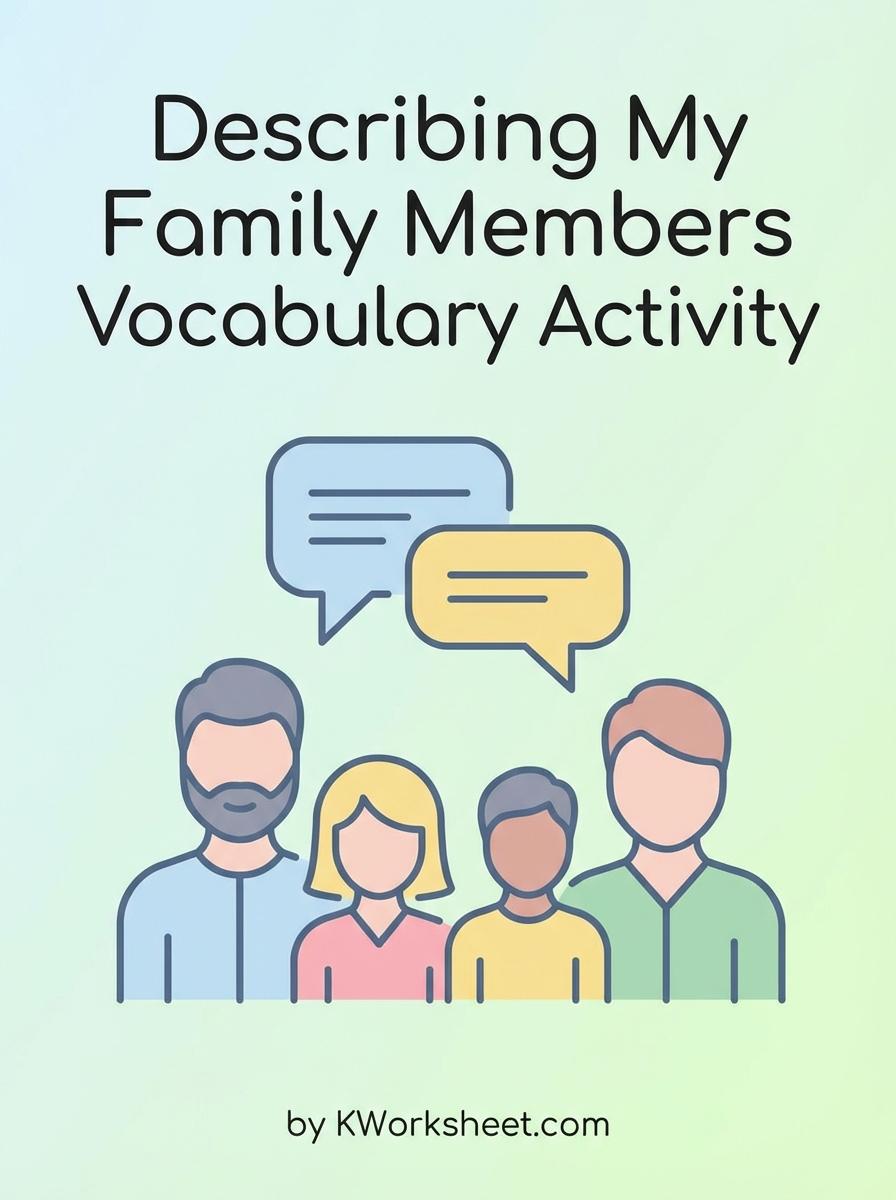
Expand your vocabulary by learning to describe family members with this engaging activity designed to improve your communication skills and strengthen your understanding of family-related terms. Practice identifying and articulating key characteristics that make each family member unique using clear and simple language. Explore our collection of worksheets to enhance your learning experience and master family vocabulary today.
Who is in Your Family?
This worksheet helps young children identify family members such as parents, siblings, and grandparents. Teachers and parents can encourage kids to talk about each person, fostering a sense of belonging. It's a great way to build vocabulary related to family roles. Use pictures or drawings to support understanding.
What Does Your Mother Look Like?
Children describe physical features like hair color, eye color, and clothing to practice observation and descriptive language. This activity enhances communication skills and helps children express details clearly. Encourage using simple sentences. It also develops their attention to visual details.
How Many Brothers or Sisters Do You Have?
Counting siblings promotes early numeracy skills and helps children understand family size. Ask children to say or write the number of brothers and sisters they have. This question can also lead to discussions about family dynamics. It supports both math and social understanding.
What Color Is Your Father's Hair?
Identifying hair color helps children practice colors and attributes. This question connects personal knowledge with color recognition activities. Use colorful images or hair color samples to make learning interactive. It combines self-awareness with classroom learning.
Who Is the Oldest Person in Your Family?
Discussing age and order teaches concepts of seniority and time. It helps children understand family hierarchies and respect for elders. This question encourages conversations about generations and family history. It builds social and cognitive skills.
What Does Your Sister Like to Do?
Exploring interests promotes understanding of individuality and hobbies within the family. Children learn to talk about preferences and similarities or differences. This supports language development and social emotional learning. It also encourages empathy and curiosity.
Who Helps You with Your Homework at Home?
Recognizing helpers strengthens appreciation for family support. Children can identify roles family members play in their daily learning. This question promotes gratitude and awareness of teamwork. It connects schoolwork with home life.
Can You Name All Your Family Members?
Recalling and naming family members develops memory and personal identity. This task supports vocabulary building and confidence in speaking. Encourage drawing or labeling a family tree as a visual aid. It's an engaging way to reinforce family knowledge.
Who in Your Family Wears Glasses?
Noticing specific features like glasses teaches attention to detail and acceptance of differences. This question encourages respectful observation and conversation about diverse appearances. It enhances descriptive language skills. Use this as a way to celebrate uniqueness in families.
What Do You Like to Do with Your Family?
Discussing family activities fosters bonding and sharing of positive experiences. Children learn to express emotions and favorite moments. It helps strengthen family connections through storytelling. This activity promotes language, social, and emotional growth.


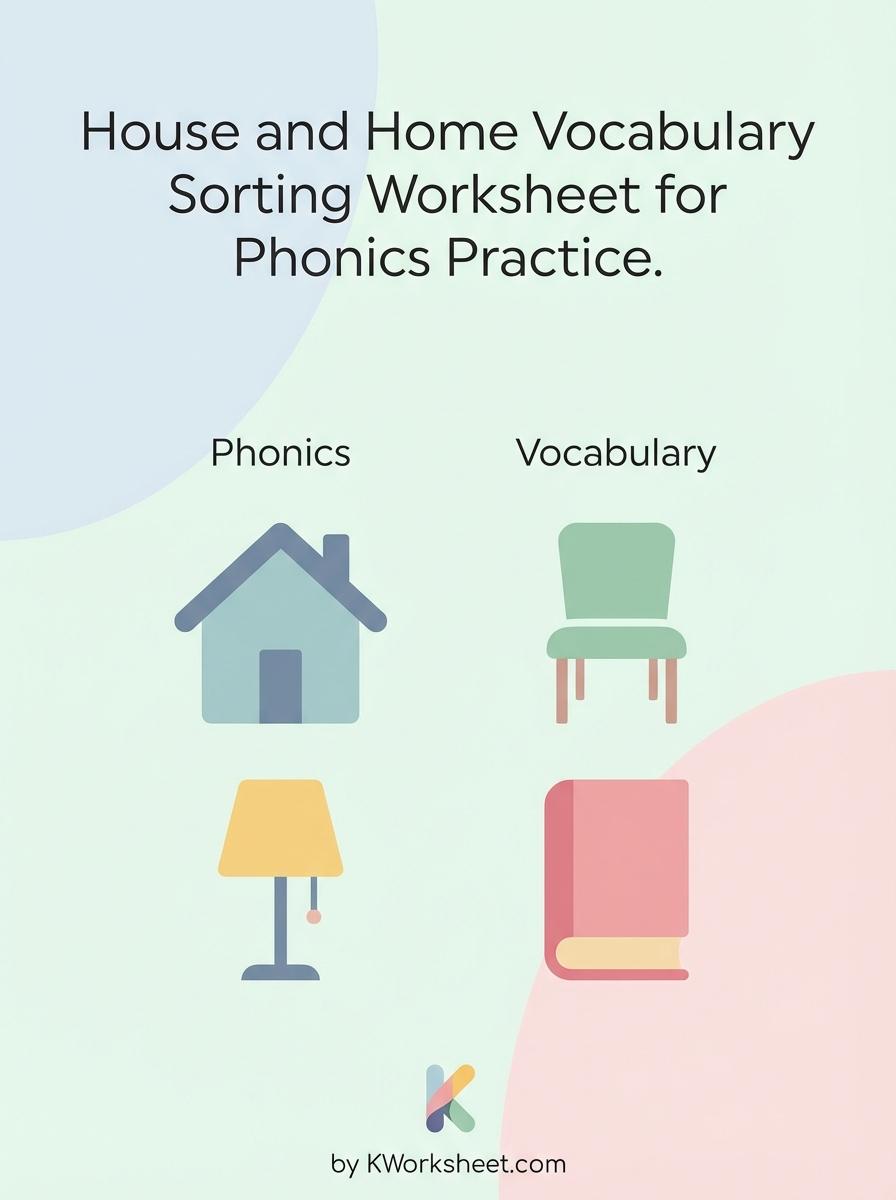
House and Home Vocabulary Sorting Worksheet for Phonics Practice