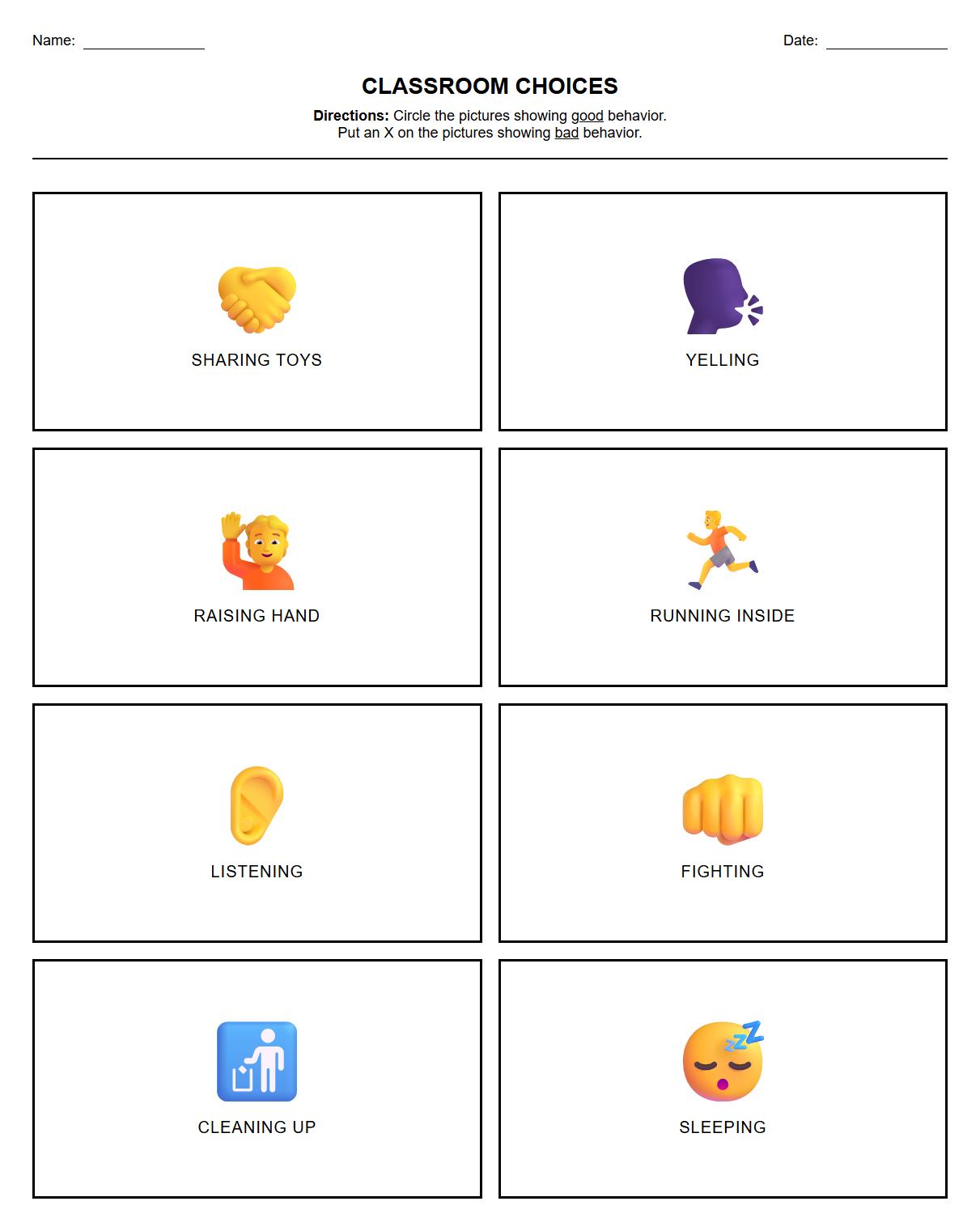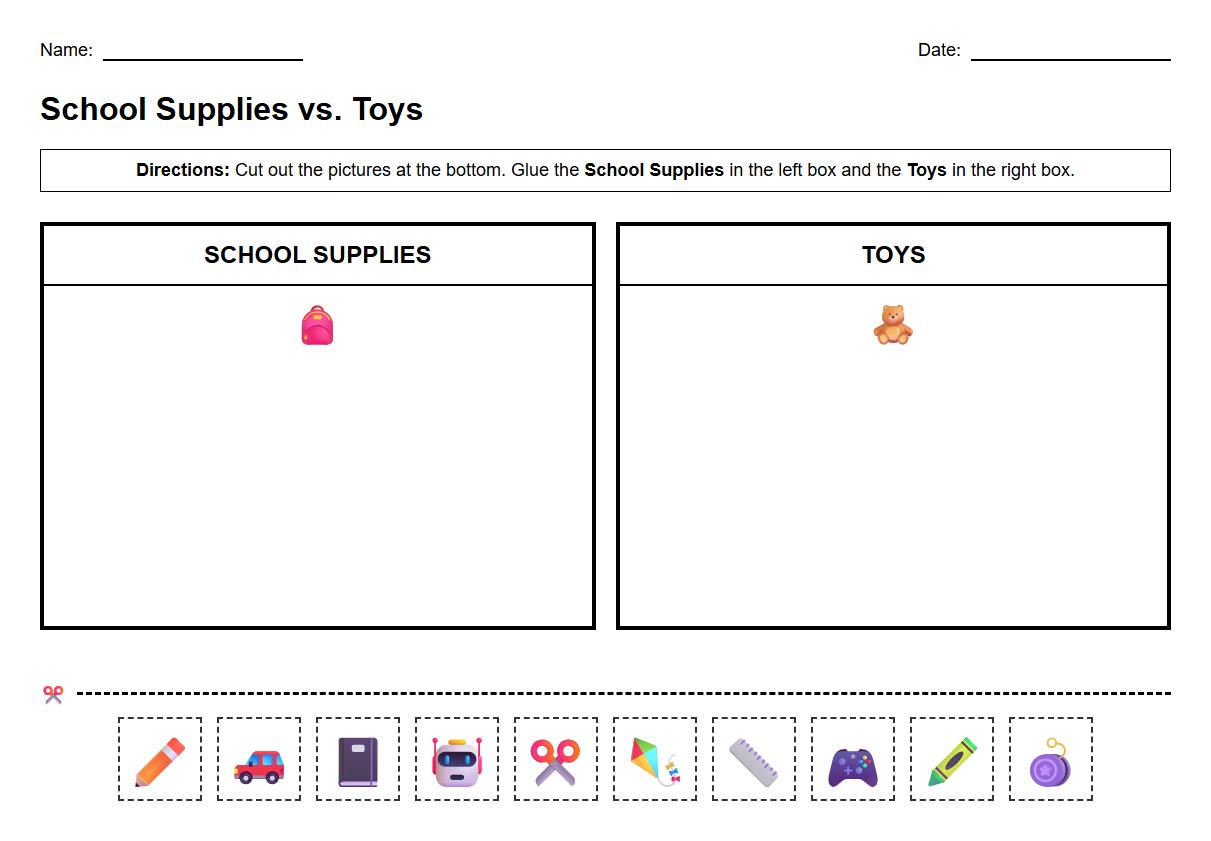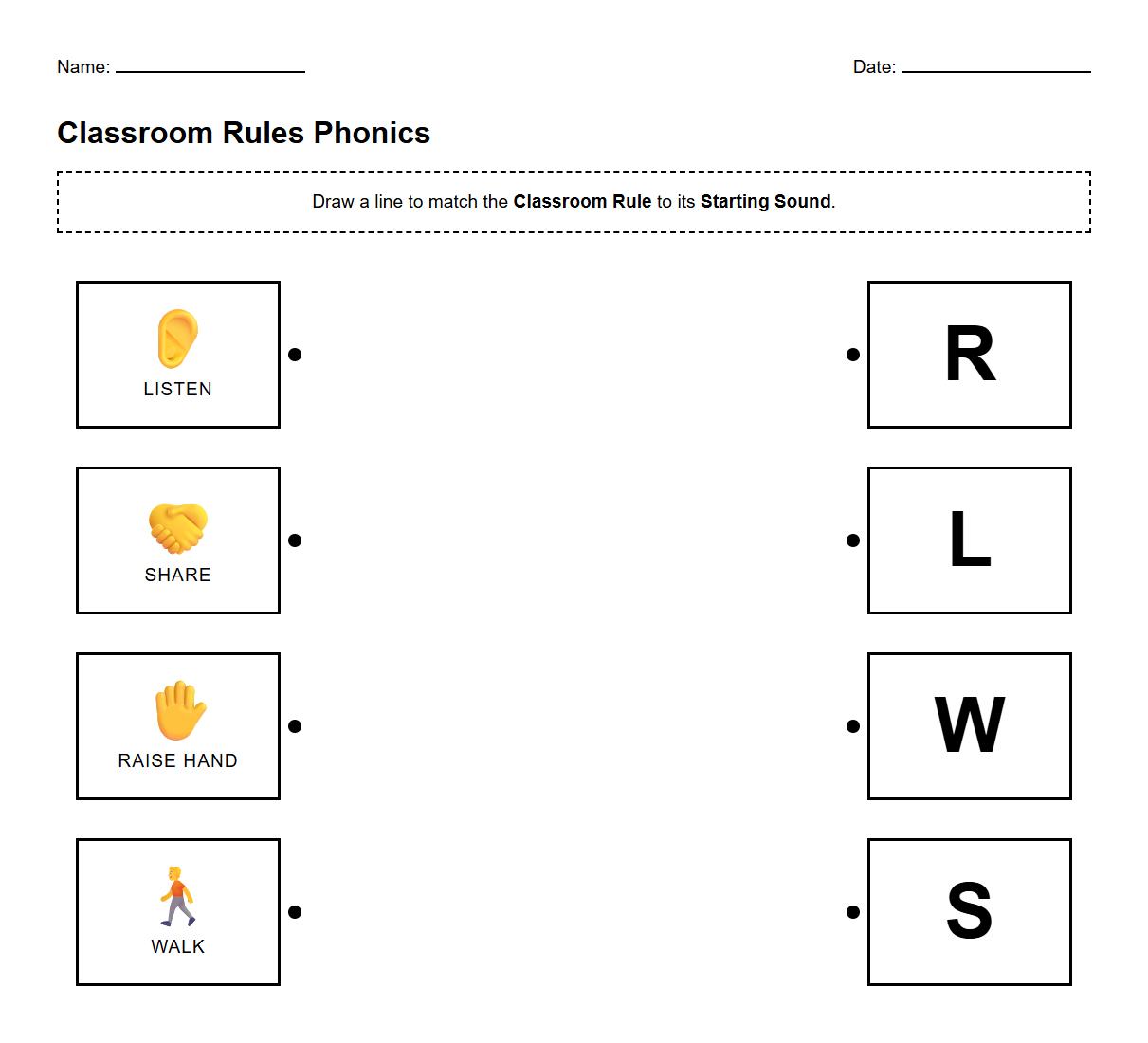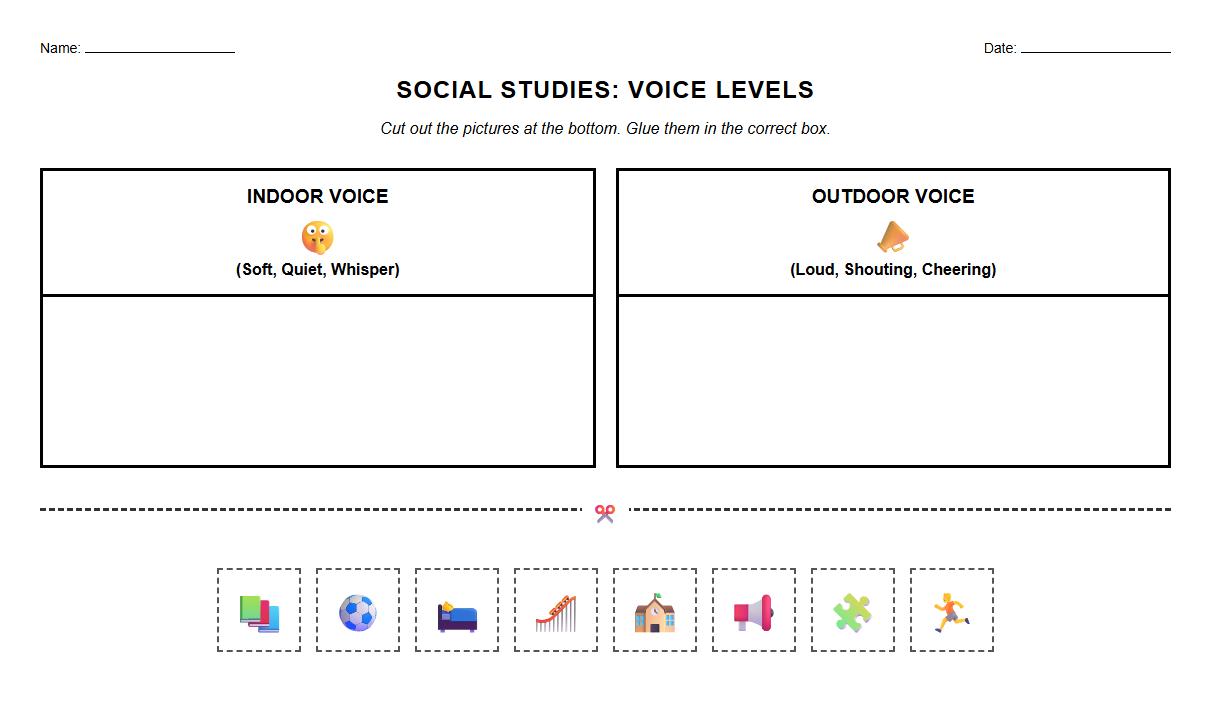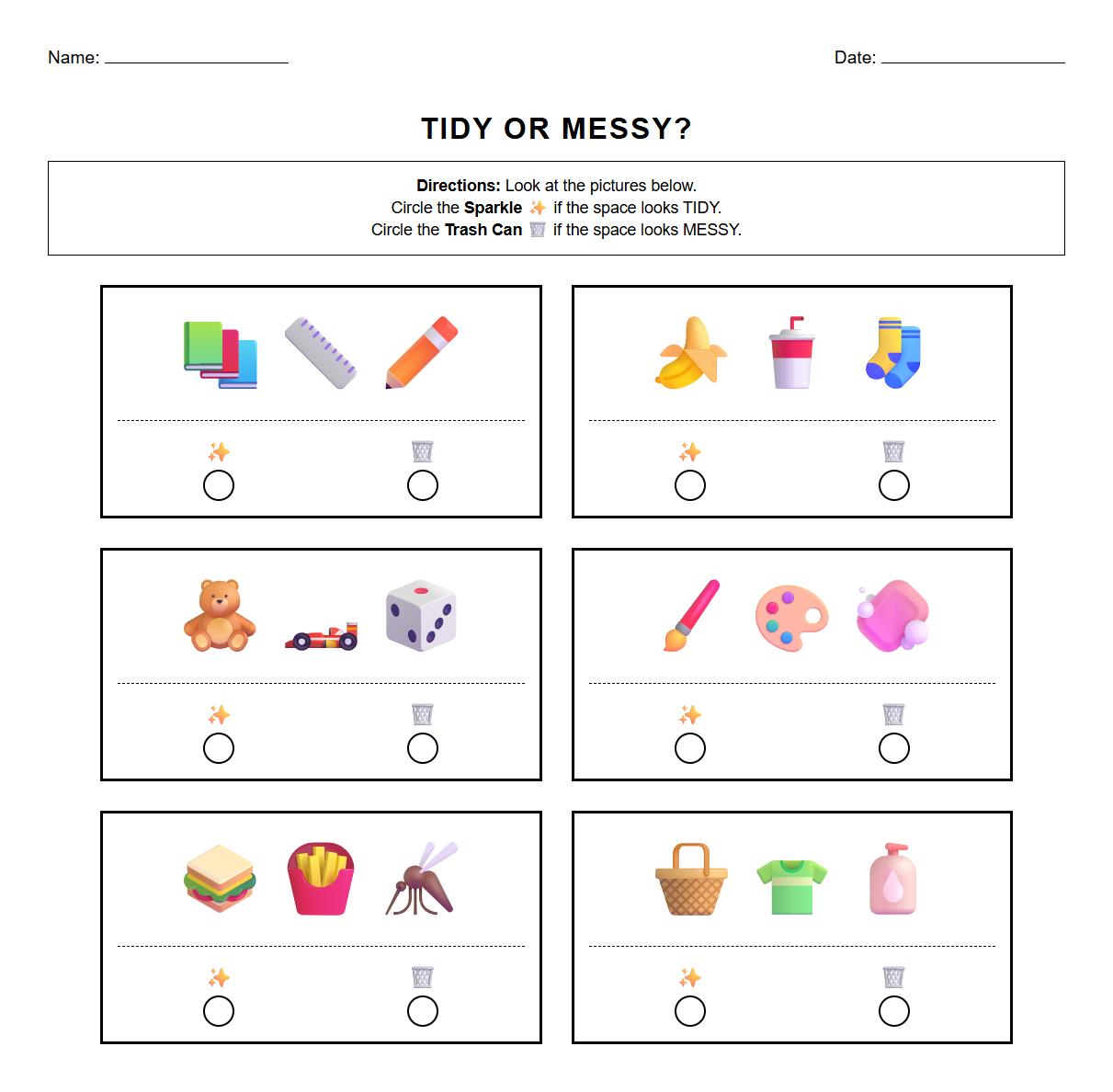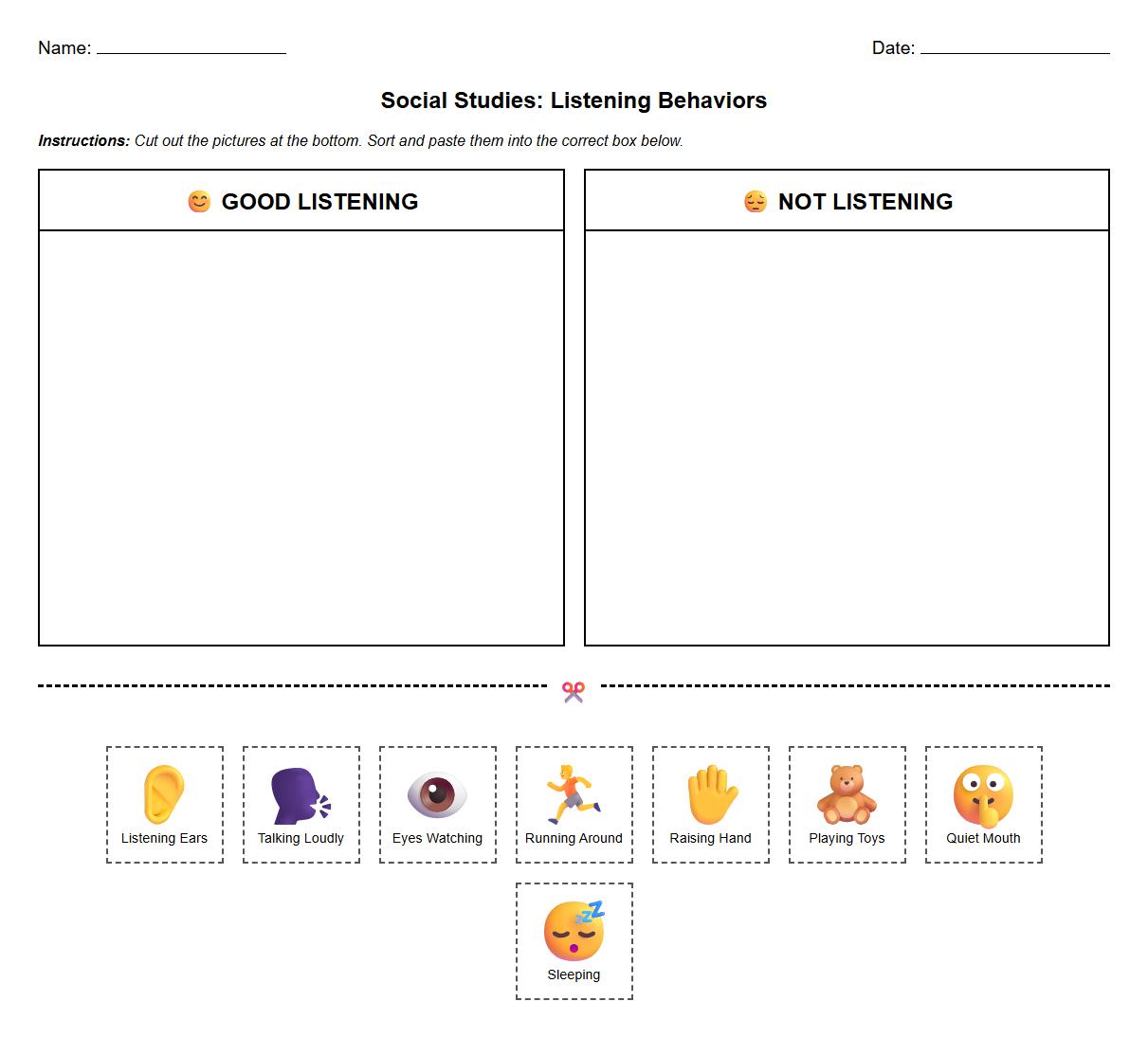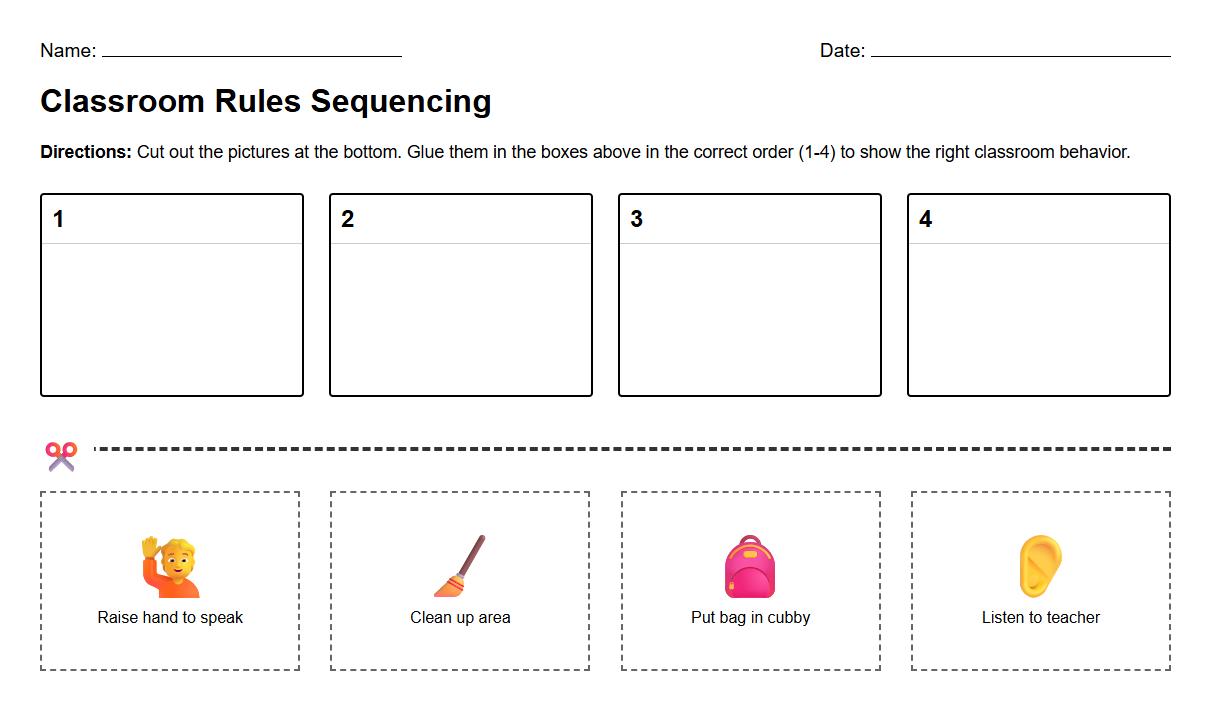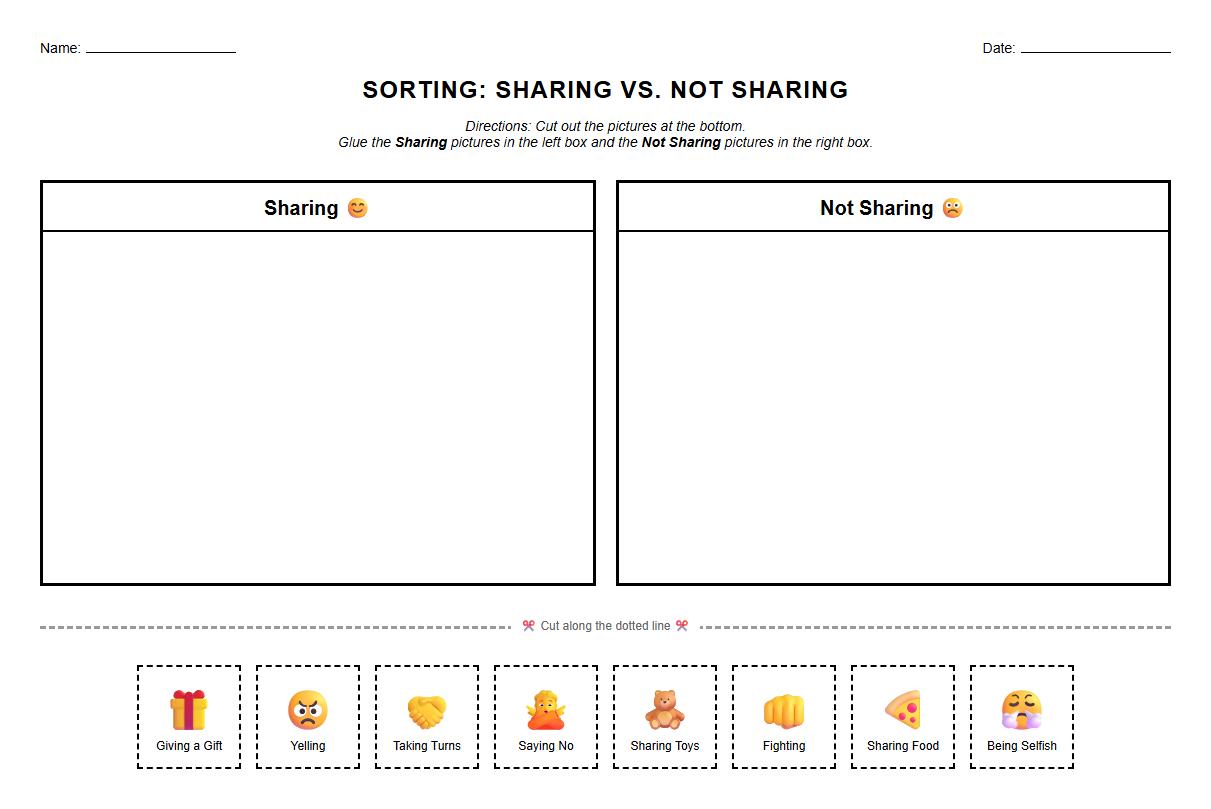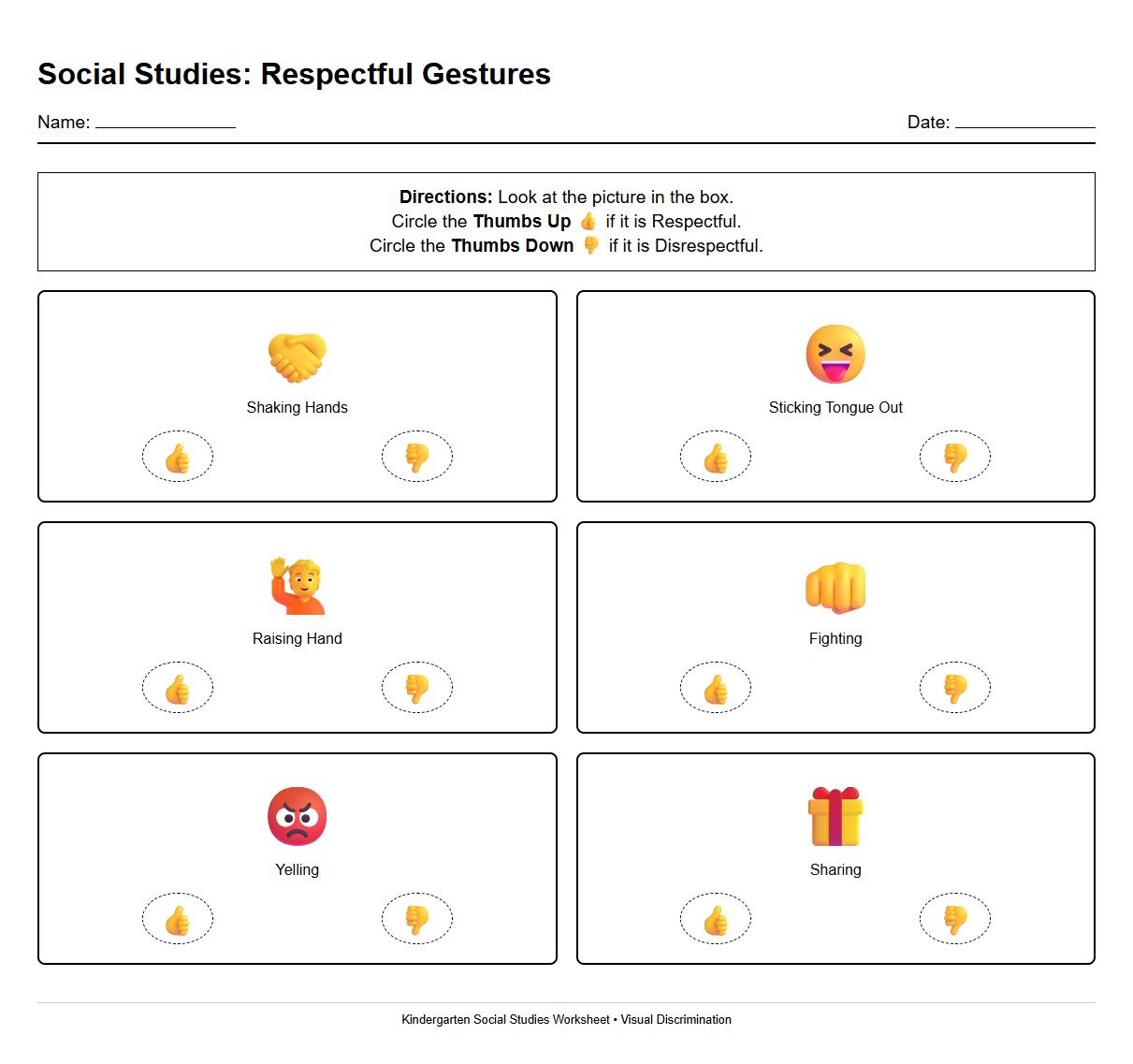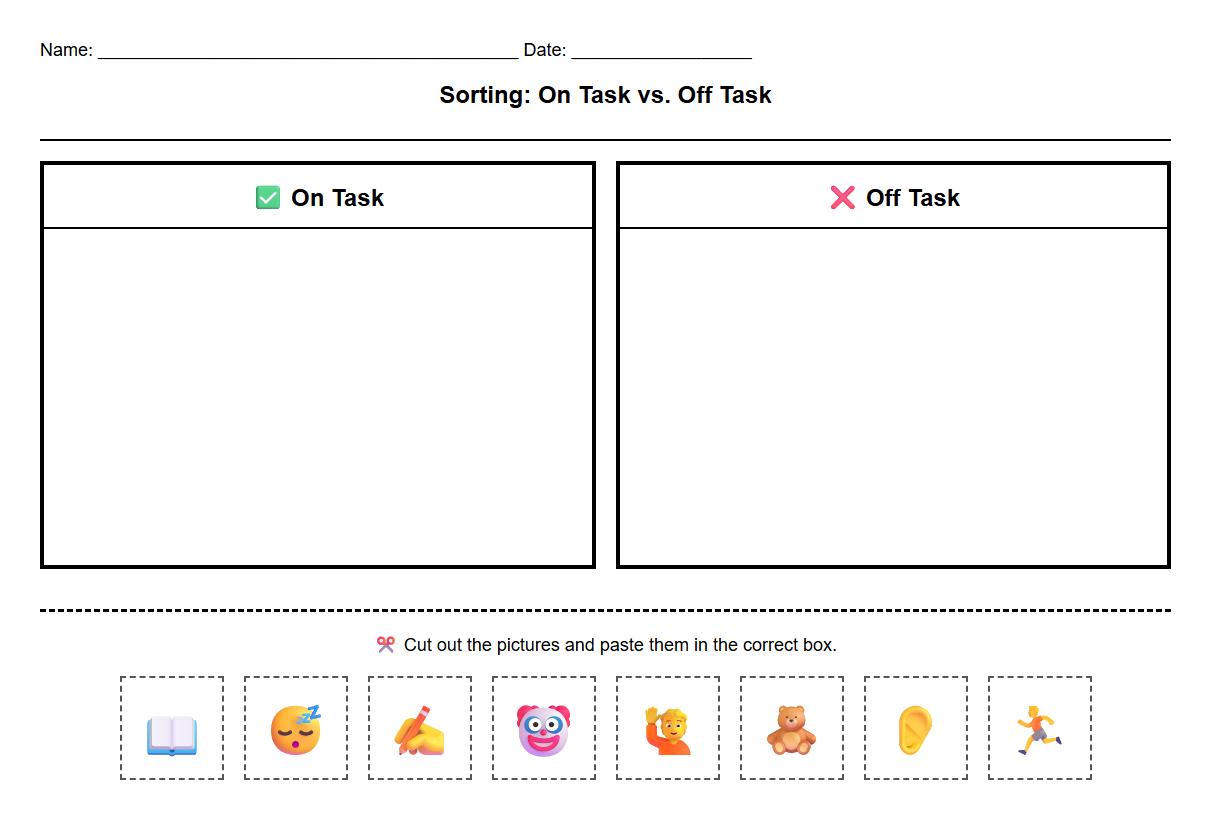
Visual discrimination and sorting activities enhance students' ability to recognize and categorize different classroom rules effectively. These exercises improve attention to detail and support better understanding of behavioral expectations. Explore the available worksheets to engage your students in mastering classroom rules through fun and interactive tasks.
Identifying Different Classroom Rule Cards
Look closely at all the classroom rule cards to spot which one looks different from the others. Differences could include color, images, or text style. Teachers and parents can guide children to observe carefully and describe what makes the card unique. This encourages critical thinking and attention to detail. For visual discrimination activities, visit this worksheet idea.
Matching and Grouping Classroom Rules
Can you find two classroom rule cards that match? Matching cards help reinforce memory and recognition skills. Sorting the cards also allows children to understand similarities and differences between rules. Encourage children to explain why they think the cards match for better comprehension. Explore more on vocabulary and picture matching activities.
Recognizing Quiet Lining Up
Locate the classroom rule card showing children lining up quietly. This visual helps children understand expected behavior calmly and safely. Teachers and parents can use this as a reference during transitions to promote smooth classroom routines. Discuss why lining up quietly is important for everyone's safety. Learn about recognizing patterns with pattern recognition worksheets.
Identifying Hand Raising Behavior
Point to the classroom rule card where students are raising their hands. This rule teaches children patience and respect during discussions. Reinforcing hand raising helps maintain an orderly classroom environment. Use the card to remind children when to wait their turn to speak. For ideas about classroom communication and activities, check out classroom worksheets with celebration themes.
Sorting Cards by Rule Type
Sort the classroom rule cards by types, such as cleaning up or listening. Categorizing helps children understand different areas of behavior better. This activity supports organization skills and clear expectations. Teachers and parents can make groups of rules that relate to specific classroom activities. For mapping and categorization skills, see geography and mapping vocabulary ideas.
Noticing Color Borders on Rule Cards
Which classroom rule cards have the same color border? Color coding can help children quickly identify related rules. This visual cue aids in memory retention and categorization skills. Discussing border colors can also make sorting more engaging and fun. Try activities that develop fine motor and visual skills at tracing and phonics worksheets.
Counting Sharing Behavior Cards
Count how many rule cards show children sharing with each other. Sharing is an essential social skill taught in kindergarten. Highlighting these cards reinforces kindness and cooperation. Use stories or examples to connect the rule visuals to real-life situations. For family and social learning, visit family members naming activities.
Finding Respectful Behavior Cards
Find the classroom rule cards that show students being respectful to classmates. Respect is a foundational value for a positive classroom climate. These cards illustrate how to treat others kindly and listen carefully. Teachers and parents should model respectful behavior and discuss it regularly. For holiday and respectful behavior vocabulary, see holiday vocabulary matching worksheets.
Identifying the Card with Most Students
Which rule card has the most students in the picture? This might indicate a group activity or collaborative behavior rule. Discussing group dynamics helps children learn about teamwork. Pointing out many students together can emphasize the importance of following rules in larger groups. For group and social concepts, check then versus now worksheet ideas.
Ranking Favorite Classroom Rules
Arrange the classroom rule cards from your most favorite to least favorite. This personal ranking helps children express their preferences and understand different rules. Teachers and parents can use this to start conversations about why some rules feel easier or more important. It encourages reflection and respect for classroom expectations. For interactive sorting and ranking worksheets, explore interactive kindergarten worksheets.


Engaging History Then vs Now Worksheet Activities for Kindergarten