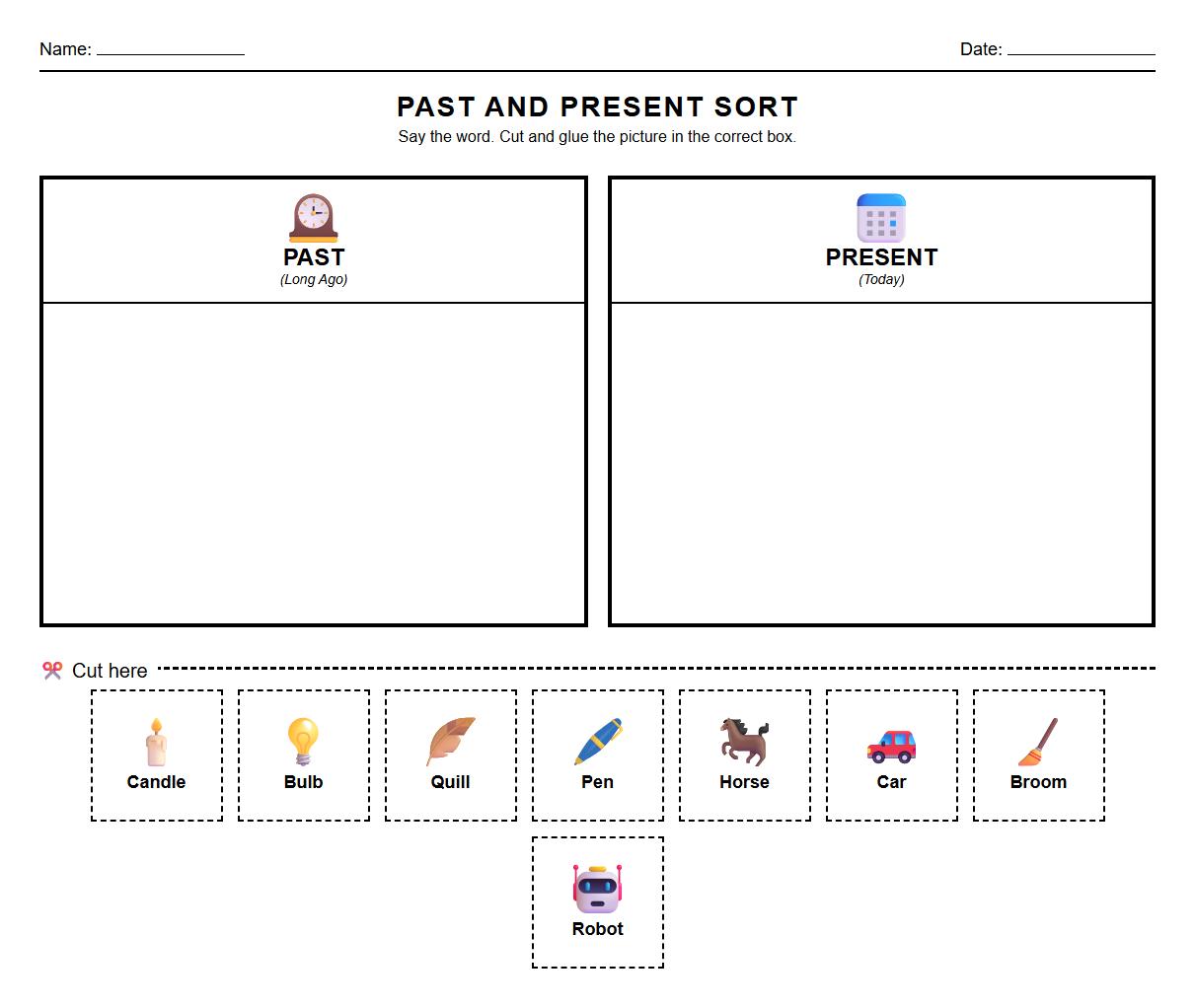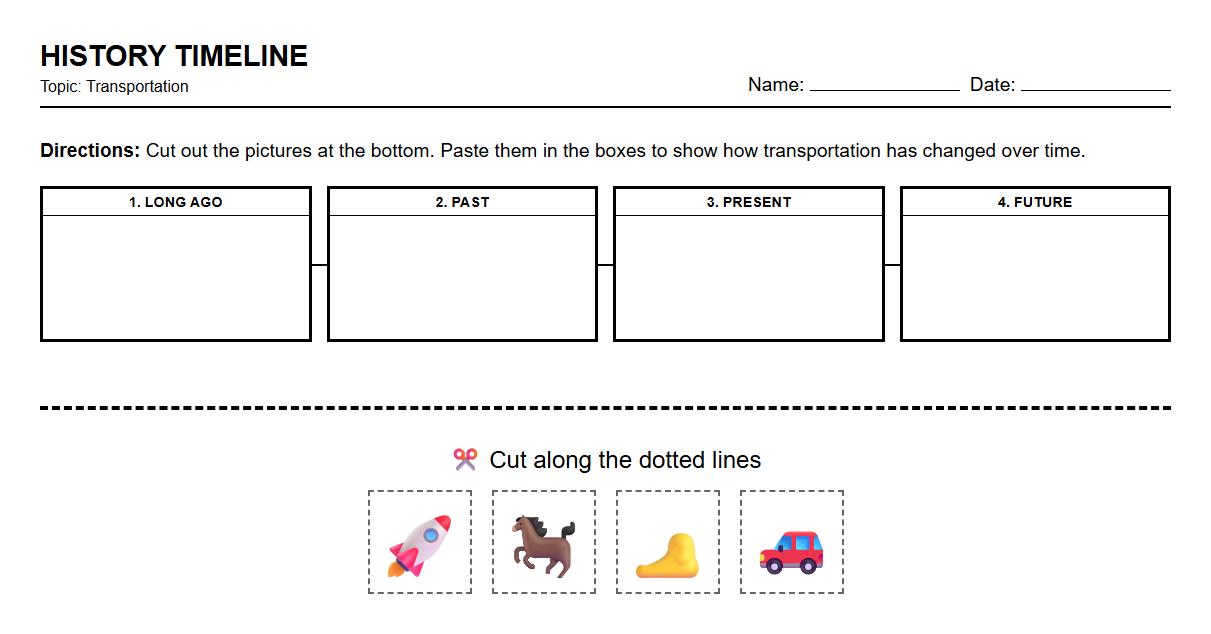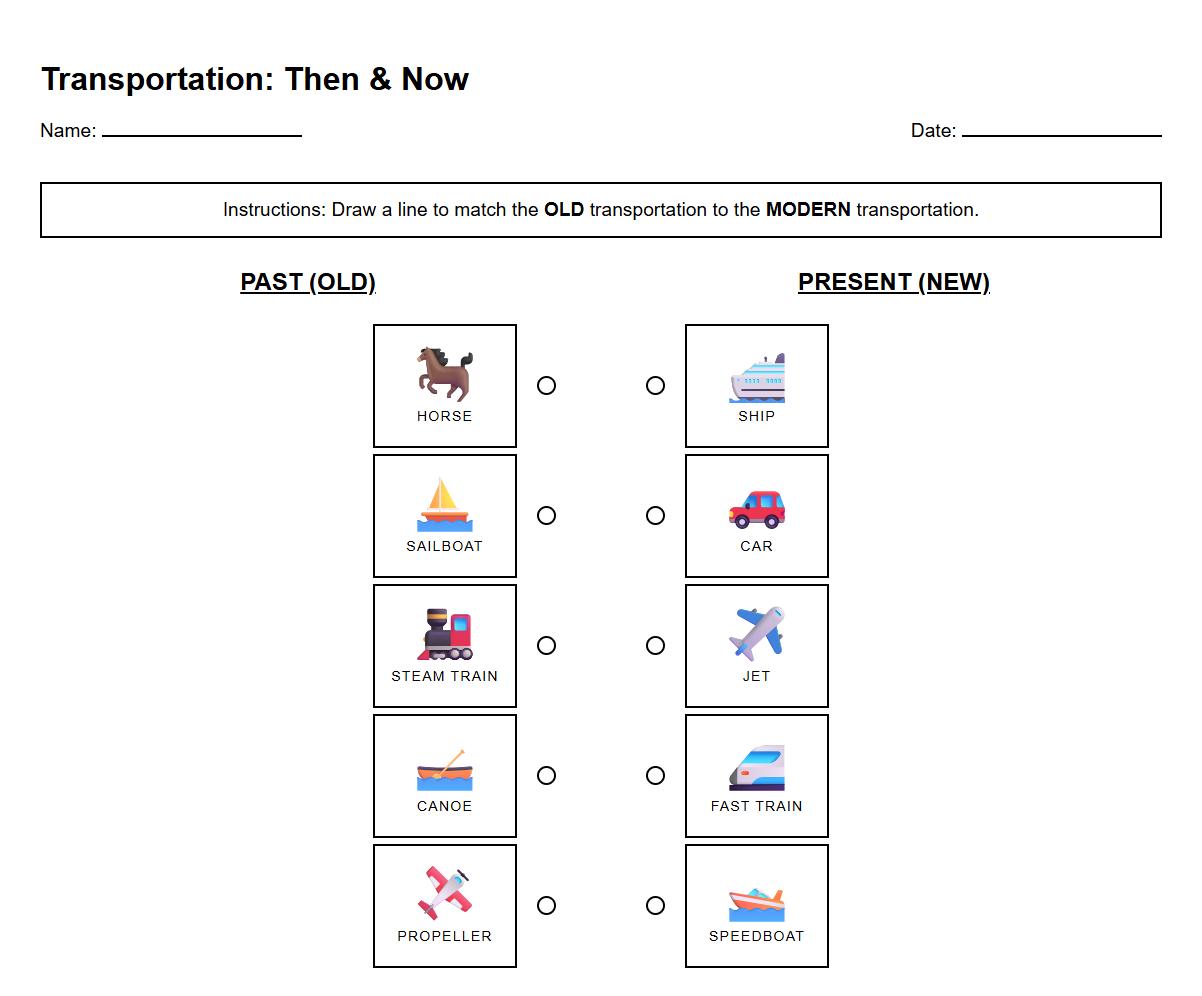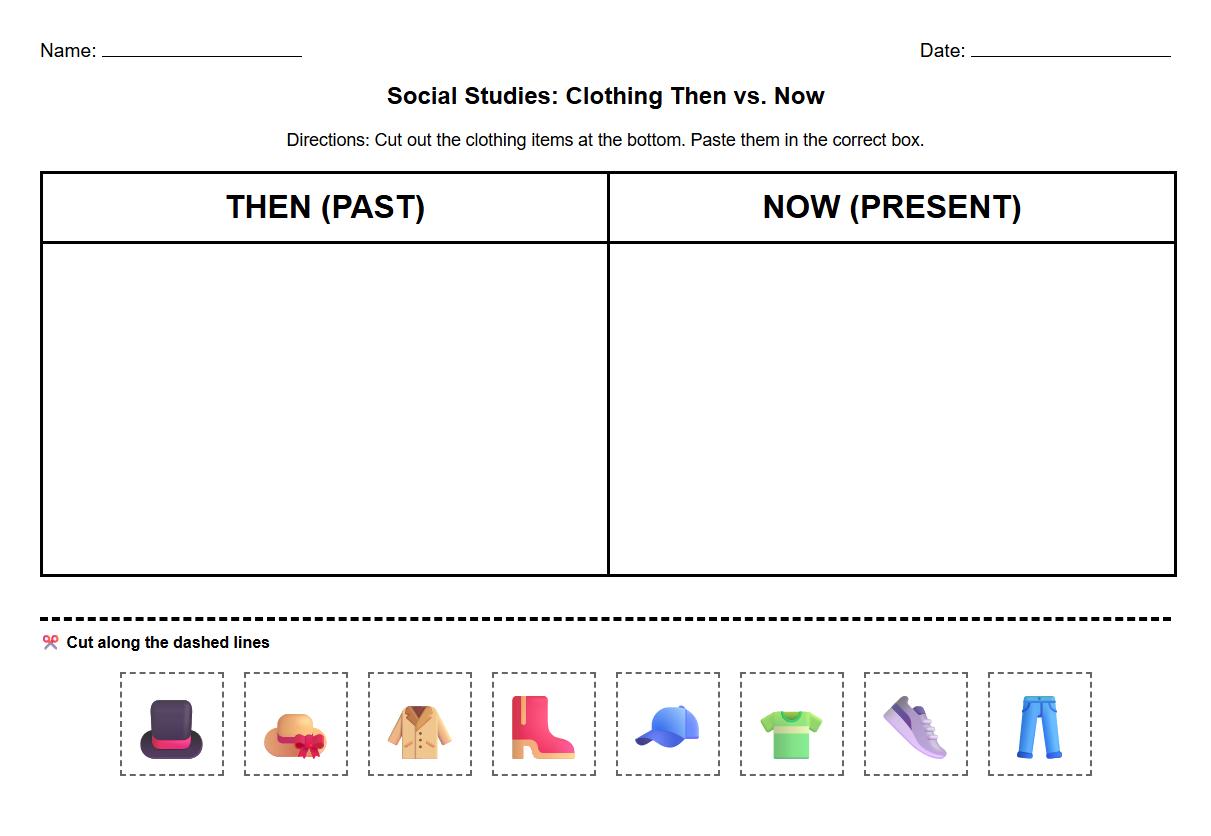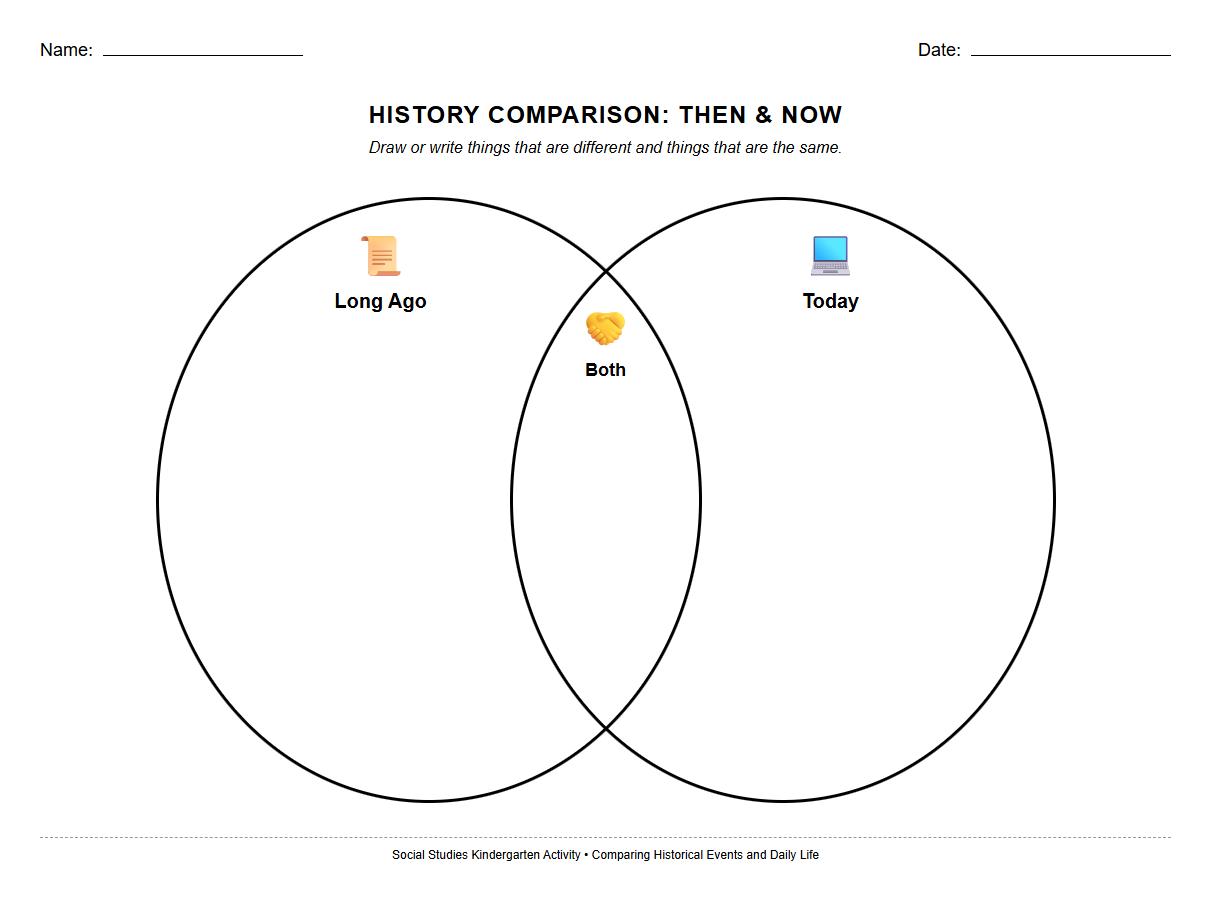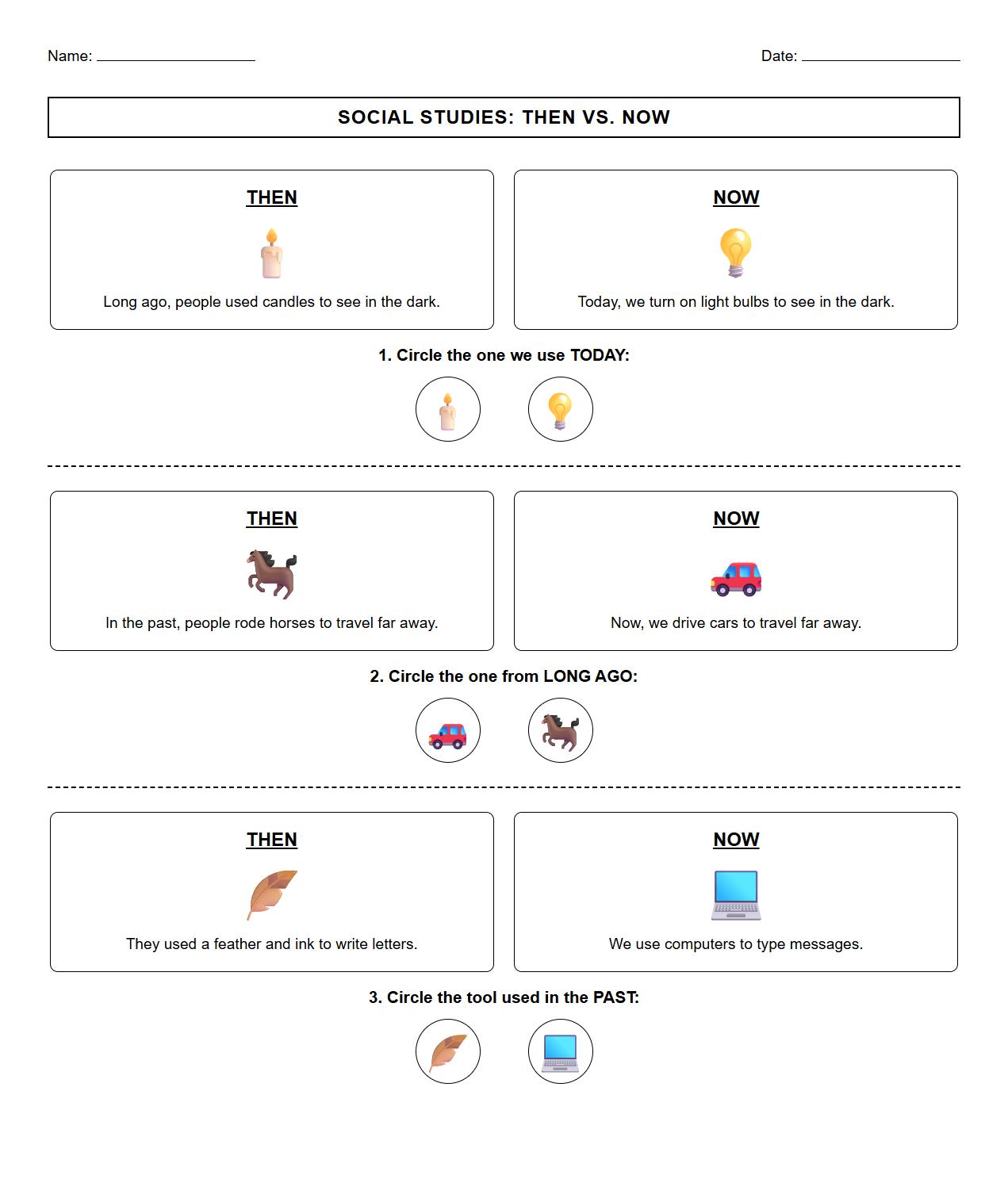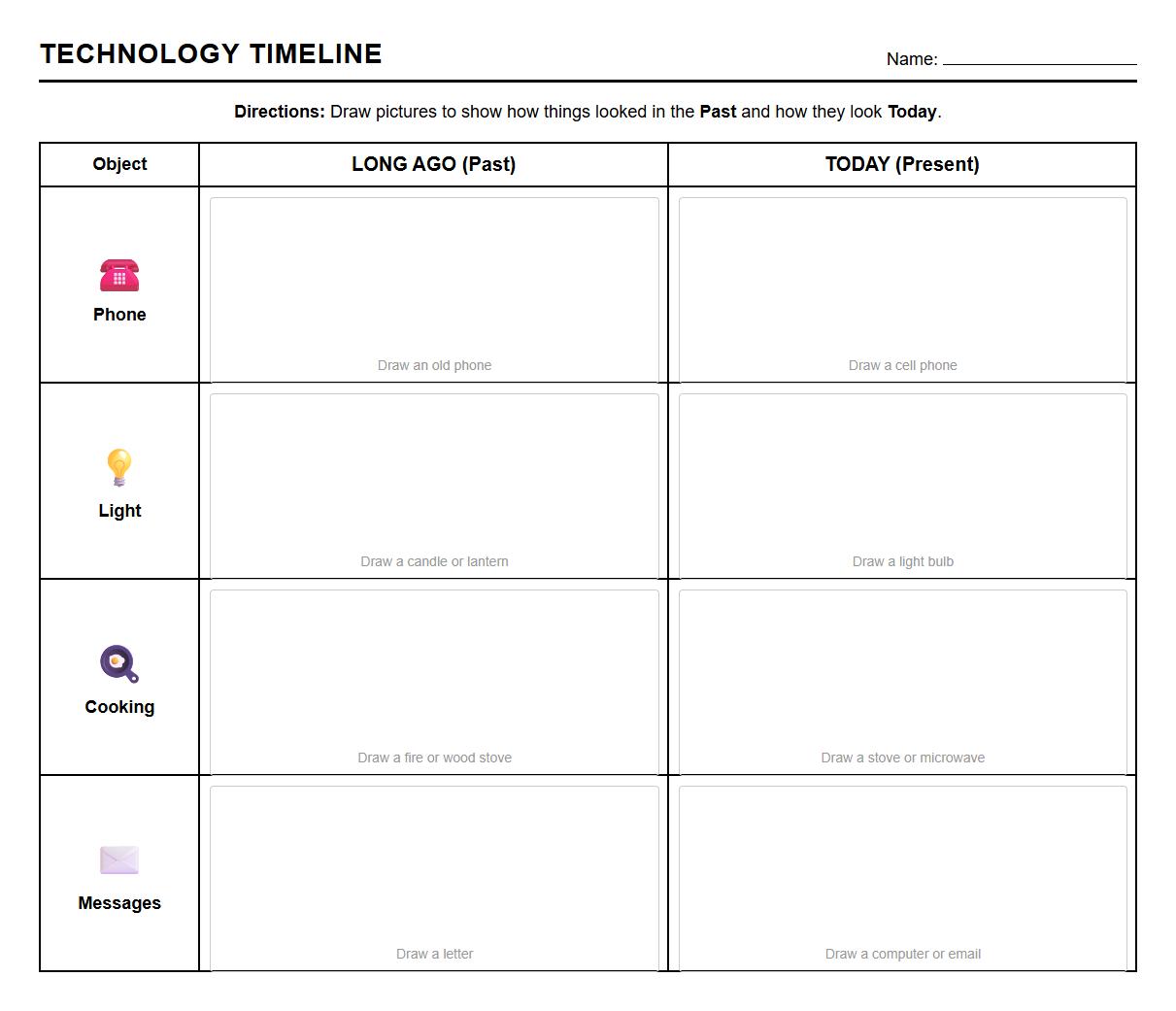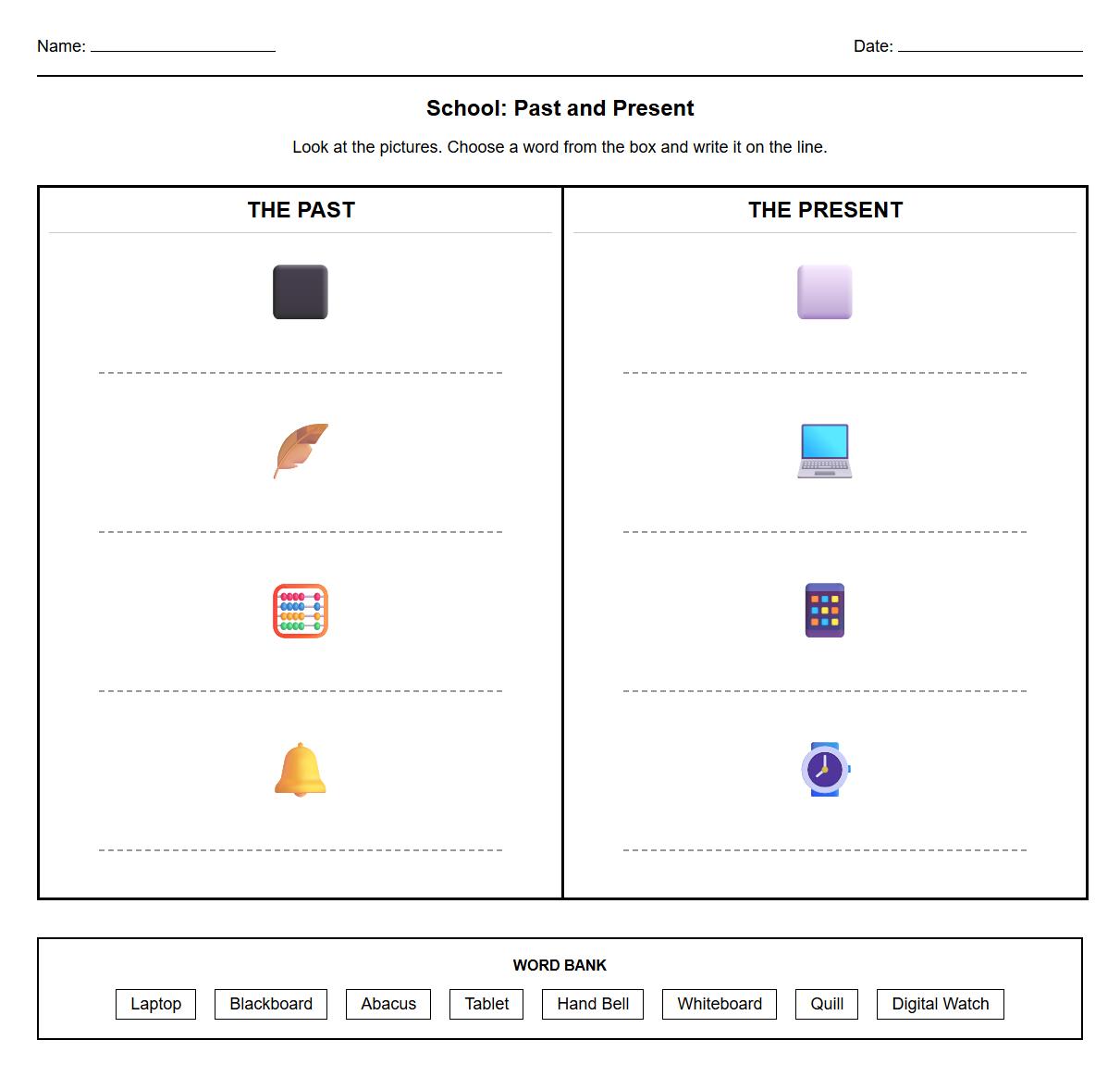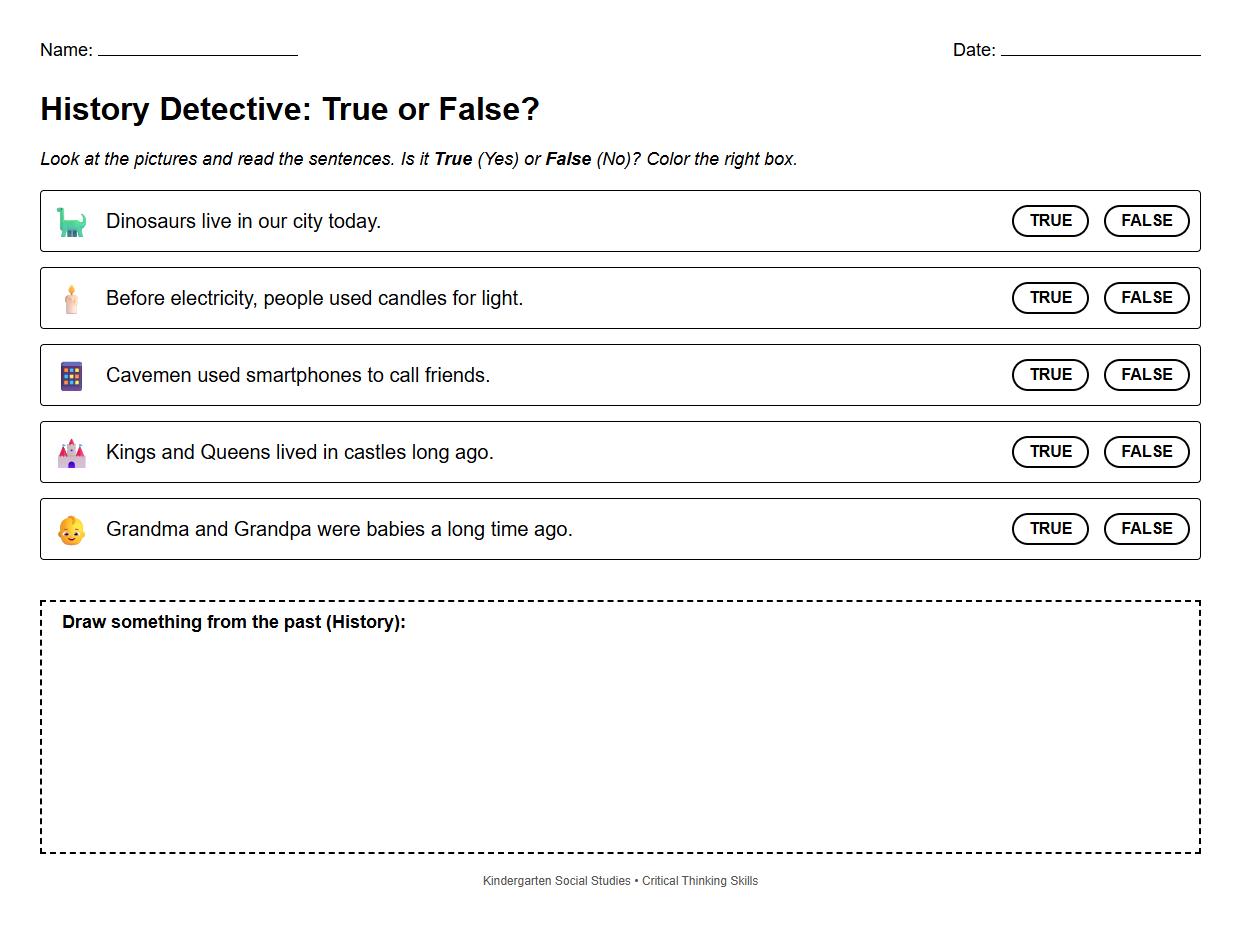
Kindergarten history worksheets focusing on comparing then vs now help young learners understand the differences and similarities between past and present. These activities build critical thinking skills and foster curiosity about historical change in everyday life. Explore our collection of engaging worksheets to make history both fun and educational for your kindergartener.
Differences Between Schools in the Past and Today
Schools in the past were often simpler with fewer resources, while today's schools have advanced facilities and diverse learning materials. Classes in the past were usually larger, and teaching methods were more traditional. Today, there is a stronger focus on interactive and child-centered learning. Schools now also promote inclusion and cater to various learning needs.
Children's Travel to School: Past vs. Present
Long ago, most children walked or rode horses to school, which could take a long time depending on the distance. Nowadays, children often travel by bus, car, or bike, making the journey quicker and safer. Some urban areas even encourage walking in groups for safety. The availability of transportation has made school more accessible for many children.
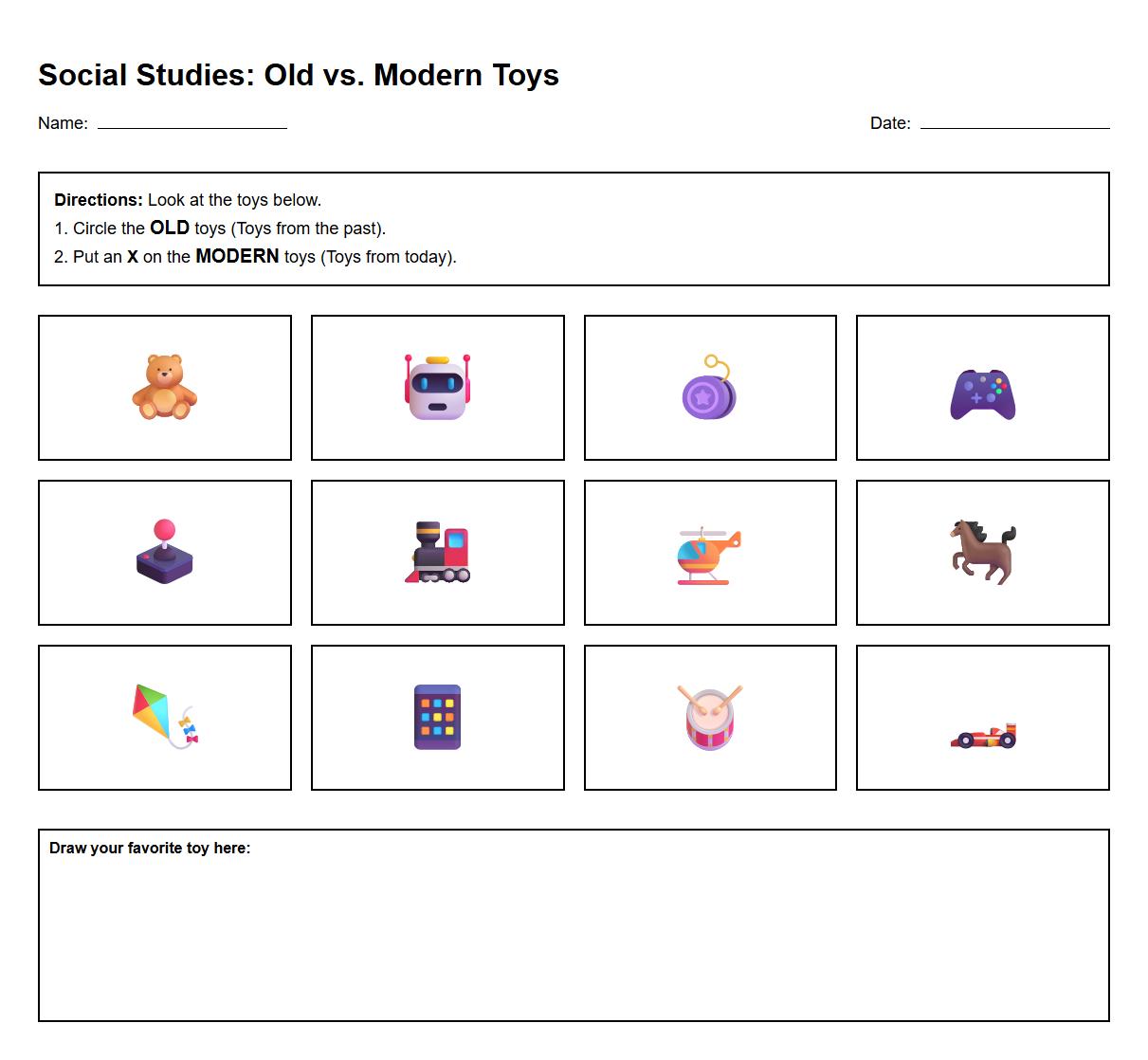
Toys Children Played With Then and Now
In the past, children played with simple toys like wooden blocks, dolls, and handmade balls. Today, children have access to a wide range of electronic and educational toys that promote learning and creativity. Outdoor play equipment has also become more varied and safer. This shift reflects advances in technology and changing play preferences.
Classroom Furniture: Past and Present
Classroom furniture in the past was often made of heavy wood and designed for large groups with fixed desks. Modern classrooms use lighter, adjustable furniture to support collaborative and flexible learning environments. Chairs and tables now come in child-friendly sizes, promoting comfort and better posture. This change helps children stay engaged and participate actively.
Children's Kindergarten Clothing: Then and Now
Children in the past often wore formal clothing and uniforms to kindergarten, reflecting the social norms of the time. Today, kinderwear is much more casual and comfortable, allowing for freedom of movement and play. Modern clothing is designed with practical and safety features like easy fasteners and durable materials. This reflects a greater emphasis on active learning and play.
Lunch and Snacks: Changes Over Time
Lunches and snacks in the past were usually homemade and simple, often including bread, fruit, and milk. Today, kindergartens provide a wider variety of nutritious and balanced meals, catering to dietary needs and allergies. Healthy eating is emphasized more now, with parents and schools collaborating to promote good nutrition. Packaged snacks are often replaced by fresh and wholesome options.
Subjects Learned Before and Now
In the past, kindergarten focused mainly on the basics like reading, writing, and arithmetic. Today, children learn a broader curriculum that includes social skills, arts, science, and technology. Emphasis is placed on developing creativity, problem-solving, and emotional intelligence. Learning is more holistic, preparing children for future academic and life challenges.
Teaching Methods: Past vs. Present
Teaching in the past was mostly teacher-centered, with lectures and repetition being common. Modern teaching methods emphasize student participation, exploration, and inquiry-based learning. Kindergartens now use play, storytelling, and hands-on activities to engage children. Teachers focus on fostering independence and critical thinking.
Classroom Technology: Then and Now
Old classrooms had minimal technology, often limited to chalkboards and printed books. Today's classrooms are equipped with interactive whiteboards, tablets, and computers to enhance learning experiences. Technology enables individualized learning and access to vast resources. It also helps prepare children for a digital future.
Communication with Friends and Family: Past and Present
Children long ago communicated mainly through face-to-face interaction, letters, and phone calls. Now, digital tools like video calls, messaging apps, and social media allow for instant and frequent communication. This has expanded children's ability to stay connected regardless of distance. However, personal communication skills remain a key focus in kindergarten.


Phonics Integrated History Worksheets: Then and Now for Kindergarten