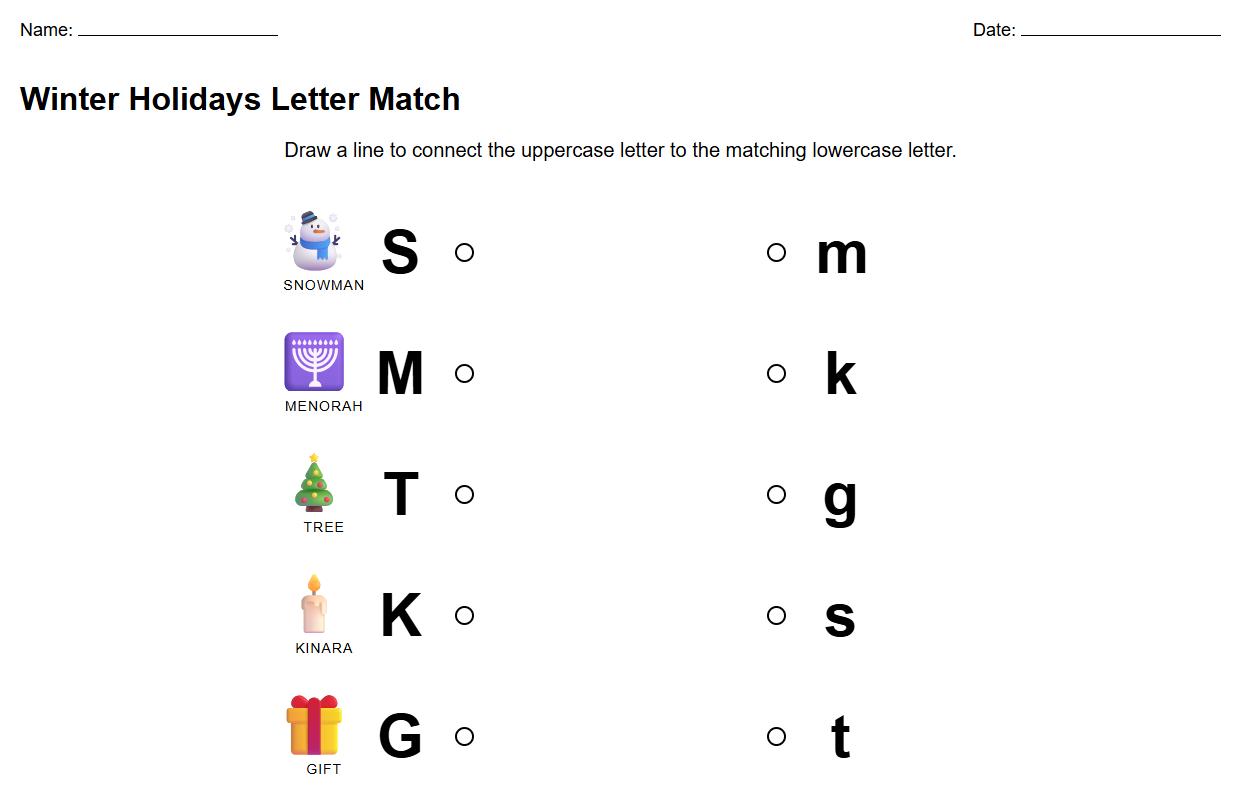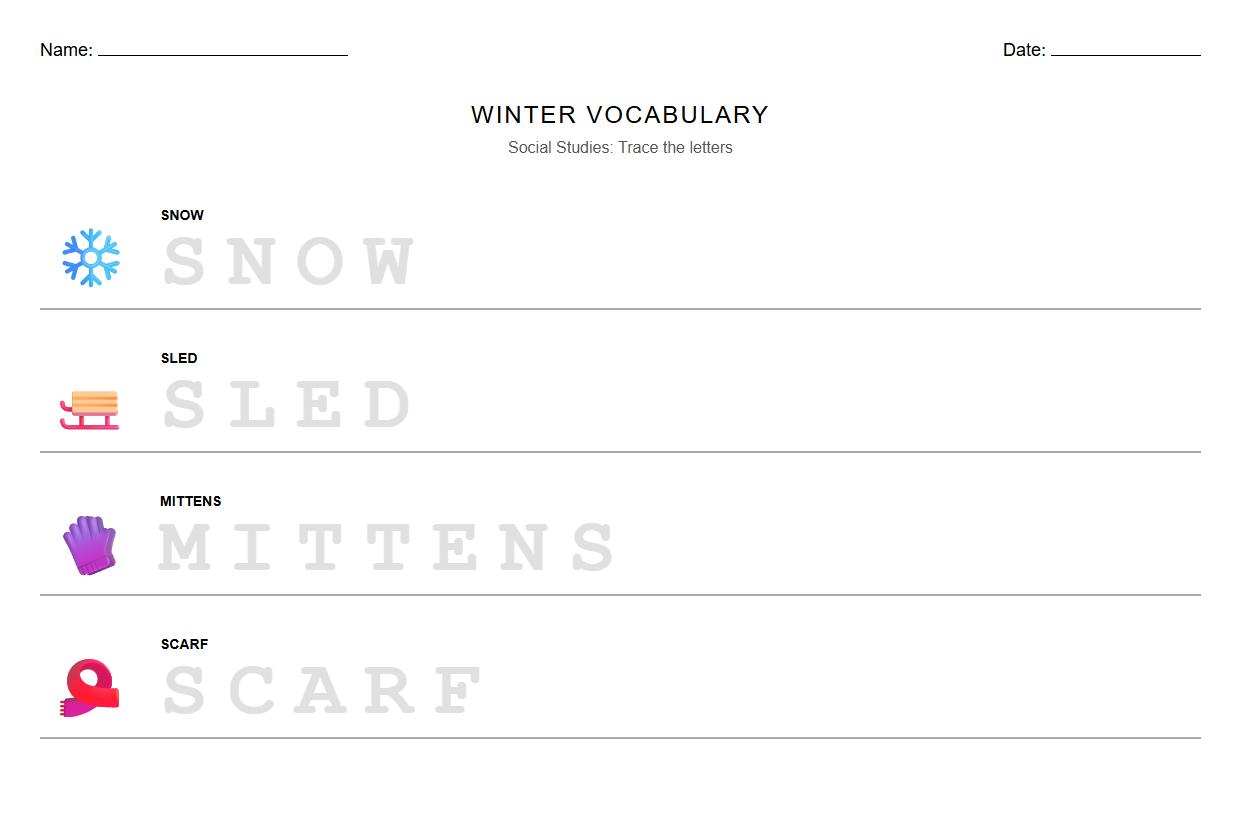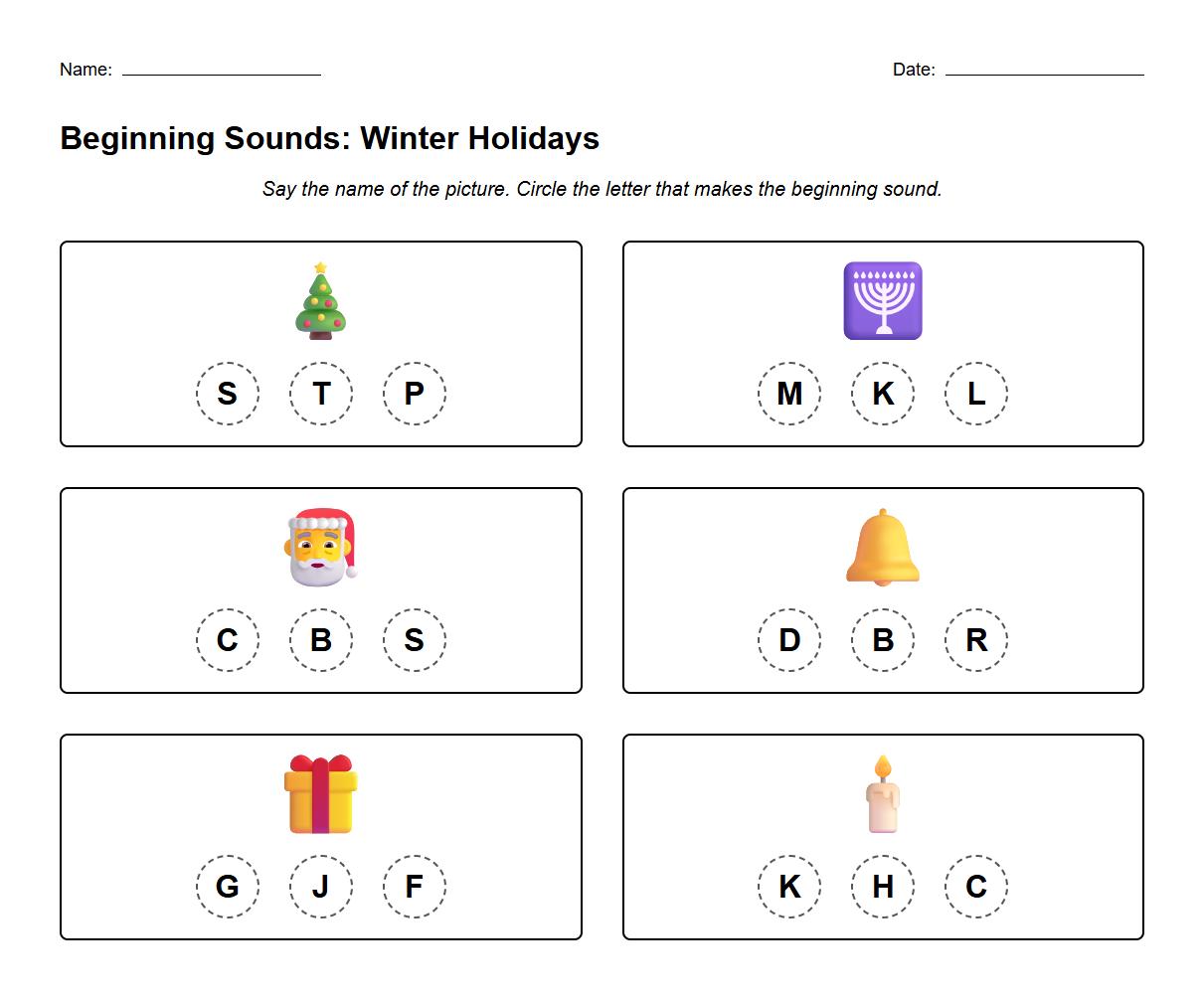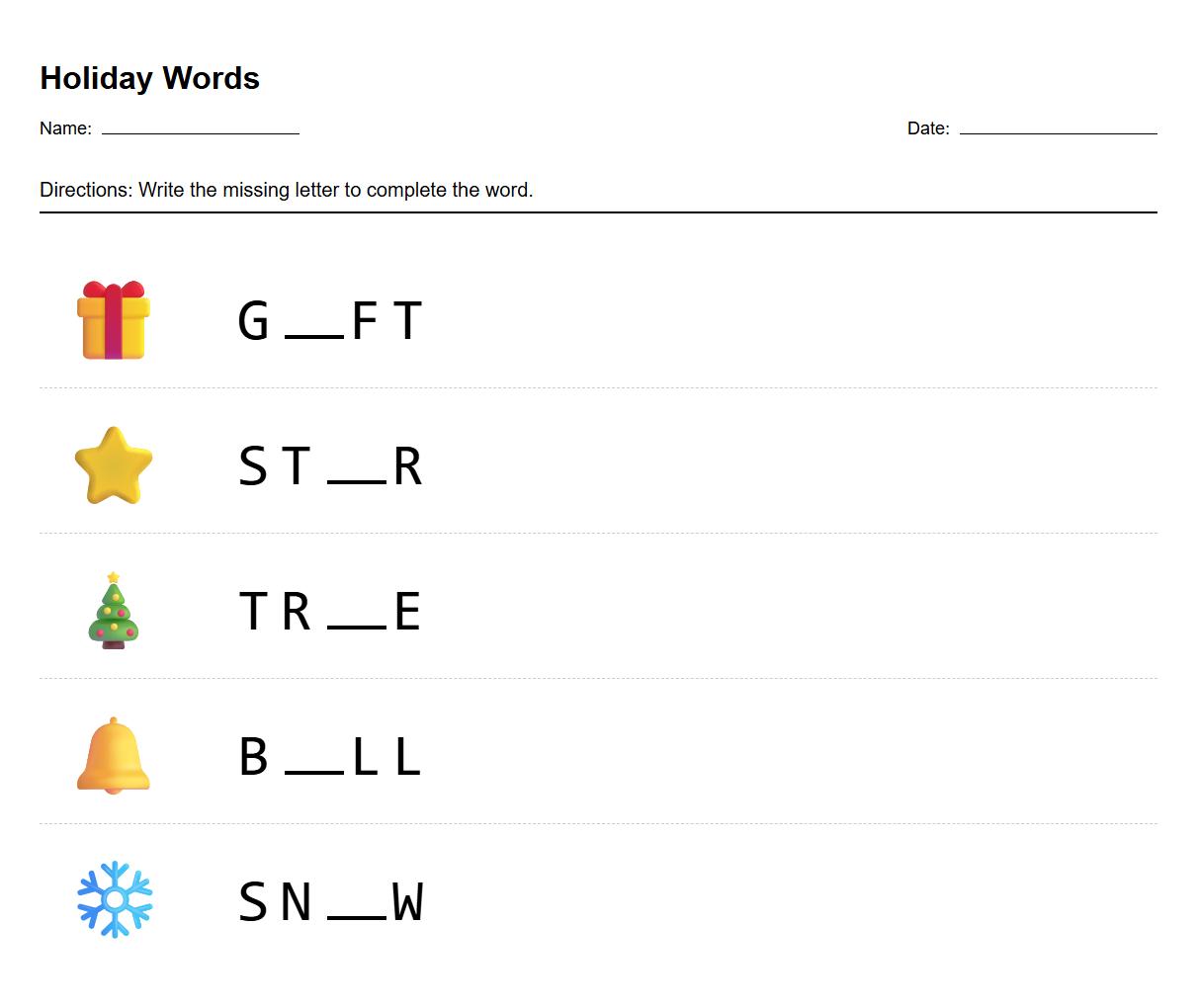
Letter recognition helps kindergarten students build foundational literacy skills by associating letters with familiar winter holiday themes. Engaging activities using festive images and letter matching enhance memory retention and make learning enjoyable. Explore our variety of winter holiday letter recognition worksheets designed to support early reading development.
Identifying the Hidden Letter
This activity encourages children to find the letter hidden under the snowflake on the worksheet. It promotes attention to detail and letter recognition in a fun, seasonal context. Teachers can guide students by providing clues or hints to assist in the discovery. Parents can reinforce this skill by asking similar questions at home with different visual discrimination activities.
Circling Uppercase Winter Letters
Students are prompted to circle all uppercase letters that relate to winter themes. This helps with letter case differentiation and vocabulary building. Teachers should encourage neat circling to develop fine motor skills. Parents can support by discussing the winter-related words together.
Finding and Coloring Lowercase Letters
The task involves finding and coloring lowercase letters that spell the word "snow". It enhances letter recognition and spelling abilities. This visual and tactile activity keeps children engaged and aids memory retention. Both teachers and parents can praise the child's effort to motivate learning, inspired by phonics worksheet activities.
Sequencing Letters After W
This exercise asks which letter comes after the letter W in a winter word, reinforcing alphabetical order knowledge. It strengthens understanding of letter sequences within words. Educators should encourage children to say the alphabet aloud to find the answer. Parents can turn this into a fun game to practice letters at home, similar to activities on phonics practice worksheets.
Matching Mittens by Starting Letter
Children match mittens that share the same starting letter, reinforcing initial sound recognition. This activity supports phonemic awareness critical for reading development. Teachers can use it as a group or individual task, promoting participation. Parents might create additional matching games for at-home practice, drawing from role play skills worksheets.
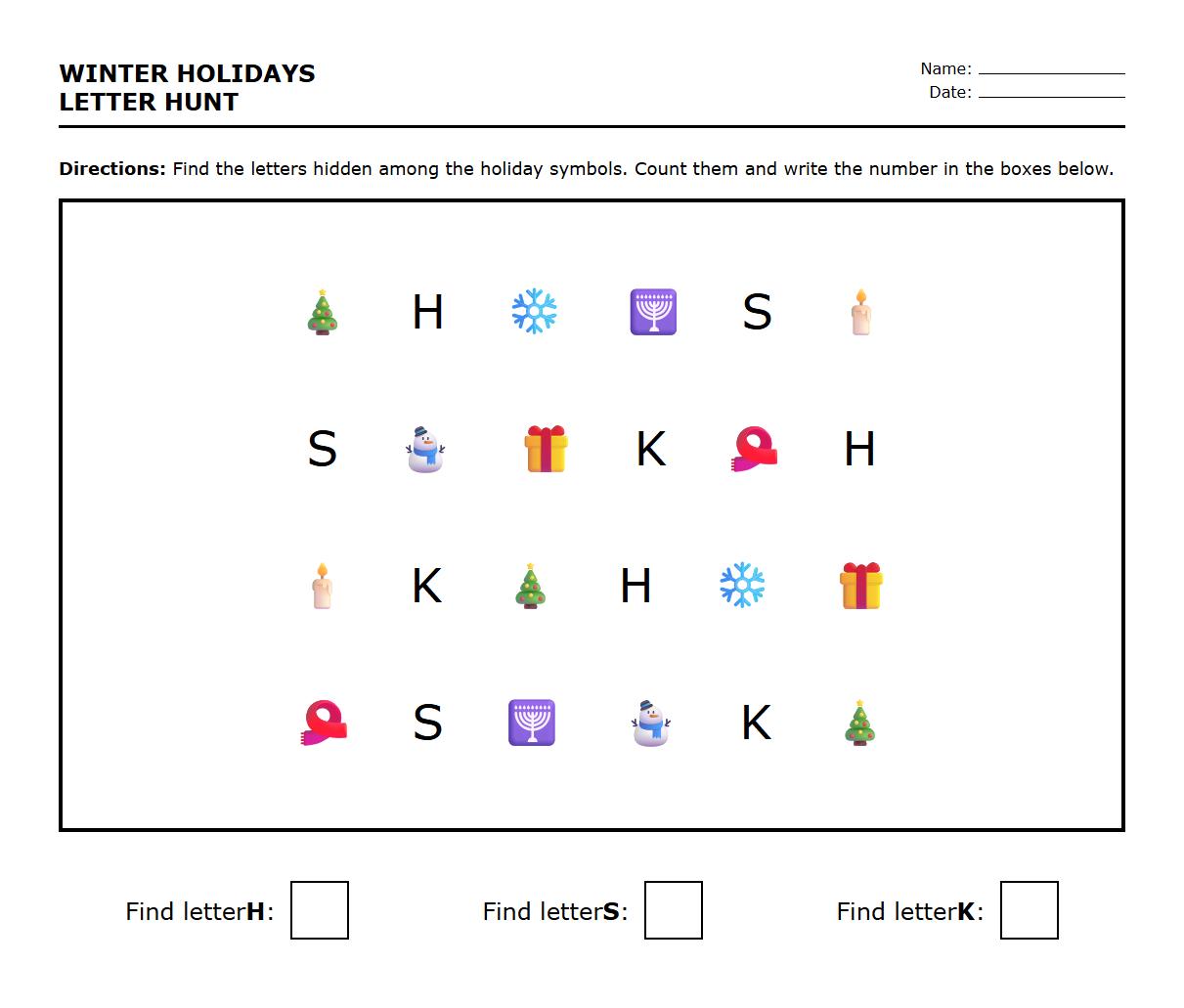
Counting the Letter S
The worksheet asks students to count how many times the letter S appears on the page, encouraging counting and letter identification. This dual skill activity boosts concentration and literacy at the same time. Teachers should guide students to point to each letter as they count aloud. Parents can repeat this exercise using other letters to build fluency, as shown in the family words phonics sheet.
Pointing to the Letter Starting "Icicle"
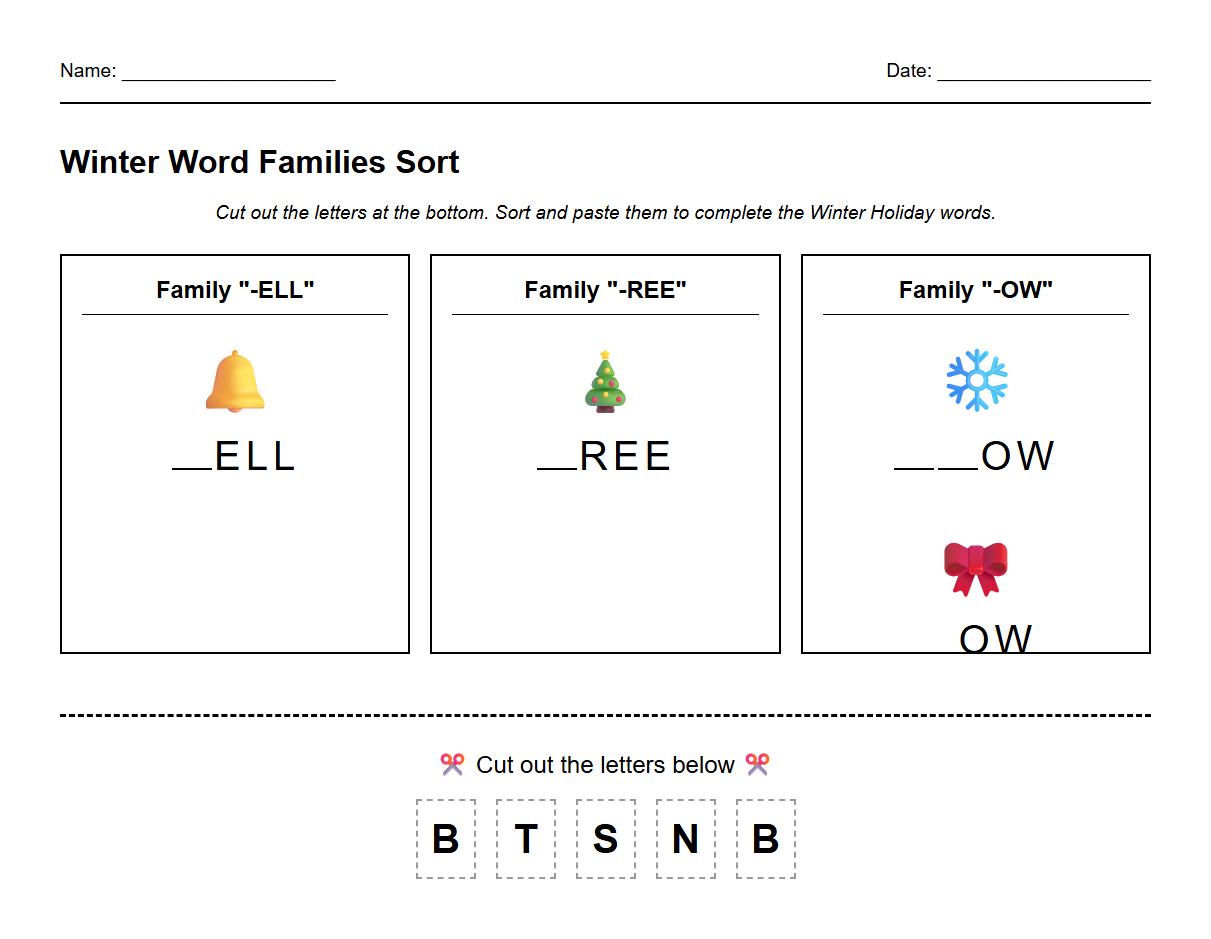
This task involves pointing to the letter that begins the word "icicle", typically 'I.' Recognizing initial letters of words sharpens early reading skills. Teachers can integrate this with discussions about winter objects for more context. Parents can extend learning by finding other 'I' words together, using family phonics worksheets as further practice.
Tracing Letters on Winter Hats
Students trace the letter found on the winter hat illustration, improving both letter formation and fine motor skills. Tracing reinforces muscle memory for writing and letter recognition. Educators should ensure proper pencil grip and posture during this activity. Parents can encourage frequent tracing practice with colorful tools, inspired by integrated history phonics worksheets.
Identifying Letters Not in "Cold"
This question asks children to identify which letter is not part of the word "cold", helping with spelling and letter differentiation. It trains students to analyze word components carefully. Teachers may prompt children to sound out "cold" as they search for the odd letter. Parents can further this skill by exploring other simple word comparisons, available in history comparison worksheets.
Coloring Vowel Letters in Winter Words
Children are instructed to color all the vowels in winter-themed words, reinforcing vowel recognition. This visual activity aids phonics understanding and reading fluency. Teachers can use this as a group lesson or individual practice. Parents can continue vowel recognition at home with similar coloring exercises, such as those found in interactive kindergarten worksheets.


Kindergarten Writing Prompts Worksheet Celebrating Different Holidays