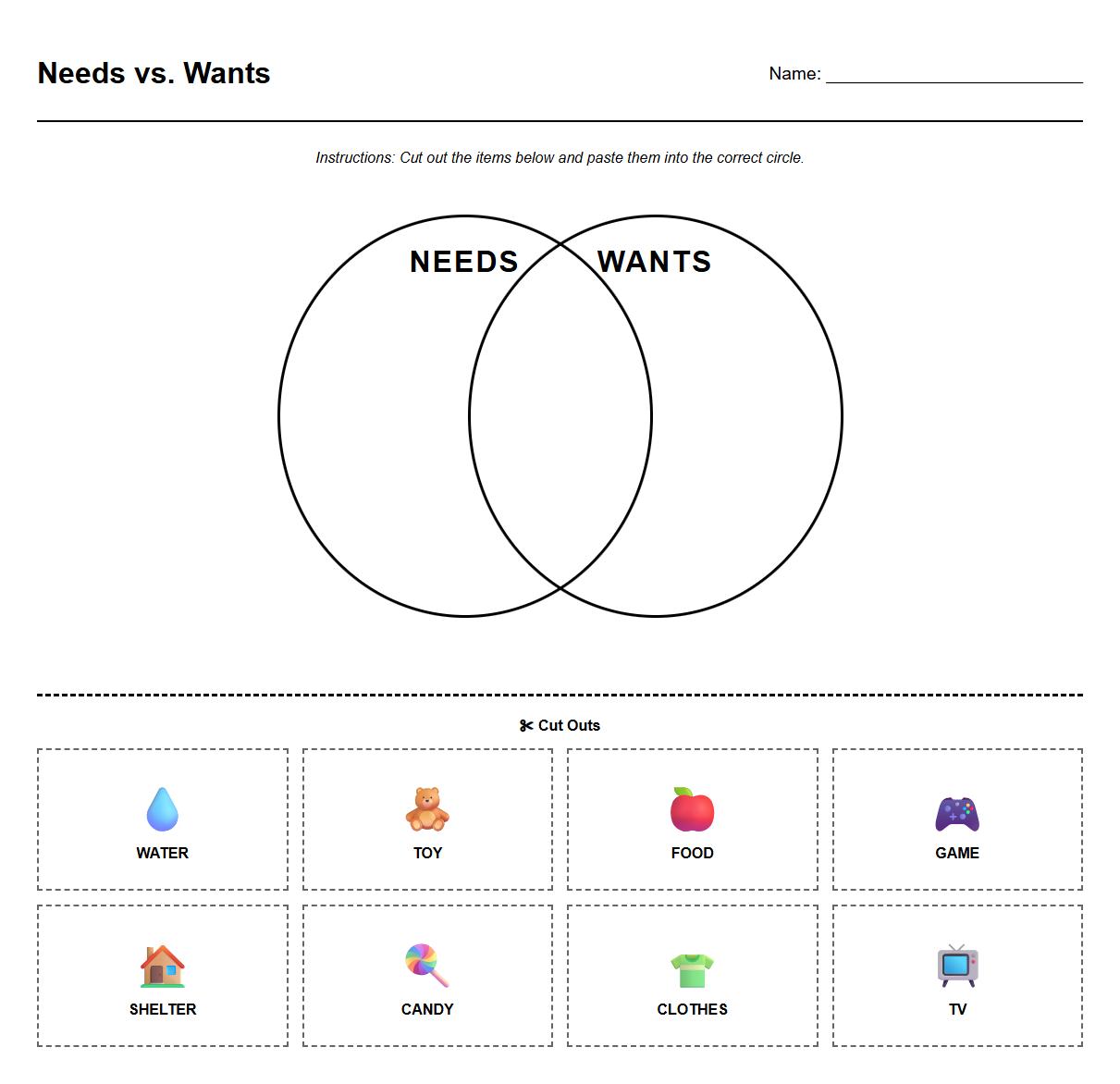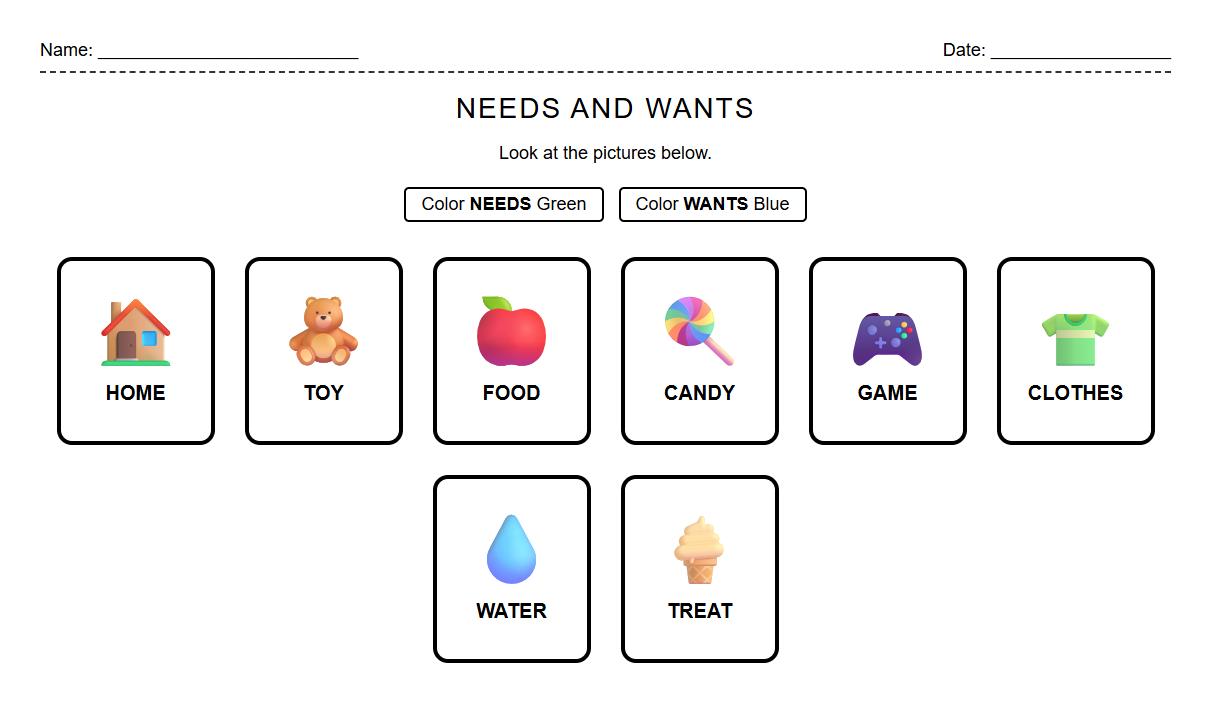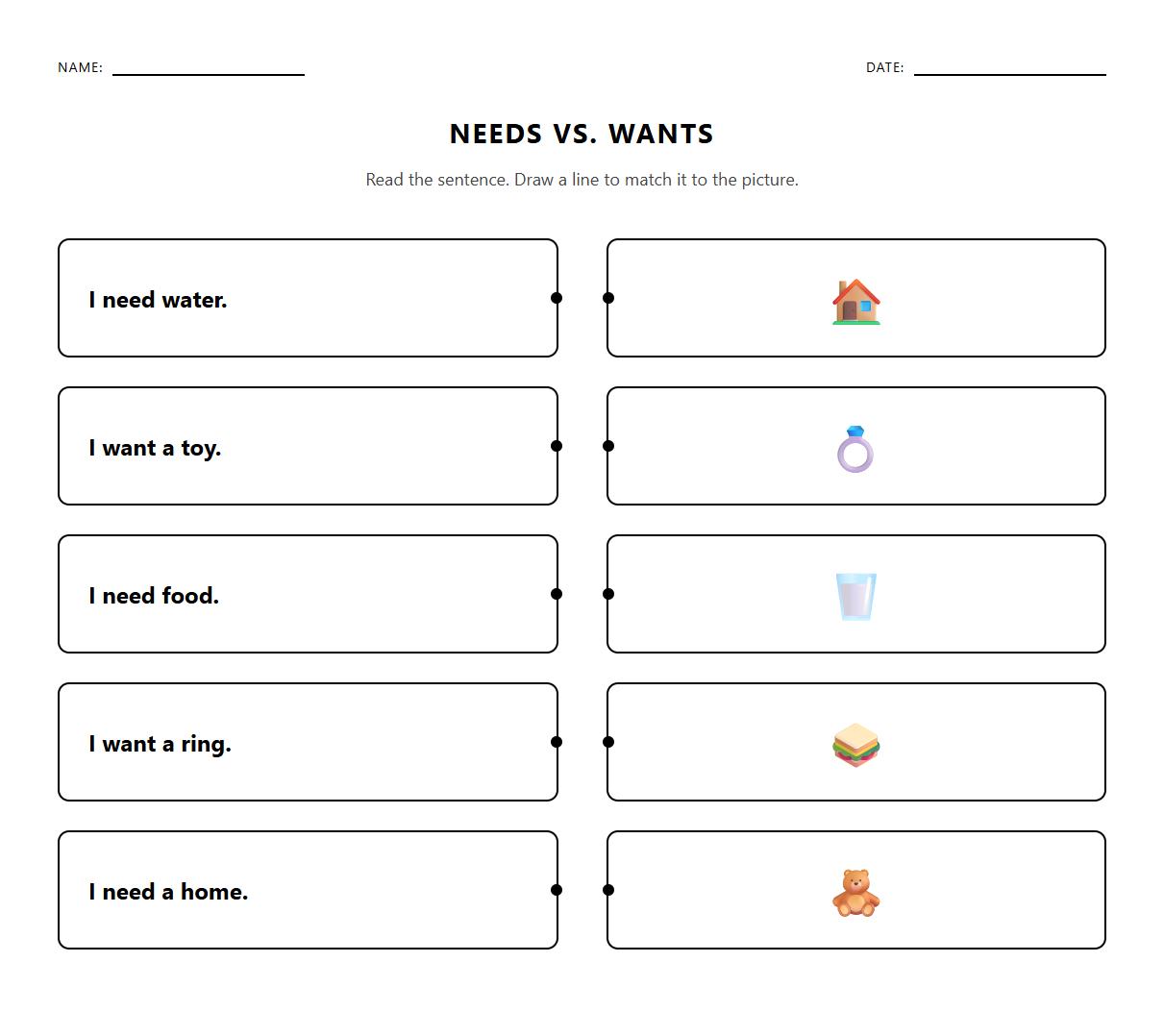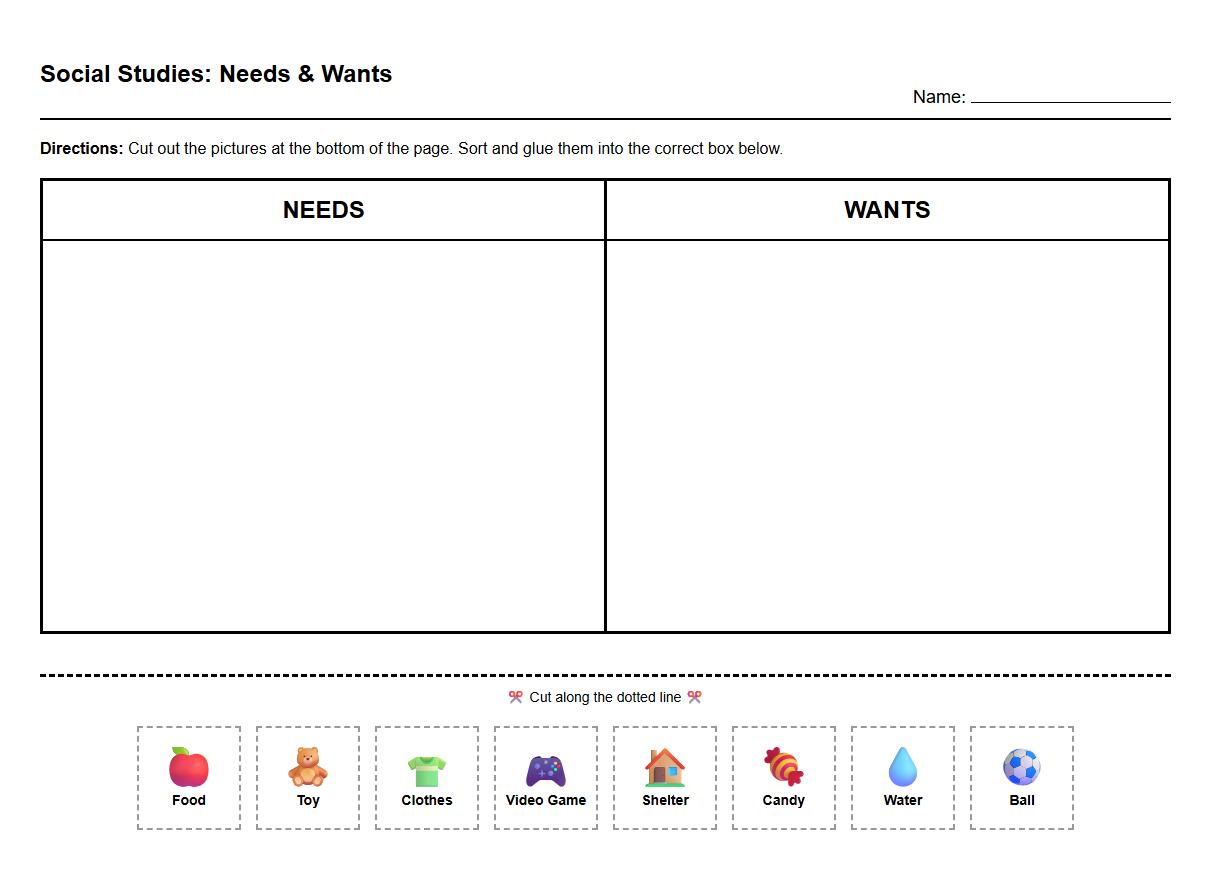
Understanding the difference between needs and wants helps young learners develop essential decision-making skills and promotes financial literacy from an early age. This Kindergarten Needs vs Wants Sorting Activity Worksheet encourages children to categorize everyday items, fostering critical thinking and awareness of priorities. Explore the available worksheets to support your child's learning journey in distinguishing needs from wants.
Main Objective of the Needs Versus Wants Sorting Activity
The primary goal of the needs versus wants sorting activity is to help kindergarten students recognize the difference between essential items required for survival and non-essential items desired for enjoyment. This foundational skill encourages critical thinking and decision-making from an early age. It fosters an understanding of priorities in everyday life. Teachers and parents can guide students toward distinguishing between needs and wants effectively.
How the Worksheet Helps Distinguish Between a Need and a Want
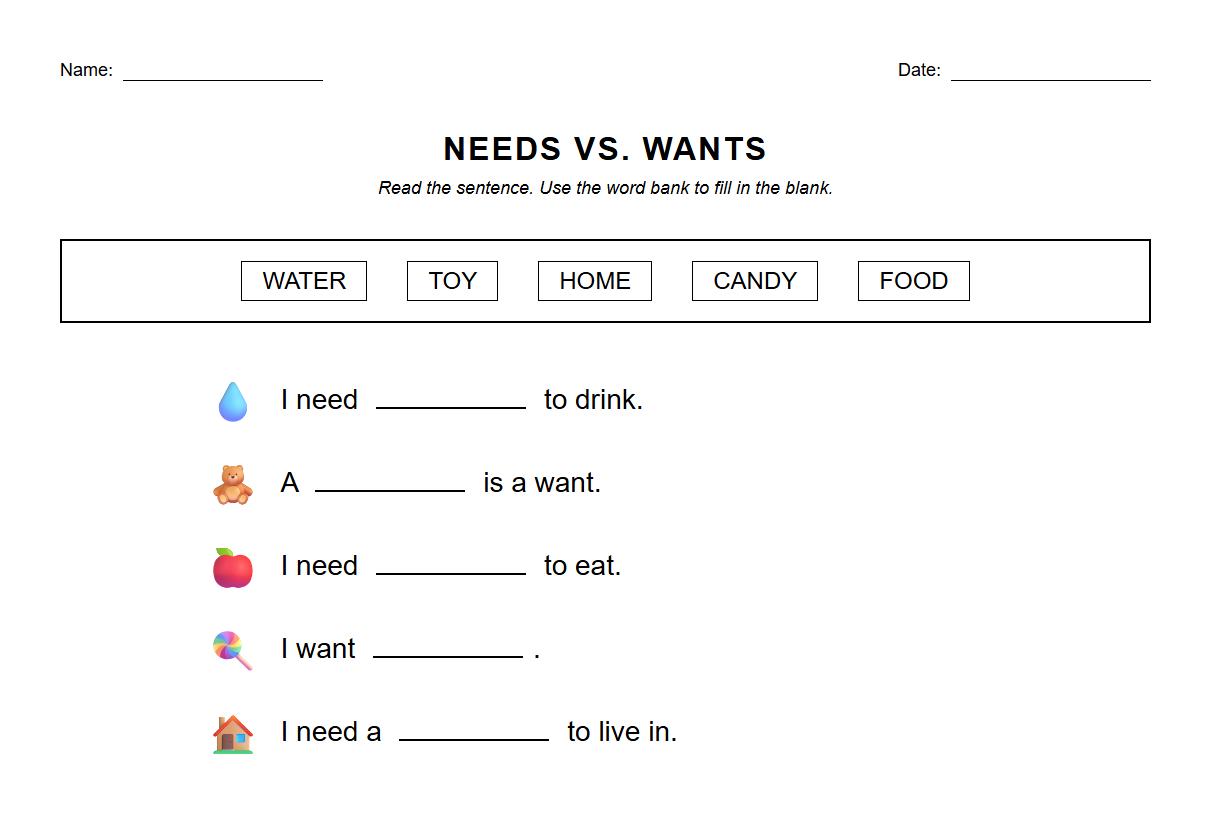
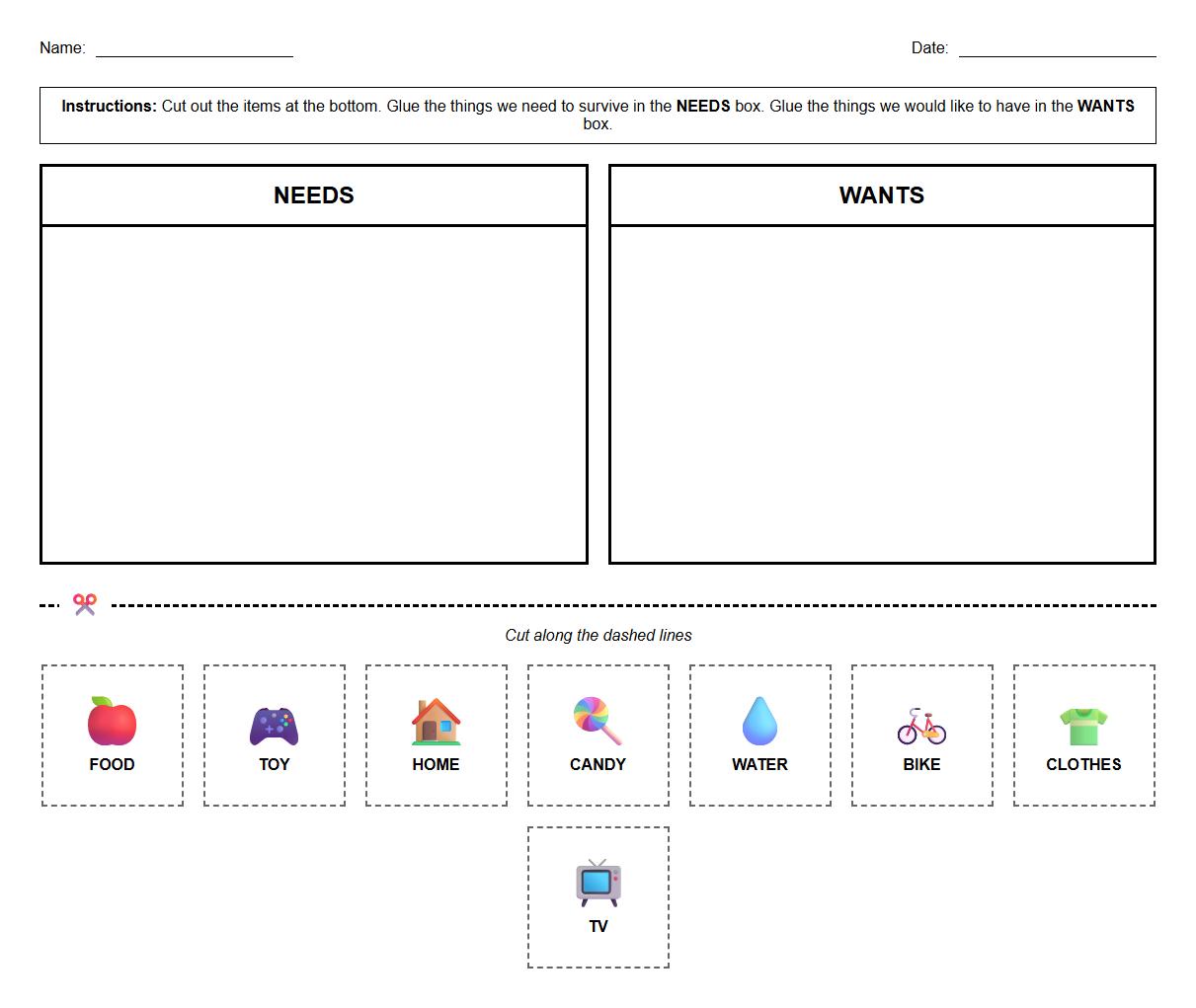
The worksheet uses visual cues and simple sorting tasks to engage children in categorizing items into needs or wants. By seeing pictures and grouping them, children develop awareness of what is necessary versus what is optional. This hands-on method reinforces learning through active participation and helps build vocabulary related to needs and wants. It simplifies abstract concepts into tangible examples.
Common Pictures or Items Used in Needs and Wants Sorting Worksheets
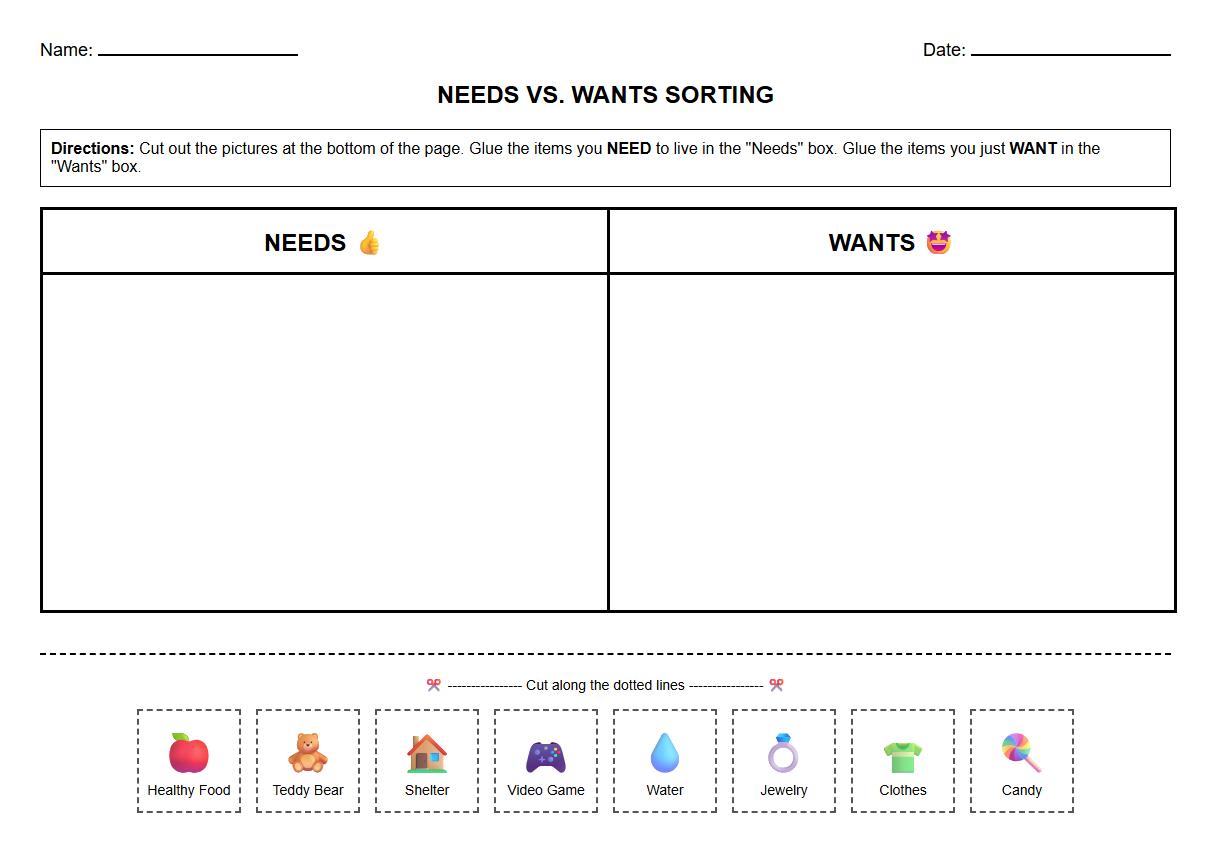
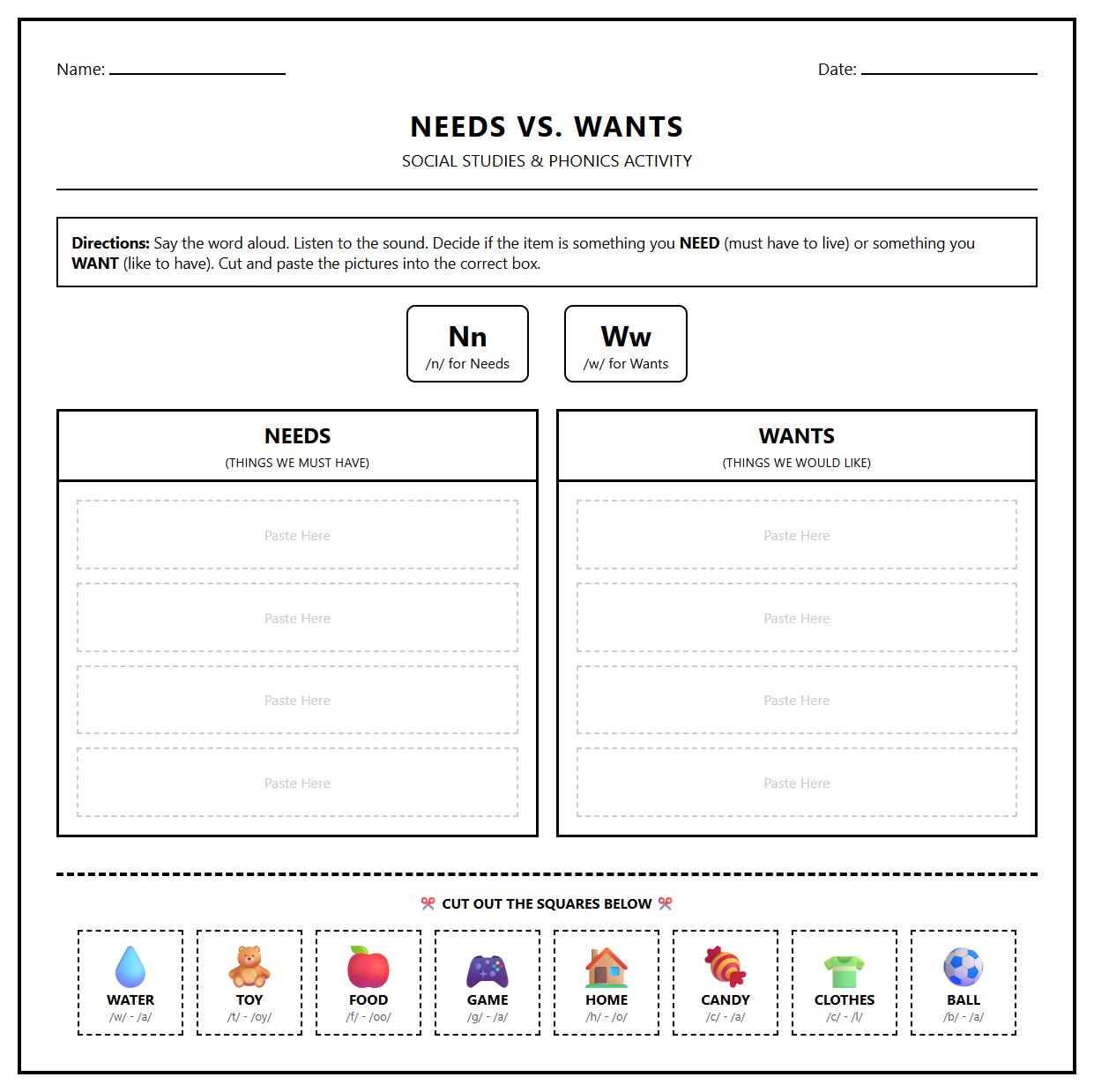
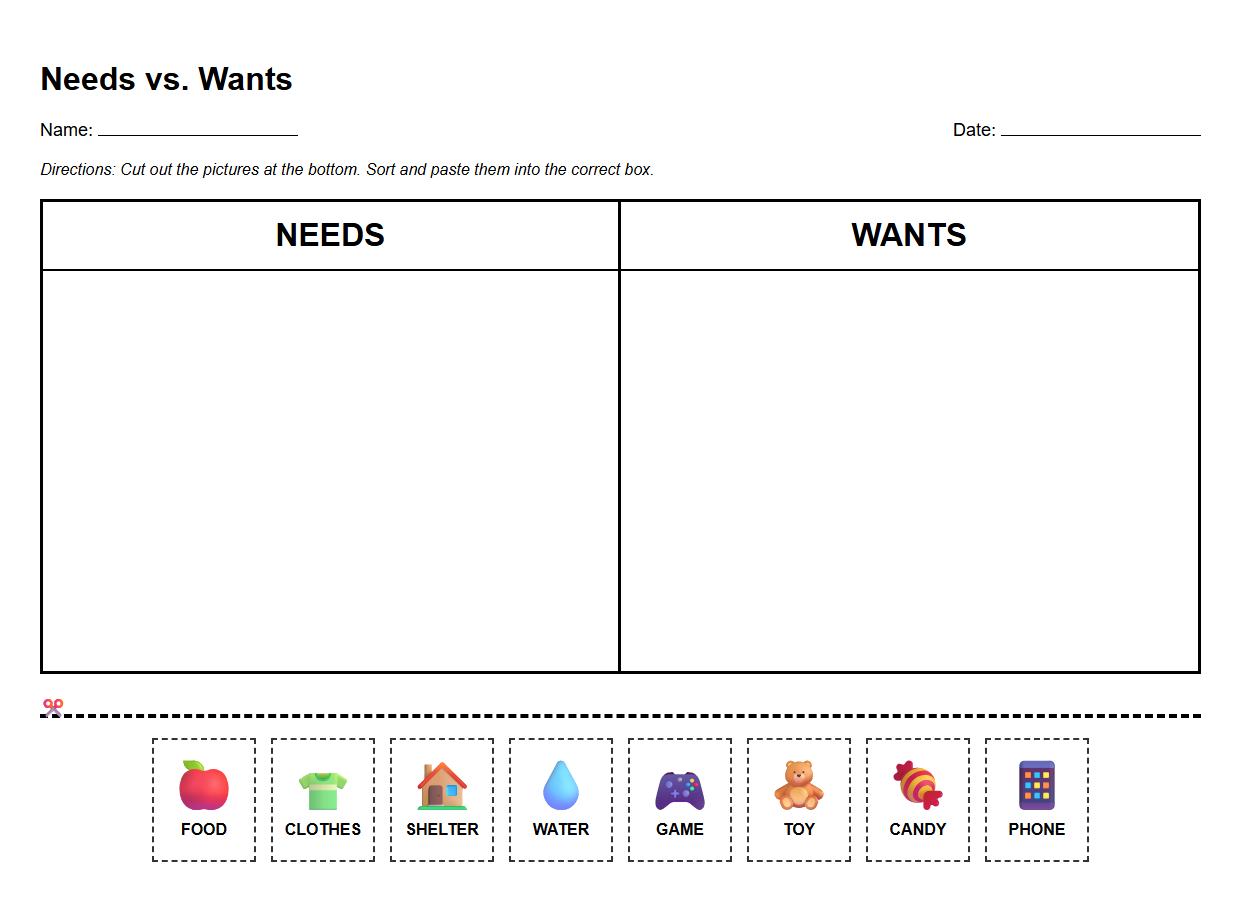
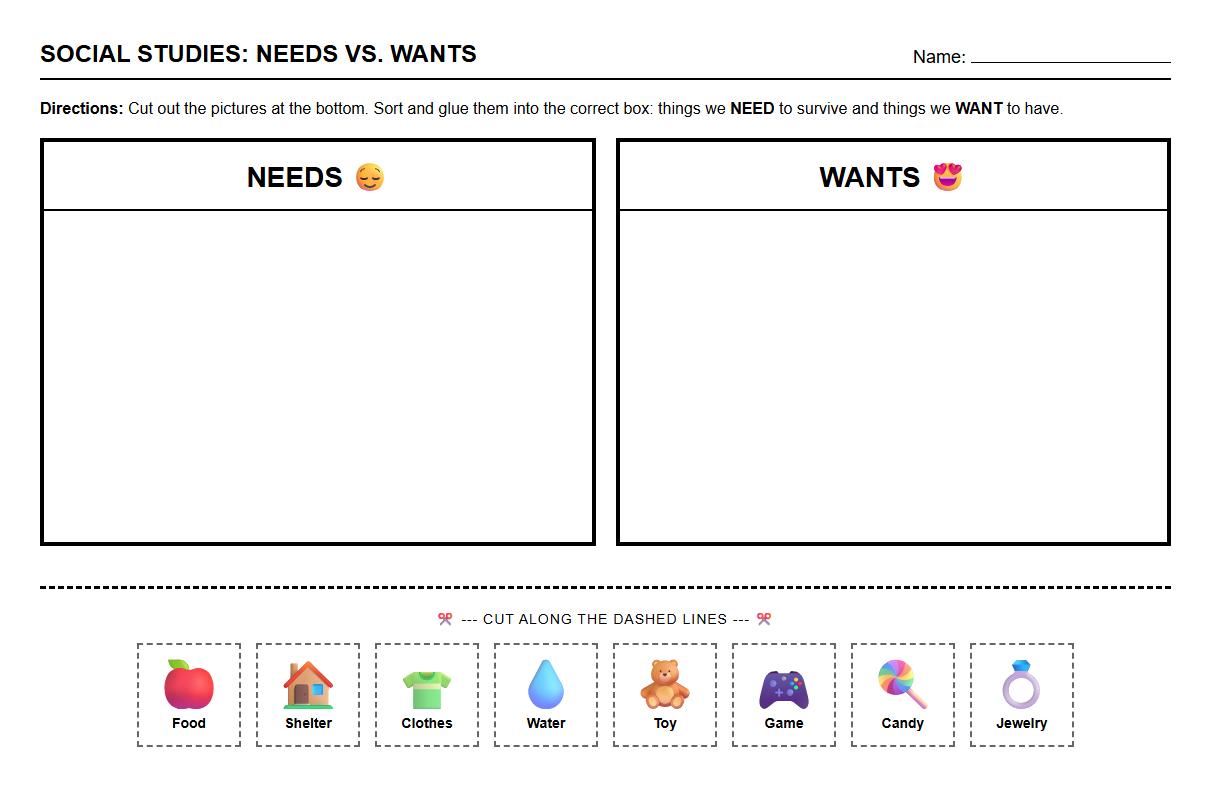
Worksheets typically feature images such as food, water, clothing, and shelter representing needs, while toys, candy, and video games often symbolize wants. Everyday household items, basic hygiene tools, and school supplies may also appear. These familiar visuals help children relate the activity to their own experiences. The clarity and simplicity of pictures enhance comprehension.
Introducing Needs and Wants Concepts Before the Worksheet
Teachers can start by discussing what people must have to be healthy and safe, using relatable examples like food and clothing. Storytelling or interactive conversations about daily routines can clarify the difference between essential and desired items. Visual aids such as drawings or real objects reinforce these concepts. Establishing a clear definition of needs and wants primes students for sorting activities.
Simple Examples of Needs on the Worksheet
Common needs featured include water, nutritious food, clothing, shelter, and basic healthcare items. These illustrate what is mandatory for a child's survival and well-being. Using everyday examples helps children grasp why these items are prioritized. Identifying these essentials supports early life skills.
Simple Examples of Wants Included in the Sorting Activity
Typical wants may include toys, sweets, electronic gadgets, and extra clothes that are not immediately necessary. These items are categorized as choices that add comfort or fun but are not vital. Showing clear contrasts between these and needs deepens understanding. Students learn to distinguish personal preferences from necessities.
How Parents Can Support Understanding at Home
Parents can reinforce concepts by discussing shopping lists, household budgeting, and making choices together. Encouraging children to express their own needs and wants during daily activities promotes practical comprehension. Reading books or watching age-appropriate videos about needs and wants also boosts awareness. Consistent conversations at home complement classroom learning.
Skills Developed During Needs and Wants Sorting
Students enhance their categorization, critical thinking, and decision-making skills through the activity. They practice sorting, comparing, and verbalizing choices, which improves language and cognitive development. The exercise fosters social-emotional growth by introducing responsibility and empathy. These foundational skills support future academic and life learning.
Adapting the Worksheet for Different Learning Abilities
Teachers can provide simplified or more detailed versions of the worksheet depending on student needs. Using tactile materials or interactive digital versions helps engage children with varying learning styles. Pairing students for collaborative sorting encourages peer support. Modifications such as larger images, fewer choices, or verbal prompts ensure inclusivity.
Follow-Up Discussions After Completing the Worksheet
Teachers can facilitate conversations about why certain items are needs and others wants, linking to real-life scenarios. Discussing how spending choices affect families encourages responsible thinking. Sharing personal experiences helps deepen the understanding of prioritization and gratitude. These discussions solidify learning and connect it to everyday living.


Needs vs Wants Cut and Paste Worksheet for Early Learners