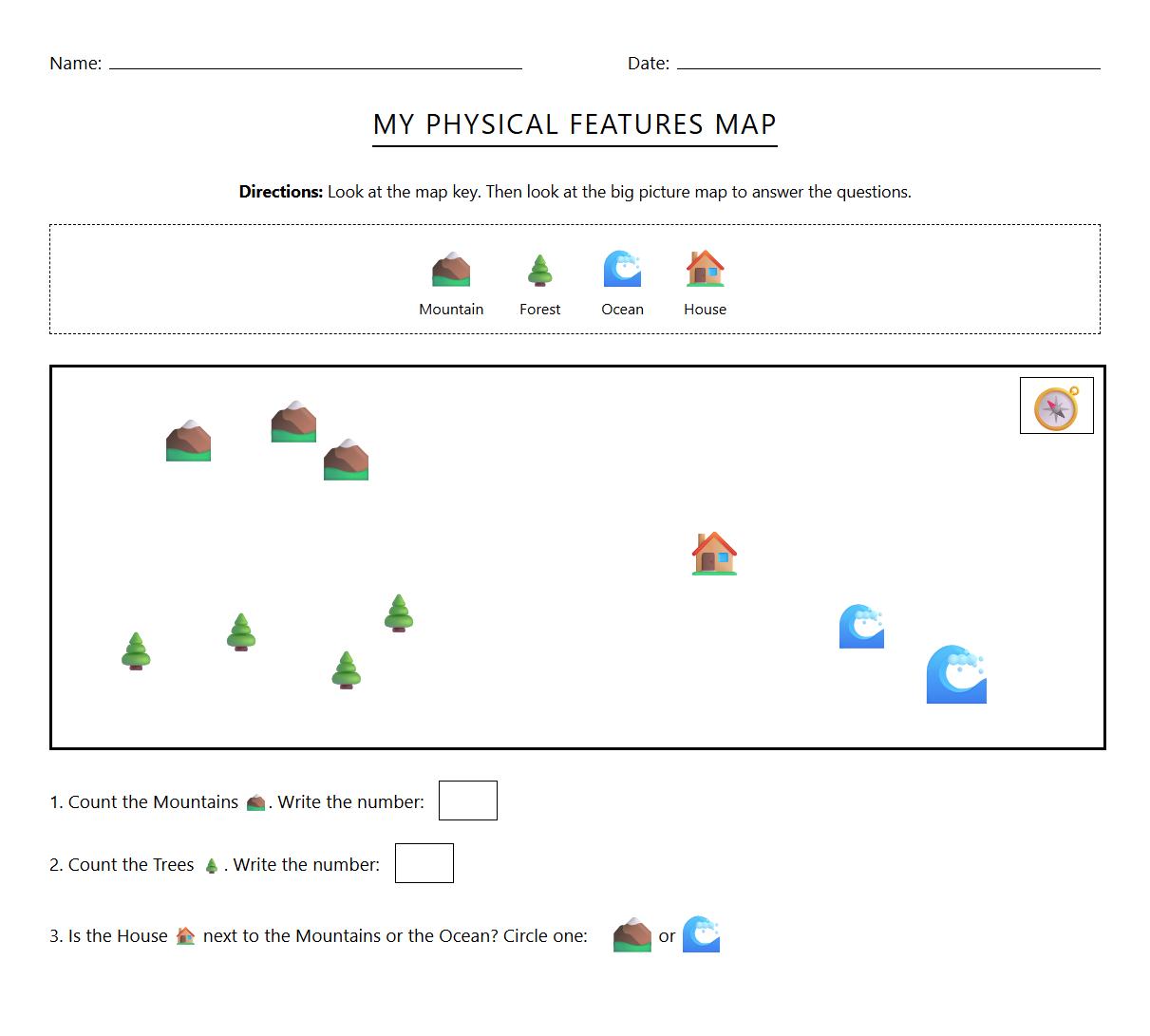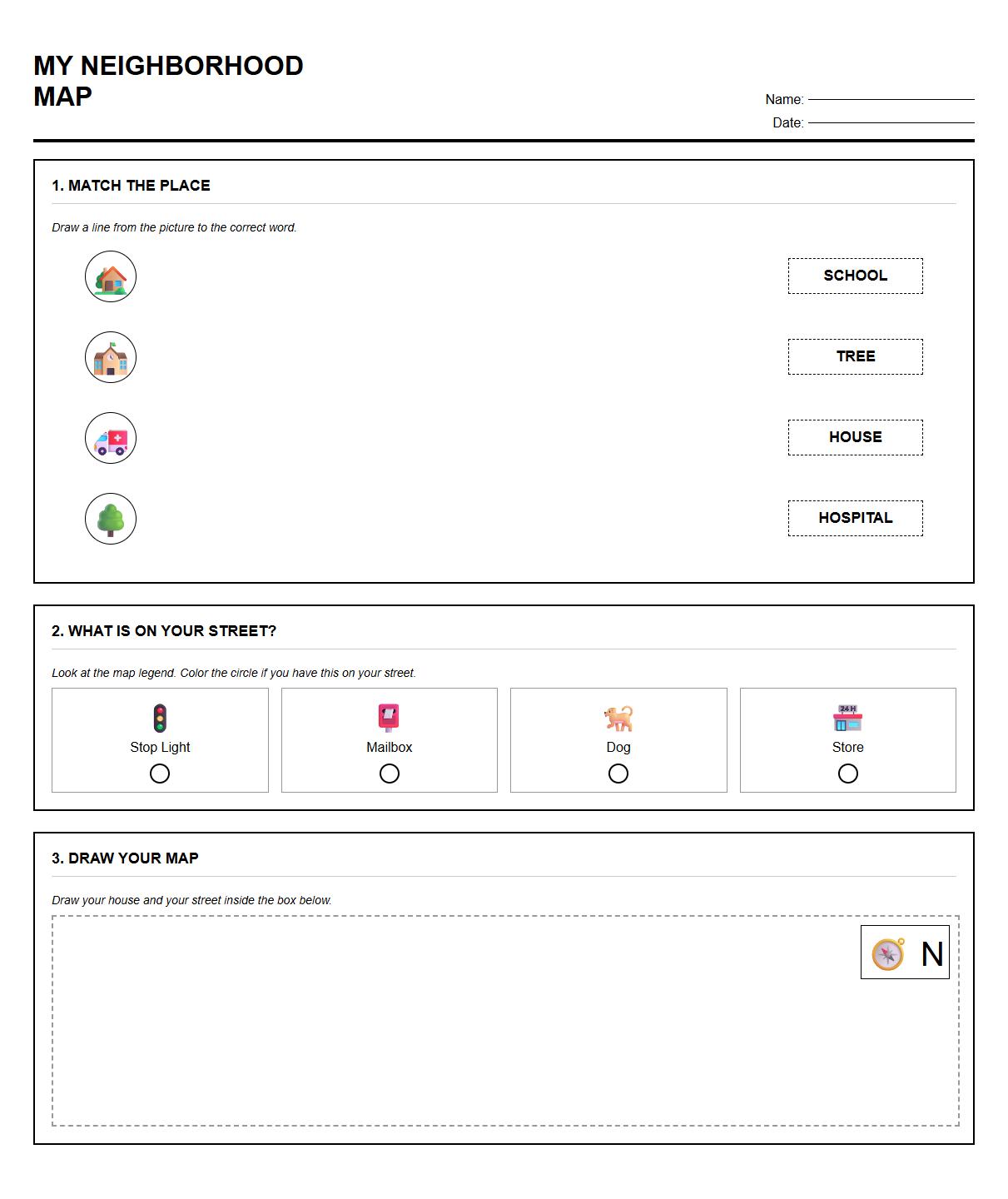
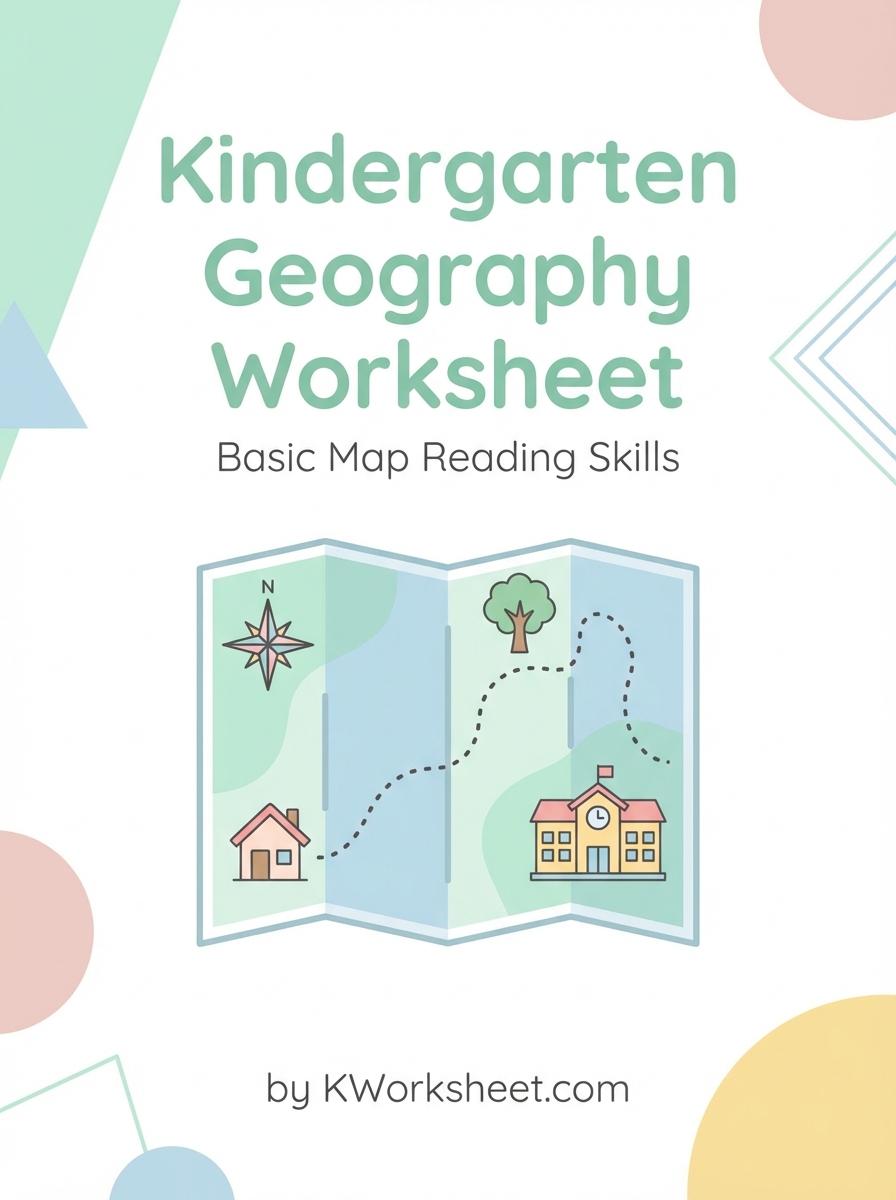
Kindergarten geography worksheets introduce young learners to fundamental map reading skills such as identifying symbols, understanding directions, and recognizing simple map features. These activities help build spatial awareness and develop early geography concepts in a fun and engaging way. Explore our collection of worksheets designed to enhance your child's basic map reading abilities.
What Does a Map Help Us Find in Our Classroom or School?
A map helps us find different places in our classroom or school quickly and easily. It shows where important areas like the library, cafeteria, and playground are located. Using a map makes it simple to understand the layout of your school. This helps children feel more confident when moving around.
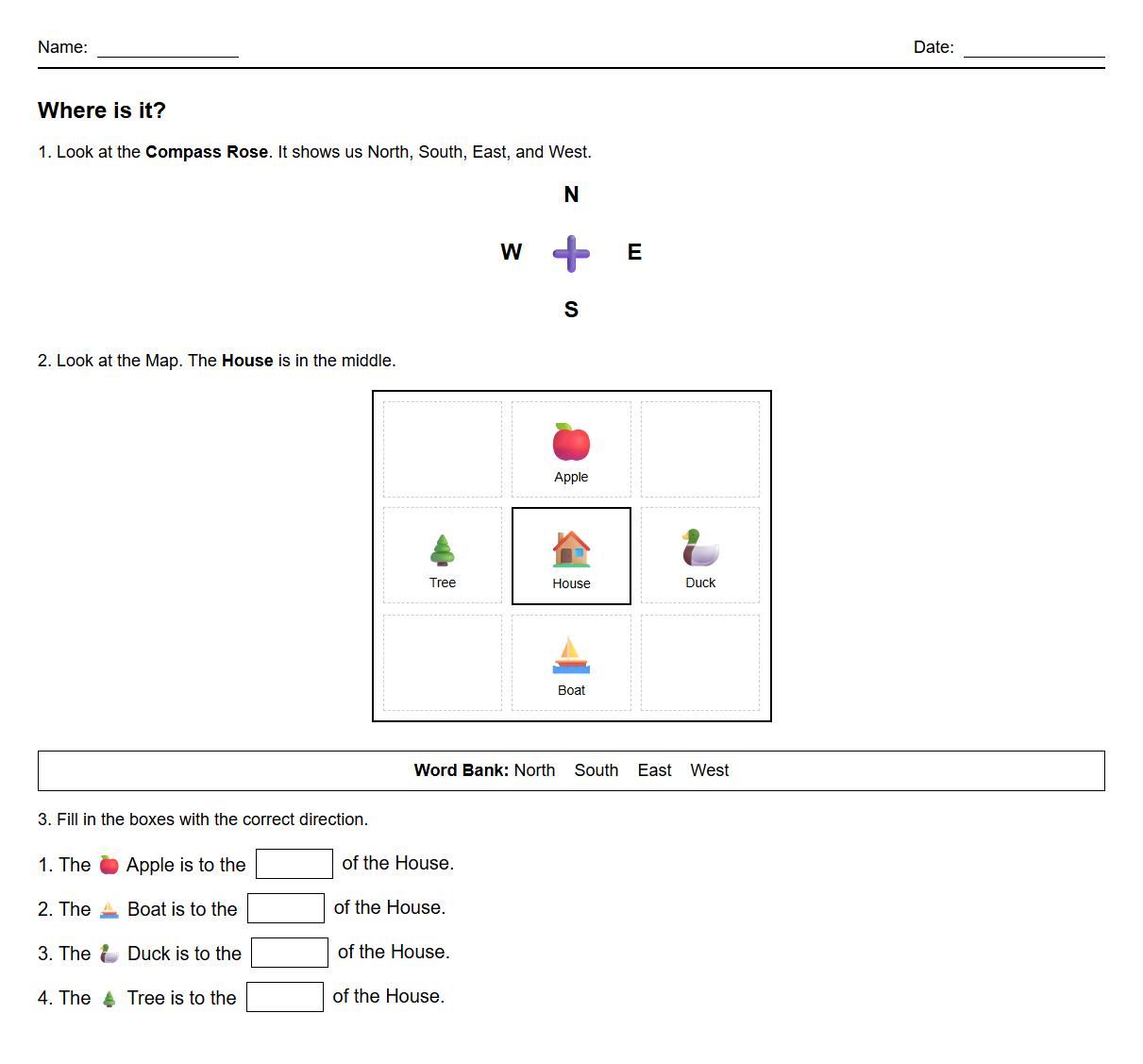
Can You Point to the Compass Rose and Show Which Way is North?
The compass rose on a map shows directions like north, south, east, and west. Pointing to the compass rose helps children learn which way is north. North is usually marked with a bold letter "N" or an arrow. Understanding directions helps kids read maps better.
What Symbol on the Map Shows Where the Playground Is?
The playground is usually marked with a special symbol, like a slide or swings on the map. This makes it easy for children to find where they can play. Teachers can help students recognize these symbols early on. Symbols give us clues about different places on the map.
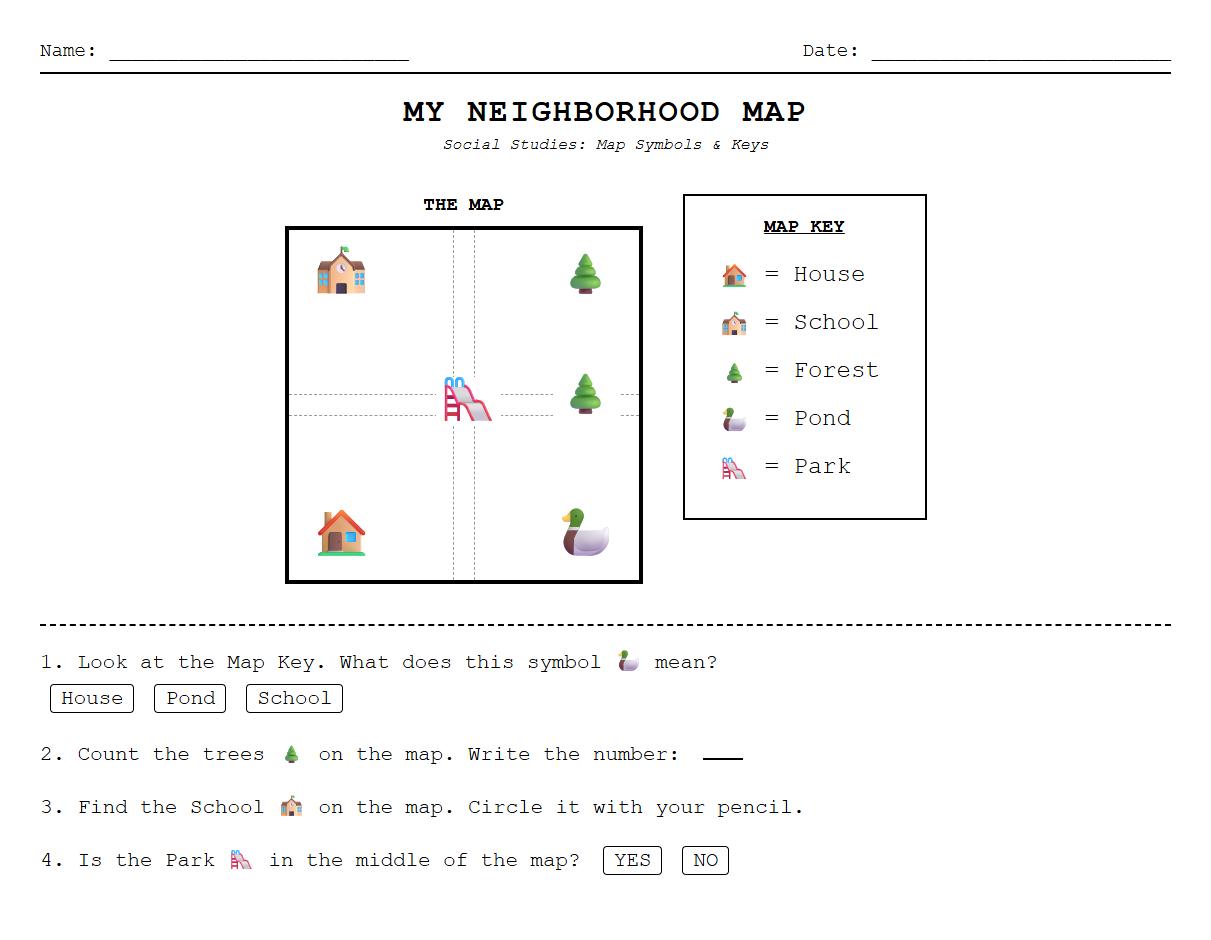
How Do We Use a Map Key to Understand What Pictures Mean?
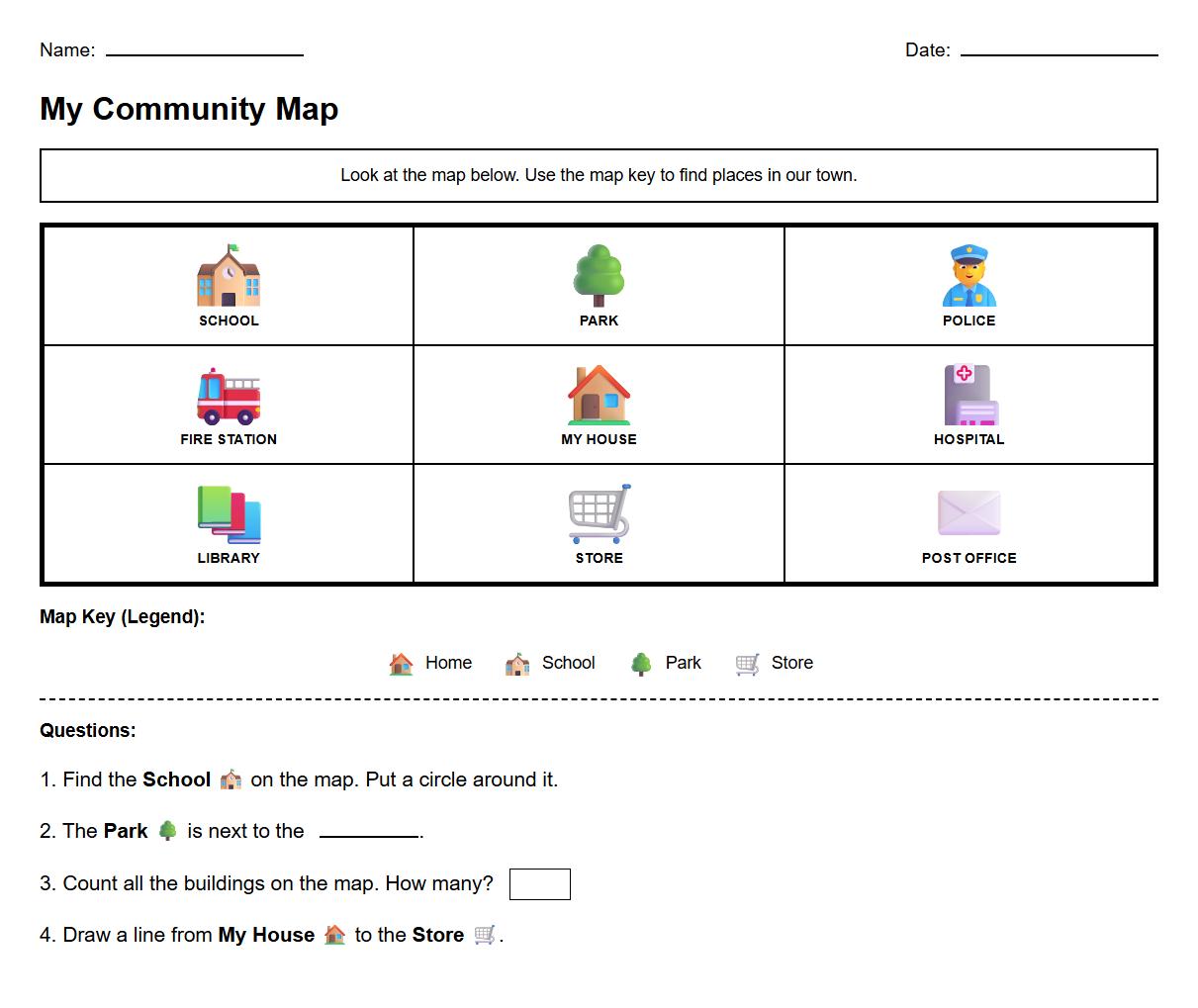
The map key explains the meaning of each picture or symbol on the map. For example, a tree symbol might mean the garden area, while a book might stand for the library. Using the map key helps kids understand what each symbol represents. It is like a code that helps us read the map.
Can You Trace the Route from Our Classroom to the Cafeteria on the Map?
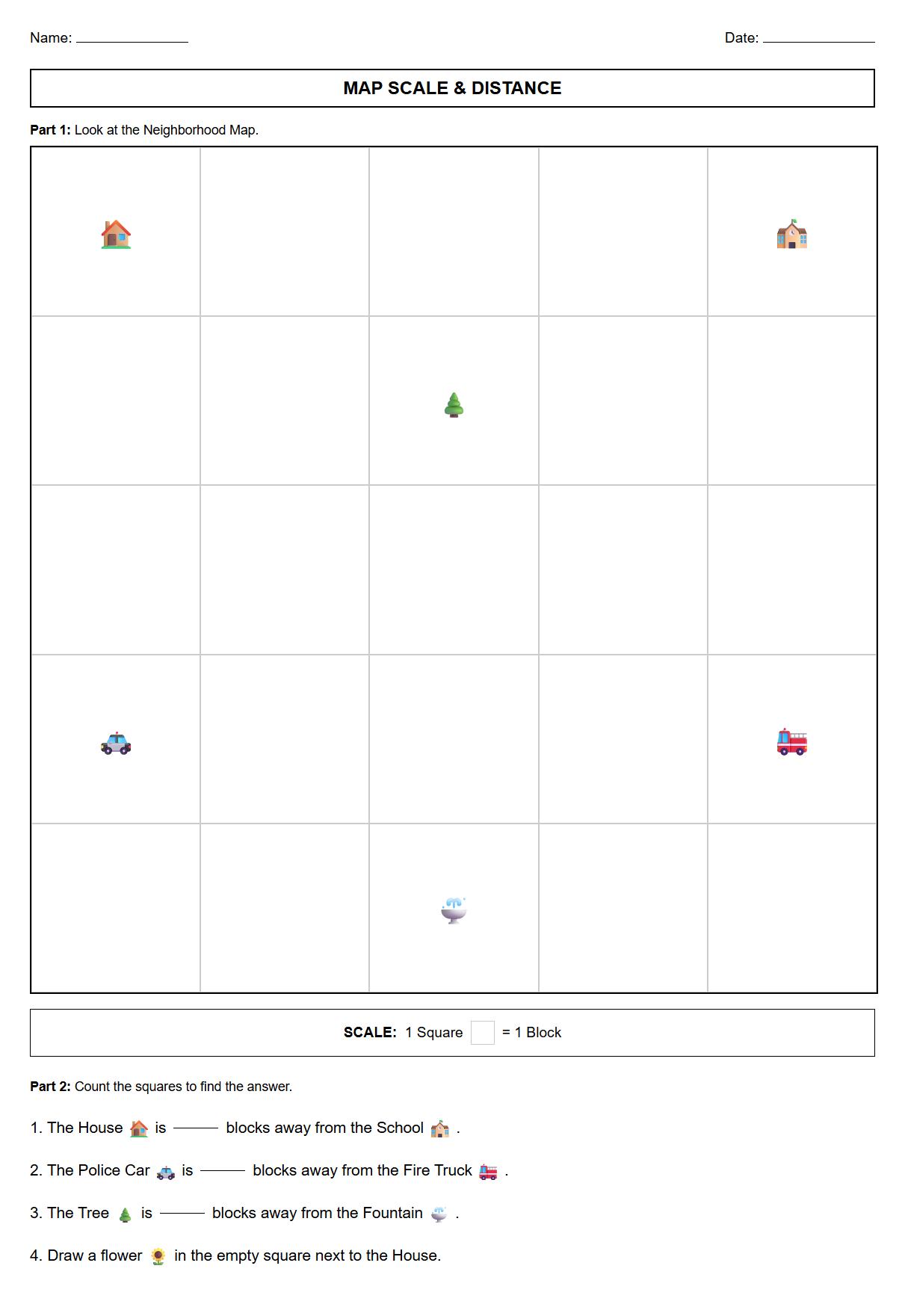
Tracing the route on the map teaches kids how to follow directions step by step. Starting at the classroom, you can connect the path to the cafeteria. This exercise helps improve spatial awareness and map-reading skills. It also makes transitions at school easier.
Which Color on the Map Shows the Grass or Park Area?
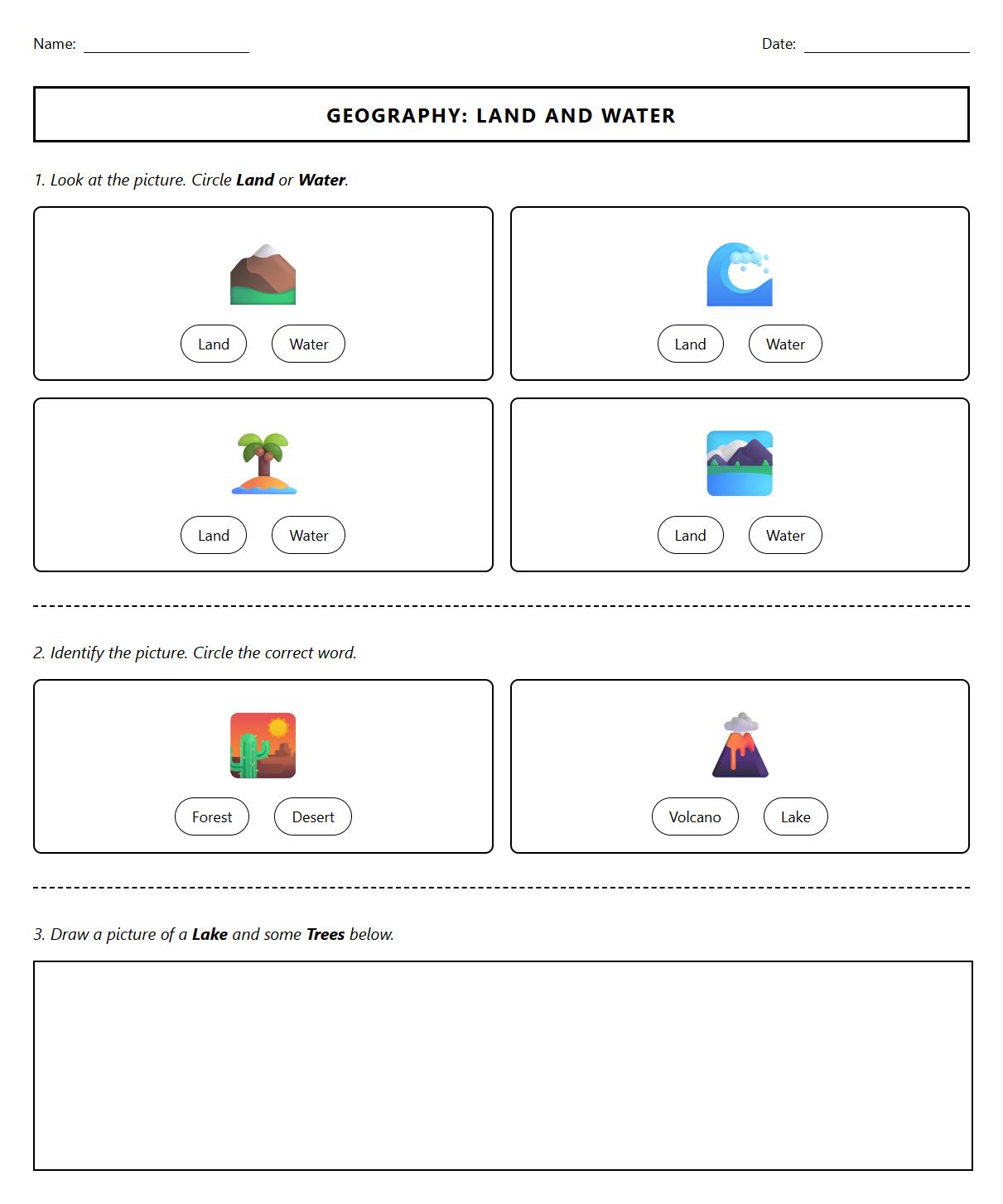
The color green on the map usually shows grass or park areas. This helps children quickly see outdoor spaces where they can play or relax. Recognizing colors on maps supports early learning about the environment. It also makes the map visually engaging.
Where Is the Library Located on This School Map?
The library may be shown with a special symbol, like a book, or labeled clearly on the map. It's often found near classrooms or quiet areas. Teachers can guide children to find this important learning space. Knowing the library location encourages kids to explore books and reading.
Can You Find and Circle the Bathrooms on the Map?
Finding and circling the bathrooms on the map helps children identify essential places for their daily needs. Bathrooms may have a toilet or sink symbol. This activity builds independence and confidence when moving around school. It also supports hygiene routines.
Which Part of the Map Shows the Entrance to the School?
The school entrance is usually marked near the bottom or front side of the map with an arrow or entrance sign. Knowing this helps children understand where to go when they arrive or leave. It also teaches the concept of entry and exit points. This is important for safety and organization.
What Do You Notice About Where the Gym Is Compared to the Garden?
The gym and garden are often shown in different areas on the map, sometimes separated by playgrounds or walkways. Observing their locations helps children compare indoor and outdoor activity spaces. Teachers can use this to talk about different types of play and learning environments. It encourages observation and discussion about school layout.


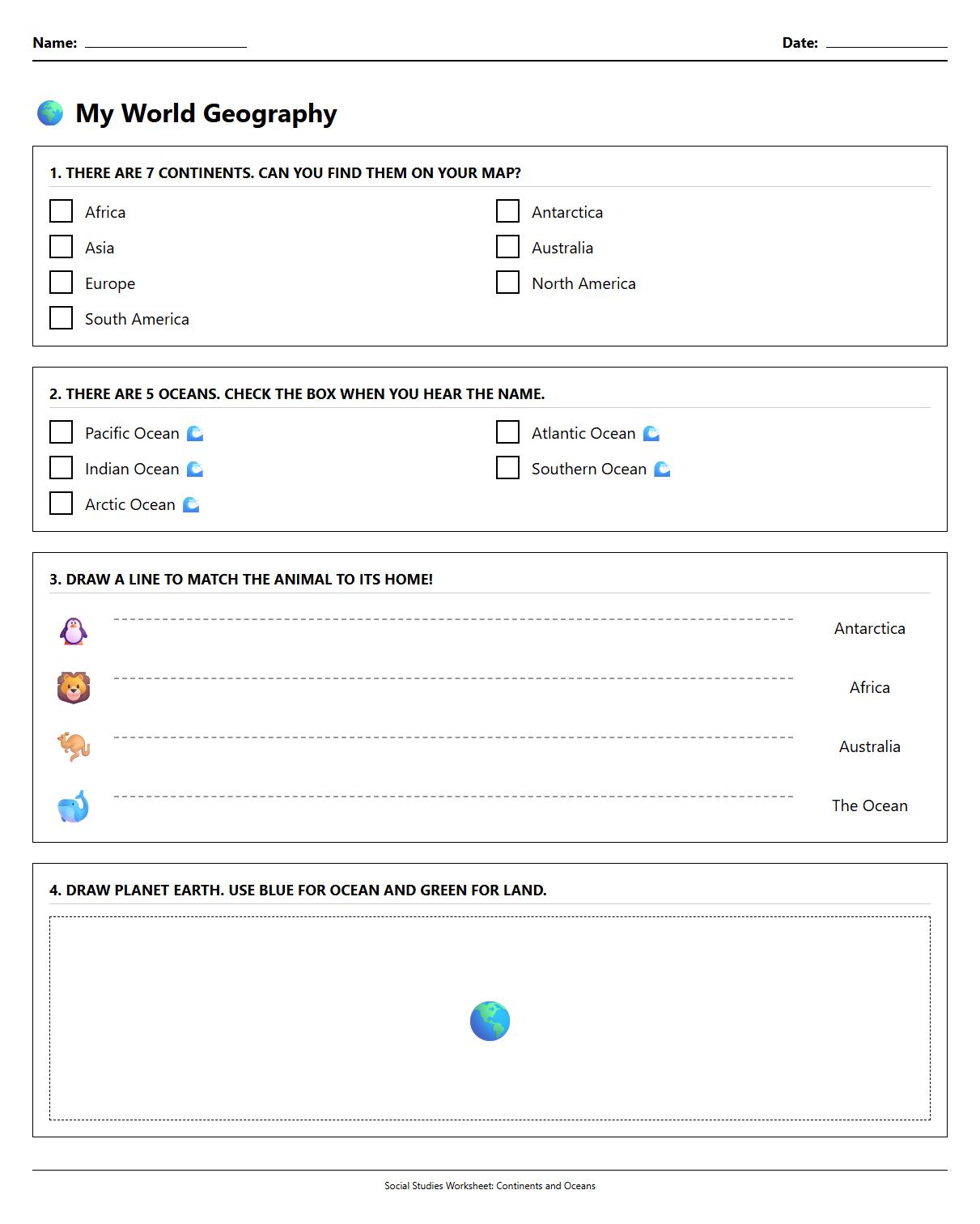
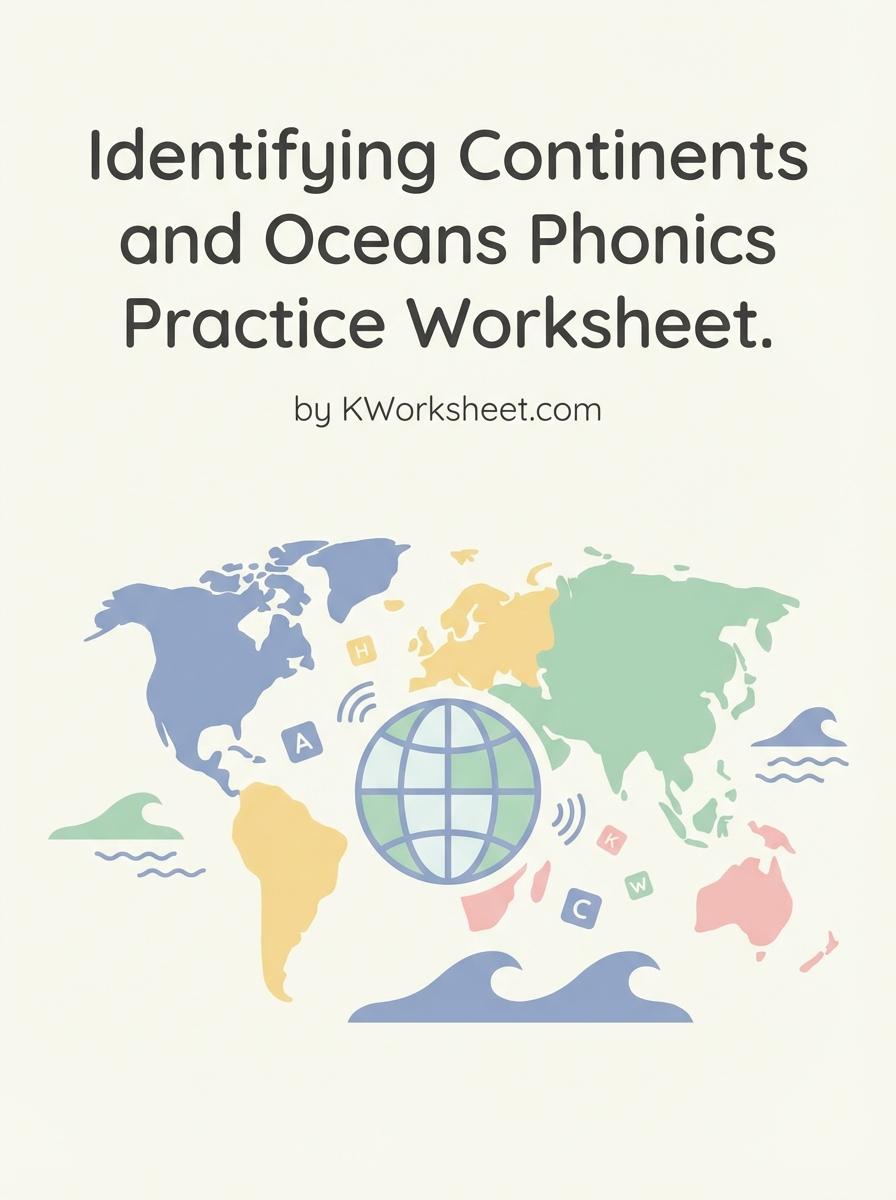
Identifying Continents and Oceans Phonics Practice Worksheet