Phonics Based Antonyms Worksheet Tasks for Early Learners

📅 Jun 12, 2025 👤 Nylen Smith

Phonics-based antonyms worksheets help early learners develop vocabulary by identifying words with opposite meanings using sound patterns. These activities enhance reading skills and promote understanding of language structure through fun, interactive tasks. Explore our collection of worksheets designed to reinforce antonym recognition and phonics learning.

Match the Phonics Based Antonyms
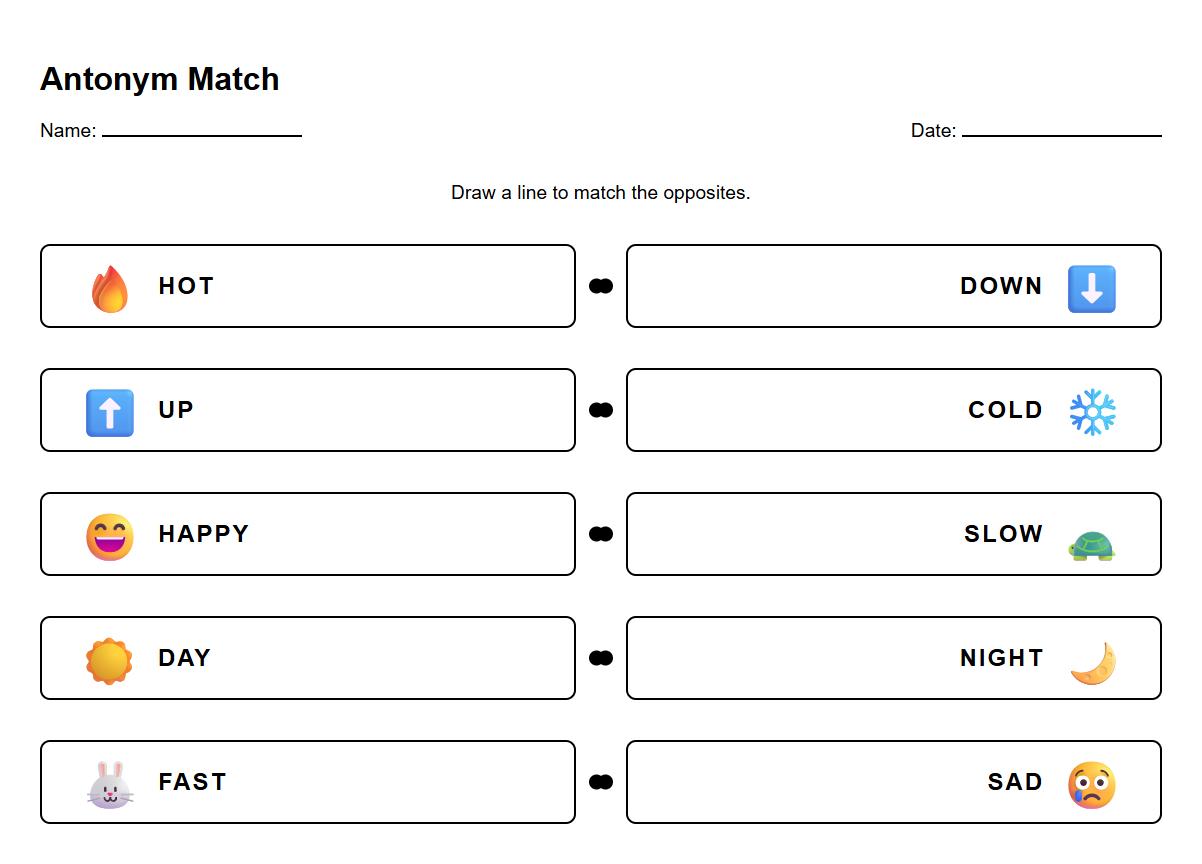
Match the Phonics Based Antonyms

Download PDF     Pin it

Fill in the Blanks with Antonym Pairs
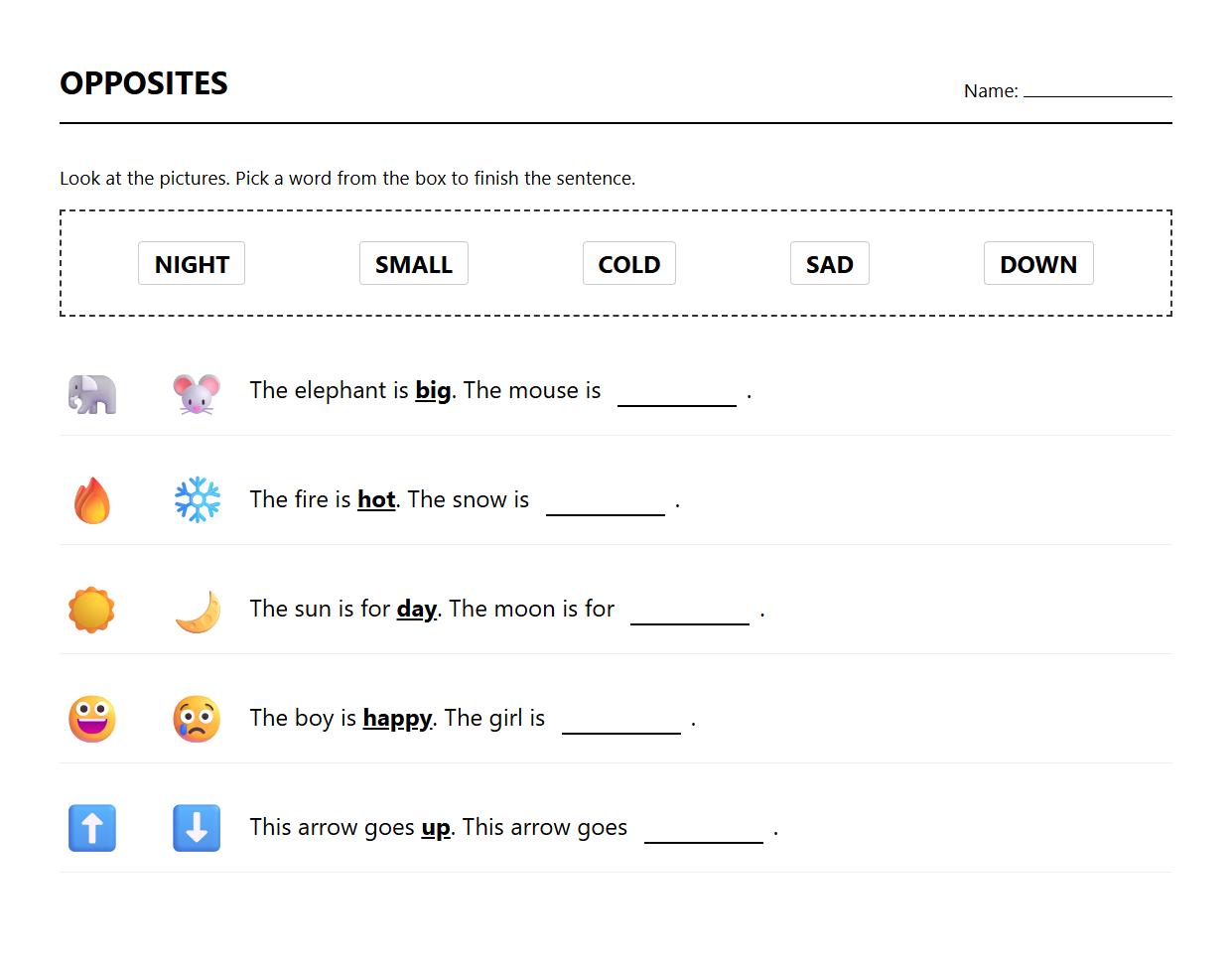
Fill in the Blanks with Antonym Pairs

Download PDF     Pin it

Cut and Paste Antonym Pictures

Cut and Paste Antonym Pictures

Download PDF     Pin it

Circle the Correct Antonym Word

Circle the Correct Antonym Word

Download PDF     Pin it

Draw Lines to Connect Antonym Words

Draw Lines to Connect Antonym Words

Download PDF     Pin it

Phonics Antonym Word Sort

Phonics Antonym Word Sort

Download PDF     Pin it

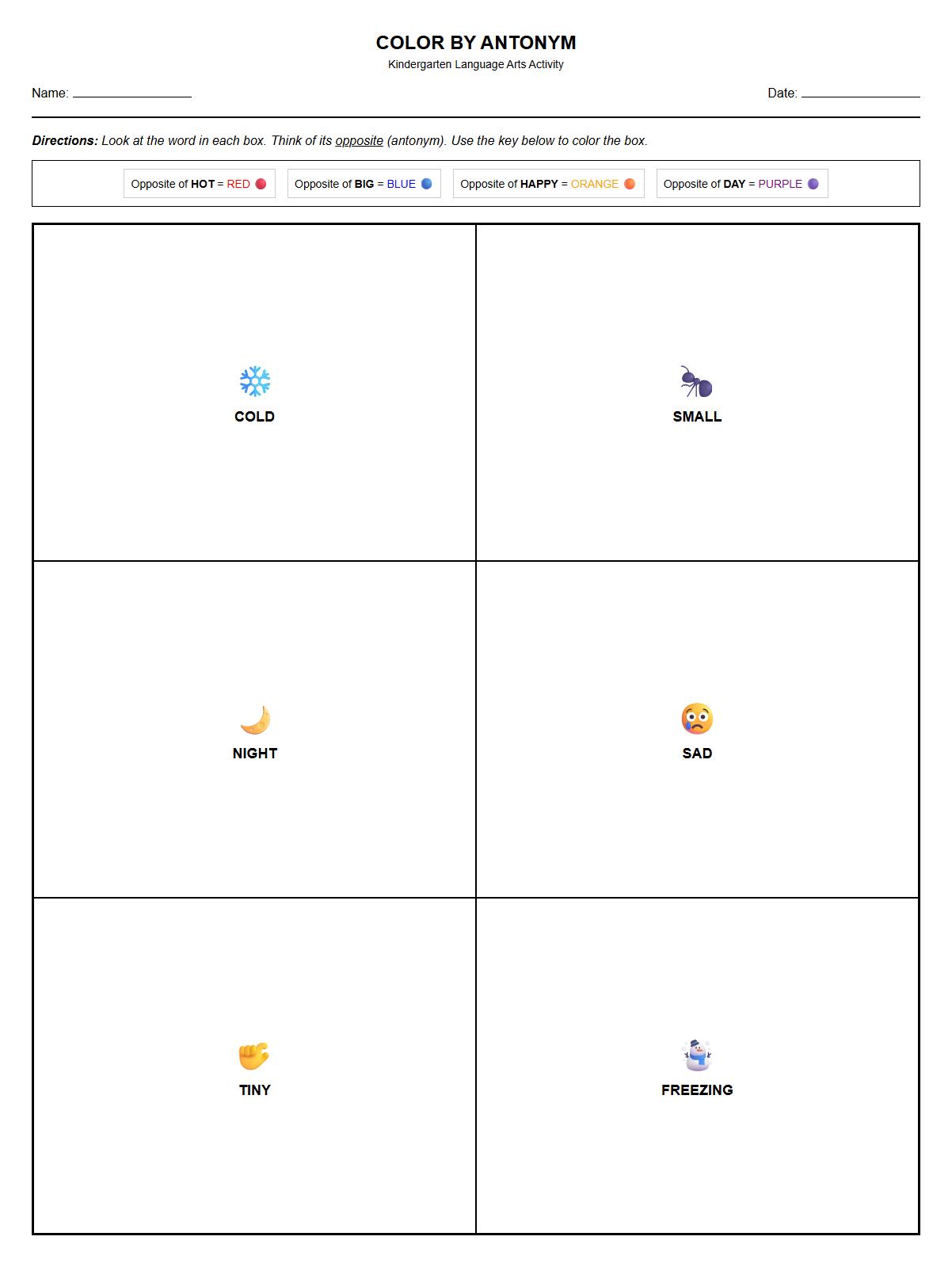
Color by Antonym Sound

Color by Antonym Sound

Download PDF     Pin it

Antonym Word Search with Phonics Clues
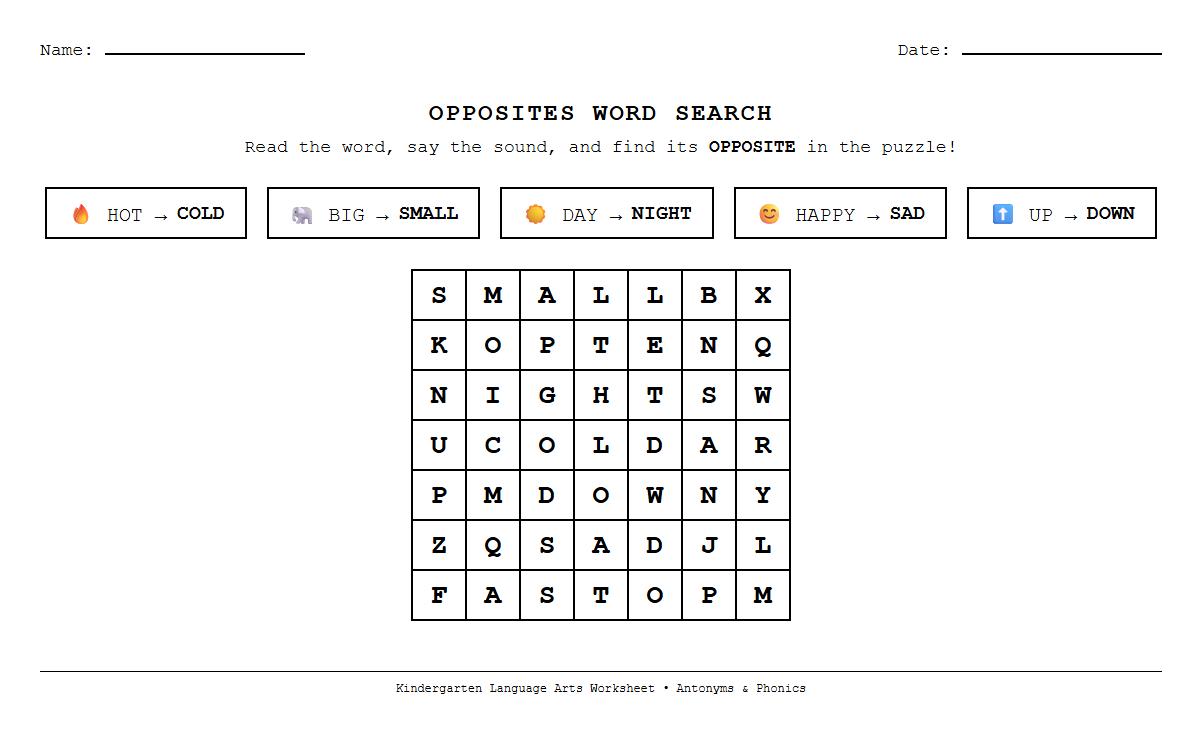
Antonym Word Search with Phonics Clues

Download PDF     Pin it

Write the Antonym Using Phonics Hints
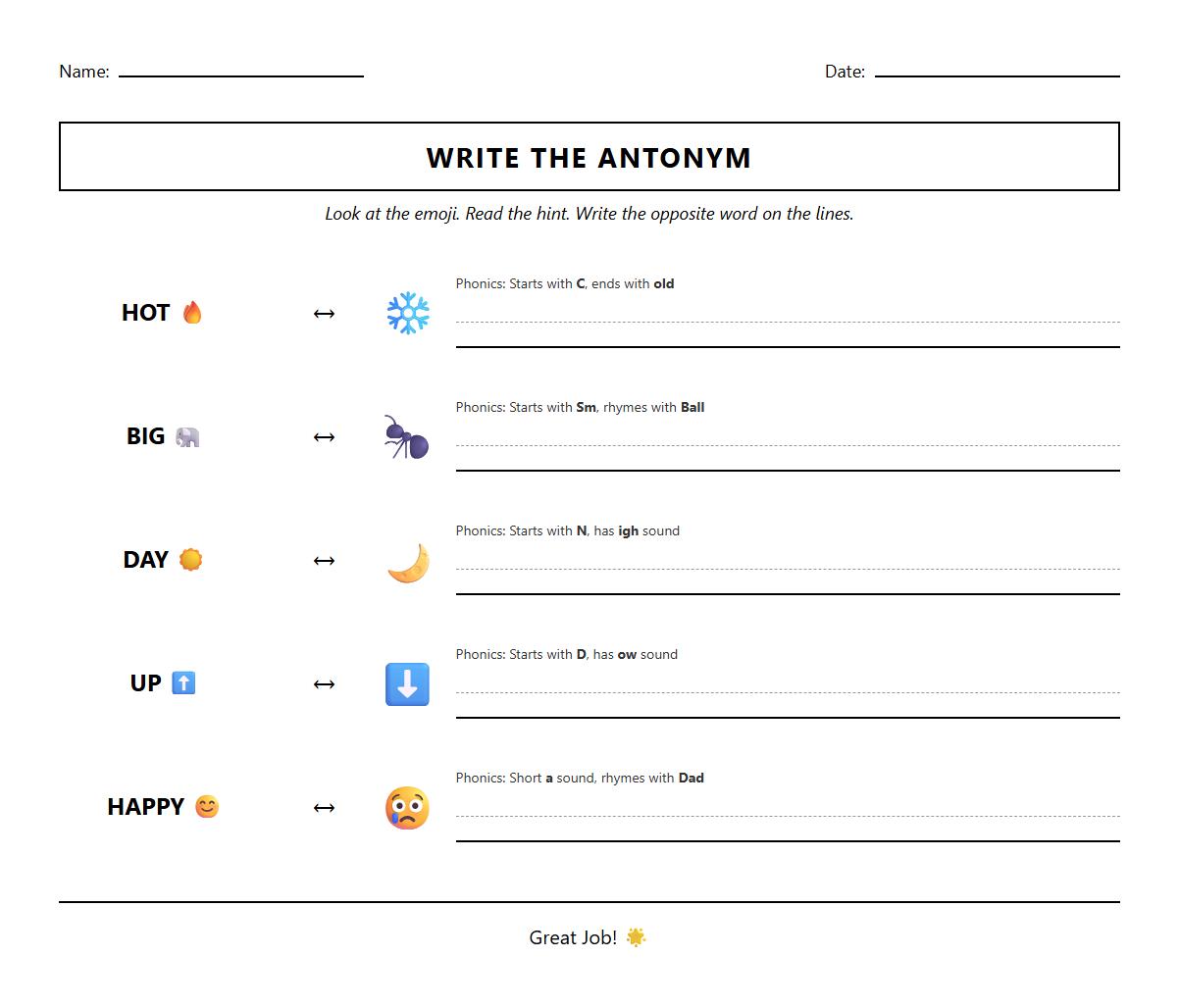
Write the Antonym Using Phonics Hints

Download PDF     Pin it

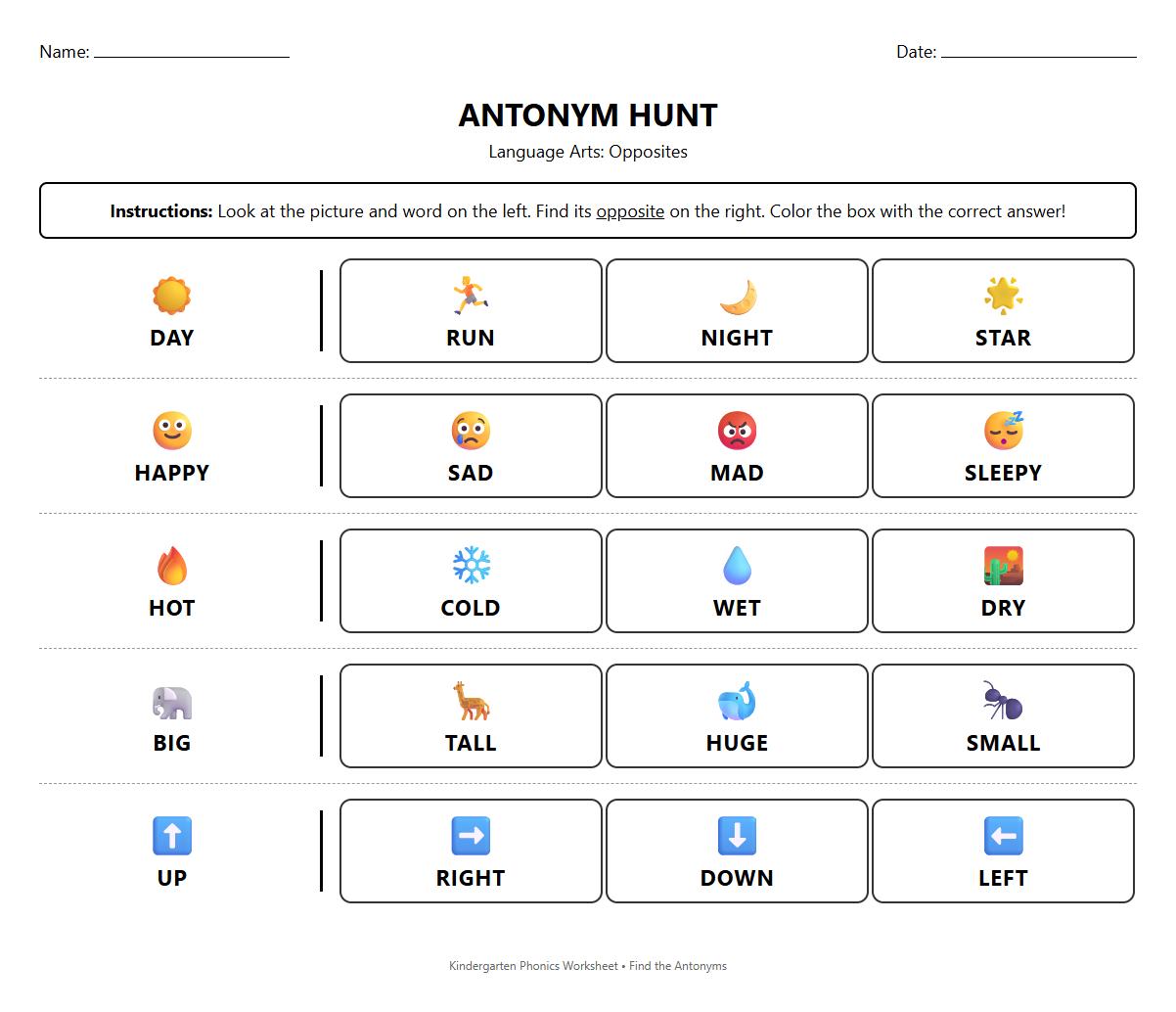
Find and Highlight Phonics Antonyms

Find and Highlight Phonics Antonyms
Download PDF     Pin it

Match the Word with Its Opposite Using Pictures

This activity helps children recognize antonyms by pairing words with corresponding images. It develops their visual and vocabulary skills simultaneously. Teachers and parents can guide children by discussing the differences between each pair. This interactive method makes learning fun and memorable.

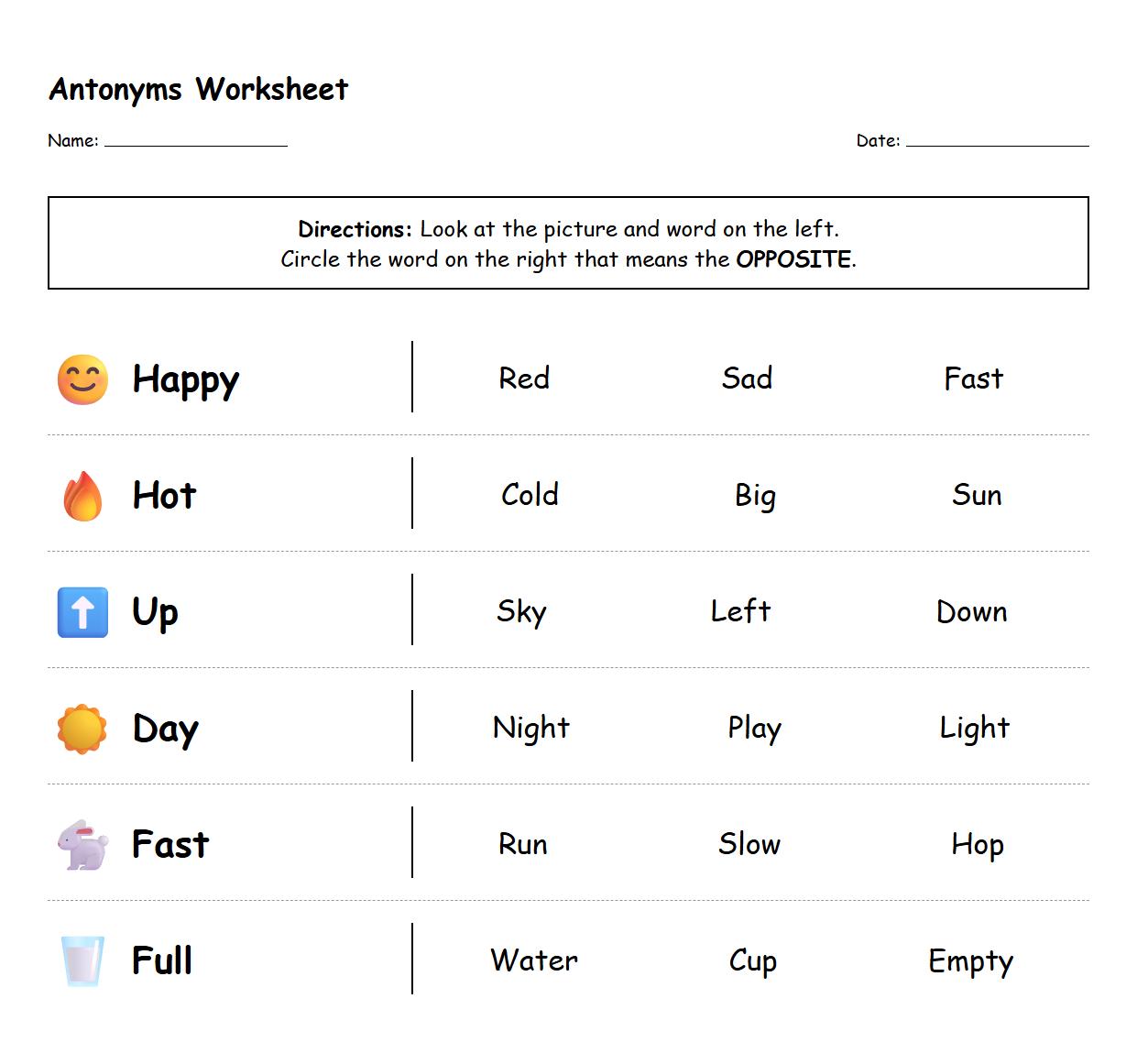
Circle the Antonym of the Given Word from a List

Children practice identifying opposites by selecting the correct antonym from multiple choices. This enhances their reading and critical thinking abilities. Encourage them to say the words aloud to improve retention. Use simple, familiar words suitable for kindergarten level.

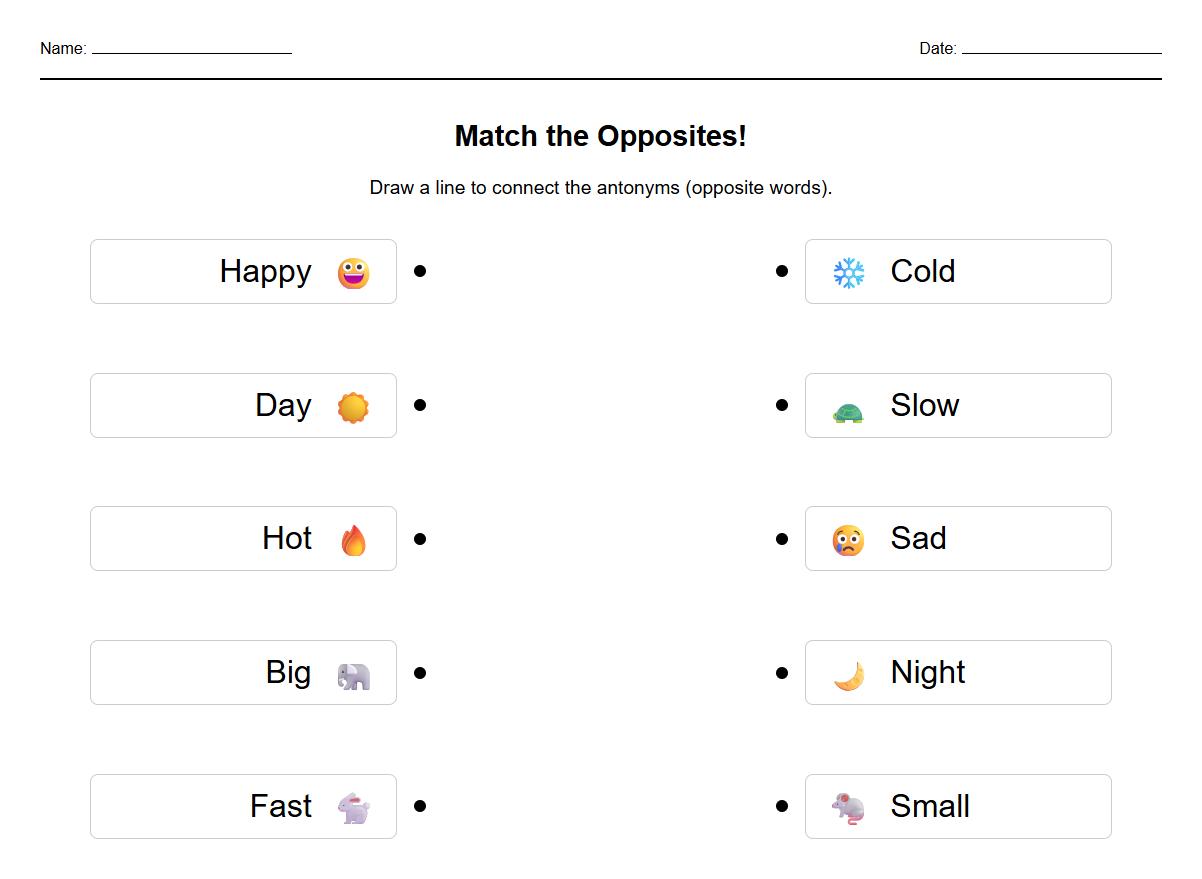
Draw a Line Connecting Each Word to Its Antonym

This worksheet encourages children to match words with their opposites by drawing lines. It supports fine motor skills and word recognition. Provide clear instructions to maintain focus and engagement. Visual matching strengthens understanding of antonyms.

Fill in the Blank with the Antonym from a Word Bank

In this exercise, children complete sentences by choosing the correct antonym from a given list. It promotes comprehension and vocabulary expansion. Parents and teachers can assist by explaining sentence context. This activity builds language confidence and sentence structure awareness.

Color the Picture that Shows the Antonym of the Word

Children identify opposites by coloring images that represent the antonym of given words. This creative task reinforces learning through art and observation. It's an enjoyable way to build antonym recognition. Encourage children to discuss their choices for deeper understanding.

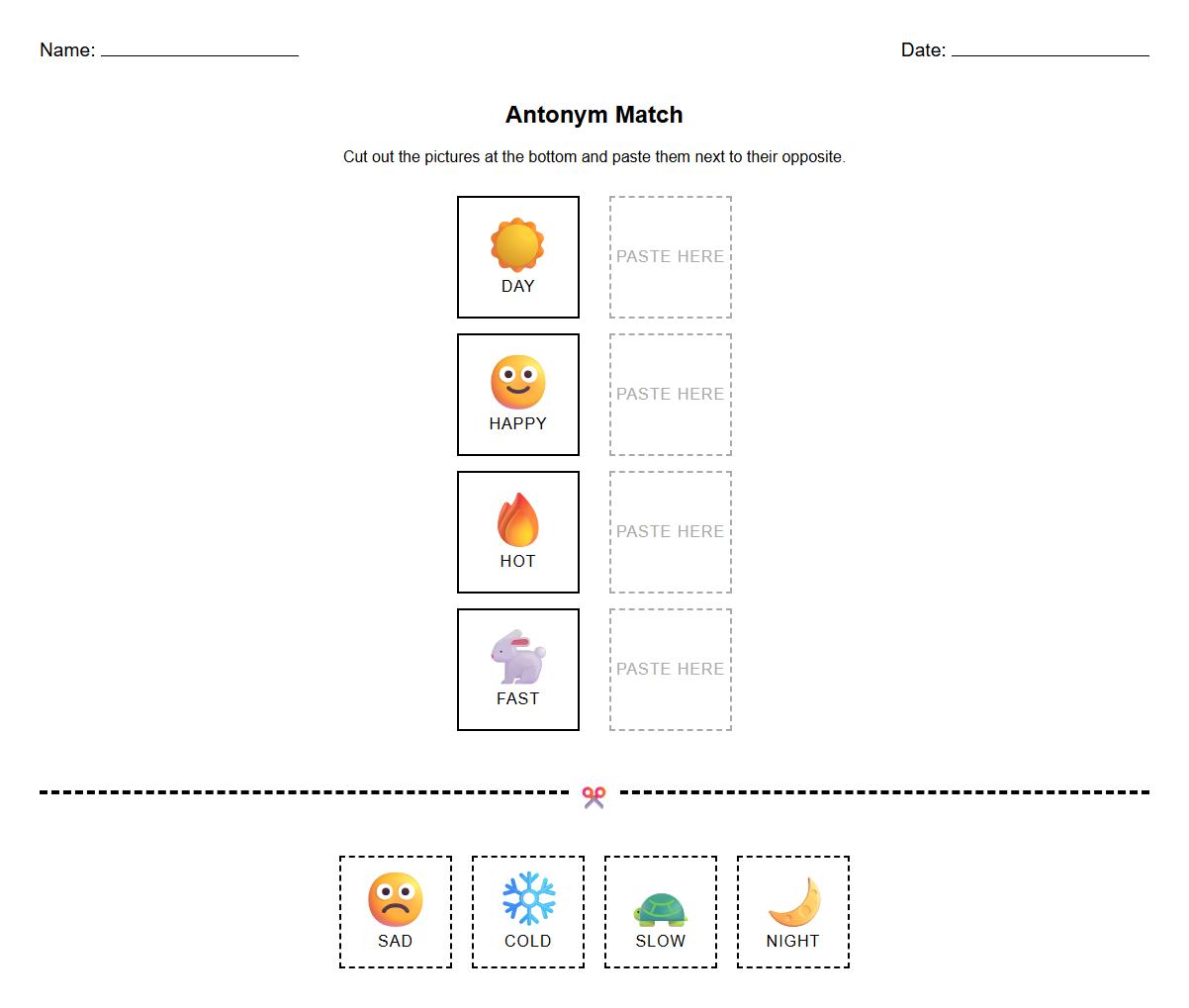
Cut and Paste Antonym Word Pairs Together

This hands-on activity involves cutting out words and matching opposites by pasting them side by side. It helps with word association and fine motor development. Children benefit from tactile learning experiences like this. Ensure safety by supervising scissors use.

Listen and Clap When You Hear a Word's Opposite

This auditory exercise boosts listening skills and antonym recognition. Kids listen to words and clap upon hearing an antonym from a target word. It's perfect for group settings to promote active participation. The rhythmic clapping adds an element of fun to learning.

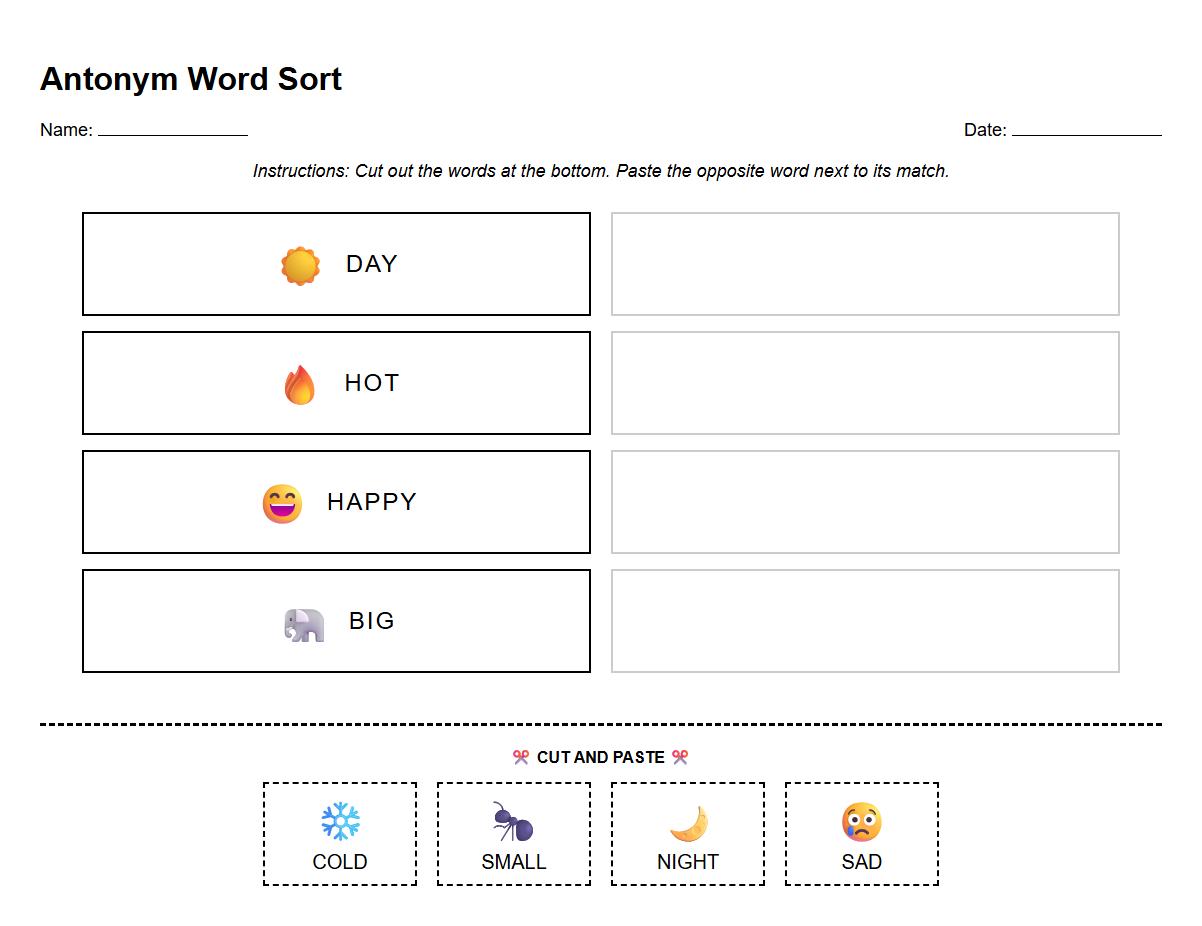
Sort Words into Two Columns of Opposites

Children organize words into two columns based on their antonym pairs. This sorting activity enhances categorization and critical thinking. Teachers and parents can facilitate discussion around why words belong together. It's a foundational skill for language and logic development.

Trace the Antonym Word Under Each Picture

This worksheet combines writing practice with vocabulary building by having children trace antonym words below images. It improves handwriting and spelling while reinforcing word meaning. Clear, large letters make tracing easier for young learners. Repetition solidifies antonym retention.

Complete the Sentence with the Correct Antonym

Children finish sentences by selecting the appropriate antonym to fit the context. This promotes deeper understanding of word meanings and sentence construction. Parents and teachers can provide examples to support learning. Contextual exercises prepare children for advanced language skills.


More in Language Arts Category


About the author. Nylen Smith is a dedicated educator and cofounder of KWorksheet.com, a popular platform specializing in high-quality kindergarten worksheets and printable activities.

Disclaimer. The information provided in this document is for general informational purposes and/or document sample only and is not guaranteed to be factually right or complete. Please report to us via contact-us page if you find and error in this page, thanks.

Comments

No comment yet