Synonyms and Antonyms Matching Worksheet for Kindergarten Vocabulary Skills

📅 Apr 17, 2025 👤 Nylen Smith

Kindergarten students build essential vocabulary skills by practicing synonyms and antonyms, which enhance language comprehension and expression. Recognizing words with similar and opposite meanings boosts reading fluency and communication confidence. Explore our Synonyms and Antonyms Matching Worksheet to support early vocabulary development.

Synonyms Matching Worksheet with Picture Clues and Word Banks
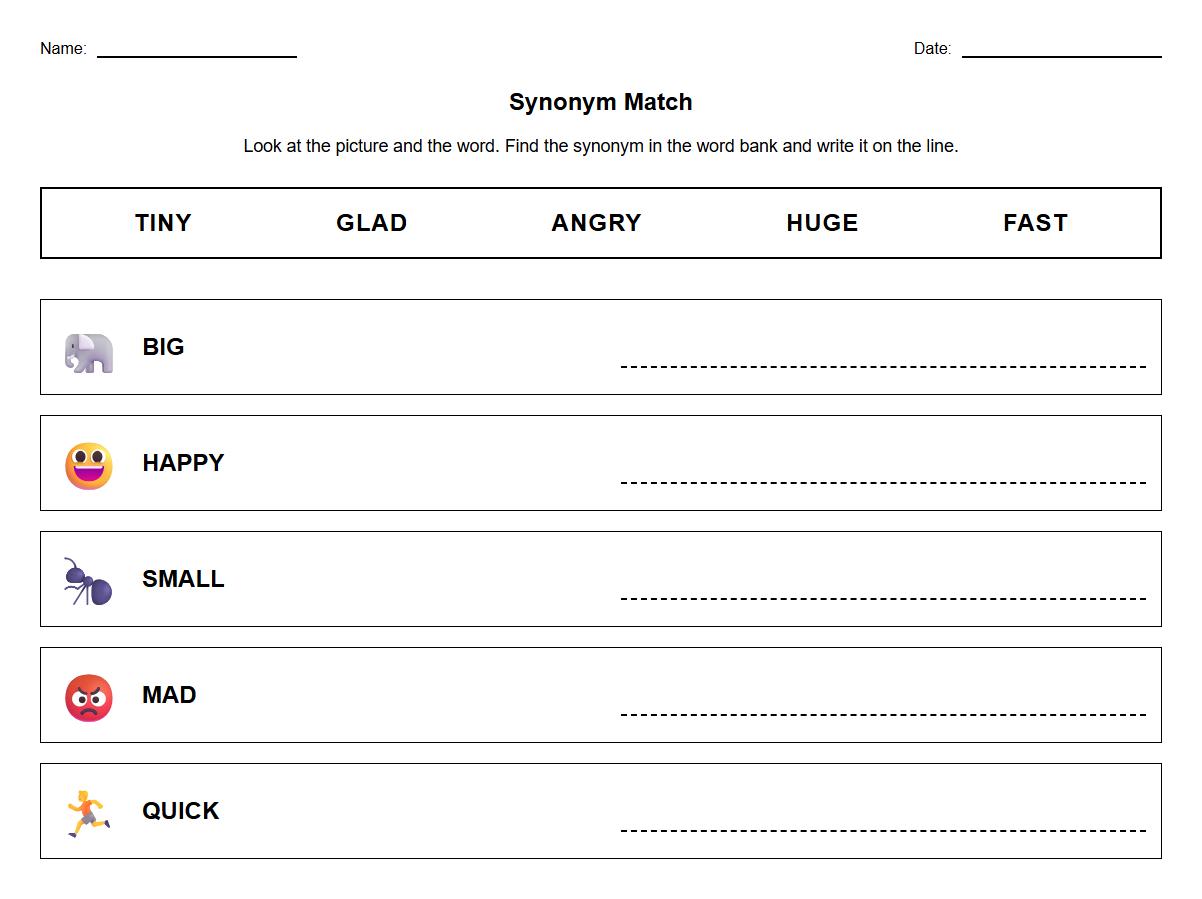
Synonyms Matching Worksheet with Picture Clues and Word Banks

Download PDF     Pin it

Antonyms Cut and Paste Sorting Worksheet for Early Literacy
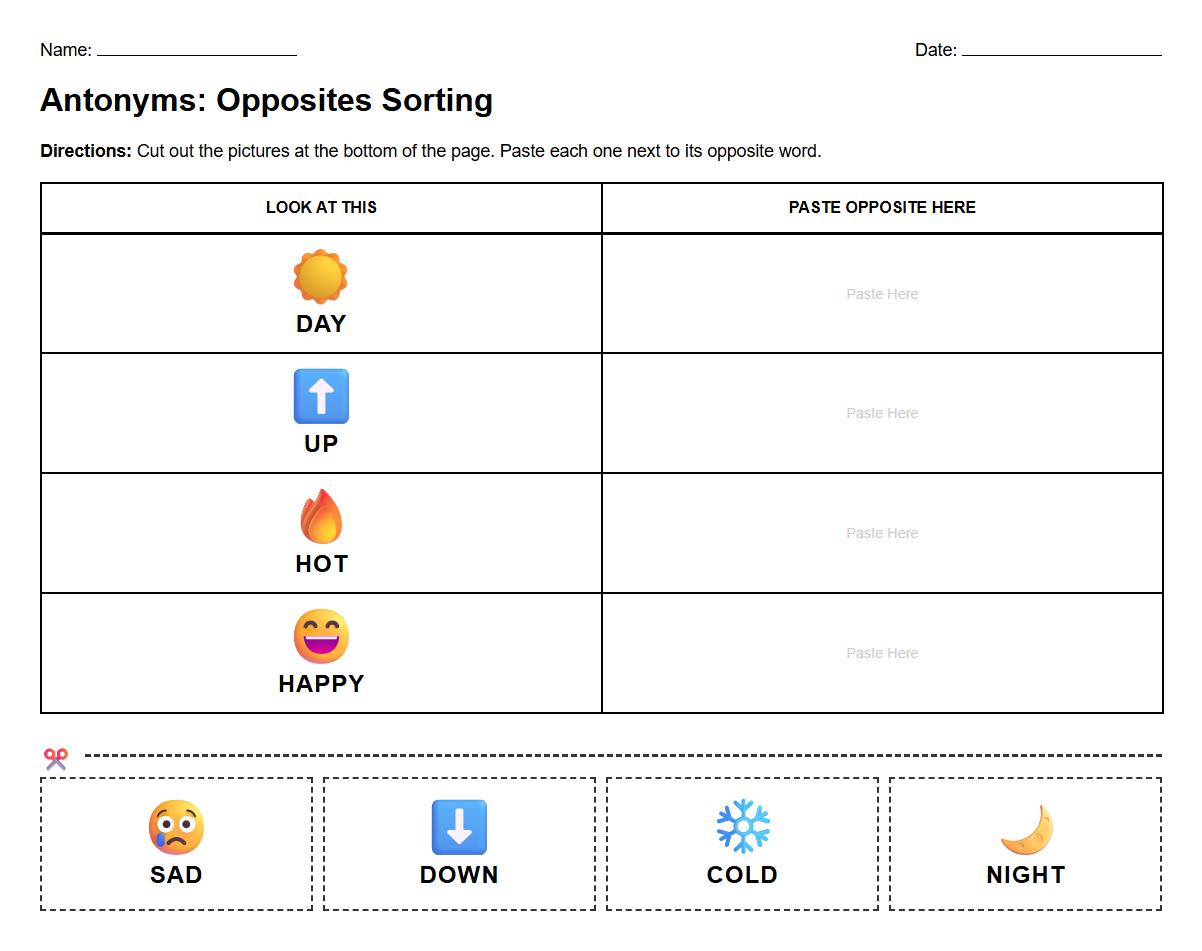
Antonyms Cut and Paste Sorting Worksheet for Early Literacy

Download PDF     Pin it

Phonics-Based Synonyms and Antonyms Pairing Worksheet
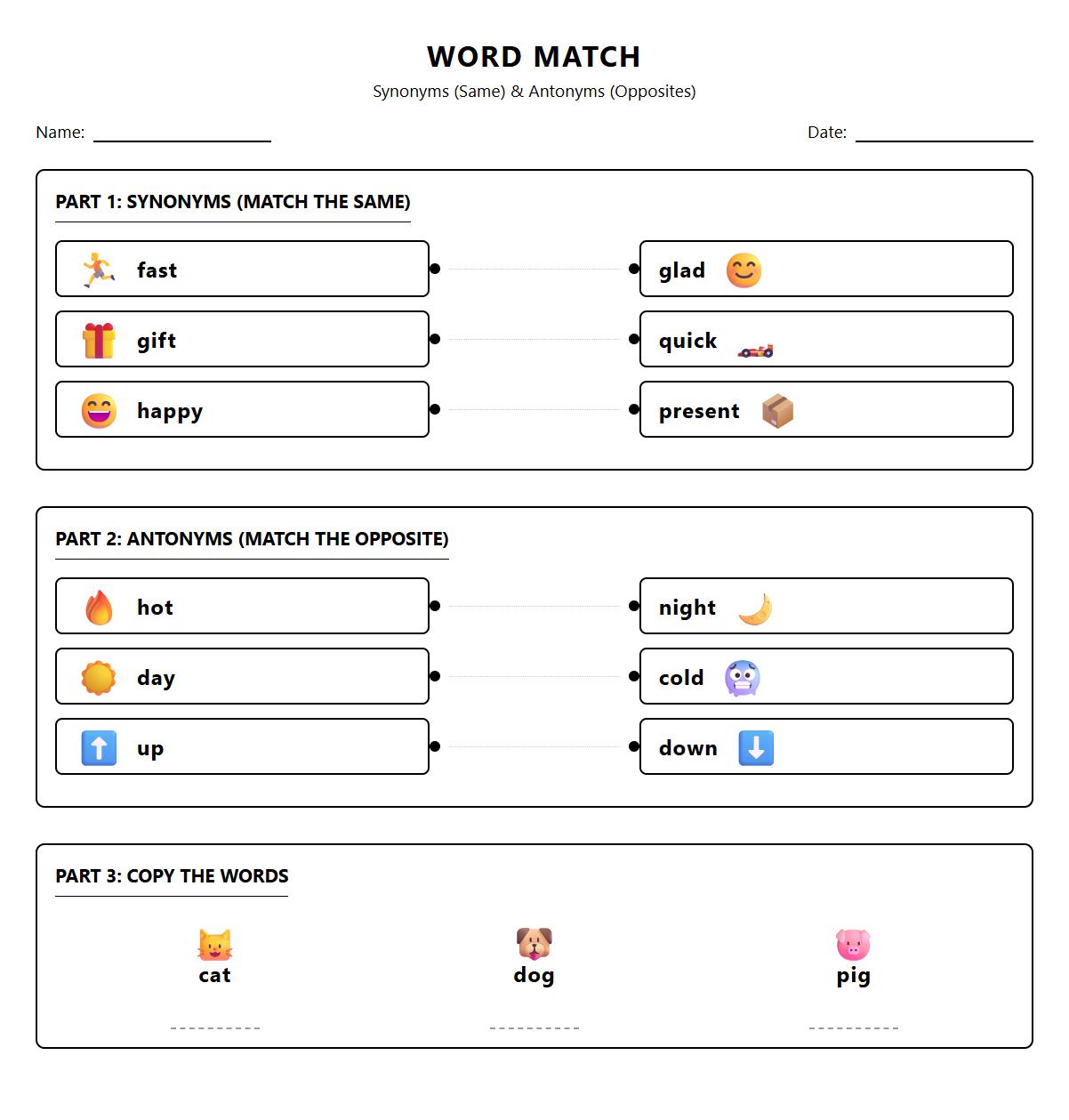
Phonics-Based Synonyms and Antonyms Pairing Worksheet

Download PDF     Pin it

Vocabulary Building Color Match Synonym Worksheet
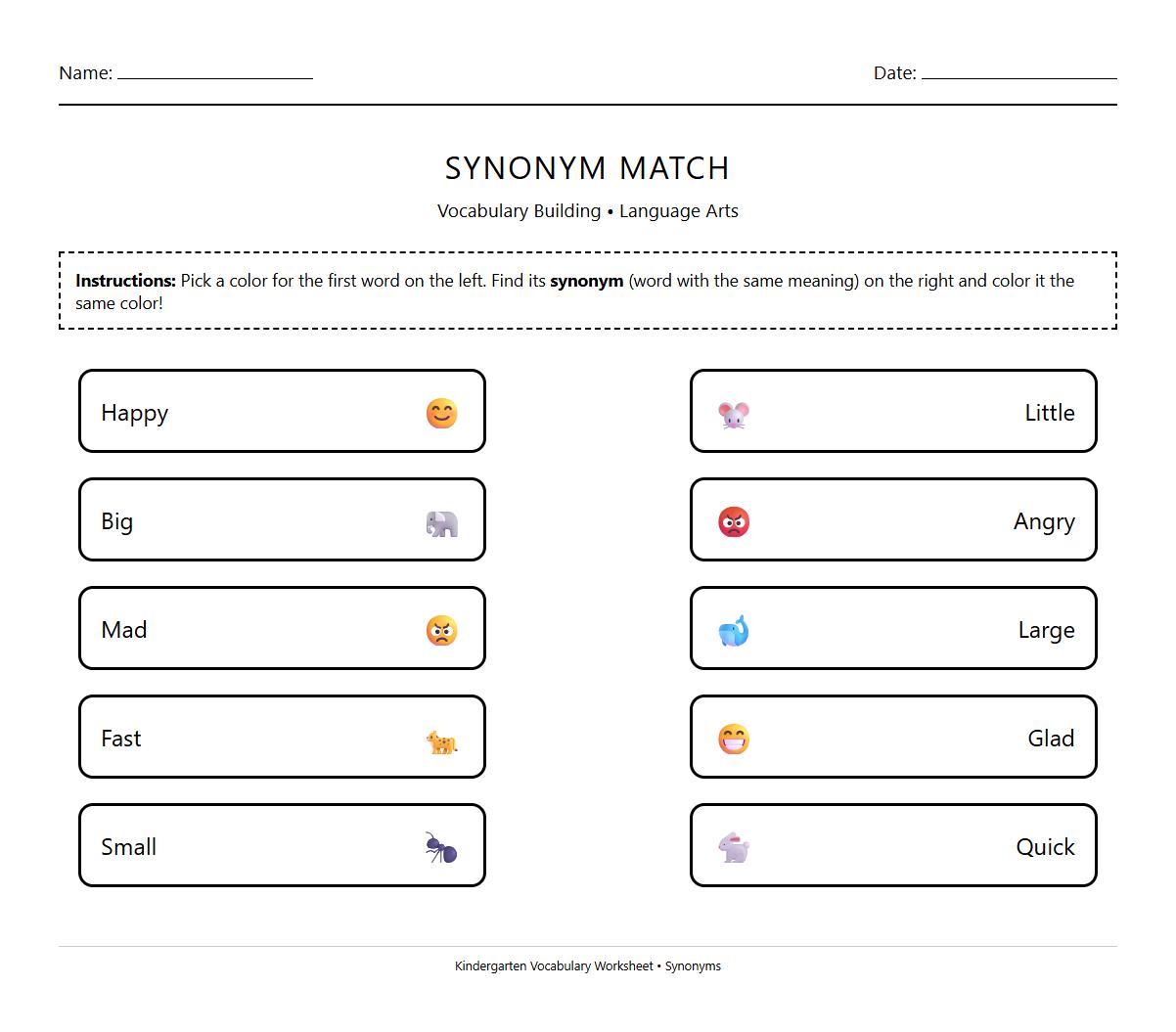
Vocabulary Building Color Match Synonym Worksheet

Download PDF     Pin it

Opposites Identification Worksheet with Visual Prompts
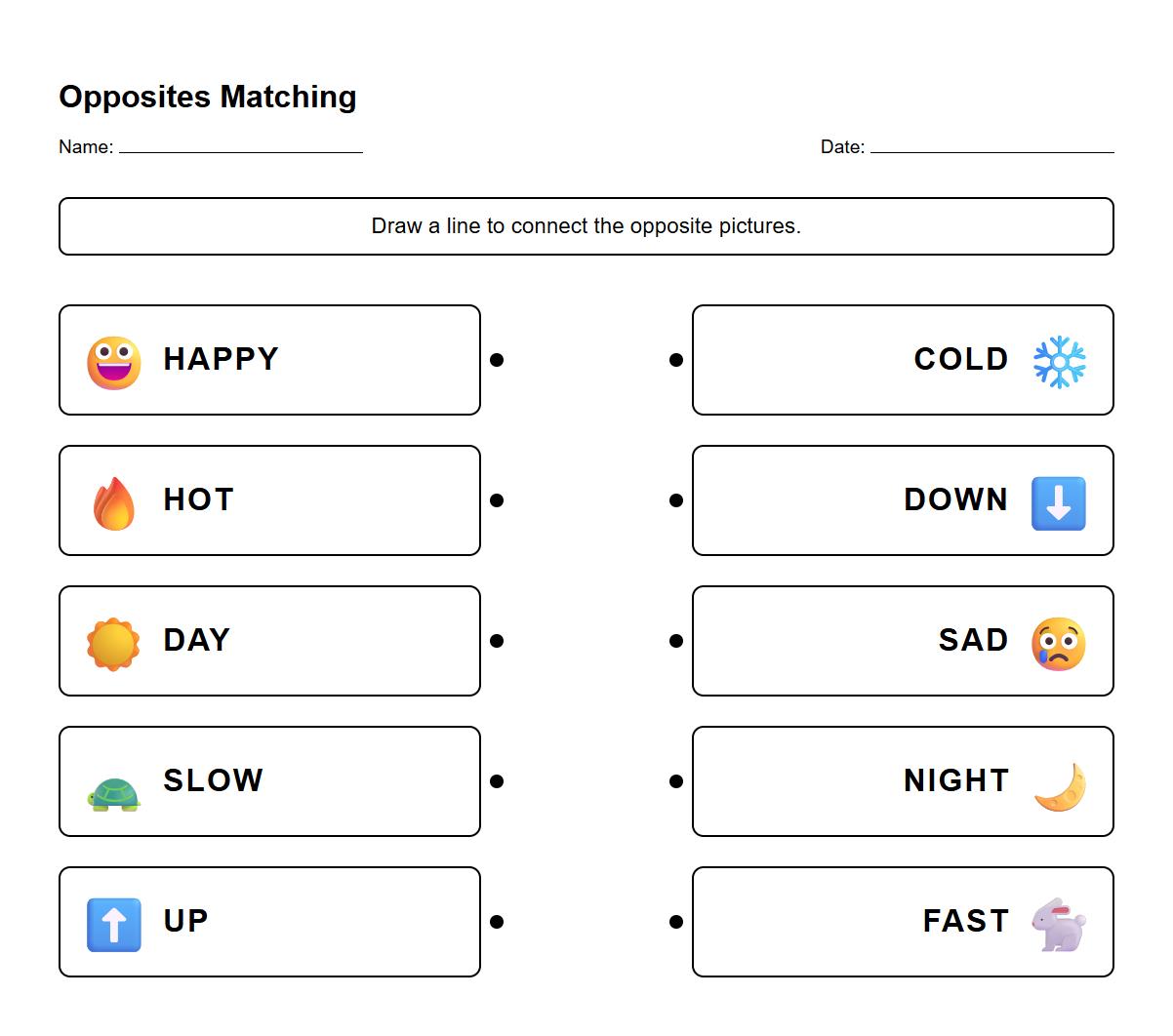
Opposites Identification Worksheet with Visual Prompts

Download PDF     Pin it

Synonym and Antonym Word Search for Kindergarten
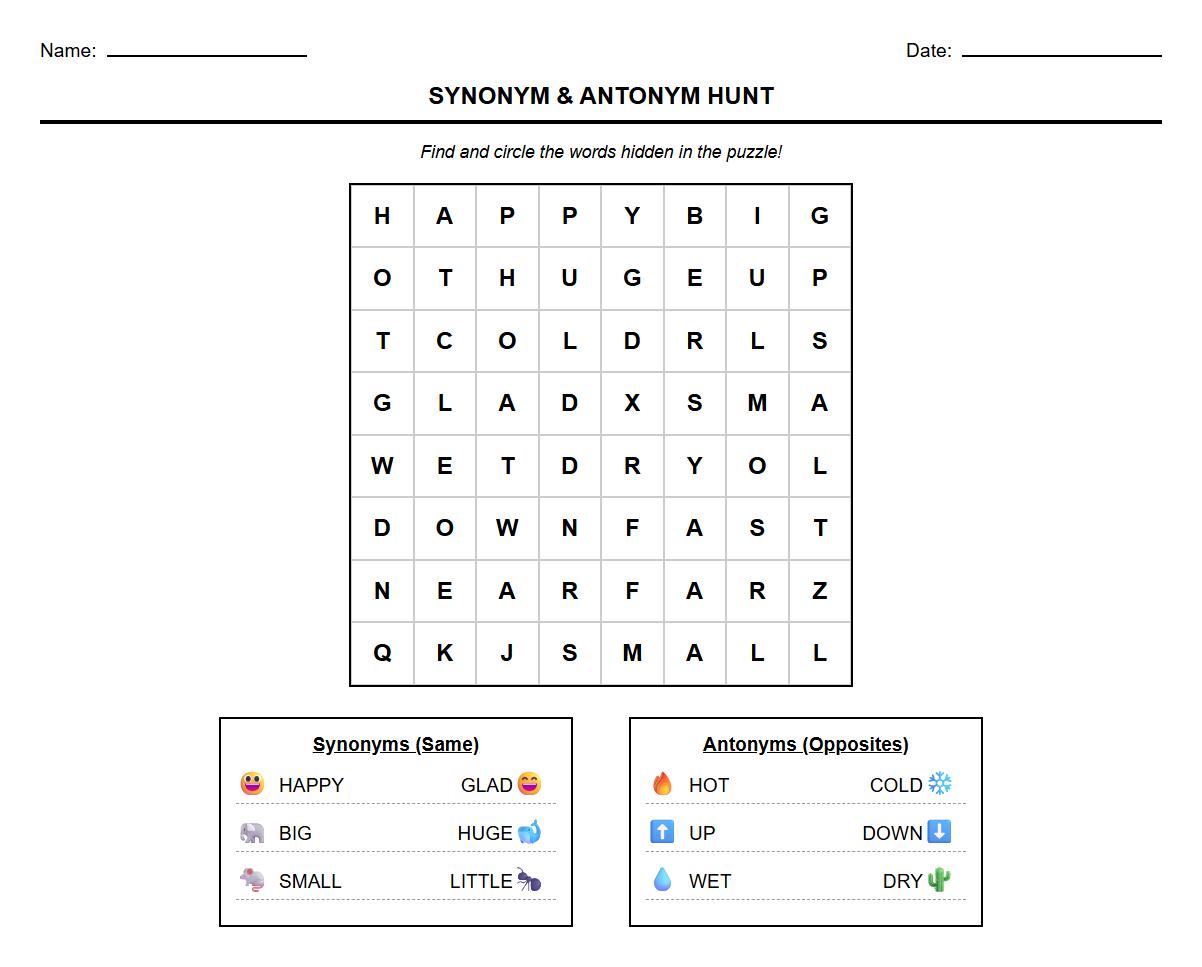
Synonym and Antonym Word Search for Kindergarten

Download PDF     Pin it

Word Association Memory Card Worksheet Focused on Antonyms
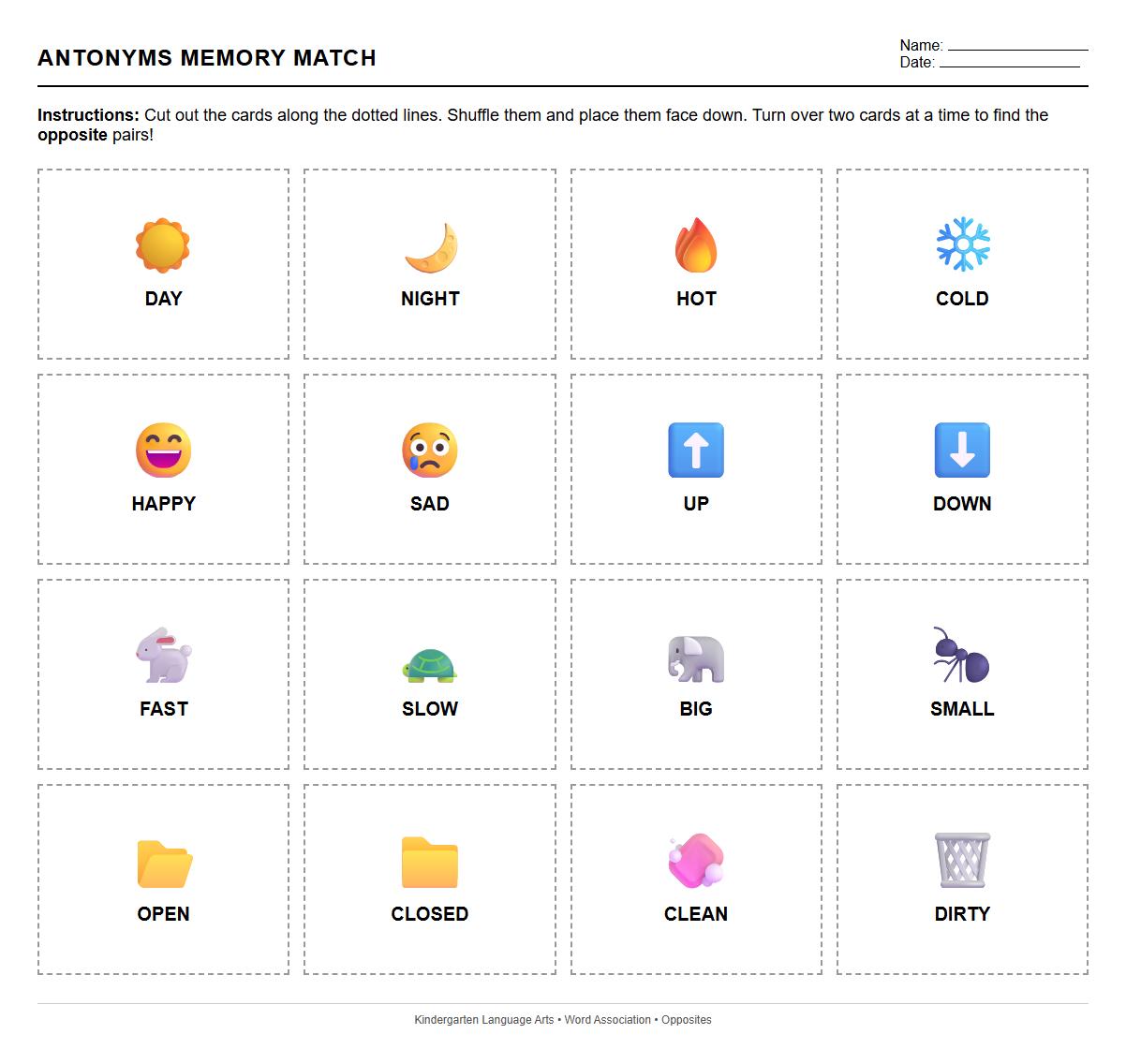
Word Association Memory Card Worksheet Focused on Antonyms

Download PDF     Pin it

Multiple Choice Synonyms Recognition Worksheet
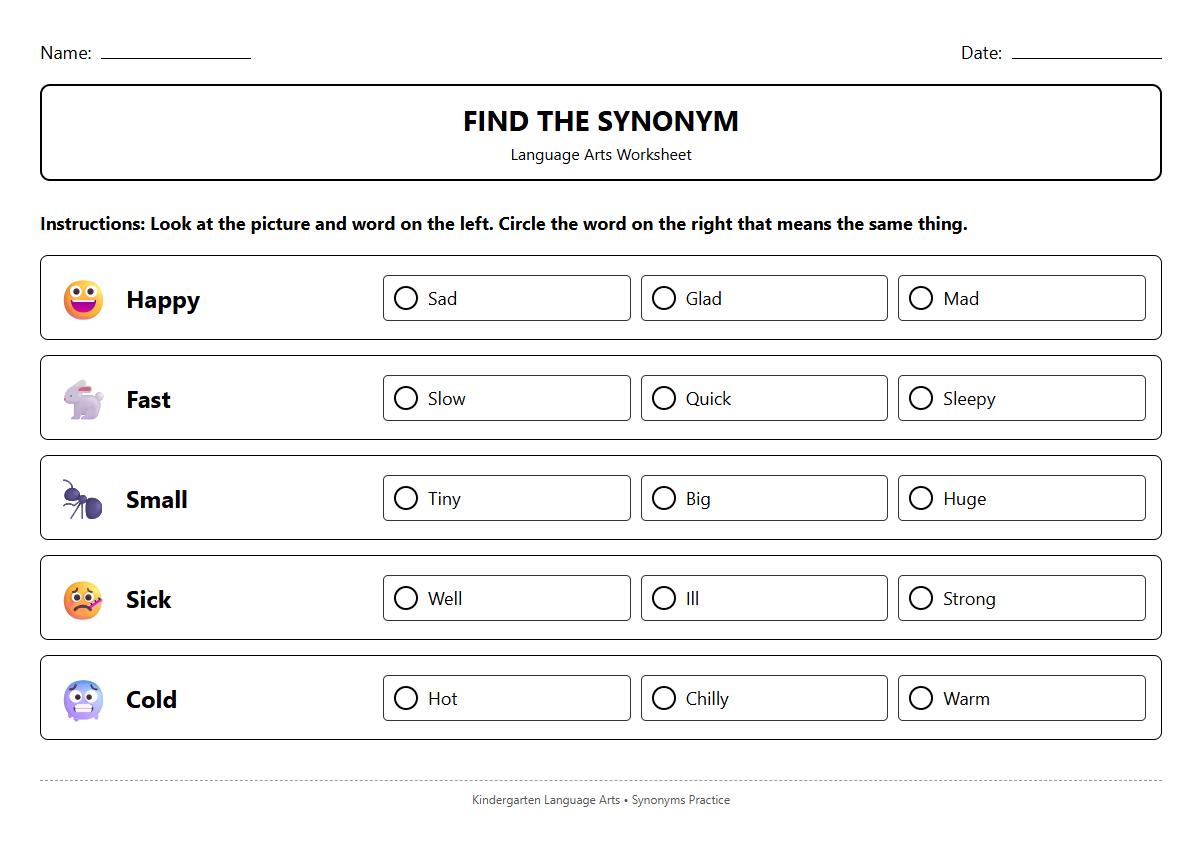
Multiple Choice Synonyms Recognition Worksheet

Download PDF     Pin it

Synonyms and Antonyms Trace and Match Activity Sheet
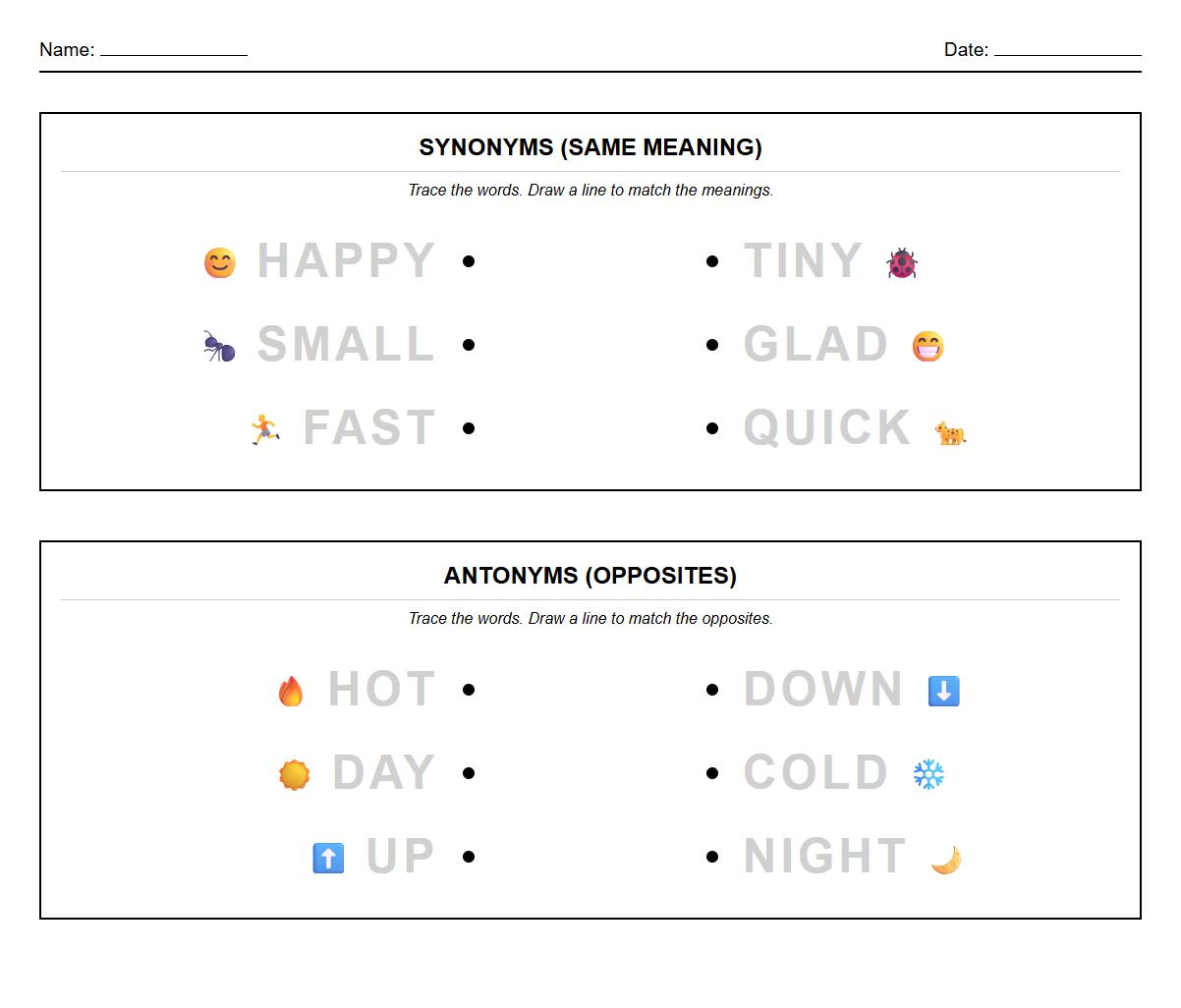
Synonyms and Antonyms Trace and Match Activity Sheet

Download PDF     Pin it

Cloze Passage Vocabulary Worksheet Emphasizing Synonym Use
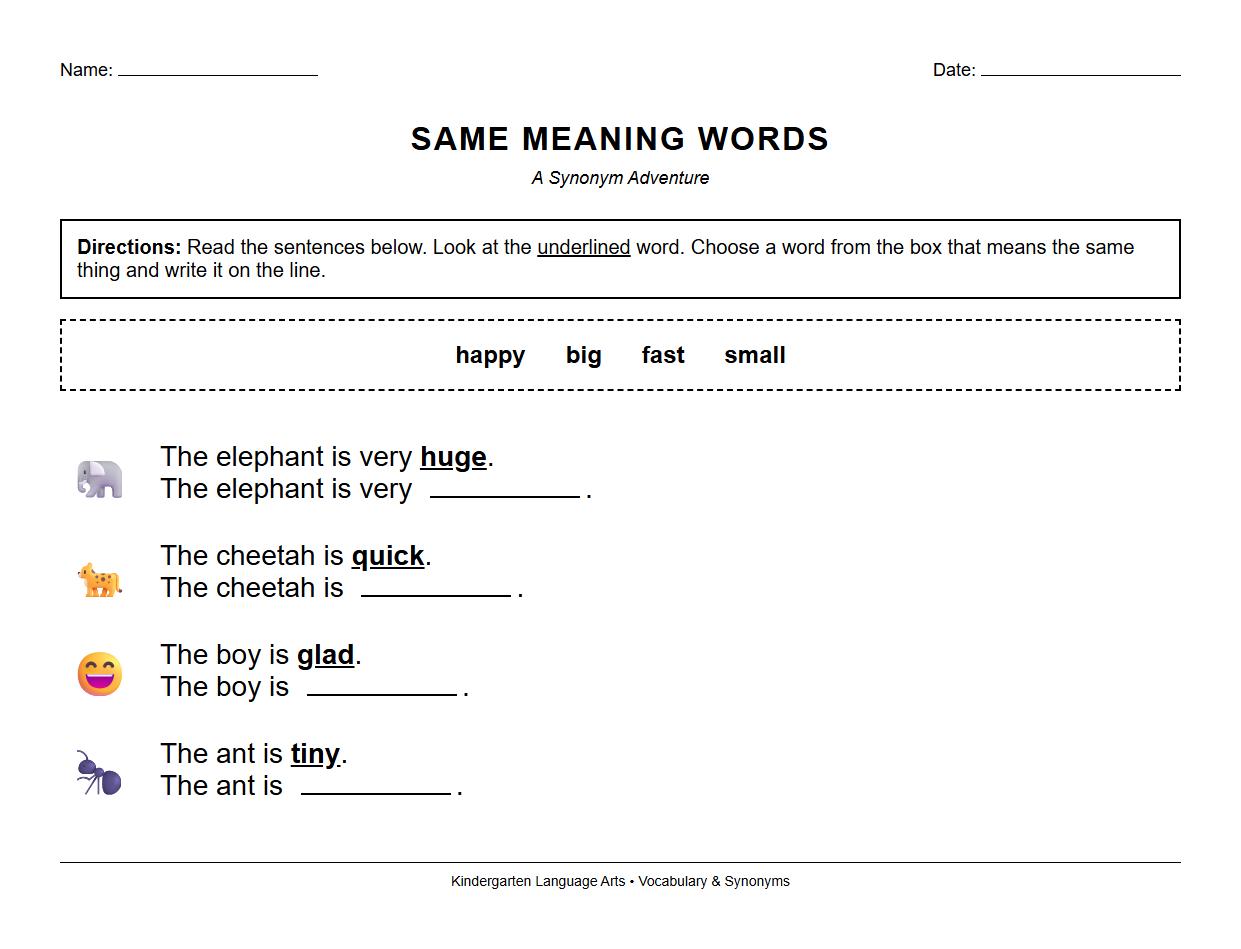
Cloze Passage Vocabulary Worksheet Emphasizing Synonym Use

Download PDF     Pin it

Match the word "happy" with its synonym

Teachers and parents can guide children to identify synonyms by matching the word "happy" with words like "joyful" or "glad." This activity helps in expanding vocabulary and understanding emotional expressions. Encourage the child to think about feelings associated with happiness for better retention. Use colorful images to make the matching process engaging.

Find the antonym of "big" from the list

Help young learners recognize opposites by finding the antonym of "big," such as "small." This task improves their understanding of size concepts and comparative language. Present a list of words and ask the child to choose the one that means the opposite. Reinforce learning by using visual aids representing different sizes.

Which word is similar in meaning to "fast"

Guide children to select a word that shares the same meaning as "fast," like "quick" or "speedy." Understanding synonyms promotes language development and descriptive skills. Use examples from everyday life, such as animals or vehicles, to make it relatable. Incorporate this exercise into playful activities to maintain interest.

Circle the word that means the opposite of "hot"

Engage kids in identifying the antonym of "hot" by circling words like "cold." This activity boosts comprehension of temperature-related vocabulary. Providing context through stories or object comparisons enhances the learning experience. Encourage the child to explain their choice to develop verbal skills.

Match each word to its opposite meaning

Assist learners in pairing words with their opposites, such as "day" with "night" or "happy" with "sad." This exercise strengthens critical thinking and language associations. Use picture cards or flashcards to facilitate matching. Repetition in varied contexts helps solidify understanding.

Choose the synonym for "small"

Encourage children to identify synonyms for "small," including words like "tiny" or "little." Recognizing synonyms enhances vocabulary diversity. Provide examples through objects of different sizes for concrete understanding. Practice with matching or selection games to keep learning fun.

Point to the antonym of "up"

Help children find and point to words that mean the opposite of "up," such as "down." This activity reinforces spatial awareness and vocabulary. Use gestures and physical movement to connect words with their meanings. Integrate this exercise into daily routines for practical learning.

Which word has the same meaning as "jump"

Guide children to find synonyms for "jump," like "leap" or "hop." Identifying similar action words supports expressive language skills. Incorporate physical activities to demonstrate the meanings. Use storytelling or role-play to make the learning process interactive.

Match "sad" with its opposite

Support learners in matching the word "sad" with its opposite, "happy." This task enhances emotional vocabulary and understanding of feelings. Use pictures showing facial expressions to aid recognition. Discuss situations that make someone feel sad or happy to deepen comprehension.

Select the synonym for "cold"

Encourage children to select synonyms for "cold," such as "chilly" or "freezing." Understanding synonyms helps describe experiences effectively. Use sensory activities like feeling ice or cool air to connect words to sensations. Regular practice improves descriptive language skills.


More in Language Arts Category


About the author. Nylen Smith is a dedicated educator and cofounder of KWorksheet.com, a popular platform specializing in high-quality kindergarten worksheets and printable activities.

Disclaimer. The information provided in this document is for general informational purposes and/or document sample only and is not guaranteed to be factually right or complete. Please report to us via contact-us page if you find and error in this page, thanks.

Comments

No comment yet