Reading Comprehension Sequencing Worksheet for Kindergarten Learners

📅 Mar 12, 2025 👤 Nylen Smith

Reading comprehension sequencing worksheets help kindergarten learners develop critical thinking by arranging story events in the correct order. These exercises enhance narrative understanding and boost memory retention. Explore our available worksheets to support early reading skills effectively.

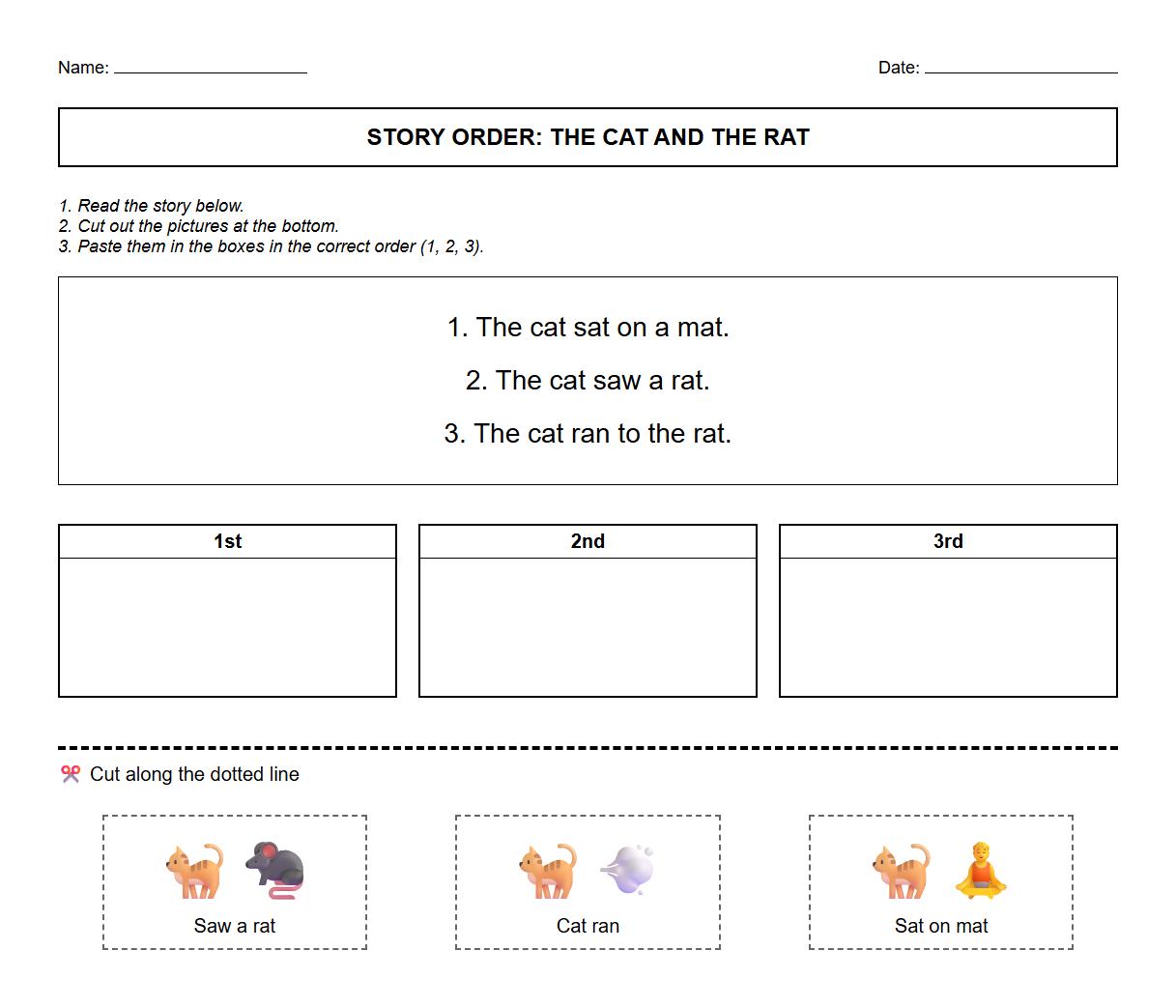
Picture Sequencing Reading Comprehension Worksheet for Kindergarten
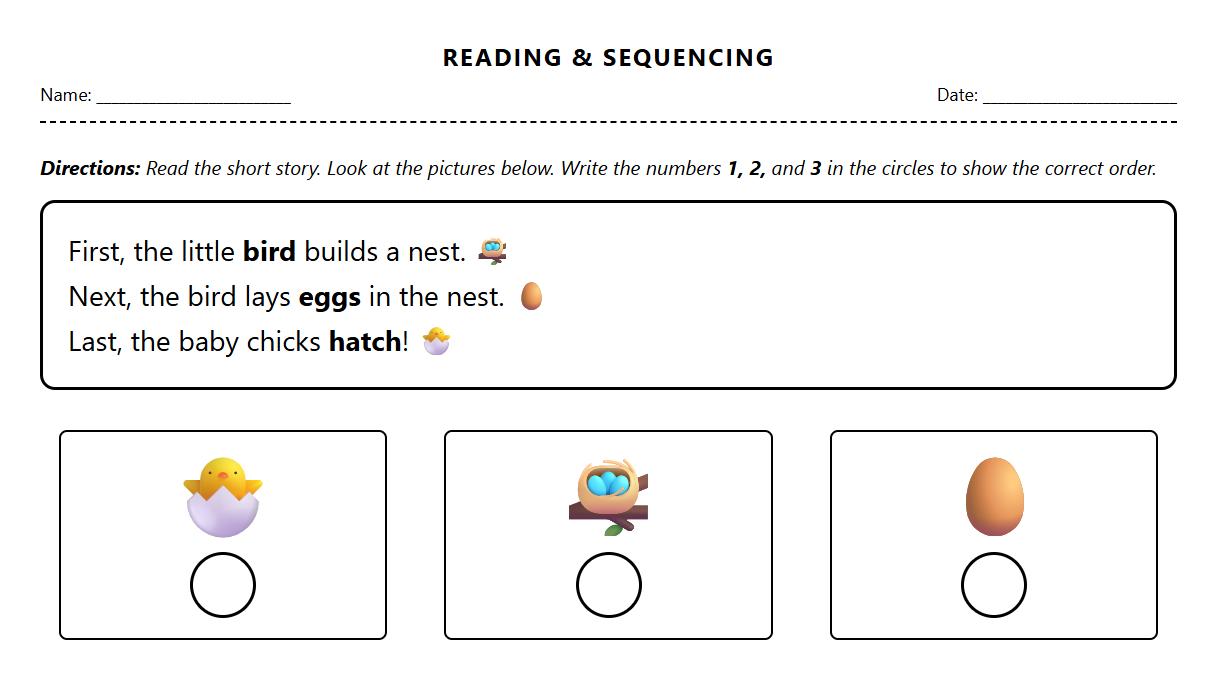
Picture Sequencing Reading Comprehension Worksheet for Kindergarten

Download PDF     Pin it

Story Order Phonics-Based Worksheet for Early Learners

Story Order Phonics-Based Worksheet for Early Learners

Download PDF     Pin it

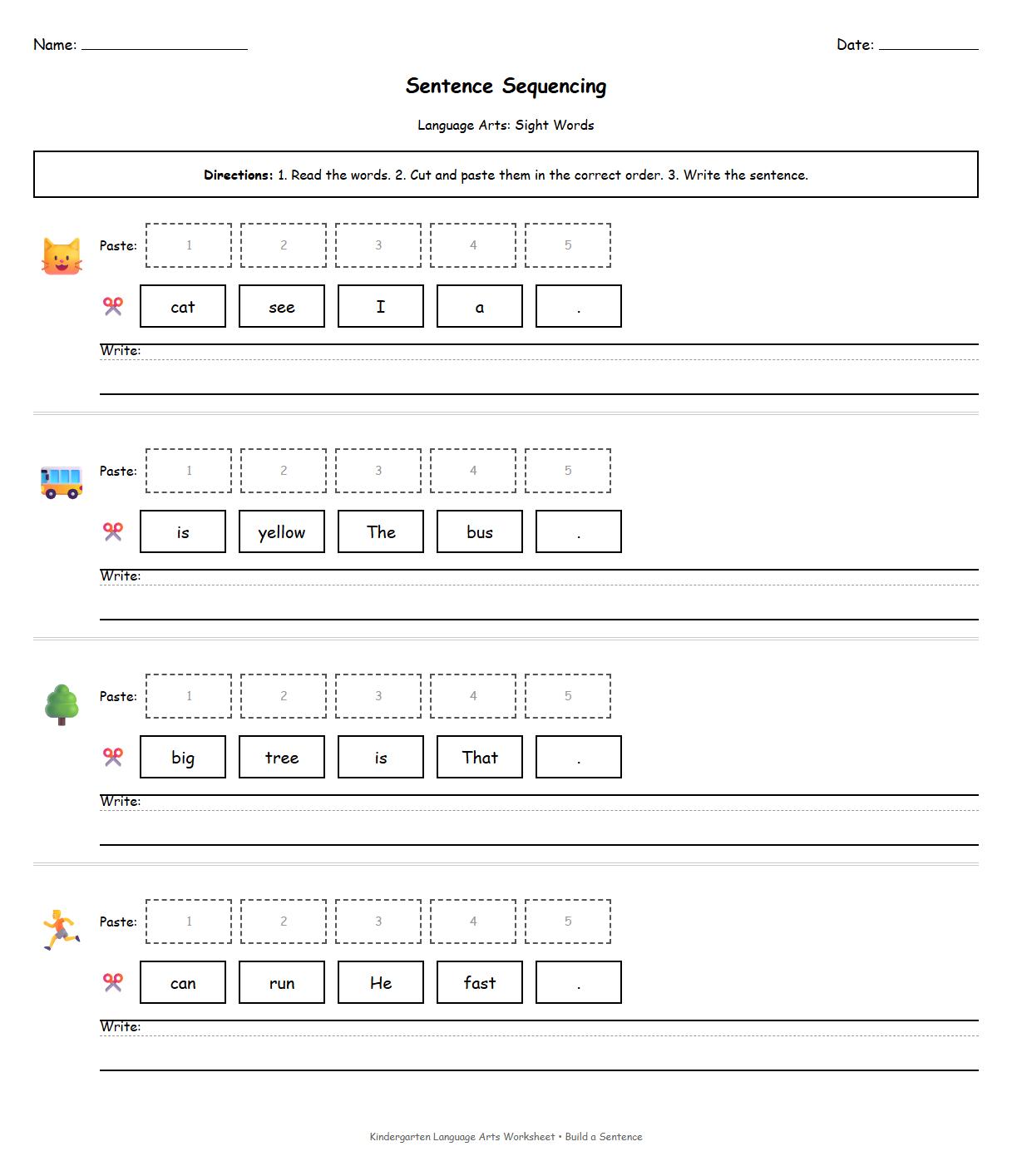
Sentence Sequencing with Sight Words Worksheet for Kindergarten

Sentence Sequencing with Sight Words Worksheet for Kindergarten

Download PDF     Pin it

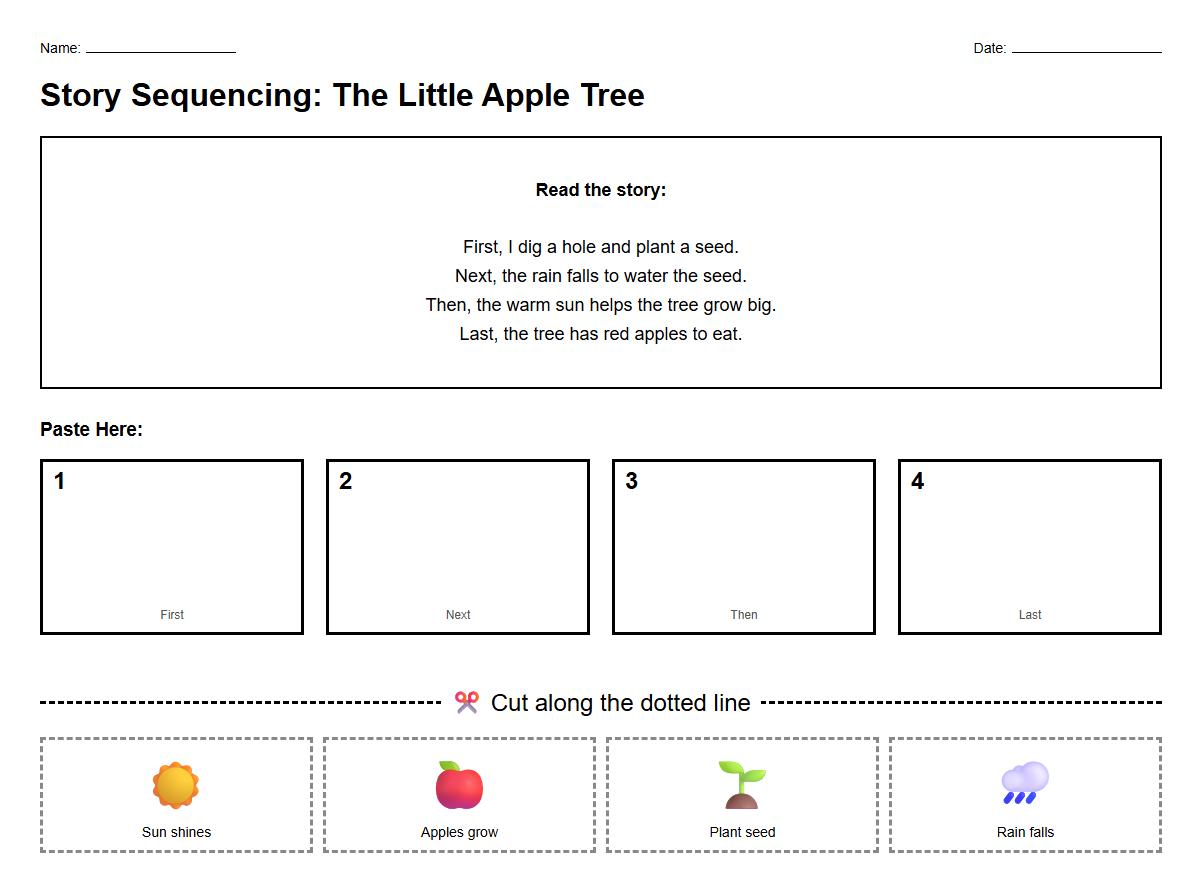
Cut and Paste Narrative Sequencing Worksheet with Reading Passages

Cut and Paste Narrative Sequencing Worksheet with Reading Passages

Download PDF     Pin it

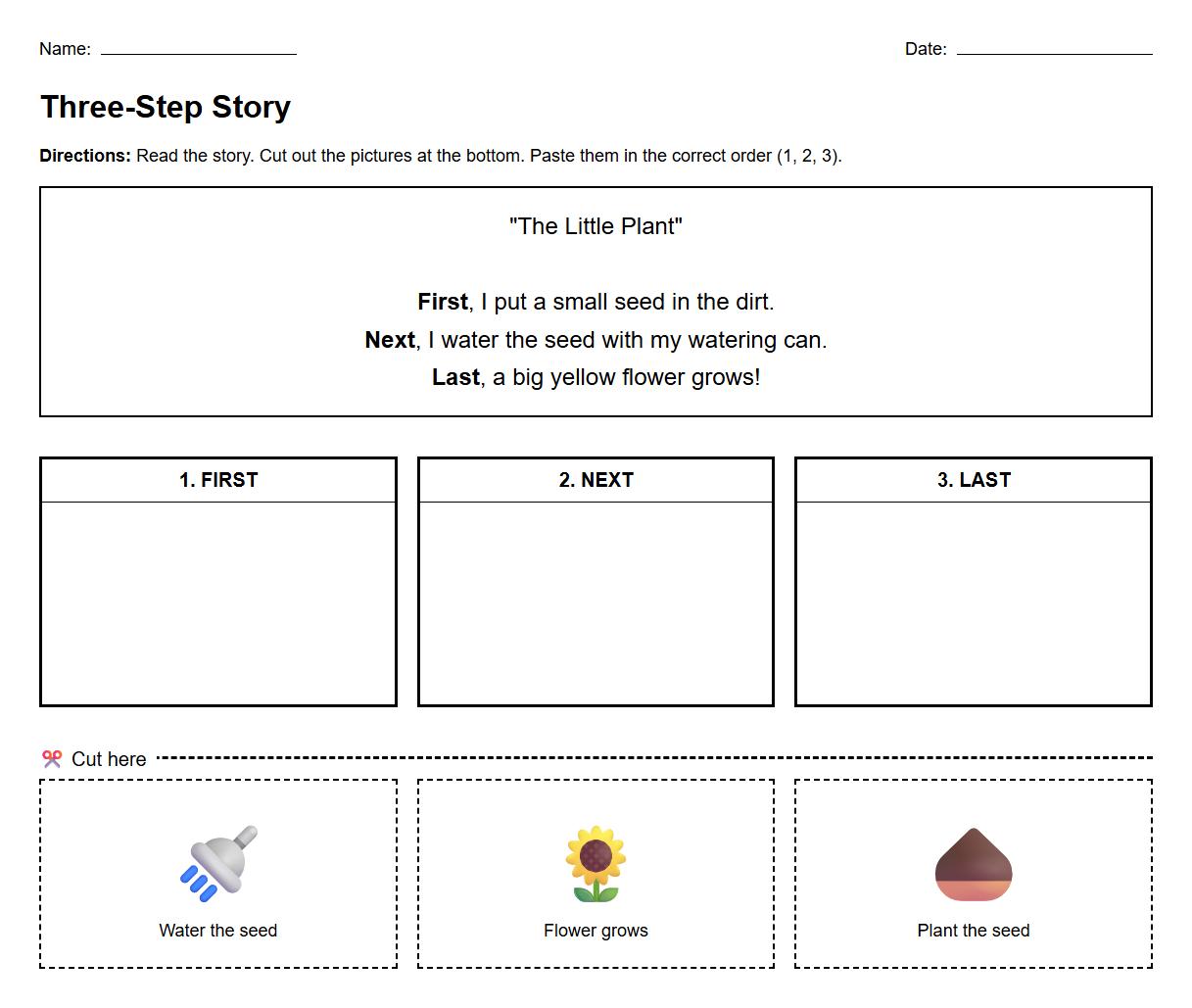
Three-Step Story Events Worksheet for Emergent Readers

Three-Step Story Events Worksheet for Emergent Readers

Download PDF     Pin it

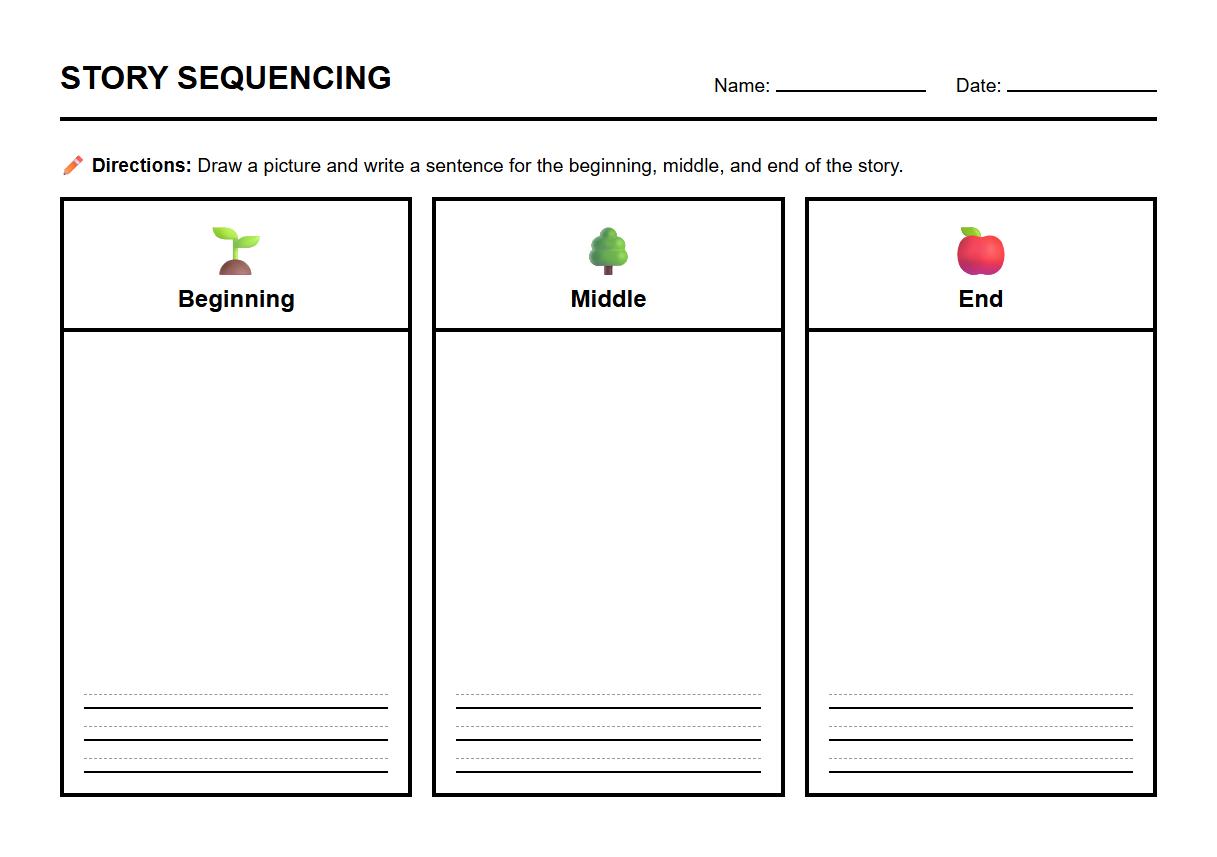
Beginning Middle End Comprehension Worksheet for Kindergarten

Beginning Middle End Comprehension Worksheet for Kindergarten
Download PDF     Pin it

Simple Paragraph Sequencing Phonics Worksheet for Young Learners
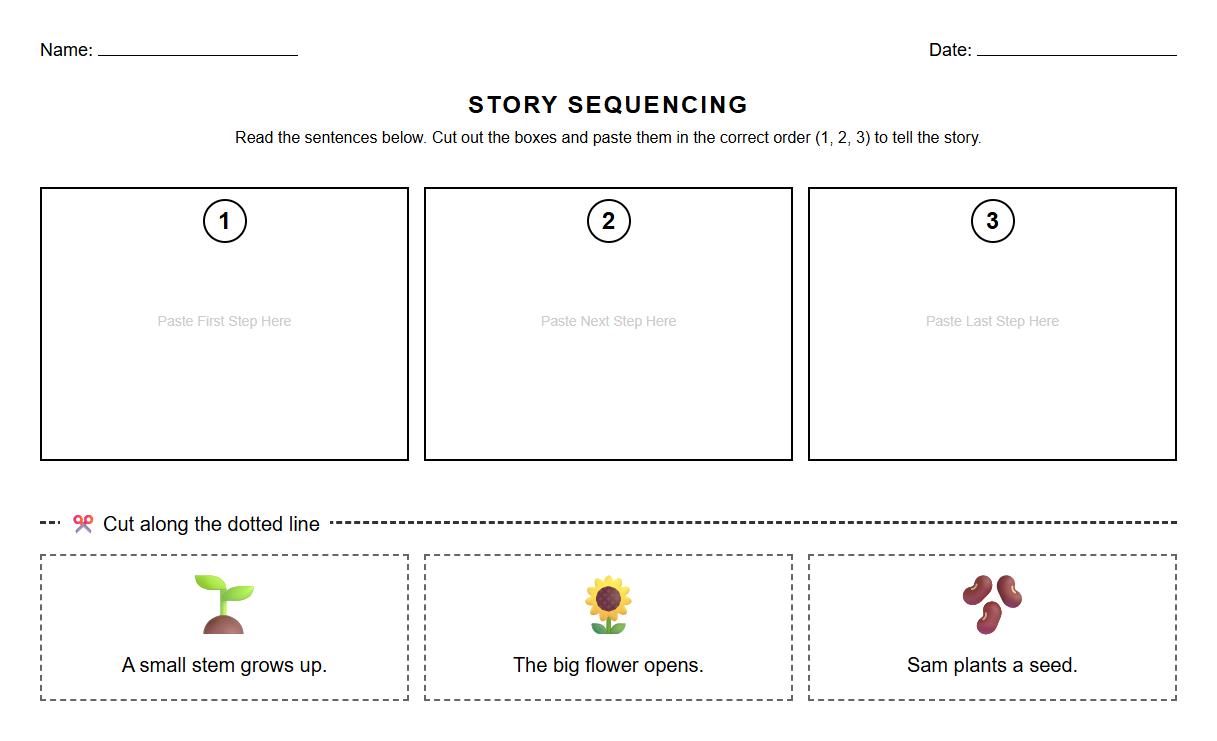
Simple Paragraph Sequencing Phonics Worksheet for Young Learners

Download PDF     Pin it

Matching Images to Text Sequence Worksheet with Basic Vocabulary
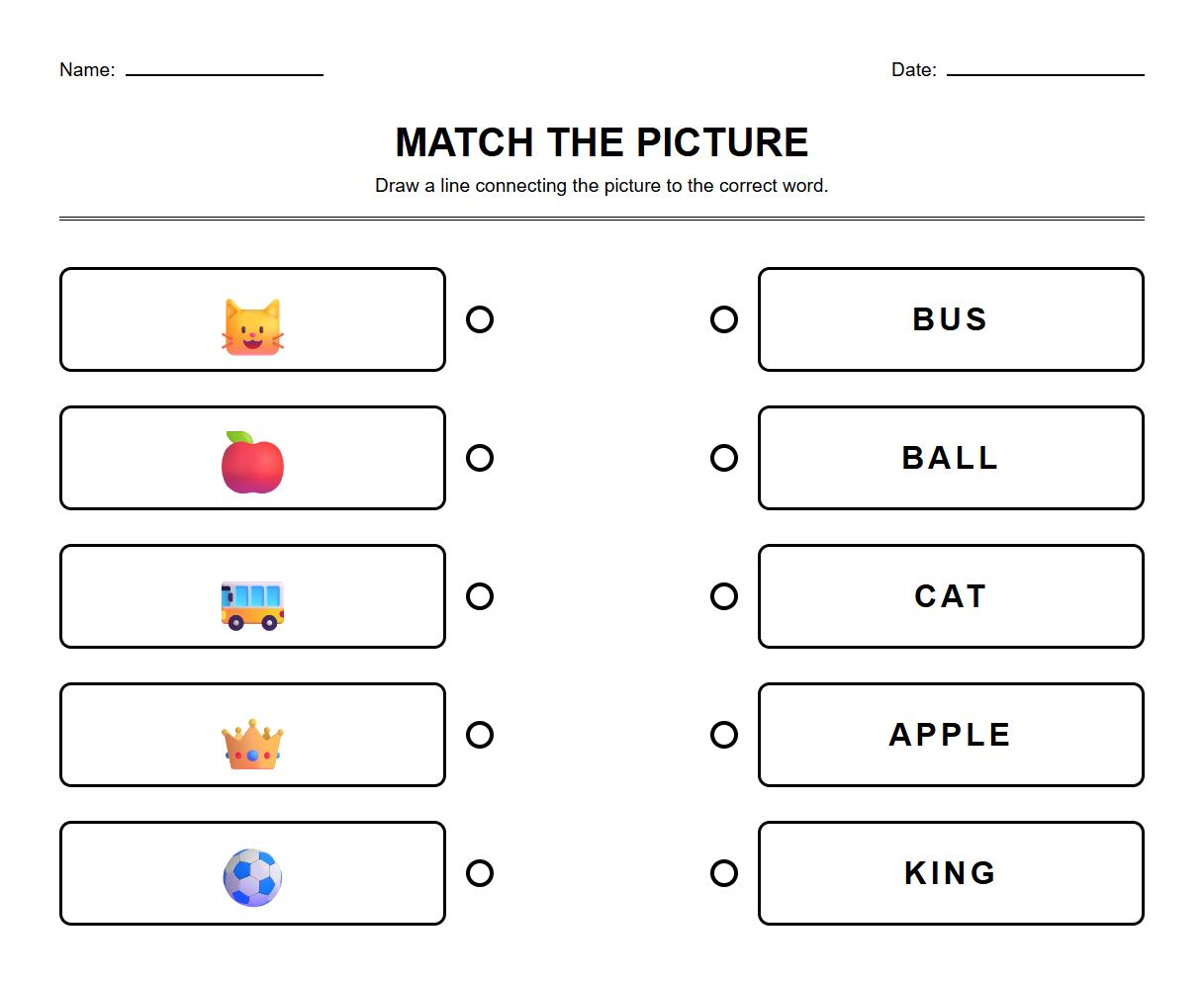
Matching Images to Text Sequence Worksheet with Basic Vocabulary

Download PDF     Pin it

Reading and Arranging Story Strips Phonemic Awareness Worksheet
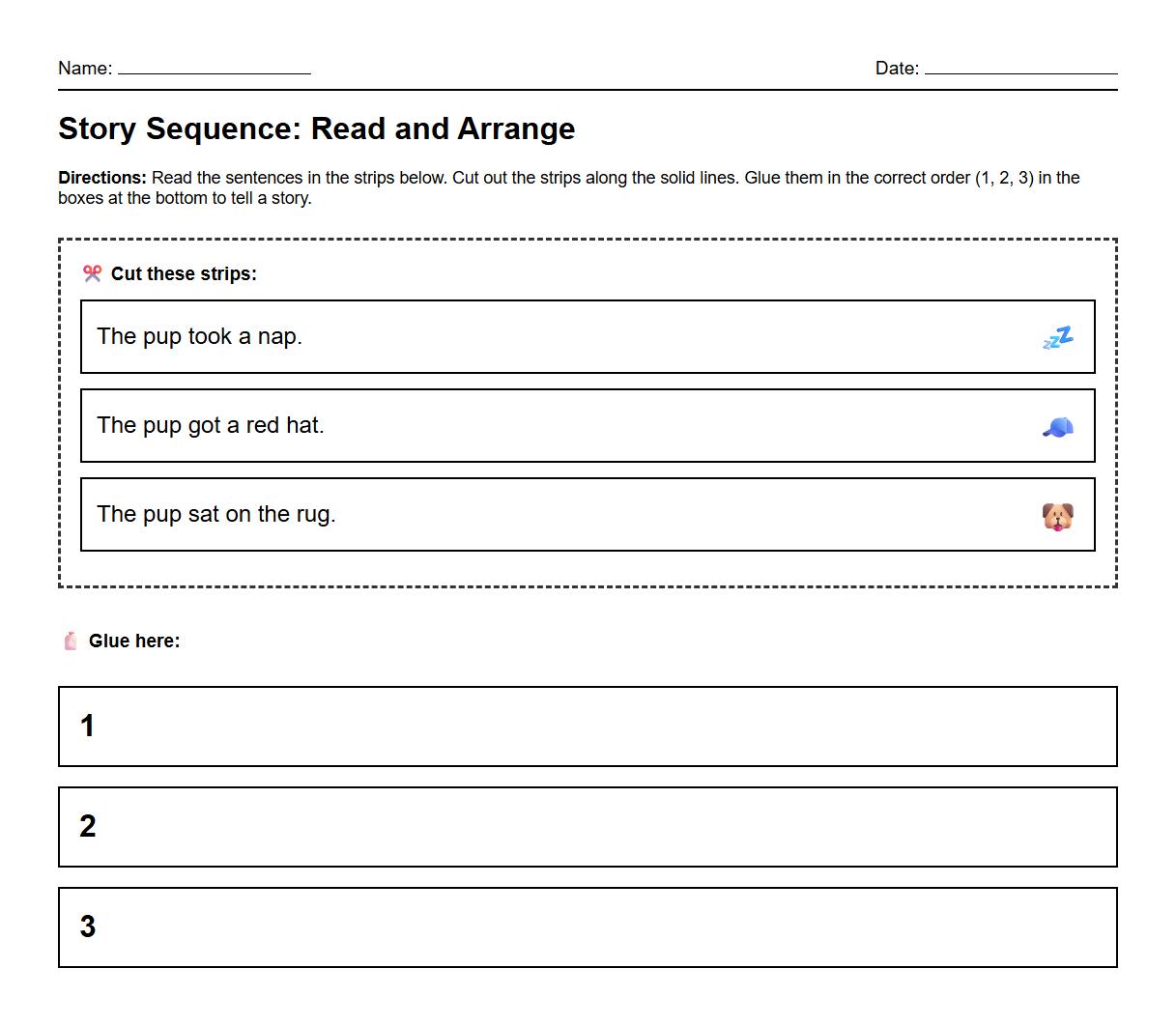
Reading and Arranging Story Strips Phonemic Awareness Worksheet

Download PDF     Pin it

Sequence the Story Elements Worksheet using Decodable Sentences
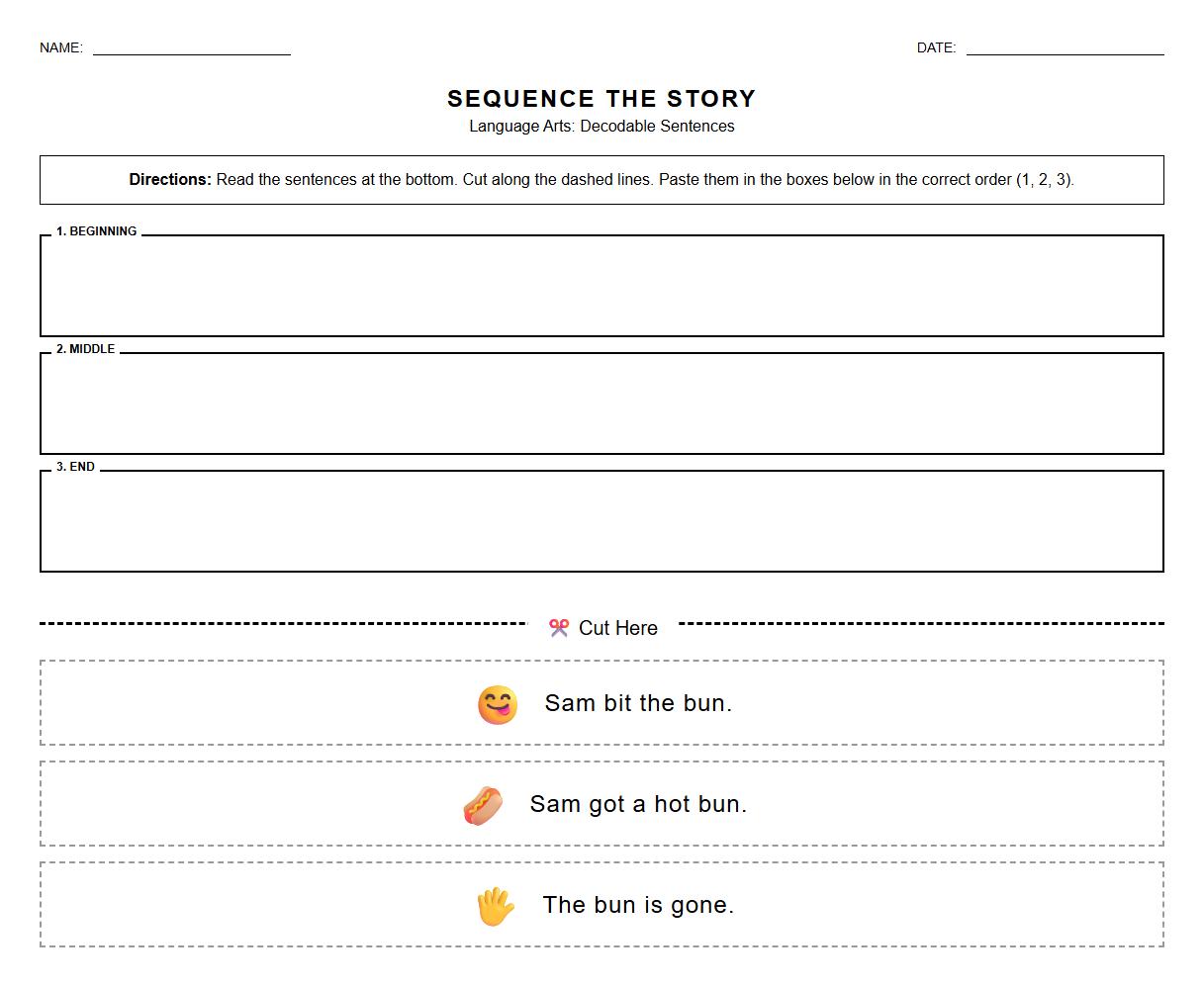
Sequence the Story Elements Worksheet using Decodable Sentences

Download PDF     Pin it

What Happened First in the Story

The story begins with the main character waking up and preparing for an exciting adventure. This initial event sets the stage for everything that follows, capturing children's attention right away. Understanding the first action helps young learners grasp the sequence and flow of the story. It encourages them to think about cause and effect.

Who Is the Main Character

The main character is the focus of the story and the one who drives the plot forward. Identifying this character helps children connect emotionally and understand the narrative from their perspective. Teachers and parents can help students remember details about the character's traits and feelings. This builds comprehension and empathy skills.

Where Does the Story Take Place

The setting of the story describes where the events happen and provides important context. Knowing the location helps children visualize the scenes and understand the environment around the characters. It also encourages imagination and spatial awareness. Encourage kids to describe or draw the setting to reinforce this concept.

What Did the Character Do Next

After the first event, the main character takes specific actions that move the story forward. Discussing what happens next enhances children's ability to predict and sequence events logically. This skill is essential for comprehension and storytelling. Highlighting the character's choices also fosters problem-solving skills.

How Did the Story End

The ending of the story provides closure and resolves the events that unfolded. Understanding the conclusion helps children recognize story structure and the importance of a satisfying finish. Teachers and parents can guide discussions about lessons learned or feelings about the ending. This reflection deepens comprehension and emotional connection.

What Did the Character Find

Discoveries made by the main character often lead to important plot developments. Identifying what the character found encourages attention to detail and recall abilities. It also prompts curiosity and wonder about the story's twists. Reinforce this by asking children to describe or draw the found item.

Who Helped the Main Character

Supporting characters play key roles in assisting the main character overcome challenges. Recognizing helpers teaches children about cooperation and friendship. It also shows how teamwork can solve problems. This theme is valuable for social-emotional learning in young children.

What Problem Did the Character Face

The heart of the story often revolves around a problem the main character must solve. Identifying this challenge helps children understand conflict and motivation. It encourages critical thinking about solutions and consequences. Discussing problems also prepares kids to handle real-life situations.

Which Picture Shows What Happened Last

Choosing the correct picture that represents the last event in the story reinforces sequencing skills. Visuals help young learners recall and organize story elements effectively. This exercise also supports memory retention and narrative understanding. Use pictures to promote discussion and storytelling.

How Did the Character Solve the Problem

The way the main character solves the problem teaches problem-solving strategies and perseverance. Explaining solutions helps children think critically about actions and outcomes. It also encourages creativity and resilience in facing difficulties. Highlighting this part of the story builds confidence and reasoning skills.


More in Language Arts Category


About the author. Nylen Smith is a dedicated educator and cofounder of KWorksheet.com, a popular platform specializing in high-quality kindergarten worksheets and printable activities.

Disclaimer. The information provided in this document is for general informational purposes and/or document sample only and is not guaranteed to be factually right or complete. Please report to us via contact-us page if you find and error in this page, thanks.

Comments

No comment yet