Vowel Sound Sorting Worksheet for Phonics Mastery in Kindergarten

📅 Apr 24, 2025 👤 Nylen Smith

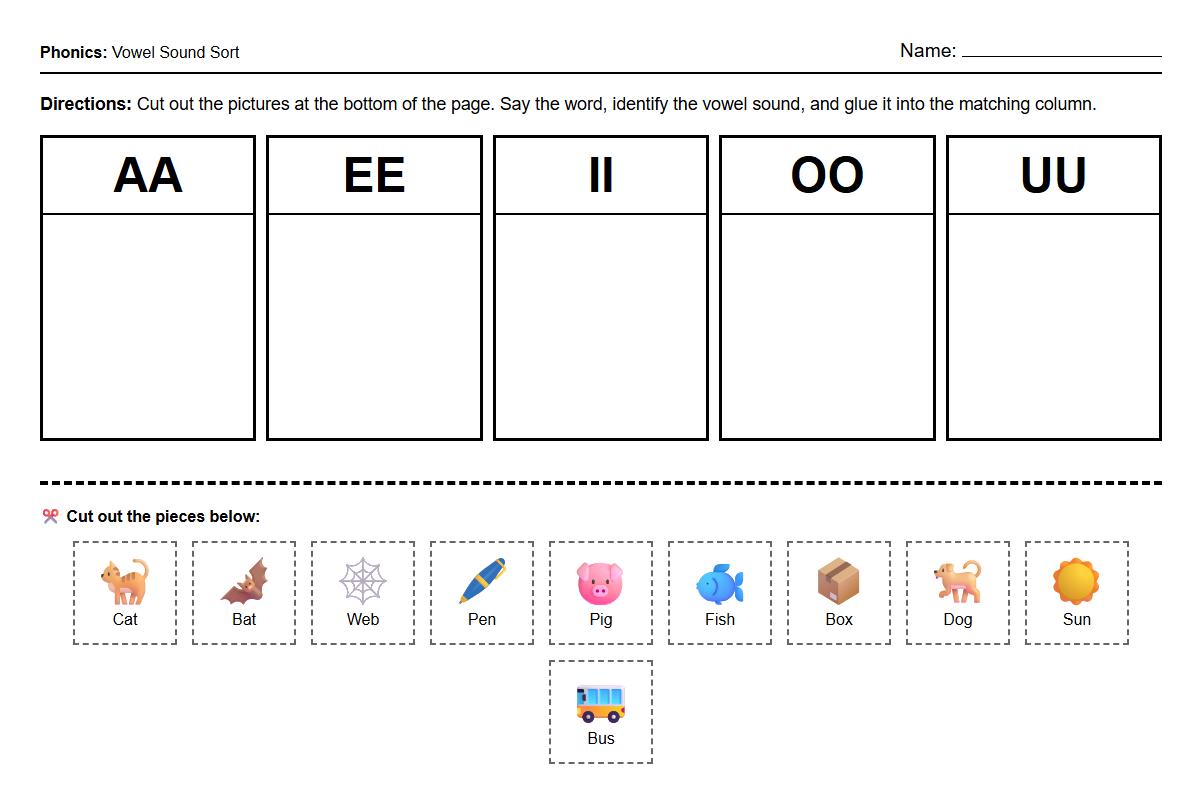
Vowel Sound Sorting Worksheets enhance phonics mastery by helping kindergarteners differentiate between short and long vowel sounds through engaging activities. These worksheets develop critical listening and sorting skills essential for early reading success. Explore the variety of available worksheets to support your child's phonics journey.

Short and Long Vowel Sound Sorting for Phonics
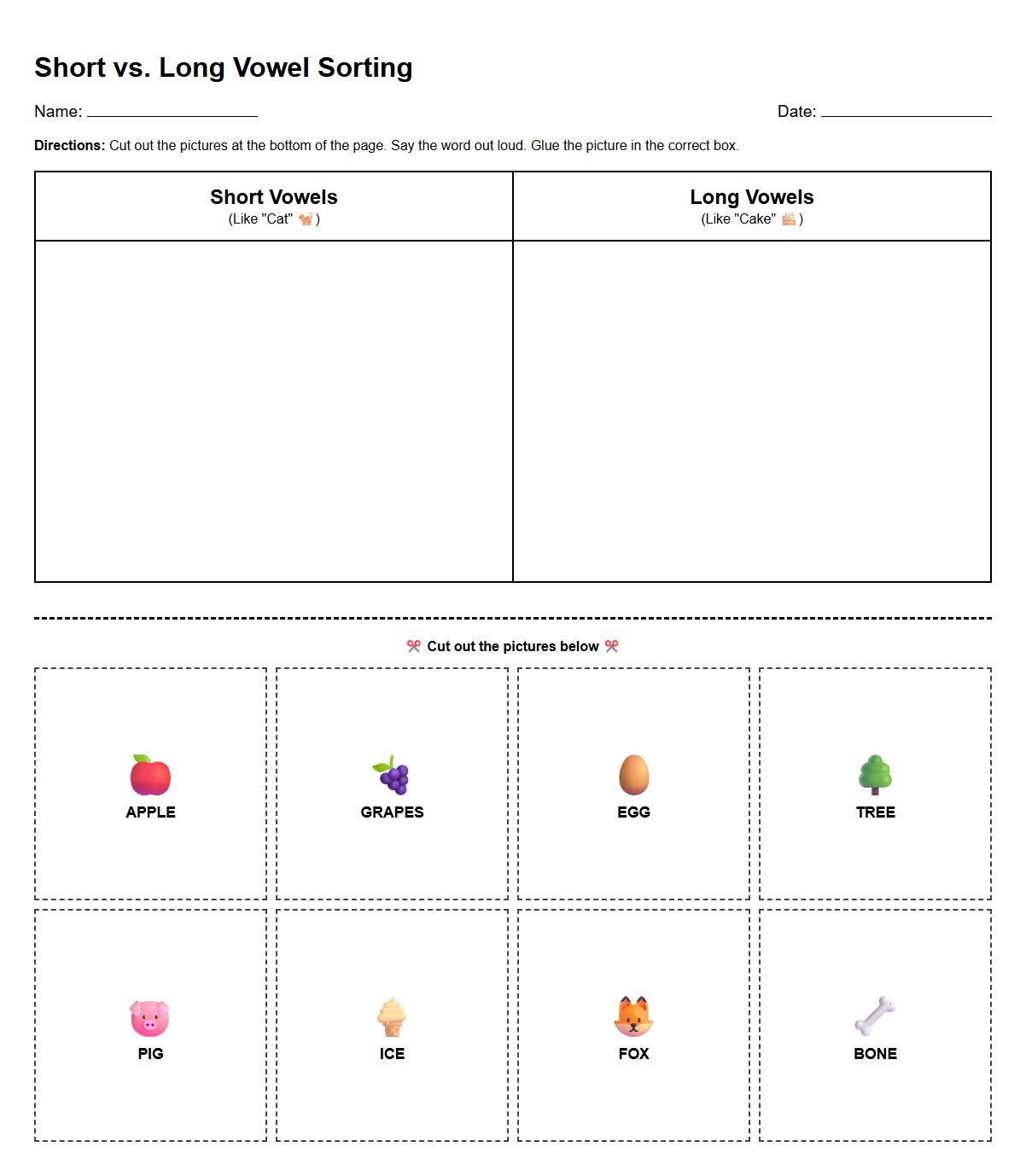
Short and Long Vowel Sound Sorting for Phonics

Download PDF     Pin it

CVC Word Vowel Sound Sort Worksheet
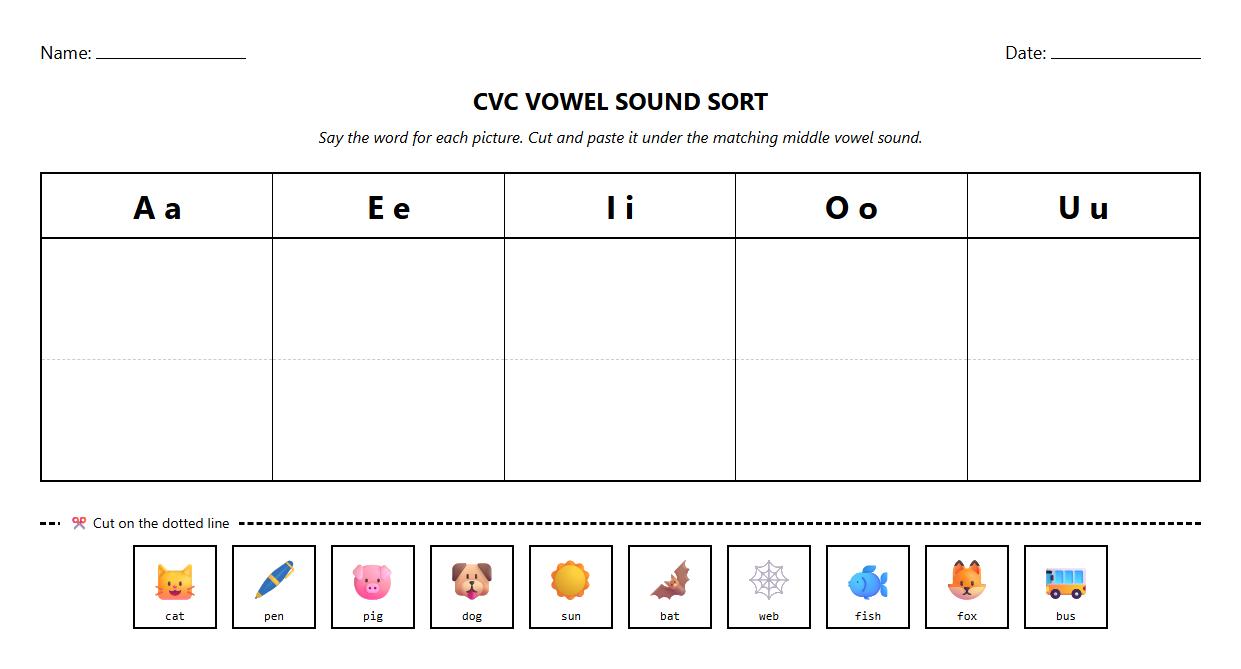
CVC Word Vowel Sound Sort Worksheet

Download PDF     Pin it

Picture Cut and Paste Vowel Sorting for Phonics
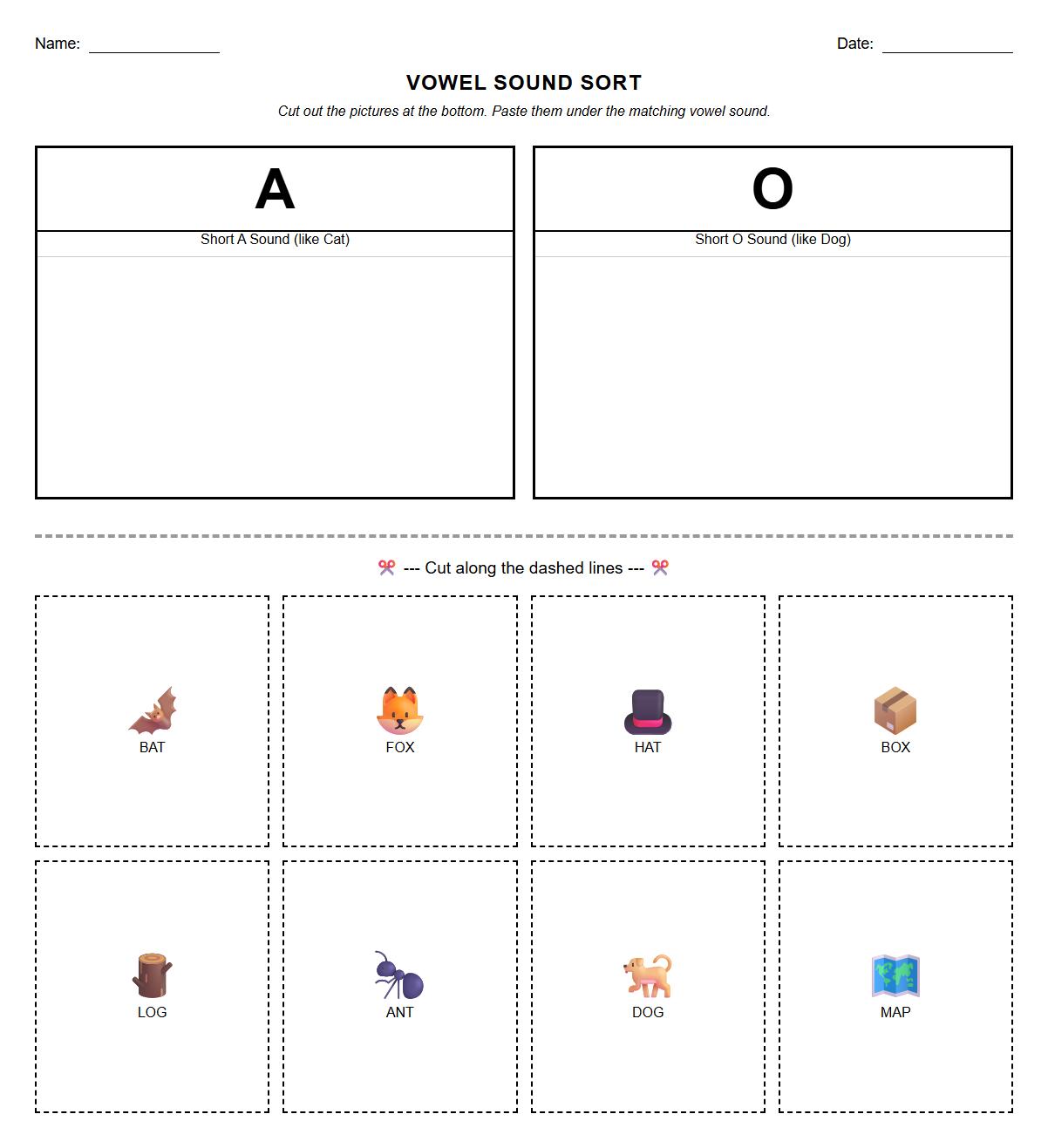
Picture Cut and Paste Vowel Sorting for Phonics

Download PDF     Pin it

Vowel Digraph Sound Sorting Activity
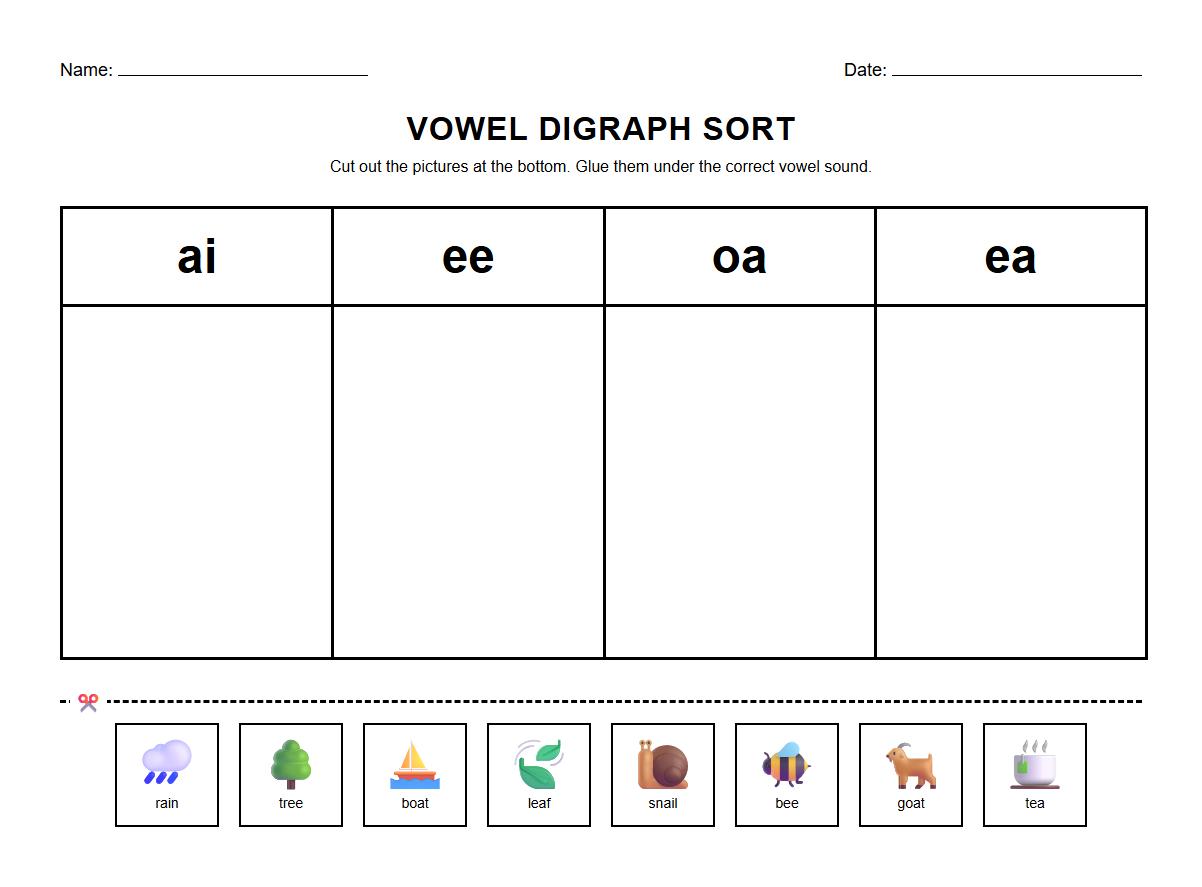
Vowel Digraph Sound Sorting Activity

Download PDF     Pin it

Vowel Team Word Sorting Phonics Worksheet
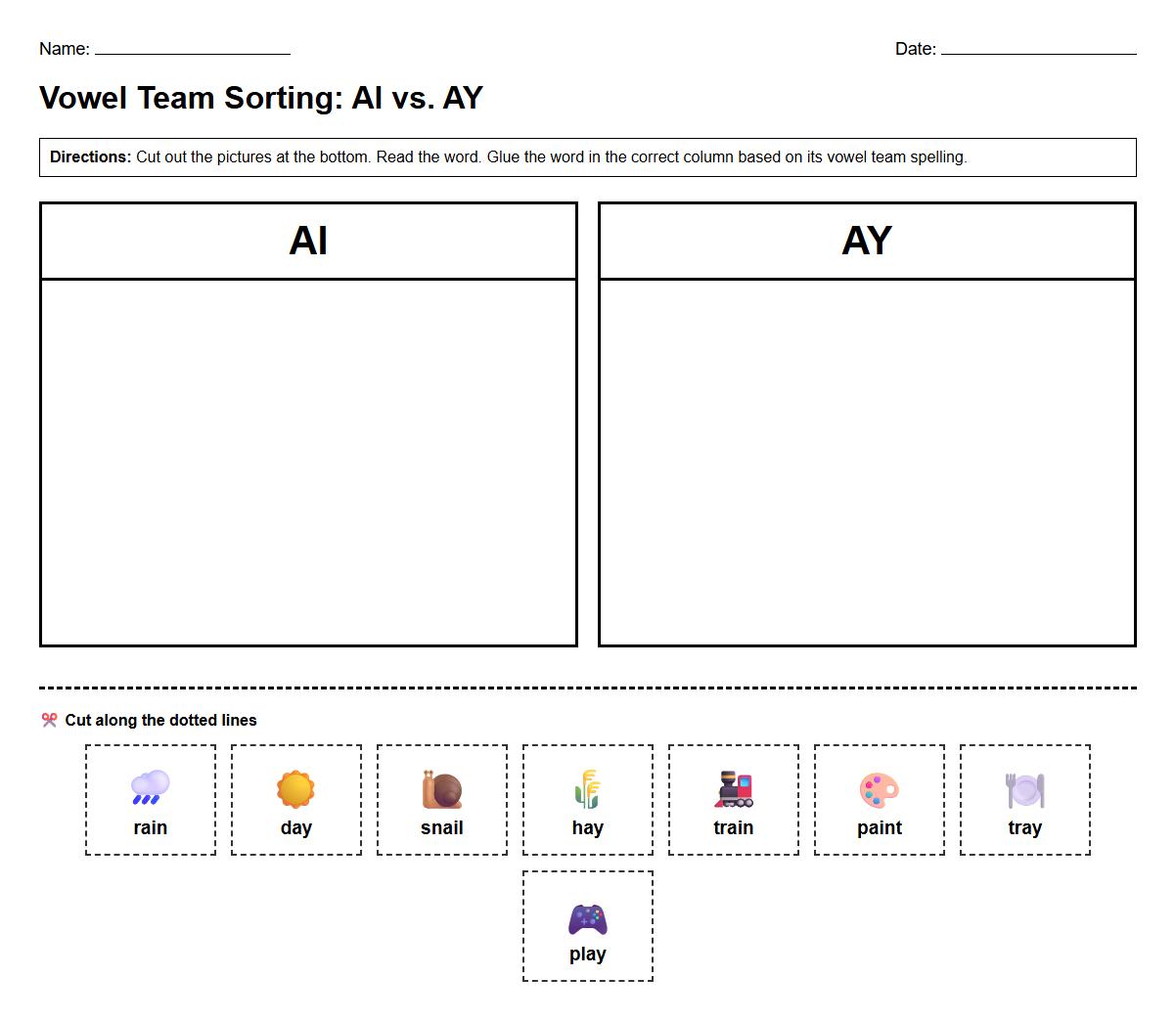
Vowel Team Word Sorting Phonics Worksheet

Download PDF     Pin it

Medial Vowel Sound Sorting Phonics Practice
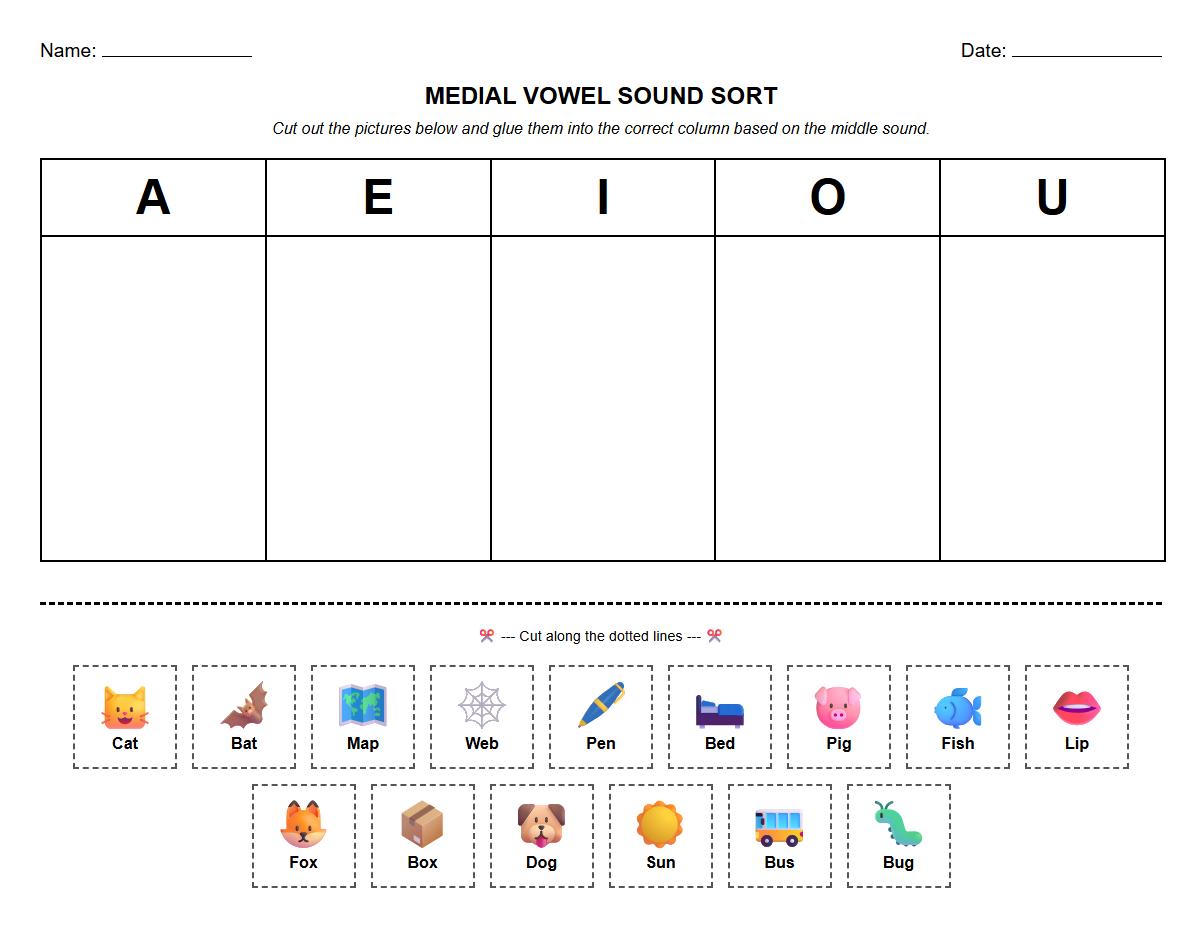
Medial Vowel Sound Sorting Phonics Practice

Download PDF     Pin it

Mixed Vowel Sounds Sorting Task for Kindergarten
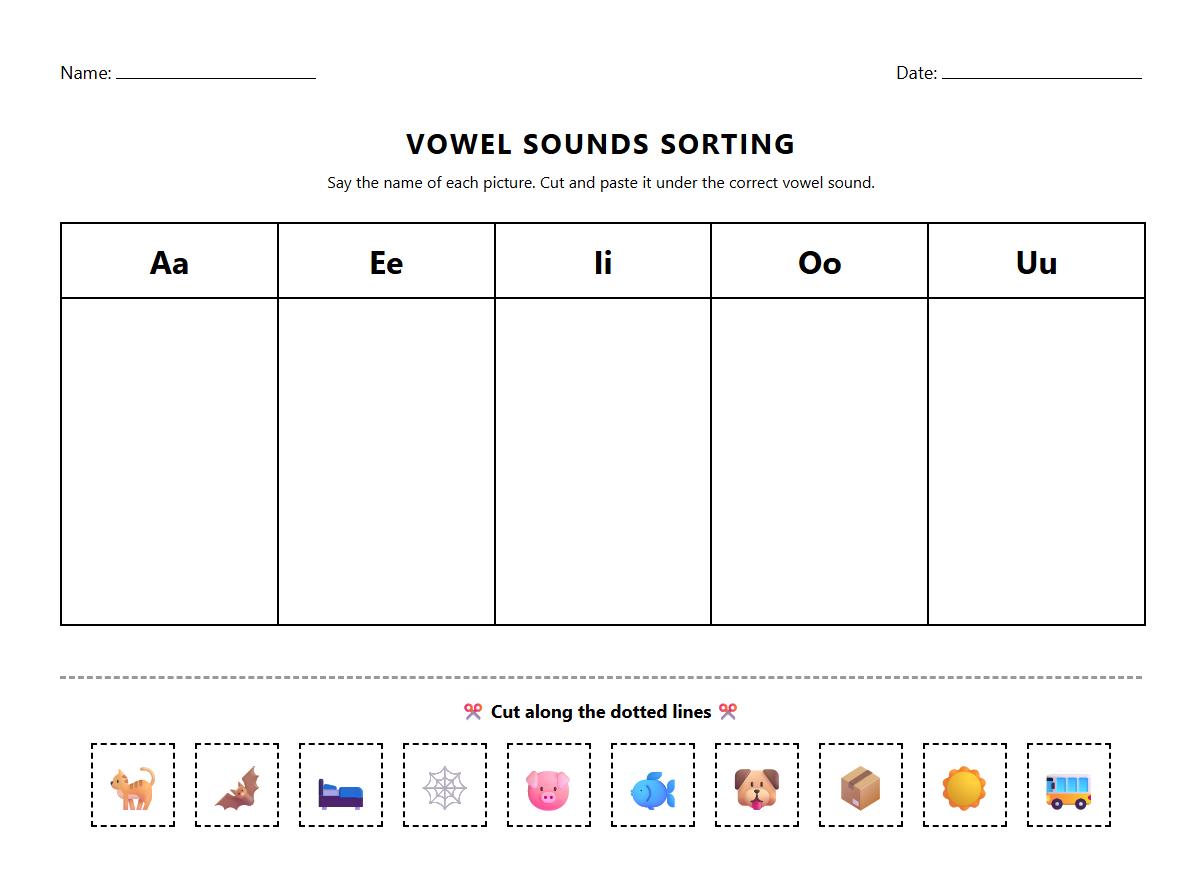
Mixed Vowel Sounds Sorting Task for Kindergarten

Download PDF     Pin it

Vowel Sound Clip Cards for Phonics Recognition
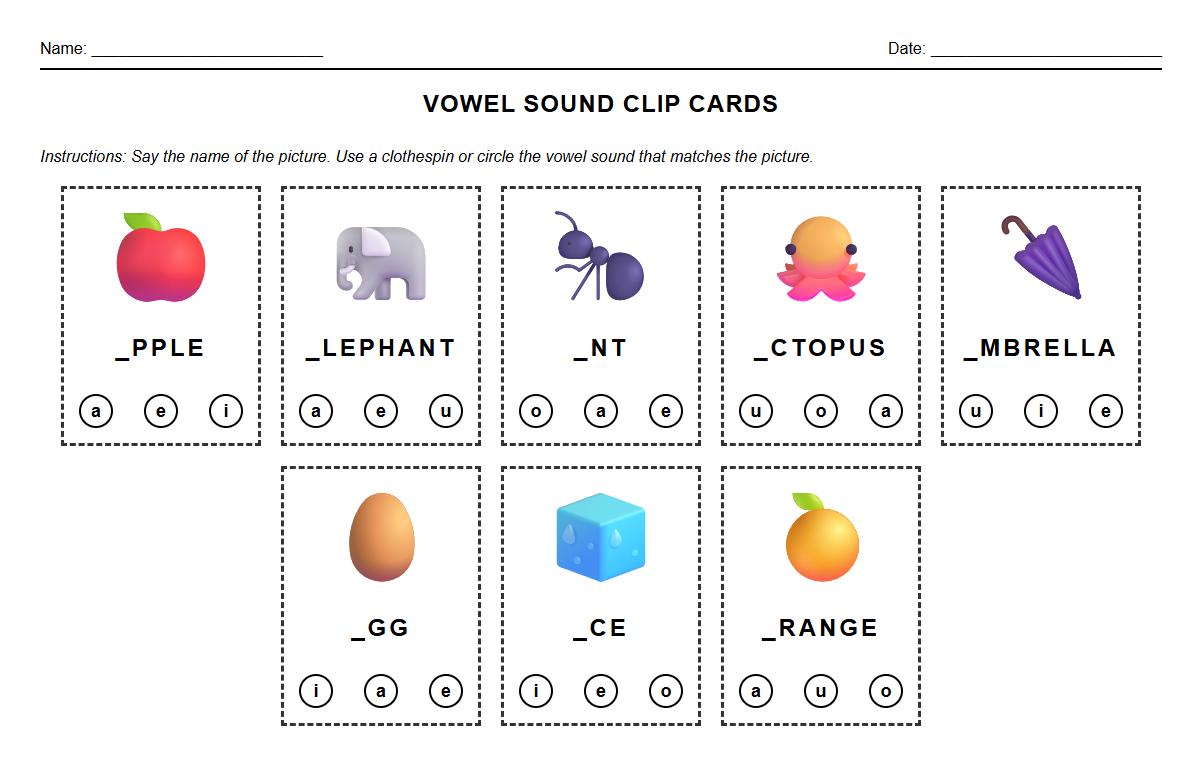
Vowel Sound Clip Cards for Phonics Recognition

Download PDF     Pin it

Phonics Vowel Sound Sorting Mats

Phonics Vowel Sound Sorting Mats

Download PDF     Pin it

Sorting Words by Vowel Phoneme Worksheet
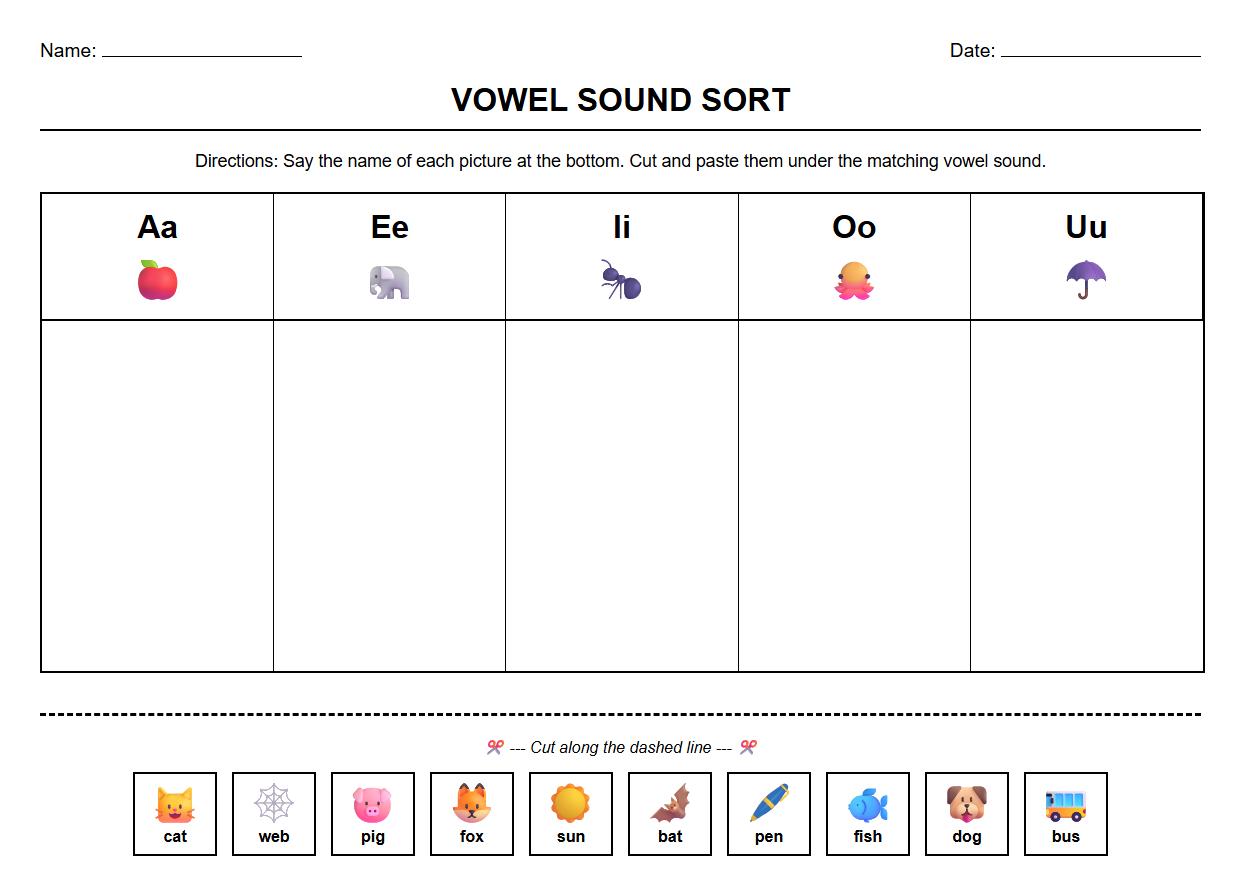
Sorting Words by Vowel Phoneme Worksheet

Download PDF     Pin it

Five Main Vowel Sounds Introduced in Kindergarten Phonics

Kindergarten phonics lessons focus on the five main vowel sounds: a, e, i, o, u. These vowels are introduced through simple words to help children recognize their unique sounds. Understanding these sounds is critical for early reading and spelling. Teachers emphasize both short and long vowel sounds to build a strong phonological foundation.

Visual Identification of Short and Long Vowel Sounds

Students can identify short and long vowel sounds by associating them with specific visual cues. For example, a short vowel may be shown with a closed mouth icon, while a long vowel could be paired with an open mouth or a line over the vowel. Highlighting the position of the vowel in words also helps students distinguish the sounds. This dual visual approach reinforces auditory learning.

Pictures or Words for Vowel Sound Sorting Activities

Using clear, relatable images or words is essential for vowel sorting activities. For the vowel "a," images like "apple" or "ant" work well. For "e," consider "egg" or "elephant." Other vowels can be represented by "igloo" (i), "octopus" (o), and "umbrella" (u), making it easier for children to match sounds with words visually. Try these ideas in fun phonics worksheets mastering initial sounds.

Benefits of Sorting Vowel Sounds for Early Reading Skills

Sorting vowel sounds sharpens auditory discrimination and enhances decoding skills in young readers. By categorizing words by vowel sounds, children better understand sound patterns and word structures. This practice also builds phonemic awareness, a critical skill for reading fluency. Overall, it supports literacy development by linking sounds to letters clearly.

Engaging Presentation of Vowel Sound Sorting Worksheets

To make vowel sorting engaging, teachers can use colorful cards, interactive games, or group competitions incorporating the worksheets. Incorporating technology, like tablet apps, can also capture students' interest. Hands-on activities, such as sorting with magnetic letters or picture tiles, make the learning process tactile and fun. Variety in presentation keeps students motivated and focused, as shown in thematic writing prompts for early writers.

Assessing Mastery of Vowel Sounds Through Sorting

Teachers can assess mastery by observing how accurately students sort words or pictures into vowel categories. Asking students to explain their sorting choices provides insight into their understanding. Timed sorting tasks can measure fluency and confidence with vowel sounds. Regular check-ins ensure all students progress toward reading proficiency, as aided by sight words reading fluency worksheets.

Common Mistakes in Sorting Vowel Sounds

Kindergarten students often confuse short and long vowel sounds or misidentify vowels in multisyllabic words. They may also rely too heavily on the first letter without listening closely to sounds. Inconsistent pronunciation and lack of practice contribute to sorting errors. Identifying these mistakes early helps tailor instruction to student needs.

Frequency of Vowel Sound Sorting Practice

For effective mastery, vowel sound sorting activities should be practiced daily or several times a week. Consistent repetition helps reinforce learning and build automaticity. Short, frequent sessions are more beneficial than infrequent long lessons. This schedule supports gradual but steady progress.

Classroom Materials Supporting Vowel Sound Sorting

Materials like picture cards, magnetic letters, vowel charts, and sorting trays enhance vowel sorting exercises. Printable worksheets and interactive whiteboards also support diverse learning styles. Using multisensory tools engages students visually, tactilely, and auditorily. Well-prepared materials provide structure and clarity for the activity, such as those found in tracing and recognition worksheets.

Parental Support for Vowel Sound Sorting at Home

Parents can reinforce vowel sorting skills by practicing with their children using household items or simple flashcards. Reading aloud and emphasizing vowel sounds in everyday words helps strengthen phonics skills. Encouraging playful sorting games supports motivation and learning retention. Consistent home practice complements classroom instruction effectively, as supported by CVC words sound segmentation worksheets.


More in Language Arts Category


About the author. Nylen Smith is a dedicated educator and cofounder of KWorksheet.com, a popular platform specializing in high-quality kindergarten worksheets and printable activities.

Disclaimer. The information provided in this document is for general informational purposes and/or document sample only and is not guaranteed to be factually right or complete. Please report to us via contact-us page if you find and error in this page, thanks.

Comments

No comment yet