
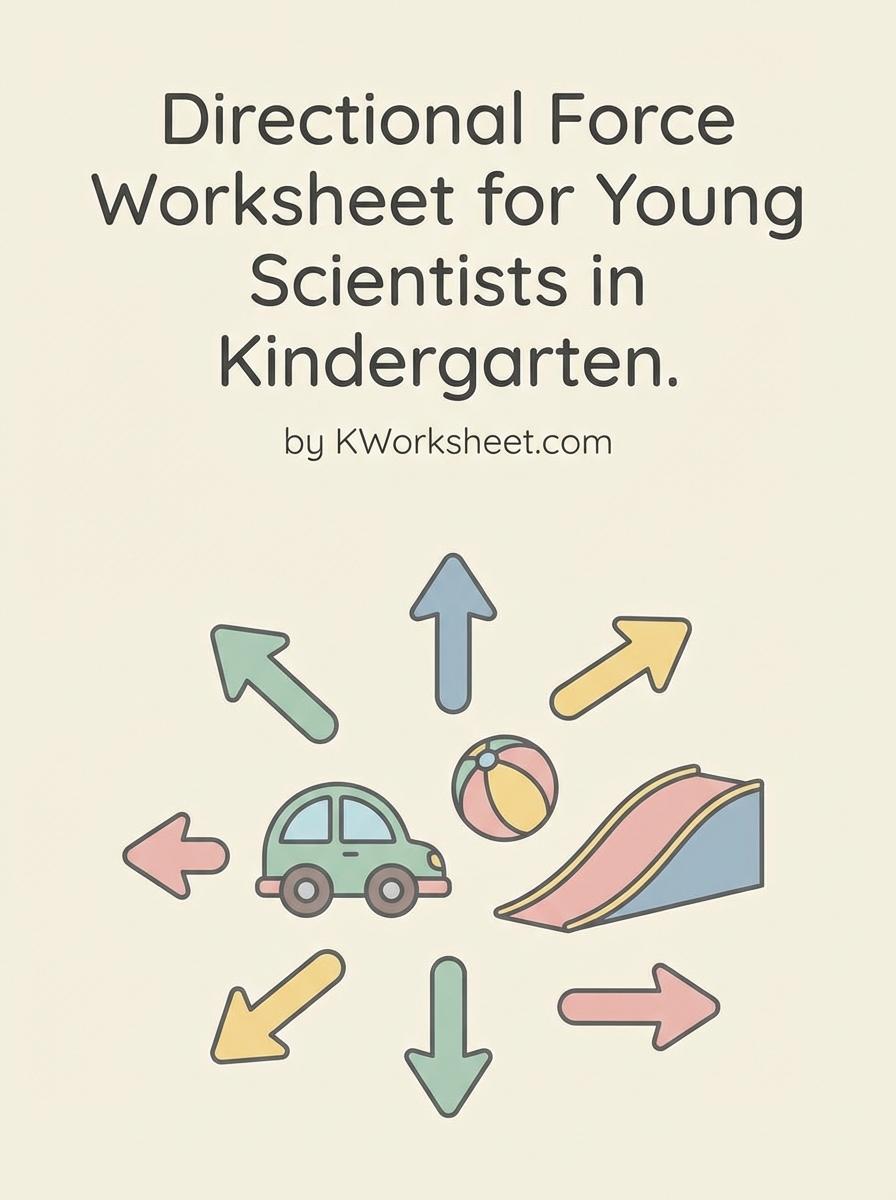
Directional Force Worksheet for Young Scientists in Kindergarten

📅 Feb 26, 2025 👤 Nylen Smith

Kindergarten students explore the concept of directional force by experimenting with simple actions like pushing and pulling objects. Hands-on activities help young scientists develop an understanding of how force affects movement. Explore our engaging Directional Force worksheets designed specifically for early learners.

Directional Force Identification Phonics Worksheet
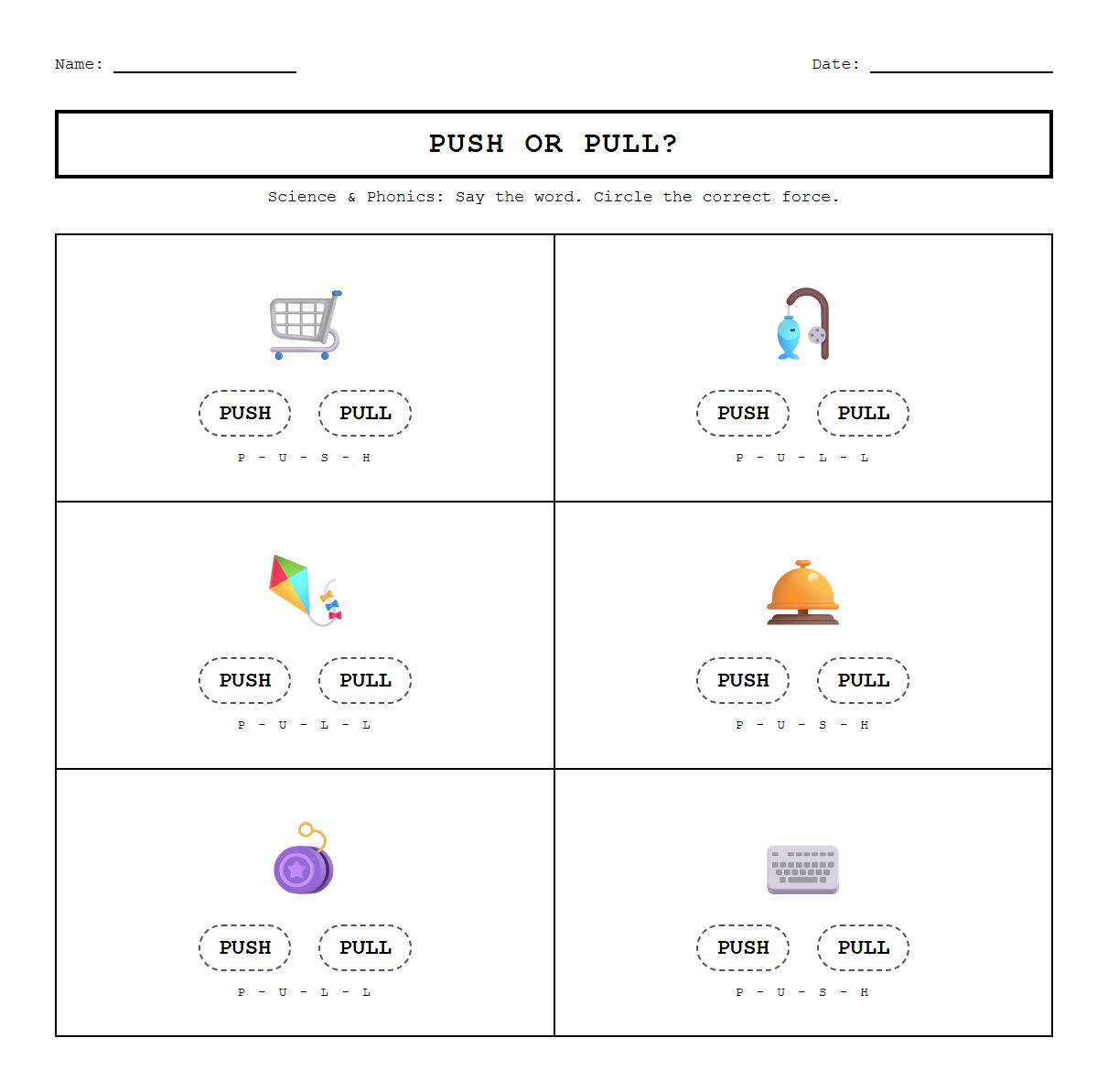
Directional Force Identification Phonics Worksheet

Download PDF     Pin it

Push and Pull Sorting Worksheet with Visual Cues
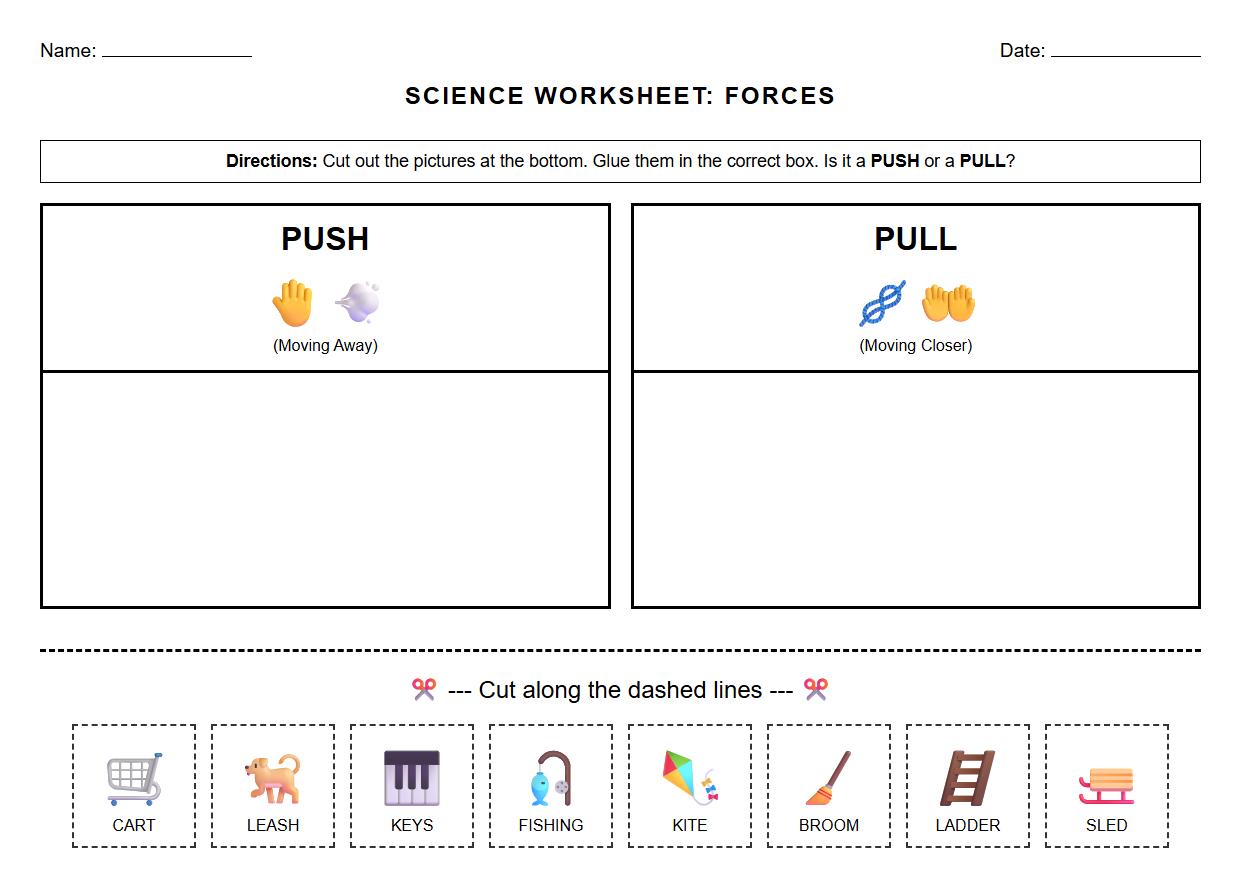
Push and Pull Sorting Worksheet with Visual Cues

Download PDF     Pin it

Directional Arrows Tracing Kinetics Worksheet
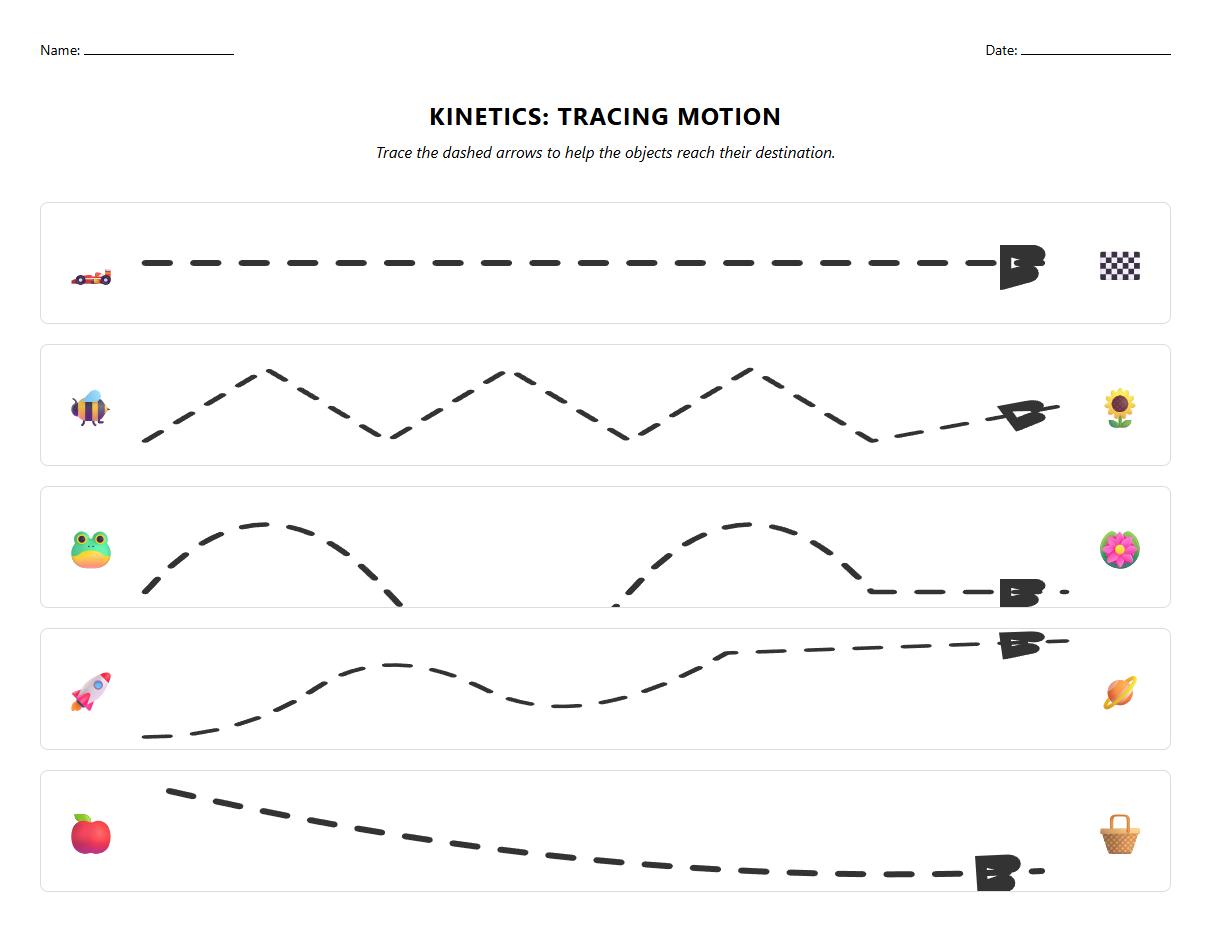
Directional Arrows Tracing Kinetics Worksheet

Download PDF     Pin it

Matching Forces to Object Movement Worksheet
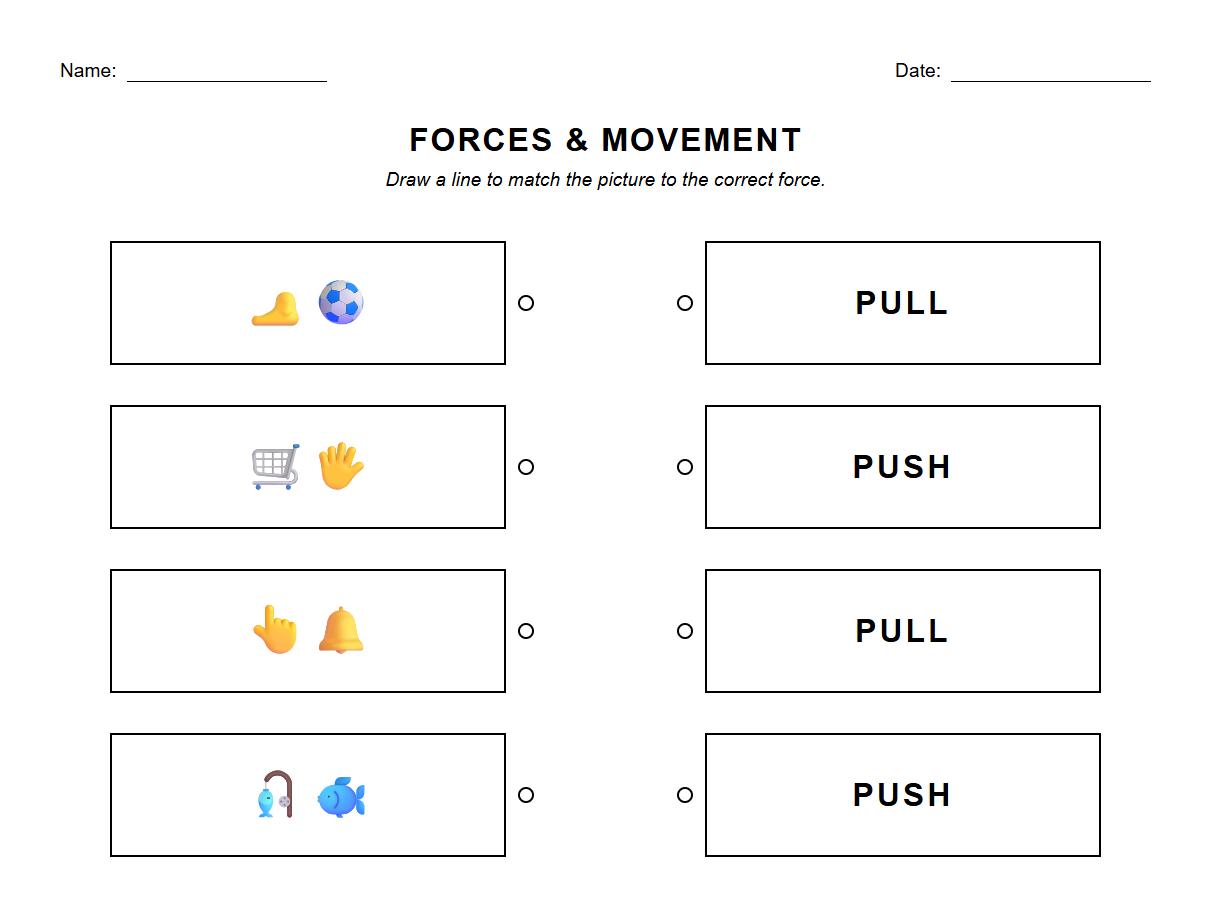
Matching Forces to Object Movement Worksheet

Download PDF     Pin it

Force and Motion Vocabulary Picture Worksheet
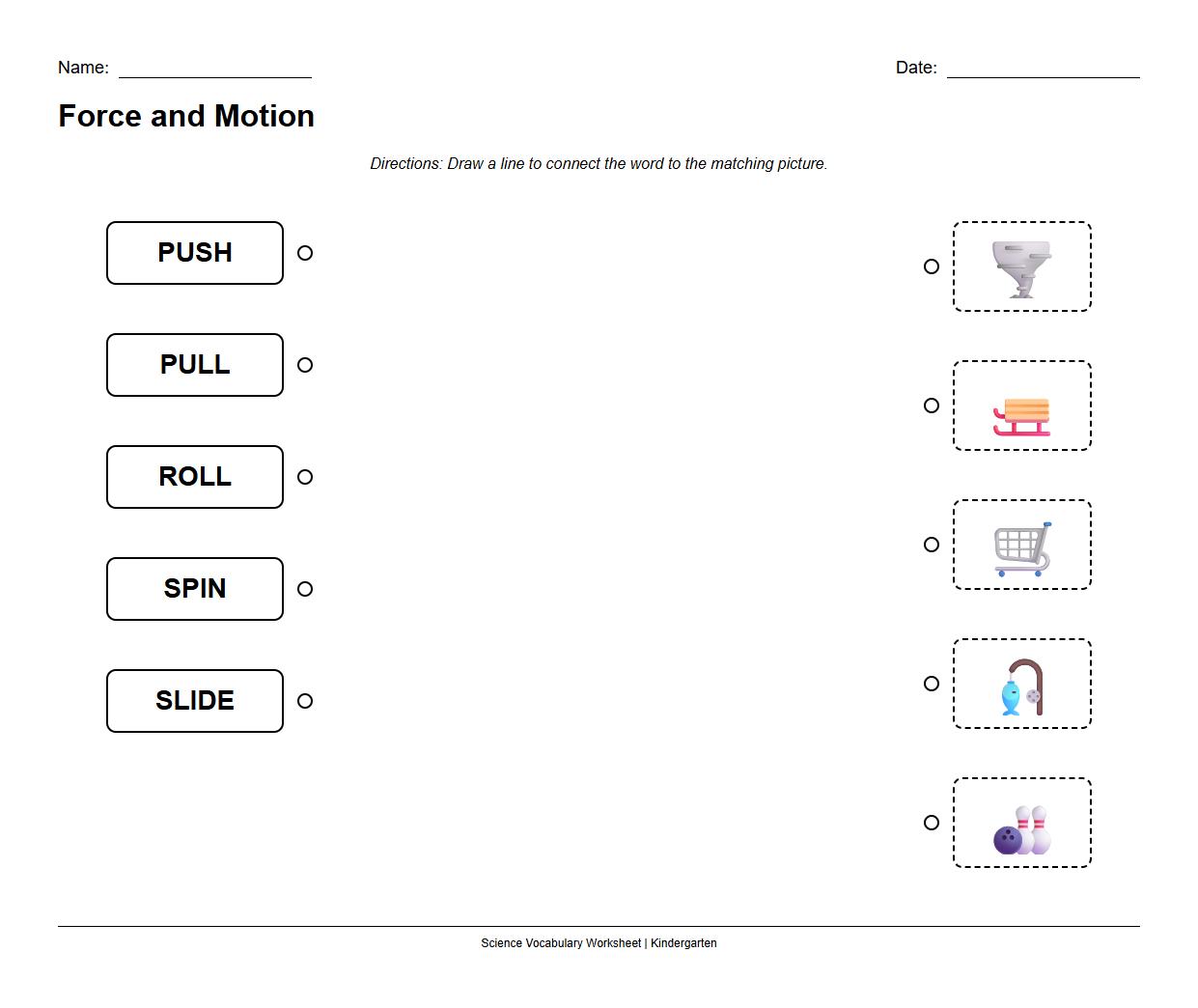
Force and Motion Vocabulary Picture Worksheet

Download PDF     Pin it

Simple Machines and Directional Force Worksheet
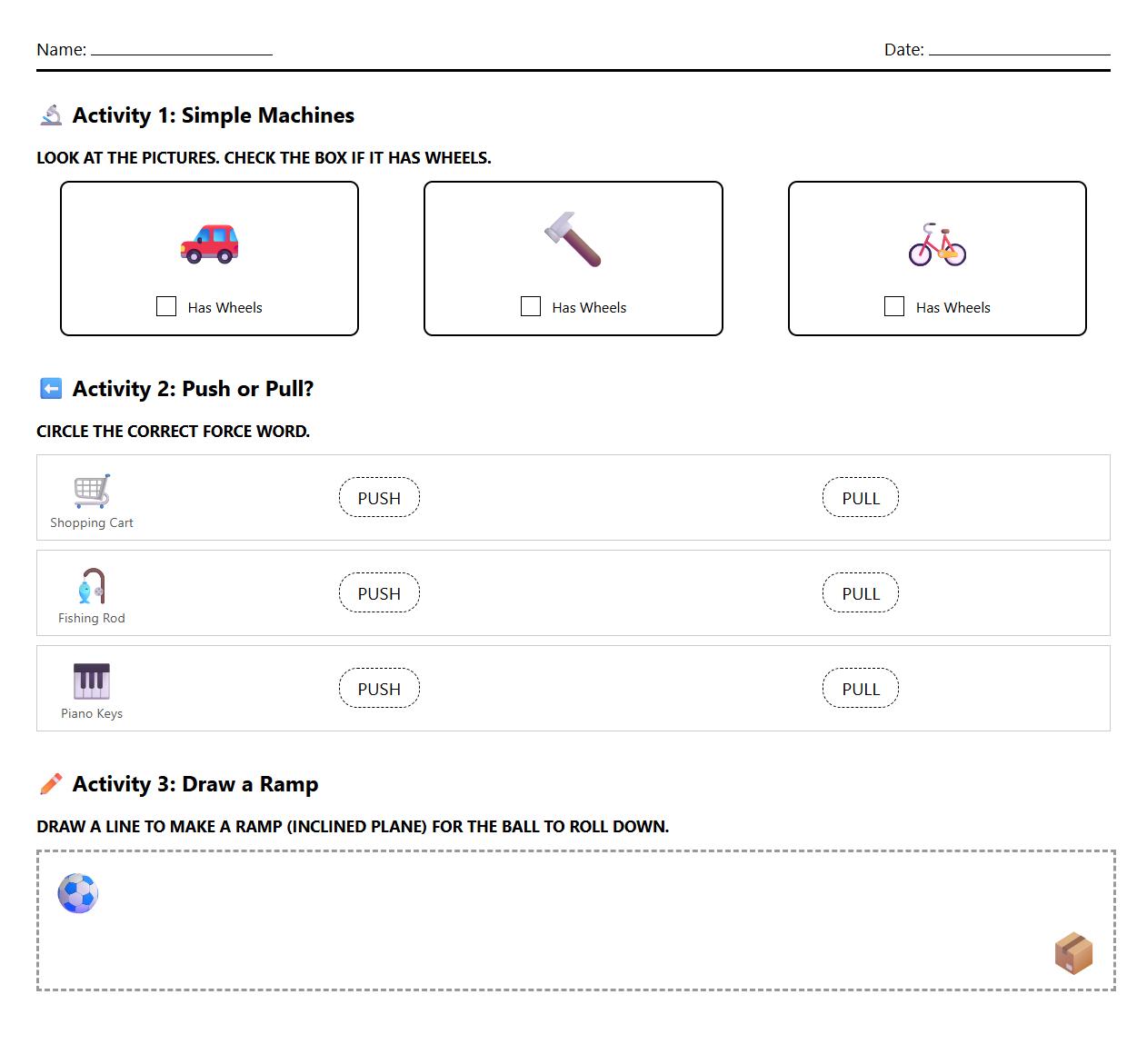
Simple Machines and Directional Force Worksheet

Download PDF     Pin it

Predicting Object Movement Direction Worksheet
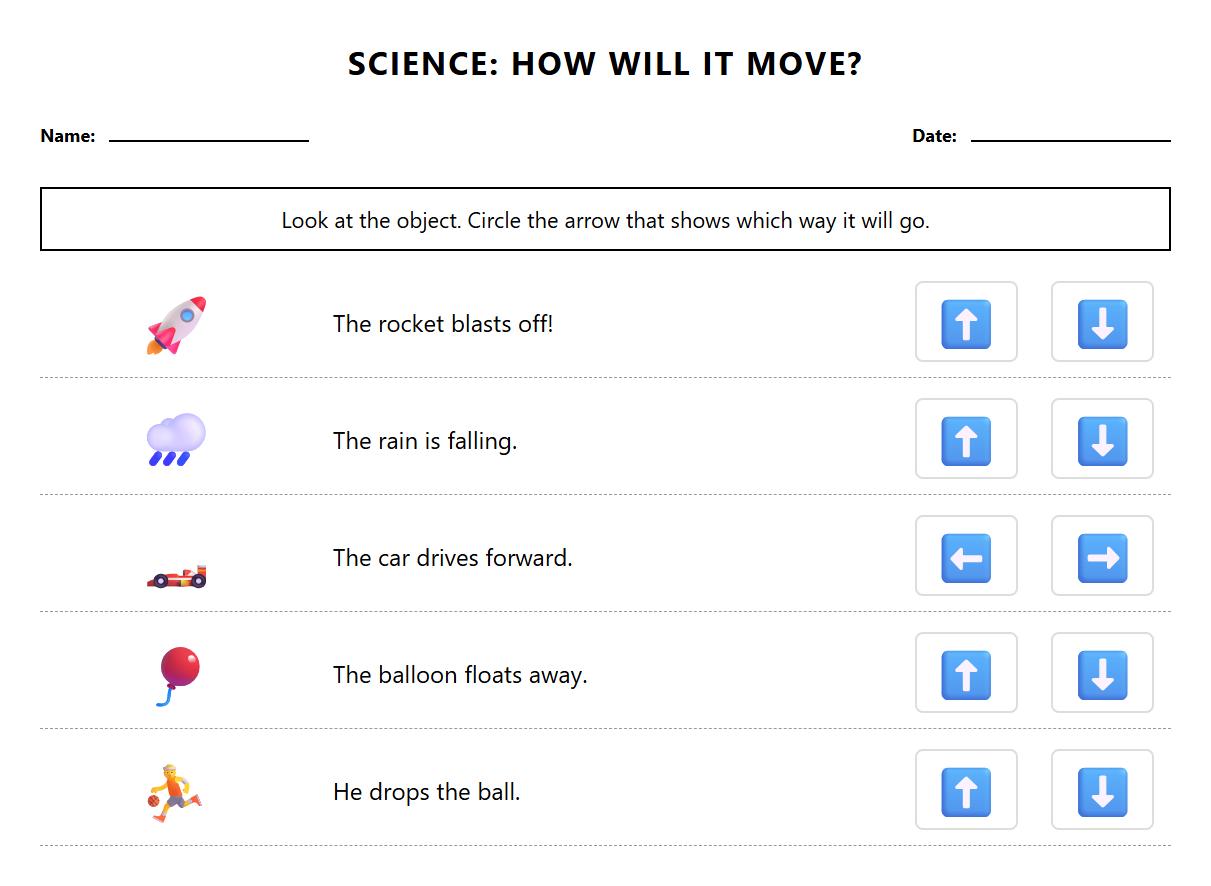
Predicting Object Movement Direction Worksheet

Download PDF     Pin it

Drawing Arrows for Force Direction Worksheet
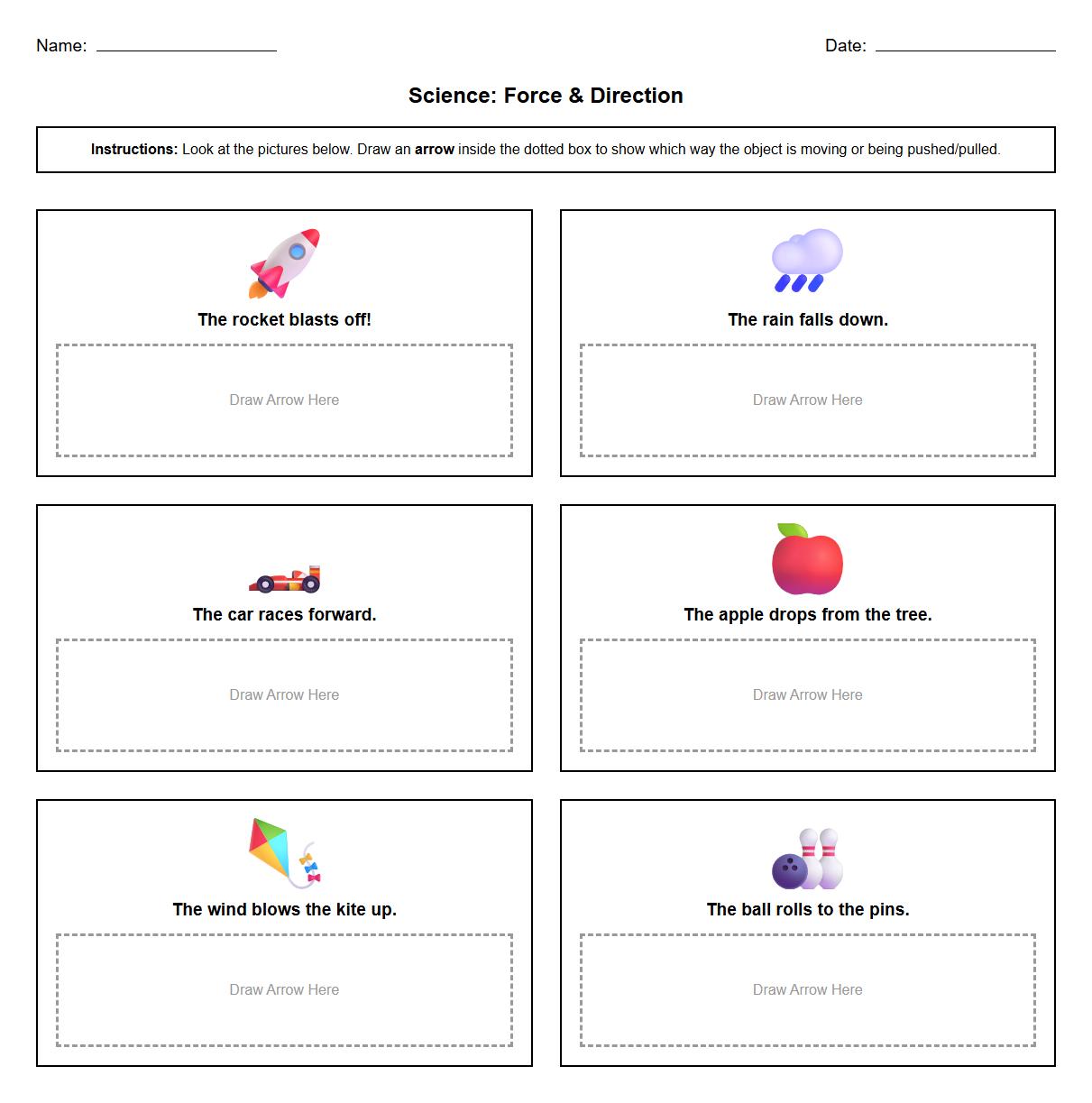
Drawing Arrows for Force Direction Worksheet

Download PDF     Pin it

Labeling Force Directions in Everyday Scenes Worksheet
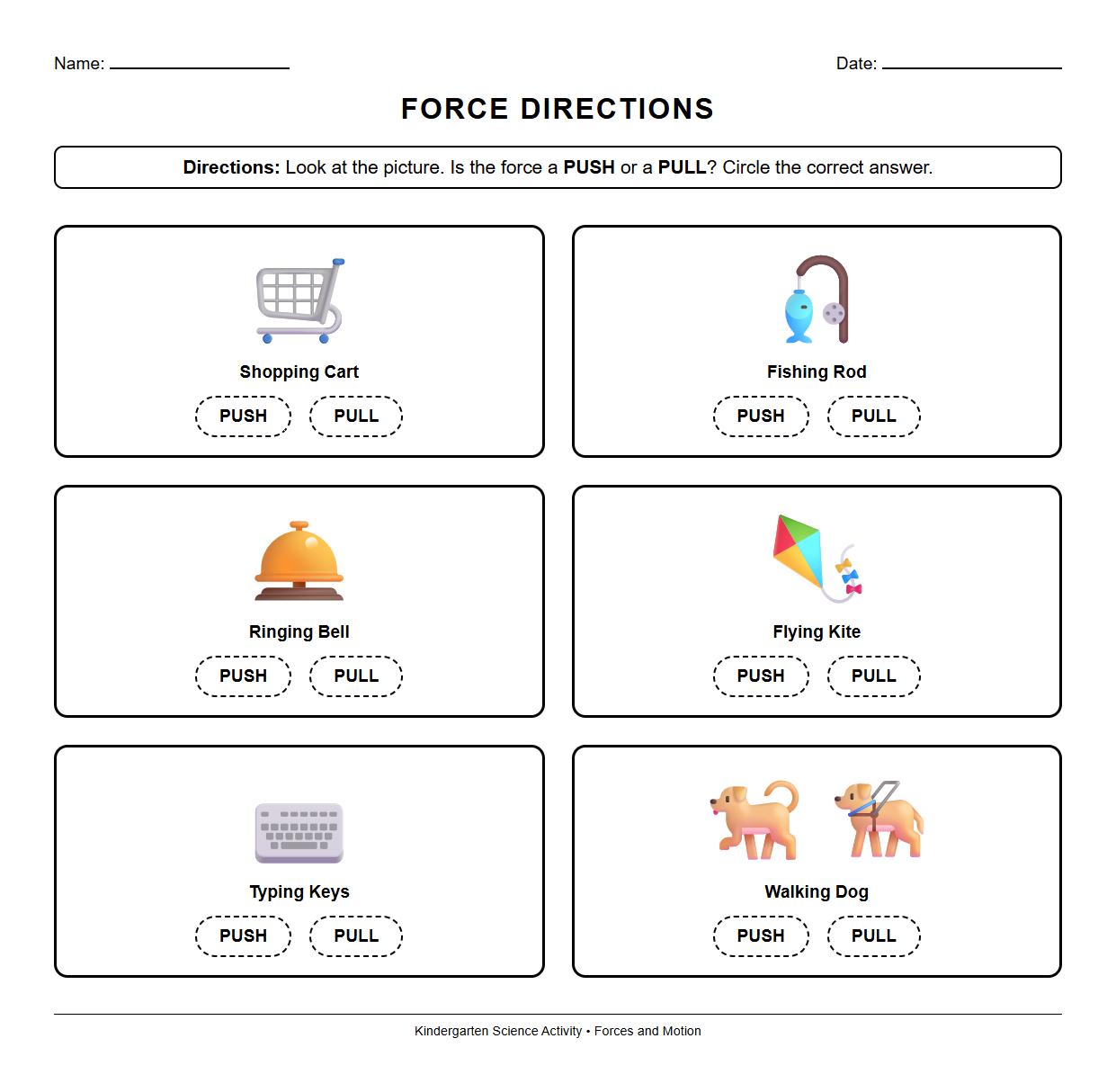
Labeling Force Directions in Everyday Scenes Worksheet

Download PDF     Pin it

Force Magnitude and Direction Phonics Cut and Paste Worksheet
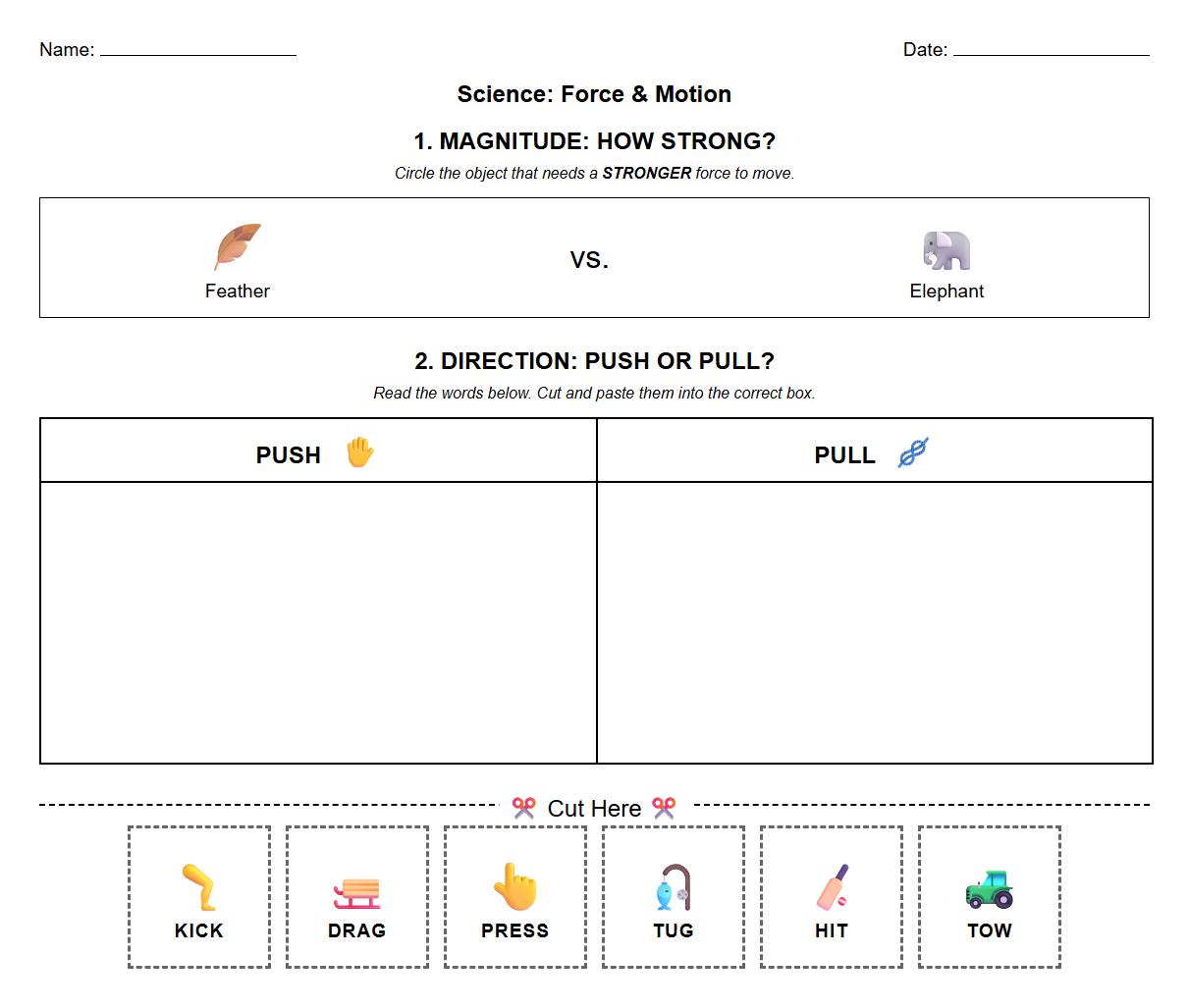
Force Magnitude and Direction Phonics Cut and Paste Worksheet

Download PDF     Pin it

Which Way is the Ball Moving in the Picture?

Observe the direction of the ball's movement carefully. Look for clues like motion lines or the ball's position relative to other objects. Understanding the ball's movement helps children learn about motion and direction.

What Happens if You Push the Car from Behind?

Pushing the car from behind will cause it to move forward. This demonstrates the basic concept of force and how it affects an object's motion. Teachers and parents can encourage kids to try pushing different objects to see how they react.

Which Object Will Go Faster if You Use More Force?

The object that receives more force will typically move faster. This activity teaches children about the relationship between force and speed. Comparing objects of different weights can show how force affects motion differently.

Can You Show Which Way the Arrow is Pointing?

Arrows are used to indicate direction. Ask children to identify and trace the arrow's pointing direction to strengthen their understanding of spatial orientation. This skill is important in learning to read maps and instructions.

What Happens if You Pull the Rope Instead of Push?

Pulling the rope will move the object towards you, unlike pushing which moves it away. This helps children understand different types of forces and how they affect the movement of objects. It's a simple way to explore cause and effect.

Which Side Will the Box Move if You Push from the Left?

Pushing the box from the left side will make it move to the right. This illustrates action and reaction forces and helps children visualize how force direction controls movement. It's a practical way to introduce basic physics concepts.

Where Will the Toy End Up if You Push it Down the Ramp?

Pushing the toy down the ramp will cause it to move downward and forward due to gravity and your force. This activity teaches about inclined planes and how angles affect motion speed. Kids can experiment with ramps of different steepness to see changes.

What Does the Word Push Mean?

The word push means to apply force to move something away from yourself. Teaching this word helps children connect language with physical actions. It builds vocabulary as well as understanding of basic mechanics.

What Does It Look Like When Something is Pulled?

When something is pulled, it moves closer to the person or object applying force. Showing this helps children grasp the difference between pushing and pulling. Use hands-on examples to make the concept clear and memorable.

How Do You Make the Swing Go Higher?

To make the swing go higher, you can push it with more force or at the right moment during its motion. This demonstrates how timing and strength affect how objects move. It's a fun way for children to learn about energy and motion.


More in Science Category


About the author. Nylen Smith is a dedicated educator and cofounder of KWorksheet.com, a popular platform specializing in high-quality kindergarten worksheets and printable activities.

Disclaimer. The information provided in this document is for general informational purposes and/or document sample only and is not guaranteed to be factually right or complete. Please report to us via contact-us page if you find and error in this page, thanks.

Comments

No comment yet