Observation Skills Worksheet Using the Five Senses for Kindergarten Science

📅 Mar 26, 2025 👤 Nylen Smith

Engaging kindergarten students in exploring their environment enhances their observation skills through the use of the five senses--sight, hearing, touch, smell, and taste. This worksheet encourages young learners to identify and record sensory details, fostering critical thinking and curiosity. Explore the variety of worksheets available to support hands-on sensory discovery and scientific observation.

Five Senses Sorting Activity Worksheet with Sensory Vocabulary
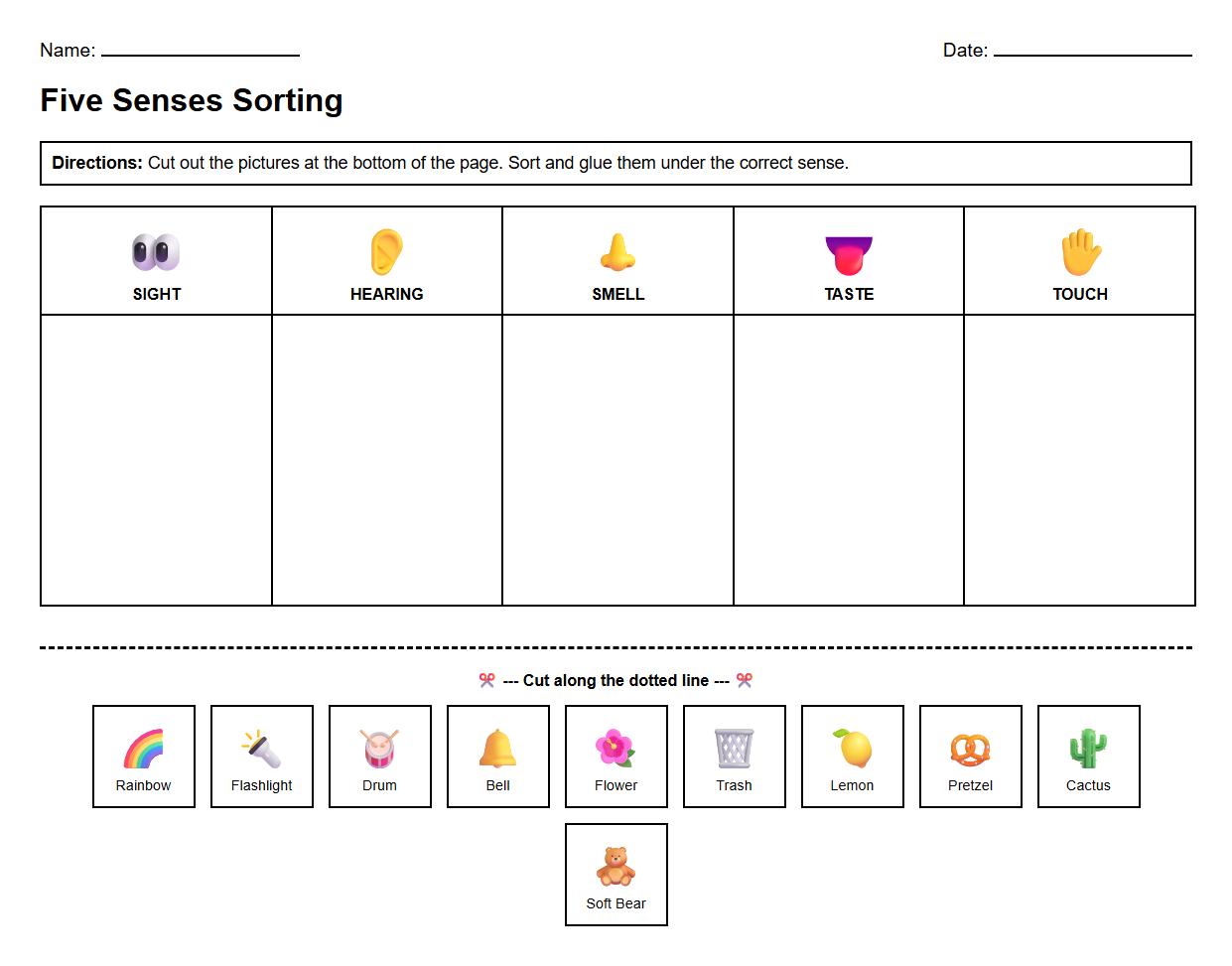
Five Senses Sorting Activity Worksheet with Sensory Vocabulary

Download PDF     Pin it

Sensory Organs Matching Worksheet Featuring Illustrations
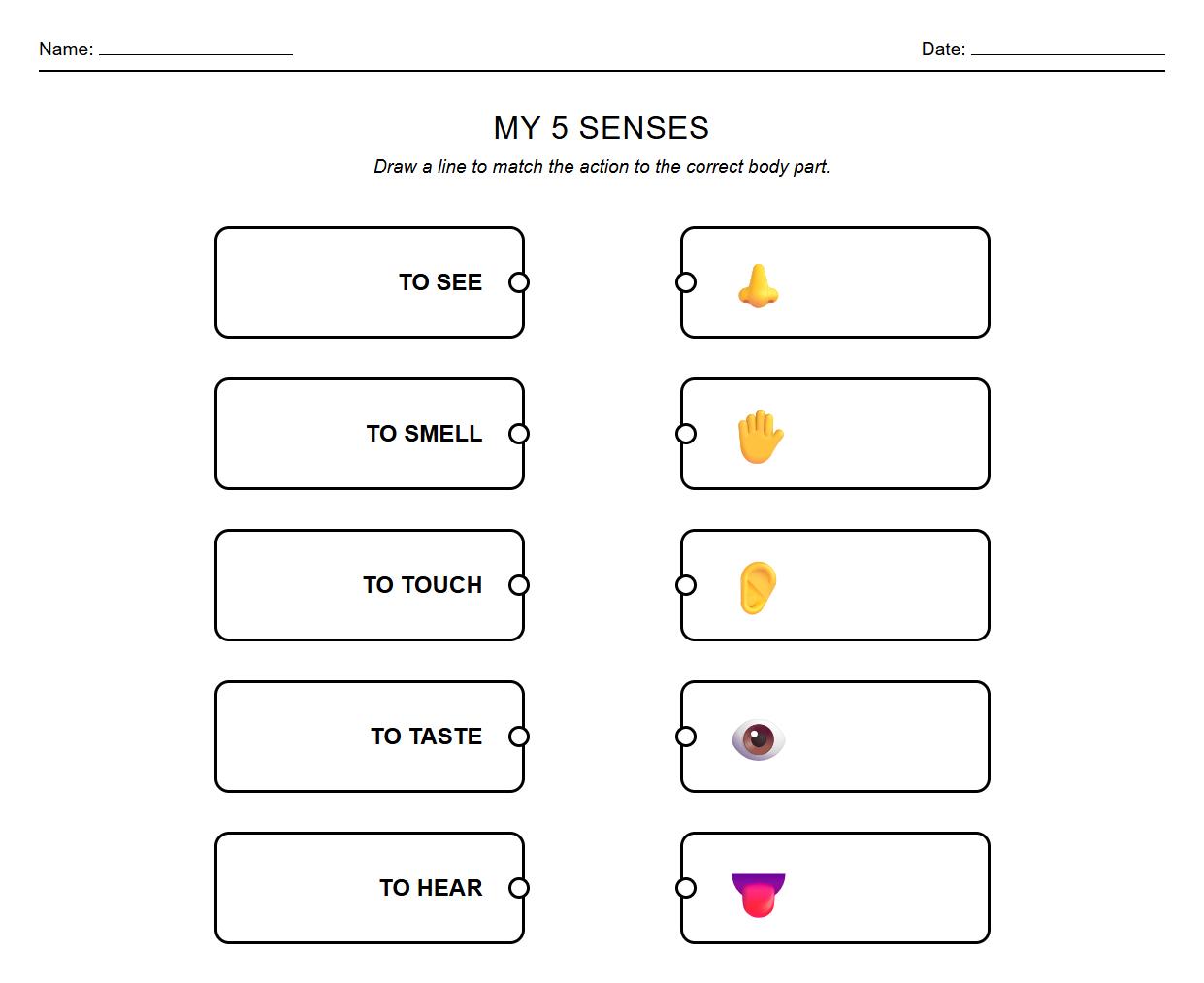
Sensory Organs Matching Worksheet Featuring Illustrations

Download PDF     Pin it

Phonics Listening Practice Using Sound Observation
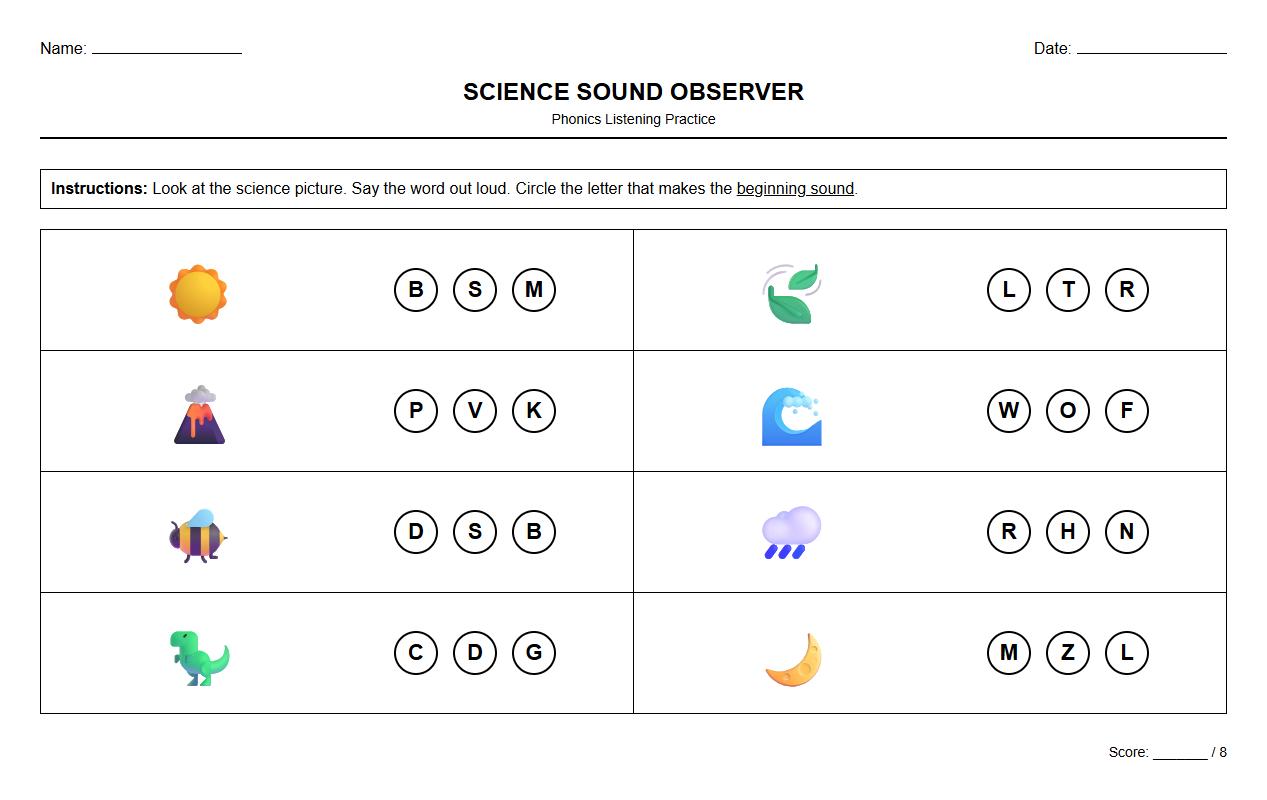
Phonics Listening Practice Using Sound Observation

Download PDF     Pin it

Texture Exploration Chart for Touch Sense Recording
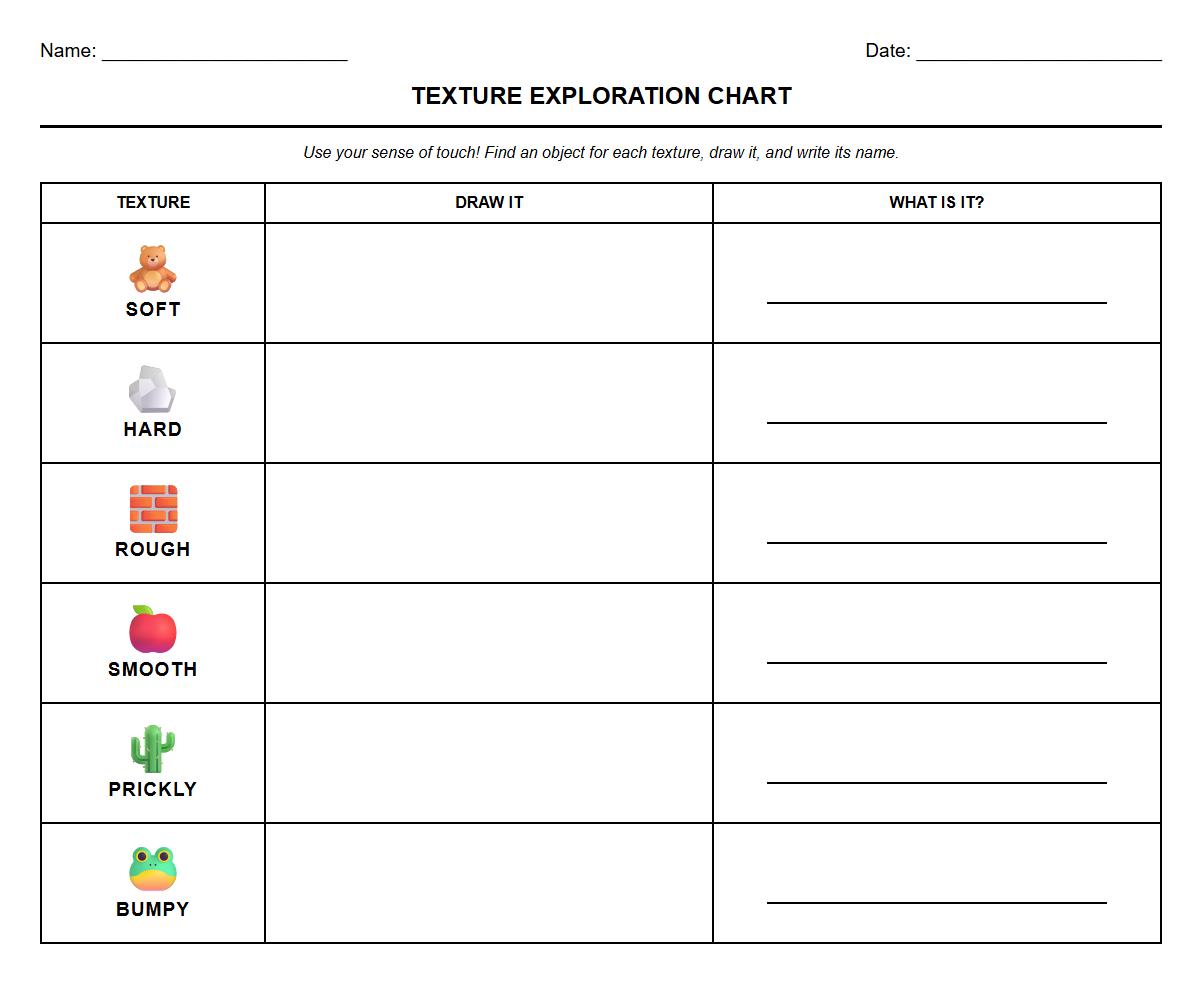
Texture Exploration Chart for Touch Sense Recording

Download PDF     Pin it

Visual Discrimination Exercise for Sight Analysis
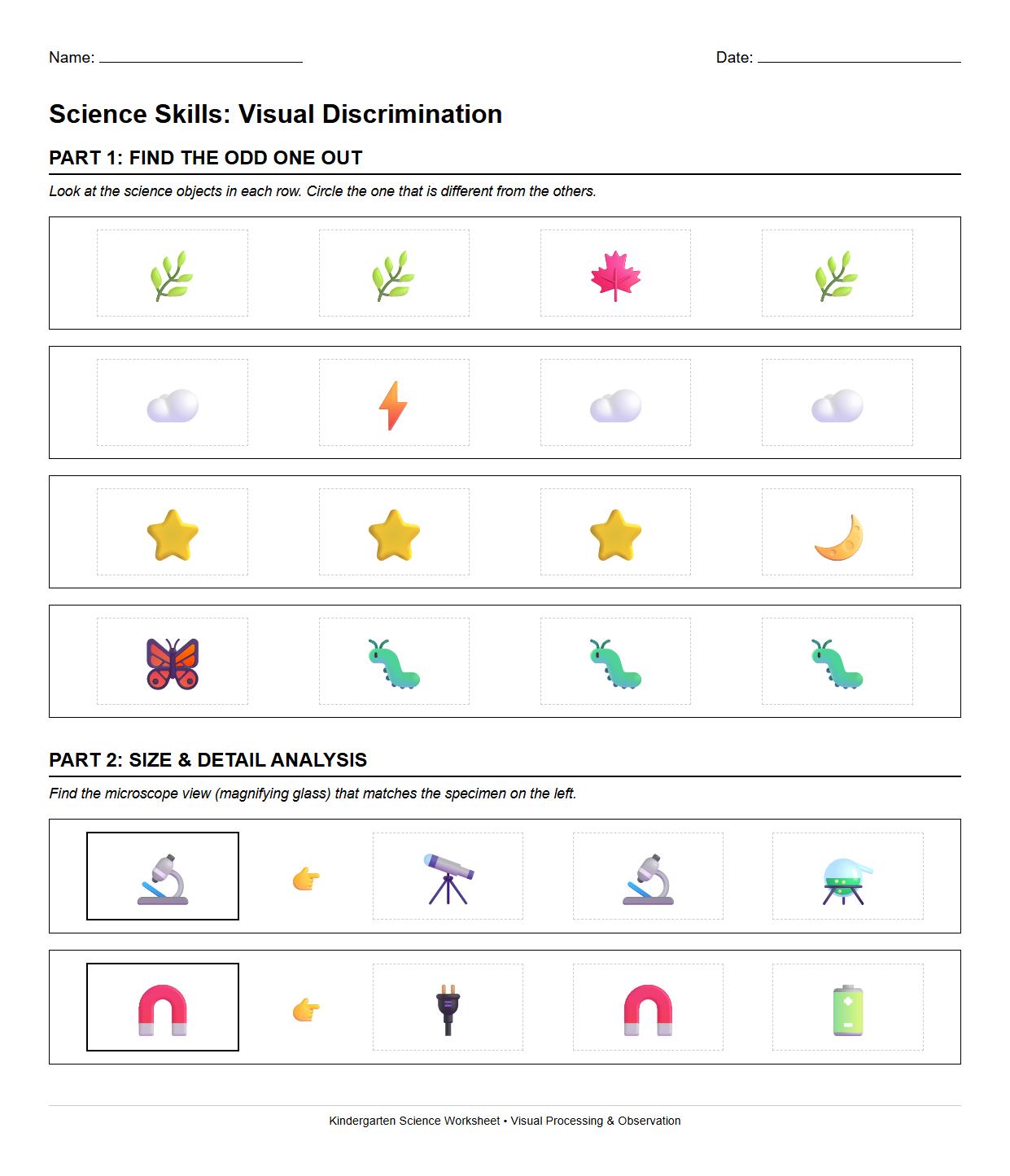
Visual Discrimination Exercise for Sight Analysis

Download PDF     Pin it

Smell Identification Chart Using Scent Descriptors
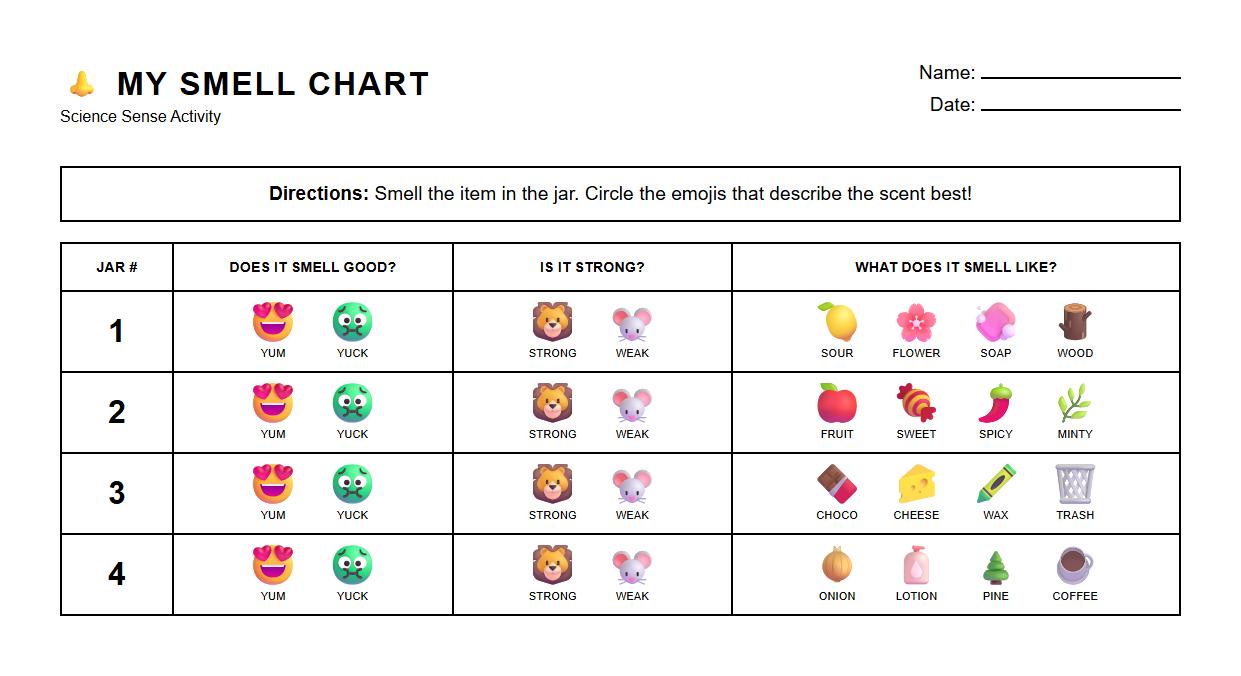
Smell Identification Chart Using Scent Descriptors

Download PDF     Pin it

Taste Classification Worksheet with Flavor Groups
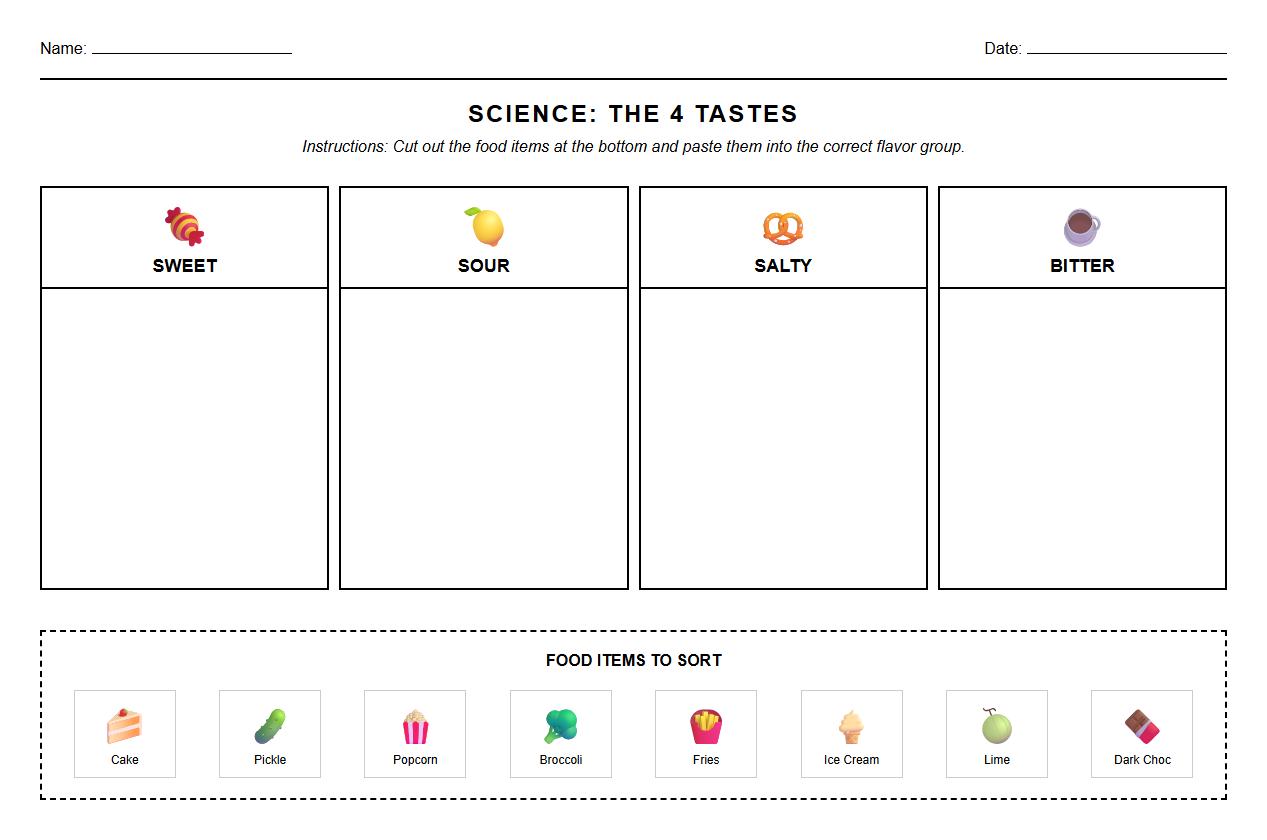
Taste Classification Worksheet with Flavor Groups

Download PDF     Pin it

Five Senses Scavenger Hunt Chart for Data Collection
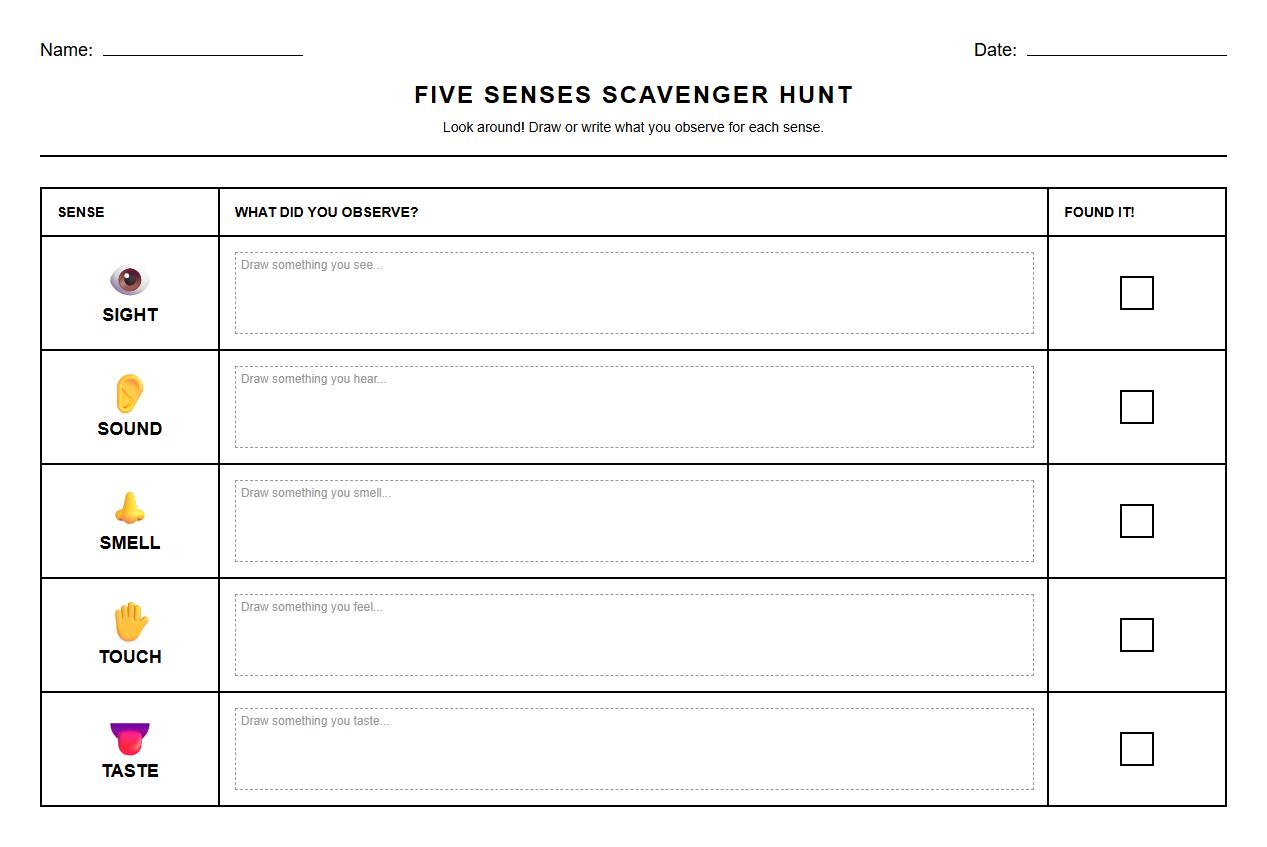
Five Senses Scavenger Hunt Chart for Data Collection

Download PDF     Pin it

Sensory Observation Journal with Sentence Starters
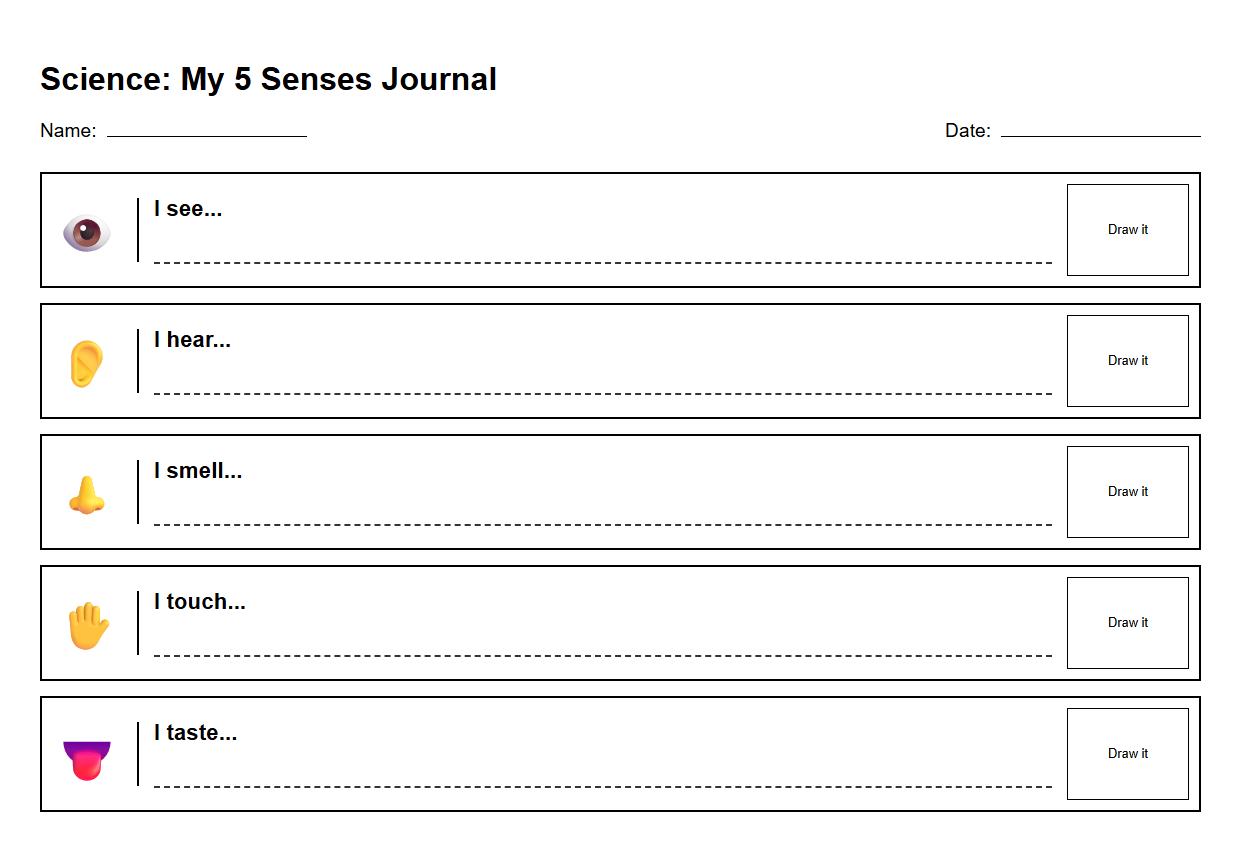
Sensory Observation Journal with Sentence Starters

Download PDF     Pin it

Science Data Table for Recording Observed Sensory Details
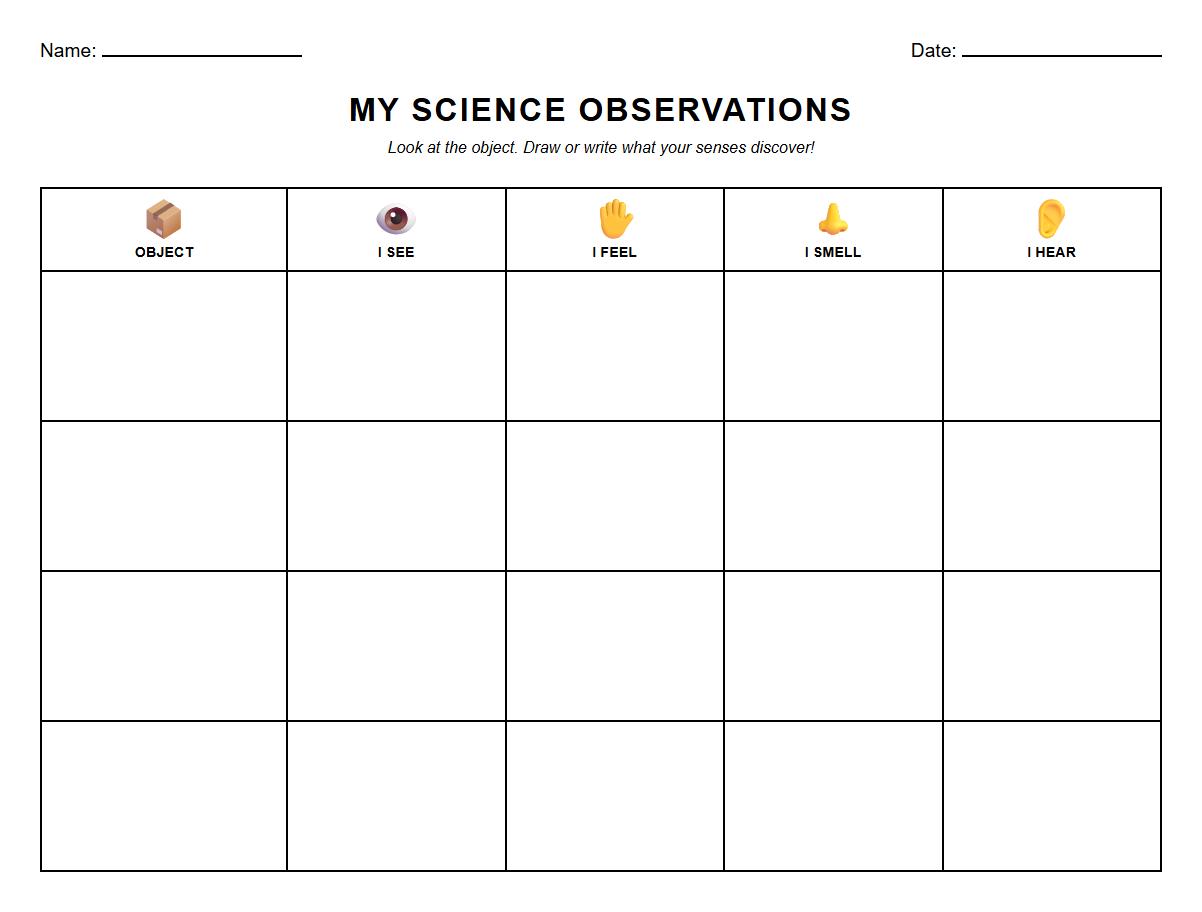
Science Data Table for Recording Observed Sensory Details

Download PDF     Pin it

Observing Your Environment

Encourage children to explore what they see around them, both inside the classroom and outdoors. Noticing the shapes, colors, and sizes of objects helps develop visual awareness. Ask them to describe their surroundings to strengthen their observation skills. This activity fosters curiosity and connection with their environment.

Listening to Sounds

Guide children to listen carefully to the sounds around them, such as birds chirping or footsteps. Identifying these sounds sharpens their auditory senses. Quiet moments help children focus and become more aware of subtle noises. Listening exercises build concentration and auditory discrimination.

Exploring Touch and Texture

Invite children to touch different objects and describe how they feel, whether smooth, rough, soft, or hard. This tactile experience enhances their sense of touch and vocabulary. Comparing textures encourages sensory exploration and fine motor skills. Hands-on activities create meaningful learning connections.

Noticing Smells

Help children recognize various smells in their surroundings, like flowers or food aromas. Discussing scents promotes sensory awareness and descriptive language. This sense often connects to memories and emotions, making it a powerful learning tool. Smell exploration adds depth to the sensory experience.

Tasting Different Foods

Encourage children to try different foods and notice the range of tastes they experience, such as sweet, sour, or salty. Tasting activities expand their palate and sensory knowledge. Talking about flavors supports language development and healthy eating habits. This sense helps children appreciate diversity in food.

Identifying Textures: Smooth and Rough

Challenge children to find objects that are smooth and those that are rough around them. Comparing these textures helps refine their tactile discrimination. This activity promotes attention to detail and descriptive skills. It also encourages exploration and discovery.

Recognizing Common Colors

Ask children to observe and name the most common colors they see in the classroom. Color recognition supports cognitive development and visual processing. Using colors in activities boosts creativity and expression. This practice helps children categorize and describe their world.

Identifying the Quietest Sound

Invite children to become aware of the quietest sound they can hear at the moment, fostering mindfulness and focus. This exercise enhances auditory sensitivity and patience. It also teaches children to appreciate silence and subtle sounds. Quiet listening strengthens concentration skills.

Feeling the Weather on Skin

Encourage children to notice how the weather feels on their skin, such as warmth, coolness, or breeze. This sensory input helps them connect with nature and seasons. Discussing weather sensations builds vocabulary and environmental awareness. It supports emotional regulation through sensory grounding.

Using Senses to Explore Nature

Ask children which sense they use most when exploring nature, promoting self-awareness. Encouraging multi-sensory exploration deepens their understanding of the natural world. This reflection helps develop observation and critical thinking skills. Engaging all senses creates a rich learning experience.


More in Science Category


About the author. Nylen Smith is a dedicated educator and cofounder of KWorksheet.com, a popular platform specializing in high-quality kindergarten worksheets and printable activities.

Disclaimer. The information provided in this document is for general informational purposes and/or document sample only and is not guaranteed to be factually right or complete. Please report to us via contact-us page if you find and error in this page, thanks.

Comments

No comment yet