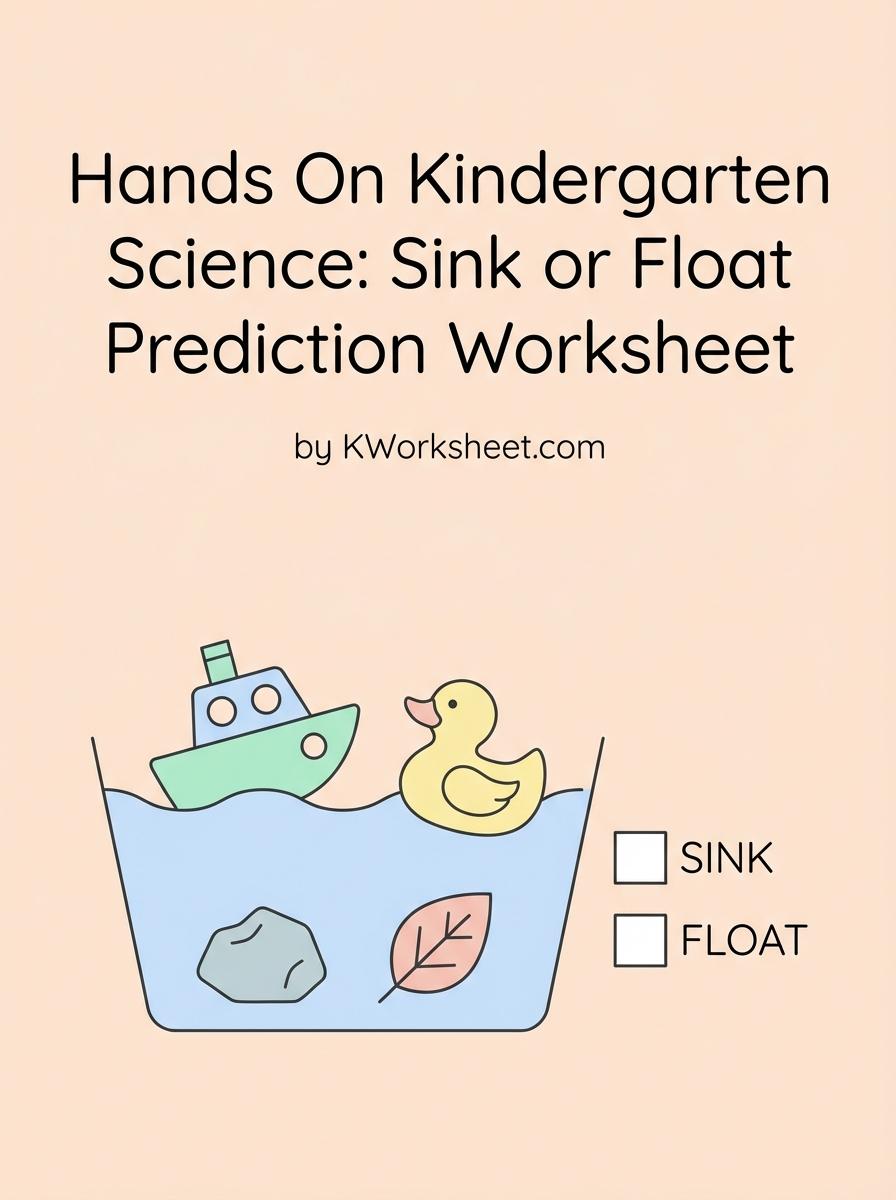
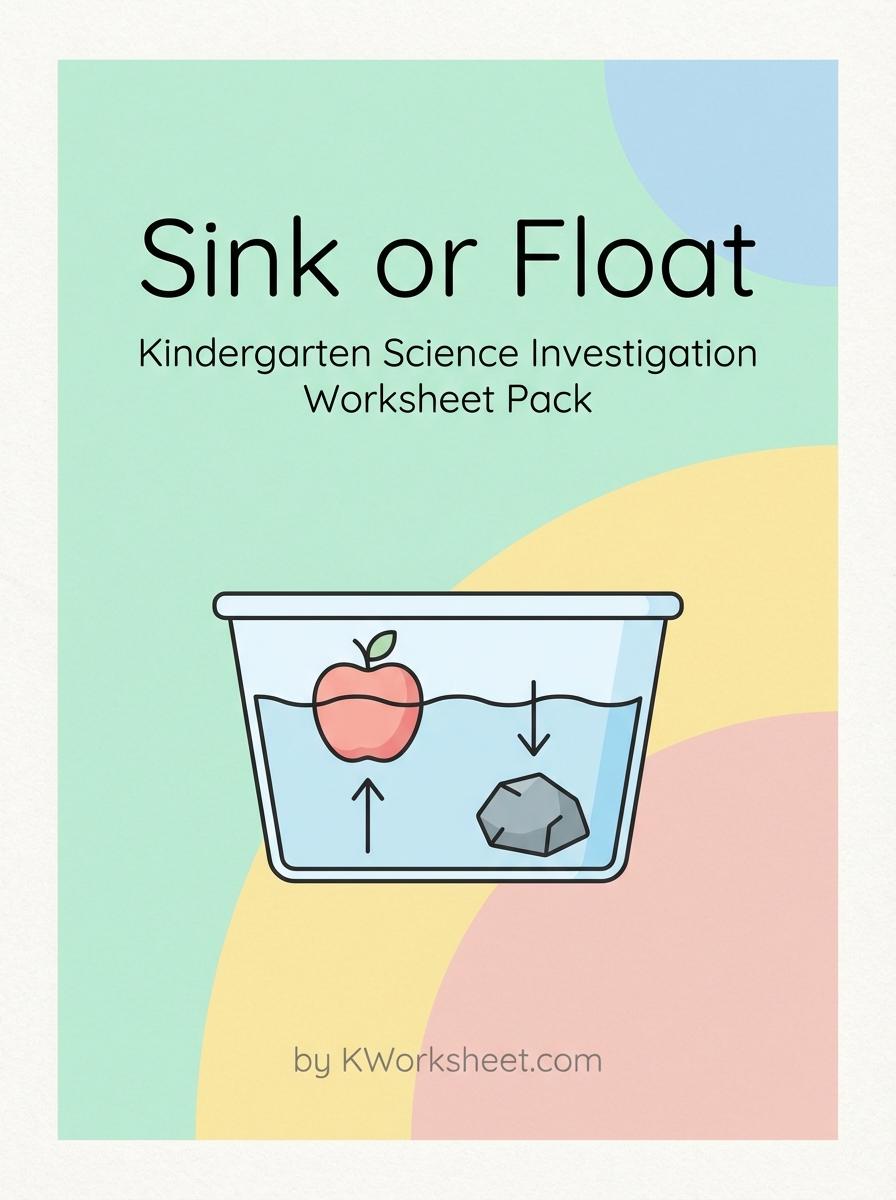
Sink or Float Kindergarten Science Investigation Worksheet Pack

📅 May 17, 2025 👤 Nylen Smith

Explore the fundamental principles of buoyancy with the Sink or Float Kindergarten Science Investigation Worksheet Pack, designed to engage young learners in hands-on experiments that develop critical thinking and observation skills. This pack encourages children to predict, test, and record the outcomes of various objects in water, fostering curiosity and scientific inquiry. Discover fun and educational activities by checking out the available worksheets now.

Sink or Float Phonics Vocabulary Matching Worksheet
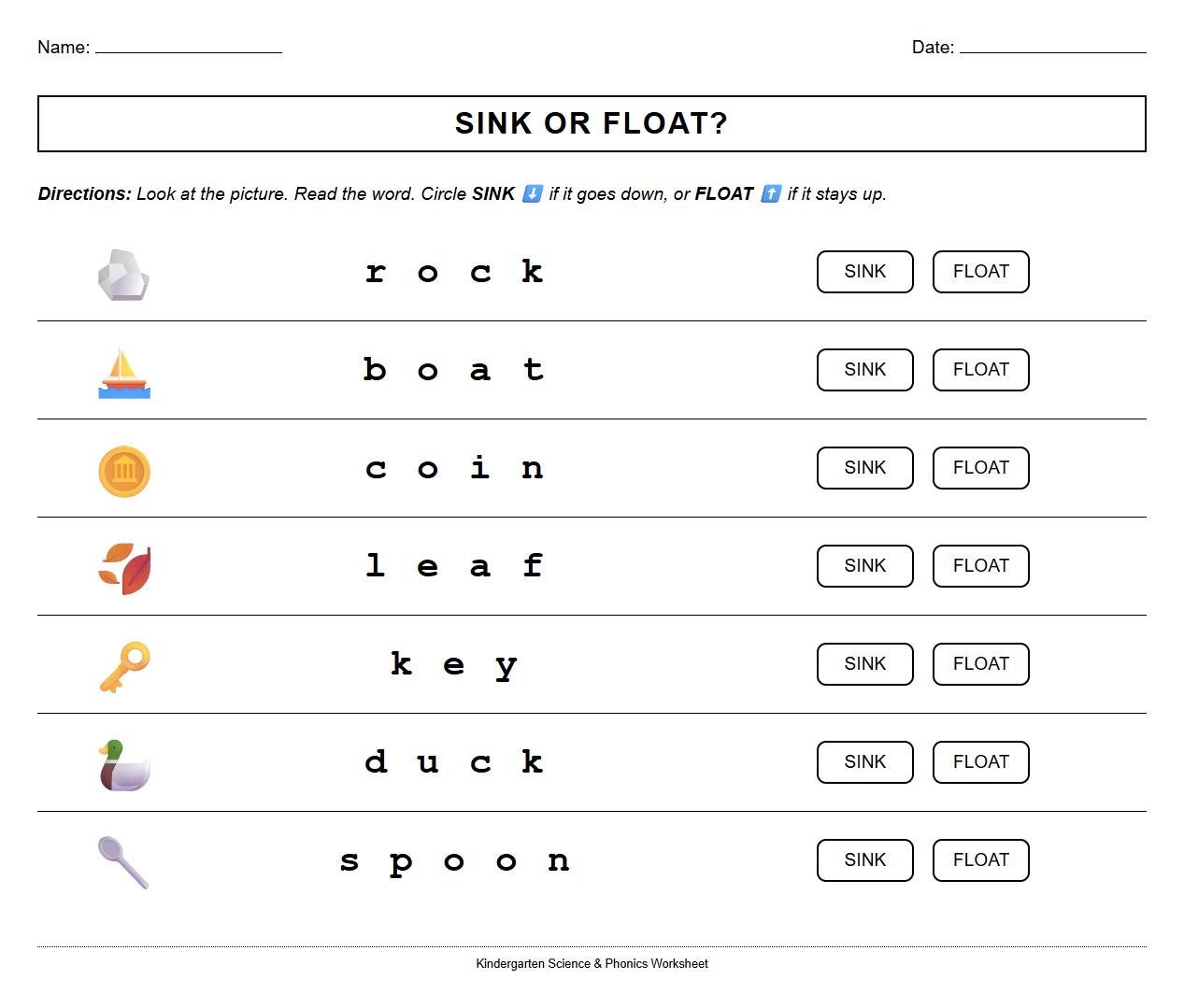
Sink or Float Phonics Vocabulary Matching Worksheet

Download PDF     Pin it

Science Investigation Chart for Sink or Float Predictions
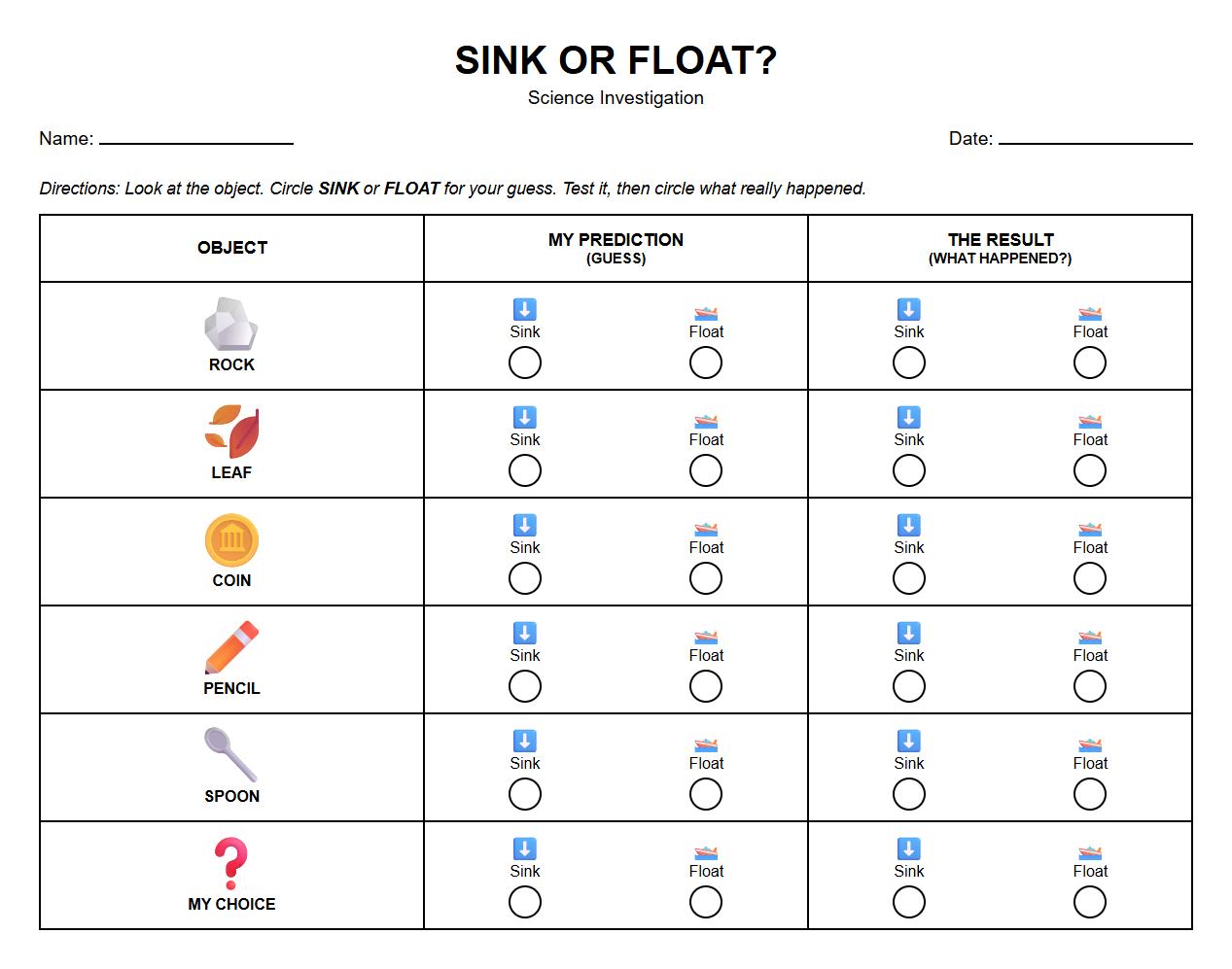
Science Investigation Chart for Sink or Float Predictions

Download PDF     Pin it

Object Classification and Sorting Worksheet Sink or Float
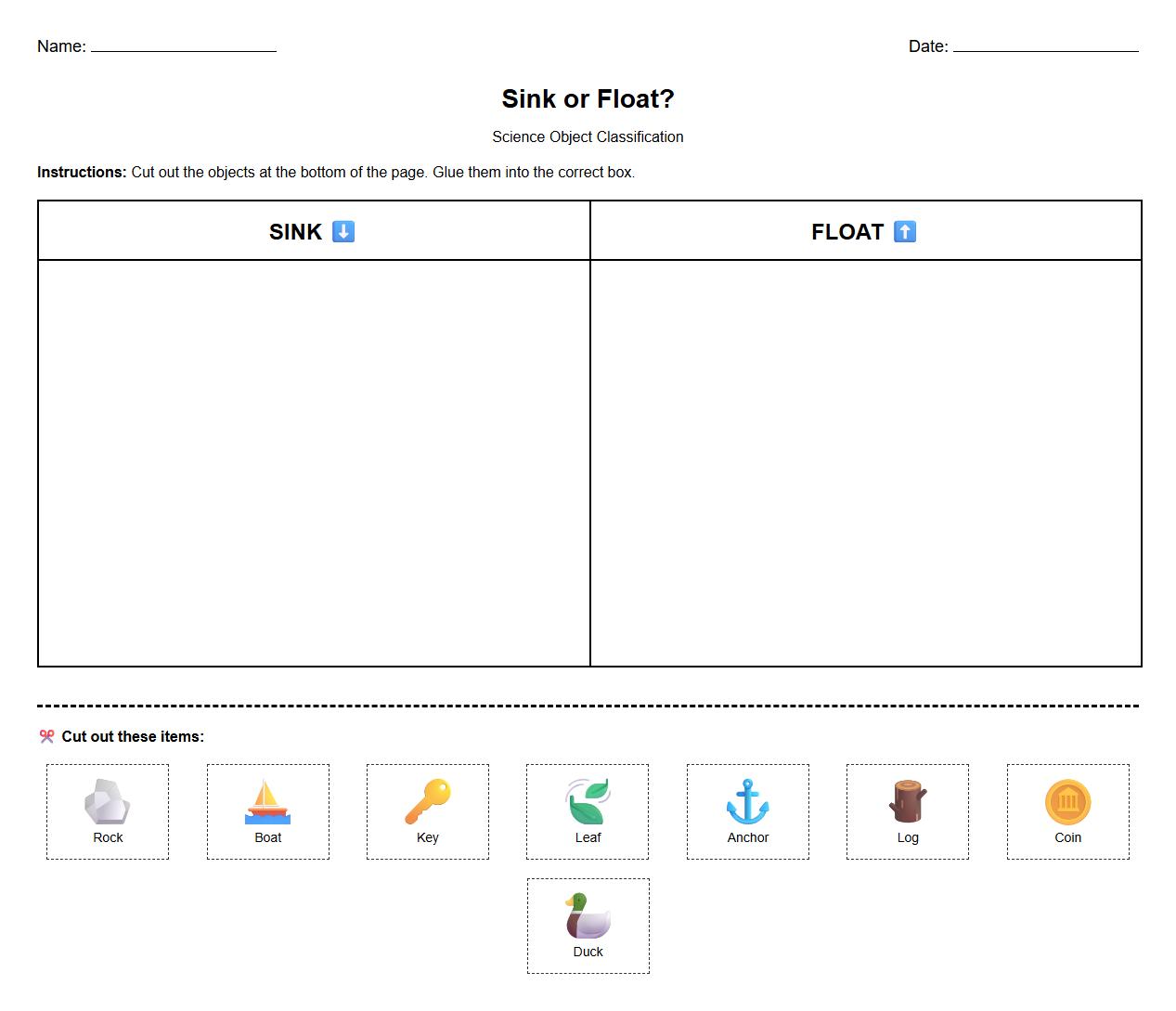
Object Classification and Sorting Worksheet Sink or Float

Download PDF     Pin it

Data Recording Graph Worksheet for Sink or Float Results
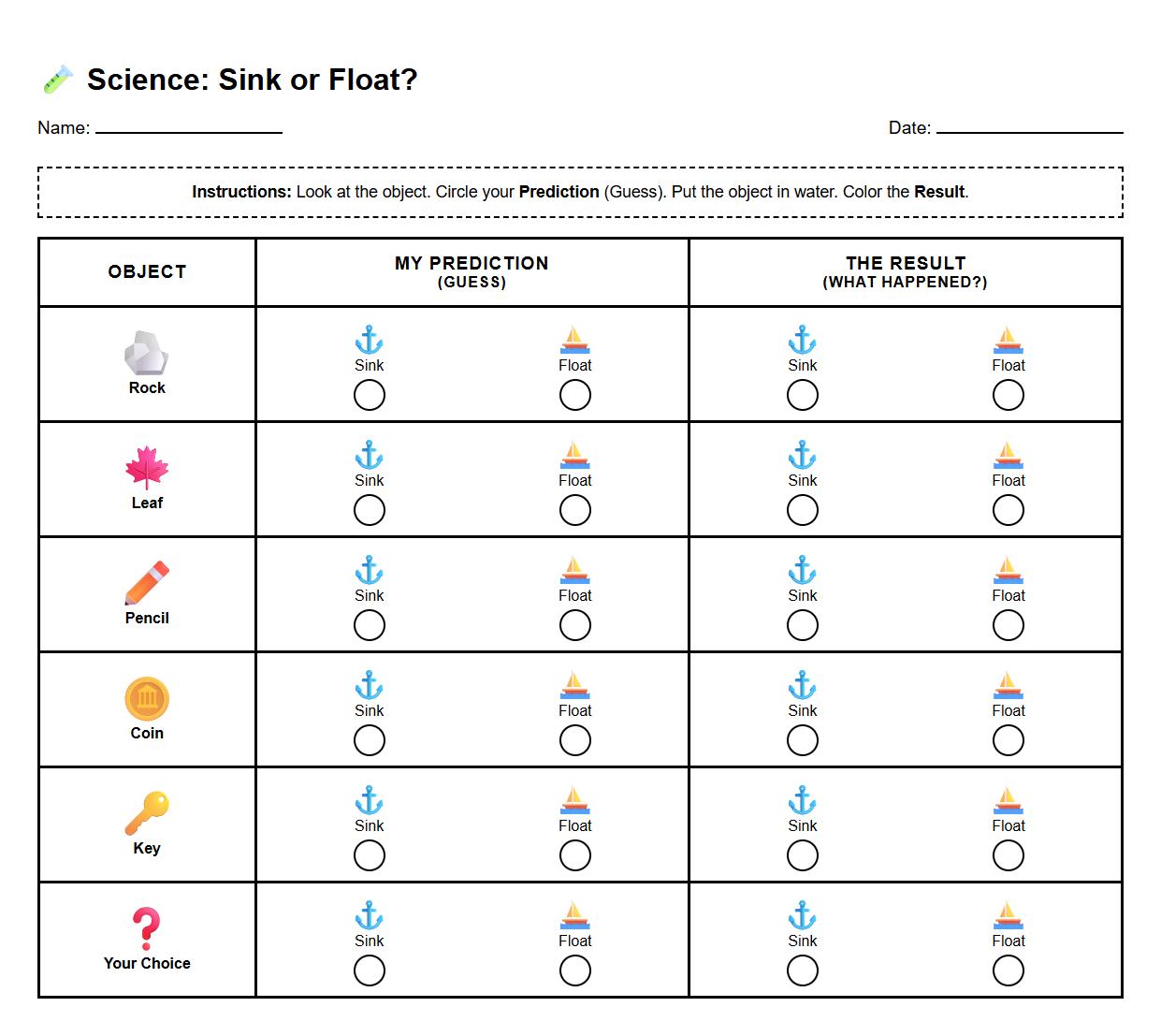
Data Recording Graph Worksheet for Sink or Float Results

Download PDF     Pin it

Hands on Inquiry Based Sink or Float Activity Sheet
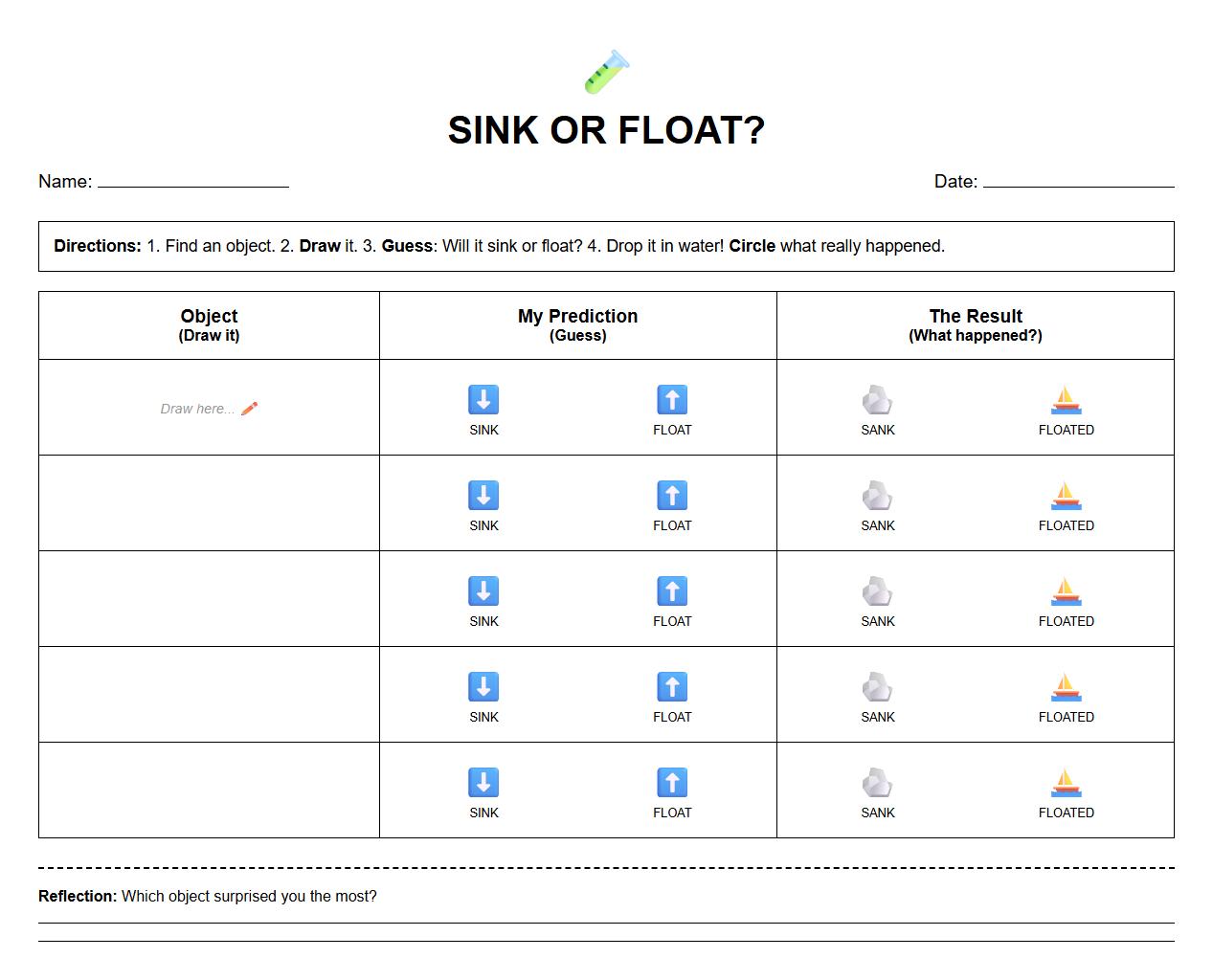
Hands on Inquiry Based Sink or Float Activity Sheet

Download PDF     Pin it

Cut and Paste Sink or Float Properties Worksheet
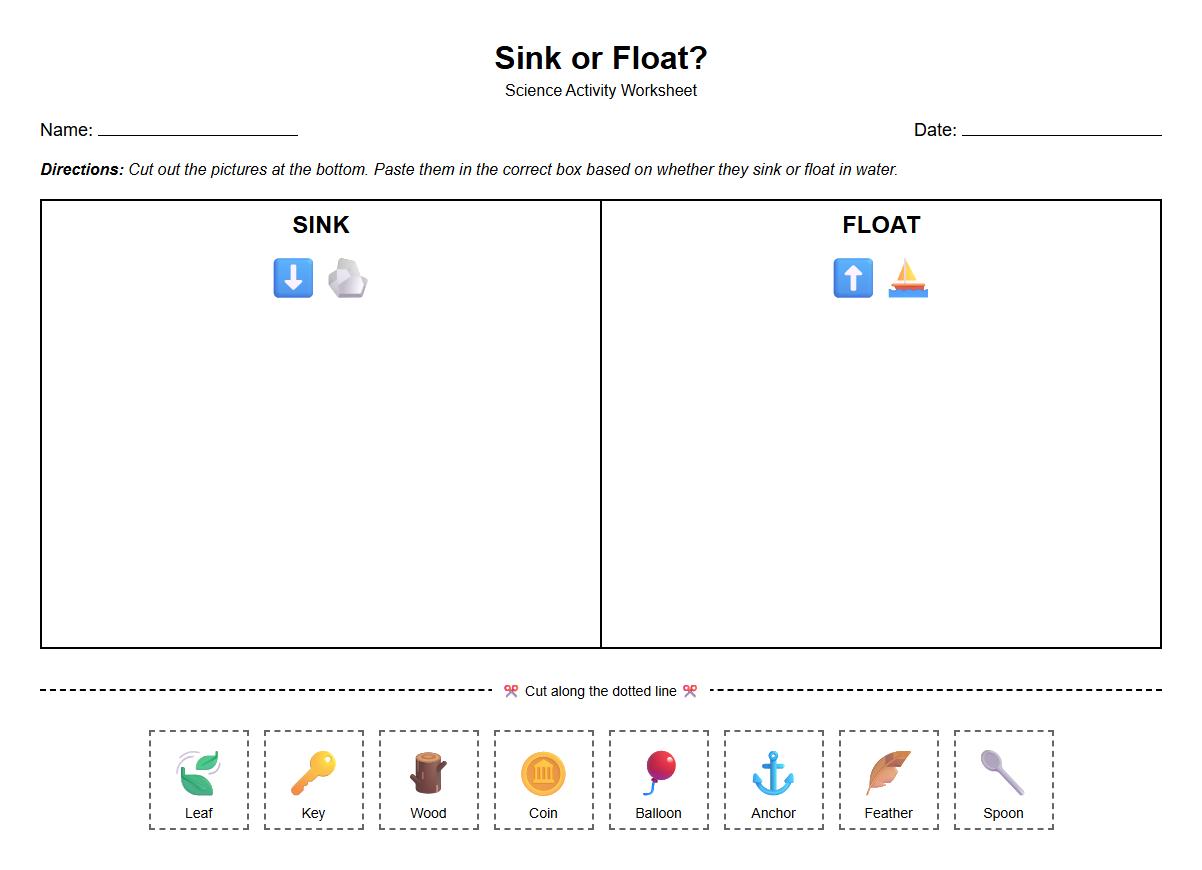
Cut and Paste Sink or Float Properties Worksheet

Download PDF     Pin it

Water Density and Buoyancy Science Investigation Template
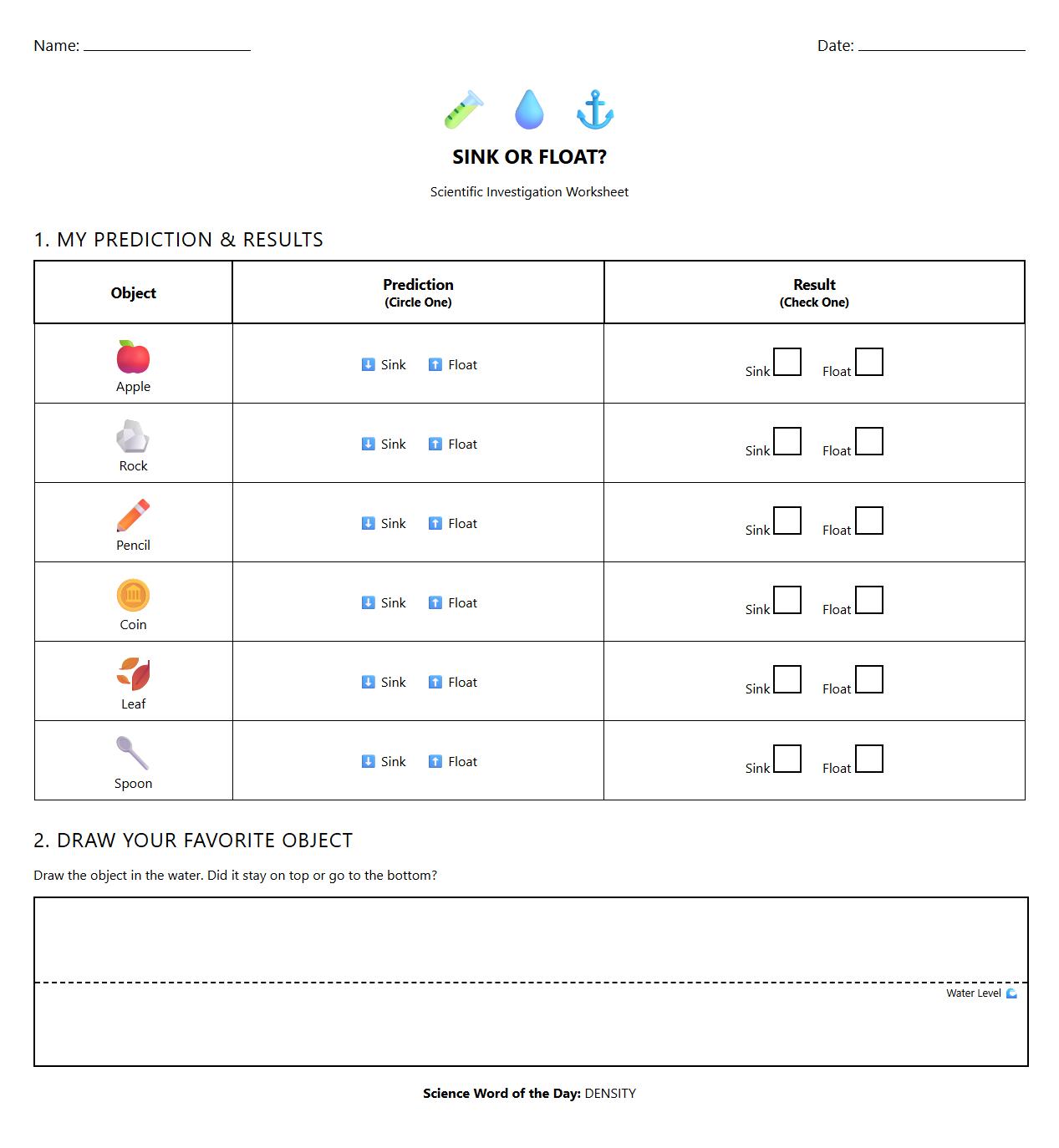
Water Density and Buoyancy Science Investigation Template

Download PDF     Pin it

Hypothesis Formation Worksheet for Sink or Float Experiment
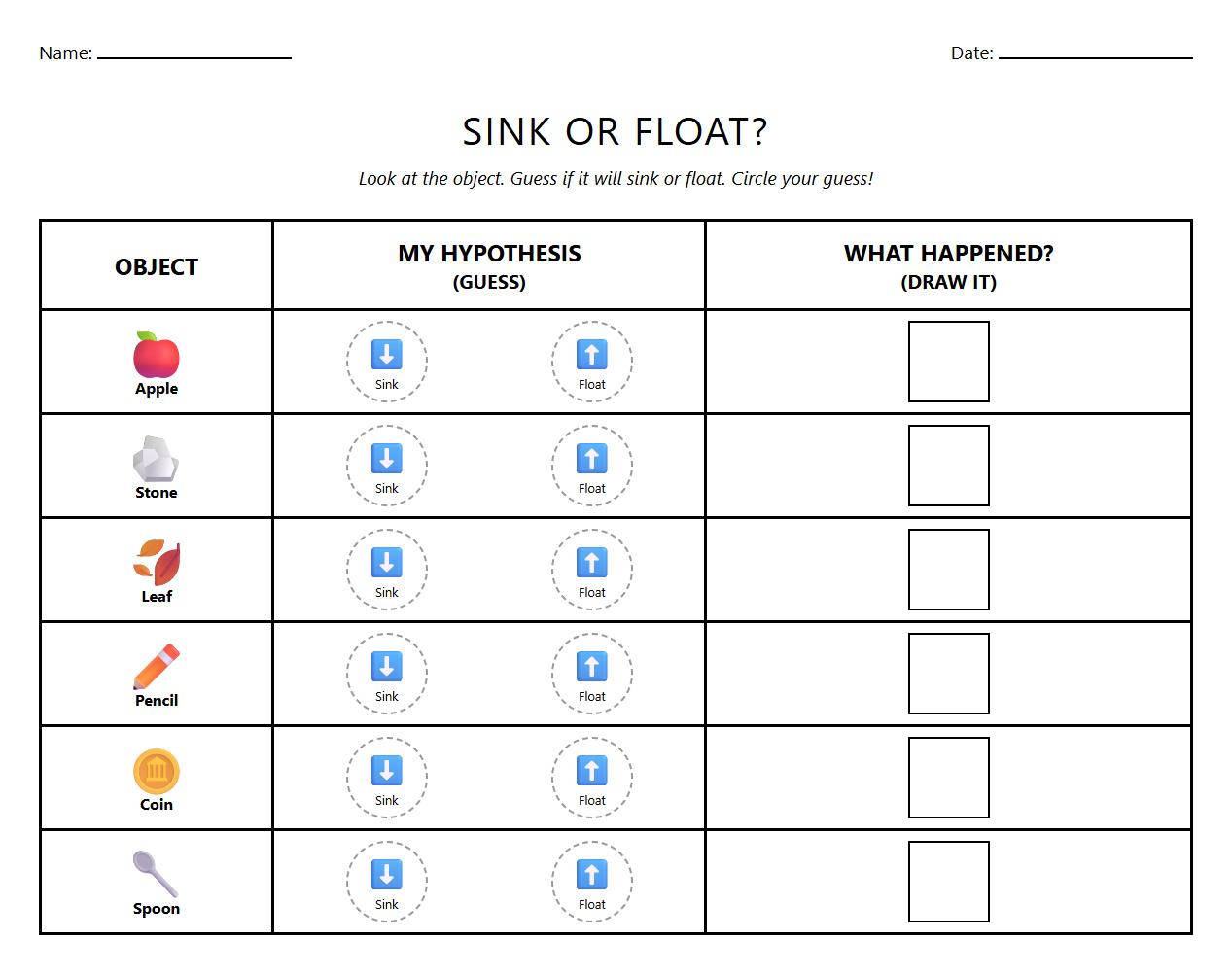
Hypothesis Formation Worksheet for Sink or Float Experiment

Download PDF     Pin it

Visual Observation Recording Sheet for Kindergarten Science
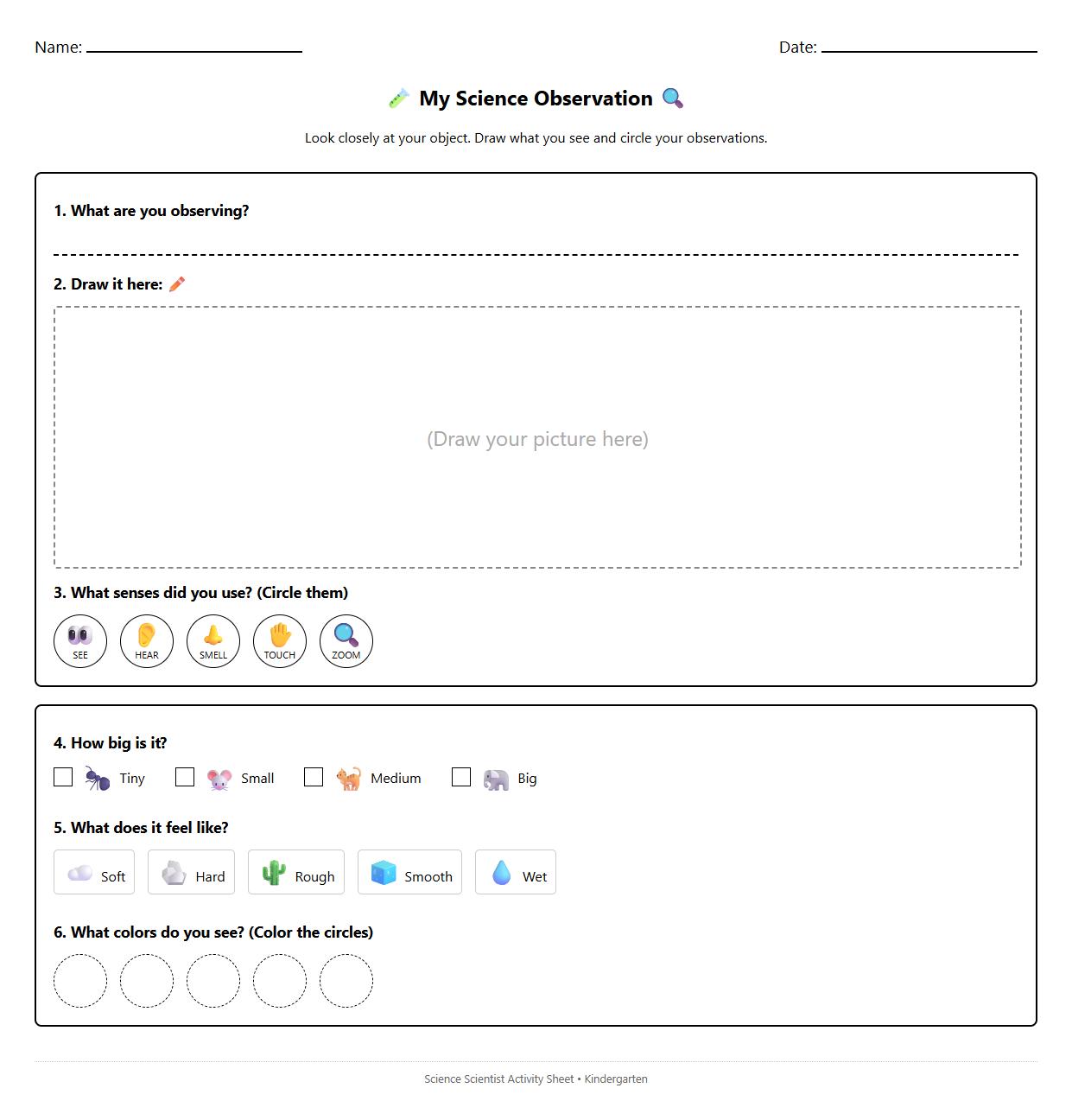
Visual Observation Recording Sheet for Kindergarten Science

Download PDF     Pin it

Scientific Reasoning Worksheet Using Sink or Float Scenarios
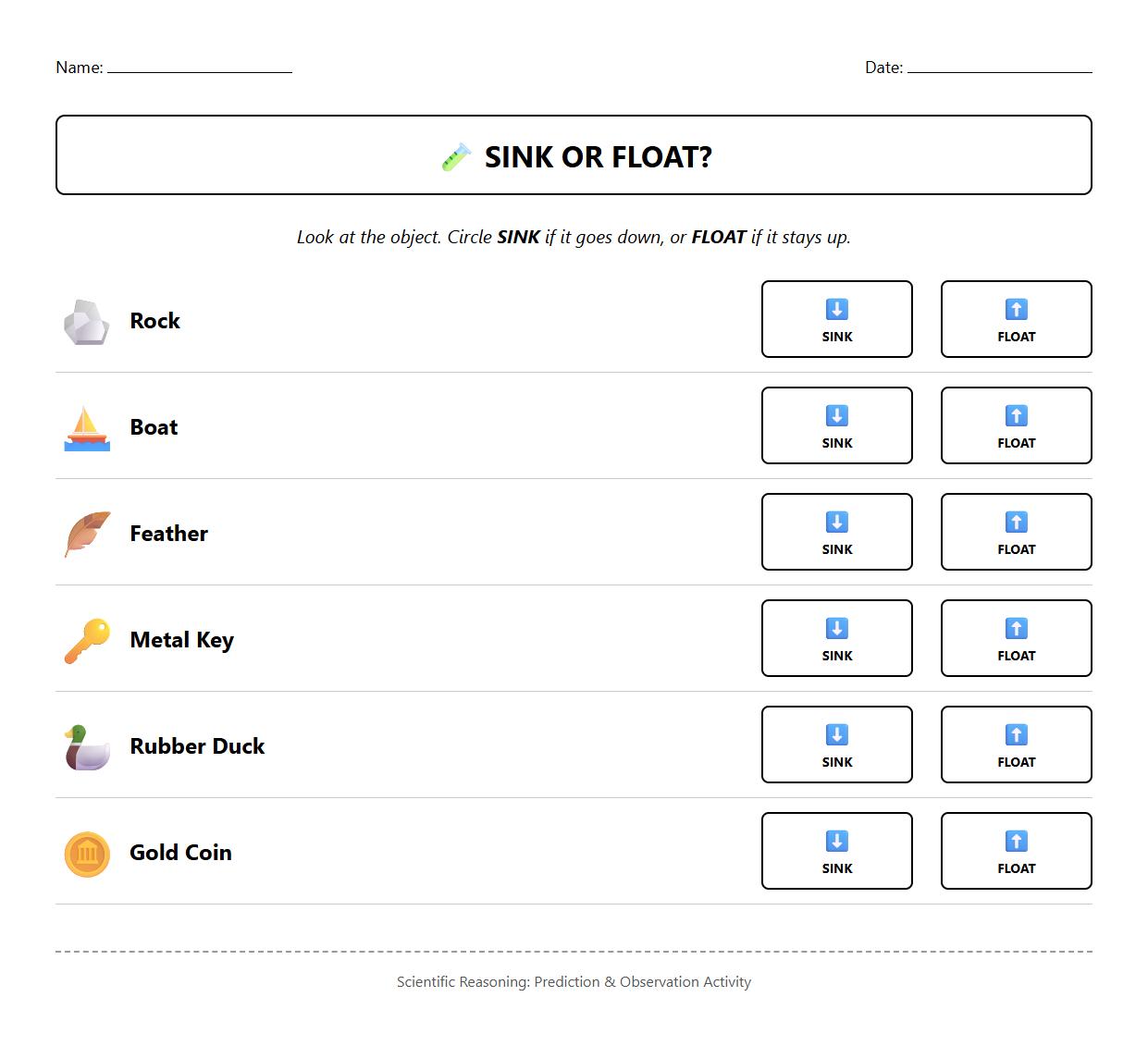
Scientific Reasoning Worksheet Using Sink or Float Scenarios

Download PDF     Pin it

Objects That Float in Water

During our investigation, some common objects that float include corks, plastic toys, and leaves. These items are less dense than water, allowing them to stay on the surface. Teachers and parents can encourage children to explore various safe household objects to observe their buoyancy. This hands-on activity helps kids understand the concept of floating in a fun way.

Items Predicted to Sink

Many children predict that heavy items like coins, rocks, or metal keys will sink in water. This is because these objects are denser than water. Encouraging predictions supports critical thinking and helps kids test their hypotheses through experimentation. It also reinforces the scientific method of making and testing predictions.

Effect of Shape on Floating or Sinking

The shape of an object greatly affects whether it sinks or floats. Objects with flat or wider bases tend to float better because they displace more water. For example, a paper boat floats even though the paper is heavy when folded correctly. This concept teaches children how design impacts buoyancy.

Drawing a Picture of Something That Floats

Children can express their understanding by drawing pictures of floating objects like boats, ducks, or balloons. Drawing helps solidify their learning and allows them to communicate ideas creatively. Parents and teachers should encourage detailed illustrations to foster observation skills. These drawings also serve as a visual record of the investigation.

Why Some Heavy Things Float and Some Light Things Sink

Some heavy objects float because their overall density is less than water, like boats made of metal that are hollow inside. Conversely, some light things may sink if they are dense, like small rocks or metal balls. Understanding density rather than just weight is key to learning this principle. This explanation introduces children to basic physical science.

Favorite Object to Test in the Experiment

Many kids find testing objects like rubber ducks or plastic bottles to be their favorite part of the experiment. These items often float and are visually appealing, keeping children engaged. Parents and teachers can ask children what they liked best to encourage communication and reflection. This also helps to reinforce the learning experience.

How to Tell if Something Will Sink Before Testing

We can often estimate if an object will sink by considering its weight and material. Objects that feel heavy and are made of metal or stone typically sink, while light and hollow items usually float. Making observations and predictions before testing promotes scientific thinking in young learners. This skill develops early critical reasoning abilities.

Materials Most Likely to Float

Materials like wood, plastic, and foam are most likely to float because they have low density. These materials displace enough water to keep them afloat. Teachers can guide children to test different materials safely to see this principle in action. This knowledge helps students understand material properties.

Surprising Results from the Investigation

Sometimes children are surprised when objects they expected to sink actually float, like a large plastic container. These unexpected results spark curiosity and deeper questions. Celebrating surprises encourages a positive attitude towards scientific exploration. It shows that experiments can challenge our assumptions.

Designing Your Own Floating Object

Children can use their creativity to design objects that float by experimenting with shapes and materials. For example, making boats from cardboard or foil teaches them about buoyancy and engineering principles. This hands-on design activity fosters problem-solving and innovation skills. It encourages active learning through experimentation.


More in Science Category


About the author. Nylen Smith is a dedicated educator and cofounder of KWorksheet.com, a popular platform specializing in high-quality kindergarten worksheets and printable activities.

Disclaimer. The information provided in this document is for general informational purposes and/or document sample only and is not guaranteed to be factually right or complete. Please report to us via contact-us page if you find and error in this page, thanks.

Comments

No comment yet