Basic Hygiene Routine Chart Worksheet for Classroom Activity

📅 Apr 23, 2025 👤 Nylen Smith

Establishing a basic hygiene routine reinforces healthy habits and promotes personal well-being among students. This worksheet helps children identify essential hygiene practices through engaging activities designed for classroom interaction. Explore the available worksheets to support your students in developing consistent hygiene habits.

Daily Hygiene Routine Sequencing Phonics Worksheet
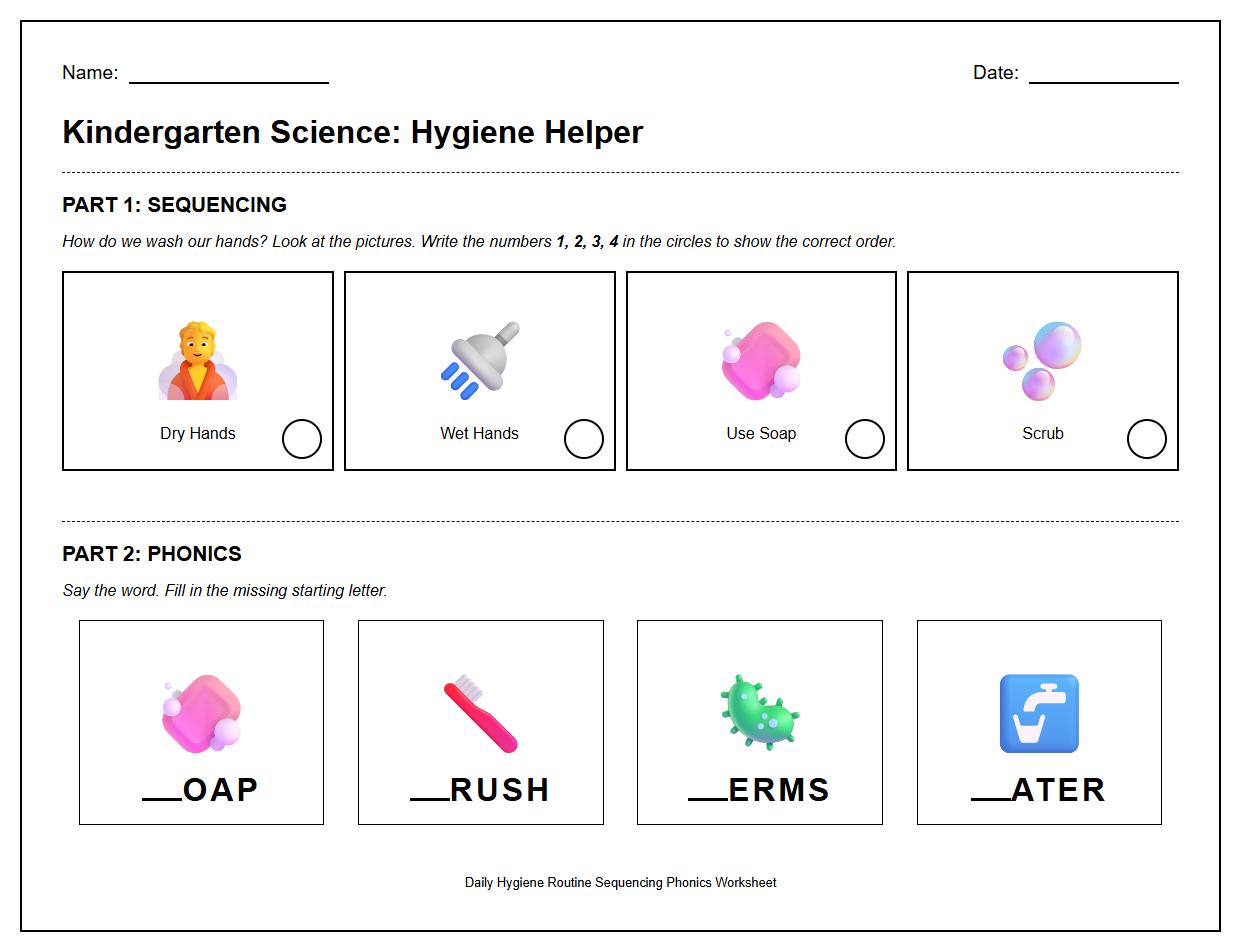
Daily Hygiene Routine Sequencing Phonics Worksheet

Download PDF     Pin it

Personal Hygiene Visual Steps Chart Worksheet
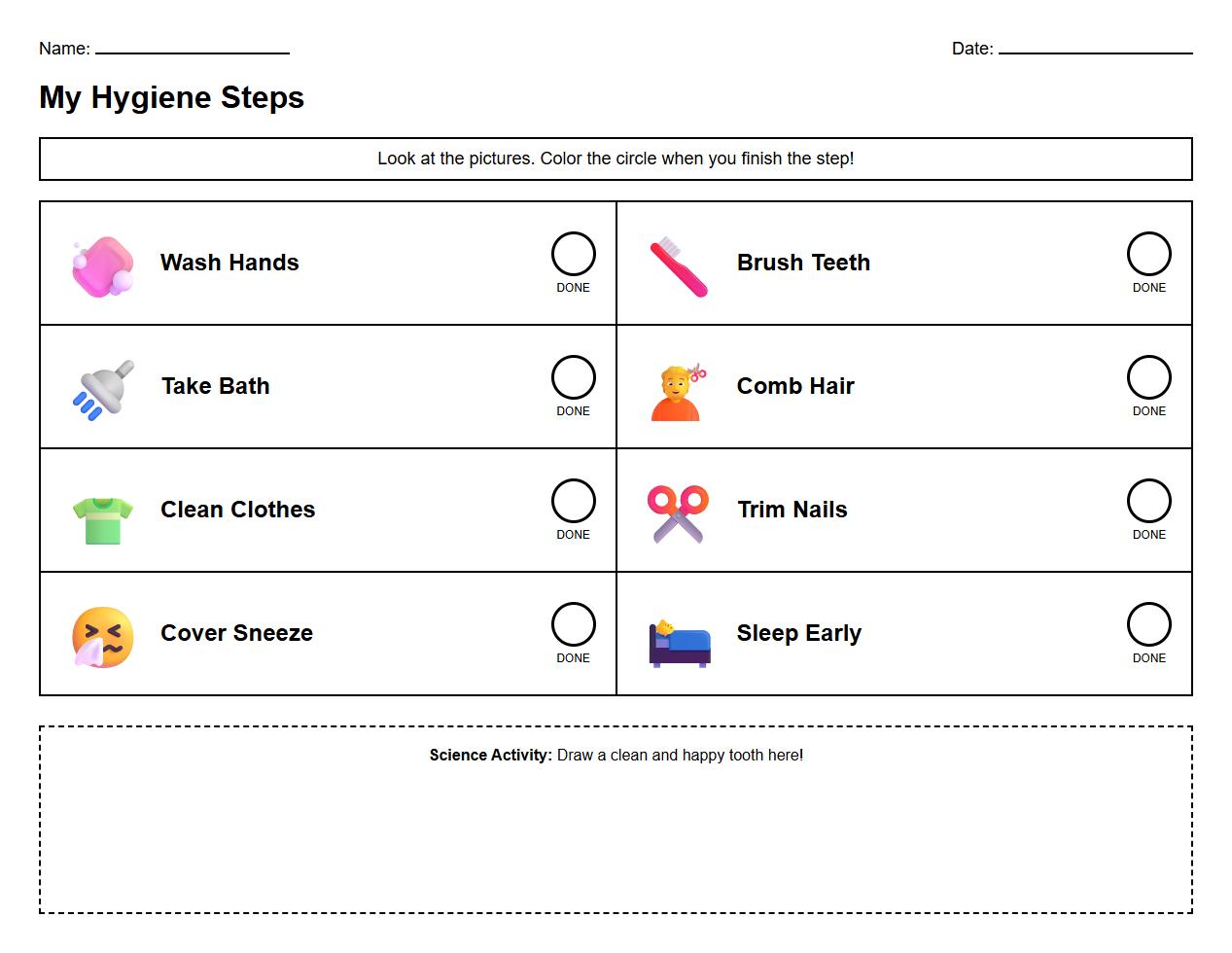
Personal Hygiene Visual Steps Chart Worksheet

Download PDF     Pin it

Oral Hygiene Practice Matching Worksheet
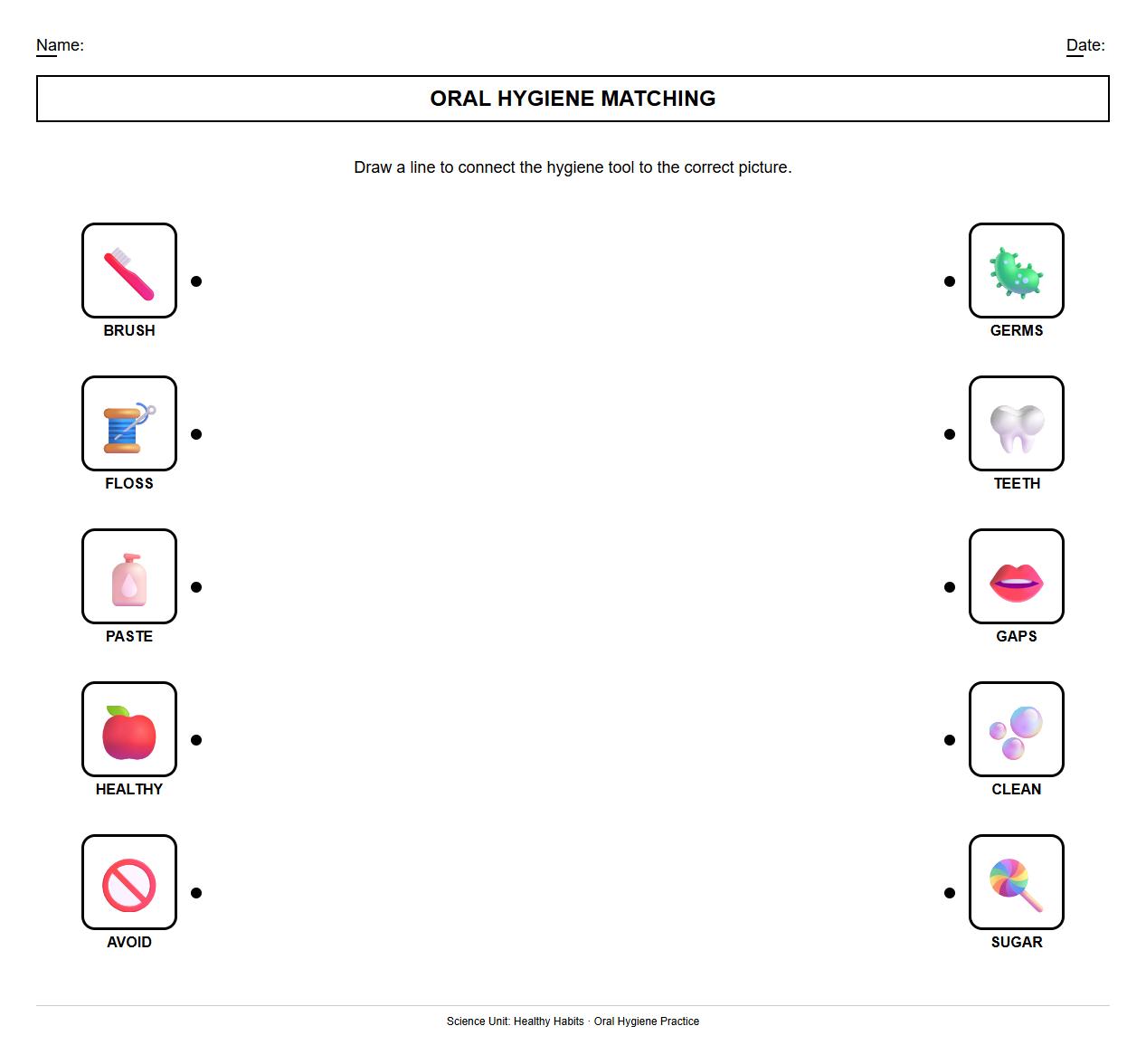
Oral Hygiene Practice Matching Worksheet

Download PDF     Pin it

Handwashing Routine Cut and Paste Activity Worksheet
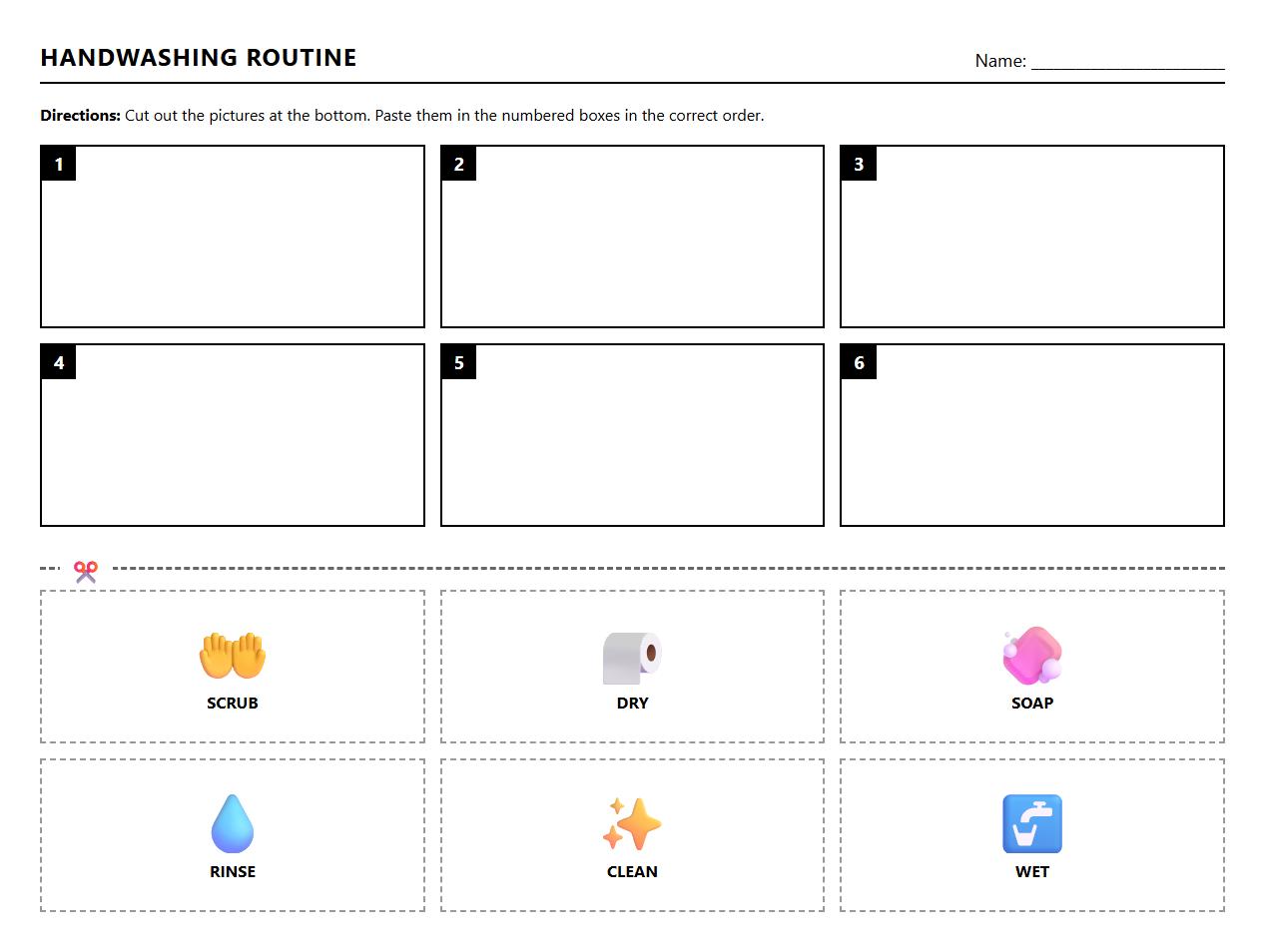
Handwashing Routine Cut and Paste Activity Worksheet

Download PDF     Pin it

Hygiene Habits Identification Phonics Worksheet
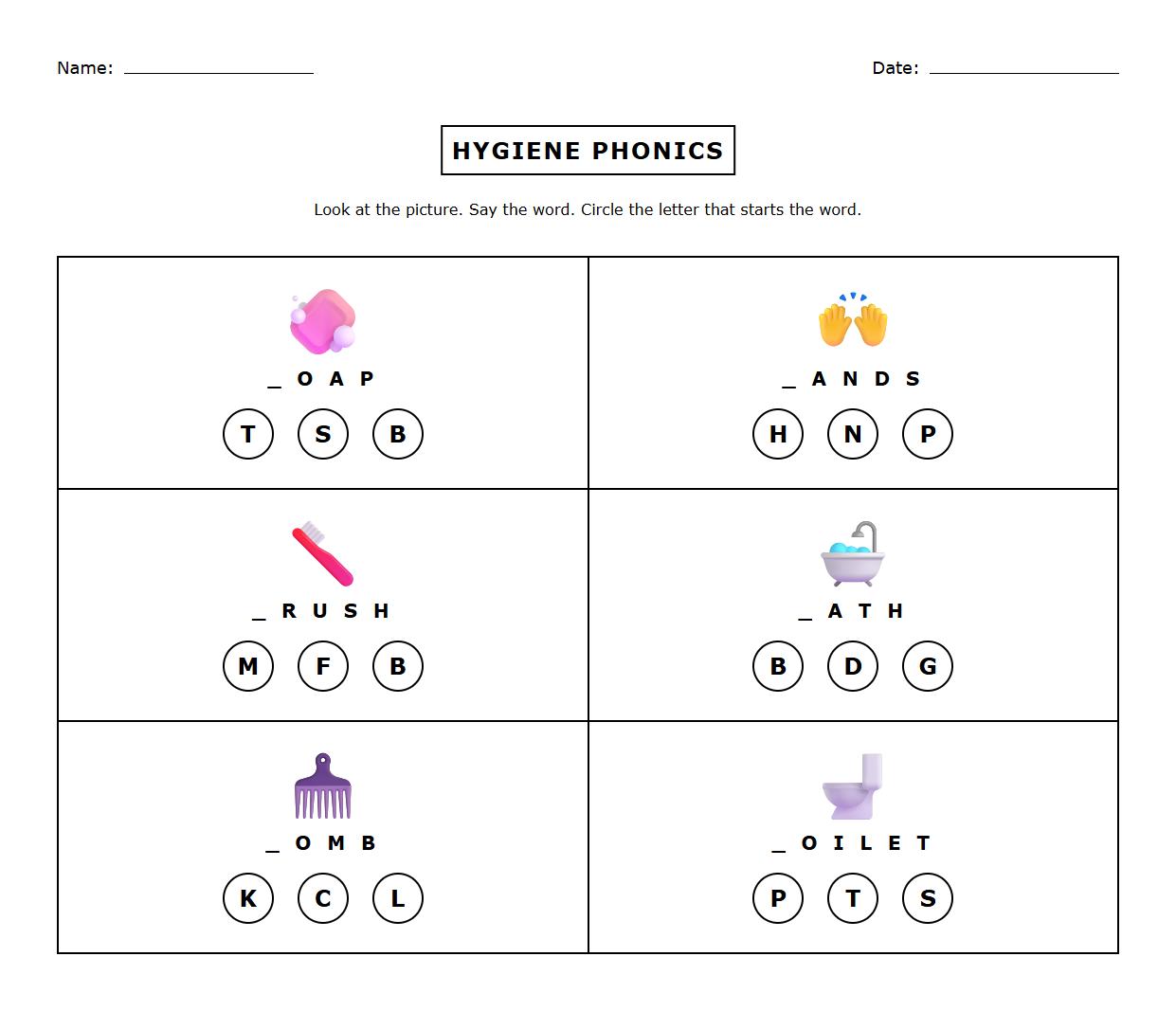
Hygiene Habits Identification Phonics Worksheet

Download PDF     Pin it

Morning and Evening Hygiene Checklist Worksheet
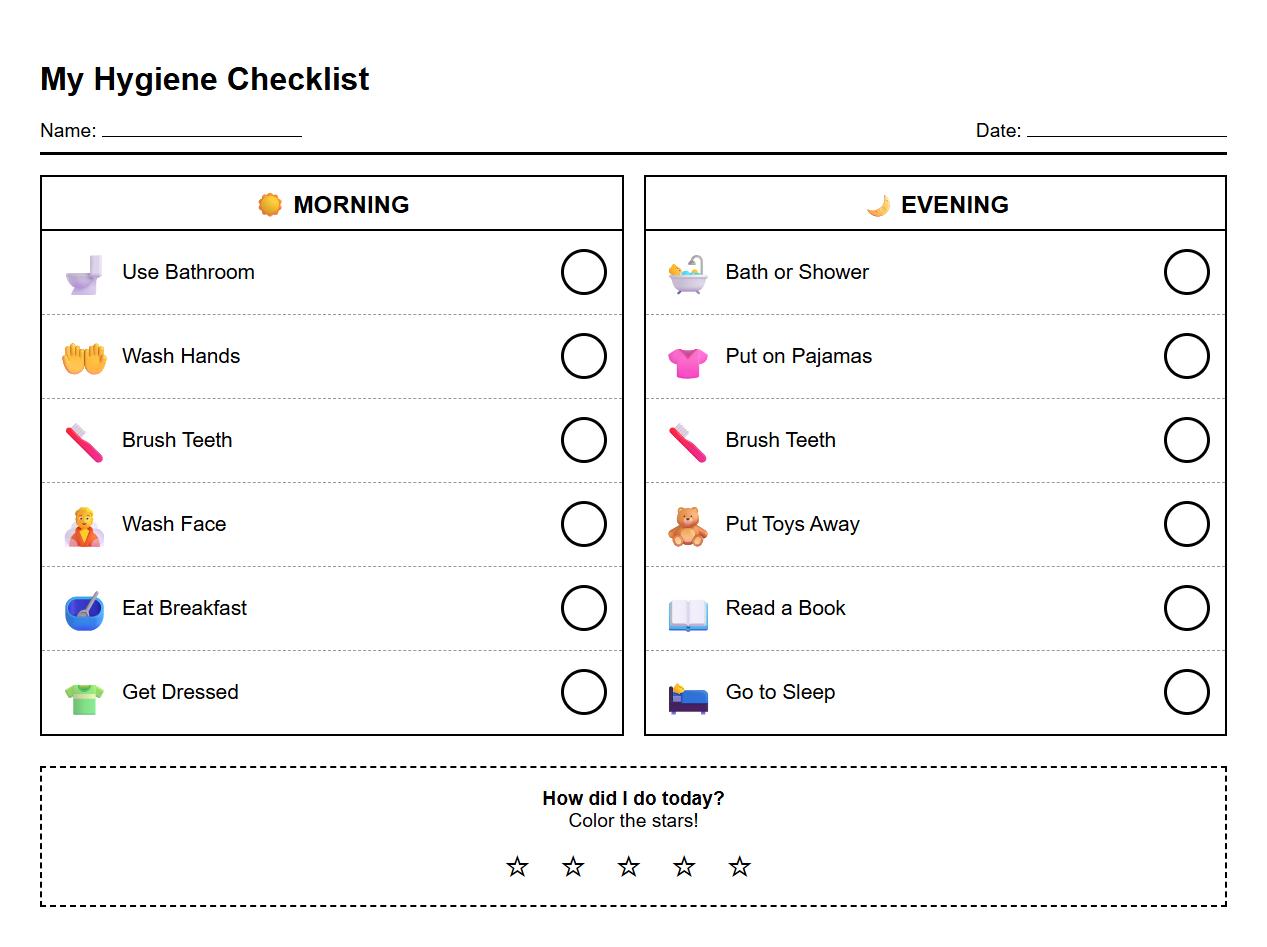
Morning and Evening Hygiene Checklist Worksheet

Download PDF     Pin it

Proper Toothbrushing Steps Visual Organizer Worksheet
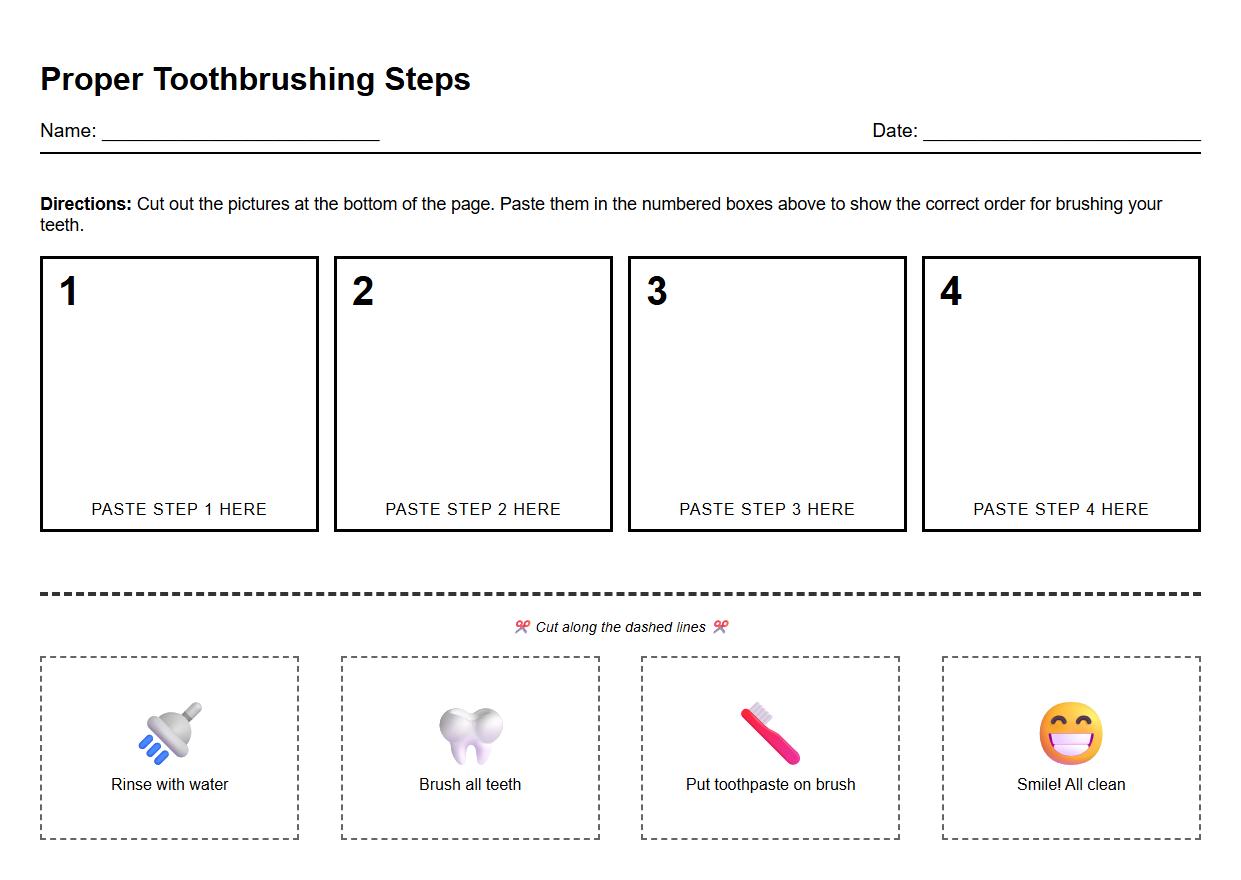
Proper Toothbrushing Steps Visual Organizer Worksheet

Download PDF     Pin it

Hygiene Supplies Picture Labeling Phonics Worksheet
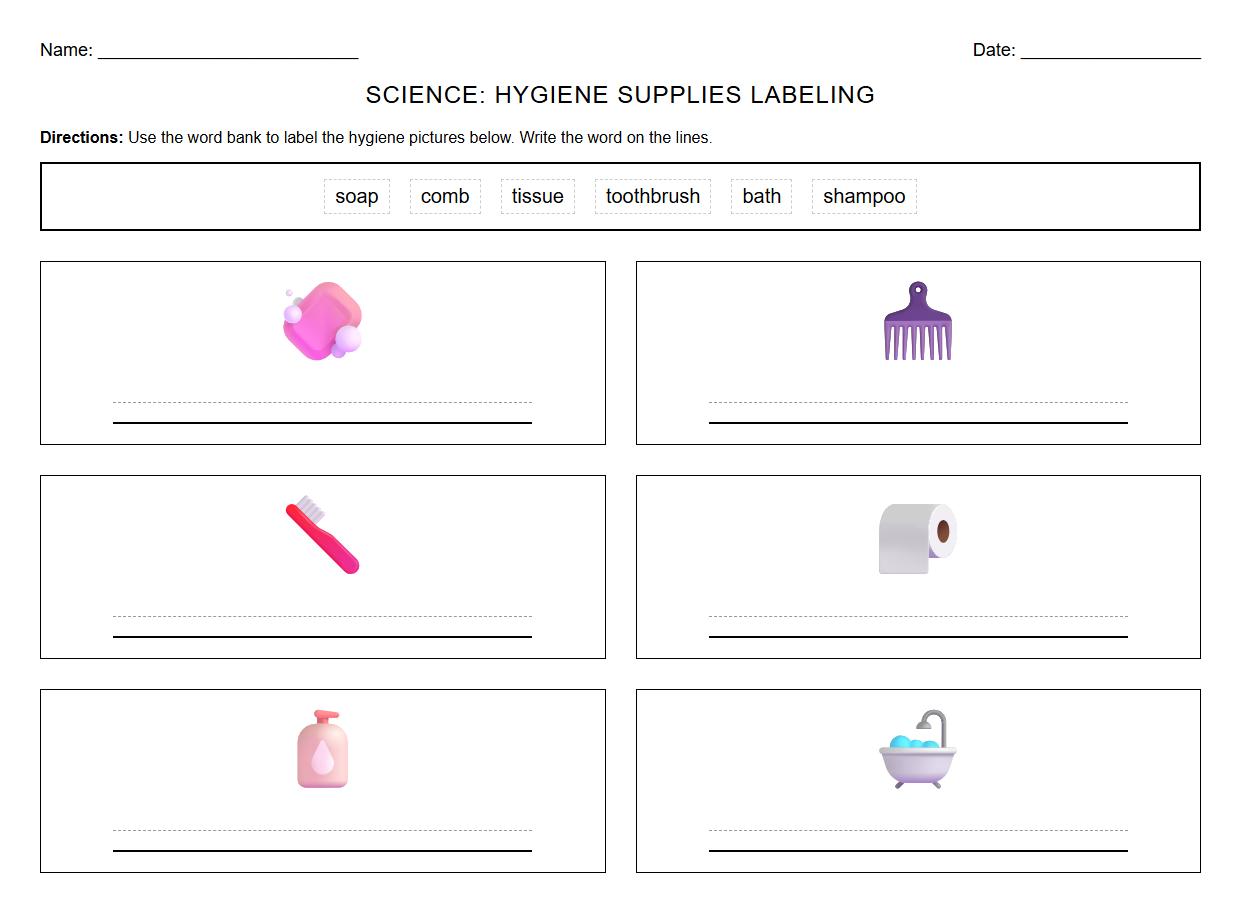
Hygiene Supplies Picture Labeling Phonics Worksheet

Download PDF     Pin it

Personal Care Routines Fill in the Blanks Worksheet
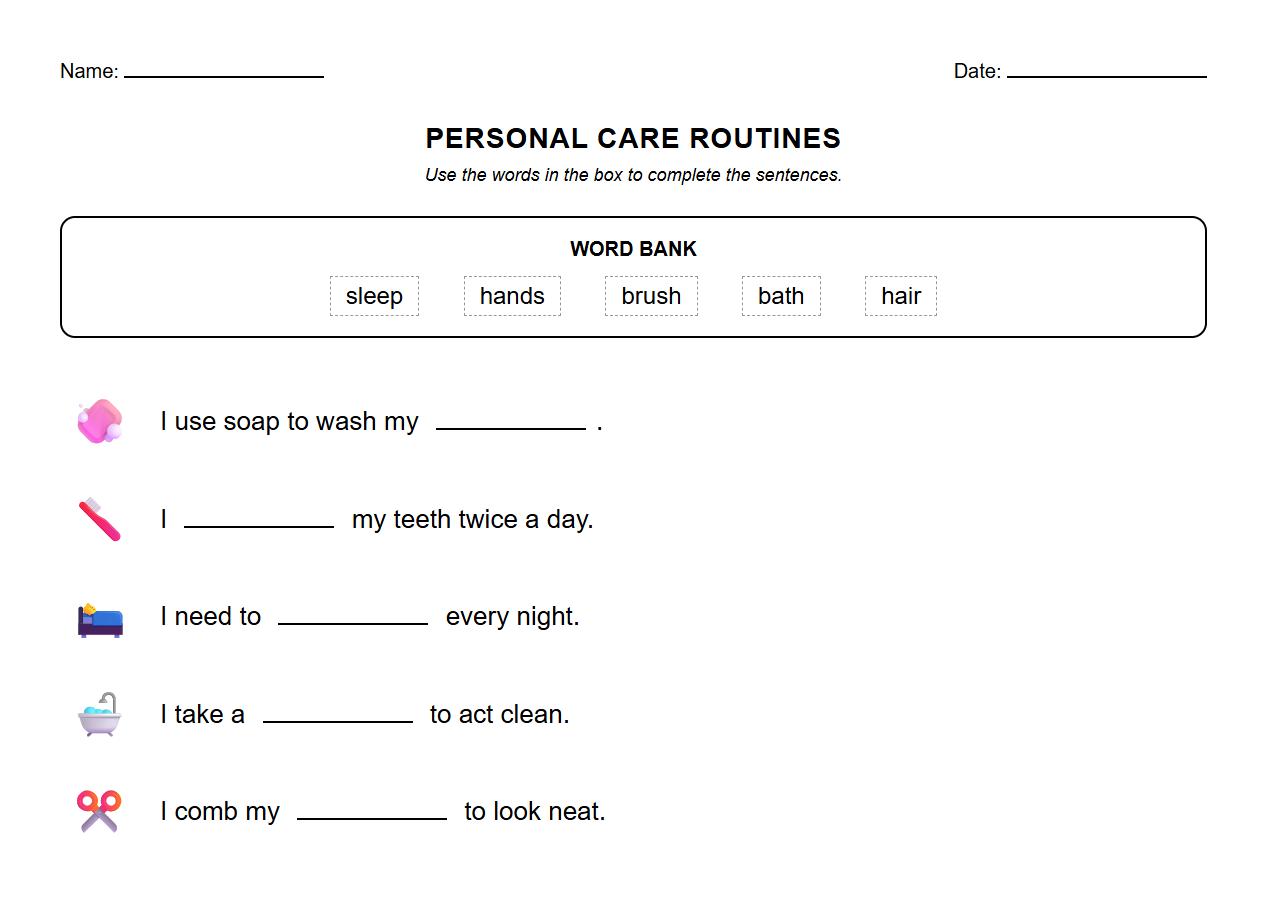
Personal Care Routines Fill in the Blanks Worksheet

Download PDF     Pin it

Classroom Hygiene Tools Categorization Worksheet
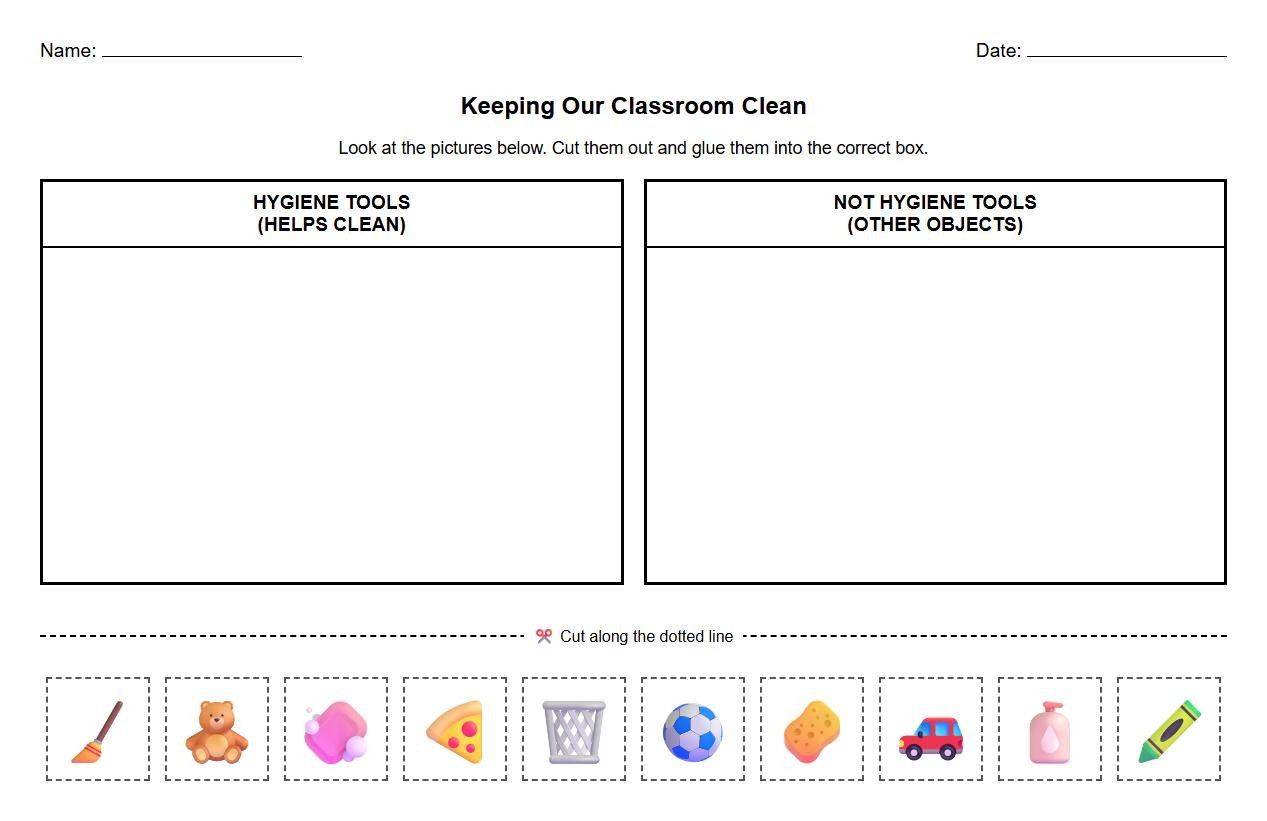
Classroom Hygiene Tools Categorization Worksheet

Download PDF     Pin it

Steps for Washing Your Hands Properly Before Eating

Start by wetting your hands with clean, running water. Apply soap and lather well, covering all surfaces including between fingers and under nails. Scrub your hands for at least 20 seconds before rinsing thoroughly. Finally, dry your hands with a clean towel or air dryer to keep them germ-free. For more about states of matter and cleanliness, see this states of matter worksheet.

How Many Times Should We Brush Our Teeth Every Day?

Children should brush their teeth twice a day--once in the morning and once before bed. Brushing helps remove food particles and plaque that cause cavities and gum disease. Use a fluoride toothpaste and teach proper brushing techniques for effective cleaning. Regular dental care promotes a healthy and bright smile.

What Should You Do After Sneezing or Coughing?

Always cover your mouth and nose with a tissue or your elbow when sneezing or coughing. Dispose of the used tissue immediately in a trash bin. Wash your hands thoroughly afterwards to prevent the spread of germs to others. Teaching this habit protects everyone in the classroom and at home. Learn about day and night differences to understand how germs can spread at all times.

Why Is It Important to Keep Your Nails Trimmed and Clean?

Keeping nails trimmed and clean helps prevent the buildup of dirt and germs. Dirty nails can transfer bacteria to your mouth or eyes, causing infections. Teach children to check and clean under their nails regularly. Well-maintained nails also reduce the risk of scratching oneself or others. Explore sink or float experiments to relate to cleanliness and observation.

When Should You Use a Tissue in the Classroom?

Use a tissue whenever you need to blow your nose, sneeze, or cough to catch germs. Always have tissues readily available in the classroom for easy access. After using a tissue, place it in a trash bin right away and wash your hands. This simple step helps keep the learning environment clean and healthy. For more on identifying needs, see animal needs worksheet.

How Do You Keep Your Classroom Tidy and Germ-Free?

Encourage children to put away toys and materials after use to maintain a tidy space. Regularly clean surfaces like desks, shelves, and door handles with disinfectant. Teach children to wash hands frequently and avoid sharing personal items. A clean classroom reduces the spread of germs and supports a safe learning environment. Explore forces all around us to understand cleanliness as a positive force.

What Is the First Thing You Do When You Come Back from Playing Outside?

Washing your hands is the very first step after outdoor play. Dirt and germs from the playground can stick to your hands and spread easily. Teach children to use soap and water to scrub all parts of their hands thoroughly. This habit helps keep them healthy and ready for indoor activities. Read about exploring day and night routines to connect habits with daily activities.

Why Do We Need to Wear Clean Clothes Every Day?

Wearing clean clothes helps remove dirt, sweat, and germs that accumulate during the day. Clean clothes also prevent skin irritations and infections. Encourage children to change into fresh outfits daily to stay comfortable and hygienic. This practice supports overall health and boosts confidence. Discover the plant life cycle stages to relate clean growth to healthy habits.

How Do We Take Care of Our Hair to Stay Neat and Healthy?

Regularly brushing hair removes tangles, dirt, and helps distribute natural oils evenly. Washing hair with a mild shampoo keeps it clean and free from germs. Teach children to keep hair tied back if necessary to avoid it falling into their face or food. Healthy hair contributes to a neat and polished appearance. Learn about the life cycle of trees and shrubs as a way to connect care and growth.

What Should We Do If We See Someone Forgetting a Basic Hygiene Step?

Gently remind them about the importance of following good hygiene habits like handwashing or covering their mouth. Offer help or a tissue if they need it to complete the step safely. Encouraging kindness and support builds a positive environment for everyone. Teaching by example helps everyone stay healthy and happy. For learning about helpful groups, explore animal classification.


More in Science Category


About the author. Nylen Smith is a dedicated educator and cofounder of KWorksheet.com, a popular platform specializing in high-quality kindergarten worksheets and printable activities.

Disclaimer. The information provided in this document is for general informational purposes and/or document sample only and is not guaranteed to be factually right or complete. Please report to us via contact-us page if you find and error in this page, thanks.

Comments

No comment yet