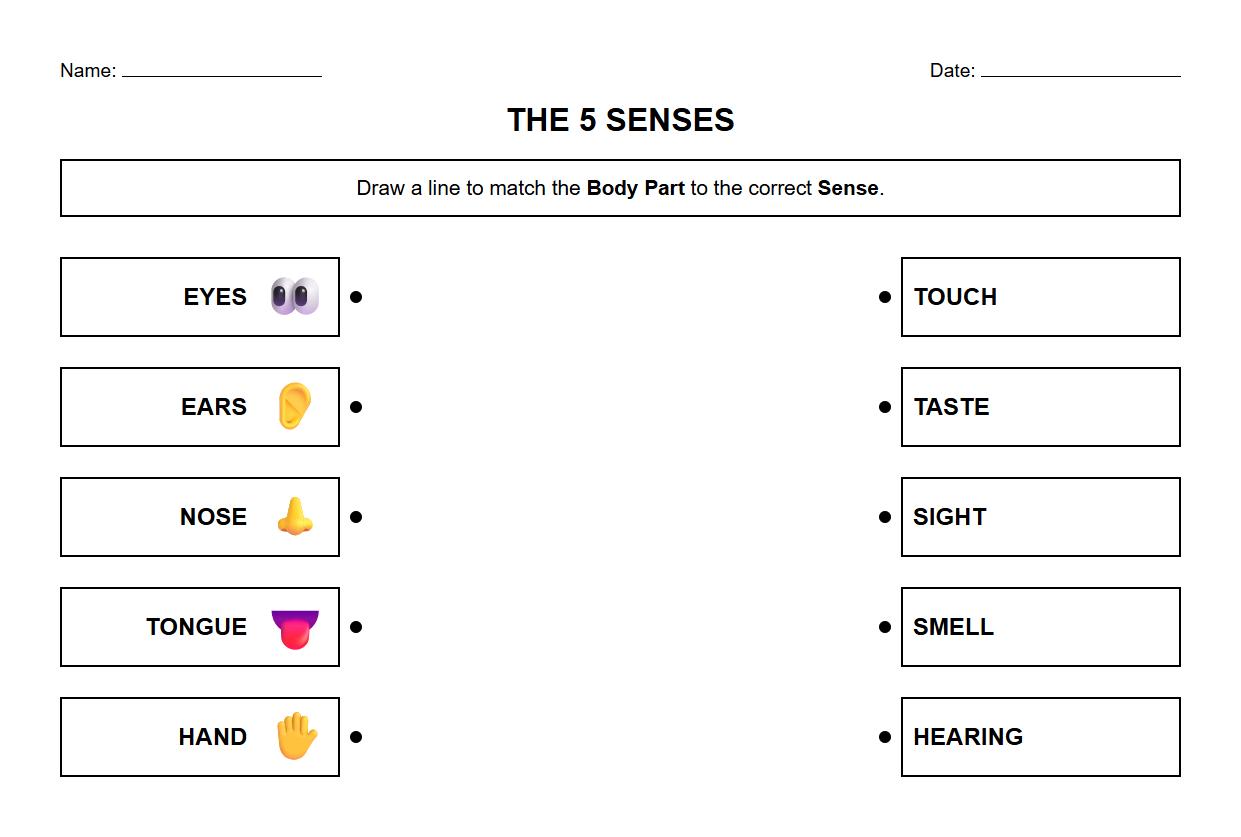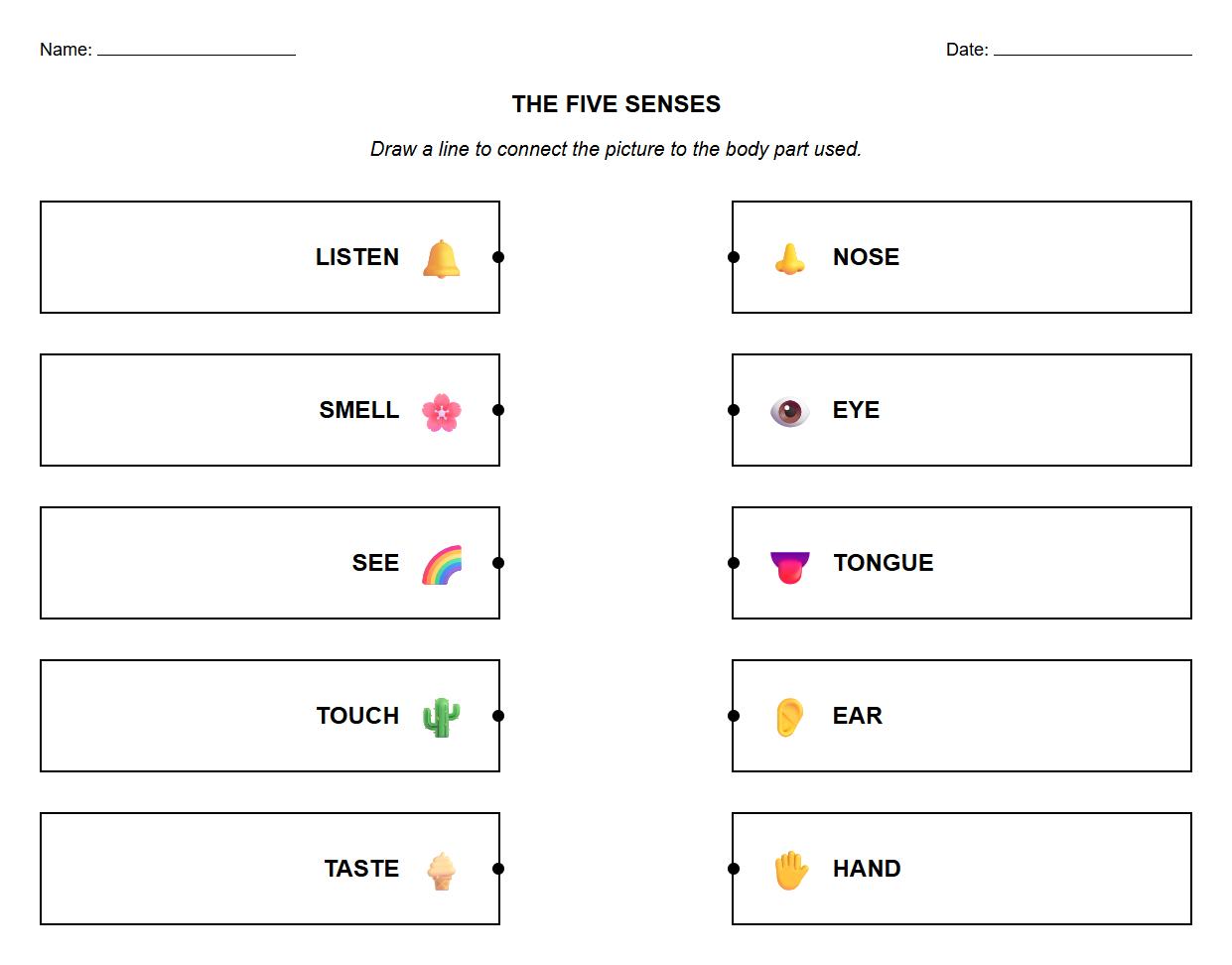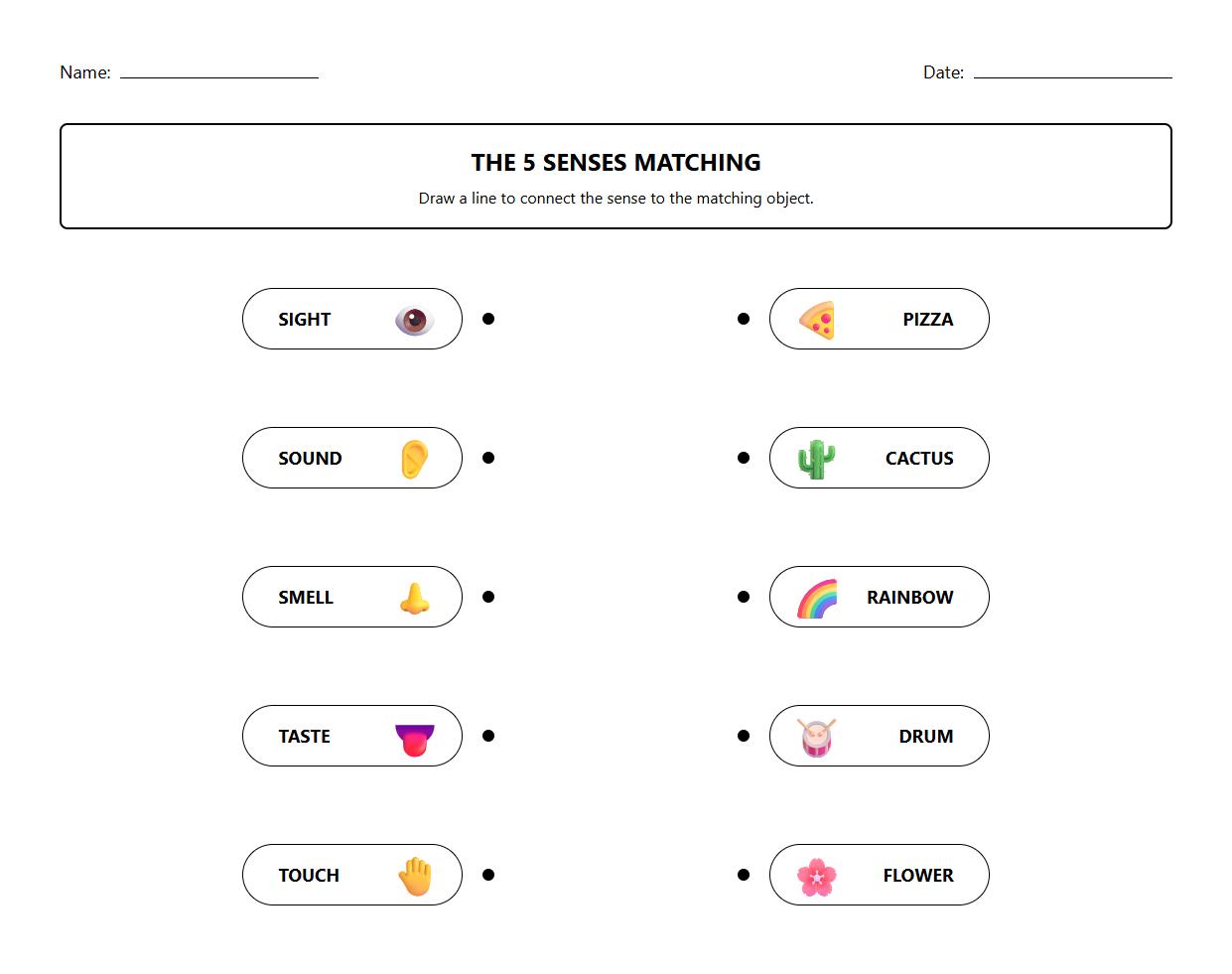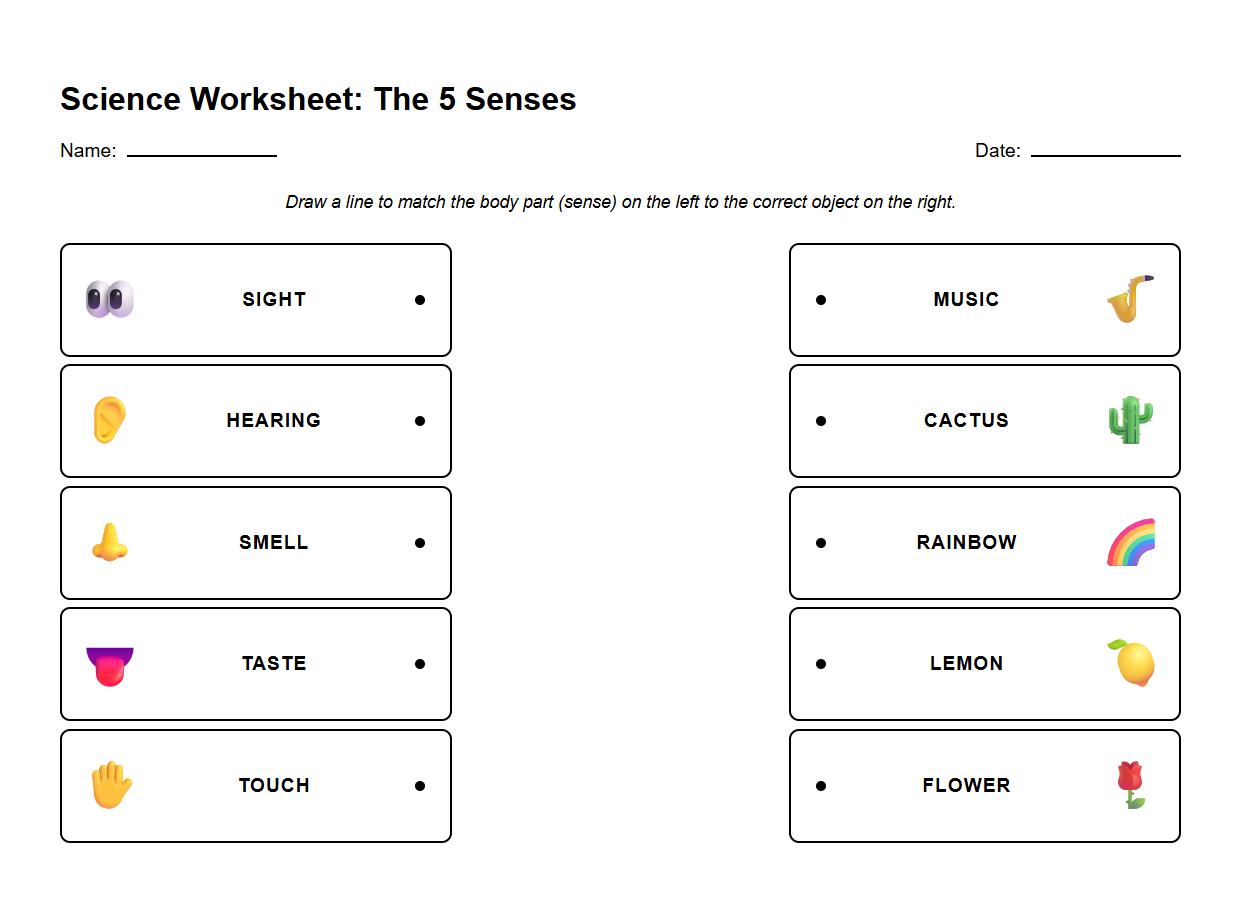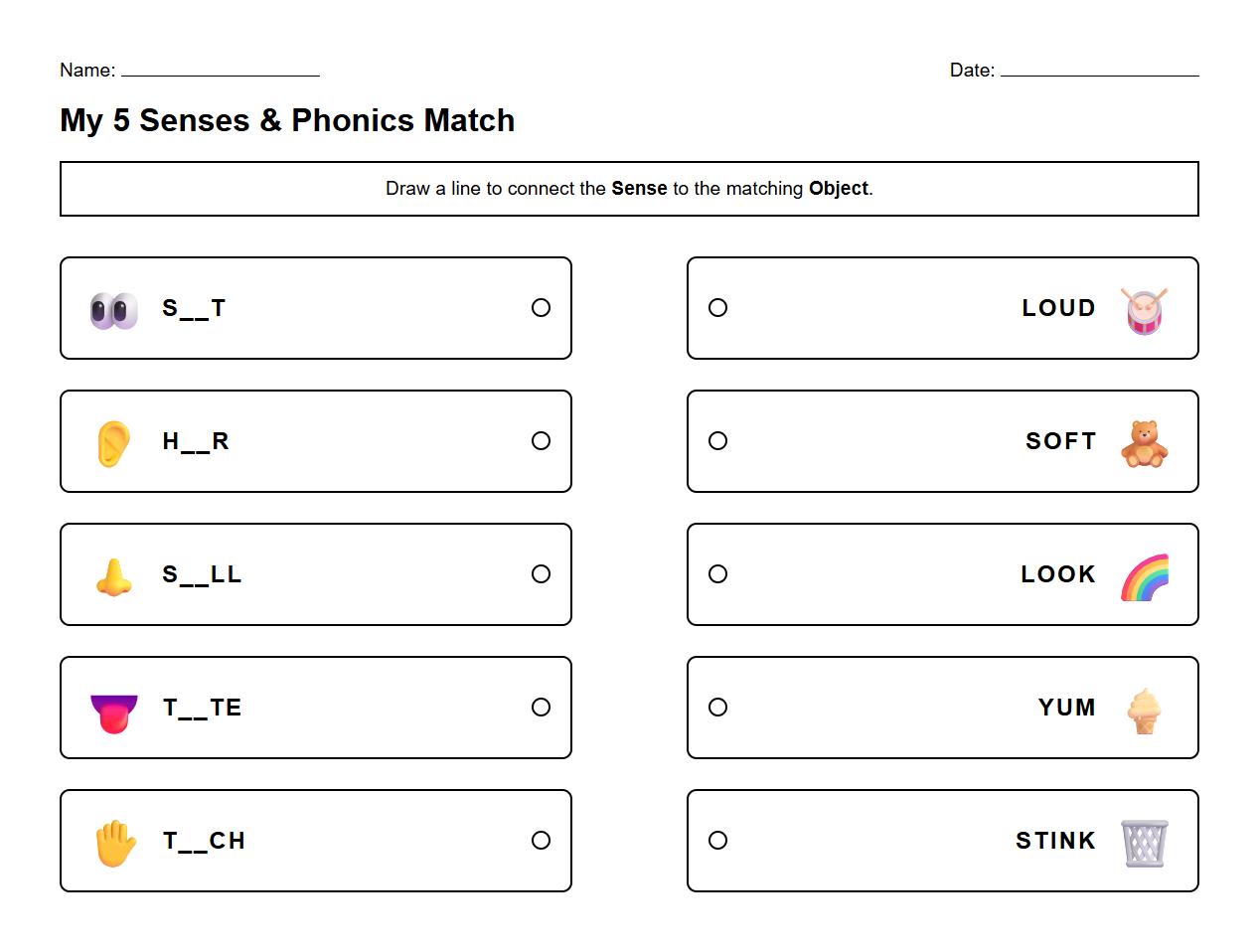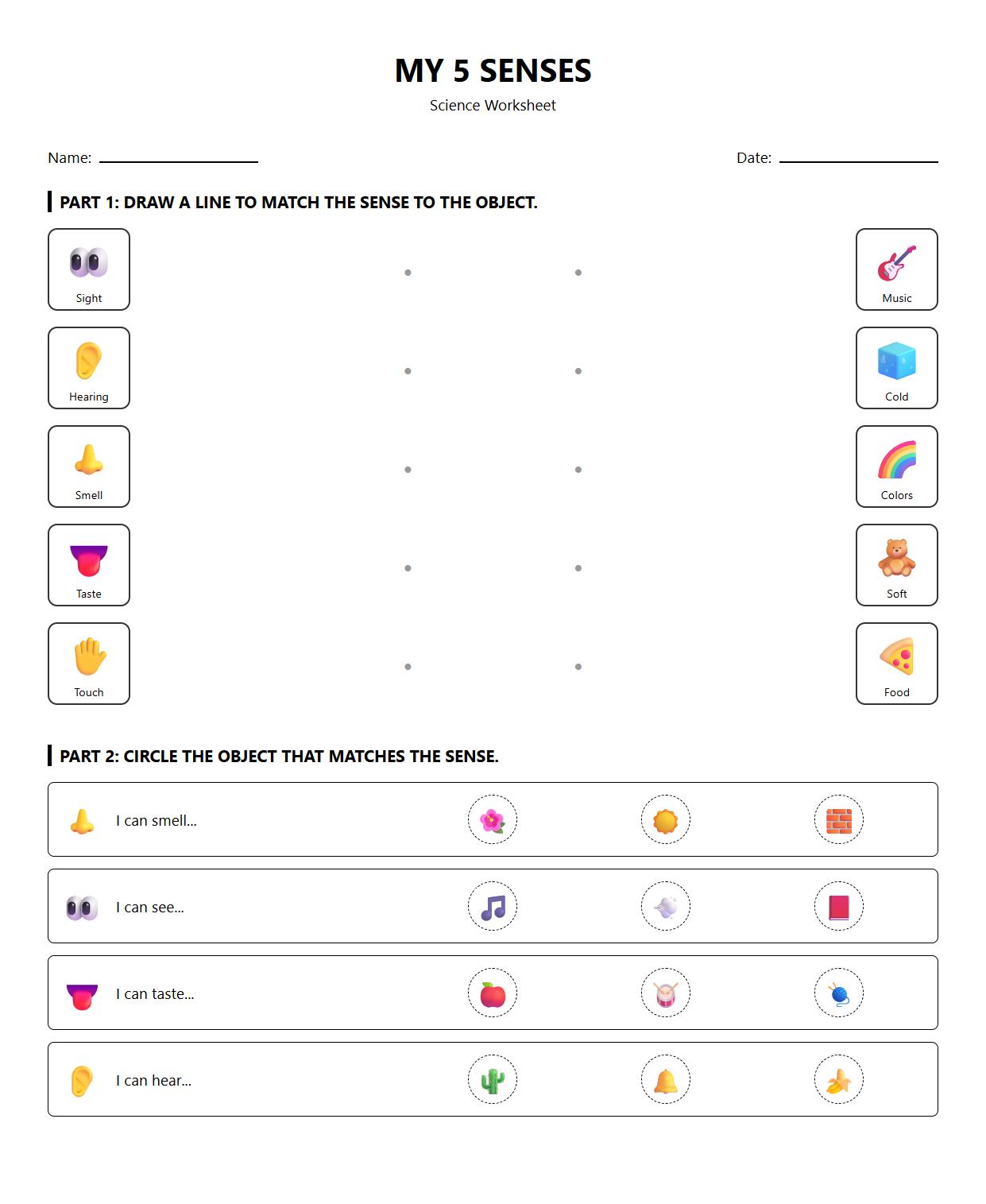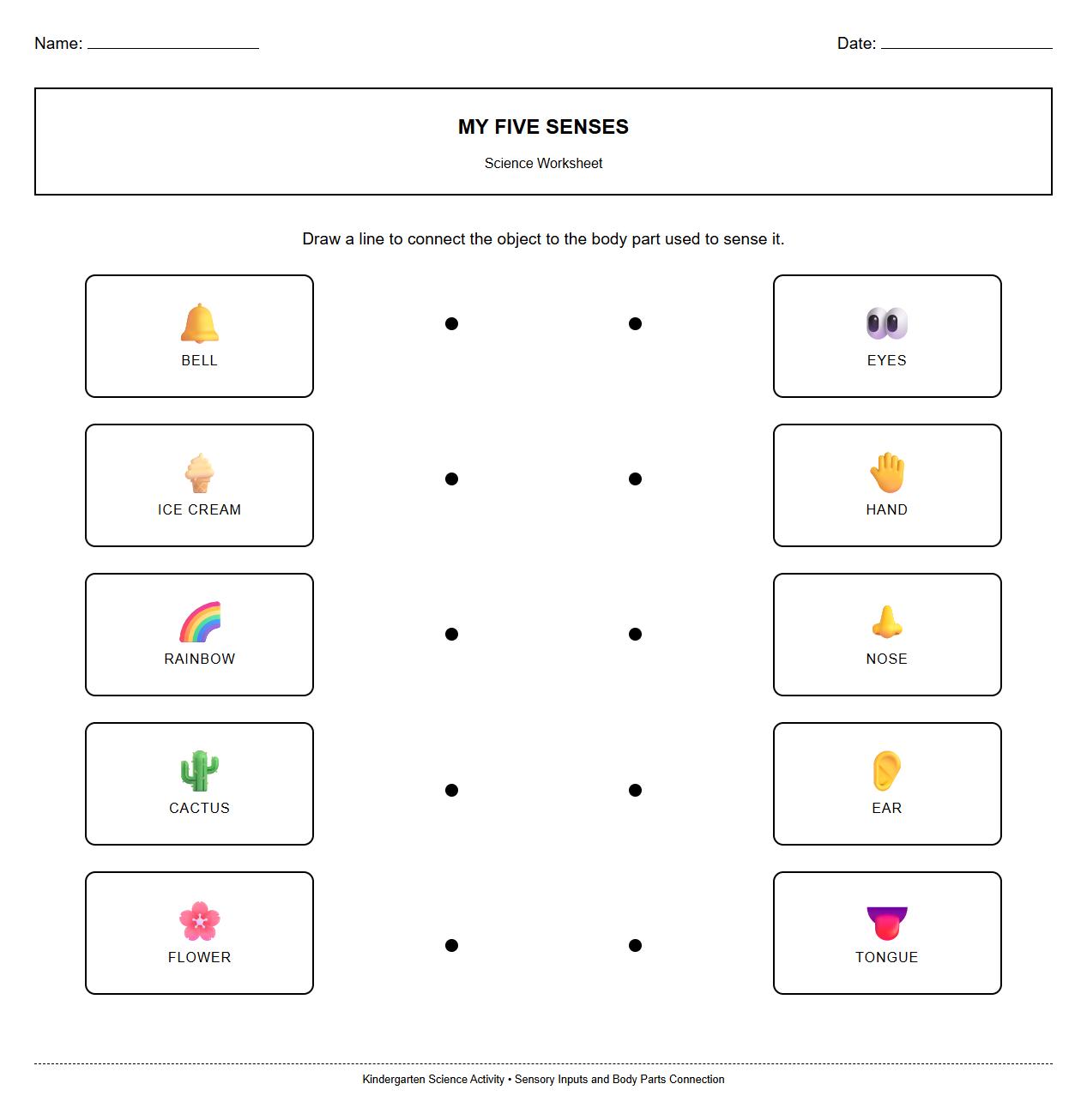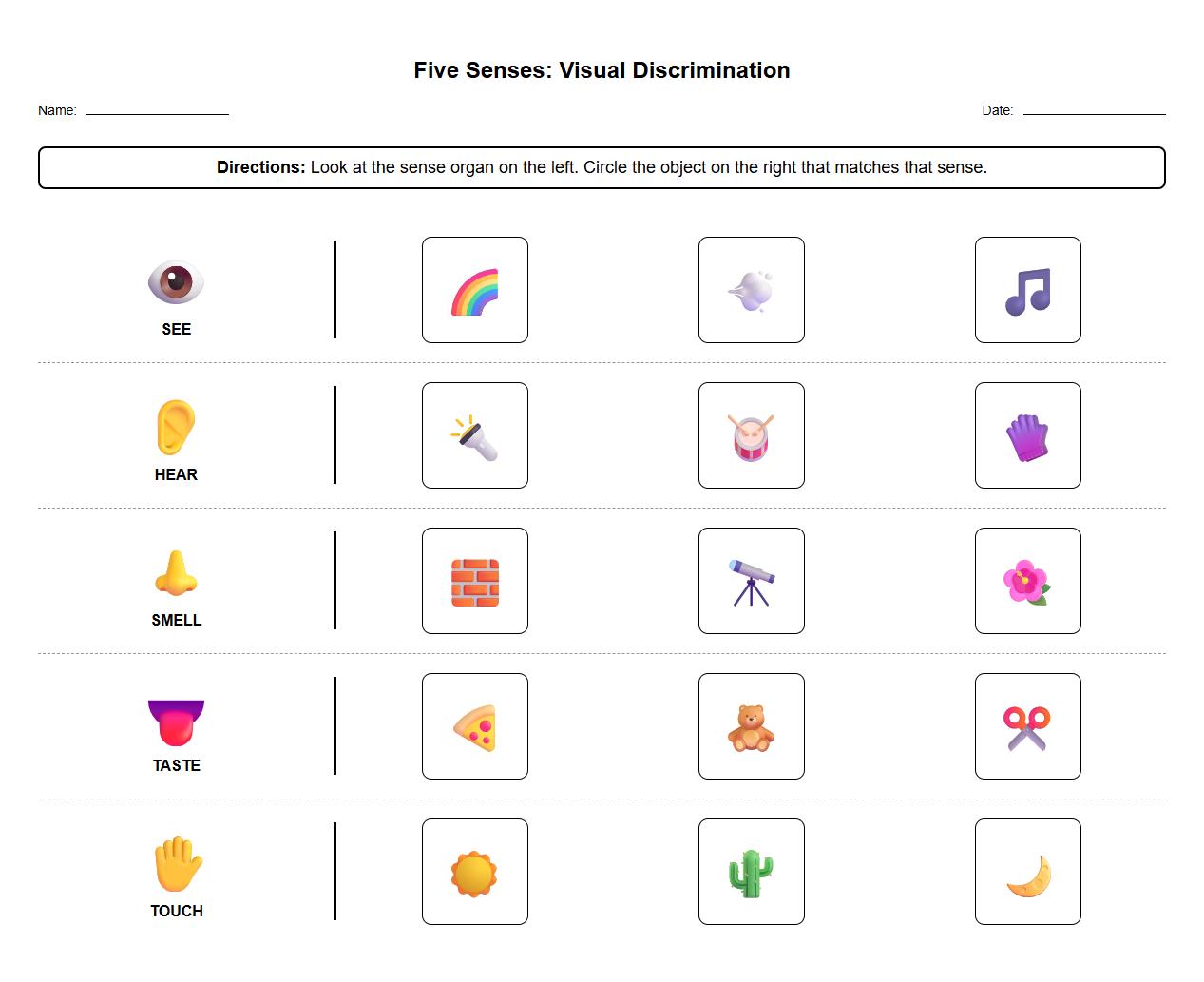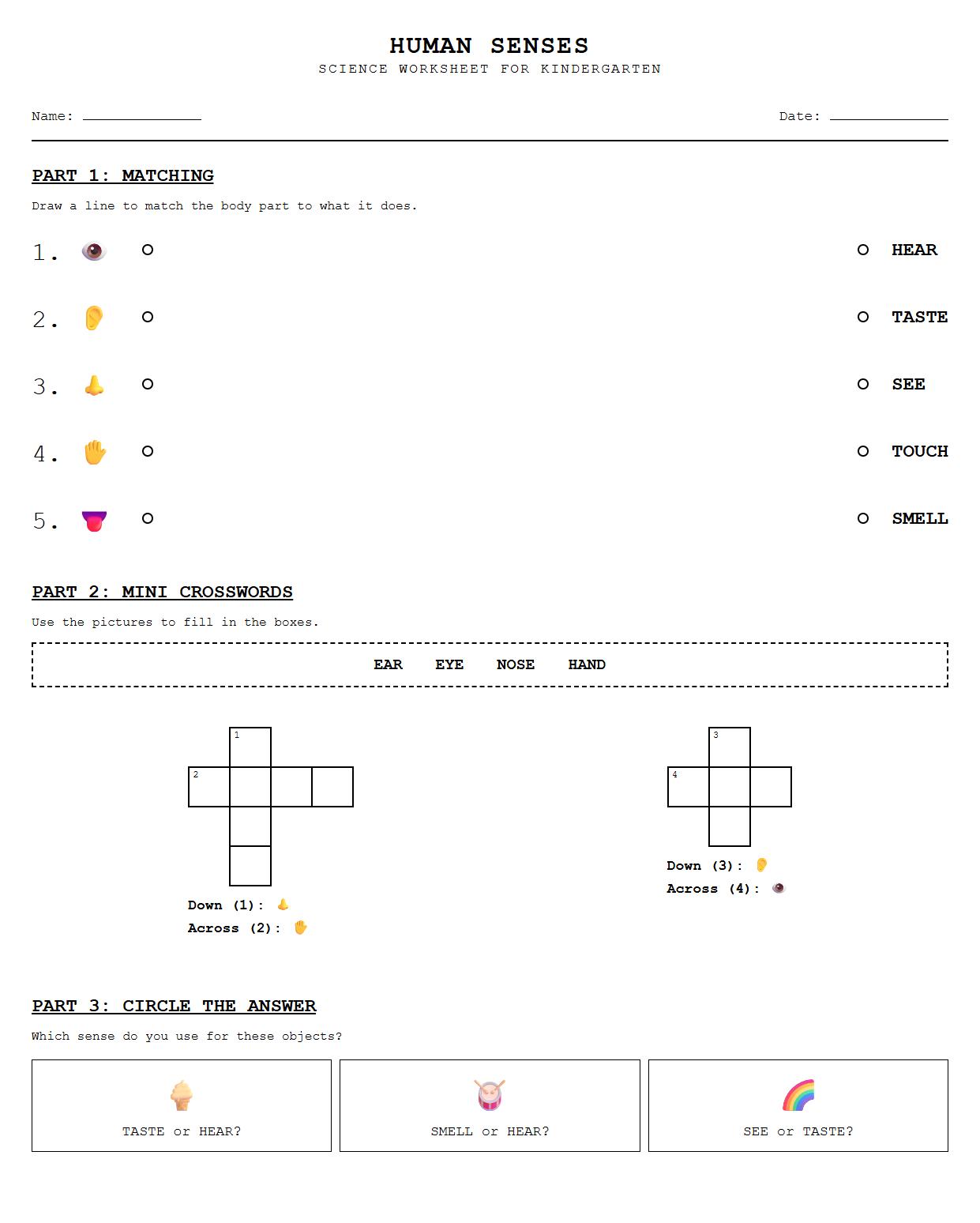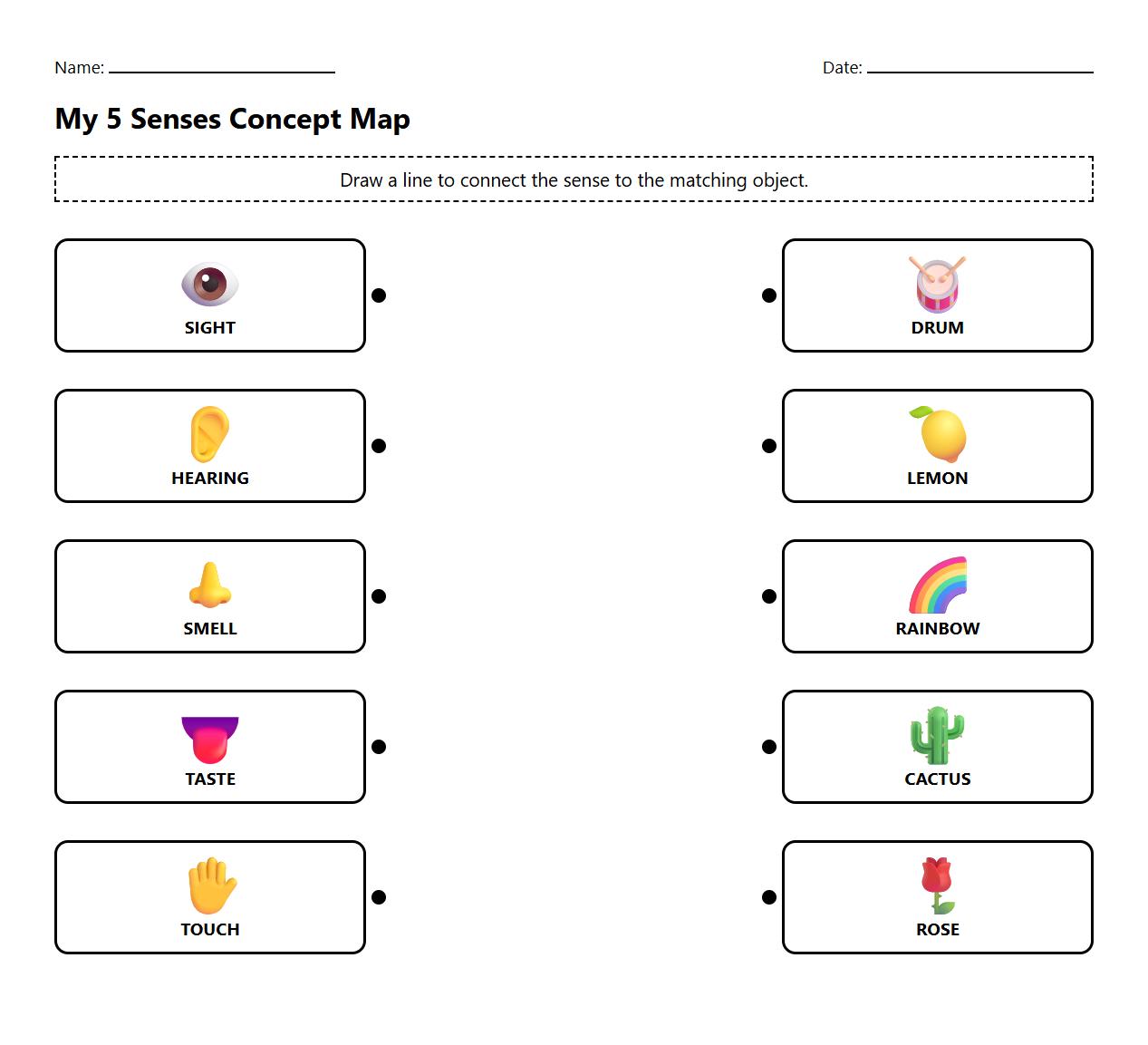
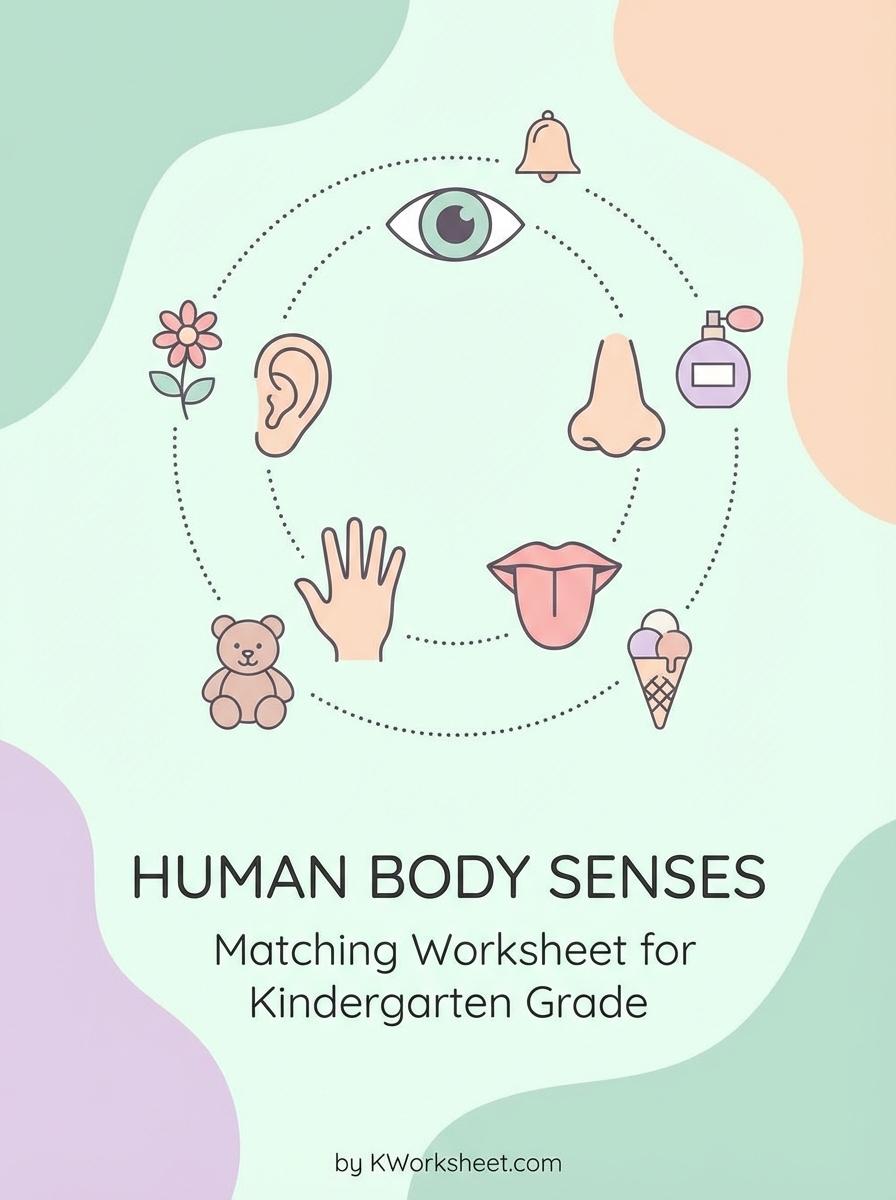
Explore the fascinating world of human body senses with this engaging Kindergarten worksheet designed to help young learners identify and match the five senses with their corresponding sensory organs. This activity enhances cognitive skills and promotes sensory awareness through interactive matching exercises. Check out the available worksheets to support early science education and sensory development.
Which Body Part Helps You See Things Around You?
Eyes are the body parts that help you see everything around you. They take in light and send signals to the brain to show pictures. Without eyes, it would be hard to recognize objects or colors. Encourage children to explore their surroundings using their eyes.
What Do You Use to Hear Music?
Ears are the body parts used to hear music and other sounds. They catch sound waves and send messages to the brain to understand what you hear. Listening helps children enjoy stories and music. Teach kids to appreciate the sounds they hear every day.
Which Sense Lets You Taste Ice Cream?
The tongue is the body part that helps you taste delicious ice cream. Taste buds on the tongue detect sweet, salty, sour, and bitter flavors. Tasting allows children to enjoy different foods safely. Encourage kids to try new flavors with their tongues.
What Helps You Feel If Something Is Soft or Hard?
The skin is the body's largest organ and helps you feel if something is soft, hard, hot, or cold. Touch allows children to learn about their environment through textures. By touching, kids understand more about the world around them. Let children explore with their hands and skin.
Which Body Part Helps You Smell Flowers?
The nose is the body part that helps you smell sweet flowers and fresh air. The nose detects different scents and sends information to the brain. Smelling helps children connect with nature and enjoy pleasant aromas. Teach kids to notice different smells around them.
Which Sense Would You Use to Listen to a Story?
You use your ears to listen to a story being read aloud. Hearing helps children understand language and enjoy the rhythm of words. This sense improves communication skills and imagination. Encourage storytime to develop listening skills.
What Do You Use to Taste Your Favorite Food?
Your tongue helps you taste and enjoy your favorite foods. Taste buds on the tongue identify flavors that make eating fun and exciting. Tasting food is an important part of healthy eating habits. Encourage children to savor different tastes at meal times.
Which Sense Helps You Feel the Coldness of Ice?
The skin senses the coldness of ice when you touch it. Temperature receptors in the skin signal the brain about hot or cold sensations. Feeling temperature helps children stay safe and comfortable. Teach kids to recognize temperature through touch.
What Do You Use to See Colors?
Eyes help you see and enjoy all the beautiful colors around you. They capture light and colors and send signals to the brain. Seeing colors makes the world bright and exciting for children. Encourage children to name and explore colors with their eyes.
Which Body Part Helps You Smell Cookies Baking in the Kitchen?
Your nose helps you smell the delicious aroma of cookies baking in the kitchen. Smelling helps children recognize familiar and comforting scents. This sense connects memories to smells, making experiences special. Teach children to enjoy and describe different smells.


Basic Hygiene Routine Chart Worksheet for Classroom Activity