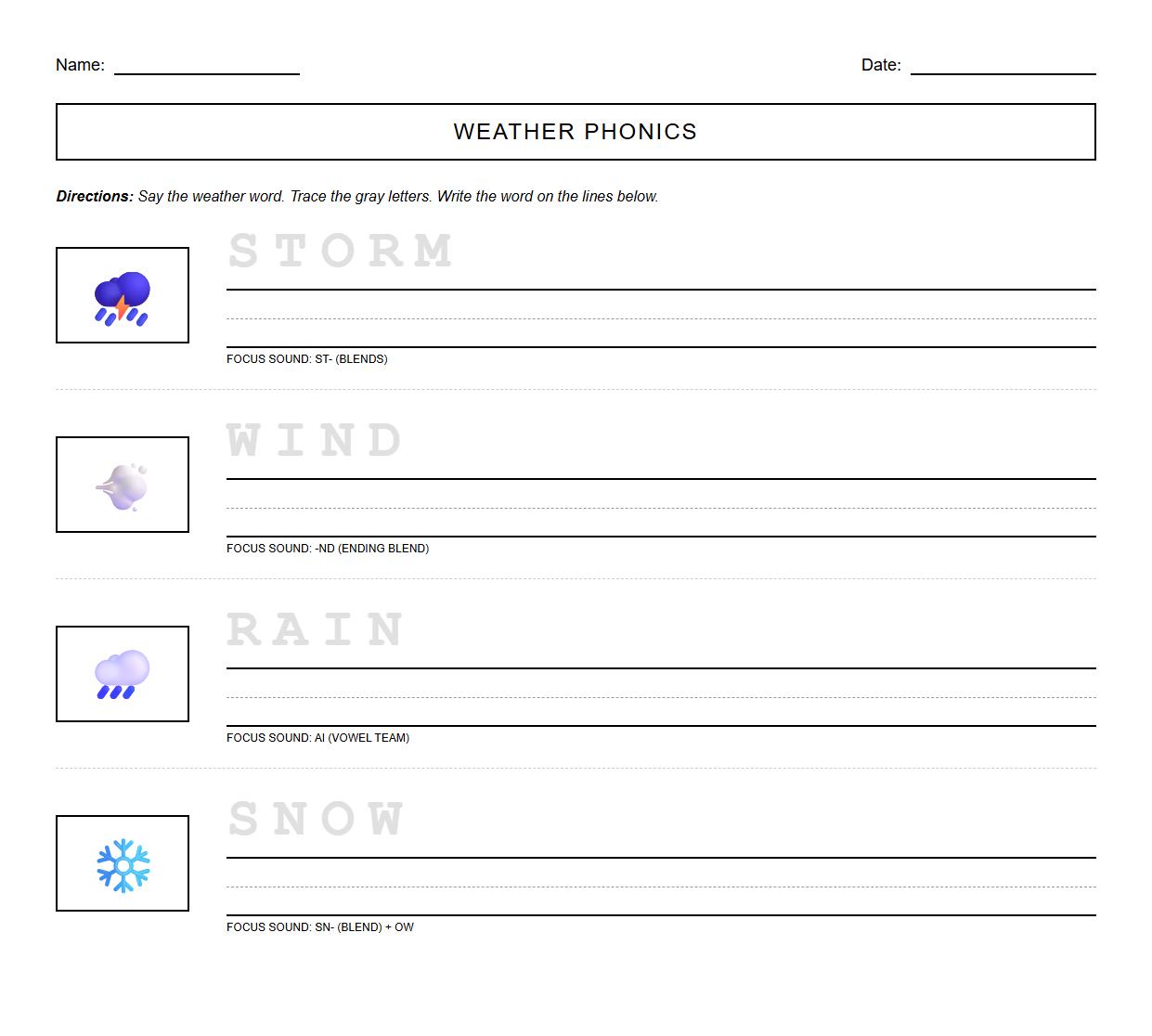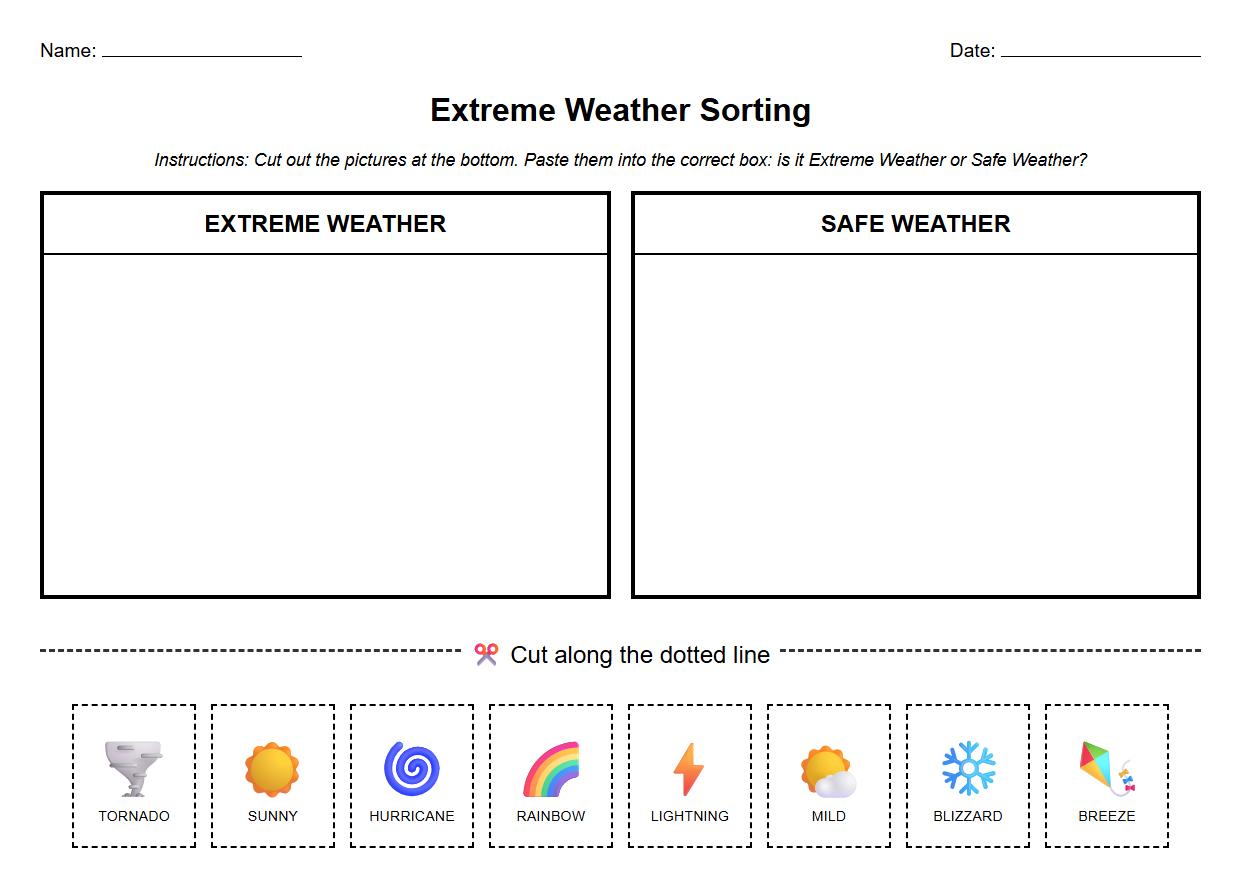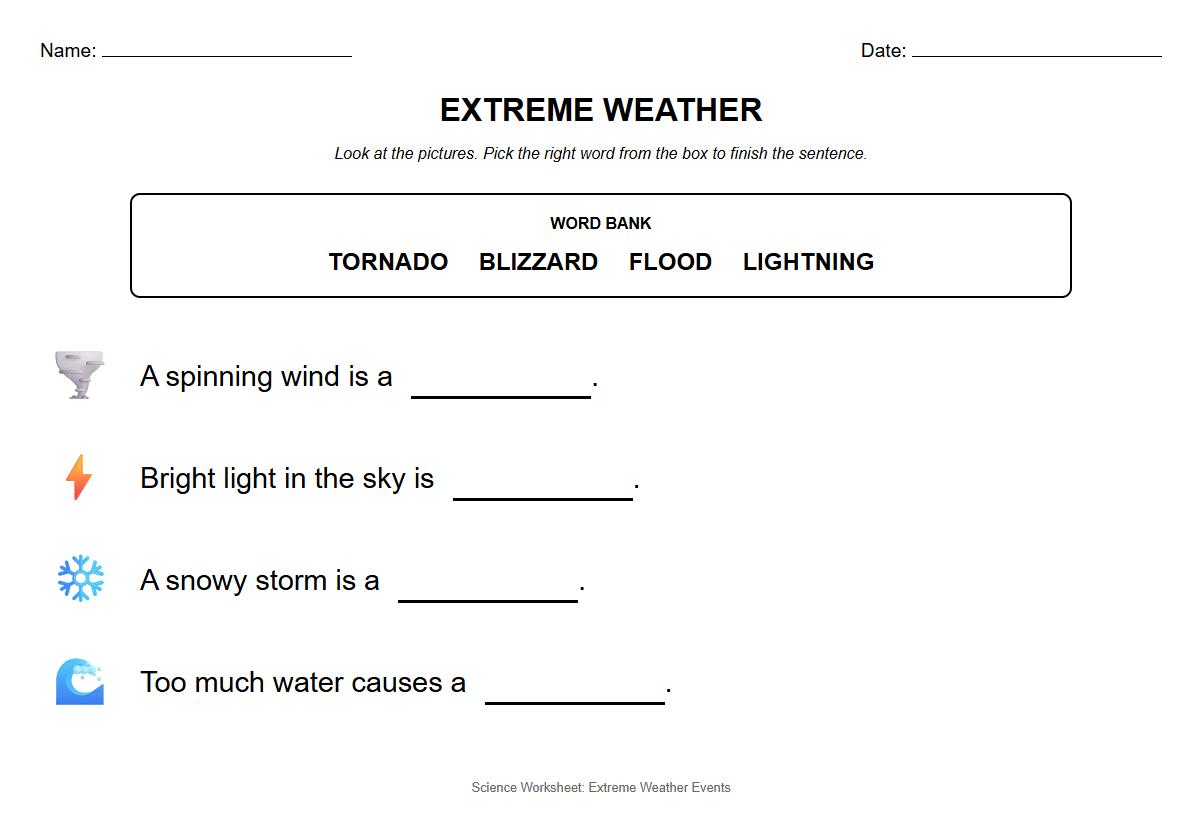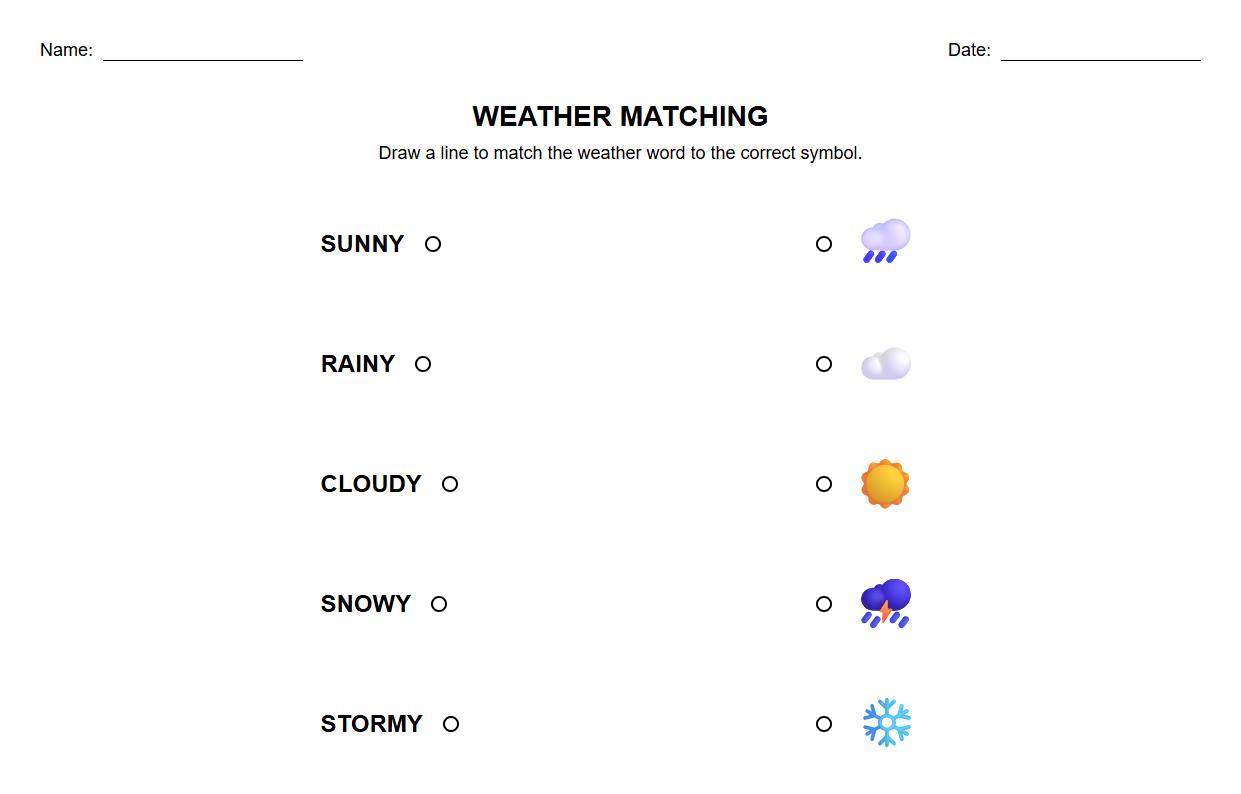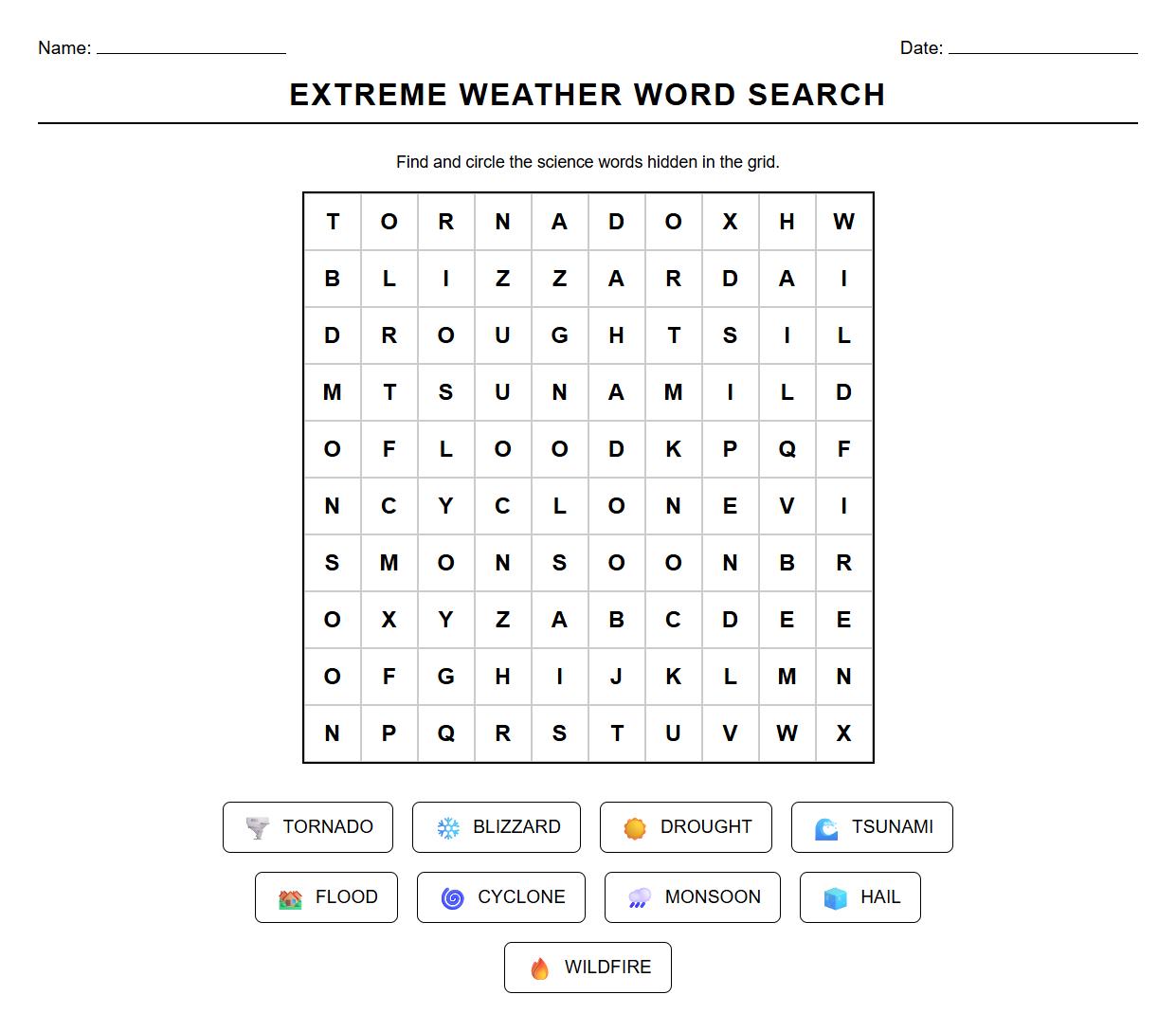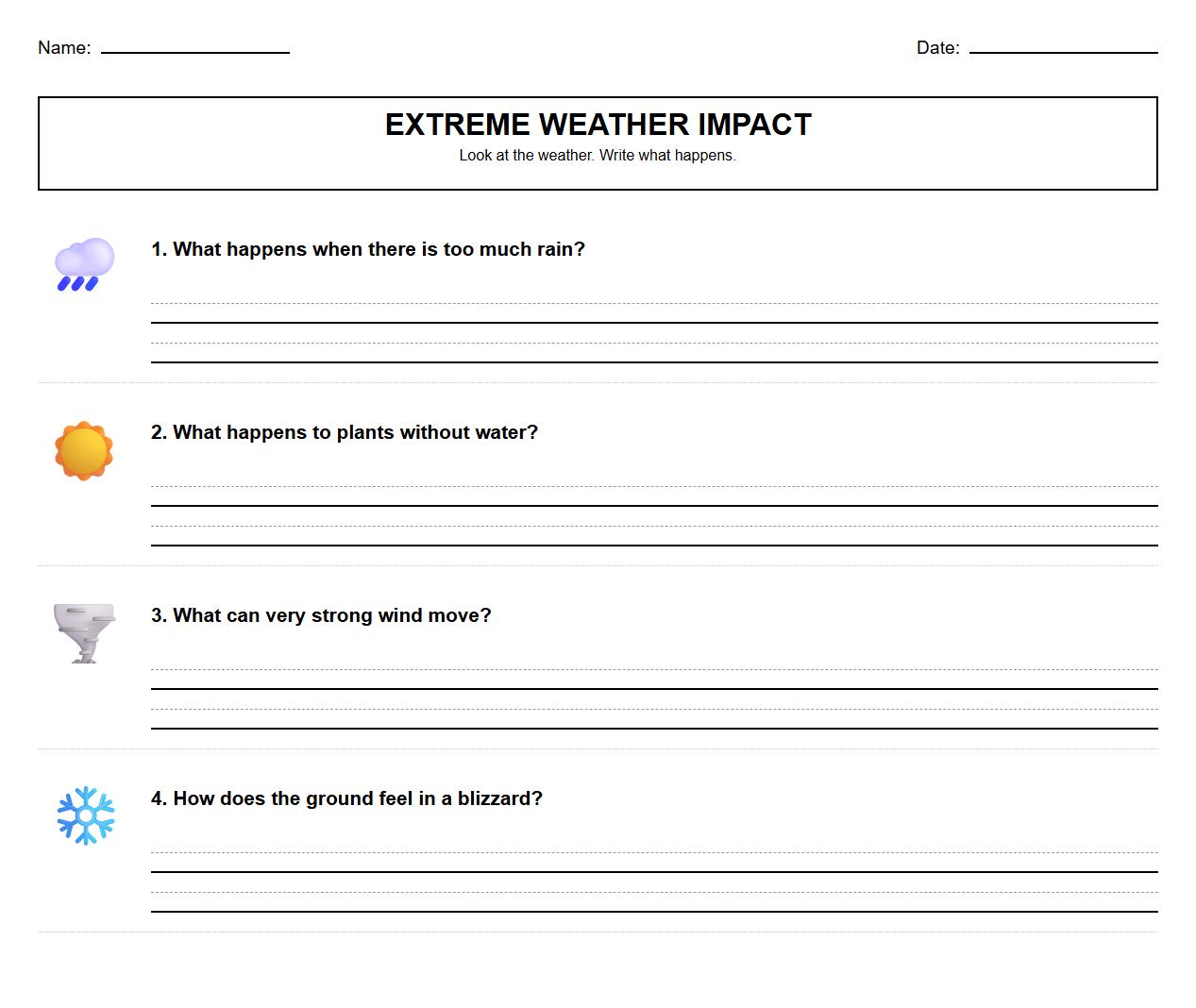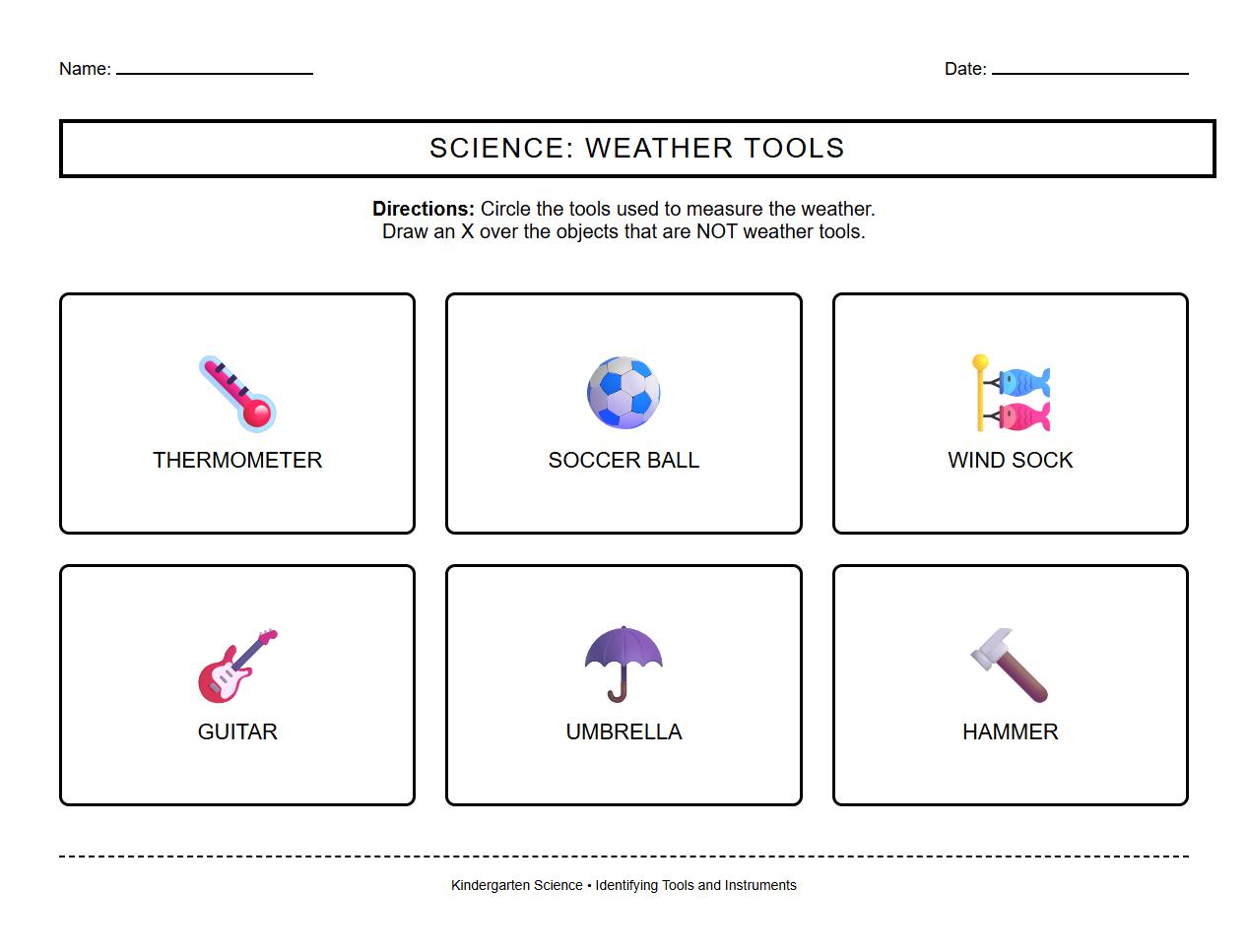
Explore the dynamic world of extreme weather types through engaging, hands-on activities designed to enhance understanding of natural phenomena like hurricanes, tornadoes, and blizzards. This interactive worksheet encourages critical thinking and real-world application of meteorological concepts to foster deeper learning. Check out the available worksheets to start your exploration of extreme weather today.
What Kind of Clothes to Wear During a Snowstorm?
During a snowstorm, it is important to wear warm and waterproof clothes. Cozy jackets, snow boots, gloves, and hats protect you from the cold and wet weather. Dressing in layers helps keep the body heat inside. Always choose clothing that covers arms, legs, and head fully. Learn more about seasons and weather choices.
Which Weather Type is Windy and Might Blow Hats Away?
Windy weather can be very strong, sometimes blowing hats and light objects away. It often feels colder because the wind takes heat away from the skin. Wearing snug hats and secure clothing helps avoid losing items. Windy days are fun but require caution when outside. Explore forces like wind here.
How Does It Feel Outside During a Heatwave?
During a heatwave, the weather feels very hot and dry. It can make us feel tired or thirsty quickly, so it's important to drink a lot of water. Wearing light, loose clothes and staying in the shade helps keep cool. Avoiding too much sunshine protects you from sunburn. Learn about how our senses react to weather.
What Should You Do If You See Lightning During a Thunderstorm?
Seeing lightning means a thunderstorm is happening. It is safest to stay indoors and away from windows. Avoid tall objects and trees because lightning strikes them easily. If outside, crouch low without touching the ground with your hands. Discover more in a weather and matter worksheet.
Which Extreme Weather Is Very Rainy and May Cause Floods?
Heavy rain from storms can cause flooding in some places. Floods happen when water covers roads and land that is usually dry. It's important to move to higher ground and stay away from flooded areas. Listening to weather updates keeps you informed and safe. Explore weather phenomena using science centers.
Can You Draw a Tornado Using a Spiral Shape?
A tornado looks like a twisting funnel moving across the sky. Drawing a spiral shape helps show its spinning motion. You can add dark clouds at the top and debris near the bottom to make the tornado realistic. This helps children understand how tornadoes look and move. Try a space and earth literacy activity.
What Do You Hear and See When There Is a Hailstorm?
During a hailstorm, you hear loud tapping or banging sounds from hailstones hitting windows and roofs. Hail looks like small balls or chunks of ice falling from the sky. It is important to stay inside to avoid getting hurt. Hail can damage plants, cars, and buildings. See a worksheet about phases and weather.
Why Do We Need to Stay Inside During a Hurricane?
Hurricanes bring very strong winds and heavy rain that can damage buildings and trees. Staying inside is important to stay safe from flying debris and flooding. Hurricanes can also cause power outages, so it's best to be prepared with supplies. Always listen to safety instructions from authorities. Practice safety with a personal safety and cleanliness worksheet.
Which Weather Type Makes the Ground Shake and Is Very Loud?
Earthquakes cause the ground to shake and produce loud rumbling sounds. Though not a weather event, they are extreme natural occurrences that need caution. During an earthquake, it's important to drop, cover, and hold on to protect yourself. Discussing earthquake drills helps prepare children. Explore life cycles of nature and earth.
What Are Some Ways to Stay Safe During Extreme Weather?
Staying safe during extreme weather means being prepared and informed. Listen to weather updates, follow safety rules, and have an emergency kit ready. Always stay indoors during storms and avoid dangerous areas like flooded streets. Teaching children these habits helps keep families protected. Try a push and pull worksheet for safety and weather.


Phonics Worksheet Exploring Day and Night for Kindergarten