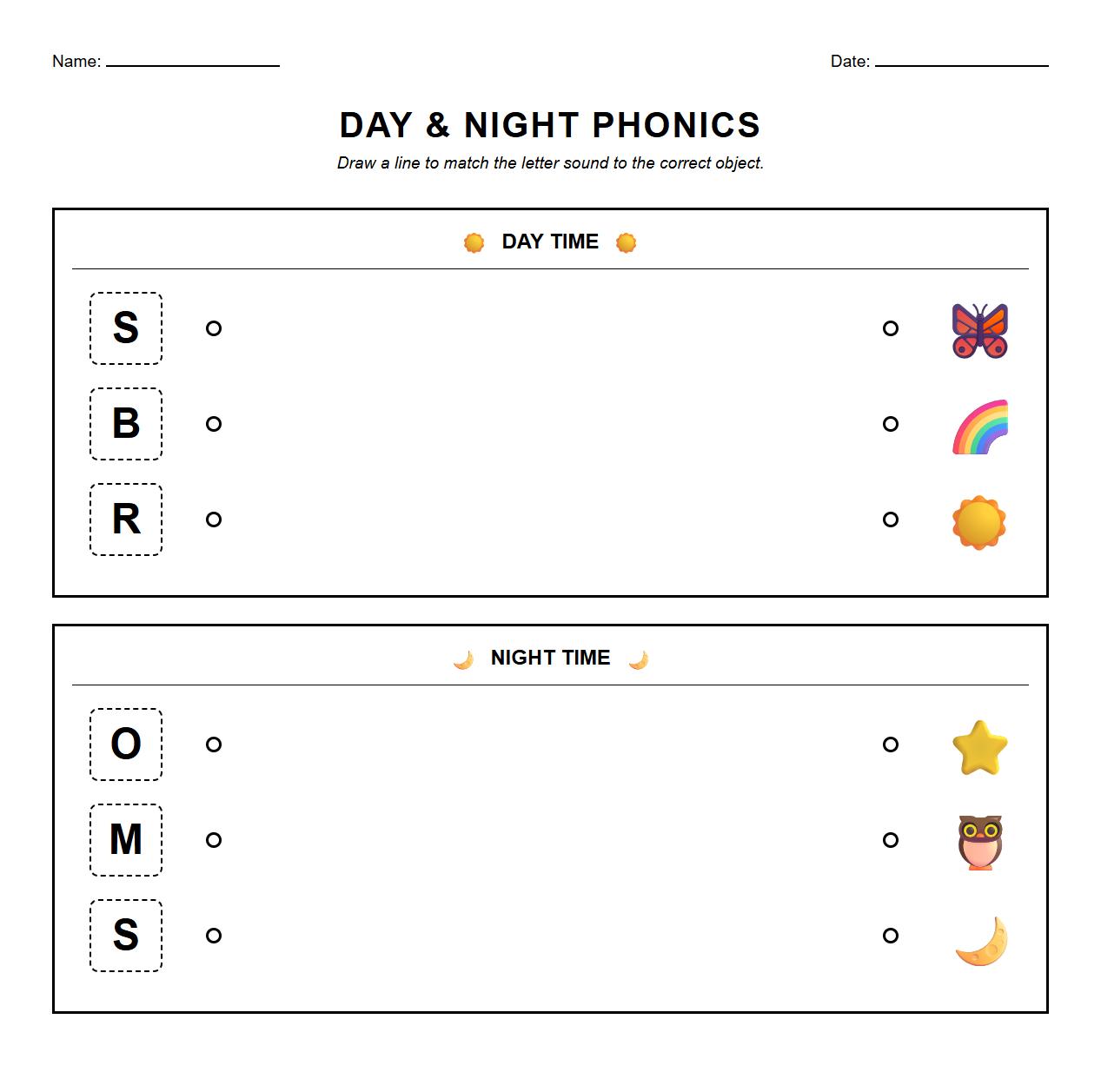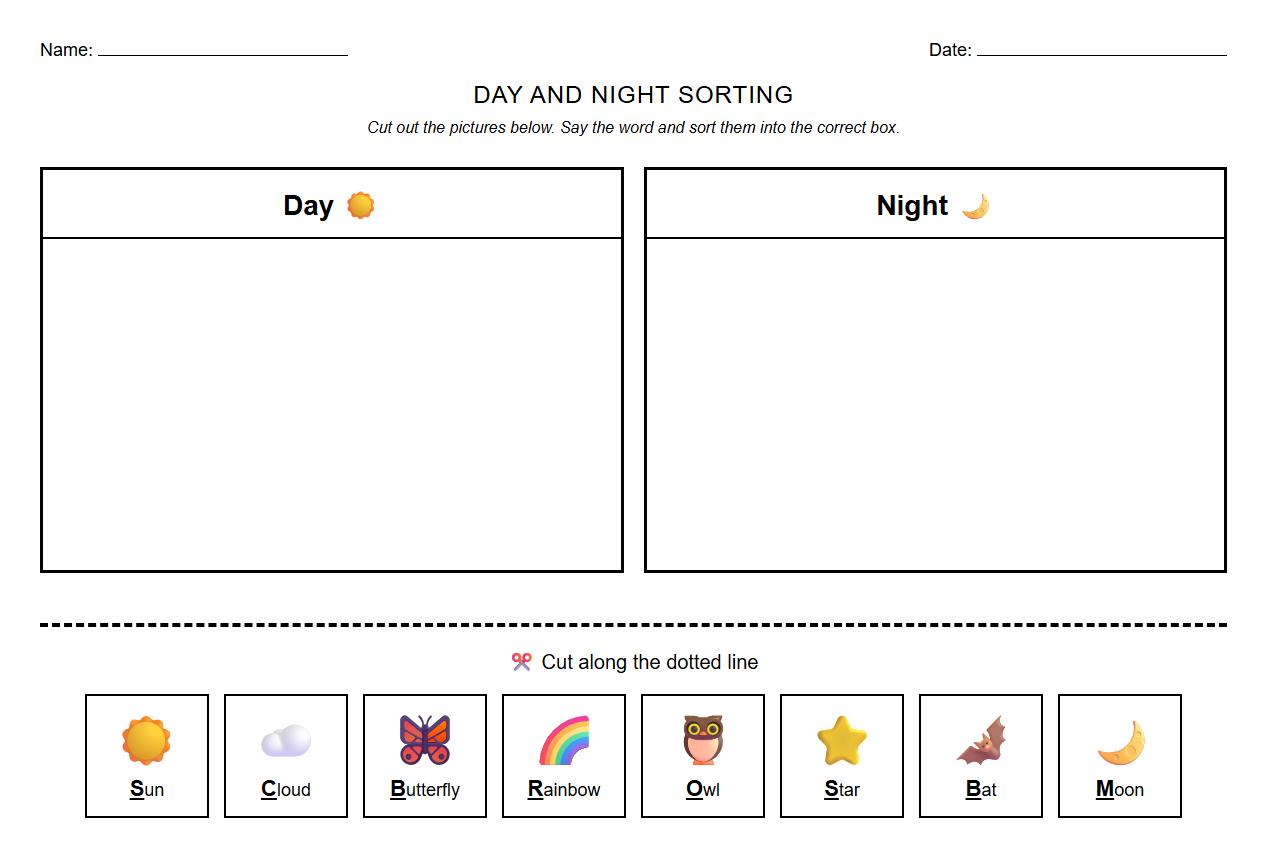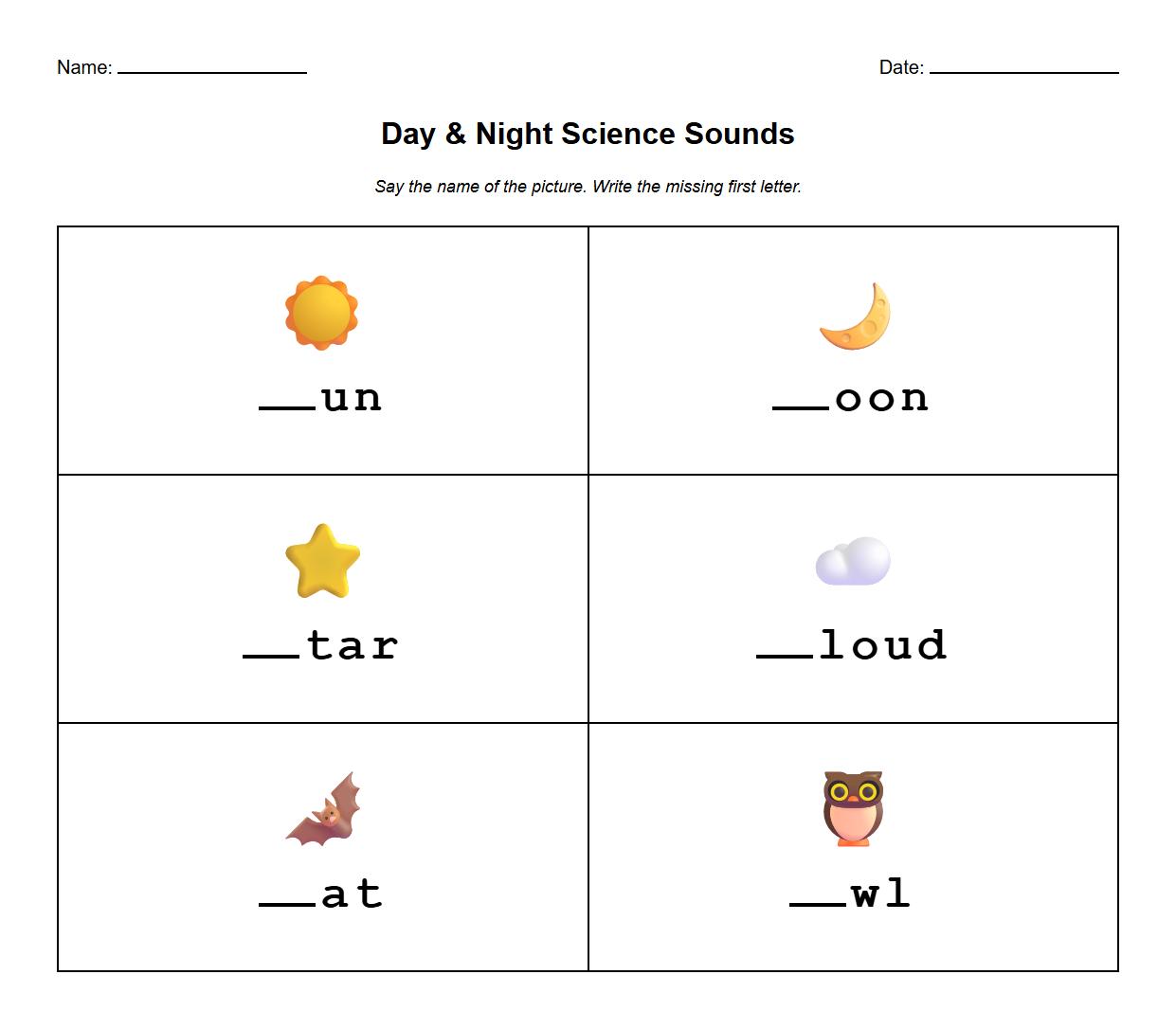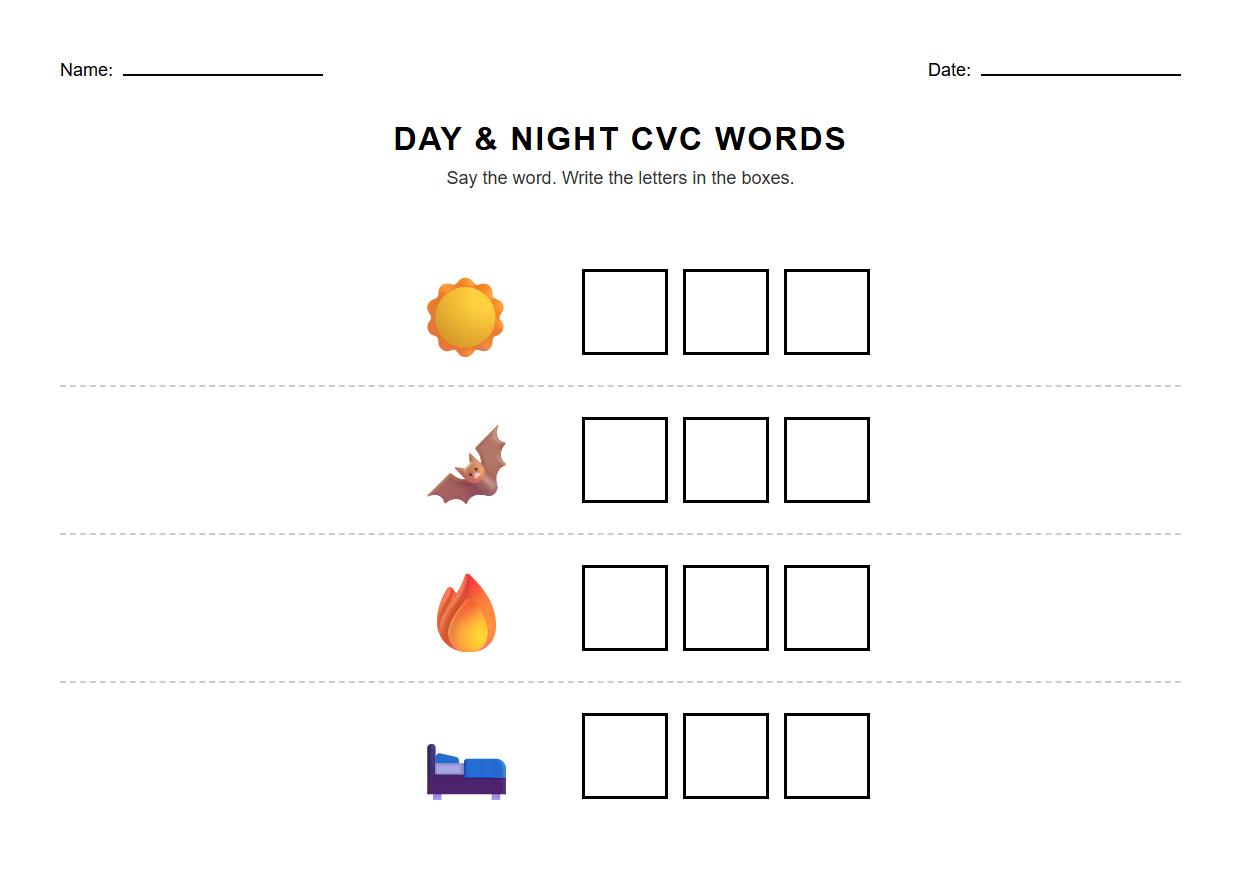
Kindergarten students develop early reading skills by exploring phonics through engaging day and night themes. This worksheet focuses on identifying and sounding out words related to the different times of the day, reinforcing letter-sound relationships. Discover a variety of fun and educational phonics worksheets designed to make learning enjoyable and effective.
Understanding Beginning Sounds
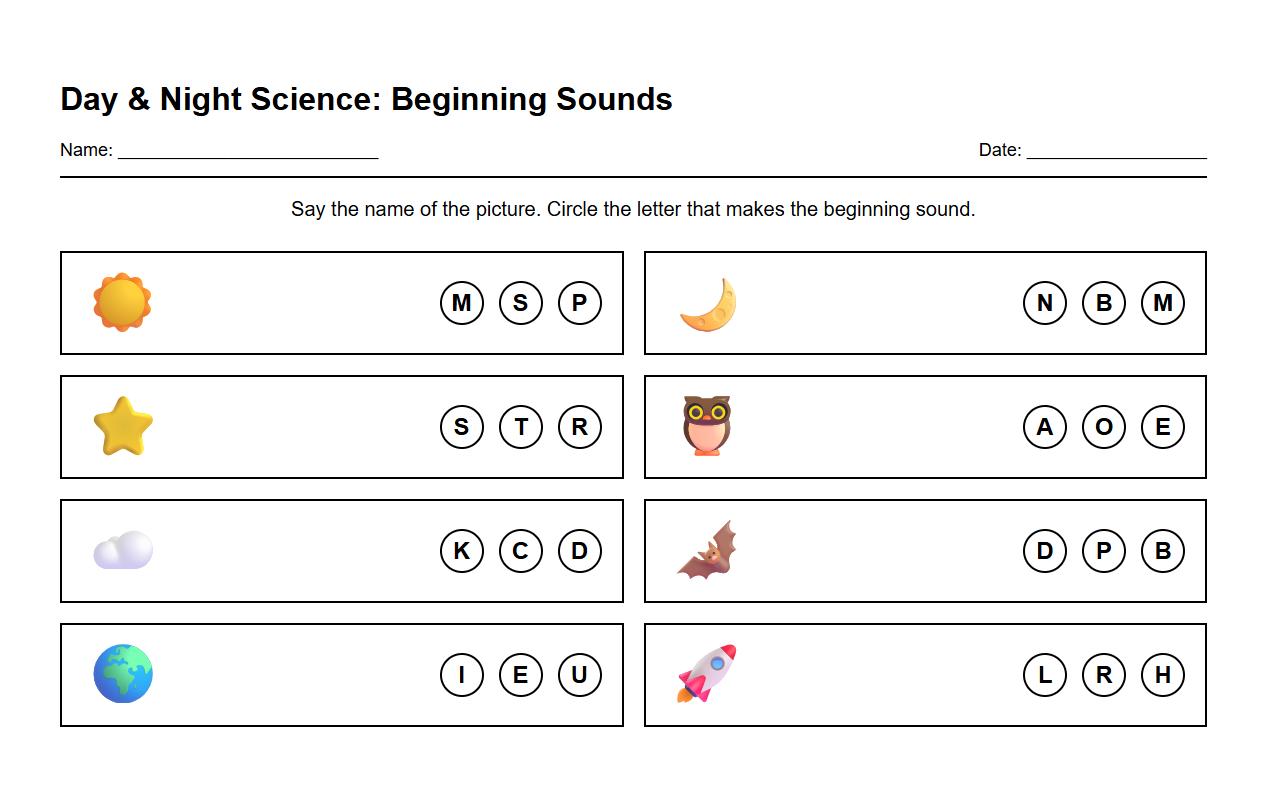
Teachers and parents can help children identify the beginning sound of the word "day." This activity encourages phonemic awareness by asking what sound the word starts with. Recognizing initial sounds is essential for early reading skills. Prompt children to say the word slowly to hear the first sound clearly. Try similar activities on phonics and picture sorting.
Spotting Words Starting with 'N'
Ask the child to circle all words starting with the letter N to reinforce letter recognition and initial sounds. For "night," this activity supports identifying the target letter visually and audibly. Encourage careful listening and observation of the word's beginning letter. This strengthens foundational literacy through engaging practice. For practice with science vocabulary, visit animal needs vocabulary worksheets.
Identifying Vowels in Words
Focus on the vowel sound heard in the word "night" to develop vowel recognition skills. Help children differentiate vowel sounds by repeating the word and emphasizing the vowel sound. Vowel identification helps with decoding and spelling in early literacy. Use this as an opportunity to practice listening and sound isolation. Build on these skills with this phonics worksheet.
Recognizing Daytime Images
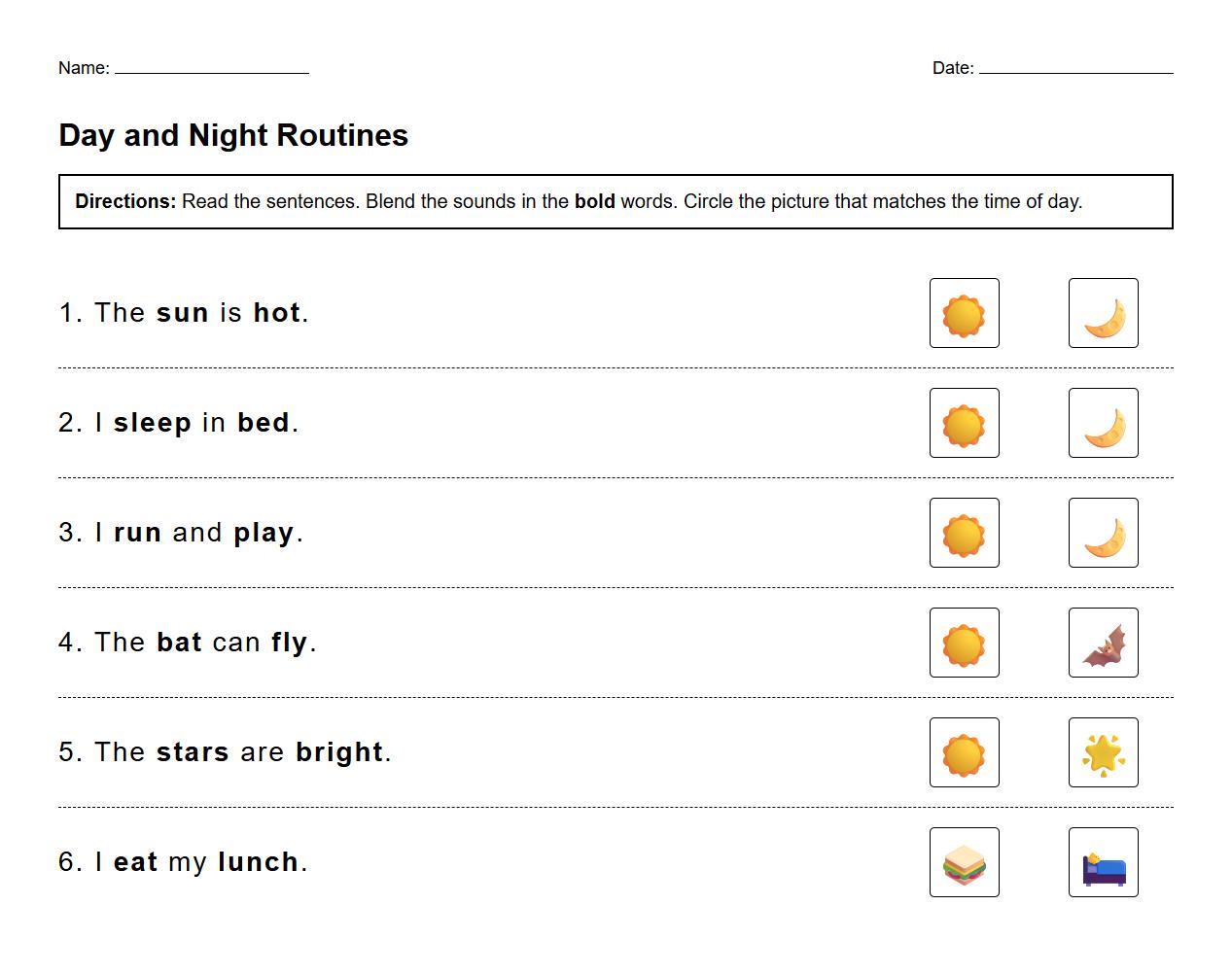
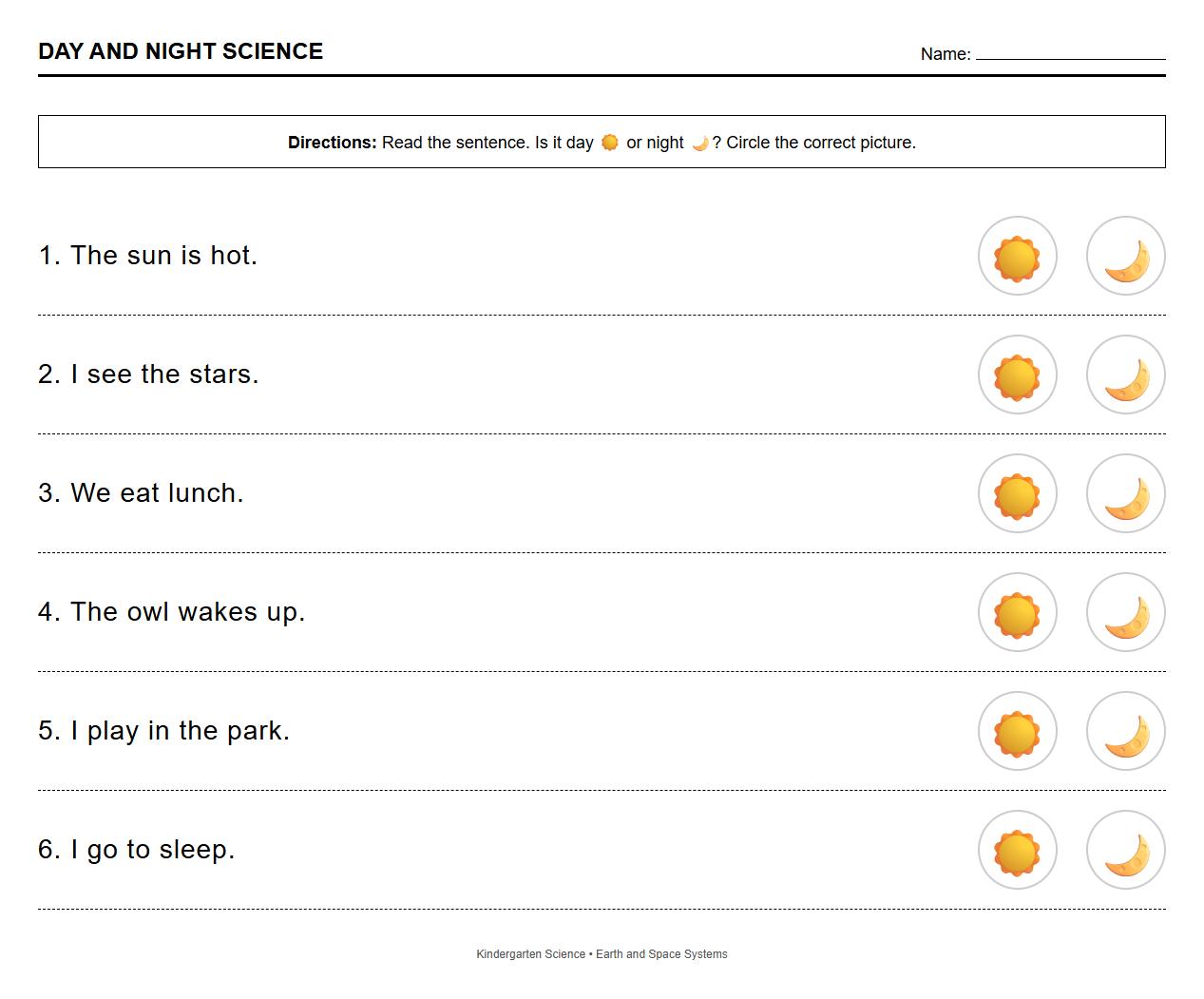
Encourage children to find and color the picture that clearly shows daytime. This visual activity connects words and concepts to real-world context, enhancing comprehension of time-related vocabulary. It supports visual discrimination and association skills. Using bright colors can make the learning process fun and interactive. Explore more with a season identification worksheet.
Rhyming Word Practice
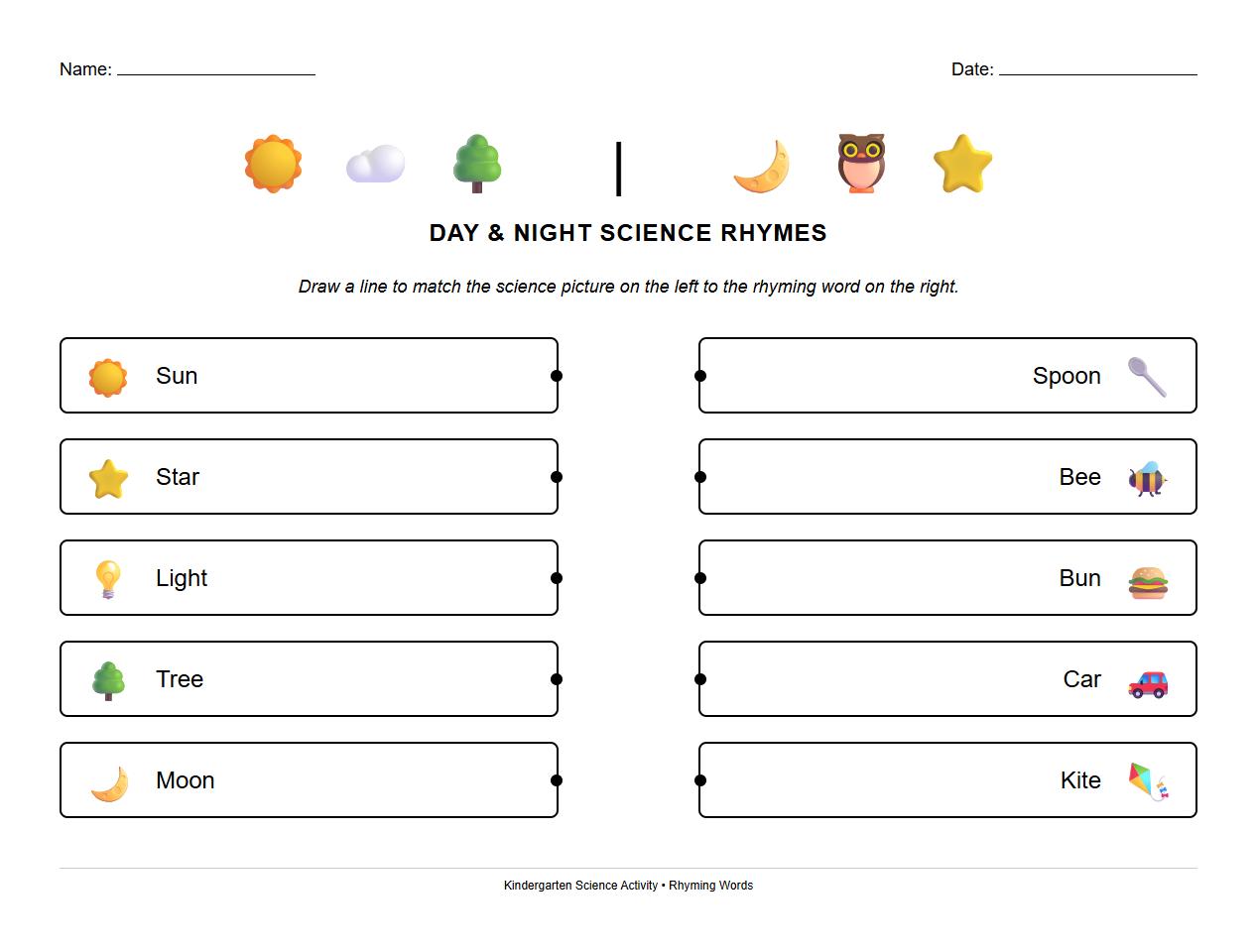
Engage children by asking which word rhymes with "light": "night" or "day". Rhyming exercises improve phonological awareness and auditory discrimination. Highlight that "night" shares a similar ending sound with "light," strengthening rhyme recognition. This activity is a playful way to build early reading skills. Practice matching with the five senses matching worksheet.
Matching Pictures to Words
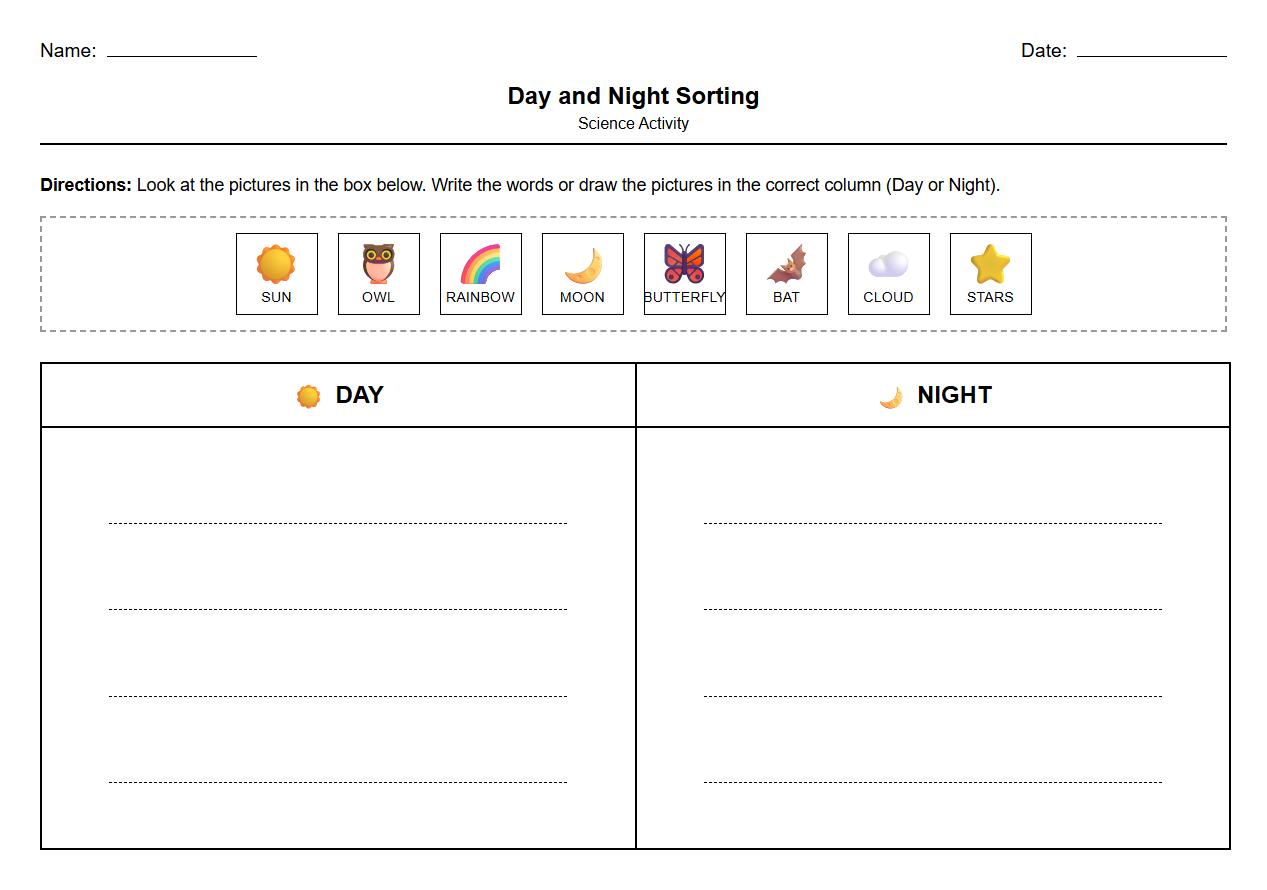
Matching each picture to the correct word "day" or "night" helps children associate text with images. This task builds vocabulary and strengthens word-picture connections. Visual matching supports comprehension and memory recall. Use clear, simple images to make the activity accessible for young learners. For more matching fun, check this observation skills worksheet.
Clapping Out Sounds
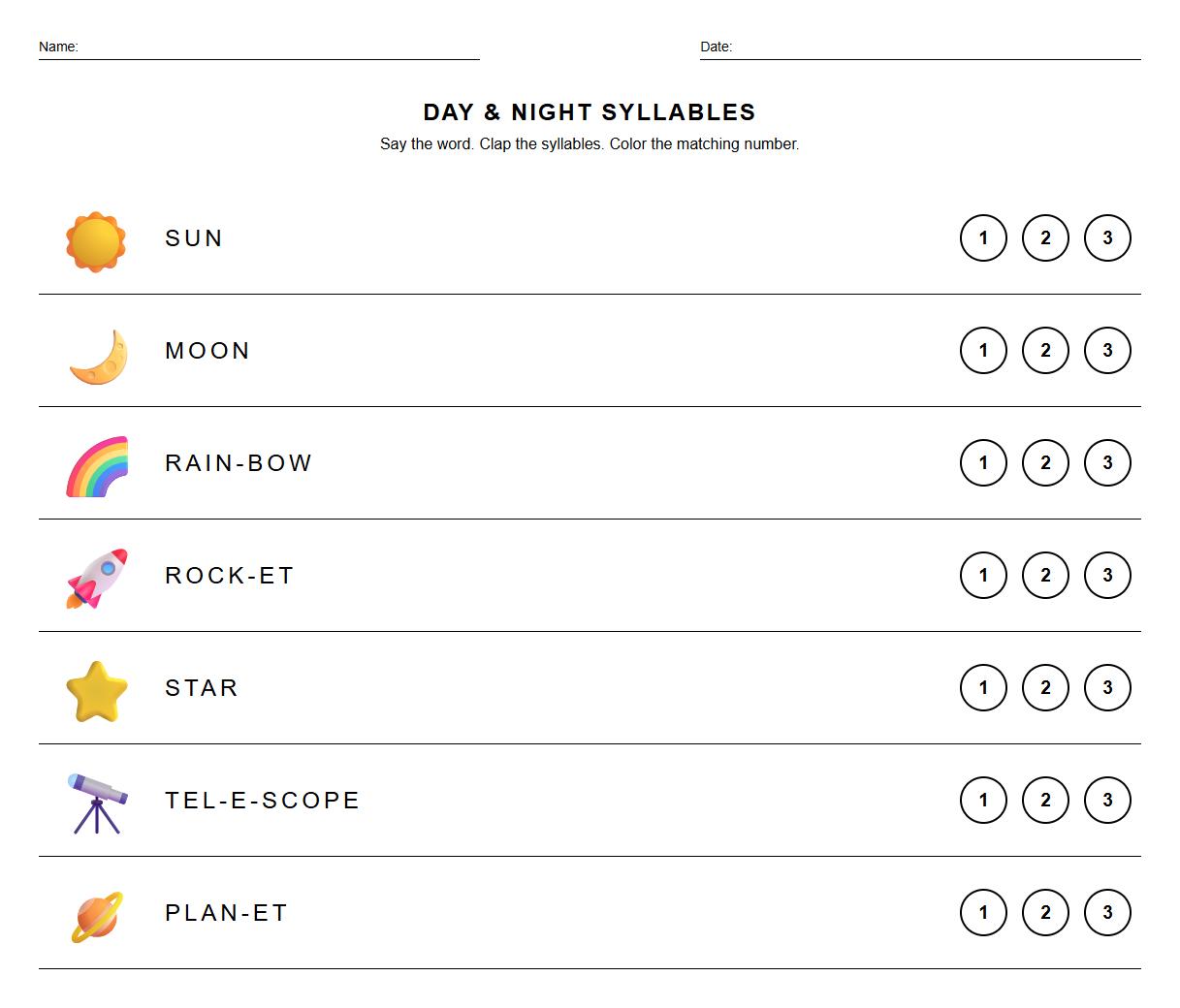
Guide children in clapping out the sounds they hear in the word "sun" to promote phoneme segmentation. Clapping helps them break down the word into individual sounds, aiding sound awareness. This multisensory approach enhances auditory processing and speech skills. Encourage slow pronunciation to capture all sounds. For related activities, see this hands-on five senses worksheet.
Silent Letter Awareness
Discuss which letter is silent in the word "night" to build knowledge of tricky spelling patterns. Understanding silent letters is important for accurate reading and spelling. Highlight the silent "gh" to increase awareness of English orthography. This awareness supports decoding unfamiliar words. Discover foundational concepts in a magnet polarity worksheet.
Identifying Initial Sounds in Similar Words
Ask children which word begins with the same sound as "dark": "day," "night," or "light." This challenges them to differentiate initial sounds and reinforces phonological skills. The correct answer is "day," sharing the /d/ sound with "dark." This promotes careful listening and sound comparison. Practice phonics recognition with a forces in science worksheet.
Underlining Morning-Related Words
Instruct children to underline the word that relates to the morning. This helps develop reading comprehension and word recognition linked to time concepts. Activities focusing on context and meaning improve vocabulary retention. Underlining also strengthens fine motor skills through writing practice. Build semantic sorting skills with a magnetic items worksheet.


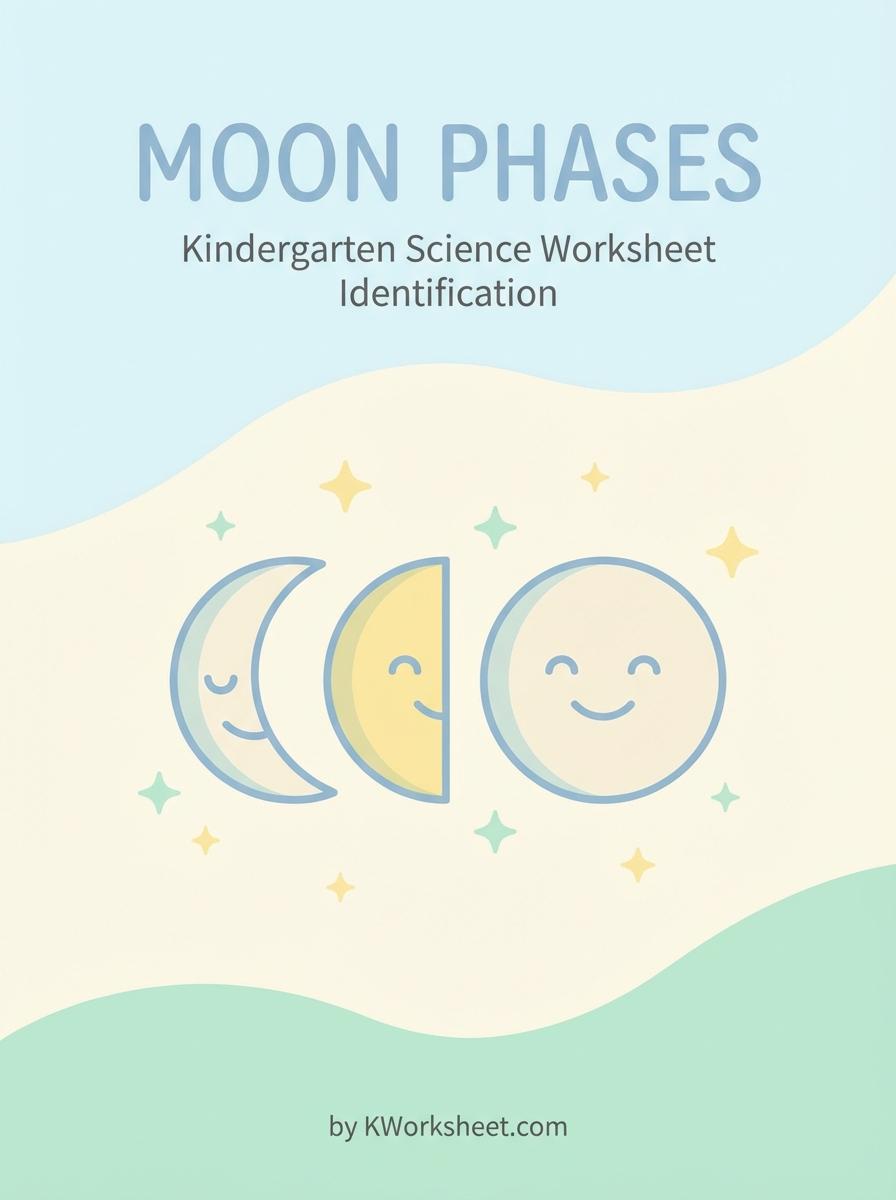
Kindergarten Science Worksheet on Moon Phases Identification