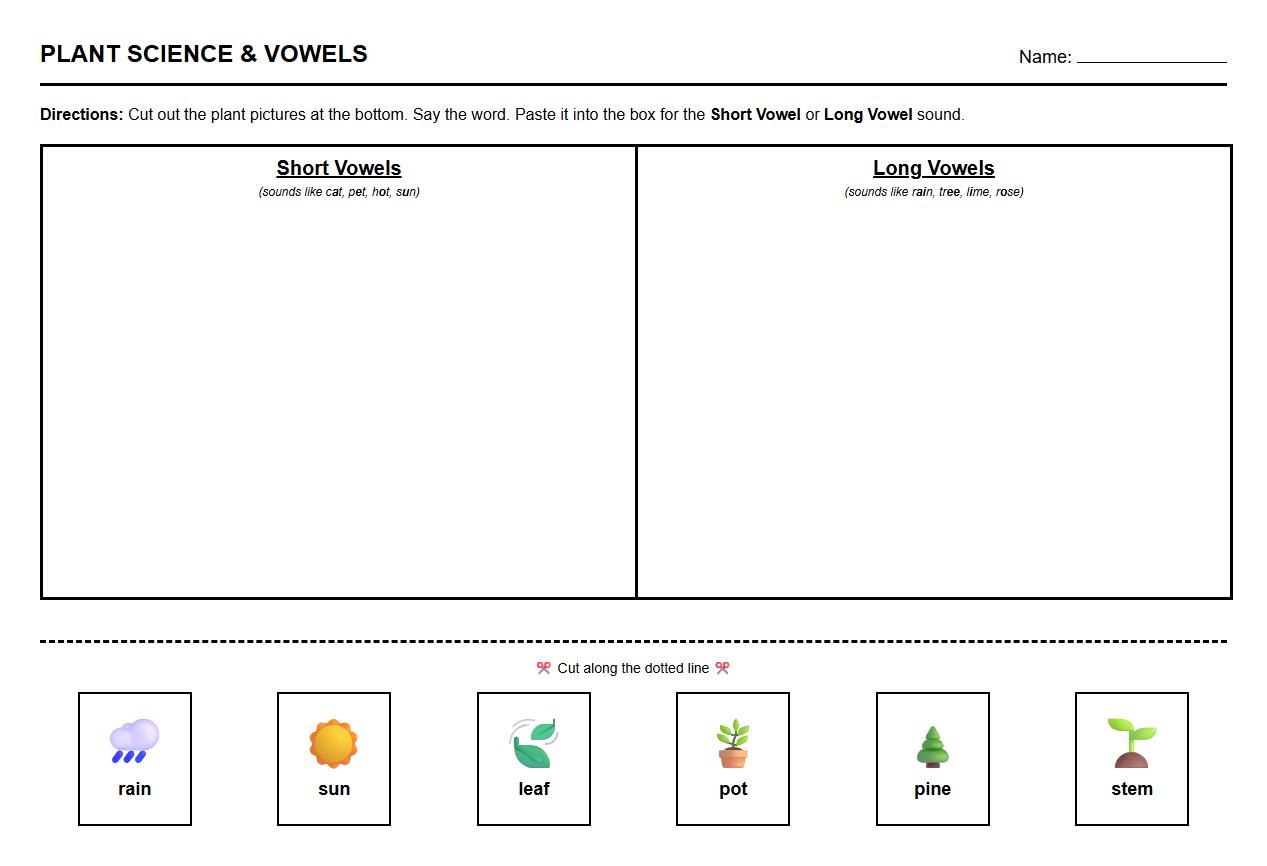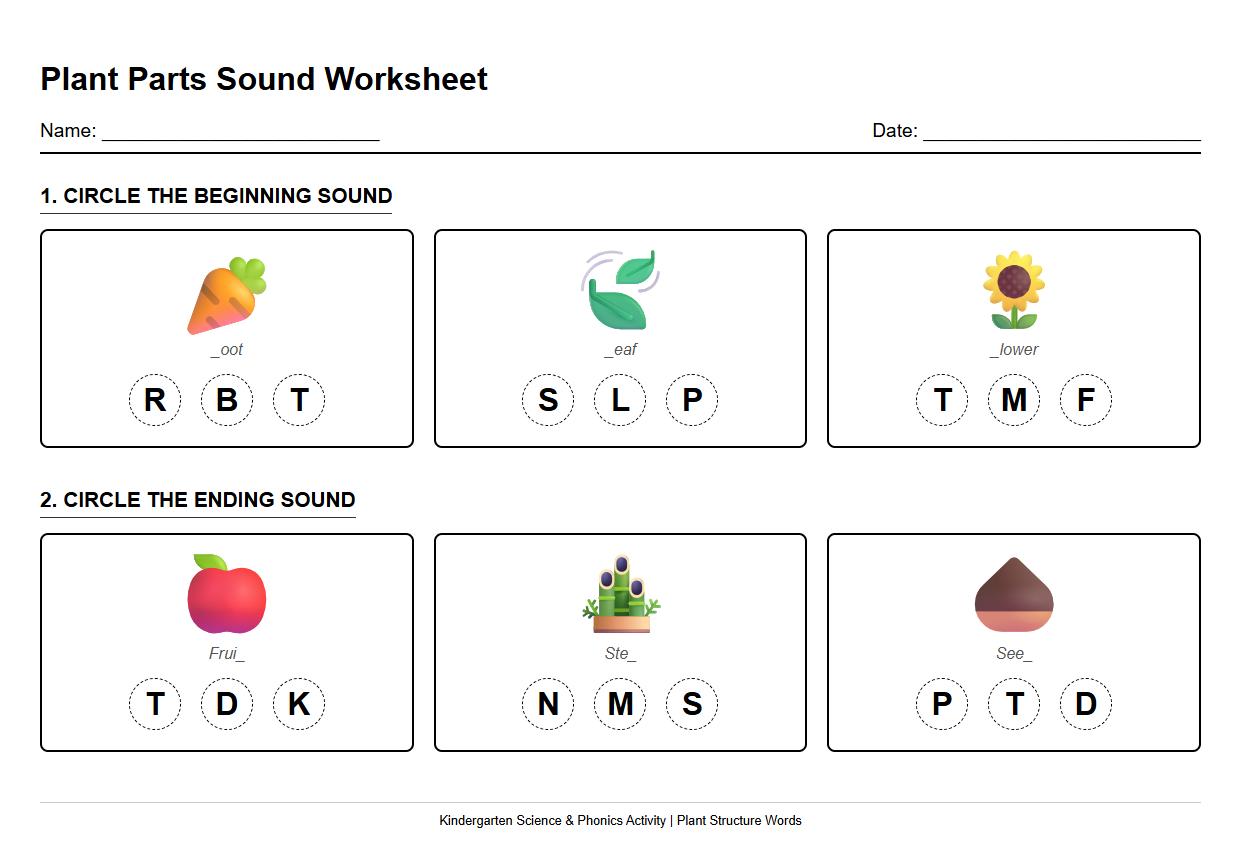
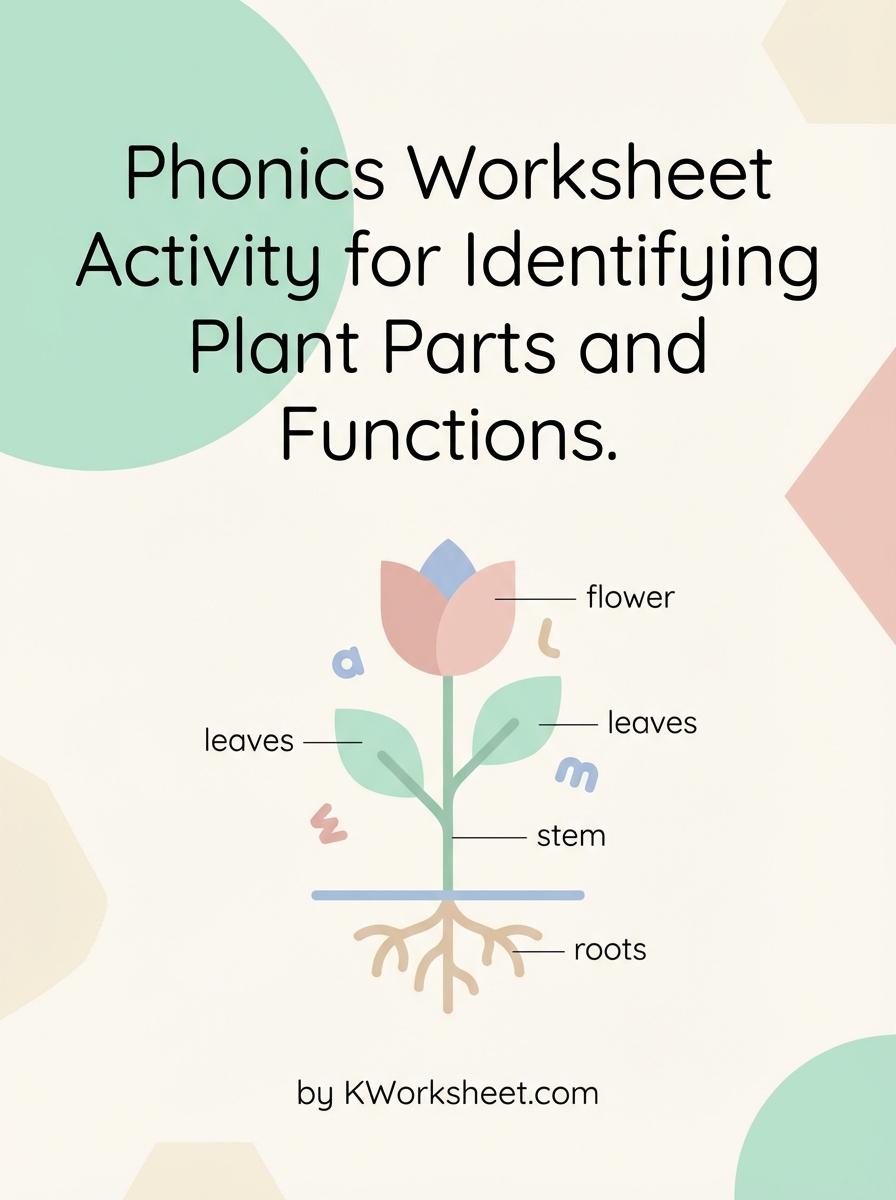
Phonics worksheet activities help children connect sounds with the names of plant parts and their functions, enhancing both literacy and science skills. These exercises focus on key vocabulary such as root, stem, leaf, and flower, reinforcing letter-sound associations through engaging tasks. Explore the available worksheets to support effective learning about plant anatomy.
Which Word Begins with the Same Sound as "Plant"?
Encourage children to listen carefully to the beginning sound of the word "plant". Words like "pig" or "pen" share the same initial sound. Use pictures of these words for visual support. This activity helps develop phonemic awareness essential for reading skills.
Circle the Picture That Shows the Root
Help children identify the root by explaining it is the part of the plant that grows underground. Show images of roots compared to leaves or flowers. Children should circle the picture showing this important plant part. This enhances understanding of plant anatomy.
Fill in the Blank: Leaves Help the Plant to _______
Ask children to complete the sentence by filling in the blank with "make food". Explain that leaves use sunlight to provide nourishment for the plant, a process called photosynthesis. This reinforces the role of leaves in the plant's life. Use simple language for clear understanding.
Which Part of the Plant Takes in Water from the Soil?
Guide children to recognize the roots as the part that absorbs water. Visual aids showing water movement into roots can be helpful. Emphasize the roots' important function in keeping the plant healthy. This activity supports basic biology concepts.
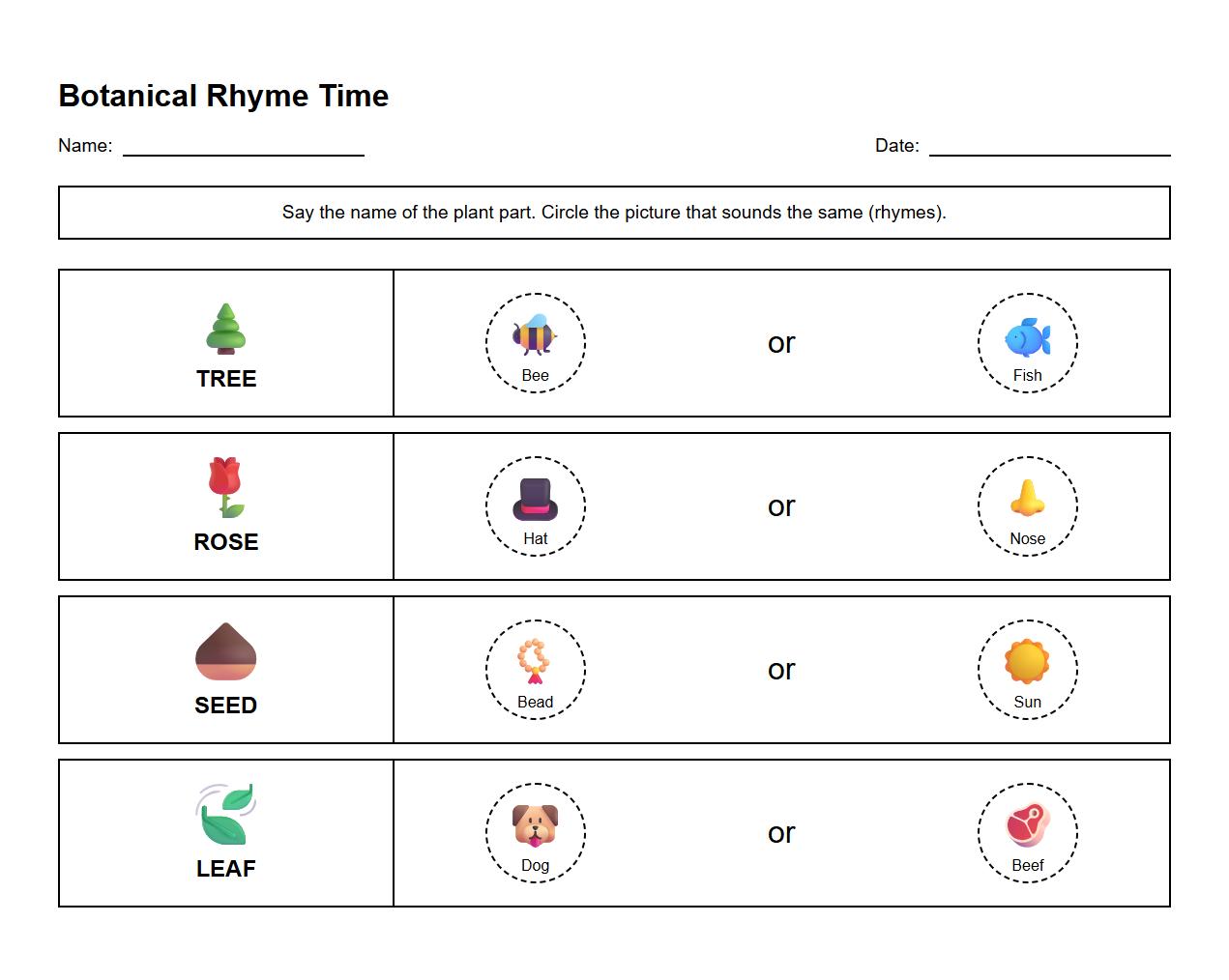
Underline the Word That Rhymes with "Stem"
Prepare a list of words including rhyming options like "gem" or non-rhyming words. Encourage children to listen for words ending with the same sound as "stem". Underlining the correct word builds phonological awareness. Rhyming skills connect to early literacy development.
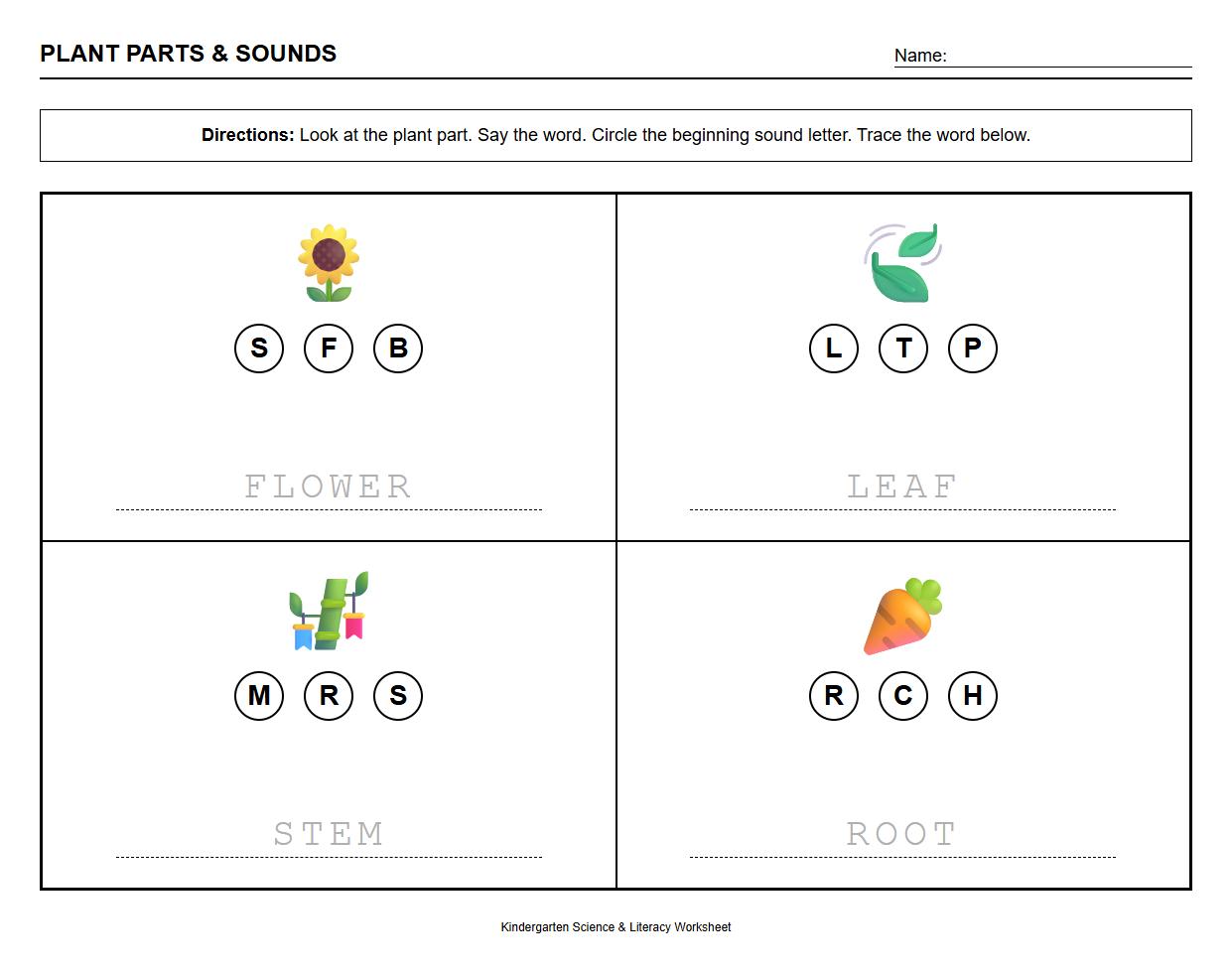
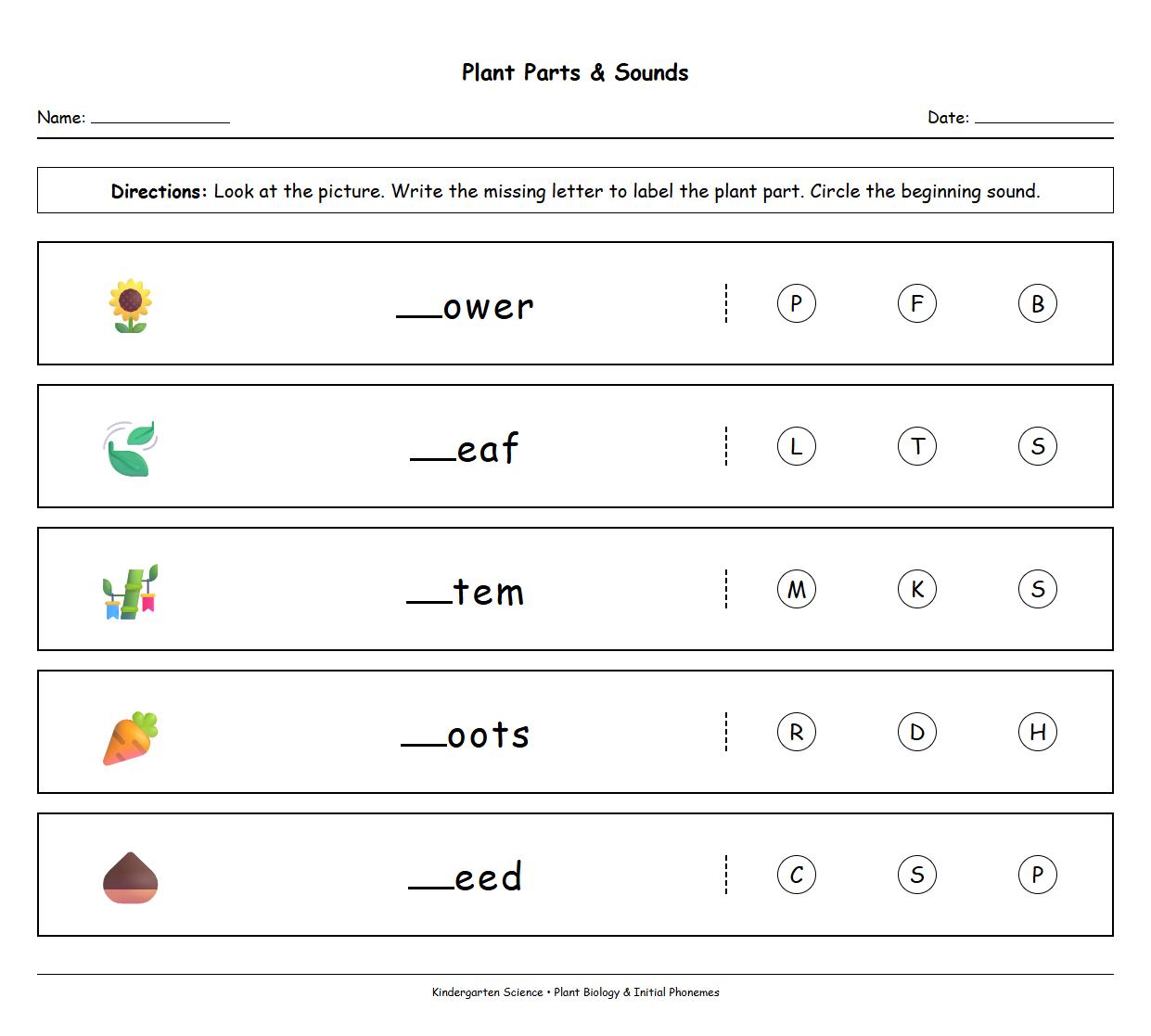
What Sound Does the Letter at the Start of "Petal" Make?
Ask children to identify the starting letter "P" and its sound /p/. Use examples or pictures of other words beginning with /p/. This helps children associate letters with their corresponding sounds. Early phonics instruction benefits reading readiness.
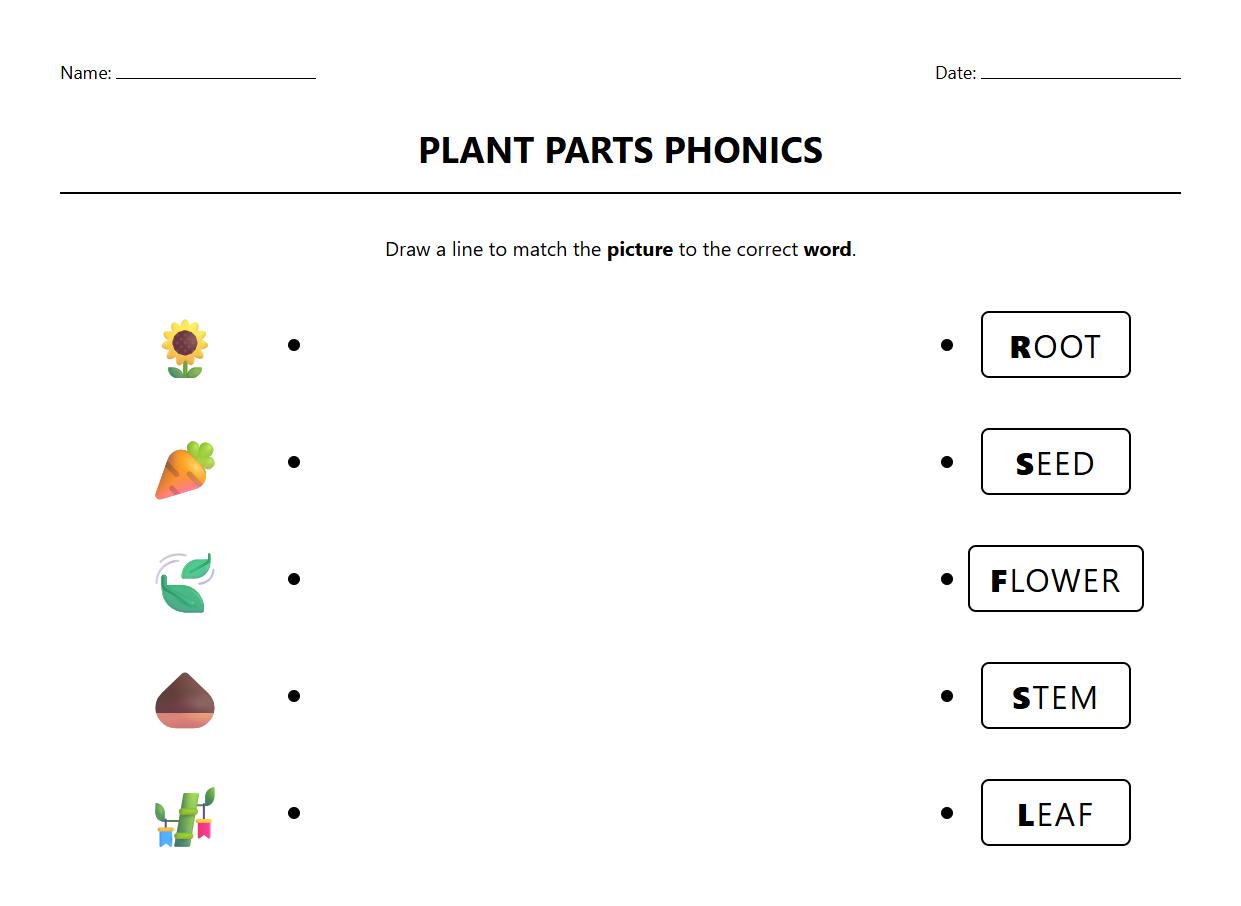
Draw a Line to Match the Word "Flower" to Its Picture
Provide a word bank and images depicting plant parts, including a flower. Children draw lines connecting the written word to the matching picture. This exercise reinforces word recognition and vocabulary related to plants. Visual matching aids memory retention.
Which Part of the Plant Helps It Stand Tall?
Explain that the stem supports the plant by holding it upright. Show pictures or real plants pointing out the stem's strength and function. Children learn how the stem connects roots and leaves. Understanding this is key to grasping plant structure.
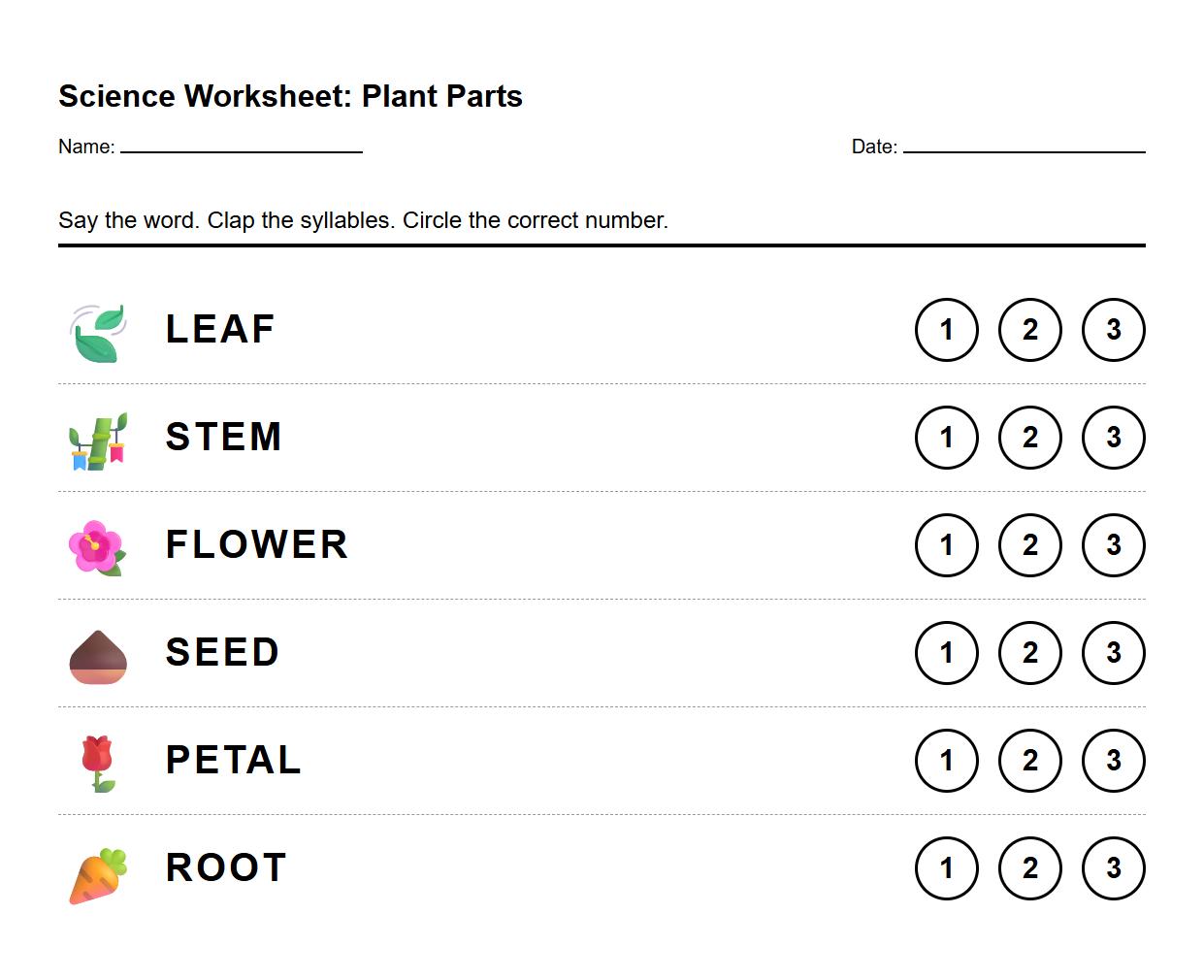
Say the Word "Seed" and Clap the Syllables
Have children say the word "seed" slowly and clap once to represent the single syllable. Clap syllables help in learning word rhythms and syllable segmentation. This phonological activity supports speech and literacy skills. It is simple and fun for young learners.
Color the Part of the Plant That Makes Food
Instruct children to color the leaves because they are responsible for making food through photosynthesis. Use coloring pages with clear leaf illustrations. This creative task reinforces the concept of leaves' function visually and kinesthetically. Coloring is an engaging learning method.


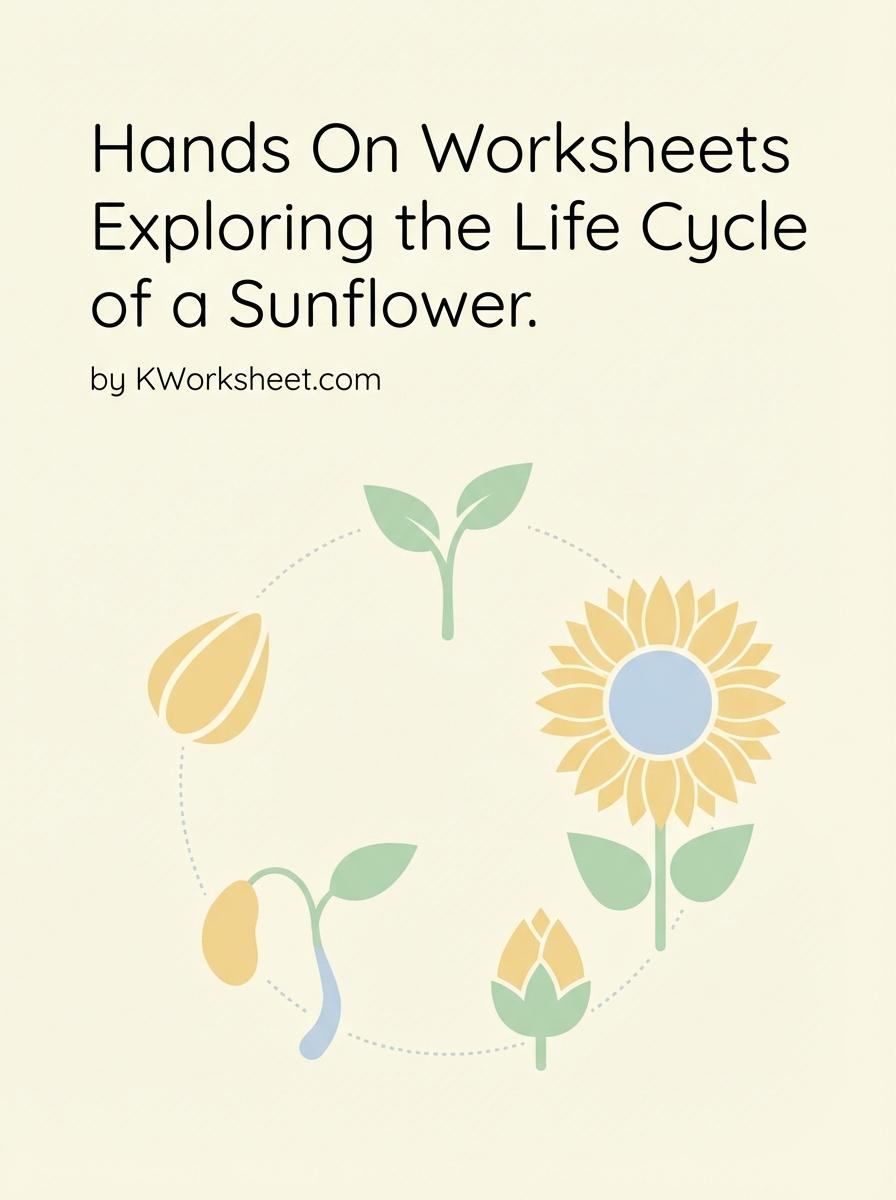
Hands On Worksheets Exploring the Life Cycle of a Sunflower