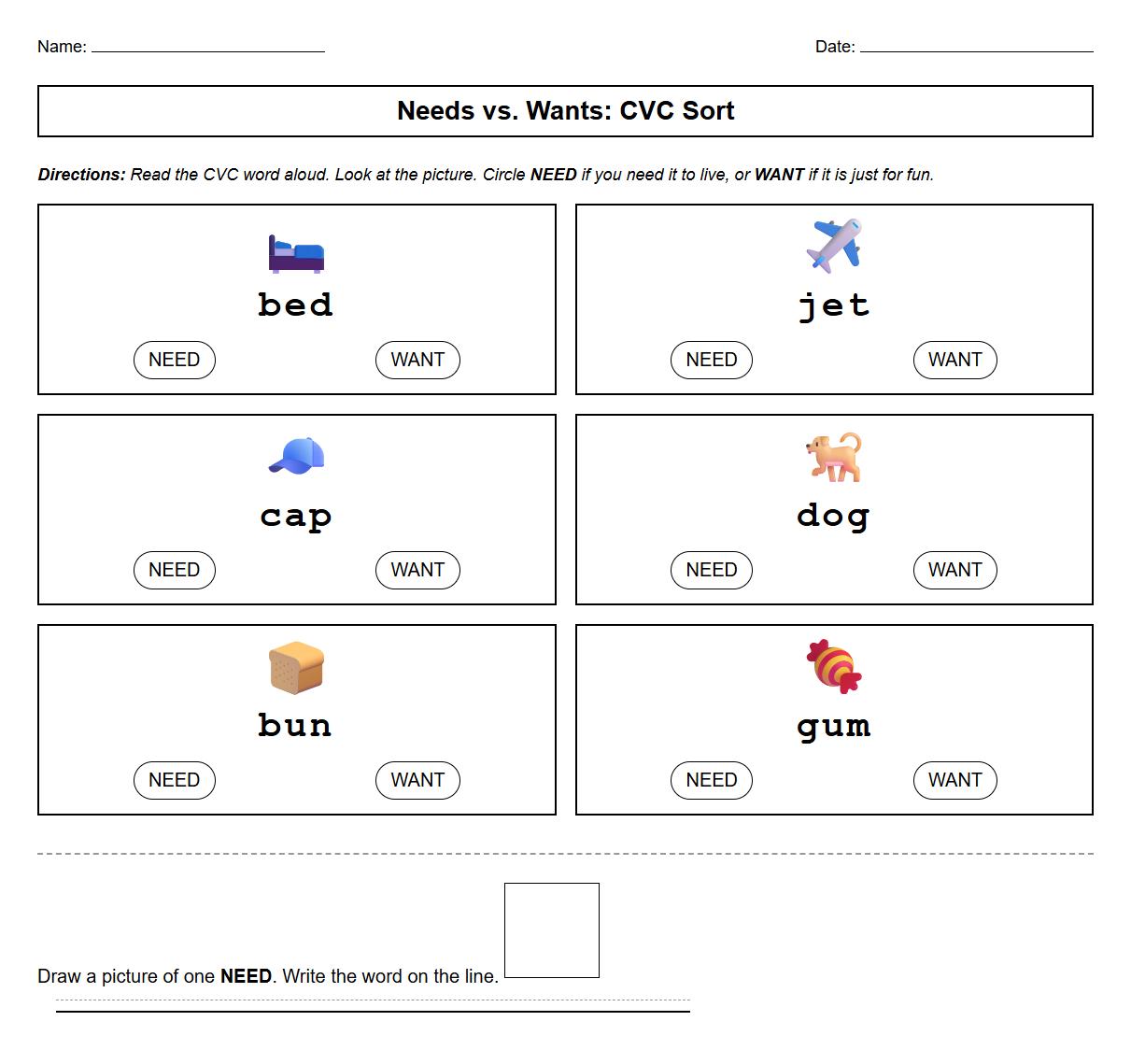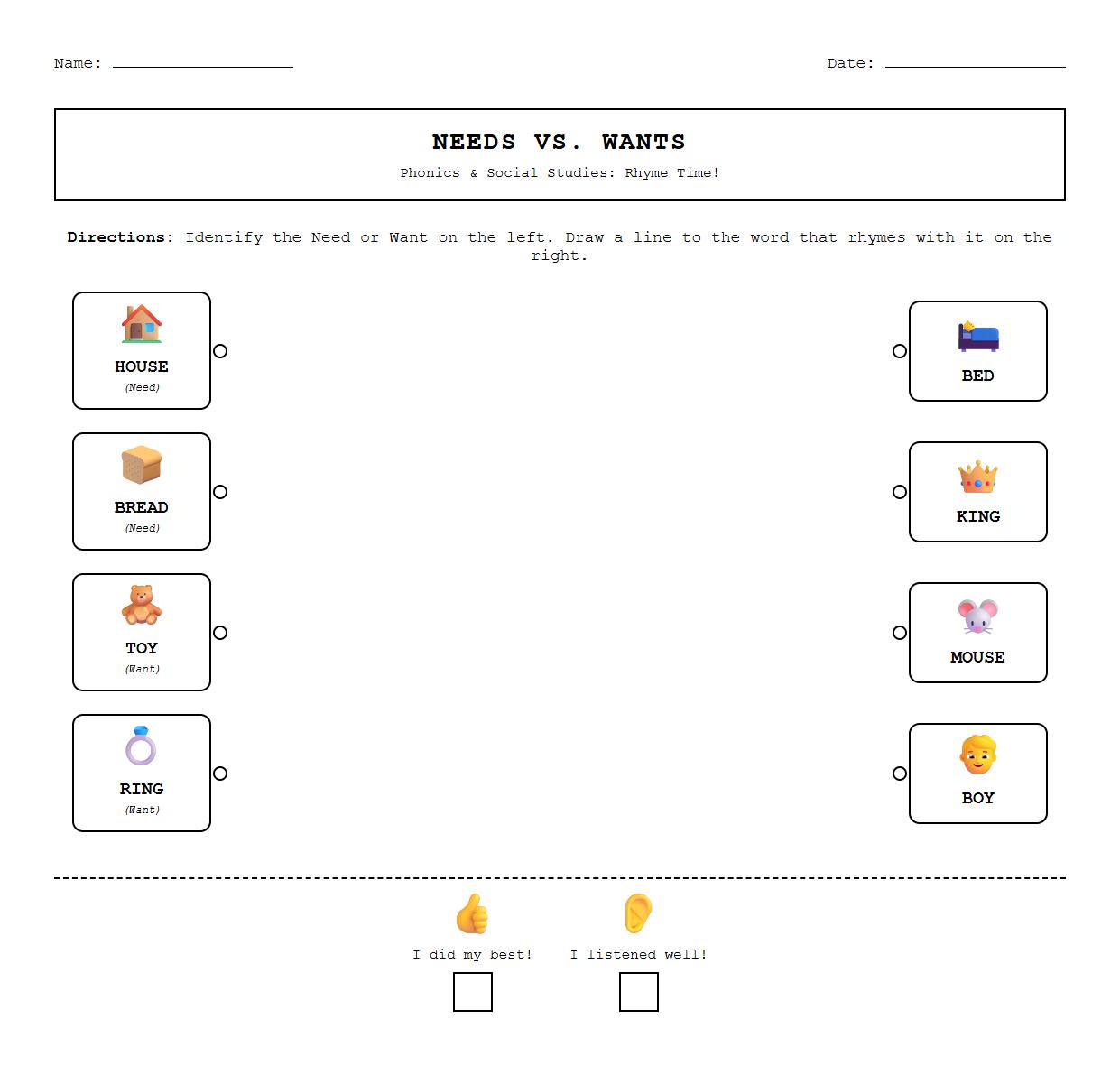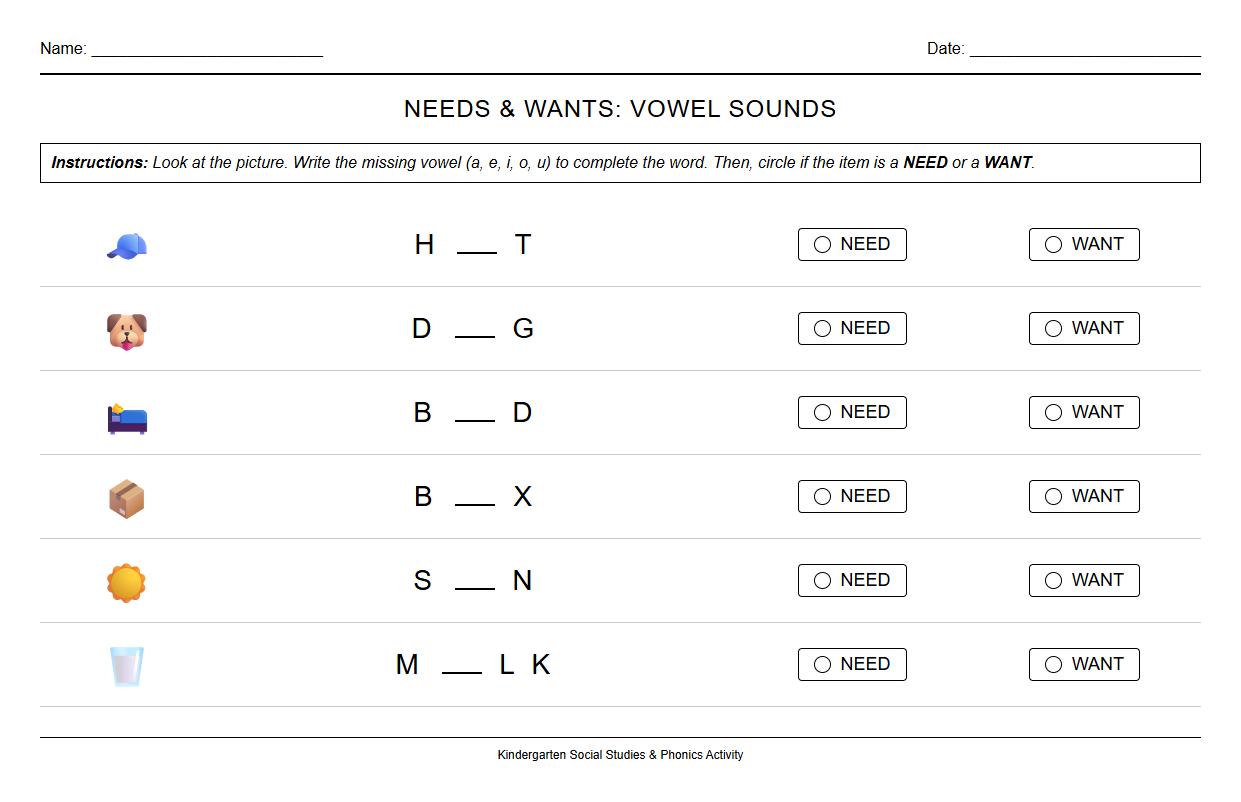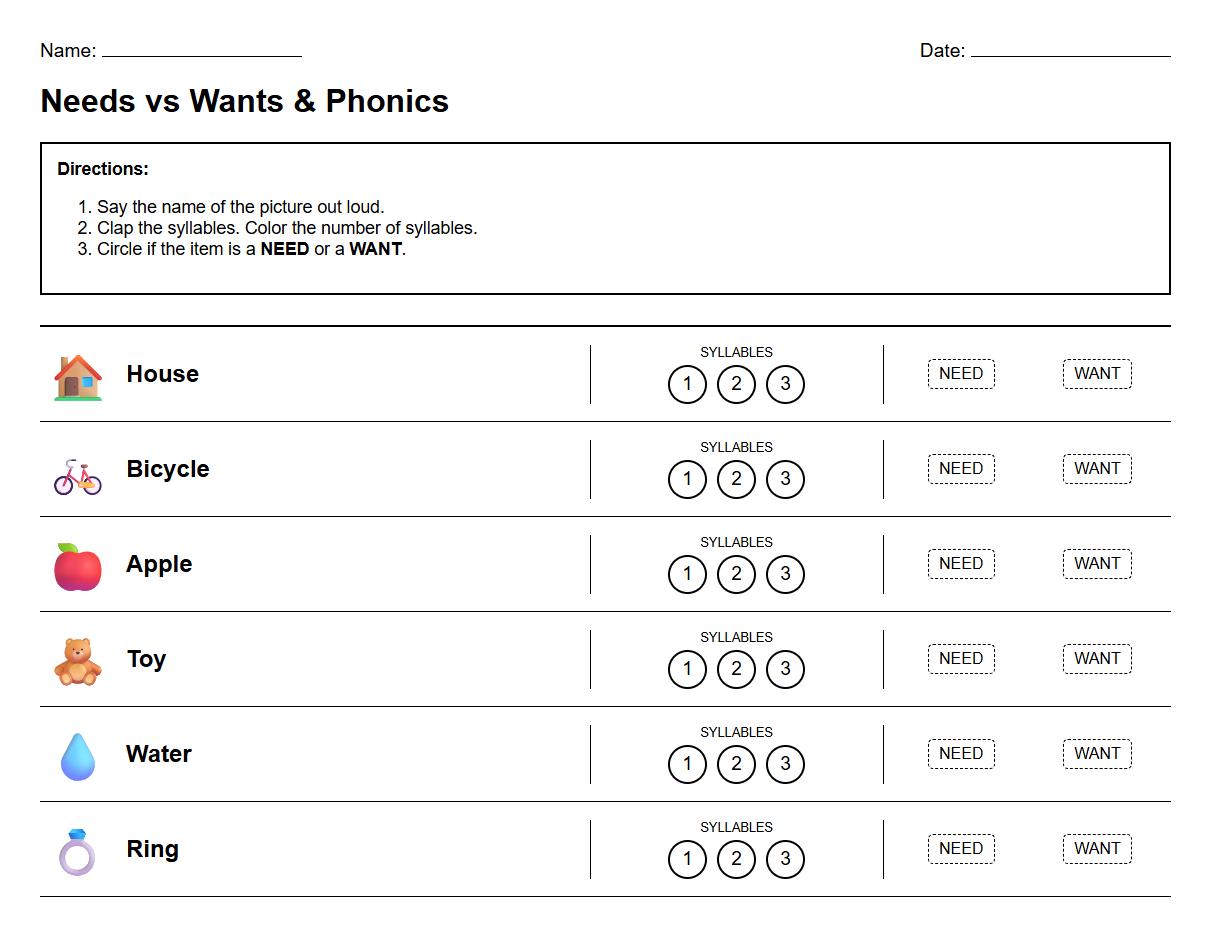
Differentiating between needs and wants is a foundational skill for kindergarteners that enhances their understanding of basic financial literacy and decision-making. This phonics worksheet reinforces vocabulary and comprehension through engaging, age-appropriate activities focused on everyday examples. Explore our available worksheets to help your child master needs versus wants while developing crucial phonics skills.
Understanding Needs and Wants
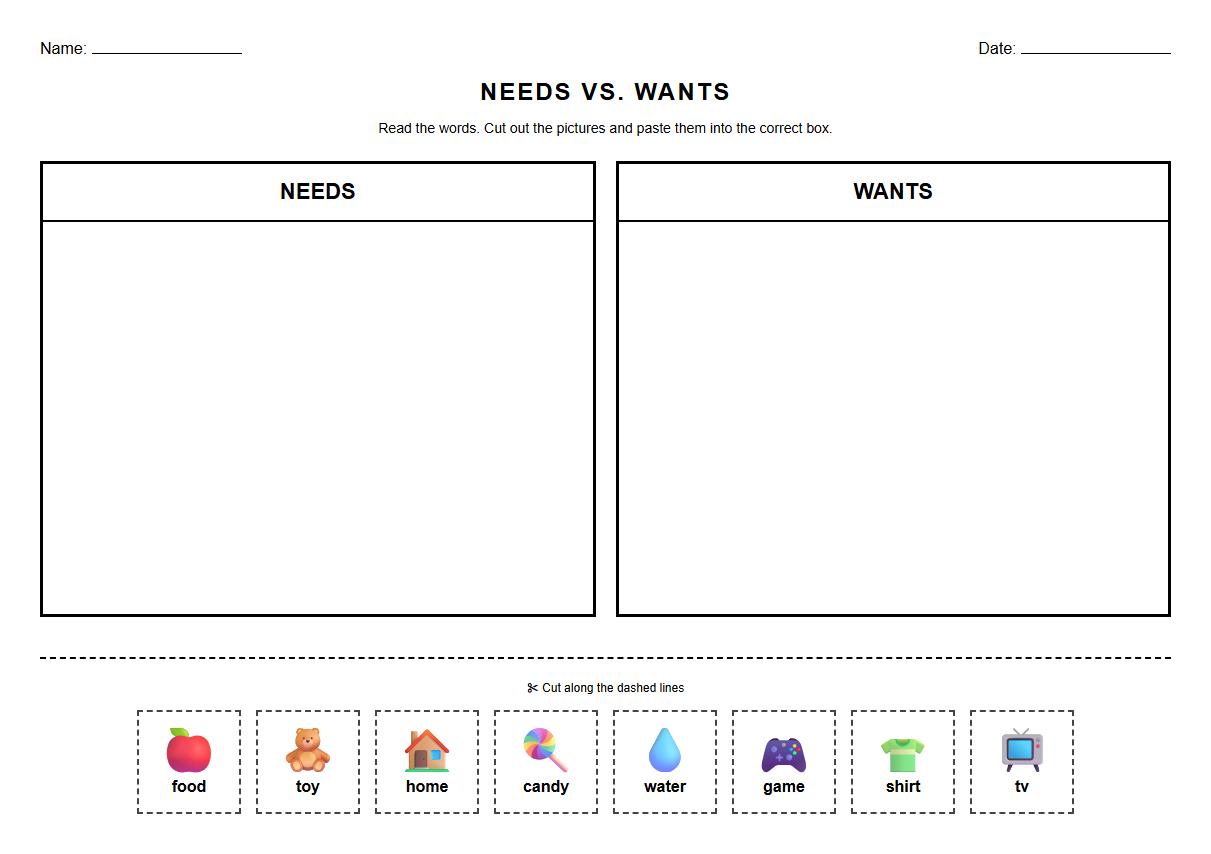
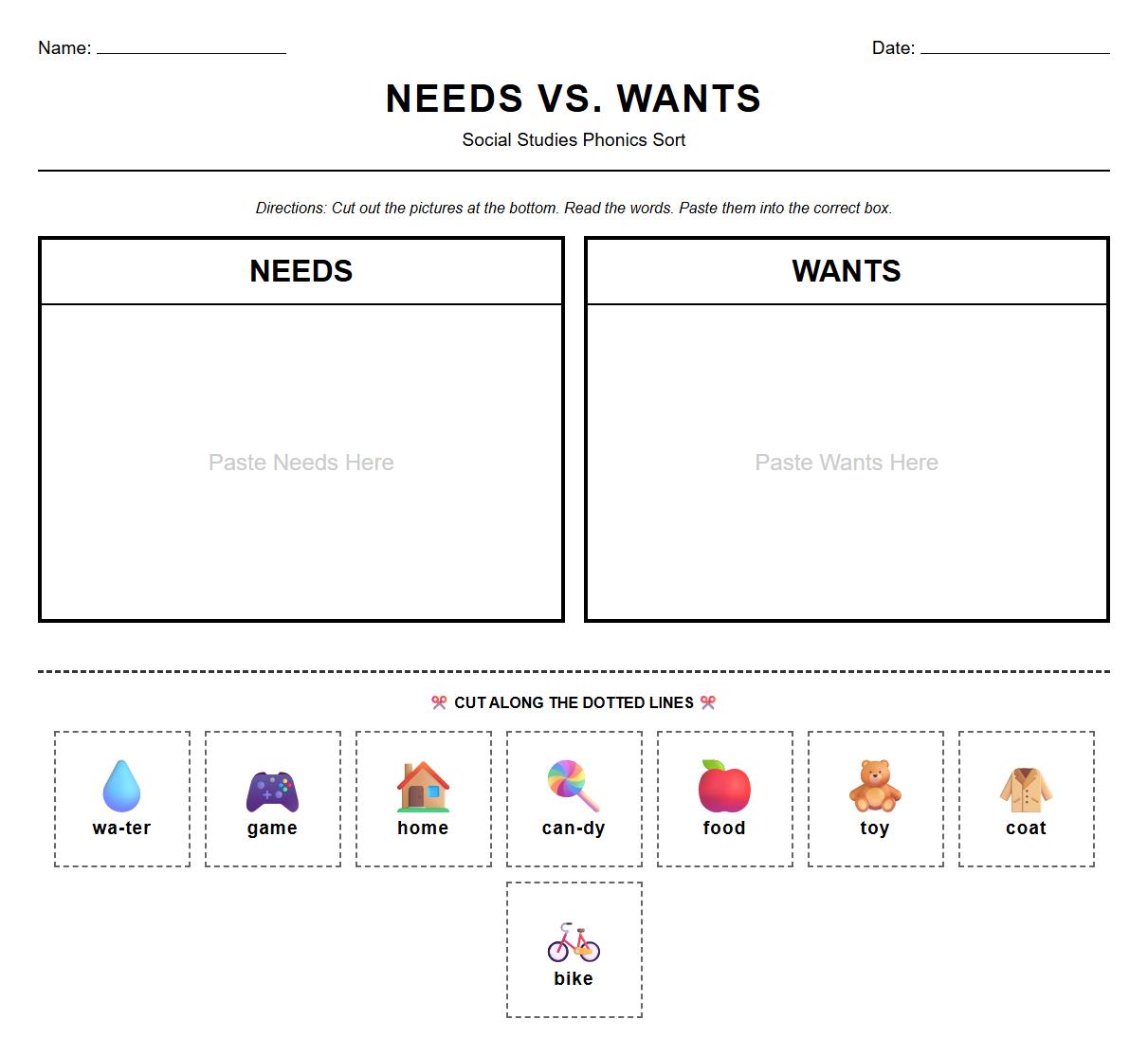
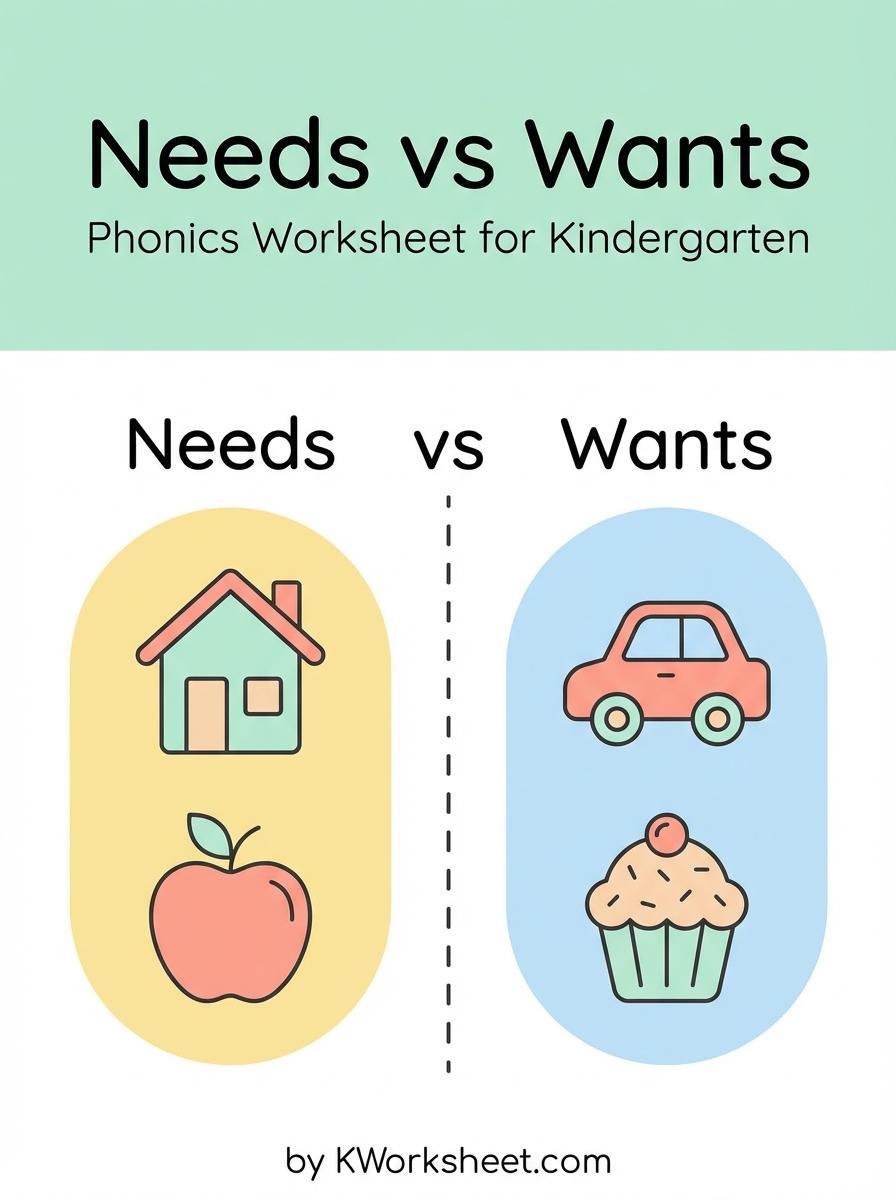
Helping young children differentiate between needs and wants is a key part of early learning. Needs are things essential for survival, such as food, water, and shelter. Wants are items that make life more enjoyable but are not necessary. This guide will support teachers and parents in explaining these concepts effectively.
Identifying Needs in Pictures
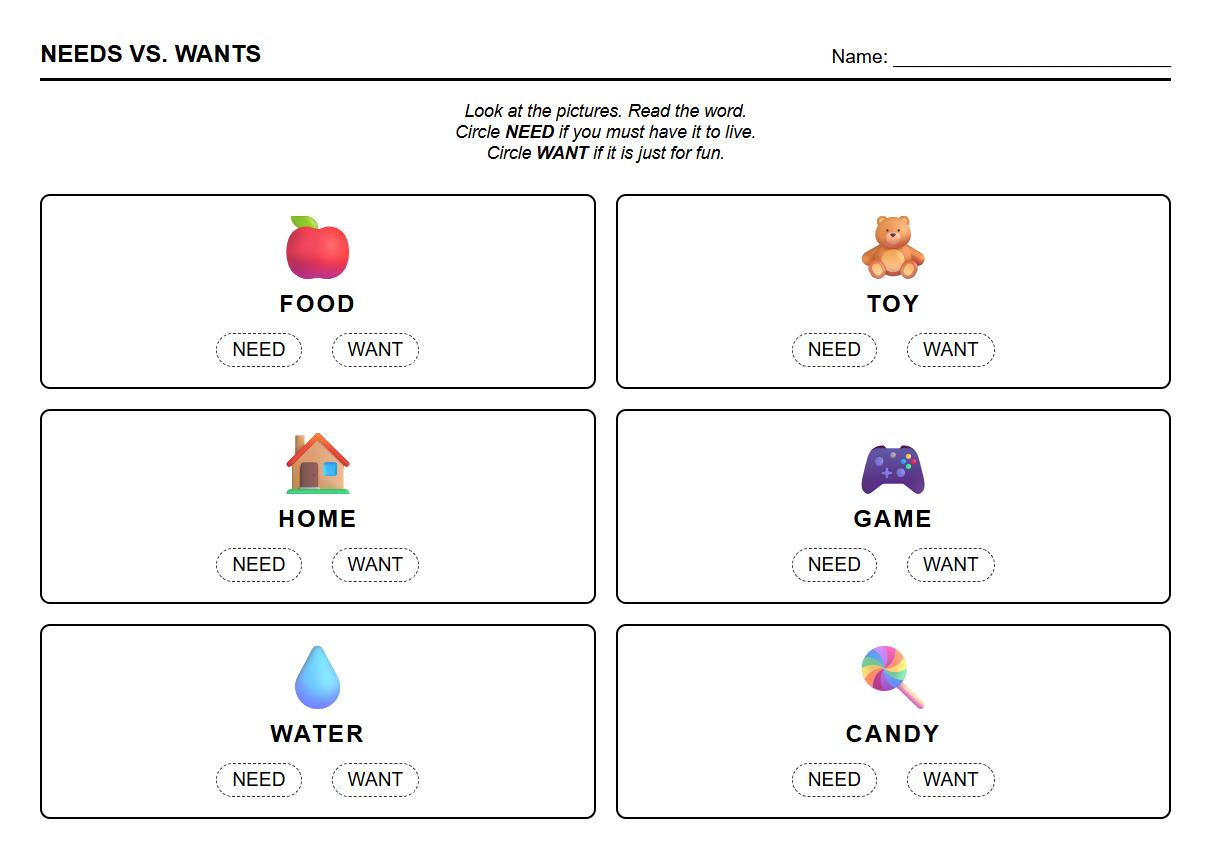
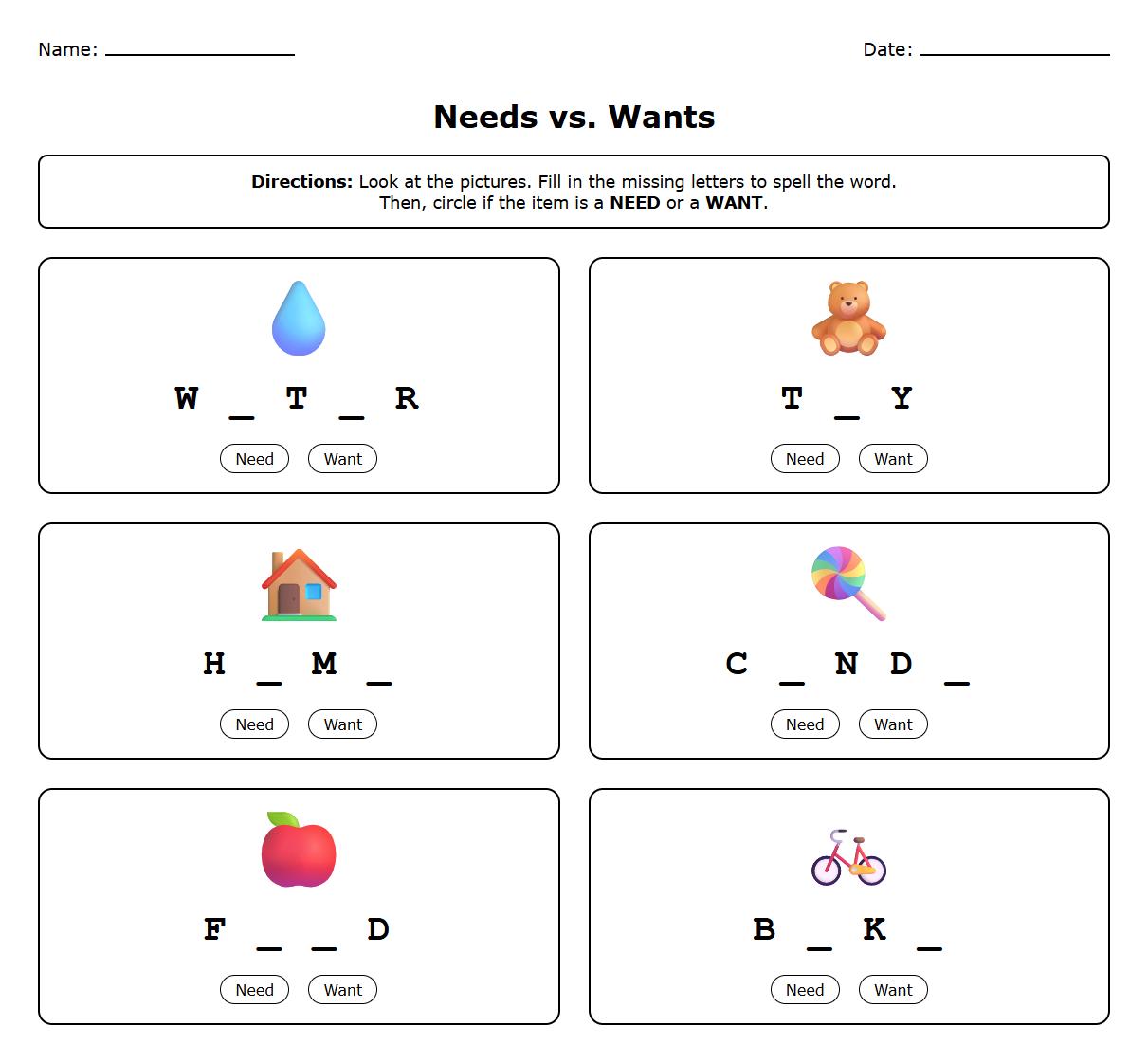
Ask children to circle the items that represent needs in a worksheet. This activity encourages visual recognition of essential items like food, water, or clothing. It helps reinforce what is important for staying alive and healthy. Parents and teachers can guide kids during this interactive exercise.
Recognizing Wants Through Images
Children should be prompted to identify pictures of wants, such as toys or candy. Discuss how these items are fun but not necessary to live. This distinction helps children make thoughtful decisions about what they truly need. Highlighting wants enhances their understanding of wants vs. needs.
Is Food a Need or a Want?
Explain that food is a need because it provides energy and nutrients required to live. Without food, the body cannot function properly. This clarifies why food items must be included when circling needs on the worksheet. Reinforcing this builds a foundation for healthy living concepts.
Is a Toy a Need or a Want?
A toy is a want because it is not essential for survival or health. While toys bring joy and entertainment, they are extras kids can live without. Emphasizing this difference helps children prioritize their needs over desires. This supports social and emotional learning at an early age.
Which Item Helps You Stay Healthy?
Guide children to find an item like fruits, vegetables, or water that helps keep you healthy. Discuss how these needs protect the body from illness and provide strength. This encourages healthy lifestyle habits from a young age. Use engaging visuals to make the concept clear.
Identifying Essential Items for Living
Ask children to find pictures of things they need to live such as air, food, or water. Explain how these essentials support life every day. Making this connection helps children understand their importance in a relatable way. It also fosters respect for natural resources.
Words That Begin with the Same Sound as "Need"
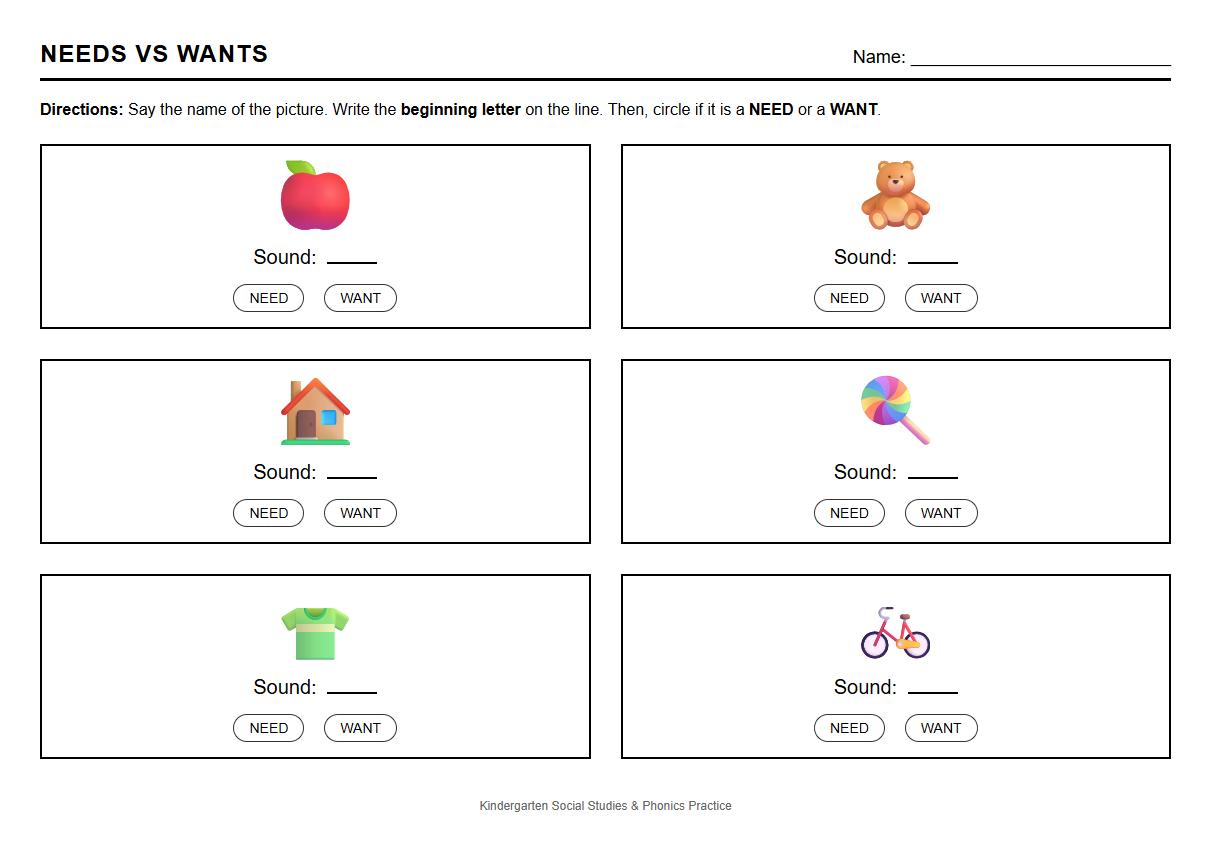
Encourage phonemic awareness by asking which word starts with the same sound as "need". This sound is the /n/ sound. Activities that link sounds with words boost literacy skills in kindergarten learners. Use simple examples to keep it fun and engaging.
What Sound Does the Word "Want" Start With?
Help children identify that the word "want" begins with the /w/ sound. Recognizing initial sounds in words is an essential reading skill. Such exercises support language development and vocabulary building. Including hands-on practice will enhance retention.
Matching Pictures to "Needs" or "Wants"
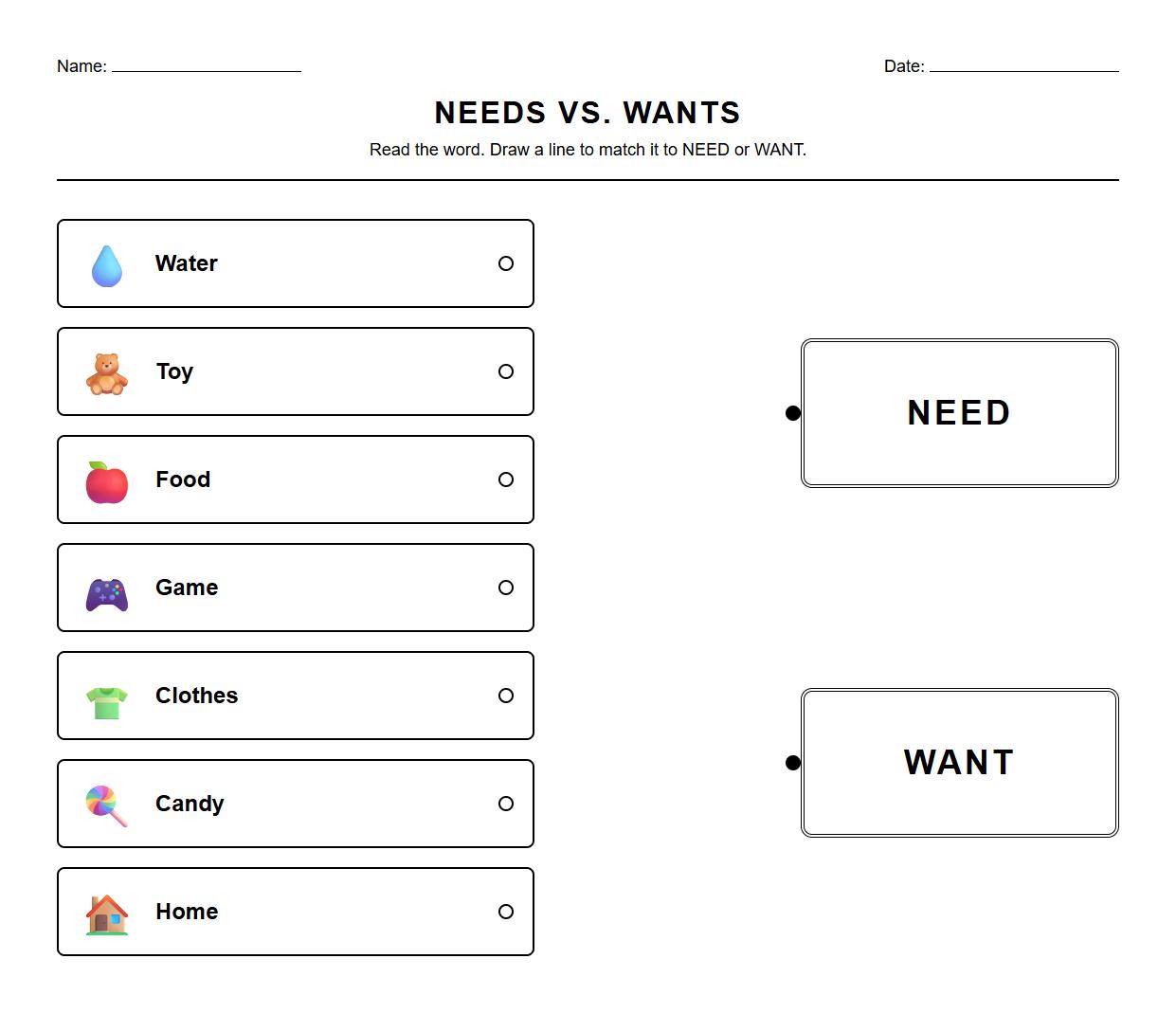
Provide a matching activity where kids connect images to the correct word: needs or wants. This reinforces understanding by combining visual and word recognition skills. The activity promotes critical thinking about everyday choices. It is an effective way to wrap up the worksheet lesson.


Kindergarten Needs vs Wants Sorting Activity Worksheet