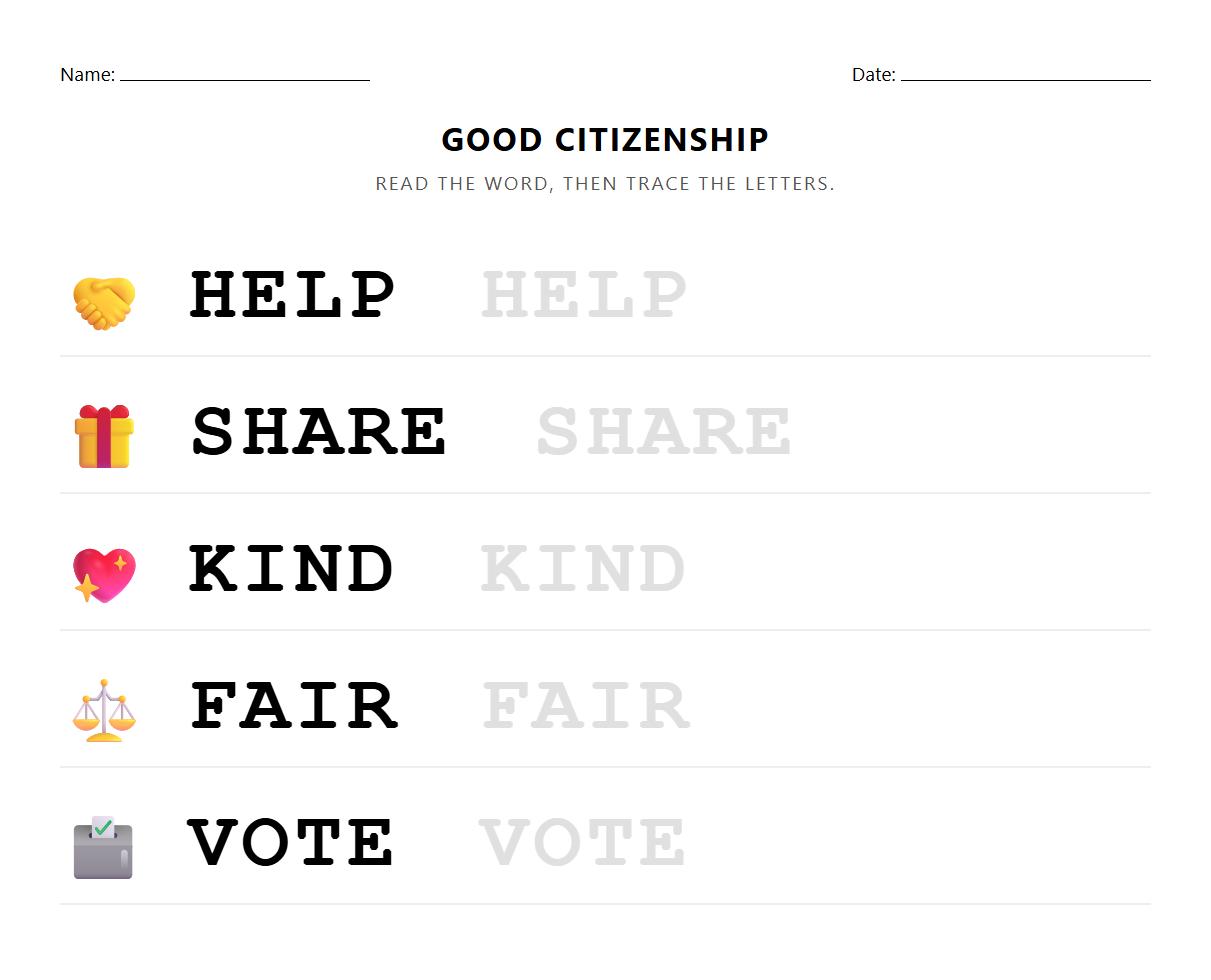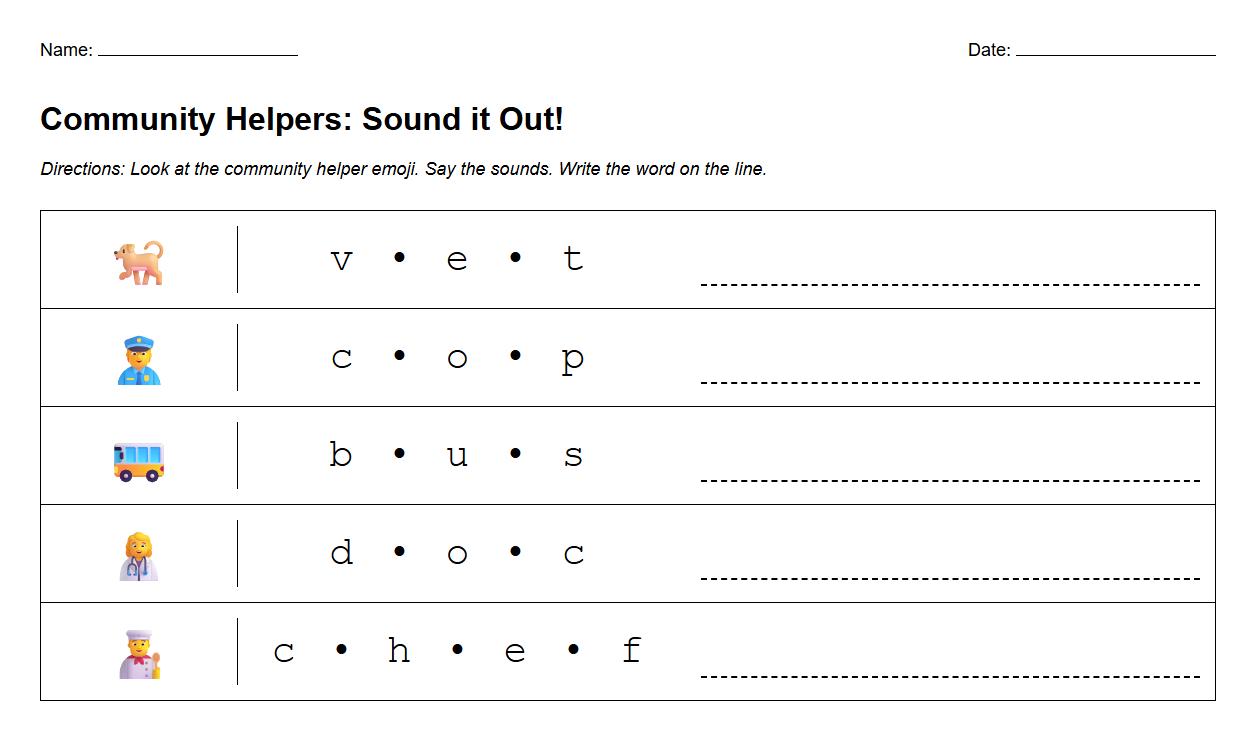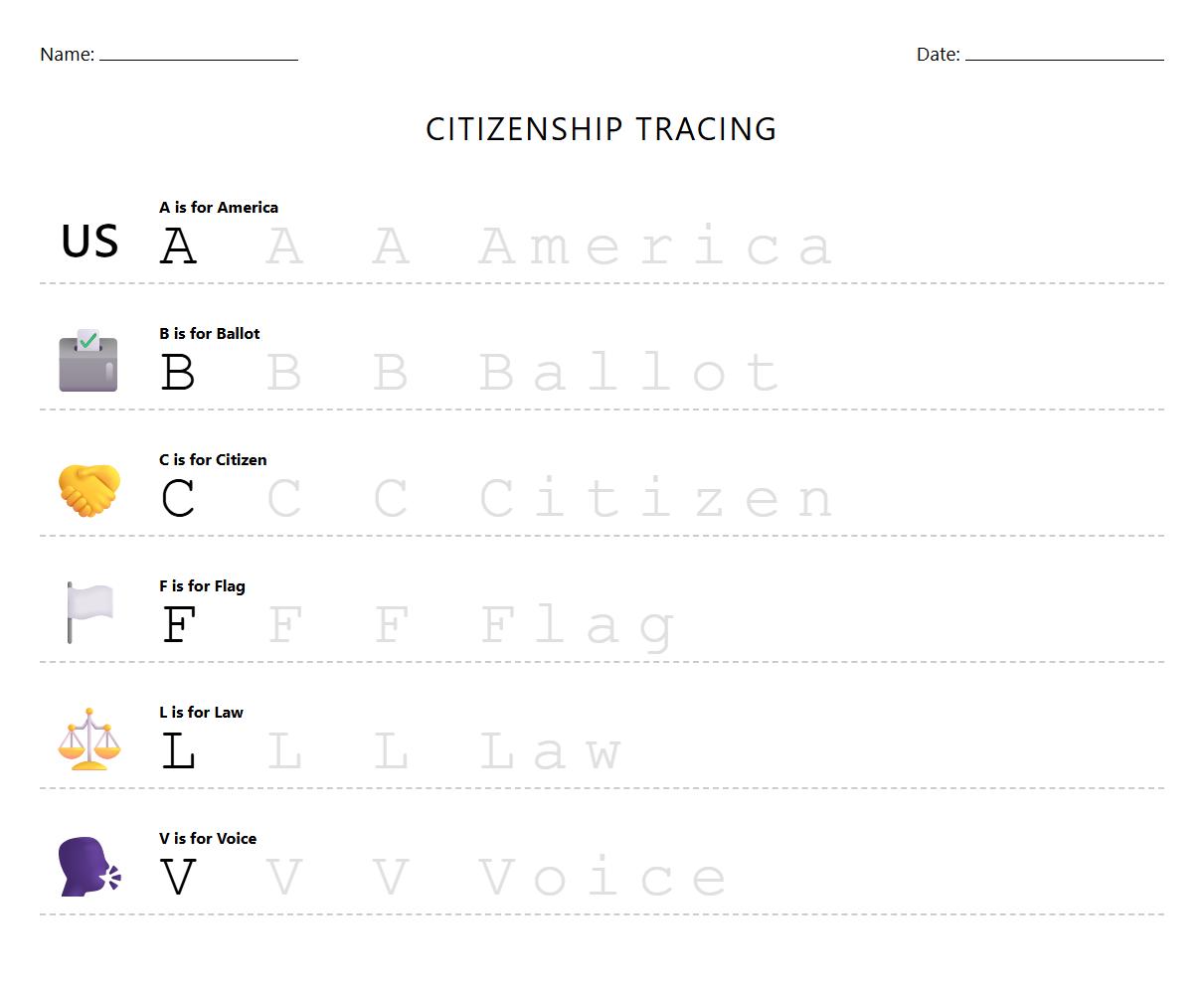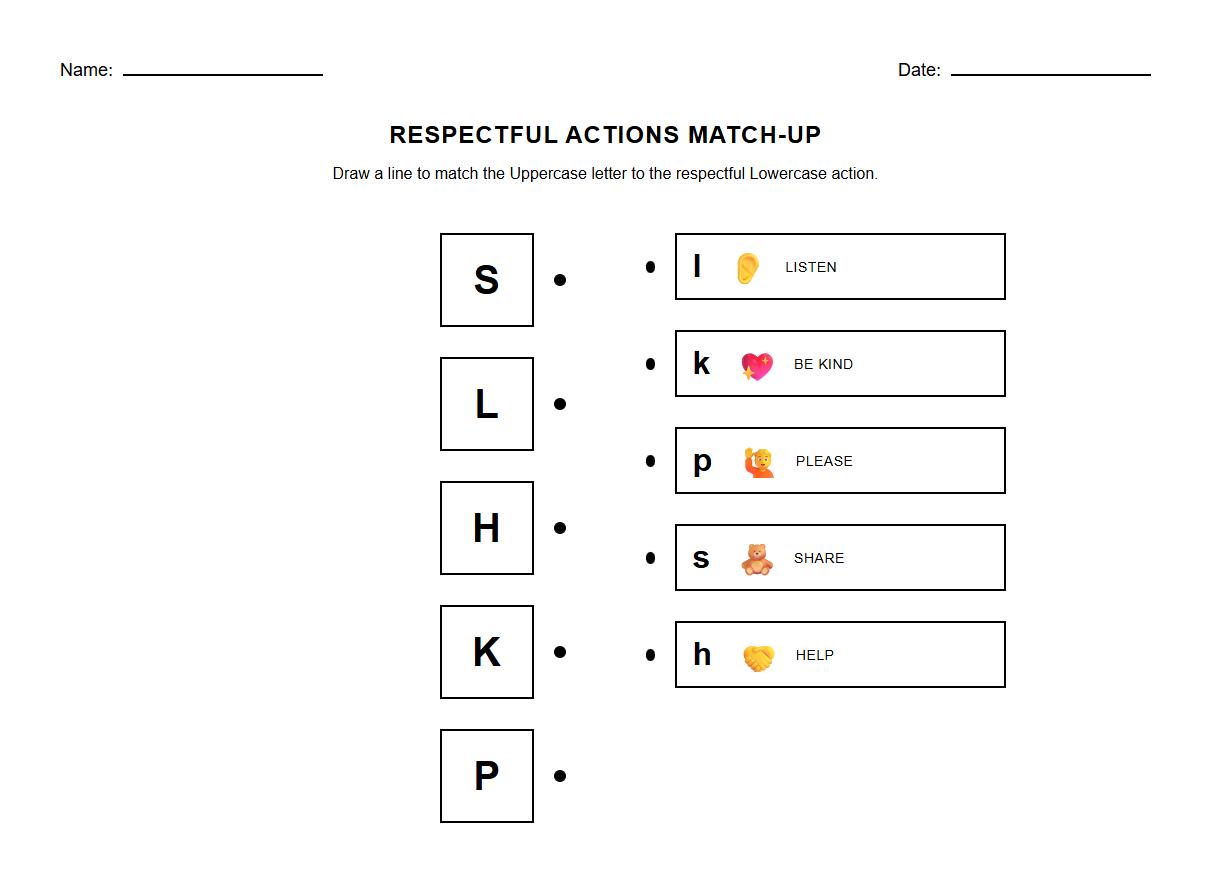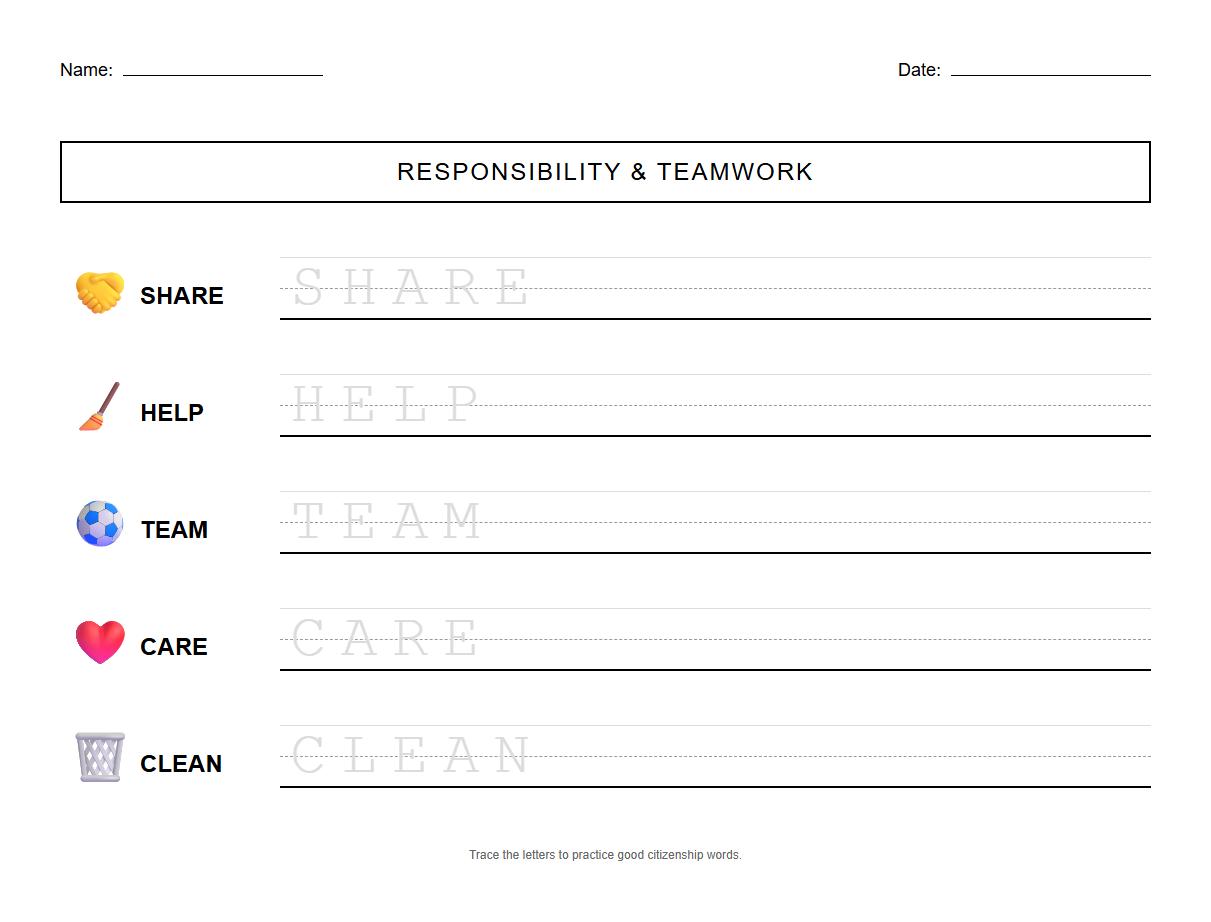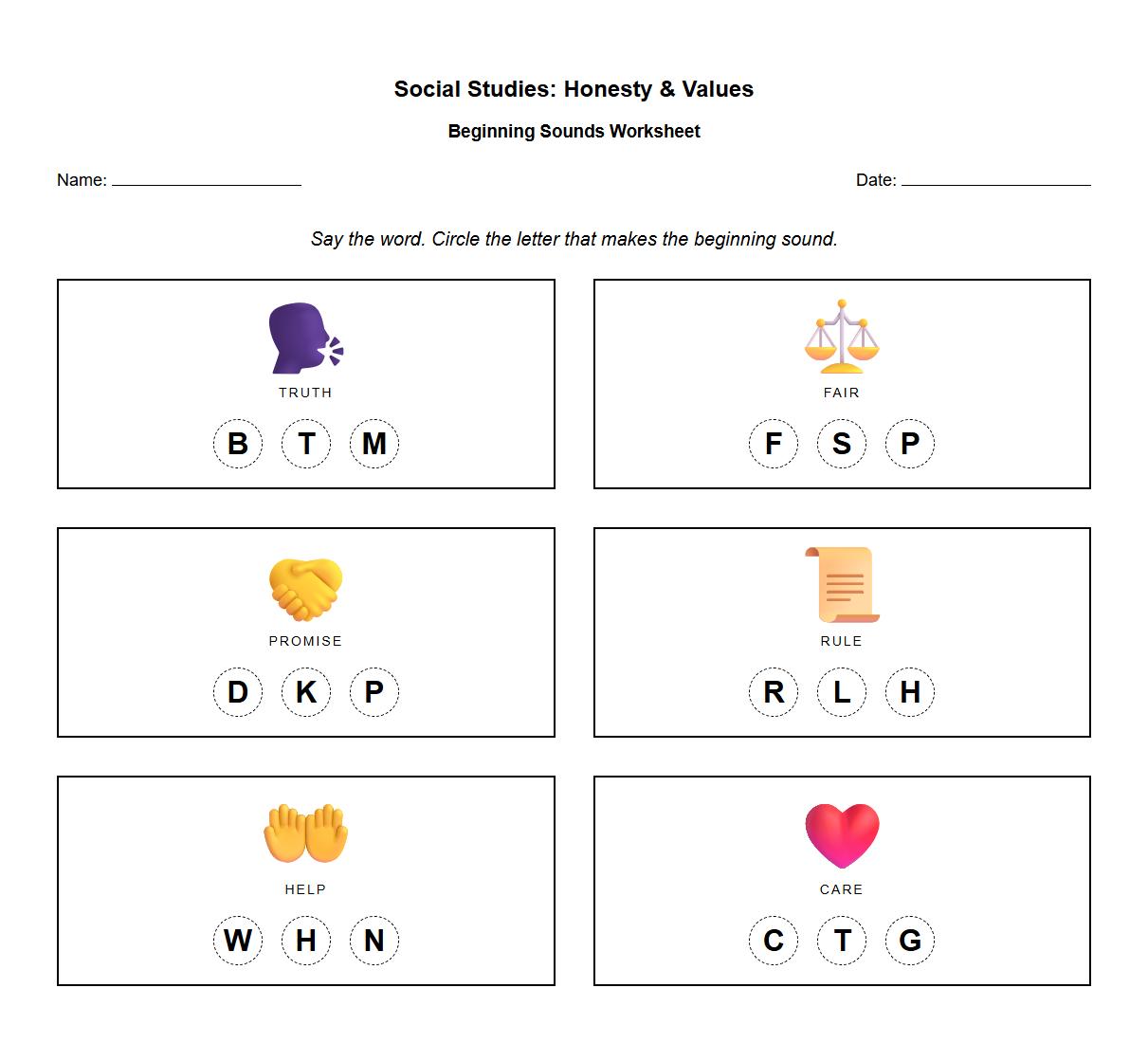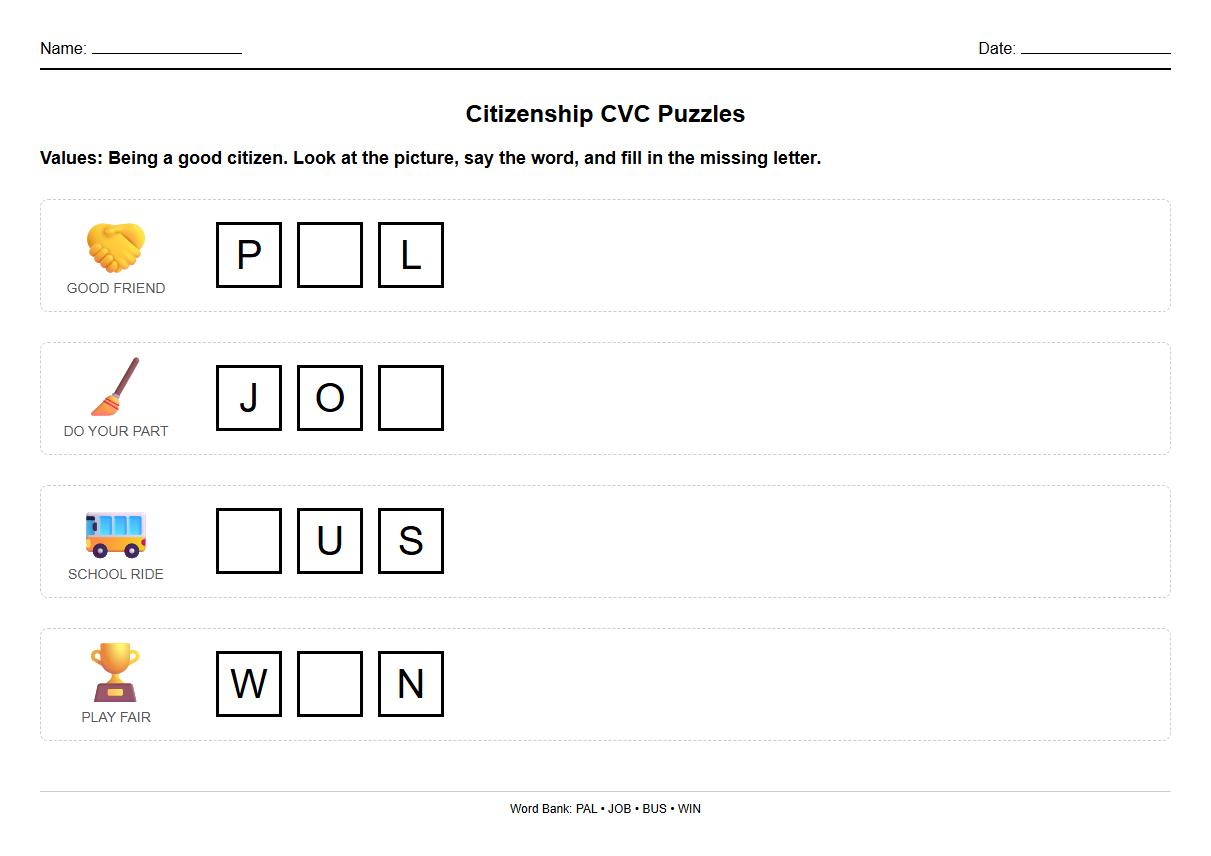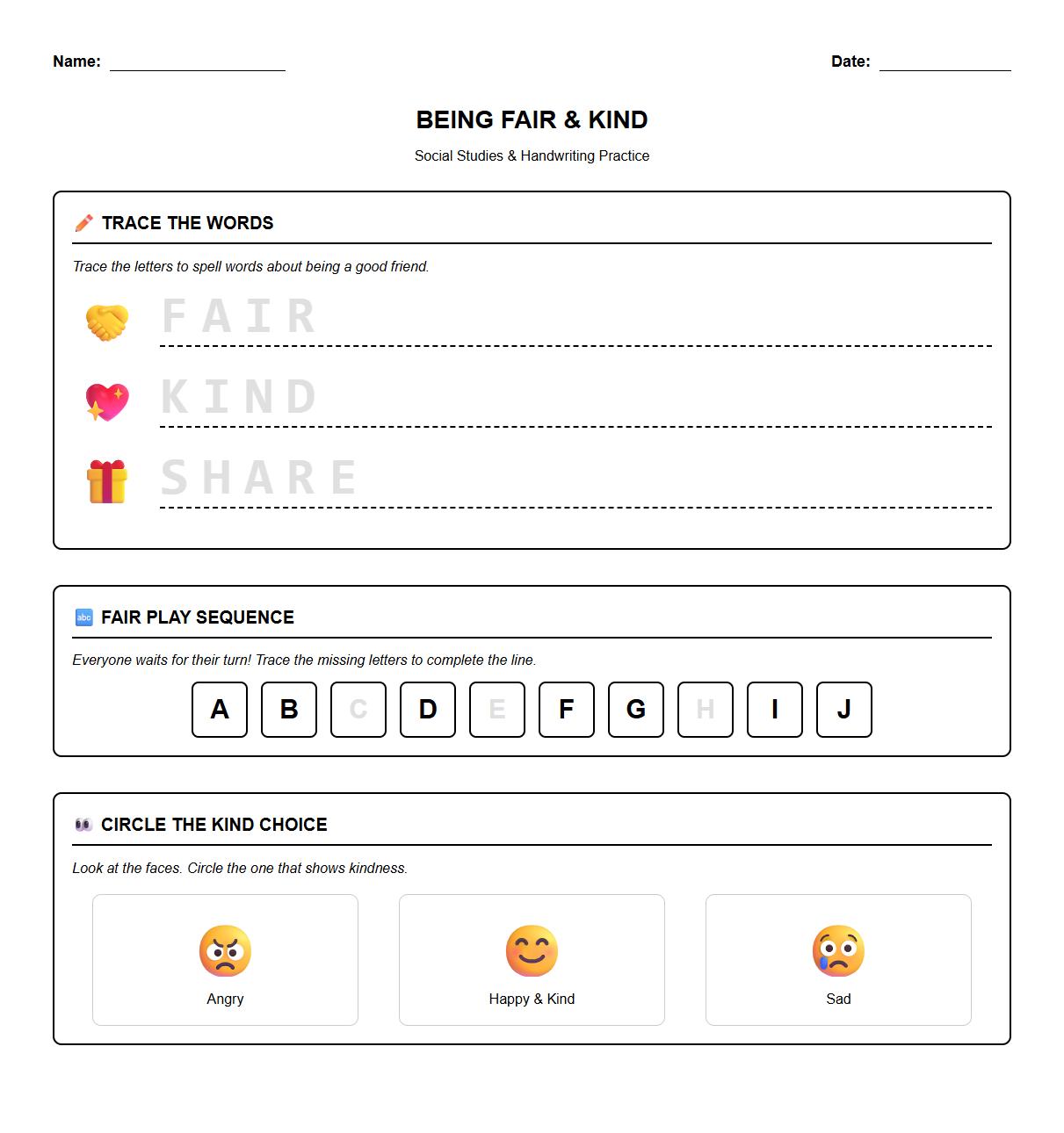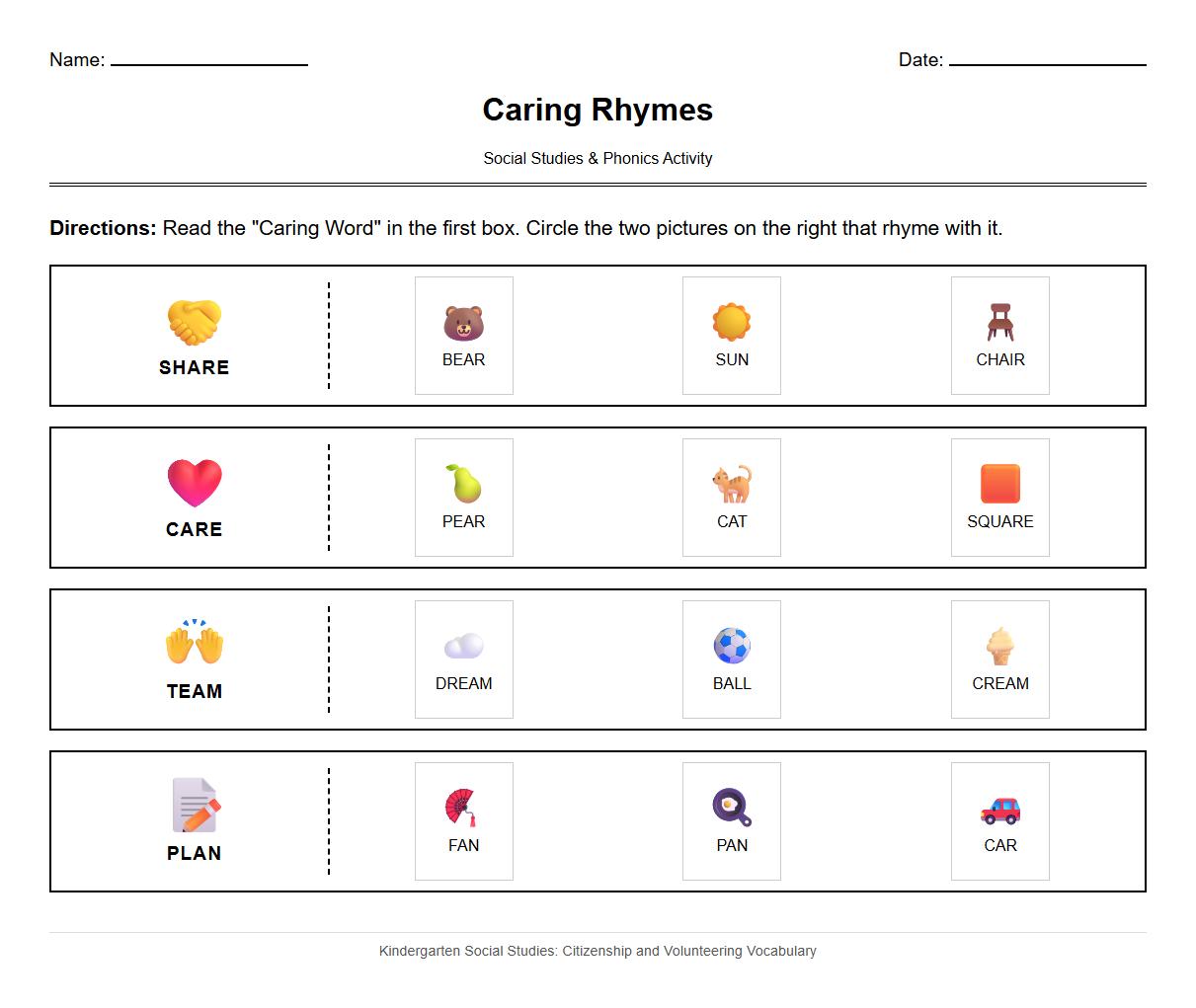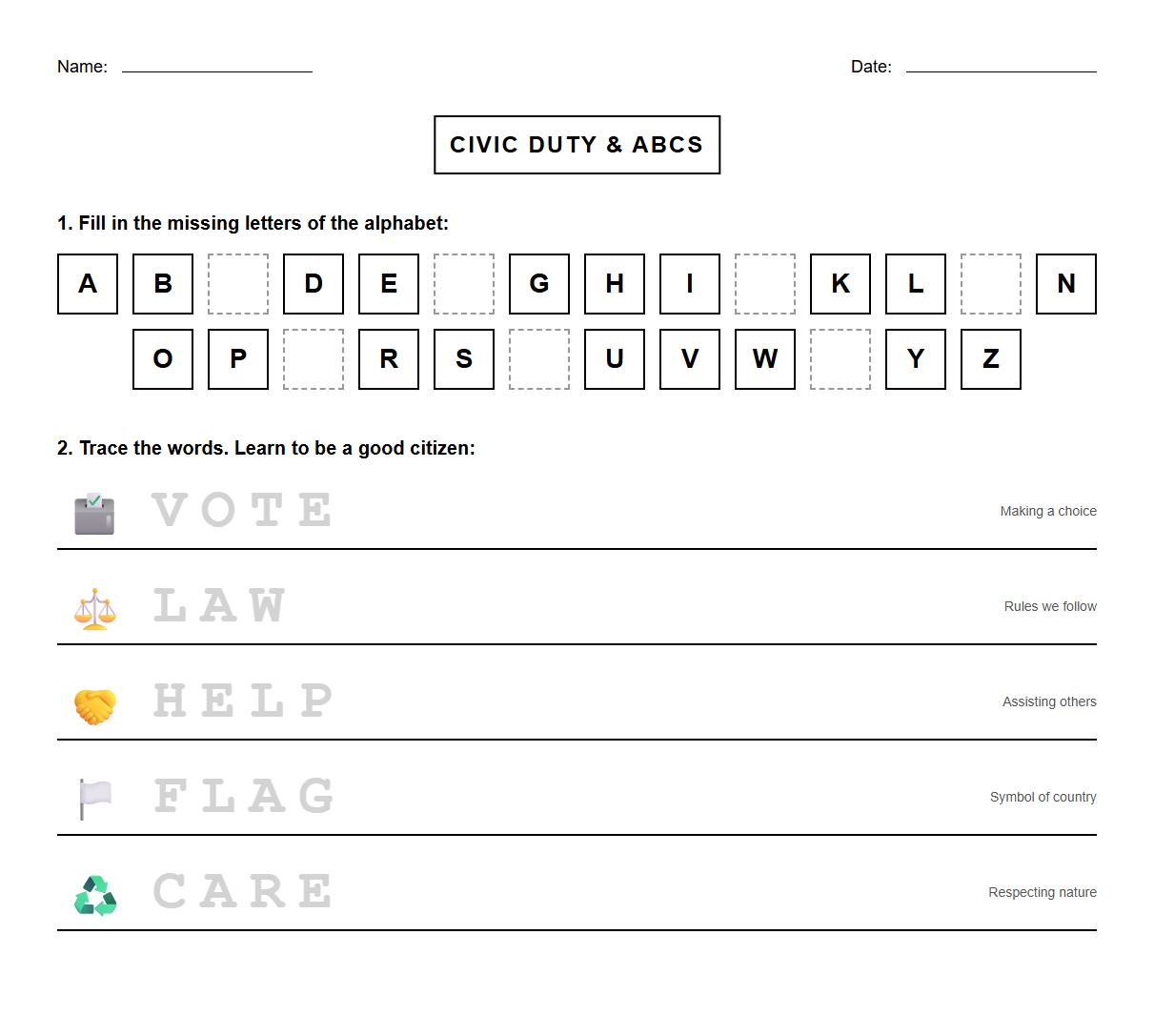
Engage young learners in developing essential literacy skills with letter tracing and phonics activities focused on good citizenship. These exercises reinforce letter recognition and sound association while promoting values such as kindness, responsibility, and respect. Explore the available worksheets to support your child's learning journey in reading and character building.
Understanding the Sound of Letter C
The letter C makes a soft sound like /k/ in the word "care." Recognizing this sound helps children connect letters with their sounds, a key step in learning to read. Encourage children to say the word out loud and listen carefully to the initial sound. This activity strengthens phonemic awareness and letter identification.
Tracing the Letter R
Tracing the letter R as in "respect" helps develop fine motor skills and letter recognition. Provide dotted or dashed lines for children to follow with their fingers or pencils. This hands-on activity reinforces the shape and form of the capital and lowercase letter R. Repetition will build confidence and writing proficiency.
Identifying the Starting Letter in Honest
The word "honest" begins with the letter H. Teaching children to identify the first letter of words enhances their ability to decode new words. Ask children to say the word and point to the first letter. This simple exercise builds the foundation for early reading skills.
Finding the Letter S in Share
Have children circle the letter S in the word "share" to improve letter recognition and attention to detail. This activity encourages scanning skills and reinforces the appearance of the letter. Use colorful markers or crayons to make the exercise engaging. It's a fun way to connect letters to meaningful words.
Writing the First Letter of Helpful
Writing the first letter of the word "helpful" supports handwriting and letter identification. Practice writing uppercase and lowercase H to improve fine motor coordination. Encourage children to say the word while writing to link sound and symbol. This task promotes literacy and writing development.
Choosing the Word Beginning with K
To find which word begins with the letter K, children compare "kind" and "fair." "Kind" starts with K, helping kids understand letter-sound correspondence. This identification activity builds vocabulary and phonics awareness. It also encourages critical thinking about letters and sounds.
Tracing the Letter L in Listen
Tracing the letter L in the word "listen" aids in learning letter shapes and control. Use tracing worksheets showing dotted L lines for children to follow. Repeated practice will enhance muscle memory for writing. Integrating listening activities reinforces the sound-letter connection.
Identifying the Ending Sound in Give
The ending sound in the word "give" is the /v/ sound, spelled with the letter V. Teaching children to recognize ending sounds supports phonemic awareness and spelling skills. Ask children to say the word slowly and focus on the last sound. This activity is essential for early sound segmentation abilities.
Matching Letter F to Friend
Matching the letter F to the word "friend" helps children associate letters with familiar words. Visual matching tasks improve letter recognition and vocabulary. Use pictures or word cards to make the activity interactive. This enhances both reading readiness and memory retention.
Drawing and Tracing the Letter T
Drawing and tracing the letter T for "trust" supports handwriting skills and letter formation. Provide worksheets with letter T outlines for tracing and space to practice freehand drawing. Encouraging repetition builds confidence and smooth writing strokes. Combining drawing with sound recognition strengthens literacy learning.


Kindergarten Writing Practice Worksheet on Respect and Classroom Behavior