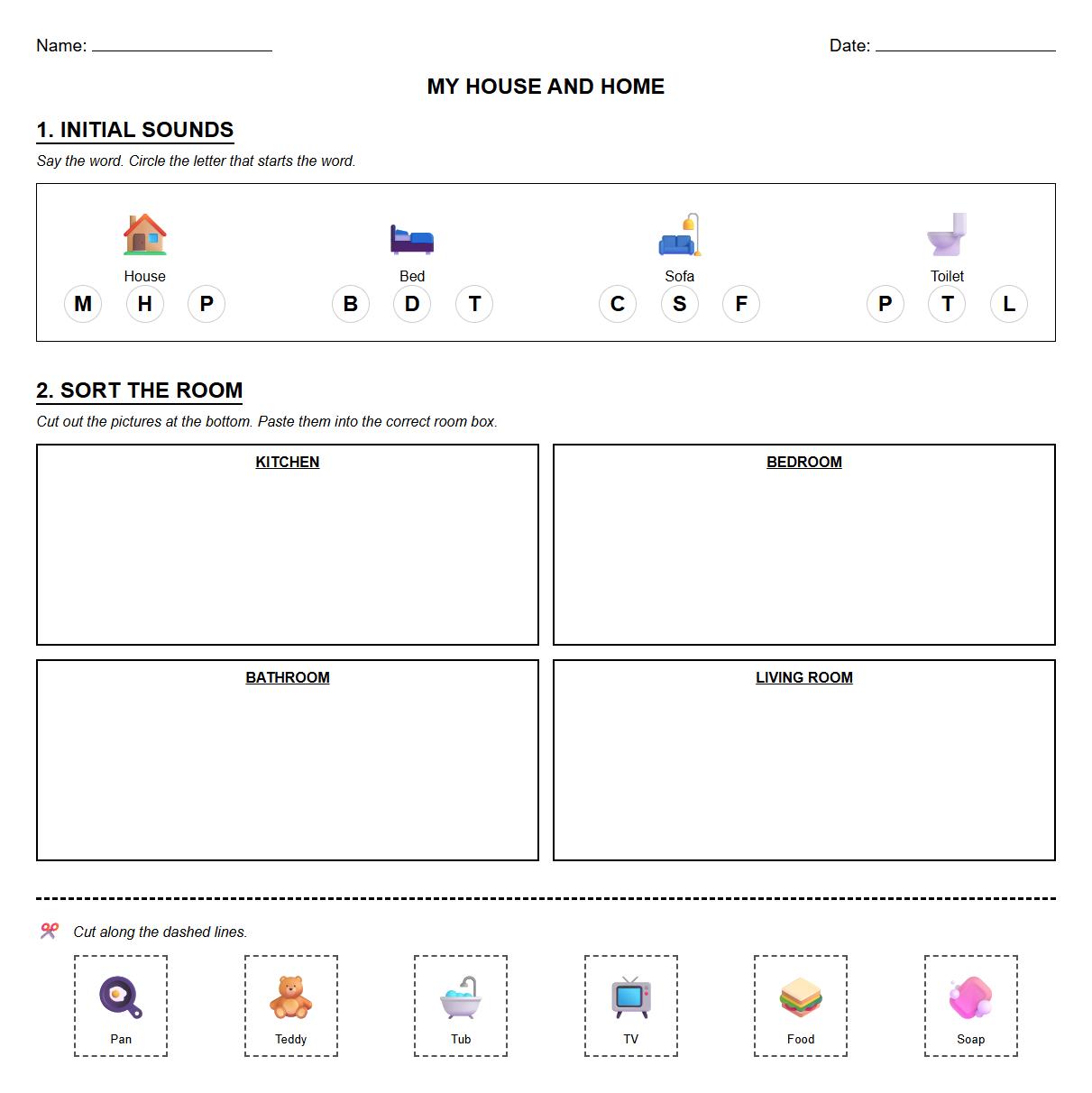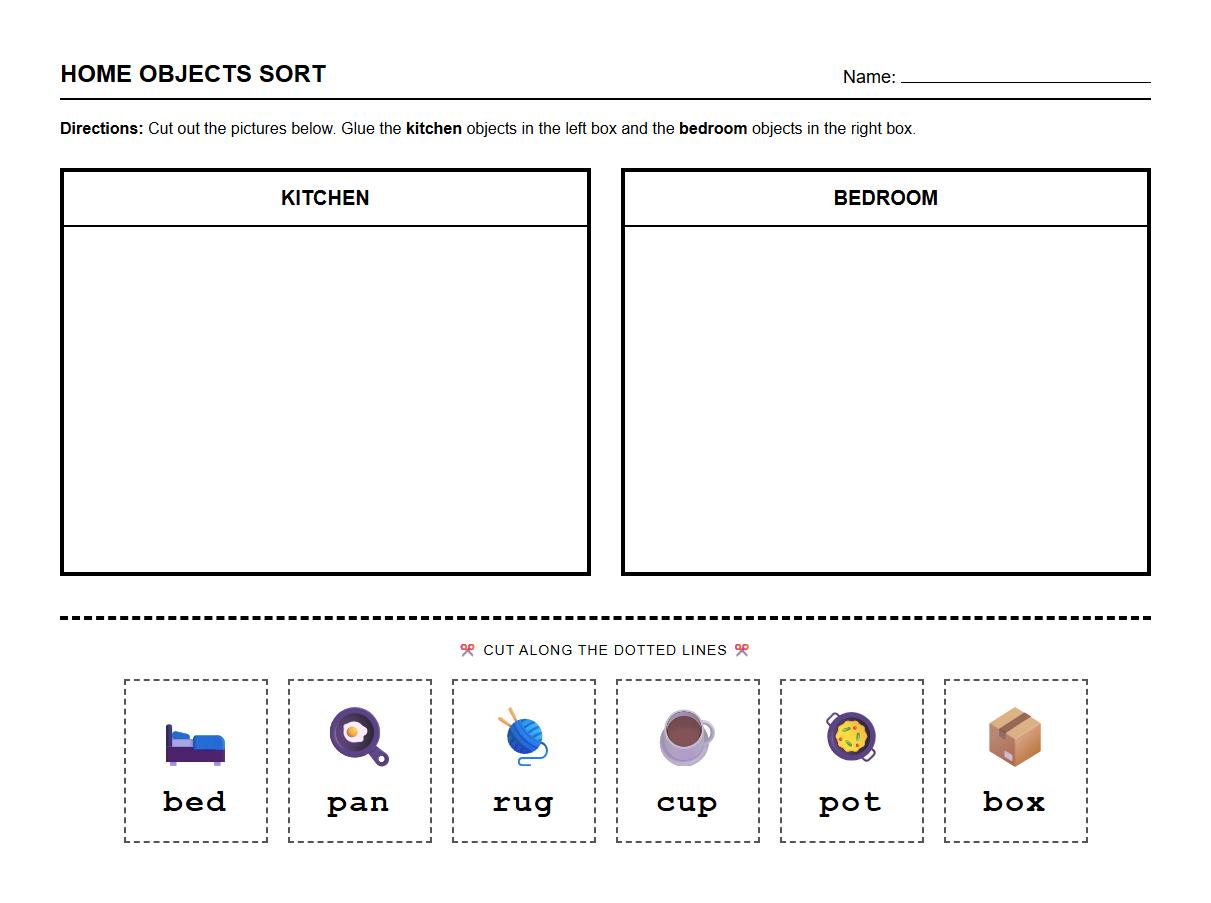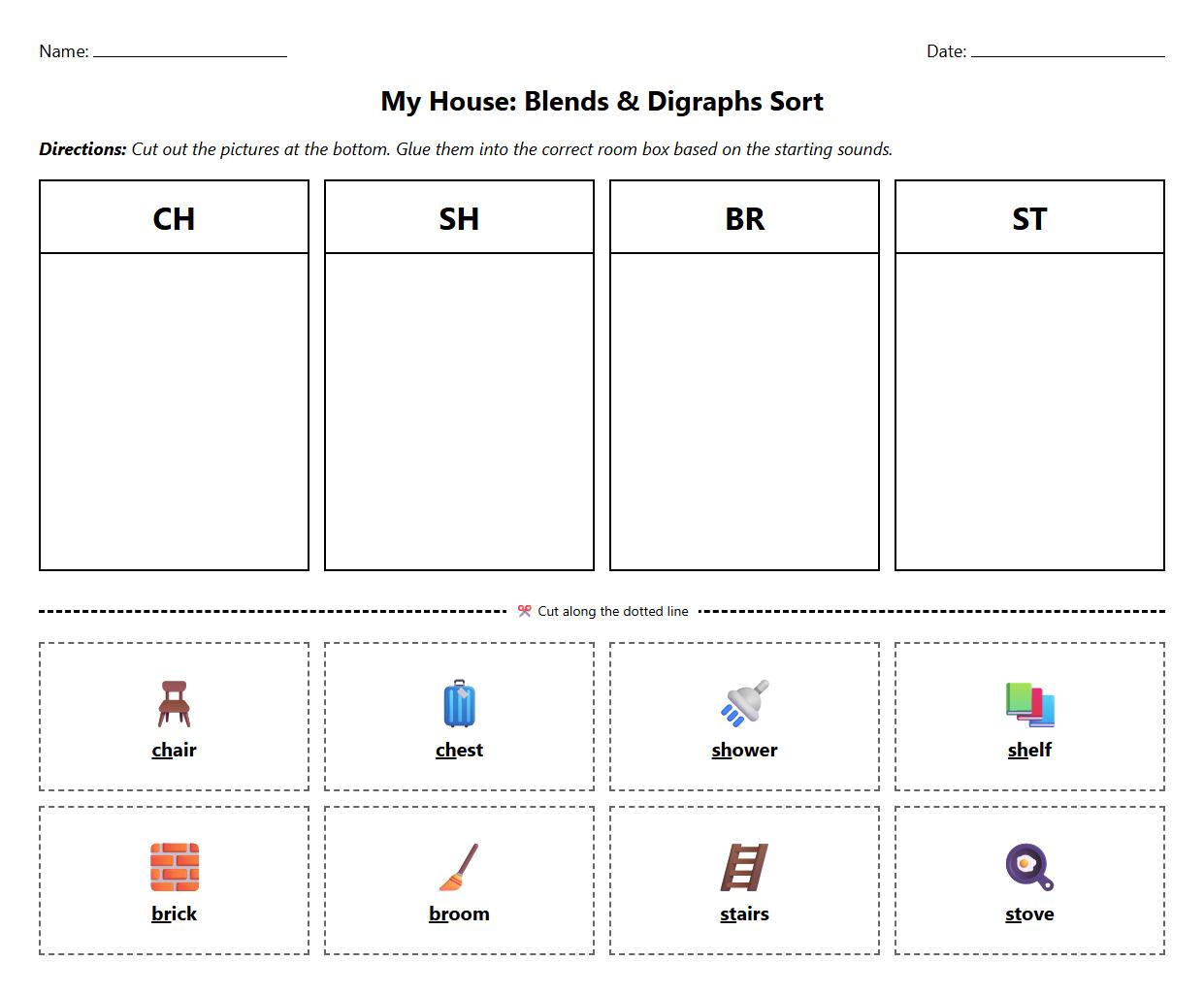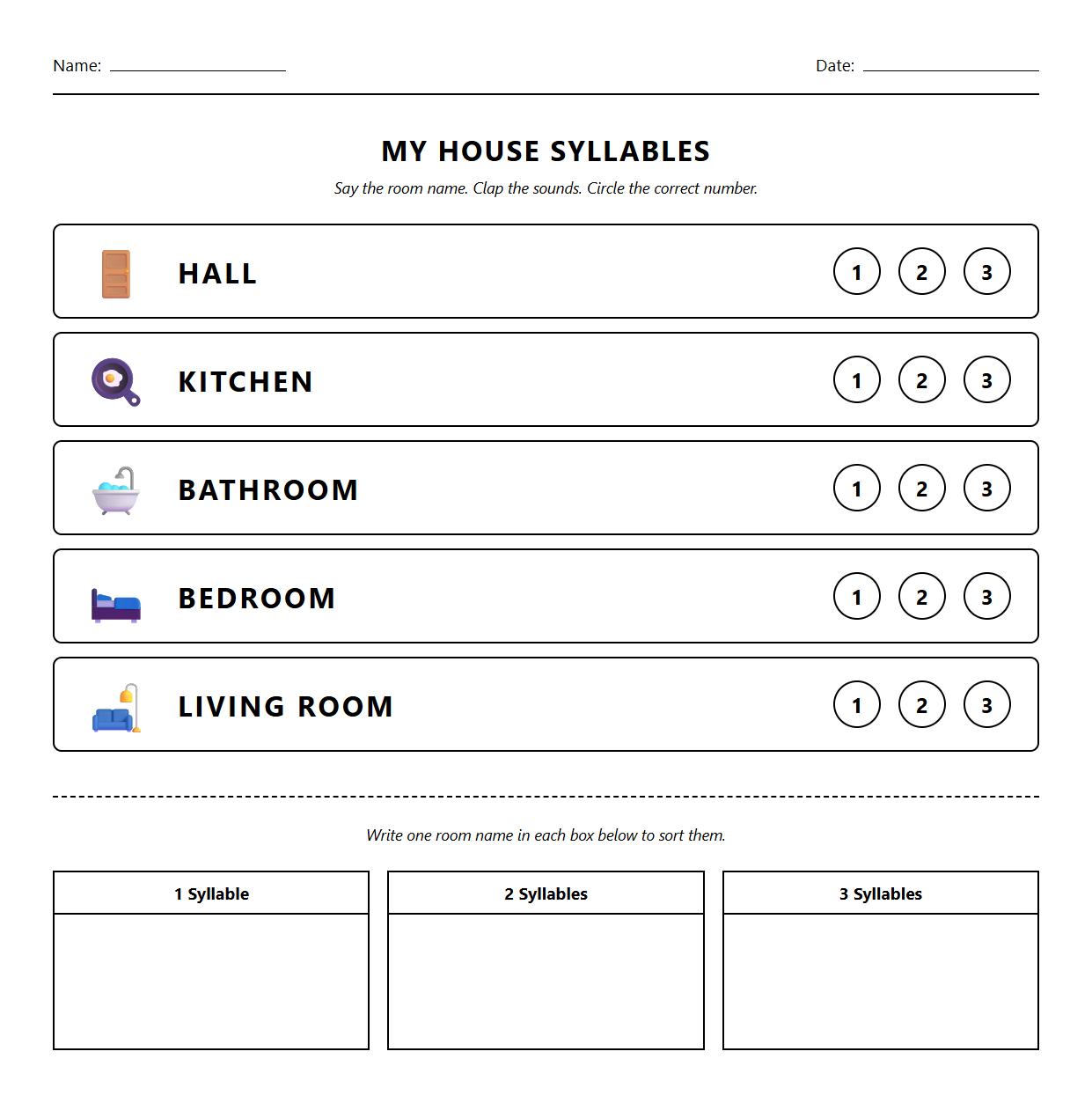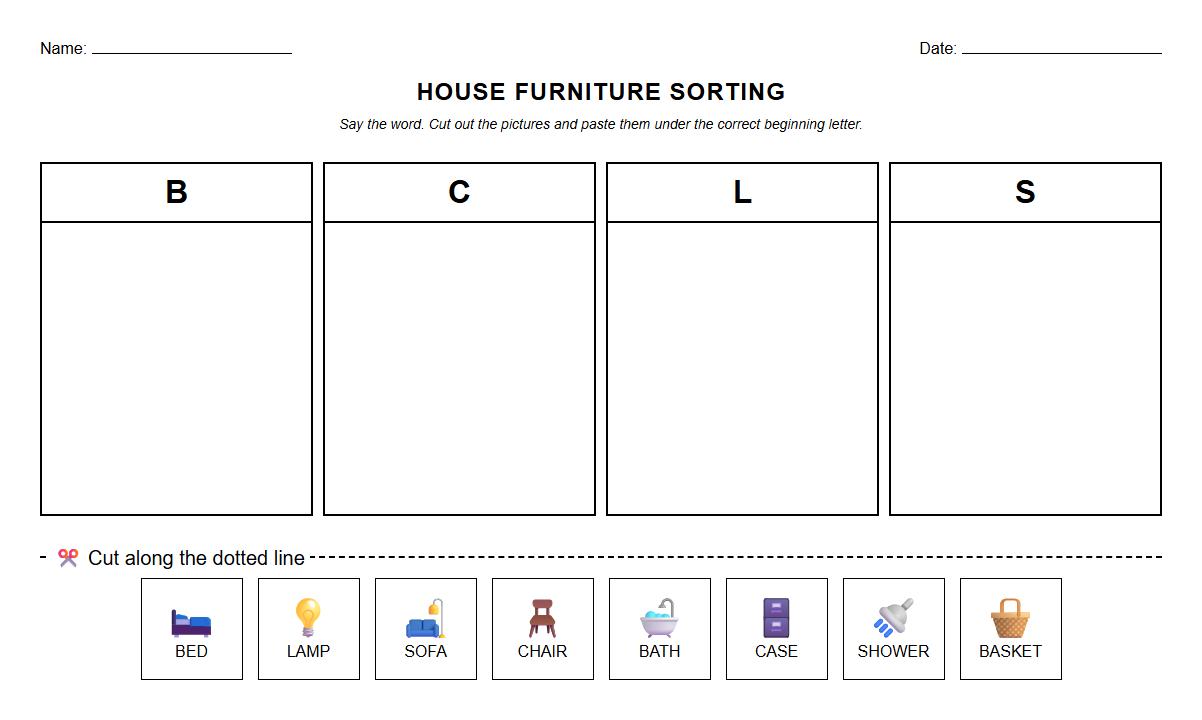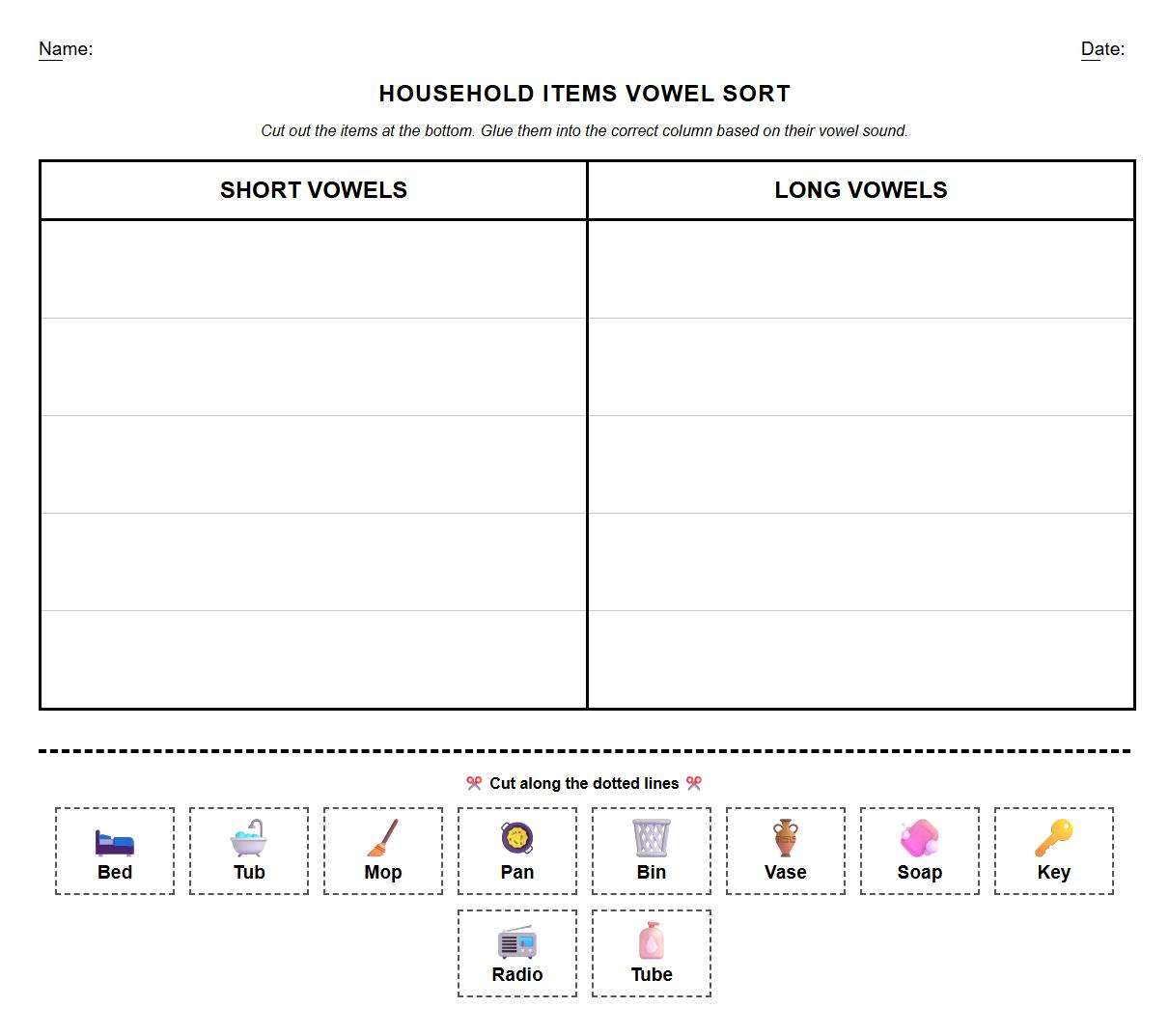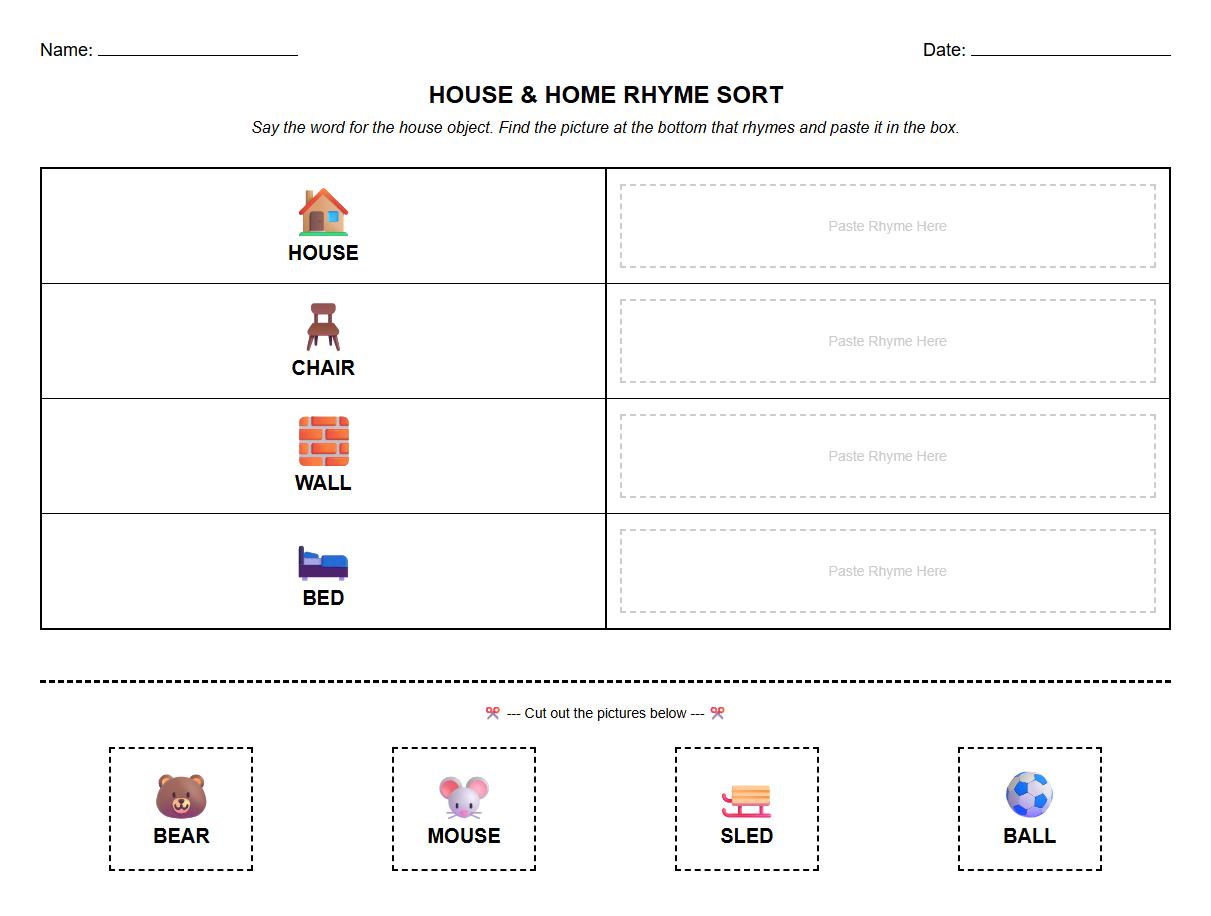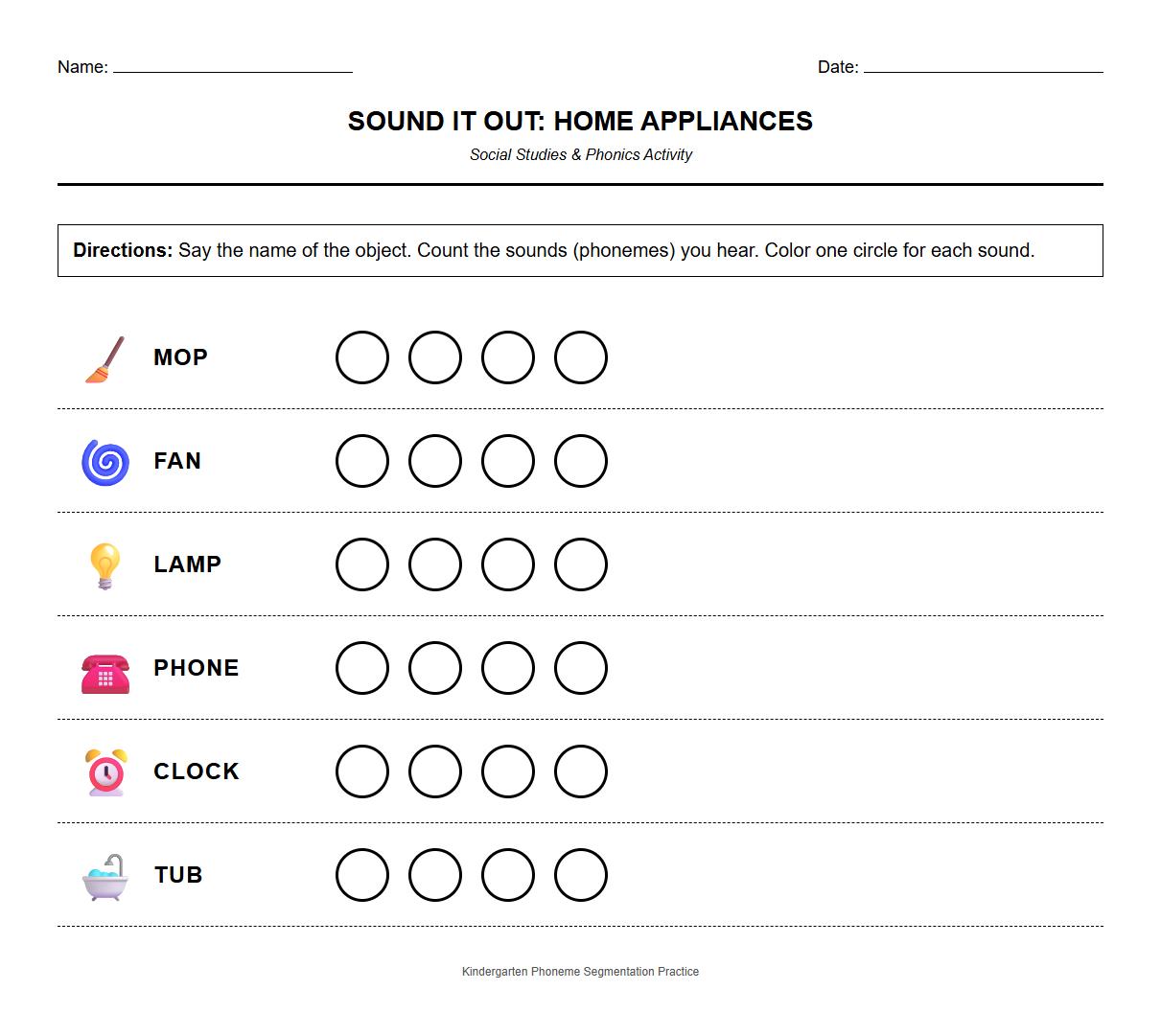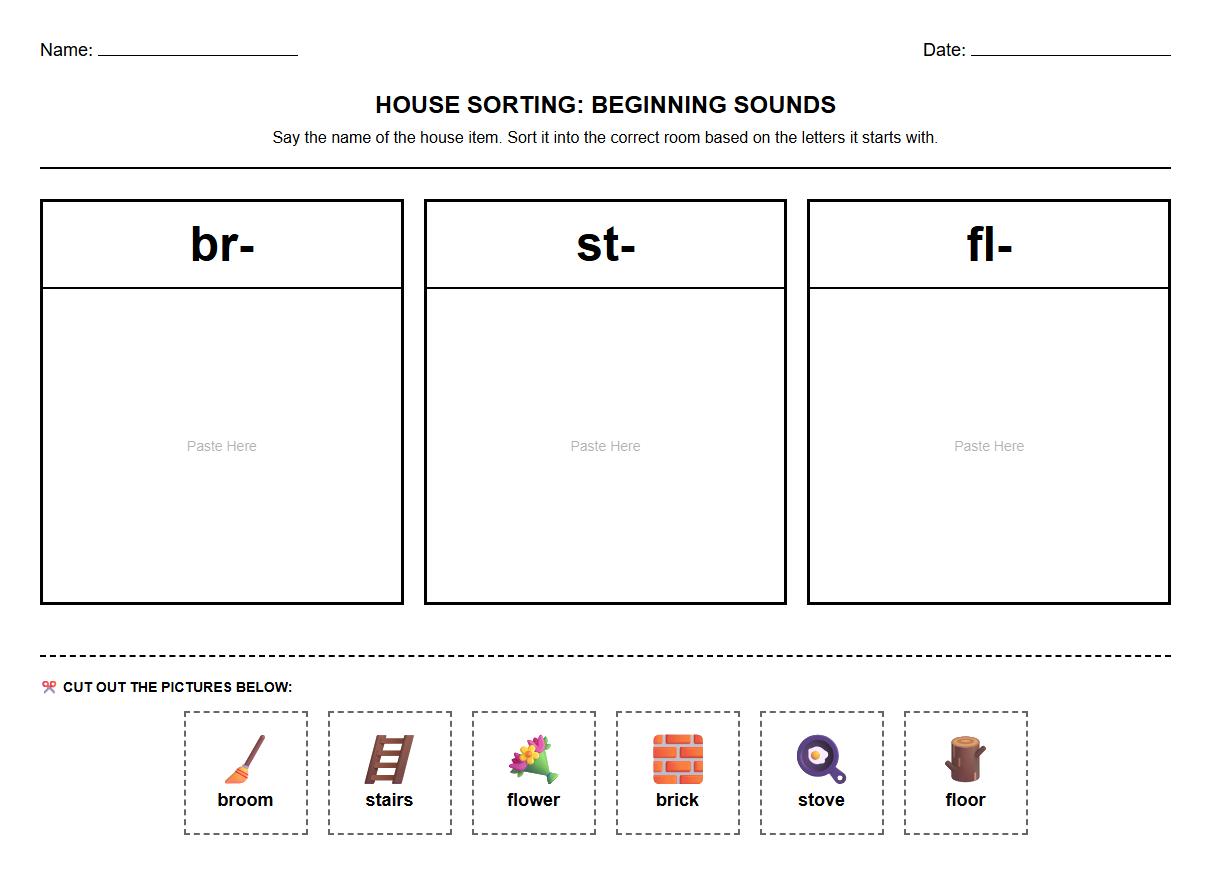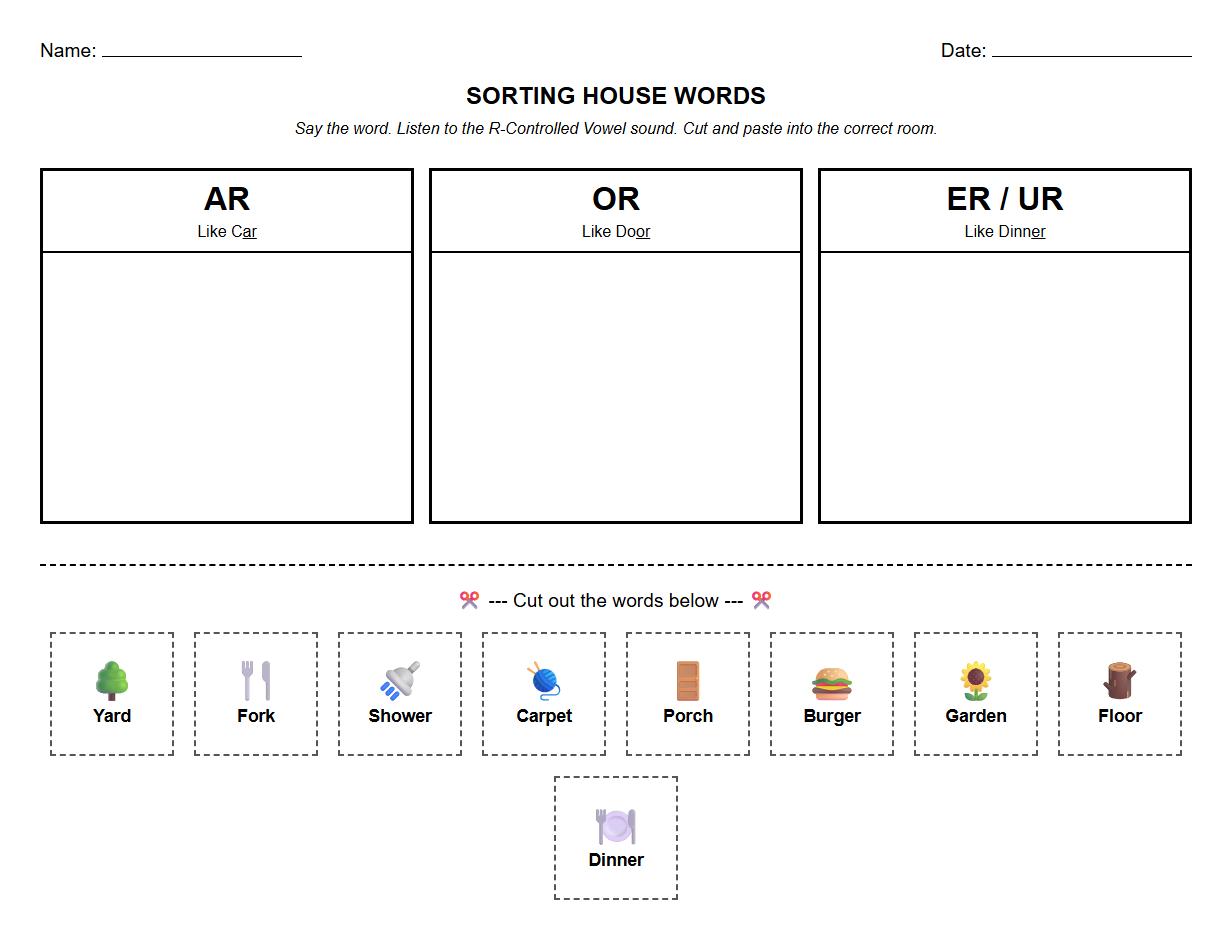
House and Home Vocabulary Sorting Worksheet enhances phonics skills by helping learners categorize common household words based on their sounds. This engaging activity boosts word recognition and pronunciation through targeted vocabulary practice. Explore the worksheets available to strengthen your phonics expertise today.
Words and Objects: Sleep and Furniture
The word that names something you sleep on is a bed. Tables and chairs are for sitting or placing items, but beds are designed for rest and sleep. Understanding this helps children identify common household furniture. Teaching this distinction builds basic vocabulary and awareness. For more on categorizing objects, try the Visual Discrimination and Sorting Activity.
Kitchen Items Identification
The item that belongs in the kitchen is the stove. Pillows and lamps are found in bedrooms or living rooms, but the stove is essential for cooking food. Recognizing kitchen items helps children learn about different rooms and their purposes. This knowledge supports early safety and daily life skills. Explore kitchen-related vocabulary with the Vocabulary and Picture Matching Worksheet.
Bathroom Purpose and Hygiene
You brush your teeth in the bathroom. The garage and living room are not suitable places for this activity. Knowing where to perform hygiene routines is important for health and independence. This question reinforces the use of specific spaces at home. For activities about rules and routines, see the Dialogues Practice Worksheet.
Eating Utensils Understanding
The correct item used to eat is a fork. A door or couch is not used for eating purposes. Teaching children about utensils helps develop good eating habits and fine motor skills. This question promotes recognition of everyday tools. Try the Crossword Worksheet - Community Helpers Vocabulary Reinforcement for more vocabulary-building.
Outdoor vs Indoor Items
The item found outside the house is the garden. Sofas and refrigerators are indoor furniture and appliances. Differentiating between indoor and outdoor objects enhances spatial and environmental awareness. This knowledge supports understanding of living spaces. For sorting activities, check out the Kindergarten Needs vs Wants Sorting Activity.
Exiting the House: Doors and Windows
You open a door to go outside. Windows and wardrobes are for ventilation and storage, respectively. Teaching children about doors helps them learn safe exit and entry points. This question aids in understanding home navigation and safety. Practice with the Exploring Cardinal Directions Worksheet.
Items That Keep You Warm
The item that keeps you warm at night is a blanket. Fridges and sinks do not provide warmth. Identifying blankets helps children understand comfort items associated with sleep. This enhances vocabulary related to daily life and comfort. Further explore home items with the Family Phonics Worksheet.
Keeping Food Cold
Food stays cold in the fridge. Ovens and bookshelves do not cool food. Understanding the function of a fridge teaches children about food storage and preservation. This knowledge is vital for healthy eating habits. For more on categorizing items, see the Categorizing Needs and Wants Worksheet.
Watching TV Furniture
You usually watch TV while sitting on a sofa. Beds and bathtubs are not typically used for watching television. Recognizing furniture for specific activities helps children associate places with actions. This supports social and leisure time learning. To practice matching roles and objects, visit the Occupation Roles Matching Worksheet.
Bedroom Furniture Identification
The item found in a bedroom is a dresser. Stoves and showers belong in the kitchen and bathroom. Identifying bedroom furniture helps children organize their living spaces mentally. This strengthens their understanding of home layouts. For reading practice with phonic association, try the Circle Correct Helper Worksheet.


Phonics and Vocabulary Worksheet for Kindergarten Maps and Geography Basics