Spatial Awareness Activity for Kindergarten Geography Skills

📅 Jan 2, 2025 👤 Nylen Smith

Spatial awareness activities for kindergarten help young learners understand their environment by recognizing shapes, sizes, positions, and directions. Engaging in these exercises enhances their ability to navigate spaces and grasp basic geography concepts. Explore our available worksheets to support your child's spatial skills development.

Map Symbols Matching Worksheet to Enhance Spatial Awareness
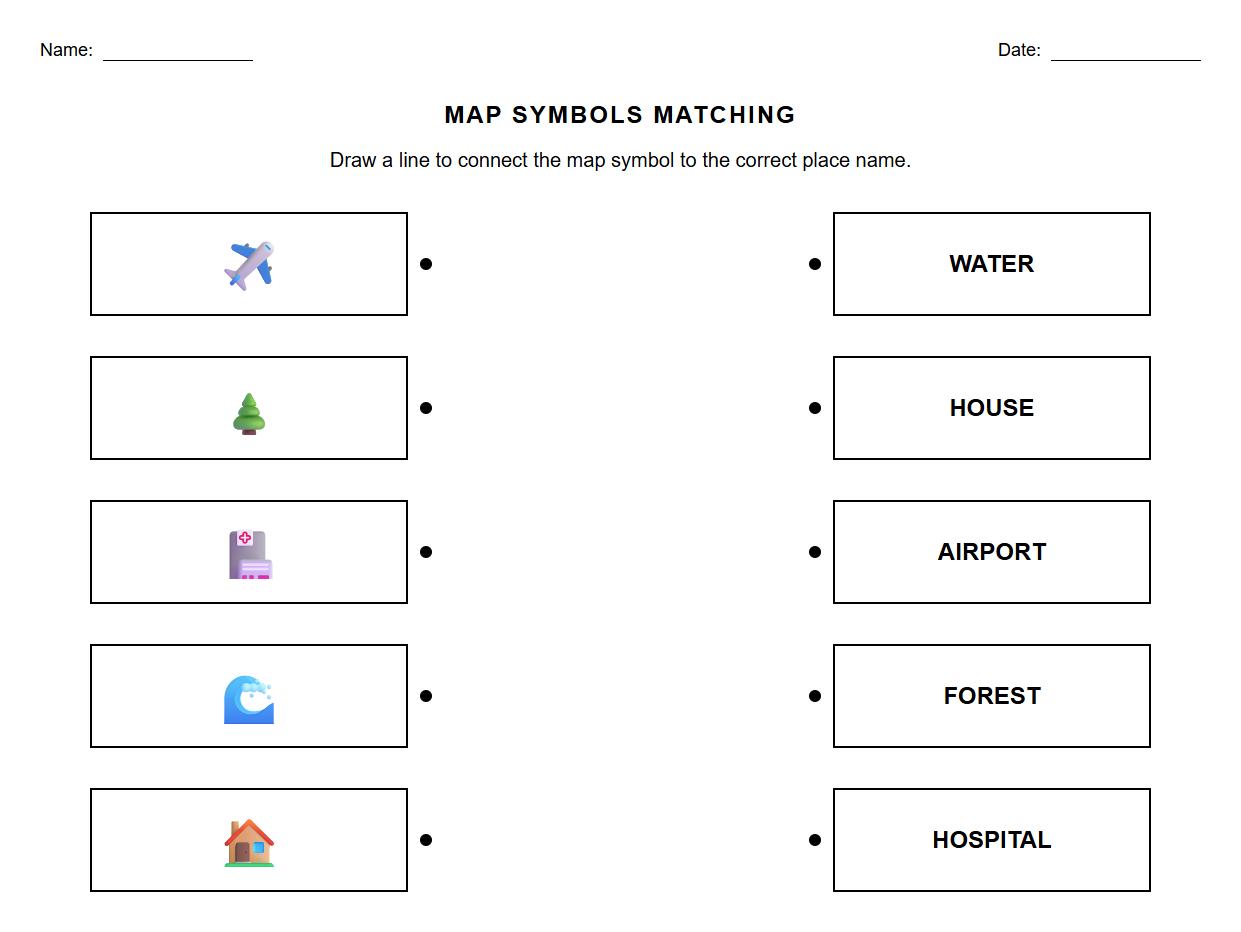
Map Symbols Matching Worksheet to Enhance Spatial Awareness

Download PDF     Pin it

Cut and Paste Landmark Location Worksheet for Geography Skills
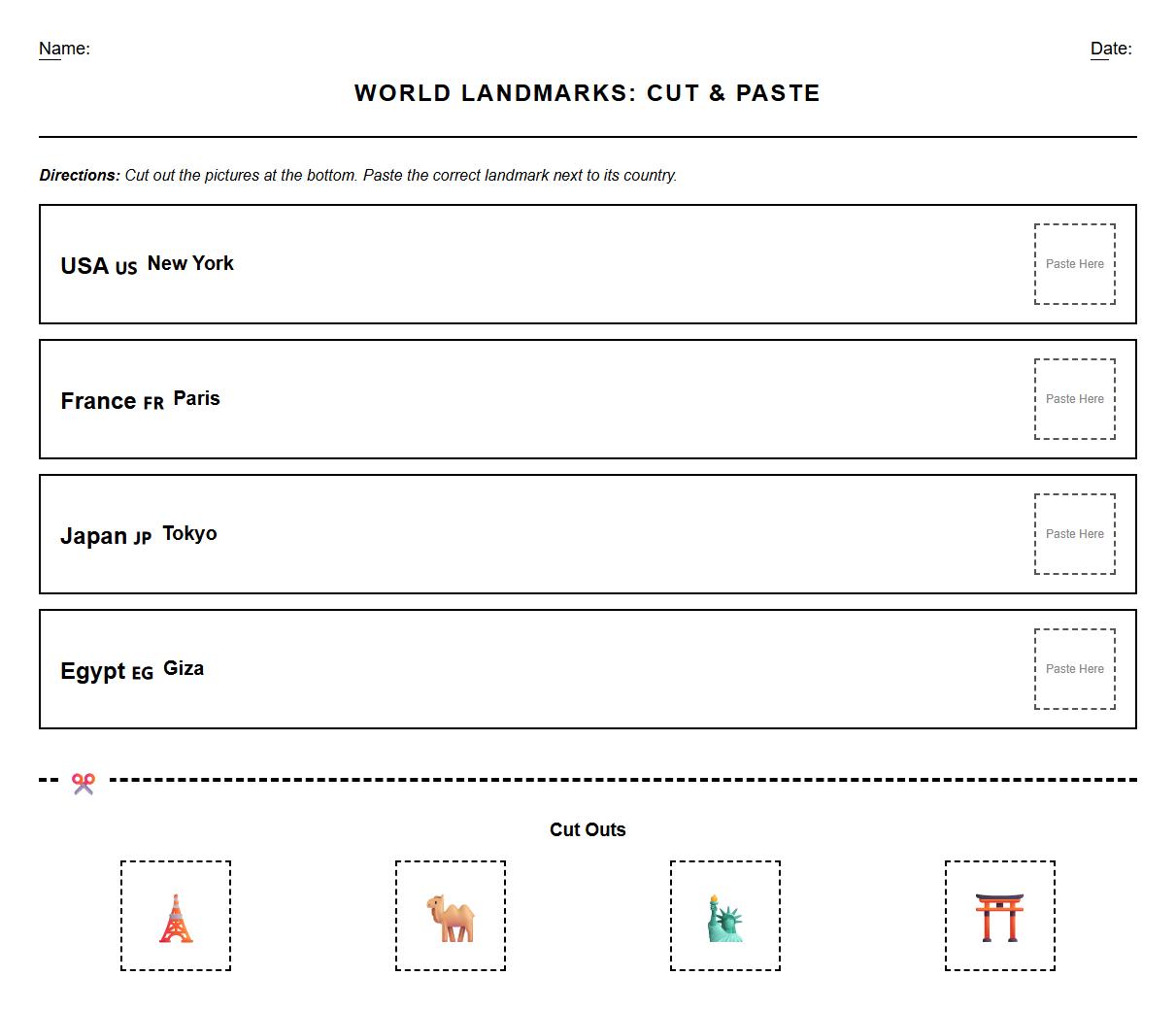
Cut and Paste Landmark Location Worksheet for Geography Skills

Download PDF     Pin it

Spatial Vocabulary Practice Sheet with Directional Terms
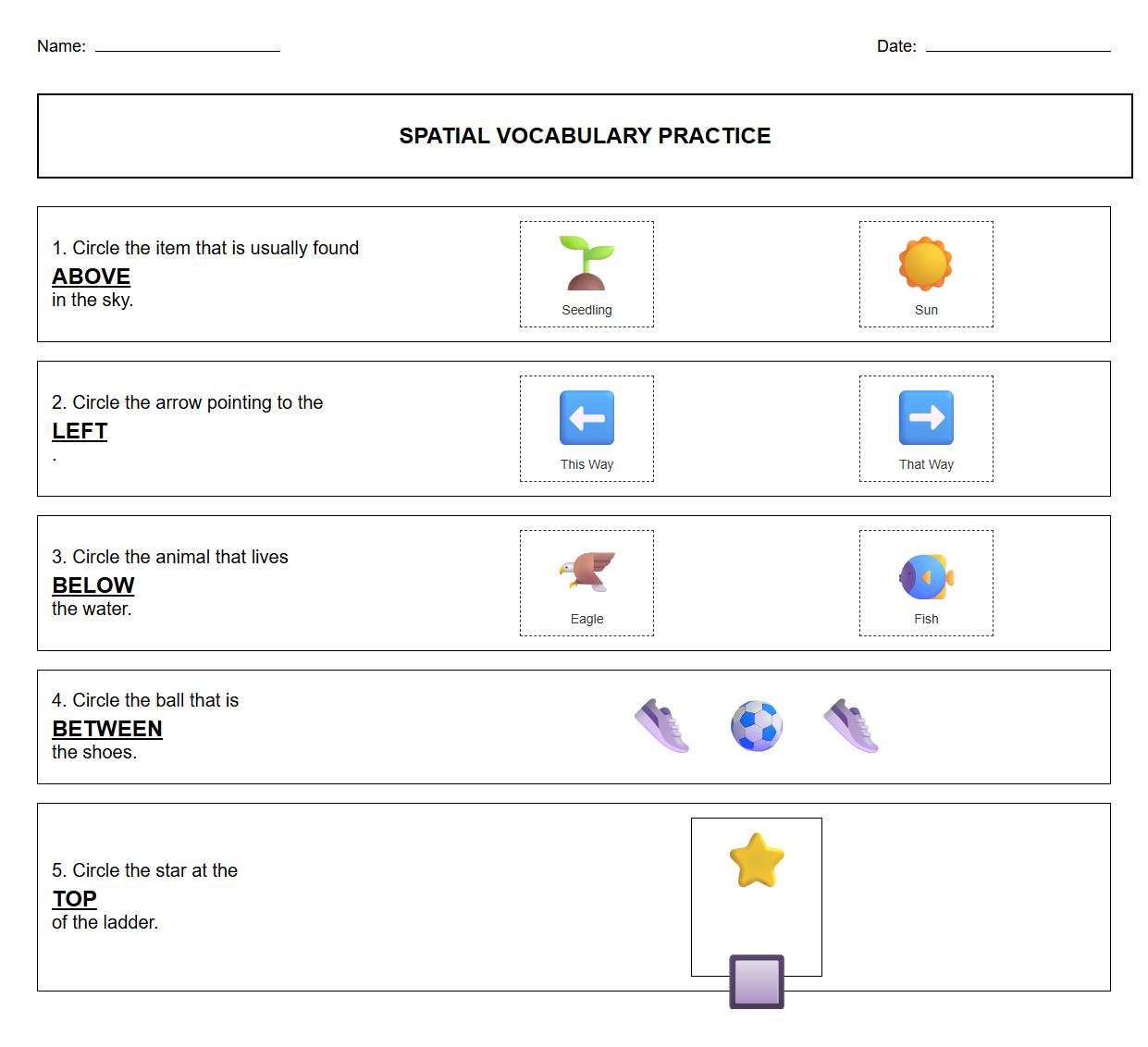
Spatial Vocabulary Practice Sheet with Directional Terms

Download PDF     Pin it

Grid Mapping Activity for Developing Kindergarten Spatial Reasoning
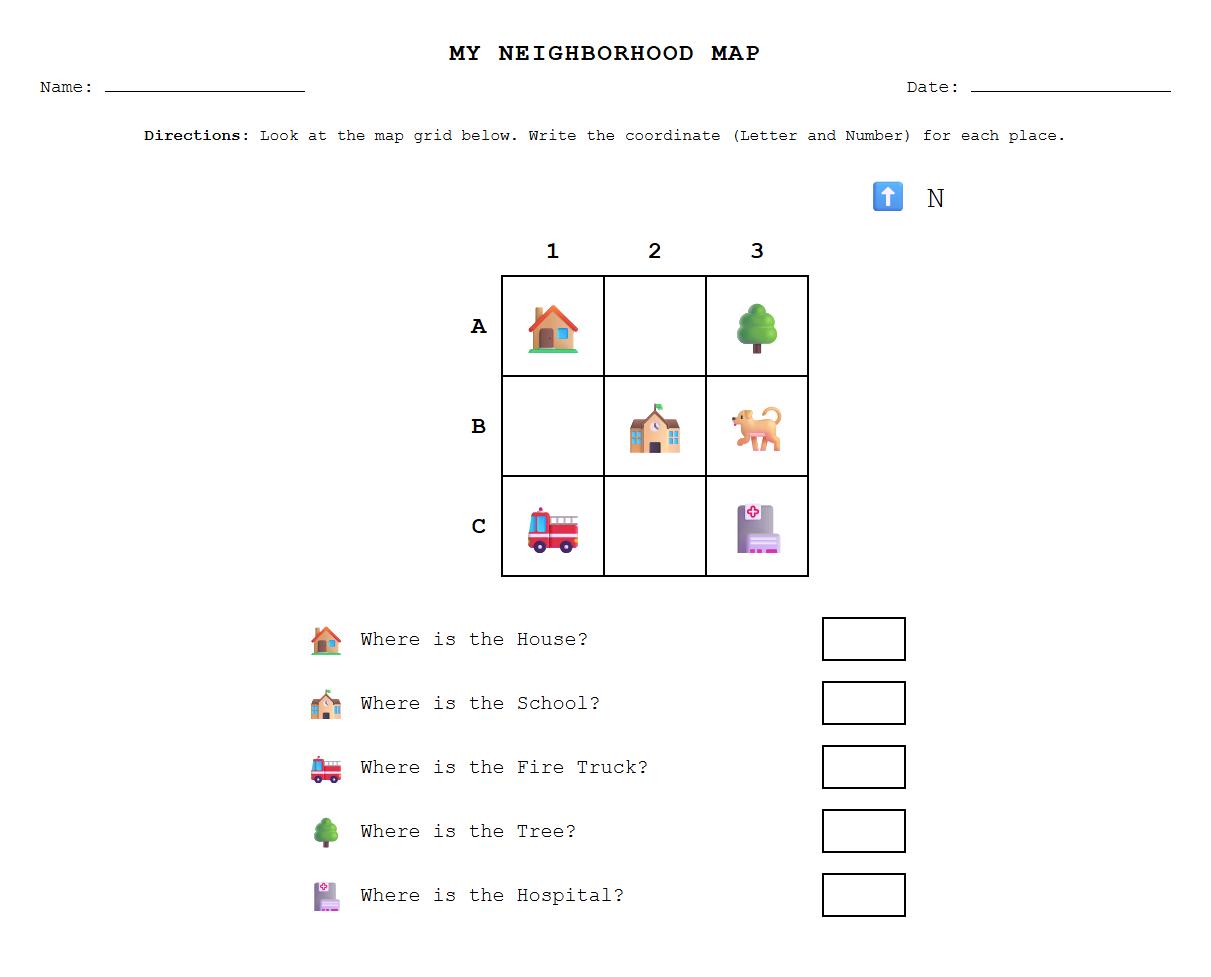
Grid Mapping Activity for Developing Kindergarten Spatial Reasoning

Download PDF     Pin it

Positional Language Worksheet Focused on Prepositions and Locations
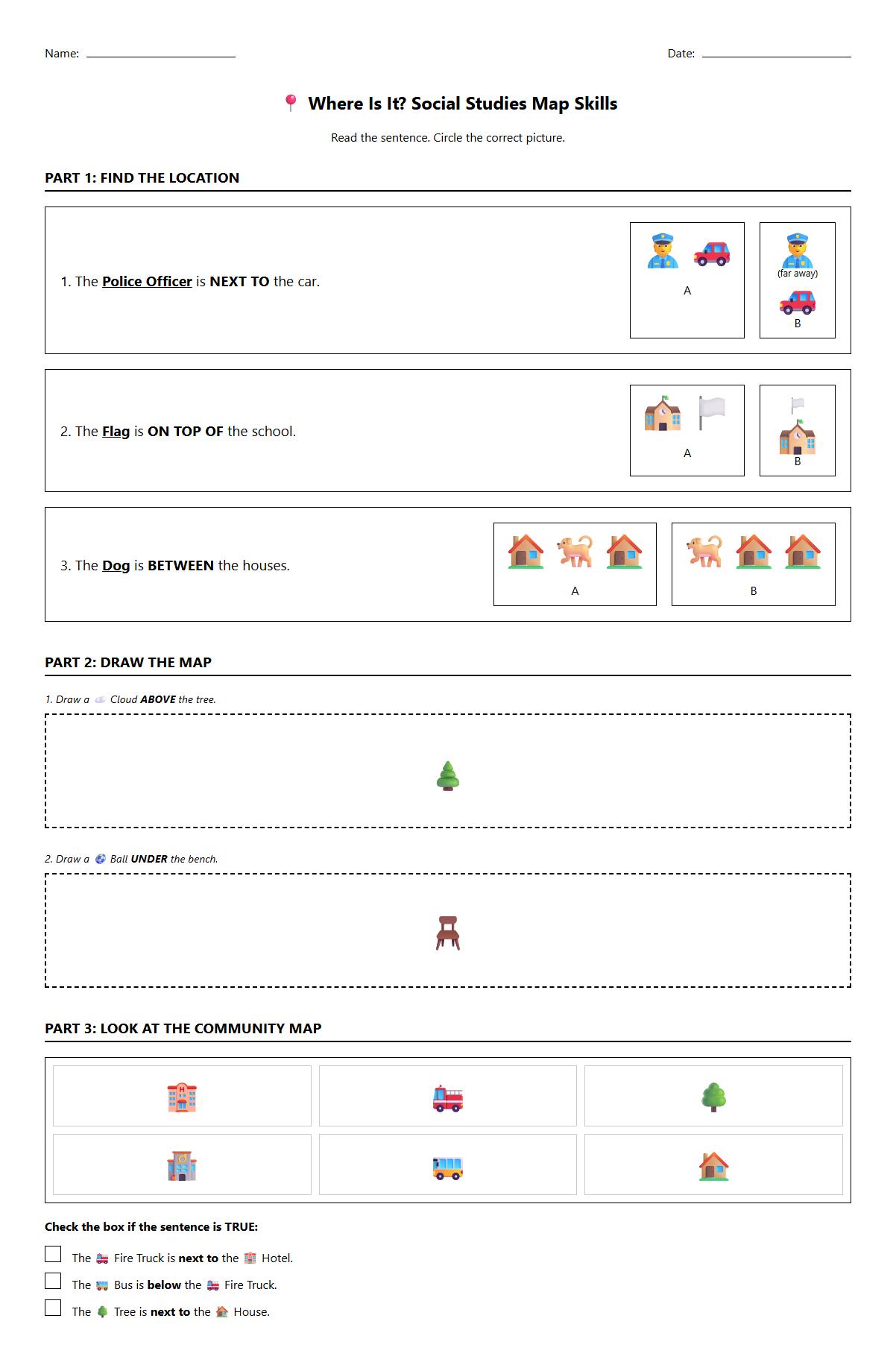
Positional Language Worksheet Focused on Prepositions and Locations

Download PDF     Pin it

Shape Sorting on Map Worksheet Utilizing Phonics and Visual Discrimination
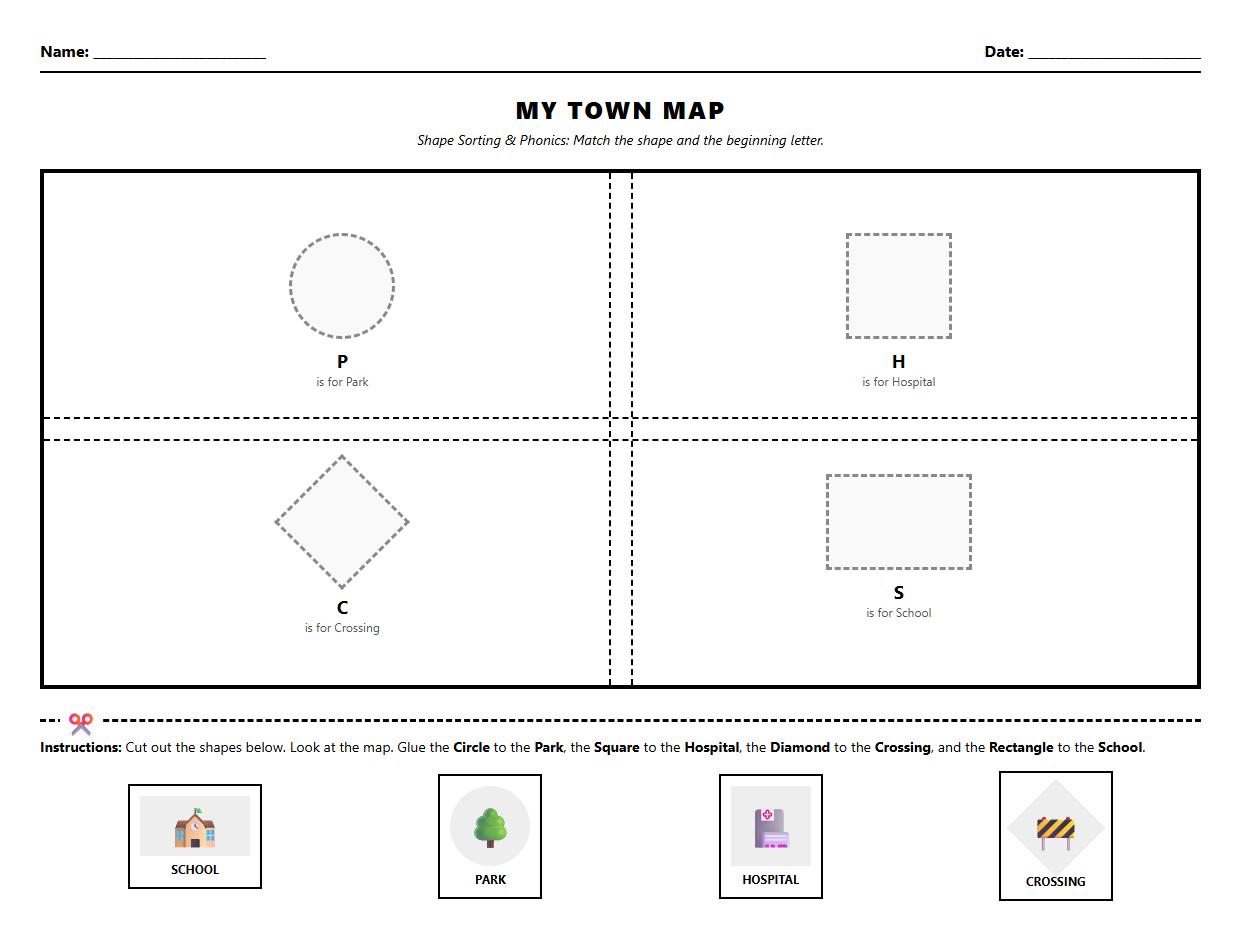
Shape Sorting on Map Worksheet Utilizing Phonics and Visual Discrimination

Download PDF     Pin it

Color by Coordinates Sheet for Reinforcing Map Reading
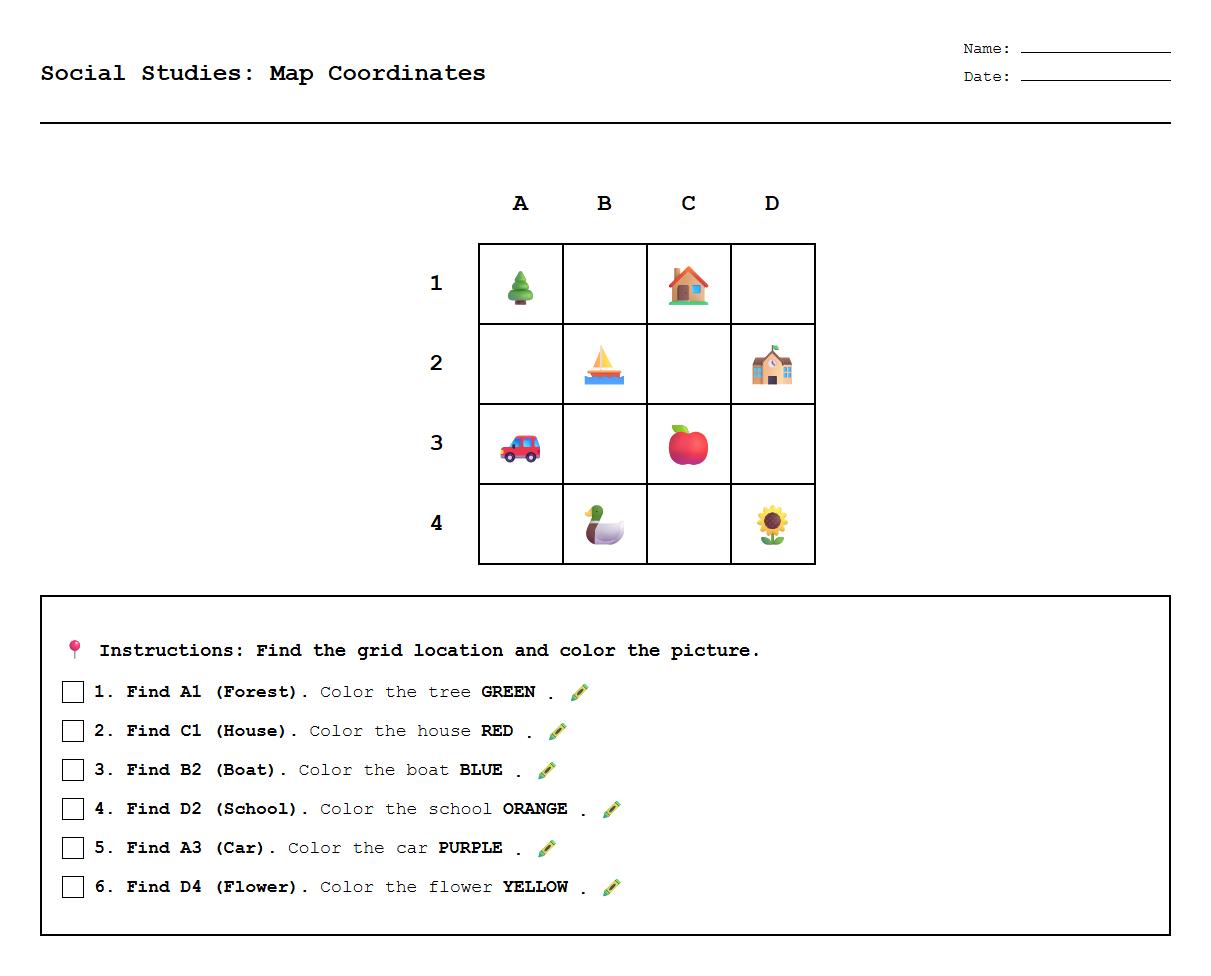
Color by Coordinates Sheet for Reinforcing Map Reading

Download PDF     Pin it

Route Tracing Activity Sheet for Strengthening Spatial Orientation
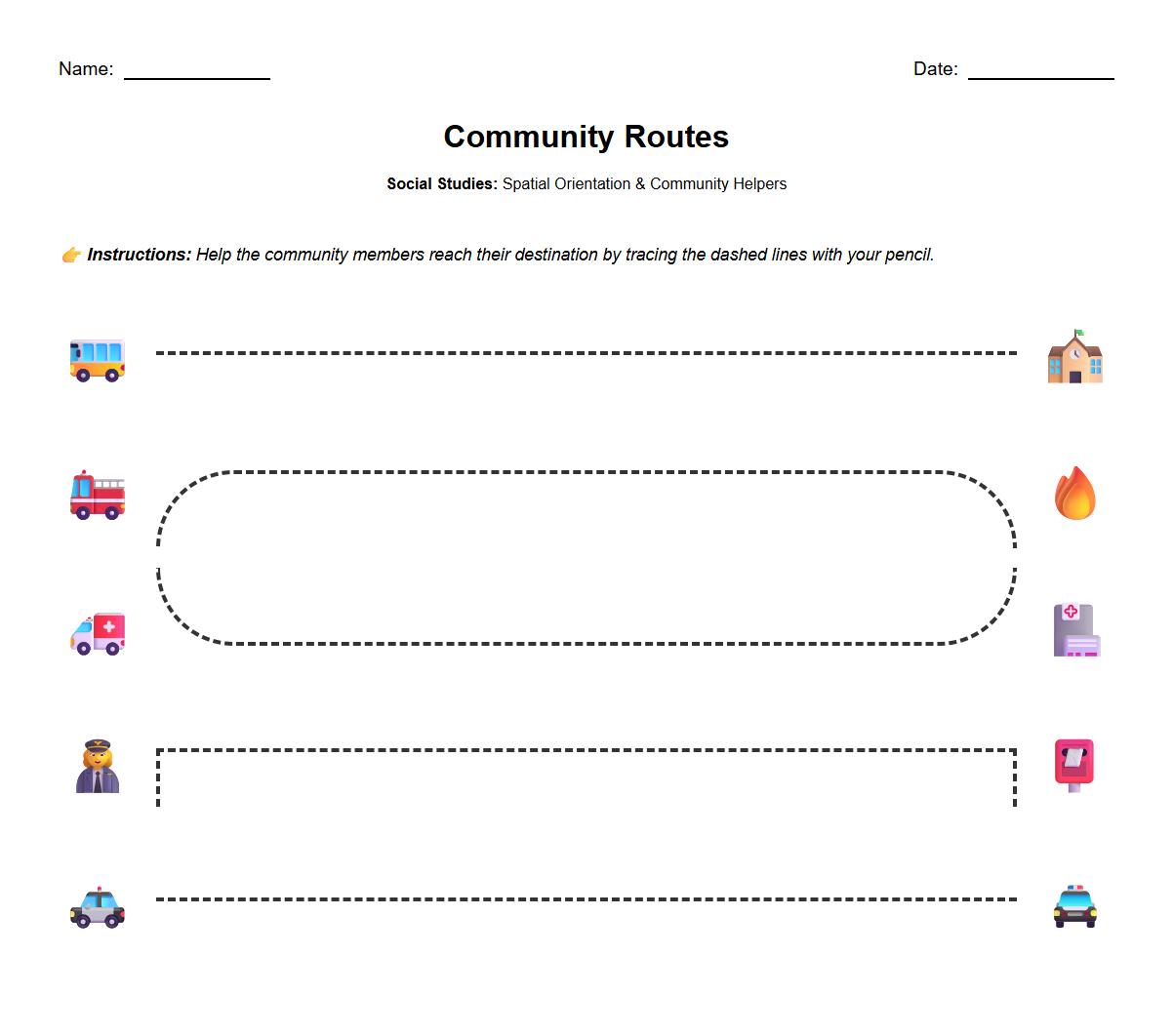
Route Tracing Activity Sheet for Strengthening Spatial Orientation

Download PDF     Pin it

Land and Water Identification Worksheet for Early Geography Skills
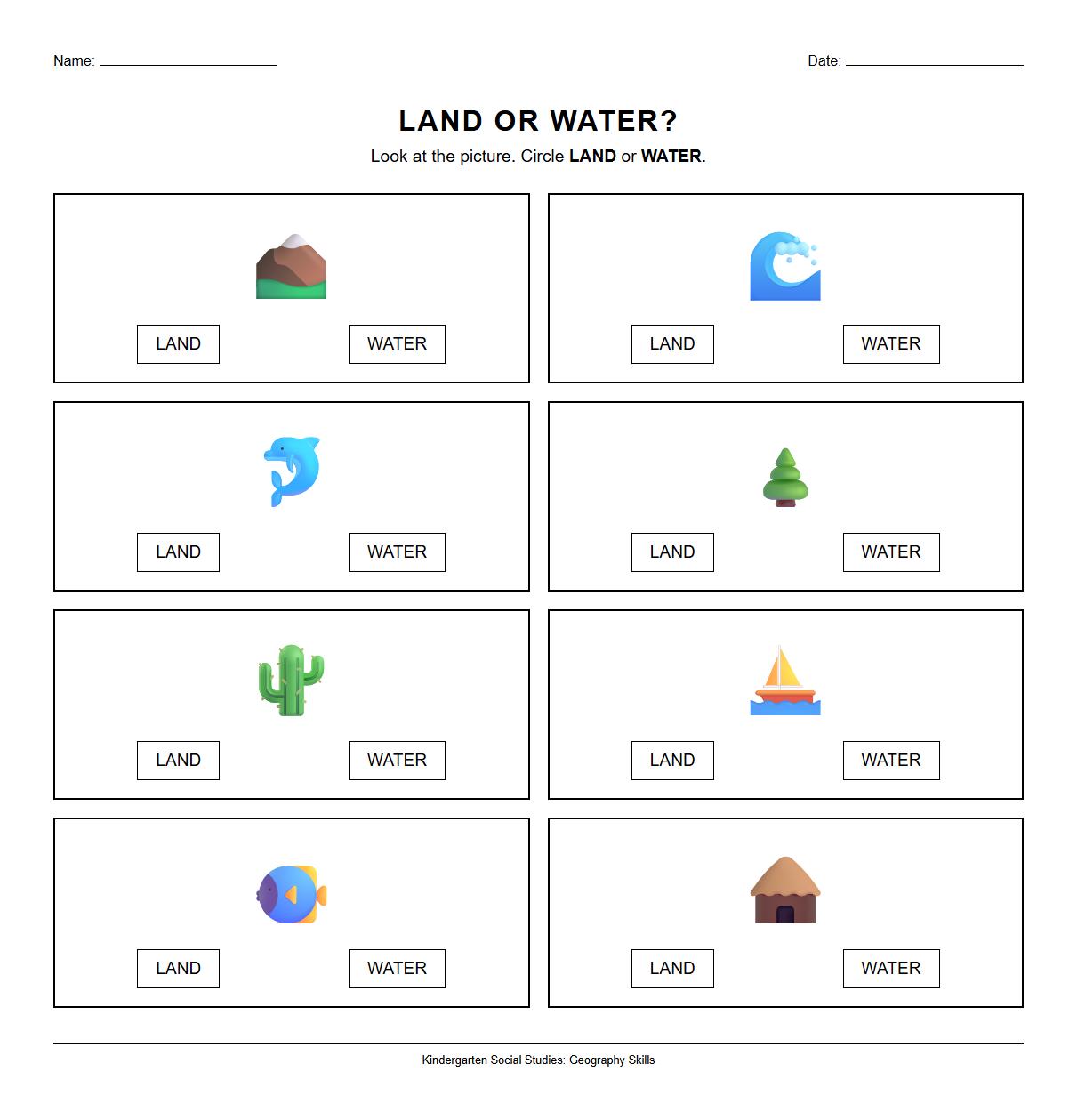
Land and Water Identification Worksheet for Early Geography Skills

Download PDF     Pin it

Neighborhood Mapping Exercise to Build Spatial Visualization
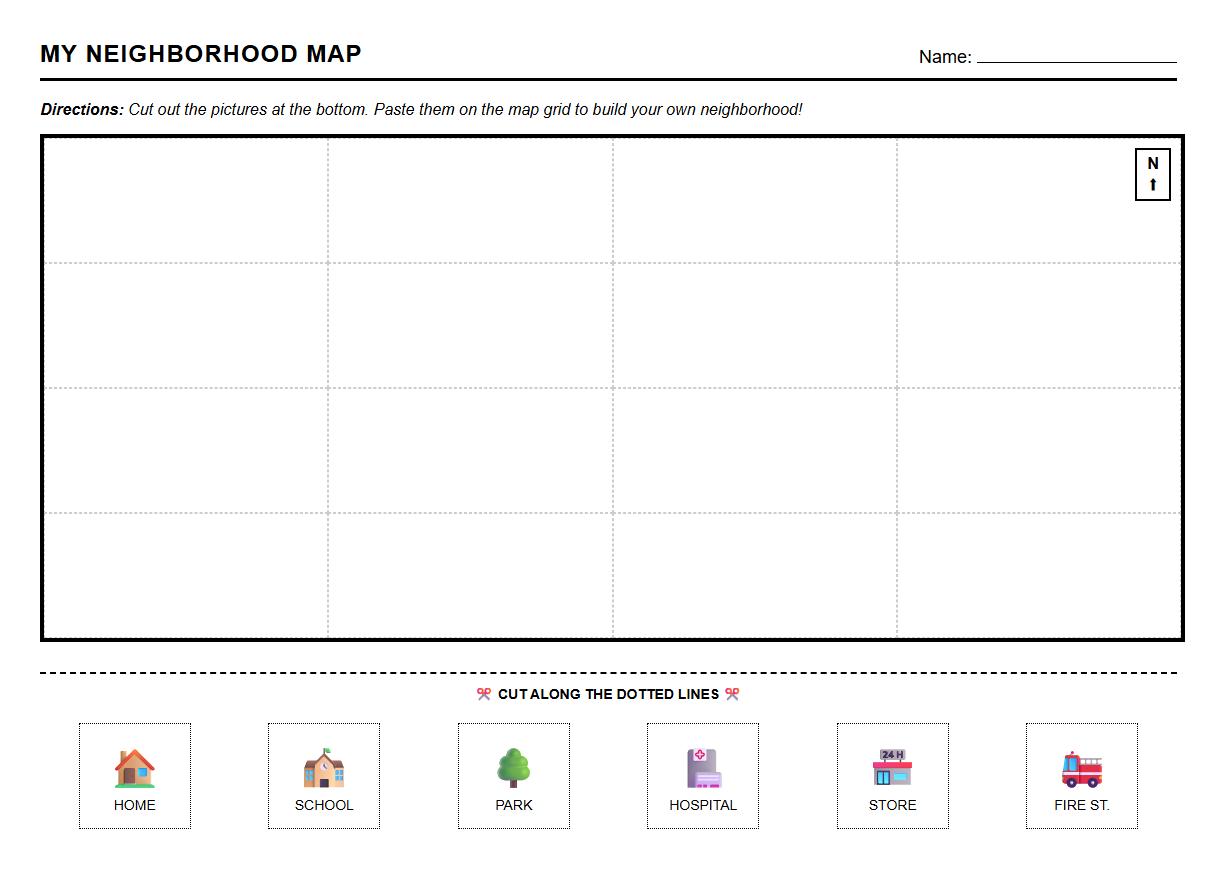
Neighborhood Mapping Exercise to Build Spatial Visualization

Download PDF     Pin it

Understanding Directions in the Classroom

Helping children learn directional awareness starts with simple questions like, "Can you point to where the sun rises in our classroom?" This encourages understanding of east and west and spatial orientation. Use windows and natural light as teaching tools to relate directions to their environment. Reinforcing these concepts helps children navigate and recognize directions confidently.

Comparing Objects by Proximity and Size

Teaching children to identify objects by proximity involves questions such as, "Which object is closest to the bookshelf?" This fosters observation skills and understanding of spatial relationships. Encouraging children to line objects in order, like blocks from shortest to tallest, enhances their measurement and comparison skills. These activities develop critical thinking and attention to detail.

Mapping and Locational Skills

Asking children to draw a map of the classroom encourages spatial awareness and memory recall. Questions like, "Where is the window located in relation to your seat?" help them practice position and direction concepts. Understanding the layout aids in building graphic representation skills and helps children comprehend their environment better. Mapping activities bridge concrete experiences with abstract thinking.

Following Instructions and Recognizing Objects

Tasks like placing the blue toy above the red toy or following a path on the floor using arrows help children develop sequencing and fine motor skills. Identifying objects near specific reference points, such as "What is next to the teacher's desk?" sharpens their observational skills. These guided instructions enhance listening comprehension and spatial reasoning. Consistent practice builds confidence in following multi-step directions.

Exploring the Playground and Classroom Layouts

Questions about the playground, like "Which side of the playground is the slide on?" connect classroom learning to outdoor exploration, fostering environmental awareness. Knowing "Which object is farthest from the door?" encourages children to evaluate distance and arrangement in real spaces. These exercises promote critical thinking and contextual learning in familiar settings. Integrating indoor and outdoor spatial tasks supports holistic development.


More in Social Studies Category


About the author. Nylen Smith is a dedicated educator and cofounder of KWorksheet.com, a popular platform specializing in high-quality kindergarten worksheets and printable activities.

Disclaimer. The information provided in this document is for general informational purposes and/or document sample only and is not guaranteed to be factually right or complete. Please report to us via contact-us page if you find and error in this page, thanks.

Comments

No comment yet