Exploring Cardinal Directions Worksheet for Early Learners

📅 Apr 28, 2025 👤 Nylen Smith

Early learners develop spatial awareness and navigation skills by exploring cardinal directions such as north, south, east, and west. This foundational knowledge enhances their ability to understand maps, follow instructions, and engage with their environment confidently. Explore our collection of engaging worksheets designed to reinforce cardinal directions through fun and interactive activities.

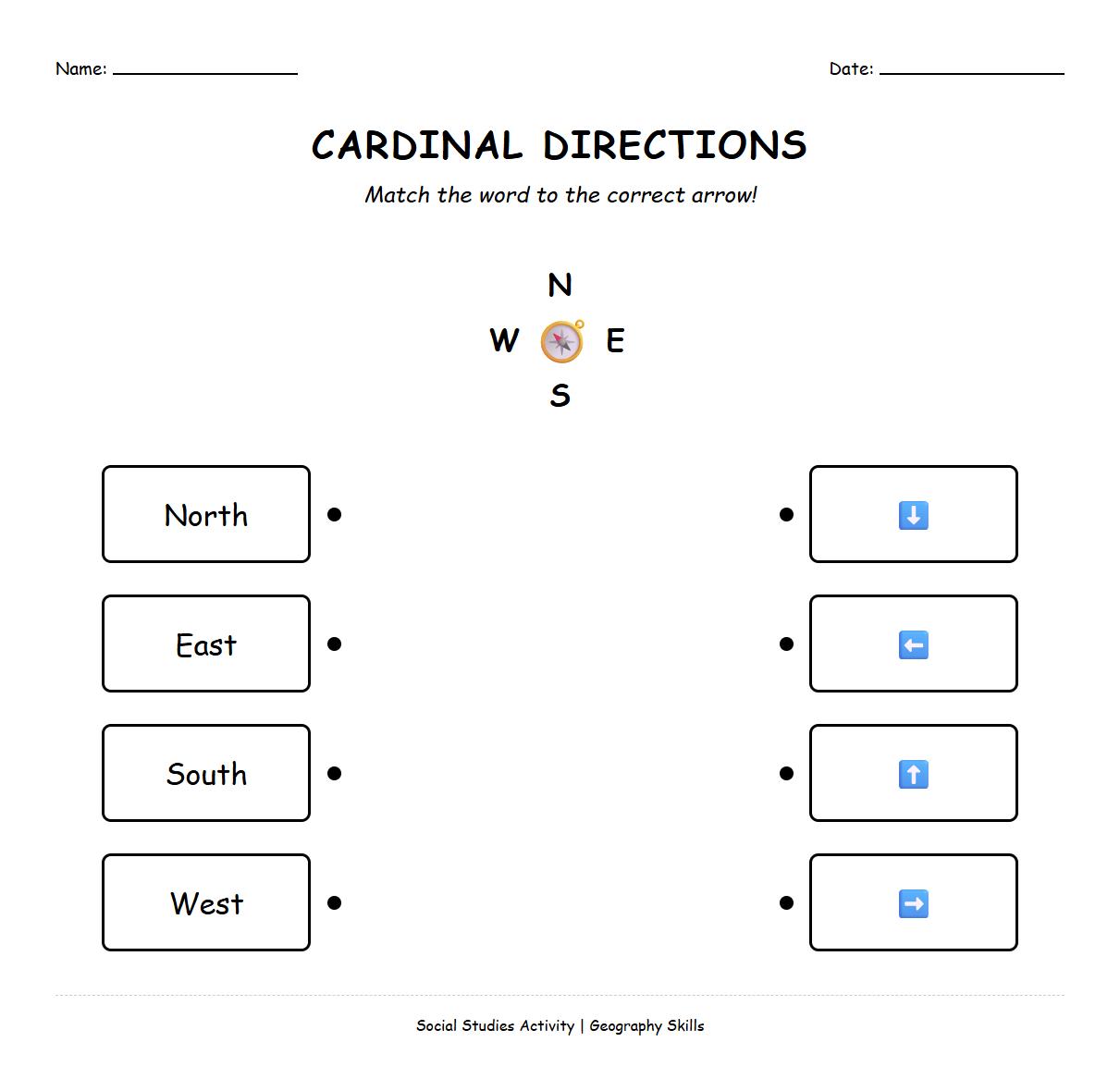
Cardinal Directions Matching Activity Worksheet
Cardinal Directions Matching Activity Worksheet

Download PDF     Pin it

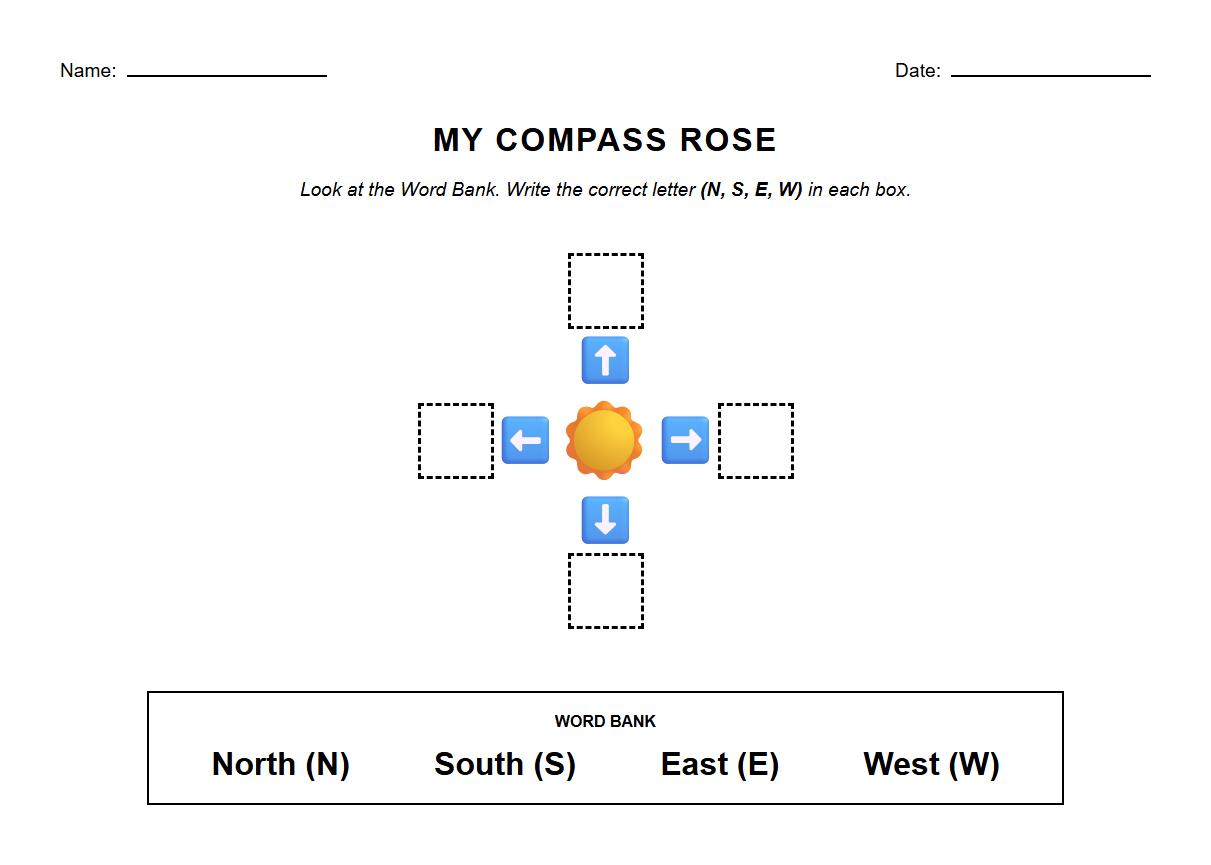
Simple Compass Rose Identification Worksheet
Simple Compass Rose Identification Worksheet

Download PDF     Pin it

Fill in the Arrows: North South East West Worksheet
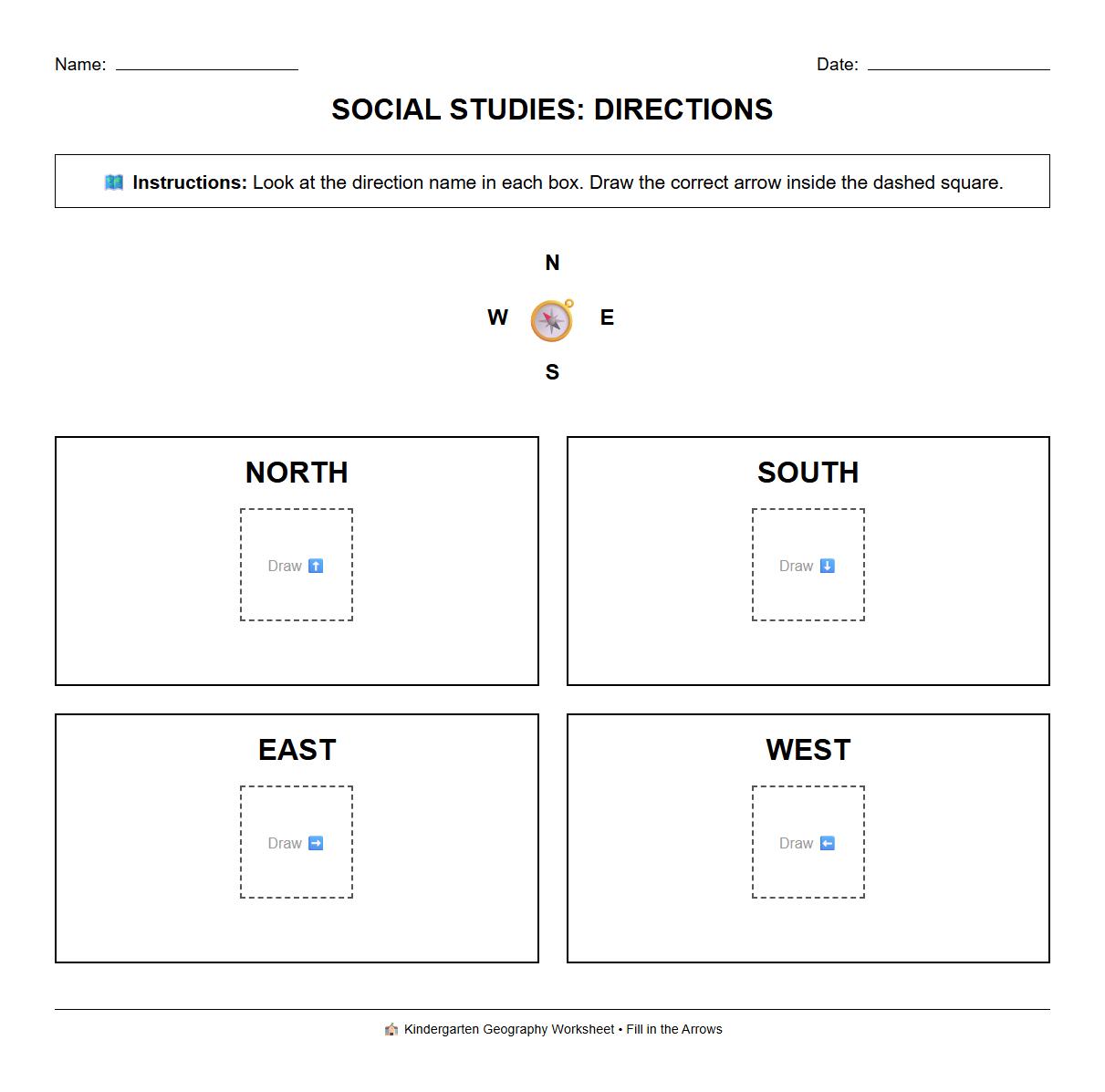
Fill in the Arrows: North South East West Worksheet

Download PDF     Pin it

Map Reading with Cardinal Directions Worksheet
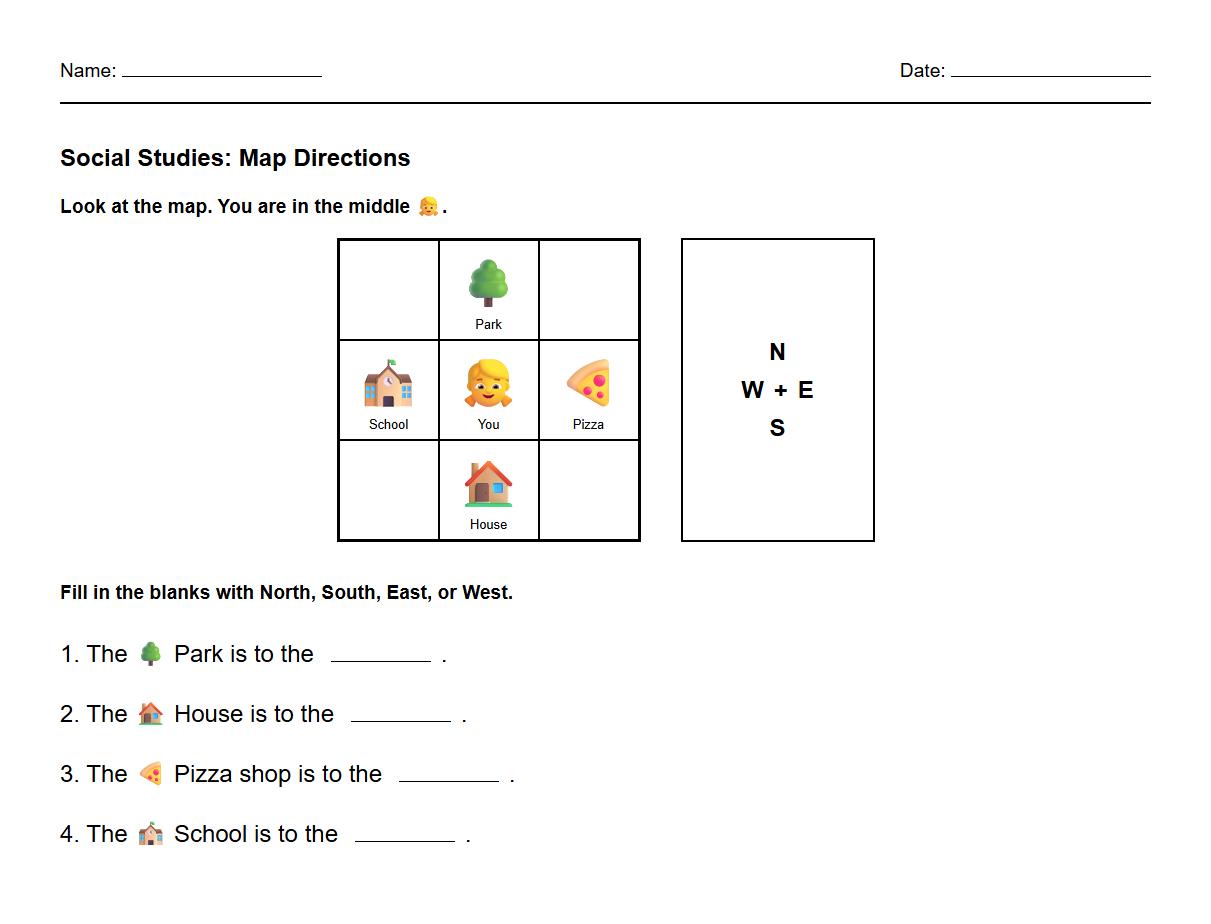
Map Reading with Cardinal Directions Worksheet

Download PDF     Pin it

Directional Vocabulary Phonics Practice Worksheet
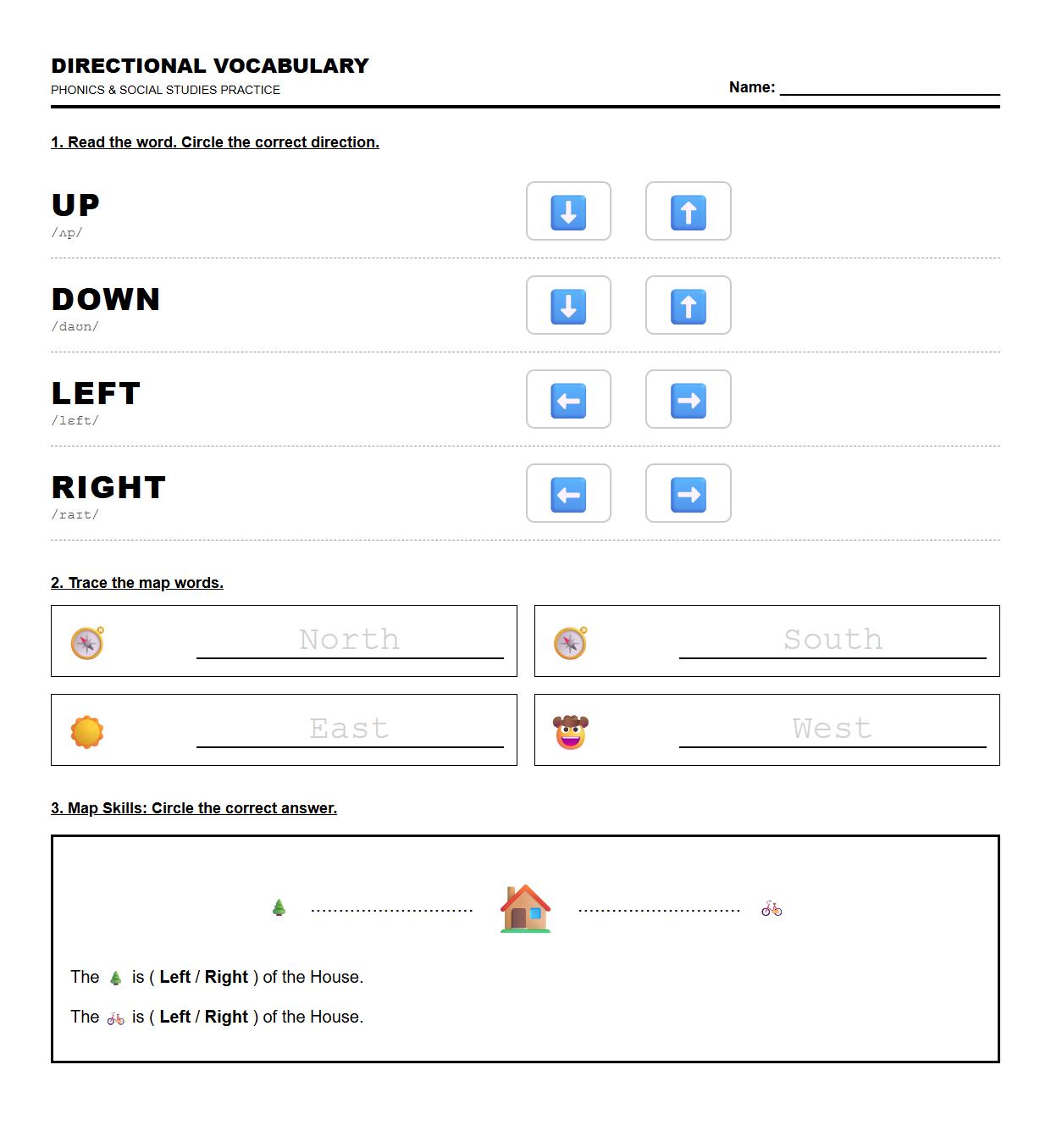
Directional Vocabulary Phonics Practice Worksheet

Download PDF     Pin it

Draw the Path Using Cardinal Directions Worksheet
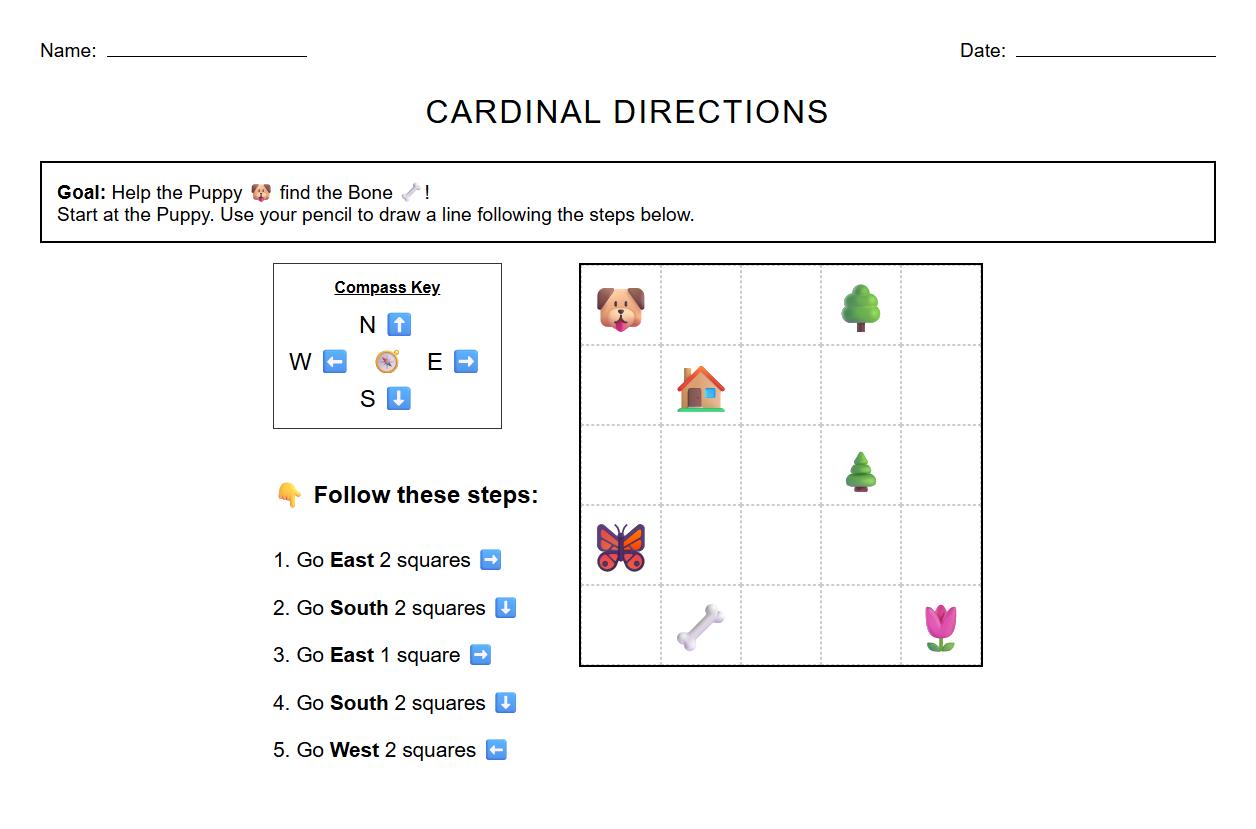
Draw the Path Using Cardinal Directions Worksheet

Download PDF     Pin it

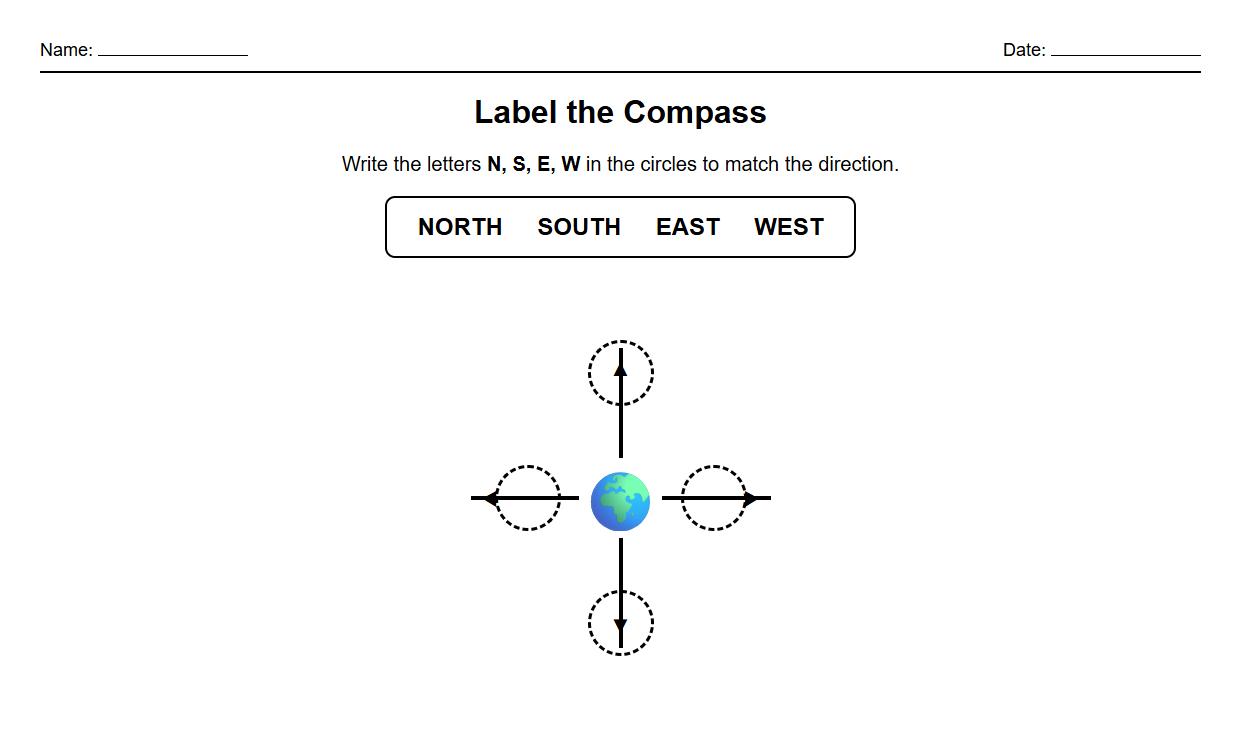
Label the Compass Points Worksheet

Label the Compass Points Worksheet
Download PDF     Pin it

Picture Sorting by Cardinal Directions Worksheet
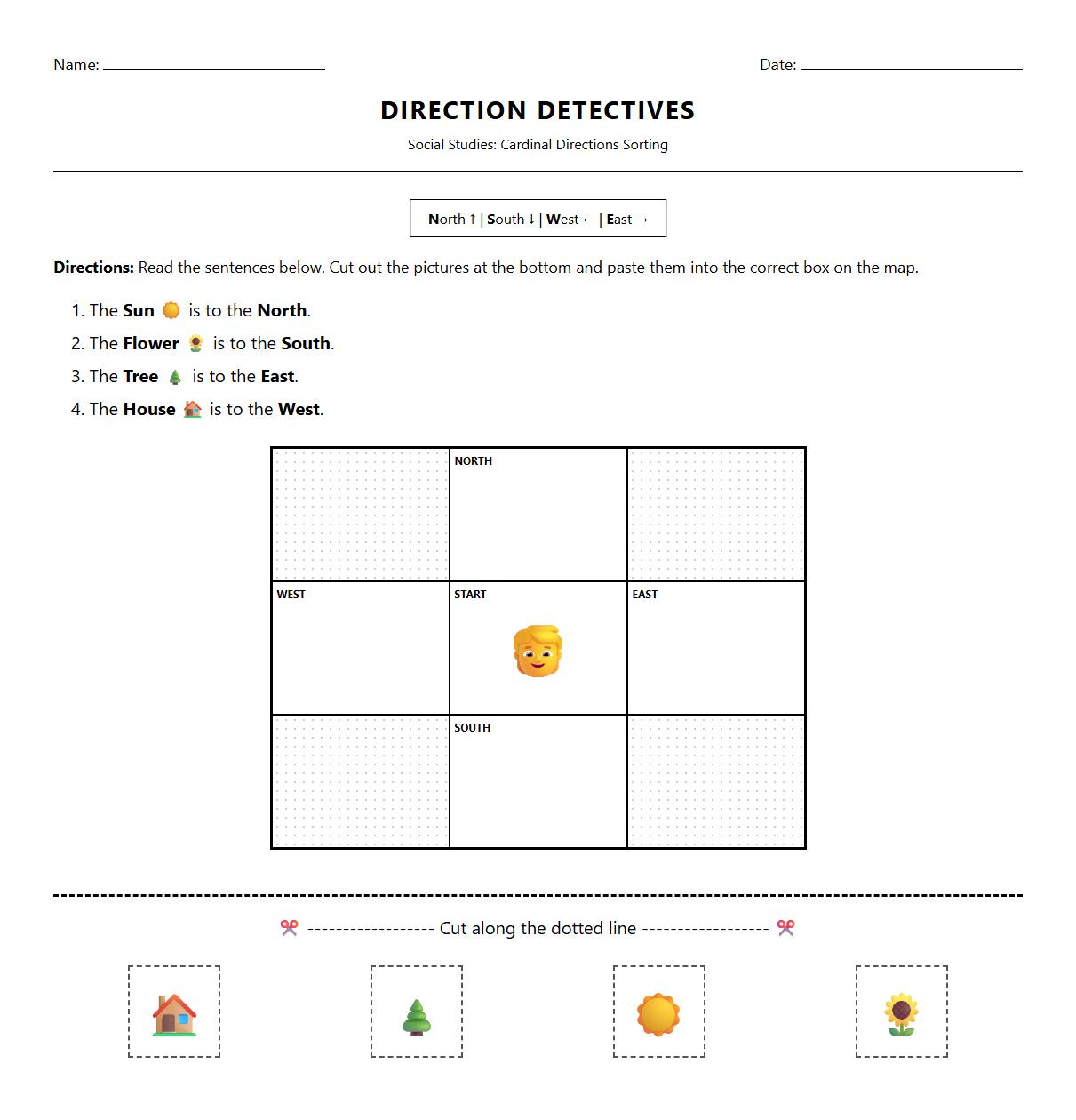
Picture Sorting by Cardinal Directions Worksheet

Download PDF     Pin it

Maze Navigation Using North South East West Worksheet
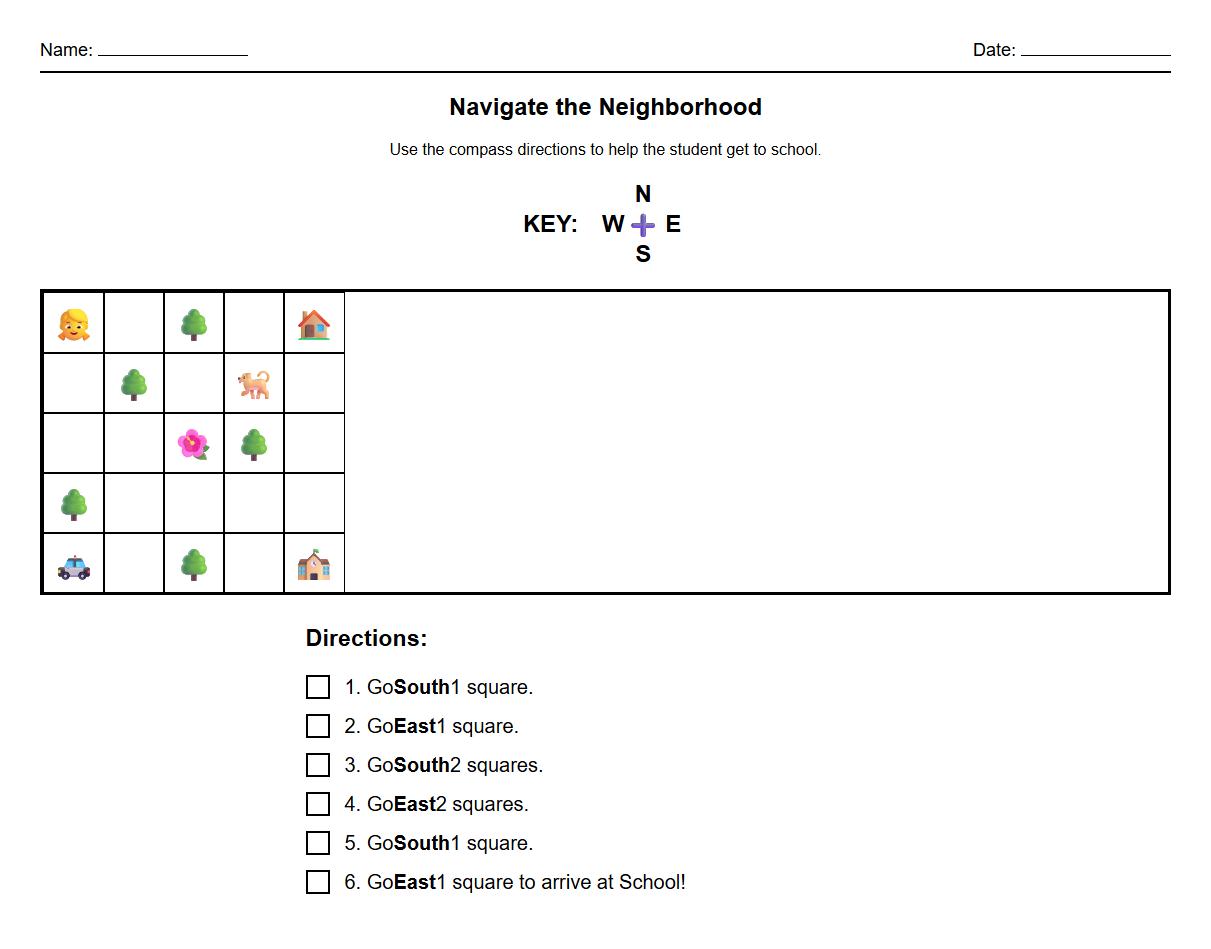
Maze Navigation Using North South East West Worksheet

Download PDF     Pin it

Cardinal Directions Word Search Activity Worksheet
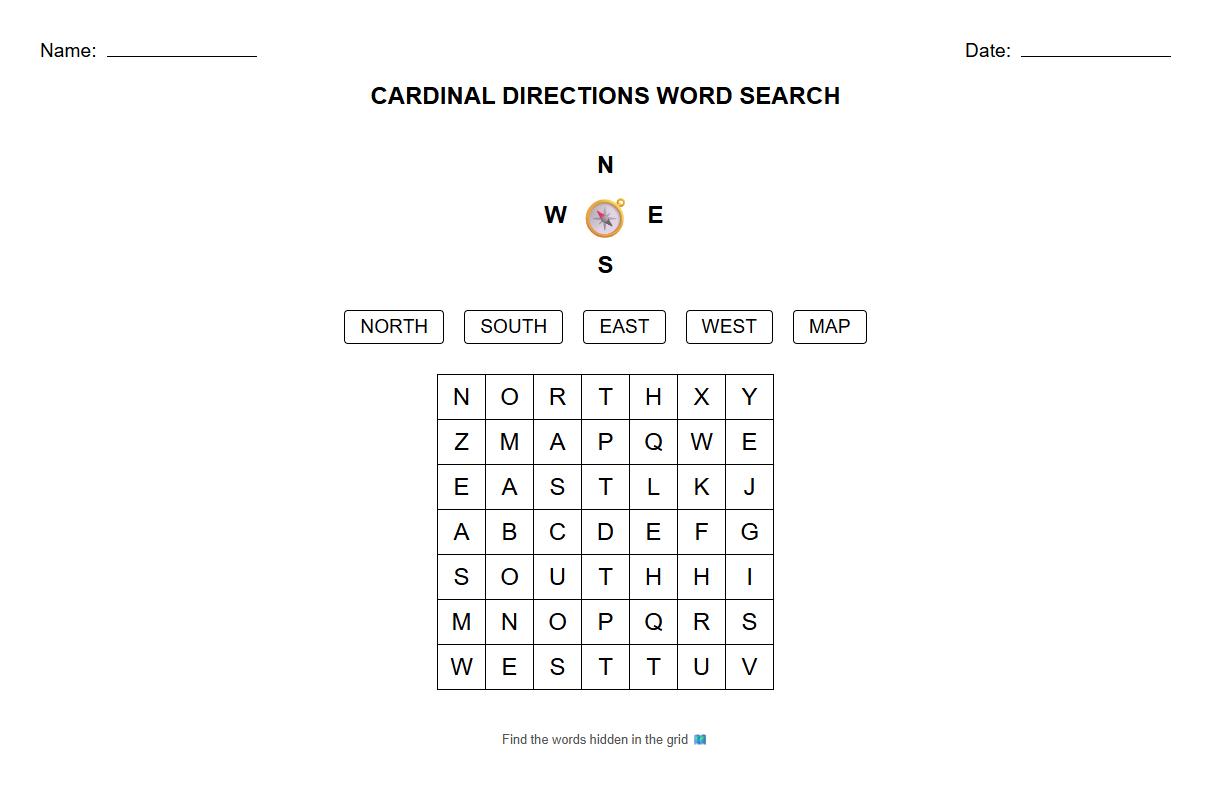
Cardinal Directions Word Search Activity Worksheet

Download PDF     Pin it

Four Main Cardinal Directions in the Worksheet

The worksheet introduces the four main cardinal directions: North, South, East, and West. These directions form the foundational vocabulary for young learners to navigate space. Recognizing these helps children understand spatial orientation. Teaching these four points sets the stage for more complex geography skills.

Using a Classroom Map to Identify Cardinal Directions

Children can use a classroom map included in the worksheet to locate North, South, East, and West. The map guides students in relating directions to familiar objects such as the door or window. Teachers can encourage kids to point to the correct direction on the map. This practical application improves memory retention of cardinal points.

Activities that Reinforce Understanding of North, South, East, and West

The worksheet includes fun activities such as matching arrows to directions and labeling a compass rose. Movement-based games like "point to North" or "walk East" actively engage students. These exercises make learning interactive and enjoyable. Repetition through play solidifies their comprehension of directions.

Encouraging Students to Practice Following Directions

The worksheet involves tasks where students must follow step-by-step instructions using cardinal directions. For example, "move two steps North, then one step East" helps children practice listening and spatial skills simultaneously. This method ensures students apply their knowledge practically. It builds confidence in understanding and utilizing directions.

Symbols or Images Representing Cardinal Directions

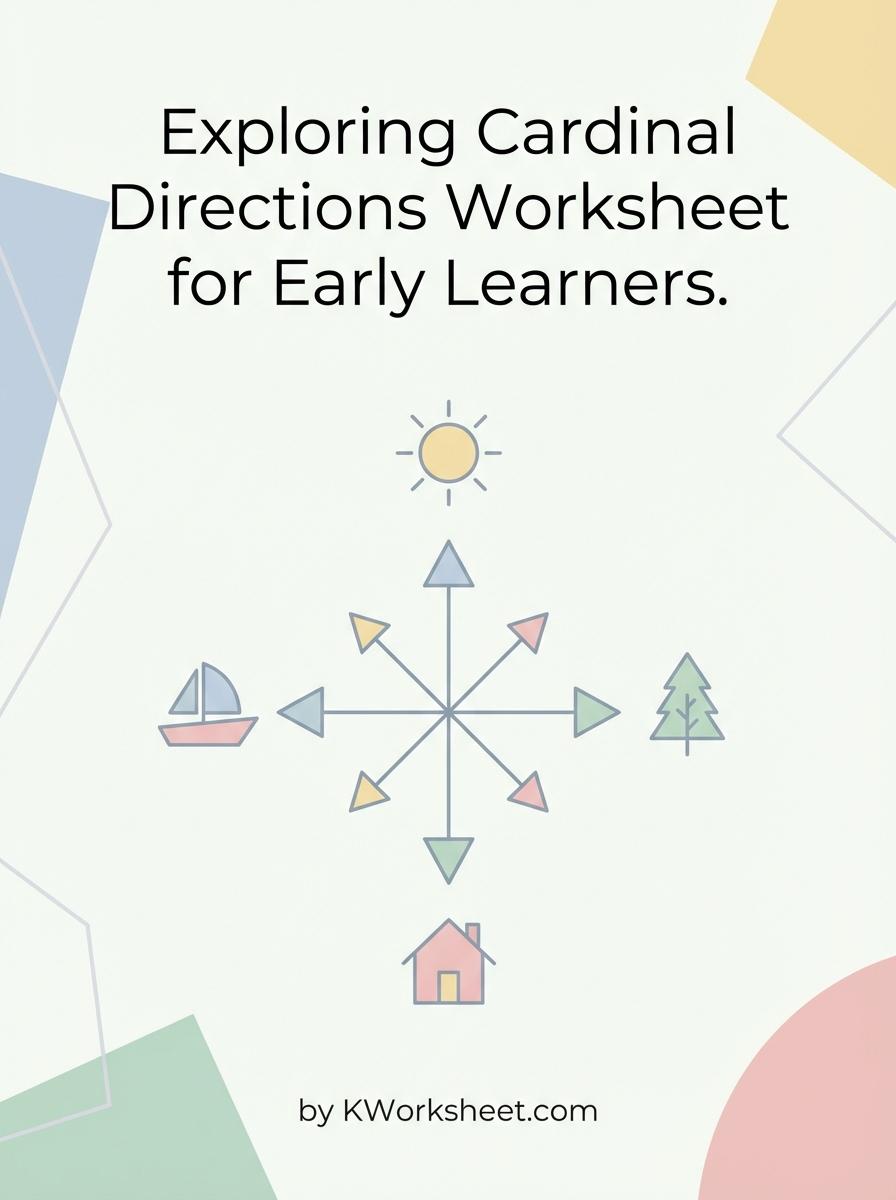
Simple symbols such as arrows and a compass rose are used to represent the cardinal directions in the worksheet. Visual icons are paired with clear labels to reinforce language and meaning. These images provide reference points to support learning. Familiarizing with these symbols enhances quick recognition.

Using Bodies to Demonstrate Each Direction

The worksheet suggests physical activities where children face or point towards North, South, East, and West. Using their bodies to demonstrate directions makes learning kinesthetic. Activities like turning to face a direction or raising a hand enhance comprehension. This approach links physical motion with cognitive understanding.

Real-Life Examples Teaching Cardinal Directions

Examples such as looking out a window to the East at sunrise or finding the school playground to the South are included. These real-life references connect classroom learning to everyday experience. They help children see the importance of directions around them. Relating directions to home and school environments deepens understanding.

Developing Spatial Awareness through the Worksheet

The worksheet improves spatial awareness by encouraging students to visualize and navigate spaces using cardinal directions. Mapping activities challenge learners to interpret and organize spatial information. This skill supports math and science readiness. Early spatial skills also contribute to problem-solving abilities.

Questions Teachers Can Ask to Assess Understanding

Teachers can ask questions like "Which direction is the door facing?" or "If you walk East, what do you see?" to check comprehension. Inquiry prompts encourage critical thinking about spatial relationships. Verbal assessments paired with worksheet tasks confirm mastery. These questions guide meaningful discussions on directions.

Integrating Drawing or Coloring for Engagement

Students are invited to draw or color the compass rose or directional arrows on the worksheet. This creative task increases engagement and reinforces direction names. Coloring enhances fine motor skills and attention to detail. Artistic expression supports deeper learning of the concepts.


More in Social Studies Category


About the author. Nylen Smith is a dedicated educator and cofounder of KWorksheet.com, a popular platform specializing in high-quality kindergarten worksheets and printable activities.

Disclaimer. The information provided in this document is for general informational purposes and/or document sample only and is not guaranteed to be factually right or complete. Please report to us via contact-us page if you find and error in this page, thanks.

Comments

No comment yet