Building a strong vocabulary foundation starts with understanding antonyms and synonyms, which enhances language skills and cognitive development in kindergarten students. These worksheet drills provide engaging activities to help young learners recognize and use opposite and similar words confidently. Explore the available worksheets to support your child's language enrichment journey today.
Understanding Opposites and Synonyms
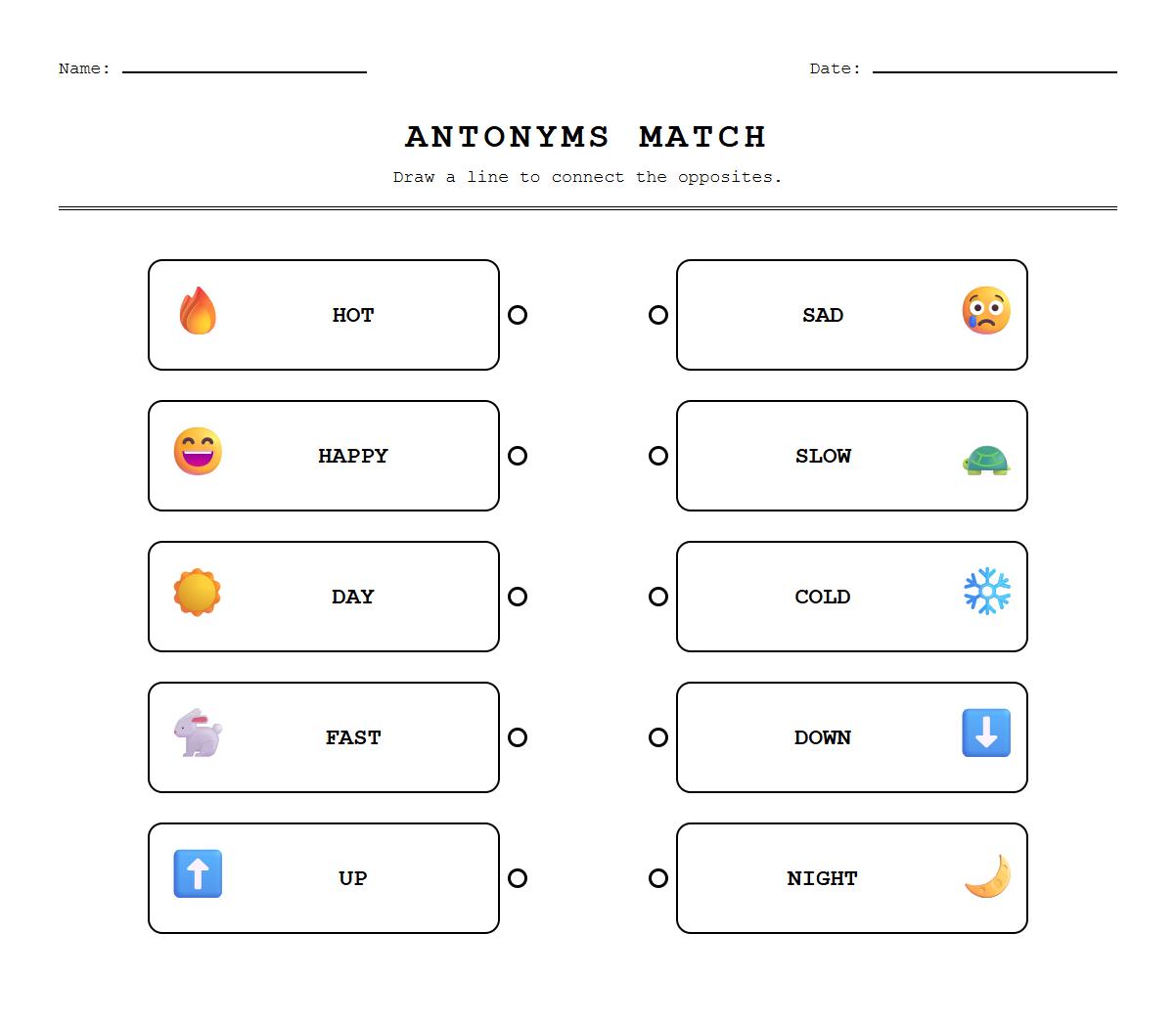
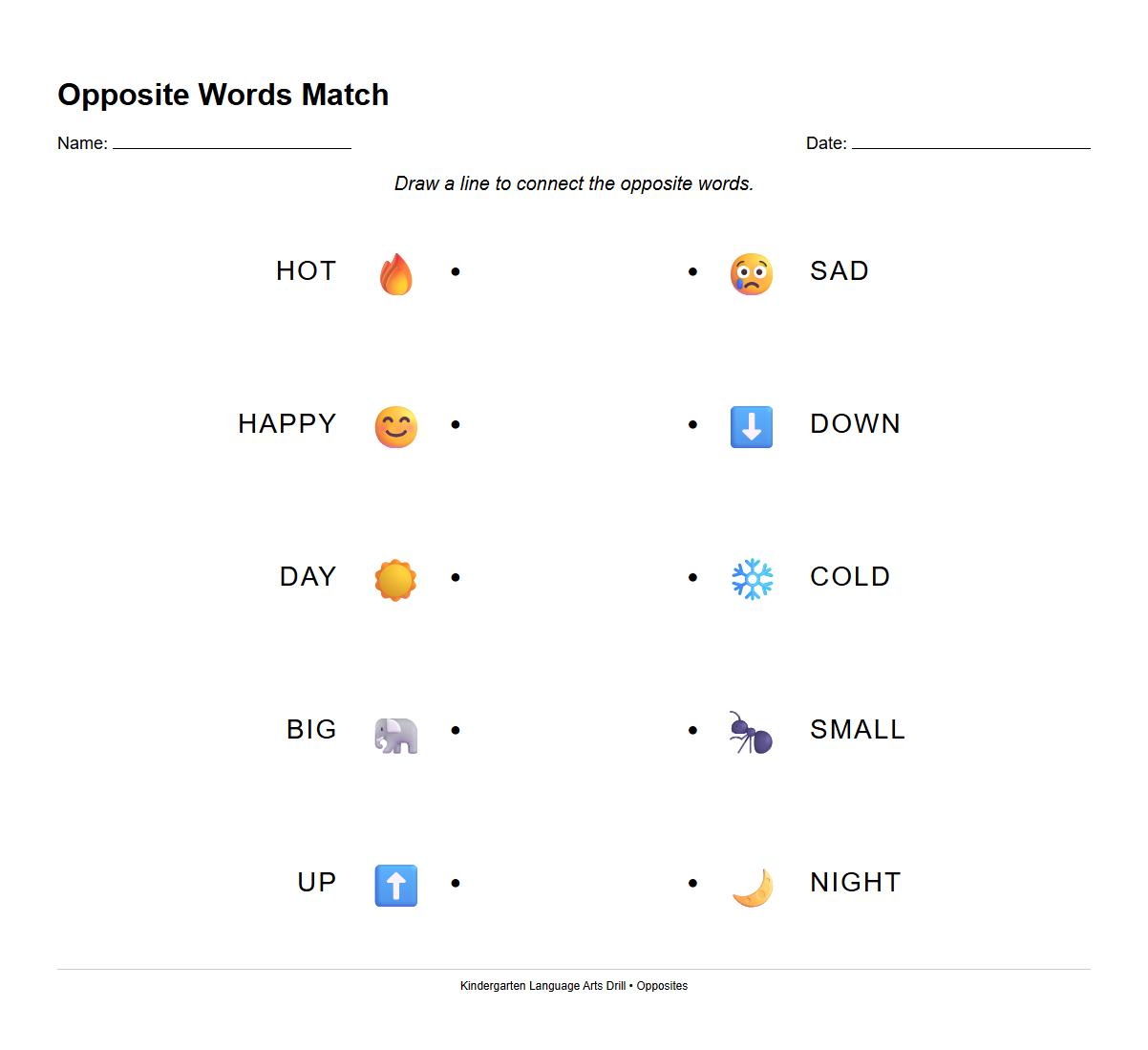
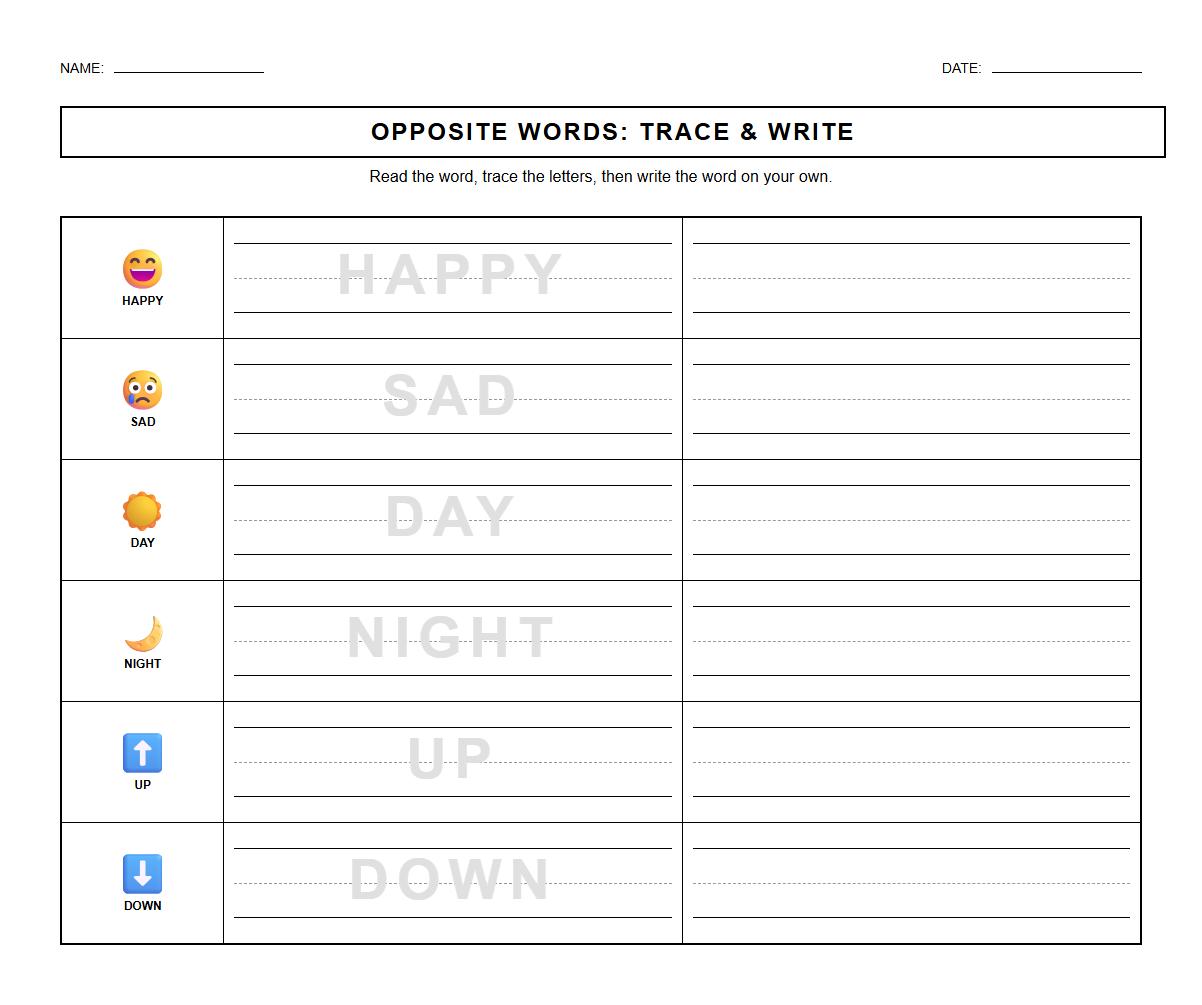
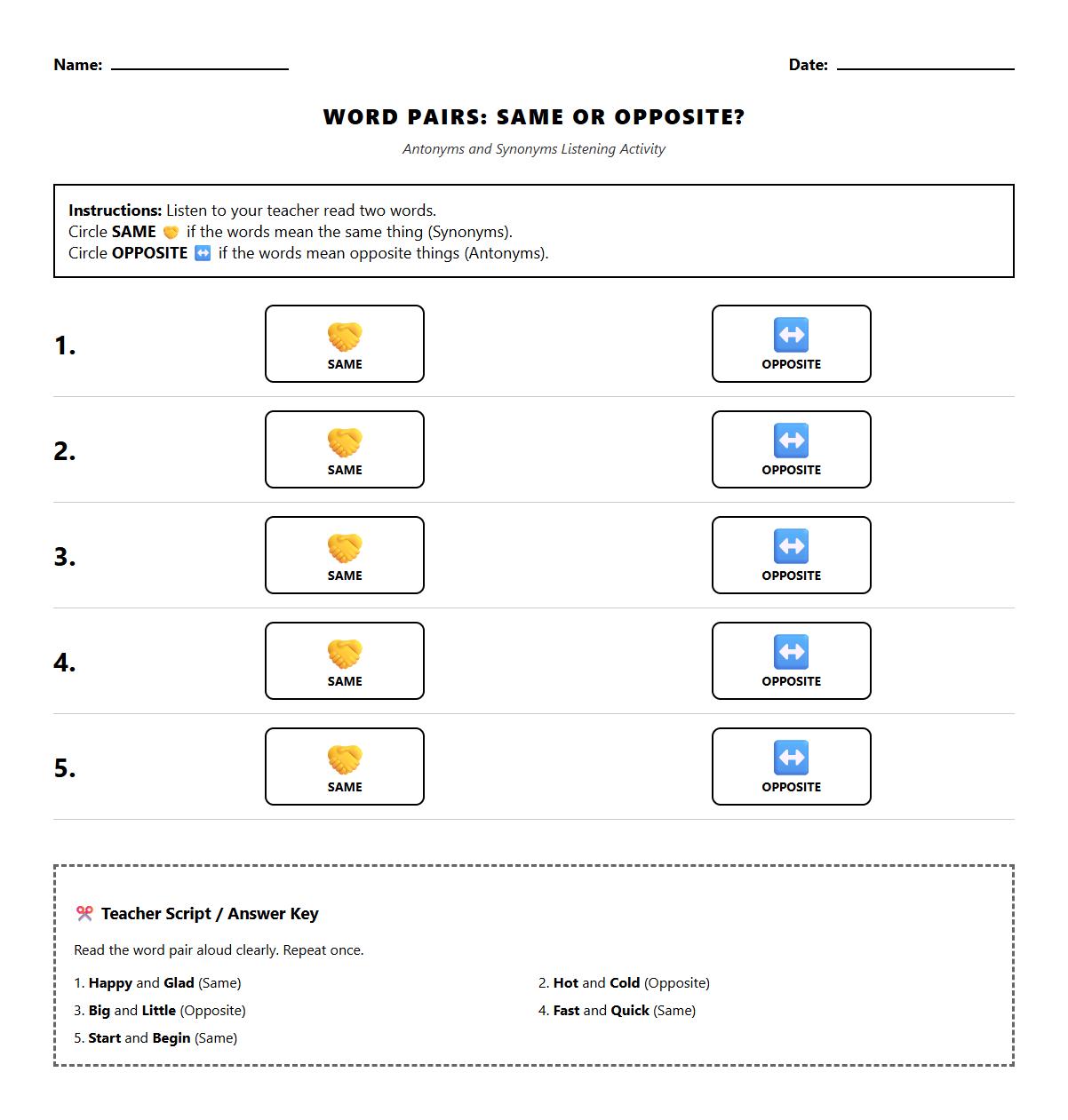
Teaching young learners about opposites and synonyms helps build their vocabulary and comprehension skills. For example, the opposite of happy is sad. Recognizing pairs of words that mean the same or the opposite encourages critical thinking and language development. Use fun activities to make learning these concepts enjoyable.
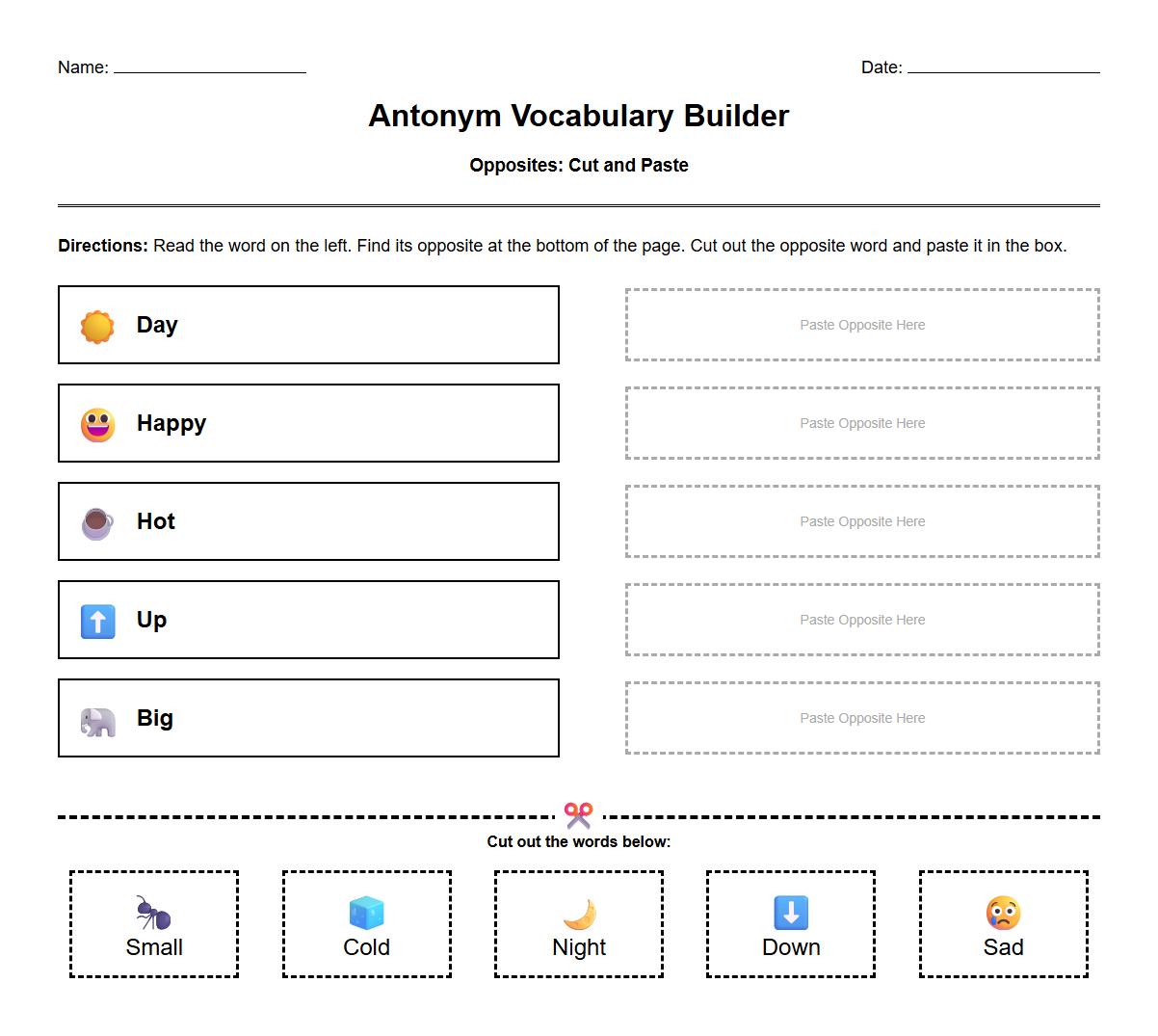
Identifying Opposite Words
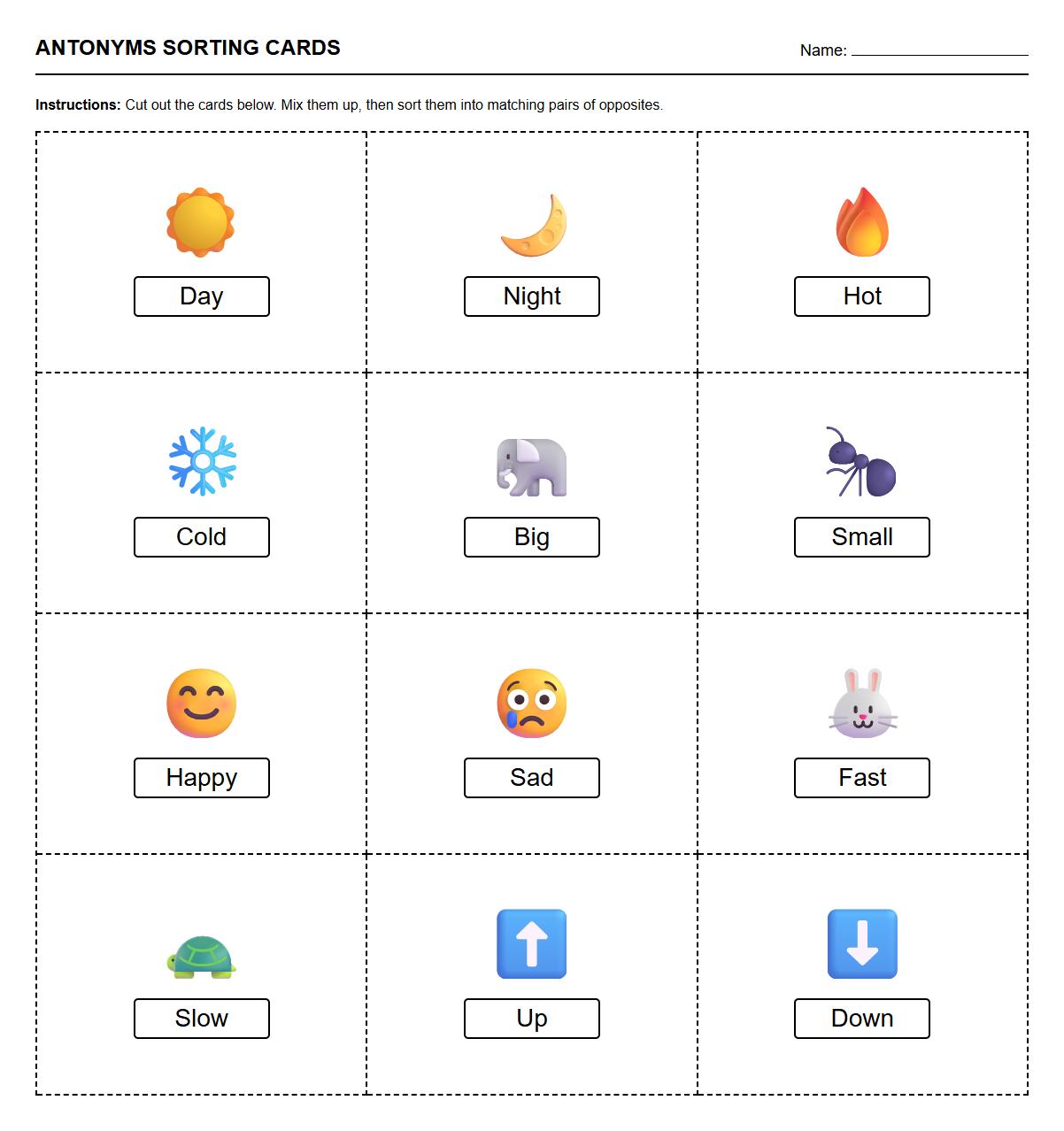
Encourage children to find the antonym of words like hot, which is cold. Asking them to choose the opposite of up, which is down, strengthens their understanding of word relationships. Matching words such as sad with its synonym unhappy also enriches their language skills. Visual aids and interactive worksheets can support this learning process effectively.
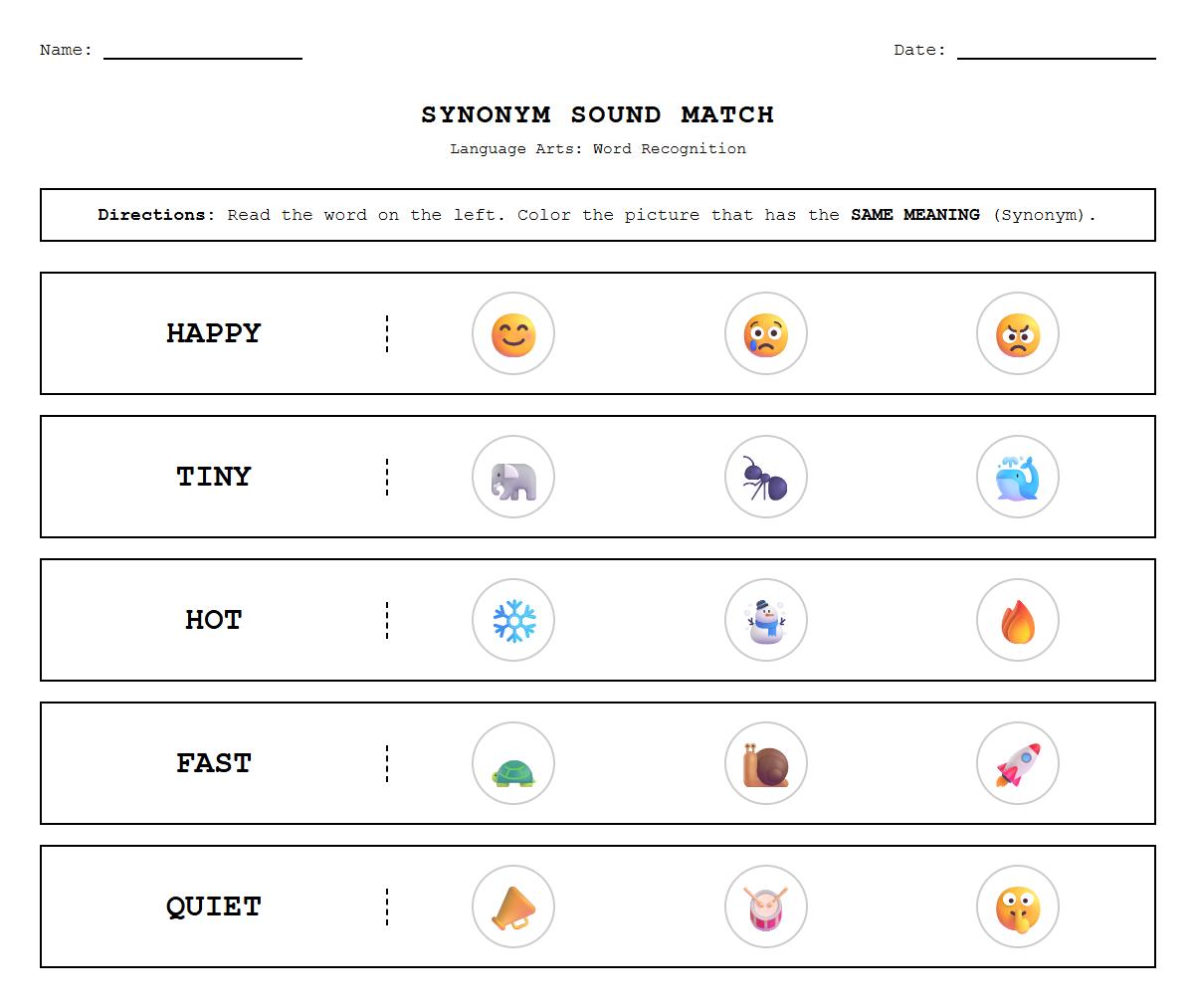
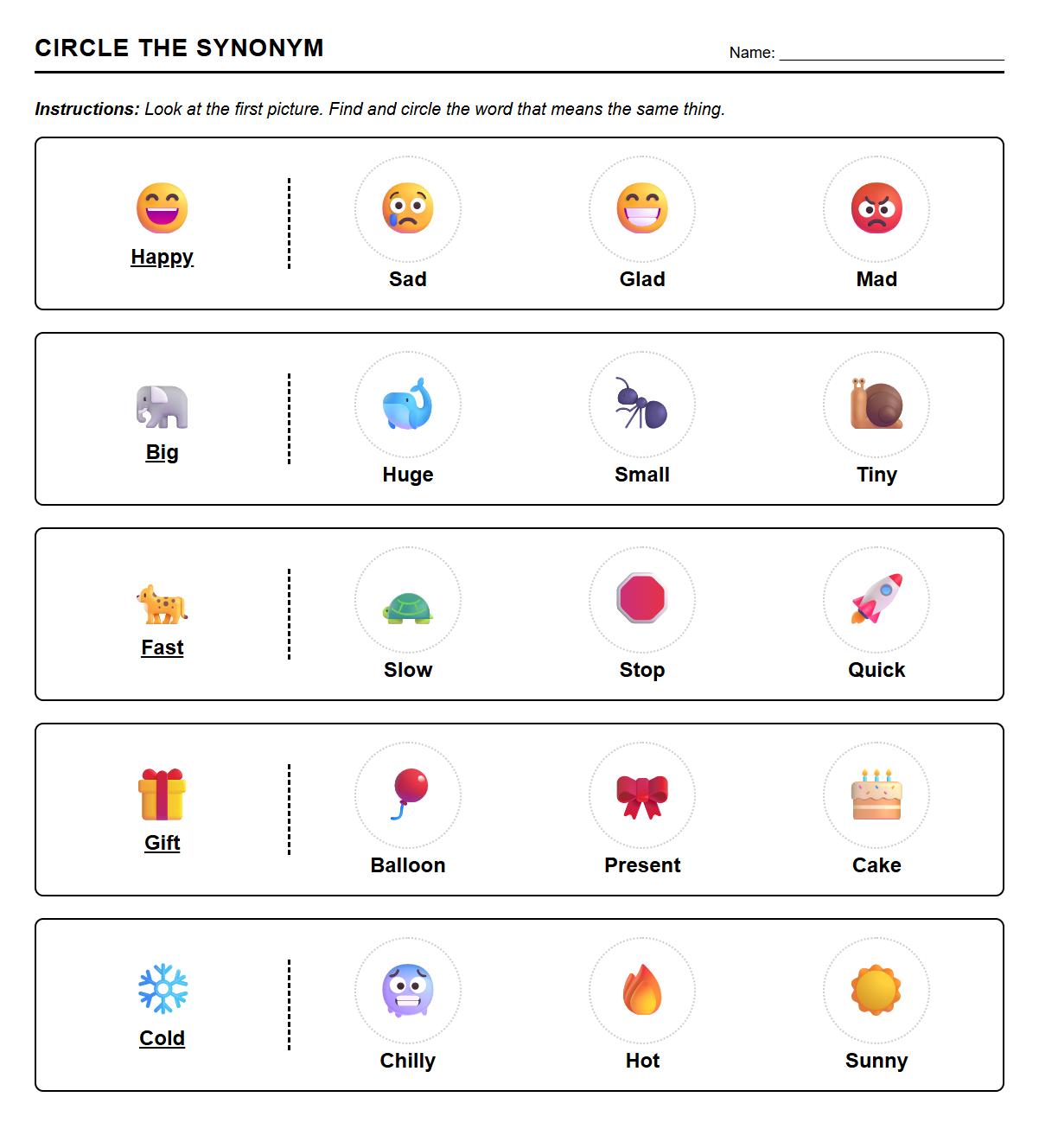
Finding Synonyms
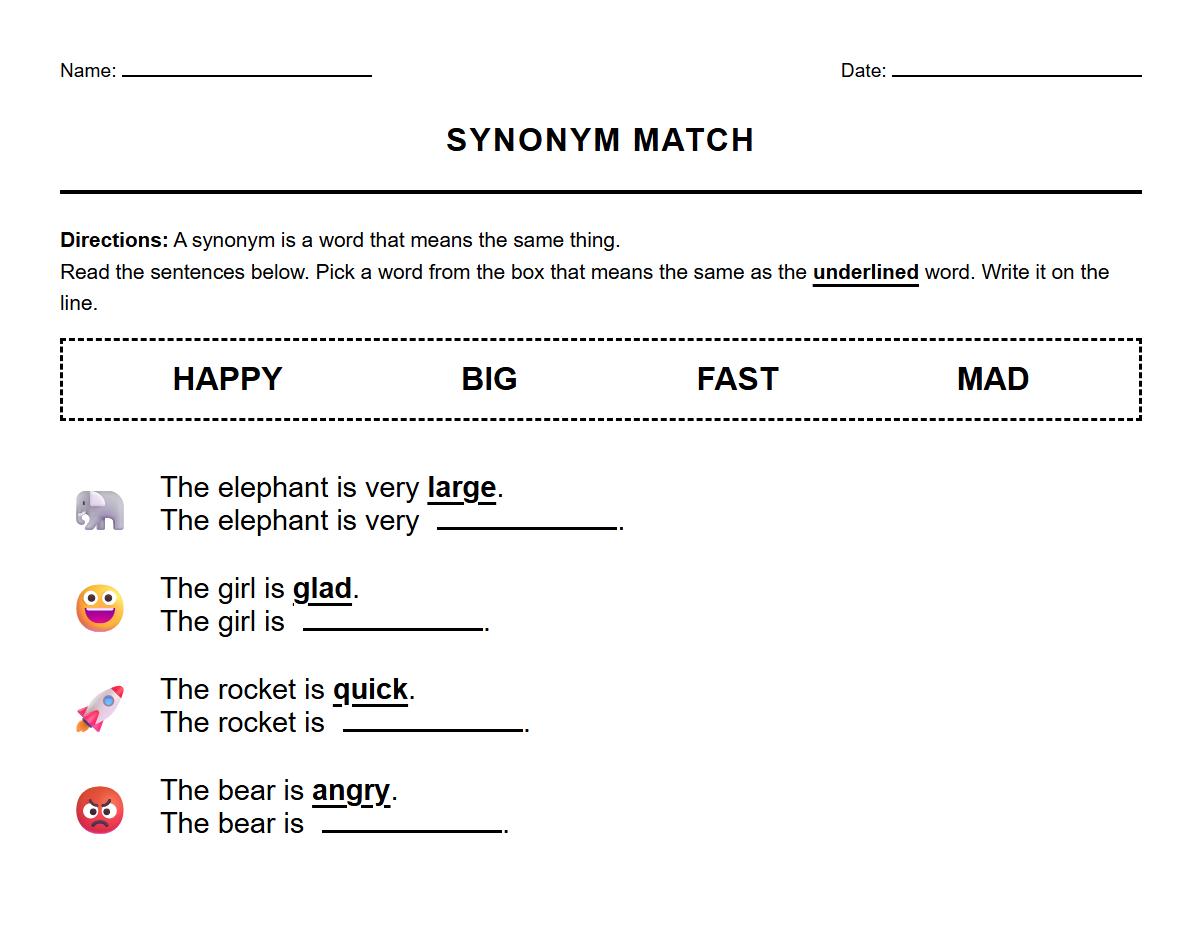
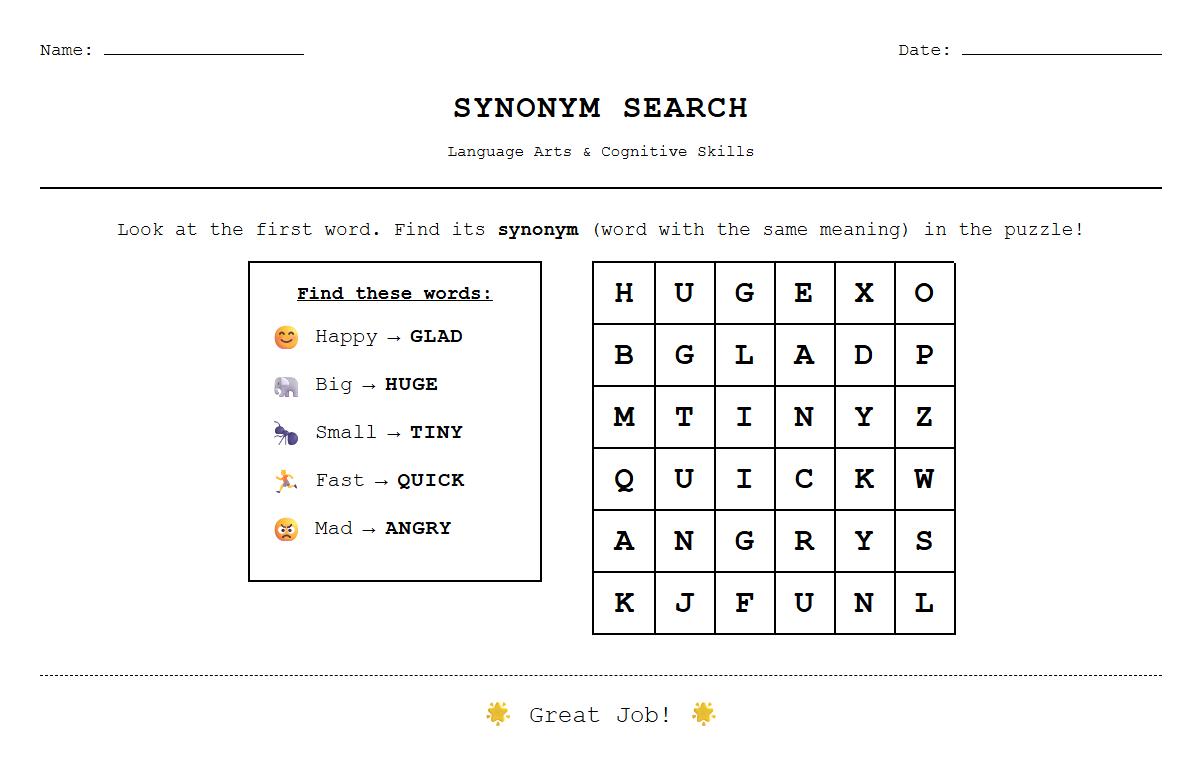
Help children recognize words that mean the same, such as big and large. Highlight words similar to small, like tiny or little, to build broader vocabulary. Identifying the synonym of fast, such as quick or speedy, promotes flexible language use. These activities are key for developing reading and writing confidence.
Engaging Activities for Word Learning
Use interactive tasks like circling words similar to small or picking the opposite of in, which is out, to make lessons more engaging. Matching and identifying words with similar or opposite meanings can be done through games and worksheets. Such exercises help children connect words to their meanings and use them correctly in context. Consistent practice leads to improved literacy skills in young learners.