

Kindergarten students develop foundational phonics skills by recognizing and identifying digraphs, which are pairs of letters representing a single sound. This activity supports early reading and spelling by helping children differentiate common digraphs like ch, sh, and th within simple words. Explore the available worksheets to reinforce digraph identification with engaging, hands-on practice.
Circle the Digraph Worksheet for Kindergarten Phonics
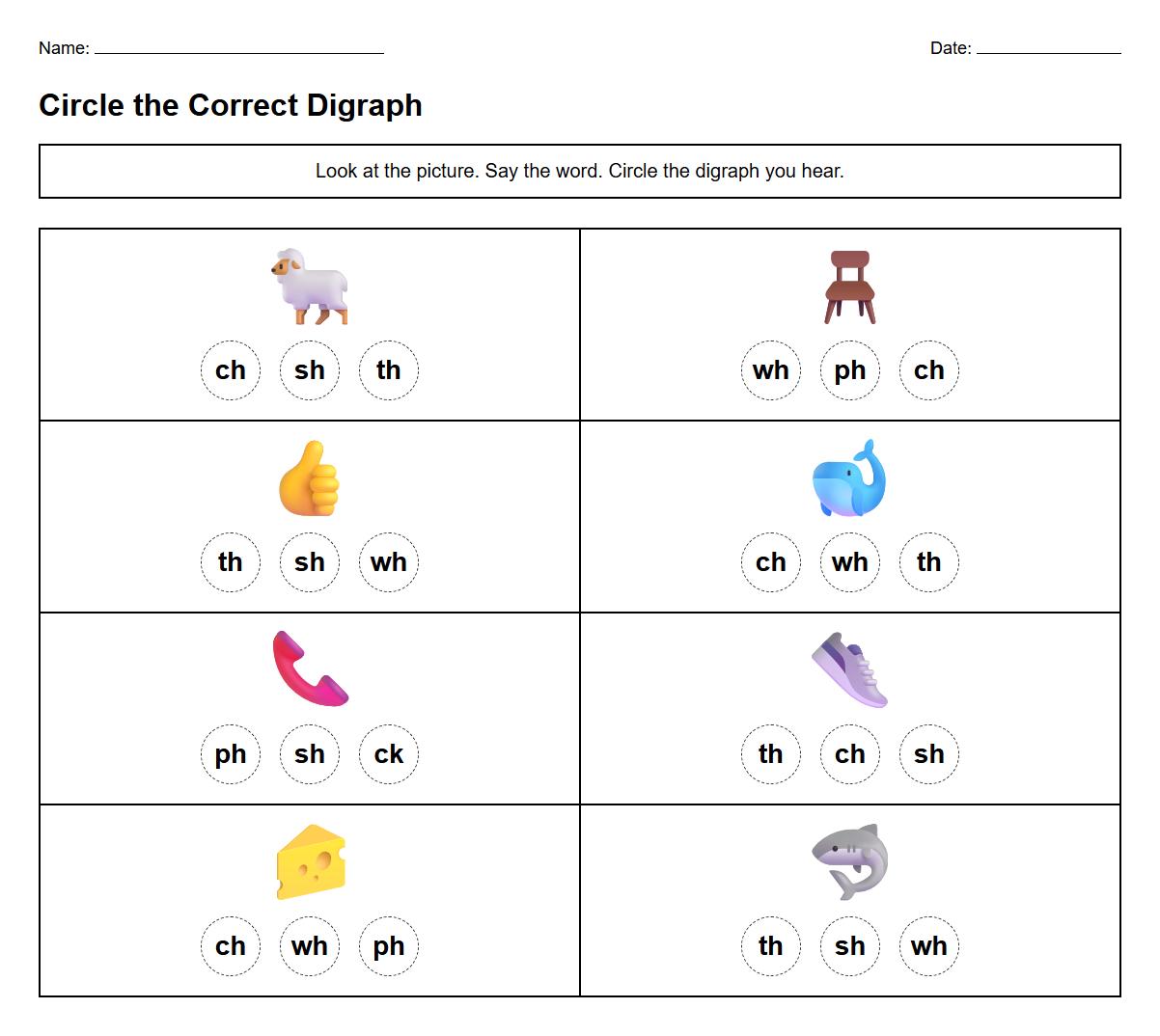


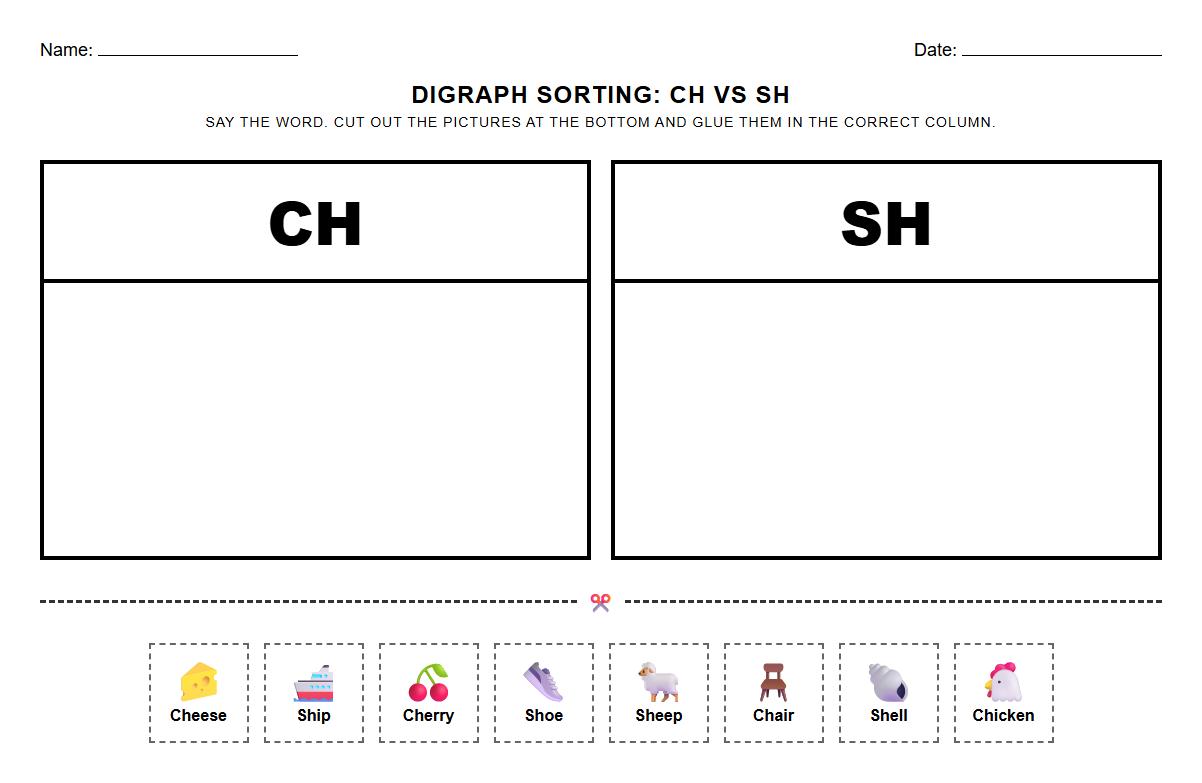
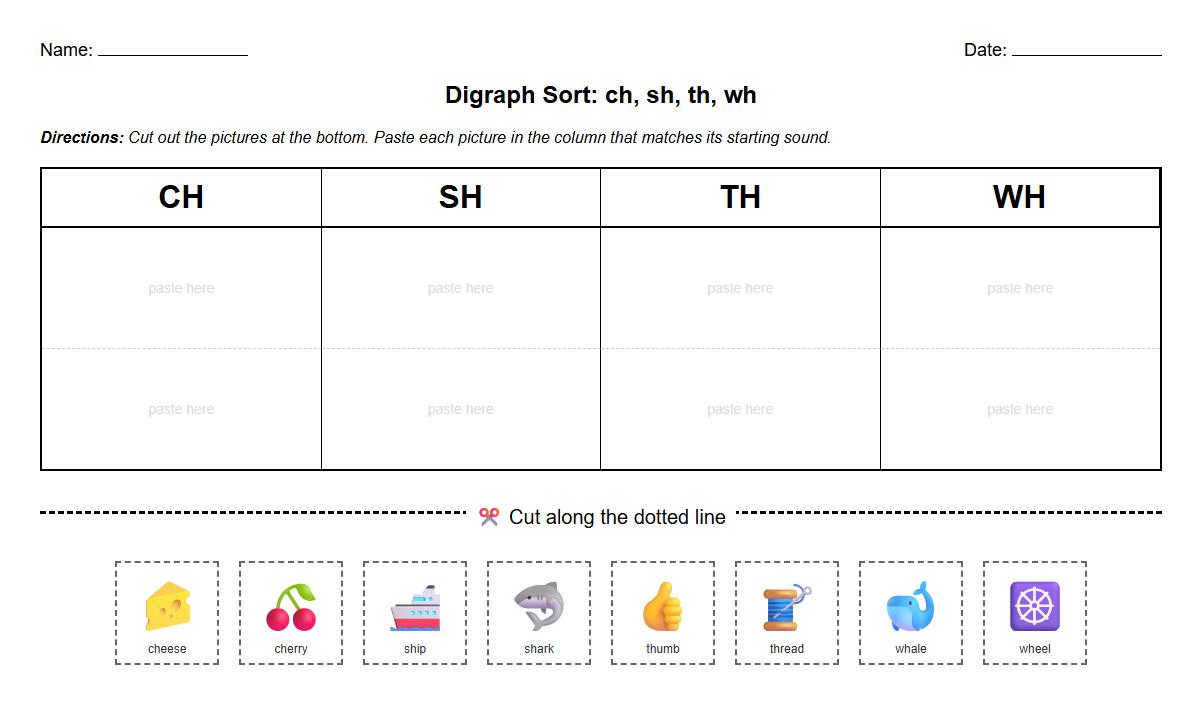
Digraph Sorting Mat for Early Phonics Practice

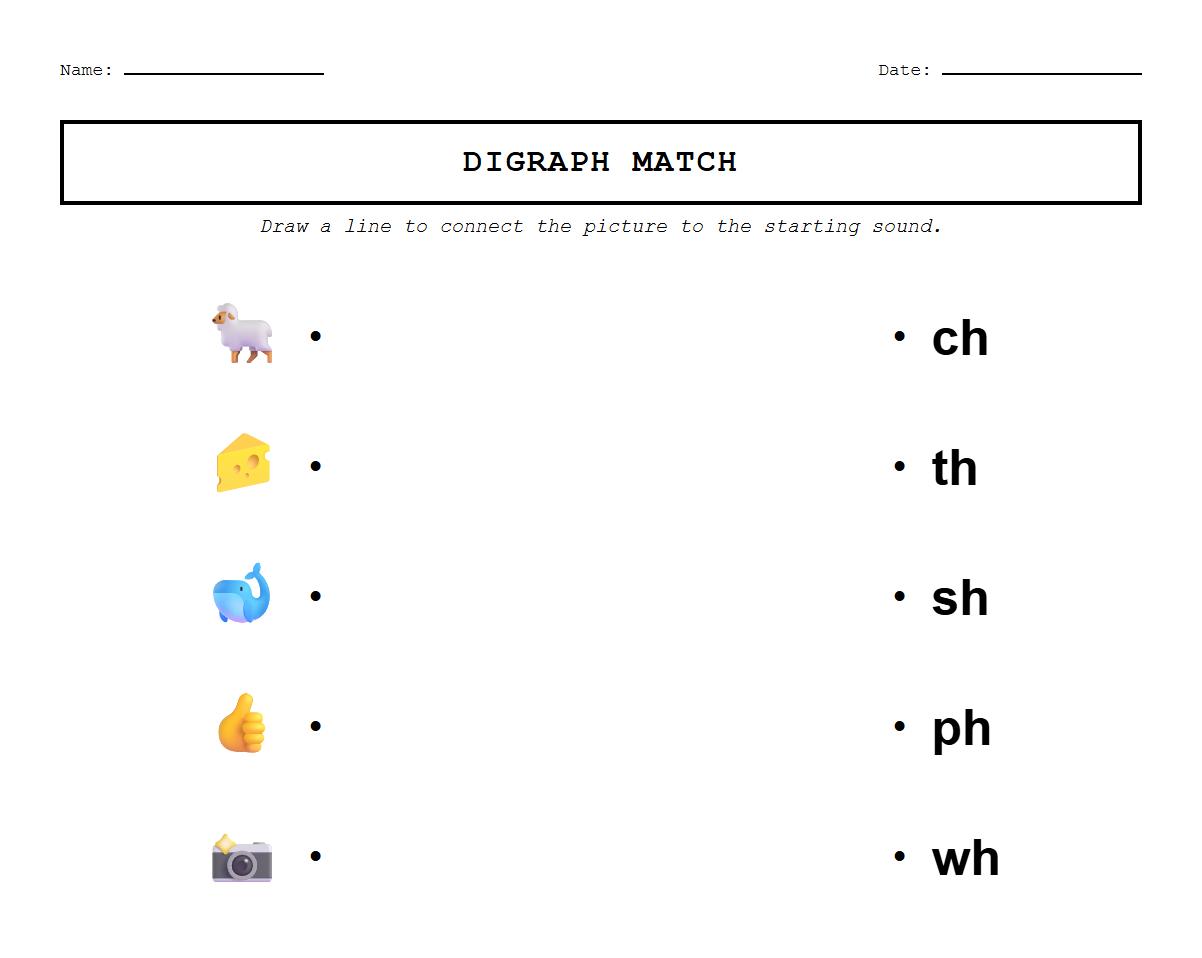
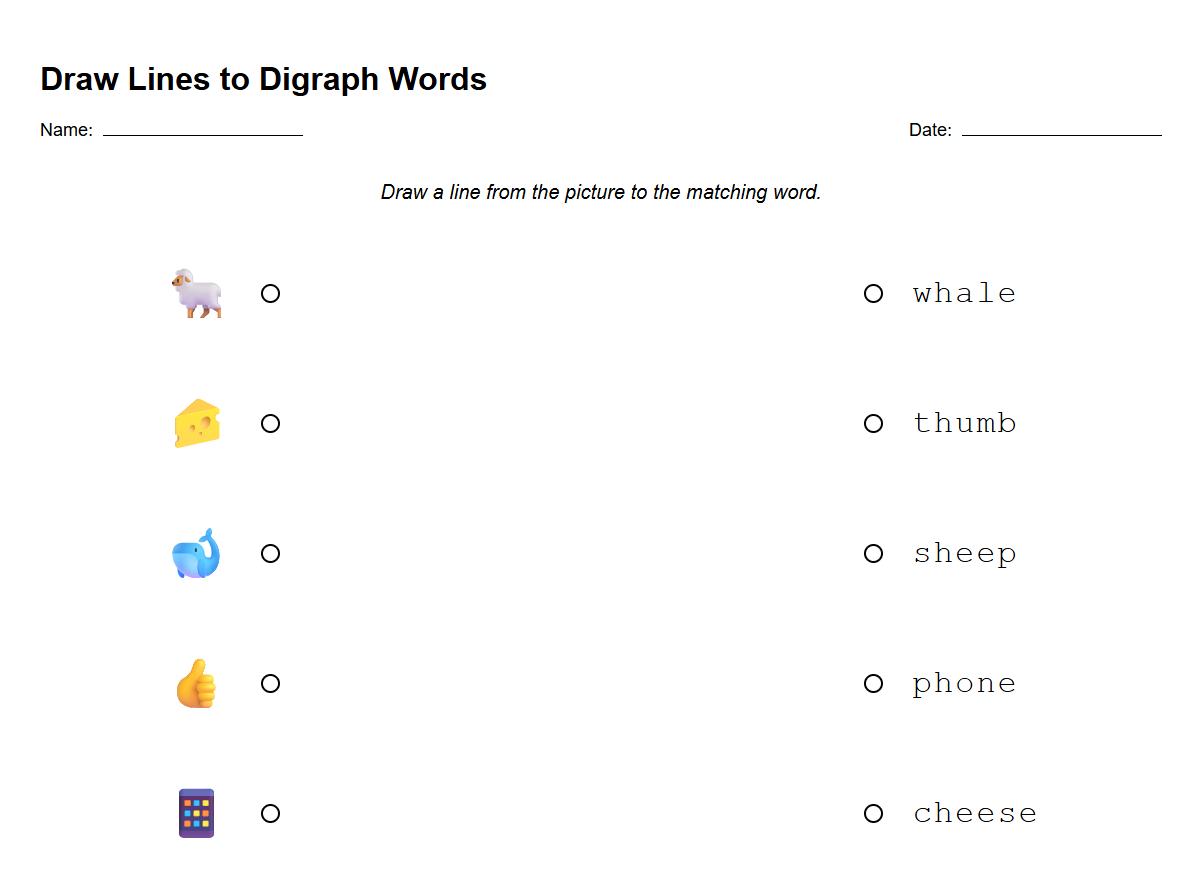
Match the Picture to the Digraph Phonics Task

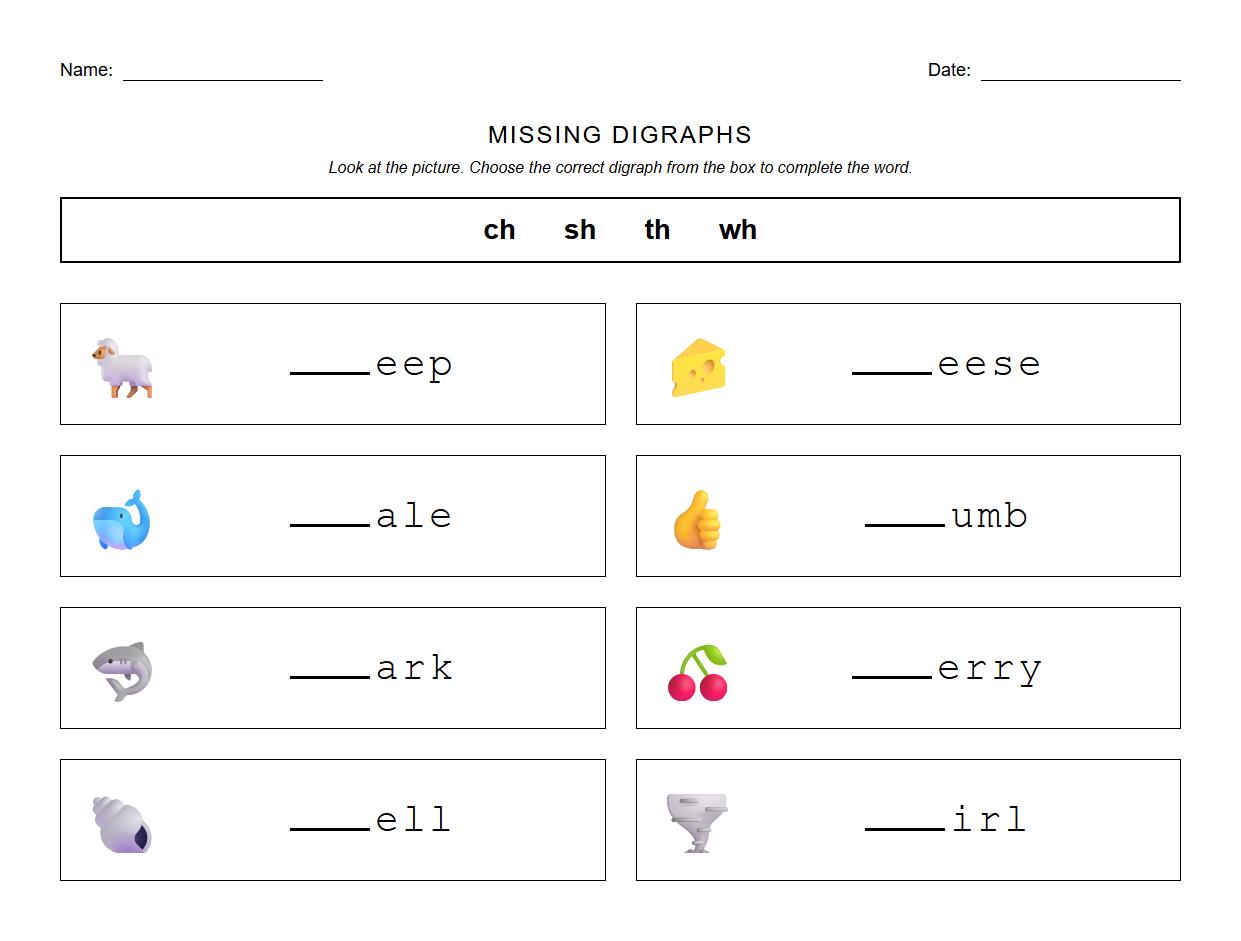
Missing Digraph Fill In Worksheet for Kindergarten

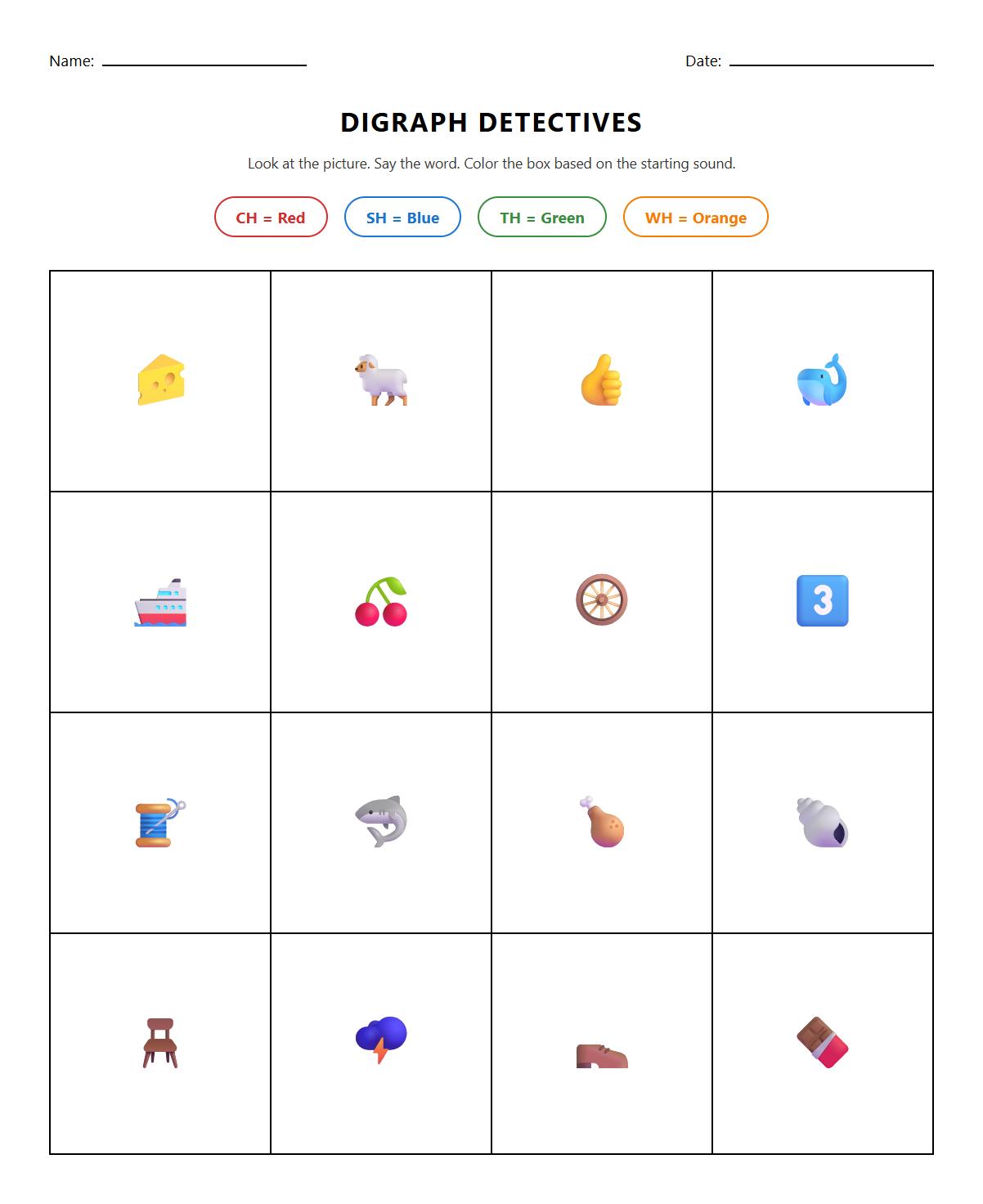
Color by Digraph Sound Recognition Sheet

Cut and Paste Digraph Identification Page

Draw Lines to Digraph Words Activity Sheet

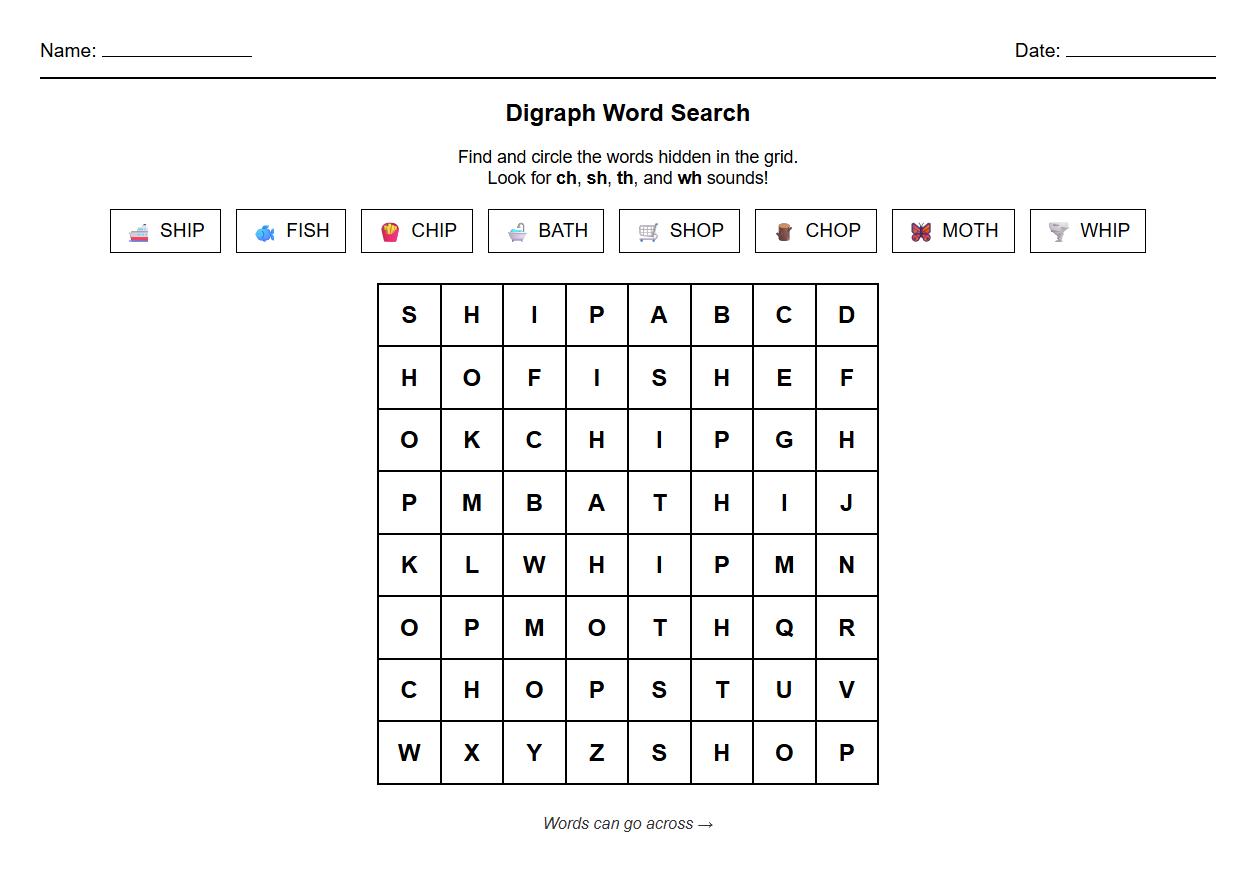
Digraph Word Search Puzzle for Phonics Awareness

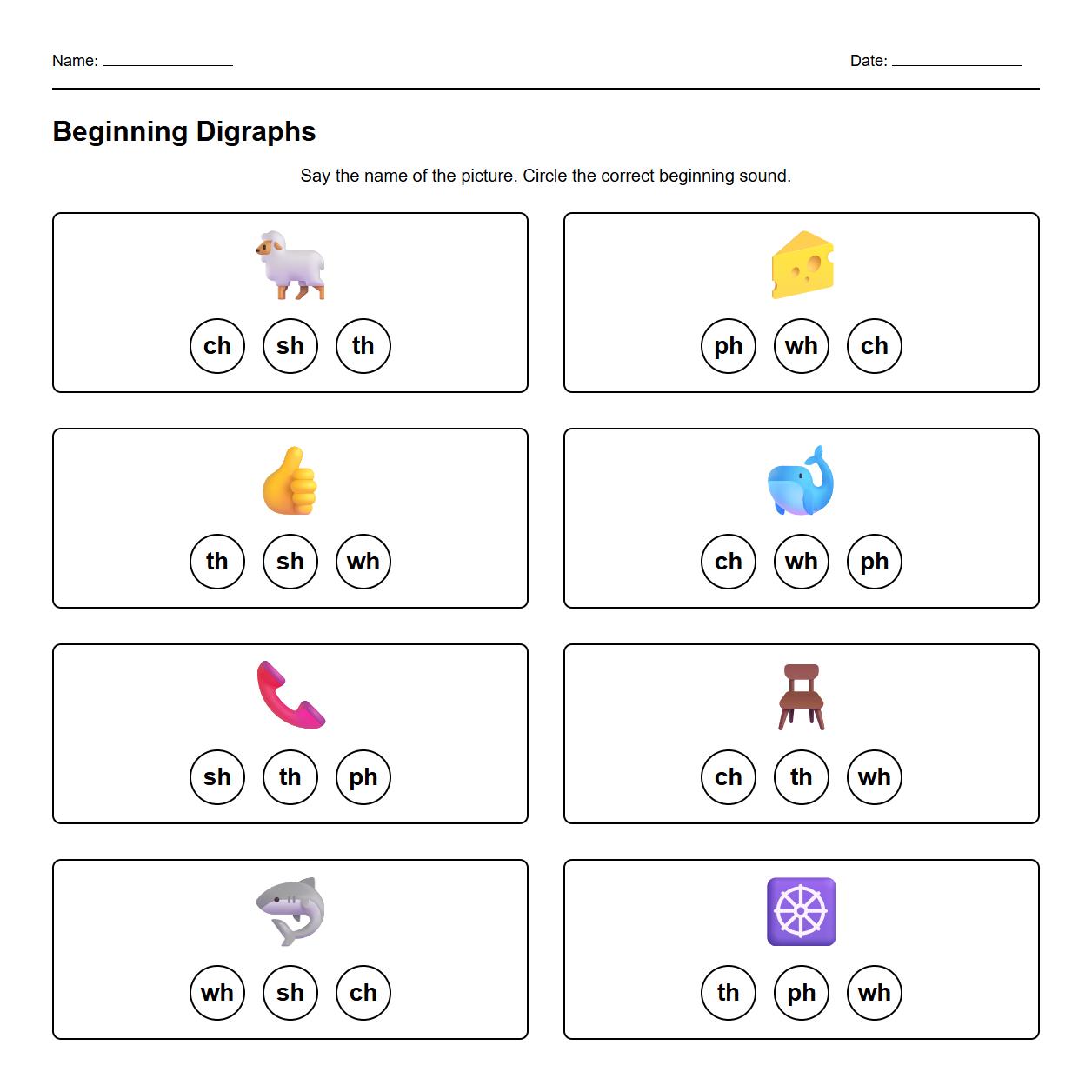
Beginning Sound Digraph Identification Worksheet

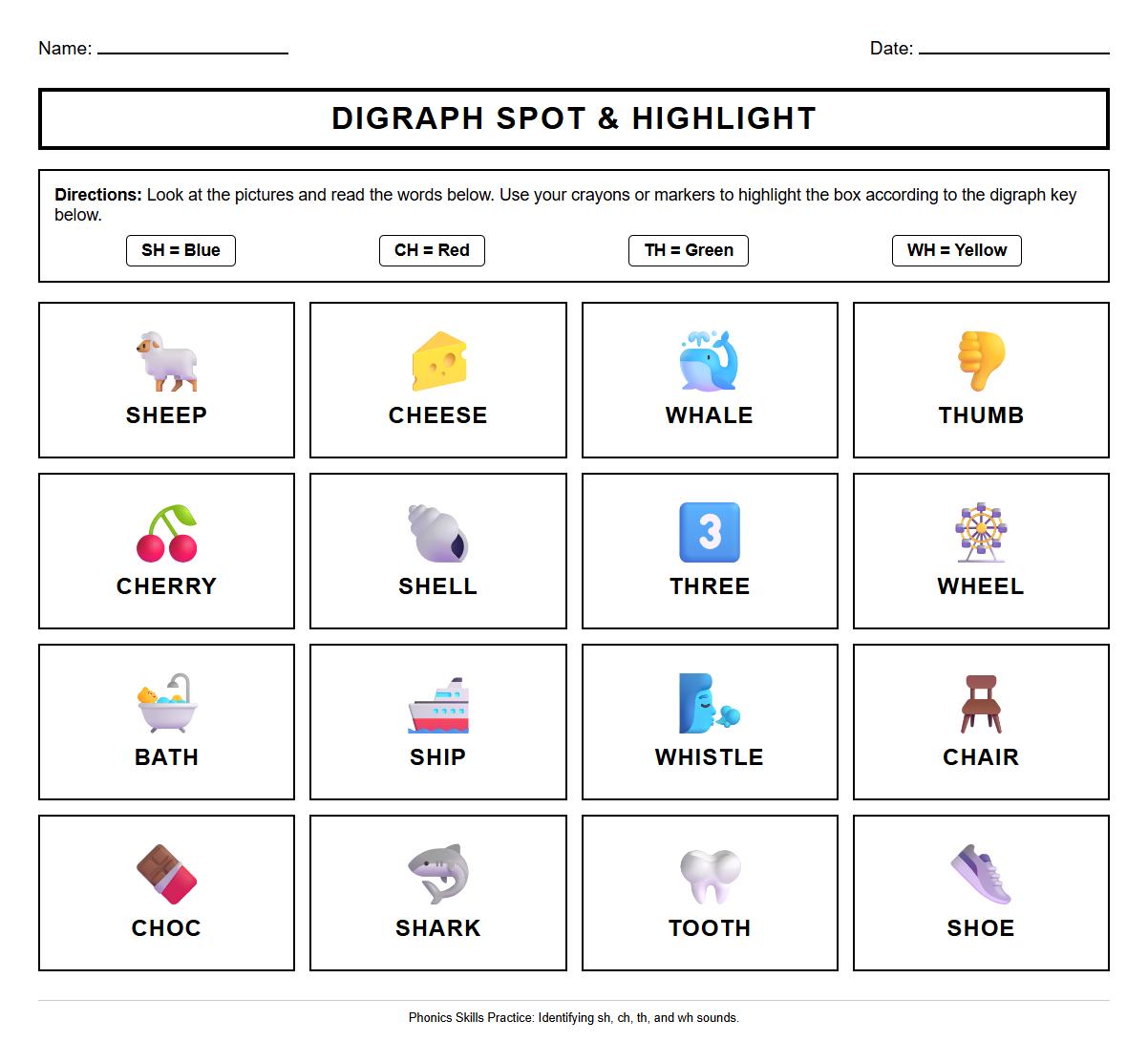
Digraph Spot and Highlight Activity for Phonics Skills

 Kindergarten Word Building with Consonant Blends Worksheet