

Long Vowel Silent E Phonics Worksheets help kindergarten students master the sound of vowels when followed by a silent 'e,' transforming short vowel sounds into long ones for proper pronunciation. These engaging exercises improve reading fluency and build a strong foundation in early phonics skills essential for literacy development. Explore the available worksheets to support your child's journey to confident reading.
Long vowel silent E word sorting phonics worksheet
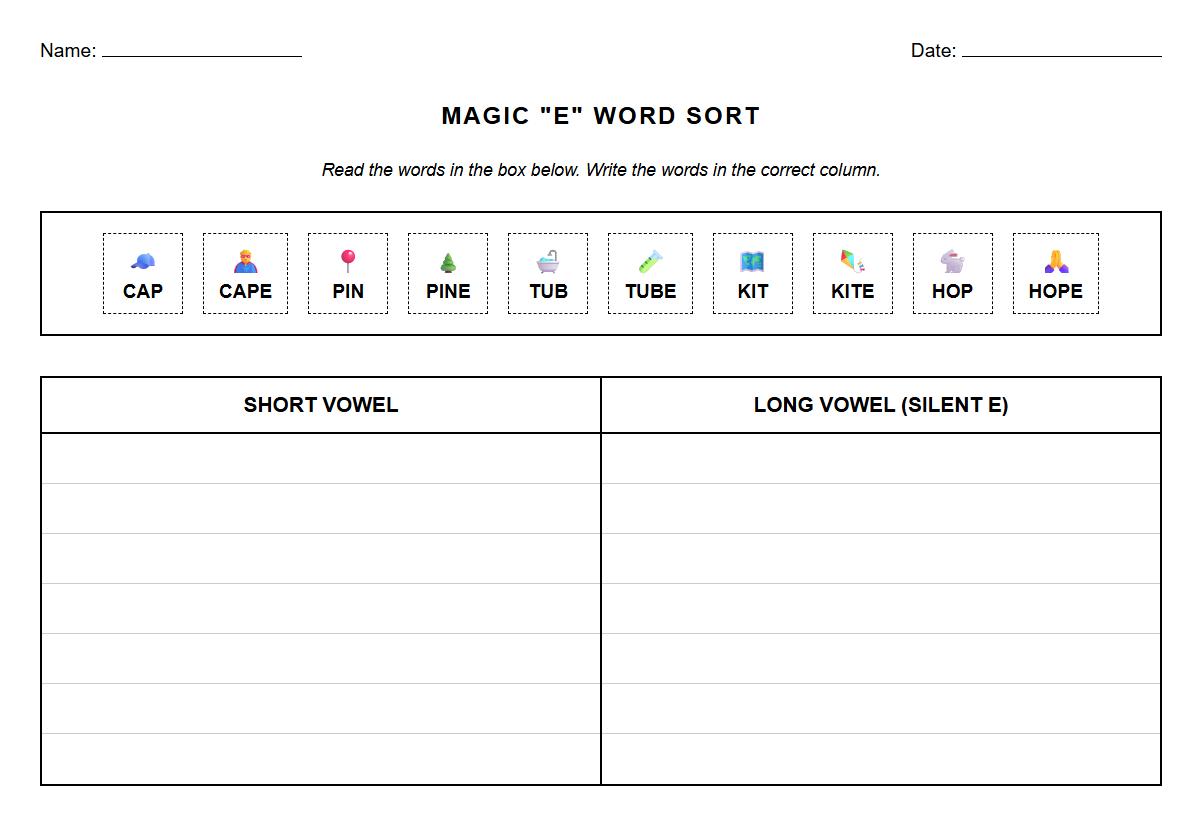


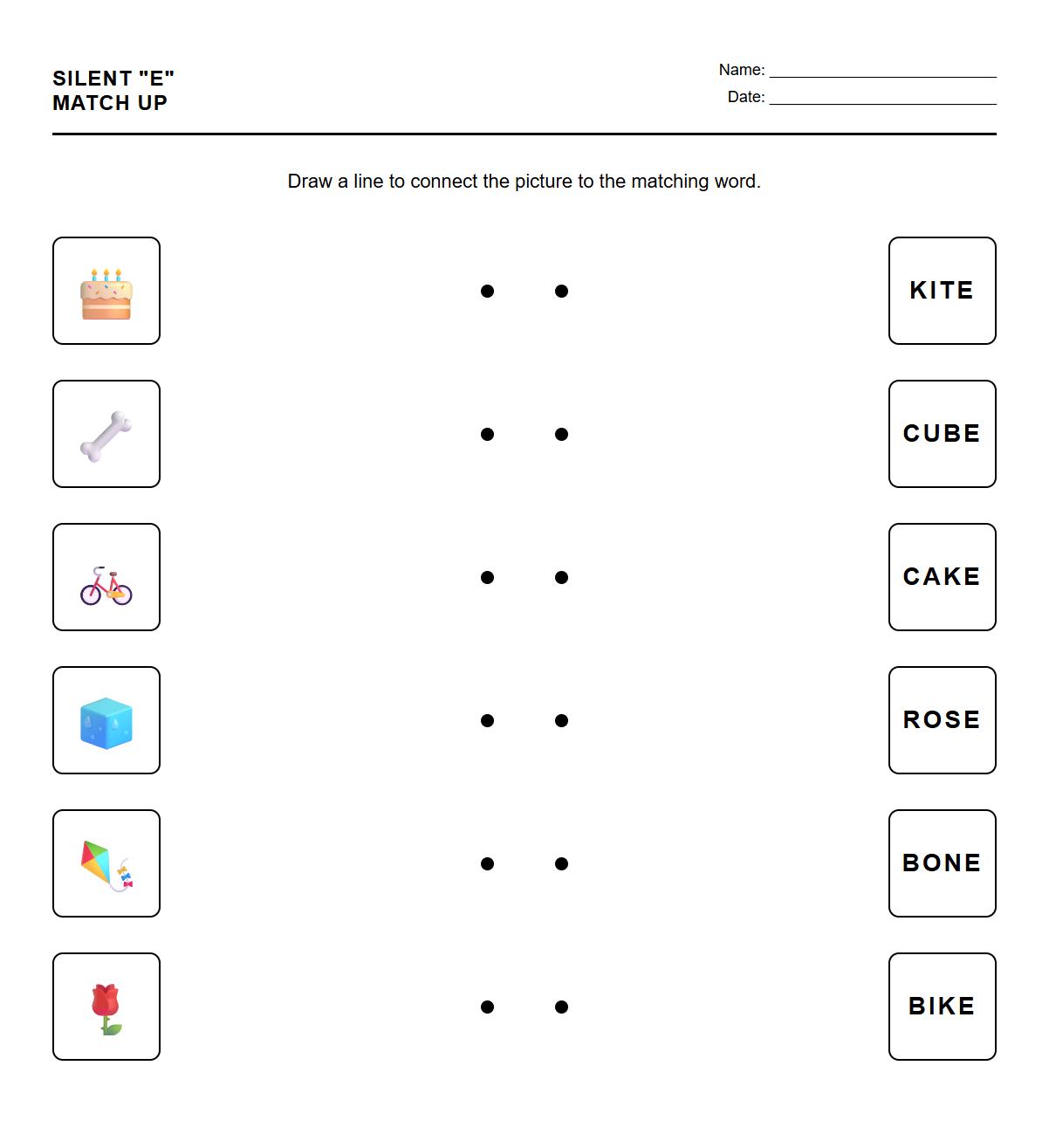
Silent E word family matching activity

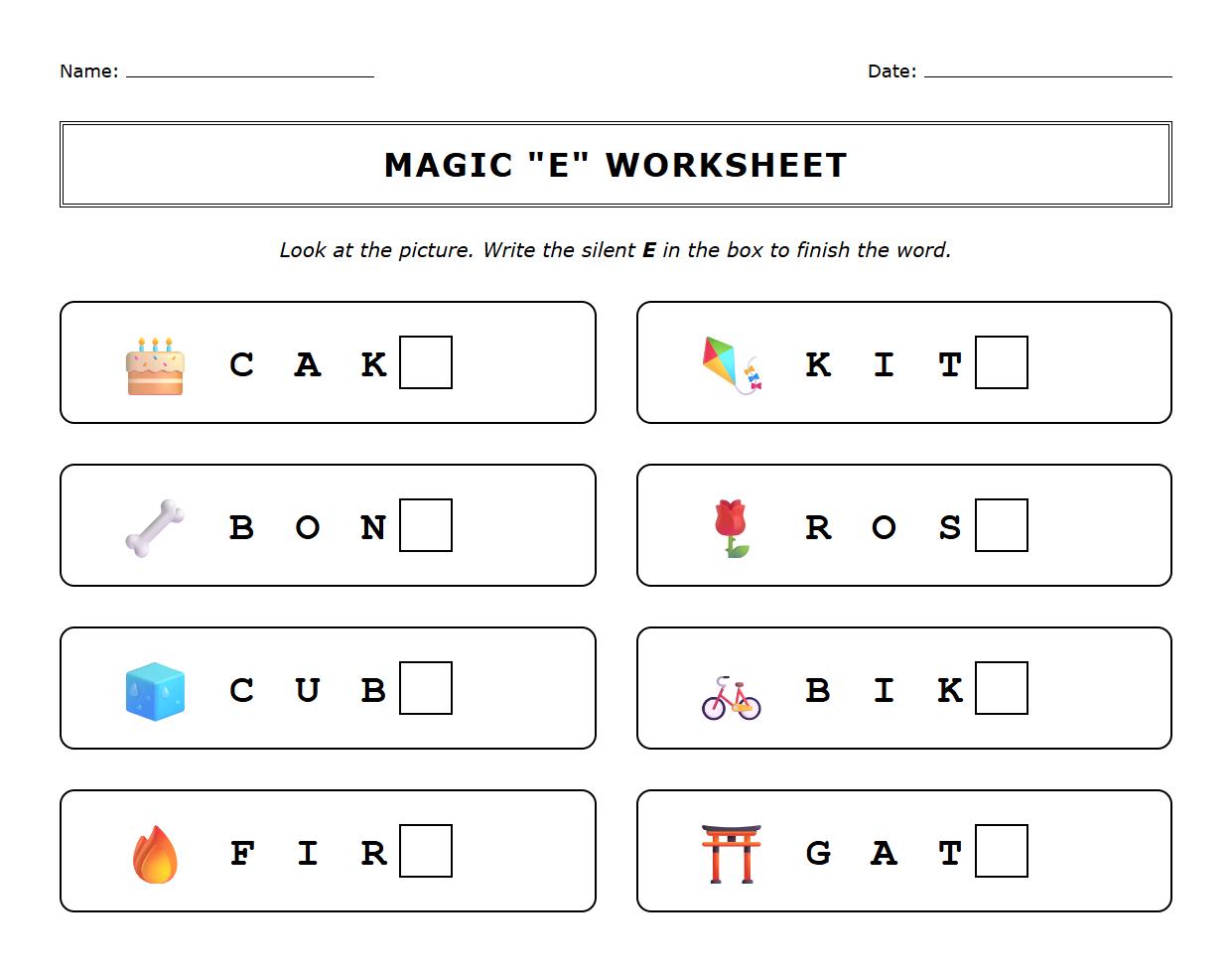
Fill in the missing silent E worksheet

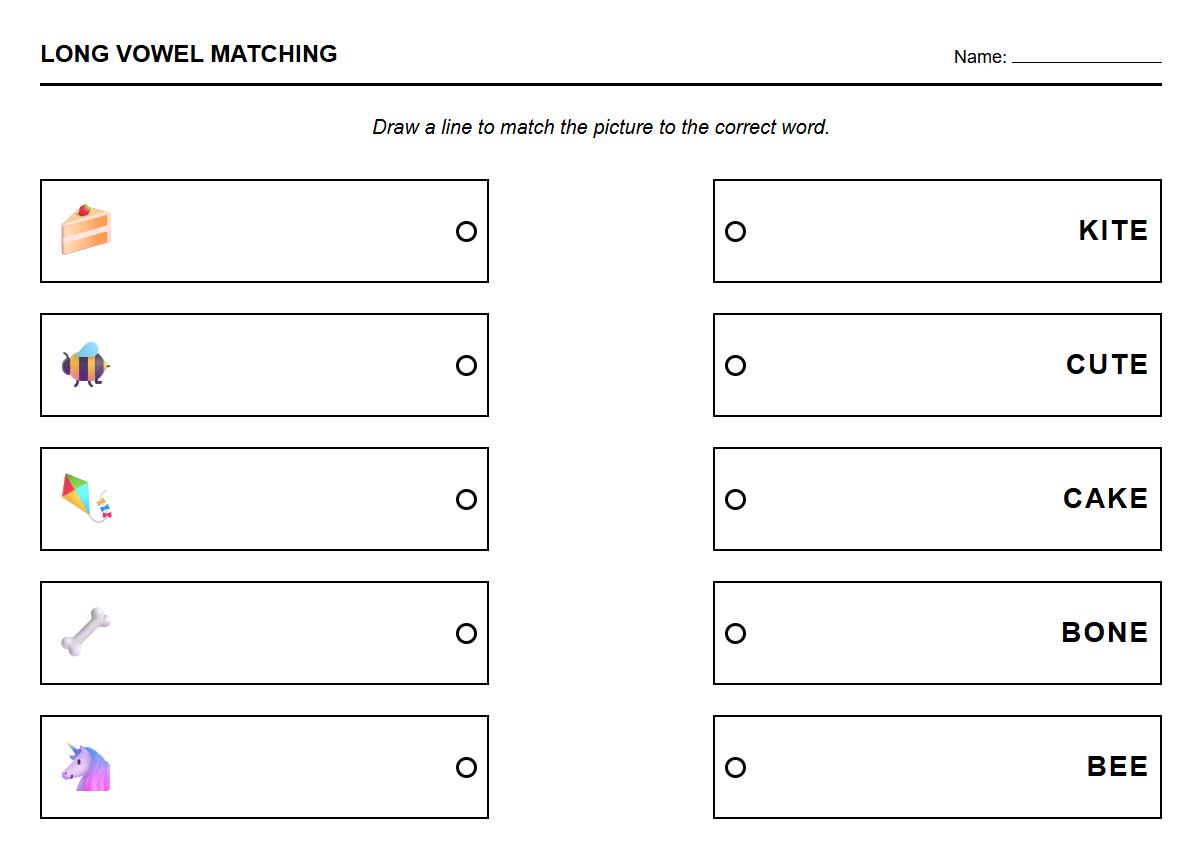
Long vowel sound and picture matching phonics exercise

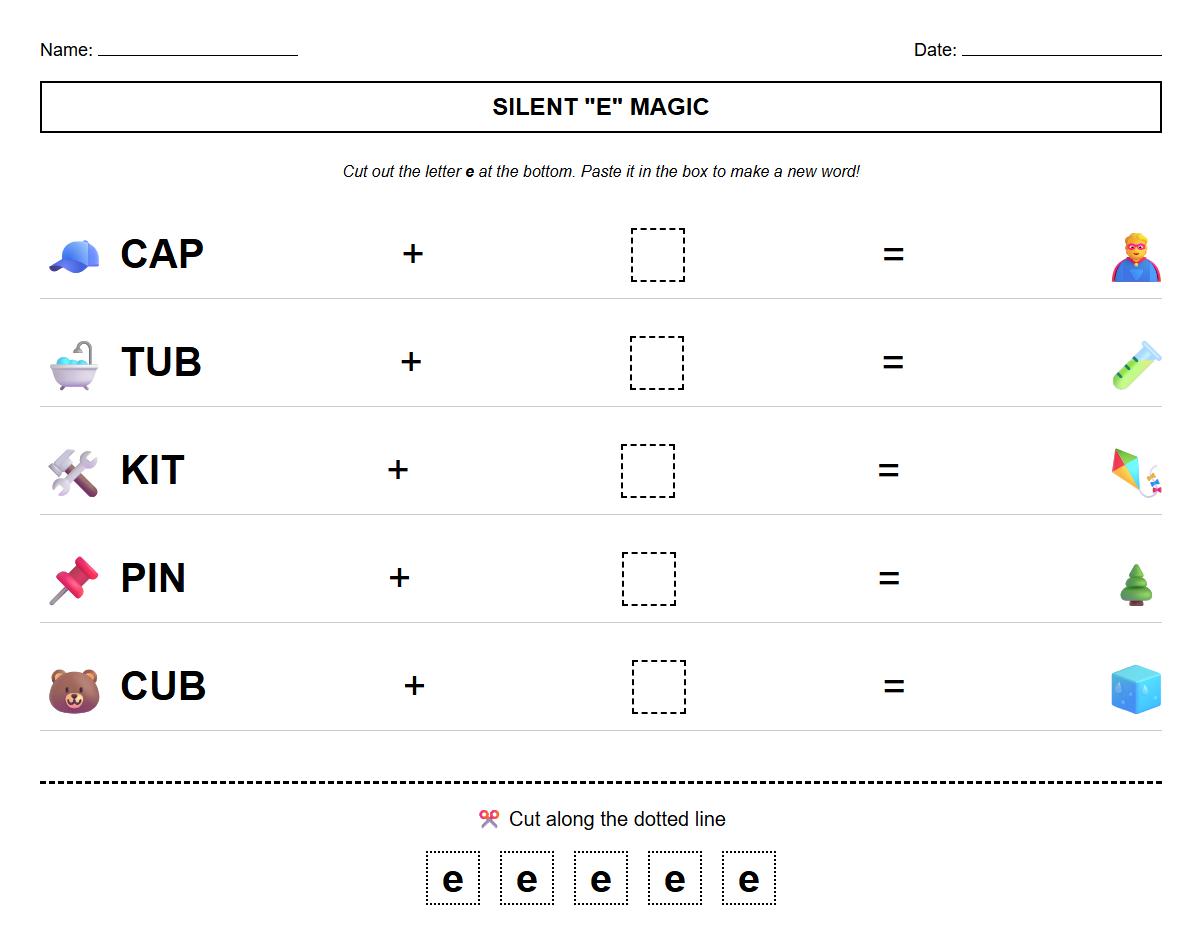
Silent E cut and paste word creation worksheet

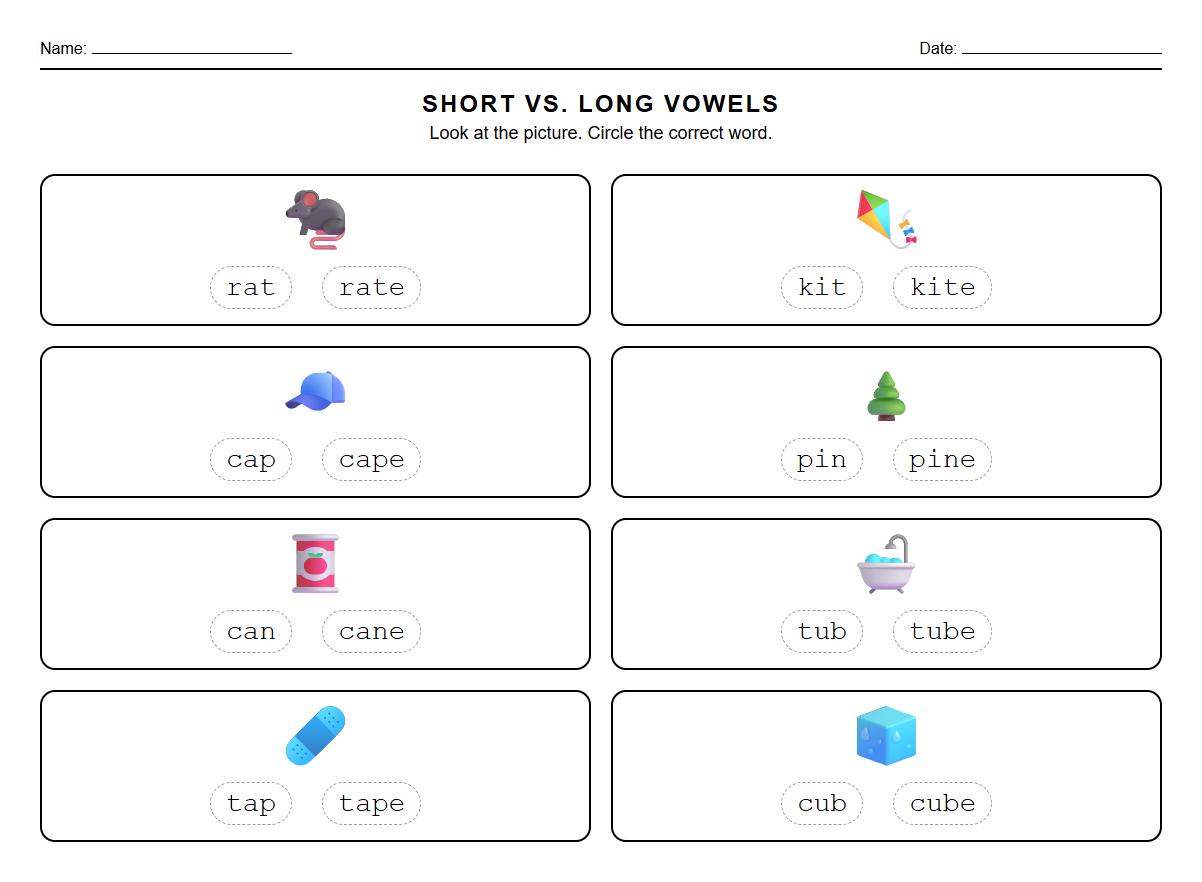
CVCe vs CVC word comparison phonics worksheet

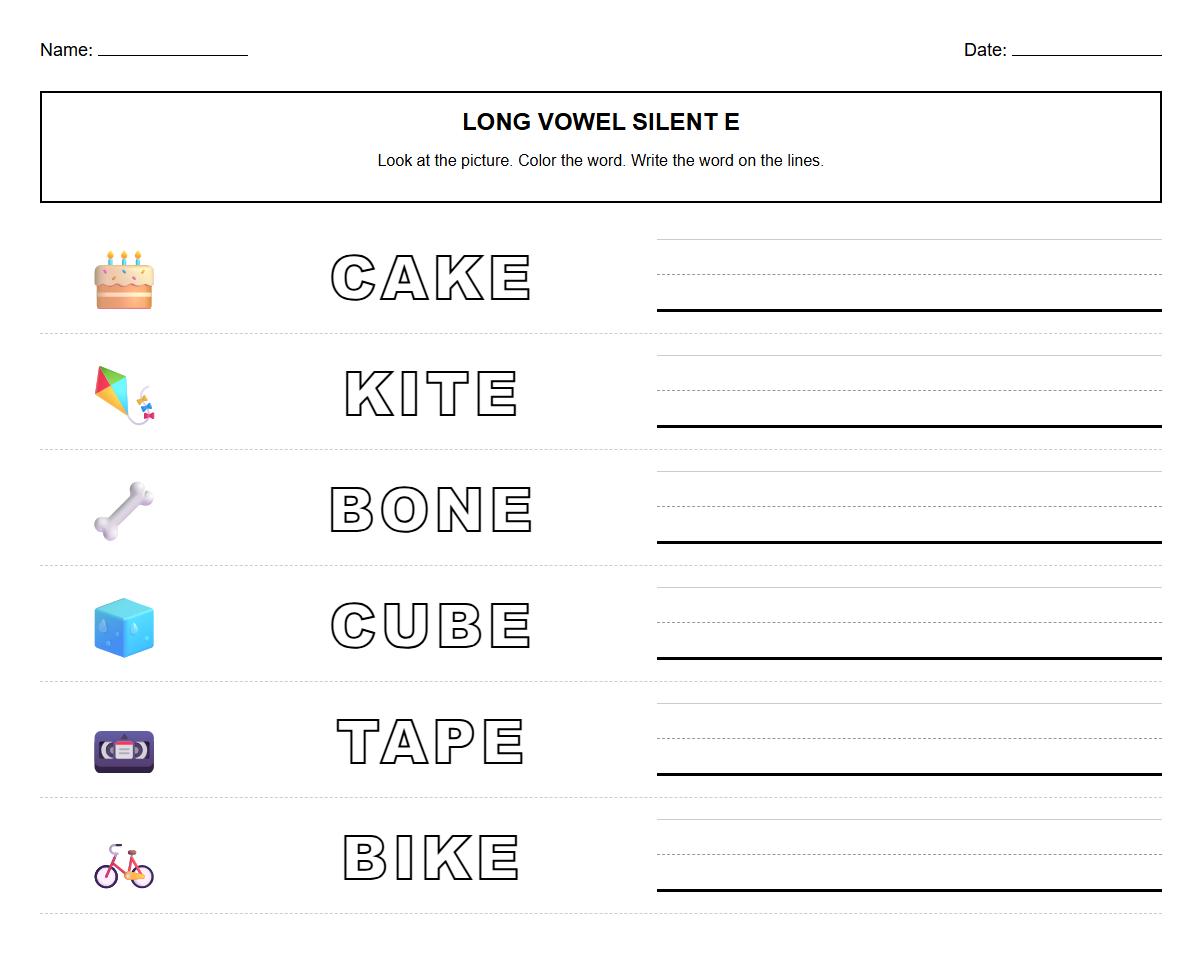
Write and color long vowel silent E words activity

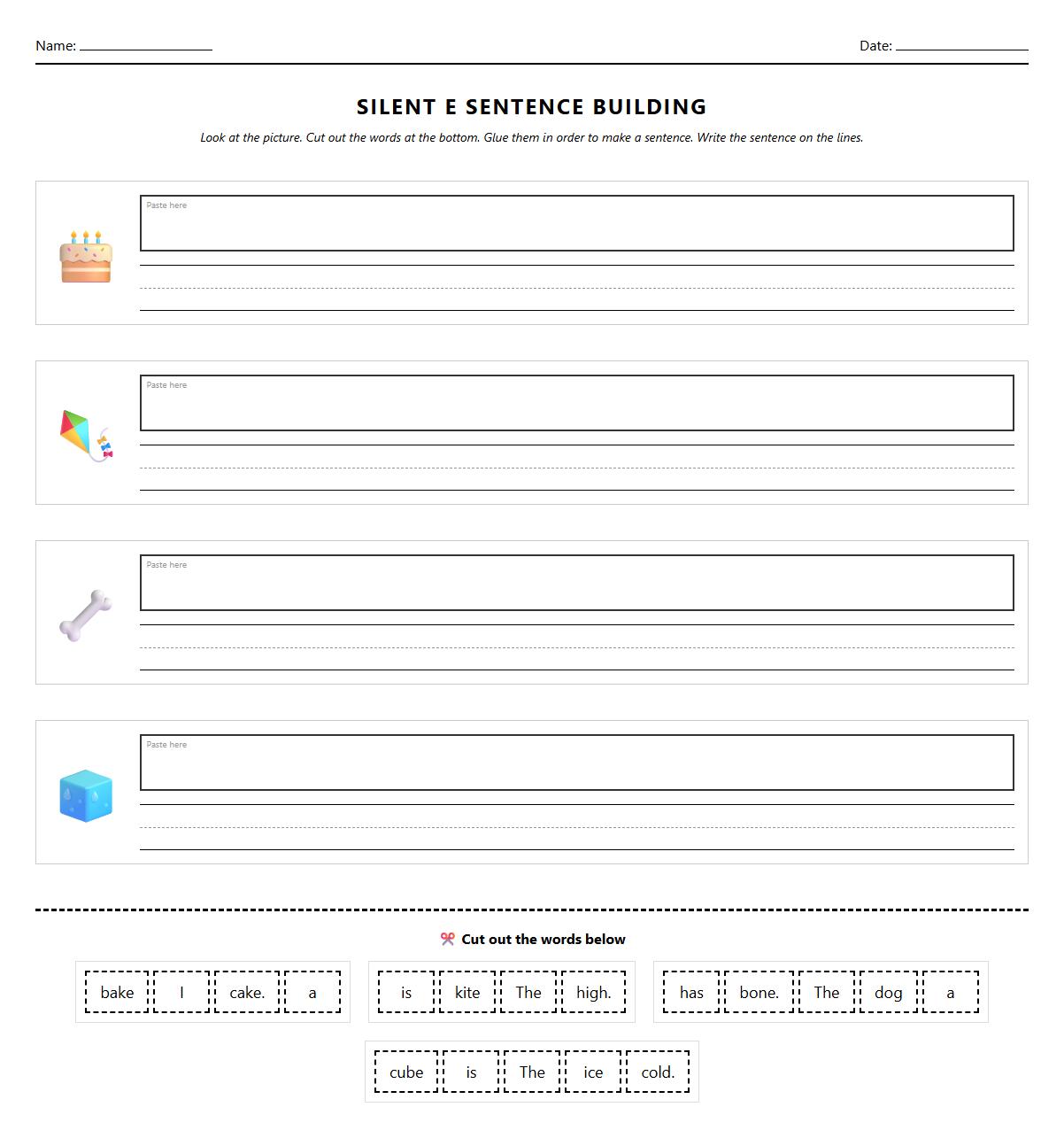
Long vowel silent E sentence building worksheet

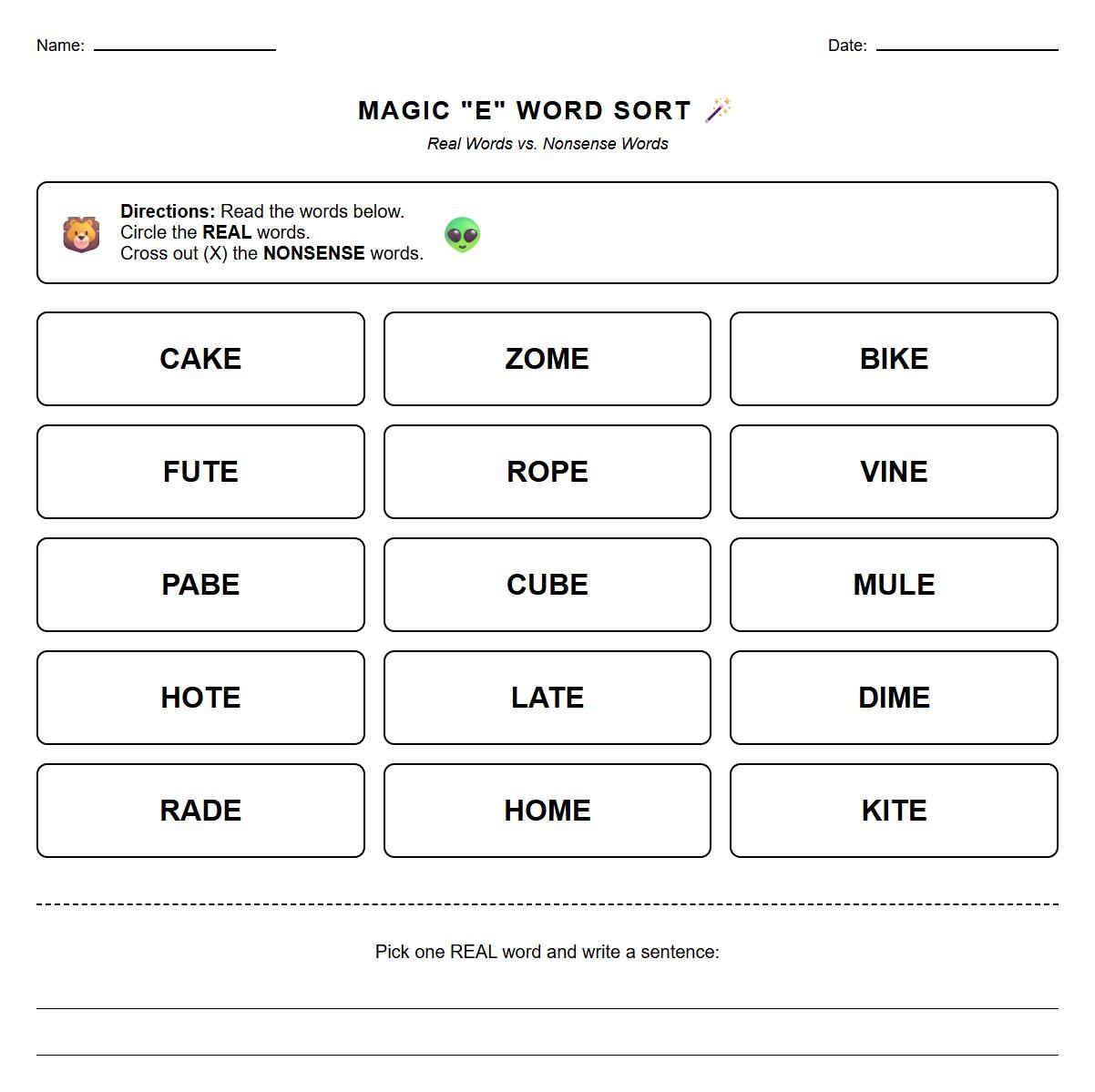
Phonics silent E real and nonsense word identification

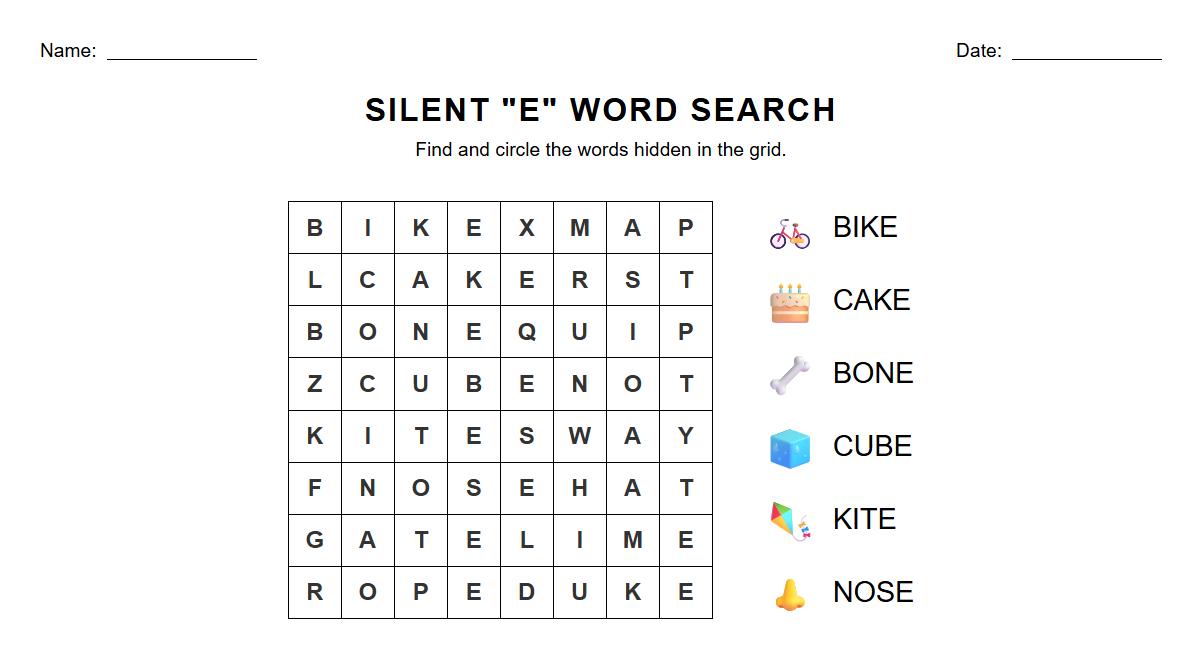
Long vowel silent E word search puzzle

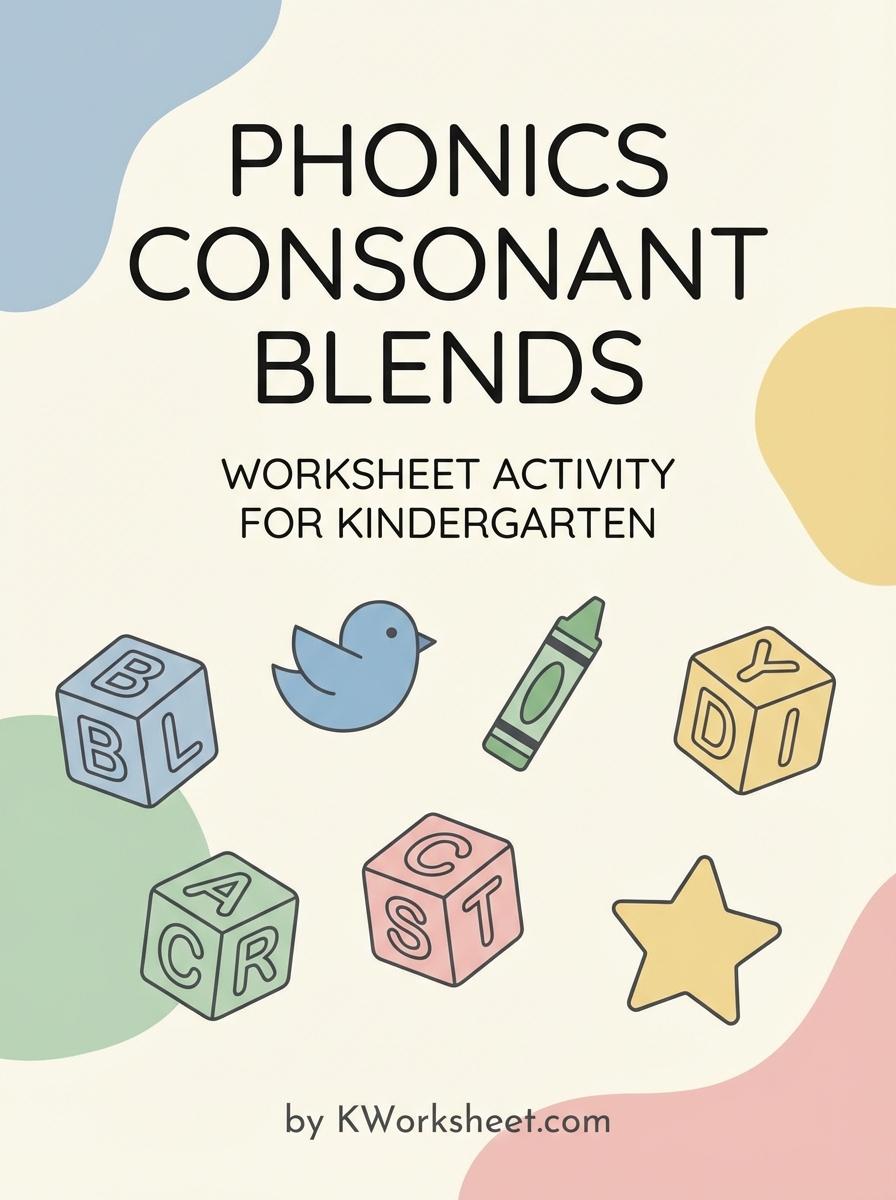 Phonics Consonant Blends Worksheet Activity for Kindergarten