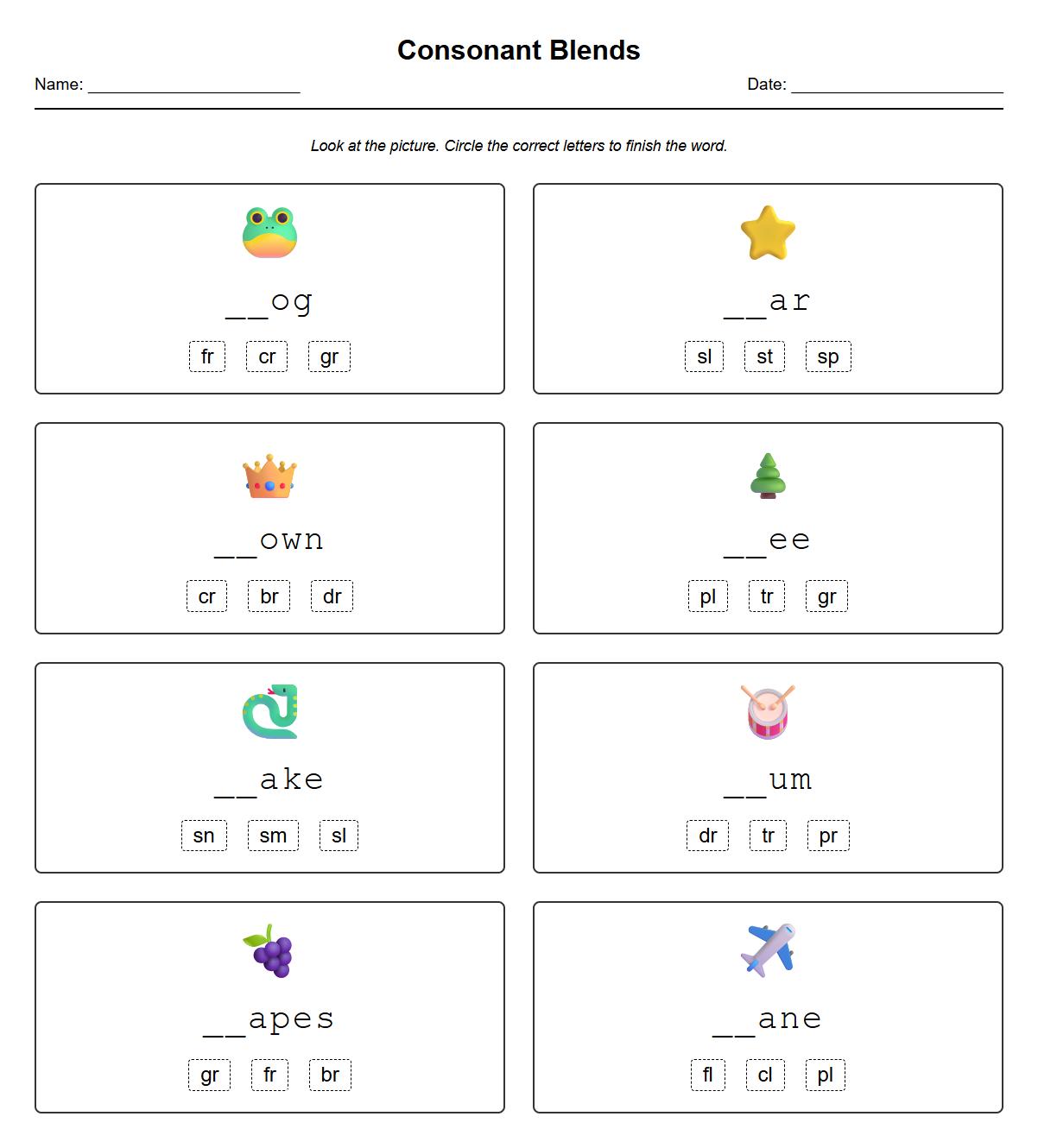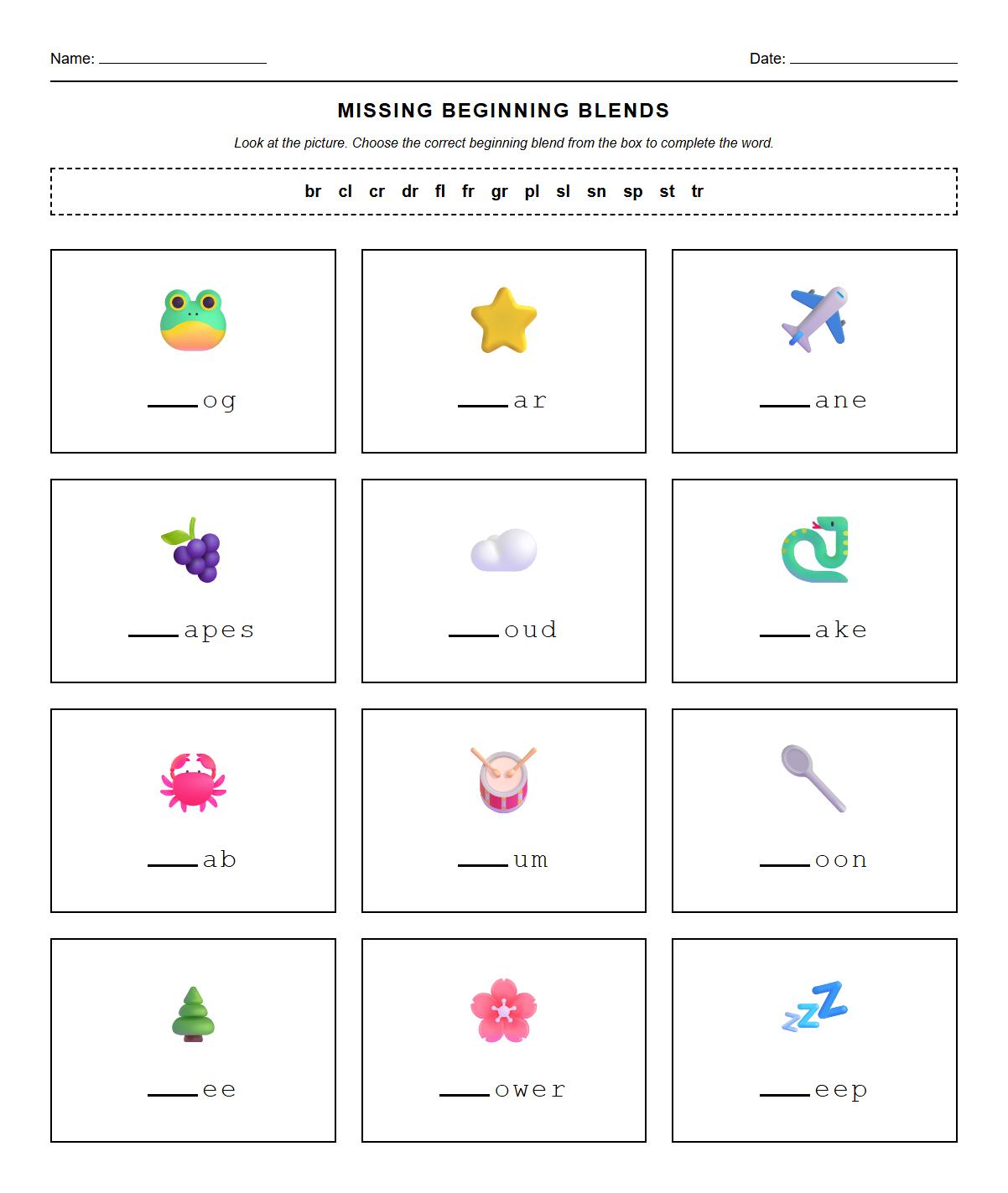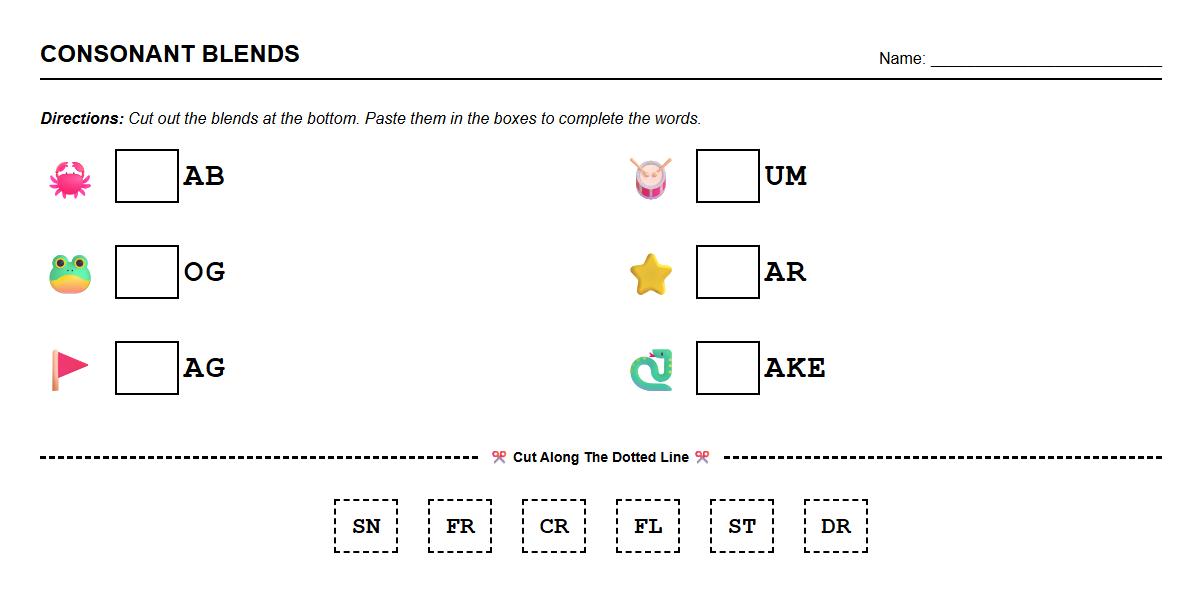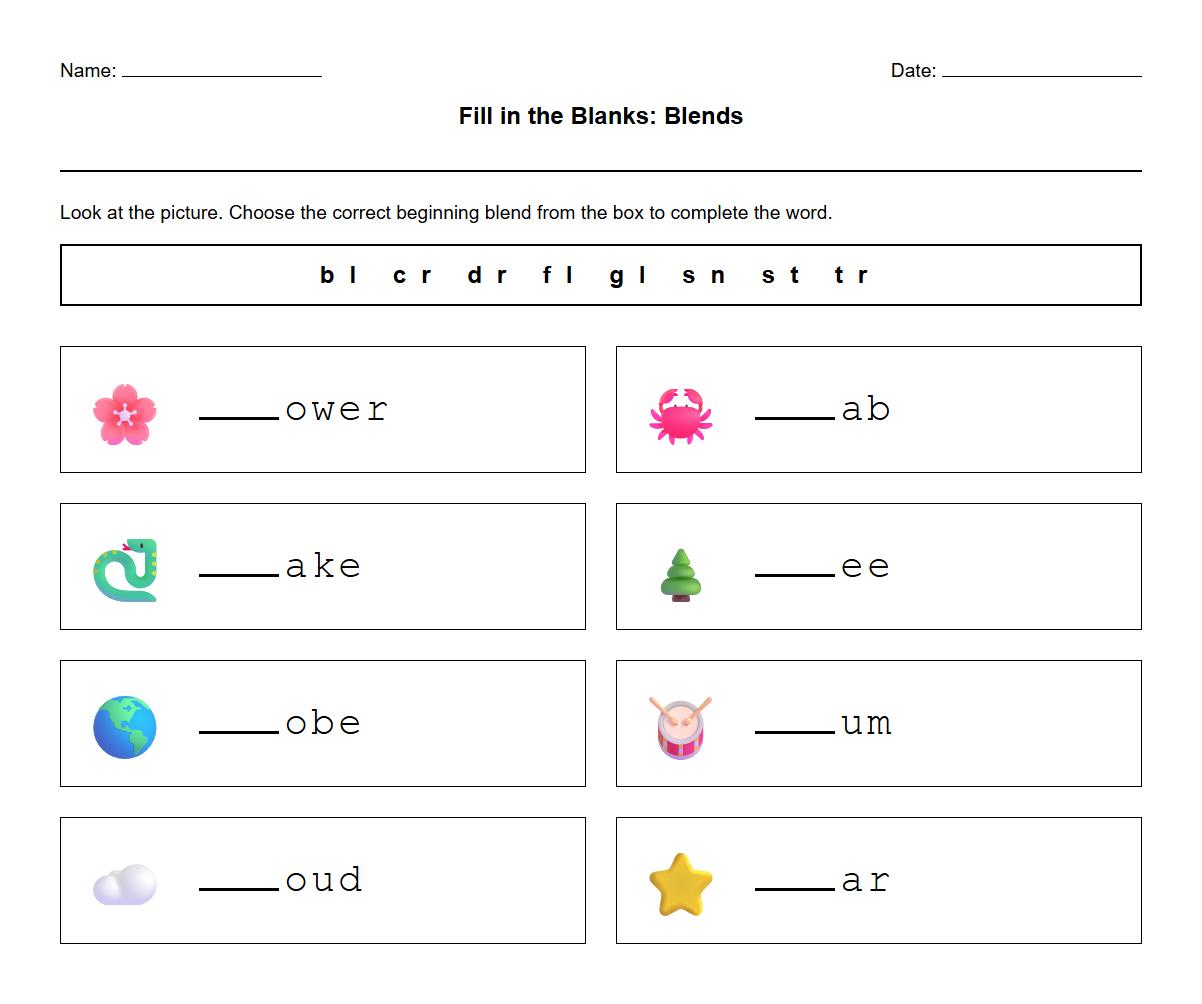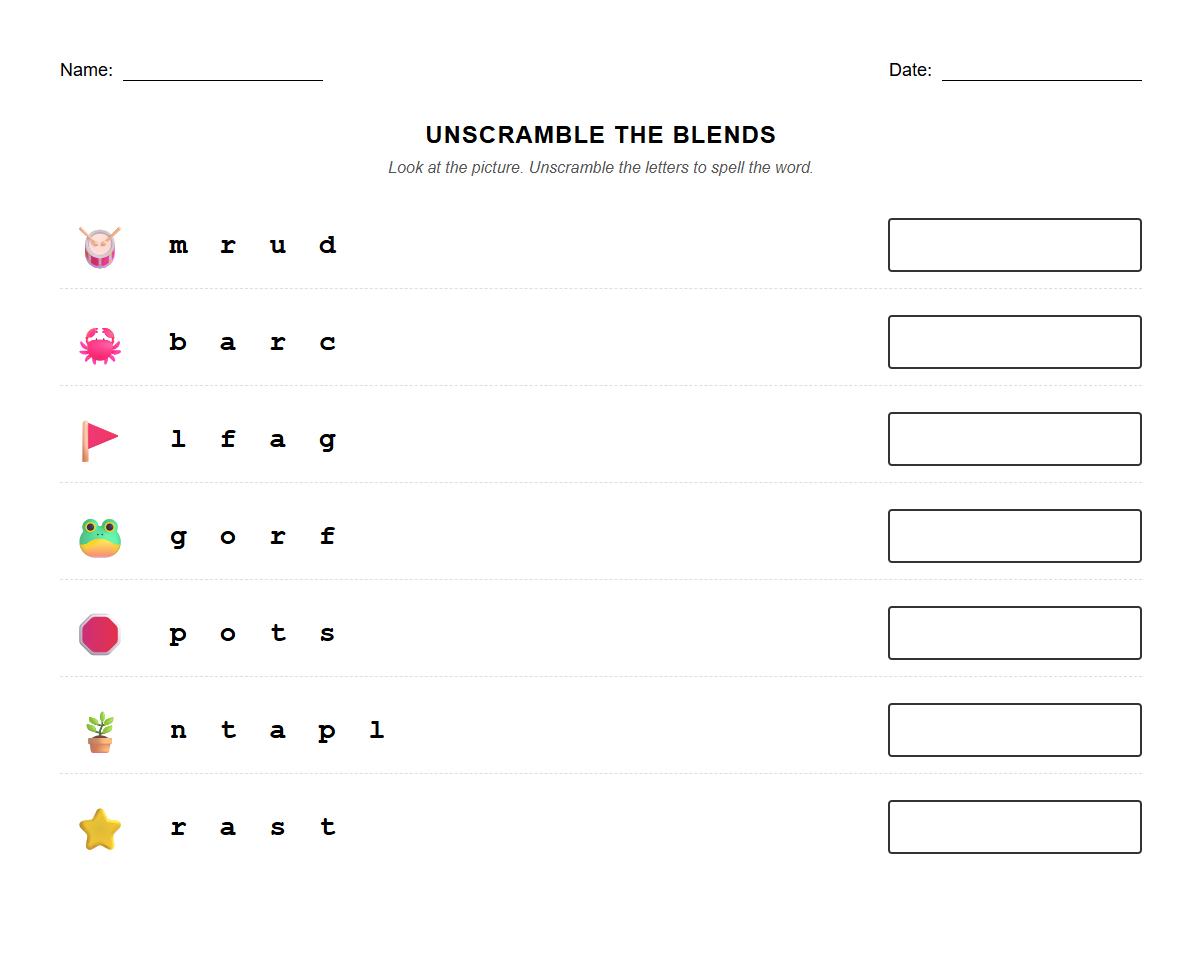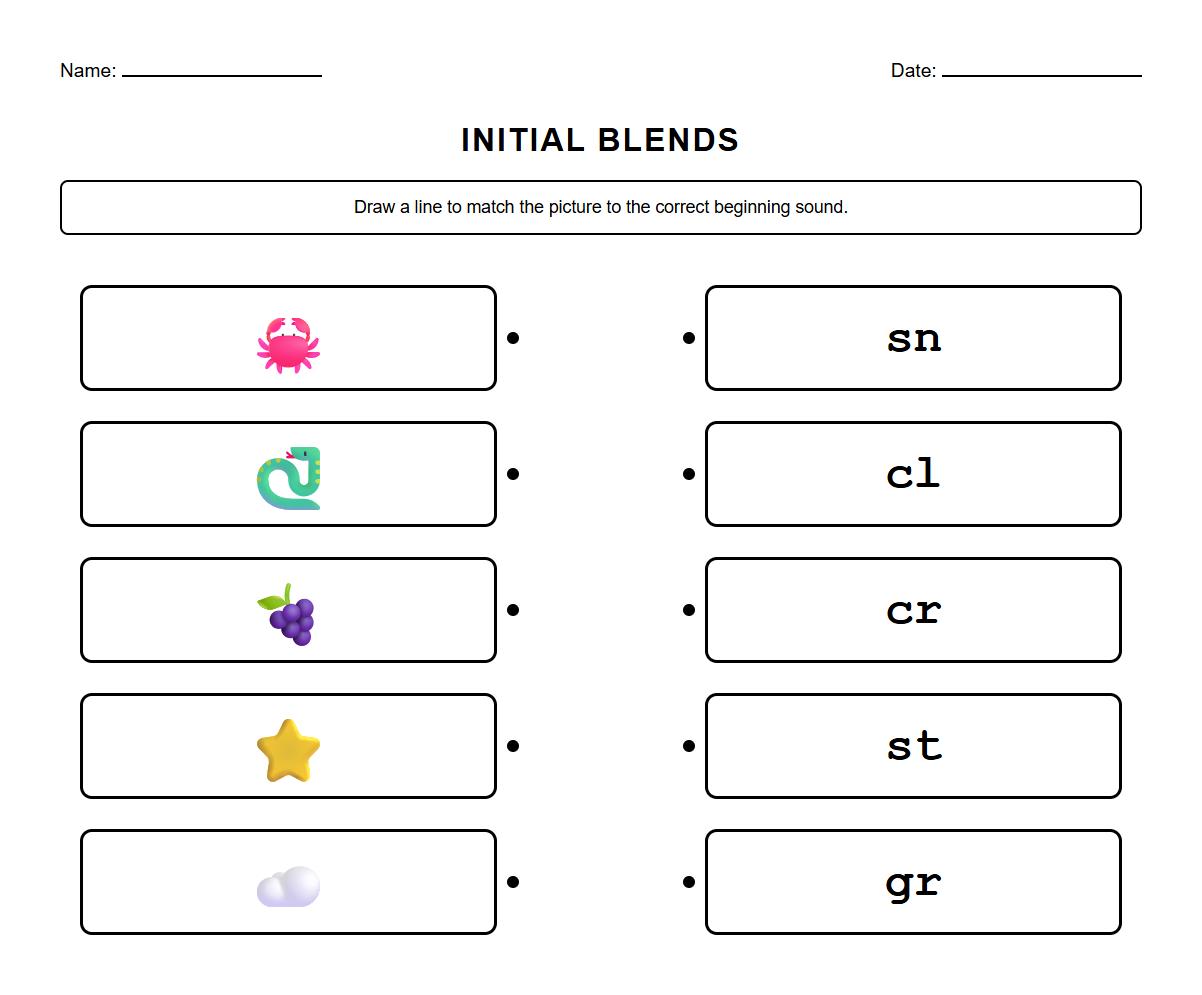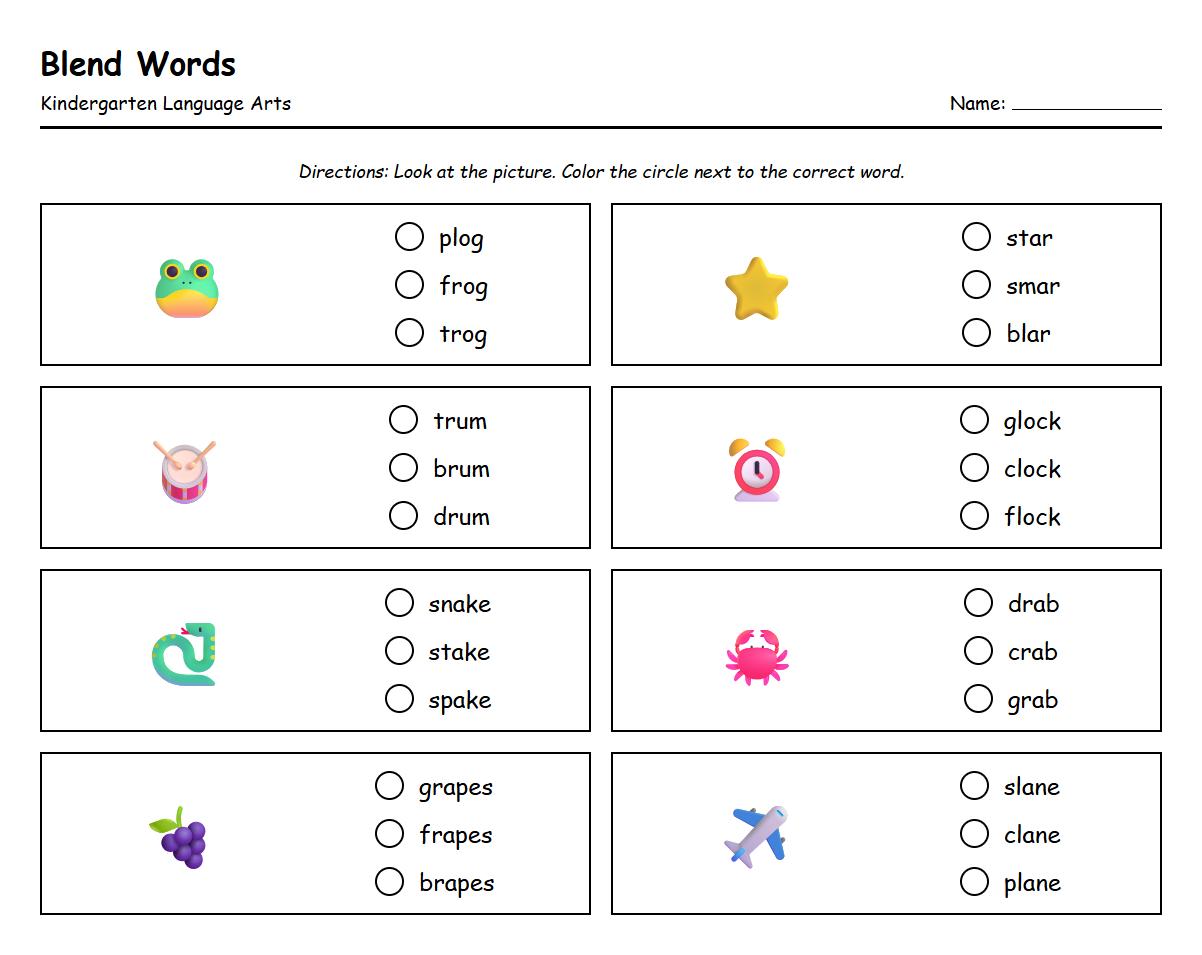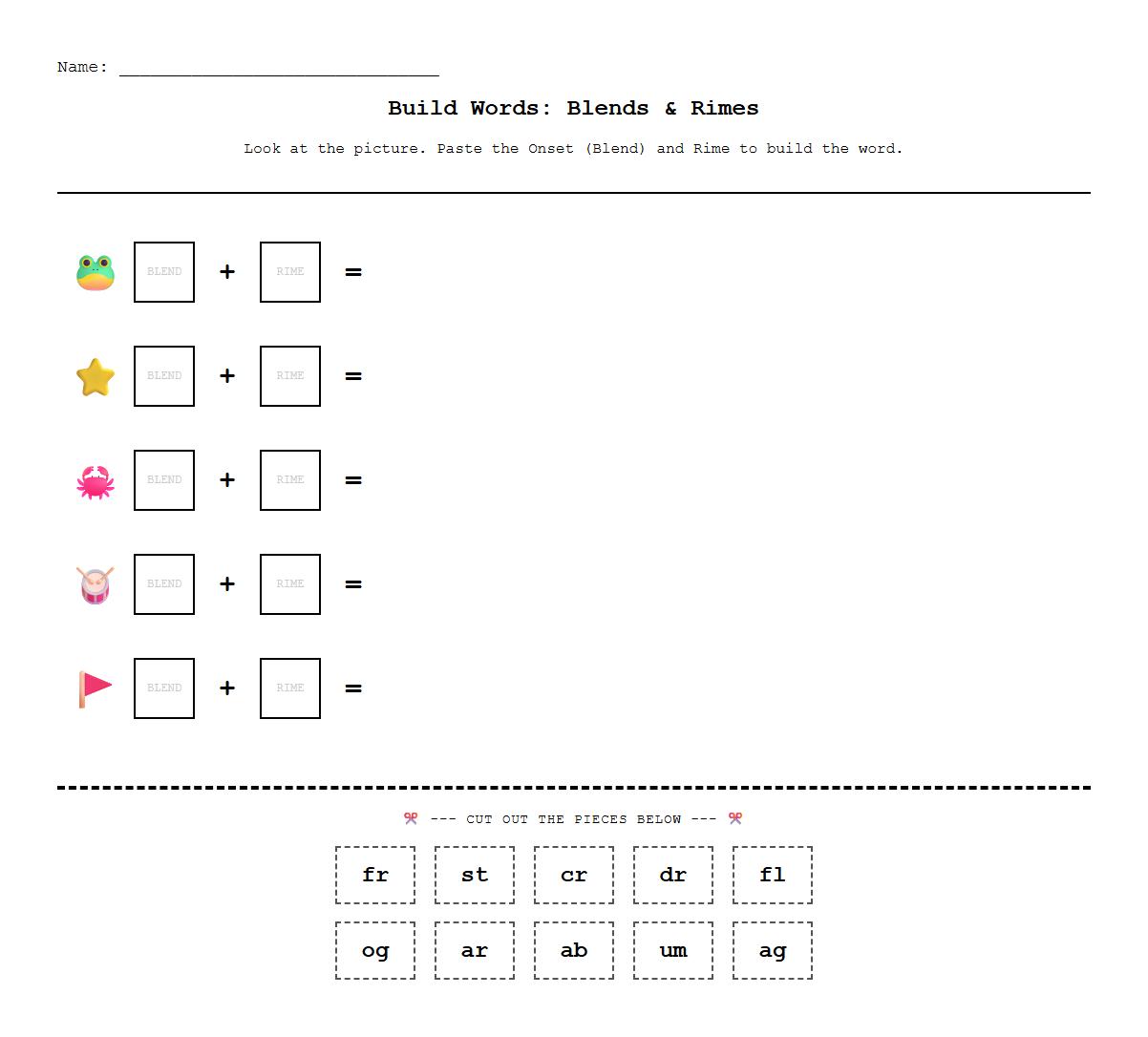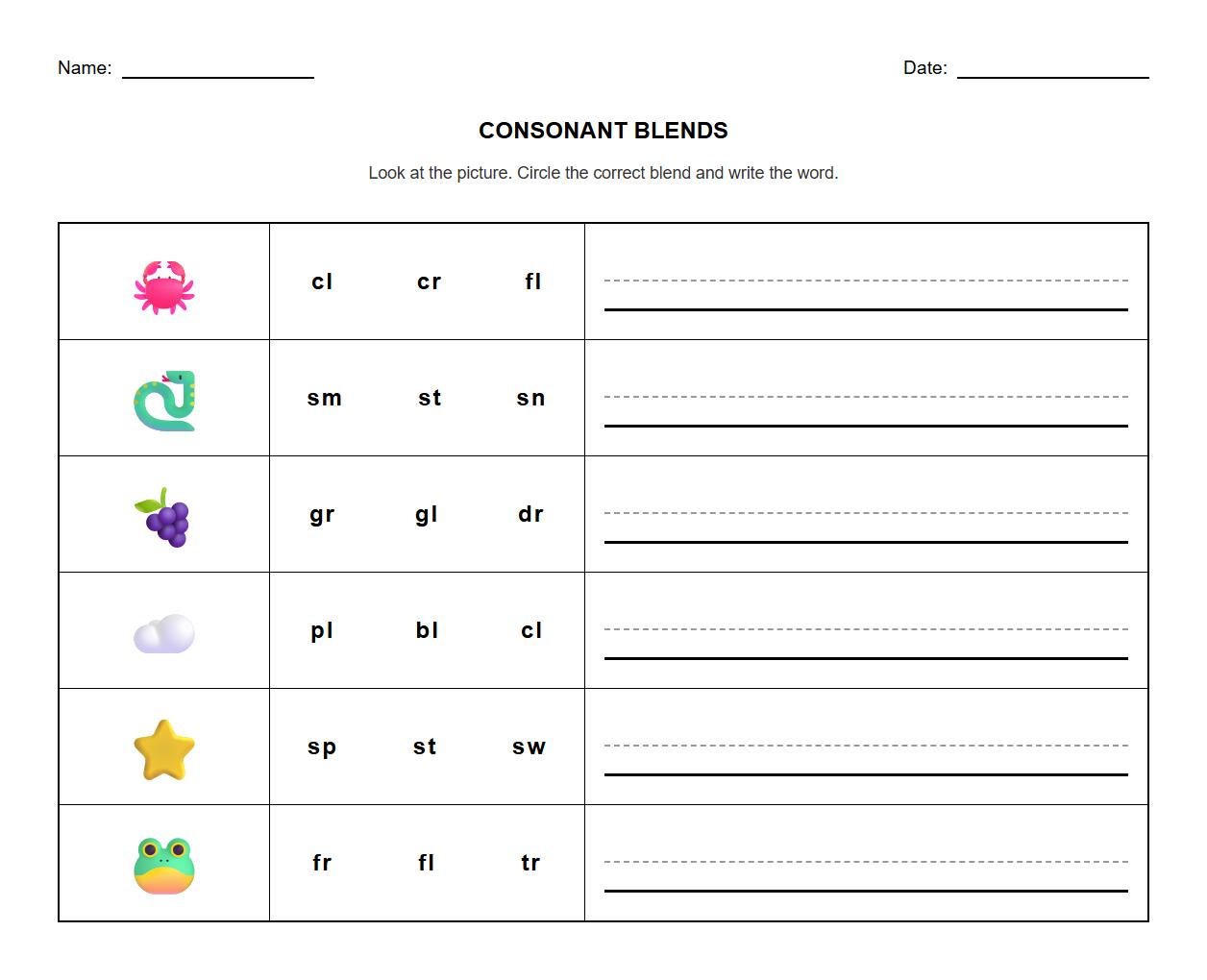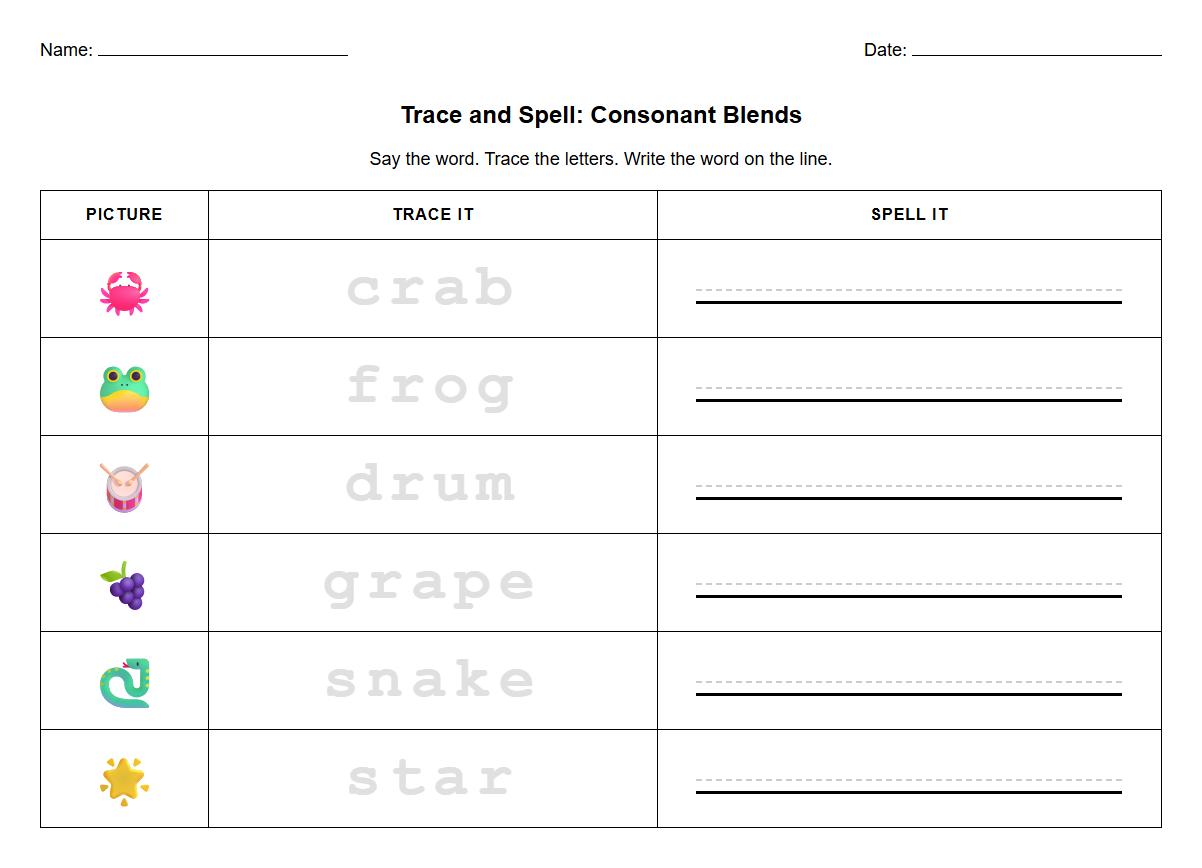
Kindergarten Word Building with Consonant Blends Worksheet helps young learners recognize and practice blending consonant sounds to form words. It enhances phonemic awareness, improves reading skills, and supports early literacy development. Explore our collection of worksheets to strengthen your child's word-building abilities today.
What are consonant blends in English words?
Consonant blends are groups of two or three consonants that appear together in a word, where each consonant sound is heard clearly. These blends help children recognize and pronounce words more easily. Teaching blends improves reading fluency and spelling skills in kindergarten learners. Examples include "bl," "st," and "pl."
Can you circle all the consonant blends in these words?
This activity asks children to identify and circle consonant blends within a list of words. It encourages careful observation of letter patterns. By finding blends like "br" in "brick" or "cl" in "clap," children become more aware of how sounds work together. This skill supports early reading development.
Which word starts with the blend st?
Students will scan through a set of words to find those beginning with the "st" blend, such as "star" or "stop." This helps children understand initial consonant blends and improve phonemic awareness. Identifying blends strengthens decoding skills for new words. Teachers and parents can guide children by emphasizing the beginning sounds.
Fill in the blank with the correct blend to complete the word
This fill-in-the-blank exercise requires children to add the right consonant blend to complete incomplete words. For example, adding "pl" to "_ant" forms "plant." This interactive practice reinforces blend recognition and spelling accuracy. It engages learners in critical thinking and word formation.
Can you write a word that begins with the blend pl?
Children are encouraged to think of and write words starting with the "pl" blend, like "plate" or "plug." This activity supports vocabulary building and blend usage in their own writing. It also allows teachers and parents to assess children's understanding of consonant blends. Writing helps solidify reading skills.
Which picture shows a word with a consonant blend?
Using pictures linked to words containing consonant blends aids visual learning. Children match images to words with blends such as "tree" or "flag." This fosters sound-to-image association and enhances memory. Visual aids are effective for early learners to grasp language concepts.
How many consonant blends can you find in this list?
In this task, children count and identify all the consonant blends present in a given word list. It promotes careful phonetic analysis and attention to detail. Counting blends helps with pattern recognition and improves reading fluency. It's also a fun challenge that motivates learners.
Match the words with the same beginning blends
This matching game asks children to pair words sharing the same initial consonant blends, like "br" in "bread" and "brick." It builds phonological awareness and helps categorize sounds. Matching blends strengthens reading skills and supports word recognition. It can be done in small groups or individually.
Can you read and say the words with blends out loud?
Oral reading of words containing consonant blends develops pronunciation and confidence. Saying blends like "cl," "st," and "fr" aloud helps children hear each sound clearly. This practice enhances speaking skills and auditory discrimination. Teachers and parents should encourage slow, careful sounding out.
Which blend do these words have in common?
This question guides children to find the shared consonant blend within a group of words. For example, "slide," "star," and "stop" all begin with "st." Recognizing common blends strengthens decoding skills and supports spelling patterns. It encourages analytical thinking about word structures.


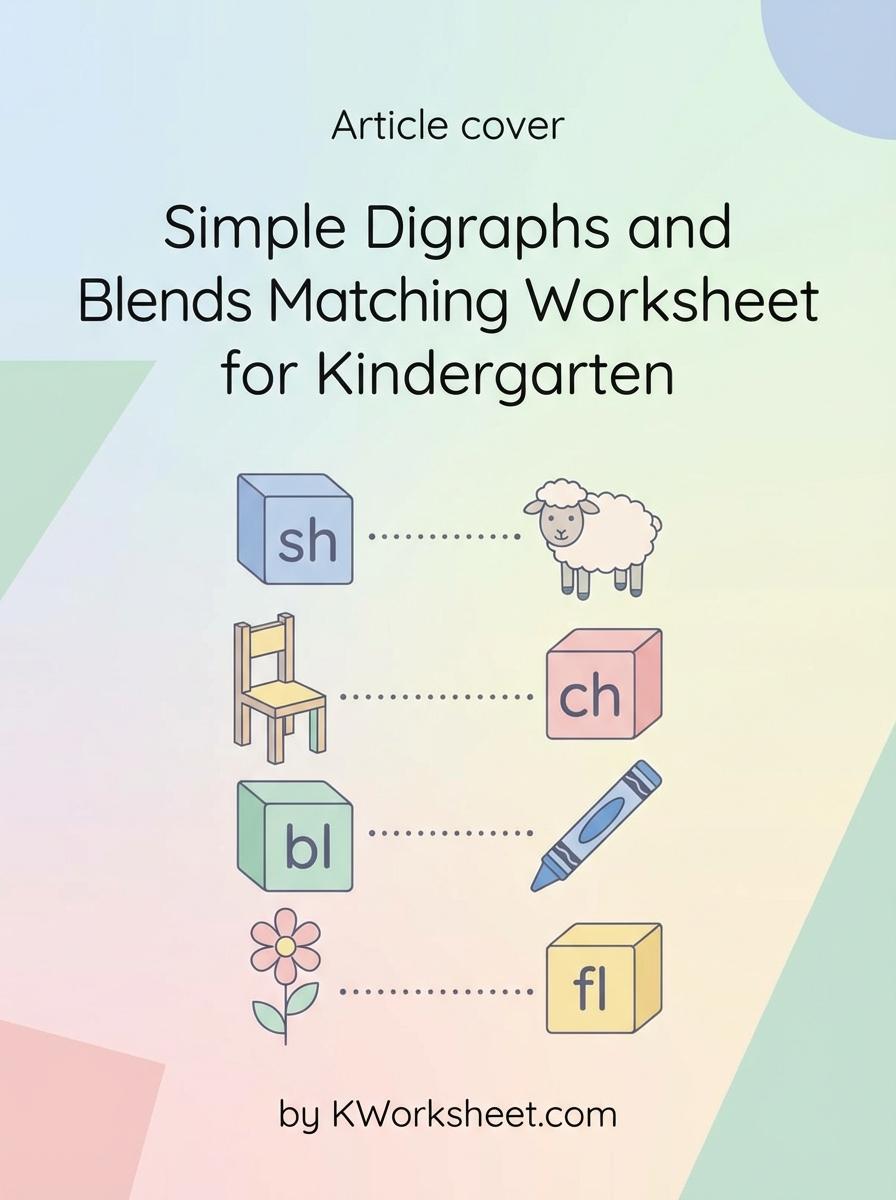
Simple Digraphs and Blends Matching Worksheet for Kindergarten