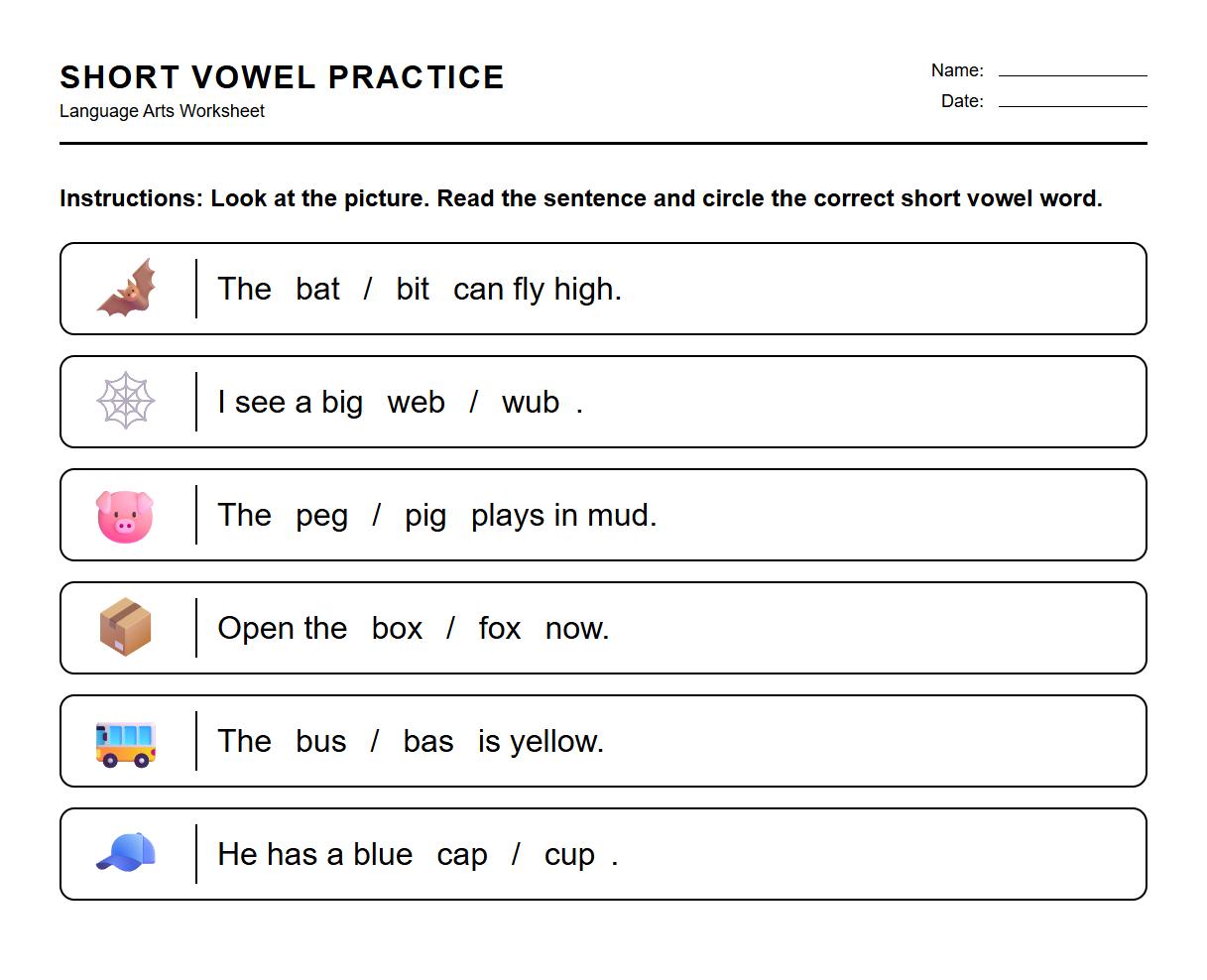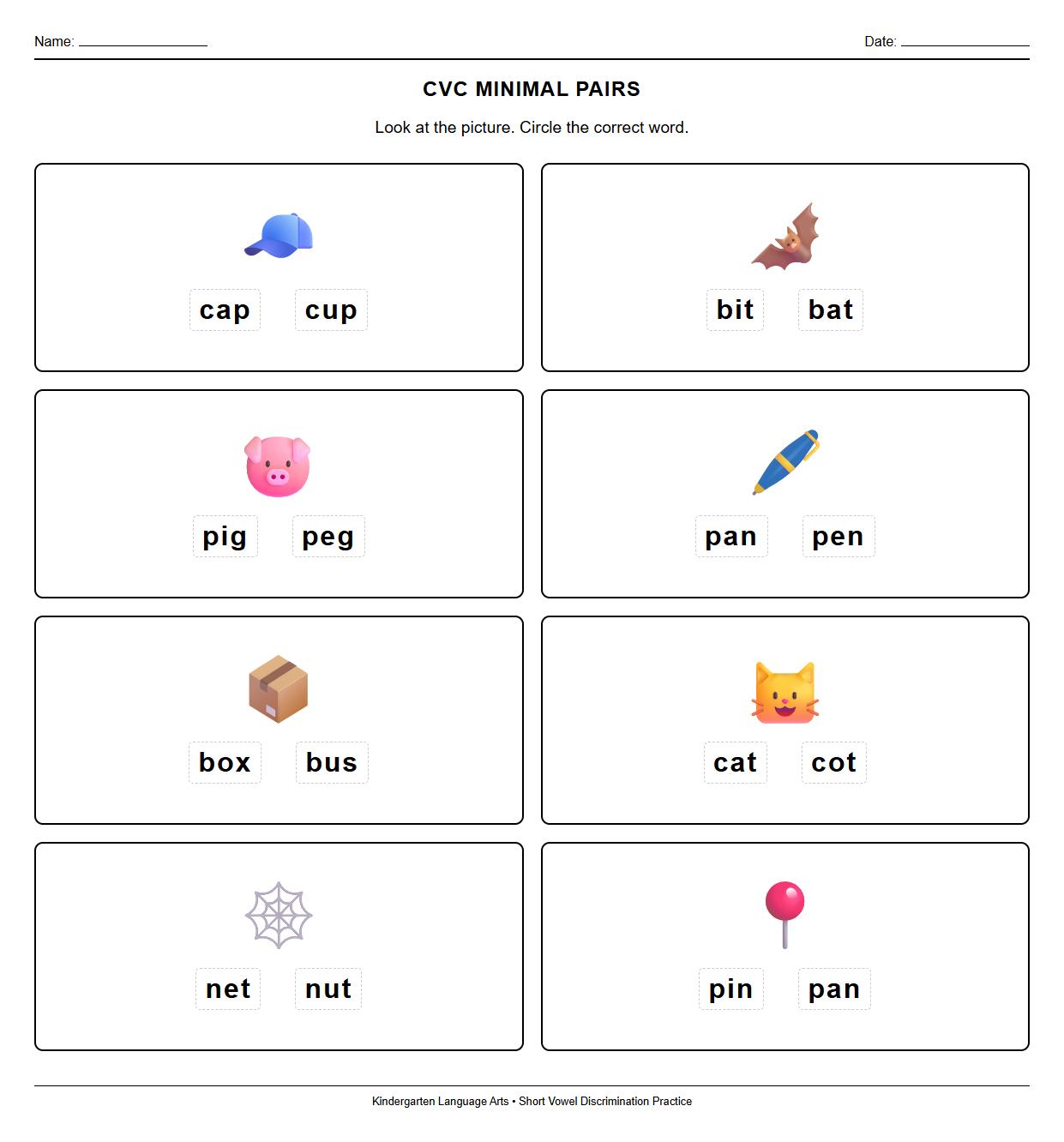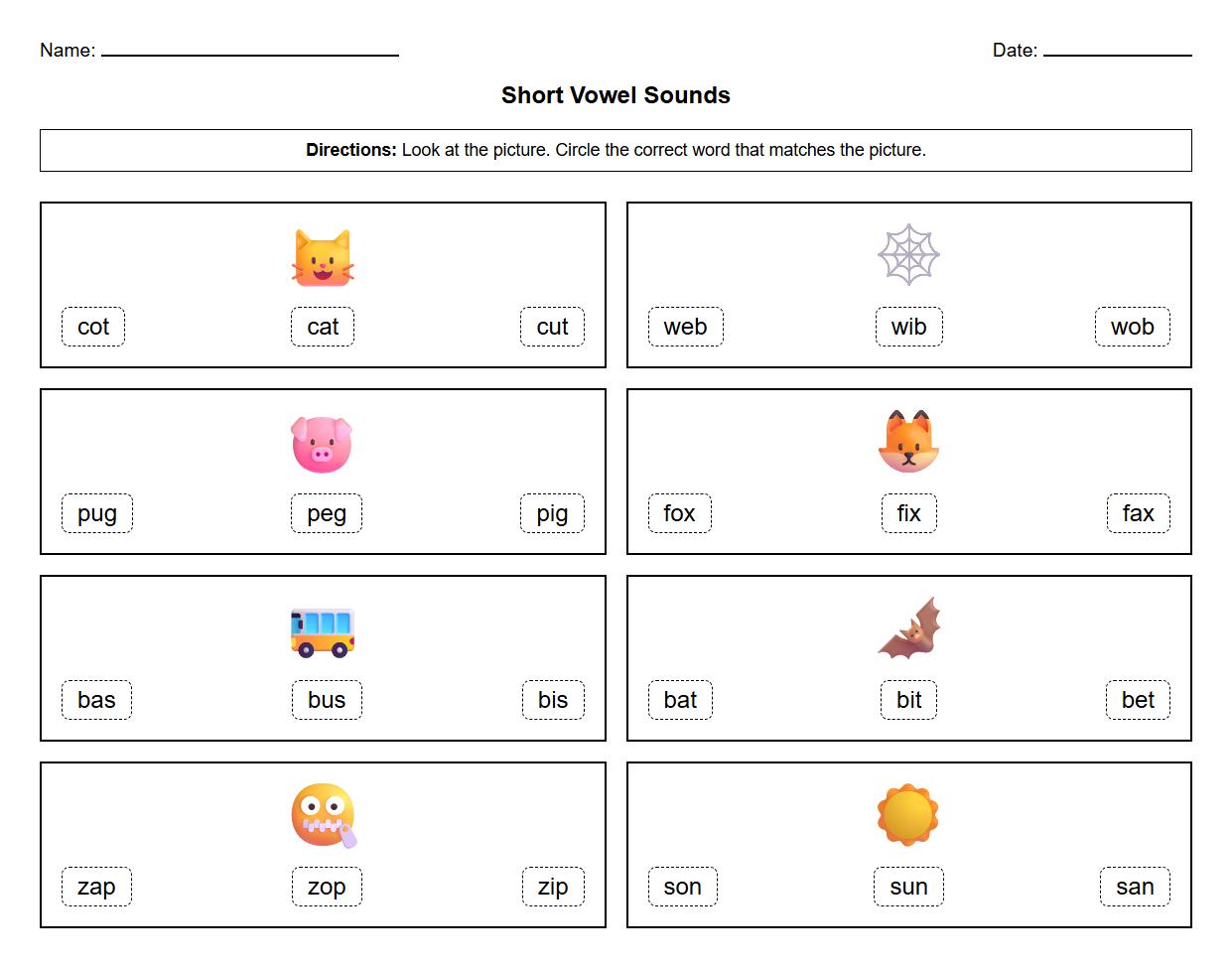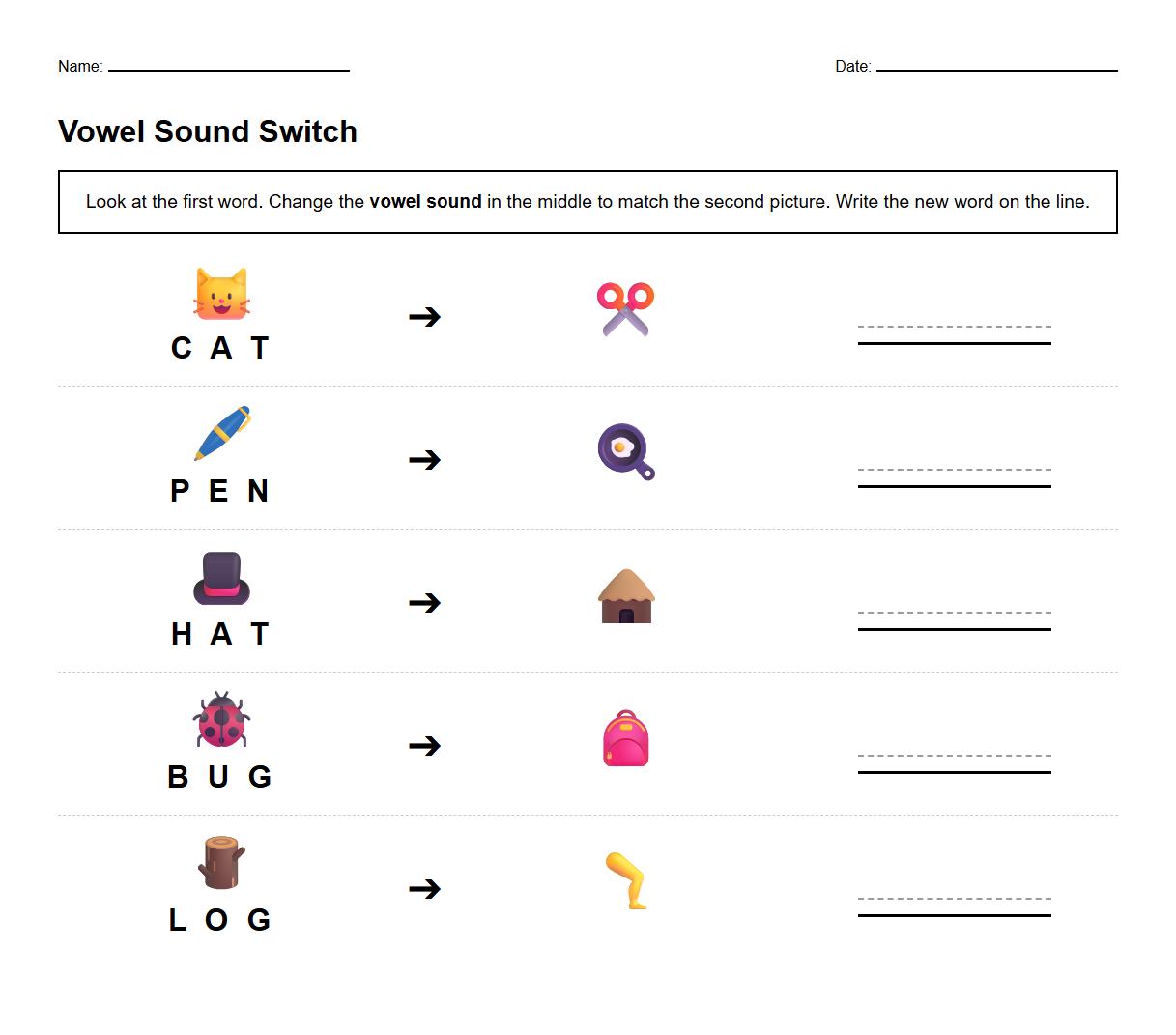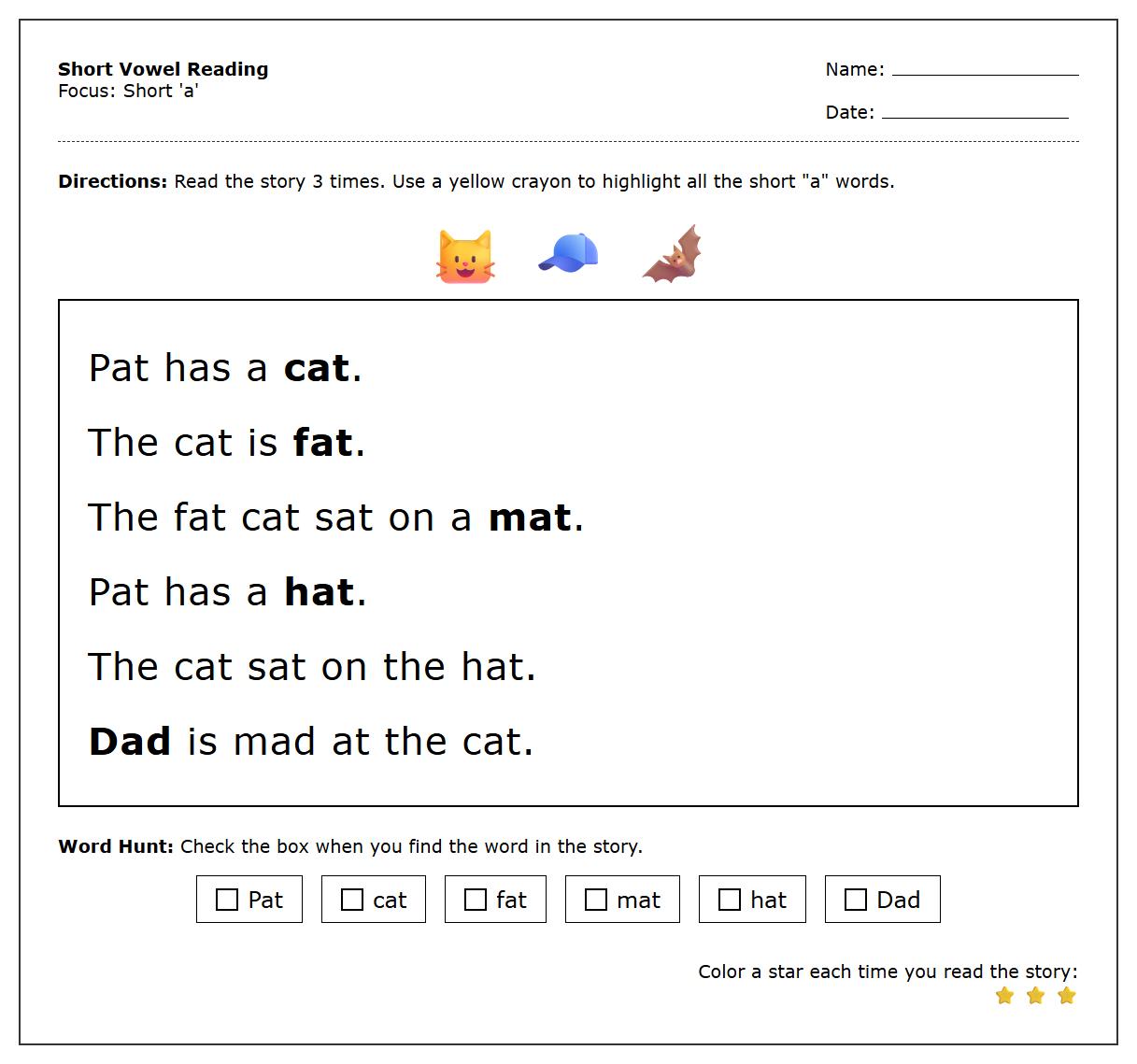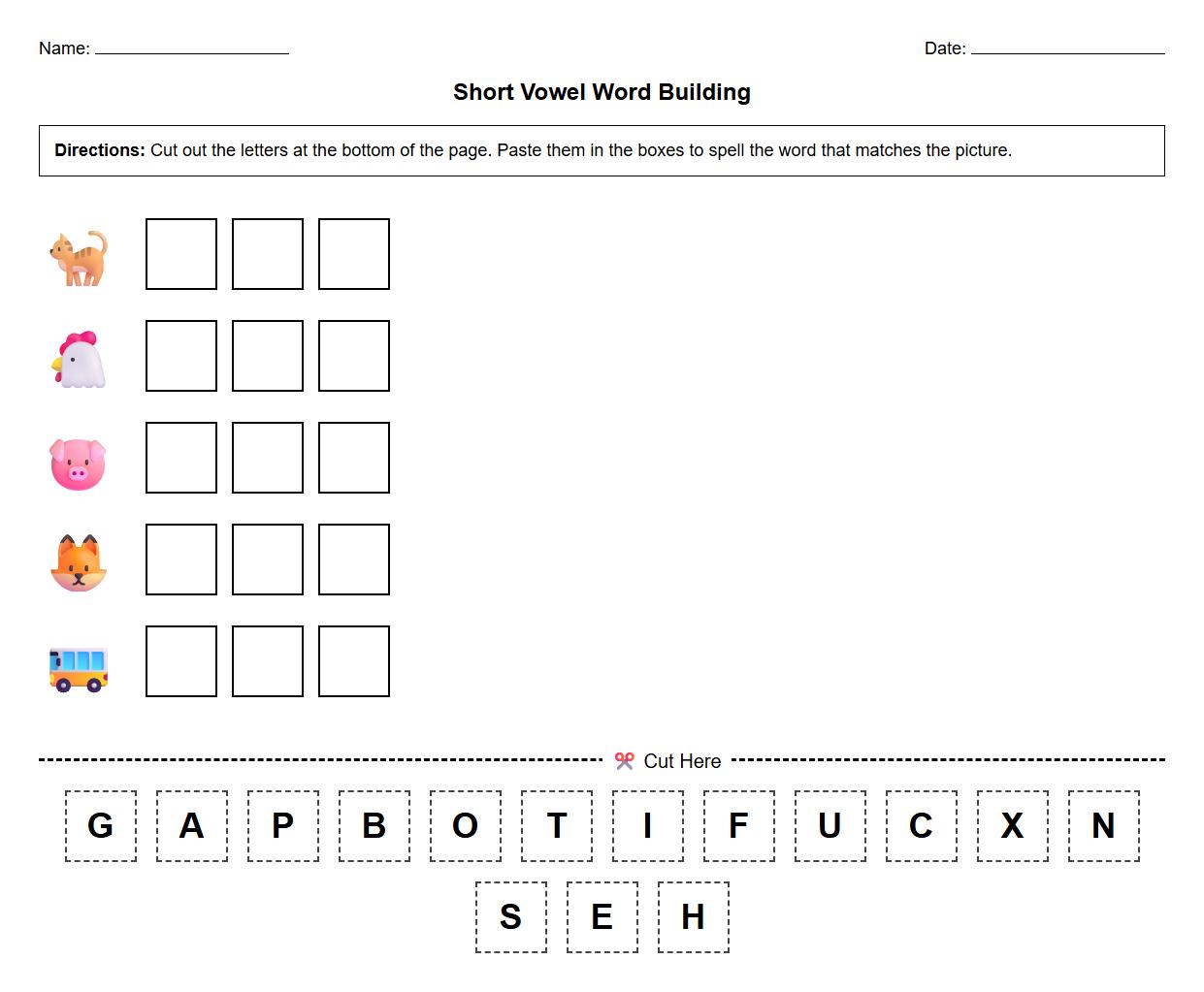
Short vowel sounds are essential for early reading development and phonics skills. This worksheet focuses on helping beginning readers recognize and differentiate short vowel sounds in various words. Explore the collection of available worksheets to reinforce short vowel identification practice.
Identifying the Short "a" Sound
Help children distinguish the short "a" sound by comparing words like cat, cake, and cane. Encourage them to recognize that "cat" contains the short "a" sound, unlike the other two. This activity develops phonemic awareness crucial for early reading skills. Teachers and parents can use this exercise to reinforce sound-letter connections.
Spotting the Short "e" Sound Image
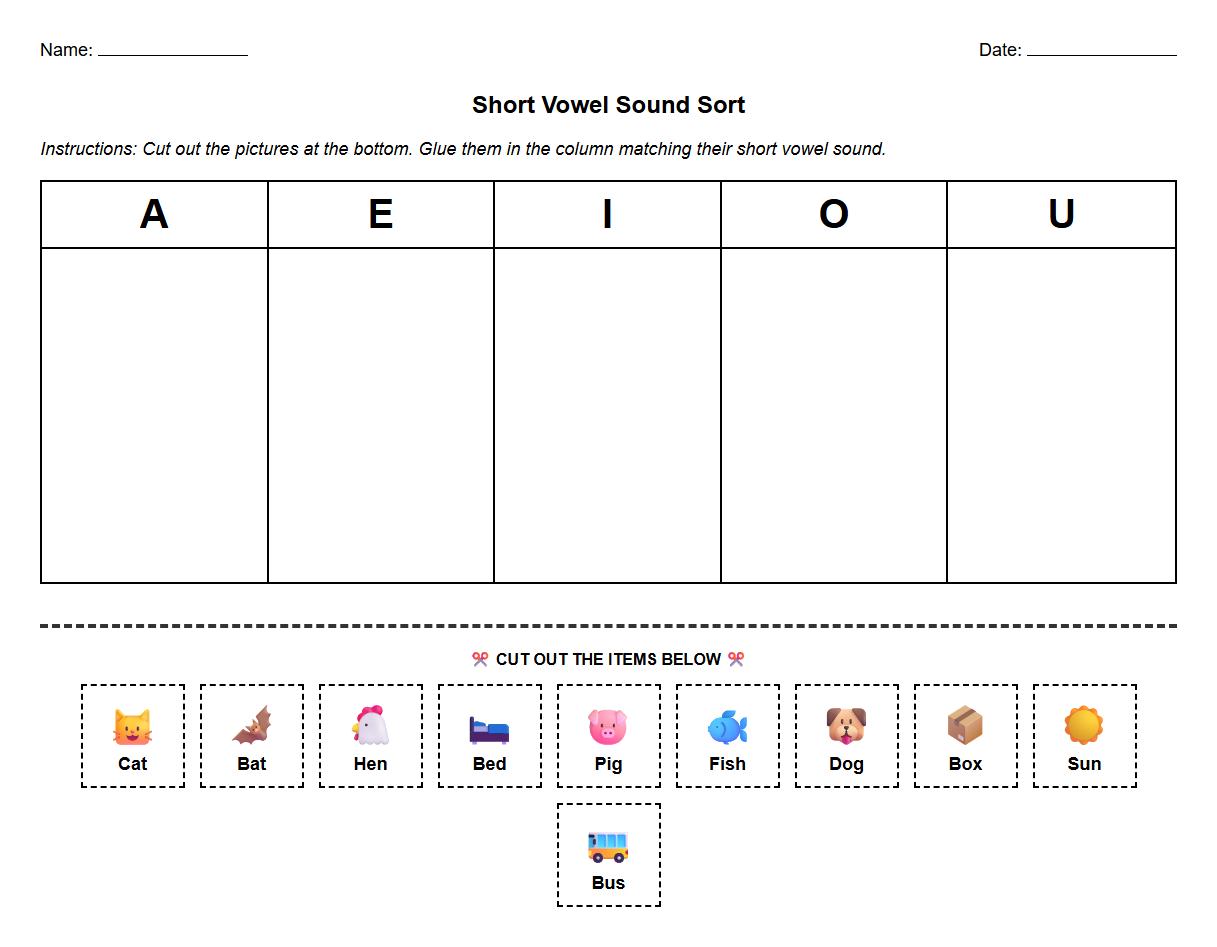
Ask children to circle the picture that represents a word with the short "e" sound. This task supports auditory discrimination and vocabulary building by associating sounds with images. Use clear, simple pictures to make the activity engaging and understandable for kindergarteners. Consistent practice helps children quickly identify short vowel sounds.
Completing Words with Vowels
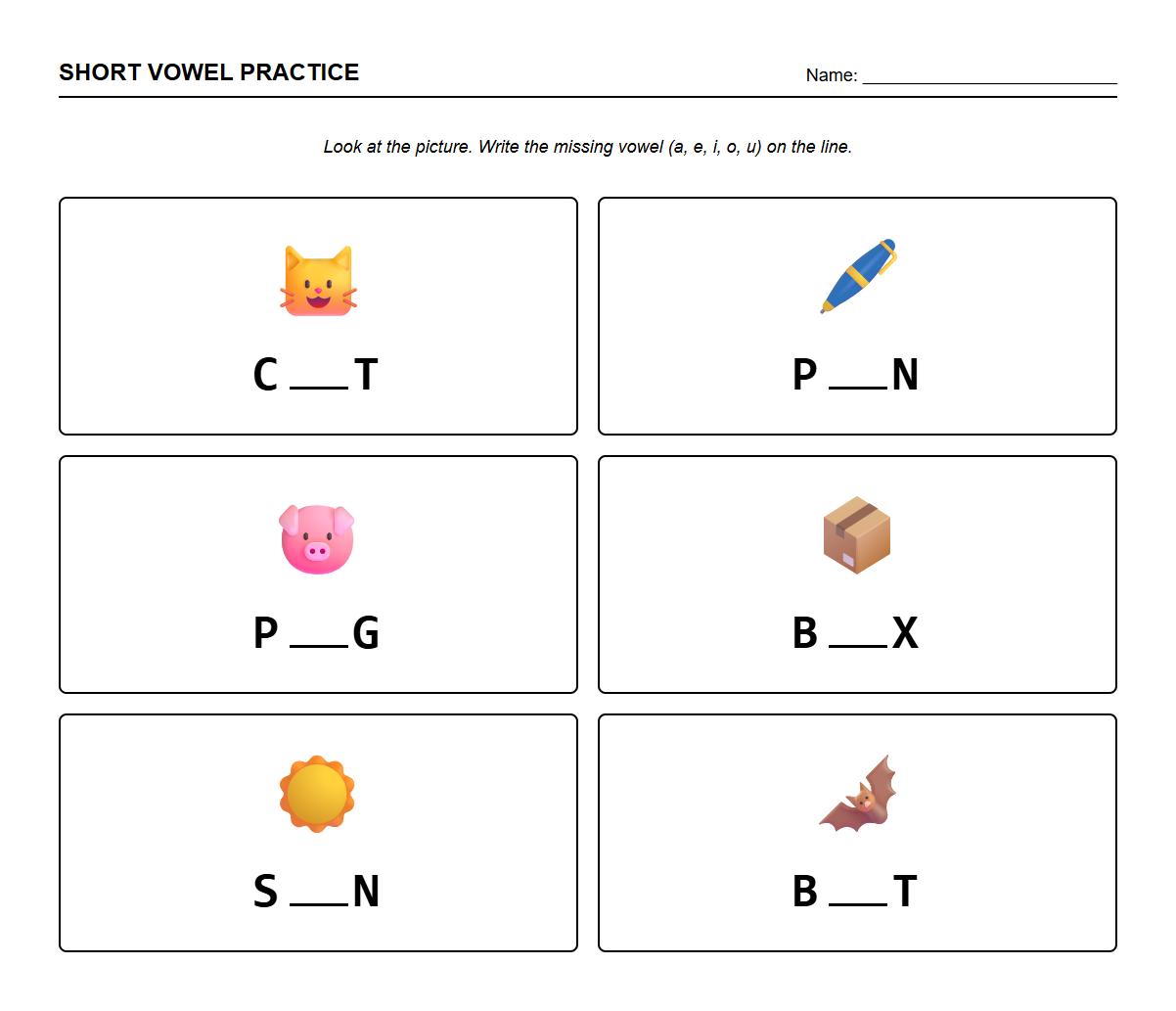
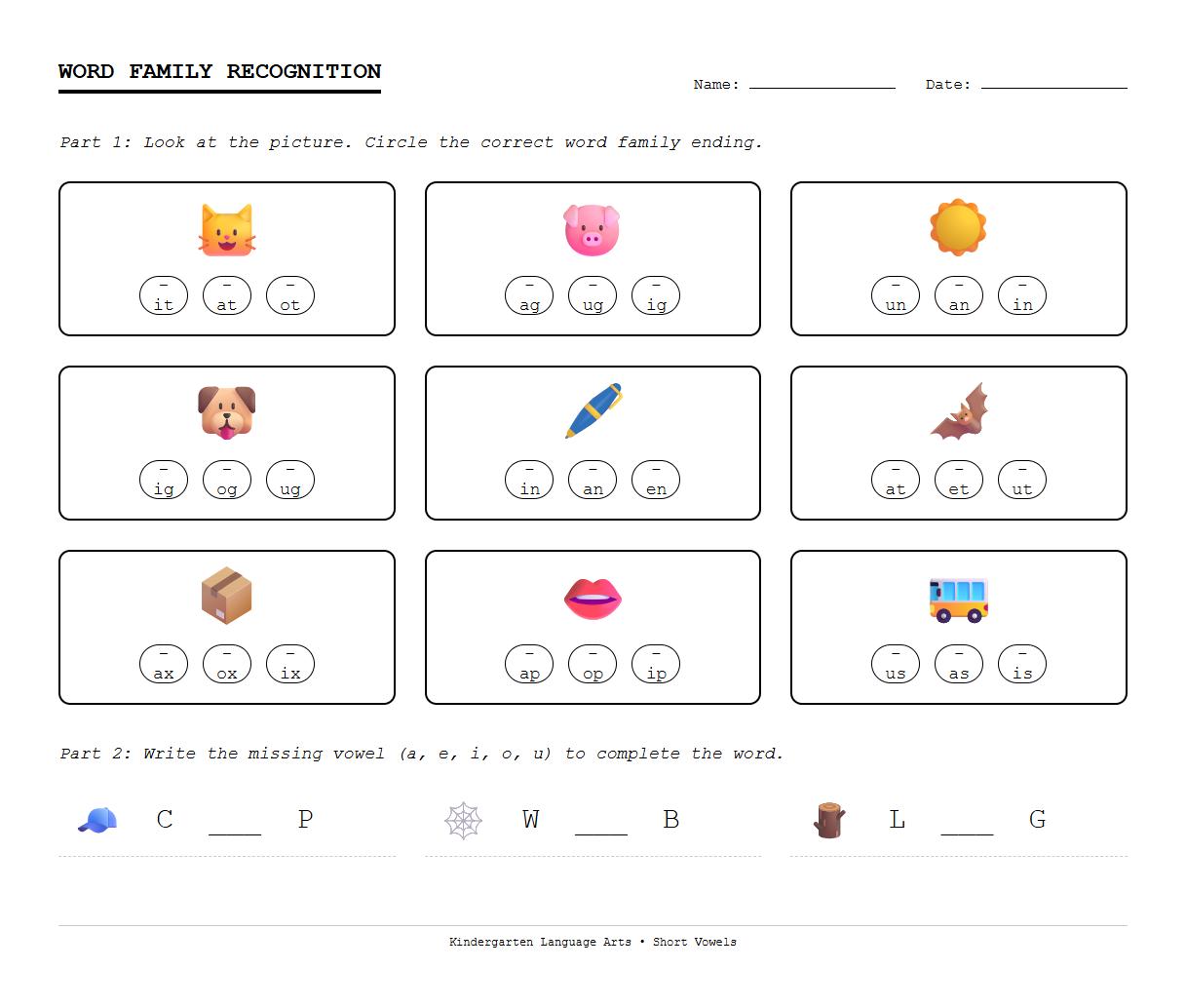
Provide a partial word like s _ t and ask kids to fill in the blank with a vowel to create a real word. This strengthens their knowledge of vowel sounds and word formation. Possible answers include "sat," "set," "sit," or "sut," depending on the focus vowel. Activities like this promote early spelling and phonics skills.
Listening for the Short "i" Sound
Encourage children to listen carefully and write a word containing the short "i" sound. This enhances their listening skills and ability to match sounds with written words. Simple words like "sit" or "lip" work well for this purpose. Verbal and written exercises together improve literacy development.
Choosing the Short "o" Sound Word
Present words such as mop, mope, and moon, and ask children to identify which contains the short "o" sound. This helps refine their understanding of vowel sounds in different word contexts. Highlighting the short "o" sound in "mop" boosts phonetic recognition. Parents and teachers can use this to support accurate vowel pronunciation.
Matching Words with Pictures of Short "u" Sounds
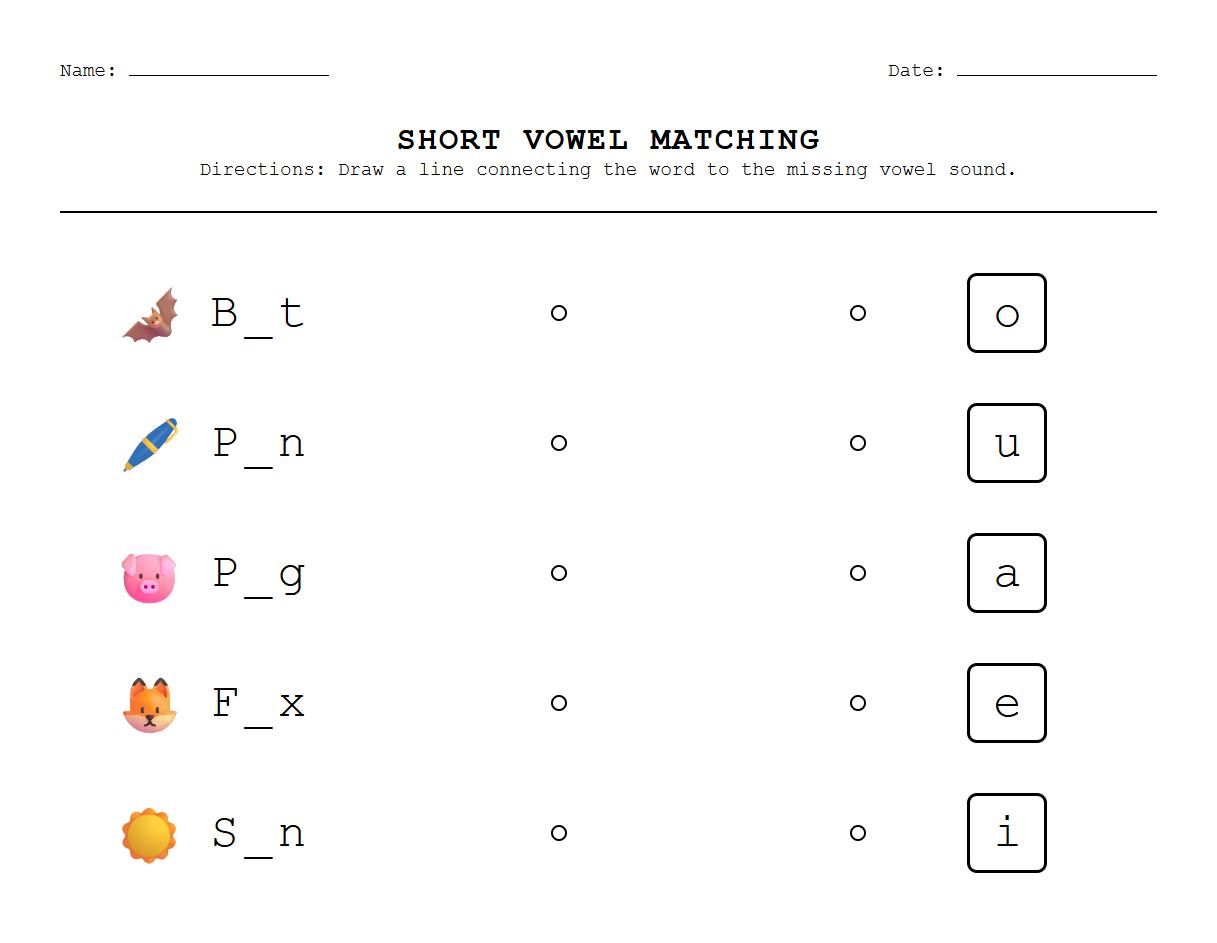
Ask children to draw lines linking words with pictures that illustrate the short "u" sound. This activity bolsters word-sound association and visual learning. Using images like a bug, cup, or sun helps make learning interactive and memorable. Matching exercises promote cognitive connections between spoken and written language.
Coloring Words with the Short "e" Sound
Have kids color words containing the short "e" sound in red to reinforce vowel sound recognition. This creative task makes phonics practice fun and visually engaging. It also aids memory retention by involving fine motor skills. Integrating art into reading lessons supports diverse learning styles.
Identifying the Vowel with the Short Sound in "bug"
Focus on the vowel in the word "bug" and discuss how the letter "u" makes the short sound. This helps young learners connect specific vowel letters to their sounds. Emphasizing such examples develops foundational decoding skills. Consistent vowel recognition is key to early reading success.
Underlining Words with the Short "i" Sound
Provide a sentence and ask children to underline words that contain the short "i" sound. This practice encourages careful reading and phonetic identification. Selecting sentences with multiple vowel sounds challenges kids to differentiate between them. Such targeted exercises enhance phonemic awareness and reading fluency.
Writing the Missing Vowel in the Word "tap"
Say the word "tap" aloud and have children write the missing vowel to complete it. This reinforces their ability to hear and write vowel sounds correctly. The short "a" in "tap" is a perfect example for vowel sound instruction. Combining oral and written tasks improves comprehensive literacy skills.


Hands On Phonics Worksheet for Long Vowel Recognition in Kindergarten