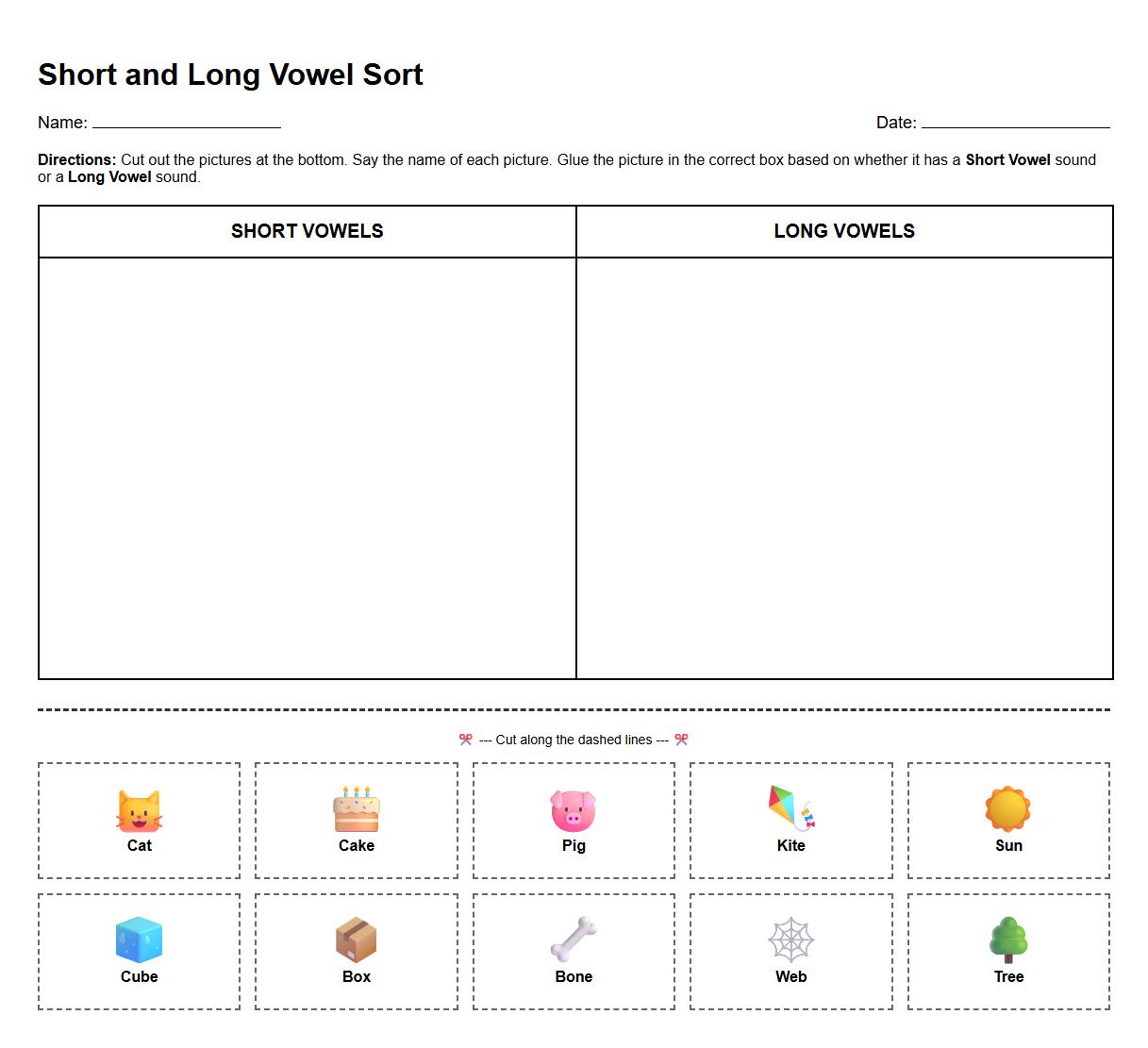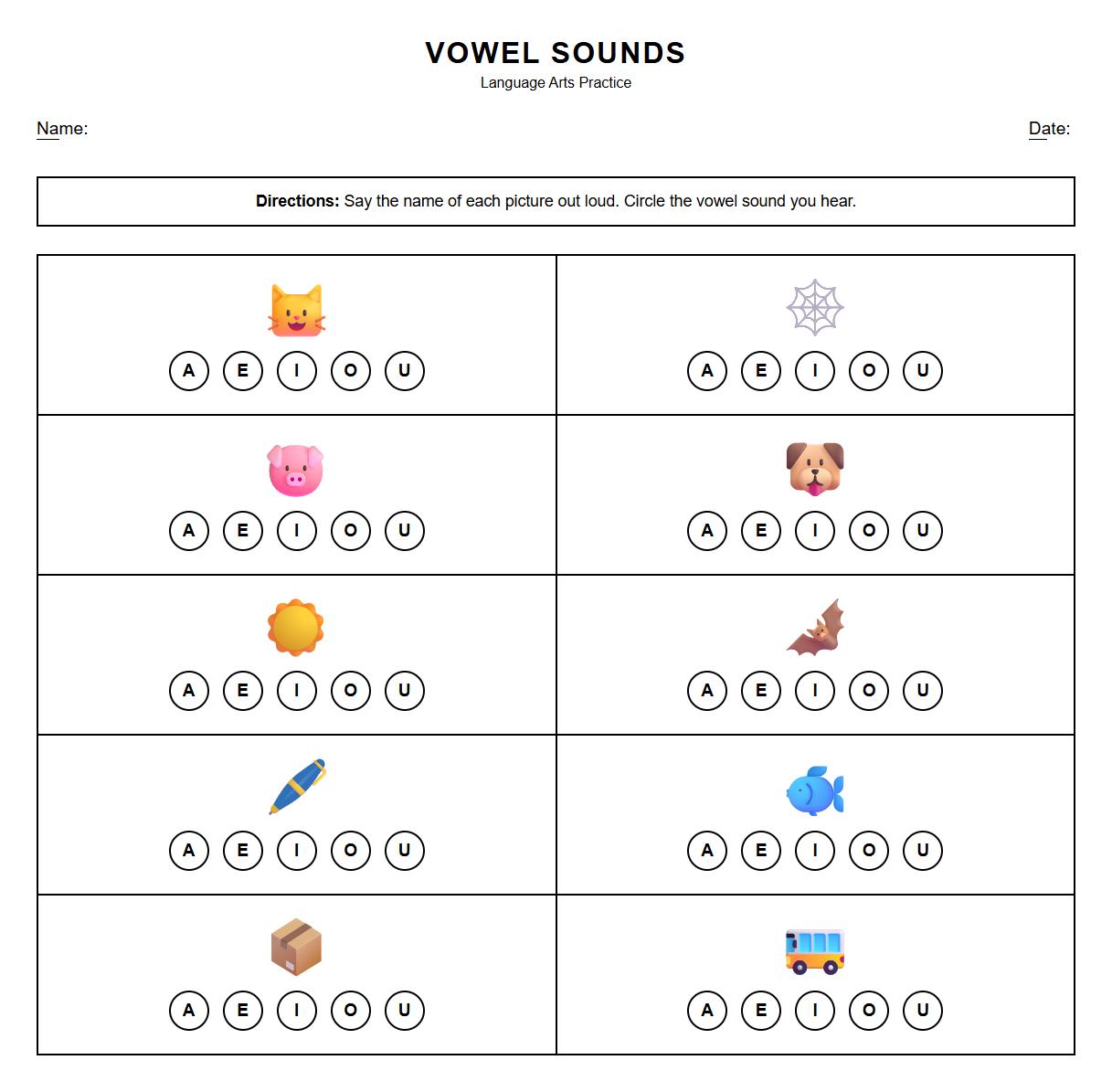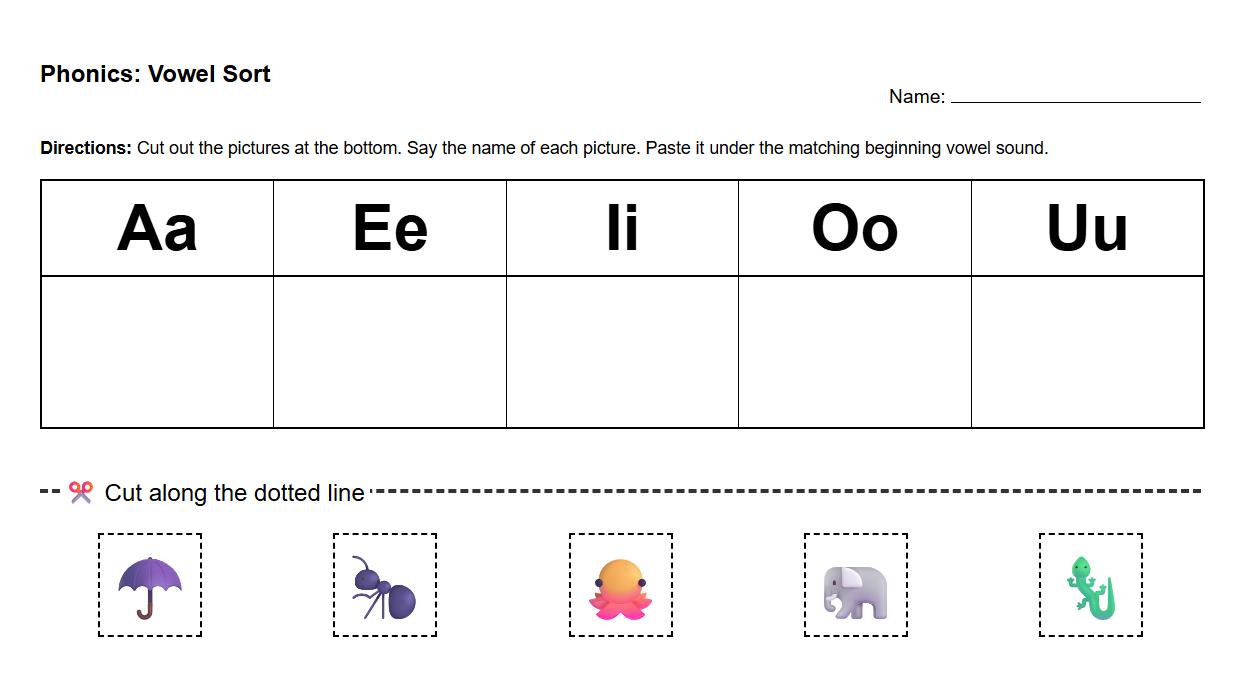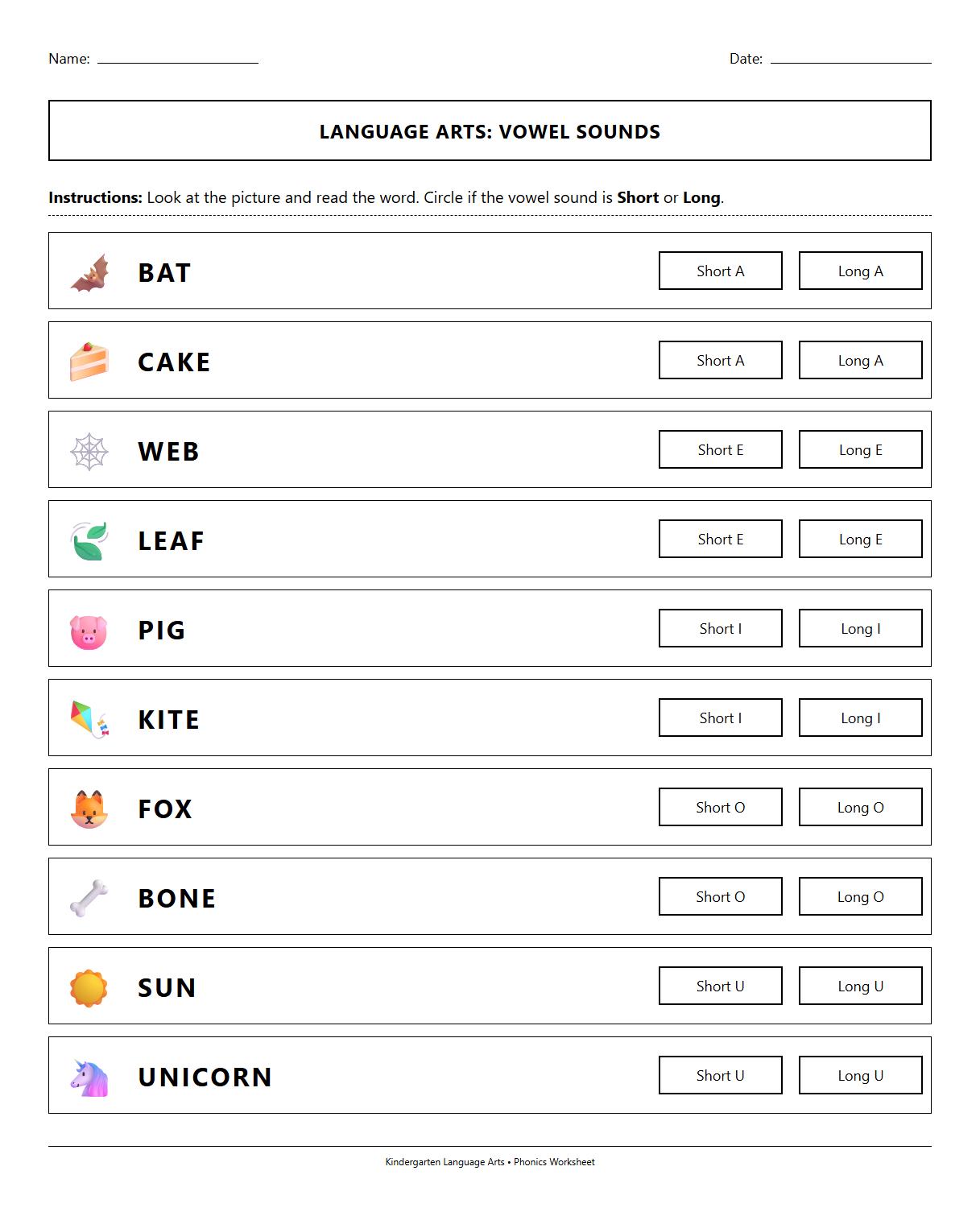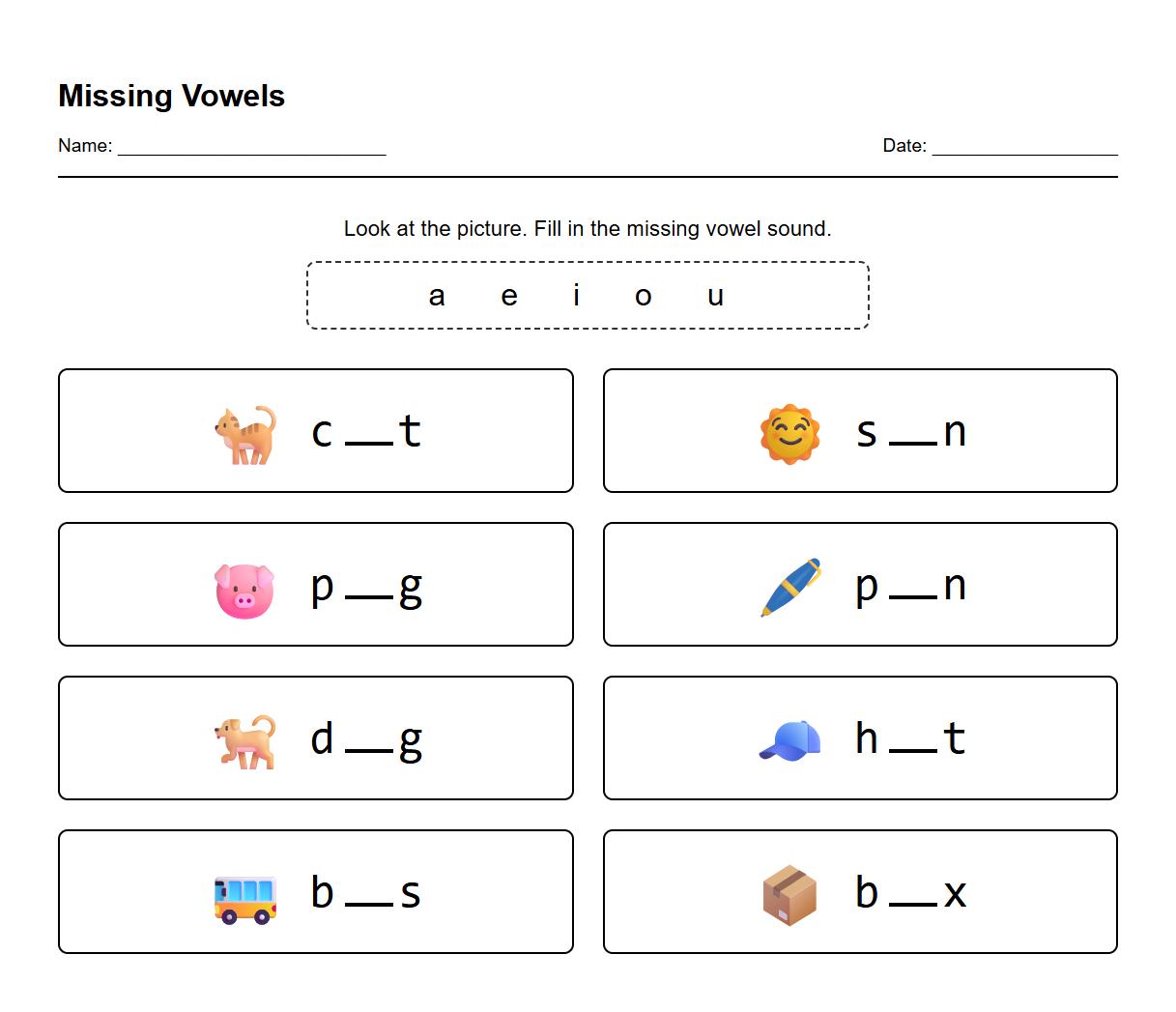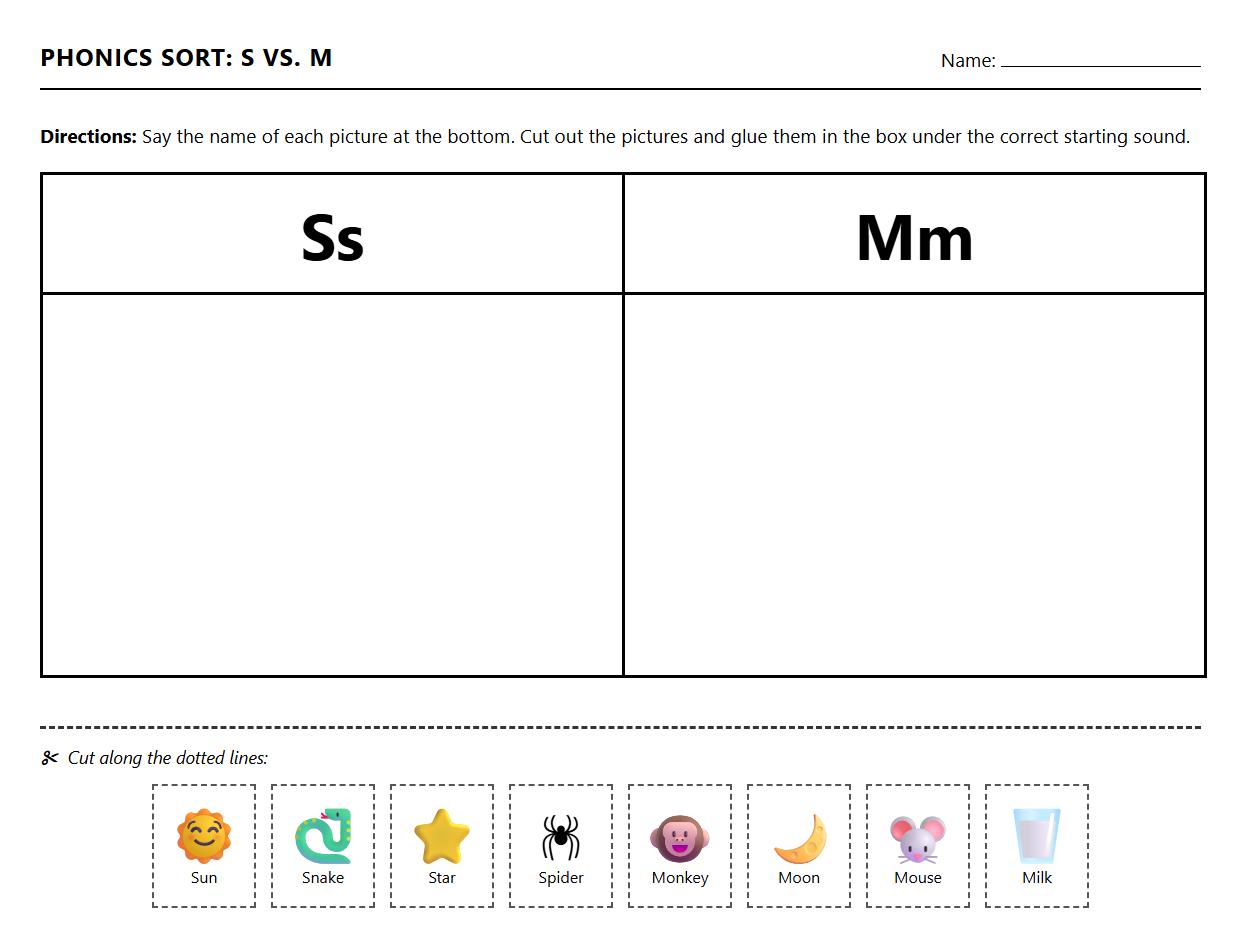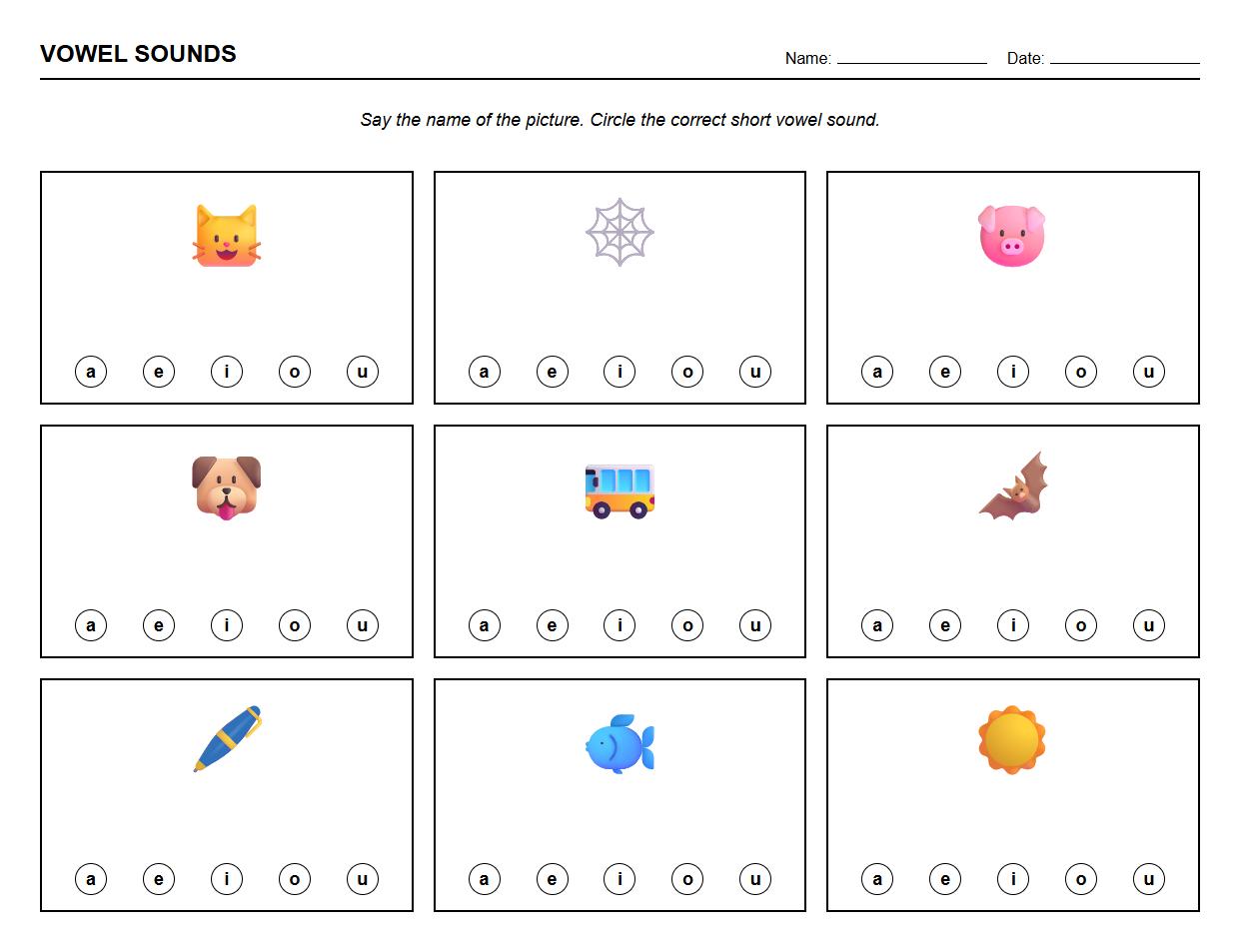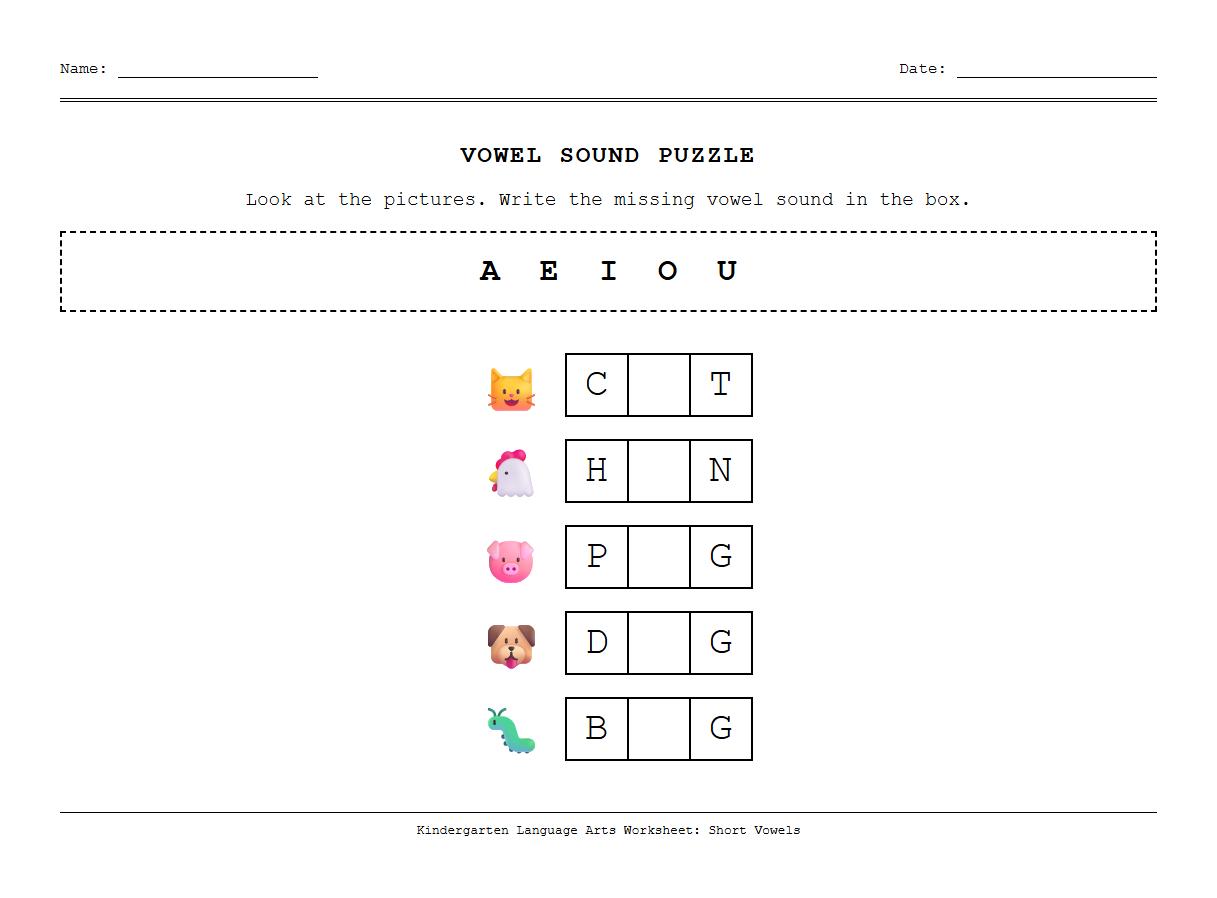
Kindergarten phonics instruction emphasizes distinguishing short and long vowel sounds to build strong reading skills. Identifying these vowel sounds helps young learners decode words more effectively and enhances their pronunciation. Explore our available worksheets to practice and master short and long vowel comparisons.
Identifying Short and Long Vowel Sounds
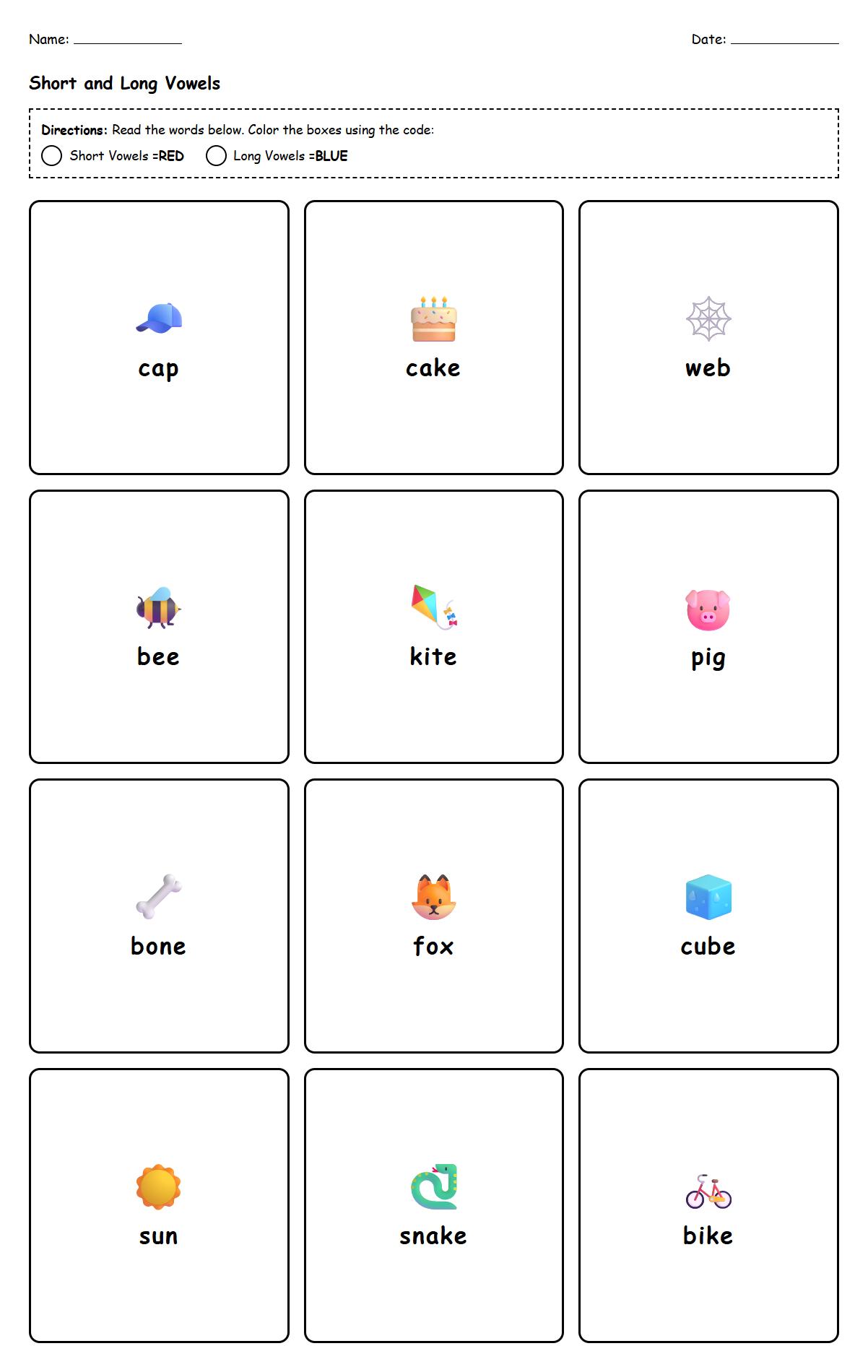
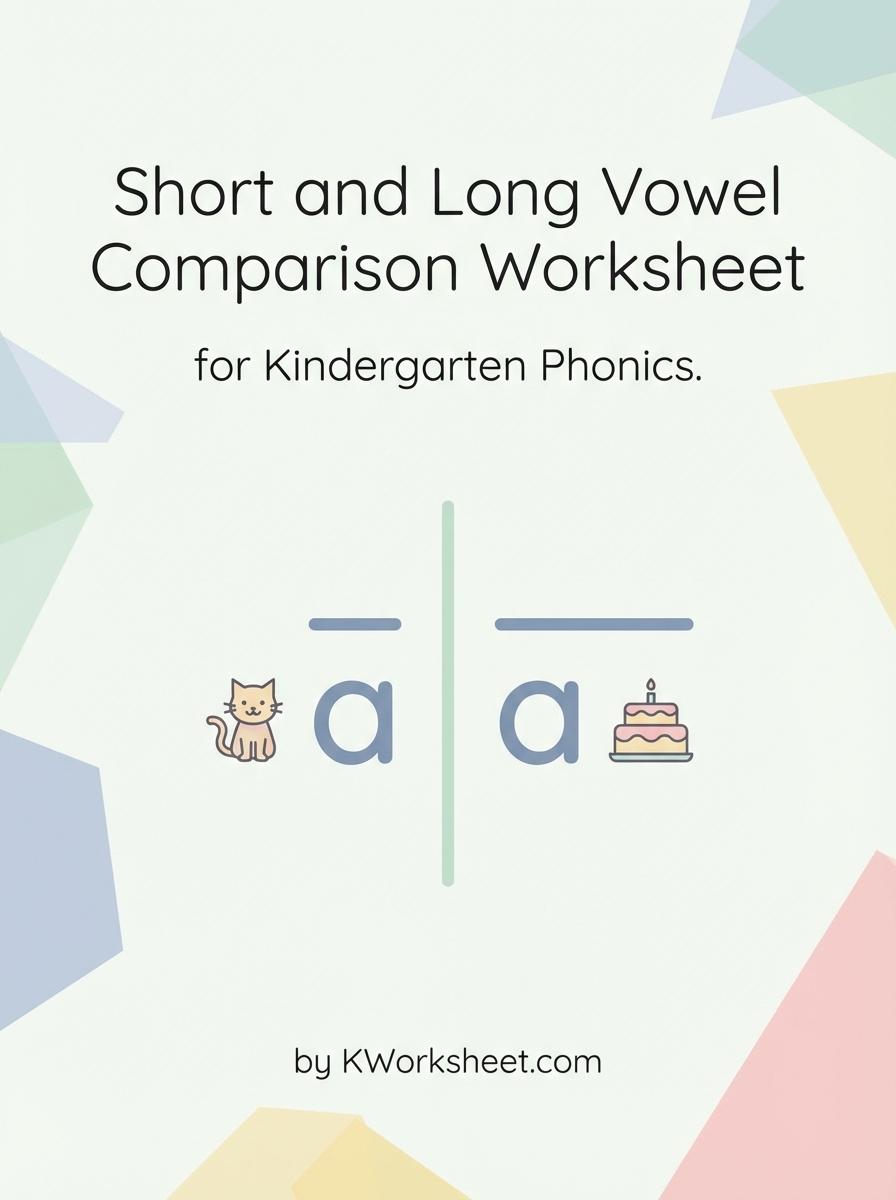
Help children distinguish between short and long vowel sounds by comparing words like cat and cake. Emphasize the difference by circling the word with the short vowel sound. This activity builds foundational phonics skills essential for early reading development.
Long Vowel Sound Identification
Encourage young learners to circle the word with a long vowel sound in pairs such as bike or bit. Reinforcing the concept visually helps children recognize vowel length variations more effectively. It strengthens their auditory discrimination and phonetic awareness.
Matching Pictures with Short Vowel Sounds
Use engaging pictures and ask children to match images to words containing the short "a" sound. This interactive exercise supports vocabulary building and sound-letter correspondence. Visual association enhances memory retention of phonetic concepts.
Exploring the 'o' Sound in Words
Ask whether the word hop contains a short or long "o" sound. This question encourages learners to listen carefully and analyze vowel pronunciation. Understanding vowel sounds is critical for accurate reading and spelling.
Filling in Words with Long 'e' Sound
Provide sentences with blanks for children to fill using words that contain the long "e" sound. This activity promotes vocabulary usage and phonetic pattern recognition. It also helps children practice context clues and word structure.
Identifying Vowel Sounds in Common Words
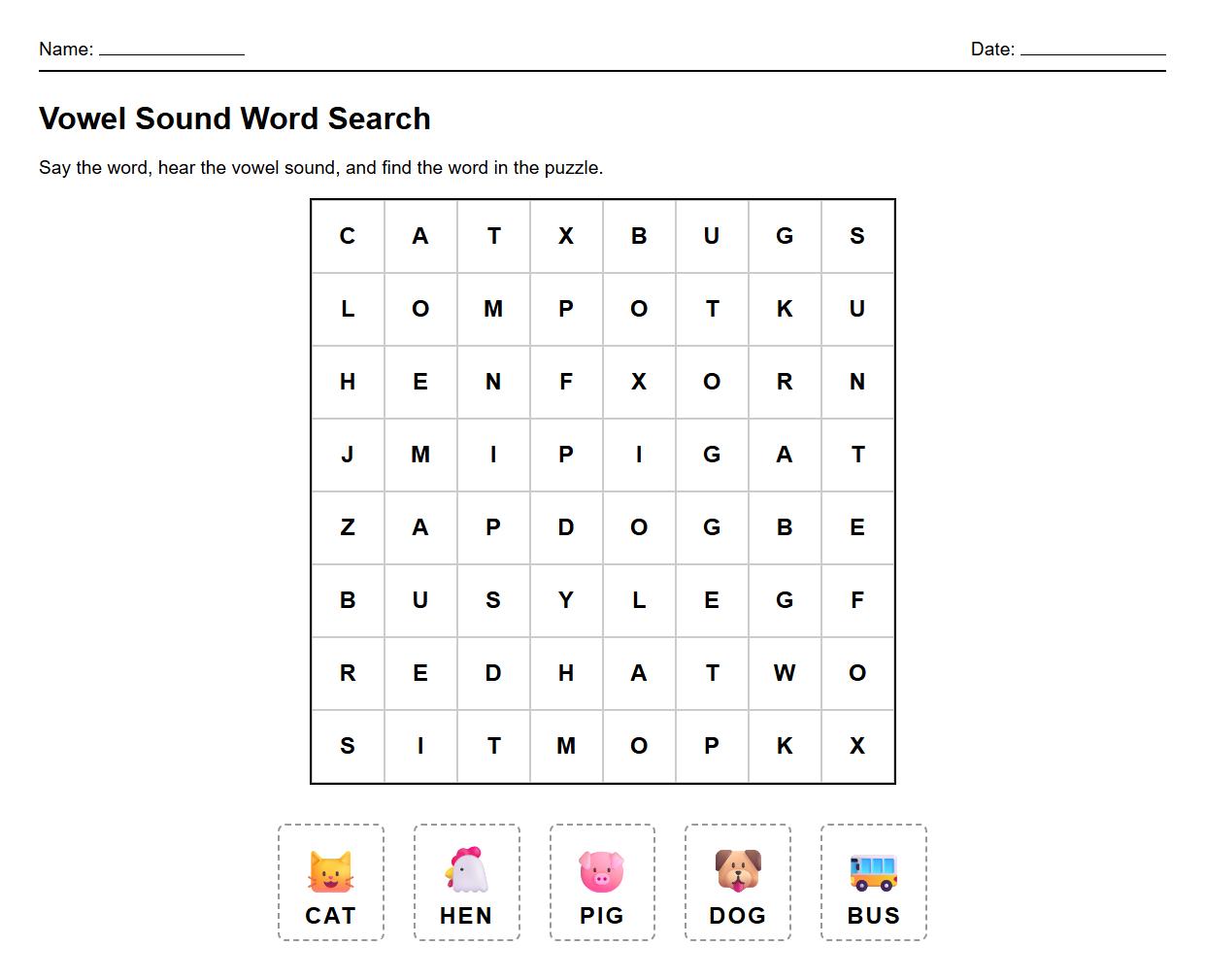
Ask children which vowel sound they hear in simple words like sun. This exercise sharpens their listening skills and vowel sound recognition. Early vowel identification is essential for reading fluency.
Coloring and Recognizing Long 'u' Sounds
Have children color the box around words that have the long u sound. This colorful activity makes learning fun while reinforcing auditory and visual connections. It's an effective method for distinguishing vowel sounds.
Listening and Checking Vowel Sounds
Guide children to listen carefully and check if the word "man" has a short or long a sound. Repeated listening helps solidify phonics skills and vowel sound differentiation. It's vital for building foundational reading abilities.
Connecting Words with the Same Vowel Sound
Ask children to draw lines to connect words that share the same vowel sound. This matching activity enhances phonological awareness and visual discrimination. It encourages comparative listening and critical thinking skills.
Clapping to Identify Long Vowel Sounds
Encourage children to say words aloud and clap when they hear long vowel sounds. This kinesthetic approach strengthens auditory processing and memory through movement. Clapping helps reinforce the recognition of vowel length in an interactive way.


Vowel Sound Sorting Worksheet for Phonics Mastery in Kindergarten