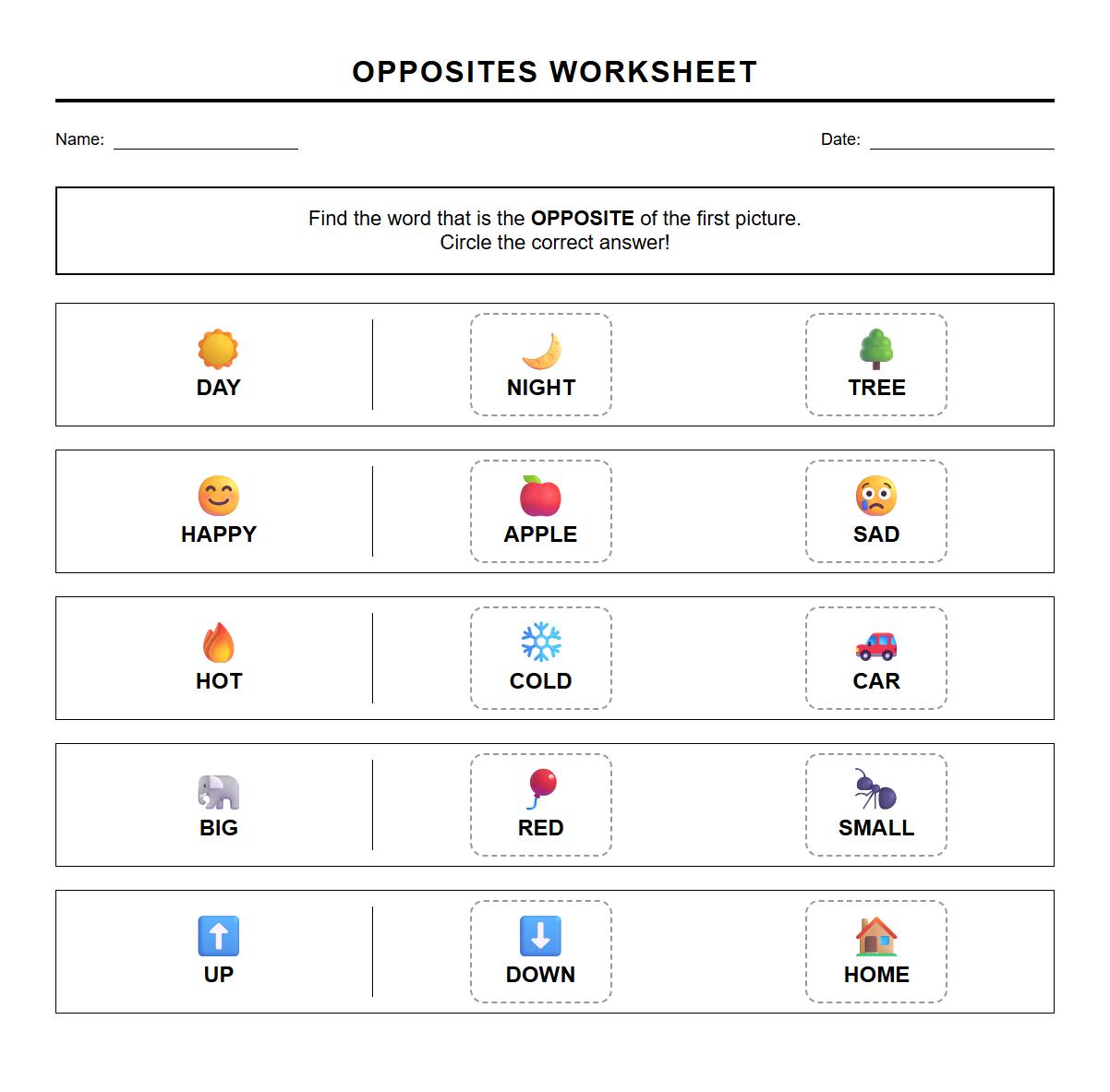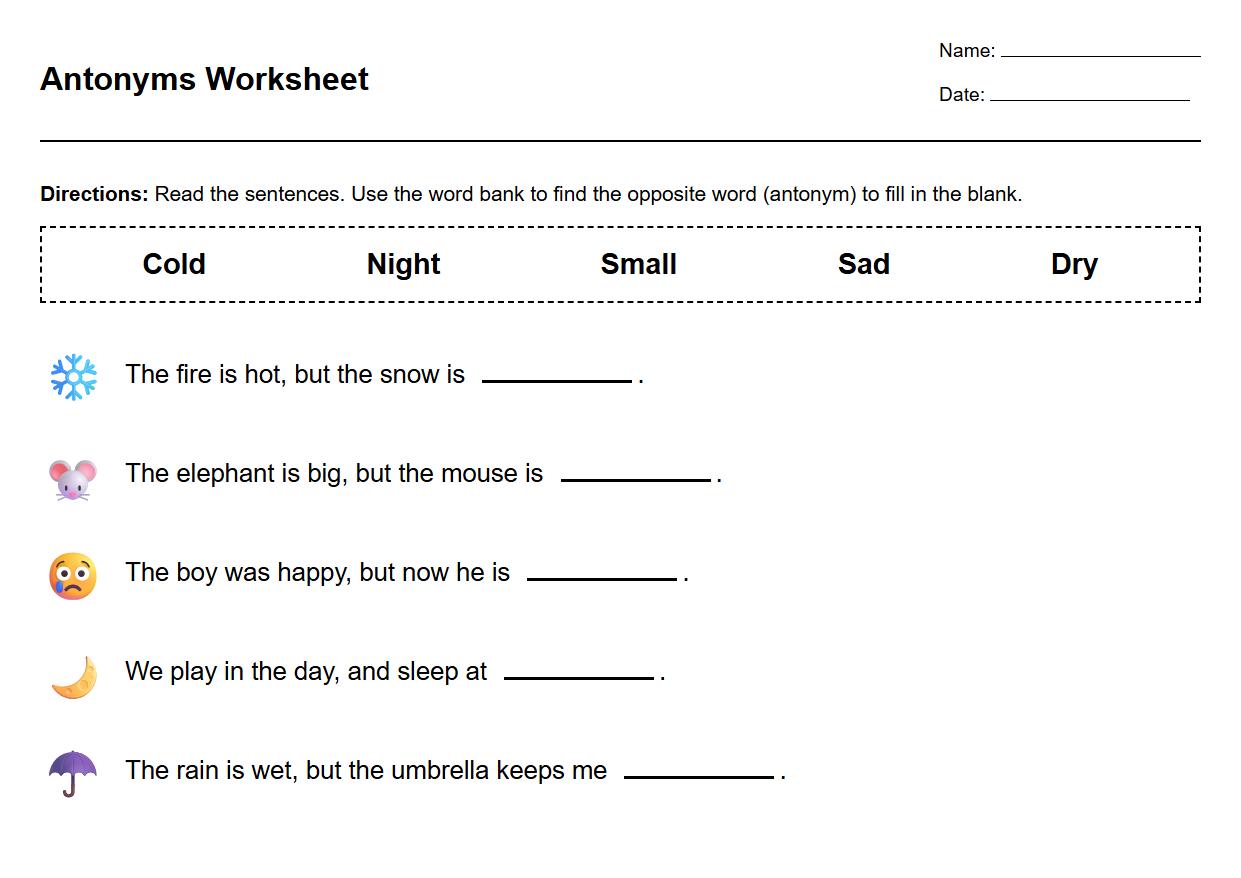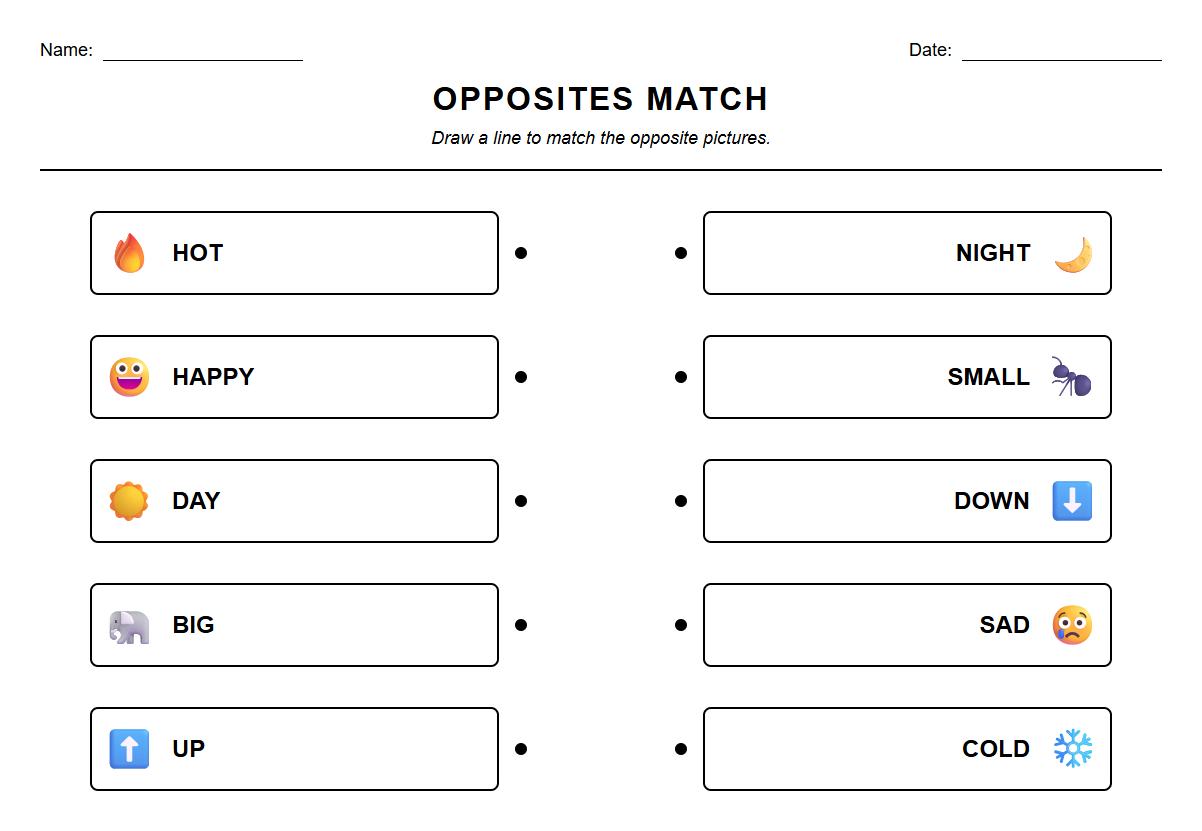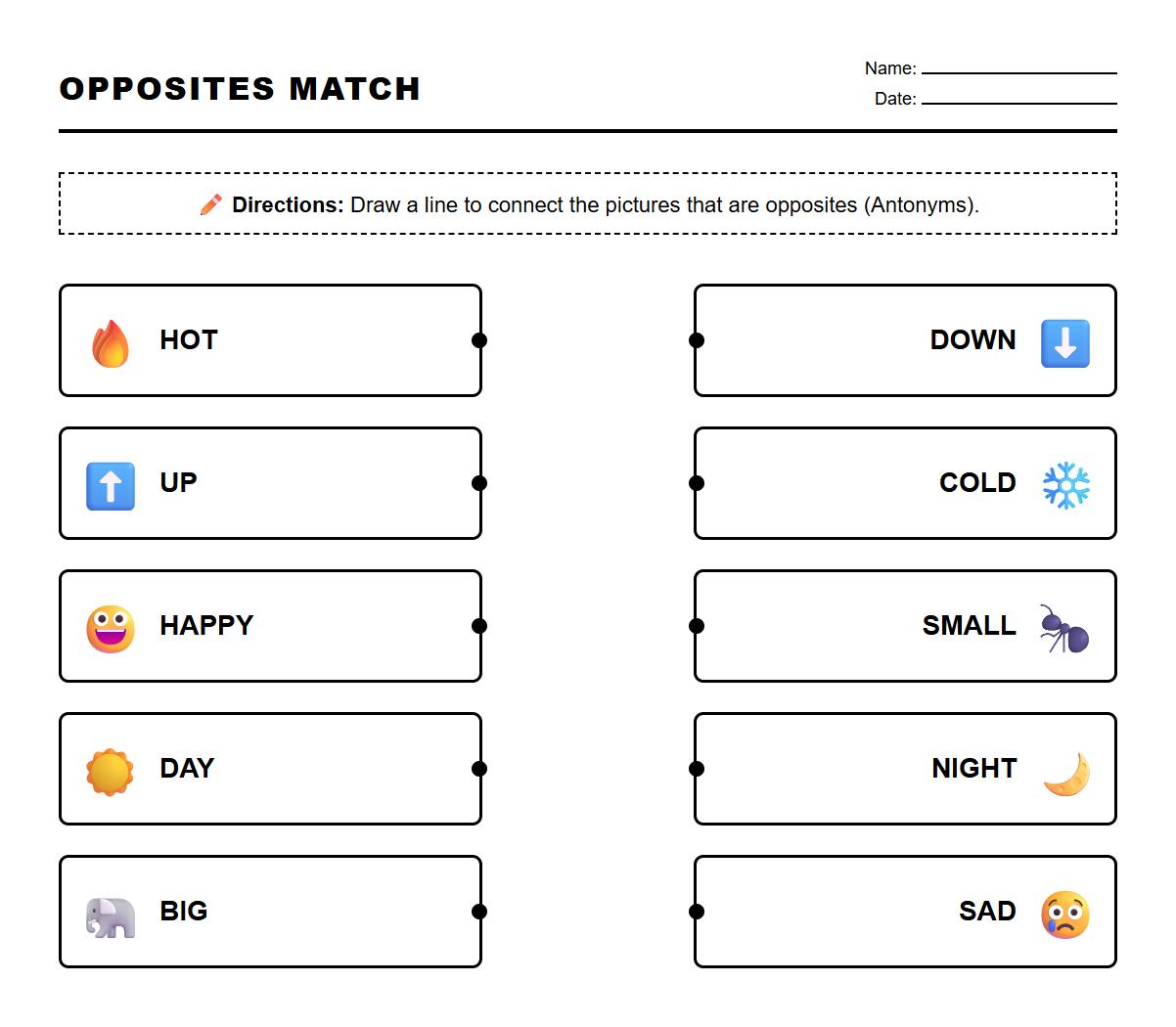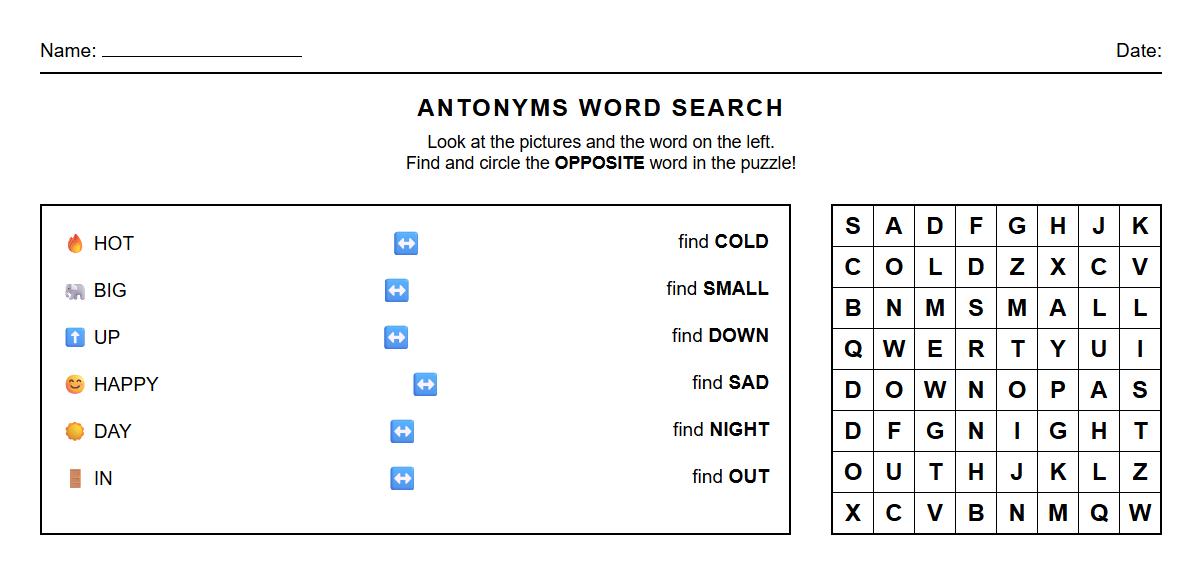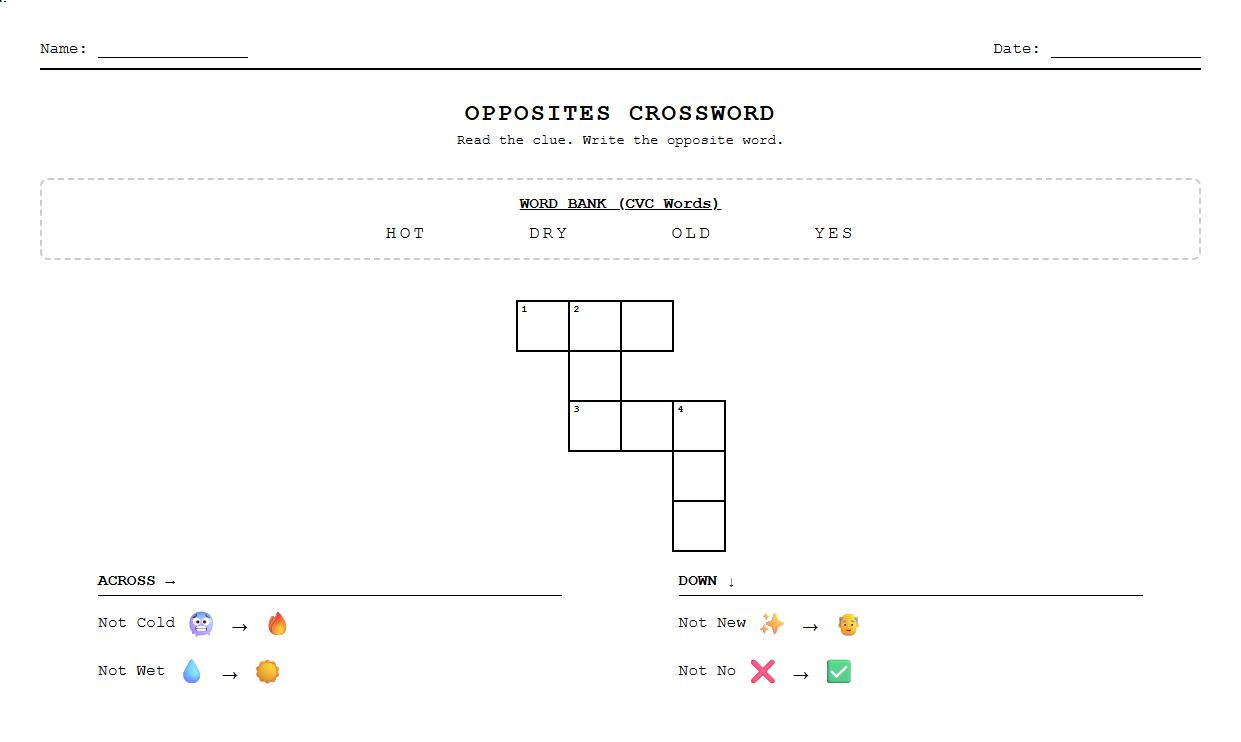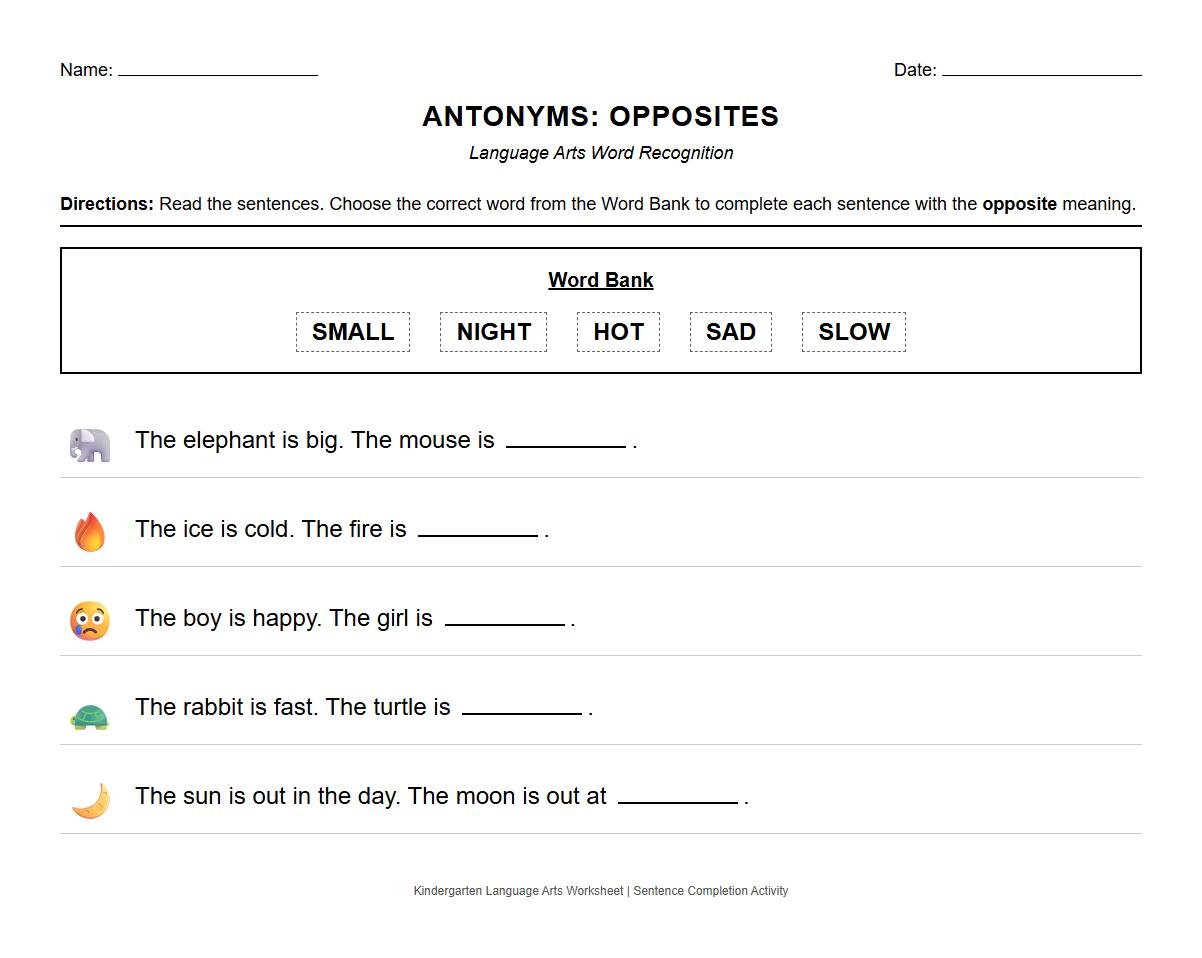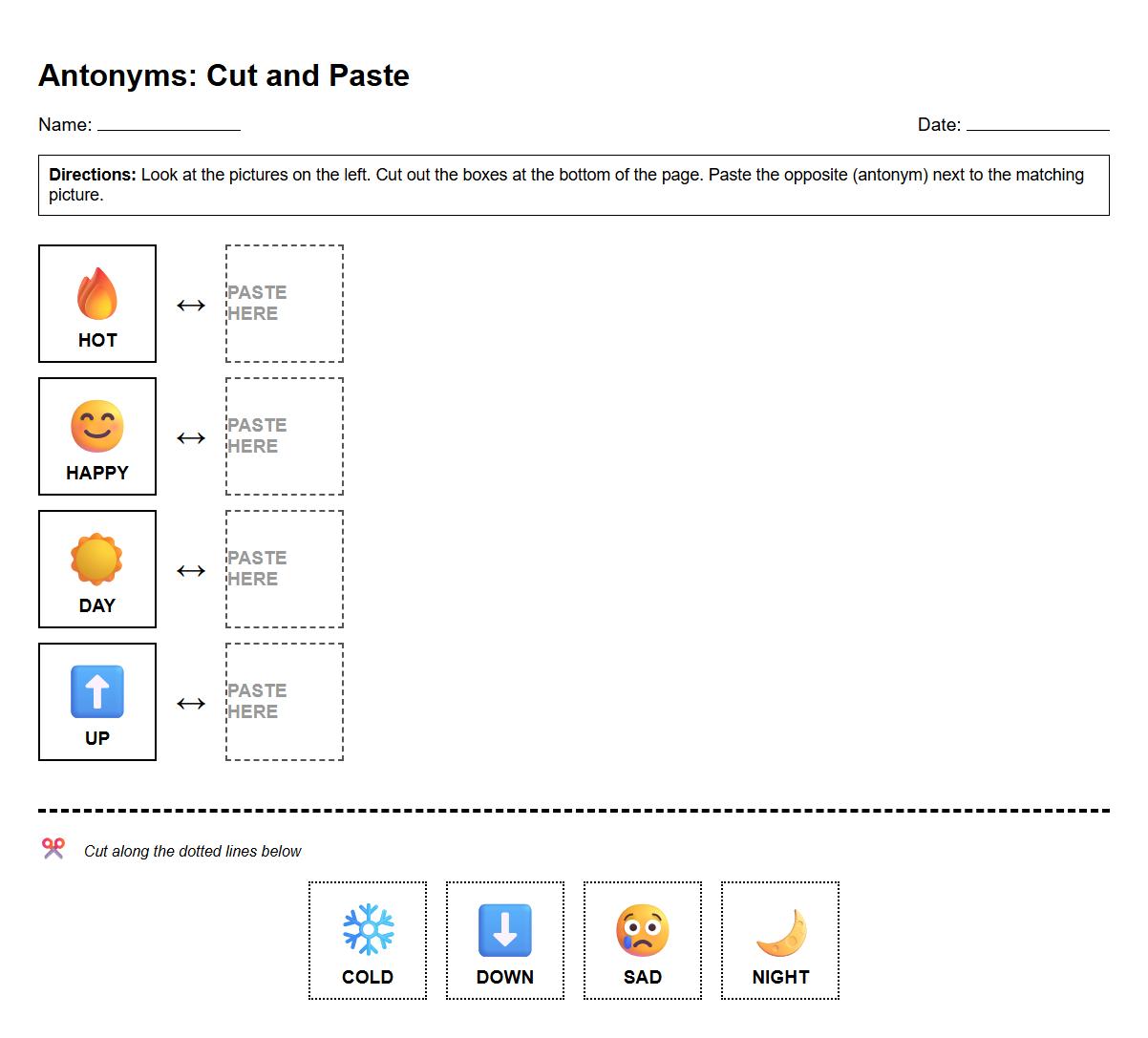
Exploring interactive antonyms worksheet exercises enhances vocabulary development by engaging learners in identifying and understanding opposite words, which strengthens language skills and comprehension. These activities promote critical thinking by encouraging students to make connections between words and their meanings in various contexts. Discover a range of available worksheets designed to boost vocabulary mastery through fun and interactive learning.
What is the Opposite of Big?
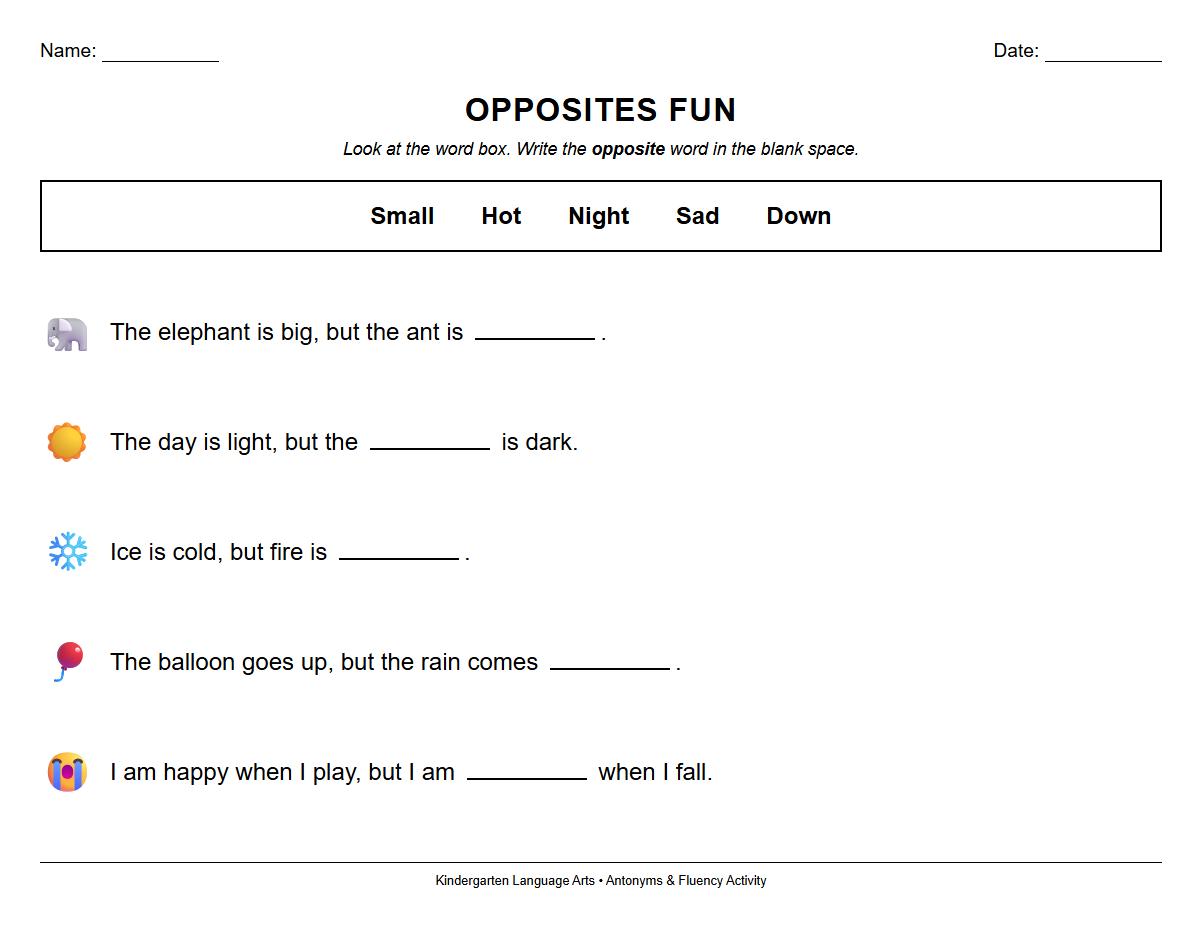
Teach children to identify the antonym of "big" by introducing the word small. This activity helps build vocabulary and understanding of size. Use visual aids such as pictures of objects that are big and small for better comprehension. Encourage discussion to reinforce the concept.
Choose the Antonym for Happy
Guide children to recognize feelings by selecting the opposite of "happy," which is sad. This exercise supports emotional literacy and word recognition. Use stories or facial expressions to illustrate these emotions clearly. Parents and teachers can ask questions to engage children in identifying antonyms.
Match the Word Fast to Its Antonym
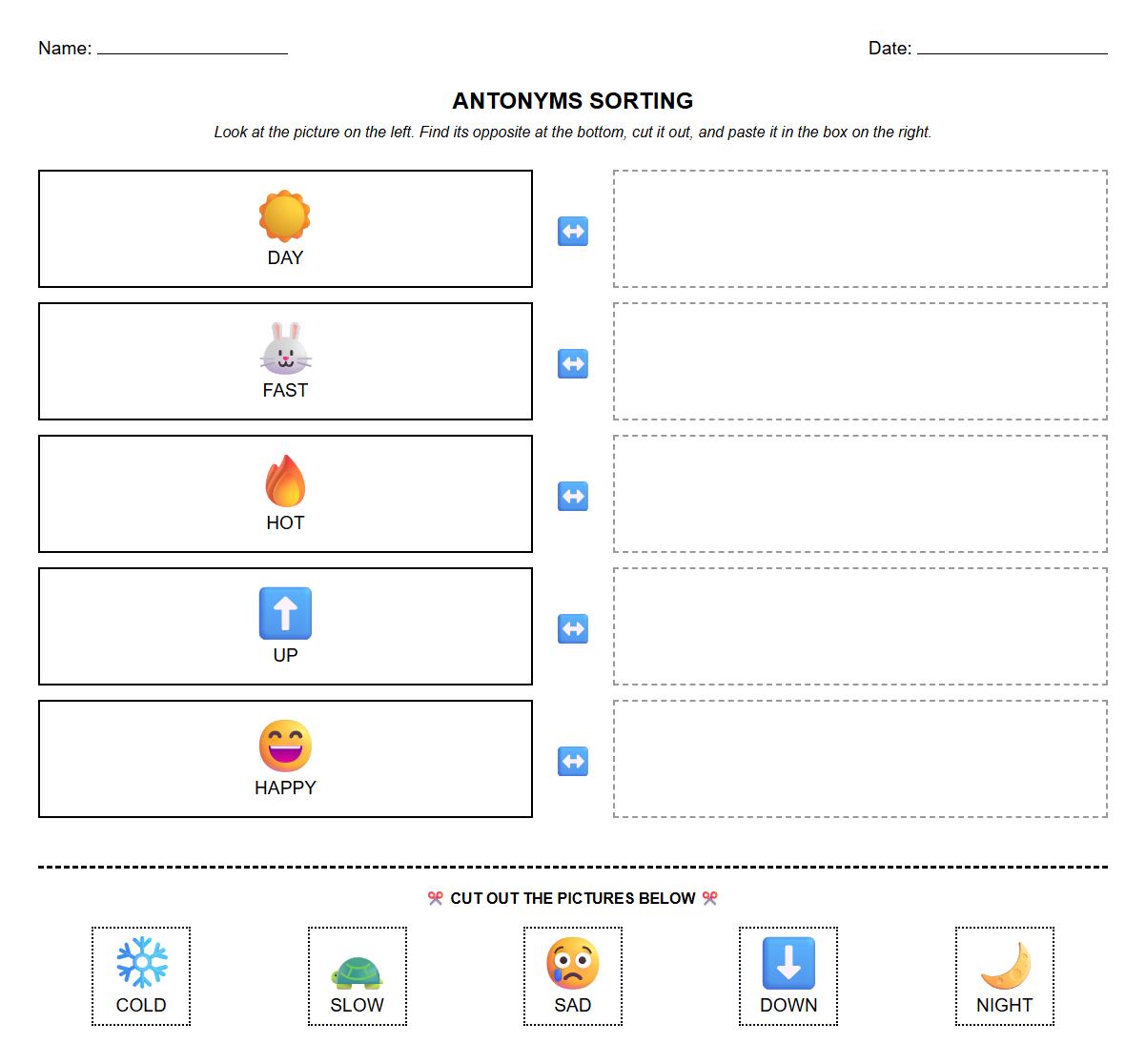
Help children develop matching skills by pairing fast with its antonym slow. This activity enhances critical thinking and vocabulary. Use cards or worksheets where kids can draw lines connecting the words. Reinforce learning by providing examples from everyday life.
Which Word Means the Opposite of Up?
Introduce the concept of directions by asking for the antonym of up, which is down. Use physical movements to demonstrate these directions, making it interactive. Visual illustrations can be very effective in helping young learners grasp the meaning. Encourage repetition to solidify understanding.
Circle the Antonym of Cold
Engage children by having them circle the opposite of cold, which is hot. This activity sharpens observation and comprehension skills. Use temperature concepts from real life, like weather or food, for better connection. Parents and teachers can prompt discussions about warm and cold sensations.
Find the Word That is the Opposite of Day
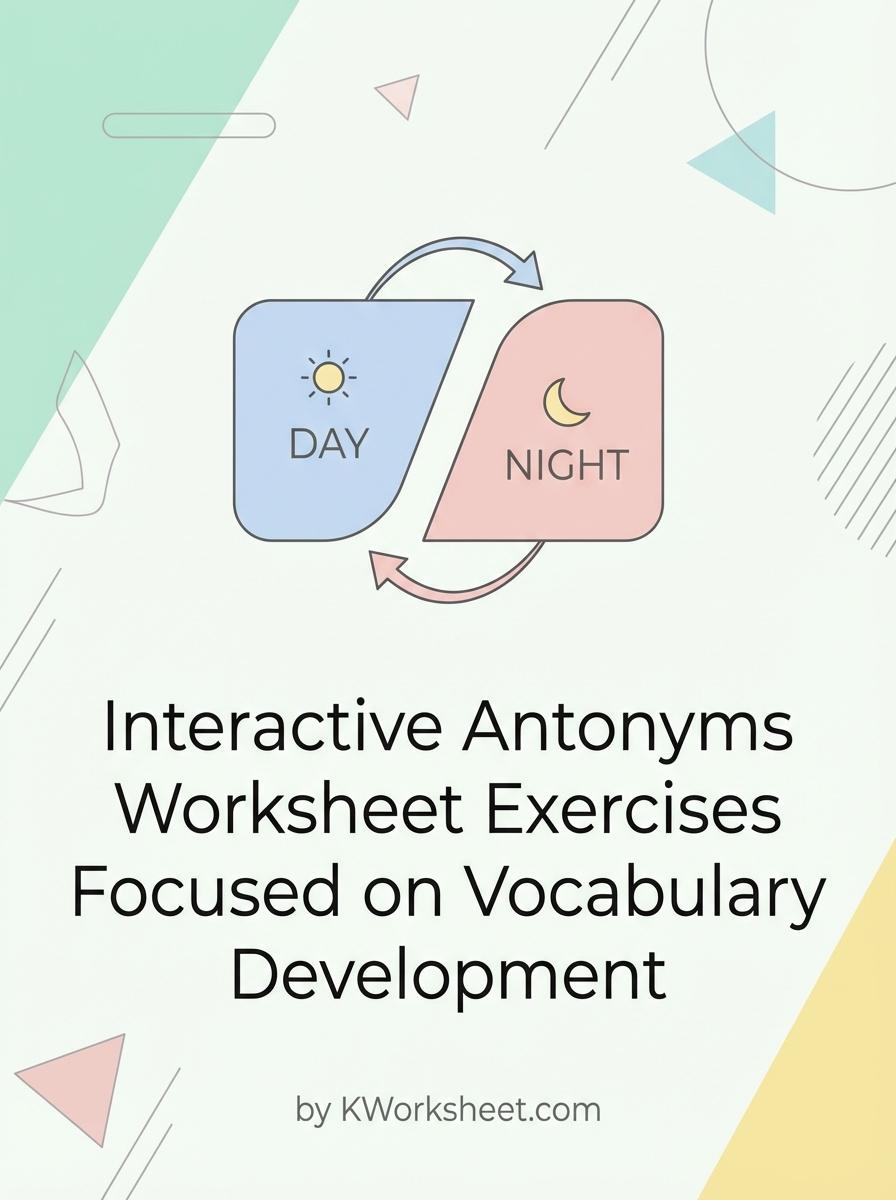
Support learning by asking children to find the antonym of day, which is night. Illustrate with pictures showing daytime and nighttime scenes. This also introduces concepts related to time. Encourage children to describe activities that happen during day and night.
Which Word Is the Antonym of Full?
Help children identify that the antonym of full is empty. Use objects like containers or cups to visually represent full and empty. This concrete example helps children grasp abstract concepts better. Encourage them to use the words in sentences.
Draw a Line to Connect Short with Its Antonym
Create an interactive activity where children draw a line connecting short to its antonym long. This improves fine motor skills and word recognition. Provide clear, simple words and accompanying images to assist understanding. Celebrate their success to boost confidence.
What Is the Opposite of Open?
Explain that the antonym of open is closed. Use examples like doors or books to show open and closed states. This helps children relate words to real-world objects. Encourage hands-on practice by opening and closing items around them.
Select the Antonym for Clean
Ask children to select the opposite of clean, which is dirty. Use scenarios such as cleaning toys or dirty clothes to contextualize the lesson. Encourage children to use the words in conversations about hygiene and environment. Reinforcement through daily routines helps solidify learning.


Kindergarten English Language Arts Worksheets Featuring Synonyms and Antonyms